Cannabis Conundrum

0

In 2016 we’ve arrived at a broad consensus: cannabis prohibition has failed. It has been a costly failure that has produced severe environmental and social impacts. It is time to end prohibition and allow adults to use cannabis.

This consensus is why so many people are surprised to learn that leaders in cannabis policy are deeply divided on Proposition 64. The Adult Use of Marijuana Act (AUMA) is an extensive initiative, more than 60 pages in total. It is a detailed legislative proposal, but the voters will vote on it—all or nothing. Still, there are many details that are cause for concern.

A simple vote to authorize adults to possess and consume cannabis while relying on the Legislature for the details would seem a sure thing. Unfortunately, that is not what AUMA offers. Instead, Proposition 64 takes a very different approach to regulating commercial cannabis than current law. The initiative is decidedly more friendly to big business and will lead to rapid consolidation of the industry. This is an avoidable and undesirable outcome. In fact, according to the Pathways Report published by a Blue Ribbon Commission chaired by Lt. Gov. Gavin Newsom, “the goal should be to prevent the growth of a large, corporate marijuana industry dominated by a small number of players.”

Yet buried in the pages of the proposition is a specific change to the licensing framework. In just a handful of words, the AUMA creates a new cultivation license with no limit on the scale of cultivation, effectively repealing protections for small farms that were enacted by the state Legislature.

This November, California voters will be forced to give a simple answer to a very complicated proposal. While the opposition is being led by the traditional law enforcement and “reefer madness” types, stakeholders throughout the state are deeply divided. California is ready to end prohibition. It will be interesting to see if Propositions 64’s billionaire backers can convince voters that the AUMA is the right way to achieve that goal.

Hezekiah Allen is the executive director of the California Growers Association. calgrowersassociation.org.

Open Mic is a weekly feature in the ‘Bohemian.’ We welcome your contribution. To have your topical essay of 350 words considered for publication, write op*****@******an.com.

Undone

0

A seriously gonzo Macbeth, a bit problematic but full of spooky pleasures, has just kicked off the North Bay summer Shakespeare season, perhaps not with a bang, but definitely a large crackle of creative energy—and featuring some literal bangs courtesy of Sonoma County Taiko.

In the third season of Shakespeare in the Cannery—in the old cannery ruins near Railroad Square—director David Lear unleashes an offbeat, ancient-future-style take on the bloody masterpiece, blending the modern (jeans, combat boots, naturalistic deliveries of lines) with the traditional (capes, cackling witches, blood-drenched swords). Overall, Lear’s vision is impressive, springing masks, trapdoors and a whole toolbox of other theatrical tricks, including those Taiko drummers pounding out a live percussive score.

Shakespeare’s eerie supernatural tragedy tells the twisty-gory tale of a highly suggestible Scottish warrior (Ben Stowe, emphasizing the reluctance and fear beneath his character’s fighting facade) and his blindly ambitious wife (Ilana Niernberger, coolly cruel, but only up to a point). Goaded into traitorous action by the riddle-spouting Weird Sisters (Saskia Bauer, Lauren Heney, Taylor Diffenderfer), who tell Macbeth he will become king, the married first-time murderers launch a horrific crown-stealing plan, killing Duncan the king, shifting blame to his sons and then taking his throne. Unfortunately, Macbeth just can’t seem to stop killing people, and the whole scheme collapses into madness and mayhem.

On a pleasingly playground-like stage, the performances sometimes stray toward the big, heightened and slightly overacted. That’s not necessarily a bad choice for an outdoor show, but in this case, what is gained in terms of clarity and size is sometimes lost in terms of subtlety and absorbing emotion.

Still, there are some very strong moments, fueled by several effectively surprising choices. As Duncan, the doomed king, Clark Miller convincingly plays the monarch’s essential sweetness. Eric Thompson, as a servant in Macbeth’s castle, makes the smutty most of the play’s one comedic scene. And Sam Coughlin, as Duncan’s vengeful son, is impressively complex in a very small part. And as Macbeth’s fellow warrior Banquo, Alan Kaplan brings a sense of affronted decency and a solid soldier’s bearing to a role usually played by a much younger man.

Energetic and ambitious, like poor befuddled Macbeth himself, this production may sometimes stumble, but it definitely brings the sound and fury.

Rating (out of 5): ★★★½

Letters to the Editor: July 13, 2016

Priorities

I could not help but laugh when I saw the headline in the Press Democrat,
“SR Square Project Upsets Business.” Uh, yeah . . . But business owners already knew that when they (though not all of them) said yes to this project. Why write about it? Quit your freaking crying.

I am crying for the homeless who need our help. The $9.2 million our great city leaders decided to spend on this project could have gone to do something for the people who need shelter and/or maybe buy some buses with showers to help them out. What is wrong with this picture? Spending millions to make our downtown prettier than Sonoma and Healdsburg and spending little money for those who need it the most. Seems to me our city leaders have got their heads up their you-know-whats.

Santa Rosa

Go Greens

Thanks to Ari LeVaux for the nice plug for chickories (“Bitter Is Better,” July 6)! I, too, am a fan of these delicious greens and grow some in my garden every year and promote them in my classes. And, like most things in life and the produce world, timing is everything.

The best-tasting leaf chickories and radicchios mature during cool or cold weather. Low temperatures reduce bitterness and a bit of frost adds some sweetness (starches turn to sugar for natural anti-freeze), resulting in delightfully complex flavors and a crisp texture that makes these the very best winter salads.

Seeds for the slower to mature types that head up like radicchios can be sown now through mid-August, but the faster to mature leaf chickories can be sown in September. I sow escarole and endive seeds in late September for harvest in February and March, when there is little else “new” in the garden.

Santa Rosa

I Heart Santa Rosa

It has been one year since we finally made the leap from our urban life to Santa Rosa. While we were excited, we were also apprehensive, as my wife had grown up in London and we had both spent much of our adult lives in big cities. What if it was too quiet, what if we felt alone and alienated or even discriminated against as lesbians, what if we didn’t fit in? How unfounded our worries were.

As we settled in, every store we frequented had people going out of their way to help us. At every restaurant we’d meet people who welcomed us to Santa Rosa and gave us suggestions for places to go and new restaurants to try. We saw the river otters at Lake Ralphine, we learned so much about plants at the Luther Burbank Gardens, we were amazed by McDonald Avenue on Halloween, we walked Hartley Drive admiring Christmas lights and took a free carriage ride through Railroad Square, we viewed local artists at SOFA open studios, and we danced with a crowd to a Rod Stewart cover band at Montgomery Village.

We fell in love with Santa Rosa and it’s people again and again, and we can’t wait for what the next year in Santa Rosa brings.

Santa Rosa

Write to us at le*****@******an.com.

Put a Bird on It

0

Julie Johnson delights in pointing out bluebirds whenever one alights in her certified organic Napa Valley vineyard. To encourage the colorful avians to stick around, she’s put up more than 20 nest boxes, and she instructs her vineyard workers to recognize and spare the nests of other songbirds when they are working in the vines.

“People get excited about seeing these birds do good things,” says Johnson, who owns Tres Sabores winery in
St. Helena.

The good these birds are doing in this and the scores of other organic and sustainable winery operations that have installed nest boxes for them, however, has until recently remained somewhat anecdotal.

Johnson has also placed several nest boxes for owls at Tres Sabores. The nearly ubiquitous owl box mounted high on a pole almost functions like a totem these days; on many a vineyard tour, the guide will point to these boxes as evidence of the winery’s environmentally friendly bona fides—be they certified organic, sustainable or merely well-intentioned.

“They’re like superstars of the vineyard,” Johnson says of the owls. “We know that barn owls are among our nighttime predators that are really crucial for vineyards, capable of eating an incredible amount of rodent pests.”

But vineyard operators like Johnson can’t say for sure whether the owls are performing their superstar feats in their own vineyard, whether a vineyard is even a particularly good place to site the nest, from the owl’s point of view, or if they’re simply talking from their tail feathers. And while no cynic might tag a box for pretty songbirds or majestic owls with the term greenwashing, “feather dusting” does have a ring to it.

To answer questions about the efficacy of owl boxes, graduate student researchers from Humboldt State University have begun a first-of-its-kind study, painstakingly mapping the interaction between owls and vineyard habitat in the Napa Valley.

“Finally, we’re starting to get some really great research,” says Johnson, who hopes that the findings will help her to develop a program for “bird-friendly” farming or wine, similar to Fish Friendly Farming, based in Napa, and the Smithsonian Migratory Bird Center’s bird-friendly coffee program.

“They are very interested in looking at vineyards,” Johnson says of the Smithsonian, “because similar habitat exists here. The idea is that these beneficial birds can coexist quite nicely.” But first, research is needed to quantify that idea. “We know what the research needs to look like,” says Johnson, “we just need to take it to the next step.”

RESEARCH TAKES FLIGHT

Under the shade of the oaks at Tres Sabores last summer, Carrie Wendt takes a break from that very research to explain the owl study she began in February. A graduate student pursuing a masters degree in natural resources and wildlife at Humboldt State University, Wendt studies the ecosystem services that wildlife can provide in agricultural systems. Her advisor, Dr. Matthew Johnson, instigated the project by pointing out that, although owl boxes have been used in vineyards for several decades, there is little to no scientific literature about them. Many of the oft-cited statistics on owls come from studies done in England and elsewhere.

To start, Wendt cold-called hundreds of vineyard managers up and down Napa Valley for permission to monitor their owl boxes. With a list of nearly 300 boxes in hand, she visited them all three times at 10-day intervals.

“It took five days to check all 300 at first,” Wendt says, adding, “I’ve driven over 10,000 miles this year already!”

But only one-third of those boxes attracted a pair of breeding owls, so Wendt next concentrated on 91 boxes that did, 69 of which produced at least one chick that year. She’s at Tres Sabores to check up on three chicks that are almost ready to fledge and begin exploring the world outside.

After a short hike to the box, Wendt hands her laptop to her undergraduate assistant, Breanne Allison, and plugs her improvised owl cam into the computer. Commandeered from a digital overhead projector, the camera is taped, with a flashlight, to a telescoping pole.

Wendt carefully pokes the camera into the owl box, while Allison monitors the screen. “You see those feathers right there?” Allison says. “Oh, no,” Wendt replies. “Dammit. That’s a dead chick.”

It’s not a happy introduction to their work, but they reluctantly tilt the screen for me to view. Inside the box is a wasted scene. Crumpled heaps of feathers lay scattered about—it’s a failed nest.

“That’s really unfortunate,” says Wendt. “I’m sorry. Total downer!”

[page]

Nest boxes fail for a variety of reasons, says Wendt: opportunistic mammals may climb into them (although she doesn’t think that’s the cause here, Wendt notes that boxes with openings over five inches in diameter are less safe), or red-tailed hawks and great horned owls may hunt the parent owls while they fly to and from the box.

Widely used poison bait for rodent control is also a hazard for raptors: owls may be poisoned when consuming stricken rodents. But sometimes it’s just for lack of available prey that owls abandon their nest.

There’s another chance to see a fledgling owlet. I follow the students’ well-bumperstickered truck across the valley to Saint Helena Winery, off the Silverado Trail. This box is located in the middle of a vineyard, and was last seen containing one healthy, surviving chick. As Wendt maneuvers the swaying camera pole into the box, his image appears out of the darkness.

Still a fuzzball of downy feathers, he’s almost grown-up, and looking downright surly as he sways and bobs in front of the camera—the slightly comical threat display that the somewhat defenseless owlets typically put on. This lone owlet will be one of the 239 chicks successfully fledged from the nest boxes that Wendt studied, but the dark side of his success is that, most likely, he consumed his siblings—not uncommon in the unsentimental world of the barn owl.

PEST CONTROL

What the owls are eating, besides each other, may be crucial information for people like Jon Ruel, CEO at Trefethen Family Vineyards. With a background in research ecology, Ruel has helped Trefethen earn sustainability awards—and to tolerate a few more weeds in the more than 400-acre vineyard.

Ruel holds up a pellet that was at the base of an owl box as evidence that the birds are active here. After owls eat rodents, birds or other small prey, their stomach acids digest all but the bones and fur, which are then regurgitated instead of excreted. This pellet is loaded with tiny skulls with outsized teeth.

But another sustainable winegrowing technique that Ruel likes to employ is growing cover crops to naturally balance the vigor of the vines growing in deep, Oak Knoll District soil. In a particular Merlot block one year, he took that to an extreme. “It looked like wildlife habitat,” Ruel says. “And it was.”

After the cover crop died out, some vines began to die—victims of gnawing and root nibbling by hungry rodents. Ruel thinks that the rodents went wild because the owls could not easily find them in the dense cover.

With their second year of research, Humboldt State students may be able to confirm such questions.

Following up on Wendt’s work, Humboldt State graduate student Xeronimo Castaneda has been tagging adult owls with GPS transmitters. The work must be done within a demanding time frame: Castaneda has to find owls while they’re in the nest box with chicks 14 to 21 days old. Afterward, the adults roost elsewhere while continuing to feed the increasingly large chicks.

Scooping owls out of a box isn’t as hard as it sounds—the boxes have hinged doors to facilitate cleaning. But it’s not for amateur ornithologists. The team had to apply to two agencies, the Bird Banding Laboratory, a division of the United States Geological Survey, and the Institutional Animal Care and Use Committee, to obtain permission to capture and tag owls.

Somewhat like a miniature CamelBak strapped to the owls’ back, the transmitter has a regulated weight that doesn’t interfere with their flight. A hand-held radio receiver allows Castaneda to locate the bird, and the GPS data can be scanned remotely. The units are designed to safely fall off the bird within a tried-and-tested period of time.

Castaneda has a map of preliminary results that shows an owl’s erratic daily travels over Napa Valley, with each day color-coded. After the season, when the students crunch the data, they’ll superimpose a layer of habitat and vineyard designations developed by Wendt, and a picture will emerge as to whether owls prefer to actually hunt in one type of habitat over another.

“We see a lot more owls in organic versus conventional vineyards,” Castaneda says. In general, according to Wendt’s data, the population of owls in Napa Valley is concentrated in the southern part and Carneros, where there are still areas of open grassland as well as vineyards. The vineyard-choked northern Napa Valley don’t see nearly the same rate of occupied nest boxes.

Castaneda mentions a small experiment conducted by an undergraduate that has yielded some very interesting preliminary results. The student created a set of sandboxes, burying 100 sunflower seeds in each, and placed some in areas known to be populated with owls, others not.

“It’s interesting that across the board,” says Castaneda, “those little bait stations where there were no owls—all the seeds were gone. But where there were owls, a portion of those were still left.”

[page]

While further study needs to be done, says Castaneda, this suggests that even if owls aren’t actively hunting within the vineyard, their very presence may affect the behavior of rodents in the vineyard—perhaps a sort of mirror in miniature of now-famous reports that wolves, when reintroduced to Yellowstone National Park, modified the browsing habits of elk to the benefit of waterways.

SHARPSHOOTERS

At Black Stallion Winery in Napa, Bob Johnson (no relation to Julie Johnson) is worried about the browsing habits of a much smaller creature. Standing by a motley collection of small vines in the winery’s demonstration vineyard by the patio, Johnson explains that dozens of vines had to be replanted after falling victim to Pierce’s disease, a bacterial infection spread by an insect vector.

As viticulturist for Delicato Family Vineyards, which owns Black Stallion, Johnson has bigger vineyard blocks to worry about. But he worries that it’s symptomatic of a larger trend: the culprit wasn’t the dreaded glassy-winged sharpshooter, which has thus far been prevented from entering North Bay wine country by monitoring programs; it’s the common blue-green sharpshooter, which growers are used to managing closer to its traditional habitat along riparian areas, but which has caused damage farther afield in recent drought years. The Napa River is hundreds of yards from this site.

A program funded by the industry has come up with promising, if expensive and commercially dubious solutions, like disease-resistant hybrid grapevines. Meanwhile, Johnson says that Black Stallion may join other growers along the river in trying out one of the best natural controls available. “Now growers are planting bluebird boxes,” Johnson says. “It’s a tool to help the problem. It’ll be very interesting to see what [Pierce’s disease] does this year.”

The growers aren’t flying blind on this, thanks to recent findings from Julie Jedlicka, a postdoc UC Berkeley researcher. Jedlicka’s doctoral research in Sonoma and Mendocino County vineyards showed that providing western bluebirds with specific nesting requirements resulted in a tenfold increase in insectivorous songbirds, without increasing the population of birds that eat grapes.

“Then I really zoomed in on one grower in St. Helena, Spring Mountain Vineyard,” Jedlicka says. “They have several hundred acres, so I could get a lot of fecal samples of birds and bring them to the Berkeley laboratory a short distance away.”

Jedlicka, who is now an assistant professor at Missouri Western State University and hopes to create a bird-friendly campus there, says that answering the simple question of what bluebirds are eating was a messy, bird-unfriendly task until new technology became available in the last few years. It’s called molecular scatology, though less technical terms work just as well for Jedlicka. “We extracted DNA from the poop to see what insect had been eaten,” she says, “and matched DNA to exactly that species of insect.”

The birds were eating sharpshooters—a lot of them. The current system can’t tell a blue-green sharpshooter apart from any number of other, non-vector sharpshooters. But a formerly bad Pierce’s disease problem has already been suppressed in that vineyard. “The next step would be to track them in infested vineyards,” Jedlicka says.

BIRDS AND GRAPES

If there’s a hitch in Julie Johnson’s plan for bird-friendly wine, it may be growers’ attitudes toward birds during harvest. Grape-pecking birds can cause both quantitative and qualitative damage during harvest, and Wendt points out that even passive protection like bird netting ends up killing some songbirds, which are supposedly protected under the Migratory Bird Treaty Act.

“It’s a catch, in my mind,” says Wendt. “In my opinion, bird-friendly farming is friendly to all birds.”

Whether bird-friendly farming becomes a label on its own, or part of a sustainability program like Napa Green—which does not now require anything bird-related from its members—Johnson is glad to see the research being done in vineyards.

Meanwhile, anyone with a bit of property can help the birds by giving back to their habitat. “Bluebirds are what we call an obligatory cavity nesting species,” Jedlicka explains, “which means they must have a cavity to build their nest.” But bluebirds like the oak woodlands and savannah that continue to disappear due to commercial development, according to Jedlicka.

“Putting up nest boxes is a really good substitute for that habitat.”

See the North American Bluebird Society at nabluebirdsociety.org for bird information and nest box designs.

Raising Hec

A joke that you can tell anyone—that’s rare. So is a movie that can be recommended with pleasure to anyone, of any age. In Hunt for the Wilderpeople by director Taika Waititi, lush New Zealand landscapes counter a sense of humor so toast-dry that it makes British comedies of the 1950s seem overripe.

Co-star Sam Neill is both touching and funny—Oscar-worthy, if you like—as an old illiterate tramp turned farmer. He’s called Hec Faulkner. It’s short for Hector, and the Faulkner part isn’t far off. This noble, never-vainglorious actor conveys the irresistible movie appeal of a solitary elder forced into the role of uncle against his will.

Young Ricky (Julian Dennison) is brought to a remote, shabby farm—a foster kid dropped off by our villainess, Paula (Rachel House), a massive, squinty-eyed social worker who calls her charge “a bad egg” for crimes such as spitting off of a freeway overpass. Bella (Rima Te Wiata), the lady of the house, examines plump Ricky: “You hungry? Silly question. Look at ya.” As for her husband, Hec, he barely tolerates the kid.

When we lose Bella—an event Waititi handles with taste and distance—the child-welfare people want the boy back in custody. But Hec is determined to not let that happen. He and the boy run off into the woods. The police sound the Kiwi equivalent of an Amber Alert.

One of Waititi’s knacks is contrasting this damp, ferny world of small reactions and big skies with fantasies of American action movie and gangsta rap. Neill’s gift as an actor is that he’s not troubled with these legends of busted caps and dogged cops—he’s a man of few words, unflappable as a true Western hero, with an eye firmly on the horizon.

‘Hunt for the Wilderpeople’ opens Friday, July 15, at Summerfield Cinemas, 551 Summerfield Road, Santa Rosa. 707.522.0719.

Just Say Slow

0

The architects and defenders of Proposition 64, the upcoming statewide referendum that would legalize adult cannabis use in California, say that they’ve gone to great lengths to address concerns expressed by the medical-cannabis community, which is split on the question of adult legalization.

“We are neutral with concerns, and leaning toward ‘oppose,'” says Hezekiah Allen, chair and executive director of the California Growers Association. Allen heads up the state’s leading cannabis trade-advocacy group, which sees the legalization initiative as a threat to the small-time growers who have dominated the state’s cannabis economy for generations. But why? (Read Allen’s Open Mic, p7.)

Defenders of the Adult Use of Marijuana Act (AUMA) say the referendum takes into account the Emerald Growers’ push to make sure that California remains a small-farm-focused marketplace that’s not overrun by big corporate players in the so-called Green Rush already underway.

Jason Kinney is the Sacramento-based spokesperson for the AUMA and says the language of the referendum sets out numerous protections designed to protect small-scale growers from overly aggressive acts of capitalism. He notes, via email, that the AUMA protects farmers by delaying the issuance of large cultivation permits for the first five years after Proposition 64 is enacted, “allowing small growers to establish themselves in the market.”

Any large-scale grows that emerge, says Kinney, “will be subject to similar restrictions on vertical integration as contained in the medical marijuana legislation, meaning large-scale cultivators cannot also be distributors of marijuana.”

The AUMA also gives state cannabis regulators the power to deny licenses or license renewals if those efforts lead to the “creation or maintenance of unlawful monopoly power,” Kinney notes, and the referendum also bans any cannabis producer from undercutting the competition by offering product at below-market costs—while also giving licensing priority to existing medical-marijuana businesses.

And it aims to protect small-time growers’ particular brands by requiring the new cannabis bureaucracy to “establish appellations of origin for marijuana grown or cultivated in a particular California county.”

But even as the AUMA offers assurances to the existing marijuana industry in California—and requires that California universities study whether further protections are needed to prevent monopolies or anti-competitive behavior—Allen emphasizes that it doesn’t address a key concern.

“Anti-competitive practices are not the same as consolidation,” Allen says, adding that the authors of the AUMA “skirted around the issue of consolidation” and only inserted the five-year-rule after lobbying from California growers who were firmly in the “no” camp before that fix. What’s the point of anti-competitive language in the AUMA if there’s nothing to stop entrepreneurs from buying out small farms—especially if the price of cannabis drops once pot is legal?

It was a big enough fight, Allen says, to get the architects of the AUMA to go along with the five-year roadblock to large operators encroaching on small-time farmers’ land and product. Before the timeline was added, it created an “immediate strong-oppose position” when the AUMA was being hashed out.

Small-operators’ concerns are addressed in 2015’s Medical Marijuana Regulation and Safety Act, which Allen describes as a groundbreaking medical-cannabis effort that was the first in the nation “to disrupt vertical integration” and limit the size of commercial grows. Contrary to other states that have dabbled with medical-cannabis laws, “California went in a very populist direction,” he says. “This is the most small-business-friendly cannabis-regulatory framework in the nation, and we’d like to see this regulatory model reverberate nationally.”

Other states that have taken steps to legalize or decriminalize medical cannabis, says Allen, have gone in the opposite direction as California and “encouraged verticalization and consolidation.”

Allen says California needs to remain the bulwark against rampaging corporate interests as other states consider medical or adult-use initiatives of their own.

There are already efforts at consolidation “in every segment of the marketplace,” Allen says. Just last week Scotts Miracle-Gro announced a $500 million investment in the cannabis industry in order to kick-start that company’s flat profits.

Other states don’t provide much in the way of a useful comparison for California, with its large and diverse population—and as a historical exporter of much of the nation’s weed. The Green Rush has arrived in Colorado with numerous large-scale grows, but Allen says a comparative analysis between California’s AUMA and Colorado’s experiment with adult legalization is beside the point, and not just because of population and demographic differences. Before legalization, Allen notes, Colorado got 70 percent of its cannabis from California.

“There is a huge pre-existing business in California,” says Allen. “They didn’t have a market to consolidate in Colorado; they just had consumers.”

As the AUMA moves toward a vote in November, California stakeholders are arguing over what comprises a small farm, in order to protect them. “We like an acre or less,” Allen says. “But what exactly is a small farm is a very bitter divide.”

Allen says it’s tough for him to see how his membership could come to support the AUMA. “To get them in the support column would require a heavy lift from the industry that has not been forthcoming. There would have to be a firm commitment within the industry that there’s no place in California” for large-scale grows.

“The closer to November we get, the more open this fight will be. Folks who support the AUMA have to own up that they are supporting consolidation,” Allen says.

Tawnie Logan is executive director of the Sonoma County Growers’ Alliance and a contributor to the Bohemian‘s weekly pot column, the Nugget. Logan’s organization is neutral on the AUMA as she highlights the “too soon” aspect of adult legalization, which has emerged just as cannabis growers and others in the industry are getting up to speed about new regulations under the Medical Marijuana Regulation and Safety Act, “and most local governments around the state barely understand it, let alone the operators who have to learn a complex set of rules—that’s a very big, daunting task, to say the least. And when you add adult use that has add-ons and some lack of clarity on how it impacts local economies and local efforts, it just complicates the matter.”

Logan says her group might look more favorably on the AUMA if it were more tuned into the specifics of how adult legalization would play out at the hyperlocal level, where raids are still common and the gray-area legality of cannabis remains in flux because of the long-standing federal scheduling of it as a dangerous drug with no medical value.

“What would benefit and be encouraging for myself and many members is if the proponents of AUMA looked at the impacts at the local level and see how this works in local government, how does it work for local operators.”

Logan says that part of the problem with the AUMA is that adult legalization wasn’t taken on as a legislative agenda-item in Sacramento. “Because it’s a proposed initiative from businessmen, it really hasn’t taken into account how this would benefit the existing economy in California, with the exception of saying ‘We’ll give you tax income,'” Logan says.

She adds that she’s been hearing concerns about the AUMA and what it might mean if California voters reject it, in light of broader efforts to get the American government to entirely deschedule cannabis from its current Schedule I status (no medical value whatsoever)—
and avoid a Schedule II reclassification that could lead to a Big Pharma takeover of cannabis medicine. In that context, the proposed AUMA might have had a stronger national influence on pot policy if it had emerged from a public-policy debate and vote.

“If California didn’t vote for it because of public safety, or environmental, economic [concerns], I believe that the Democratic community that supports legalization in California—it would be introduced as a bill in the Legislature and it would be done right,” Logan says. “It would go through the committee process and would lead to strong legislation.”

And an adult-use bill written in Sacramento would have gone a long way toward limiting disparities and confusion where cannabis law intersects with, for example, state law around water use, she says. If voters do indeed usher in adult legalization—and about two-thirds of Californians say they support it—”I guarantee that there will be ‘clean-up’ legislation,” says Allen, as he cites “a tremendous amount of inconsistencies” between existing state law and the AUMA.

Back in Brass

0

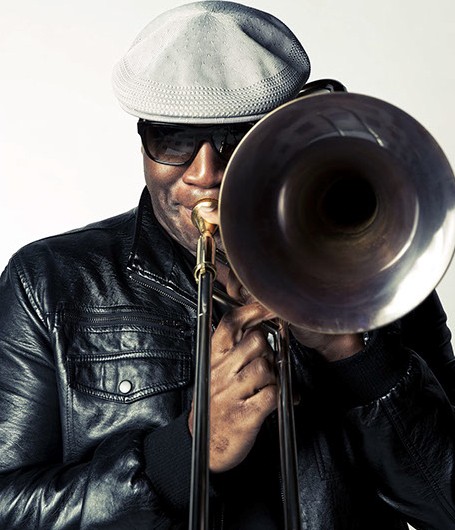
Over the past eight years, Sonoma County’s Black Sheep Brass Band has evolved from alley-way buskers to a band of brothers performing throughout the Bay Area. This year, the band sets out on its most ambitious tour yet, packing all 12 members into a van and traversing the Pacific Northwest in support of their debut self-titled album.

In the North Bay, Black Sheep Brass Band plays Petaluma’s rollicking Rivertown Revival festival on July 16 alongside acts like Frankie Boots & the County Line, Highway Poets, the Crux and others.

Formed by songwriter and musical arranger Maxwell Church in 2008 and originally known as Jungle Love Orchestra, the brass band was a casual project until about four years ago when word of mouth led to regular gigs and the lineup solidified into a dozen-man roster of talented players.

“Our focus and thinking has changed over time,” says alto sax player Chris Cory. “Max wants to push it as far as it can go.” Noticing an uptick in interest for old-time brass-band music, Cory says that Church and the rest of the Sheep are ready to take their music to the next level.

“We’ve got a group of people with musical experience, talent and dedication to the craft,” says Cory.

This past winter, the Black Sheep Brass Band gathered in Cory’s Santa Rosa warehouse space to record their long awaited self-titled debut, a funky and jazzy collection of original tunes and a few Dixieland standards that evoke New Orleans street parades and Preservation Hall soirees.

This weekend’s appearance at Rivertown Revival is the band’s first show since returning from their tour. The annual avant-garde festival celebrates local flair with music, art boat races, creative artisans and family fun. Taking the stage twice, at 3:30pm and 6pm, the band is ready to party.

“It’s great to be back,” says Cory. “We’re recharged and the fire has returned.”

The Rivertown Revival takes place along McNear Peninsula in Steamer Landing Park, 6 Copeland St., Petaluma. 11am. $5–$10.
www.rivertownrevival.com.

NORBAYS RETURN!

Our annual NorBay Music Awards are back this summer, and online voting is now open! Head to www.bohemian.com and click on the link on the right-hand side of the screen, then vote for your favorite Sonoma, Marin or Napa-based bands in categories of Blues/R&B, Country/Americana, DJ, Folk/Acoustic, Hip-Hop/Electronic, Indie/Punk, Jazz, Rock and Reggae. This year, we’ve also added a best Promoter category. Voting ends on Monday, Aug. 8. Our free awards show concert happens Sunday, Aug. 14, at Juilliard Park in Santa Rosa where two winners will take the stage.

Donkeys for Dope

Meeting in Orlando on Saturday, ahead of the Democratic National Convention later this month, the party’s platform-drafting committee dropped a moderate marijuana plank it had adopted only days earlier and replaced it with language calling for rescheduling pot and creating “a reasoned pathway to future legalization.”

Bernie Sanders supporters had pushed earlier for firm legalization language, but had been turned back last week and didn’t have any new language going into this weekend’s platform committee meeting. But on Saturday afternoon, the committee addressed an amendment that would have removed marijuana from the Controlled Substances Act, as Sanders supporters had earlier sought in vain, with Tennessee Sanders delegate David King arguing that pot was put in the same schedule as heroin during a political “craze” to go after “hippies and blacks.”

That amendment was on the verge of being defeated, with some committee members worrying that it went “too far” and that it would somehow undermine state-level legalization efforts, but the committee proposed merely rescheduling—not descheduling—marijuana and added the undefined “pathway” language.

The amendment was then adopted in an 81–80 vote, leading to a period of contention and confusion as former Atlanta mayor Shirley Franklin, the committee co-chair, entered a complaint that at least one member may not have been able to vote. That led to arguments between committee members and between members and non-voting observers, most of whom were Sanders supporters. The Washington Post reported that one Clinton delegate complained loudly that Sanders delegates “wanted 100 percent of everything.”

But the new language prevailed when former U.S. senator from Arkansas Mark Pryor, a Clinton delegate, announced that while opponents of the language were unhappy that the earlier compromise language had been replaced, they weren’t going to fight it.

“We withdraw the objection,” Pryor said.

Sanders supporters didn’t get the descheduling language they wanted, but they did get a commitment to rescheduling and they got the word “legalization”
in there, even if the phrase
“a reasoned pathway for future legalization” is a bit mealy-mouthed.

And the Democratic Party now has marijuana legalization as part of its platform.

Phillip Smith is editor of the AlterNet Drug Reporter and author of the ‘Drug War Chronicle.’

Power of Poetry

0

‘To call oneself a poet is a slightly pretentious thing,” says Dana Gioia, celebrated critic, poet, past chairman of the National Endowment for the Arts (NEA) and current poet laureate of California.

“I usually just call myself a writer, and then, when someone asks ‘What do you write?’ I have to say, ‘Well, I write mostly poems and essays about poetry.'”

“That,” Gioia adds with a laugh, “tends to be a conversation killer.”

The longtime Santa Rosa resident is the author of several books of poetry, including the recently published 99 Poems: New & Collected (Graywolf Press; $24). He’s also written the libretti for three operas, Nosferatu (2004), Tony Caruso’s Final Broadcast (2008) and The Three Feathers (2014).

As poet laureate, Gioia is staging poetry and music events all over California. On July 16, he hosts a multi-artist performance titled Poetry Matters at the Sonoma Valley Woman’s Club in the town of Sonoma, featuring some of his own poetry, as well as performances by local poets, musicians and actors.

The purpose, he says, is to spread the news that beautiful words, whether recited or sung, should be a part of everyone’s life, one way or another.

“There are an enormous number of ways in which a poet can create a life for themselves,” Gioia says. “In our society, usually, it now involves some
kind of activism, which is to
say ‘active involvement’ in their own communities.”

One thing a life devoted to poetry should not have to be, Gioia insists, is lonely.

“I don’t believe that most poetry is an affair of infinite solitude and isolation,” he says. “Some poets work that way. But for myself, I write poems, I write words for composers—in classical, jazz and pop genres—I teach, I talk about poetry in the media, and I give public appearances. And I would not enjoy a life in which I had to lose any of those things.”

He repeats the old joke that the only problem with being a poet is deciding what to do with the other 23 hours of your day.

“Most poets find other things to do aside from just writing poetry, some of them cultural, some of them civic,” he says.

He fills his non-writing time reminding people that the unique power of a good poem, well recited, is a thing worth praising and promoting.

“I’ve spoken to a thousand audiences, without exaggeration,” he says. “When I was chairman of the [NEA], I would give a talk two or three times a day, and I would almost always include a poem. The audiences loved it.”

The amazing thing, he says, isn’t that audiences appreciated hearing a good poem recited by one of poetry’s most significant cheerleaders.

“What amazed me,” he says, “is how often they’d tell me it was the first time they’d ever heard someone recite a poem out loud. That’s something that we’re eager to change.”

Botanical Buzz

0

Among the buzzwords in craft spirits, a very buzzy category of late, is “London-style” craft gin. It’s more than just a marketing tag, according to Griffo Distillery’s Michael Griffo.

“It’s harder to do London-style,” Griffo says above the roar of the grain mill in the Petaluma distillery that he opened in 2015 with his wife, Jennifer, who is standing on a ladder, banging away on a hopper so that the milled rye doesn’t stick in the chute. The Griffos don’t seem to mind doing things the hard way.

To make London-style, Griffo explains, herbs and citrus are infused during the distillation process, instead of being added later and separately. During a three-year period of recipe experimentation, they tried it the other way but found that the aromas and flavors remained distinct, and the gin was not as complex as they wanted.

They also had to decide which method of infusion they preferred: the botanicals may be dangled in the path of the alcohol vapors, steeped like tea inside a bag, or left to swirl randomly in the copper still. Choosing the latter, Griffo says, gives each aroma and flavor “equal opportunity” for extraction.

Griffo’s Scott Street gin ($35), named for the industrial stretch of road they share with several craft breweries, is made with organic, non-GMO corn, which they feel makes a softer, sweeter spirit than other grains. Opting for organic ingredients wasn’t necessarily a philosophical move, says Griffo. “The organic stuff tasted far better.”

They can’t call the gin organic because two of the 10 botanicals are wild-harvested, like the Meyer lemons rounded up from friends’ backyard trees when they do a gin run. Juniper berries from the local landscaping, however, didn’t compare to the Croatian version. To hit just the right notes for their heady, juniper-forward gin, which was recently awarded a gold at the 2016 San Francisco World Spirits Competition, they tried dozens of sources. Even the qualities of coriander seed vary, Jennifer Griffo explains after milling the rye, so they settled on a coriander that’s 10 times more expensive than what you get in the store.

Standing in an empty side room that will be their tasting room in a month or two, Griffo says that such obsessive attention to their process, as well as the transparency of their operation, is essential to the business. “I think it’s an extension of the farm-to-table movement,” Jennifer Griffo says of craft spirits. “People care about what they are consuming.”

Griffo Distillery, 1320 Scott St., Petaluma. Tasting room slated to open in late summer. 707.879.8755.

Cannabis Conundrum

In 2016 we've arrived at a broad consensus: cannabis prohibition has failed. It has been a costly failure that has produced severe environmental and social impacts. It is time to end prohibition and allow adults to use cannabis. This consensus is why so many people are surprised to learn that leaders in cannabis policy are deeply divided on Proposition 64....

Undone

A seriously gonzo Macbeth, a bit problematic but full of spooky pleasures, has just kicked off the North Bay summer Shakespeare season, perhaps not with a bang, but definitely a large crackle of creative energy—and featuring some literal bangs courtesy of Sonoma County Taiko. In the third season of Shakespeare in the Cannery—in the old cannery ruins near Railroad Square—director...

Letters to the Editor: July 13, 2016

Priorities I could not help but laugh when I saw the headline in the Press Democrat, "SR Square Project Upsets Business." Uh, yeah . . . But business owners already knew that when they (though not all of them) said yes to this project. Why write about it? Quit your freaking crying. I am crying for the homeless who need our...

Put a Bird on It

Julie Johnson delights in pointing out bluebirds whenever one alights in her certified organic Napa Valley vineyard. To encourage the colorful avians to stick around, she's put up more than 20 nest boxes, and she instructs her vineyard workers to recognize and spare the nests of other songbirds when they are working in the vines. "People get excited about seeing...

Raising Hec

A joke that you can tell anyone—that's rare. So is a movie that can be recommended with pleasure to anyone, of any age. In Hunt for the Wilderpeople by director Taika Waititi, lush New Zealand landscapes counter a sense of humor so toast-dry that it makes British comedies of the 1950s seem overripe. Co-star Sam Neill is both touching and...

Just Say Slow

The architects and defenders of Proposition 64, the upcoming statewide referendum that would legalize adult cannabis use in California, say that they've gone to great lengths to address concerns expressed by the medical-cannabis community, which is split on the question of adult legalization. "We are neutral with concerns, and leaning toward 'oppose,'" says Hezekiah Allen, chair and executive director of...

Back in Brass

Over the past eight years, Sonoma County's Black Sheep Brass Band has evolved from alley-way buskers to a band of brothers performing throughout the Bay Area. This year, the band sets out on its most ambitious tour yet, packing all 12 members into a van and traversing the Pacific Northwest in support of their debut self-titled album. In the North...

Donkeys for Dope

Meeting in Orlando on Saturday, ahead of the Democratic National Convention later this month, the party's platform-drafting committee dropped a moderate marijuana plank it had adopted only days earlier and replaced it with language calling for rescheduling pot and creating "a reasoned pathway to future legalization." Bernie Sanders supporters had pushed earlier for firm legalization language, but had been turned...

Power of Poetry

'To call oneself a poet is a slightly pretentious thing," says Dana Gioia, celebrated critic, poet, past chairman of the National Endowment for the Arts (NEA) and current poet laureate of California. "I usually just call myself a writer, and then, when someone asks 'What do you write?' I have to say, 'Well, I write mostly poems and essays about...

Botanical Buzz

Among the buzzwords in craft spirits, a very buzzy category of late, is "London-style" craft gin. It's more than just a marketing tag, according to Griffo Distillery's Michael Griffo. "It's harder to do London-style," Griffo says above the roar of the grain mill in the Petaluma distillery that he opened in 2015 with his wife, Jennifer, who is standing on...
11,084FansLike
4,446FollowersFollow
6,928FollowersFollow