White Wedding

0

I’ve seen enough overheated reviews of blockbuster Cabernets that end with the food pairing wisdom that goes something like this: “And it has the tannins to stand up to a thick, juicy steak.”

I’ve heard that some Mosel winemakers like their filet with Riesling, actually. And why not Chardonnay? With the contrarian hunch that food-pairing success might depend as much on the sauce, and the wine, as the cut of the main course, I matched up a New York steak—salt and pepper, nothing fancy; two minutes each side, eight in the oven—with creamy béarnaise sauce, a red wine and gravy sauce, and some wines I had on hand.

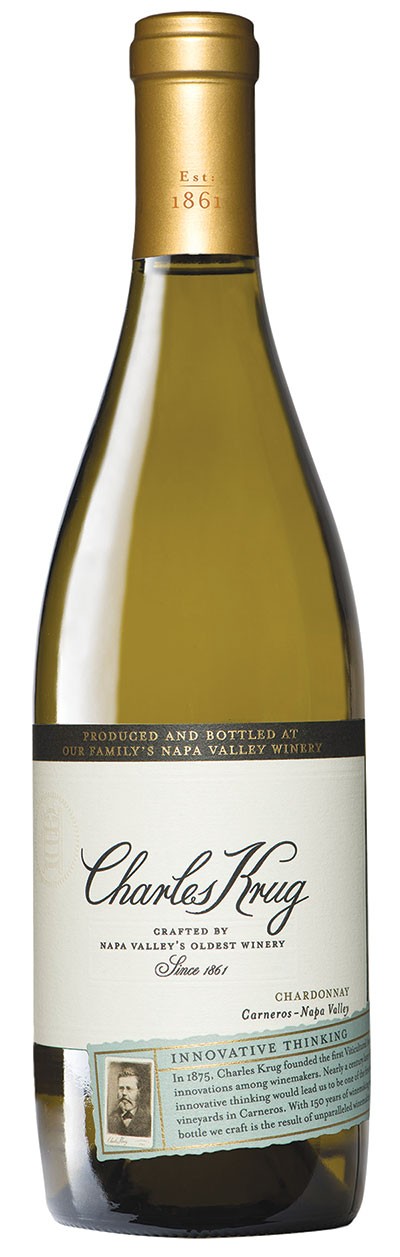
Charles Krug 2015 Carneros Napa Valley Chardonnay ($21) Nothing musty about this cool, fresh-smelling Chardonnay—oak ice cream à la mode with sliced pear marinated in Meyer lemon juice—which is made by the granddaddy of Napa Valley wineries. Nothing “buttery” about it, either, until splashed in the wake of a morsel of unsauced steak, when streamers of caramelized pineapple and butterscotch candy light up the palate, playing off the salt and pepper of the rub. Béarnaise sauce sharpens the acidity nicely, while the wine-gravy concoction veers in a harsh, metallic direction. I might tire of sipping this rich but persistently woody wine by itself, but it seems custom-tailored for the béarnaise and steak pairing.

Hess Collection 2014 Napa Valley Chardonnay ($22) Another reasonably priced bottle from Napa Valley grapes, the slightly leesy
(a yeast-derived aroma; sort of dairy, sort of dusty) and baked-apple-scented wine dances with roasted vegetables, and darn near turns into spicy Gewürztraminer with the béarnaise sauce—neutral Pinot Grigio with the wine sauce. More supple than the Krug, it passes the test as well.

Baldacci 2014 Sorelle Carneros Napa Valley Chardonnay ($38) What I was looking for: the smell of the county fair, buttered popcorn and caramel candy apples, the flavor of oak-roasted butterscotch cookie. Nice wine, but the cream sauce actually mutes the sweet caramel of the wine, ending up no better a pairing than the zippier Krug.

Beringer 2013 Private Reserve Napa Valley Cabernet Sauvignon ($170) A top cuvée from another Napa icon, the inky purple PR smells like an oak-black currant chimera in full bloom, raining blackberry pomace-infused graham cracker crumbs over a bed of soft velvet. Béarnaise sauce sweetens the first sip, before tongue-numbing tannins glom on and don’t let go. What a wine, but what a fail—for now. Put it back in the cellar. What coffee-encrusted, scorched, spit-roasted steak could stand up to this?

Buds & Budgets

0

Gov. Jerry Brown released his
$180 billion fiscal 2017 budget
last week and identified a $1.6 billion deficit, the result, he said, of slower than anticipated growth in the California economy.

The deficit’s return—the first since 2012—comes in the aftermath of the state’s historic yes vote on Proposition 64, which legalizes adult use of recreational cannabis in the state.

State agencies that have studied the initiative, including the Board of Equalization, have reported that future excise taxes could funnel between $1 billion and $1.4 billion annually into the state coffers. But before you say “tax bonanza,” it’s important to underscore that the pot tax can’t be used to close a budget gap in this or any year, unless the Legislature revisits the issue.

“The state government would certainly like to do that,” says Hezekiah Allen of the California Growers Association, a cannabis industry group. But they are hampered by the legally binding language in Proposition 64, which says that no taxes collected on cannabis sales can be directed into the state’s general fund. Moving forward, “the real limiting factor here is going to be, how much wiggle room does the Legislature have?” Allen says.

Even if Brown could close the deficit with pot revenue, the state won’t have its new cannabis tax regime in place until next January, when licensed growers will pay a cultivation tax of $9.25 per ounce of buds and $2.75 per ounce of leaves. Another
15 percent sales tax will be applied to the retail price of all cannabis products, and localities, including Sonoma County, are cooking up local taxes of their own. There’s a special pot tax vote in Sonoma County in March.

One problem for localities with enforcement issues of their own to fund, says Allen, is that Proposition 64 set a higher rate of tax than was even contemplated by the Legislature, which will make it difficult for localities to add an additional levy. “There is no room for additional taxes,” Allen says.

Those taxes are mainly earmarked for law enforcement and anti-drug efforts in schools. According to a statement from Brown, state pot taxes can be used for “regulatory costs, youth substance-use programs, environmental clean-up resulting from illegal cannabis growing, programs to reduce driving under the influence of cannabis and other drugs and to reduce negative impacts on public health or safety resulting from the legalization of recreational cannabis.”

In the short term, the emergent recreational cannabis industry may actually wind up contributing to a future deficit, as Brown’s budget would send $53 million to regulators to help square up the regulatory regime in the recreational and medical cannabis industries.

“Right now, there’s going to be a lot of pain before there is any gain,” says attorney Aaron Herzberg, a partner at CalCann, a California medical cannabis real estate investment firm. But Allen says the $53 million proposal “is an open question.” He notes that policymakers and the industry “are thinking that we should maybe move a little slower and take an incremental, balanced approach.”

The state envisions a single regulatory framework for recreational and medical cannabis. Nate Bradley of the California Cannabis Industry Association says his organization was in a conference call with the governor’s office last week and that “they are pushing ahead with one system.” He says stakeholders such as the CGA don’t want to see a single regulatory structure enacted because “there’s lots of money” at stake in, for example, medical-cannabis distribution networks.

Brown’s office has reported that the $1.6 billion budget shortfall this year will be closed via a slowdown on planned outlays for K-12 education and on the elimination of some discretionary spending.

The governor has opposed legalized weed in California on the grounds that everyone would be getting high instead of working. Donald Trump basically makes the same argument. Meanwhile, as Herzberg observes, most of the cannabis sold in the state is on the black market, and for every additional tax the state adds, the more likely it is that those growers will stay in the shadows and not participate in the licensing process. The more tax-heavy the recreational industry becomes, he says, the more likely it is that recreational users will get a medical card to beat the local or state sales tax. There’s a lot of work to be done, and Herzberg is convinced that $53 million won’t cut it.

Meanwhile, Brown alludes to the uncertain federal-level issues: “The amount and timing of revenues generated from the new excise taxes are highly uncertain and will depend on various factors including state and local regulations, how cannabis prices and consumption change in a legal environment, and future federal policies and actions toward the cannabis industry.”

Allen believes the two-decade-old medical cannabis industry in California is probably safe from any attacks from anti-pot attorney general nominee Jeff Sessions, but notes that “there are a lot more questions about adult use moving forward. The governor’s proposal stuck with what we were expecting—combining the two systems and moving forward with one regulated marketplace.”

Herzberg says a pot crackdown in California is hard to imagine given the public support for legalization and that Trump adviser and PayPal founder Peter Thiel is “heavily invested in cannabis.”

Lost World

There is weight in the charming 20th Century Women and a seriousness that keeps it from blowing away like a load of styrofoam peanuts in the wind. That weight comes from the realization of how remote the seemingly near past actually is.

This is Mike Mills’ third and best film (after Beginners and Thumbsucker), and honors the director’s mother as a woman whose life is bound by the last century. The title isn’t too lofty, as the film commemorates the time’s ideals, fascinations and naiveté.

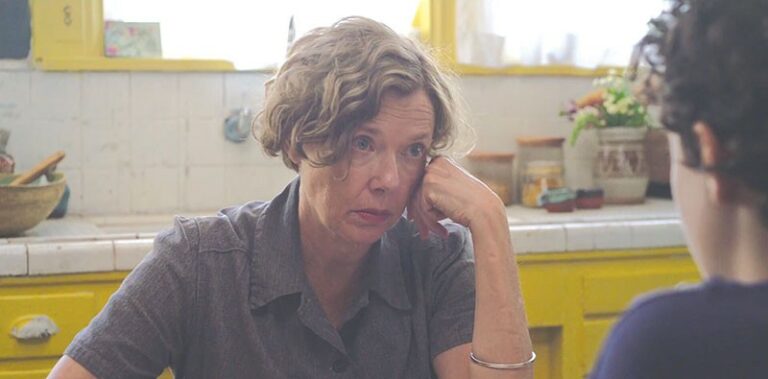
Dorothea (Annette Bening) owns an old house stuffed with ferns in Santa Barbara. Her son, Jamie (Lucas Jade Zumann), has an easy time in school, though he’s occasionally bullied as an art fag because he listens to Talking Heads; his life can be symbolized by the long, lazy slaloms on his skateboard down oak-covered streets.

Boy children in single-mother homes used to be fretted over—without a paternal model, surely they’d turn gay? What one loves about 20th Century Women is that the movie takes the opposite pole, insisting that a young man can learn a lot from hanging around women. Jamie has a sleepover pal, Julie (Elle Fanning), who isn’t interested in him sexually. She gives him lessons to make him cool, and advice like “Guys aren’t supposed to think about what they look like.”

Jamie is also friendly with twenty-something lodger Abbie, played by the delightfully gawky Greta Gerwig. Abbie is the patient zero of punk rock in Santa Barbara, a student in NYC who had to come back west with her LPs (the movie certainly earns its needle drops of Talking Heads, DEVO, Buzzcocks and the Clash) after a medical crisis.

The film is sweet on the past and the transition from hippie twilight to the kind-of, sort-of dancing at punk clubs. It may not be the movie about the cusp of the ’80s, but it gets so much so right and serves as a bittersweet reminder of a lost world.

’20th Century Women’ opens Friday at Summerfield Cinemas,
551 Summerfield Road, Santa Rosa. 707.522.0719.

Pussy Hats Galore!

0

Sonoma County yarn shops are experiencing a shortage of pink yarn.

In preparation for Saturday’s Women’s March on Washington, and its affiliated sister marches countrywide, women are knitting up a storm of pink pussy hats to wear in protest against the president-elect and his sexist rhetoric.

Antagonized by the sexism exhibited throughout the election, women of all age groups are rushing to their local yarn shops to use creativity and practical arts skills for make political statement. Many have one goal in mind: pussy hats made of pink yarn, a symbol of solidarity for women in the Washington march and local offshoots. A staffer at Sebastopol’s Yarnitudes says that the last few weeks have been “Pink! Pink! Pink!”—and notes a definite uptick in the amount of pink yarn leaving the shelves since the election.

Knitterly’s in Petaluma experienced a similar rush. Says Kate, the manager: “We’ve had lots of women for whom this is their first knitting project. They’re learning to knit to make these hats.”

Justine from Cast Away & Folk in Santa Rosa says “more people have bought pink yarn in the last week than in the last few years combined We’ve been selling at least twenty skeins of pink yarn each day for the last three weeks,” she says.

Knitting circles have also become more interactive, says Justine. At the last gathering, almost everyone was knitting hats and they made a night of it: Pink lemonade, pink wine, pink cookies, and baskets of pink yarn. Some hats are donated to the shop, which has been sending them to march organizers in Washington and the Bay Area.

Sister marches to the Women’s March on Washington are happening across the country on the 21st, including three scheduled for Bay Area: San Francisco, Oakland, and San Jose.

From Company Town to Rebel City

0

Rebel cities have long been laboratories for progressive policy experimentation. Specifically, the small Bay Area city of Richmond has stood out for its boldness. It’s now the subject of a new book by Steve Early, Refinery Town: Big Oil, Big Money, and the Remaking of an American City.

A long-time labor activist
and a frequent writer for
In These Times, Early moved to Richmond five years ago. After “thirty-two Boston-area winters,” Early found the placid weather more of a draw than the city’s vibrant urban-reform movement, he writes. But naturally he soon got involved and began taking notes, eventually producing a lively read—an intimate, warts-and-all look at how a small
band of activists fought for
and won a slightly better world at home.

Early’s book is a ray of hope for anyone wondering how to survive, and possibly even thrive, under Donald Trump and a hostile Republican Congress.

Taking on Chevron

Richmond was once home to factories that built warships and automobiles. Today, what’s left of local industry is a giant oil refinery owned by global superpower Chevron. The de-industrialization of Richmond produced the usual urban problems: white flight, declining tax revenue, a corrupt government and a police force that behaved like an occupying army.

In 2004, an “unlikely group of Greens, Latinos, progressive Democrats, African Americans, and free spirits” formed the Richmond Progressive Alliance (RPA), and began to organize around environmental and good-government causes. It grew into a political machine.

Party labels don’t appear on Richmond city ballots, and all city council seats are elected on a citywide basis—a structure that’s advantageous for insurgent minority efforts to gain representation and build a reputation in government.

In its first election, the RPA managed to win a city council seat for Gayle McLaughlin, a Green. As councilwoman, McLaughlin championed city parks and pushed for more environmental regulation of the refinery. Two years later, she was elected mayor.

McLaughlin hired a good government city manager, who straightened out the city’s books, as well as a new police chief who retrained the city’s force to emphasize community relations and de-escalation.

The alliance also fought to make Chevron pay its fair share in taxes, eventually extracting an additional $114 million from the company. It helped negotiate a separate $90 million payout, along with new safety regulations and investments for the plant. In turn, that money was invested in parks, youth jobs programs and expansion of the city’s workforce and services.

In spite of such successes, the RPA found itself under regular attack. Its members skewed older and whiter than Richmond’s diverse population. Machine Democrats exploited this fact by running African-American opponents against RPA-supported candidates. These hacks were routinely endorsed by state Democratic leaders like Dianne Feinstein, out of party loyalty. In a dynamic familiar to anyone who labors in urban union politics, the building trades and police and fire unions also opposed the progressive alliance.

Finally, and least surprisingly, Chevron spent $3.1 million in an unsuccessful effort to defeat the RPA slate in 2014. To put that in perspective, that’s more money than the company spent on every congressional race in the country for two cycles—combined!

From Protest to Policy-Making

Richmond progressives also faced intense opposition from powerful real estate interests. The city made national headlines with its Richmond Cares plan to use its powers of eminent domain to help homeowners whose loans exceeded the values of their homes in the wake of the mortgage crisis and Great Recession that followed.

“The banking and real estate industries,” writes Early, “wanted to strangle Richmond Cares in the cradle before it could become a model and precedent for other cities.”

Corporate interests sued to block implementation, and inundated the local airwaves with broadsides against the mayor and progressive councilmembers. In essence, the banks threatened a capital strike, warning that “lending for new home buyers will dry up, home values will decline, and neighborhoods will be hurt,” Early writes. Ultimately, the mortgage industry successfully lobbied Congress to prevent the use of eminent domain to renegotiate private mortgages. Such a bill was signed into law by President Obama in late 2014.

Efforts to provide relief for Richmond renters were more successful, although no less contested. Located just 17 miles from San Francisco and connected by a train line, Richmond has seen an influx of new residents priced out of more expensive cities to its south. Newcomers were soon pricing out longtime Richmond residents, as rents were raised by hundreds of dollars a month, with no warning. Evictions spiked.

In July 2015, the city passed a package of rent-control measures. They established a rent-control board, capped annual rent increases to the federal inflation rate and established a “just cause” standard for evictions. The California landlord lobby responded by paying canvassers to mislead several thousand Richmond voters into forcing a referendum on the law. Although Early’s book went to press before the November election, the happy postscript is that Richmond’s rent-control law was one of the many progressive ballot initiatives that won.

The rent-control battle exposed a deepening rift between the RPA and the new mayor, Tom Butt. Butt, whom the alliance backed at the end of McLaughlin’s two terms, favored a “supply side” solution to the city’s housing crunch and bitterly walked out on the council’s rent vote.

These kinds of political growing pains are being experienced in almost every city where progressive coalitions have won more power in city hall. In the transition from protest to policy-making, alliances contend with the rising expectations of left voters, on the one hand, and the dawning reality, on the other hand, that liberal allies may only be along for part of the ride.

‘What a little group of people could accomplish’

Appropriately, Refinery Town includes a foreword by Bernie Sanders. Before he became the
de facto opposition leader against Trump, Sanders gave hope to a beleaguered and much tinier left during the Ronald Reagan years, as mayor of the small Vermont city of Burlington. He’s now working with Our Revolution, the national organization that spun off from Sanders’ recent run for the presidency, and is focused on the recruitment and training of local activists for down-ballot races.

Community activists who are just starting out could find the Richmond example a bit daunting, which makes intimate, contemporary histories like Refinery Town so valuable. The first step, of course, is to find each other. The activists who would go on to form the Richmond Progressive Alliance first coalesced around a successful effort to block construction of an oil-fueled municipal power plant next to the Chevron refinery.

The next project they worked on was a year-long campaign to stop the police from harassing Latino day laborers at their morning meet-up spot outside a local Home Depot. This campaign was also a success, and led to the creation of a day-laborer association to improve safety and workers’ wages.

As Early writes, one founder recalled that organizing around these discrete winnable issues “showed what a little group of people could accomplish,” and inspired the shift into electoral work.

This story originally appeared in
‘In These Times.’

Question Time

0

While it’s possible that Sonoma County’s new land-use ordinance for cannabis growers will be modified, it’s time to prepare for compliance with the new rules.

But first I suggest a step back. Do you want to stay in the industry? Do you have a handle on what it will take to get a license? Are you prepared for substantial market volatility over the next few years? What are your human and financial resources?

If you decide to stick it out, I recommend that you determine your zoning. Does your property qualify for a license? Do you have any obvious setback issues? Are you currently having any issues with county permits? Have you made any unpermitted improvements? What kinds of properties surround you? Have you considered the possibility of rezoning or acquiring neighboring land to meet minimum parcel size?

If you think your property may qualify for a growing license (you may need the assistance of an attorney or land-use expert to be sure), you now have a two-pronged, and simultaneous, approach to take. You need to get through 2017, and you need to prepare for licensing.

With regard to 2017, you need to make sure that you are in compliance with both land-use and criminal-law issues. Do you have a collective? Are you in compliance with the county’s best management practices? Do you have someone to give you advice on what these mean and to do compliance checks if necessary? Who will deal with county regulators on your behalf?

As for 2018 and beyond, what kind of license are you going to apply for? Do you know all the prerequisites? Have you read the new land-use ordinance, and the Medical Cannabis Regulation and Safety Act?

I constantly remind people that the new system will be much more complex than the current one. Most commercial cannabis operations will require a conditional-use permit.

The point of this article is to shake people out of their complacency. Next year, everyone in the cannabis industry will need a county permit and state license. You need to start thinking about issues like taxation. Track and trace. Water engineers. Attorneys. Accountants. Security. Pesticides and many other issues.

Please do not wait until 2018 to begin thinking about how you will get the licenses and permits. Everything is changing, and it is time to figure out a game plan.

Ben Adams is a local attorney who concentrates his practice on cannabis compliance and defense.

Wake Up Call

0

We’ve all heard the arguments for and against the existence of human-caused climate change. Let’s look at climate change from the viewpoint of one of the most conservative institutions on the planet: insurance companies.

Articles and analyses from and about the insurance industry’s response to climate change paint a clear picture: it’s here. In 2013, the Smithsonian Institution published an essay titled “How the Insurance Industry Is Dealing with Climate Change.” The subtitle spoke volumes: “Rising chance of extreme weather is forcing insurance companies to adjust their models as they take on more risk”.

In 2014, the trade publication Insurance Journal ran an article with the headline “Insurance Industry Is Leader on Climate Change, Report Says.” The report mentioned was a white paper published by the Urban Land Institute, urging “real estate sector and government planners to take an active role in climate-change adaptation.”

The same year, in a Los Angeles Times op-ed article, “How the Insurance Industry Sees Climate Change,” author Eugene Linden recalled an interview 20 years ago with Frank Nutter, president of the Reinsurance Association of America, on the threat climate change posed to the insurance industry: “It is clear that climate change could bankrupt the industry,” Linden wrote. The article also cited nine class-action lawsuits filed by insurance company Illinois Farmers against cities and counties for failing to take steps to prevent losses related to climate change–related extreme storms in 2013.

“The Farmers suit tells the world that regardless of what the politicians and pundits say about climate change,” Linden wrote, “an insurer is going to try to avoid paying for losses that could have been foreseen and prevented.”

When apolitical, bottom-line-focused insurance companies see climate-change trouble ahead, it’s time for doubters to face the fact that the climate change is real and we need to respond to the threat we all face.

Chris Wilder lives in Cloverdale and is a former contractor at Bay Area U.S. Department of Energy labs who currently working as a tutor.

Open Mic is a weekly feature in the ‘Bohemian.’ We welcome your contribution. To have your topical essay of 350 words considered for publication, write op*****@******an.com.

Letters to the Editor: January 18, 2016

Move On

Many thanks to Michele Linfante’s thoughtful, sensitive and sane contribution (Open Mic, Jan. 11). Her reference to “We Were Made for These Times” by Clarissa Pinkola Estés is powerfully poetic prose and an inspiring read.

To the conservatives who write in to say “Suck it up and move on” (Rochelle Torre and Chris Sholes): Do you understand how thoroughly we have all been conned? A recent Huffington Post piece by Robert Weissman makes this crystal clear: “Nothing more plainly shows Trump’s complete cynicism and dishonesty than his absolute betrayal of the core claim of his campaign—to rid Washington of corruption, cronyism and insider dealing. The corporate interests who he properly alleged in the campaign buy politicians will now themselves be directly in charge of the government.”

This is nothing to “move on” to, especially in an America that has not truly been a functioning democracy since the Supreme Court “elected” George W. Bush in 2000.

Yes, it can and did happen here. We must wake up and resist it—together. Acting red/blue; liberal/conservative; black/white; rural working class/elite intellectual; Beatles/Stones are distractions that help them oppress us. We cannot afford to fall for it.

Via Bohemian.com

Indecent

“Have you no decency, sir?” That statement was made by attorney Joseph Welch after Sen. Joseph McCarthy of Wisconsin attempted to impugn the character and patriotism of a junior lawyer during the 1950s. Fed up with McCarthy’s deceitful lies and bluster, Welch’s statement ended a contentious hearing and hastened the end of McCarthy’s political career and a dark period in our history, where fiction overrode fact.

And now we have another man,
Donald J. Trump, shouting and tweeting mistruths of events that did not happen, statements he never made, and character assassinations of individuals and institutions (the latest being his despicable attack on Congressman John Lewis of Georgia).

It is incumbent on our statesmen (who are too few to be found these days) and politicians (who are too numerous to be found), Democrats and Republicans, to not only distance themselves from such crass distortions but to question their elected leader and to hold him accountable for words and policies that represent and guide our nation.

Mr. Trump stated he would like to knock the heads of some people (i.e., political opponents, the print media, artists, etc.), who have spoken “disrespectfully” toward him. Fair enough. If he wants to “take off the gloves,” as he has said, maybe it’s time for the fourth estate to do the same, to do their work—to do what they are paid to do: ask the hard questions; dig deeper; separate fact from fiction; and refuse to go away or be blown off by boorish behavior. And no less should be expected of our citizenry. It our responsibility to the democratic ideals of our country, for if we don’t rise to this challenge, we will have to face one another, eye to eye, and look within ourselves and ask, “Have we no decency?”

Santa Rosa

Write to us at le*****@******an.com.

Tomorrow’s Art

0

Opening this weekend at the Petaluma Arts Center, “Discovered: Emerging Visual Artists” exhibits the work of five diversely talented artists living and working in Sonoma County.

Creative Sonoma, the county’s arts outlet of the economic development board, presents the show as part of a program funded by the Artist Awards Endowment Fund of the Community Foundation Sonoma County. The purpose of the program is to focus on relatively unknown local artists to help propel them into the community’s consciousness.

This year’s “Discovered” show includes the work of Santa Rosa artists Jenny Harp and Dayana Leon, Occidental’s Catherine Sieck, Sonoma’s Kala Stein and Petaluma’s Jaynee Watson.

Their pieces represent a wide range of styles. Harp makes colorful, mixed-media art that has been shown in downtown Santa Rosa; Leon creates hypnotizing paintings that explore identity in a society of physical enhancements; Sieck’s cutout paper assemblages depict life in bygone eras that are as detailed as they are imaginative; Stein makes ceramics with innovative mold and casting techniques; and Watson’s mixed-media installations defy explanation.

This year’s artists were selected from over 40 applications, and in addition to having their work shown, each artist receives a $2,000 stipend. “Discovered: Emerging Visual Artists” is on display through March 18, and opens with a reception on Saturday,
Jan. 21, at the Petaluma Arts Center,
230 Lakeville St., Petaluma. Reception at 5pm. Regular hours are Tuesday through Saturday, 11am–5pm. 707.762.5600.

Health Literacy

0

Want to kick off the new year on a healthy note, but don’t know where to start? Check out your local library.

The Sonoma County Library is currently hosting an ongoing series, “Healthy Living at Your Library,” at all 12 locations through May. Aimed at educating people on healthful eating and cooking as well as physical fitness, the free classes range from cardio-focused kickboxing workouts to meditation and yoga to cooking demonstrations.

Headed by library division manager Jaime Anderson, the series is part of the library’s plan to create a much broader program that touches on more aspects of life. “Most people think of libraries as places to read books, and we have a literacy program where we teach people to read,” Anderson says. “But this idea of a comprehensive services program goes beyond that.”

The healthy living series was designed around the 2016 Sonoma County Community Health Needs Assessment, which found that healthful eating and physical fitness are top priorities for county residents. The library also looked at the county’s recent Portrait of Sonoma report, which documented health and wellness needs in the county down to the neighborhood level. The report found that these issues are largely preventable through education.

“We thought, ‘Wow, we could help with that, fill some of that gap,'” Anderson says.

Funded with a federal grant administered through the California State Library, the series is especially helpful for low-income communities, Anderson says, who otherwise would not be able to afford gym memberships or who struggle to find nutritious food options.

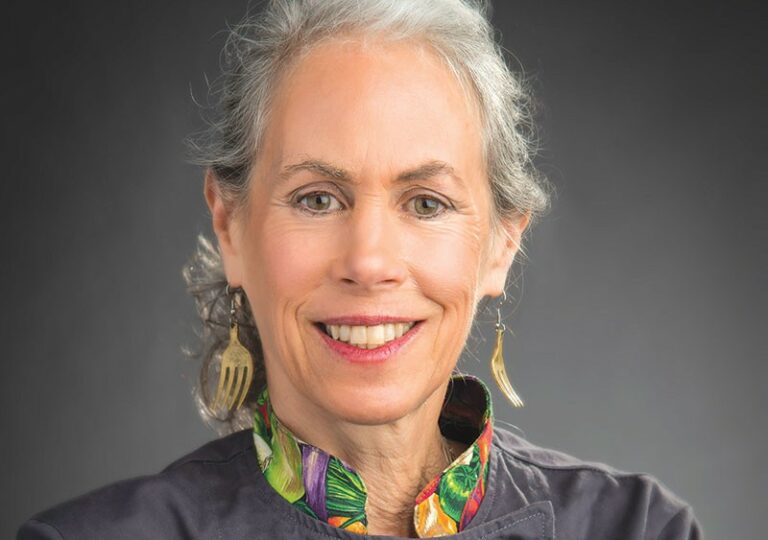
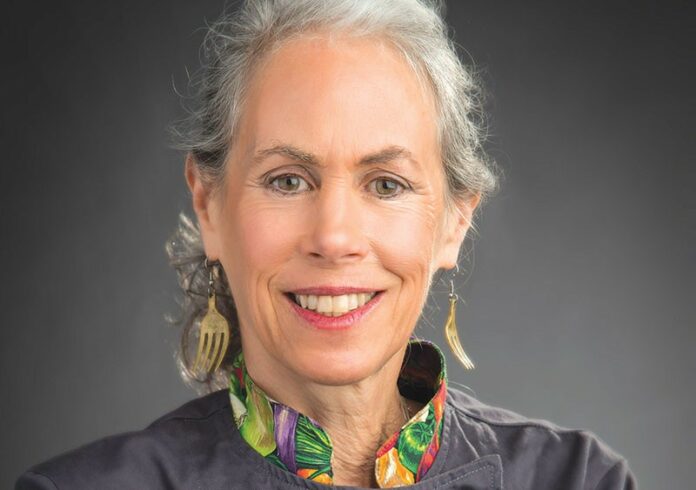
The living series offers a cooking demonstration on winter vegetables hosted by Santa Rosa Junior College culinary teacher and author Jill Nussinow, better known as “the Veggie Queen,” that includes easy-to-make recipes.

Also on the schedule are classes on yoga and ayurveda, a body science designed to treat symptoms naturally with remedies tailored to fit individual needs. Also look for health screenings presented in coordination with St. Joseph Health.

Though many of the classes require pre-registration due to limited space, all events repeat several times over the next four months.

The library has also created a Healthy Living Club in which participants can attend three classes, check out health or fitness books and DVDs, and complete a personal physical challenge to be entered into a prize drawing. Prizes include Sonoma County Parks passes, Fitbit fitness trackers, yoga kits and more.

Beyond prizes, Anderson says a healthy life is reward enough in itself. “I think the community is ready for this.”

Healthy Living at Your Library continues through May at all Sonoma County Library locations. For schedules and registration information, visit sonomalibrary.org.

White Wedding

I've seen enough overheated reviews of blockbuster Cabernets that end with the food pairing wisdom that goes something like this: "And it has the tannins to stand up to a thick, juicy steak." I've heard that some Mosel winemakers like their filet with Riesling, actually. And why not Chardonnay? With the contrarian hunch that food-pairing success might depend as much...

Buds & Budgets

Gov. Jerry Brown released his $180 billion fiscal 2017 budget last week and identified a $1.6 billion deficit, the result, he said, of slower than anticipated growth in the California economy. The deficit's return—the first since 2012—comes in the aftermath of the state's historic yes vote on Proposition 64, which legalizes adult use of recreational cannabis in the state. State agencies...

Lost World

There is weight in the charming 20th Century Women and a seriousness that keeps it from blowing away like a load of styrofoam peanuts in the wind. That weight comes from the realization of how remote the seemingly near past actually is. This is Mike Mills' third and best film (after Beginners and Thumbsucker), and honors the director's mother as...

Pussy Hats Galore!

Sonoma County yarn shops are experiencing a shortage of pink yarn. In preparation for Saturday’s Women’s March on Washington, and its affiliated sister marches countrywide, women are knitting up a storm of pink pussy hats to wear in protest against the president-elect and his sexist rhetoric. Antagonized by the sexism exhibited throughout the election, women of all age groups are rushing...

From Company Town to Rebel City

Rebel cities have long been laboratories for progressive policy experimentation. Specifically, the small Bay Area city of Richmond has stood out for its boldness. It's now the subject of a new book by Steve Early, Refinery Town: Big Oil, Big Money, and the Remaking of an American City. A long-time labor activist and a frequent writer for In These Times,...

Question Time

While it's possible that Sonoma County's new land-use ordinance for cannabis growers will be modified, it's time to prepare for compliance with the new rules. But first I suggest a step back. Do you want to stay in the industry? Do you have a handle on what it will take to get a license? Are you prepared for substantial market...

Wake Up Call

We've all heard the arguments for and against the existence of human-caused climate change. Let's look at climate change from the viewpoint of one of the most conservative institutions on the planet: insurance companies. Articles and analyses from and about the insurance industry's response to climate change paint a clear picture: it's here. In 2013, the Smithsonian Institution published an...

Letters to the Editor: January 18, 2016

Move On Many thanks to Michele Linfante's thoughtful, sensitive and sane contribution (Open Mic, Jan. 11). Her reference to "We Were Made for These Times" by Clarissa Pinkola Estés is powerfully poetic prose and an inspiring read. To the conservatives who write in to say "Suck it up and move on" (Rochelle Torre and Chris Sholes): Do you understand how thoroughly...

Tomorrow’s Art

Opening this weekend at the Petaluma Arts Center, "Discovered: Emerging Visual Artists" exhibits the work of five diversely talented artists living and working in Sonoma County. Creative Sonoma, the county's arts outlet of the economic development board, presents the show as part of a program funded by the Artist Awards Endowment Fund of the Community Foundation Sonoma County. The purpose...

Health Literacy

Want to kick off the new year on a healthy note, but don't know where to start? Check out your local library. The Sonoma County Library is currently hosting an ongoing series, "Healthy Living at Your Library," at all 12 locations through May. Aimed at educating people on healthful eating and cooking as well as physical fitness, the free classes...
11,084FansLike
4,606FollowersFollow
6,928FollowersFollow