Free Will Astrology, Feb. 5-11

0

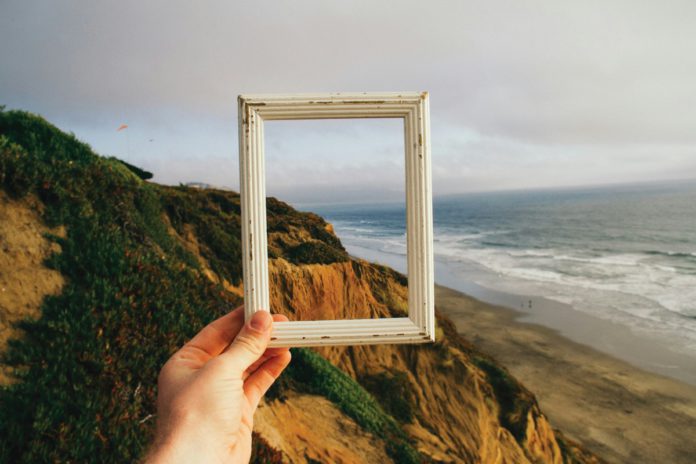
ARIES (March 21-April 19): The world’s largest mirror isn’t an actual mirror. It’s Bolivia’s Salar de Uyuni salt flat, a vast area that’s almost perfectly flat. After a rain, a thin layer of calm water transforms the surface into a perfect reflector that can be used to calibrate observation satellites. In these conditions, it may be almost impossible to tell where the Earth begins and the sky ends. I foresee metaphorically similar developments for you during the coming weeks. Boundaries between different aspects of your world—professional and personal, spiritual and practical—might blur in interesting ways. A temporary dissolution of the usual limits may offer you surprising insights and unexpected opportunities for realignment. Be alert for helpful clues about how to adjust the way you see things.

TAURUS (April 20-May 20): From day to day, glaciers appear static. But they are actually slow-moving rivers of ice that have tremendous creative power. They can make or reshape valleys, moving tons of dirt and rock. They pulverize, grind and topple trees, hills and even mountains. New lakes may emerge in the course of their activity. I invite you to imagine yourself as a glacier in the coming months, Taurus. Exult in your steady transformative power. Notice and keep track of your slow but sure progress. Trust that your persistence will ultimately accomplish wonders and marvels.

GEMINI (May 21-June 20): In recent weeks, have you stirred up any dynamic fantasies about exotic sanctuaries or faraway places or mercurial wild cards? Have you delivered enticing messages to inspiring beauties or brave freedom-fighters or vibrant networkers? Have you been monitoring the activities of longshots or future helpers or unification adepts who might be useful to you sooner than you imagine? Finally, Gemini, have you noticed I’m suggesting that everything important will arise in threes—except when they come in twos, in which case you should hunt for the missing third? P.S.: When the wild things call to you, respond promptly.

CANCER (June 21-July 22): Archaeologists found two 43,000-year-old flutes in Germany. Constructed of mammoth ivory and bird bone, they still produce clear notes with perfect pitch. They were located in a cave that contains ancient examples of figurative art. Some genius way back then regarded art and music as a pleasurable pairing. I propose we make these instruments your power symbols for the coming weeks, Cancerian. May they inspire you to resuscitate the value of your past accomplishments. May you call on the help of melodies and memories that still resonate—and that can inspire your future adventures. Your words of power are regeneration, revival and reanimation.

LEO (July 23-Aug. 22): It’s your unbirthday season, Leo—the holiday that’s halfway between your last birthday and your next. During this interlude, you could benefit from clarifying what you don’t want, don’t believe and don’t like. You may generate good fortune for yourself by going on a quest to discover rich potentials and stirring possibilities that are as-yet hidden or unexpressed. I hope you will be bold enough to scan the frontiers for sources of beauty and truth that you have been missing. During your unbirthday season, you will be wise to gather the rest of the information you will need to make a smart gamble or daring change.

VIRGO (Aug. 23-Sept. 22): Austrian playwright Elfriede Jelinek won the Nobel Prize for Literature in 2004, and Romanian-German author Herta Müller earned it in 2009. But garnering the world’s most prestigious award for writers did not provide a big boost to their book sales. In some markets, their famous works are now out of print. In 2025, I hope you Virgos do in your own spheres what they only half-accomplished in theirs. I would love for you to gather more appreciation and attention while simultaneously raising your income. According to my reading of the astrological omens, this is a reasonable expectation. 

LIBRA (Sept. 23-Oct. 22): By day, Libra-born Forrest Bess (1911-1977) worked as a commercial fisher in Texas. By night, he created visionary paintings inspired by symbols that appeared to him in states between sleeping and waking. Other influences in his art came from alchemy, the psychological philosophy of Carl Jung and Indigenous Australian rituals. His life was living proof that mystical exploration and mundane work could coexist. I’m hoping he might serve you as an inspirational role model. You are in a phase when you have the power to blend and synergize seemingly opposing aspects of your world. You would be wise to meditate on how to find common ground between practical necessity and spiritual aspiration. Are there ways you can unite the desires of your head and heart? Of your need for safety and your longing for adventure? Of your craving for beauty and your fondness for usefulness?

SCORPIO (Oct. 23-Nov. 21): The first emperor of China, Qin Shi Huang, arranged for himself to be buried after death with an army of 8,000 soldiers made from terracotta, which is a clay ceramic. Joining the gang below the Earth’s surface were 770 horses and 130 chariots. For more than 2,000 years, this assemblage was lost and forgotten. But in 1974, farmers digging a new well found it accidentally. In this spirit, I am predicting that sometime in the next five months, you will make interesting discoveries while looking for something other than what you find. They won’t be as spectacular as the terracotta army, but I bet they will be fun and life changing.

SAGITTARIUS (Nov. 22-Dec. 21): Author Zora Neale Hurston said, “There are years that ask questions and years that answer.” I will adjust that counsel for your use, Sagittarius. According to my astrological analysis, the first half of 2025 will ask questions, and the second half will answer them. For best results, I invite you to gather and polish your best questions in the next five months, carefully defining and refining them. When July begins, tell life you are ready to receive replies to your carefully wrought inquiries.

CAPRICORN (Dec. 22-Jan. 19): Hemoglobin is an iron-bearing protein that’s crucial to most life. It enables the transportation of oxygen in the blood. But one species, the icefish of the Antarctic seas, lacks hemoglobin. They evolved other ways to obtain and circulate enough oxygen in the frozen depths, including larger hearts and blood vessels. The system they’ve developed works well. So they are examples of how to adjust to an apparent problem in ways that lead to fine evolutionary innovations. I suspect you’re now in the midst of your own personal version of a comparable adaptation. Keep up the good work.

AQUARIUS (Jan. 20-Feb. 18): Born under the sign of Aquarius, Clyde Tombaugh discovered the heavenly body known as Pluto in 1930. This was years before he earned advanced degrees in astronomy. His early education was primarily self-directed. The telescopes he used to learn the sky were built from tractor parts and old car components from his father’s farm. During the coming months, I surmise there will be elements of your life resembling Tombaugh’s story. Your intuition and instincts will bring you insights that may seem unearned or premature. (They’re not.) You will garner breakthroughs that seem to be arriving from the future.

PISCES (Feb. 19-March 20): One of the world’s deepest caves is Veryovkina in the nation of Georgia. At its lowest, it’s 7,257 feet down. There are creatures living there that are found nowhere else on Earth. I propose we make it your symbolic power spot for now. In my astrological opinion, you will be wise to dive further into the unknown depths than you have in quite some time. Fascinating mysteries and useful secrets await you. Your motto: “Go deeper and deeper and deeper.”

Your Letters, 2/5

Praise for the ‘Graze’ Story

I want to applaud the well written and balanced article by Cole Hersey (“Given, Then Taken,” Jan. 29). In the town hall meeting with Jared Huffman referenced, there was a huge amount of outrage, sadness and disappointment at the outcome delivered. It was refreshing to hear that the Pacific Sun reminds its readers that the ranchers had a choice and took the money, just like they did in the early ’60s. 

Interesting that for all the misdirected anger and cataclysmic changes ahead, ranchers didn’t do just one thing. If the employees, way of life and multi-generational traditions are so important to them, saying so was within their choices. “No” is a complete sentence last time I checked, and some lessees so stated.

Joseph Brooke
Point Reyes Station

Generic but Gendered

Regarding Buck Moon’s “Dumbass Debate” Jan. 22 letter to the editor that objected to me concluding that the play POTUS, etc. or Behind Every Dumbass are Seven Women Trying to Keep Him Alive is misandrist as it’s only hateful of Donald Trump: Please advise him that before he calls someone a “dumbass,” he might want to do his homework, as the play, which opened in 2022, does not show the president. He is treated as a generic man whose name is never spoken.

Joe Manthey
Petaluma

Culture Crush, 2/6

0

Petaluma

Old School Photo Ops

Photo conservator Gawain Weaver unravels the mysteries of early California portraiture in an upcoming workshop offering a deep dive into 19th- and early 20th-century photography. Hosted by the Petaluma Regional Library at the Petaluma Arts Center, the workshop explores how these portraits were made, how to interpret them and what they reveal about the era. “This is an opportunity to place yourself and your family in local history and improve your understanding of the artifacts in your homes and local museums,” said Connie Williams, the history room librarian at the Petaluma Regional Library. Attendees are encouraged to bring their own family portraits for discussion and can even scan them for digital preservation. 10am-noon, Saturday, Feb. 22, at Petaluma Arts Center, 230 Lakeville St.

Santa Rosa

Paws for Love

What happens when shelter pets become painters? The result is a Wine Country winter gala. Paws for Love features original art created by homeless animals, plus live and silent auctions benefiting sick, injured and abused pets. Now in its 26th year, this event raises funds to support animal welfare all year long. The gala runs from 5-9pm, Thursday, Feb. 8, at Finley Center, 2060 W. College Ave., Santa Rosa. Tickets: $50 donation in advance, $60 at the door. More info at pawsforlove.info.

Mill Valley

Wedding Expo

One may say “I do” to the ultimate event-planning experience. Whether they’re part of an engaged couple, planning a milestone celebration or an event pro seeking inspiration, the Marin Wedding & Event Expo is a one-stop shop for all things weddings and special events. At the event, one can meet vendors, explore the latest trends and discover everything from décor to gourmet catering—all under one roof. Plus, an RSVP entitles one to the chance to win raffle prizes. 1-4pm, Sunday, Feb. 23, at the Mill Valley Community Center, 180 Camino Alto. Free admission. RSVP on Eventbrite online at bit.ly/mv-wedding-25.

San Rafael

Galentine’s Crafts

It’s almost time to get that craft on with those best gals (and pals) this Valentine’s Day. The Galentine’s Open Crafting Event is the chance to unleash creativity, celebrate friendship and make something—no crafting experience required. One may bring their own supplies or use what’s provided, and explore a variety of DIY stations. The event is open to all, regardless of gender. 4-6pm, Friday, Feb. 14, at 1033 C St., San Rafael. Ages 18+. Tickets are $47.73 on Eventbrite and available at bit.ly/galentines-craft.

Meet Kimi Barbosa, Director of Positive Images

I met Kimi Barbosa (they/he/she), executive director of Positive Images, during lunch hour at their art-decorated rainbow clubhouse. I entered their spot in step with their door-dasher. Lunch was politely deferred, and we had a friendly chat. 

As Barbosa talked and I listened, I came to see that their cozy and somewhat cramped clubhouse reflected the origins of Positive Images—that of a safe meeting place for queers founded in the darkest years of the AIDS crisis. 

The non-profit’s services now reflect its present moment: resource navigation, youth and adult support groups, an LGBTQI+ therapy fund, workplace sensitivity training, public presentations, school clubs, public events, parade contingents, partnerships and public policy. 

Their progressed mission was the bridge between past and present—an effort to turn all of the North Bay into a safe space for LGBTQI+ people—because a single room, no matter how large and colorfully decorated, is too much like a closet.

CH: Kimi, what is your message for your LGBTQI+ community in these times?

KB: It is a scary time. It feels like the world is against us because, frankly, the world is against us. Many of Trump’s executive orders directly target our community. This is the time—more than ever—to find the light in each other. Support each other. Be the rock for each other. Community care needs to be held very closely for the next four years.

CH: And Kimi, what is your message to the broader community?

KB: We aren’t going to be scared back into the closet or kept from living our truth in our authentic identities. But we need allies. Now more than ever. We need our allies to show up and stand in solidarity with us—visibly, in public, out loud. We can’t do this alone. The CDC has reported that anti-LGBT hate crimes were on the rise even before Trump took office.

Learn more. Visit posimages.org for a complete list of services, history and video introductions with their incredibly stylish staff. Barbosa warns that the Trump administration is cutting off Federal dollars to LGBTQI+ non-profits like Positive Images, so they encourage donations. 

If one feels that their workplace would benefit from queer and trans sensitivity training, Barbosa invites a booking with Positive Images.

Trump 2.0, the Next Narrative

Americans have long been subjected to political and corporate sleight-of-hand, the creation of a narrative that says it is doing one thing while behind the scenes doing another. 

America’s corporate tyrants work with our elected officials to claim they are keeping us safe and secure in our continental cocoon of North America as they spend $1 trillion a year preparing for and engaging in war across the globe. 

This false narrative is part of the long-standing military-industrial complex narrative. It propagates fear so that Americans open their national treasury and allow it to be drained of hard-earned tax dollars to purchase weapon systems that do not work, empty inventories of ammunition on unarmed populations and create endless wars when diplomacy would have resolved the issue. 

Let us not create a moral equivalency between the Democratic Party and the Republican Party or between Donald Trump and Joe Biden, but rather let us highlight to Americans that they now have another narrative containing some truth, some falsehoods and some hysteria, all being aimed their way so they will not object to or attempt to prevent corporate theft abroad or here at home. 

The point is not to obsess about Trump but rather to obsess about the entire American political system. Outrage at Trump must be channeled to the broader system that allows Trump and other elected officials, Democrat and Republican, to commit war crimes, gut our national treasury and benefit their corporate donors, all while pointing the finger at the malevolent character on the other side of the political aisle, or the evil foreigner on the other side of the globe. 

It is time to reject these narratives. The truth of corporate tyranny is outrageous enough. Let us stay focused on that. Brad Wolf is director of Peace Action Network and co-coördinates the Merchants of Death War Crimes Tribunal.

‘I’m Still Here,’ a Portrait of Quiet Bravery Against Injustice

In the opening frames of Walter Salles’ I’m Still Here, we’re introduced to the Paiva family of Rio de Janeiro through a montage of scenes of ordinary life in that fabled tropical city. 

Kids playing futebol and volleyball on the beach, families picnicking, the discovery of a lost puppy, and some fun-loving teenagers smoking a joint and taking videos out the window of their car as they roll down the street—a portrait of carefree people in a warm country.

But before that reassuring sequence, back at the very beginning, the first camera shot foretells a different story. Eunice Paiva (played by Fernanda Torres), mother of five school-age children, is swimming in the gentle surf of Copacabana Beach when a noisy military helicopter flies over. The sight of it stirs a worried reaction on Eunice’s face. Rio de Janeiro in 1970 is under a military dictatorship.

At home, Eunice’s kids enjoy the rising expectations that go along with life in a comfortable middle-class family. The eldest daughter, Veroca (Valentina Herszage), is on her way to stay with friends in England. She and her younger teenage sisters all share a European outlook—keeping their passports current and listening to Serge Gainsbourg records. Even after Veroca and her friends get rousted one night by a police roadblock (searching for leftist students?), there’s the sense that these children essentially have the freedom to do what they want.

Their father, Rubens Paiva (Selton Mello), a former member of Congress now working as an engineer, is another story entirely. Much to the chagrin of his wife, soft-spoken Rubens maintains clandestine connections with people under government suspicion. Late-night phone calls are made, and envelopes are slipped under the door.

Storm clouds are gathering. Politically aware audience members will begin bracing themselves for the worst. The worst indeed happens, and Eunice bears the weight of events for her sheltered family.

As the grim government investigation unfolds, Eunice is put through the same drill that other Brazilian families are being subjected to—in common with residents of Argentina and Chile during the age of rightwing Latin American dictatorships in the 1970s. 

At first, she’s questioned about communists and forced to study a large volume of mug shots of suspected subversives. On one of the pages she finds her husband’s photo. And then she finds her own. Later, Eunice and her daughter, Eliana, are taken away and temporarily imprisoned. When mother and daughter are finally released, Eunice is denied access to the family’s bank account.

I’m Still Here is not an action-packed thriller. Eunice does not join an underground resistance cell or run for office as an opponent of the regime. Her response to the threats against her family is non-violent, yet eventually effective. Quietly fighting on the home front, she starts a letter campaign and rouses public resistance to the government’s assault on her family’s civil liberties. I’m Still Here is essentially a true story. Paiva earned a law degree and became a human rights activist before her death in 2018.

Bertolt Brecht’s Mother Courage, one of the German leftist playwright’s most provocative dramas, could make a fitting brand name for Eunice as well, despite the differences between Brecht’s emblematic anti-heroine—a war scavenger—and the righteous survivor Eunice. Actor Torres has the face and demeanor of a true Mother Courage.

‘I’m Still Here’ is playing at the Smith Rafael Film Center, 1118 4th St., San Rafael. For times and tickets, visit rafaelfilm.cafilm.org.

Given, Then Taken: Point Reyes Plan Ends Most Ranching at National Seashore

Driving out across the Point Reyes National Seashore on Highway 1, one is often surrounded by cattle, long rolling hills and telephone lines. 

Perched atop are red-tailed hawks, looking into the short-grazed grasses beside the open Pacific Ocean for their next meal. 

These vistas, across much of the 71,000-acre park, from Kehoe Beach to Palomarin north of Bolinas, are defined by cattle. For more than 150 years, cattle have grazed these lands in the area we call Point Reyes National Seashore, which has become a defining feature of the park and region for many residents and some 2.5 million visitors.

However, on Jan. 8, the Point Reyes National Seashore announced an amended management plan, which included the voluntary ending of six dairy and six beef ranches in the National Seashore in 15 months. This will reduce the ranching land from 18,000 acres (around a quarter of the park) to about 1,000 acres. Two beef ranches will still operate. Seven ranches in the Golden Gate National Recreation Area will also continue to operate. The Point Reyes National Seashore staff manages these sites.

This decision, coming after a legal settlement agreement from a 2022 lawsuit, is the final compromise in a legal battle that has pitted conservationists determined to return Point Reyes to its wild state against ranchers who have lived and worked on these lands for generations that have now lasted just over a decade.

To be clear, this was a voluntary agreement. But some rancher lease owners did not agree to this voluntary settlement and so will continue operations through their current lease agreement with the Point Reyes National Seashore.

Ranchers, working with the Nature Conservancy, will now begin to work toward phasing out current operations. This includes partnering to ensure that families living on the land, many of whom are employees of the ranchers who made this agreement, are given a fair payout. Ranchers will also help find housing to ensure they do not leave their West Marin community.

“It’s going to present challenges for the local community that are economic, that maybe involve the viability of our local schools, a whole bunch of things that we’re going to need to acknowledge and find ways to come together and work on as a community,” said member of Congress Jared Huffman at a town hall Jan. 11 at the Dance Palace in Point Reyes Station. “So I do support the deal…but I do it in a clear-eyed and sober way.”

Once this process is complete, key changes will begin in the park. The Nature Conservancy, which voluntarily helped in the mediation process and has been appreciated by both sides of this conflict, along with the Federated Indians of Graton Rancheria, will start a conservation and land management process to help preserve and care for this newly de-agriculturalized land. 

What’s more, the herds of tule elk, a native species that was introduced to the area now called Tomales Point in 1978 and to Limantour in 1998, will be managed as a free-ranging herd. This likely means that the elk fence, which has also been a particularly divisive public conflict in the West Marin community, will be augmented. Hence, the elk will be free to roam as far as the seashore, which is more than at any time since their reintroduction. 

Elk Issues

Since their return, the tule elk have been the centerpiece of many disputes in Point Reyes National Seashore, with ranchers claiming they are encroaching and damaging their land while having the potential to be harbingers of disease and taking up food resources from their cattle. Conservationists contend that the elk’s impact on the land, compared with cattle, is far lighter and shouldn’t be a concern for ranchers or the land. This will no longer be an issue, as the elk have essentially won.

“It’s the only National Park where [tule elk] occur,” said Jeff Miller, senior conservation advocate for the Center for Biological Diversity and one of the plaintiffs in the settlement, speaking in a phone interview. “They’re an emblem of the grassland ecosystem out there. They’re a surrogate for the health of the native grasslands.”

According to the amended management plan, the area that will no longer have cattle will be managed as a Scenic Landscape Zone. This would mean that the tule elk could inhabit this new area, and Federated Indians of Graton Rancheria, along with the Nature Conservancy, would help manage the rewilded lands. 

The Future

This will pose some initial and prolonged challenges for the future. While it is true that cattle and other domesticated farm animals consume and graze down much of the native vegetation in an area where they live, harming natural ecosystems and hurting native species, they also help contribute to reducing the chances of large wildfires breaking out in the park itself by eating what might otherwise remain on the land during dry seasons, ready to burn.

The Federated Indians of the Graton Rancheria Nation, working with the Point Reyes National Seashore and the Nature Conservancy, will likely use localized grazing by rented cattle, complemented by additional prescribed burns in the park. 

The grazing, in particular, used in smaller areas and not for commercial use, will help reduce the fuel loads and, therefore, wildfire risk while preserving the current natural beauty of the area. Similar grazing is done at the ecological center in Sonoma County, Pepperwood Preserve.

“So there will be grazing in these new conservation leases,” said Miller. “And the difference is it’s not going to be commercial grazing…They’re basically grazing to achieve these ecological effects.”

Miller pointed out that the grazing will not be year-round but seasonal.

“This is a pretty epic chapter in the history of Point Reyes,” he noted. “This agreement, I think, allows a different management approach. And the thing I’m most excited about is the opportunity to expand the tule elk herds.” 

Miller also mentioned their brush with extinction in the 1800s and how larger herds could help protect tule elk populations across the state.

This settlement was a voluntary mediation agreement between local ranching families and the plaintiffs of the Resource Renewal Institute, Center for Biological Diversity and Western Watersheds Project. Due to the process requiring all involved to sign non-disclosure agreements (a customary practice in mediation) and the lack of public input because of this, many in the community have been angered and saddened by the news and their inability to contribute to the discussion. They have shared their frustration online, in the comments of Instagram posts and Facebook groups, as well as at the local town hall on Jan. 11. 

“I see this as the problem: Eleven families get enough money to go out and buy a house or try to make a life somewhere else, and everybody else has to weather the damage that results from that,” said Kevin Lunny, rancher and part of the mediation and settlement agreement, at the town hall.

Make no mistake that while the overarching goal of the National Park Service is to protect lands and heritage sites, and while this agreement was voluntary, meaning the ranch owners signed and consented to this mediation ending in this agreement, what the ranchers were giving up were multi-generational ranches—their homes and culture. 

Many of us who watch from the sidelines and hear of these legal disputes might marvel at community members’ drama and emotional outpouring. However, what they are losing, regardless of whether one agrees with their decision to do so or not, is a place they have called home for generations. In other words, no part of this decision was easy for them.

“I couldn’t even tell my dad about this decision when it was time. He’s 94 years old. He lives next door on the ranch, still helps with the cows,” Lunny said. 

Later, voicing his frustrations with the process, he openly wondered, “We give up our home, our identity, in exchange for a dollar amount. I’m not saying that we aren’t getting anything. But there was a give on the rancher side, and I want to hear about the give on the plaintiff’s side.”

Speaking on the recent settlement, Michael Bell, protection strategy director for the Nature Conservancy, said, “There was just this underlying conflict that was getting stronger and stronger over the years. And really, this current litigation in question is just a symptom. It’s just one manifestation of this longer conflict.”

This, in many respects, is true. In the creation of the park itself in 1962, the ranchers were given 25-30 year-long leases to engender compromise with the ranchers and the Sierra Club, who, at the time, both wanted to protect the land from development. 

At the end of those leases, ranching could end on the seashore. As known, this did not happen. Over the years, conservationists’ desire for more wildlands placed them more and more against the ranchers and farmers in the seashore—in conflicts arising from oyster farms to tule elk fences and the ranches themselves. The settlement is just a piece of the years of conflict between these two groups, which have starkly different ideas of what should be done with this land. 

However, as climate change has dramatically worsened over time, with severe drought contributing to the closure of McClure’s Ranch in 2021, there is a very real question of how long many of these places would have lasted into the future. As droughts last longer, and as winter storms get all the more ferocious, muddying and damaging the grazing land, many ranchers in the greater Marin and Sonoma region will have to wonder about how well they can still successfully tend to the land in this way.

Change on Horizon

Whatever led to this agreement behind the closed doors of mediation, one thing is sure: The landscape of Point Reyes National Seashore will look very different in the coming years. We don’t know precisely what these ranching areas will one day look like, possibly teaming with elk, new woodlands or coyote brush chaparral, bringing their particular beauty, excitement and challenges to the land and communities that live beside it. 

For some, this marks a day of hope for remedying the ecological damage Europeans caused centuries ago to these lands. For others, it is a complete gutting of a beloved history, livelihood and culture that might never be seen again.

Free Will Astrology for Week of Jan. 29-Feb. 4

0

ARIES (March 21-April 19): In medieval Europe, beekeepers made formal reports to their hives of significant events in the human world, like births, deaths, marriages and departures. They believed the bees needed to be continually informed so as to ensure robust honey production. The practice was called “telling the bees.” Let’s make this an inspiring story for you in the coming weeks, Aries. I invite you to keep your community fully apprised of what’s happening in your life. Proceed on the assumption that sharing your plans and changes with others will generate harmony and support. Like the beekeepers, you may discover that keeping your community in the loop will strengthen your bonds and sweeten your endeavors.

TAURUS (April 20-May 20): A regular guy named Jesse Ronnebaum bought an old painting at a yard sale for 50 cents. For the next 10 years, it hung on the wall in his living room. Then he noticed a dim inscription on the painting that suggested maybe it was more valuable than he realized. Consulting an art dealer, he discovered it was an unusual composition that featured the work of seven prominent artists—and was worth a lot of money. Ronnebaum said, “Years of struggling, barely making bills and the whole time there’s $50,000 hanging over my head, literally.” I am predicting metaphorically comparable events unfolding in your life during the coming months, Taurus. Hidden value will no longer be hidden. You will potentize neglected sources of wealth and finally recognize subtle treasures.

GEMINI (May 21-June 20): In Namibia’s arid grasslands, fairy circles periodically emerge. They are highly regular rings of bare land encompassed by vegetation. What causes them? Supernatural entities, as believed by the local people? Sand termites or hydrogen-loving microbes, according to a few scientists? As yet, no definitive explanation has emerged. I love that. I cherish mysteries that thwart attempts at rational explanation. In accordance with astrological omens, Gemini, I invite you to specialize in tantalizing and unsolvable enigmas in the coming weeks. Your soul needs rich doses of provocative riddles, mysterious truths and fun puzzles. Exult in the liberating declaration, “I don’t know!”

CANCER (June 21-July 22): Wherever you wander, be alert for signals that remind you of who you used to be. This will stimulate your creative speculation about who you want to evolve into during the next few years. As you ruminate about your history, you will get inspirations about who you want to become. The past will speak vividly, in ways that hint at your best possible future. So welcome clues from people who are no longer alive. Be receptive to old allies and influences that are no longer a central part of your world.

LEO (July 23-Aug. 22): “Crown shyness” is a phenomenon seen among some trees like lodgepole pines. In forests, they grow big and strong and tall, yet avoid touching each other at their tops. This creates canopies full of pronounced gaps. What causes this curious phenomenon? First, if branches don’t brush up against each other, harmful insects find it harder to spread from tree to tree. Second, when winds blow, branches are less likely to collide with each other and cause damage. There’s a third benefit: More sunlight penetrates to the forest floor, nourishing animals and other plants. I propose that you adopt crown shyness as a metaphor for your use, Leo. Express your beauty to the max—be bold and vivid and radiant—but also provide plenty of space for your allies to shine. Be your authentically amazing self, but create boundaries that allow others to be their amazing selves.

VIRGO (Aug. 23-Sept. 22): Some astrologers assert that you Virgos suffer from an ambition deficit. They authoritatively assert that a fiery aspiration to achieve greatness never burns hot within you. But in the coming months, I will work to show you a different perspective. Let’s start now: Many of you Virgos are highly skilled at being self-sufficient. But sometimes this natural strength warps into a hesitancy to ask for help and support. And that can diminish your ability to fulfill your ambitions. My goal will be to celebrate and nurture your self-sufficiency even as I coach you to be dynamic about gathering all the assistance you can.

LIBRA (Sept. 23-Oct. 22): Life is not fair. In the coming days, you will be odd proof of this fact. That’s because you are likely to be the beneficiary of uncommon luck. The only kind of karma that will be operating in your vicinity will be good karma. X-factors and wild cards will be more available to you than usual. Your timing will be impeccable, and your intuition will be extra incisive. You may even be tempted to theorize that life is conspiring to bring you an extra supply of meaningful experiences. Here’s the clincher: If anyone in your sphere is prone to feeling envy because you’re flourishing, your charm will defuse it.

SCORPIO (Oct. 23-Nov. 21): Here are three questions to ruminate on: 1. What resources are you afraid you will run out of or squander? 2. What if your fear of running out or squandering these resources obstructs your ability to understand what you need to know and do so that you won’t run out or squander them? 3. How can you dissolve the fear and feel confident that the necessary resources will keep steadily flowing in, and you will use them well?

SAGITTARIUS (Nov. 22-Dec. 21): Most stars have at least one companion star, sometimes two. Our sun, which is all alone, is in the minority. Astronomers have found evidence that our home star once had a companion but lost it. Is there any chance of this situation changing in the future? Might our sun eventually link up with a new compatriot? It’s not likely. But in contrast to our sun’s fate, I suspect that 2025 will offer you a significant diminishment in your personal loneliness quotient. If you crave more camaraderie and togetherness, the coming months will be a favorable time to seek them out. Your meditation question: What’s the opposite of loneliness?

CAPRICORN (Dec. 22-Jan. 19): In the coming weeks, your authenticity will be your greatest strength. The more genuine and honest you are, the more life will reward you. Be alert for situations that may seem to demand camouflage when in fact they will ultimately reward your complete transparency. You will be most powerful and attractive as you allow yourself to be fully seen. You can even use your vulnerability to your advantage. Be openly, clearly, unabashedly yourself.

AQUARIUS (Jan. 20-Feb. 18): As I envision your life in the coming weeks, I am moved to compare you to certain birds. First, there will be similarities between you and the many species that can literally perceive Earth’s magnetic fields, seeing them as patterns of shadow and light overlaid on their regular vision. You, too, will have an uncanny multi-dimensional awareness that helps guide your travels. Secondly, Aquarius, you will be like the migrating songbirds that recalibrate their internal compass every day when the sun sets. In other words, you will make steady efforts to ensure that your magical ways of knowing are grounded in earthy rhythms.

PISCES (Feb. 19-March 20): In some Polynesian cultures, there is a belief that one’s mistakes, including excessive anger, can cause physical sickness. Hawaiians traditionally have employed a ritual remedy for such ills called ho’oponopono. It includes acts of atonement, forgiveness and correction. It may even involve a prayer conference where all the people involved talk about their mutual problems with respect and compassion, seeking solutions and restitution. The coming weeks will be a fantastically favorable time for you to carry out your own version of ho’oponopono, Pisces.

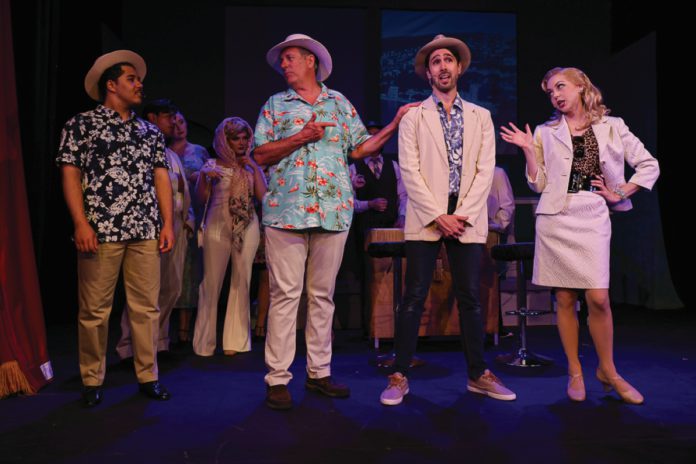
Ghost Story: ‘Mary Shelley’s Body’ Rises at Spreckels

Local playwright (and occasional Bohemian contributor) David Templeton wrote Mary Shelley’s Body, his one-woman show, specifically for friend and longtime artistic director of Spreckels Theatre Company Sheri Lee Miller. 

A true testament to the considerable acting skill set of Miller, the play is a briskly paced exploration of what happens when a literary titan wakes up dead and feels urged, by forces unseen, to tell her story. It runs at the Spreckels Performing Arts Center in Rohnert Park through Feb. 2.

Minimal design work wonderfully captures the hazy, unknowable world between where the body ends and the soul begins. A simple graveyard is the setting, filled out by gauzy flowing curtains and a large crypt-like stone that Miller frequently splays out on while lightning flashes and thunder rolls. The atmosphere is effective as hell.  

As Mary Shelley weaves tales of her life and her most famous creation, Frankenstein’s monster, the audience is transported to far-flung locales such as Geneva, Switzerland, and the dirty streets of early 1800’s London. At times funny, at times grotesque, Shelley monologues through two short acts in an attempt to figure out why she has not moved on from the human plane. Through her reveries, we become privy to her darkest secrets and most heartbreaking moments.

It is Miller’s ability to create a whole world for us that is the most successful aspect of this piece. Miller displays a beautiful sense of public solitude, and moves from discovery to discovery naturally, with the ease of a seasoned performer. Her hands move like a conductor’s, telling strange and eerie accounts that we can actually visualize, while her bare toes wiggle delightfully each time she perches on her grave. This is head-to-toe acting, and was much appreciated by this reviewer despite a slightly uneven beginning to the play. 

Part fiction, part biography, the script uses mysticism and alchemy to round out what was a very sorrowful life for the female author, who dealt with her fair bulk of struggles before dying at age 53. The finale leaves us hanging on a rather abrupt note. But this just means our imaginations must take us beyond the veil with Shelley as she seeks out her next purpose. 

A showcase performance and a creative, evocative and original script by a local playwright make Mary Shelley’s Body well worth one’s time. 

‘Mary Shelley’s Body’ runs through Feb. 2 in the Condiotti Experimental Theater at the Spreckels Performing Arts Center, 5409 Snyder Ln., Rohnert Park. Fri-Sat, 7:30pm; Sun, 2pm. $14–$32. 707.588.3400. spreckelsonline.com.

Dying is Easy; Reincarnation as a Comedian is Hard

We were at the Barrel Proof Lounge in Santa Rosa, waiting for its open mic to start. This would be my first outing in 2025, and I hoped to redeem myself.

“So why do you do this?” my friend asked. I had no answer. 

“Because he wants to be the next great standup comedian in Sonoma County,” my other friend replied on my behalf.

That sounded appealing but felt a bit off the mark. Yes, in my wildest dreams, I’m playing the Fringe Fest next to Emo Philips. I go viral and maybe even get paid. But if I’m honest, that wasn’t it.

Perhaps it started as exposure therapy, facing my fear, becoming stronger through what didn’t kill me. But I think it’s become more like a gambling addiction.

I was addicted to getting laughs. Any would do: a chuckle, a wild titter. I once got a single guffaw from a fellow comedian and felt I’d won a major award (the joke: “Black people have been through so much in this country….slavery, Jim Crow, Iggy Azalea”). But when things go badly, when I’d penciled in “wait for laughter” and waited in awkward silence, that was like losing with a great poker hand. And I found losing to be its own motivator.

Many nights, I’ve walked home from a bad open mic thinking, “I’m done. That was terrible.” But my next thought would be, “Why was it so bad?” And by the time I’d gotten home, I’d jiggered my act and was planning my next set.

My last open mic in 2024 had been sparsely attended, with a few friendly-looking faces far in the back but a long stretch of uninhabited tundra between them and the stage. The closest patrons to the stage were two slack-jawed guys already a few beers in who looked more ready to fight than laugh.

A few weeks before, I’d had one of my best outings there. The room was packed and energetic. Every joke landed, and I finished with an original song that got big laughs and worked even though I struggled with the chords. It didn’t matter; the crowd was with me. It was magical. 

Two weeks later, I was dying on the very same stage. I began with the gag that since they had separate mics for comedy and music, the comedy mic must have unique humor-boosting powers. My bit got smiles—deathly quiet smiles. I’d bombed.

There are few things worse than watching bad standup comedy. With a bad musical performance, there’s some structure to indicate when it will end. But watching a comic flail around for five minutes is uncomfortable. The only thing more painful is to be that person on the stage.

I pressed on, trying out some new material, trying to lean into the experience of being Jewish in America in 2024, but this crowd was not having it. At one point, I suggested that being circumcised made you Jewish, and someone with a mustache yelled out indignantly, “I’m not!”

I threw in a little political humor, which finally got a laugh out of one of the hosts. But the next guy who came up yelled, “Fuck politics!” and the crowd applauded as if to say, “Fuck that last guy, specifically.”

Message received. I sat down and took some schadenfreude in the laughless sets that followed.

But that was 2024. This was a new year. I was ready for a redo.

But why?

Origin Story

Every superhero and supervillain has an origin story—the moment they realized they had a special destiny and wouldn’t have an everyday life. I can’t say if the same applies to all stand-up comedians, but I knew exactly when it all started for me.

For me, it began in that staple of standup comedy: an airport. My traveling companion was on edge. Perhaps preflight jitters, the excitement of going on vacation, the exhaustion of an early travel day? I didn’t know. But I knew what to do with tension: Defuse it with humor!

While we waited to go through security, a man covered in weapons and walkie-talkies led a dog on a leash up and down the line. I watched the dog. It seemed even more high-strung than my friend. It gave each bag a quick sniff and moved on to the next one, mechanical in its precision. This dog made me feel like a slacker. It had a better work ethic than I did.

“Do you think that dog just ever gets to be a dog?” I asked my friend.

She was a million miles away. “I don’t know,” she said.

“Like, does that dog ever get to go to dog parks?” I wondered.

“Maybe they have special parks,” she offered after a pause.

“Yeah, I can imagine that. ‘The things I had to sniff today, you wouldn’t have believed it,’” I said. She gave a tiny, tight smile. Encouraged, I went on like this for some time.

Usually, she laughed easily, but I couldn’t even get a smile out of her. I took it as a challenge and pulled out all the stops. Nothing, nada. After we’d exited the security line, I asked, “You didn’t like the bit I was doing about the drug-sniffing dog? I felt like I was doing standup comedy for you.”

“I had pot in my purse,” she said between gritted teeth. 

It got me thinking. Could I actually do standup? Yes. Could I get laughs? Well, that was a different question.

Barrel Full of Mirthmakers

Back to the Barrel Proof Lounge. I asked the host, “How many people here tonight aspire to make it in comedy?”

He looked at the list. “Maybe three,” he said. “And then six more are delusional.” I was somewhere in between.

My nerves were kicking in hard before I went up. Jon had confirmed that I’d have four minutes and then would flash a light to let me know I had one minute left, typical in my experience. I told him I’d recorded my set on my phone, which came to precisely five minutes. 

“Did you leave in pauses for laughter?” he asked. 

I replied, “Oh, I’m not expecting laughs.”

The spotlight hit hard. The crowd looked like silhouettes. After a rocky start, I found my rhythm. When my time was up, I sat down, unsure how it had gone. It felt quiet up there, two jokes in particular falling flat. But the video told a different story. It was a good outing— I’d gotten laughs.

The acts that followed mine were mixed. One guy yelled about how his liberal friends didn’t understand the joy of “outdoor couches” and how we almost lost the country on January 6 to “the waiting room at an Applebee’s.”

Later that evening, a comedian riffed on my act, ending with a joke about a three-bean salad that was too much.

I approached him after his set and asked, “Do you know why an Irish bean stew only contains 239 beans?” He didn’t know. I told him: “Because if it had one more, it would be two forty” (pronounced “too farty”). He laughed, and we fist-bumped—two strangers sharing a laugh, perhaps the purest expression of standup comedy.

Free Will Astrology, Feb. 5-11

ARIES (March 21-April 19): The world’s largest mirror isn’t an actual mirror. It’s Bolivia's Salar de Uyuni salt flat, a vast area that’s almost perfectly flat. After a rain, a thin layer of calm water transforms the surface into a perfect reflector that can be used to calibrate observation satellites. In these conditions, it may be almost impossible to...

Your Letters, 2/5

Praise for the ‘Graze’ Story I want to applaud the well written and balanced article by Cole Hersey (“Given, Then Taken,” Jan. 29). In the town hall meeting with Jared Huffman referenced, there was a huge amount of outrage, sadness and disappointment at the outcome delivered. It was refreshing to hear that the Pacific Sun reminds its readers that the...

Culture Crush, 2/6

Petaluma Old School Photo Ops Photo conservator Gawain Weaver unravels the mysteries of early California portraiture in an upcoming workshop offering a deep dive into 19th- and early 20th-century photography. Hosted by the Petaluma Regional Library at the Petaluma Arts Center, the workshop explores how these portraits were made, how to interpret them and what they reveal about the era. “This...

Meet Kimi Barbosa, Director of Positive Images

I met Kimi Barbosa (they/he/she), executive director of Positive Images, during lunch hour at their art-decorated rainbow clubhouse. I entered their spot in step with their door-dasher. Lunch was politely deferred, and we had a friendly chat.  As Barbosa talked and I listened, I came to see that their cozy and somewhat cramped clubhouse reflected the origins of Positive Images—that...

Trump 2.0, the Next Narrative

Americans have long been subjected to political and corporate sleight-of-hand, the creation of a narrative that says it is doing one thing while behind the scenes doing another.  America’s corporate tyrants work with our elected officials to claim they are keeping us safe and secure in our continental cocoon of North America as they spend $1 trillion a year preparing...

‘I’m Still Here,’ a Portrait of Quiet Bravery Against Injustice

In the opening frames of Walter Salles’ I’m Still Here, we’re introduced to the Paiva family of Rio de Janeiro through a montage of scenes of ordinary life in that fabled tropical city.  Kids playing futebol and volleyball on the beach, families picnicking, the discovery of a lost puppy, and some fun-loving teenagers smoking a joint and taking videos out...

Given, Then Taken: Point Reyes Plan Ends Most Ranching at National Seashore

Driving out across the Point Reyes National Seashore on Highway 1, one is often surrounded by cattle, long rolling hills and telephone lines.  Perched atop are red-tailed hawks, looking into the short-grazed grasses beside the open Pacific Ocean for their next meal.  These vistas, across much of the 71,000-acre park, from Kehoe Beach to Palomarin north of Bolinas, are defined by...

Free Will Astrology for Week of Jan. 29-Feb. 4

ARIES (March 21-April 19): In medieval Europe, beekeepers made formal reports to their hives of significant events in the human world, like births, deaths, marriages and departures. They believed the bees needed to be continually informed so as to ensure robust honey production. The practice was called “telling the bees.” Let’s make this an inspiring story for you in...

Ghost Story: ‘Mary Shelley’s Body’ Rises at Spreckels

Local playwright (and occasional Bohemian contributor) David Templeton wrote Mary Shelley’s Body, his one-woman show, specifically for friend and longtime artistic director of Spreckels Theatre Company Sheri Lee Miller.  A true testament to the considerable acting skill set of Miller, the play is a briskly paced exploration of what happens when a literary titan wakes up dead and feels urged,...

Dying is Easy; Reincarnation as a Comedian is Hard

We were at the Barrel Proof Lounge in Santa Rosa, waiting for its open mic to start. This would be my first outing in 2025, and I hoped to redeem myself. “So why do you do this?” my friend asked. I had no answer.  “Because he wants to be the next great standup comedian in Sonoma County,” my other friend replied...
11,084FansLike
4,446FollowersFollow
6,928FollowersFollow