Deliver Me

After public outcry nixed a plan that would have brought four brick-and-mortar cannabis dispensaries to unincorporated West Marin County, the board of supervisors is now pushing out an ordinance that would render the county’s cannabis business a delivery-only affair.

But the revised ordinance is still not good enough, says Amos Klausner, a San Geronimo resident who opposed the dispensaries and now opposes pot delivery, too, which he says would create crime, traffic and other public-safety issues for the unincorporated parts of the county. Among other issues, Klausner is concerned about cannabis warehouses, which he says would be a magnet for crime in a part of the county with scant law enforcement resources.

“We don’t have a police force out here; we have sheriff who rolls by once a day,” says Klausner, a 45-year-old native New Yorker who has lived in Marin County for two decades.

Klausner uses medical cannabis and says that he gets his product mostly from the Harborside dispensary in Oakland. He hopes and expects that the latest ordinance under consideration will have an ample public hearing.

The main issue for him is that the county seems intent on shunting whatever cannabis businesses do develop in the post–Proposition 64 landscape into West Marin. “San Rafael has a robust police force,” he says, “and we have nothing. If everyone’s got it, then I’m OK with it, but you can’t force it upon a small group of people.”

Many towns in Marin County have passed laws to keep storefront cannabis out of their communities. The notable exception is Fairfax, which again has an operating dispensary, the Marin Alliance for Medical Marijuana, which opened in 1996, was shut down by the feds in 2001 and reopened in June.

The irony of Marin County’s conservatism in the face of the cannabis legalization initiative Proposition 64 is not lost on Klausner. But neither is the associated crime that comes along with big grows, he adds, citing a raft of gruesome and pot-related crimes that have sprung up in Mendocino County in recent years.

Brian Bjork, the founder and owner of Marin Herbals, which delivers medical cannabis throughout the county, counters that “safety is not any more of an issue in delivery than in a storefront.” Bjork would like to have a storefront operation and says the county should allow them.

Bjork, a 35-year-old Marin County native who has been in the medical-cannabis business for a decade, notes the irony of a self-identified “progressive” county that gave rise to the 420 movement and the Grateful Dead, but has emerged as one of the more cannabis-wary counties in the region.

Community Policeman

0

The Sonoma County Sheriff’s office needs to get back to basics: put public safety first, make sure we’re fair and accountable, and build partnerships to better engage with the communities we serve.

I’ve worked for the Sonoma County Sheriff’s Office for more than 23 years, starting as a correctional officer in the jail and holding 10 different posts throughout the organization. Having served as both administrative and field services captain, I’ve been responsible for the day-to-day operations of multiple divisions, managing budgets greater than $50 million and overseeing more than 250 employees who provide public safety around the clock.

In 2014, I represented the sheriff’s office on the local law enforcement task force. Our charge was to examine the relationship between public safety and the communities we serve and to correct problems with transparency, oversight and community relations. At the same time, I led the personnel and internal affairs units—giving me perhaps more perspective than anyone about what was working and what needed repair.

I’m very proud of my work as the founder and director of the Sheriff’s Office Crisis Intervention Training (CIT) program. I worked with Sonoma County Mental Health to train peace officers in de-escalation and intervention techniques to help those in mental-health crisis. More than 400 peace officers in Sonoma County have completed the training, and the program is still active today.

Through all of this, I’ve learned that the ability to listen is the single most important tool we have in public safety—it’s an idea I’m taking very seriously as I kick off a series of town hall meetings throughout Sonoma. Visit my website at markessick.com, or follow me on Facebook for times and locations.

My wife and I are proud to call Sonoma County home—it’s where we’ve raised our children and watched them grow and give back to the community that means so much to our family.

We’re committed to Sonoma County, and I know you are, too. I’m confident that if we all work together, we can keep Sonoma County a special place to live for another generation. I hope you’ll join me.

Mark Essick is a captain with the Sonoma County Sheriff’s Office and a candidate for sheriff in the 2018 election. This is the second in an occasional series of editorials from the candidates.

River Song

0

When she’s not writing dynamic Americana music, Petaluma’s Avery Hellman—who performs under the name Ismay—is likely to be found working her ranch or riding horses on extended travels throughout the American West.

Last summer, Ismay combined her passion for song and travel in a month-long trip along the Klamath River, running over 200 miles between southern Oregon and Northern California, which she documents in the new short film, “Songs of the Klamath: Exploring the Connections Between the Arts and Environment.”

Also an avid environmentalist, Ismay ruminates on the importance of the relationship between nature and creativity in “Songs of the Klamath.” The film grew out of an initial project wherein Ismay wrote original songs and took photographs while trekking through the wilderness. With the aid of a grant by Creative Sonoma, she recently completed the film and will premiere it at a fundraiser for Friends of the Petaluma River.

“Songs of the Klamath” screens with live performances by Ismay and Quiles & Cloud on Saturday, Sept. 23, at David Yearsley River Heritage Center, 100 East D St., Petaluma. 6:30pm. $15 and up. songsoftheklamath.brownpapertickets.com.—Charlie Swanson

Not So Fast

0

Concerned about rapid development in the small Napa County town, a group of St. Helena citizens has filed paperwork with the city clerk demanding a recall election to remove Mayor Alan Galbraith from office.

Galbraith has been criticized by a group of 25 St. Helena citizens for inadequately addressing concerns over a series of developments, both planned and in the works, that have unfolded over the past year.

Those developments include a proposed hotel development on city land, an attempted expansion of the Culinary Institute of America’s student housing and an expansion of Beringer Vineyards’ footprint in town, says Kathy Coldiron, one of the citizens seeking Galbraith’s removal from office.

Another driver for the recall effort was a recent spike in water bills spearheaded by Galbraith, she says, and approved by the city council.

“I’ve lived here for 25 years,” says Coldiron, “and what’s happened in the last few months is unprecedented—this fast-track push on development with very little discussion.”

Coldiron says that development issues were typically discussed over a series of meetings, but are now expedited. She says Galbraith has a tin ear to citizen concerns over water security and sewage issues that attend new development projects.

Public participation is a hallmark of the St. Helena civic style, says Coldiron. “Then there’s usually some kind of compromise, not always, but at least you were able to be heard, and the pros and the cons were discussed.

“The last few months, there’s been a very noticeable difference in the projects that are coming in— there’s no long-term discussion, then approval and then shock.”

Reached for comment by phone and email, Galbraith responded by sending the statement he issued when the recall effort was announced on Sept. 6.

“I do not welcome a recall effort,” writes Galbraith. “If the voters are dissatisfied with my tenure as mayor, they have an opportunity to elect a new mayor in November 2018. To mount a recall campaign in the middle of my term will be extremely disruptive to the work of the city council, and, even if it succeeds, is unlikely to shorten my term by more than a few months. This does not make good sense and threatens to waste taxpayers’ money on a special election.”

The St. Helena City Council’s majority view of the recall effort is to institute some sort of “mediation” process between unhappy citizens and Galbraith, who was elected in 2014 and whose term ends next fall.

Councilmember Mary Koberstein also responded to a request for comment from the Bohemian with a statement she issued when it was announced. She’s opposed to the effort and says that “after eight months of council actions on a host of controversial issues, I recognize that these recall proponents, as well as other disparate interest groups, are sometimes disappointed by our process and the results.”

Koberstein urged the city to hire a neutral mediator to sort out the competing issues, and notes that “the real cost of this recall will not be measured in dollars spent. The real cost is that we will undoubtedly further divide into opposing camps, and at a time when we face a multitude of decisions that require our collective and thoughtful attention.”

Koberstein was joined by councilman Paul Dohring in calling for a mediator.

First-term St. Helena councilman Geoff Ellsworth, who ran for and won his seat largely out of his concern for overdevelopment and too many wineries in Napa County, says he’s on board with the mediation plan but hasn’t yet taken a position on the recall itself.

As a member of Citizens’ Voice St. Helena in 2015, Ellsworth was one of five St. Helenans to sign a letter directed at the first-term mayor Galbraith, a former planning commissioner, announcing that the nonprofit had been formed out of a “concern that in a rush to raise revenue, the city is selling the town’s rural character and our quality of life.” The letter identifies numerous development projects in the hopper and notes that, among other pro-developer gestures, the city’s proposed updated general plan lifted caps on hotel and restaurant development, and “as a result, there is a 70-room hotel under construction next to the Beringer winery.”

To stop the flood of development, the letter continued, “will require a coalition of concerned citizens to speak up before it’s too late.”

Now that those concerned citizens are speaking up, is it too late?

[page]

Ellsworth says he left Citizens’ Voice when he was elected to the city council in 2016, and now indicates that the city, led by Galbraith, offered a pro-development posture to keep the city’s tax revenues flowing, without much of a long-term strategy in place to manage any unforeseen consequences.

“What I see is that, in perhaps looking for outside solutions, the day-to-day issues here have been neglected,” Ellsworth says.

Those day-to-day issues include strains on the city’s water and sewage systems and a chronic lack of affordable housing in a town that’s now building hotels for deep-pocketed wine tourists.

Ellsworth says he’s been talking with civic leaders outside of Napa County, in Healdsburg and the city of Sonoma, boutique towns facing similar development pressures driven largely by wine tourism. “This is an issue that probably we should have seen coming and started to address earlier, but I think we can still do it,” he says.

The particulars of tiny
St. Helena, he says, don’t support large corporate wine centers and big hotels. There’s a pair of two-lane roads leading into and out of town, “and if we don’t have more road space—and I don’t want more road space—that’s a limiting factor. For years, we’ve tried to keep this as a small agricultural-centric area.

“Regional development and large-scale projects,” he adds, “should go to places that have the infrastructure to handle that influx of people.” Places like the city of Napa or Vallejo, he says. “We can protect the delicate areas and allow for some growth and balanced development. St. Helena can’t handle the capacity that the city of Napa can.”

Ellsworth cites the phenomenon of “urbanization by over-visitation” as a trend that needs to be managed as it descends on quaint localities like St. Helena.

In opposing the recall effort, Ellsworth was joined by Susan Kenward of Citizens’ Voice who tells the Bohemian via email that she’s opposed to the recall effort, too, and instead supports a mediation plan between Galbraith and his critics. Speaking for herself and not the organization, which hasn’t yet met to discuss the recall effort, Kenward says, “I think both Mary [Koberstein] and Paul [Dohring] are correct in that mediation is always the best idea. Everyone needs to be heard and their issues validated.”

According to Galbraith, a successful recall campaign would shorten his term by only a few months, raising the specter that the effort is a waste of time and money, since it would take place mere months before he is up for re-election. The city clerk has to certify the initial request for a recall election petition, and then the group has to collect about 850 signatures to trigger an election.

Coldiron says shaving any time off of Galbraith’s term could serve to stem the tide of development, or at least give pause to some of the proposals.

Given the pace of proposed projects and approvals and what’s perceived as Galbraith’s pro-development stance, even a few months might make a difference, she says, if Galbraith can be removed from office by next summer.

In the meantime, Ellsworth says he’ll continue to listen and seek compromise, short of removing Galbraith from office. In his eight months on the council, he says, “developing patience for listening has been the most important thing—learning to listen so you can get as much detail and facts to come to some balance where you are trying to listen to both sides.”

The problem in St. Helena, says Coldiron, is that only one side has been represented of late: the pro-development side.

That dynamic was in full effect, she says, in recent discussions over a property next to the city library that’s owned by the city and has been the subject of intense speculation. “Over the past few years, different ideas have come up and not been resolved—should it be a community center, a hotel, open space? As far as we can see, [Galbraith] is for the hotel.”

In his statement opposing the recall effort, Galbraith insists he’s not in the pocket of big developers and is motivated only by his concern for the long-term fiscal health of St. Helena.

“There will always be differences of opinion over major policy decisions,” he writes, “but for as long as I have been a public servant here in St. Helena, I have sought to contribute my experience and perspective in ways that serve the long-term interest of the community as a whole.”

The Bear Roars

0

I pull into the parking lot and nab a spot in front—I can already tell it’s busy at the new Bear Republic brewpub on Robert’s Lake in Rohnert Park.

It’s opening night and everybody has the same idea as me: grab a beer and check out the new place. Bear Republic Brewing Co. opened in 1995 in Healdsburg; Rohnert Park is its second location.

After I put my name on the list, the hostess encourages me to head out to the lakefront patio where I can hear a sea of voices and a band. I open the doors and am immediately enveloped in sound. Bear Republic has put plenty of thought into how to utilize such a large space, and they’ve managed to make it cozy and fun in every corner. On one end of the patio, you’ll find games; on the opposite side, tables line up in front of an outside bar. In the middle of the patio, a band plays bluegrass underneath giant palm trees.

What strikes me most is that everyone looks so happy. Older couples dance along to the band, all the games have players, and nobody seems bothered by the fact that there’s no place to sit.

The menu is typical brewpub fare. For starters, I go for the fried calamari ($12), artichoke and spinach dip ($8) and macaroni and cheese ($11). The order of calamari is small, but lightly battered and good. The dip is so creamy it runs off of the chips. The best is the macaroni and cheese. The cheese is thick, and it’s garnished with breadcrumbs and herbs that elevate the dish.

For opening night, the only entrée options are pizza and hamburgers. I order Bear Republic’s most popular burger, the Black and Blue ($15). The smoky taste is slightly overwhelming, and I find it hard to taste much else. But Cajun spices and sliced avocado buoy the burger.

I also have to taste some of the pizza, so I go with a vegetarian option this time: the Garden Pizza ($14). Like the skimpy calamari, the artichoke hearts, red onions. zucchini and bell peppers on the pizza are few in number but still satisfying.

And the beer? Of course I order Robert Lake’s Sunset Wheat ($6 for 16 ounces), a newer addition to the menu. It doesn’t have the citrus and fruit flavors I associate the wheat beer, but leans toward a Racer 5 with a fuller hoppy flavor and a classic wheat finish.

Bear Republic is off to a great start.

Bear Republic Brewing Co.,
5000 Roberts Lake Road, Rohnert Park. 707.585.2722.

October Suds

0

Autumn in the North Bay means Oktoberfest events galore, lederhosen not required. The longtime Bavarian beer festival is transformed into funky and fresh events in Sonoma and Napa counties that highlight our foaming-over beer scene served with live entertainment.

Oddtoberfest St. Helena’s independent order of Odd Fellows debuts the inaugural Oddtoberfest with a mix of sumptuous food, local beers and music that embraces harvest time’s simple pleasures. Saturday, Sept. 30, at Odd
Fellows Hall #167, 1352 Main St., St. Helena. sh-oddfellows.org.

Bier Fest Twenty seventeen marks the 30th anniversary of the Napa Valley Brewing Company, brewed and sold exclusively in the Calistoga Inn. To mark the occasion, the inn opens its doors for an old-school Bier Fest with music from Americano Social Club, wood-fire-grilled meats and NVBC’s array of pilsners, ales and porters. Sunday, Oct. 1, Calistoga Inn, 1250 Lincoln Ave., Calistoga. calistogainn.com.

Oktoberfest at CIA Copia The Culinary Institute of America’s newest campus hosts its first Oktoberfest with a spotlight on local breweries, German food and tunes by Polkageist West. The family-friendly event is free, but with basic and VIP food and drink packages available. Saturday,
Oct. 14, CIA at Copia, 500 First St., Napa. ciaatcopia.com.

Cotati Oktoberfest Fun is the name of the game in the 11th annual Cotati Oktoberfest, which includes activities like wiener dog races, the tankard hoist, yodeling, a costume contest and more. Saturday, Oct. 14, La Plaza Park, West Sierra Avenue and Old Redwood Highway, Cotati. cotati.org.

Lagunitas Beer Circus The popular Lagunitas Beer Circus returns to Petaluma for more “freaktacular” high-flying acrobats, sideshow acts and burlesque ribaldry. This year, Lagunitas has chosen Petaluma’s Phoenix Theater as the recipient of the Beer Circus’ proceeds, supporting the longtime independent venue and its role as a teen service provider. Saturday, Oct. 21, Sonoma-Marin Fairgrounds, 175 Fairgrounds Drive, Petaluma. lagunitas.com/beercircus.

Fünkendänk Oktoberfest SOMO Village’s second Fünkendänk Oktoberfest blends the latest craft-beer trends with groovy tunes. The fünk and dänk refers to the festival’s offerings of sour beers and hop-heavy ales. There will also be European lagers, served unfiltered from wooden kegs for classic-beer fans. The funk also comes from musical headliners the Motet, a booty-shaking outfit nearly 20 years in the making. New Orleans jam band superstars Dragon Smoke, San Francisco party-starters Afrolicious and North Bay bands Frobeck, the Pulsators and Saffell also perform. Saturday, Oct. 21,
at SOMO Village Event Center, 1100 Valley House Drive, Rohnert Park. somoconcerts.com.

New Frontiers

0

From garage to gallery space to countywide pop-up experience, creative advocate the Frontier Room has evolved within the North Bay’s arts and music scene to give room to underground acts with curated live experiences outside the norm.

This month, the Frontier Room hosts rising Seattle indie-pop band Lemolo in a free show at Sonoma Cider on Sept. 27, with Santa Rosa songwriter John Courage opening the show.

The Frontier Room is headed by South Bay native and pro-skateboarder Adam Crew, who moved to Santa Rosa five years ago.

“I knew I was going to be coming back to the West Coast,” says Crew. “I always had a lot of longtime friends who lived here.” Crew moved into a house in Santa Rosa’s Luther Burbank neighborhood, though upon arrival he says he felt a lack of diversity in the local music and art scene. So he did something about it.

“I never thought I would be trying to run a venue,” says Crew. “But, basically, I turned my garage into the first edition of the Frontier Room.”

Crew built a stage and set up his garage into a social club that hosted art shows and low-key concerts. In 2014, Crew teamed with musician and drum instructor Jesse Wickman, who was running Atlas Studios in Santa Rosa’s South of A arts district, to turn that studio space into a gallery under the Frontier Room name. While that space only lasted a year, the Frontier Room became synonymous in Sonoma County with dynamic, inclusive events that blended art and music from both touring bands and local artists.

These days, Crew continues to look for a permanent brick-and-mortar location to revive the Frontier Room, though he still works with a select group of venues to put on pop-up events. In addition, he’s taken the Frontier Room to the frontiers of the internet. “We’ve turned into a digital voice for an underground community,” he says.

The Frontier Room’s support for the local scene also includes trying to bring bigger musical acts to town, such as Lemolo, who make their Sonoma County debut this month. Formed and fronted by songwriter Meagan Grandall, Lemolo crafts ethereal dream-pop gems that walk the line between quiet reflections and dance-floor jams. Lemolo’s current New Songs and Spaces tour sees the band performing brand-new material.

“I encourage people to come early, says Crew, “and engage with likeminded people.”

Hope for Hops

0

Six feet tall and totally useless, there she stands—or has managed to climb, before giving up.

It isn’t that she’s wilted in this summer’s relentless heat; though red and brown may fringe her leaves now in September, they’re still as prickly and deep green as in midsummer—and I should mention here that I only say “she” because the most desirable hops, the fragrant, light-green, cone-like flower buds that are used in brewing, are produced by the female Humulus lupulus plant. No letters, please. I suppose it could be a dude. It sure is a dud.

When I planted three hop rhizomes in 2015, the other two of which checked out completely this spring, I was hoping for an easy home-grown addition to my homebrew, just like the hop I planted some years ago that kept producing bumper crops of spicy green cones with no input at all, even as my interest in home-brewing waned.

I returned to the hobby with better knowledge of the hops used in the English beer styles I wanted to brew—hops like this Golding, which should have grown to 15 feet or more by late July, but didn’t offer me a single cone.

Brewmaster Jesus Ceja had high hopes for Saaz, a Central European variety that contributes a spicy character to classic pilsners, when he established a 20-foot-tall hop trellis at Carneros Brewing Company. Having 15 years experience brewing pilsner styles around the world for Anheuser-Busch, Ceja knew where to get a quality hop: a ranch on the U.S.-Canadian border.

The first year, the hops grew well. The next few, not so well. Finally, they had to rethink the project. It wasn’t the growers—it was the hops, and the climate wasn’t to their liking. Now Carneros Brewing is replanting with varieties better suited to California.

Good news: maybe I don’t have to blame myself for that dismal Golding?

“I’ve torn out as many as I’ve planted,” says Paul Hawley, co-founder of Fogbelt Brewing Company in Santa Rosa. Hawley planted a quarter acre of hops on his family’s property in Healdsburg, which is mostly in vineyards. Like wine grapes, hops thrive in the temperate climate of Northern California. But results may vary because of their sensitivity to chill hours and day length—and with some varieties, those results are nil.

Hawley has had no luck with Centennial, for instance, a variety he describes as “very tricky.” In major hop-growing regions like eastern Oregon and Washington state, notes Mike Stevenson, president of the NorCal Hop Growers Alliance, hops get more daylight hours during summer solstice, exactly when they need it to set a big crop.

But while they get twice the yield in Washington state, the payoff for North Bay growers is in uniquely flavorful hops.

“It’s still thought of as a commodity,” Hawley says of the role of the hop in brewing. “But really it is not—it’s more like grapes. It’s going to change depending on where and how you grow it.”

The popular Cascade hop, for instance, tends to show citrus and pine aromas when grown in Washington, notes Stevenson. In Sonoma, adds Hawley, “the Cascade is more floral.” Even then, the Cascade grown at his hop yard has a distinctly melon note compared to others, according to Hawley.

Samples of Fogbelt’s saison, pale ale and IPA brewed in advance of their wet hop festival in early September did, indeed, show more tropical fruit notes than typically bitter or “hoppy” aromas. “It’s not about hitting you in the face with hops,” says Hawley. “It’s more about experiencing the aroma and flavors.”

The Alliance formed in 2016 to help share hop-growing knowledge over a few beers. Dues-paying members include more than a dozen farmers with more than 50 plants, hobbyists and owners of related businesses. A collaboration with the organic chemistry program at Sonoma State University is helping them to dial it in further by analyzing samples of alpha acids in hops grown in different soils.

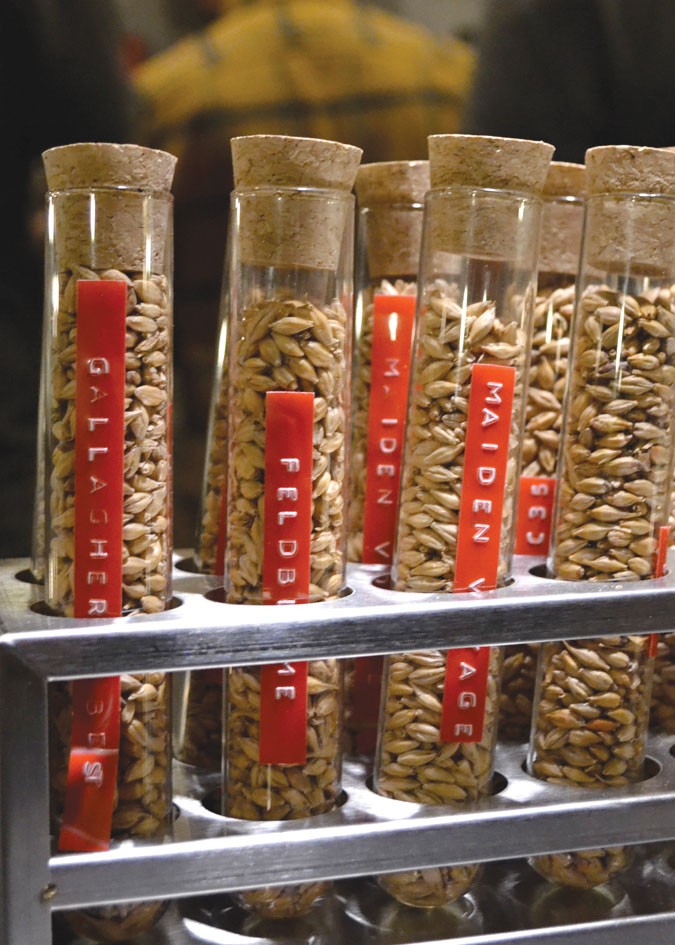
A sandy, well-draining soil is best for growing hops, say Hawley and Stevenson, and while the outlook isn’t always entirely hopeless for finicky varieties, they name three foolproof choices for the home grower: Cascade, Chinook and Columbus.

Another good bet, California Cluster, was found growing wild along the Russian River. Having been left to its own devices after the hop industry abandoned the region in the 1950s, this wild sister is particularly well adapted to the climate. But it’s hard to locate.

And don’t forget to allow plenty of room for the hop to grow up to 15 feet—if you’ve got high hopes.

[page]

Why the dearth of organic beer?

The refrigerated beer aisle at this Whole Foods Market is so generous, it spills over into a refrigerated endcap around the corner, and is even bookended with a taproom. This, where America shops for healthful, wholesome, and organic foods, is surely where the most comprehensive selection of certified organic craft beer can be found, so let’s start shopping.

After some searching, here it is: Eel River IPA from Fortuna, Calif., bears a green and white USDA organic seal on the carton. And—that’s it. There are dozens, maybe hundreds of beers here: fun, fruity beers; serious, traditional beers; bourbon-barrel beers and light session beers. Corona and Coors Light are here. Where are the organic beers? Surely, the health-conscious and environmentally aware customers of this natural grocery store chain, particularly in this Northern California market, must be asking the same question every day.

“Not so much,” says a beer department manager, while pointing out that there are, indeed, a few more organic beers in the endcap—Samuel Smith fruit ales and a porter, which are from England. She says that people tend to shop by brand or style here, and they aren’t as concerned about organic beer as they are about gluten-free beer, which is prominently displayed with six brands.

Fine, so shoppers feel good just stepping in the door of a name-brand organic food chain but take a pass when it comes to purchasing organic—who knew? The selection is only marginally better at locally owned natural foods markets, however. And customers are not asking for more.

“Not as often as I would like,” laments Mandy Reilly, grocery buyer at Community Market in Sebastopol. “But the organic options we have are some of our top-selling varieties, so that speaks to the customer base we have at our store,” Reilly adds. Community Market carries organic beer from Eel River and Butte Creek, although distribution for the latter is spotty (taglined “The Official Beer of Planet Earth,” it doesn’t make it out of Ukiah when owner Mendocino Brewing Co. puts its core lineup first).

One of the reasons for the limited selection is somewhat circular, Reilly speculates: unlike other grocery categories, which may display conventional and organic options side by side, the beer aisle doesn’t suggest the choice in the first place. “They really don’t think about it,” says Reilly, “because they don’t see an option.”

Consumers are more worried about GMO in their foods, according to Reilly. Thus far, the market for barley hasn’t been lucrative enough for the crop-science industry to come up with approved GMO barley.

Even so, “it’s definitely something people should be aware of,” says Reilly, “if you’re concerned about where your food comes from. Alcohol is digested by your body more readily than anything else, so you’re getting maximum potency there.”

Organic wine has also gained little traction in the market, but unlike wine, which benefits from a level of sulfite above 10 parts per million (prohibited in organically certified wine), craft beer does not typically have any added preservatives other than hops.

The struggle for market traction is clearly a frustration for Daniel Del Grande, owner and brewmaster of Bison Brewing in Berkeley.

“Consumers in Sonoma, Napa and Marin have been pretty price-sensitive,” says Del Grande, who founded the organic brewery in 1997. “Once I get my beer on the shelf, they don’t seem to be willing to pay for organic beer, so frankly it’s been rotated out because consumers don’t buy it.”

Del Grande sells his lineup (which includes a double Simcoe IPA called Kermit the Hop, a chocolate stout, and a red ale with rye and caraway) in at least eight states, and in Whole Foods in some markets, but other stores looked at the metrics recently—pre-Amazon sale—and decided to bump Bison. Not because they’re unsympathetic, but because they aren’t meeting the metrics.

What are the metrics? “You need to sell three or four cases a week to stay on the shelf,” says Del Grande. He’d sell that much if, for example, 32 people in Petaluma bought one six-pack every other week. “So the bar is pretty low.” Priced a dollar or two higher than other craft brew at $10.99 to $12.99 per six-pack, Bison beers do sell better on discount but, Del Grande adds, “I can’t keep my beer on discount and run a nonprofit.”

The irony is that organic beer has a much greater impact on the environment than organic tomatoes, according to the brewer. “If people knew the impact of organic agriculture through organic beer, they wouldn’t pay extra for organic tomatoes; they’d shift all their money to organic beer.”

Besides the health aspects that drive so many consumer choices—who ever thinks about the pesticides used to control mites and mildew on hops?—Del Grande points to the environmental and ag-system benefits when a household buys 52 six packs of organic beer per year, creating demand for a farmer to convert 1,800 square feet to organic farming.

The beer itself doesn’t suffer for lack of choices. Del Grande says that today he’s got plenty of certified organic malts, specialty malts and hops to choose from—like the beer, they just cost more. Should environmentally concerned beer drinkers make the money-to-mouth connection any time soon, says Del Grande, “I can triple my output tomorrow.”

Letters to the Editor: September 20, 2017

Road Hogs

Former Santa Rosa councilmember Gary Wysocky once asked me, “Keith, why do you hate bicyclists?” Of course I responded in the negative. Bicycling is a great way to exercise and get around locally. And I must always include my mantra, “No cyclist or pedestrian should get hit by a motorist.”

But I have noticed a disturbing trend, most recently during the Tour de Fuzz event: competitive bicyclists ride the outer line of the bicycle lane instead of within the lane. Not only is it dangerous, it is simply rude. The county and cities have spent millions of dollars in order to establish a safe space for bicyclists on our thoroughfares, and now, because of state and county law, we must yield an additional three feet of space to them regardless. So it appears we have wasted millions of dollars on these safety improvements because these rude riders are purposely forcing motorists to give them an additional three feet of space regardless of the existing bike lanes. It’s just ridiculous. We need to stop coddling these idiots and force compliance of the law. And it doesn’t help that law enforcement has “embraced” cycling. It affects their judgment and leaves thousands of dollars on the table that we could be collecting in fines for traffic scofflaws on bicycles. Do I hate bicyclists? No, I do not. I vehemently dislike public rudeness, period. “Share the Road” should apply to all users, less than 5 percent of whom are cyclists.

Santa Rosa

Get a Haircut

We Americans are in a decidedly sour mood about the state of our country. On the verge of war with North Korea and saddled with a much-despised president, it’s easy to succumb to pessimism. It’s time to elevate the mood of my fellow countrymen and countrywomen. These proposed innovations may appear superficial, but they would go a long way toward inspiring people to aspire to a new Golden Age.

My ideas, in order of importance:

• No more short-shorts with buns hanging out for all to see.

• No more torn blue jeans.

• No more form-fitting black leggings that graphically depict every curve and/or lump.

• The man-bun has got to go—get a haircut already!

Thanks for considering these ideas, which are neither liberal nor conservative—just common sense, something in short supply these days.

Belvedere

Cheddar
and Kudos

Awesome to see (“Cowboy Creamery,” Sept. 13)! Keith is the best. We miss him here in Minnesota. Congrats on your new venture in California.

Via Facebook

Write to us at le*****@******an.com.

Jensie Gran Fondo of Marin Returns

Written by James Knight.

Routinely called “the most fun guy in pro cycling,” retired German cyclist Jens Voigt—known everywhere by his nickname, Jensie—returns to Marin County on Saturday, October 7, to headline the third annual Jensie Gran Fondo of Marin.

The Jensie has been named among the Top 15 U.S. Gran Fondos by Grand Fondo Guide.

I survived 70 miles of the inaugural ride in 2015, and am trying to decide whether to stick with that pretty fair slog, or step up to the challenging 100-mile category in 2017, thanks to a press ticket provided the Bohemian by the Fondo. There are a few changes to the routes this year—but first, let’s back up and answer the “what, exactly, is a Fondo, again?” question.

A Fondo is an organized, recreational bicycle ride that’s open to all cyclists and is not a race, but is timed, and which is supported by some road closures and rest stops. If you’ve biked West Marin, you know the views are superb and the smooth road surfaces, in many areas, are a fine sight, too. Just imagine all that, plus traffic control, rest stops at just the right intervals, plus energy snacks, water and…beer? For me, it’s a little too early in the morning for that.

Plus, there’s gregarious Jensie himself, who manages meet and snap photos with half the peloton and make it to the finish line. Everyone has a German-inspired meal and beer or other beverages afterward.

As with most Fondos, the Jensie has a fundraising component. Ticket sales benefit MCBC and their efforts to make cycling in Marin even better, and safer, for everyone. Three programs currently top their list of priorities: Safe Routes to School helps to educate school communities in cycling skills and advocates for infrastructure improvements that encourage people to choose “green” transportation option; the Road Advocacy Program promotes bike routes in Marin through partnerships with public agencies; and the Off-Road Program helps to expand and restore mountain biking trails—with the goal of a future off-road trail from the Golden Gate to Point Reyes.

All Jensie routes start out together from Novato’s Stafford Lake Park in a throng of cyclists. It’s both exhilarating and a good opportunity to brush up on your peloton etiquette—no crossing wheels!

I can recommend the 40-mile “Break Away” route to anyone who can stay upright on a bike for half a day and climb a moderate grade or two, but if you’ve got the stamina and want a bigger challenge, step up to the 70-mile “Presidential.” However, only the 100-mile “Shut Up Legs” route—so titled for Jensie’s catch phrase during his pro riding days—includes the grinding Alpine Dam climb this year.

Maybe this year I’ll get wise, and makes one of those promo water bottles from the previous service stop useful with beer, for the end of that climb.

The Jensie Gran Fondo of Marin leaves Stafford Lake Park very early in the morning of October 7, 2017. $95–$195 For tickets and details, click here.

Deliver Me

After public outcry nixed a plan that would have brought four brick-and-mortar cannabis dispensaries to unincorporated West Marin County, the board of supervisors is now pushing out an ordinance that would render the county's cannabis business a delivery-only affair. But the revised ordinance is still not good enough, says Amos Klausner, a San Geronimo resident who opposed the dispensaries and...

Community Policeman

The Sonoma County Sheriff's office needs to get back to basics: put public safety first, make sure we're fair and accountable, and build partnerships to better engage with the communities we serve. I've worked for the Sonoma County Sheriff's Office for more than 23 years, starting as a correctional officer in the jail and holding 10 different posts throughout the...

River Song

When she's not writing dynamic Americana music, Petaluma's Avery Hellman—who performs under the name Ismay—is likely to be found working her ranch or riding horses on extended travels throughout the American West. Last summer, Ismay combined her passion for song and travel in a month-long trip along the Klamath River, running over 200 miles between southern Oregon and Northern California,...

Not So Fast

Concerned about rapid development in the small Napa County town, a group of St. Helena citizens has filed paperwork with the city clerk demanding a recall election to remove Mayor Alan Galbraith from office. Galbraith has been criticized by a group of 25 St. Helena citizens for inadequately addressing concerns over a series of developments, both planned and in the...

The Bear Roars

I pull into the parking lot and nab a spot in front—I can already tell it's busy at the new Bear Republic brewpub on Robert's Lake in Rohnert Park. It's opening night and everybody has the same idea as me: grab a beer and check out the new place. Bear Republic Brewing Co. opened in 1995 in Healdsburg; Rohnert Park...

October Suds

Autumn in the North Bay means Oktoberfest events galore, lederhosen not required. The longtime Bavarian beer festival is transformed into funky and fresh events in Sonoma and Napa counties that highlight our foaming-over beer scene served with live entertainment. Oddtoberfest St. Helena's independent order of Odd Fellows debuts the inaugural Oddtoberfest with a mix of sumptuous food, local beers and...

New Frontiers

From garage to gallery space to countywide pop-up experience, creative advocate the Frontier Room has evolved within the North Bay's arts and music scene to give room to underground acts with curated live experiences outside the norm. This month, the Frontier Room hosts rising Seattle indie-pop band Lemolo in a free show at Sonoma Cider on Sept. 27, with Santa...

Hope for Hops

Six feet tall and totally useless, there she stands—or has managed to climb, before giving up. It isn't that she's wilted in this summer's relentless heat; though red and brown may fringe her leaves now in September, they're still as prickly and deep green as in midsummer—and I should mention here that I only say "she" because the most desirable...

Letters to the Editor: September 20, 2017

Road Hogs Former Santa Rosa councilmember Gary Wysocky once asked me, "Keith, why do you hate bicyclists?" Of course I responded in the negative. Bicycling is a great way to exercise and get around locally. And I must always include my mantra, "No cyclist or pedestrian should get hit by a motorist." But I have noticed a disturbing trend, most recently...

Jensie Gran Fondo of Marin Returns

Third annual race features retired German cyclist Jens Voigt.
11,084FansLike
4,606FollowersFollow
6,928FollowersFollow