Nov. 24: Big Top Holidays in Sonoma

0

Created by French-born artist Michel Michelis, the storied live circus group Cirque de Bohème is inspired by early 20th-century French circus traditions and imbued with a modern sensibility. Each holiday season, the troupe takes the stage in Sonoma to dazzle with vintage acts crafted around original productions, and this year’s theme makes timely use of the idea of “Freedom” with a cast of colorful characters whose whimsical style echoes the original Bohemians while reflecting relevant messages. “Freedom” runs through Dec. 17, opening on Friday, Nov. 24, at Cornerstone Sonoma, 23570 Arnold Drive, Sonoma. Times vary; $25 and up. cirquedeboheme.com.

Nov. 24: Deck the Walls in Healdsburg

0

Don’t settle for gifting socks to your loved ones this holiday season—surprise them with handcrafted, one-of-a-kind pieces of art and other goodies found at the 16th annual Holiday Gift Gallery at the Healdsburg Center for the Arts. Over 30 regional artists participate in the gallery show, offering gift-appropriate works in media ranging from paintings, photography, ceramics, glass, wood and other textiles. Opening in conjunction with the Healdsburg Downtown Holiday Party, in which several merchants around the plaza open late with lighted displays and Santa hangs out in the plaza’s gazebo, the HCA’s Gift Gallery opens with a reception on Friday, Nov. 24, at 130 Plaza St., Healdsburg. 5pm. Free. 707.431.1970.

Nov. 25: Bountiful Fun in Santa Rosa

0

Of all the things to be thankful for this holiday weekend, the ability to laugh in spite of the year’s events has to be at the top of the list. At least it is for the folks at Crushers of Comedy, who host the Give Thanks for Laughter standup showcase this weekend with a cornucopia of popular Sonoma County comics hitting the stage. The lineup includes homegrown talents Juan Carlos and Cody Smit, as well as Bay Area and Sacramento comedians Steve Ausburne, Josh Argyle and Charlie Adams. The laughs happen on Saturday, Nov. 25, at the Laugh Cellar, 5755 Mountain Hawk Way, Santa Rosa. Doors, 5pm; show, 7pm. $28. 707.843.3824.

Nov. 29: Community Rising in Petaluma

0

Award-winning author Rebecca Solnit’s 2010 book, ‘A Paradise Built in Hell,’ examines the altruism and generosity that emerges in communities experiencing natural disasters. Hey, the North Bay can relate. Solnit speaks on the topic with fellow author and activist Peter Coyote in a benefit for Undocufund’s fire relief for undocumented fire victims. The evening also includes a raffle with goods from local businesses, authors and friends of the North Bay, including a handmade side table from actor, author and woodworker Nick Offerman. Space is limited, so RSVP and arrive early on Wednesday, Nov. 29, at Copperfield’s Books, 140 Kentucky St., Petaluma. 7pm. $5 donation. 707.762.0563.

Food to the Rescue

0

It’s not quite an army of volunteers that wait for a truck to roll up to the service entrance of the Vintage House senior center on a recent Wednesday morning. The volunteers, mostly from the charitable Kiwanis Club of Sonoma Plaza, number about a dozen. But they do prove an effective force—and it could be said they have a capable general.

As soon as the refrigerated truck’s lift-gate hits the pavement, the volunteers pounce on a pallet of crates at the direction of a petite woman wearing a pink, knitted cap with pussycat ears. Sheana Davis owns the Epicurean Connection catering and culinary education center in Sonoma. During the North Bay fires in October, she found herself suddenly leading one of the area’s rapidly evolving, seat-of-the-pants food-relief efforts that paired Bay Area chefs with thousands of displaced people.

Now that the urgent needs of evacuees have past, the fires have exposed the continuing needs of thousands of people who are still on the edge. And the ad-hoc relief efforts are struggling to keep the supply chain going.

Breaking up the pallets and parceling out crates of donated food, which arrived direct from the kitchens of Facebook, Davis divvies them up on the spot: “Moose is 200 meals,” she confirms, rationing a portion for the charitable Moose Lodge of Sonoma. Then a marimba ringtone calls her away to the next 15-second negotiation. Every minute or two the phone chimes again.

When the fires forced Davis to evacuate her home, she and her husband landed at the Sonoma Valley Inn, in the same boat with many others there—just lucky to have their pets with them. “They were kind enough to let me bring my dog and my three very bad cats,” Davis says.

Davis had just catered a cassoulet fundraising dinner
for the Bouverie Preserve in
Glen Ellen.

“To know we were doing a dinner the night before, and wake up to have it burnt down, is surreal,” says Davis. But she had a refrigerator full of prepared food and 28 more events suddenly canceled, so she brought the gourmet fare to the hotel and began doling it out.

Meanwhile, Alexander Valley resident and food-policy advocate Melanie Wong evacuated only days before a planned trip. She decided it was best to just go ahead with her plans.

While waiting to catch her plane at SFO, she got a call from Steve Guilliams, a San Francisco engineer with family ties to the North Bay. He wanted to know if she could help with his idea for a “scaled strategy” to feed large numbers of people through commercial kitchens.

Through his Silicon Valley connections, Guilliams quickly secured a commitment for prepared food from Facebook chefs. “I talked to him Thursday,” says Wong, “and the first delivery was Sunday morning.”

Asked if she knew who in Sonoma County might be able to provide a ground game, Wong knew just the person—Davis.

Now at Sonoma Springs Community Hall on Highway 12, Davis and her staff and volunteers repackaged and served the donations from Facebook, as
well as from Jackson Family Wines and San Francisco chefs, under the banner No Pay Café/Café Gratis.

They served 7,500 meals a day at peak operation. Wong says Facebook is an ideal partner because chefs for the social media company already whip up grub for more than 30,000 employees on any given day. “It’s not hard for them to do 5,000 extra meals a day,” Wong says. “And it’s fresh, wholesome food.” It was served with no questions asked, no proof of residency required.

It also gave restaurants a break as they struggled to regroup, she says. “Our idea was, we’ll take care of feeding the people and give you the chance to get back in business again and kickstart our tourism economy and get our food system going again.”

[page]

On Nov. 1, the operation transitioned to a “virtual” No
Pay Café. Instead of serving meals out of a kitchen, Davis sends them out to charity partners, assisted by the Kiwanis. The need is still great, Davis says, but local charities, senior centers and shelters are best positioned to reach out to the communities they serve.

In the offices of the Council on Aging in Santa Rosa, there’s a zucchini about the size of a dachshund on a desk. No, it wasn’t a donation from someone trying to be helpful, says Sonoma Family Meal founder Heather Irwin—although they might as well make zucchini bread, she laughs. It was found in a volunteer’s garden—like the surge of support and volunteerism that made Sonoma Family Meal possible, another unexpected bounty that grew during the fires.

Irwin, a food and cannabis writer for the Press Democrat, is more worried about what to do with the half-ton of squash they just received from the Central Valley.

The Sonoma Family Meal story also starts in early October, when friends and family, including Irwin’s 93-year-old grandmother, gathered around a farmhouse table in Sebastopol in a daze.

“We were just sort of grabbing things out of the fridge and throwing them on the table,” Irwin says. “And it wasn’t a very impressive meal.” She knew that similarly displaced families were sharing their situation in crammed houses across the county. “Cooking for 10 to 11 people is not an easy thing to do—although now it looks like a snap.”

At the same time, Irwin was getting calls from her contacts in the restaurant world who wanted to help. “And they couldn’t really take pans of lasagna to the Red Cross.” So they asked her, “Hey Heather, how can we help?”

She thought she could bring the need and offers together. “And maybe for a couple of days, we’d do this silly little thing where we put them in these little half pans,” she says, picking up one from 60,000 cases of donated aluminum serving trays, “and it’d be a little gourmet meal—gourmet comfort food, really—but it would taste good, it would look good, and it would be served with dignity. And a hug. My mom’s the chief hug giver-outer.”

They set up at John Franchetti’s restaurant in Santa Rosa. Franchetti’s gas was out, but he had his wood-fired ovens. “I said, ‘Can we serve 800 meals in your kitchen?'” Irwin recounts, “‘because Traci Des Jardins [owner of San Francisco restaurant Jardinière] is sending us up prepared meals that we’re going to repackage for families of four to six.’ And he said, sure!”

Adding vegetables and fruit donated by local produce distributor FEED Sonoma, they put it all in an oven. “So we had these beautiful meals with a meat, a carbohydrate, and fresh, organic produce,” Irwin says. “Well, by lunchtime, we were pretty much out of food. And I panicked.”

[page]

Soon after Irwin buzzed her restaurant contacts, more food came down the line—from Josh Silvers, chef and owner of Jackson’s Bar and Oven in Santa Rosa, Sondra Bernstein, founder of Girl & the Fig restaurant in Sonoma, and many others. A team of volunteers prepped heaps of fresh vegetables at John Ash & Co., and the pickup point moved almost from day to day, with stops at Santa Rosa Junior College and the Santa Rosa Veterans Memorial Building.

Later, mostly focused on preparing meals from scratch, Sonoma Family Meal found a sweet spot at the Council on Aging/Meal on Wheels facility. Tucked away off Santa Rosa Avenue, it was, in fact, built as a disaster-relief kitchen but, surprisingly, had sat unused most of the day.

In the kitchen on Nov. 7, turkey has already been prepared and shipped out the door—with sides of herbed buttermilk mashed potatoes, beet salad with microgreens—and volunteers, certified to handle food (it can be done online in an hour, says Irwin), chop, slice and mix ingredients for the next batch. What’ll be made with those big slabs of smoked meat over there? “Good question!” says chef Matthew Laurell on his fast-paced travels around the kitchen.

Laurell is on loan from Mark and Terri Stark, for whom he’s still on salary as executive catering chef. But even then, he and his family may not have a place to live in a few days. That’s the kind of stuff that’s going on right now, says Irwin. “And this guy’s running a disaster kitchen!”

Meanwhile, volunteer Woody Mosgers, a caterer, stirs butternut squash into an outsized bowl of pasta. Bright orange, it’s reminiscent of mac and cheese—which raises the question: in a time like this, why not just mac and cheese? Why gourmet pasta, eggplant and microgreens?

“Because there are a lot of places you can go eat shitty food,” Irwin states flatly. “And I’m going to say that straight up. Because some of the food we’ve seen is literal garbage.” Whole pallets of kindly donated but spoiled food had to be tossed, Irwin says, and there’s more to her insistence on chef-made meals than foodie whimsy. “I’ve heard a number of horror stories that were happening all around our county,” says Irwin. “To me, it was real important that we did this professionally.”

At the pickup point in the Empire College parking lot, in front of cheery tablescapes of flowers and gourds (arranged by Irwin’s mother), volunteers greet people and ask them how many they’re feeding.

“We just want it to feel like you’re not in a Red Cross line,” Irwin says. “We have people that come up to us and say, ‘I never thought I’d have to ask for a meal.’ That’s kind of heartbreaking. That’s why we’re doing this, because we want somebody that thought they’d never have to ask for a meal not to feel demeaned and shamed by having to ask for one. I mean, I’d be pretty stoked to get that meal!”

“Thank you for being here,” says one recipient to Irwin’s husband, Jason Stanbrough, who’s overseeing what he calls a “controlled chaos” of rotating volunteers.

Everyone here seems appreciative, but not accustomed to lining up for free food. Not the middle-aged pair who pause to thank Stanbrough a moment later. “A lifesaver,” says the man toting a stack of trays, sounding upbeat, with a background tinge of the strain of the past weeks. “And the volunteers are so nice,” says his counterpart. “I don’t have to feel so . . .” She hesitates to say bad for walking up to take free food.

By Nov. 15, Irwin sounds weary. After serving an estimated 70,000 meals, Sonoma Family Meal won’t be able to make it to Thanksgiving. They have to cease service that evening. “We are really grateful for the community’s outpouring of love,” says Irwin, improvising her press release. “And we are going to look in to how to best serve our community in the future.”

The bright spot for now is that generous friends are helping Laurell and family to move into a tiny home.

Later that day, Sheana Davis checks the time and announces they’ve done pretty well: it’s noon and the volunteers have broken up three pallets, hauled the crates to their respective staging areas, packed up their vehicles and the meals are on the way to their destinations.

Packaged in plastic, the bulk meals are refrigerated, not frozen, and marked with temperature cooked and cooled, and meal type: scrambled eggs, sausage, hash browns and pasta. This is no Thanksgiving dinner, and Davis isn’t worried about whether the next drop is packed with dressing and yams or not. The holiday weekend is more of a concern, she says, because children are out of school extra days and parents who were already living paycheck-to-paycheck will be out of work that much longer.

“We’re feeding for the long haul.”

Renters Rights

0

The fires that ravaged Sonoma County created havoc in a community already stressed by too little and too expensive housing. People were already leaving—I know quite a few—but now we are faced with a mass exodus of the very people who make this county work: its labor force, its young families and those who should feel secure at the end of life, its seniors.

In a county with a less than 1 percent vacancy rate, we lost more than 6,000 housing units. This increases the temptation for landlords to evict tenants and raise rents. Government understands this and has included protections against price-gouging in its emergency declaration. District Attorney Jill Ravitch has said she will aggressively prosecute those who violate those new regulations.

But now we’re beginning to hear from people who have been threatened with eviction or with rent increases, who are afraid to speak up because of fears of retaliation. The California Apartments Association, the group which spent so much money to defeat a limited rent control measure in Santa Rosa, has written to the Santa Rosa City Council questioning the legitimacy of some of the anti–price gouging measures.

It’s a precarious time for Sonoma County residents who are sleeping on the couches of friends and family. The county has an already seriously underserved population—the homeless—and now there’s a threat that some of the newly homeless could become permanently so.

In response, the Green Party of Sonoma County, the Peace & Justice Center of Sonoma County, the Community Action Coalition and members of several groups have come together to organize a series of “Conversations Around the Fire.” The first conversation will bring representatives from Legal Aid of Sonoma County and the county Counsel’s Office to help tenants understand their rights. There will also be a discussion of homelessness before, during and after the fires, as well as information about monetary aid. This will be followed by time to discuss organizing for mutual support and to exchange fire stories.

“Conversations Around the Fire: Renters’ Rights in a Disaster Zone” will take place on Monday, Nov. 27, from 6pm to 8pm at Christ Church United Methodist, 1717 Yulupa Ave., Santa Rosa. The event is free and childcare available. Call 707.889.3021 for information.

Susan Lamont is a local peace and social justice activist, writer and artist who retired this year from the Peace & Justice Center of Sonoma County.

To have your topical essay of 350 words considered for publication, write op*****@******an.com.

Letters to the Editor: November 22, 2017

Hats Off

Thank you for your reliable coverage throughout the terrible crisis of the firestorm, as well as your consistently fine writing on the disaster. Like other issues such as homelessness and mental illness, this will prove to be one of the central ongoing issues of this region. I applaud your commitment to keeping a tight focus on reporting on it, even as time passes and the initial wounds begin to heal. Our recovery, as so many have observed, will take a long, long time.

Santa Rosa

Pencil Wizard

The Bohemian should be commended for its great track record of using the work of local artists and illustrators for its cover art and giving up-and coming-artists a public viewing. However, it may have overlooked a pencil wizard who has been active in the West County for nearly 40 years. The name of this versatile artist is Michael Fisher. Maybe you’ve seen one of his calendars in the mail recently. Check out his cartoon blog Aldo & Me (aldome.wordpress.com) to get a true sense of his illustrating range.

Monte Rio

Devil Weed

Sonoma County has no idea what it is asking for with cannabis tourism (“On the Bus,” Nov. 15). Even the very word “cannabis” has real evil in it.

Pot is a drug. It is not medicinal. It causes complete indifference in its users, and can lead to death when smoked in heavy quantities. I don’t care what is happening to our “progressive” society. Drugs are evil. Pot, meth, heroin, cocaine and on and on are all inherently evil.

There will be even more problems here in Sonoma County with accidental deaths among our youth, as well as among long-term users. “Cannabis,” that evil word, is going to cause more problems than it is worth. Taxing it only allows more evil and tolerance among people who do not truly believe in God Almighty. God would be the very first one to tell you how evil pot is and that it truly does come from the evil one.

Our society continues to go too far with legalizing controversial issues from the 1960s. And we will all pay the price. Just watch and wait.

Santa Rosa

Baloney

I find the article written by Ari LeVaux (“Alt Turkey,” Nov. 15) very contradictory toward vegetarians and vegans who choose what we eat based on health, animal welfare, environment, etc. To say vegetarians miss turkey once or twice a year and bacon every day is a ridiculous and a foolish statement. Cooking tofu with bacon for a vegetarian? Absurd! I doubt your vegetarian friends will melt in a vat of ignorant bliss. No vegetarian will be begging for your bacon grease secret. Please include thoughtful, educated articles in your newspaper, not garbage such as this.

Santa Rosa

Write to us at le*****@******an.com.

Weighing Options

0

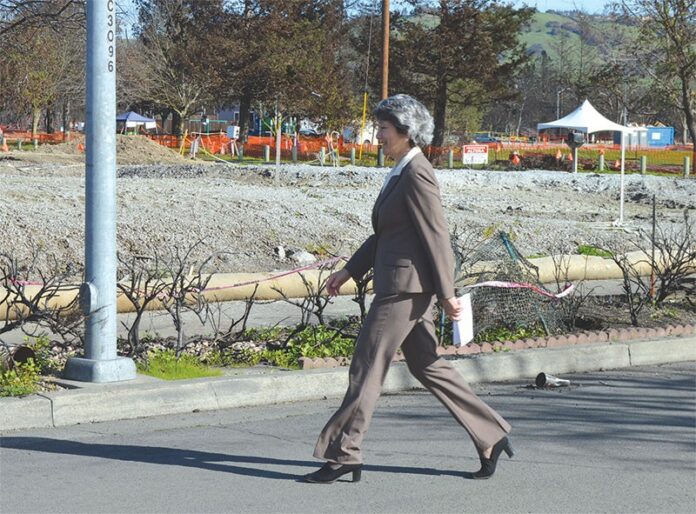
It’s a busy Thursday morning in Coffey Park as the debris cleanup is in full effect.

Workers in white protective suits are clearing out home sites throughout the wasteland where some 1,300 homes were destroyed in the October Tubbs fire. The sound of beeping trucks backing up fills the air, as heavy front-loaders are making piles of trashed cars and all sorts of rugged equipment is rolling around the streets.

Numerous sites have been cleared in the mass cleanup underway. They await new foundations and the first swing of a hammer into a two-by-four to signal that the rebuilding is afoot. Throughout Coffey Park, sites have gotten the federal Environmental Protection Agency seal-of-approval, signified by a laminated certification of safety on the front lawn.

Coffey Park is coming back—except in front of the former home at 1613 Kerry Lane, where homeowner Dan Bradford has been waiting for city approval of a private cleanup and rebuilding plan submitted days after the fire by his Lake County–based contractor-friend Mark Mitchell.

Bradford is one of more than 300 residents split between the city and county who have so far “opted out” of the cleanup that’s being undertaken by contractors working under a federal-state umbrella that includes the Federal Emergency Management Agency and the state Office of Emergency Services, and overseen locally by city and county officials. But Bradford had good insurance and an experienced contractor ready to go just days after the fire, and didn’t want to go through the time-consuming rigamarole of the opt-in plan. Bradford thought the opt-out would expedite his rebuilding process; instead, it slowed it down.

Homeowners who lost their property to the fire, approximately 5,100 in the county, have until Nov. 22 to either opt-in or opt-out with the mass cleanup already well underway. Bradford didn’t sign up and doesn’t plan to. He just wants the city to approve his contractor’s debris-removal plan and his rebuilding plan, and as of last Friday, he did get some good news from the city: they’d approved his debris removal plan. Now comes his rebuilding plan, which has not yet been approved.

It remains to be seen what will happen if the remaining noncompliant residents blow past the Nov. 22 date and the hold-outs don’t opt-in to the program. Sonoma County Supervisor James Gore says nobody will be forced into any abatement program on Nov. 23 or forced to sign up with the sanctioned cleanup plan if they don’t want to, despite the Nov. 22 deadline.

The hope is that the debris cleanup will be completed by the end of the year. But as of Nov. 22, more than homeowners out of the 5,100 burned out in the city and county still had not signed up at all. Hundreds had opted out, including Bradford, only to wait for city and county bureaucracies to catch up with their own debris-cleanup plans and set up a process for them. The city started reviewing and approving (or rejecting) opt-out plans on Nov. 13, according to emails from Santa Rosa City Manager Sean McGlynn. The debris removal was well underway by the time Bradford got his approval on
Nov. 18.

According to the numbers provided by the joint county-city information center, as of the morning of Nov. 22, 188 county property owners had opted out; 139 city property owners had gone that route, including Bradford. There were 229 parcels on city land, and 381 on county land, that did not have the necessary “right to enter” paperwork filed, or hadn’t signed on to the debris removal plan.

Nobody, says Gore, will be able to rebuild anything in Coffey Park until all the sites have that EPA sign in the front yard. That’s to make sure contractors aren’t laboring in toxic work sites. The EPA sign-off is a requirement for everyone, Bradford included, whether they opted in or opted out of the debris cleanup.

Bradford, who is 60, was burned out of his home on the morning of Oct. 8 and escaped with his two dogs. He’s a respiratory therapist at Santa Rosa Memorial Hospital who lost his wife, Vicki, two years ago. Bradford has been living in a Rincon Valley rental and has taken a two-month leave from work to sort out the details of his rebuilding. He considers himself among the lucky.

“You really have to stay on top of the phone calls—you can’t miss a call,” Bradford says of the process. He returned to work for a couple of days after the fires but realized he couldn’t put his patients first if he was always waiting for that critical call from the insurance company. Bradford is not the suing type and says with a smile that the fires were an act of God. He’s not jumping on to any PG&E legal action around the fire and what might have caused it. He just wants to get back into his house, with his dogs, as quickly as possible—and wonders what the hang-up is and why the city gave citizens the chance to opt-out without having a process in place to deal with people like him who went that route.

“It takes a toll,” says Bradford of the emotional stress of being displaced and caught in the bureaucratic shuffle. “I’ve been trying to maintain some type of normalcy, but it’s hard for people who are displaced. That’s all the more reason to rebuild quickly.” A newcomer to Coffey Park, Bradford says his heart goes out to longtime residents who were burned out.

To add insult to the injury of losing his home, someone stole the undamaged metal mailbox from Bradford’s front yard. He laughs and shrugs about it as Mitchell pulls up in his truck. Mitchell, who owns Lake County Contractors, has been through this before—he’s still going through it in Lake County. He rebuilt 31 houses destroyed in the 2015 Lake County fires, including, he says, the first one that went up after the firestorm.

He’s eager to be the first guy swinging a hammer in Sonoma County, too, as he and Bradford take in all the surrounding activity and wonder why they can’t be a part of the action. A who’s who of big-dollar contractors from around the region—those Ghilotti Brothers trucks are hard to miss—are hard at work on the cleanup, while Bradford’s left to contemplate his patch of black grass with his hands in his pockets.

[page]

The recent rain has brought with it the jarring vision of small square patches of very bright green grass popping up amid the charred ruins. That’s a hopeful sign, but a bigger one will come once construction starts.

“People have to have hope,” Mitchell says as he recounts the scene in Lake County when his crew started building their first house. People were driving by and applauding, thanking the workers, dropping off 12-packs of beer. “There’s nothing like it,” he says.

Bradford says if it weren’t for Mitchell’s quick call to him after the fire, he might have made other immediate plans, such as leaving the region entirely. There’s concern over a potential “brain drain” in Sonoma County as a result of the fires, and Mitchell highlights that the more frustrated people get with bureaucracy, the more likely they are to take their insurance settlement and buy or build somewhere else.

Bradford toyed with the idea himself but was taken by Mitchell’s plan for a quick rebuild.

“First, when it came to my big decision to rebuild or not, I was able to get a hold of Mark,” says Bradford, “and he was really positive and enthusiastic about a quick rebuild and I said, that’s the way to go. If not for Mark and the speed of his rebuilding [plan], I probably would have done something different.”

The problem, as Bradford and Mitchell describe it, is that even as the city and county were setting a deadline for people to opt-in to the mass cleanup, the process for those who chose to opt-out was not fully in place, if at all, until recently.

“I’ve got trusses coming in 30 days,” says Mitchell, but no building permits to go with them. If not for the opt-out bureaucratic hold-up, Mitchell says he’d have cleared the debris and been well-prepared for rapid rebuilding of the Bradford home.

Gore says he understands the urgency of Bradford’s situation, and that Mitchell is not alone in wanting to be the first man to rebuild. He cites a constituent who has an “insatiable desire to rebuild, and I want to help him.” In the endgame of a rebuilt Sonoma County, Gore says enthusiastically that he’d like to see not just 5,100 houses rebuilt, but a fresh batch of 20,000 on top of those in the county.

But it starts with just one, and Mitchell hoped it would be the Bradford house. Gore says Bradford has a legitimate point in highlighting the price of opting out of the FEMA cleanup. The last thing the county or city needs now is bad faith around bureaucracy, “which can never, ever get in the way of rebuilding,” he says.

“We cannot make the private option seem to be infeasible in order to force them into it,” says Gore. “That is not what the process is for, and it’s not what we are doing.”

The bureaucratic lag at Bradford’s property highlights that there’s a massive recovery process afoot with huge numbers to account for—$7.2 billion in damage, up to 9,000 jobs evaporated in the region, 43 deaths—while also being, says Gore, a human story with individual victims such as Bradford deserving of one-on-one attention from their local government. There’s already been one fire-related suicide at the site of a burned-out home.

Lake County Supervisor Rob Brown has offered some advice to Gore as the county struggles out from under the ash. Brown has had numerous interactions with Mitchell and says that he’s trying to do the right thing and that he’s passionate about being that first guy on the scene of a disaster with the hammer.

Brown also notes the value of remaining patient in the face of a process that can be frustrating. Before any new homes are built in the North Bay, Brown says he has stressed to Gore the importance of prioritizing the completion of pre-existing infrastructure projects (the emphasis in Sonoma County will be on fixing the roads,
says Gore) and making sure municipalities have hired building officials for when the rebuilding plans start to come hard and fast.

Two years after the fires, Lake County is still hiring staff, Brown says. Of an approximate 1,300 houses destroyed, Brown says around 350 have been rebuilt and 500 have been permitted over two years.

“Two years” is the most-bandied-about timeline for when people blown out by the North Bay fires will return to rebuilt homes. Mitchell’s goal was to shorten that timeline for Bradford, but the city only started approving the opt-out plans as of Nov. 13. He’s already behind schedule for his opt-out client, even as the opt-in house across the street from Bradford’s has been cleared of debris and awaits a new foundation, and a new lease on life.

Two Squared

0

Two-hander. It’s a funny term, meaning a play with two actors. Currently, two different two-handers are running in Sonoma County, proving exactly how much range and variation these plays can have.

At Left Edge Theatre, Stephen Sachs’ Bakersfield Mist is a witty, coarse and brutal dark comedy set in a Bakersfield mobile home. It clocks in at a super-brisk 79 minutes, with no intermission. Co-directed by Kimberly Kalember and Argo Thompson, the play concerns Maude Gutman (Sandra Ish), a foul-mouthed, ex-bartender divorcée, and Lionel Percy (Mike Pavone), an arrogant, condescending art expert who’s convinced Maude has discovered an authentic Jackson Pollock painting in a local thrift store.

Both actors are equally excellent—a necessity in a show with only two performers—and the co-directors, showing a keen facility for this kind of ugly-funny confrontation, keep the action moving through sharp, often deadly comedy and escalating mystery, to remarkably personal drama and a satisfyingly ambiguous climax.

Rating (out of 5): ★★★★

Main Stage West’s Daddy Long Legs is in many ways the opposite of Bakersfield Mist: a lush, nostalgic, sentimentally romantic musical (by Jane Eyre‘s Paul Gordon and Les Misérable‘s John Caird), slightly overstuffed at two hours, two minutes (including an intermission) but absolutely dripping with sweetness and charm.

Based on the classic 1912 novel by Jean Webster, this 2009 gem, imaginatively and sensitively directed by Elly Lichenstein, is told mainly through correspondence between the spirited Jerusha Abbott (a superb Madison Genovese), who sings the autobiographical “Oldest Orphan in the John Grier Home,” and Jervis Pendleton (Tyler Costin), the titular “Daddy Long Legs,” a wealthy, anonymous benefactor who funds Abbott’s college education and dreams of becoming an author.

With lovely offstage orchestration from a live ensemble, this openhearted, unorthodox two-hander proves, with beautiful tunes and a soaring, if improbable love story, that less can sometimes be much, much more. ★★★★½

‘Bakersfield Mist’ runs through Dec. 2 at Left Edge Theatre. 50 Mark West Springs Road, Santa Rosa. Thursday–Saturday, 8pm; 2pm and 5pm matinee, Sunday, Nov. 26, and Saturday,
Dec. 2. $25–$40. 707.546.3600. ‘Daddy Long Legs’ runs Thursday–Sunday through Dec. 10 at Main Stage West, 104 N. Main St., Sebastopol. Thursday–Saturday, 8pm; matinee, Sunday at 5pm. $15–$30. 707.823.0177.

Finding Truth

0

Dark and drenched in reverb, the experimental psychedelic rock of Sonoma County trio the Drought Cult mixes dreamy hooks and fuzzed-out guitars for a lush gothic sound.

Formed and fronted by Santa Rosa native Francesco Echo, whose musical career began with high school band Girls in Suede and flourished recently with the John Courage Trio, the Drought Cult unleashed its sophomore EP,

The Truth, earlier this month, featuring four tracks of heavy, hypnotic rock that recall the post-punk of Joy Division and industrial grit of Nine Inch Nails.

A stark departure from the roots-rock and garage-band sound of previous projects, the Drought Cult reflects Echo’s personal philosophy about music. “I really feel like the only thing I want out of it is to feel like I’m progressing,” Echo says. “We all gauge our success; I try to gauge mine on small, achievable goals—being satisfied with the art we’re making, and doing what small working bands do.”

That attitude toward creative progress led to Echo leaving Sonoma County about three years ago to tour with Tucson’s Burning Palms, thinking it was a stepping stone to a larger career in music. After a summer in Arizona, Echo says he started having an existential crisis.

“I would take these walks out into the desert,” he says. “I realized that I still felt strong in the reasons why I left, but that the one thing that I could never rebuild was my . . . community” in Sonoma County.

“Whatever happens with music, what I need is a community. I need to feel immersed in love and familiarity and to contribute to that,” says Echo. “There’s no other place I can do that, despite my wanderlust. I had to go back to Santa Rosa.”

After his return, Echo ventured into creating art and sculpture, and recruited longtime Santa Rosa bassist Jef Overn (Litany for the Whale) and recently added drummer Dan Ford to make what he calls “spooky music” with the Drought Cult.

With two strong EPs to their name, the Drought Cult are focusing on multimedia projects like music videos and mesmerizing audiences with spellbinding live shows.

“I need to feel like I can get onstage and basically put myself into a trance with the music we’re creating,” Echo says. “If anything else, it’s to make myself feel good, and having my friends on board is the best part of that.”

Nov. 24: Big Top Holidays in Sonoma

Created by French-born artist Michel Michelis, the storied live circus group Cirque de Bohème is inspired by early 20th-century French circus traditions and imbued with a modern sensibility. Each holiday season, the troupe takes the stage in Sonoma to dazzle with vintage acts crafted around original productions, and this year’s theme makes timely use of the idea of “Freedom”...

Nov. 24: Deck the Walls in Healdsburg

Don’t settle for gifting socks to your loved ones this holiday season—surprise them with handcrafted, one-of-a-kind pieces of art and other goodies found at the 16th annual Holiday Gift Gallery at the Healdsburg Center for the Arts. Over 30 regional artists participate in the gallery show, offering gift-appropriate works in media ranging from paintings, photography, ceramics, glass, wood and...

Nov. 25: Bountiful Fun in Santa Rosa

Of all the things to be thankful for this holiday weekend, the ability to laugh in spite of the year’s events has to be at the top of the list. At least it is for the folks at Crushers of Comedy, who host the Give Thanks for Laughter standup showcase this weekend with a cornucopia of popular Sonoma County...

Nov. 29: Community Rising in Petaluma

Award-winning author Rebecca Solnit’s 2010 book, ‘A Paradise Built in Hell,’ examines the altruism and generosity that emerges in communities experiencing natural disasters. Hey, the North Bay can relate. Solnit speaks on the topic with fellow author and activist Peter Coyote in a benefit for Undocufund’s fire relief for undocumented fire victims. The evening also includes a raffle with...

Food to the Rescue

It's not quite an army of volunteers that wait for a truck to roll up to the service entrance of the Vintage House senior center on a recent Wednesday morning. The volunteers, mostly from the charitable Kiwanis Club of Sonoma Plaza, number about a dozen. But they do prove an effective force—and it could be said they have a...

Renters Rights

The fires that ravaged Sonoma County created havoc in a community already stressed by too little and too expensive housing. People were already leaving—I know quite a few—but now we are faced with a mass exodus of the very people who make this county work: its labor force, its young families and those who should feel secure at the...

Letters to the Editor: November 22, 2017

Hats Off Thank you for your reliable coverage throughout the terrible crisis of the firestorm, as well as your consistently fine writing on the disaster. Like other issues such as homelessness and mental illness, this will prove to be one of the central ongoing issues of this region. I applaud your commitment to keeping a tight focus on reporting on...

Weighing Options

It's a busy Thursday morning in Coffey Park as the debris cleanup is in full effect. Workers in white protective suits are clearing out home sites throughout the wasteland where some 1,300 homes were destroyed in the October Tubbs fire. The sound of beeping trucks backing up fills the air, as heavy front-loaders are making piles of trashed cars and...

Two Squared

Two-hander. It's a funny term, meaning a play with two actors. Currently, two different two-handers are running in Sonoma County, proving exactly how much range and variation these plays can have. At Left Edge Theatre, Stephen Sachs' Bakersfield Mist is a witty, coarse and brutal dark comedy set in a Bakersfield mobile home. It clocks in at a super-brisk 79...

Finding Truth

Dark and drenched in reverb, the experimental psychedelic rock of Sonoma County trio the Drought Cult mixes dreamy hooks and fuzzed-out guitars for a lush gothic sound. Formed and fronted by Santa Rosa native Francesco Echo, whose musical career began with high school band Girls in Suede and flourished recently with the John Courage Trio, the Drought Cult unleashed its...
11,084FansLike
4,446FollowersFollow
6,928FollowersFollow