Slow Down

0

Since the October fires, I have read periodicals and listened to the news regarding accounts of the catastrophic fires and the tragic aftermath, but nowhere has there been any mention of water use by the wine industry.

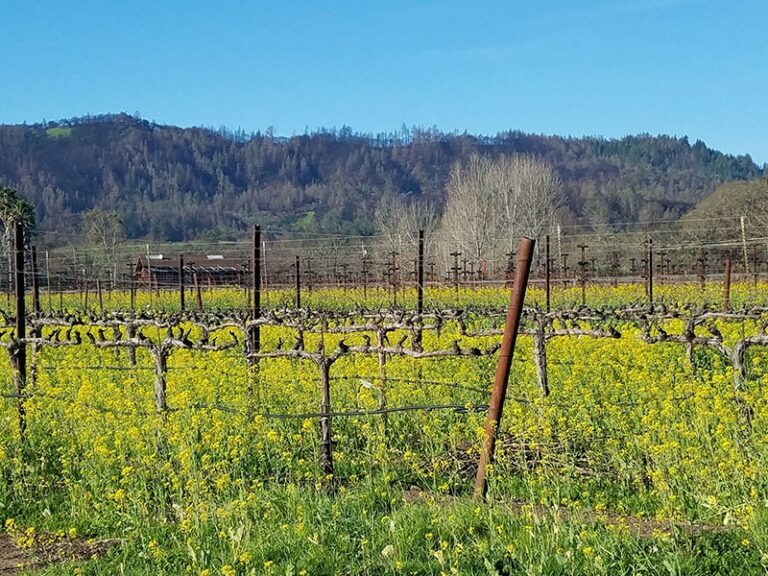
Vineyard owners sink wells hundreds of feet into aquifers, divert water from rivers, streams, creeks, and seem not to care about how their practices affect the environment. If wineries keep extracting ground water and diverting water from natural sources, the environment will become drier leading to more extensive, catastrophic fires than the North Bay fire.

Sonomacounty.com states, “Sonoma County stretches from the Pacific Coast in the west to the Mayacamas Mountains in the east, and is home to almost 60,000 acres of vineyards and more than 425 wineries.” In 2016, 62,136 acres of grapes were irrigated.

Since so many people have to start over, it is time for people involved in the wine industry to become introspective, to take a long, hard look at their practices and change them in a way that respects people, animals and the natural world.

It is time for the wine industry to be accountable to the people who live in Sonoma County and to stop catering to tourists. While I understand that the county needs the revenue generated by the wine industry, too much is too much. Too many vineyards, wineries, tasting rooms, event centers. Too many mountains, hills, woodlands, meadows and fields destroyed in order to plant grapes. Too many animals dead on our roads because what once was their habitat is fenced off to protect vineyards. Too much traffic and inebriated people driving county roads that they do not know.

Due to the catastrophic fires, thousands of people have lost homes, belongings, businesses and animals, so I say to the people in the
wine industry, “Slow down.” People in this county are suffering and will be in shock for a while. Nothing is normal in Sonoma County, and no one will ever be the same. We are a changed people. Please change your winery practices to something that involves the whole, not just the few.

Pamela Singer is a poet and teacher who lives in Occidental.

Open Mic is a weekly feature in the ‘Bohemian.’ We welcome your contribution. To have your topical essay of 350 words considered for publication, write op*****@******an.com.

Letters to the Editor: November 29, 2017

Do the Research

Peter White of Santa Rosa, thank you for sharing your opinion on cannabis tourism (Letters, Nov. 22). It is only with open and respectful dialogue that we create the space to educate each other of our viewpoints, and hopefully find understanding and tolerance. A few historical facts for you:

From 1850 to 1937, cannabis was widely used in American medical practice for a range of ailments. From 1851 to 1942, cannabis was documented and recognized as a medicine in the United States Pharmacopeia medical journal.

Harvard professor Dr. Lester Grinspoon states that “marijuana is one of the least toxic substances in the whole pharmacopeia.” He also explains that “if marijuana were a new discovery rather than a well-known substance carrying cultural and political baggage, it would be hailed as a wonder drug.”

Dr. Sanjay Gupta, CNN’s chief medical correspondent, said in August 2013 that cannabis “doesn’t have a high potential for abuse, and there are very legitimate medical applications. In fact, sometimes marijuana is the only thing that works.”

Like pineapples in Hawaii or coffee in Colombia, cannabis is a crop that is embedded in our history and culture here in the North Bay. Dan Offield, a 20-year veteran of the DEA stated in 2010 that this region is “ground zero for marijuana. Nobody produces better marijuana than we do right here.”

Cannabis has been inaccurately stigmatized, Peter. I challenge you to research your endocannabinoid system. I challenge you to set aside your “God would tell you how evil pot is” narrative and consider the science, facts, biology and history of cannabis. In regard to cannabis tourism, in these early stages, our mission is to provide a safe space to learn about the cannabis plant, from health and wellness to celebrating our Northern California culture and cannabis heritage.

Guerneville

It’s really shameful that you spread this ignorance regarding cannabis use. It helps children with seizures that Big Pharma is obviously duping you not to believe. It absolutely does not in any way cause death. You cannot OD on it. Alcohol does kill. Alcohol is a huge health epidemic, and does cause death and deterioration of bodily organs. It’s legal and dangerous. Check your facts on automobile fatalities and cannabis vs. alcohol and prescription medications!

Did you know that CBD oil, made from cannabis, fights cancer? Research has proven that. Google “Rick Simpson full cannabis extract oil.” It’s ingested, not smoked, and is effective for many medical and mental-health purposes.

Please stop spreading misnomers about a plant (from God) that is capable of aiding in many illnesses, too many to list. It’s also a valuable crop to save the environment of our dear Earth. Chemical manufacturers don’t want you to know that. Comparing cannabis to heroin and meth? Absurd. Educate yourself, please. I mean that in the most gentle way.

Rio Nido

Department of Corrections

In “Top (Secret) Chef” (Nov. 22), the price of State Bird Seed was misstated. It’s $4.99 a bag. The author is eating crow.

Write to us at le*****@******an.com.

A First for Napa

0

As Napa County’s first Muslim elected politician, Mariam Aboudamous has experienced a unique rise to prominence.

She was elected to the American Canyon City Council in November 2016. Considering the current political climate under President Trump, her insights are brought to bear personally and in her and prevalent in her professional role as an immigration attorney. Born in San Francisco, her family moved to Napa when she was one year old and American Canyon when she
was two.

“We’ve been here ever since,” she says. “My parents were born and raised in Jerusalem. We are of Palestinian ancestry, which has always been controversial in and of itself.”

BOHEMIAN: What inspired you to run for local office? Were there specific local issues that you felt needed addressing or attention?

ABOUDAMOUS: I began volunteering with the city at the age of 14 in the Parks and Recreation department. When I turned 16, I was hired and began my first job. After college, I became involved in a different way. I was elected to the Napa County Democratic Party Central Committee at the age of 21. I was one of the founding members of the American Canyon Democratic Club (ACDC). Unfortunately, I had to leave my volunteer posts when I moved away for law school, but jumped right back in as soon as I returned.

I have always been a leader and an advocate for the city of American Canyon. Now, I believe that I have a lot to offer and want to continue giving back to the community that made me.

The No. 1 issue that I believe needs addressing is traffic. I was driving home from work one day, which was only five miles away from my house at the time. The drive took me 45 minutes! This is the day that I made my decision to run. If I want to see change, I need to be a part of it and not just complain about it.

Had you served on any local boards or commissions? Do you have any children in local schools?

I hadn’t served on any local board or commissions, but I have always been politically active from behind the scenes. I’ve volunteered a lot and worked on several local campaigns. I do not have any children.

Did being Muslim impact your campaign—did it create any obstacles or provide opportunities?

It’s funny you ask that because when I decided to run for office, a member of the community said to me, “But you’re Muslim. Is that going to be a problem?” My response to that was, and still is, absolutely not. American Canyon is such a diverse town [that] embraces our differences. I am blessed to have grown up in such a diverse community where my religion is welcomed rather than mocked or criticized.

You were elected, so the community must have liked what you had to say. How do you think you resonated with the voters?

I have lived in this city for a
very long time and have always been an active contributor. I played soccer with, was camp counselor for, or went to school with many residents and their parents. People here know me and know my passion for the community. For those who didn’t, I made sure to engage in meaningful dialogue with them and truly listen to their concerns.

Do you consider yourself
a role model?

I believe that my election has inspired many people to take an interest in local government. I am interested to see how many people run in the 2018 election. I try to always be available to people, especially our youth, who are interested in the campaign and election process.

What have been your biggest accomplishments on the city council?

I believe that the focus of the council has shifted since I’ve been elected. Now we’re having an open and honest dialogue about our traffic issues, whereas before it was mostly centered on parks and recreational programming. Also, I was part of the first ever iftar dinner during Ramadan.

The American Canyon Arts Foundation received some grant funding to host cultural events. I was asked about the Middle Eastern culture, and it just happened to be during the month of Ramadan, so I suggested that we host an iftar dinner. We expected a low turnout of 50 to 75 people and didn’t think we would even get that many. We ended up with 130 RSVPs and turned many others away.

We had a guest speaker who is a senior lecturer at UC Berkeley,
Dr. Hatem Bazian. He is also a co-founder of Zaytuna College, which is the first accredited Muslim liberal arts college in the United States. After the presentation, we had a call to prayer recital. Then we provided dinner for all of the attendees.

What’s your biggest goal as a council member?

My biggest goal is to genuinely make a difference in this community. Traffic is a nightmare here. Even I try to avoid driving on Highway 29 as much as possible. Another goal I have is to be a resource and a role model for our youth. I am a first generation Arab-American and had to learn how to navigate everything on my own. I understand how difficult it is to find support and understand your true potential on your own. I would like to help others, who are in this situation, find their way.

As an immigration attorney, how do you see the current administration’s impact? How scary is it for immigrants—and, for that matter, any citizens whose parents came from anywhere but Europe?

I have seen the fear that has been instilled in people from all backgrounds by this administration. The Muslim bans that have been attempted have scared Muslim green card holders from leaving the country for any reason. People who have had green cards for years are now applying for citizenship. People seeking asylum are heading to Canada instead of coming to the USA.

The impact is definitely prevalent within the immigrant community. I’m seeing petitions being reviewed under more scrutiny. I’m also seeing an increase of asylum cases sent to court. California has had the highest asylum approval rate in the country, and our current president has begun questioning it, which is leading to more asylum cases being adjudicated in court.

Delicious Cliché

0

In Politics and the English Language, the great George Orwell offers rules for good writing. The one that sticks in my mind is his prohibition on clichés: “Never use a metaphor, simile, or other figure of speech which you are used to seeing in print.”

That’s good advice, but “never” is a strong word. The thing about clichés is, many of them are true. Birds of a feather flock together. Youth is wasted on the young. Happy wife, happy life. All true.

While I strive to heed Orwell’s advice, I’m going use another cliché here: “Grow together, go together.” It not only rhymes, but it’s a fact and a cooking guideline I use all the time.

The commercial Dungeness crab season generally opens a few weeks before Thanksgiving. This year it began Nov. 15 south of Mendocino County. I’ve had a few crab feasts already, and the scuttling critters were fat and sweet. Shortly after crab season begins, the rains come, and that means wild mushrooms start popping up.

Crab and mushrooms don’t exactly grow together, but they do appear about the same time, so I got to wondering how to combine these two cold-weather compadres. The result: Dungeness crab-chanterelle mushroom cakes.

Wild chanterelle mushrooms had not yet appeared locally yet, but recent rains may have changed that.

For me, a crab cake should be a barely held together mass of crab. Crab cakes that rely on mounds of breadcrumbs are disqualified. I use as little as possible, but they add a nice golden color. And please make your own. Store-bought breadcrumbs aren’t fit for pigeon feed. The fennel adds a vegetal counterpoint to the richness of the crab and mushrooms, and the Padron pepper powder
is one of my new favorite ingredients. It sneaks in a little chile pepper warmth. Pimentón, smoked paprika, can also be used.

Dungeness Crab-
Chanterelle
Mushrooms Cakes
(makes about 10)

1/2 pound fresh Dungeness crab meat

1/2 pound of chanterelle mushrooms, cleaned and chopped

1/3 c. diced fennel root

1/3 c. homemade breadcrumbs

1 egg, beaten

1 tbsp. mayonnaise

1/2 tsp. salt

1/2 tsp. white pepper

1/2 tsp. dehydrated Padron pepper powder (available at Healdsburg Shed)

3 tbsp. butter

lemon wedges

Lightly salt the mushrooms and let stand in bowl for about 15 minutes, and then squeeze to remove moisture. Combine with all the other ingredients except butter and lemon.

Form into 10 patties. (You’ll probably cook these in two batches.) Heat half the butter in a heavy skillet until bubbles have disappeared. Fry about three minutes or until golden brown. Carefully flip and repeat. Add the rest of the butter and cook remaining cakes as above.

Serve with a squeeze of lemon.

The proof is in the pudding of this recipe, no matter what Orwell says. If it grows together, it goes together. Try not to wolf them down.

Season Ale

0

Is it too much to show a little holiday spirit? This is my new attitude regarding holiday beers, those vaguely Xmassy or otherwise winter-themed beers that come and go with the season. My old attitude was, “Why must we now have apple cider spices in beer? This seems unnecessary.” I’d been passing them up for years.

These days, it being necessary to have blood orange and chile pepper and everything in between in our triple-hopped IPA, why not? I give up—I mean, celebrate.

Sierra Nevada Celebration Fresh Hop IPA The little snowed-in cabin scene on the label sure fooled me—although the label does not lie. This is an earthy, more robust style of Sierra, brewed with fresh hops. Nothing spicy or otherwise seasonal about it. 6.8 percent alcohol by volume (ABV).

Lagunitas Brown Shugga’ Sweet Release Yeah, it’s made with brown sugar, but Santa’s little helpers, the yeast, ate it all up, leaving mostly a strong, malt liquor profile—in the best way. At 10 percent ABV, it’ll warm your winter, all right. My one wish: could the dog at least be wearing a little Santa hat?

Deschutes Jubelale This is what it’s all about: liquid gingerbread man. Spicy and sweet-scented, this amber-to-brown ale is neither syrupy nor too dry on the finish. This Bend, Ore., brewery is fully
in the spirit of the season.
6.7 percent ABV.

Fogbelt Armstrong Stout In the mix only because at one point, frustrated at the poverty of proper winter warmers on offer locally, I just started grabbing stouts. This reveals a nice surprise: sweet, foresty fresh, wreath-hop aroma. Consider that it’s named after a mighty big tree in the Armstrong Redwoods State Natural Reserve, and we’ve got a reasonably seasonal brew in this strongly flavored but not head-bangingly high-alcohol stout. Brewed with English Maris Otter malt and aged with American oak. 6.5 percent ABV.

Cloverdale Ale Oatmeal Raisin Cookie Stout Nothing says “holidays” about this 22-ounce “bomber.” You have to read the fine print on the raisin-purple label to learn it’s a seasonal winter ale—hey, that’s code for “holiday.” More than that: “You know Santa would rather have this than a plate of cookies.” This cookie-inspired stout is no dessert in a glass, showing more like an Irish oatmeal stout with black roasted barley aroma and a creamy palate, but the flavors of raisin and cola liven up the center, and a note of cinnamon wafts over the nuanced but rich brew, as if freshly baked cookies have been set out nearby. I’m with Santa on this one. 8 percent ABV.

By the Book

Earlier this month, the California Department of Food and Agriculture (CDFA) released its highly anticipated emergency rules for cannabis regulation in advance of a legal recreational market next year.

The result was a mixed bag, especially for small-scale growers. I asked California Growers Association executive director Hezekiah Allen for his take on the latest legislation from Sacramento.

What are the takeaways from the new state rules?

The rules are comprehensive and thoughtful. They represent a tremendous achievement, and agency staff have put in long, hard hours getting to know our businesses, and it shows.

What are you pleased to see included?

Everything, honestly. It’s so good to finally have some sense of certainty. These are emergency regulations, so there will be changes, but we finally have an understanding of where the initial lines are.

What’s missing?

Time for small growers to transition. Proposition 64 was amended at the last minute to include this language: “The Adult Use of Marijuana Act ensures the nonmedical marijuana industry in California will be built around small and medium sized businesses by prohibiting large-scale cultivation licenses for the first five years.” Though the regulations do prevent large licenses for the first five years, they do not limit the ability of a farm to operate as a large farm by obtaining several smaller licenses. This is a violation of the spirit of Proposition 64.

What do these rules mean
for consumers?

Regulated cannabis will be tested and will be the most sustainable crop grown in California. We are one step closer to achieving those goals.

What do they mean for small-scale growers?

Many small-scale growers are feeling betrayed by the CDFA. They feel as though the emergency regulations are an offense to the electoral process, to the legislative process and to our state’s environmental laws.

What is the significance of the exclusion of the one-acre cap on grow sites?

It is significant for a few reasons. It means the emergency regulations are not consistent with the state’s environmental impact report. It means the emergency rules are inconsistent with the spirit of Proposition 64, and it means the emergency rules are inconsistent with several years of legislative deliberation. It is significant when private interests prevail over the public interest and our democratic processes. It is significant because many growers are likely to fail—not because they are criminals, not because they are bad business people, but because they didn’t have time to run the permitting and regulatory gauntlet before well-capitalized, politically connected businesses capture the market and potentially capture the regulators.

Seasonal

0

Though not technically a Christmas story, Spreckels Theatre Company’s Little Women, running through Dec. 17, generously bestows all the warmth, holiday spirit and gentle, good feeling one could desire from a more specifically Christmas tale. And for what it’s worth, the story does start out at Christmastime.

The 1868 novel by Louisa May Alcott detailing the lives of a poor but loving New England family during and after the Civil War has been adapted numerous times over the last century and a half. To date, the loving, squabbling, inventive, delightful and enduring March sisters and their colorful extended family have appeared six times in motion pictures. The first two were silent films; the most recent one, in 1994, starred Petaluma’s Winona Ryder. Over the decades, Little Women has been turned into four television series, including shows in England and Japan (one, an anime series), and has been turned into numerous stage dramas, one recent opera adaptation and a Tony-winning Broadway musical.

The musical is currently onstage at Spreckels. Written by Allan Knee, Mindi Dickstein and Jason Howard, it had its Broadway debut in 2005, and was previously staged in Spreckels’ small Bette Condiotti Experimental Theatre in 2015. For those who recall that production fondly, the new production features a few of the same supporting performers. But under the direction of Michael Ross, with a mostly new cast, including the marvelous Sarah Wintermeyer as Jo March, this one frequently feels like a whole new show.

As Jo, the impulsive and somewhat selfish narrator of the tale, Wintermeyer (resembling a young Tina Fey at times) is in remarkably fine voice, is often funny, and is truly heartbreaking on occasion.

Other acting and singing highlights in a show full of strong performance are Madison Scarborough as the selfless, doomed Amy March; Eileen Morris as Marmee, the girls’ patient and unflappable mother; Albert McLeod as Theodore “Laurie” Laurence, the next-door neighbor who takes a disastrously unrequited shine to Jo; and Sean O’Brien as Professor Bhaer, the boarding house teacher who acts as the grownup to Jo’s literary Jiminy Cricket.

Special kudos to musical director Lucas Sherman, whose stripped-down piano, cello and violin orchestra brings this sweet, heart-lifting tearjerker of a musical to lush and lovely—and appropriately Christmas-y—life.

Rating (out of 5): ★★★★½

Stomping Ground

0

Contemporary country music songwriter Corey Smith was born in a small town, Jefferson, Ga., and his roots have been a huge part of his musical success. “It’s an important place to me, it’s home,” Smith says. “I never felt too inclined to leave.”

An independent performer and prolific musician, Smith has 10 well-received albums to his name, and is currently wrapping up production on his forthcoming record,

The Great Wide Underground.

Throughout his career, Smith says he’s valued creative freedom over the allure of Nashville skylines, and his self-reliant nature is reflected in catchy and heartfelt songs that connect with fans for their relatable intimacy and distinct sense of place.

“I’ve chosen to do things the hard way, perhaps because I’m stubborn,” Smith says. “But living [in Jefferson] has allowed me to develop in my own way, at my own pace.”

Today’s corporate country-rock songwriting model, especially in Nashville, is writing by committee, with content that’s influenced by label execs, managers and producers. Smith says that when he started out in the business, he flirted with the idea of relocating to the big city, but his priorities were raising a family and giving his kids stability. “Having fame and fortune never appealed to me,” he says. “It’s never been what’s most important.”

For Smith, the ability to carve out his songwriting career on his own terms is the most rewarding part of music for him. “So much of commercial music, in particular in country, is just telling people what they want to hear,” says Smith. “They get the data and know before it’s put out what kind of things will make it on the radio.

“I think that’s contrary to what art is supposed to be,” Smith adds. “Art is supposed to be someone internalizing their experience in the world and trying to turn it into something that they can put out there. It either resonates or it doesn’t, but it has to be honest.”

Smith’s forthcoming album was written last year while he toured the western part of the country over the course of six weeks, and reflects both Smith’s exhilaration in visiting new places and the homesickness of missing his family.

“It’s a snapshot of the broad swath of things I’ve been going through,” he says. “I’m excited about several of the songs on the record, because they’re very autobiographical and personal to me.”

Vengeance Is Hers

A person can be composed of a set of perfectly good facial features—a strong chin, a proud nose, kind eyes, a generous mouth—and still be basically ugly, and that’s the case with Three Billboards Outside Ebbing, Missouri.

Short hair tied up with a bandanna, dressed in coveralls as if she worked at a Jiffy Lube instead of an Ozark gift shop, Mildred (Frances McDormand) has a sudden inspiration to harass the police force in her town. Seven months previously, her daughter was raped and burned to death, and no one has been arrested yet. She decides to tell the police chief off through a set of billboards. This embarrasses the terminally ill Andy Griffith–like chief (Woody Harrelson), revered in the town in spite of (or because of) the police department’s reputation for torturing black prisoners. Dixon, his assistant—a drunk and sometimes vicious Barney Fife, well played by Sam Rockwell—is far more angry.

Through her bereavement, Mildred has a license to spit venom. It’s a role that runs a small gamut. There are little nuggets of surprise embedded in the monotony of her forcefulness, and it’s a powerful part: kicking kids, throwing firebombs, maiming a dentist and usually having the last word. But “powerful” is also a term that defines a bully.

One moment of tenderness has Mildred addressing a deer, telling it, and the audience, that she doesn’t believe it’s a reincarnation of her lost daughter. Yet there is the deer—we’ve seen the symbol of hope, and writer-director Martin McDonagh (In Bruges) gets it both ways.

Caleb Landry Jones (Byzantium) is a relief from the ambient overheatedness as a self-amused billboard salesman. Harrelson is at his most benign as the police chief, even if McDonagh is at his roughest when he tries to write tenderly.

‘Three Billboards Outside Ebbing, Missouri’ is playing in wide release in the North Bay.

Gabriel Wheaton Heads Home for Album-Release Show

0

gabwheaton
Los Angeles-based violinist and composer Gabriel Wheaton traces his musical lineage back to Sonoma County, where he was born and raised in Sebastopol. After mastering the violin at a young age and performing in chamber groups and orchestras while attending Analy High School, Wheaton moved to La La Land to study at UCLA in 2011.
Wheaton currently makes a living as a freelance musician and plays in several bands in Los Angeles, including indie-pop group We the Folk. In his spare time, Wheaton also composes folk-tinged experimental pop music as a solo performer, utilizing looping effects and improvised melodies on the violin.
This week, Wheaton unveils his new album of these inventive, instrumental compositions, Single Source, and he’s headed back to Sonoma County to perform an album-release show on Saturday, Nov 25, at HopMonk Tavern in Sebastopol.
Joining Wheaton for the post-Thanksgiving soiree is San Francisco ensemble Barrio Manouche, also celebrated for improvised shows and exuberant energy. Copies of Single Source will be available at the show, and long-time local fans, friends and family of Wheaton will want to see how much he has grown musically. For more info and tickets, click here.

Slow Down

Since the October fires, I have read periodicals and listened to the news regarding accounts of the catastrophic fires and the tragic aftermath, but nowhere has there been any mention of water use by the wine industry. Vineyard owners sink wells hundreds of feet into aquifers, divert water from rivers, streams, creeks, and seem not to care about how their...

Letters to the Editor: November 29, 2017

Do the Research Peter White of Santa Rosa, thank you for sharing your opinion on cannabis tourism (Letters, Nov. 22). It is only with open and respectful dialogue that we create the space to educate each other of our viewpoints, and hopefully find understanding and tolerance. A few historical facts for you: From 1850 to 1937, cannabis was widely used in...

A First for Napa

As Napa County's first Muslim elected politician, Mariam Aboudamous has experienced a unique rise to prominence. She was elected to the American Canyon City Council in November 2016. Considering the current political climate under President Trump, her insights are brought to bear personally and in her and prevalent in her professional role as an immigration attorney. Born in San Francisco,...

Delicious Cliché

In Politics and the English Language, the great George Orwell offers rules for good writing. The one that sticks in my mind is his prohibition on clichés: "Never use a metaphor, simile, or other figure of speech which you are used to seeing in print." That's good advice, but "never" is a strong word. The thing about clichés is, many...

Season Ale

Is it too much to show a little holiday spirit? This is my new attitude regarding holiday beers, those vaguely Xmassy or otherwise winter-themed beers that come and go with the season. My old attitude was, "Why must we now have apple cider spices in beer? This seems unnecessary." I'd been passing them up for years. These days, it being...

By the Book

Earlier this month, the California Department of Food and Agriculture (CDFA) released its highly anticipated emergency rules for cannabis regulation in advance of a legal recreational market next year. The result was a mixed bag, especially for small-scale growers. I asked California Growers Association executive director Hezekiah Allen for his take on the latest legislation from Sacramento. What are the takeaways...

Seasonal

Though not technically a Christmas story, Spreckels Theatre Company's Little Women, running through Dec. 17, generously bestows all the warmth, holiday spirit and gentle, good feeling one could desire from a more specifically Christmas tale. And for what it's worth, the story does start out at Christmastime. The 1868 novel by Louisa May Alcott detailing the lives of a poor...

Stomping Ground

Contemporary country music songwriter Corey Smith was born in a small town, Jefferson, Ga., and his roots have been a huge part of his musical success. "It's an important place to me, it's home," Smith says. "I never felt too inclined to leave." An independent performer and prolific musician, Smith has 10 well-received albums to his name, and is currently...

Vengeance Is Hers

A person can be composed of a set of perfectly good facial features—a strong chin, a proud nose, kind eyes, a generous mouth—and still be basically ugly, and that's the case with Three Billboards Outside Ebbing, Missouri. Short hair tied up with a bandanna, dressed in coveralls as if she worked at a Jiffy Lube instead of an Ozark gift...

Gabriel Wheaton Heads Home for Album-Release Show

Los Angeles-based violinist and composer Gabriel Wheaton traces his musical lineage back to Sonoma County, where he was born and raised in Sebastopol. After mastering the violin at a young age and performing in chamber groups and orchestras while attending Analy High School, Wheaton moved to La La Land to study at UCLA in 2011. Wheaton currently makes a living as a freelance musician...
11,084FansLike
4,446FollowersFollow
6,928FollowersFollow