All’s Well

Shakespeare in Love, the play, is as much a mixed bag of contradictions and clashing tones as the Oscar-winning 1998 film on which it is based.

Adapted by Lee Hall (Billy Elliot) from the screenplay by Marc Norman and Tom Stoppard, the rambunctious, joyously performed production now running at Marin Theatre Company frequently delights—assuming this kind of Mel Brooksian jokes-at-the-expense-of-actual-drama-and-truthful-storytelling appeals to you.

I confess, it appeals to me.

First produced in 2014 in London to great acclaim (despite it’s nearly two hour and 45 minute running time), the current version clocks in at a lean two hours and 15 minutes. Stripped down and cleaned up, the original stage story’s obvious deficits—confusion, sloppiness, excessive bloat—are now largely outweighed by Hall’s tightened script.

The new ending, too, showcasing one of the film’s most quoted lines, works much better.

Though still clunky and unfocused, Shakespeare in Love frequently soars with energy and enthusiasm, given flight by director Jasson Minadakis’ skillful emphasis on pace, silliness and a deep love of all things theatrical.

Played with wistful charm by Adam Magill, a decidedly fictionalized William Shakespeare is introduced as an unknown playwright battling writer’s block while attempting to complete something called Romeo and Ethel, the Pirate’s Daughter. The play, if finished, will prove the salvation of the struggling Curtain Theater, represented by Kat Conley’s spare assemblage of naked scaffolding and skeletal framework. Romeo and Ethel will also save the theater’s debt-ridden owner Mr. Henslowe (an uncharacteristically stolid Robert Sicular).

As in the film, Will is ultimately rescued from literary impotence upon meeting the young actor Thomas Kent, whose mustache and doublet are actually the masculine disguise of the wealthy Viola de Lesseps (Megan Trout). Viola is desperate to act, despite the period’s laws against employing women as actors.

In short order, Will has fallen for her, though she is tragically tied to the despicable Lord Wessex (Thomas Gorrebeeck). After accepting the futility of their love—despite some very modern sex—Shakespeare is inspired to create his masterpiece Romeo and Juliet.

Shakespeare in Love, despite its flaws, is a true celebration of the art of theater, and the bruised and battered, slightly lunatic artists who’ve kept that art alive for the last 400 years.

Rating (out of 5): ★★★½

Cream of the Crop

0

While it’s widely regarded as the preeminent cannabis growers’ competition, the Emerald Cup, returning to Sonoma County on Dec. 9 and 10, has also earned the reputation as one of the industry’s biggest blowouts of the year.

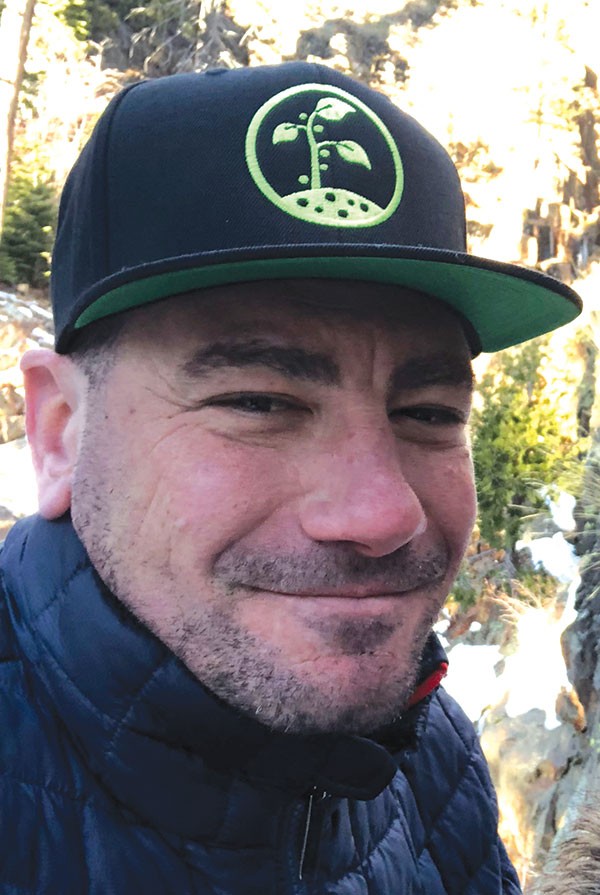
“It was always a party,” says Emerald Cup founder and producer Tim Blake. When the inaugural Emerald Cup took place in Mendocino County in 2003, it was an all-night affair that featured incredible music until dawn. “We had what we called a survivors breakfast for anybody who was still awake in the morning,” Blake recalls.

Over the years, the Cup has evolved to include informative speakers, eclectic cannabis vendors and stunning glass art exhibits to accompany its cannabis contest, but music has always been at the core of the event’s success.

“It’s still a wonderful celebration of the fall harvest,” says Blake.

The event attracts talent like Damien Marley, last year’s headliner. This year, Blake is bringing the Roots, Jimmy Fallon’s house band on

The Tonight Show, to headline on Saturday, Dec 9. Formed 30 years ago in Philadelphia, and anchored by lead MC Tariq “Black Thought” Trotter and drummer Ahmir “?uestlove” Thompson, the band has long been a guiding force in alternative hip-hop and won Grammys for collaborations with Erykah Badu in 2000 and John Legend in 2011.

On Sunday, Dec. 10, the Emerald Cup closes the show with Portland, Ore., indie-rock outfit Portugal. The Man, who scored one of this year’s biggest hits with the infectious single “Feel It Still,” off the band’s latest album, Woodstock. Other bands appearing over the weekend include indie-funk ensemble Pimps of Joytime, Bay Area hip-hop collective Hieroglyphics and rising electronica duo Bob Moses, as well as several DJs spinning throughout the event.

With this year’s event set to be the biggest yet, Blake plans on giving back in a big way.

“We formed the Emerald Cup Charity Foundation about six months ago,” says Blake. “When the fires came in, we really saw the need to step up.”

To that end, the Cup is matching funds from its sponsors, donating a portion of every contest entry fee and hosting an auction to support fire victims.

“We’re dedicated to the community,” says Blake. “We’re going to show how much we really stand together.”

Made in the Bay

0

When Bay Area Made launched this past summer, the promotional platform adopted the mantra “What we make makes us.” Now highlighting and supporting nearly a hundred independent Bay Area–based designers, crafters, artists and makers—like Sharon Zimmerman of Sharon Z Jewelry (pictured)—Bay Area Made celebrates the region’s diverse creative culture and brings most of its roster of vendors to the Barlow Center in Sebastopol for the inaugural Bay Area Made Holiday Market on Dec. 9.

Get a look at what the Bay Area has to offer in custom works of art and accessories, including jewelry, home and apothecary goods, apparel and more. Over 40 artisan makers, from well-known designers to up-and-coming brands, will be on hand, and guests will also get the chance to relax in the market’s winter patio lounge, boasting outdoor pieces for sale like heated furniture and botanical arrangements. Libations from Sebastopol’s Spirit Works Distillery and several North Bay wineries will be available, as will locally made sweets and snacks.

A percentage of sales from the event goes to Undocufund, which is providing direct funding to undocumented immigrants and their families who were affected by the North Bay fires. Bay Area Made Holiday Market commences on Saturday, Dec. 9, at the Barlow Event Center, 6770 McKinley St., Sebastopol. 11am to 5pm. Free admission. 707.824.5600.

City Mouse

0

Named for an address in the hills high above Sonoma, Winery Sixteen 600 has been pouring its wines in a little old house on a quiet side street of the city of Sonoma since 2015. Just look for the Stanley Mouse flag flying on the front lawn.

Not “freak flag flying,” but you hear Stanley Mouse, and that’s what you think, right? Actually, this work, by the celebrated 1960s rock ‘n’ roll poster artist, and which appears on the winery’s labels, is Belle Époque and quite demure.

Now here’s another sign. Lucky for us, it says, “Open.” The reverse side says, “In the vineyard—text Sam,” and gives Sam’s phone number. Sam Coturri runs the winery with his father, Sonoma County organic viticulture guru Phil Coturri, along with some other employees who are generally friends of the family as well, says Ben Pickering, friend of the family and winery employee who describes his job title as . . . well, a bit of everything—vineyards, winery, tastings.

Today Pickering is recovering from hosting a bachelorette party, but he’s happy to pour us a few samples. Then a few more. Then one for himself—it’s about that time of day. Most days, this isn’t a limo-delivered party kind of joint, and staff meet with only a few tasters a day in a worn wood-floored cottage that’s also the office, furnished with theater seats, a farmhouse table and something like a half ton of vinyl albums. And, yes, plenty of tie-dye.

To start, Pickering pours two glasses and sets them on the table without naming them, just for fun. From left to right, they seem to be in reverse order of that day’s tasting menu. The first is apricot-scented—it’s the 2016 Steel Plow Viognier ($35)—while the second, the Grenache Blanc-based 2016 Hommage Blanc ($35), a field
blend with Marsanne and Roussanne from Rossi Ranch, suggests white flowers.

The Coturris also farm Landmark Vineyard’s Steel Plow vineyard in Kenwood. The 2014 Steel Plow Grenache ($44) brings more fruit to the fore than any version I remember from this vineyard, yet it’s the more subdued of a pairing with the toothsome 2014 Oakville Ranch Grenache ($64).

Also on the menu recently, 2014 Dos Limones Syrah ($44), 2014 Val Rossi Hommage ($64) red Rhône blend, and 2013 Hamel Family Zinfandel ($35). There’s even something for Cabernet fans, too,
at this address.

Winery Sixteen 600, 589 First St. W., Sonoma. By appointment only; $35 tasting fee waived with “a couple of bottles” purchased. 707.721.1805.

‘Stand Up Sonoma’ Gathers Comedy Giants for Fire Relief

In the wake of October’s devastating North Bay fires, the community’s strength and resolve has manifested in several massive concert and benefit events that have supported displaced victims and bolstered fire relief efforts. Now, a committee of local hospitality professionals are adding comedy to the mix with the upcoming Stand Up Sonoma fundraiser featuring Joel McHale, Nick Kroll, Nikki Glaser, Kyle Kinane, Chris Porter, and more in January at Luther Burbank Center for the Arts.

Fans of the recent TV comedy “Community” know McHale as the wisecracking Jeff Winger, and the actor has become a go-to TV host after several years of heading “The Soup.” Kroll is a comedian of many voices, and his two-man show with John Mulaney, “Oh, Hello,” recently ran on Broadway and is now a Netflix special. Glaser, Kinane and Porter are all some of the busiest working standup comedians working today, each with a distinct voice and wickedly funny worldview.

Proceeds from the show will go to the Sonoma Pride Fundraiser and King Ridge Foundation, which directly help those in Sonoma County affected by the October wildfires. Additionally, a portion of ticket proceeds will go to Luther Burbank Center for the Arts Fire Recovery Fund.

Tickets for Stand Up Sonoma will be available for purchase on Thursday, Dec 7, at noon. The show takes place on Thursday, Jan 4, 2018, at Luther Burbank Center for the Arts, 50 Mark West Springs Rd, Santa Rosa. $55-$125. 707.546.3600.

Nov. 30: Dine & Donate in Sonoma County

0

A nationwide culinary day of action that dates back to 1991, Dining Out for Life returns to Sonoma County this week to offer the community a chance to patronize one of 90 local restaurants and ensure a portion of the proceeds go toward Forestville-based Food for Thought, which feeds and cares for persons living with HIV and other serious illnesses. The participating restaurants run the gamut of trends, tastes and locations, and donating diners can find lunch and dinner options for the event, happening Thursday, Nov. 30, throughout Sonoma County. Find a list of restaurants and details at diningoutforlife.com/sonomacounty.

Dec. 1: Art on the Screen in St. Helena

0

London-born filmmaker and visual artist Isaac Julien has been developing a unique cinematic language since his debut feature film, Young Soul Rebels, screened at Cannes Film Festival in 1991. His work is often presented as video art installations, such as his 2003 short “Baltimore” and his 2007 multiscreen work Western Union: Small Boats, both of which are shown with Julien on hand in Napa Valley this week. The event includes reception, dinner and conversation between Julien and Aebhric Coleman, curator of the renowned Kramlich Collection of multimedia art, on Friday, Dec. 1, at Cameo Cinema, 1340 Main St., St. Helena. 5:45pm. $75–$150. 707.963.9779.

Dec. 3: Hand-Printed Holiday in Sebastopol

0

Eric Johnson’s Iota Press began life as a venue for teaching and sharing his love of old-style letterpress art and books. It quickly grew into a collective that established itself as the North Bay Letterpress Arts nonprofit group in 2015. Currently housing 12 artists and printmakers in a 1,600-square-foot shop, Iota Press hosts the North Bay Letterpress Arts Holiday Open House this weekend that includes art and books for sale, live poetry reading, tours of the shop and a demonstration of the Gutenberg-style press, and a raffle of handmade gifts. Sunday, Dec. 3, 925-D Gravenstein Hwy. S., Sebastopol. 1pm to 5pm. Free admission. northbayletterpressarts.org.

Dec. 5: Naughty & Nice in Santa Rosa

0

Every Christmas Eve, boys and girls around the globe await gifts from Santa. But naughty little boys and girls, especially in the folkloric traditions of Eastern Europe, have the horned figure known as Krampus to look forward to. The half-goat demon that punishes wicked children has captured the imaginations of artists for centuries, and is the subject of the new ‘Krampus Group Show,’ opening with a reception this month. Featuring the artwork of nine local talents and special live performance piece, the show is perfect for gift givers with a naughty streak. Tuesday, Dec. 5, at Beluga & Bee Studio, 24 10th St., Santa Rosa. 5pm. 707.318.9760.

Natural Remedy

0

The disaster of October’s wildfires didn’t stop once the flames were finally extinguished. The toxic ash left by the firestorms—incinerated plastics, hydrocarbons, solvents, pesticides, heavy metals—lay like a ticking bomb on home sites, awaiting a rain storm to wash the deadly debris into drains and creeks. Once in waterways, the lethal plume could infiltrate watersheds and imperil drinking water and aquatic life.

But thanks to an unprecedented public-private partnership, protection from that environmental hazard in hard-hit areas like Coffey Park, Larkfield-Wikiup and Fountain Grove has come from an unlikely source: mushrooms.

Erik Ohlsen, a landscape architect and permaculture educator, saw that second wave of disaster coming and acted quickly to rally a diverse team of volunteers, environmental groups, landowners and public agencies to deploy cutting-edge bioremediation techniques using mushrooms and compost to absorb and neutralize the deadly runoff. He created the Fire Remediation Action Coalition on Facebook to help organize the effort and spread the word.

And word spread quickly. The project took off as another example of the volunteerism and generosity that have characterized local efforts after the fire. Sebastopol’s Gourmet Mushrooms donated thousands
of pounds of substrate used to grow mushrooms. Sonoma Compost and West Marin Compost donated compost. Petaluma’s Wattle Guy provided, you guessed it, wattles—barriers and fences made from natural materials like rice straw and sticks. And groups like Russian Riverkeepers and the Clean River Alliance marshaled volunteers to make, fill and install the wattles and monitor water flow during and after the recent rains.

It’s too early to know what impact the group has had in staving off another catastrophe. Data is still being collected and winter hasn’t even begun yet. But if the techniques prove effective, their efforts could be used as a case study for use elsewhere when urban firestorms occur—which fire experts say is a question of when, not if.

Ohlsen says the undertaking offers a “tragic opportunity” to divert and neutralize the toxics from this disaster and to prepare for future wildfires.

“These wildfires aren’t going anywhere,” he says. “They are ramping up in severity.”

In the days after the fires, Ohlsen, who owns Permaculture Artisans in Sebastopol, had been meeting with Daily Acts’ Trathen Heckman to brainstorm how to mitigate the effects of erosion and runoff from burn sites. Daily Acts is a Petaluma-based nonprofit volunteer organization that has served as a nexus for recovery efforts around the fire.

“The rain is coming,” Ohlsen said. “What do we do?”

Ohlsen and Heckman settled on rice-straw wattles as the quickest, easiest technique for absorbing and diverting hazardous runoff. Ohlsen took the idea one step further: Why not inoculate the wattles with mycelium, in the hope that mushrooms that grew could absorb and in some cases transform the toxins through a process called chelation? The toxin-laden mushrooms would then be harvested and disposed
of offsite.

Mycelium is the weblike network of fungus that grows underground. The use of mushrooms to
clean up landscapes is called mycoremediation, a technique that’s gaining acceptance in cleaning up oil fields and toxic waste sites. Permaculture is a method of design based on the principles and systems of nature, and mycoremediation exemplifies the practice.

“It’s the perfect answer for this moment,” says Ohlsen.

[page]

Mycoremediation was pioneered by Washington state mushroom expert Paul Stamets, but the practice has never been used to remediate fire sites on this scale. The fires offer a tremendous opportunity to put the practice into action.

The Santa Rosa office of the North Coast Regional Water Quality Control Board has been deeply involved in storm-water diversion projects, and partnered with local groups on bioremediation because the need is so great.

“What was an erosion hazard before is an erosion hazard now times 10 or 100,” says Clayton Creager, environmental program manager for the water board. Mona Dougherty, a senior water-resource control engineer for the water board, helped supply the groups with wattles, and is actively monitoring their use and the effect of bioremediation. Use of compost and wattles to capture toxins and divert water is a well-established practice, but Dougherty says mycoremediation is not one the agency has used before.

Before last week’s rain, Chris Brokate and Will Bakx spent their days following storm drains and tracking the course of Coffey Creek in the fire-ravaged neighborhood to scout out the best places to lay wattles. Coffey Creek flows into Piner Creek, and Piner Creek empties into the Laguna de Santa Rosa, which in turn flows in the Russia River. They focused their efforts where storm drains entered Coffey Creek.

“The next disaster is right around the corner with all the toxics coming off,” says Brokate, founder and executive director of the Clean River Alliance, a Guerneville-based nonprofit dedicated to removing trash from the Russian River.

“‘Ash’ rhymes with ‘trash,'” quips Brokate.

Bakt, a soil scientist who operates Sonoma Compost, created a custom blend for wattles made of straw, mushroom substrate, compost and manure. In addition to the use of oyster and turkey tail mushrooms, compost also helps chelate and biodegrade hydrocarbons in the soil, he said.

“We do believe it’s making
a difference,” Brokate says,
adding that data gathered from the sites will help confirm that. While Coffey and Piner creeks already suffered from pollution and trash, he said they are not dead yet.

“We can still save them.”

Chris Grabilll serves on Santa Rosa’s Board of Public Utilities and is acting as a liaison with the Water Quality Control Board and local nonprofits on the bioremediation projects. He is also part of the city’s Joint Watershed Task Force. While Brokate and Baxt installed their wattles where storm drains entered Coffey Creek, Grabill’s team helped install wattles in Coffey Park and the Larkfield-Wikiup area near burned-out housing sites with an eye on data collection and removal of toxic ash. The wattles in Larkfield-Wikiup were inoculated with mycelium; the Coffey Park sites were not, and will act as the control group. Peer-reviewable data will reveal the impact that local efforts have on the protection of water resources.

“The best-case scenario is we mitigate a second disaster,” says Grabill.

Toxins are hard to remediate once they enter the watershed, he says. “It goes from a two-year issue to a 25-year issue if we don’t take all steps in the first rains.”

For Ohlsen, the spirit of volunteerism and grassroots partnership with public agencies is one of the bright spots of an otherwise grim situation. He’s also working with large landowners on mycoremediation, and hopes to gain rich data about best practices that could be duplicated elsewhere.

“This is just the start of the whole process,” Ohlsen says.

All’s Well

Shakespeare in Love, the play, is as much a mixed bag of contradictions and clashing tones as the Oscar-winning 1998 film on which it is based. Adapted by Lee Hall (Billy Elliot) from the screenplay by Marc Norman and Tom Stoppard, the rambunctious, joyously performed production now running at Marin Theatre Company frequently delights—assuming this kind of Mel Brooksian jokes-at-the-expense-of-actual-drama-and-truthful-storytelling...

Cream of the Crop

While it's widely regarded as the preeminent cannabis growers' competition, the Emerald Cup, returning to Sonoma County on Dec. 9 and 10, has also earned the reputation as one of the industry's biggest blowouts of the year. "It was always a party," says Emerald Cup founder and producer Tim Blake. When the inaugural Emerald Cup took place in Mendocino County...

Made in the Bay

When Bay Area Made launched this past summer, the promotional platform adopted the mantra "What we make makes us." Now highlighting and supporting nearly a hundred independent Bay Area–based designers, crafters, artists and makers—like Sharon Zimmerman of Sharon Z Jewelry (pictured)—Bay Area Made celebrates the region's diverse creative culture and brings most of its roster of vendors to the...

City Mouse

Named for an address in the hills high above Sonoma, Winery Sixteen 600 has been pouring its wines in a little old house on a quiet side street of the city of Sonoma since 2015. Just look for the Stanley Mouse flag flying on the front lawn. Not "freak flag flying," but you hear Stanley Mouse, and that's what you...

‘Stand Up Sonoma’ Gathers Comedy Giants for Fire Relief

Several funny stars of stage and screen appear in Santa Rosa for January benefit.

Nov. 30: Dine & Donate in Sonoma County

A nationwide culinary day of action that dates back to 1991, Dining Out for Life returns to Sonoma County this week to offer the community a chance to patronize one of 90 local restaurants and ensure a portion of the proceeds go toward Forestville-based Food for Thought, which feeds and cares for persons living with HIV and other serious...

Dec. 1: Art on the Screen in St. Helena

London-born filmmaker and visual artist Isaac Julien has been developing a unique cinematic language since his debut feature film, Young Soul Rebels, screened at Cannes Film Festival in 1991. His work is often presented as video art installations, such as his 2003 short “Baltimore” and his 2007 multiscreen work Western Union: Small Boats, both of which are shown with...

Dec. 3: Hand-Printed Holiday in Sebastopol

Eric Johnson’s Iota Press began life as a venue for teaching and sharing his love of old-style letterpress art and books. It quickly grew into a collective that established itself as the North Bay Letterpress Arts nonprofit group in 2015. Currently housing 12 artists and printmakers in a 1,600-square-foot shop, Iota Press hosts the North Bay Letterpress Arts Holiday...

Dec. 5: Naughty & Nice in Santa Rosa

Every Christmas Eve, boys and girls around the globe await gifts from Santa. But naughty little boys and girls, especially in the folkloric traditions of Eastern Europe, have the horned figure known as Krampus to look forward to. The half-goat demon that punishes wicked children has captured the imaginations of artists for centuries, and is the subject of the...

Natural Remedy

The disaster of October's wildfires didn't stop once the flames were finally extinguished. The toxic ash left by the firestorms—incinerated plastics, hydrocarbons, solvents, pesticides, heavy metals—lay like a ticking bomb on home sites, awaiting a rain storm to wash the deadly debris into drains and creeks. Once in waterways, the lethal plume could infiltrate watersheds and imperil drinking water...
11,084FansLike
4,446FollowersFollow
6,928FollowersFollow