Jan. 21: Musical Sight in Santa Rosa

0

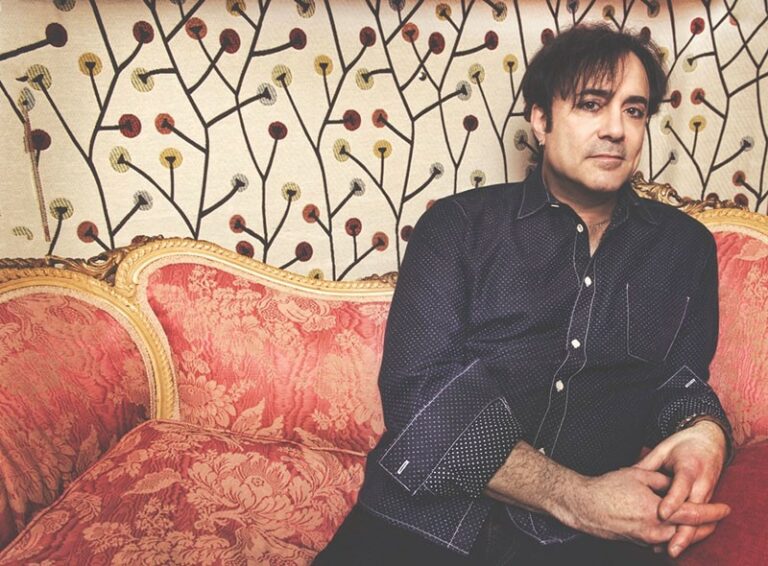
Meditative and ethereal, the ambitious indie-folk collage of Chicago-based Circuit des Yeux—the namesake of vocalist, composer and producer Haley Fohr’s longtime solo project—has never been better than on last year’s album, Reaching for Indigo, which presented Fohr’s emotionally drenched voice swimming in a sea of lush acoustic guitars, strings, organs and ambient digital effects. Fohr is currently traversing the West Coast with her project and North Bay promoter Shock City, USA hosts Circuit des Yeux in concert with Oakland’s Emily Jane White and Santa Rosa’s Self Care on Sunday, Jan. 21, at Atlas Coffee Company, 300 South A St., Santa Rosa. 7pm. $10. facebook.com/shockcityusa.

Harmony

0

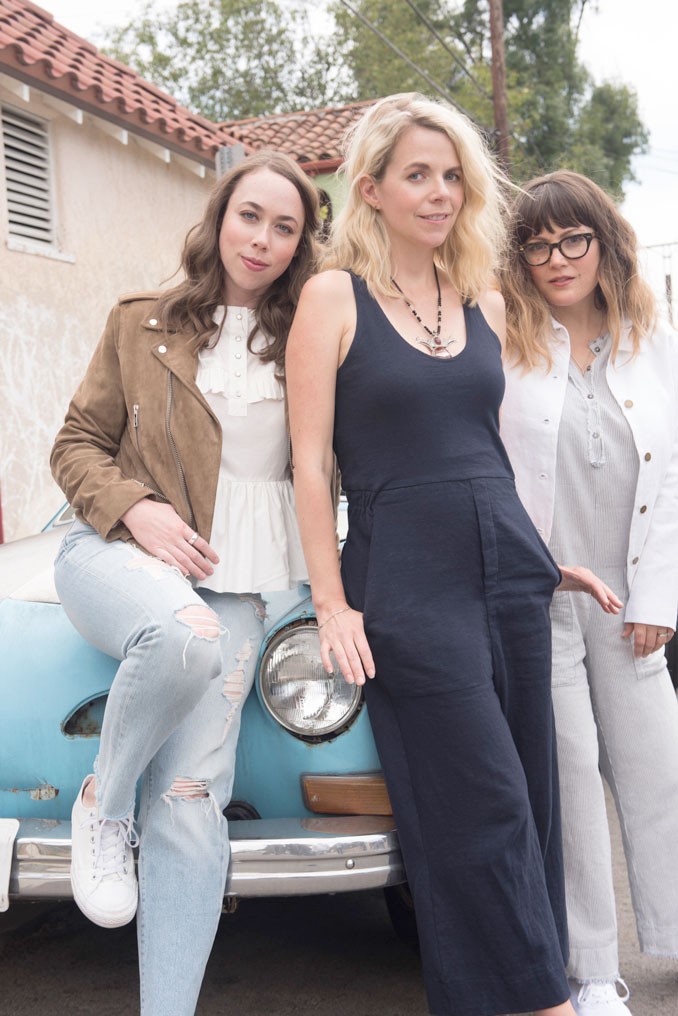
In the eight years that vocalists, multi-instrumentalists and songwriters Erin Chapin, Caitlin Gowdey and Vanessa May have lived and played together as Rainbow Girls, their collective spirit has helped them grow as individuals, too.

“Playing as part of this collective has given me an opportunity to find harmony in my own life, in the most natural sense of the word,” says May. “To bring that to other people is really important, and has been a driving force for me.”

In November, Rainbow Girls unveiled their first album as a trio, American Dream, which touches on experiences of love, loss and what May calls the political storm going on. “There’s been a lot of dissonance around, people having a hard time finding where they fit in,” she says. “Rainbow Girls’ and my own journey with this is to help people find that harmony in their own lives.”

Named after the so-called Rainbow House where the three first met and hosted weekly open mics while attending school in Santa Barbara, Rainbow Girls moved to Bodega Bay after college, living in a cottage on Gowdey’s grandparents’ property when they’re not touring the U.S. or Europe.

There they continue to cultivate original, richly layered, three-part harmonic folk music and connect to the North Bay musical community through a new weekly open mic series at the house.

“We moved up to the North Bay, and at first felt like it wasn’t home because we were traveling so much and had such deep roots in Santa Barbara, but as soon as we started doing open mics again, we realized we do have friends here and we do have something to contribute to this community,” says May. “And in that, we’ve seen so much of our own growth.”

The 10-track American Dream is a culmination of that growth. The mostly acoustic album was recorded live in the band’s living room over the course of a month. “We were in such a place of deep comfort, and that comes through,” says May.

Though the women often write songs individually, May says the trio’s shared experiences of living and traveling together makes it easy to know where to go musically as a group.

“Sometimes you know exactly where you’re supposed to be, and other times we try to create something that is unexpected, and we like having both of those elements,” says May. “At this point, we can hear a song and know the feeling and essence of the song, and find harmonies accordingly.”

Country Roads

0

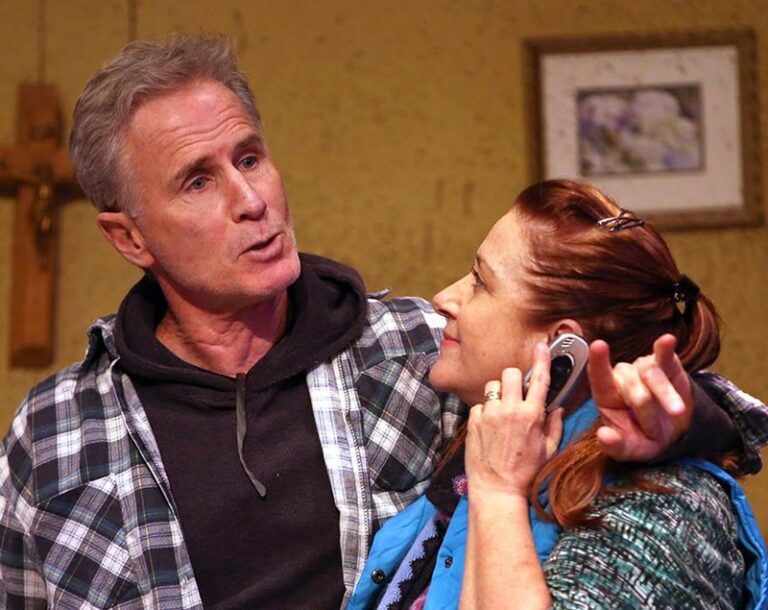
North Bay theater kicks off the new year with 6th Street Playhouse’s Honky Tonk Angels, a country-music revue by Ted Swindley. Swindley, best known for the community theater staple Always . . . Patsy Cline, has taken about 30 country standards and wrapped the thinnest of stories around them to create a raucous and enjoyable evening of entertainment.

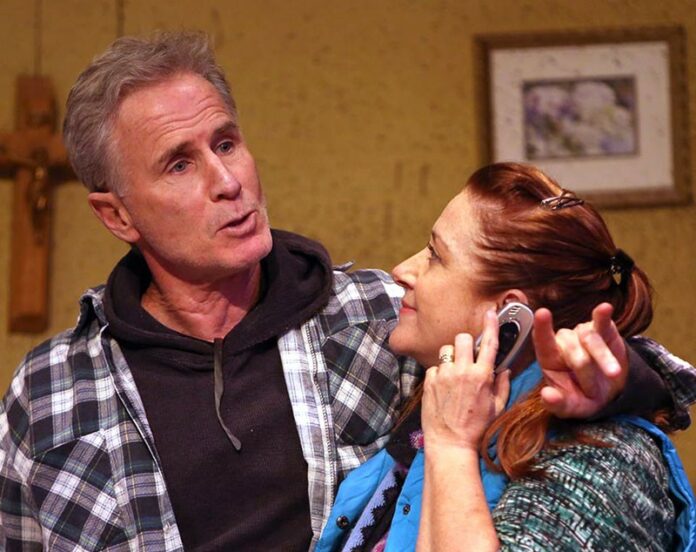
The plays tells the tale of three would-be singers, each stuck in a rut, who decide to take a chance and follow their dreams of a singing career to Nashville. There’s Angela (Daniela Innocenti-Beem), queen of her double-wide, who’s having trouble standing by her man (cue Tammy Wynette); Darlene (Abbey Lee), who’s struggling with being a coal miner’s daughter (cue Loretta Lynn) and the loss of her boyfriend Billy Joe (cue Bobbie Gentry); and Sue Ellen (Amy Webber), who’s fed up with the chauvinist boss at her 9-to-5 job (cue Dolly Parton).

Act one begins with their backstories and individual decisions that it’s time for them to fly (cue REO Speedwagon—wait a minute, REO Speedwagon?) and concludes with their fortuitous meeting on a Greyhound bus. A lot must happen during intermission because act two consists of their farewell performance after a record-breaking six-week engagement at Nashville’s Honky Tonk Heaven. In addition to the songs alluded to earlier, others include “I Will Always Love You,” “Delta Dawn,” “Rocky Top,” “Sittin’ on the Front Porch Swing” and “I’ll Fly Away.”

Director Michael Ross has a trio of talented women for angels. Innocenti-Beem as Angela is the unabashed leader of the trio. As the oldest and most worldly member, she grabs hold of the stage—and the audience—and never lets go. Webber gives her a run for her money as the brassy, big-haired Sue Ellen, while Lee has the quieter moments as the wide-eyed, innocent Darlene.

Swindley’s script—if you can call it that—doesn’t provide character depth and there’s no great message to be found beyond the pat “follow your dreams” axiom, but what Honky Tonk Angels does provide is the opportunity to hear some great American music performed live. Music director Robert Hazelrigg and musicians Ian Scherer, Quinten Cohen and Kassi Hampton handle the country/bluegrass songbook well. Credit the women for bringing the right amount of character and a quality voice to each song, particularly on some sweet three-part harmonies.

When it comes to shows like Honky Tonk Angels, it is all about the songs. They’ve got this.

Rating (out of 5):★★★½

Art Moves

0

‘This is really a pivotal moment for di Rosa,” says Bob Sain, executive director for the di Rosa Center for Contemporary Art. “Everybody talks about going to the next step and the next stage, but this is more about changing the game.”

Nestled between Napa and Sonoma in the Carneros region, di Rosa began as the private art collection of grape grower Rene
di Rosa. Since 1997, the 217-acre property has operated under the ambiguous title of di Rosa. Now the nonprofit is rebranding itself as the di Rosa Center for Contemporary Art, as it invites artists to create new works onsite and engaging the public through new educational programs.

“This is a moment and an opportunity to explore what a contemporary art center should be,” says Sain. “We feel compelled to share why art matters and how art and artists can be a resource and an asset to the concerns and needs of our time.”

For the past year, di Rosa has been renovating its gallery spaces and curating the upcoming exhibition, “Be Not Still: Living in Uncertain Times,” opening Jan. 27, which commissioned several
Bay Area artists to address the country’s post-election political and social atmosphere through immersive installations.

“When we first conceived of the concept last year, we wondered if it would seem a little dated by the time it opened,” says Sain. “But the times have continued to be uncertain, and the show continues to have relevance.”

Curator Amy Owens approached the exhibition as a shift in the center’s focus. “We wanted to address pressing issues of our time and hand the reins over to the artists by inviting them to drive the themes and topics,” says Owens. “Through this model, I think we’re getting much closer to what di Rosa historically has been and was intended to be. We’re putting artists at the forefront.”

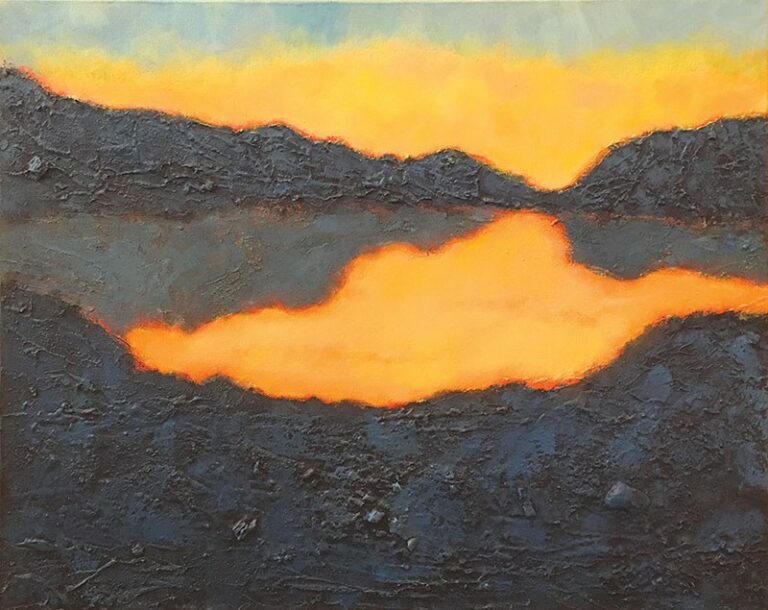
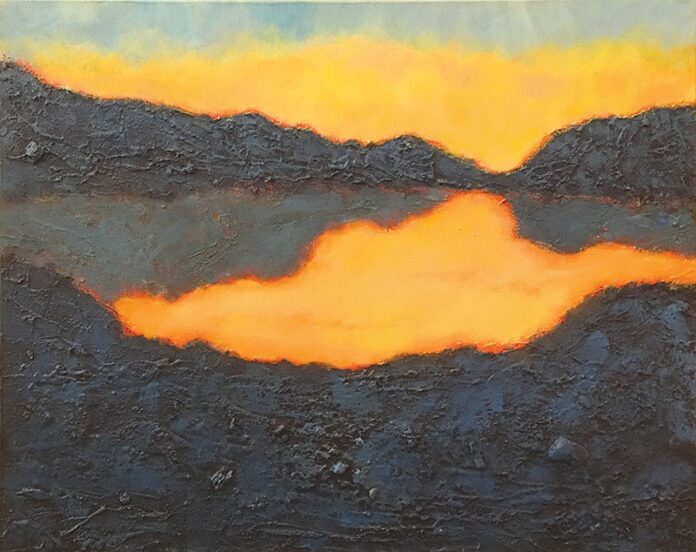
“Be Not Still” features four installations, including Iranian-American artist Ala Ebtekar’s Azimuth (shown), which transfers an image of the cosmos taken by the Hubble telescope onto ceramic floor tiles and explores what it means to live without borders. Other works include Allison Smith’s investigation of the rise of white nationalism through cast-iron tiki torches, and Rigo 23’s three-dimensional model of the American flag as a series of walls that viewers can walk through.

The show was scheduled to debut in November, but smoke damage from October’s wildfires, which came over the ridge of Milliken Peak adjoining the center’s property, delayed the opening.

Forging ahead after the fires, the upcoming exhibit is being bolstered by new art-making programs and art-appreciation workshops, “Third Thursday” socials and a book club, as well as partnerships with the Boys & Girls Club of Napa and other groups that aim to bring art to the people.

“Education is central to what
an arts organization is about,” says Sain. “It’s new for di Rosa to have this level of educational programming. It’s an integral part of the exhibition and a way to make it accessible and meaningful.”

Learn the Craft

0

Wine country isn’t all about wine. Napa County spotlights the wide world of brewing at the inaugural Napa Craft Beer & Spirits Festival, taking place this weekend after being rescheduled from October due to the wildfires.

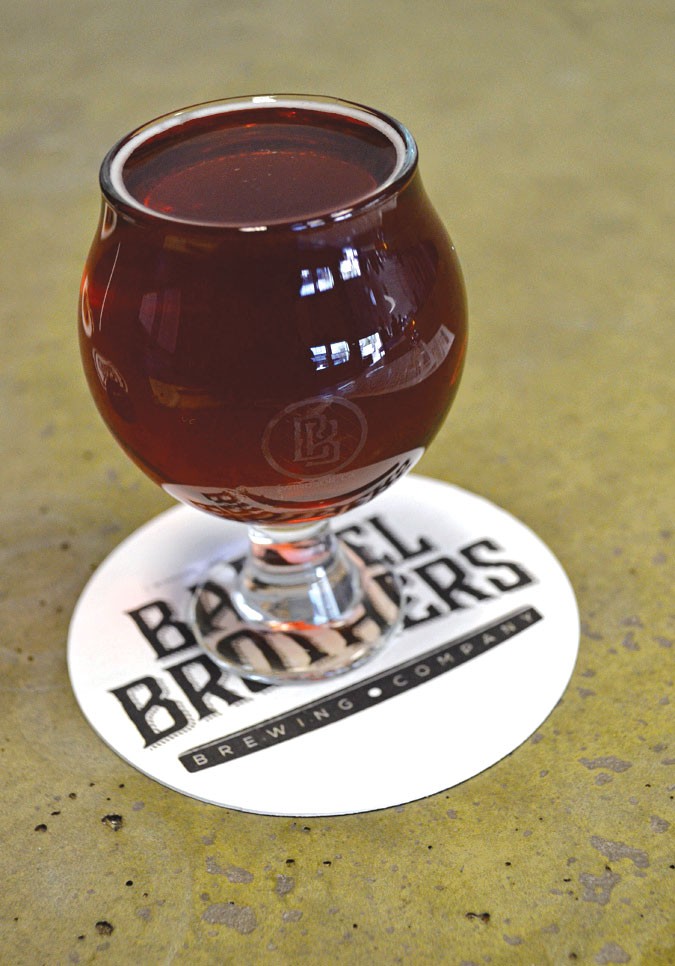
More than 35 regional breweries will be pouring 70 craft-beer selections, with powerhouse brewers like Lagunitas, Anderson Valley and Bear Republic rubbing elbows with upstarts like Napa small-batch brewers Tannery Bend Beerworks (pictured) and San Francisco “farm-to-barrel” brewers Almanac Beer Company.

In addition to hops and barley-based brews, several local spirits shine in exciting cocktails concocted by expert mixologist Mason Salicetti. Several chefs also pair the libations with flavorful bites in a Connoisseur Lounge that features live music from popular party band the King Street Giants (formerly the Dixie Giants).

General admission gets you in the door, but serious tasters may want to get the VIP unlimited pass, which offers an hour headstart on the festivities. A portion of tickets sales benefits the Schoolbox Project, which helps refugees through education and art programs, and Napa Valley Share the Care, which connects older adults with advocacy services in the area.

Napa Craft Beer & Spirits Festival happens on Saturday, Jan. 20, at the Napa Valley Opera House, 1030 Main St., Napa. 1pm;
VIP starts at noon (21 and over only).
$25–$125. napacraftbeerfestival.com.
—Charlie Swanson

So Many Roads

0

On a Grateful Dead tour, you met the best people on Earth. People from all walks of life were drawn to Dead shows, the way Richard Dreyfuss was
drawn to Devils Tower in Close Encounters of the Third Kind.

But there were also narcs, feds, drug addicts, clinically insane misfits and jerks. There was a series of “religious” groups, like the Golden Roaders, selling backless dresses and Sufi spinning at shows. Then there were the Moonies, although I only saw them at shows in the Northeast, who were aggressive and deceptive, selling lame stickers and incense.

The Krishnas gave out free rice, but they also played their freaking tambourines and drums at sunrise to greet the day. Not a good group to camp next to. From Scientologists to evangelical Christians to mini-messiahs that paraded around in full regalia (mostly a robe, loincloth and a conch full of burning sage), there was no shortage of wackadoodles to join up with or be abducted by.

I know that I and hundreds (or at least dozens) of other Deadheads took it upon ourselves to be the ones to “look out” for the weaker ones as the scene grew exponentially and then collapsed upon itself. I am grateful for my time in that world, and recently I reflected on that journey—at least the parts I could remember.

09-06-80, Maine State Fairgrounds, Lewiston, Maine

I had, like, 20 or 30 Grateful Dead concerts under my belt, but this show in Lewiston, Maine, was my first outdoor show. Personally, my life was in a bit of a downward spiral. I was 18 years old. I had recently not graduated from high school. I failed gym—don’t ask. For good or ill, I still hadn’t found a steady girlfriend. Most of my buddies had left for college. I was reluctantly working at Swensen’s Ice Cream shop and dreading starting Kean University in Union, N.J. I only applied because my father thought I was mentally deficient. “Who fails gym?!” was the battle cry around the DNA household.

Entering Lewiston, it seemed as if the entire town was welcoming—or looking to cash in on—the invading horde. People were standing in their driveways offering $10 parking to anyone desperate enough for the promise of an indoor bathroom. Restaurants had “Welcome Deadhead” signs in their windows. The line of VWs, broken-down wrecks and school buses en route to the show was viewed as a parade. Children were waving. There was no undercurrent of judgment. It was a true community spectacle. Post-show articles cried about the wild atmosphere that the Dead circus brought to town, but they cried all the way to the bank.

I was used to people scampering to the stage and setting up perimeters, establishing little Trumpian invisible walls between their space and my space. This was different. This was my first outdoor show, and in the big field that had been in use since 1898, there was space enough for everyone. The Dead played for three hours, and it was a slice of heaven. An undeniable connection between fans, band and environment occurred. Gone was the cement underneath. I took my shoes off. This might seem, especially to my California friends, a simple enough move, but it was revelatory.

Unlike the Great Nothing in The Neverending Story, there was a great something afoot, and the music of the Grateful Dead was the conduit. And much like The Neverending Story, every person there felt like they were the central character in a cosmic tale. It was a grounding experience. The roles I played at home, mostly that of a lowly ice cream scooper with a GED, melted away. I felt lucky as hell to be there, and I knew I wanted more. Now, as many have argued before, it could have all been a dream brought on by hallucinogens and projected expectations. But the way I saw it, a dream was better than no dream at all—or, worse yet, suburbia.

10-11-83, Madison Square Garden, New York City, N.Y.

If I had to call one venue my home, it would be Madison Square Garden. I must have seen the Dead there 20 times. From my parents’ house, it was less than 40 minutes to get to the city and wind my way to Seventh and 33rd. In the world of concert experiences, MSG is a singular adventure. Opened in 1968, the roof was built with shock absorbers, so when the entire venue is rocking with 20,000 fans going apeshit, the roof literally bounces up and down.

I’ve been in a lot of coliseums, but MSG has that special feel of being a world-class stage where magic has occurred over and over again. The original space was five blocks away, opened in 1879, and featured people like Nikola Tesla. But from Ali vs. Frazier’s “Fight of the Century” to the Ringling Bros.’ home to the birth of Hulkamania, the “new” MSG has a thousand stories. It is every East Coaster’s mecca.

It should be remembered that, as reverential a space as MSG is, right outside the door is New York City, the city that never sleeps, the city with an incredibly organized police force that deals with crazies 24/7. So when the Dead came to town, they geared up. Yes, the cops could be helpful in their brusque, in-your-face NYC way. But every police squad needs to generate arrests, and Dead crowds were easy pickings.

On the street, 25 undercover cops were putting on their tie-dyes—that they had just confiscated—and walked around filling garbage bags with Deadheads’ crafts and shirts. Everyone knew it was risky to sell anything on the streets of New York, but Deadheads need gas money just to get to the next show, and often selling a few trinkets was the only way to do it.

The tour lot, dubbed Shakedown Street, was a bazaar of crafts, food, drumming and anything you could imagine. It was our Silk Road. It was the original dark web. Over the years, I sold shirts, drums, these purple face masks you blew in that created a hypnotic experience, grilled cheese sandwiches, anklets (these were my bread and butter), hand-painted sun dresses and baby food. Some friends made a killing with Steal Your Face metal license plates. It was pure copyright infringement, but the profits were enormous. Some Guatemalan dealers made a mint at shows.

For most of the Deadheads trying to hustle a few stickers, it was dire straits to not sell them, so the risk was worth it. Being stuck in NYC after a show could be grim. One summer, I paid for the entire journey with just a few balls of hemp string and a big bag of African trading beads. Ninety percent of what you saw people selling was handmade. It was Etsy in real time.

[page]

I was 21. I had turned my life around. My dad had a string of heart attacks, my grandparents died, and something in my head clicked. Even though, in my first semester, I got a 0.00 GPA at Kean University, I finally “got” that if I just repeated back to teachers what they said to me, I could get an A. I decided I was going to go to graduate school in California, to be closer to the band, and doing well as an undergrad was my meal ticket. I was working full-time, going to school full-time and helping my family out. I was also ingesting everything that came my way.

Rumors were circulating at this MSG show, as they would at almost every show: songs overheard in sound check, possible guest appearances and Jerry’s health. I disregarded all the pre-show talk. I could give a wharf rat’s ass about guest appearances. I wanted the core band; everyone else was a distraction.

I was feeling my oats at this show. The crowd was on stun, and I sat in my seat like all the others through the first set. I almost bailed and went to the hallways where the real action was, but I wanted to actually see whatever the band had up its sleeve. Top of the second set, I decided I was going to stand for the entire thing. I let the people behind me know. I told them, “Look, guys, there’s no fucking way I’m sitting down.” At least everyone around knew I was a dick. In NYC, this is known as “being courteous.”

The second set rolled through “China Cat,” “Rider,” “Miracle,” “Bertha,” and still nobody around me stayed on their feet. People would get up and then sit back in their metal folding chair. Then the band broke it down, slowed it to a halt and drifted into a haunting “China Doll” (the band’s most personal song about suicide and depression). It appeared perhaps I was wrong, that maybe the boys were wrapping it up—but I still had a feeling.

Then out of space came the first notes of “St. Stephen.” They hadn’t played it since 1979, and suddenly everyone was on their feet. When the lyrics “In and out of the garden he goes” were sung, the Garden exploded. Twenty thousand people were now screaming along: “Wherever he goes the people all complain.” New Yorkers, the butt of everyone else’s jokes, knew better than most what this meant. Now we were all standing on our chairs, and the magic of Madison Square Garden was in full effect.

It was a supersonic jolt. Everybody behind me was smiling. Whatever neurolinguistic programs were running got a hard reboot. Although there was another Dead show at MSG the following night, and then two more in Hartford, Conn. (where they played “St. Stephen” again, my second and last time hearing it), this show was the peak, the pinnacle that Maslow runs on about. Was it their best show? No. Not even close. But for a short amount of time, something occurred that turned a coliseum of strangers into a community.

8-31-85, Manor Downs Speedway, Manor, Texas

Driving into Texas, I was following a black Porsche that was doing a cool 85 miles an hour. Following me was a Texas trooper. Flashers on, he motioned for me to pull over and went after the now accelerating Porsche. I had been in Texas for five minutes, and I had no intention of being arrested. I slowed down, saw the cop disappear from view and kept going. I was young and fearless. I also had a lot of weed in the car. It was the beginning of a
13-show run.

The temperature in Texas in late August borders between Holy Hell and Kill-Me-Now Hell. Not only was it sweltering, but massive storms extended to the horizon. I always wanted to spot a twister, and sure enough in the distance a black funnel cloud was touching down.

I finally got to Austin, and fell in love with the town. Lotta Heads. Plenty of bars. Music playing in the streets. Imagine the TV show Deadwood, if everyone in the town was on mescaline.

Manor Downs was being run at this point by Sam Cutler, ex-manager of the Dead and the Rolling Stones. So it was going to be a full-blown freak fest. Manor Downs is on the edge of town. It was Saturday night. Every cowboy and cowgirl within a hundred miles was coming to see the shindig. Time to blow off steam, Texas-style.

Upon entering, I noticed a Greenpeace booth. This was a good sign. This was before every organization in America had a clipboard on the corner and pestered you for a signature. Back in 1985, Greenpeace had serious cred. Besides the Rainbow Warrior, this booth might have been the only place it was disseminating info.

I bee-lined for the front row. I was going to go toe-to-toe with Texas. Saturday night, oversold show, front row, Jerry side. The energy was off the hook. Everyone in the front row realized early on that there was a 50-50 chance we would all be crushed to death. Keeping balance and helping anyone near you that dipped down was key, and went without being said.

The show started, and out came the Saturday-night party accoutrements. Booze, joints. But this was Texas, and, as you might have heard, everything is bigger in Texas. The joints were the size of a baby’s forearm, the Jack Daniels was in a gigantic, novelty-sized bottle—or maybe that’s just the way it comes in Texas. Everything was shared. We were the front-row army, locking arms and keeping the ship of fools behind us.

[page]

It’s common to label the Dead a psychedelic rock band, a ’60s relic and a jam band. Lesser known is that they were also a kick-ass country band. That night, pumping out Marty Robbins and Johnny Cash, the Texans crowed, caw-cawed and hooted, and the electricity was jumping around the crowd like a frog in a hailstorm.

The second set ended with 15,000 people clapping along to the Buddy Holly song “Not Fade Away” until the band left the stage, leaving drummer Mickey Hart conducting the 10-gallon crowd with just one drumstick. Then he left as well.

The show ended. Pleasantries were exchanged. Suddenly, I lost my bearings. Where was the Greenpeace booth, had they already packed up and left? My foot hit a piece of wood. Looking down amidst the mud was scattered debris. The Greenpeace booth had been shattered, decimated, and was already decomposing in the mud. It wasn’t ominous, it was Texas, and that’s just the way they do things.

Sitting on the hood of my car in the middle of the cornfield like something out of Hee Haw, young Texans began popping up between the stalks, adjusting overalls straps, pulling down shirts and blouses. The cornfields were full of people fucking! And at that moment I finally understood Texas. Nobody, and I mean nobody, parties like Texans on a Saturday night.

10-25-1985, Hollywood Sportatorium, Pembroke Pines, Florida

By September of 1985, I’d made it to California. I was living in San Francisco’s Mission District with my brother and his wife. That lasted about two weeks. It ended with him, naked, pinning his wife to the ceiling. I’m pretty sure it was real, but it also was a good stunt to get me to leave. A childhood friend was going to Dominican College in San Rafael, and before you could say “Aoxomoxoa,” I was living right between the Grateful Dead studio and office. So now I was hanging with my childhood buddy in Marin, painting apartments, chilling out with John Cipollina (our roommate’s brother was his manager) and decompressing by hiking Mount Tamalpais every single day. I don’t know about holy spots and vortexes, but
Mt. Tam is very special to me. I had no desire to go back to New Jersey, but life is funny that way.

This next part is hard for me to write about. Long story short, I made a phone call that interrupted a friend’s suicide attempt. I felt obligated to fly back to New Jersey. She was stuck in the mental ward for a week. While there, I met her estranged father, and he told me I could stay in his Florida condo for a few days if I needed to get away.

Well, the Dead were playing two shows in Florida, so I agreed. He might have never done anything for her, but I was going to take advantage of this opportunity. I’m sorry to say that Deadheads will capitalize on misfortune if it leads to seeing a show.

Florida was the Orange State, and I was coming with orange sunshine. If you removed all of the tourists, gangs, spring breakers, and old people from Florida, it would still be the weirdest state in the country. It’s the land that’s weird. It’s spongy. There’s a higher and higher percentage of water in the landmass that increases until you hit the Everglades. Alligators, pumas, panthers, poisonous snakes and bugs the size of your fist abound. Florida would be overrun with wildlife in a week, given the chance.

There were two shows in two days, about seven hours apart. The Sportatorium was a monstrosity. The acoustics were terrible, and it was evident somebody built this place as a cash cow rather than a sacred—or even comfortable—space. I didn’t care. My mind was full of thoughts, and I needed to unravel my helix with my favorite band in the world. That night the band spoke to me.

Now, did Deadheads really believe that the Dead, or specifically Jerry, was sometimes communicating with them? Short answer: yes. Short response from you: probably disbelief, possibly even scorn, like, “What, are you crazy?” I get that. Believe me, it has swirled around my head for decades. It seems that saying the band “communicated with us” and is too narrow a way to talk about it. There was a something. How each person interpreted it was up to him or her.

Was it at every show that this something happened? No, which is one reason Deadheads went to as many shows as possible: to increase the odds of catching it.

Once, at a show in Laguna Seca, I had the privilege of spending some time with a Navajo chief. He said his tribe is called Dineh. I kept thinking he was saying DNA. Eventually we figured it out and had a laugh. He told me that the Deadheads were part of the Navajo prophecies. He laid a story on me about how once the rainbow people gather, the buffalo will return.

Were you expecting something more nuanced? It’s prophecy, people, it’s supposed to be cryptic!

Another time I saw writer Joseph Campbell at the Palace of Fine Arts. It was a symposium called “From Ritual to Rapture: From Dionysus to the Grateful Dead.” It was Campbell’s belief that what he witnessed at some recent Dead shows in Oakland, where Campbell and I locked eyes for a while, was an ecstatic movement, a Dionysian catharsis, where, through dance, music and intoxicants, transformation was happening.

All right, I’m with you, this could all be bullshit. But I’m also a Deadhead who saw some wild stuff.

Santa Cruz-based DNA has been published internationally since 1989. He currently produces several comedy festivals and believes in community out of chaos.

Rigged

0

Last week, Lt. Gov. Gavin Newsom was one of numerous elected officials from around the nation to tee off on U.S. Interior Secretary Ryan Zinke for
his decision to exempt offshore drilling in the vacation state of Florida while failing to do the same for blue states such as California with big tourist economies of their own.

The move by Zinke highlighted a federal energy policy under President Donald Trump to open offshore drilling, but only if it doesn’t interfere with Trump’s ocean view from Mar-a-Lago.

Newsom zeroed-in his critique, via a few pointed tweets directed at Zinke, over the secretary’s rationale for giving Florida a pass from fulfilling the Trump administration’s offshore-drilling plans as detailed in a report released this month from the Bureau of Ocean Energy Management (BOEM), which operates under the aegis of the Department of the Interior.

Newsom noted that Zinke cited the impact on the state’s tourism industry as the signal driver behind his decision to keep the drilling rigs from view of tourists. Zinke did not, however, extend the same courtesy to other states with a robust tourist economy: Oregon, New York, Virginia and, of course, California.

Newsom had the numbers on hand to make his point. Florida, he noted in a series of tweets directed at Zinke, had 113 million visitors in 2016, while California had 269 million statewide visitor trips. Tourists in Florida spent $109 billion; in California, they spent $126.3 billion.

“Using this logic,” tweeted Newsom, “CA’s coast should be declared free of offshore drilling as well. Or do blue states not get exemptions?”

So far, they do not, and Newsom was unavailable for further comment on the matter. The BOEM document, the 2019-2024 proposed draft for the National Outer Continental Oil Shelf and Gas Leasing Program (the OCS, for short), sets out a Trump-approved schedule for renewed offshore drilling from the North Atlantic around the bend of the Gulf of Mexico, and up to Northern California and the Pacific Northwest.

Under the OCS, the federal government will sell drilling leases in Northern California in 2021, and then again in 2023. The feds would offer new lease sales in Southern California in 2020 and 2022. Central California would also see new potential leases in 2021 and 2023.

The last offshore drilling leases in Northern California were sold in 1963, when seven exploratory wells were drilled and came up dry. That same year, a dozen exploratory wells were drilled in Central California and, similarly, no oil was found. Oil was discovered in Southern California, which is where all the current leases are.

The idea is that this time around, improvements in oil-exploration technology may yield something other than mud. The problem is those improvements are causing grave concern among opponents—a concern now met with outrage over the Zinke duplicity in Florida.

“Offshore drilling is inherently dangerous,” says Kristen Monsell, a senior attorney at the Center for Biological Diversity. The Oakland-based Monsell notes that the practice “causes dangerous pollution, risks devastating oil spills that kill marine life and harm coastal communities, and exacerbates the climate crisis.”

The advent of offshore fracking, which would be allowed by the Trump administration’s plan, “only heightens those risks,” she says. That process involves blasting a high-pressure water-and-chemical stew into the ocean floor, which cracks rocks and exposes oil or gas fields.

“The high pressures used in offshore fracking increase the risk of well failure and oil spills.”

Then there’s the back end, says Monsell. Federal rules allow petrochemical companies to “dump their waste fluids, including fracking chemicals, into the ocean,” she says. “Scientists have identified some commonly used fracking chemicals to be among the most toxic in the world to aquatic life.”

Her organization is pushing to end all offshore drilling and vows to fight the Trump move in court. “We need to transition away from this dirty, dangerous practice and toward a clean-energy future.”

[page]

Numerous state agencies provided comments to the Department of the Interior as it was hashing out its offshore-drilling plans—including the California Coastal Commission and the California State Lands Commission. They were joined in opposition by the state’s Office of the Attorney General and the California Fish and Game Commission.

The Coastal Commission and State Lands Commission would be responsible for implementing federally approved coastal-management programs through the issuance of permits. In its comments to the BOEM, the Coastal Commission says it is “steadfastly opposed to any new leasing in ‘frontier’ areas of the OCS.” New drilling activities would mean new drilling platforms, pipelines “and other infrastructure that would likely cause significant adverse effects on coastal resources.”

The commission cites impacts to commercial fishing, tourism, marine wildlife and wetlands, and says that “expanded use of fracking and other well-stimulation treatments increases the risk of an oil spill occurring and potentially causing devastating statewide environmental impacts.”

California Attorney General Xavier Becerra noted in the BOEM report that oil companies were not exactly clamoring to pursue new exploratory wells in California waters even if there’s general support in the industry to undo the Obama no-drill push.

The Shell Oil Company, for example, urged Zinke in the BOEM report to “make new OCS areas available to assess the extent of United States energy resources,” as it expressed disappointment in Obama for banning offshore drilling and urged Trump to “quickly replace the current national OCS program and grant access to new areas.” Shell has numerous leases in Southern California waters. So do the Koch brothers.

Meanwhile, Chevron U.S.A., which operates an oil-and-gas refinery operation in Richmond, was less gushing in its embrace of the new drilling timetables in the BOEM report. It appears Chevron is not interested in Central or Northern California. In its comments to the BOEM, the company did say the federal government “should move expeditiously to open unavailable submerged lands with believed resource potential for exploration and development.”

But Chevron also provided a ranking to the BOEM of its most desirable areas for exploration and development, and left Central and Northern California off the list. Its first three are regions of the Gulf of Mexico. The next three are regions of the Atlantic Ocean, and “the Southern California Planning area was ranked seventh.” The company did not comment on or mention drilling in Central and Northern California in the BOEM report—or in a follow-up email sent in response to questions about its views on oil-exploration in offshore California waters.

“Chevron encourages expansion of domestic and global energy production, including development of energy resources on federal lands onshore and offshore,” says Veronica Flores-Paniagua, a spokeswoman for Chevron North America. “Our U.S. offshore priorities are continued exploration in the Gulf of Mexico deepwater, and to better understand the potential of the Atlantic waters off the East Coast.”

As it set out to reopen offshore drilling, the BOEM also heard from Florida’s Department of State and other of its agencies engaged in wildlife conservation. NASA also chimed in with concerns about offshore rigs’ affecting future space missions. Florida is led by Republican Gov. Rick Scott, who supported Donald Trump for president in 2016, as did the state as a whole. The president spends significant time in Florida, playing golf at the oceanfront Mar-a-Lago.

Zinke’s Florida flip-flop, says Monsell, “clearly shows the total incompetence of this administration. One day it’s in the plan and a few days later it’s out? That’s not at all how the process is supposed to work.”

She notes that the federal Outer Continental Shelf Lands Act, enacted in 1953, “requires the administration to consider several specific factors in developing an offshore oil and gas leasing plan in light of national energy needs and the risks of offshore drilling.”

“Helping Republicans to win elections,” she adds, “certainly isn’t one of those factors.”

Letters to the Editor: January 17, 2017

New Sheriff
in Town?

Since last spring, the Sonoma County Permit and Resource Management District (PRMD) has been persecuting residents who have small medical-cannabis farms. This tactic means many families will lose annual income. Residents with agricultural residential zoned properties are given no option to contest zoning restriction on cultivation permits.

The option to go legal needs to be equally accessible to all landowners, and the final decision of approval of the application is up to the county PRMD. However, in my opinion the PRMD is stepping up using its land-use-violation jurisdiction. Using aerial surveillance, the PRMD has sent letters to every property with a greenhouse, claiming they are generated from individual neighbor complaints about commercial marijuana growing and unpermitted structures. This is a false claim based on little or no evidence. Based on talking with the numerous individual who received PRMD letters, it is apparent that no neighbors filed complaints. This is a fabricated story.

The PRMD has taken over the role of sheriff. With fines to levy and property to confiscate, the county stands to make money off growers’ hard work. This is not acceptable or fair to taxpaying citizens. The county is greedy and corrupt and needs a swift legal kick in the proverbial pants, which the feds may provide.

Sebastopol

It Makes
No Sense

I am from Alabama, and I believe that Attorney General Jeff Session can’t get out of his own way (“Alabama Slammer,” Jan. 10). I served in Iraq and am 45 years old with PTSD. Since when do I need someone to tell me what’s good for me? If I smoke pot, I have to do it illegally. What sense does that make?

Via Bohemian.com

Closing Act

David Templeton will be sorely missed (“Exit Stage Left,” Jan. 10). The Press Democrat failed miserably by ignoring theater and its importance to readers in our community. Thanks to David’s fair and intelligently written reviews in the Bohemian, culture in the North Bay was alive. Well done, Mr. Templeton. Thank you and break a leg.

Via Bohemian.com

Soul Food

Thank you, Shepherd Bliss, for this inspiring and informative article (“Down at the Death Cafe,” Jan. 10). I’m a grief counselor and have been wanting to attend a Death Cafe for years. This particular event feels very much to me like psychospiritual and emotional food for the soul. What a beautiful way to share our hearts, grief, joy and all that arises when facing death’s final frontiers.

Via Bohemian.com

Write to us at le*****@******an.com.

Safe Houses

0

Tragic losses from the October firestorms are still very fresh in our hearts and minds. Discussions about how to rebuild are difficult and sensitive. Dan Wade of United Policyholders says, “Rebuilding in a fire ecology can present unique challenges in the insurance process. Knowing how to maximize insurance benefits can help ensure that homeowners are able to rebuild with fire-resistant materials and continue to be insurable.”

There is a growing understanding that many homes in California were built in “fire ecology areas,” zones where periodic wildfire is a natural part of the ecosystem. In the 1970s, Ray Krauss worked as an environmental planner contributing to early drafts of Sonoma County’s first general plan, which, informed by research about the 1964 Hanley fire, proposed limiting development in high-risk fire hazard zones. A political backlash stifled that proposal. “If there had been acceptance of the county’s early environmental planning, many current losses could have been avoided,” says Krauss.

Recognizing fire ecology, how do we ensure responsible planning so community members aren’t put in harm’s way? When disaster strikes, how will we assist those who want to rebuild safely? To address such questions, several groups are co-organizing a series of events called Conversations Around the Fire. Over a hundred people turned out for the first event about the increasing difficulties faced by renters and those without homes.

For the second gathering, Santa Rosa Councilmember Julie Combs will be joined by Wade and Krauss to talk about “Rebuilding in a Fire Ecology.” Other speakers include Laura Neish of 350 Sonoma County on support for fire victims for rebuilding green, ethnobotanist Edward Willie on permaculture and native-land-management practices, and Teri Shore of the Greenbelt Alliance on ideal locations for new housing.

Conversations Around the Fire: Rebuilding in a Fire Ecology will take place on Jan. 22, from 6pm to 8pm, at Christ Church United Methodist, 1717 Yulupa Ave., Santa Rosa. There will be information about fire-resistant and eco-building materials, zero-net energy homes, affordable housing, cleanup standards, resource management and efforts for a resilient recovery with the big picture of climate change in mind. For information, call 707.292.4233.

June Brashares is a clean-energy professional and social justice activist.

Open Mic is a weekly feature in the ‘Bohemian.’ We welcome your contribution. To have your topical essay of 350 words considered for publication, write op*****@******an.com.

For the Ages

0

The oldest wines poured at Chateau Montelena Winery’s “Dream Tasting” held
Jan. 11—a one-of-a-kind lineup of vintages from 1974 to 2013 that, according to winery CEO Bo Barrett, may never be replicated—aren’t necessarily what most wine consumers would readily drink, or name “best.”

It’s a misperception that all wines get better with long aging in some musty cellar. What this tasting was about was how much better that musty cellar has become over those long years, and how this estate’s particular expression of Cabernet Sauvignon shows up year after year.

Bo Barrett was a surfer kid when he began working for his father, Jim, in 1972 (the two were fictionalized in the 2008 film Bottle Shock). Now silver-haired and sporting a soul patch goatee, Barrett is quick with an entertaining quip, but he’s not “selling” us on wine today—he’s our tour guide, stopping at points of interest throughout the decades, which can be tasted in the glasses in front of us.

That leafy note in the 1980? Typical of aged Cabernet, but also the old crusher used in those days beat up the stems. Later in that decade, they had a machine custom-built to crush gently and sort out the stems—although Barrett prefers not to eliminate stems completely, as they contribute cinnamic acid. On cue, the 1994 shows cinnamon and mint notes. The tannins haven’t fallen out, and aren’t gritty, either. In this decade, says Barrett, it wasn’t just the influence of wine critic Robert Parker, but a convergence of new viticultural findings from UC Davis, the growing confidence of a cadre of winemakers and an unprecedented string of vintages with favorable weather that made the modern Napa style.

The “old cask” aroma of the 1979? Montelena aged the wine in a series of progressively older barrels. The recipe has stayed the same, with only 20 percent new oak barrels contributing a toasty, graham-cracker aroma to the 2007 Cabernet. What changed in the decade of the 2000s was the harvesting practice. Montelena expected its picking crew to complain about night-harvesting the Chardonnay; instead, the Cabernet crew asked why couldn’t they pick at night too.

Besides all that, the wine has been made from the get-go from the same vineyard, using the same yeast, with the same people making and sampling the tanks twice a day during fermentation. “We want to go for batting average,” says Barrett, “not just one hit over the fence.”

After the tasting, we are released on platters of cheese and hors d’oeuvres, paired with a sample of the as-yet-unreleased 2015 estate Cabernet Sauvignon. It’s a brand-new version of that old-school Montelena style.

Chateau Montelena, 1429 Tubbs Lane, Calistoga. Daily, 9:30am–4pm. Walk-in tasting, $30; library tasting, $60. 707.942.5105. montelena.com.

Jan. 21: Musical Sight in Santa Rosa

Meditative and ethereal, the ambitious indie-folk collage of Chicago-based Circuit des Yeux—the namesake of vocalist, composer and producer Haley Fohr’s longtime solo project—has never been better than on last year’s album, Reaching for Indigo, which presented Fohr’s emotionally drenched voice swimming in a sea of lush acoustic guitars, strings, organs and ambient digital effects. Fohr is currently traversing the...

Harmony

In the eight years that vocalists, multi-instrumentalists and songwriters Erin Chapin, Caitlin Gowdey and Vanessa May have lived and played together as Rainbow Girls, their collective spirit has helped them grow as individuals, too. "Playing as part of this collective has given me an opportunity to find harmony in my own life, in the most natural sense of the word,"...

Country Roads

North Bay theater kicks off the new year with 6th Street Playhouse's Honky Tonk Angels, a country-music revue by Ted Swindley. Swindley, best known for the community theater staple Always . . . Patsy Cline, has taken about 30 country standards and wrapped the thinnest of stories around them to create a raucous and enjoyable evening of entertainment. The plays...

Art Moves

'This is really a pivotal moment for di Rosa," says Bob Sain, executive director for the di Rosa Center for Contemporary Art. "Everybody talks about going to the next step and the next stage, but this is more about changing the game." Nestled between Napa and Sonoma in the Carneros region, di Rosa began as the private art collection of...

Learn the Craft

Wine country isn't all about wine. Napa County spotlights the wide world of brewing at the inaugural Napa Craft Beer & Spirits Festival, taking place this weekend after being rescheduled from October due to the wildfires. More than 35 regional breweries will be pouring 70 craft-beer selections, with powerhouse brewers like Lagunitas, Anderson Valley and Bear Republic rubbing elbows with...

So Many Roads

On a Grateful Dead tour, you met the best people on Earth. People from all walks of life were drawn to Dead shows, the way Richard Dreyfuss was drawn to Devils Tower in Close Encounters of the Third Kind. But there were also narcs, feds, drug addicts, clinically insane misfits and jerks. There was a series of "religious" groups, like...

Rigged

Last week, Lt. Gov. Gavin Newsom was one of numerous elected officials from around the nation to tee off on U.S. Interior Secretary Ryan Zinke for his decision to exempt offshore drilling in the vacation state of Florida while failing to do the same for blue states such as California with big tourist economies of their own. The move by...

Letters to the Editor: January 17, 2017

New Sheriff in Town? Since last spring, the Sonoma County Permit and Resource Management District (PRMD) has been persecuting residents who have small medical-cannabis farms. This tactic means many families will lose annual income. Residents with agricultural residential zoned properties are given no option to contest zoning restriction on cultivation permits. The option to go legal needs to be equally accessible...

Safe Houses

Tragic losses from the October firestorms are still very fresh in our hearts and minds. Discussions about how to rebuild are difficult and sensitive. Dan Wade of United Policyholders says, "Rebuilding in a fire ecology can present unique challenges in the insurance process. Knowing how to maximize insurance benefits can help ensure that homeowners are able to rebuild with...

For the Ages

The oldest wines poured at Chateau Montelena Winery's "Dream Tasting" held Jan. 11—a one-of-a-kind lineup of vintages from 1974 to 2013 that, according to winery CEO Bo Barrett, may never be replicated—aren't necessarily what most wine consumers would readily drink, or name "best." It's a misperception that all wines get better with long aging in some musty cellar. What this...
11,084FansLike
4,446FollowersFollow
6,928FollowersFollow