Riding the Wave

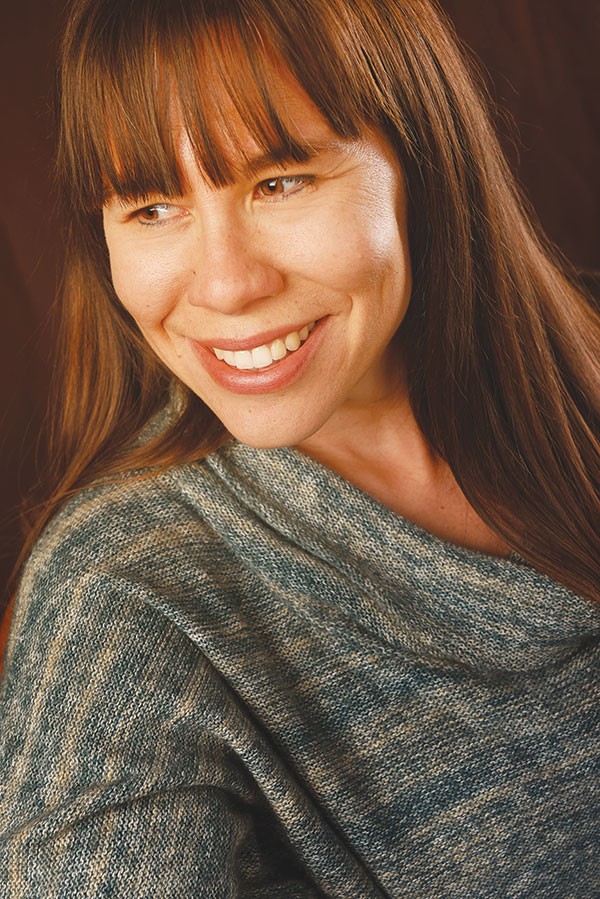
Dale Gieringer is the director of California’s National Organization for the Reform of Marijuana Laws, the oldest cannabis lobbying organization in the world. He has been at the heart of the cannabis legalization movement for decades. Gieringer’s sharpest memories are about the campaigns to decriminalize and legalize marijuana.

“I was surprised by how many friends of mine who had been longtime pot smokers suddenly came out of the closet with the passage of Proposition 215—the Compassionate Use Act—that legalized medical marijuana 21 years ago,” Gieringer says. “Suddenly, healthy people had all kinds of health issues. I never regarded myself as a medical marijuana user, and I resisted going their way.”

“The net result of 215 was positive,” he adds. “It helped reduce arrests, and it made many Americans feel comfortable with the sale of pot to adults.”

For Gieringer, the cause of marijuana has always been about personal freedom and the unconstitutionally of the drug wars. Moreover, Northern California was, for him, the place to be. “I fell in love with the wilderness, and thought that raids with helicopters and troops were desecrating it.”

The way Gieringer sees it, the tipping point for legalization came in 2008 right before Obama moved into the White House. “Under Bush, people thought the cause was hopeless,” he says. “Then, with Obama’s victory, they started to say, ‘We can do it.’ Indeed, we legalized adult use in Colorado, Oregon, Washington and California. Sometimes you have to wait for the wave to come before you can ride it.”

Gieringer’s pot prognosis was upended when Trump won the 2016 election. “I expected that Hillary would win and that her victory at the polls would lead to a change in the federal government,” he says. “If someone had said in 1996 that federal law would be the same 21 years later, I would have been dumbfounded.”

Where do we stand now? “I believe [Attorney General Jeff Sessions] would like a crackdown on marijuana, and I wouldn’t be surprised if the feds initiate lawsuits against the industry,” Gieringer says. “They can arrest California growers who are shipping out of state, but thousands of growers are doing that. They can’t stop them all. As I see it, the California cannabis industry will continue full speed ahead in the next year or so, with the black market as strong as ever.”

Gieringer expects to be around for the battles yet to come. “The feds can’t put the genie back in the bottle,” he saysd. “Marijuana use is so widespread and so widely accepted, we can’t go back to the days of reefer madness.”

Jonah Raskin is the author of ‘Marijuanaland: Dispatches from an American War.’

A Seat at the Table

0

The plight of the vanishing New England WASP
is the subject matter of
A. R. Gurney’s The Dining Room, running now at Sonoma Arts Live. No, it’s not a science lecture on the more annoying cousin of the honeybee, but a look at the cultural transformation of a specific component of 20th-century America: the White Anglo-Saxon Protestant.

Gurney, whose other works include Love Letters and Sylvia, uses 18 vignettes and about 50 characters to chart the rise and decline of upper middle-class America. The scenes all occur in the titular location around a stately dining table. The table, once the center point of family life and special occasions, has been reduced over time to a place on which to fold laundry.

Wafting through the room over its two-hour running time are generations of unrelated characters, ages four to 90, all played by a company of six actors: Isabelle Grimm, Kit Grimm, Rhonda Guaraglia, Len Handeland, Trevor Hoffmann and Jill Wagoner. One actor goes from playing a stern, turn-of-the-century father lecturing his son on manners, to a young boy begging the family servant not to leave her job. Another goes from playing a real estate agent eager to make a sale, to a young girl pleading to go to the movies instead of dance lessons.

Scenes overlap with characters from one era occupying the space at the same time as characters from another era. There are no blackouts, as the action is continual and the actors simply glide in and out of the room. This led to some confusion with a few audience members, so much so that there were a few more empty seats post-intermission.

But it’s really not that confusing once you acclimate yourself to the style and buy into the premise of veteran performers playing children. The scenes range from the poignant to the humorous, with the most effective being a conversation between an ailing father and his son about funeral plans and a laugh-out-loud segment between an aunt and her nephew about a college photography project.

Director Joey Hoeber keeps his cast in check, and despite the range in characters, the show never veers into the cartoonish. If you don’t enter the theater expecting a traditional linear narrative, you’ll find yourself enjoying a well-acted, acute observation of a slice of bygone American life.

Rating (out of 5): ★★★½

Gather the Horde

0

As a concert promoter with Gather Booking & Management and administrator of the social media group Sonoma County Metal & Hardcore, Ernest Wuethrich has made it his mission to bring the North Bay’s diverse underground metal scene to a larger audience in the Bay Area and beyond.

This month, he unveils his most ambitious project yet, the double-disc

Sonoma County Metal & Hardcore 2018 Compilation, featuring 26 local bands showcasing mostly brand-new songs.

“The compilation is a way to try to grow a scene organically by reaching people that might be into heavy music without knowing that these bands actually exist,” says Wuethrich.

While the North Bay’s dedicated metalheads are already keenly aware of the array of talent that takes the stage at Wuethrich’s concerts, he knows there is a larger scene that would welcome these bands outside of Sonoma County.

“The idea came about because I work with other promoters in other markets and we like to do show trades, so I’ll give shows to bands based on friendly promoters recommending them,” says Wuethrich.

When he wanted to secure shows for local bands in other markets, Wuethrich found complications in promoting bands that had no recordings to show for their work.

“We had to get the bands as active as possible so they can grow past Sonoma County,” says Wuethrich. “It was a creative way to try to force bands to produce music.”

Wuethrich worked with engineer Kyle Rhine of Outer Heaven Recording in Santa Rosa to record a bulk of the band’s tracks. Rhine offered to give the group a discounted rate to make the endeavor affordable to the bands who self-financed their studio time.

Nearly 20 of the 26 bands on the album recorded new tracks specifically for the compilation, including speed metal band Trecelence, groovy progressive metal outfit Predation, death metal group Obelisk and thrash metal band Incredulous.

All 750 of the printed discs will be distributed for free at concerts and local spots like the Last Record Store in Santa Rosa. This week, the compilation is officially released in a massive concert that features many of the bands on the album, from Sonoma County’s longest running metal band, Skitzo, to hardcore act 4199, making their live debut.

“The fact that everyone was able to come together and pull it off was pretty cool,” says Wuethrich. “I hope everyone gets something out of it.”

‘Sonoma County Metal & Hardcore 2018 Compilation’ is released on Saturday, Jan. 27, at Arlene Francis Center, 99 Sixth St., Santa Rosa. 7pm. $10–$13. All ages. 707.528.3009.

Needles and Pins

If the job of a film is to immerse you into another world, its customs, its music, its glitter and its rottenness, Paul Thomas Anderson’s The Phantom Thread fulfills its mission beautifully.

It’s worth the journey to San Francisco to see The Phantom Thread in 70mm, to admire the texture of Anderson’s version of the past, using location work rather than digital images. There hasn’t been a film in a long time—Michael Caton-Jones’ Scandal from 1989 might be the last—that conjures up the underside of post-war English luxury. Here, England is a nation balanced between a pair of shocks: first, the trauma of WWII, and second, the youth rebellion of the early 1960s. Soon will come the Beatles and their kind, all refusing to take these stiff courtiers as seriously as they took themselves.

The antagonist, Reynolds Woodcock (Daniel Day-Lewis), is the kind of arrogant solitary man they used to call a “confirmed bachelor.” He’s a celebrated but haunted designer who lives with his formidable sister Cyril (Lesley Manville), whose main attribute is a pair of half-glasses that she stares through at her social inferiors.

A waitress of mysterious Germanic heritage has her eyes on Woodcock. Charmingly clumsy, and with an uncontrollable blush, Alma (Vicky Krieps) notes Reynolds’ immense breakfast order. Then she gives up her requested phone number, dedicating the note “to my hungry boy.”

Phantom Thread isn’t as narratively sturdy as the great gothics. If Cyril, with her man’s name, is analogous to Judith Anderson’s Mrs. Danvers in Rebecca, and if Day-Lewis, with his aquiline profile and matinee-idol widow’s peak, recalls Laurence Olivier, it’s Alma who remains an attractive and underwritten mystery. She is, however, a fine, covert love object, and Alma does come up with a drastically crafty way of landing the man she loves. Despite Anderson’s distractingly clumsy tale-telling, the film is one of his best.

‘The Phantom Thread’ is playing at Summerfield Cinemas,
551 Summerfield Road, Santa Rosa. 707.525.8909.

Brain Gains

0

David Sortino has spent the last four decades becoming an expert in how young minds learn and grow. So it may come as a surprise when he says he had troubles in school himself.

“I didn’t do well, and I was always interested in why,” says Sortino. “Basically, I’ve always been interested in why kids can’t learn in our schools.”

After a lifetime of research and observation, Sortino collects his wealth of knowledge into the new book, A Guide to How Your Child Learns: Understanding the Brain from Infancy to Young Adulthood, that offers readers a step-by-step breakdown of the brain’s development and gives practical, research-backed advice on how to maximize your child’s learning poential.

Raised in Connecticut, Sortino earned a master’s degree in child development from Harvard and a doctorate in clinical psychology from Saybrook University before moving to Santa Barbara in 1974.

In 1989, Sortino and his wife relocated to Sonoma County. “I was interviewing for a job at El Molino High School [in Forestville], and when I drove Highway 116, it reminded me a lot of Connecticut with the apple orchards,” he says.

Since then, he has taught at Santa Rosa city schools and the Santa Rosa Junior College, served as a consultant to state and county programs for at-risk and special needs children, and worked directly with individuals and families through his private business, the Neurofeedback Institute in Graton.

Neurofeedback is a brain-training program, supported by the American Academy of Pediatrics, in which Sortino observes brain function through sensors attached to the scalp that monitor brainwaves. Sortino can assess anxiety, attention deficit and behavioral disorders, and offer patients mental exercises
to train their brains to function more efficiently without medication.

In the last decade, Sortino has also written extensively on learning on his blog, neurofeedbackinstitute.blogspot.com. Many of those are collected in his new book.

“It’s not theoretical; the research supports what I’m trying to say,” says Sortino. “I’m not reinventing the wheel. I’m just telling you what works and what doesn’t.”

A Guide to How Your Child Learns is the first in a series of three books that Sortino is calling the Brain Smart Series. “I’m giving the reader an idea, and they can take it from there.”

Bark Arc

0

If you’ve been putting off that crafty cork-board project until the kitchen drawer is overflowing with wine corks, you’ve got company, according to Patrick Spencer, executive director of the Cork Forest Conservation Alliance.

Spencer says the alliance discovered, when rolling out a recycling program nine years ago, that most people don’t throw away their corks. “We were astounded at how many people would say, ‘You know, I just don’t feel good throwing them away. I guess I could make a cork board, but . . .'” Tossing a metal screw cap or “faux” plastic cork into the trash seems sensible. But a cork, like the elixir it kept genied inside the bottle, is a product of a living thing—it’s the bark of an oak tree that can live up to 300 years—and seems a shame to waste. Good news: instead of gluing endless corks to boards, cork hoarders can drop off their stash on their next visit to Whole Foods, which hosts a Cork Forest recycling program, or at winery locations like J Vineyards, which partners with Canada-based ReCORK.

J will even hand over a box of corks to individuals whose arts and crafts projects scale beyond their ability to consume cork-stoppered wine. But while “recycle” and “reuse” are covered, “reduce” is not part of the program: no new wine corks are made out of recycled cork—not even the composites often used in less expensive wines. It’s counterintuitive to the way we think about most recycling: instead of using less of the resource, we are encouraged to drink more.

“There is no cork shortage,” reads a bullet-point emblazoned on Cork Forest’s cardboard bins, along with the message, “Harvesting cork is just like shearing sheep,” under a cute sheep cartoon. Too much—is Big Cork behind this, or what?

Based in Salem, Ore., Cork Forest caps industry funding at
1 percent, says Spencer, as they don’t want to appear to be lobbying for the industry. “Our primary purpose is not recycling the cork, but preserving the cork forest.” Spencer explains that cork plantations rank highly in biodiversity—Cork Forest even runs eco tours to Spanish cork-producing regions. Each cork absorbs nine grams of carbon “bark to bottle,” according to Spencer, who says the manufacture of alternative enclosures made from aluminum or plastic leads to more environmental cost than is acknowledged by those who tout them.

Just tossing that cork, and that stored carbon, in the kitchen trash isn’t the worst thing after all, Spencer allows. “It’s not a bad thing in the ground. It’s a piece of wood.”

Find Cork Forest drop-boxes at Whole Foods markets or visit corkforest.org. More information on ReCORK partners and recycled cork products (yoga boards and insoles) at recork.org or yoursole.com.

Sun Kil Moon Plays Fire Relief Benefit in Sonoma

0

sunkilmoon
 
Since forming Red House Painters in San Francisco in 1989, prolific and sonorous songwriter Mark Kozelek has secured a place in the annals of indie rock with gut-wrenching melodies and haunting lyrics about love, loss, memory and fate.
Since 2003, Kozelek has been most associated with the gloomy folk projet Sun Kil Moon, which released its eighth studio album, Common as Light and Love Are Red Valleys of Blood, and a split album with Jesu, 30 Seconds to the Decline of Planet Earth, in the last year.
This weekend, Kozelek brings Sun Kil Moon’s evocative tones and insightful storytelling to the North Bay for a special benefit concert in Sonoma. Hosted by (((folkYEAH))), proceeds from the upcoming show will go directly to help victims and first responders of the Sonoma, Napa and Santa Rosa fires.
Sun Kil Moon performs Saturday, Jan 20, at Gundlach Bundschu Winery, 2000 Denmark St, Sonoma. 7pm. $37. For tickets, click here.

Jan. 19: Future Talk in Sebastopol

0

A leading intellectual figure in Silicon Valley’s digital revolution and the founder of Sebastopol-based tech publisher O’Reilly Media, Tim O’Reilly has a radar-like sense of what the future holds. O’Reilly shares all in his new book, WTF?: What’s the Future and Why It’s Up to Us, that gets into the good and bad sides of several issues facing future generations and offers ways we can shape the future economy today. O’Reilly appears in an event hosted by Copperfield’s Books on Friday, Jan. 19, at Sebastopol Community Center, 390 Morris St., Sebastopol. 7pm. $10; $40 includes book. copperfieldsbooks.com.

Jan. 20: Power Up in Petaluma

0

Marking its 10-year anniversary, the Petaluma Art Center opens 2018 with a group show, ‘Power of Ten: Scaling Up,’ that takes the art center into a new decade with innovative and thoughtful works in several mediums. Inspired by Charles and Ray Eames’ 1978 film, Powers of Ten, in which connections are made between the largest and smallest objects in the universe, the show is curated by Lisa Demetrios, granddaughter of the Eames, and presents paintings, photography, sculpture and even architecture that encompass themes of natural patterns and sustainability. The exhibit opens with an artist reception on Saturday, Jan. 20, at Petaluma Arts Center, 230 Lakeville St., Petaluma. 5pm. $5. 707.762.5600.

Jan. 21: Literary Salon in Healdsburg

0

Alabama-born and Santa Rosa-based author Waights Taylor Jr. is the featured reader for this month’s Healdsburg Literary Guild Third Sunday Salon. Taylor reads from his latest murder mystery, Heed the Apocalypse, and talks about his three earlier books, the mysteries Kiss of Salvation and Touch of Redemption, and his award-winning history of the South, Our Southern Home. The second half of the program is an open mic, so come prepared to read your latest work, or just come to listen on Sunday, Jan. 21, at the Bean Affair, 1270 Healdsburg Ave., Ste. 101, Healdsburg. 1:30pm. hbglitguild.org.

Riding the Wave

Dale Gieringer is the director of California's National Organization for the Reform of Marijuana Laws, the oldest cannabis lobbying organization in the world. He has been at the heart of the cannabis legalization movement for decades. Gieringer's sharpest memories are about the campaigns to decriminalize and legalize marijuana. "I was surprised by how many friends of mine who had been...

A Seat at the Table

The plight of the vanishing New England WASP is the subject matter of A. R. Gurney's The Dining Room, running now at Sonoma Arts Live. No, it's not a science lecture on the more annoying cousin of the honeybee, but a look at the cultural transformation of a specific component of 20th-century America: the White Anglo-Saxon Protestant. Gurney, whose other...

Gather the Horde

As a concert promoter with Gather Booking & Management and administrator of the social media group Sonoma County Metal & Hardcore, Ernest Wuethrich has made it his mission to bring the North Bay's diverse underground metal scene to a larger audience in the Bay Area and beyond. This month, he unveils his most ambitious project yet, the double-disc Sonoma County Metal...

Needles and Pins

If the job of a film is to immerse you into another world, its customs, its music, its glitter and its rottenness, Paul Thomas Anderson's The Phantom Thread fulfills its mission beautifully. It's worth the journey to San Francisco to see The Phantom Thread in 70mm, to admire the texture of Anderson's version of the past, using location work rather...

Brain Gains

David Sortino has spent the last four decades becoming an expert in how young minds learn and grow. So it may come as a surprise when he says he had troubles in school himself. "I didn't do well, and I was always interested in why," says Sortino. "Basically, I've always been interested in why kids can't learn in our schools." After...

Bark Arc

If you've been putting off that crafty cork-board project until the kitchen drawer is overflowing with wine corks, you've got company, according to Patrick Spencer, executive director of the Cork Forest Conservation Alliance. Spencer says the alliance discovered, when rolling out a recycling program nine years ago, that most people don't throw away their corks. "We were astounded at how...

Sun Kil Moon Plays Fire Relief Benefit in Sonoma

  Since forming Red House Painters in San Francisco in 1989, prolific and sonorous songwriter Mark Kozelek has secured a place in the annals of indie rock with gut-wrenching melodies and haunting lyrics about love, loss, memory and fate. Since 2003, Kozelek has been most associated with the gloomy folk projet Sun Kil Moon, which released its eighth studio album, Common as...

Jan. 19: Future Talk in Sebastopol

A leading intellectual figure in Silicon Valley’s digital revolution and the founder of Sebastopol-based tech publisher O’Reilly Media, Tim O’Reilly has a radar-like sense of what the future holds. O’Reilly shares all in his new book, WTF?: What’s the Future and Why It's Up to Us, that gets into the good and bad sides of several issues facing future...

Jan. 20: Power Up in Petaluma

Marking its 10-year anniversary, the Petaluma Art Center opens 2018 with a group show, ‘Power of Ten: Scaling Up,’ that takes the art center into a new decade with innovative and thoughtful works in several mediums. Inspired by Charles and Ray Eames’ 1978 film, Powers of Ten, in which connections are made between the largest and smallest objects in...

Jan. 21: Literary Salon in Healdsburg

Alabama-born and Santa Rosa-based author Waights Taylor Jr. is the featured reader for this month’s Healdsburg Literary Guild Third Sunday Salon. Taylor reads from his latest murder mystery, Heed the Apocalypse, and talks about his three earlier books, the mysteries Kiss of Salvation and Touch of Redemption, and his award-winning history of the South, Our Southern Home. The second...
11,084FansLike
4,446FollowersFollow
6,928FollowersFollow