Report: Santa Rosa roadways among worst in nation

A report out today from TRIP, the national transportation research group, says that Santa Rosa has some of the worst road conditions in the country. The city’s seventh on the list of bad-road cities with populations between 200,000 and 500,000, with 43 percent of Santa Rosa’s major roads and highways in woeful shape.

TRIP’s research found that Santa Rosa automobile drivers spend an average of $776 a year in vehicle operating costs associated with the poor road conditions; the national average is $599. It also reported that among big cities, San Francisco and San Jose take top honors for their poor roadways.

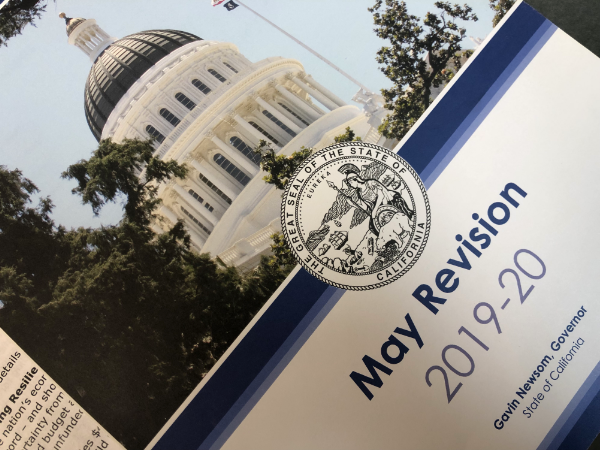
The TRIP report arrives as Santa Rosa residents are asked to support local Measure 0 this election day—and to consider a repeal of the state gas-tax boost set to go into effect in January under SB1. Gas-tax revenues under SB1 are targeted at rebuilding the state’s roadways but Measure 6 would repeal the measure. 

According to the city website, the League of California Cities estimates that Santa Rosa would receive $2,935,933 in fiscal year 2018-2019. SB1 will eventually send $3.9 million annually in road maintenance funds when fully implemented, reports the city.  That’s the good news. “Even with this new funding, we are still left with a shortfall of approximately $10 million annually.”

Santa Rosa has a $1.1 billion dollar street system with more than 500 miles of roadway and an average annual maintenance budget of around $5.4 million dollars. The city says that because of deferred maintenance, its Pavement Condition Index (PCI) has declined to 60, “at the line between ‘good’ and ‘fair’ condition. Recent evaluation with our pavement management program has concluded that we should be spending at least $18 million per year just to maintain the existing pavement conditions at 60.”

Measure 6 sets out to repeal SB1 and been heavily pushed by the state Republican party and gubernatorial candidate John Cox. The GOP recently announced it would run anti-SB1 ads on gas station TV screens to whip up support for its repeal.

The local Measure 0,  or “the Vital City Services Measure” sets out to temporarily raise the local sales tax by one-quarter cent and would raise $9 million annually “to help Santa Rosa recover from the recent fires, rebuild our infrastructure, preserve emergency services such as rapid 9-1-1 emergency response times, and address other critical City needs,” according to the city website. The tax lapses after six years.

The crumbling-infrastructure question was raised at a recent Santa Rosa City Council candidate’s forum for the newly created districts 2 and 4.

District 2 incumbent John Sawyer said that  if Measure O fails and Measure 6 prevails, “I recommend everyone invest in new shocks.” 

Here’s the TRIP report:

[pdf-1]

2018 Boho Awards

Kathryn Hecht & the Alexander Valley Film Society

“I’m so pleased with the way this year is coming together,” says Kathryn Hecht, founder and executive director of the Alexander Valley Film Society. “This is a moment where we really get to shine and celebrate our community.”

Since moving to Cloverdale from New York in 2013 and launching the AV Film Society, Hecht has tirelessly worked to offer year-round educational and community film programming, which now reaches more than 4,000 people annually. She also founded and serves as the executive producer of the Alexander Valley Film Festival, which returns for its fourth year Oct. 18–21 with screenings and special events throughout northern Sonoma County. (For details and tickets, visit avfilmsociety.org.)

With a focus on showcasing film’s power to inspire and expand our collective humanity, the AV Film Festival has taken on the timely and resonating theme of “Heroes” this year.

“The theme is not something we apply to the structure of the event and then match our films to that; it’s something that emerges, and it’s always organic,” Hecht says. “So in this confluence of things, from where we were last year to the journey of this year, both as an organization and for our community, the [theme] that arose over and over in the films and documentaries was about people facing adversity and challenge—and their triumph.”

One such film featured at this year’s festival is the award-winning documentary On Her Shoulders, which tells the story of 23-year-old Nadia Murad, a sexual-slavery survivor and activist who recently won the Nobel Peace Prize for her work in bringing atrocities, like her experience, to light in front of world leaders and the United Nations.

“What makes the film so exquisite is that it’s not about her being a victim,” Hecht says. “It’s about the power of her voice and the resilience of her person.” Directed by Alexandria Bombach, On Her Shoulders is one of many women-directed films that populate this year’s festival.

“We have this incredible national conversation happening, finally, about women,” Hecht says. “And we’re not going to hear from women unless we give them more opportunities to tell their stories.”

Other inspiring films screening at this year’s AV Film Festival include opening-night film Free Solo, which follows mountaineer Alex Honnold’s attempt at scaling Yosemite’s El Capitan by hand, and closing-night feature Warrior Women, about Lakota activist Madonna Thunder Hawk and her lifetime of work for Native American and women’s rights.

In general, access to stories and storytelling is the key to the festival’s mission. “That’s an important theme for us,” Hecht says, “to bring stories here that people wouldn’t get to see otherwise, to have something kids and adults can go to and see themselves on the big screen and feel a little bit less alone.”

Aside from the annual festival, the AV Film Society celebrates the community all year by leading student filmmaking sessions, hosting drive-in screenings and other outdoor community gatherings and featuring socially conscious and culturally enriching programs throughout the region.

The society’s annual student filmmaking competition this year partnered with Healthcare Foundation Northern Sonoma County and the Sonoma County Office of Education (SCOE) to help the students reflect on the traumatic experiences of last fall’s wildfires and to move forward with three-minute micro-documentaries that focused on mental health.

Those films can be seen at the festival’s student film competition screening, and Hecht says the project is now being considered for classrooms across the county by SCOE and teachers who want to introduce media skills into their curriculum.

In addition to the student competition, the AV film society’s annual summer filmmaking workshops once again gave students the tools to write, shoot and edit short films in teams, and the society also offers several internships for local students, giving kids a chance to put a professional experience on their résumés.

Hecht and the AV film society are also in the process of expanding its Spanish-language programming, “Continuing this tenet of programming by the community and for the community,” says Hecht, “keeps the work reflective of where we live.”

— Charlie Swanson

Amy Appleton

In the late afternoon of Oct. 9, 2017, Amy Appleton got a call from Una Glass, at that time the mayor of Sebastopol.

“She told me that several people in Sebastopol wanted to open their homes to victims of the fires, and to those who’d been evacuated and had no place to stay,” recalls Appleton.

She was pinpointed by Glass because of her work as founder and executive director of SHARE Sonoma County, a program designed to facilitate home-shares for folks over 60, to allow aging adults to unite resources by sharing a home with an extra room.

The program, originally formed in 2014 under the umbrella of the Petaluma People Services Center, has helped hundreds of low-income seniors remain independent by helping them share housing, thus attaining a degree of security by reducing their financial burden, while gaining companionship, daily assistance, and other mutual benefits.

Since forming the program, Appleton has watched it expand to 13 cities in Sonoma County, and she’s used its success to create an even more ambitious, statewide version of the program, SHARE California.

Until the fires that struck Santa Rosa last October, however, the program hewed close to its original intention of serving the elderly throughout Sonoma County. But when Glass called and suggested that Appleton use her expertise at matching homeowners and renters with those in need of housing, she immediately called on Elece Hempel at the People Services Center to recruit a team of volunteers to help find temporary homes for the displaced.

“I got the call in the afternoon, and by 6pm that evening, we’d created SHARE Fire,” says Appleton. She makes it sound as if inventing a whole new public-assistance program overnight was just another day at work. Word traveled quickly, and within a few days, computers had been donated to assist in creating a database of those in need and those with rooms to share.

“Over the next several weeks, at any given time we had 40 volunteers working in the offices at PPSC,” she says. Estimating that she worked 14-hour days from Oct. 9 to late December, Appleton says she received hundreds of offers of rooms within the first 48 hours or so, and ended up facilitating 108 shares, seven of which are still intact.

“We had a myriad of different household configurations,” she says, “from single people who’d lost their homes or been evacuated, to whole extended families with menageries of animals. People were very generous, and though most of the people we helped did end up going back to their homes, a few days or a few weeks later, many of them had lost everything. So, yes, some of them ended up finding a permanent housing situation with people we’d matched them with.”

One year later, Appleton says she’s still helping survivors of the fire find homes. “A lot of people have been living in their RVs all this time, or in FEMA trailers at the fairgrounds,” she says. “It may have been a year, but there’s still a lot of work to be done, because there are still people in need.”—

David Templeton

[page]

Rob Keller

Rob Keller isn’t afraid of honeybees and honeybees aren’t afraid of him. Keller isn’t the first to tend hives and harvest honey in the land where grapes and wine are treated like royalty, and he won’t be the last, either. But he’s now Napa’s go-to-guy when it comes to all things bee-related.

If that seems hard to believe, check out Keller’s license plate, which reads, “Bee Co,” and then follow him to the 40 different apiaries that he manages. What’s more, Keller is on the front lines in the environmental battle to save honeybee colonies from collapse, a problem all over Napa, which is friendly to tourists and inhospitable to honeybees.

“A vineyard is a desert for a honeybee,” Keller says. “You will not find bees on grapes.” When he talks to vineyard managers he tells them, “Give us some land back. Every inch doesn’t have to be in production.” In fact, honeybees can be potent pollinators and a farmer’s best friend.

Born in Pennsylvania in 1964, Keller graduated from Novato High School and studied art at UC Davis, though he says he always felt a connection to nature and to bees. At college, he created a sculpture and installed it in a beehive. That proved to be the start of his long love affair with the genus Apis.

A veteran apiarist once told Keller, “Never trust a beekeeper who is afraid of a bee sting.” Over the years, he has managed bees for Napa restaurants such as the French Laundry in Yountville and Farmstead in St. Helena. He also has a small farm of his own and an apiary, too.

“Beekeeping is labor intensive,” Keller says. “It’s also a complex art.”

When he’s not taking care of Napa’s apiaries, he educates wanna-be beekeepers, old and young. “Some people are very hands-on,” he says. “I tell them that bees ought to thrive on their own and that no one owns them. They’re their own masters.” Much the same might be said of Rob Keller.—Jonah Raskin

Joey Ereñeta

Nothing stops cannabis cultivator Joey Ereñeta. An arrest in Texas for possession of a small amount of pot didn’t stop him. (He was driving a VW with California plates.) Nor did a raid in Mendocino when law enforcement agents pushed his face into the ground and confiscated his crop, though they didn’t take him to jail.

Last year’s fires destroyed most of his crop, but that didn’t stop him from germinating seeds and cultivating this year. Then came the October 2018 rains. Still, there he was, in Glen Ellen on an overcast morning, keeping an eye on the crop and on the men and women who were working at Terra Luna Farm, which he calls “my baby.”

The workers were getting $18 an hour plus benefits. Jorgio from Santa Rosa said he’d rather work in a cannabis field than in a vineyard. “Any day, hands down,” he added. Ereñeta would rather grow pot than do almost anything else, though he didn’t set out to be a cannabis farmer when he entered UC Berkeley, studied tropical economic systems and became a social-justice activist. For the past 24 years, he has cultivated weed indoors, outdoors and in greenhouses.

These days, he grows biodynamically and sells nearly everything to SPARC, which owns and operates dispensaries in San Francisco, Santa Rosa and Sebastopol. “There’s pressure now to get everything out of the ground and check for mold,” he said. “Vineyard people have similar problems.”

Ereñeta knows nearly all there is to know about cannabis botany. For 10 years, he was the lead horticultural instructor at Oaksterdam University where he shared his skills and his expertise with hundreds of suburbanites, urbanites and back-to-the-landers who wanted to grow their own, or go into the pot business.

“I’ve been impressed with the team of gardeners we’ve put together at Terra Luna this year,” Ereñeta says. “But I’m also a perfectionist. I can see the ways we can improve next year.”

No doubt about it, Joey Ereñeta will be growing and harvesting cannabis in 2019, come hell or high water.—Jonah Raskin

Brown Out

0

On its face, California’s Brown family political dynasty is the story of two men, but metaphorically it’s really the story of three.

In the dialectical tale of the Browns, the thesis is Pat Brown, the buoyant old-school liberal who served as California’s governor in a time of expansion and optimism. Antithesis would be Brown’s brainy, aloof and austere son Jerry, who moved in to the governor’s office at the insufferable age of 36 with rock star Linda Ronstadt by his side, in a time of cynicism and retrenchment.

Then, in 2010, came synthesis, with the unlikely election of an older but wiser Jerry Brown, still the intellectually restless ex-Jesuit seminarian who, at the same time, had internalized much of the practicality and human touch that shaped his father’s career.

In a couple of months, Jerry Brown, at 80, will step aside as California’s governor for the second time. As a narrative of political redemption, the Browns’ story is satisfying because it’s surprising. Back in 1983, when Jerry Brown’s first stint as governor ended—brought low by Prop 13, the Mediterranean fruit fly and his presidential ambitions—he was soundly defeated in a race for the U.S. Senate by Pete Wilson.

It looked like California’s relationship with the Browns was over. Today, at least to California Democrats, nothing seems more natural than Jerry Brown in Sacramento. Now, though, it’s almost a certainty that the Brown era is coming to an end in California. Jerry is both the only son in the family and childless, so at least the family name has reached the end of the line. It’s an ideal time for the story to be told in wide-angle grandeur. Journalist Miriam Pawel has risen to the occasion with her new book The Browns of California: The Family Dynasty That Transformed a State and Shaped a Nation (Bloomsbury).

The story of the Brown family parallels the U.S. history of California. The family’s patriarch, German immigrant August Schuckman, arrived in California just a couple of years after statehood in the midst of the Gold Rush. “I wanted to write a book that was a history of California as much as it was a biography, something that I thought would explain some of the unique and significant things about California,” Pawel says. “The family was a good vehicle to do that. I like to write history through people, and so this seemed to be a conjunction between an interesting and unusual family and an interesting and unusual state, and the impact and interplay that each one had on the other.”

Pawel, a Los Angeles Times reporter, fills in the colors of the Brown family with plenty of compelling secondary characters, chief among them Pat Brown’s freethinking mother and self-described “mountain woman,” Ida Schuckman Brown, who died at 96 the same year her grandson Jerry was first elected governor.

But this is mostly the story of a father-and-son pair who provide an archetypal generational contrast, familiar to many who came of age in post-war America. Pat and Jerry Brown were largely simpatico in political values. But in political styles, they could not have been more different.

Pat Brown was an engaging, exuberant, extroverted Hubert Humphrey–style liberal whose love of California was visceral and immediate. For a man considered the patriarch of a California dynasty, Pawel believes that Pat Brown has often been forgotten, especially considering his profound influence on the growth of California.

“It’s true that he’s been somewhat overlooked,” she says. “[F]or someone who had such a major impact on the built environment of California—the water, the roads, the universities and the schools—it’s surprising there hasn’t been more exploration of his impact on the state.”

[page]

He was what is today an extinct American political species: the can-do liberal who dreamed big, then delivered. Pat Brown also took on perhaps the state’s most intractable problem with one of its most ambitious solutions. Though the population of California was mostly in the south, the state’s water was mostly in the north. Early on, Brown declared a satisfactory solution to the water problem as “a key to my entire administration.” The result was the California State Water Project, featuring a giant aqueduct in the Central Valley now named for Pat Brown.

Brown was defeated for a third term by Ronald Reagan. After eight years of his governorship, California turned again to a Brown.

In contrast to his father, Jerry Brown—at least in his first stint as governor, from 1975 to 1983—was more a reflection of the Vietnam-Watergate generation: arrogant, intellectually voracious, almost puritanical in his disdain for mainstream politics, the brooding iconoclast who simultaneously hated displays of wealth and loved hanging out with rock stars.

Jerry Brown’s mission was to attack the status quo, and he often did so in the most theatrical ways imaginable. He canceled the inaugural ball, flew commercial, rented a small apartment instead of living in the Governor’s Mansion, and drove a blue Plymouth to work.

Jerry’s style resonated in a post-Watergate era of limits, but it bewildered many of his constituents—including his dad. In interviewing many of Jerry Brown’s friends, Pawel says that many of them told her that “Pat never quite got Jerry. He was off dating Linda Ronstadt and sleeping on a bed on the floor and canceling the inaugural and all that. A lot of people thought it was for show. At the time, it happened to be good politics, but it also was a reflection of who he was. But I think his father was hurt by not being relied on, or let in more as an adviser.”

The last third of her book retraces Jerry Brown’s time in the political wilderness—the doomed 1992 presidential campaign, the role as head of the state Democratic Party, the gig as a talk-radio host. Pat Brown died in 1996; the next year, Jerry said he was running for mayor of Oakland. In ’99, he took office in the city and experienced a political reawakening. Ironically, he found himself fighting laws that he had created as governor.

He vowed to bring 10,000 people to downtown Oakland. He got involved in potholes and karaoke permits. He was a common sight on the streets with his dog, Dharma. The move from philosopher king of Sacramento to pragmatic mayor of Oakland invigorated him. The other X-factor that transformed Brown was Anne Gust, the retail executive who became his wife in 2005. Oakland and Anne rounded off Brown’s rougher edges, according to Pawel, and made him more of a practical and effective politician.

Jerry got a second bite at the governor’s apple in 2010. He came into office ready to wrestle with the state’s chaotic finances and take on its dysfunctional penal system. He proved to be more moderate than many of his liberal supporters had hoped, but turned around a huge state deficit—thanks in large part to Democratic supermajorities and revenue-friendly ballot measures. Pat Brown didn’t survive to see his son’s second ascent—the older Brown would have found the second Jerry Brown administration much more comprehensible than the first. But time has run out for Jerry Brown and the family dynasty. He has mastered the art of politics, just when it’s time to leave the stage.

Letters to the Editor: October 17, 2018

Graton Work

Excellent, shocking and depressing article by Peter Byrne on Darius Anderson, Douglas Boxer and the Graton Rancheria casino (“Graton Expectations,” Oct. 10). Good work reporting this! It will be interesting to see how the other media outlets handle it.

Via Bohemian.com

I hope readers are paying attention to all of this—this con man starts Rebuild NorthBay, and then turns around and lobbies for PG&E (“Power Politics, April 24), helping grease the way for PG&E to pass its liabilities on to the ratepayers (many of whom are victims of PG&E’s negligence). Meanwhile, the city council votes to extend post-fire emergency status so Rebuild can continue giving no-bid contracts to its buddies to do work which should be at least partially opened up to local unions and contractors.

All of this just sickens me. We stand by and watch as they make shady deals and get rich off tragedies that happen to real hard-working citizens. We read more every day about their planning of our future, and all this stuff is conveniently arranged by the time we hear about it. I’m saddened at the complacency and heads in the sand; however, I am really impressed at so many articles in the Bohemian exposing these criminals.

Via Bohemian.com

Thanks to Peter Byrne for his excellent investigative story. It featured some of my favorite good guys and bad guys—the Graton tribe and the Bosco boys, respectively. In these times, it is rare to see the good guys win and the bad guys lose. I enjoyed every word.

Guerneville

From a 2012 Press Democrat story on the sale of the PD to Darius Anderson’s group, quoting Darius Anderson:

“‘All the partners agree that the journalistic independence of the publications is paramount,'” [Press Democrat CEO Steve] Falk said, vowing to act as a ‘firewall’ against undue influence.

“‘I will protect that at all costs,’ Falk said.

“Anderson, who has seen his share of negative press coverage, stressed that he welcomed hard-hitting investigative and watchdog journalism, even if it raised questions about his businesses and interests.

“‘None of us are going to get in your way because if we do, it dilutes the value of our investment,’ Anderson said.”

Via Bohemian.com

Buster Fluster

“Support your local supporters!” I first saw this bumper sticker about six months ago, and a better call to arms I can’t think of. But what happens when your local official stops supporting your local supporters?

I read your “Buster’s Busted” article in the Oct. 3 issue of the Bohemian and had to write this letter. I want to know who made Buster’s shut down? Which city official? I eat at Buster’s all the time. I live in St. Helena and pass by Buster’s once a week at least. Are you the reason I couldn’t get my tri-tip extra spicy sandwich because some little part of Buster’s limited eating space wasn’t up to code?

Calistoga

Write to us at le*****@******an.com.

Smoke Signals

Pro-pot Republican Dana Rohrabacher swears that Donald Trump’s going to change the nation’s federal cannabis posture after the midterms.

“I have been talking to people inside the White House who know and inside the president’s entourage,” says the California congressman in a statement highlighted in a recent press release sent out by CMW Media in San Diego. “I have been reassured that the president intends on keeping his campaign promise.”

The CMW Media release notes that this “solid commitment” from Trump will be good for emergent pot businesses such as Hemp Inc. and GrowLife.

Trump’s campaign promise was that he would honor states’ rights when it came to cannabis law, and as NORML’s Paul Armentano wrote in The Hill last week, the reality-show president is supporting the bipartisan STATES Act that’s currently going nowhere under GOP congressional leadership that’s decidedly anti-pot.

The problem for GOP marijuana dead-enders is that they’re getting squeezed at home at the same time they’re getting squeezed from elected office, thanks to their embrace of Trump and his rolling parade of amoral shenanigans. Pot legalization measures have made their way onto the ballot in conservative states like Utah and North Dakota this year, even as hardliners in Congress refuse to budge on any serious attempt to stop classifying cannabis as a Schedule 1 narcotic.

Meanwhile, the Food and Drug Administration in June moved to reschedule the CBD-based drug Epidiolex from Schedule 1 to Schedule V, and reiterated that CBD remains a Schedule 1 drug under the Controlled Substances Act “because it is a chemical component of the cannabis plant.” The anti-epilepsy drug is produced by the U.K.-based GW Pharmaceuticals.

FDA commissioner Scott Gottlieb, in announcing the approval, wrote that “it’s also important to note that this is not an approval of marijuana or all of its components.” The FDA has not jumped on any larger de-scheduling bandwagon. “Marijuana is a Schedule 1 compound with known risks,” he wrote.

The FDA’s move this year occurred, as Armentano noted, even as hardliners moved to gut a popular Senate proposal that set out to “facilitate medical cannabis access to military veterans.”

Now pro-pot Republicans like Rohrabacher are smoke-signaling that it will take a Democratic takeover of the House for any serious motion on cannabis reform. That’s both ironic and desperate, given that fivethirtyeight.com has Rohrabacher’s Democratic opponent, Harley Rouda, at a 66.5 percent chance of beating the incumbent, who’s been in the House since 1988.

Dumpster Drivers

0

Early one Sunday morning in downtown Santa Rosa, a man emerged from a dumpster, got on his bicycle and pedaled off. It was a strange and distressing sight to behold—a fellow human being crawling out from a garbage-filled container.

The scene was emblematic and demonstrated how the county and city homeless crisis has risen to the level of an international human-rights crisis. The Sonoma County Commission on Human Rights announced just that in late September after a Homeless Action report determined that there was “systemic and pervasive violations of at least seven articles of the Universal Declaration of Human Rights.”

This year, city and county law enforcement agencies have embarked on numerous raids of homeless encampments around the region—repeatedly displacing the already displaced without any real plan for what happens next, besides more rounds of civic hand-wringing.

Commission on Human Rights chair Kevin Jones says enough is enough, as he scolded Sonoma County and Santa Rosa following the Homeless Action report’s release and wrote that “we are not meeting our responsibility to provide sufficient resources to ensure that each person’s right to housing is met,” and added that “we have been witness to actions that we believe make individual situations worse among the shelterless, increasing risks to safety and health, and reducing any sense of dignity and support of people for whom viable options for housing do not exist.”

It’s not like city officials are unaware of the ongoing crisis. The candidates for Santa Rosa’s newly drawn 2nd and 4th City Council districts participated in a forum at City Hall on Oct. 12, and everyone agreed: Shuffling around the city’s large and visible homeless population from one place to another is not working.

Lee Pierce, who is running against incumbent John Sawyer in the 2nd, highlighted the public-image problems associated with the encampment crackdown, and pledged to “resolve homelessness in a humane way, so it doesn’t hit the papers as inhumane.”

Sawyer concurred that “just moving people around is not the solution.” He also said that when it comes to housing the chronically homeless, “we’ve done a better job than other cities.”

The sentiments were sincere and that may be true, but tell it to the human being who just emerged from a dumpster in downtown Santa Rosa.

Tom Gogola is the news and features editor of the ‘Bohemian’ and ‘Pacific Sun.’

Open Mic is a weekly feature in the ‘Bohemian.’ We welcome your contribution. To have your topical essay of 350 words considered for publication, write op*****@******an.com.

Tricks & Treats

0

The Spreckels Theater Company’s production of The Addams Family, running through Oct. 28, notes that the musical is “based on characters created by Charles Addams.” It is not a recreation of the beloved 1960s sitcom or the 1990s films.

The Broadway musical by Marshall Brickman, Rick Elice and Andrew Lippa banks on the goodwill and fond memories of folks familiar with those versions but, under constraints imposed by the Addams Foundation, goes in a very different direction.

Uncle Fester (Erik Weiss) narrates the show and lets the audience know it’s gonna be a love story. A teenage Wednesday Addams (Emma LeFever) is worried about bringing her “normal” boyfriend/fiancé Lucas (Cooper Bennett) and his straight-laced, Midwestern parents (Larry Williams, Morgan Harrington) home to meet her unconventional family. Wednesday lets her father Gomez (Peter Downey) in on her marriage plans but gets him to agree not to reveal her intentions to her mother, Morticia (Serena Elize Flores), until an announcement is made at dinner. Things don’t go as planned.

It’s a stock plot dressed up with the Addams characters, though they bear little resemblance to previous incarnations. Downey comes closest with a very nice paternal take on Gomez, while Flores’ voluptuous Morticia lacks the character’s dark, funereal tone.

The score is bouncy yet unmemorable, but there are a lot of good voices delivering it. Prepare to be knocked out when Pugsley (Mario Herrera) sings about the potential loss of a playmate sister with “What If.”

Ignore the trick the show’s creators play with The Addams Family characters and you’ll enjoy a family-friendly Halloween treat.

Rating (out of 5): ★★★½

In order for a show like Count Dracula—running in Monte Rio through Oct. 27—to work, it has to either be played straight or as camp. Playwright Ted Tiller’s 1971 version of Bram Stoker’s chiller under Nadja Masura’s direction tries to do both, and the mix just doesn’t work. Tiller also seems to have worked under the assumption that no one had ever heard vampire lore before and inserted reams of lengthy, dull exposition that makes the show run an hour longer than it should.

A good set, some nice effects and a game cast can’t mask the undead weight of a leaden script. ★★

The New Black

0

The way craft beer goes, as soon as there was Double IPA it was inevitable there’d be Triple IPA, followed by Black IPA, Imperial Peanut Butter Bourbon Barrel IPA—and off to the races.

With wine, the options are generally more limited. For example, how to one-up the red blend? Easy: The dark red blend. The knobs don’t exactly go to eleven, you see, though I’m watching the wine aisle for the arrival of the “even darker red blend.”

Meanwhile, Cline Cellars has dialed back on the category-chasing reboot of their Cashmere label, rebooting once again in mid-vintage. And the novelty is only label-deep.

Cline 2016 Cashmere Red ($14.99) This label began as a single barrel sold at the 1998 Hospice du Rhône, a wine event and auction in Paso Robles that promotes Rhône-style wines. Fred and Nancy Cline added this Côtes du Rhône style blend (more economically termed in the Australian fashion as GSM, for Grenache, Syrah and Mourvedre) to their regular releases, and for a decade-plus the label’s prominent pink ribbon signified charitable donations to causes they support, via a portion of sales: some $325,000 for breast-cancer awareness and support organizations, and $100,000 more for Alzheimer’s care and research and other causes.

The new look makes me have to look for that ribbon, now a tiny gray logo on the back label, adjacent some mention of “important causes” rather than any specific vicissitudes of life. I miss the old bottle—what, was it too startling? This GSM is heaviest on the M, and if maybe a touch rustic for the targeted red-blend shopper—barn-yardy Mourvedre leads the way, brightened with crisp fruit and minty herbal aromas of Grenache, like raspberry compote presented on a bed of horse stall hay. This is an enjoyable representation of a classic regional style, not some kitchen-sink stew.

Cline 2016 Cashmere Black ($14.99) This debuted as Cashmere Black Magic, subtitled “alluring dark red blend” in case you didn’t get the nudge that if you like Apothic Dark or Bogle Phantom, this is for you. This Black is a classic California blend of Petite Sirah, Zinfandel, Mourvedre and Carignane, and like the red, is also sourced mostly from Cline’s old vines in Contra Costa County. Both labels now bear a metallic disk to represent Cline’s heritage as “original” red-blend makers, and to get back to a more serious, less trendy look, I’m told. I didn’t get it—but I do get the wine, which finds Zinfandel sweetening up the tannic Petite Sirah, and is more likable than the 2015 version with its flavors of blackberry pie filling, vanilla and chocolate. Dark chocolate.

Cult of Punk

0

In the five years since Ian O’Connor began booking local punk shows in and around Santa Rosa, first under the moniker of Pizza Punx and for the last two years under the name Shock City, USA, he’s brought a world of underground rock and roll to the region for the young generation of North Bay music fans.

It’s been an up-and-down year for Shock City, USA. In April, O’Connor announced that the group and its schedule of live events was likely coming to end after this year. “Our streak has just about run its course,” he wrote on social media, “and soon it will be time to move forward with other life pursuits.”

While the last few months have been quiet on the punk front, Shock City is back this week with a new and diverse show featuring nationally touring Memphis punk band Ex-Cult, French post-punk outfit Badaboum and North Bay noise rock act OVVN all performing mind-melting music on Oct. 23 at Atlas Coffee Company in Santa Rosa’s South
of A arts district.

Formed at the legendary Memphis dive bar the Lamplighter, Ex-Cult is a power-packed five-piece who incorporate influences that range from classic ’80s hardcore and post-punk to ’60s garage and psych-rock. The Southern-fried fiends have a fondness for the North Bay and return for their third show in Santa Rosa with Shock City. Fronted by the reverb-drenched vocals of Chris Shaw, who also works with the likes of Ty Segall in the band GØGGS, and featuring blistering guitars and breakneck beats, Ex-Cult never fail to impress.

Experimental all-star girl group Badaboum make their Santa Rosa debut at the upcoming gig, and if their 2018 self-titled debut LP is any indication, local audiences haven’t heard anything like this. From the opening organ swells and plucked bass lines to the eerie theremin and strained vocals, this group sounds like someone let the Phantom of the Opera out of his lair and made him watch several Italian horror films. Truly unapologetic in its angst and explosive in its ethos, the music of Badaboum walks the razor’s edge between joy and chaos.

Filling out the bill for this show is hometown favorite OVVN, who, writes O’Connor, “are back at it with more musical offerings that probably sound like an old [Steve] Albini project that never happened.”

Low-Key Laughs

0

He Has a Pony Standup legend Steven Wright continues to craft sublime and subdued humor 30 years into his career.

Steven Wright possesses one of the most recognizable voices in stand-up comedy. For more than three decades, his monotone, deadpan comic delivery, verging on somnambulism, stands in sharp contrast to his razor-sharp one-liners and keen philosophical point of view.

Wright performs at the Uptown Theatre in Napa on Oct. 20.

Gifted with a deep bass voice and naturally laid-back demeanor, Wright’s signature subdued persona and non-sequitur style made him a legend in the standup scene. On groundbreaking comedy albums like I Have a Pony, his jokes are often little more than a single sentence long, like “I spilled spot remover on my dog, and now he’s gone” and “I’d kill for a Nobel Peace Prize.”

Growing up in the Boston suburbs, Wright first became enamored with comedy on The Tonight Show Starring Johnny Carson, in the early 1970s.

“That’s how I got it in my head that I’d like to try to be a stand-up comedian,” he says. His main influences at the time were George Carlin and Woody Allen, specifically Allen’s early standup comedy albums of the mid- to late-1960s.

“There was a radio show in Boston, and there was a guy who played two comedy albums every Sunday night, and I listened to it for years,” says Wright. “The guy had an unbelievable collection of albums.”

The young comic instantly turned heads at the open mics he began performing at in the late 1970s, and before long a producer from The Tonight Show spotted Wright doing a set in Cambridge, and booked him on the show in 1982.

“I was 16 when I started watching The Tonight Show, and my fantasy was to maybe go on there. And there I am, I’m 26 and I’m on there,” Wright says. “That’s still the highlight of my career. It was very surreal.”

Wright’s debut appearance on The Tonight Show so impressed Carson that less than a week later he was invited to appear on the show again, a rare occurrence for any guest.

In 1989, Wright’s career took another turn when he won an Academy Award for Best Live Action Short Film, for The Appointments of Dennis Jennings.

“That was surreal in a different way, I didn’t even think of winning an Academy Award, that wasn’t something in my mind,” he says. “We made the short film for HBO and then they played it in the theaters first. That was really out of the blue.”

While Wright has continued acting in films and voicing on animated projects, the stage is where his heart remains.

“It’s fun to think of the joke, you’re kidding around, you’re just playing,” he says. “And then being in front of the audience, everything is magnified, it’s so intense. It’s a magical place, like nothing else. The combination of writing and performing—I do it because I love doing it.”

Report: Santa Rosa roadways among worst in nation

A report out today from TRIP, the national transportation research group, says that Santa Rosa has some of the worst road conditions in the country. The city's seventh on the list of bad-road cities with populations between 200,000 and 500,000, with 43 percent of Santa Rosa's major roads and highways in woeful shape. ...

2018 Boho Awards

Kathryn Hecht & the Alexander Valley Film Society "I'm so pleased with the way this year is coming together," says Kathryn Hecht, founder and executive director of the Alexander Valley Film Society. "This is a moment where we really get to shine and celebrate our community." Since moving to Cloverdale from New York in 2013 and launching the AV Film Society,...

Brown Out

On its face, California's Brown family political dynasty is the story of two men, but metaphorically it's really the story of three. In the dialectical tale of the Browns, the thesis is Pat Brown, the buoyant old-school liberal who served as California's governor in a time of expansion and optimism. Antithesis would be Brown's brainy, aloof and austere son Jerry,...

Letters to the Editor: October 17, 2018

Graton Work Excellent, shocking and depressing article by Peter Byrne on Darius Anderson, Douglas Boxer and the Graton Rancheria casino ("Graton Expectations," Oct. 10). Good work reporting this! It will be interesting to see how the other media outlets handle it. —Scott Via Bohemian.com I hope readers are paying attention to all of this—this con man starts Rebuild NorthBay, and then turns around...

Smoke Signals

Pro-pot Republican Dana Rohrabacher swears that Donald Trump's going to change the nation's federal cannabis posture after the midterms. "I have been talking to people inside the White House who know and inside the president's entourage," says the California congressman in a statement highlighted in a recent press release sent out by CMW Media in San Diego. "I have been...

Dumpster Drivers

Early one Sunday morning in downtown Santa Rosa, a man emerged from a dumpster, got on his bicycle and pedaled off. It was a strange and distressing sight to behold—a fellow human being crawling out from a garbage-filled container. The scene was emblematic and demonstrated how the county and city homeless crisis has risen to the level of an international...

Tricks & Treats

The Spreckels Theater Company's production of The Addams Family, running through Oct. 28, notes that the musical is "based on characters created by Charles Addams." It is not a recreation of the beloved 1960s sitcom or the 1990s films. The Broadway musical by Marshall Brickman, Rick Elice and Andrew Lippa banks on the goodwill and fond memories of folks familiar...

The New Black

The way craft beer goes, as soon as there was Double IPA it was inevitable there'd be Triple IPA, followed by Black IPA, Imperial Peanut Butter Bourbon Barrel IPA—and off to the races. With wine, the options are generally more limited. For example, how to one-up the red blend? Easy: The dark red blend. The knobs don't exactly go to...

Cult of Punk

In the five years since Ian O'Connor began booking local punk shows in and around Santa Rosa, first under the moniker of Pizza Punx and for the last two years under the name Shock City, USA, he's brought a world of underground rock and roll to the region for the young generation of North Bay music fans. It's been an...

Low-Key Laughs

He Has a Pony Standup legend Steven Wright continues to craft sublime and subdued humor 30 years into his career. Steven Wright possesses one of the most recognizable voices in stand-up comedy. For more than three decades, his monotone, deadpan comic delivery, verging on somnambulism, stands in sharp contrast to his razor-sharp one-liners and keen philosophical point of view. Wright performs...
11,084FansLike
4,606FollowersFollow
6,928FollowersFollow