Open-Door Art

0

Several dozen of Napa Valley’s most creative minds open their doors to the public for the 31st annual Open Studios Napa Valley self-guided art tours Sept. 22–23 and Sept. 29–30.

The popular event is the highlight of the Art Association Napa Valley, a nonprofit organization that provides funding, marketing and exhibiting opportunities to over a hundred member artists in the county.

Along with the association’s co-operative Art Gallery Napa Valley, the annual open studio tour is art lovers’ best chance to see works from local masters, buy art directly from the source and peer into the minds of each the 64 exhibiting artists.

“Napa Valley seems to be a very picturesque surrounding for many artists to live in,” says Open Studios Napa Valley 2018 chairperson Lis MacDonald. “But not every artist does grape leaves and wine bottles. We have all sorts of different artists. We have furniture makers, we have potters, ceramicists, painters, people who make silk scarves.”

MacDonald knows each participant in the open studios tour by name, and is an artist herself, specializing in watercolor and recently working with colorful alcohol inks, which she tilts onto synthetic Yupo paper to create vivid abstract pieces.

With 14 new artists contributing to this year’s tour, MacDonald is especially excited for people to see what Napa Valley has to offer. She also points out that the Tubbs and Atlas fires of last October affected several returning artists, who will be showing new works created in the aftermath of that experience.

“We had a number of artists that lost everything,” says MacDonald. “But they’ve made new work and are still participating.”

Those artists include Calistoga-based landscape painter Karen Lynn Ingalls, who lost her barn studio in the Tubbs fire, and award-winning artists Edmund Ian Grant and Kristi Rene, whose home on Soda Canyon Road in Napa served as studio and gallery space until the couple fled from the Atlas fire. “They barely escaped with their lives,” MacDonald says.

Visitors can see these artists in locations like the Calistoga Art Center, which will have five artists exhibiting, and Markham Vineyards in St. Helena, hosting four artists this year. Maps and other information can be found in the Open Studios Napa Valley catalogue, available in print throughout the region and online.

Next month, Jessel Gallery continues to support Napa Valley art with a one-year wildfire anniversary show, “From the HeART,” dedicated to and featuring local artists affected by the October 2017 wildfires.

London Calling

0

Spreckels Theatre Company opens
its season with
The Curious Incident of the Dog in the Night-Time. Simon Stephens’ adaptation of Mark Haddon’s 2003 novel about a boy with “behavioral difficulties” took England and Broadway by storm and earned multiple awards on both continents.

Christopher (Elijah Pinkham) is a 15-year-old boy with an unspecified behavioral condition, which some have read as autism or Asperger’s, living with his father in Swindon, England. He discovers that a neighbor’s dog has been killed and, to his father’s consternation, decides to investigate. That investigation leads to another mystery that culminates in a journey of self-discovery and affirmation.

Director Elizabeth Craven gets outstanding performances from her cast. Pinkham completely inhabits the incredibly difficult lead role. David L. Yen, as Christopher’s father, and Bronwen Shears as a woman in their lives are also superlative.

Excellent lighting, sound and projection design effectively transport you inside Christopher’s complex mind, but they do occasionally overwhelm the story. Minor quibbles aside, there’ll be ample reward for investigating this Incident on your own.

Rating (out of 5): ★★★★½

If you’re only going to see one “five British women of varying ages, socio-economic statuses and body types bonding over pole dancing” play in your lifetime, might as well make it Dave Simpson’s Naked Truth. A big hit in England, director Argo Thompson imports it to the North Bay for its U.S. premiere at Left Edge Theatre.

Its story of five disparate individuals brought together with the goal of putting on a charity show is hardly original and its characters are pretty stock (the shy one, the bawdy one, the snobby one, etc.), but it’s well-acted and the five performers (Angela Squire, Bonnie Jean Shelton, Katie Kelley, Anabel Pimentel, Serena Elize Flores) and their instructor (Heather Danielle) have chemistry.

Once you get past the accents, there’ll be two hours of laughs and tears as the ladies deal with self-image and relationship issues, sex talk, ill health and betrayal. Will all conflicts be resolved in time to put on the big charity pole dance? ★★★½

Hands On

0

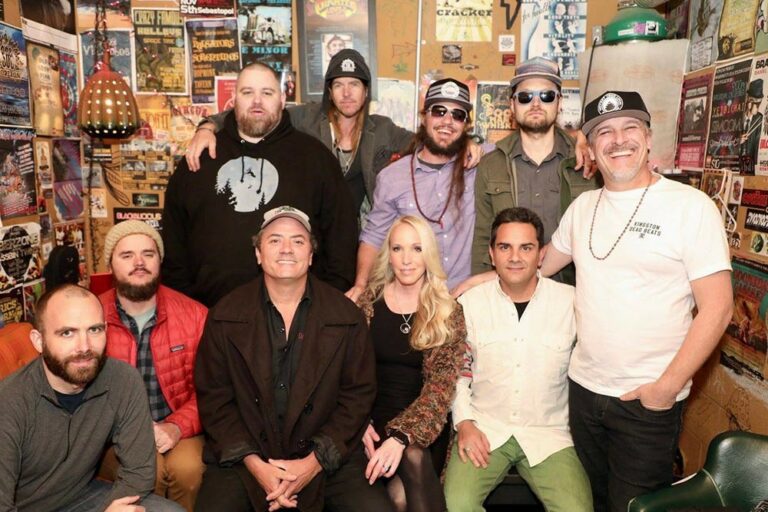
Sonoma County songwriter Timothy O’Neil has spent his life steeped in folk music. As a solo artist and as the namesake for his four-man Timothy O’Neil Band, he has walked the walk with national tours and local accolades.

This month, O’Neil and his band set a new course in their Americana adventures with the release of the group’s sophomore album,

All Hands on Deck, O’Neil’s most soulful music to date. The Timothy O’Neil Band play off the new record at a release show on Sept. 22 at the Big Easy in Petaluma.

Growing up in Southern California with a folk-singer mother, O’Neil was playing guitar and piano by the age of six. “Music was always ingrained in me,” he says. “Not forced on me—I just always wanted it.” His first concert was Santana and the Rolling Stones, which cemented his love of live music, and he played in punk bands in his hometown of Temecula.

O’Neil got his first taste of the North Bay 15 years ago when he visited the Sonoma State University campus out of high school. Graduating from SSU in 2008, he fell in love with the region and has been a fixture on the local scene ever since, releasing his first solo album, Hangovers and Hospitals, at age 25 and performing regularly around Sonoma County. That’s how he met and began playing with longtime North Bay musician (and now New Orleans resident) Frankie Boots. “We started getting out of the garage and started touring,” O’Neil says. “That whet my chops in terms of gigging, booking and gaining a new respect for being a bandleader and not just a guy with a voice.”

Forming the Timothy O’Neil Band five years back, O’Neil’s music is a combination of steam-punk anthems and blue-collar folk ballads, and All Hands on Deck is a culmination of those ideals, with imaginative songs about sailing the high seas, and personal odes to trekking across the country and making memories along the way.

“I feel like a lot of my other records are about struggling, heartbreak and hardships of life,” says O’Neil. “This record is much more about the positivity of traveling, camaraderie, brotherhood and experiences both negative and positive that end up shaping you.”

Joined by bassist Brian Crites, mandolinist Tony Gibson and banjo player Eric “Sweden” Harriman, the band is much more, as O’Neil makes clear, than the name implies.

“This album would not be anything without Brian, Tony and Sweden,” O’Neil says. “Those guys are my family.”

Brutish

0

The first time I heard about brut IPA, I was tasting through beers at Crooked Goat Brewing with head brewer Will Erickson this summer. We’d tasted an un-hopped raspberry beer, a pineapple-infused IPA and, a first for me, a “milkshake IPA” made with lactose and vanilla to taste like, well, a milkshake, because what more is there left to do with the IPA category?

Erickson had one more innovation to present: the brut IPA. “This is the new juicy IPA,” he declared, pointing to a recent cover story in a brewing magazine. Was I ever late to the game! By July, this new IPA trend, attributed to brewmaster Kim Sturdavant of San Francisco’s Social Kitchen and Brewery, was already seven months old. So what is this brut IPA?

“As the trend in beers has generally been towards making them drier and less sweet,” answers Erickson in a Q&A with the Bohemian, “the idea with a brut IPA is to take dryness to the extreme and eliminate as much residual sugar as possible, like a dry Champagne. We do this with the help of enzymes, and, in some cases, the beer will have no sugar left in it at all.”

But IPA is already so dry with the hops, right?

“The dryness in a beer is not due to the hops, but a byproduct of the fermentation process. The idea with a brut IPA is that since it is so dry, what is left to taste in the beer is the hops, so the hop flavor can be accentuated.”

Erickson says the style has been a hit at the taproom. “These beers are also easier to drink as they are so dry, making for a more enjoyable drinking experience.” Crooked Goat’s brut IPA is available on tap at the brewery.

Meanwhile in Windsor, Barrel Brothers Brewing Company lost no time putting four-pack cans of Champaderade brut IPA on local beer shelves. At 7.5 percent alcohol by volume, it’s only half a percent lower than Lagunitas Brewing’s latest iteration of full-bodied Super Cluster Citra–hopped ale, also available in cans this year, and also a blast of floral, fruity hops. Besides a dash of firm hop bitterness on the finish, however, the Champaderade doesn’t seem dry at all, it’s so packed with juicy, tangy and sweetness-evoking flavors of candied kiwi, Meyer lemon and light malted barley.

Going brut on a homebrew budget? They’ve got all the fixings at Santa Rosa’s Beverage People fermentation supply. Just ask for the amylase enzyme.

One-Stop Shop

0

I‘m waiting to meet Jeff Okrepkie near a melted swing set in Coffey Park, the middle-class neighborhood in Santa Rosa that was obliterated last fall by fire.

It is early August and there are signs of renewal. In lots scattered about the charred landscape, the frames of new houses are rising. Developers are opening model homes, enticing refugees to rebuild.

Okrepkie, 39, parks his car and we shake hands. “It is hard to comprehend what happened,” he says. In the early morning hours of Oct. 9, 2017, Okrepkie hastened to evacuate his family as the Tubbs fire rained hot embers onto his lawn. He triaged, grabbed a fire safe stuffed with documents and left photo albums behind.

In the aftermath of disaster, Okrepkie and his burned-out neighbors formed Coffey Strong, a resource group for those hoping to rebuild. As an insurance broker, Okrepkie is able to help others navigate the complexities of dealing with developers who smell a bonanza.

“Coffey Park is a paradise for developers,” Okrepkie says. Santa Rosa and the utility companies are restoring damaged infrastructure—parks, roads, electrical, water and sewage services—at no cost to builders. There are public funds for debris removal. But the survivors are mostly on their own. This is America: no socialist freebies here.

For Coffey Parkers who own a burned lot, there is the possibility of rebuilding—if there is enough insurance money left over after paying off the home loan. Mortgages survive fires, even if homes don’t.

Santa Rosa permitting data and interviews with construction, insurance and banking experts reveal that more than half of the burned-out Coffey Park residents are not likely to return.

Some homeowners have sold their ashen lots to land speculators in order to avoid the emotional hassle of recreating hopes and dreams. Some sell and migrate to cheaper housing climes because their homeowner’s insurance does not cover the cost of rebuilding—costs which have ballooned in the wake of disaster. Renters? Long gone.

UNDERWATER BLUES

Sonoma County–wide, about 5,300 structures were lost to the fire, with about 1,400 houses carbonized in the area of Coffey Park. The city of Santa Rosa lost about 3,000 homes. The California Department of Insurance calculates the county’s fire losses at $8 billion.

That is a lot of money, but it is not enough to repair the damage. Two-thirds of Coffey Park homeowners are “underwater” on their insurance coverage.

What happens when an insured house goes up in flames? Standard contracts ensure that the mortgage will be paid off before a homeowner palms a dime. Whatever cash is left over can go toward the cost of rebuilding, relocating—or feeding a slot machine at the Graton Casino.

Homeowner policies limit the cost of materials and labor for rebuilding. The dollar cap is often set decades prior to a disaster. Emily Rogan of the consumer advocacy group United Policyholders, says that many people neglect to update the cap out of ignorance that it matters, or because raising it increases their premium. And, after all, fires are what strike other folks.

If the cost of rebuilding a home purchased in 1998 was $100 a square foot, an owner would be shocked to learn that it costs four times that amount to replace it. The reason is twofold: The price of materials and labor has increased over time with inflation, and a sudden demand for local construction services in a disaster zone causes unregulated prices to explode.

The low end of a Coffey Park rebuild pencils out at $280 per square foot, and that is likely to produce a smaller house than what was there before. Replacement is reaching as high as $400 per square foot, more if a homeowner wants the Italian marble.

The good news is that many rebuilders are taking out bank loans to cover the gap between insurance proceeds and costs. Interest-only rates on construction loans are about
6 percent, but after the house is built, owners can refinance into a 5 percent mortgage.

The bad news is that local lenders such as Poppy Bank, Exchange Bank and Redwood Credit Union require a minimum down payment of 20 percent cash, and it can be much higher. There go the college funds, the pensions and the cookie jar.

In fact, there goes the neighborhood.

Santa Rosa permitting data shows that about 300 houses are under construction in Coffey Park. Citywide, about 600 houses are under construction, and 500 are flowing through the permitting pipeline. That is about one-third of the 3,000 homes incinerated inside city limits by the Tubbs fire. It will take years for the community to recover; meanwhile, construction firms, land speculators and bankers are riding a boom.

A few Coffey Park developers are offering custom-designed, pricey homes; some are marketing cheaper, cookie-cutter houses. All of them want your money locked up in an escrow account before they will pound a nail. The tightly controlled escrow process is supposed to be overseen by neutral third parties who are mandated by law not to favor any party in a transaction.

And therein lies the gravamen of our tale.

[page]

THE FAMILY BUSINESSES

Only one of the builders operating in Coffey Park, Gallaher Homes, steers its clients toward a preferred bank. Headquartered in Santa Rosa, Poppy Bank is controlled by the owner of Gallaher Homes, William P. Gallaher. The cross-ownership is a recipe for conflicts of interest, say banking experts who reviewed the situation at the Bohemian‘s request.

Gallaher is a prolific developer. He and several of his family members are prominent public figures in Sonoma County. They operate the Oakmont chain of senior living centers; they invest millions of dollars in real estate ventures; they contribute heavily to the campaigns of local politicians who vote on land issues.

Last year, the Sonoma County board of supervisors awarded Gallaher a contract to redevelop the Chanate hospital complex in Santa Rosa. (The agreement was canceled in July by a superior court judge after neighbors sued, alleging environmental and other harms to the public weal. See “Judge Spikes Chanate Agreement,” July 16.)

Gallaher is chairman of the board of the $1.6 billion Poppy Bank, known until recently as First Community Bank. His daughter, Molly Gallaher Flater, sits on the Poppy Bank board of directors, as does William Gallaher’s brother, Patrick.

The governing panel includes Doug Bosco, the former Congressman who is a partner alongside political lobbyist Darius Anderson in Sonoma Media Investments, which owns most of the print media in Sonoma County, including the Press Democrat.

In its reporting on Coffey Park, the Press Democrat regularly lauds Gallaher Homes’ “partnership” with Poppy Bank in Coffey Park as a “one-stop” solution to the housing crisis, without disclosing that Bosco is a director of the bank.

Poppy Bank was chartered when First Community Bank merged with Blue Gate Bank earlier this year. Gallaher and Flater founded Blue Gate Bank in 2016 with a $30 million capital infusion. Gallaher and Flater served on the board of Blue Gate, as did Gallaher’s business partner and employee, Komron Shahhosseini, who is a member of the Sonoma County Planning Commission. Khalid Acheckzai was appointed CEO of the merged banks, which feature a poppy as its logo.

Gallaher Homes is a family-owned and -operated residential developer. According to its website, Gallaher heads the firm he founded in 1979. His wife, Cynthia, is in charge of project design. His son, Will, is an executive. Flater is the chief operating officer, and in charge of the firm’s flagship “Bring Back Coffey Park” project.

Gallaher Homes offers a range of ready-to-roll floor plans at varying costs, all pre-permitted by the city. Brochures distributed by Gallaher Homes at its Coffey Park model home, and on its website, strongly urge potential clients to finance their rebuilds with Poppy Bank—in order to smooth the process and to avoid adverse consequences such as construction delays.

The company advertises, “Gallaher Homes has partnered with Poppy Bank to create a streamlined, easy, and hassle-free financing solution for homeowners.” The bank’s “escrow” officers will “expedite” the nitty-gritty of the rebuild, including ordering building inspections and authorizing disbursements to Gallaher Homes.

And then comes the warning.

Gallaher Homes cautions: “We cannot guarantee a 180-calendar day build time for homeowners utilizing their existing lenders.” Banking experts consulted by the Bohemian say that creating disincentives for not using a preferred bank is a troubling business practice.

PJ Garcia, senior vice president of the Escrow Institute of California, a trade association for escrow officers, opined that it is not ethically acceptable for a bank to perform escrow functions in a deal involving its board members. She is concerned that Gallaher Homes’ warning that clients who do not use Poppy Bank may experience construction delays is a disincentive to using another lender.

“Disincentives are not allowed under lending regulations,” Garcia remarked. “Even if Poppy Bank discloses Gallaher’s control of the bank and Gallaher Homes to its Coffey Park loan clients, the mandate that the escrow process remain neutral is called into question by the very existence of the cross-ownership relationship.”

Poppy Bank’s chief lending officer, Tony Ghisla, says that
the bank is financing about
80 rebuilds in Coffey Park
and is committed to investing
$325 million countywide. “We are trying to accommodate people who are in a tough spot,” he says.

Poppy Bank offers prospective construction loan clients an “insurance claim package” for processing claims for use in rebuilds, with the caveat, “If you want to use your insurance proceeds to rebuild, we need to make sure that your contractor is qualified.”

Ghisla explains that before Poppy Bank authorizes a client to work with a developer in Coffey Park, loan officers “review the contractor’s ability to make a project happen.” He declined to reveal how many of the bank’s Coffey Park clients are using their loans to pay Gallaher Homes for their rebuilds. “I have not gone back and looked, but there is a mix,” he says, adding that “Bill [Gallaher] is a general contractor” approved by the bank.

Nowhere in its “Bring Back Coffey Park” promotional materials does Gallaher Homes reveal that its owners also own Poppy Bank. “Bring Back Coffey Park” recently morphed into “Bring Back Sonoma County,” but details of the firm’s declared partnership with Poppy Bank remains the same.

As a selling point, Gallaher Homes tells prospective clients who lost homes to the fires, “If you need financing, you will meet with Poppy Bank or another financial institution that meets our lender requirements to discuss funding options.”

But if a prospective clientGallaher Homes related escrows should not be deposited at or controlled by Poppy Bank. uses another bank, “Construction Admin [sic] will not include review of or approval of any subcontractor contracts, invoices, preliminary notices, or payments.”

Another bank may or may not be inclined to accept such a limit on its ability to oversee the progress of a construction project. Exchange Bank vice president Kevin Smart says his bank “is comfortable working with Bill Gallaher.” Gallaher Homes may be delivering good work, but that is not the issue that concerns the ethics experts.

Ghisla confirms that Poppy Bank’s building inspectors and escrow officers review construction and billing details before authorizing payments to Gallaher Homes and other developers. “We get copies of all the invoices before authorizing advances to a contractor,” he says.

Loan officers at Exchange Bank and Redwood Credit Union apparently do the same, but with one important difference: their bosses do not own the developers whose work they must inspect before signing off on payments.

Promotional material for “Bring Back Sonoma County” continues, “[A]fter your initial meeting with Poppy Bank, we will verify your eligibility and pre-screening results. You do not need to provide any documentation to us after this pre-screening appointment, as we will be in direct communication with Poppy Bank. This is one of the many benefits of working alongside our local, partner bank.”

According to “Bring Back Sonoma County,” rebuilders who contract with Gallaher Homes and finance with Poppy Bank must deposit the cost of the rebuild, including insurance proceeds, personal savings and bank loans into an escrow account at Poppy Bank. “If you have all cash to build your home . . . the funds covering the total cost of the build will be put into an escrow account at Poppy Bank, who will oversee the release of funds and inspections. Poppy Bank has local escrow officers and inspectors who are dedicated to meeting the stringent timelines for the release of funds to streamline the construction process.”

And therein lies the rub.

Jamie Court of the nonprofit consumer advocate Consumer Watchdog reviewed the “Bring Back Sonoma County” materials. He says that due to the cross-ownership issue between bank and developer, Gallaher Homes–related escrows should not be deposited at or controlled by Poppy Bank.

Court emphasizes that escrow funds are required to be managed by neutral third parties without any financial interests in the outcome of a deal. “At a minimum, the shared ownership relationship between Gallaher Homes and Poppy Bank must be formally disclosed to the homeowner under federal lending laws,” Court says.

Ghisla counters that the cross-ownership situation is disclosed to its Coffey Park clients during the loan-closing process. “There is a document,” he says. “We let them know there is a relationship between the bank and Gallaher.” By closing time, of course, most clients are more than eager to sign the dotted line.

BREAKING THE SILENCE

An email from Lila Mirrashidi, deputy commissioner of the California Department of Business Oversight, which regulates Poppy Bank, explains that “California banking regulations are silent regarding whether a bank may act as the escrow officer in a loan that benefits an officer/owner of the bank.”

But Stanford University Graduate School of Business professor Anat R. Admati, an authority on banking ethics and regulations, is not silent. “In theory,” she says, “the arrangement could bring efficiency and cost savings to benefit all sides because there is ‘trust’ between the builders and the bank.

“That said,” she continues, “the arrangement raises the possibility of conflicts of interest and self-dealing, which can endanger the bank and extract excessive fees from the customers and distort competition. Loan rates might be higher.”

The Bohemian‘s investigation found that the loan rates and terms of three major local banks making loans in Coffey Park—Poppy Bank, Exchange Bank and Redwood Credit Union—are in the same ballpark. Each bank has designed loan products specifically for rebuilding in the burn zone. But only one, Poppy Bank, is cross-owned with a Coffey Park developer.

Admati explains why that matters: “From a governance perspective, the board of Poppy Bank is not truly independent. The cross-ownership connection could distort the banks’ decisions. Can management say no to funding the construction projects if several board members stand to benefit, even if indirectly?”

It’s a tightly knit board of directors. Three Gallaher family members serve on the board of Poppy Bank, and an executive with Gallaher’s Oakmont Senior Living, Steve McCullagh, is also a board member, as is Ajaib Bhadare of Billa Management, who has partnered with Gallaher in several business ventures.

Admati says the Coffey Park situation has national implications. “Independent governance is especially important in the context of rapid growth of an activity, such as exposure to construction loans and too many insider transactions,” she says. “These concerns raise potential safety and soundness issues for the bank, which regulators, and all of us, should worry about because Poppy Bank’s deposits are FDIC-insured.”

Admati adds that there are reasons why banks and developers should stay in their own lanes. “Traditional banking laws,” she says, “have created clear separation between commerce and banking precisely to avoid banks directing credit on favorable terms only to connected businesses.”

In the banking industry, even the appearance of a conflict of interest or self-dealing can be damaging. Banking-industry expert William K. Black of the University of Missouri says that “‘Bring Back Sonoma County’ sounds like a classic tie-in sale that is prohibited for obvious reasons. You are not supposed to be able to use your banking power to make people do something else in another corporation you own. It should also be terrible publicity. It is the type of thing you would not normally do because you look bad. Regulators should order an immediate halt to it.”

That decision would be up to the California Department of Business Oversight.

[page]

INSIDER LOANS

Federal banking regulations require banks to disclose insider loans of more than $500,000 upon demand by a member of the public. Poppy Bank has disclosed to the Bohemian that, as of the end of June 2018, the bank has extended credit in excess of a half-million dollars to the following board members:

• William Gallaher, the founder of the bank

• Ajaib Bhadare, real estate investor and Gallaher business partner

• Ron Carli, agricultural banker

• Louis Ratto, real estate investor, former owner of Redwood
Empire Disposal

The head of Poppy Bank’s compliance unit, Randall Dove, would not reveal the amounts or purposes of the loans made to the bank directors, but public records reveal that in 2009 the bank made a
$4 million loan made to William and Cynthia Gallaher. In July 2018, Poppy Bank made a $4 million construction loan to Molly Renee Gallaher Flater, records show.

That means that nearly half of the bank’s 13-member board have been granted millions of dollars in loans, presumably authorized by a vote of the board itself.

Federal and state banking regulations frown on banks making loans to their board members and their related businesses. For example, in its handbook on conflicts of interest, the federal Office of the Comptroller of the Currency cautions bankers to avoid self dealing: “Self-dealing occurs when a bank, as fiduciary, engages in a transaction with itself or related parties and interests.”

There is a loophole, of course. Bank boards are required to approve or disapprove requests for “insider” loans made by board members. The terms of the loans to insiders are not allowed to be more favorable than the terms available to the general public.

Poppy Bank declined to comment on the terms of its insider loans, or whether the credit extensions to board members were approved by the board. Gallaher and Flater did not respond to multiple requests for comment.

In a telephone interview, Bhadare said, “I have multiple loans with Poppy Bank that were approved by the board.” He declined to reveal the terms or the amounts of his loans or their purposes.

Lila Mirrashidi of the California Department of Business Oversight said that the agency reviews insider loans made to directors for compliance with regulations, but that the results are confidential. —Peter Byrne

McCain Estates?

0

There’s an interesting new twist on the fate of the Chanate Road condominium project that was scuttled by Sonoma County judge René Auguste Chouteau in July.

Following the collapse of a development proposal put forth by William Gallaher, an organization called the Defend, Repair and Rebuild the USA Movement has come forward with a plan to develop the site as the Chanate Road John McCain project, and proposes to use state and federal money to bankroll it, which would provide housing and homeownership to 35,000 Sonoma County residents.

First priority would go to victims of the 2017 wildfires, says the organization in a press release. The push is being led by Ernie Barry-Federman, who describes himself as a 1960s progressive political activist, a lifelong Democrat and a current member of the Santa Rosa Democratic Club.

Barry-Federman’s plan takes the battle for affordable housing in Sonoma County right up to Donald Trump’s doorstep—or, rather, his proposed Great Wall of America that’s been gamed out as a $25 billion boondoggle.

“We are proposing instead that the federal government invest the $25 billion in 25 separate condo housing projects for low- and middle-income Americans,” Federman writes. He says that $2 billion of the $25 billion could be directed at the Chanate development, which would see that the project executed with no new tax or costly bond.

Judge Chouteau sent the original deal back to the board of supervisors. The deal can only be revived if the county and the developer conduct an environmental review.

Under the new plan, Gallaher and Ghilardi Construction would be the builders, the release says, “but the federal and California governments would be the developers and financiers.”

Heart and Soul

0

February is months off but it’s time to start preparing for a lovely Valentine’s Day present—and a new commander-in-chief by President’s
Day 2019.

So says North Bay Congressman Jared Huffman, who in a conversation with the

Bohemian this week said he’s breaking out the Huffman crystal ball and making a prediction. Ready for it?

“I predict President Trump will resign in February,” the popular progressive asserts—as the phone on the other end of the conversation falls to the floor.

Huffman is basing his prediction of Trump’s demise on a Democratic Party takeover of the House of Representatives in November. Once the new Congress gets rolling with its hearings, and ratchets its demands that Trump release his tax returns, Huffman says, the orange menace will quit. But the Democrats first have to take the house. They’ll have to beat back Russian electoral interference, voter suppression efforts undertaken by the GOP, and they’ll have to assuage voters that, unlike Trump’s hysterical outburst to the contrary, waves of violence are not likely to be loosed on evangelical Christian hypocrites if the House flips blue.

The lay of the land is that Democrats need to flip 24 GOP seats to take back the House—and the battlefield’s been drawn down to some 60 key districts around the country. Huffman’s seat is safe, but there are 53 Congressional districts in California, and a healthy handful of GOP-held seats are in the Dems’ crosshairs. Those include the seat held by Dana Rohrabacher, who is down in the polls to challenger Harley Rouda. And it increasingly looks like Trump hardliner Devin Nunes may be vulnerable, thanks to a robust challenge by Andrew Janz.

President’s Day 2019 is on Feb. 18. And, no, the prospect of a President Mike Pence is not a thought that makes a militant progressive’s heart swell with joy—even if it turns out Pence was the guy who penned that self-serving and anonymous letter to the New York Times last week that basically declared Trump unfit for office. If Huffman’s prediction comes to pass, it means Pence will come into office as a lame-duck faced with trying to undo the remarkable damage Trump has done to the heart and soul of this nation.

Tom Gogola is the news editor for the North Bay Bohemian and the
Pacific Sun.

Open Mic is a weekly feature in the ‘Bohemian.’ We welcome your contribution. To have your topical essay of 350 words considered for publication, write op*****@******an.com.

Letters to the Editor: September 12, 2018

Going On

I find it interesting that, after Rex Allen (Letters, Sept. 5) dispelled the Francis Drake Strawberry Cove theory, the editor inserts the note, “Drake’s party did contact native Miwok Indians during their stay.”

The Sir Francis Drake Association of California and Oregon has judged that Drake’s safe harbor is Nehalem Bay in Oregon. Archeological evidence provided by Oregon state identifies the 1599/1600 Edward Wright World Chart and Wright’s 1599 Certaine Errors in Navigation as primary evidence. The Wright chart carries Queen Elizabeth’s privy seal. It is the only map of her reign to carry her seal, and the chart displays Drake’s Nova Albion land claim well above any other theorized California site. And of no less importance, Wright’s Certaine Errors identifies Drake’s Symbolic Sovereign Act land claim in his chapter charting land never before discovered. Couple this with the unequaled level of ethnographic research in my book, Francis Drake in Nehalem Bay 1579, Setting the Historical Record Straight (2011), the facts are as sound as the Rock of Gibraltar. Need I go on?

President of the Sir Francis Drake Association of California and Oregon

Flower Power

Cannabis is a 10,000-year-old healing plant of love (“Hammer Time,” Sept. 5). O’Shaughnessy’s, published out of Sacramento, is a journal intended for bio researchers and oncologists. It is loaded with reports on experiments establishing cannabis as a valuable cancer remedy when synthetic chemical compounds fail. There are more than two-dozen pathologies that are proven to be effective and safe for proper application of cannabis products. The best CBD products are 4/5 CBD and 1/5 THC. People do not get stoned on this combination, they get well.

Sonoma

On the Nose

An open message to Giuliani regarding Putin’s relationship with Trump: Rudolph, the Red knows reign, dear!

Monte Rio

So Long, Bandit

Burt Reynolds was one of my favorite stars. As a kid, I absolutely loved Deliverance, All Dogs Go to Heaven and Cannonball Run more than the go-to favorite Smokey and the Bandit (also a good movie, btw). His effortless charm, rugged good looks, fast cars and heart-pumping action films, plus the lovely ladies he appeared with on and off screen, will always be well remembered. He was one of the actors I and a lot of other guys wanted to emulate, truly a man’s man. His easygoing, fun personality shined through in interviews, and he seemed to never lose his wonderful sense of humor. Goodbye, Burt. We will always love you.

Via Bohemian.com

Write to us at le*****@******an.com.

Good Clean Fun

0

‘It’s better to be alive than to be cool,” says Bay Area guitarist Jimmy Dillon. “That’s what I came to realize in my own personal journey.”

Alongside singer-songwriter and multi-instrumentalist Lorin Rowan, Dillon is best known for forming legendary ’80s Marin rock band the Edge. He and Rowan now play together in the San Francisco Music Club, which is one of several North Bay bands performing this weekend at the inaugural RockSoberFest, a weekend-long, alcohol-free celebration of recovery and sobriety, taking place Sept. 14–16 at the San Geronimo Valley Community Center.

“As a rock musician, I was half-baked all the time, partly because I thought that’s just what the cool cats did,” Dillon says. “When I finally got clean and sober, my personal life and musical career became a lot more successful. I finally learned that it’s OK to be OK. And that’s exactly what RockSoberFest is all about.”

The same folks who presented last June’s first-ever Clean and Sober Music Festival in Boonville developed the event.

“My buddy Lorin Rowan, he played the festival and he said it was a blast,” says Dillon. “So when I got a call from Jeffrey Trotter, who runs that festival and came up with RockSoberFest, I thought it sounded like a fun idea.”

Dillon, a longtime Marin County resident, says he’s known Trotter since “the Stinson days,” when Trotter was the artistic director of Shakespeare at Stinson, a popular annual theater festival that ran for several years.

In addition to the San Francisco Music Club, the fest features Saturday and Sunday performances by an array of local talent, including Bay Area party band Pride & Joy, west Sonoma County folk trio Rainbow Girls, Inverness-based songwriter Stefanie Keys, Doc Kraft, the Tom Finch Trio, Matt Jaffe and comedian Michael Pritchard. Friday night is devoted to teens, with music, dancing and other events sponsored by the West Marin Coalition for Healthy Youth.

“I appreciate the idea of bringing in the young people,” says Dillon, “just to let them know that it’s OK to be healthy and clean and still rock out. There used to be a much bigger stigma around being clean and sober, but that’s gradually changing. There’s been a real age of enlightenment around sobriety and being healthy in general.”

Dillon says that, like many of the other musicians he’ll be performing with, he’s looking forward to playing for a substance-free crowd.

“I do a lot of gigs in every kind of bar,” he allows, “and sometimes it’s just nice to play to an audience that’s there, not to get all fucked up, but to listen to the music,
and dance and just celebrate being alive.”

Metal Men

0

Matthew Allan and Kenneth Rochford put in a lot of hard work to get their business started, and they can point to some of the evidence: a wall of empty cans displayed on a wall of their Santa Rosa office.

There’s an old saying that it takes a lot of beer to make great wine, but these aren’t beer cans, they’re wine cans, part of the business partners’ efforts to crack the mystery of the canned-wine market, a format that has, well, considerably less mystique among wine consumers and has only recently begun winning over craft-brew enthusiasts.

“We tasted through everything,” says Allan.

Having long toiled in the business of wine marketing, Allan and Rochford knew not to trust their own palates—they set up their own consumer study group. Nobody, save for one taster, wanted to know, “What vintage is this?” And the percentage who have to wait until the can is poured in a glass is trending down.

Rochford says that among the high-profile venues they’ve already managed to get their wines into this year, organizers of a Southern California surfing event replied, “We’ll be drinking it out of the can, thank you very much,” when asked about stemware options.

The decoratively printed cans (featuring botanicals, they are sometimes confused for gin and tonic) carry no vintage date, or any of the usual markers of premium wine like vineyard or varietal. To wit, the white is called white, what else do you want to know?

I’m told it’s got some Chardonnay, but less than the hint of butterscotch leads me to guess, plus Viognier, Sauvignon Blanc, Chenin Blanc and an aromatic splash of Muscat. It’s a bit tropical and fruity, and finishes surprisingly long for, well, wine from a can.

The pale rosé shows tangy, peach and nectarine flavors from real Russian River Valley Pinot Noir, Mendocino Carignane and Lodi Zinfandel. Two sparkling wines round out the lineup.

West + Wilder wines are sold
in three-packs ($16.99 to $19.99) that equal one bottle of wine;
each can is what the partners call “a home pour” of 250 milliliters or 8.5 ounces. Allan says his neighbor buys it for the ladies of her bridge club. “They love the portion control.”

Having founded the company with the intent, says Rochford, that “it would be nice to be true to some of the values which you yearned for when working for other people,” West + Wilder contribute 1 percent of gross sales, not profits, to One Percent for the Planet.

“Which is a good thing,” says Rochford, “because it will be a while before we turn a profit.”

Open-Door Art

Several dozen of Napa Valley's most creative minds open their doors to the public for the 31st annual Open Studios Napa Valley self-guided art tours Sept. 22–23 and Sept. 29–30. The popular event is the highlight of the Art Association Napa Valley, a nonprofit organization that provides funding, marketing and exhibiting opportunities to over a hundred member artists in the...

London Calling

Spreckels Theatre Company opens its season with The Curious Incident of the Dog in the Night-Time. Simon Stephens' adaptation of Mark Haddon's 2003 novel about a boy with "behavioral difficulties" took England and Broadway by storm and earned multiple awards on both continents. Christopher (Elijah Pinkham) is a 15-year-old boy with an unspecified behavioral condition, which some have read as...

Hands On

Sonoma County songwriter Timothy O'Neil has spent his life steeped in folk music. As a solo artist and as the namesake for his four-man Timothy O'Neil Band, he has walked the walk with national tours and local accolades. This month, O'Neil and his band set a new course in their Americana adventures with the release of the group's sophomore album, All...

Brutish

The first time I heard about brut IPA, I was tasting through beers at Crooked Goat Brewing with head brewer Will Erickson this summer. We'd tasted an un-hopped raspberry beer, a pineapple-infused IPA and, a first for me, a "milkshake IPA" made with lactose and vanilla to taste like, well, a milkshake, because what more is there left to...

One-Stop Shop

I'm waiting to meet Jeff Okrepkie near a melted swing set in Coffey Park, the middle-class neighborhood in Santa Rosa that was obliterated last fall by fire. It is early August and there are signs of renewal. In lots scattered about the charred landscape, the frames of new houses are rising. Developers are opening model homes, enticing refugees to rebuild. Okrepkie,...

McCain Estates?

There's an interesting new twist on the fate of the Chanate Road condominium project that was scuttled by Sonoma County judge René Auguste Chouteau in July. Following the collapse of a development proposal put forth by William Gallaher, an organization called the Defend, Repair and Rebuild the USA Movement has come forward with a plan to develop the site as...

Heart and Soul

February is months off but it's time to start preparing for a lovely Valentine's Day present—and a new commander-in-chief by President's Day 2019. So says North Bay Congressman Jared Huffman, who in a conversation with the Bohemian this week said he's breaking out the Huffman crystal ball and making a prediction. Ready for it? "I predict President Trump will resign in February,"...

Letters to the Editor: September 12, 2018

Going On I find it interesting that, after Rex Allen (Letters, Sept. 5) dispelled the Francis Drake Strawberry Cove theory, the editor inserts the note, "Drake's party did contact native Miwok Indians during their stay." The Sir Francis Drake Association of California and Oregon has judged that Drake's safe harbor is Nehalem Bay in Oregon. Archeological evidence provided by Oregon state...

Good Clean Fun

'It's better to be alive than to be cool," says Bay Area guitarist Jimmy Dillon. "That's what I came to realize in my own personal journey." Alongside singer-songwriter and multi-instrumentalist Lorin Rowan, Dillon is best known for forming legendary '80s Marin rock band the Edge. He and Rowan now play together in the San Francisco Music Club, which is one...

Metal Men

Matthew Allan and Kenneth Rochford put in a lot of hard work to get their business started, and they can point to some of the evidence: a wall of empty cans displayed on a wall of their Santa Rosa office. There's an old saying that it takes a lot of beer to make great wine, but these aren't beer cans,...
11,084FansLike
4,446FollowersFollow
6,928FollowersFollow