Hot Shot

0

When wildfires swept across Santa Rosa in October 2017, local residents evacuated while reporters embedded themselves in the charred landscape. So it’s not surprising that early in his new book about the big blazes, Earik Beann encounters an Los Angeles Times journalist.

“It looked like we might get to be the story,” Beann writes. In fact, only a few reporters covered some of the doings of Beann and his pals as they extinguished fires, scared off looters and created a resilient community where none previously existed. The book’s title, Pointe Patrol (Profoundly 1; $16.95), comes from the street, Viewpointe Circle, where Beann and his wife lived a quiet life in Fountaingrove until the firestorms struck. They’re in their old home again, wiser about fires and firefighting.

“I wrote my book in secret because no one wanted to talk about what happened and I didn’t know if my neighbors would want me to tell our story,” Beann says. “They came around to the idea.”

He adds, “I was born and raised in Tennessee, but after my baptism of fire, I’m beginning to see myself as a Californian.”

Beann has never been a “hot shot,” as elite firefighters are known, but in Pointe Patrol, he comes across as a hot shot in his own right: an adept team player and savvy firefighter.

Rebecca Solnit, the Novato born and raised author, would point to Beann and his neighbors as the architects of the kind of social networks that arise from disasters. In books about Detroit and New Orleans, and in an article about Santa Rosa’s recovery from the fires for The New Yorker, Solnit describes the birth of mini paradises in hellholes.

Still, no reporter has told the dramatic story that Beann tells in Point Patrol, which is subtitled How Nine People (and a Dog) Saved Their Neighborhood from One of the Most Destructive Fires in California History. Beann is one of the nine people. His wife, Laura, is another. There’s also Gary, Wayne, Eddie, TJ, Mike, Sebastian and Dave, a retired fire chief. Their names have been changed to protect their privacy.

For the most part, Beann keeps the narrative close to the ground (the author eschews an overview of the catastrophic fire) and within his own Fountaingrove neighborhood, though near the end of his riveting narrative, he recounts the relevant stats: 250 individual wildfires, 245,000 acres burned, 44 people killed and 90,000 forced to evacuate. He pays homage to the firefighters and police officers heralded as first responders, and also shows ordinary folks playing heroic roles during the transformation of Fountaingrove from a quiet suburban neighborhood to a no man’s land and war zone.

We see the author and his team thinking and acting like firefighters and crime preventers, patrolling the streets every hour on the hour, night and day. Beann went out with his dog, Oscar, a hound who seemed to be able to sniff out looters and fires. If and when the team saw someone who looked suspicious, they approached, asked questions politely but firmly, and then either asked the person to leave or allowed them to stay if they had a legitimate reason to be there. A pickup truck with buckets full of water was always ready to go where and when they found a hot spot. Hoses were hooked up to outdoor faucets and extended all over the neighborhood. The whole place was covered.

Near the end of his account, Beann has an epiphany: “I realized that where you belong has nothing to do with the home you own. It has everything to do with the people around you,” he writes. “We weren’t fighting for our own properties. We were fighting for our community.” That perspective is rare in the sea of stories that have memorialized the things people lost and the properties that were destroyed.

Beanne has the courage to look critically at himself, and to describe how and why he changed his mind about things like guns and people like “vigilantes.” He’s also frank enough to describe what he and his wife called “end-of-the-world sex,” and to ask key questions about the connections between social crises and ethnicity. He wonders, for example, if the police would not have treated him with kid gloves if he were “a black guy.”

At the back of the book, there are eight black-and-white photos, including one of the author and his dog, Oscar, who was part of the team. Last weekend, at Copperfield’s in Santa Rosa, Beann sold and signed copies of his book and talked to friends, neighbors and one stranger who smiled and said, “I never met a real author before.”

Proceeds from the sale of the book go to families who lost a first responder. It’s a cause Beann happily embraces.

Die Laughing

0

Serial killing would seem to be a rather ghoulish subject matter for a comedic play, yet Arsenic and Old Lace has been an audience-pleaser for over 75 years. Sonoma Arts Live has a production running through Feb. 10.

Joseph Kesselring’s tale of the Brewster sisters and their pension for helping men meet their maker via elderberry wine debuted on Broadway in 1941, with Boris Karloff as black sheep Jonathan Brewster, and ran for 1,444 performances. A film adaptation followed in 1944, and though the play has since become a staple of American theater, it’s starting to creak.

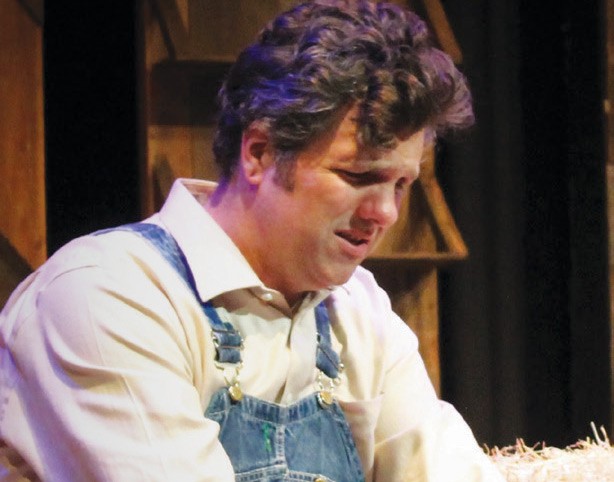
Mortimer Brewster (Michael Coury Murdock) returns to his childhood home and to his aunts, Abby and Martha (Karen Brocker and Karen Pinomaki). After getting engaged to the local preacher’s daughter, Elaine (Julianne Bradbury), Mortimer is horrified to discover his aunts have taken on a most macabre hobby. They’re helping lonely old men find “peace” and disposing of their bodies in the basement. Fortunately for them, Uncle “Teddy” (Tim Setzer) believes himself to be Teddy Roosevelt and is always willing to dig a new lock for the Panama Canal and the latest “yellow fever victim.”

Mortimer figures he can pin everything on the obviously insane Teddy, but things get complicated when brother Jonathan (Mike Schaeffer) shows up with a physician friend (Rose Roberts) and a body of their own.

Director Michael Ross has some good talent at work here. Brocker and Pinomaki are delightfully dotty as the sisters, and Setzer invigorates the stage with his every appearance.

Michael Murdock, however, is too one-note as Mortimer, showing little range of emotion considering the insanity that’s going on around him. He rarely seems to be “in the moment,” often appearing to be casually awaiting his next line. Julianne Bradbury is far more animated as Elaine, making one wonder what she sees in Mortimer.

Schaeffer and Roberts are two very talented actors, but I’m not sure these were the right roles for them. I found Schaeffer’s menacing Jonathan undone by his distracting John O’Hurley–like voice (O’Hurley played J. Peterman on Seinfeld), and Roberts’ baby-faced Dr. Einstein seems too youthful to capture the character’s exhaustion and desperation.

Nice stagecraft does complement the performances. The black and white set by Michael Walraven and costumes by Janice Snyder evoke a classic-cinema, period-film feel.

Arsenic and Old Lace is definitely a nostalgia piece, best enjoyed by those familiar with it.

Rating (out of 5): ★★★½

Up a Notch

0

In its ongoing mission to foster and support Sonoma County’s artistic communities, Creative Sonoma, formed by the county’s economic development board, once again hosts its flagship music conference, Next Level, on Feb. 10 at Luther Burbank Center for the Arts in Santa Rosa.

After taking a year off in 2017 to focus on fire recovery for artists, Next Level’s return marks a new chance for local musicians to gain industry insights from experts and connect with like-minded peers of the scene.

“Now that this is our third year, it’s remarkable to see how rich and diverse our music community is here,” says Creative Sonoma director Kristen Madsen. “We are reminded each year as we do this, that this is a supportive community of itself.”

With that in mind, Next Level’s theme this year, “Expanding Boundaries,” aims to show Sonoma County musicians ways to take their creative careers beyond the local community, beginning with a live-remote recording session to open the day’s event. Led by innovative music producer Cliff Goldmacher, the recording session will feature Sonoma County songwriter Bobby Jo Valentine onstage performing an original song backed by musicians playing in Goldmacher’s Nashville studio via the internet.

“We have people working and creating here in their backyard, but technology allows them to do so much more to expand the community of collaborators,” says Madsen.

Other tech-savvy sessions scheduled for Next Level include a talk by Grammy-winning producer Hank Neuberger on recording live sets for maximum results, and a discussion with Bay Area music manager Joe Barham on new revenue streams available to musicians through online communities like Patreon, in which fans donate monthly for exclusive content.

Sonoma County native Isabelle Garson, currently the chief creative officer with North Bay–based Second Octave Media, offers her expertise on managing social media and digital content for musicians to embolden their online presence and match their creative output with promotional material and advertising that delivers real-world results.

“We have an amazing wealth of creative talent, and a supportive and collaborative scene,” says Garson. “People just need a little bit of an extra push to get it out there on their terms, and Next Level offers that opportunity.”

Next Level Music Industry Conference happens Sunday, Feb. 10, at Luther Burbank Center for the Arts, 50 Mark West Springs Road, Santa Rosa. 9am to 5pm. $25–$40. Early bird registration ends Jan. 31. creativesonoma.org.

Star Power

0

Oftentimes, especially in today’s world of nutritional science and genetically modified foods, I wonder about the evolution of eating and etiquette.

Our Medieval past of eating with our hands continues to connect with our present when it comes to dining on chicken fingers and wings, tacos, hot dogs and french fries. Thanks to 16th-century Queen of France Catherine de’ Medici, we have evolved into a civilized people who use utensils to eat most of our food.

Post–World War II, food engineers were put on the frontlines to create processed food in an effort to prevent famine. A typical family dinner entailed peeling off foil from an oven-cooked frozen dinner to which each family member consumed on a folding tray table while watching television.

Today, we still peel, but it is on occasion and without foil; we peel a biodegradable plastic film to reveal a healthier version of a frozen breakfast, lunch or dinner. Or we substitute a meal to consume the daily recommended vegetable and fruit intake in the form of a smoothie.

The driving force behind what works and what doesn’t in the food world is taste, but how did the idea of taste begin? Simply stated, the French can take credit.

The French Revolution and Napoleon’s influence on social life set the stage for taste—quite literally, in fact. Taste in reference to gastronomy grew from the term used in the company of music, art, theater, literature and architecture. Taste was in itself a society of people who were ranked by social status. It wasn’t until 1739 that cooking became one of the fine arts, perfected by the French in classical culinary talent.

Before the gastronomic revolution, food served a medicinal purpose. People would consume iced drinks only to change body temperature, and those who had distaste for a particular food were viewed as hostile. Commoners ate root vegetables while the social elite indulged on meat, fruits and desserts. Taste was unessential until the second half of the 17th century, about the same time sugar parlayed from its use as a pharmaceutical and was introduced in the form of desserts. Choices led to culinary temperaments, which
in turn introduced the idea of multiple courses.

Variety is the spice of life, and this concept remains today, but the French will forever take center stage in gastronomy. If you want proof, take a trip to France and indulge in the various pastries, breads, cheeses, sauces and pâtés of which the rest of the world strives to emulate.

And remember where those Michelin stars began: In 1889 central France, André and Édouard Michelin created a tire company for which they developed a marketing campaign targeted to the almost 3,000 automobile owners at that time. The idea was to create a guide for road trips. Travelers were most interested in the categorical status of dining they developed, and by 1926, the Michelin star was born to differentiate status. This year, the San Francisco Bay Area was awarded the most Michelin three-stars in all of the United States.

[page]

The North Bay’s starred attractions

Marin County

Madcap: 1 Michelin Star

Sonoma County

Madrona Manor: 1 Michelin Star

Farmhouse Inn & Restaurant: 1 Michelin Star

SingleThread Farms: 3 Michelin Stars

Napa County

Auberge du Soleil: 1 Michelin Star

La Toque: 1 Michelin Star

Kenzo: 1 Michelin Star

Bouchon: 1 Michelin Star

The Restaurant at Meadowood: 3 Michelin Stars

The French Laundry: 3 Michelin Stars

Charlene Peters studied food, culture and communication in Paris. She can be reached at si********@***il.com.

Who’s on First

0

When Santa Rosa’s hottest new craft brewery releases a new beer this week, you won’t have to wait in a line that wraps around the block to get a taste of it. You might be challenged to even find the block.

Shady Oak Barrel House occupies an enviably capacious space on a street in Santa Rosa that, despite its high-ranking ordinal number, has been largely forgotten by time and redevelopment. Staunched by the freeway, sandwiched in between the Santa Rosa Creek and the mall, old First Street lives on in a one-block stretch that, incredibly, allowed an upstart, startup brewery to set up a taproom that officially opened for business on Black Friday, 2018.

But I didn’t have any trouble locating the spot, since I’d already been shown in by the side door last fall while on—full disclosure—some business.

Story goes like this: I had some wine grapes hanging on the vines after a first pick and hated to see them go to waste, so I placed an ad for home winemakers. No luck, except for this quirky brewer: Steve Doty wanted some grapes to co-ferment with his wild-yeast-fermented beers.

When I looked around the yard at delivery, I saw no de-stemmer machine, and despaired at how Doty was going to get the grapes off the stems. By hand, he replied. I felt bad for the guy—I’d done this before with maybe 50 pounds of Grenache grapes, and I’d vowed to never, ever do that again. But Doty happily said he’d put on some tunes and bring in some friends, and get it done. Now that’s dedication to the craft. But there’s more.

In the cellar, Doty explained an odd contraption parked there: it’s a coolship, a stainless steel sort of mystery ship that Capt. Doty tows to sites around Sonoma County on still, cool nights during winter—as that’s the best time to capture wild yeast—to create a beer of true terroir. A coolship is a kind of post-brewing trap to acquire all the “bad,” souring yeasts that most modern brewing is dedicated to keeping at bay.

Shady Oak’s current offerings range from a tangy gose to a sweet, floral sour IPA, a bourbon barrel-aged dark sour that speaks of boozy cola, and finally a grainy, not-sour-at-all amber IPA because, as Doty says, “everybody’s got to sell a cheeseburger.”

Shady Oak Barrel House, 420 First St., Santa Rosa. Open Wednesday–Friday, 3–9pm; Saturday–Sunday, noon–9pm. Shady Oak is participating in Santa Rosa Beer Passport FeBREWary celebration, Feb. 1–28. 707.575.7687.

Lifesaver

0

When Bob Dylan won the Nobel Prize for literature in 2016, the news was greeted by some with the retort that, if the Swedes were going to go in that direction, they should have given the prize to Joni Mitchell.

It would have been both a smart choice and a sentimental one, given the premature report of Joni’s death to a brain aneurysm in 2015. In recent years, she’s suffered other maladies. The cigs caught up with that crystalline voice, and a mysterious skin condition made her shun daylight.

Yet the party for her in Joni 75: A Birthday Celebration shows both the range of her music and the affection that the world of music has for her.

The concert film compiles a two-night-long show last November at the Dorothy Chandler Pavilion in Los Angeles, the city she analyzed in verse for years.

Not everyone gets Joni Mitchell: the strange guitar tunings, the high blue yodel or the throaty intimacy of her confessional mode. Writing about Mitchell, who was one of only two female performers in 1978’s Last Waltz, Roger Ebert said that he didn’t know what her song “Coyote” was supposed to be about. (It’s easy: it’s about Sam Shepard, or somebody like him.)

While Mitchell’s modes changed, from lissome folkie to thick-skinned blueswoman to jazz artist, one point stayed as constant as a northern star: both in age and in youth, Mitchell insisted on a woman’s privilege of traveling alone, sleeping with whom she pleased and holding firm to independence.

Lyrically, Mitchell’s viewpoint changed from hippie naiveté to embittered realist. If once she thought people were made of stardust, she came to fear they’re all just meat in a dog-eat-dog world, where “sex sells everything / and sex kills.” Always in her songs are diagrams of traps waiting for women. One side is the grim one-night-stand in “Down to You”; the other is a different kind of discontent in “Harry’s House/Centerpiece.” There, Mitchell imagines the Scarsdale angst that could have been hers, lolling around waiting for the husband to return from the indelible cityscape she painted (“A helicopter lands on the Pan Am roof / like a dragonfly on a tomb”).

The concert is something for any Mitchell fan, from tricky jazz to the kind of crowd-pleasing material that any semi-competent street busker can make sound good. Glen Hansard, whose busking style was visible in the movie Once, does “Coyote” here. (Maybe the sainted Ebert would have understood the lyrics if a man sang them?)

Graham Nash sings “Our House,” about the Laurel Canyon place he and Joni shared once upon a time. Mitchell’s fellow Canadian Diana Krall covers perhaps the bleakest song Mitchell ever did, “Amelia,” about a woman’s search for freedom, what it costs and what it’s worth. James Taylor and Seal collaborate on a tune I cannot abide, “Woodstock”; if it seems particularly airy-fairy, remember that Mitchell actually didn’t play the Woodstock fest.

The vocally craggy Kris Kristofferson takes on “A Case of You” with Brandi Carlile, right before Carlile solos to cover “Down to You,” a startling sound-alike version of a very complicated song. Emmylou Harris (the other woman in The Last Waltz) covers Mitchell’s terrifying slide-guitar lament about heroin, “Cold Blue Steel and Sweet Fire.” Los Lobos perform the obscure but fine “Nothing Can Be Done.” The congas in the original must have attracted the Wolves.

Making a rare appearance, but not joining in on the music, is Mitchell herself. Buffeted by the years, she’s still everything Chaka Khan calls her here: a lifesaver.

Double Exposure

There they are, waiting for you. Super-models and Instagram vixens splashing in the Caribbean with the famous swimming hogs of Big Major Cay. Maybe they should have called it the Circe Festival instead of the Fyre Festival. The swindled victims weren’t literally turned to swine. But they weren’t treated much better than pigs.

Most of the world knows what happened, and moreover has had a real good laugh at it. The dueling documentaries Fyre Fraud (Hulu) by Jenner Furst and Julia Willoughby Nason, and Chris Smith’s Fyre: The Greatest Party That Never Happened (Netflix) take slightly different stances on the dreadful fest.

Both tell of how Jersey go-getter Billy McFarland made his name by selling the Magnises credit card to millenials, with a $250 annual fee. There were certain club benefits, disputed by the two docs; Netflix’s doc admires the Magnises lounge and club nights. The Hulu version snipes that the Magnises bennies were getting to rub shoulders with guys from Murray Hill, one of NYC’s most boring neighborhoods.

These Magnises (was it meant to be short for “Magnificent Penis”?) got McFarland got enough fame in the right places to fund the development of a band-booking ap called Fyre. It was to be promoted with an awesome music festival on a private Caribbean island in spring 2017. Rapper Ja Rule endorsed it to give it street cred. McFarland hired PR, which in turn used “Influencers”—professional inducers of online FOMO.

Everything went wrong. There was inadequate prep time, several changes of location, a surprise rainstorm and the especially bad idea to have the fest during a regatta weekend when there was no rental properties available. The elite arrived to find used disaster relief tents waiting for them, with windows that didn’t keep out the mosquitoes. They rushed back to the states, complaining into their iPhones every step of the way.

There’s more than a little overlap between these documentaries—both featuring the same viral video showing Ja Rule chased by the schoolboys from Lord of the Flies. The Netflix account, in which Vice media participated, has the most scandalous material: event planner Andy King tells of how McFarland begged him to fellate a certain Bahamian minister to get a planeload of Evian water released from customs’ duties.

Hulu’s Fyre Fraud has personal access to McFarland—in fact, the producers paid him to talk—when the grifter was on bail and secretly cooking yet more scams. Here we get childhood legends of McFarland’s hustling youth from his mom, in communications hilariously read out loud by text-to-speech software.

If Netflix’s Fyre:TGFTNH is more fair, it’s less fun. The title says it all—it doesn’t question the necessity of the fest. The Fyre Festival didn’t work, but wouldn’t it have been insanely cool if it had? Marc Weinstein, one of McFarland’s assistants who is still on hook for some of the unpaid wages, still argues “there was definitely a chance to pull it all together.” Thus Netflix’s Fyre:TGFTNH may be a stepping stone to the inevitable exculpatory whitewashing feature film with Jonah Hill or Leonardo Dicaprio playing McFarland. It’s inevitable, an on-screen pity party for a showman who dreamed too big.

By contrast, Hulu’s Fyre Fraud suggests a larger picture, in it’s account of how McFarland’s scams were hot air sucked up and made forceful by the Venturi effect of the internet envy-machine. One prefer Fyre Fraud’s sense in exploring the sleaziness of McFarland’s dream, with supermodels jiggling in slow-mo, posing and grinning—images that are, to borrow critic David Thomson’s phrase, “an advertisement for advertisement.”

It’s not going out into the weeds to suggest that this mirage called the Fyre Festival mirrored the way America fell for a charismatic figure, who cared less for truth than what his guts tell him. Was the Fyre Festival a merry distraction from the Trumpster Fyre, or do they parallel each other?

Fyre Fraud
convincingly identifies the fraud-fest as just one more chimera of modern times, a 24 hour game of ‘let’s pretend,’ in which one cannot tell if someone is a delusional liar or the smartest person in the room.

Cal Fire: Tubbs caused by private electric system, not PG&E

Cal Fire issued a statement and report today identifying a private power system—and not PG&E—as being the culprit in the deadly 2017 wildfire. Sen. Bill Dodd released a statement of his own saying that the Cal Fire finding shows that everyone needs to up their fire-prevention game in the “new normal.” For PG&E this is a rare bit of good news; the utility was found to be the culprit in a dozen of the 2017 fires that swept through California and has recently been swept up in bankruptcy talk over its estimated $30 billion insurance exposure associated with the fires. Here’s the press release from Cal Fire and a link to their investigation:

Sacramento – After an extensive and thorough investigation, CAL FIRE has determined the Tubbs Fire, which occurred during the October 2017 Fire Siege, was caused by a private electrical system adjacent to a residential structure. CAL FIRE investigators did not identify any violations of state law, Public Resources Code, related to the cause of this fire.

The Tubbs Fire in Sonoma County started on the evening of October 8th, 2017 and burned a total of 36,807 acres. Destroying 5,636 structures and resulting in 22 civilian fatalities and one firefighter injury.

In total, the October 2017 Fire Siege involved more than 170 fires and burned at least 245,000 acres in Northern California. Approximately 11,000 firefighters from 17 states and Australia helped battle the blazes.

CAL FIRE investigators are dispatched with the initial attack resources to the wildfires in CAL FIRE jurisdiction and immediately begin working to determine their origin and cause.

Californians must remain vigilant and take on the responsibility to be prepared for wildfire at any time throughout the year. For more information on how to be prepared, visit www.readyforwildfire.org or www.fire.ca.gov.

Link to the redacted Tubbs Fire Investigation Report here:

http://calfire.ca.gov/fire_protection/fire_protection_2017_siege

Jan. 24: Return to Roots in Rohnert Park

0

Musician and vocalist Martha Redbone is a melting-pot performer of American Roots music who often conjures up images of blue-collar workers and small-town values. Now Redbone looks to her own roots in a new theatrical experience, “Bone Hill: The Concert,” that mixes her father’s gospel voice and her Cherokee/Choctaw mother’s culture in a show about a young woman returning to the Kentucky coal mines of her youth to explore a rarely seen piece of American history. Redbone performs in concert on Thursday, Jan. 24, at Green Music Center, 1801 E. Cotati Ave., Rohnert Park. 7:30pm. $25 and up. 866.955.6040.

Jan. 25: Field Notes in Occidental

0

Cannes award-winning filmmaker Rob Nilsson (Northern Lights) is in the North Bay to present a remarkable series of short documentaries—Prairie Fire, Survivor and Rebel Earth—that makeup ‘The Prairie Trilogy.’ The trilogy of films tells the story of North Dakota’s Socialist Nonpartisan League, who fought a hard-won battle in 1916 to regain voting rights that had been taken from them by those in power. See the three short docs and engage in a discussion on the films’ continued relevance in our current political climate on Friday, Jan. 25, at Occidental Center for the Arts, 3850 Doris Murphy Court, Occidental. 7pm. Free. 707.874.9392.

Hot Shot

When wildfires swept across Santa Rosa in October 2017, local residents evacuated while reporters embedded themselves in the charred landscape. So it's not surprising that early in his new book about the big blazes, Earik Beann encounters an Los Angeles Times journalist. "It looked like we might get to be the story," Beann writes. In fact, only a few reporters...

Die Laughing

Serial killing would seem to be a rather ghoulish subject matter for a comedic play, yet Arsenic and Old Lace has been an audience-pleaser for over 75 years. Sonoma Arts Live has a production running through Feb. 10. Joseph Kesselring's tale of the Brewster sisters and their pension for helping men meet their maker via elderberry wine debuted on Broadway...

Up a Notch

In its ongoing mission to foster and support Sonoma County's artistic communities, Creative Sonoma, formed by the county's economic development board, once again hosts its flagship music conference, Next Level, on Feb. 10 at Luther Burbank Center for the Arts in Santa Rosa. After taking a year off in 2017 to focus on fire recovery for artists, Next Level's return...

Star Power

Oftentimes, especially in today's world of nutritional science and genetically modified foods, I wonder about the evolution of eating and etiquette. Our Medieval past of eating with our hands continues to connect with our present when it comes to dining on chicken fingers and wings, tacos, hot dogs and french fries. Thanks to 16th-century Queen of France Catherine de' Medici,...

Who’s on First

When Santa Rosa's hottest new craft brewery releases a new beer this week, you won't have to wait in a line that wraps around the block to get a taste of it. You might be challenged to even find the block. Shady Oak Barrel House occupies an enviably capacious space on a street in Santa Rosa that, despite its high-ranking...

Lifesaver

When Bob Dylan won the Nobel Prize for literature in 2016, the news was greeted by some with the retort that, if the Swedes were going to go in that direction, they should have given the prize to Joni Mitchell. It would have been both a smart choice and a sentimental one, given the premature report of Joni's death to...

Double Exposure

Failed Fyre Festival gets taken down by competing Netflix and Hulu documentaries.

Cal Fire: Tubbs caused by private electric system, not PG&E

Cal Fire issued a statement and report today identifying a private power system—and not PG&E—as being the culprit in the deadly 2017 wildfire. Sen. Bill Dodd released a statement of his own saying that the Cal Fire finding shows that everyone needs to up their fire-prevention game in the "new normal." For PG&E this is...

Jan. 24: Return to Roots in Rohnert Park

Musician and vocalist Martha Redbone is a melting-pot performer of American Roots music who often conjures up images of blue-collar workers and small-town values. Now Redbone looks to her own roots in a new theatrical experience, “Bone Hill: The Concert,” that mixes her father’s gospel voice and her Cherokee/Choctaw mother’s culture in a show about a young woman returning...

Jan. 25: Field Notes in Occidental

Cannes award-winning filmmaker Rob Nilsson (Northern Lights) is in the North Bay to present a remarkable series of short documentaries—Prairie Fire, Survivor and Rebel Earth—that makeup ‘The Prairie Trilogy.’ The trilogy of films tells the story of North Dakota’s Socialist Nonpartisan League, who fought a hard-won battle in 1916 to regain voting rights that had been taken from them...
11,084FansLike
4,606FollowersFollow
6,928FollowersFollow