Terroir Track

0

What are mountain vineyards good for, besides mountain-grown wines? They make for great hiking and mountain biking.

Prefer a brisk jog through the vineyard? Notre Vue Estate Winery invites guests to jog, too, at their fourth annual outdoors adventure event, Tour de Cru. Notre Vue is the resident winery (along with sister brand, Balverne) of Windsor Oaks Vineyards, a 210-acre patchwork of vineyard blocks that sprawl across the hills just north of Windsor. Many wineries buy their 16 varieties of wine grapes, but an additional 350 acres is designated “Forever Wild” by agreement with the Sonoma County Agricultural Preservation and Open Space District. Connecting it all is a network of dirt and gravel roads wending through oak woodlands and cresting hills to reveal million dollar views—it’s like a fine regional park, with wine.

I showed up for last year’s Tour de Cru with my hybrid city bike, and 32mm tires, ready to tackle the gravel. This was folly. I knew I shouldn’t have bothered when I saw the initial ascent to where the trails begin. Luckily, Windsor Bike Center was on hand to offer me a more appropriate setup, sporting suspension, fat, knobby tires, the works, for no extra charge. The winery is “95 percent sure” the bike store will return on June 29. For your heel-pounding pleasure, Fleet Feet Sports returns to provide shoe-fitting and warm-up advice.

Don’t expect a special kind of lanyard to hold your glass of wine and your cheese and charcuterie plate. But here’s a pro tip: Balverne Pinot Noir rosé is just as refreshing from a sports bottle.

I chose the 2-mile Red Tail Trail, getting mixed up with the 5.4-mile Summit Trail along the way. At the top of the dam, some lollygaggers are enjoying a tranquil pond scene from a gazebo—lollygagging is allowed. After an easy spin down a tree-shaded road, the marked trail has me climbing between vineyard rows uphill. Further on, I confer with a fellow biker about the route, and pass a group of hikers taking in the view. On a steep downhill in the dirt, those disc brakes really saved me. Then I rounded a corner—hark, the wildlife! Well, turkeys.

Back at the winery, the Healdsburg burger-and-sausage joint the Wurst serves lunch, a couple of local vendors offer samples of fresh juice and yerba mate, and this year’s musical guest is Ragtag Sullivan.

Notre Vue Estate, 11010 Estate Lane, Windsor. Tour de Cru, Saturday, June 29, 10am–3pm. $55 tickets $55 include wine; $25 kids. 707.433.4050.

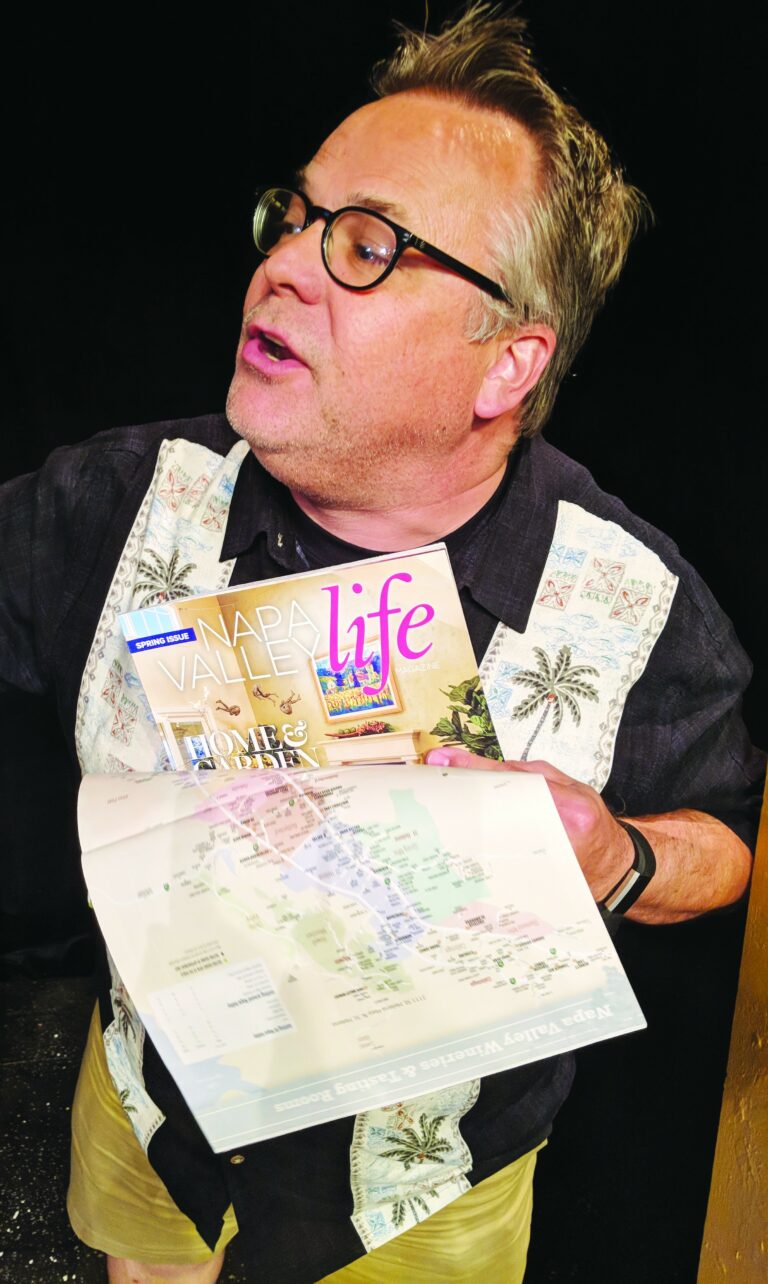
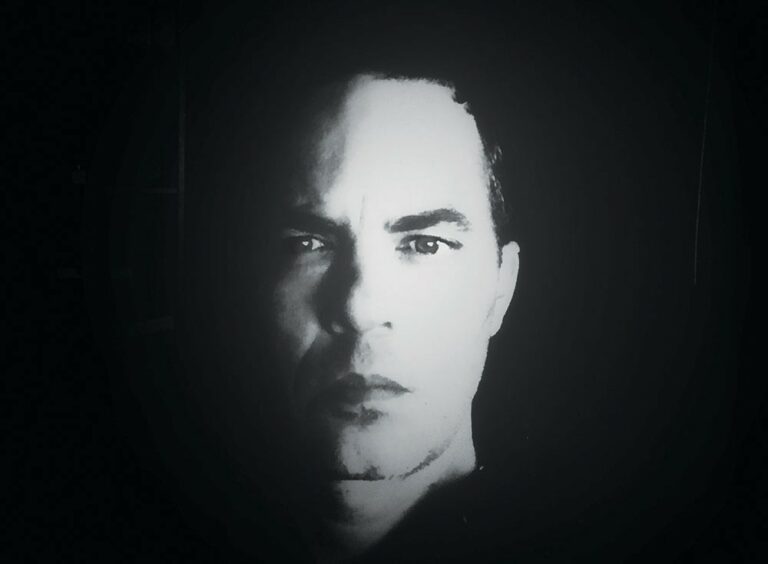
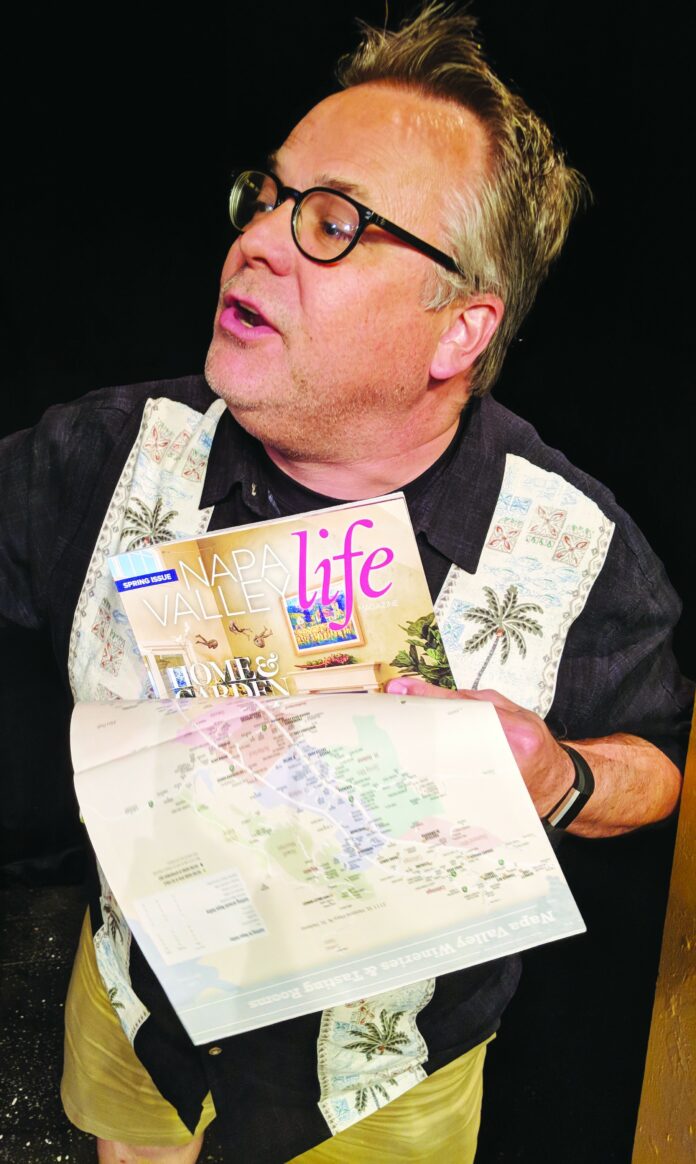
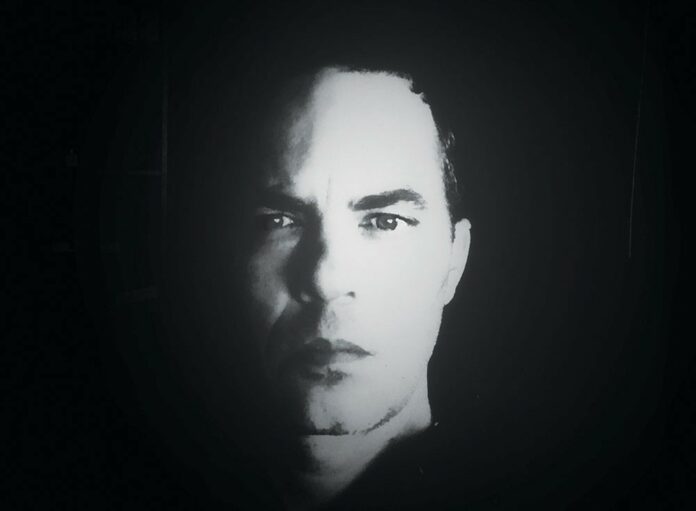
Musical Messages

0

Baba Zumbi of Zion-I, known originally as Steve Gaines, creates music that expands hip-hop as a genre, stretching it out by blending elements of reggae, trance and melodic rapping to produce colorful sounds that mix together seamlessly. His multi-dimensional sound is a reflection of his varied exposure to music during his childhood and his openness to experimentation.

Originally from Philadelphia, Zumbi lived in Texas, New Jersey, Georgia and elsewhere before landing in the Bay Area.

“My experience with hip-hop was like that, too,” he says. “Varied, because I grew up in so many different states and experienced so many different types of people.”

Zumbi’s nuanced understanding of hip-hop contributed to his experimentation with the genre later in life.

“For me, hip-hop has always been a gumbo. African drums, rock, jazz…it has always been a mixture of different things coming together,” Zumbi says. “I vacillate with all these different things at different points of my life, and I love trying new things.”

Hip-hop also acts as a vessel to deepening Zumbi’s understanding of his own identity.

Lyrically, Zumbi delves into the deepest parts of his identity, exploring themes of racism, spirituality and vulnerability to name a few. He hopes by divulging the most intimate parts of himself, his audience will be moved to self-reflect as well.

“This music for me is a spiritual process. Like I am doing psycho therapy on myself, processing all my emotions in a healthy way. It lets me get in touch with myself, a sort of calibration, like going to acupuncture and getting realigned,” Zumbi says.

In the song “Meditation,” off his most recent album Ritual Mystic, Zumbi begins with a quote by the poet Rumi: “The wound is where the light comes in.”

This perfectly summarizes Zumbi’s mission: sharing his vulnerabilities to illuminate the shared experiences we all go through, regardless of race, social status, backgrounds.

Zion-I performs on Friday, May 17, at Reel & Brand, 401 Grove St., Sonoma. 9pm. $20. 707.343.0044.

Vaxx Populi?

0

As an outbreak of measles courses through California, Sonoma County Health Officer Celeste Philip issued a warning and recommendation yesterday that parents immunize their school-age children against the highly contagious disease.

“I . . . write this letter to emphasize to parents and guardians the seriousness of this current measles outbreak and the potential impact to unvaccinated or under vaccinated children,” says Philip in a note distributed to schools and parents yesterday.

As of this week there have been 44 reported cases of measles in California and 750 nationwide, the highest number of cases, reports Philip, “since measles was nearly eliminated in 2000.”

In 2017, the state moved to rein in abuses over a “personal belief exemption” in the state vaccination law and Philip notes that since then, there’s been a 94 percent rate of compliance with state law that requires vaccination as a condition of attending public school. But there are strong pockets of anti-vaxxer resistance, including in Sonoma County, where the immunization rate in some schools is less than half, she says.

None of the measles cases this year originated in Sonoma County, “but we are vulnerable,” she writes, given that “in some (Sonoma) County schools less than half of students are up to date with the recommended vaccination schedule.”

Any measles outbreak in Sonoma County will be met with swift action in the schools, Philip warns. “If your child is unvaccinated or cannot provide laboratory confirmation of measles immunity and there is a case in their school, they will likely be excluded from attending school for 21 days after their last exposure to the contagious individual. This exclusion helps protect the susceptible students and limits further spread of disease.”

Online data indicates that Sonoma County is one of the least-compliant counties in the state when it comes to parents getting their children vaccinated. The state requires that children entering kindergarten be immunized against 10 communicable diseases, including for measles, mumps and rubella. Those three are covered under the so-called “MMR” vaccine, which Philip says “has a long-established history of being safe and effective.” That view is not generally shared by the anti-vaxx community.

Here’s how the immunization debate and changes in state law have played out in one Sonoma County school over the past few years: the Sebastopol Independent Charter elementary school had 45 students enrolled in 2017-18. That year, 35.5 percent of students were up to date in vaccinations; up from 26.67 percent the year previous. Fifty-eight percent of the exemptions in 2017-18 were for medical reasons, up from 25 percent the year before. Thirty-eight percent of students were exempted in 2016-17 because of personal beliefs against vaccination held by the parents.

Those numbers are at stark odds with recent polling around vaccinations. A Pew Research study from 2015 found widespread acceptance of vaccinations, as 68 percent of adults said childhood vaccinations should be required. Thirty percent said the choice ought to be the parents to make—and many of those respondents were young adults aged 18-29 who have no experience with, for example, the devastating effects of polio (which has largely been eradicated thanks to the Salk vaccine).

Philip’s warning comes as the California legislature is considering closing a new loophole in the state’s childhood immunization law that came about after it ended the personal belief exemption in 2017. That moved followed a measles outbreak that year, as reported by KRCR ABC7 and elsewhere.

In closing one loophole, the state opened another: Now California’s vaccination law permits medical exemptions for parents of children whose health might be impacted negatively by vaccinations. The exemptions are currently granted by the family’s health-care provider. Critics say the loophole has been abused by parents who oppose vaccinating their kids, whether it’s for medical or personal reasons.

A state senate bill this year would close the loophole in a bill sponsored by Richard Pan, who is both a senator and a pediatrician. He’s been making the media rounds this month promoting SB 276, which would put the final decision about medical exemptions in the hand of the California Department of Public Health—and create a state registry of all children who have been granted medical exemptions.

As that bill works its way through committee, Sonoma County’s health official Philip is urging that “unvaccinated or under-vaccinated children should be vaccinated as soon as possible through their healthcare provider so they will have protection, will not further spread illness and will not need to be absent from school.”

One of the most persistent critiques of vaccinations is that they cause or can contribute to autism. The autism-immunization debate continues apace, and one of its biggest proponents is Robert F. Kennedy Jr., founder of the organization Children’s Health Defense (CHD).

Kennedy has compared a purported vaccine-driven rise in autism rates to the Holocaust, and noted in an interview that ran on the CHD site that “life for these children is an endless agonizing progression of twilight and terror. The tormenting gut aches, excruciating sensory sensitivities, the serial head banging and screaming, the isolation and perpetual joylessness. The entire family is permanently devastated.”

State Sen. Pan, in turn, has been stressing his pro-vaxx viewpoint on behalf of public school children with severe health problems and/or auto-immune disorders—who can often only attend public school if everyone is also vaccinated, given the health risks they’d face if one of their peers came down with the measles.

5 takeaways from Newsom’s revised budget plan

Buoyed by California’s strong economy, Gov. Gavin Newsom sent state lawmakers a revised budget on Thursday that boosts his already-hefty January proposal to $213.6 billion. Ka-ching!

Public schools will reap most of the gains if the Democratic-controlled Legislature rolls with him. Newsom also upped his ante on the housing crisis with a proposed $1 billion more to combat homelessness.

Still, Californians can expect some fiscal debate: Some Democrats want to go further on Medi-Cal spending, and others are leery of Newsom’s tax ideas, such as the sales tax break he wants to give on tampons.

And Newsom acknowledged the lessons of past budget exuberance, sounding for all the world like a certain frugal predecessor. Here are five key takeaways:

Public schools will be #winning

Talk about an apple for the teacher: Under Newsom’s revised plan, California will send $81.1 billion to K-12 schools and community colleges for the new fiscal year that starts in July.

Although some Democrats and education advocates continue to complain about lackluster per-pupil spending, that investment would be the biggest ever, up nearly $400 million from Newsom’s January budget. The governor noted that school funding will account for 45 percent of the state’s general fund, much higher than the 40 percent minimum guaranteed under Proposition 98, the state’s education funding formula. Lawmakers may also question whether any money needs to be set aside in a special public school rainy day fund.

One notable change is a scale-down of an earlier $750 million proposal to expand access to full-day kindergarten by building more facilities. Instead, about $150 million would go toward teacher recruitment and training while the other $600 million will be prioritized for districts with high concentrations of poor students.

The tweak was influenced by a new UC Berkeley study that found wealthier communities were more likely to benefit under the governor’s full-day kindergarten proposal because that’s where most part-day kindergarten programs are located.

School districts would also get additional aid to pay for teachers’ pensions. In January, Newsom proposed to contribute $3 billion extra to the California State Teachers’ Retirement System, a move that lowers districts’ contribution rates from 18.13 percent down to 17.1 percent, freeing up local money, the better to address threatened teacher strikes. The May budget revision adds $150 million to bring the contribution rate down to 16.7 percent for one year in 2019-20.

And Newsom’s not done weighing in on the state’s polarizing charter school debate, another labor flashpoint. After signing a fast-tracked charter school transparency law, the governor is proposing regulations to prohibit charter schools from turning down students based on their grades or special education status. The governor wants to prevent charter schools from asking for students’ transcripts or records before enrolling them and to create a new state system for charter families to report complaints.

Fewer excuses to dodge homelessness

NIMBYs beware: Expanding on his push to aid Californians in need and address the state’s mounting housing crisis, Newsom announced a $1 billion investment to combat homelessness.

His plan calls for $650 million to local governments for emergency aid, $120 million for counties to pilot assistance programs for people at risk for homelessness, $150 million to train mental health professionals, $40 million for colleges to assist students going hungry, $25 million for Supplemental Security Income advocacy and $20 million to assist people from getting evicted.

One step or two on universal health coverage?

Newsom is sticking to his guns on expanding Medi-Cal coverage to only young adults up to age 26 regardless of immigration status. That could set up some haggling with legislative Democrats who may push to expand coverage to all low-income residents regardless of their immigration status.

He says he’s open to ideas but wants to make sure the state moves toward universal health coverage in a financially responsible way. “My goal is universal health care for everyone,” he said. “That is the goal ultimately.”

The administration also affirmed its commitment to restore eyeglasses benefits for Medi-Cal patients, although health advocates say Newsom remains silent on other benefits that were cut during the last recession.

Although he tweaked subsidy eligibility and amounts, the governor is also sticking to an idea for a state individual mandate. The idea is to use penalties to help expand subsidies for middle-income earners to purchase health insurance through Covered California, the state’s health insurance exchange.

He’s serious about working parents

Newsom’s options may be limited and he may be burnishing his ‘Governor Dad’ brand, but his agenda clearly is that of a guy who knows the price of Pampers. Earlier this week, he announced expanding the state’s paid family leave program by 2 weeks, threw support behind legislative proposals to eliminate sales tax on diapers and feminine products (even if there isn’t agreement yet for how long) and wants to boost the state’s Earned Income Tax Credit for families with children under 6 from $500 to $1,000.

For working mothers, the administration had already proposed in January increasing CalWORKS grants. For a family of three, the highest grant will go from $785 to $888 per month. While that’s an increase of $103, it still remains 50 percent of federal poverty level.

Channeling Jerry Brown

Rarely have two governors differed more in style than Newsom and his predecessor. Still, at times during his 90-minute budget update, Newsom sounded for all the world like Jerry Brown.

The new governor repeatedly cited the old one’s warnings about the need for healthy state reserves and fiscal prudence. Newsom’s budget staff projects the state could lose $70 billion over three years in a moderate recession.

“We have a record amount of rainy day reserves and a record amount of resiliency. We have well over $30 billion-plus to weather a major storm and I would argue we have much more than that,” Newsom said. “We are preparing for a very different climate and we’ve never been more prepared as a state.”

CALmatters reporter Ricardo Cano contributed to this report.

Death Letter Dues

0

Following Gov. Gavin Newsom’s moratorium on capital punishment via executive fiat in March, will California voters end the death penalty in 2020? New research from the National Institute on Money in Politics indicates that, absent a robust grassroots anti-death penalty effort, it may be a tough sell.

That’s owing to the power and influence of statewide unions such as the California Correctional Peace Officers Association, whose small-donor efforts in 2016 helped turn the tables on a capital-punishment proposition twofer on that ballot that year.

Proposition 62 would have ended the death penalty outright; while pro-death penalty Proposition 66 sought to limit appeals in capital cases.

The institute’s research found that even as the state was trending away from support for the death penalty, that pro–death penalty, 62/66-specific committees outspent opponents’ committees by $13.5 million to $9.7 million in 2016

That year, “corrections officers represented the overwhelming majority of small donors rallying behind the death penalty,” reports the institute’s online research portal, followthemoney.com, adding that “thirty-five public sector unions collectively gave $3.3 million to the pro-death-penalty effort. . . . Almost almost half ($1.6 million) of the union total came from contributions from CCPOA and the Peace Officers Research Association of California.” Twenty-eight-thousand CCPOA members contributed $287 each to 62/66-specific committees.

Small-donor anti-death penalty contributions were not nearly so robust, as the institute reports that “more than four-fifths of the anti-death-penalty total ($7.9 million) came from just 35 donors that gave $50,000 or more.”

Contributions from opponents were made by George Soros’s Open Society Policy Center ($1 million), Laurene Powell Jobs’s Emerson Collective ($600,000), “and more than $450,000 from the Northern California Chapter of the American Civil Liberties Union.”

The report further noted that Stanford professor Nick McKeown gave $1.5 million, “a 91 percent share of the total from education donors,” while Netflix co-founder and CEO Reed Hastings contributed $1 million of $1.2 million that came from the TV and film industry. Lastly, it found that five people (including Tom Steyer) “accounted for more than 80 percent of $1.1 million from securities and investment donors.”

Small-donor contributions from 1,700 opponents totaled $377,000, reports the institute as it recounted the run-up to the 2016 election. That year, opponents contributed an average of $4,750 to the committees; proponents of the death penalty contributed an average of $470.

On September 21 2016, the Sacramento Bee reported that polling to date indicated that a plurality of voters supported Prop 62, while only a third of voters supported Prop 66.

It cited a joint study from the Field Poll and the Institute of Governmental Studies at UC Berkeley, that “found Proposition 62 ahead 48 to 37 percent, with 15 percent of likely voters undecided. Meanwhile, barely a third (35 percent) support Proposition 66, a competing initiative aimed at expediting the death-penalty process. With 42 percent undecided, it appears far less familiar to voters. Twenty-three percent are opposed.”

Then came a CCPOA-led advertising blitz that raised public awareness of Proposition 66. “In the end, 53 percent of voters rejected Proposition 62 and 51 percent okayed Proposition 66,” notes the institute.

In making his announcement this spring, Newsom highlighted that the death penalty discriminates against minorities and poor people as he called the practice “ineffective, irreversible and immoral.” He pledged to give a reprieve to the 737 inmates currently on death row in California, close the death chamber at San Quentin (it was dismantled soon after his announcement), and end a years-long debate over the state’s execution protocols.

Most of the 737 condemned in California are men held in one of three death row tiers at San Quentin. Women on death row are incarcerated at a facility in Chowchilla. The last execution in California took place 13 years ago.

As Newsom was making his announcement, Marin Assemblyman Marc Levine introduced a proposed constitutional amendment on the 2020 ballot that would ban the death penalty.

Opponents to Newsom’s moratorium have already ramped up the grassroots activism in light of the renewed push to end capital punishment in the state.

Families of crime victims and local district attorneys have embarked on a “Victims of Murder Justice Tour” which today is in Riverside. In April NBC Los Angeles reported that the organization (founded by the Orange County District Attorney Todd Spitzer) would take the tour to each of the 80 Assembly and 40 Senate districts in the state.

Death Penalty Action, a California non-profit devoted to ending capital punishment in the state through public education and grassroots organizing, was unsurprisingly supportive of Newsom’s March move.

District attorneys and victims’ families have accused Newsom of thwarting the 2016 will of the voters, but recent polling suggests that Californians favor life-without-parole over execution in first-degree murder cases, by a two-to-one ratio.

A Public Policy Institute of California poll conducted two weeks after Newsom’s announcement found that 62 percent of voters “chose life in prison over the death penalty,” reported Death Penalty Action.”The survey found that only 31 percent of adults—38 percent of whom are likely voters—favored the death penalty.”

Garden Party

0

Before we get to the wine, first, a word about coffee mugs.

Lately, I’ve gotten a little funny about my morning coffee. I have a coffee mug for different days of the week. Maybe it’s a sign of incipient eccentricity, maybe it’s harmless, but in any case, it’s only taken over three days of the week thus far. It all started with Tuesday. That’s the day the Carneros Wine Alliance holds their annual barrel tasting get-together each spring. When you arrive, you get a wine glass; when you leave, you get a commemorative coffee mug. So when it’s Tuesday, I think of Carneros.

Shared between Sonoma and Napa Counties, the Los Carneros American Viticultural Area (AVA) was established way back in 1983. The region’s key claim to quality is that it’s cool two ways—the rolling, windswept vineyards are influenced both by Petaluma Gap ocean breezes and San Pablo Bay.

Typical of the Chardonnays I tasted at the event, the 2017 Carneros Chardonnay ($38) from non-member winery Frank Family Vineyards is barrel-fermented but has the bright, lemony acidity to handle it, coming across with floral notes of oak, caramel and quince jam on the tongue instead of fat, “buttery” character. Frank Family’s 2017 Carneros Pinot Noir ($38) has that dried black cherry and potpourri spice that I find many, if not all, Carneros Pinots display.

Among other treats offered at this intimate event, which is only open to member wineries and a few trade and media folks, is a sneak peak at the latest vintage—usually organized into a theme, like this year’s sampling of Pommard clone Pinot Noir from member vineyards—and sometimes a behind-the-scenes look at a winery locale.

This year’s event was held at the Donum Estate. Since I last visited in 2014—also an invite-only event—Donum has been a conundrum. Was the converted dairy barn that housed its offices open for tasting? Yes, sort of. Kind of. Inquire. Then the head appeared. “Sanna,” by artist Jaume Plensa, is a giant, white head that plays with one’s sense of depth and scale. And then a massive, shimmering heart,
“Love Me,” by Richard Hudson, on a distant hilltop. What’s going
on at Donum?

Find out for yourself at Discover Donum, a rare tasting and tour of the 190-acre estate’s sculpture garden of 40 works by artists including Ai Weiwei and Keith Haring. The new winery, on the footprint of the barn, itself is a work of art. Proceeds benefit Art Escape. Mug not included—but maybe a GoVino!

Discover Donum, Saturday May 11, 11am–3pm. 24500 Ramal Rd., Sonoma. Tickets $45, available at eventbrite.com. 707.939.2290.

Natural Wonders

0

The theatrical treatments of two great American novels come alive on North Bay stages with mixed results in productions running through May 19.

6th Street Playhouse is presenting Christopher Sergel’s adaptation (not Aaron Sorkin’s) of Harper Lee’s To Kill a Mockingbird. Sergel had an agreement with Lee to produce a theatrical version of her novel suitable for school or community theatre productions and, though revised several times by Sergel, those roots show.

Lee’s tale was adapted by Horton Foote for the 1962 film starring Gregory Peck as Atticus Finch, and this Marty Pistone–directed production does battle with memories of the film.

Jeff Coté, while having the look we’ve come to expect for Atticus, lacks the gravitas necessary for the character and though technically the lead, cedes the spotlight to the play’s supporting characters. The young actors playing Scout, Jem and Dill (Cecilia Brenner, Mario Herrera, Liev Bruce-Low) do fine, and Val Sinckler is a tower of strength as Calpurnia. Jourdánn Olivier Verdé is a steadfast Tom Robinson, and Mike Pavone and Caitlin Strom-Martin succeed in making the Ewell family thoroughly detestable.

An interesting addition to this production is a gospel choir/Greek chorus to “bookend” several scenes. It’s quite effective and the addition of music is welcome.

Lee’s story still packs a punch and, while uneven, this production does have its strong moments.

Rating (out of 5): ★★★

The Cloverdale Performing Arts Center is presenting John Steinbeck’s Of Mice and Men in a production directed by Beulah Vega—who had the advantage of working with a script written by Steinbeck himself.

Steinbeck’s Great Depression–era tale of George and Lenny (Rusty Thompson, Martin Gilbertson) and their dream of a place of their own still resonates today for those seeking the ever-more-unattainable “American Dream.”

Vega has taken a minimalist approach to the show’s staging, leaving it to her cast to grab your attention and hold it for two hours. They do.

Gilbertson brings a fresh approach to Lenny, a character that can often dive into caricature, and there’s a strong ensemble doing excellent work here.

Heck, even the dog is good.

Rating (out of 5): ★★★&#9733

‘To Kill a Mockingbird’ runs through May 19 at the 6th Street Playhouse, 52 W. Sixth St., Santa Rosa. Thursday–Saturday, 7:30pm; Saturday–Sunday, 2pm. $25–$35. 707.523.4185. ‘Of Mice and Men’ runs through May 19 at the Cloverdale Performing Arts Center, 209 N. Cloverdale Blvd., Cloverdale. Saturday, 7:30pm; Sunday, 2pm.
$12 -$25. 707.894.2219.

Clean Day No More

Clean Day
No More

Clean Day? In Guerneville? Where did it go?

Why are there no more volunteers for this wonderful service? Retired Vietnam veterans used to give time to this much needed service every Thursday from 10am–1pm. The homeless got free showers and a hot meal. Medical services were offered. Housing resources were available. Clean clothes were offered.

The mobile shower that was available on Mondays was run out of town due to a neighbor who did not like the smell of cigarette smoke next door.

Listen up, being homeless is down right frightening and horrible. Every second one is just trying to survive. Think about this: Where does one go if they need a restroom in Guerneville ? Some businesses will let you if you buy food. The bathrooms by the main Sheriff substation are what the general public use. Bars tend to throw the homeless out. Avoid the Bull Pen.

These services need to be available to those that need it. Next time you’re in Guerneville really look around.

Guerneville

Eye on Petaluma

Very impressed you landed several theaters (“Welcome to Lumaville,”
May 1, 2019)!

Via Bohemian.com

Praise Trump

President Trump’s political opponents are doing this nation and the entire world a huge disservice by criticizing President Trump as being too friendly with Russia’s President Putin.

The fate of the entire human race hangs by the most slender thread over the abyss of nuclear war. This possible nuclear holocaust is the greatest danger ever faced in our species’ history of one million years. Preventing this unbearable tragedy from happening must become the highest priority of every responsible human being.

I urge all those who are justifiably angry with President Trump for so many of his reactionary policies to suspend their anger toward him in his dealings with President Putin. Improving the U.S.’s relationship with Russia and specifically with President Putin is of the greatest importance in preventing the outbreak of a nuclear war with Russia.

Therefore I totally and unconditionally support President Trump’s efforts to create a friendlier relationship with President Putin. Saving humanity from a nuclear holocaust is our first duty as intelligent and responsible people.

Fairfax

Write to us at le*****@******an.com.

Out of Joint

0

As Scott Weiner works with fellow state senator Mike McGuire to selectively preempt local zoning laws to ease the way for more housing construction, Assemblyman Phil Ting—another Bay Area Democrat—is trying to do something similar for the pot industry.

If Ting’s AB 1356 passes, it would force cities and counties to allow one cannabis retail permit for every four liquor licenses in the jurisdiction.

But that is only if more than half of the electorate in a jurisdiction voted for Proposition 64’s adult-use legalization in 2016.

For cities that already allow for recreational sales and are looking to grow the local pot economy, including Santa Rosa, Ting’s bill may not make much of a difference. But jurisdictions whose elected officials have banned retail recreational cannabis dispensaries despite majority support from residents—including, for example, Healdsburg, or Marin County’s unincorporated areas—could be in for a ride. Some 75 percent of all cities and counties have banned retail pot business since the passage of Proposition 64, according to state research highlighted by Ting. His bill aims to reverse the trend.

“Californians voted for Prop. 64 to replace the illicit market with a legal system that would grant Californians safe access to cannabis products, while also creating good jobs and significant tax revenue,” Ting said in announcing his bill earlier this year. “However, these goals can only be fully realized if enough licenses are granted to meet existing demand. This bill will ensure the legal market
can succeed.”

The bill is supported by labor organizations and veteran’s groups that have called for expanded access to medical cannabis, and would also help working-class people and the disabled have greater access to legal cannabis products, says Shivawn Brady, a board member of the Sonoma County Grower’s Alliance who personally supports Ting’s bill. It passed the Senate Business and Professions committee April 29 and is headed to the Appropriations committee later this month.

“Despite voters approving Prop. 64, there are cannabis deserts across the state where veterans and patients have to drive long distances to a licensed shop,” said Aaron Augustis, founder of Veterans Cannabis Group, in response to Ting’s bill. “We served our country and want to work with our local cities, counties, and state governments to ensure our veterans have safe access across the state to medicinal cannabis. AB 1356 is crucial for veterans’ access.”

In the South Bay, the local pro-weed advocates at the Silicon Valley Cannabis Alliance have come out in support of AB 1356. Locally, Brady says she supports Ting’s bill which will, she says, provide access to a legal medical product to locals who might have to travel out of town for their medicine.

Ting’s bill would require that cities and counties to issue cannabis licenses equal to 25 percent of the number of liquor store licenses in the jurisdiction—a reasonable ratio, says Brady—or one license for every 10,000 residents. Organizations including Urban Counties of California have cast a wary eye, saying it would “force local jurisdictions to approve licenses for medical and recreational cannabis retailers.”

The bill applies to jurisdictions that approved Prop 64. In Napa the vote was 37,000 for; 23,333 against. Napa has issued a handful of cannabis licenses since legalization.

In Marin County, an overwhelming 96,000 residents supported Prop 64 while 43,200 voted it down. But, with the exception of San Rafael, Marin towns and cities from Novato to Fairfax have rolling moratoriums banning non-medical cannabis retail establishments. Nearly 140,000 Sonomans supported legalization, with 94,500 against. Sonoma’s cannabis rollout has been stymied by residents’ pushback to commercial grows and other cannabis businesses in their midst—and a complicated, expensive and time-consuming licensing protocol that has conspired to keep black market sales at about 60 percent of pot sales statewide, according to industry estimates.

On the licensing front, there are currently two cannabis business applications on the calendar at the Sonoma County Board of Zoning Adjustments: One is for a 225 acre grow in rural Guerneville that represents a major expansion of an existing cannabis-business footprint. According to the growers’ website, the pot is grown for a CBD healing salve. That one’s been fully vetted by Building and Zoning Administration staff and recommending approval at the zoning board’s May 9 meeting.

The other is for a commercial cannabis growing and processing site in Santa Rosa in an industrial center near Todd Road and Highway 101.

As of this week, the BZA staff has yet to release their recommendation for this 11-acre indoor commercial application, which would be located, if approved, within 600 feet of a private school called New Beginnings. That school contracts with Sonoma County to assist traumatized youth and parents through educational, outreach and life-skills programs.

The school’s location is not at issue given that there’s no school setback required for indoor cultivation in industrial zones, says Sonoma County spokesperson Maggie Fleming. The county does evaluate neighborhood compatibility issues, she says in an email, and the applicant, KJM Data and Research, “has been doing outreach with the school since they started operations and the school has not submitted any concerns to date, after receiving three public notifications about the project: Early neighborhood notification, hearing waiver notice, and most recently hearing notice.” The application is set to go before the zoning board on May 16.

General Issue

By any account, it looked like a pretty busy day in early May at Xavier Becerra’s office. The state attorney general pushed out four press releases on May 2, mostly directed at holding Washington D.C. accountable—but also at police accountability in the state.

In one announcement, Becerra denounced President Donald Trump’s rollback of offshore drilling rules that came about after the 2010 Deepwater Horizon disaster in the Gulf of Mexico.

The AG further announced that California, leading a coalition of 20 states, had filed a reply brief to Trump’s challenge to their lawsuit, California et. al. v Trump, et al., over the president’s national emergency declaration at the southern border. The fourth release didn’t directly criticize Trump—though it could have, given the president’s embrace of ethnic profiling—as Becerra announced a new state DOJ video to help enhance public buy-in of an ambitious police-accountability law.

In 2015, the state of California passed the Racial and Identity Profiling Act, a first-in-the-nation law which requires, by 2023, that all law enforcement agencies across the state collect detailed information and recordings of stops and searches, including data on the officers’ perception of the person being stopped, in order to combat “policing profiling” of suspects.

But earlier this year, the board that was created with the passage of RIPA released a report that found very little evidence of racial profiling in California in 2017.

The California Racial and Identity Profiling Advisory Board was created to “shepherd this data collection and provide public reports with the ultimate objective to eliminate racial and identity profiling and improve and understand diversity in law enforcement through training, education, and outreach.” In 2017, the board cast a wide net around the state to provisionally determine the extent of the racial-profiling problem in California. The results indicated that there was practically no racial-profiling problem in California.

Of the 453 agencies subject to RIPA reporting in 2017, 79 said they had no civilian complaints reported that year. The RIPA board and its followers were split on what the data meant: For some law enforcement representatives it meant that there wasn’t much of a racial profiling crisis in California. For police-accountability advocates, it meant that the data-collection process under RIPA was either flawed or corrupted by the police “blue wall,” or both.

This spring, eight big police agencies sent a year’s worth of data to the state Department of Justice on
April 1, to be analyzed for next year’s annual report.

As it reported a low number of civilian complaints in its 2017 study, the board addressed a possible absence of public buy-in in RIPA’s data-collection process as the culprit behind what to many police-accountability activists were seen as surprisingly low numbers.

The board aimed in the annual report released in March to “enhance the transparency of the stop data collection process by providing the public with detailed information on how the data is collected and submitted and how the Department [of Justice] and law enforcement agencies ensure the integrity of this data.”

That information includes the date, time and duration of a stop, the reason for a stop, the officer’s perception of the race, ethnicity, age, gender, disability or language fluency of the person stopped.

The RIPA rollout is pegged to the size of law enforcement agencies. Agencies with more than 1,000 peace officers had to file their first reports with the state Department of Justice by April 1 of this year. Agencies with between 667 and 1,000 peace officers will submit their first reports by next April 1; those with between 334 and 667 peace officers (that includes the Sonoma County Sheriff’s Office) will be RIPA-compliant by 2022; and agencies with fewer than 334 officers will issue their first reports in 2023. —Tom Gogola

Rhythm Rustler

0

My older brother was the only white kid in an all-Filipino gang in Vallejo,” says Kevin Russell, in one of the most unexpected openings to an interview about music ever.

Yet Russell explains that in addition to cruising the streets of the East Bay in the ’60s, his brother and the gang would come over and play music in the Russell’s living room, rocking hits from Elvis and Johnny Cash in spirited jam sessions.

Attracted to his brother’s guitar at a young age, Russell had to wait his turn. “There was only room for one guitar player in the house,” he says. So he took up drums.

But by the time he left home, Russell finally got his hands on a guitar and started playing traditional bluegrass, folk, country, rock and roll and everything in between.

The rest is history. For over 30 years, Russell has played in groups like the soulful country band Modern Hicks, blues-rock outfit the Rhythm Rangers and Americana act Laughing Gravy, as well as fronting his own ensembles, the bluegrass-centric Kevin Russell & His So Called Friends and his current country and rockabilly band Kevin Russell & Some Dangerous Friends, who play at Redwood Cafe in Cotati on May 9 in a release show for the group’s new live album.

Featuring 12 tracks recorded at the spur-of-the-moment last November while the band played a set at Lagunitas Tap Room in Petaluma, the live album features cuts from country hit makers as played by the six-piece band.

In addition to Russell’s guitars and laid-back vocals, the group features guitarist Sean Allen (the Jones Gang), singer Maria Nguyen
(Twang Ditty), longtime Nashville-based vocalist and bassist Markie Sanders, drummer and educator Rick Cutler and multi-instrumentalist Steve Della Maggiora.

Whether they’re swaying to Loretta Lynn’s “Blue Kentucky Girl,” harmonizing on Merle Haggard’s “Running Kind,” or shaking things up on Carl Perkins’ “Restless,” the band’s live shows always end up with audiences dancing along, and that energy is perfectly captured on the live album.

“I just want to surround myself with music as much as possible,” says Russell. “That’s what it’s all about.”

Kevin Russell & Some Dangerous Friends play on Thursday, May 9, at Redwood Cafe, 8240 Old Redwood Hwy., Cotati. 8pm. $10. 707.795.7868

Terroir Track

What are mountain vineyards good for, besides mountain-grown wines? They make for great hiking and mountain biking. Prefer a brisk jog through the vineyard? Notre Vue Estate Winery invites guests to jog, too, at their fourth annual outdoors adventure event, Tour de Cru. Notre Vue is the resident winery (along with sister brand, Balverne) of Windsor Oaks Vineyards, a 210-acre...

Musical Messages

Baba Zumbi of Zion-I, known originally as Steve Gaines, creates music that expands hip-hop as a genre, stretching it out by blending elements of reggae, trance and melodic rapping to produce colorful sounds that mix together seamlessly. His multi-dimensional sound is a reflection of his varied exposure to music during his childhood and his openness to experimentation. Originally from Philadelphia,...

Vaxx Populi?

As an outbreak of measles courses through California, Sonoma County Health Officer Celeste Philip issued a warning and recommendation yesterday that parents immunize their school-age children against the highly contagious disease. “I . . . write this letter to emphasize to parents and guardians the seriousness of this current measles outbreak and the potential impact to unvaccinated or under vaccinated...

5 takeaways from Newsom’s revised budget plan

Buoyed by California’s strong economy, Gov. Gavin Newsom sent state lawmakers a revised budget on Thursday that boosts his already-hefty January proposal to $213.6 billion. Ka-ching! Public schools will reap most of the gains if the Democratic-controlled Legislature rolls with him. Newsom also upped his ante on the housing crisis with a proposed $1 billion more to combat homelessness. Still, Californians...

Death Letter Dues

Following Gov. Gavin Newsom’s moratorium on capital punishment via executive fiat in March, will California voters end the death penalty in 2020? New research from the <a href="http://National Institute on Money in Politics indicates that, absent a robust grassroots anti-death penalty effort, it may be a tough sell. That’s owing to the power and influence of statewide unions such as...

Garden Party

Before we get to the wine, first, a word about coffee mugs. Lately, I've gotten a little funny about my morning coffee. I have a coffee mug for different days of the week. Maybe it's a sign of incipient eccentricity, maybe it's harmless, but in any case, it's only taken over three days of the week thus far. It all...

Natural Wonders

The theatrical treatments of two great American novels come alive on North Bay stages with mixed results in productions running through May 19. 6th Street Playhouse is presenting Christopher Sergel's adaptation (not Aaron Sorkin's) of Harper Lee's To Kill a Mockingbird. Sergel had an agreement with Lee to produce a theatrical version of her novel suitable for school or community...

Clean Day No More

Clean Day No More Clean Day? In Guerneville? Where did it go? Why are there no more volunteers for this wonderful service? Retired Vietnam veterans used to give time to this much needed service every Thursday from 10am–1pm. The homeless got free showers and a hot meal. Medical services were offered. Housing resources were available. Clean clothes were offered. The mobile shower...

Out of Joint

As Scott Weiner works with fellow state senator Mike McGuire to selectively preempt local zoning laws to ease the way for more housing construction, Assemblyman Phil Ting—another Bay Area Democrat—is trying to do something similar for the pot industry. If Ting's AB 1356 passes, it would force cities and counties to allow one cannabis retail permit for every four liquor...

Rhythm Rustler

My older brother was the only white kid in an all-Filipino gang in Vallejo," says Kevin Russell, in one of the most unexpected openings to an interview about music ever. Yet Russell explains that in addition to cruising the streets of the East Bay in the '60s, his brother and the gang would come over and play music in the...
11,084FansLike
4,606FollowersFollow
6,928FollowersFollow