Border Myths

The nation is currently enduring a lengthy government shutdown because Congress won’t give Donald Trump $5.7 billion for a border wall he said that Mexico would pay for.

But the supposed border crisis that requires a new wall is based on Trump mythology—a series of “alternative facts” that he and his acolytes continuously put forth. Many of these are amplified by media outlets and talk radio such that large numbers of Americans are misled about the state of the border and immigrants who pass through it.

Why should we in the North Bay be so concerned about Trump’s shenanigans on the border?

There is a humanitarian crisis at the Mexican border—although not one that a wall will solve. Thousands are being held by Customs and Border Protection in inhumane conditions at border facilities. Others are living in squalor at camps on the Mexican side of the border, awaiting asylum processing. Many of these refugees are from regions of Mexico and Central America with large populations in the North Bay. Many have close family in Sonoma, Marin and Napa counties and end up settling here.

Our country has handled refugee crises before. Thousands of European refugees settled here after World War II. In the 1980s, we opened our door to Cubans, Eastern Europeans and others fleeing communism. As before, we ought to work on an orderly and humane manner for handling their claims of persecution—a solution more worthy of a nation of immigrants than an expensive and ineffective wall.

It’s worth examining some of the false myths surrounding the wall debate, so we can all understand better what sort of crisis we have on the border and whether a wall will help at all:

Myth #1: Illegal immigration across our southern border is
out of control

One of the oft-repeated myths is that illegal immigration through the U.S.-Mexican border has been rising and now is higher than ever. Actually, there has been a net drop in undocumented immigration from Mexico over the last 10 years; the overwhelming majority of those trying to cross illegally are now caught and subject to expedited deportation. Many more undocumented immigrants have been deported over the last decade than ever before. In truth, half of the undocumented immigrants here are visa overstays, usually from Europe or Asia.

Myth #2: Asylum seekers all come illegally

In fact, a large portion of the refugees at our southern border are entering the United States legally, seeking asylum under the Refugee Act of 1980. The Trump administration is trying to cut off these legal paths to asylum. But the truth is that most of these families at the southern border—including the caravans of asylum seekers Trump has condemned—are actually following our own immigration laws and procedures.

Myth #3: Many of those coming across the border are criminals and terrorists

Most of those seeking asylum are from parts of Mexico or Central America ravaged by violence at the hands of criminal cartels or gangs. Extortion, kidnapping and murder are commonplace there. Virtually all of the asylum seekers I’ve met reported that their families were targets of this violence and were threatened with more violence if they stayed in their communities.

Department of Homeland Security officials have admitted there has never been any evidence of terrorists entering our southern border, and the claims that gang members proliferate among those seeking asylum is completely unsupported by fact.

Myth #4: These immigrants disappear once allowed in
the United States

All applicants for asylum go through an interview process at the border to determine if they have a “credible fear of persecution” in their home country. Those who fail these interviews are deported immediately.

Those found to have a credible fear of persecution still have to wear an electronic monitor in order to get released. Later, they have a trial before an immigration judge and must prove they have a “well-founded fear of persecution based on religion, race, nationality, political opinion or social group.” If they fail to do so, they are deported.

Trump has falsely claimed only 10 percent show up for their hearings. In fact, the overwhelming majority who file asylum claims appear in court and a substantial number have proven their eligibility for asylum.

Myth #5: Undocumented immigrants get welfare and government aid

Despite repeated claims to the contrary by Trump, undocumented immigrants do not qualify for welfare, food stamps, Medicaid or virtually any other form of government assistance.

Zen and the Art . . .

0

Ahead of me, on a single-lane street in town, a bicyclist was meandering along, seeming oblivious to me behind him. I sounded my horn, startling the young man back into present time. He pulled over to let me by.

I stopped nearby and another young fellow stomped up to my car. I rolled the window down, and he yelled, “Did you just honk at that cyclist? He has a right to the road! Who do you think you are, you f–––king psychopath!”

“Well, Happy New Year to you too!” I sputtered, startled and shaken. Then wondered, was I “right” in my idea of road courtesy—apart from the guy’s horrid manner?

I saw a local cop getting into his patrol car, and approached him for reassurance and sympathy before I headed home. I thought: How quick we are to judge one another, to assume the worst—to other each other. I brought this topic to my mindfulness class: how we alienate ourselves with myths and assumptions about those perceived as wrongly different, as opposing us. Conversely, if I give myself a chance to interact, bring along “beginner’s mind”—curiosity, open-mindedness, harmlessness—surprising and evolving things can happen.

The morning after my class, I took a nature walk as the first seasonal rains were subsiding. Walking from the opposite direction was a young man, eyes glued to his phone screen—a habit I tend to disparage.

I stared a bit. He noticed, I asked, “What could possibly be worth more than tuning into the beautiful natural world around us?” His eyes twinkled disarmingly and he nodded in recognition. A conversation started, beginning with “Ben” voicing his concerns with screen time for his three kids. We walked and talked and discussed basic values and MO’s for living. We discovered a shared passion for naming life’s holy questions, and that we had different ideas about where answers originate. Ninety minutes sailed by, thoroughly enjoyed.

Ben was a tech-savvy, devout Christian and student of the Bible. I’m a metaphysical, contemplative Jewish crone who doesn’t own a smartphone. Had he not elected to walk with me, or had I rejected having a stranger come along, we would have remained wholly other to one another. After our conversation, his wife arrived to drive him to their motel room—he works temporary construction in the area. We exchanged contact information, vowing to stay in touch.

Ben and I returned to our very different lives, but I’ll always remember our shared fervor. To honor that, I resolve in 2019 to stop, breathe, observe my biases—and proceed with more humanity, equity, curiosity and delight.

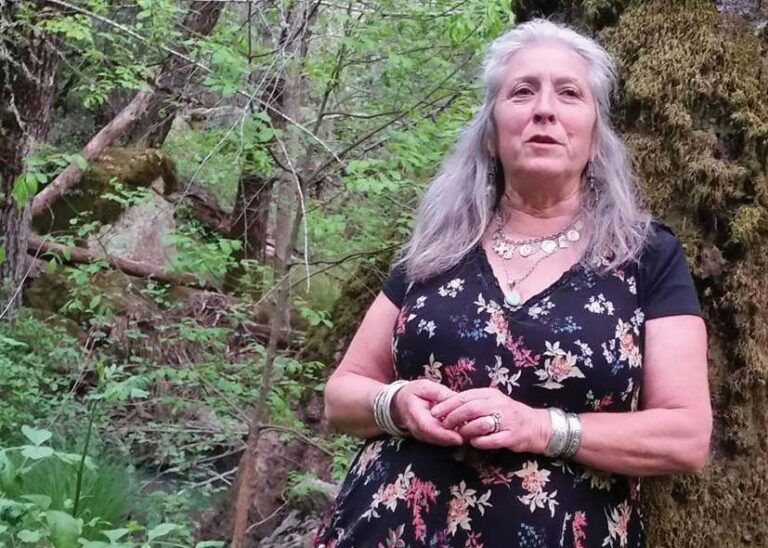
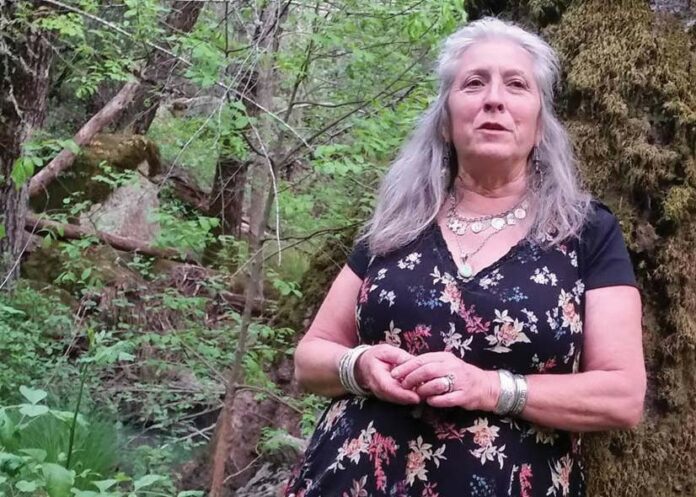
Marcia Singer, MSW, teaches mindfulness meditation locally
through the Love Arts Foundation in Santa Rosa.

Letters to the Editor: January 16, 2019

Un-uncensored

I would like to thank Gretchen Giles for mentioning in her Jan. 2 letter to the editor that I picketed your publication. Actually, I and members of my group, Men & Women for Gender Justice, protested for a full day in front of your office. The reason that I am thanking her is because her editor, Greg Cahill, censored the protest even though he had his photographer take pictures of us. We were protesting the newspaper’s backlash against us, especially a hit piece on me penned by Cahill and Giles.

In my twenty-something years as a vocal advocate for men and boys, Giles takes the cake as the most hostile, misandrist and bigoted reporter who has ever interviewed me. Media critic Mark Rosenthal even said it “read like a hit piece” on KSRO talk radio. Ironically, the publication’s slogan at the time was “Uncensored.” I guess it never occurred to Giles that the current Bohemian staff would not know about our direct action because her boss Cahill censored it. But I see that given all your corrections of her claims in her diatribe that accuracy is still not her strong point.

Petaluma

Tom Tom Club

Mary Moore is right, The Paper did not sprout out of the Sonoma County Stump; it was a totally separate entity founded by Bliss Buys (Letters, Jan. 9). Mary, however, mixes up my name with Tom Richman. It was that Tom that helped start Sonomore Atomics and who co-founded The Paper with Elizabeth Poole. I wrote and followed Nick Valentine as editor of The Paper and covered many of the topics Mary mentions, so perhaps thereby lies the confusion.

I agree with Mary that it’s a shame your 40-year issue just barely skimmed The Paper‘s history. The Paper‘s coverage of peace and justice issues, the AIDS crisis, gay rights, the long sewer war with Santa Rosa, marijuana repression, and the battles to save our coast and redwoods, remains essential to the identity of west Sonoma County and should not be forgotten.

Cazadero

Alas, the name mixup was our own, not Ms. Moore’s. We apologize to Mary, both Toms and our readers for the confusion.

—Editor

Eff Trope

Not at all surprised to hear someone call Trump a motherf—er, but instead of accurately reporting what was actually said, the print and broadcast media feel the need to modify it.

They dutifully extract the “–uck” because using the word in its entirety is considered offensive. Is this naïveté or a throwback to Puritanical behavior, or are we in denial?

It’s not like we don’t know what the three dashes are stand-ins for. Unless it’s impaired, the brain knows and “sees” the word as it is. Does the absence of those letters sanitize the word and make it acceptable? Who are we fooling? I say f–ck the FCC and these lame attempts at decorum. It’s time we started calling a sp–de a spade!

Monte Rio

Write to us at le*****@******an.com.

Where the Fern Bar Grows

0

When it comes to food and drink, the Barlow in Sebastopol has had its ups and downs from its very inception. While Zazu remained a staple, other restaurants came and went.

Now Fern Bar, a new initiative by some of Sebastopol’s leading names, is trying its luck at the Barlow. Fern Bar is the brainchild of Lowell Sheldon and Natalie Goble, the duo behind Lowell’s and Handline; Sam Levy, former bar manager at St. Helena’s Meadowood; Joe Zobel, former chef at Lowell’s; and Gia Baiocchi, owner of the Barlow’s Nectary.

On the menu, alongside staple Sonoma bounty salads and familiar appetizers like chicken liver mousse, Zobel includes dishes with an Asian and Mexican flair, like sopaipillas, traditional Mexican pastry stuffed with rabbit and cotija cheese, or chive pancakes with black garlic vinegar. In the drinks section, similar influences present themselves in ingredients like Thai pepper shrub and tamarind.

The decor, courtesy of Todd McCrea of Fine Root and Brian Anderson of San Francisco’s Ken Fulk Inc., is textbook vintage—macramé, live plants and cozy leather booths. The menu might be elaborate enough for a dinner-and-drinks outing, but Fern Bar also hopes to hit the entertainment spot. Music programming is scheduled almost nightly, with jazz nights, guitar and piano performances and DJ sets. Dancing the night away in the Barlow, after a truly eclectic meal? This year, it might just become reality.—Flora Tsapovsky

Fern Bar, 6780 Depot St., Ste. 120. fernbar.com.

Happy Endings

0

If you thought you could find harmony in a bottle, wouldn’t you pop that cork, just to see?

That’s what I did recently, not by drinking two or three bottles of wine, but by adding tiny amounts of concentrated, liquefied oak to that wine, one drop at a time. It’s made by companies such as BSG, OakWise and Laffort, who tout their products’ ability to soften mouthfeel and increase fruit aromatics in wine, even “recreate some of the characteristics of extended barrel storage, but in much less time.” I picked up a couple of samples offered by these companies at Wine Industry Network’s trade show at the Sonoma County Fairgrounds to set up my own taste test.

The conversation about wine and oak that we hear from wineries is mostly about French oak vs. American oak, or, rarely, about some particularly prized oak forest in France. It’s never about the wide range of products that they might use to tweak a wine. The very notion that there’s something in the wine besides the winemaker’s hands-off approach to its pure expression of terroir, after nothing more than patient barrel aging, is so unpopular, in fact, you might wonder if these businesses are struggling to stay afloat.

Uh, not really, according to Jillian Johnson DeLeon, who does sales and technical winemaking at Laffort USA. “People are using this from grocery store brands all the way up to 95 to 100 point wines.”

Johnson DeLeon also interacts with wine drinkers as winemaker at her own Onesta Wines. People are often surprised, she says, when she mentions her day job is at a wine products company. “Most people don’t know that there are any ingredients in wine besides grapes and yeast.” There are dozens of categories and hundreds of products approved for winemaking, with the catch that they aren’t supposed to significantly alter the character of the wine.

Following Johnson DeLeon’s mixing instructions, I add a few drops of powdered Laffort Quertanin Sweet in solution to a 100 milliliter pour of a 2018 Syrah-Zinfandel blend that I meant to be a fruity Beaujolais style for early drinking, but is a bit sharp on the tongue just now. Sure enough, the product masks the harshness of the new wine and provides a sensation of sweetness, without sugar.

“I always tell people, it can’t replace barrel aging or oak alternatives,” Johnson DeLeon says, “but it can fine-tune the flavors.”

Similarly, an OakWise offering called Finissage French Complex smoothed out the wine’s raw tang, and BSG’s Fruit Enhancer Plus did, indeed, “wake up” a slightly tired-tasting lot of Pinot Noir that I’d just about given up on drinking—and might have a slightly happier ending after all.

Tres Estrellas

0

It wasn’t an April Fool’s prank when news leaked that the restaurant Hurley’s would shutter after 16 successful years in business.

Well-known as one of the top restaurants in the heart of Napa Valley’s multi-Michelin-starred city of Yountville, the top-tier ranking was no small achievement in a destination dotted with greats: the French Laundry, Bouchon, Ad Hoc, Bistro Jeanty, Bottega, and the latest opening of the crystal-covered palatial-designed RH, aka Restoration Hardware.

Eyebrows were raised at the subsequent announcement of a Mexican restaurant opening in Hurley’s former space, and by the fact that it would be operated by celebrity chef Thomas Keller. Keller already operates three restaurants and a bakery within the 1.5 mile radius of Yountville. With the opening of Keller’s fourth restaurant, La Calenda, the allure of this culinary utopia escalates yet another notch.

In a winter drizzle, I took my place under a portico crammed with a hopeful group whose goal was to score the first seating once doors opened at 5pm. Arrive later and you’ll leave your name with the hostess and return in a while, instead of waiting outside. If diners opt to wait, there are tables inside at the bar or outside on a covered patio, where drinks aplenty are served.

Atypical of Keller’s French cooking, La Calenda is a Oaxaca-inspired restaurant with a reasonably priced menu and a no-reservation system. It also has a sports bar with a playlist of club music (not this grownup’s fave), the better to attract millennials.

The restaurant’s interior showcases carved Oaxaca wood chairs, artwork and ceramic tableware to complement its all-Oaxacan menu. The paper menu lists eight antojitos (appetizers) that include quesadillas al pastor with pineapple and Chihuahua cheese, and shrimp cocktail. There’s also that Mexican staple, a bowl of addictive house-made tortilla chips, spicy guacamole, a ceramic bowl of salsa verde and another of salsa mixe ($13).

My dining companion sipped on a specialty margarita while I sipped on a non-alcoholic version (in order to adhere to my self-imposed “dry” January detox program). We took our time with the menu and decided to share several small plates, beginning with the charred butternut squash tamale ($6), cooked in an avocado leaf and served with spicy black bean salsa. Our server entered our order on a handheld POS device.

Amazingly, in the midst of ordering our next plate, tacos de pollo pibil ($11), with sour orange and pickled onions on grilled chicken, our squash tamale arrived, steaming hot from the kitchen. That was fast! We continued to order amid the distraction of our hunger for the tamale, which tasted a bit bland until we scooped it on a tortilla chip.

My favorite dish was a duo of lightly fried red snapper tacos ($13) with chipotle mayonnaise and cabbage. I’d order this again on my next visit and skip the overly spicy enchiladas verde ($14) with Swiss chard. True to form, Keller reconstructs the enchilada with a green pepper sauce over a thin, blue-corn tortilla wrap with Swiss chard inside.

I might also return to order the chicken in stone-ground mole negro ($22) after requesting and receiving a sample taste of this unique Oaxacan specialty, with its velvety texture and chocolatey essence. According to one server, there are 25 ingredients that comprise this dark and savory sauce; another server swore it contained 30 ingredients. Divine, nonetheless.

Dessert is a must, so be sure to save room. The French Laundry’s pastry chef makes the desserts for La Calenda, and priced at $9 each, you’re getting a bargain. The silkiness of the flan put all previous versions to shame, and an order of petite churros transformed this fairground treat into an elegant wand to swipe a dollop of perfect consistency that attends the dulce de leche.

At the close of our Oaxacan culinary adventure, the server completed our transaction using that same mobile POS device to spit out the bill and swipe my credit card. I was elated to experience a Thomas Keller restaurant—and without breaking the bank.

La Calenda, 6518 Washington St., Yountville. lacalendamex.com.

Guitar Guide

0

For Sean Carscadden, Sonoma County songwriter and producer, music has been a constant throughout every stage of his life. He stumbled into his musical passion at a young age, when he started taking guitar lessons. His teacher later offered him the opportunity to continue his lessons at a music camp put on at the Sonoma Community Center.

After passing the cut-off age for the camp, Carscadden started working as an assistant at 15. “My teacher knew how much I loved going to the camp, so he let me help out,” Carscadden says. “But he got really busy, so I just jumped in and began teaching some of the music lessons.” Carscadden now returns to the Community Center to teach classes again—this time with some more professional experience under his belt.

Carscadden will be teaching an introductory class to fingerstyle guitar technique and a beginning ukulele class, with a focus on Beatles songs. Why the Beatles and why the ukulele? They are “ubiquitous and popular, not to mention fun,” Carscadden says. Fingerstyle is also a prominent technique for guitarists, a style of plucking guitar strings that lends itself to the twangy characteristic of bluegrass music that Carscadden often uses when playing his own music.

These classes are something of a welcome-home present Carscadden is bestowing upon Sonoma County. Carscadden traded in sunshine for rain in 2017, following his then-girlfriend to Portland, Ore.

“Picking up and starting over anywhere is hard,” Carscadden says. He is excited to be back in his hometown to continue working on his two main projects, Miss Lonely Hearts and the Sean Carscadden Trio.

As for his next big musical endeavor, Carscadden is recording a new album he expects to release later this year in addition to teaching music classes, running Delta Records and playing gigs.

“Every once in a while, you start getting a little burned out, but then you remind yourself this is what you’d love to with your free time anyway,” he says. “It is easy to remind myself of how lucky I am.”

Top Torn Tickets

0

It’s said that musicals are the bread and butter of community theater, so here’s a list of the North Bay productions I toasted this past year, my Top Torn Tickets of 2018: Part Two, the Musicals (in alphabetical order).

‘Always, Patsy Cline . . .’
(Sonoma Arts Live) Danielle DeBow’s Patsy was as heartbreaking as Karen Pinomaki’s Louise was amusing in director Michael Ross’ labor of love. Excellent costume
and set design work (also by Ross) along with outstanding live
music accompaniment under the direction of Ellen Patterson made this a memorable evening of
musical theater.

‘A Chorus Line’ (Novato Theater Company) Few small theater companies would take the risk of producing a vehicle that requires triple-threat performers in most roles. Director Marilyn Izdebksi’s decades of experience in dance and choreography and terrific casting were key to this production’s success.

‘Hands on a Hardbody’ (Lucky Penny) The perfect-sized musical for the Napa company’s small space, there wasn’t much room for anything else once they got the pickup truck that’s central to the story onstage. Director Taylor Bartolucci and choreographer Staci Arriaga had just enough room for a nice, diverse cast to beautifully tell the atypical story.

‘I Love You, You’re Perfect, Now Change’ (Raven Players) The cavernous Raven Theatre in Healdsburg was converted into a quaint black-box space where director Diane Bailey let loose four talented performers to tell musical stories about the arc of human relationships. It worked really well.

‘Illyria’ (6th Street Playhouse) Shakespeare. Ugh. A Shakespeare musical? Groan. A really entertaining musical production based on Twelfth Night? Surprising! Director Craig Miller’s swan song was a clever adaptation of the Bard’s comedy, which combined excellent vocal talents and the musical direction of Lucas Sherman to produce the best sounding show I’d seen at 6th Street in a long time.

‘Peter Pan’ (Spreckels Theatre Company) There’s no better stage in the North Bay on which to see a large-scale musical than the Nellie Codding Theatre at Spreckels. Flying around on wires is so much more impressive in a 550-seat theater, and Sarah Wintermeyer’s winsome performance as Peter was good enough for me to set aside my long-standing beef with always casting a female in the role.

‘Scrooge in Love!’ (Lucky Penny) A fairly new play (this was only its third production) that’s good enough to become a Christmas standard. A great lead performance from Brian Herndon was supported by a top-notch ensemble in this reverential continuation of the Dickens classic.

The Leviathan

0

Josh Churchman is a West Marin resident who runs his small commercial fishing boats out of the Bolinas Lagoon and Bodega Bay in Sonoma County. He’s 67 and has been fishing his whole life. ‘The Whale That Lit the World’ (Hidden City Press; $12) is his first book. Here are some excerpts.

The Fishing Disease

. . . To this day, whenever I see a new body of water, I wonder what kind of fish might be living in it. I wonder what I could use to catch some of them. My mom taught me not to keep fish I wasn’t planning to eat, but she didn’t kill my love of fish or fishing.

Fishermen are a strange breed of people. It is almost like we have some kind of ancient disease. The disease is strikingly different for each individual it infects. For some it is a freshwater disease that takes a fisherman to rivers and lakes. For others, it involves an ocean.

The disease may come on suddenly, later in life, or it may be present at birth and follow the fisherman to his grave. Some people have it strong in their life, and then it just vanishes. Some people can be cured, but not very many.

Of all the diseases mankind faces in this world, it is far from the worst affliction someone could encounter. Water is most of what we are, and what is a fish if it is not all about the water? Wondering what lives in that water, and how to catch it, defines a fisherman. Turning it all into a profession is just one of the more advanced symptoms of a deeply infected individual.

People who love to fish dream of finding a really good spot and having it to themselves. Secrecy is just one of the many idiosyncrasies that go along with living with the disease. A close friend will ask you where you caught those fish, and your gut instinct will be to evade without really lying, to minimize and deflect an open, honest answer.

It has been said that ninety percent of the fish are caught by ten percent of the fishermen. I do believe that this is true. However, the ten percent is never the same ten percent year after year. Some guys get hot, and then they are not. Some people improve with age, and some do not.

People will say fishing is all about luck, but luck is such an elusive creature. Bad luck is just as common as good luck.

If you are lucky enough to find an exceptional spot, you would be a fool to show it to very many people. An older frustrated fisherman once told me, “What takes years to learn takes minutes to copy.” He was surrounded by other boats.

For the past thirty years, I have been a very lucky fisherman. I didn’t feel particularly lucky at the time, but in hindsight, I was living the “good old days” and did not recognize it for what it truly was. I had a lot of fun making money catching fish. Having fun and making money do not combine very often.

Fishing is a hard way to make a living, or it can be a way to not make a living. Fishing can put you in some of the most beautiful surroundings this world has to offer, or it can put you in places that are so dangerous that you have to be lucky to survive. . . .

The Cordell Bank

Cordell Bank, located fifty miles west of San Francisco, is part of an underwater mountain range that sits perched on the edge of the continental shelf. The top of the bank lies 120 feet from the surface. A mile west of that high spot, it drops off the continental shelf to six thousand feet deep.

Eleven thousand years ago, the Cordell Bank was oceanfront property. Sea levels have risen 340 feet since then. The Golden Gate Bridge would have been built over an immense river rather than ocean. This ancient river system mave have helped carve the deep Bodega Canyon that bends around the western edge of the Cordell Bank.

Mysterious things live around the Cordell. It is not only fish and birds and whales and dolphins that like this spot. Drifting in a boat, with the engines off, there are shadows under the surface that can’t be clearly seen. More creatures live here than any other place I have ever been. You can’t see what the shadows are, but they are certainly felt in your sensory soul.

I often feel I am being watched when I fish the bank, watched by intelligent life forms that are curious about me and why I am there. I sense their demand for a certain amount of respect. I am a visitor, not a local boy.

It would be ridiculous to try to pretend that these feelings do not exist. It is as though the spot is sacred and protected by the guardians of the deep. I have seen white sharks here that rival, in size, the model they used in the movie Jaws. I have seen several blue whales that might have set world records for size. Eighty or one hundred feet long and weighing two hundred tons each. I saw a white sperm whale at the bank that could have been related to Moby Dick. It is the creatures I haven’t seen that scare me the most.

[page]

Part of me knows that there are not “mysterious creatures” that lurk in the deep waters, eluding human contact. Part of me hopes there are unseen and intelligent creatures that have avoided human contact. This is another example of a dialectic born at sea: It is a big ocean, and we haven’t seen all there is to see.

One thing is for sure, there are creatures out there that can and will eat you. There are whales so big that a flick of their tail would sink my little boat. . . .

Call Me Fishmael

The first sperm whale I ever saw was also my first white whale spotting. It was one of those “unforgettable” moments. Somehow or somewhere I had placed the existence of a white whale in the “mythical” category. Not true or impossible, just unlikely.

It was in the late 1970s, when my boat was still fairly new. I had been venturing farther and farther out looking for new spots to fish. . . .

It was one of those clear calm days that do not happen many times during a year of fishing. We had traveled far from shore, and we kept on going further out because the fish would not bite our hooks in all the usual spots.

By early afternoon, we were so far out that the curve of the Earth masked the land thirty miles away. We had finally reached a place we call the Buffalo Grounds. It was one of my secret spots located twelve miles west of the Farallon Islands and twenty miles short of the Cordell Bank, along the edge of the continental shelf, due west from San Francisco.

This particular spot was once a well-kept secret and an oasis of life on most days. This was not one of those oasis days. The fish were not in the mood to bite our hooks, no matter where we went.

There are very few places left in any of the great oceans that man has not plundered. The Buffalo Grounds are not “virgin” by any stretch of the imagination, but by virtue of its remote location and unique topography it remains one of the “secret spots” to this day. It does not appear on any chart.

If you are going to bump into something unusual in the ocean, it will probably be at a spot like the Buffalo Grounds. It may be a secret spot to mankind, but the creatures who live in the area know all about it.

On this day, and on most of the days I spend at sea, I was with my friend Kenny. We have fished together for many years, and we have seen a wide variety of marine life in our travels together. Whales and dolphins had always been a highlight for us on any trip offshore.

The whale first surfaced a mile or so to the west of us, took a few breaths of air or “blows,” then disappeared. It was a white whale, and I remember feeling excited that there actually were white whales after all. We had no idea what kind of whale it was, but we agree it had been large and it was white.

This was a lonely day for our little boat. We had not seen another vessel all day long. No other boats, no dolphins, not many fish, and no other whales; we were thirty miles from the nearest land in a homemade boat. Naturally we were elated to see the first whale, and it was a white one. Things were looking up.

The most famous whale of all time was a white sperm whale like this one. The whale haunted the very soul of another fisherman named Captain Ahab. In the story of Moby Dick, Herman Melville had the whale eventually sinking Ahab’s ship, killing all but one, Ishmael, who lived to tell the tale. But that was just a story, and this was real. . . .

We were drifting with the motors off, quiet and peaceful. The view from the deck of a boat that is out past the sight of land is a bit unnerving. All directions are as one, the rolling swells being the only constant reference. The swells passing under the boat are like waves of thought drifting through your mind. At first you see a pattern to both the thoughts and the swell, but patterns shift and uncertainty replaces certainty. Without a compass to guide us home, we would surely circle back upon ourselves, hopelessly lost.

Watching for whales is a game of patience. Looking out, you see nothing but sky and water when the whale is down. When they do come up for a breath, it is not for long. They blow out, then take air in, and they are gone again. You can usually tell which direction they are traveling, but that is about all you get.

A few minutes later, it resurfaced a half mile away. It was actually more tan than pure white upon closer inspection. When we first saw it, the whale was heading west-south-west on its way to sunny Hawaii. Now it had changed course. Apparently, this whale had echo-located our little boat. We were the only boat in this vast expanse of the sea and somehow this whale figured out we were there. Instead of heading in the direction of Hawaii, it was now heading right for us. We were going to be checked out. . . .

[page]

At a quarter mile, Kenny and I could both agree that this was our first sperm whale. The narrow head, the wrinkled skin, the forward slant to its blow, it had all the defining characteristics that distinguish this whale from the rest. It was quite a sight to see it glowing, tannish-white under the surface of the clear blue green of the Pacific.

Kenny is a very patient man. He is tall, has dark hair and eyes, and he can fix anything anywhere at any time. We have fished together for over twenty years and in all that time I have only seen him truly alarmed once. This was not that one time, but it was close.

At three hundred yards, it was clear that we were in this whale’s way. It became vividly clear that the size of the whale had increased as the distance between us decreased. We saw that our boat was less than half the size of the whale. Interest had turned to amazement, amazement had turned to alarm. Obviously one of us had to move out of the other’s way.

Banging on the side of the boat with our wooden gaffs and yelling at the whale seem like dumb things in retrospect, but so many things we do in life seem dumb when we have had time to think them over. All of this is happening faster than I can tell the story, so there was little time for reflective thinking. Both of us stood there banging on the boat and yelling at that big old white sperm whale as he advanced upon us. The whale was not impressed.

At fifty yards, I had a wave of inspiration. Start my motors and prepare for evasive action. My homemade boat is equipped with two powerful outboard motors, and it can literally jump to twenty miles an hour when we are not loaded down with fish. The problem was the fact that our fishing lines were still down and they both had fish on them, and the water was six hundred feet deep. There was no time to reel in the lines.

The thought of cutting off my rigs never even entered my mind. I don’t think either of us was concerned for our safety; we were just stunned and amazed. Of all the whales over all the years, not one had ever tried to ram the boat.

At twenty yards, the size and majesty of our white whale was very impressive, and the memory has remained clear over the years. The glow of its huge near-white body a few feet under the surface of the sea, no more than twenty yards away, was beauty with a twist.

This was a real sea monster. Everything about this whale exuded power. Fearless is an understatement. This whale had no rivals, and it knew it. One slap from this whale’s tail would crush my boat and kill us both.

I put the boat in gear and moved out of its way. The whale never turned. It passed the spot where we had been just moments before and began a slow descent into the depths. The glow of its powerful body gradually diminished, and finally faded away. We never saw it again.

Squid Vicious

I think I do need sea monsters to believe in. Somewhere in our psyche, there may be the hope, and the fear, that there is life on this planet that is smart and dangerous and elusive, and we haven’t seen it yet.

The giant squid is the ultimate lurker. It will see you long before you will see it. I am so glad there is a creature like this, and at the same time, I hope I never see one from the deck of my little boat.

It is a sign of intelligence for the squid to have avoided contact with humans? Or is it simply the fact that the squid live in an area that is difficult for humans to visit? Is it a conscious choice or pure luck that they have eluded mankind for hundreds of years?

Does the whale eat the giant squid, or does the squid eat the whale? Most squid swim in packs. Do giant squid swim in packs, too? Could a whale defend itself against a group of thirty giant squid?

One solitary giant squid is one thing; a school of them is an entirely different scenario. Would the mighty sperm whale stand a chance against [a] pack of two hundred hungry squid? The whale is on a time schedule, and the squid is not. At the end of a dive, the whale needs air, and this is when I would attack a whale if I were a squid. If we can just keep him from reaching the surface, he will weaken quickly.

If squid only live four or five years, how do they get enough food to grow to be fifty feet long? Eating a whale would help. Squid have a system that literally grinds up the food they eat before it reaches their stomach. This makes it very hard to analyze the stomach contents. Nobody really knows what the squid are eating. No scientists have ever seen a squid capture a whale, and they probably never will. Does this mean it never happens?

American Hazmat

0

North Bay U.S. Congressman Jared Huffman says that by the time the federal government shutdown ends—and, three weeks in, who knows when that will be—they’ll need to deploy hazmat suits at Pt. Reyes National Seashore to clean up the despoiled bathrooms and other facilities.

“It’s not an exaggeration,” says Huffman, who visited the park this week and spent last weekend picking up trash in his district, at the Golden Gate National Recreation Area, with fellow congressperson Jackie Spiers. He says the shutdown’s ill impacts have hit the GGNRA, the Redwood National Park in Del Norte and Humboldt counties, and Muir Woods in Marin County.

Huffman says he took some cookies to the skeleton crew of “essential” employees continuing to work through the shutdown. “It’s hurting the Parks Service in obvious and less obvious ways,” he says. Point Reyes is a porous park with no entrance fees, and the crowds are still showing up.

The obvious impact has already been noted: Break out the hazmat suits, those bathrooms are a mess! The less obvious impact, he says, is how the shutdown is turning worker against worker, very Trumpian, as it creates internal friction. He explains that staff at the park told him that workers who were deemed
“non-essential” were sent home without pay and resent being called “non-essential.” Workers who were deemed essential are being forced to work without pay and resent that.

The shutdown, too, has suspended an ongoing general management upgrade process at the park that’s trying to balance the demands of ranchers in the federal park against a more wilderness-only approach to park management. “There’s a ripple effect that will likely be an even greater delay in getting that done.”

Huffman posted a photo on Facebook this week of a “Trump Trash Can” filled with garbage collected in the GGNRA, and says that he and Spiers plan to bring the bins back to Washington with them. “We’re going to take some of that trash to Donald Trump, because it’s his trash,” he says.

Speaking of Mr. Trump, Huffman was an early proponent of impeachment proceedings against the president and says he’s never heard a peep from Nancy Pelosi about it. “I just didn’t use the m-f-word,” he says with a laugh, referencing freshman Detroit congresswoman Rashida Tlaib’s pungent putdown of puny-fingers. “There’s been no pressure from Pelosi to back off from the impeachment stuff,” he says. “We’re all individual members of Congress.”

Border Myths

The nation is currently enduring a lengthy government shutdown because Congress won't give Donald Trump $5.7 billion for a border wall he said that Mexico would pay for. But the supposed border crisis that requires a new wall is based on Trump mythology—a series of "alternative facts" that he and his acolytes continuously put forth. Many of these are amplified...

Zen and the Art . . .

Ahead of me, on a single-lane street in town, a bicyclist was meandering along, seeming oblivious to me behind him. I sounded my horn, startling the young man back into present time. He pulled over to let me by. I stopped nearby and another young fellow stomped up to my car. I rolled the window down, and he yelled, "Did...

Letters to the Editor: January 16, 2019

Un-uncensored I would like to thank Gretchen Giles for mentioning in her Jan. 2 letter to the editor that I picketed your publication. Actually, I and members of my group, Men & Women for Gender Justice, protested for a full day in front of your office. The reason that I am thanking her is because her editor, Greg Cahill, censored...

Where the Fern Bar Grows

When it comes to food and drink, the Barlow in Sebastopol has had its ups and downs from its very inception. While Zazu remained a staple, other restaurants came and went. Now Fern Bar, a new initiative by some of Sebastopol's leading names, is trying its luck at the Barlow. Fern Bar is the brainchild of Lowell Sheldon and Natalie...

Happy Endings

If you thought you could find harmony in a bottle, wouldn't you pop that cork, just to see? That's what I did recently, not by drinking two or three bottles of wine, but by adding tiny amounts of concentrated, liquefied oak to that wine, one drop at a time. It's made by companies such as BSG, OakWise and Laffort, who...

Tres Estrellas

It wasn't an April Fool's prank when news leaked that the restaurant Hurley's would shutter after 16 successful years in business. Well-known as one of the top restaurants in the heart of Napa Valley's multi-Michelin-starred city of Yountville, the top-tier ranking was no small achievement in a destination dotted with greats: the French Laundry, Bouchon, Ad Hoc, Bistro Jeanty, Bottega,...

Guitar Guide

For Sean Carscadden, Sonoma County songwriter and producer, music has been a constant throughout every stage of his life. He stumbled into his musical passion at a young age, when he started taking guitar lessons. His teacher later offered him the opportunity to continue his lessons at a music camp put on at the Sonoma Community Center. After passing the...

Top Torn Tickets

It's said that musicals are the bread and butter of community theater, so here's a list of the North Bay productions I toasted this past year, my Top Torn Tickets of 2018: Part Two, the Musicals (in alphabetical order). 'Always, Patsy Cline . . .' (Sonoma Arts Live) Danielle DeBow's Patsy was as heartbreaking as Karen Pinomaki's Louise was amusing...

The Leviathan

Josh Churchman is a West Marin resident who runs his small commercial fishing boats out of the Bolinas Lagoon and Bodega Bay in Sonoma County. He's 67 and has been fishing his whole life. 'The Whale That Lit the World' (Hidden City Press; $12) is his first book. Here are some excerpts. The Fishing Disease . . . To this day,...

American Hazmat

North Bay U.S. Congressman Jared Huffman says that by the time the federal government shutdown ends—and, three weeks in, who knows when that will be—they'll need to deploy hazmat suits at Pt. Reyes National Seashore to clean up the despoiled bathrooms and other facilities. "It's not an exaggeration," says Huffman, who visited the park this week and spent last weekend...
11,084FansLike
4,446FollowersFollow
6,928FollowersFollow