Rialto Cinemas celebrates 20-year anniversary

On Jan. 14, 2000, “art house” arrived in Sonoma County. That’s the date Rialto Cinemas first opened its doors in Santa Rosa, ushering in a new era of local theaters that showed independent, foreign-language and other small-but-important films on the big screen.

The now Sebastopol-based Rialto Cinemas is planning a yearlong celebration in 2020 for its 20th anniversary. Proprietor Ky Boyd looks back on all the movies and moments that made Rialto Cinemas what it is today.

Reel One

Boyd, a native of Great Falls, Montana, moved to the Bay Area in 1993 and worked in healthcare administration. “It wasn’t really fulfilling my soul,” he says of the experience.

He had a background in working for nonprofit arts groups, as well as a lifelong dream of owning a movie theater.

“When I was a young child, like a toddler, I was fascinated with things that went in circles; sprinklers, the washing machine,” Boyd says. “I also remember in kindergarten, one day we had a movie, and I couldn’t tell you what the movie was, but I was fascinated by the projector, which I can now tell you was a Kodak Pageant 16 mm projector. The reels went ’round and that was the beginning.”

In fact, Boyd operated his first movie theater—complete with a Coca-Cola sign hung on the stairs—out of his parent’s basement as a child, showing Super 8 movies to family and friends.

In Great Falls, Boyd’s film diet was all mainstream studio releases, though he discovered foreign-language films in college and started going to “art house” movie theaters in the ’80s.

“It opened my mind to a whole world of cinema,” Boyd says.

With the support of family and friends, Boyd opened the Rialto Cinemas Lakeside on Summerfield Road in Santa Rosa in 2000 with that “world of cinema” inspiration. In a county that was dominated by United Artists movie theater chains, Boyd planned to screen films made with artistic, rather than commercial, intentions.

“I wanted to show movies that weren’t just the big, noisy movies with $20 million marketing budgets,” he says. “I wanted to help connect audiences to these independent films that they may have never heard of, but that I thought they may enjoy.”

Though independent movies did play in Sonoma County before the Rialto Cinemas opened, Boyd compares their screen-time to breadcrumbs. Even if a small-budget film did well upon release, it was soon taken off the marquee for whatever blockbuster Bruce Willis–versus-an-asteroid-type flick came along next.

“The audience was here (for independent movies), we just had to show that it existed,” Boyd says. “Part of the deal was getting people to trust us. If they keep coming and seeing films they like, they start swinging a little wider and take a chance on a film they might not have otherwise.”

Boyd also knew early on that he had to show the film distributors and the industry that he could gross high numbers of ticket sales in Sonoma County. He credits four movies in 2000 and 2001 with doing that; Christopher Guest’s Best in Show, British dance drama Billy Elliot, Kenneth Lonergan’s You Can Count on Me and the Coen Brothers’ Oh Brother, Where Art Thou?

“That was the beginning,” Boyd says. “When those films all worked, we were on a roll.”

Reel Two

Boyd stresses that, despite getting on a roll, the overall ride has been far from smooth. In fact, moviegoers may recall that the Rialto Cinemas Lakeside ceased to exist in the Fall of 2010, when the five-screen theater’s master lease reverted back to the family that owned the property.

Determined to keep showing movies, Boyd took Rialto Cinemas “On the Road,” presenting events like National Theater Live and the Jewish Film Festival at the Sixth Street Playhouse in Santa Rosa until 2012, when the former Sebastopol Cinema 9 on McKinley Street became available.

“It was great, because we had a home,” Boyd says. “We knew we were going to renovate the theater, and renovating while you’re operating is always an interesting challenge. I’m sure there are people who wondered, ‘What the heck are they doing?'”

Aside from updating the look of the Sebastopol location, Rialto Cinemas went about securing a beer-and-wine license and committed to serving superior food—including paninis, pizza, soups, salads and other shareable bites made onsite in a full kitchen—to the audience. But don’t worry, old-school movie lovers; their popcorn and soda machines didn’t go anywhere.

“We’re running not just a theater, but a legitimate restaurant,” Boyd says. “People have embraced the concept. I was talking to someone in the lobby last night who just came for dinner, and that’s so cool.”

Reel Three

“To be involved in the community was always important,” says Rialto Cinemas General Manager Mary Ann Wade, who has worked with Boyd since 2005. “I get thanked constantly by our customers for having such a wonderful place they can come to in their own community. Especially in Sebastopol, here in
what some people would say is the middle of nowhere, we’re showing world-famous shows like Metropolitan Opera Live and National Theatre Live.”

Today, Rialto Cinemas helps anchor the ever-growing downtown Sebastopol, which has seen the development of the Barlow and other changes during the last eight years. The theater also offers more mainstream films alongside those niche indie-films in its lineup, screening the mega-popular Frozen 2 and opening Star Wars: The Rise of Skywalker this week. Still, the theater maintains a commitment to those lesser-known films and continues to work with groups like the Sonoma County Library Foundation, the Sonoma County Jewish Film Festival and the Sebastopol Documentary Film Festival.

“It’s in my DNA, I guess is the best way I can say it, to think the theater is not just a theater—it’s a community center, a gathering place,” Boyd says. “We’re using film to help local organizations, whether it’s bringing awareness to a particular issue or helping to raise money, we’ve done a lot of that stuff over the years and we’ve had some amazing partnerships. It’s crucial and core to what we do.”

Rialto Cinemas is still planning specific events throughout 2020 for the upcoming 20th anniversary. But for now, in an era where more streaming sites and other film-watching avenues exist than ever, the theater wants to continue to be the place where audiences come together to appreciate films.

“We want every single person who comes to the Rialto Cinemas to feel that they’ve experienced something magical or they’ve opened a different door, a different viewpoint on something in the world,” Wade says. “We want them to leave with a sense that they came in by themselves, but they left being part of a community.”

Blanc Elephant Party

0

Are the chains of the Ghost of Christmas Present scraping on the floor already, and you haven’t even checked a wine lover or two off your gift list? Then it’s time to give the absurdly obvious a go.

Consider a corkscrew as a stocking stuffer. Really, a corkscrew? Yes, really, especially if you’ve ever noted family or friends struggling to strong-arm the vinous precious from the bottle with an old, single-action corkscrew. It’s heroic, sure, but it’s not efficient on a Wednesday night after work when you’re seriously wanting for a splash of Chardonnay. Everyone who drinks wine often, or even occasionally, or who plans on maybe having a splash to celebrate the New Year, ought to have a double-hinger, or “waiter’s” corkscrew. It’s simple and effective. A wooden-handled version adds some class for a gift. The good news is, they’re often for sale as branded items at wine-tasting rooms and make an easy pairing with a bottle from that winery. Now we’ve wine and a means of accessing it—what else is necessary?

Wine glasses. Really? Sounds like a tip from the vineyard of Clos-St-Obvious. If your intended recipient is in the wine business, maybe, but scope the cabinets. Wine enthusiasts know that glassware breaks, perhaps especially in moments of enthusiasm, and is not always replaced. Many homes where a fine Sonoma County or Napa Valley wine brightens but the rare weekend evening simply lack proper wine glasses. This isn’t a matter for wine snobs only—it’s about enjoying the darn wine. The straight-sided jelly jar had a tortured tenure as the, uh, hipster’s anti-snobbery vessel of choice for sipping artisanal Albariño, but it still kills the aroma. And who wants to do that when our neighbors have braved smoke and blackouts to make sure their fermentations result in a high-quality libation? Fine glassware isn’t made much locally, but look to a local business like Corrick’s for experience and advice in choosing Riedel stemware—proper whiskey glasses, too—or Waterford crystal, both in a modern, elegant style and traditional cut crystal designs, decanters and more. Corrick’s, 637 Fourth St., Santa Rosa.

OK, the presents are open and cheeks are getting rosy, but we don’t want to ruin a perfectly cheery celebration by having one glass too many—and wouldn’t want to waste the rest of that good wine, either. See if a can of Private Preserve doesn’t fit in that stocking, too. From a company based in Napa, it’s a blend of inert gas—a blast or so in a bottle saves the wine for another merry day. Local wine shops, like Wilibees Wine & Spirits, carry it.

Weed magic

His real name is Mitchell Thompson, but I know him as Mitcho. He’s a gentle soul who played a big role in creating Sebastopol’s first dispensary, Peace in Medicine. This spring, he’ll be an even bigger presence in the industry when he launches his new company, Phytomagic (www.phytomagic.com), which will make organic tinctures and salves in small batches using the best buds, along with other healing herbs and flowers.

Sarah Schrader, the co-chair of the local chapter of Americans for Safe Access (ASA), says, “Mitcho is the Martha Stewart of our industry and one of the most knowledgeable people about the synergy of herbs.”

Mitcho calls his concoctions “cannacentric.” Indeed, weed is at the center of his world.

“Phyto is Latin and means plant,” he says. “We don’t know exactly how THC and CBD work in the human body, but they do. That’s the magic of the marijuana plant.”

In San Francisco, Mitcho used weed therapeutically to rescue homeless kids. One of those kids, Robert Jacob, later founded Peace in Medicine and was the first person from the medical marijuana industry to become the mayor of an American city. Mitcho worked one-on-one with Peace in Medicine patients to help them figure out remedies that worked best. “It wasn’t necessarily cannabis,” he says. “We were trying to help, not make a ton of money.”

This afternoon, on the plaza in Sebastopol, Mitcho remembers his boyhood in Burbank, where he was born and raised and embarked upon his career as a Disney extra. He might have gone on to become a movie star, but other magical kingdoms beckoned. He smoked his first joint at 13, studied the herb and realized that the feds were lying about it. “I remember telling my dad that on the subject of marijuana the government lost its credibility,” he says.

From the time he was a teenager, and all through the decade of Reagan’s Drug War, he believed weed had the potential to bring peace. He still does. His hope for 2020 is that the U.S will decriminalize and legalize weed on the federal level.

“It’s time to stop arresting and jailing people for possession of marijuana, and also time that we’re allowed to put our money in banks,” he says.

In the decade ahead he wants more events where weedsters can use the herb legally in public.

“When tourists arrive in Sonoma from states where it’s still illegal, they can’t believe the availability here,” he says. “When you travel to those places you’re made to feel like weed is something dirty. Thankfully, that’s not us.”

Jonah Raskin is the author of ‘Dark Day, Dark Night: A Marijuana Murder Mystery.’

Train Pains

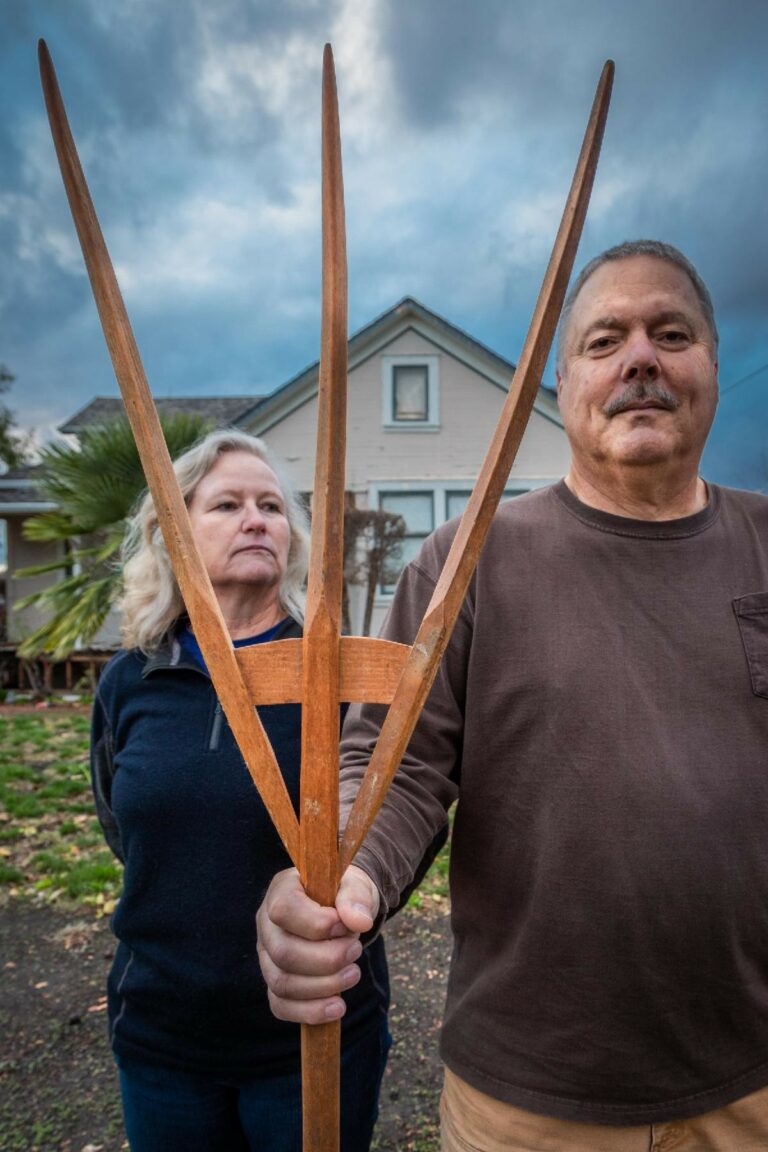
For several years, a southern California businessman has been pushing to develop a 6.5-acre piece of land at the eastern end
of Petaluma.

The land, owned by Todd Kurtin’s company, Lomas Properties, is adjacent to the proposed location of the Corona Road SMART station. Once completed, it will be the second station serving the city.

According to Petaluma’s 2013 SMART Station Area Plan, city planners expected the Corona Road Station to serve as a park-and-ride to offset parking at the Downtown Station, with the possibility of turning into a denser development later on.

“In the short-term, the Corona Road SMART Station will likely function as a suburban park-and-ride station. However, in the long term, the Corona Road Station Area may evolve to include transit-oriented development,” the report states.

But some residents opposing the current proposal argue that now is the time to develop the property in a transit-friendly fashion, not later.

Lomas Properties’ current plan, which the Planning Commission considered twice in November, calls for primarily single-family homes—some attached and some detached—on a land directly next to the proposed train station.

Lomas Properties’ first proposal, presented at a Nov. 12 Planning Commission meeting, called for 110 single-family homes across 5.23 acres of the 6.5-acre piece of land in question.

A second, revised proposal, unveiled at a Nov. 19 Planning Commission meeting upped the total number of units to 116. Lomas Properties also dropped their request for a zoning adjustment on the property.

Brian Barnacle, a resident working against the current proposal, says it is a wasted opportunity of a prime piece of land located next to public transit.

“From top to bottom, it’s more of the same,” Barnacle says, referencing the urban sprawl development that covers much of Petaluma.

Last week, Barnacle and other residents sent a 15-page letter to the Petaluma City Council outlining numerous criticisms of the plan and the city’s planning process.

“It would be incredibly shortsighted to approve the project when we so desperately need long-term vision,” the letter states in part. “We residents are relying on you to be bold, encourage density, discourage the automobile, and ensure we are implementing good business practices.”

At the center of the critique is the issue of Transit Oriented Development (TOD), a form of urban planning which prioritizes dense developments within walking distance of public transportation options.

TOD has become something of a buzzword among urban planners in recent years. As California and the North Bay face interlocking threats—unaffordable housing prices, income inequality and the increasing impacts of global warming—TOD supporters say implementing the development principles is a way of combating multiple problems at once.

There are many benefits to TOD, including reduced urban sprawl, reduced reliance on cars—thus reducing vehicle miles traveled, expense on working families, and traffic congestion—and, hopefully, a more diverse and affordable range of housing options.

For the North Bay, the SMART stations are a once-in-a-generation opportunity to prioritize this kind of development, Barnacle argues.

Barnacle’s letter suggests that the Petaluma City Council rejects the current proposal—which they expect to consider early next year—consult TOD experts, pursue millions of dollars in state funding for TOD projects, and review Lomas Properties’ prior experience completing TOD developments.

However, there is already a lot of momentum behind the current plan. According to the Nov. 12 Planning Commission report, Lomas Properties may end up with interlocking agreements with the city and SMART.

As part of a proposed development agreement with the city, Lomas Properties would donate a 1.27-acre sliver of the property for use as a SMART park-and-ride.

Under a separate, existing deal with SMART, Lomas Properties would purchase a piece of downtown real estate.

“The applicant is also in contract with SMART to purchase the approximately 4.65-acre parcel adjacent to the downtown SMART station. Approximately $6 million in proceeds from that sale are designated for construction of the second SMART station at Corona Road. The [proposed] development agreement [with the city] includes reference to this requirement as an essential part of securing development of the Corona Road Station,” the staff report states.

And then there’s the time crunch, according to staff. The report presented at the Nov. 12 meeting warns that “If the necessary entitlements are not secured by March 2020 [to align with an existing construction contract] the needed construction contracts will not be able to be secured until construction of the Cloverdale station, which remains uncertain.”

All in all, both stations’ development could have a big impact on the future of Petaluma. Whatever the city builds will likely remain in place for decades.

The proposal is expected to be considered at additional city meetings in January.

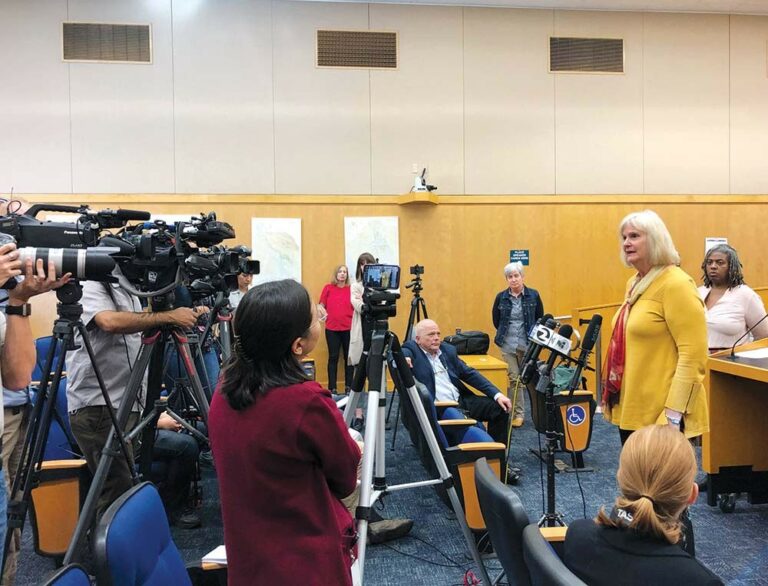
As pressure mounts on local politicians to humanely relocate the residents of a growing encampment along the Joe Rodota Trail, the U.S. Supreme Court has weighed in on a case that may impact future policies.

On Monday, Dec. 16, the high court opted not to consider the ninth U.S. Circuit Court of Appeals 2018 decision on a case concerning the City of Boise’s policies for punishing people living on the city’s streets.

Ultimately, the Appeals Court, which serves California and seven other states, concluded that “as long as there is no option of sleeping indoors, the government cannot criminalize indigent, homeless people for sleeping outdoors, on public property, on the false premise they had a choice in the matter.”

Because the Supreme Court decided not to hear the case, known as Martin v. City of Boise, the Appeals Court’s decision will stand. The case may have some impact in Sonoma County, where local homeless advocates reached a temporary legal agreement with Santa Rosa and the county regarding their rules for relocating people living outside.

The local injunction, which the parties agreed on this July, cites the Martin v. City of Boise case as an uncertain factor. With less uncertainty around the court case, the local parties will have to consider the new legal standing when they revisit the injunction, which currently sunsets in June 2020.

Under the injunction, the city and county are not allowed to move encampments, unless they have shelter beds, hotel vouchers or another alternative which meets the person’s needs to offer as an alternative.

Over the past several months, an encampment along the Joe Rodota Trail has swelled to an estimated 180 residents, sparking conversation and criticism of the lack of action by Santa Rosa and Sonoma County politicians to shelter—and move off of the trail—the people living there.

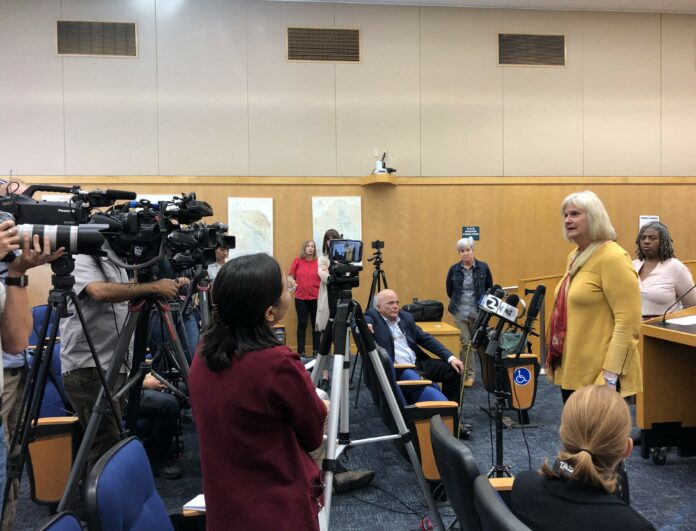
On Tuesday, Dec. 17, the Sonoma County Board of Supervisors considered temporary housing alternatives for the people living on the trail, including housing them at the fairgrounds in Santa Rosa.

Reached by phone on Monday, Dec. 16, Alicia Roman, an attorney who worked on the local injunction, said she was “excited that the supervisors are having this discussion” and that the Supreme Court declined to change the lower court’s ruling on Martin v. City of Boise.

Still, there are a lot of questions needing answers, including where and how the county and other local governments will offer temporary housing options, she added.

Cosmic Fun

0

On the longest night of the year, Dec. 21,
music will light the way to Occidental for the Cosmic Americana Solstice Dance, featuring Sonoma County favorites Laughing Gravy and the Drifting Cowpokes performing the music of country and rock icons Gram Parsons and Hank Williams respectively.

The show is a late addition to the weekend’s schedule, as Laughing Gravy frontman Doug Jayne and friends agreed to fill the stage at the Occidental Center for the Arts in place of singer Teresa Tudury, who had to cancel an appearance due to illness.

“She called me up and told me her symptoms, and I told her she had to bail on this gig,” says Jayne, who was to emcee Tudury’s concert. When the OCA asked if Jayne could come up with something to replace the show, he looked to his band Laughing Gravy and their main inspiration, Parsons.

“The thing about Gram Parsons is that he died young, but in the time that he was alive, he was a member of the Byrds, and was part of the seminal album Sweetheart of the Rodeo which started the country-rock thing back in 1968,” Jayne says.

Parsons specialized in what he called “Cosmic American Music,” which blended R&B, rock & roll, country music and blues. That wide appeal of music is on display when Laughing Gravy performs the songs that Parsons made famous, and the group has been a staple of the North Bay scene since forming nearly 20 years ago.

Today, Laughing Gravy is comprised of Jayne on guitar and vocals; Kevin Russell on vocals, guitar and banjo; Allegra Broughton on guitar and vocals; Sam Page on vocals and bass; Dan Ransford on drums; and Kirby Pierce playing keyboard.

Russell is also a member of the Drifting Cowpokes, who first formed back in September as the backing band for a concert hosted by Jayne at the Mystic Theatre in Petaluma which celebrated the release of a 2–CD set, The Songs of Hank Williams: a compilation of Northern California musicians, that raised funds for KRCB-FM.

“We’re bringing the band back,” Jayne says. “It’s going to be a real fun night.”

The Cosmic Americana Solstice Dance happens Saturday, Dec. 21, at Occidental Center for the Arts, 3850 Doris Murphy Ct., Occidental. 7:30pm. $15–$20. 707.874.9392.

Noblesse Oblige

0

Documentarian Lauren Greenfield upends the ever-growing field of journalistic plutography; that is, journalistic worship of the filthiest of the filthy rich. Greenfield’s 2012 Queen of Versailles attempted to explain how an 85,000-square-foot, $65 million house could end up with dog turds on the floor.

Greenfield’s The Kingmaker provides remarkable access to a 90-year-old Imelda Marcos. Hearing the name of the uncrowned queen of the Philippines, one recalls the word “shoes.” In February 1986, mobs found 3,000 pairs of her shoes when they broke into the palace of Imelda and her brutal dictator husband Ferdinand. At a rally for her successful senatorial campaign, supporters serve the grandmother cupcakes decorated with doll-sized shoes made of frosting.

Greenfield observes, without comment, Imelda’s terrific sense of resentment and self-pity. The gentle, fair-minded viewer will worry that the film is making fun of a gaga old lady. Far from it. Underestimating Imelda is foolish; for all her white-gloved charm, she’s busy helping her son Ferdinand Junior—nicknamed Bonbong—run for high office as part of a family restoration.

The secret to Imelda Marcos is selective vision and iron-clad compartmentalization, in which effect never quite follows cause. She believes in her own willpower: “I gave birth to what I dreamed, and I always got my way.”

With mixed success, she’s held onto the billions she and her husband stole from the Philippines. While the Marcoses stonewall, cracks emerge. For the camera, Imelda displays her collection of framed photos of meetings with yesterday’s world’s leaders. Ferdinand knew better than to leave the Philippines, since he was allergic to coups. So Imelda went forth for the gripping and grinning with everyone from Henry Kissinger to Muammar Gaddafi.

The lessons Americans can derive from this brilliant and frightening documentary are too obvious to name. One learns a lot about Imelda, but one also learns a little about Melania. It’s to Greenfield’s credit that she caught the mask of glamour slipping for a second, revealing the hideous tyranny beneath it.

‘The Kingmaker’ is playing at the Smith Rafael Film Center in San Rafael.

Spoilers

0

The latest Star Wars movie drops this week and the internet is abuzz with speculation about how The Rise of Skywalker will end the nine-part family space saga. Given the sense of ownership fans have for the franchise, the producers might consider including a fan or two in one of their future films. Someone, say, like me. Fortunately, I’ve written some notes for my Star Wars spin-off.

FADE IN: A long time ago, in a pipe dream about 15 minutes ago…

Anyone who’d pitch a Star Wars flick based on themselves would hail from the oilier side of the galaxy. I accept this. There you’ll find me as Lando Calrissian’s PR guy, having discredited myself as a reporter at the Dagobah Post Dispatch (we’ll get back to that). I’d have my own humanoid protocol droid (“E-3PO,” the snarky silver one from The Empire Strikes Back) and maybe a pet Ewok with a drinking problem (for comic relief).

Things are copasetic, that is until house-sitting Lando’s bachelor pad gets out of hand. Let’s just say a small house party for a couple of hundred close friends turns into mayhem when some Wookies crash it. Meanwhile, the ravishing adopted daughter of Grand Moff Tarkin, makes off with my boss’s prized Kyber Crystal (it enables practitioners of either side of the Force to raise the dead). But we don’t know this yet. No one knows this, which is why it’s just sitting on Lando’s fireplace mantle.

So, I’m basically screwed when the boss comes back, unless … She calls. Tarkin’s daughter is blackmailing me for the crystal. She agrees to meet me and my droid at some fancy Coruscant bar to discuss a price. She brings her partner in crime, Boba Fett. Our negotiations don’t go well (Fett just nods his head a lot and shoots stuff). E3 panics and farts a smoke bomb. We run. They follow. We get in the Millennium Falcon (Lando left the keys) and they get into Fett’s ship. Space chase!

E3 and I crash Lando’s beloved Falcon on some desert shithole called Tatooine. There, we evade capture by disguising ourselves as Jawas. “Aren’t you a little tall for a Jawa?” asks a plucky gun moll we meet at a nightclub while on the lam (Note: At some point, Fett should fall into the Sarlacc Pit again and say “Deja vu all over again!”).

I try to light the gun moll’s hookah (chivalry’s not dead) but learn that I’m messing up her investigation—it turns out she’s an undercover space cop. And probably a princess, too. BUT NOT MY SISTER. She’s been tracing a conspiracy to bring Darth Vader back from the dead. And they need the Kyber Crystal. Hijinks ensue and I make the Kessel Run in 11 parsecs (that’s right, 11—suck it, Solo) and I blow up the third Death Star (“Third time’s the charm”) and then I kill the resurrected Darth Vader with—get this—Ben Kenobi’s lightsaber (the irony!) and then the gun moll tells me—wait for it—the lightsaber was her dad’s. Chills, man.

By the end of this adventure they’ve shined up E3 and repaired the Falcon, my Ewok gets sober and I put the Kyber Crystal back on the mantle just as Lando opens the door. “Why, you slimy, double-crossing, no-good swindler,” he says, then gives me a big hug. The Force is with me. Always.

Made in California

Alongside traffic and coffee, news radio is a staple of my morning commute. As I flip through the stations, I’ll sometimes hear a pundit lament that “Nothing is made in America anymore.”

In reality, there are nearly 13 million manufacturing workers in the United States, including thousands in California. Some of these folks are employed by U.S.-based firms. Many others work for companies headquartered abroad.

These international companies employ more than 769,000 Californians. That includes 199,900 employees in manufacturing jobs—or nearly 26 percent of all California jobs created by international companies.

According to the latest government data, the number of California jobs created by international companies jumped by 29 percent during the past five years. More than 1,980 different international companies employ California workers.

International firms pay better. Americans who work for global companies earn 26 percent more compensation than the average worker in the same geographic area, according to a new analysis from the National Bureau of Economic Research.

International companies benefit all workers, not just the ones they employ directly. When an international firm sets up a manufacturing plant and creates 1,000 new jobs in America, workers at domestic firms in that geographic area experience a collective $16 million boost in wages. So, for every local job created by an international firm, the wage pool for employees in the area increases to the tune of $16,000 annually.

International companies also benefit U.S. small businesses. Over the past one and a half decades, international companies increased the amount of business they do with U.S. suppliers by nearly 30 percent—jumping from $1.5 trillion to $2.4 trillion, after adjusting for inflation.

Sourcing locally is important for reasons beyond just economics—it allows U.S. small businesses to demonstrate a commitment to social equity and environmental sustainability.

As we celebrate local manufacturers statewide, let’s recognize how international companies catalyze local economic growth—giving a whole new meaning to “made in California.”

Nancy McLernon is the president and CEO of the Organization for International Investment. We welcome your contribution. To have your topical essay of 350 words considered for publication, write
op*****@******an.com.

Use of Force

The “No Holds Barred” article (Dec. 11) was upsetting to read. I was left feeling shocked and sad and angry.

After a “car chase” with an innocent man, “the situation soon escalated”? Aren’t the officers on scene the ones that escalated it?

David Ward DIED from an “attempted neck restraint” through a car window. I wonder if we’ll see body camera footage and I wonder if any of the other officers present thought maybe it was a bad idea.

The newly-appointed head of the IOLERO has fired every single activist member of the Community Advisory Council?!

She mentioned researching the carotid restraint—why? David Ward is DEAD now. Who cares about the research, it’s obviously a terrible thing to do.

Another comment is either out of context in the writing, or just weird; she “never understood” the CACs previous approach to policy recommendations; “My question to the CAC was why should the sheriff’s office dictate what recommendation to me”? What does that even mean?

Navarro is currently searching for new members? Could Will Carruthers have gone into a bit of detail there? Lastly, Navarro says that in July some assistant sheriff told the CAC “I’ve already talked to you about use of force policies.” Oh, so we’re done? Move on?

Please continue reporting on all of this!

Santa Rosa

Yiddishe
Chrisgiving

Nicole R. Zimmerman’s article, “Finding Hanukkah in the Happy Holidays,” (Dec. 4) brought a smile to my face, and in this season of sharing, I thought I’d share one of my fondest memories.

It was about five years ago when my Christmas, my partner’s Hanukkah, and our mutual Thanksgiving made for a perfect storm of a celebration.

We have dear friends in England, a family of five: Mum, Dad, two teen boys and a 7-year-old princess, who were coming to visit us at Christmas. They had two requests:

“Would it be possible to experience a traditional American Thanksgiving dinner?” Sure!

Said Mum, “The turkey needs to be kosher, is that okay?” Ohhhhhkay.

So, off I traipsed to Safeway. Nada. Raley’s. Zip. Lucky’s. Nada. Petaluma Market. Bupkis. As a last resort, I tried Whole Foods. The butcher said, “We don’t carry them, but we can special order one for you.” Done!

The day came for the pick-up and the cost – oy vey! – was a combo of Whole Food’s premium pricing + a bird practically as rare as the dodo = ka-ching! Hey, it’s only money!

As the resident roast-turkey maven, my partner cooks only twice a year—Thanksgiving and Christmas—and he does it incredibly well, including excellent stuffing, gravy and a killer sweet potato casserole. I do the rest.

Dinner was terrific…for our Brit buddies, just “meh” for us. Apparently, our yiddishe turkey was not exactly a “spring chicken.” But it didn’t matter. The joy in sharing our bounty with good friends at “Chrisgiving,” as we dubbed it, is what makes these times so special.

Happy Holidays to all! (You too, Donald!)

Petaluma

Write to us at le*****@******an.com.

Imagine

As John Lennon sings, “So this is Christmas,” I look at our workaday consumer world and the state of environmental reality 2019 and consider “and what have you (we) done?”

With ever-increasing extreme weather, fires, droughts, ocean life and level changes, I question the impacts of what seems to be excessive consumerism on those we are trying to express our love to.

I question the idea that new, improved “whatevers” will somehow make everybody’s lives better and suggest that we may be being both too humancentric, and mistaken. Sixteen year old Greta Thunberg is the Time Person Of The Year, while our President Tweet Tweets…… and the bankers tabulate profits and the Coral Reefs are in big trouble. One look at the trash cans on every street on the day after could be a clue.

“And so this is Christmas,” which now begins at Halloween and juggernauts through the media frenzy of Black Friday, Cyber Monday, “get it NOW, on sale, free shipping,” and the illusory and mythic “everything is better with new stuff” dream.

Are we perhaps stressed, burdened by expectations, buying stuff we don’t really need, on credit with money we don’t have, and leaving landfills where life once lived?

“And so this is Christmas,” and with the spirit of goodwill and love for all beings, are our purchases and gifts creating or adding to a living and healthy planet for the future lives of those we are expressing our love and caring to? Are we “buying locally” and supporting local businesses or sending our $ off to internet land? And what of the rest of plant and animal life? Are we improving the air, water, soil, or diversity of life through our purchases, or leaving toxic wastelands?

“And so this is Christmas.” Yes, our clothes and things do wear out, but what are the true costs and future effects of our consumerism? Are we sharing with friends, family, community and connecting with each other or spending time in undisturbed non-humanized living Nature? All the shiny new “stuff” can feel just as empty on the day after as a bottle.

Do we consider who made whatever we are buying, what remains of or in the environments which manufactured it? How long will it last, and can it be repaired or reused?

When you look at a pile of wrapped presents under a tree, do you see infinite possibilities, smiling happy faces, children jumping with gleeful excitement? Do you see the landfills, the clear cuts, the toxic remains of the mining and smelting and manufacturing? Do you see the mountains of designed to break products which are too quickly obsolete, or just “out of style”?

“And so this is Christmas.” May we be healthy, happy, and support living environments.

Fairfax

Write to us at le*****@******an.com.

Ethnobotany!

0

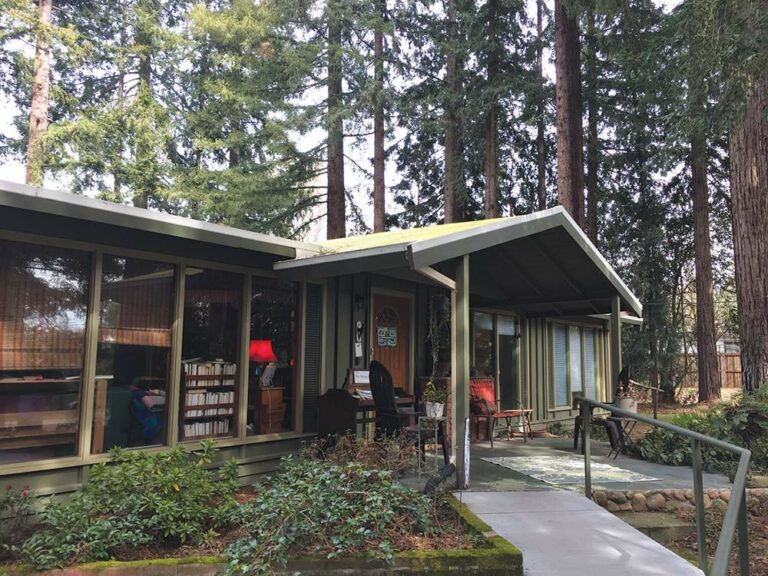
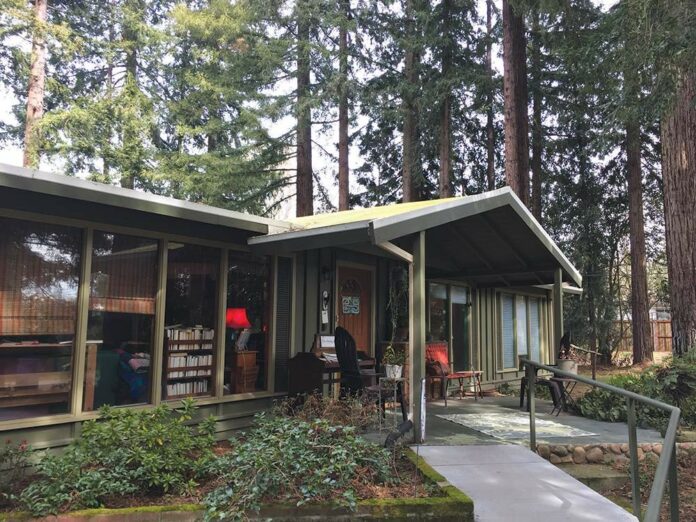
Tucked away at the downtown Occidental Art Center, the Botanical Dimensions Ethnobotany Library is a surprising, rare jewel featuring a collection of over a thousand books.

Many are rare or hard-to-find and are about plants, indigenous cultures, psychedelics, mycology, mythology, cultural anthropology, herbalism, ritual, shamanism, healing, art and more. The study of ethnobotany looks at the relationship between plants, humans and fungi over time and between cultures and therefore involves many interconnected subjects.

At a time when even used bookstores are hard to find, one can walk into this quiet, magical world of unusual books, make a cup of tea and read all afternoon. Library members have access to the lending shelves, members’ events and special discounts on a range of unique classes, including Global Ethnobotany or Cannabis and Spirituality: An Explorer’s Guide to an Ancient Plant Ally.

Kathleen Harrison and Terence McKenna founded Botanical Dimensions (BD) in 1985, and Harrison established the Ethnobotany Library in November 2015. BD’s original mission was to collect, protect, propagate and understand plants of ethnomedical significance and their lore.

“We do all that and more,” Harrison, an ethnobotanist, teacher, artist and writer, says. “We work to preserve biodiversity, respecting natural ecosystems and traditions of ecological knowledge. We appreciate, study and educate others about plants and mushrooms that are felt to be significant to cultural integrity and spiritual well-being.”

Besides the library, BD implements other plant-focused educational programs, including the Mazatec Project in Mexico, the Amazon Herbarium Project in Peru and the Forest-Garden in Hawaii. The latest project with Harrison’s daughter, photographer Klea McKenna, is a film called Almost Visible about a multi-generational, decades-long relationship between Harrison and McKenna’s family and a Mazatec clan in Mexico. There is currently an end-of-year Giving Campaign underway on their website to raise funds for the library and educational programs.

The library reflects Harrison’s unified perspective and comes from her own personal collection, curated over the years. She accumulated a huge collection of books—including many rare titles—during her decades of study and travel.

“I had way too many books,” she laughs. “I’ve always bought used books; if I’m interested in something I buy books about it.”

Five years ago she decided to thin her collection, so she distributed a few boxes of books to her students at the California School of Herbal Studies, where she’s taught an annual, day-long ethnobotany class for the past 20 years. While Harrison was grateful that her plant books went to appreciative, budding herbalists, she wondered if the rest of the collection might benefit more people if it were grouped together and made publically accessible.

“My book collection is my worldview,” she says. “It’s a 360-degree view of the plant-human-fungal matrix and I decided to keep it all together. Because it represents an inquisitive, full-circle way of seeing the world.”

Harrison is unusually well-integrated. While part of the library reflects her work with psychedelic plants, she respects all aspects of the cultures that use them. Though she never shies away from the topics of ayahuasca or “magic” mushrooms, she places as much importance on plants involved in basket-weaving or cordage as she does on plants involved in shamanic ceremonies.

“I brought over 1,000 books to start the library,” Harrison says. “I also brought art, objects and artifacts. When I teach, I ransack my house for objects, and some of them end up staying here.”

Over the course of the past 20 years, Harrison took hundreds of students on ethnobotany field trips to Hawaii, Mexico, Ecuador and the Peruvian Amazon. Nowadays, she teaches close to home in Occidental.

“It was intense to take a lot of college kids to the Peruvian Amazon,” she says. “I got tired of traveling so much.”

The library includes an adjoining 40-person classroom where she and others teach a variety of unique classes. Her teaching style is conversational and flows with the group in attendance. Classes range from Botanical Illustration to Psychedelic Plants: An Introduction to the Biology and Ritual Ethnobotany of Peyote, Tobacco and Ayahuasca.

“Once you get into worldview you have a lot of branches to follow,” she says, pulling out a book called Translated Woman by Ruth Behar. “There’s mythology, nature, spirituality—even writers about animism here.”

Her own writing can be found in the new book Psychedelic Mystery of the Feminine edited by Maria Papaspyrou, Chiara Baldini, David Luke and Allyson Grey.

“All our work protects and distributes knowledge about plants, cultures and how they weave together over time,” Harrison says. “It’s always evolving and changing. The library represents the many aspects of the ever-evolving, complex relationship between humanity and the plant-fungal world.”

Rialto Cinemas celebrates 20-year anniversary

On Jan. 14, 2000, "art house" arrived in Sonoma County. That's the date Rialto Cinemas first opened its doors in Santa Rosa, ushering in a new era of local theaters that showed independent, foreign-language and other small-but-important films on the big screen. The now Sebastopol-based Rialto Cinemas is planning a yearlong celebration in 2020 for its 20th anniversary. Proprietor Ky...

Blanc Elephant Party

Are the chains of the Ghost of Christmas Present scraping on the floor already, and you haven't even checked a wine lover or two off your gift list? Then it's time to give the absurdly obvious a go. Consider a corkscrew as a stocking stuffer. Really, a corkscrew? Yes, really, especially if you've ever noted family or friends struggling to...

Weed magic

His real name is Mitchell Thompson, but I know him as Mitcho. He's a gentle soul who played a big role in creating Sebastopol's first dispensary, Peace in Medicine. This spring, he'll be an even bigger presence in the industry when he launches his new company, Phytomagic (www.phytomagic.com), which will make organic tinctures and salves in small batches using...

Train Pains

For several years, a southern California businessman has been pushing to develop a 6.5-acre piece of land at the eastern end of Petaluma. The land, owned by Todd Kurtin's company, Lomas Properties, is adjacent to the proposed location of the Corona Road SMART station. Once completed, it will be the second station serving the city. According to Petaluma's 2013 SMART Station...

Cosmic Fun

On the longest night of the year, Dec. 21, music will light the way to Occidental for the Cosmic Americana Solstice Dance, featuring Sonoma County favorites Laughing Gravy and the Drifting Cowpokes performing the music of country and rock icons Gram Parsons and Hank Williams respectively. The show is a late addition to the weekend's schedule, as Laughing Gravy frontman...

Noblesse Oblige

Documentarian Lauren Greenfield upends the ever-growing field of journalistic plutography; that is, journalistic worship of the filthiest of the filthy rich. Greenfield's 2012 Queen of Versailles attempted to explain how an 85,000-square-foot, $65 million house could end up with dog turds on the floor. Greenfield's The Kingmaker provides remarkable access to a 90-year-old Imelda Marcos. Hearing the name of the...

Spoilers

The latest Star Wars movie drops this week and the internet is abuzz with speculation about how The Rise of Skywalker will end the nine-part family space saga. Given the sense of ownership fans have for the franchise, the producers might consider including a fan or two in one of their future films. Someone, say, like me. Fortunately, I've...

Made in California

Alongside traffic and coffee, news radio is a staple of my morning commute. As I flip through the stations, I'll sometimes hear a pundit lament that "Nothing is made in America anymore." In reality, there are nearly 13 million manufacturing workers in the United States, including thousands in California. Some of these folks are employed by U.S.-based firms. Many others...

Use of Force

The "No Holds Barred" article (Dec. 11) was upsetting to read. I was left feeling shocked and sad and angry. After a "car chase" with an innocent man, "the situation soon escalated"? Aren't the officers on scene the ones that escalated it? David Ward DIED from an "attempted neck restraint" through a car window. I wonder if we'll see body camera...

Ethnobotany!

Tucked away at the downtown Occidental Art Center, the Botanical Dimensions Ethnobotany Library is a surprising, rare jewel featuring a collection of over a thousand books. Many are rare or hard-to-find and are about plants, indigenous cultures, psychedelics, mycology, mythology, cultural anthropology, herbalism, ritual, shamanism, healing, art and more. The study of ethnobotany looks at the relationship between plants, humans...
11,084FansLike
4,606FollowersFollow
6,928FollowersFollow