Garden Party

0

Before we get to the wine, first, a word about coffee mugs.

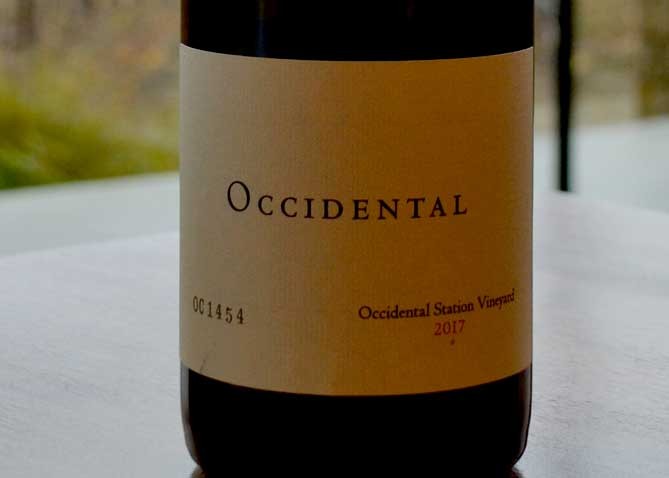
Lately, I’ve gotten a little funny about my morning coffee. I have a coffee mug for different days of the week. Maybe it’s a sign of incipient eccentricity, maybe it’s harmless, but in any case, it’s only taken over three days of the week thus far. It all started with Tuesday. That’s the day the Carneros Wine Alliance holds their annual barrel tasting get-together each spring. When you arrive, you get a wine glass; when you leave, you get a commemorative coffee mug. So when it’s Tuesday, I think of Carneros.

Shared between Sonoma and Napa Counties, the Los Carneros American Viticultural Area (AVA) was established way back in 1983. The region’s key claim to quality is that it’s cool two ways—the rolling, windswept vineyards are influenced both by Petaluma Gap ocean breezes and San Pablo Bay.

Typical of the Chardonnays I tasted at the event, the 2017 Carneros Chardonnay ($38) from non-member winery Frank Family Vineyards is barrel-fermented but has the bright, lemony acidity to handle it, coming across with floral notes of oak, caramel and quince jam on the tongue instead of fat, “buttery” character. Frank Family’s 2017 Carneros Pinot Noir ($38) has that dried black cherry and potpourri spice that I find many, if not all, Carneros Pinots display.

Among other treats offered at this intimate event, which is only open to member wineries and a few trade and media folks, is a sneak peak at the latest vintage—usually organized into a theme, like this year’s sampling of Pommard clone Pinot Noir from member vineyards—and sometimes a behind-the-scenes look at a winery locale.

This year’s event was held at the Donum Estate. Since I last visited in 2014—also an invite-only event—Donum has been a conundrum. Was the converted dairy barn that housed its offices open for tasting? Yes, sort of. Kind of. Inquire. Then the head appeared. “Sanna,” by artist Jaume Plensa, is a giant, white head that plays with one’s sense of depth and scale. And then a massive, shimmering heart,
“Love Me,” by Richard Hudson, on a distant hilltop. What’s going
on at Donum?

Find out for yourself at Discover Donum, a rare tasting and tour of the 190-acre estate’s sculpture garden of 40 works by artists including Ai Weiwei and Keith Haring. The new winery, on the footprint of the barn, itself is a work of art. Proceeds benefit Art Escape. Mug not included—but maybe a GoVino!

Discover Donum, Saturday May 11, 11am–3pm. 24500 Ramal Rd., Sonoma. Tickets $45, available at eventbrite.com. 707.939.2290.

Natural Wonders

0

The theatrical treatments of two great American novels come alive on North Bay stages with mixed results in productions running through May 19.

6th Street Playhouse is presenting Christopher Sergel’s adaptation (not Aaron Sorkin’s) of Harper Lee’s To Kill a Mockingbird. Sergel had an agreement with Lee to produce a theatrical version of her novel suitable for school or community theatre productions and, though revised several times by Sergel, those roots show.

Lee’s tale was adapted by Horton Foote for the 1962 film starring Gregory Peck as Atticus Finch, and this Marty Pistone–directed production does battle with memories of the film.

Jeff Coté, while having the look we’ve come to expect for Atticus, lacks the gravitas necessary for the character and though technically the lead, cedes the spotlight to the play’s supporting characters. The young actors playing Scout, Jem and Dill (Cecilia Brenner, Mario Herrera, Liev Bruce-Low) do fine, and Val Sinckler is a tower of strength as Calpurnia. Jourdánn Olivier Verdé is a steadfast Tom Robinson, and Mike Pavone and Caitlin Strom-Martin succeed in making the Ewell family thoroughly detestable.

An interesting addition to this production is a gospel choir/Greek chorus to “bookend” several scenes. It’s quite effective and the addition of music is welcome.

Lee’s story still packs a punch and, while uneven, this production does have its strong moments.

Rating (out of 5): ★★★

The Cloverdale Performing Arts Center is presenting John Steinbeck’s Of Mice and Men in a production directed by Beulah Vega—who had the advantage of working with a script written by Steinbeck himself.

Steinbeck’s Great Depression–era tale of George and Lenny (Rusty Thompson, Martin Gilbertson) and their dream of a place of their own still resonates today for those seeking the ever-more-unattainable “American Dream.”

Vega has taken a minimalist approach to the show’s staging, leaving it to her cast to grab your attention and hold it for two hours. They do.

Gilbertson brings a fresh approach to Lenny, a character that can often dive into caricature, and there’s a strong ensemble doing excellent work here.

Heck, even the dog is good.

Rating (out of 5): ★★★&#9733

‘To Kill a Mockingbird’ runs through May 19 at the 6th Street Playhouse, 52 W. Sixth St., Santa Rosa. Thursday–Saturday, 7:30pm; Saturday–Sunday, 2pm. $25–$35. 707.523.4185. ‘Of Mice and Men’ runs through May 19 at the Cloverdale Performing Arts Center, 209 N. Cloverdale Blvd., Cloverdale. Saturday, 7:30pm; Sunday, 2pm.
$12 -$25. 707.894.2219.

Clean Day No More

Clean Day
No More

Clean Day? In Guerneville? Where did it go?

Why are there no more volunteers for this wonderful service? Retired Vietnam veterans used to give time to this much needed service every Thursday from 10am–1pm. The homeless got free showers and a hot meal. Medical services were offered. Housing resources were available. Clean clothes were offered.

The mobile shower that was available on Mondays was run out of town due to a neighbor who did not like the smell of cigarette smoke next door.

Listen up, being homeless is down right frightening and horrible. Every second one is just trying to survive. Think about this: Where does one go if they need a restroom in Guerneville ? Some businesses will let you if you buy food. The bathrooms by the main Sheriff substation are what the general public use. Bars tend to throw the homeless out. Avoid the Bull Pen.

These services need to be available to those that need it. Next time you’re in Guerneville really look around.

Guerneville

Eye on Petaluma

Very impressed you landed several theaters (“Welcome to Lumaville,”
May 1, 2019)!

Via Bohemian.com

Praise Trump

President Trump’s political opponents are doing this nation and the entire world a huge disservice by criticizing President Trump as being too friendly with Russia’s President Putin.

The fate of the entire human race hangs by the most slender thread over the abyss of nuclear war. This possible nuclear holocaust is the greatest danger ever faced in our species’ history of one million years. Preventing this unbearable tragedy from happening must become the highest priority of every responsible human being.

I urge all those who are justifiably angry with President Trump for so many of his reactionary policies to suspend their anger toward him in his dealings with President Putin. Improving the U.S.’s relationship with Russia and specifically with President Putin is of the greatest importance in preventing the outbreak of a nuclear war with Russia.

Therefore I totally and unconditionally support President Trump’s efforts to create a friendlier relationship with President Putin. Saving humanity from a nuclear holocaust is our first duty as intelligent and responsible people.

Fairfax

Write to us at le*****@******an.com.

Out of Joint

0

As Scott Weiner works with fellow state senator Mike McGuire to selectively preempt local zoning laws to ease the way for more housing construction, Assemblyman Phil Ting—another Bay Area Democrat—is trying to do something similar for the pot industry.

If Ting’s AB 1356 passes, it would force cities and counties to allow one cannabis retail permit for every four liquor licenses in the jurisdiction.

But that is only if more than half of the electorate in a jurisdiction voted for Proposition 64’s adult-use legalization in 2016.

For cities that already allow for recreational sales and are looking to grow the local pot economy, including Santa Rosa, Ting’s bill may not make much of a difference. But jurisdictions whose elected officials have banned retail recreational cannabis dispensaries despite majority support from residents—including, for example, Healdsburg, or Marin County’s unincorporated areas—could be in for a ride. Some 75 percent of all cities and counties have banned retail pot business since the passage of Proposition 64, according to state research highlighted by Ting. His bill aims to reverse the trend.

“Californians voted for Prop. 64 to replace the illicit market with a legal system that would grant Californians safe access to cannabis products, while also creating good jobs and significant tax revenue,” Ting said in announcing his bill earlier this year. “However, these goals can only be fully realized if enough licenses are granted to meet existing demand. This bill will ensure the legal market
can succeed.”

The bill is supported by labor organizations and veteran’s groups that have called for expanded access to medical cannabis, and would also help working-class people and the disabled have greater access to legal cannabis products, says Shivawn Brady, a board member of the Sonoma County Grower’s Alliance who personally supports Ting’s bill. It passed the Senate Business and Professions committee April 29 and is headed to the Appropriations committee later this month.

“Despite voters approving Prop. 64, there are cannabis deserts across the state where veterans and patients have to drive long distances to a licensed shop,” said Aaron Augustis, founder of Veterans Cannabis Group, in response to Ting’s bill. “We served our country and want to work with our local cities, counties, and state governments to ensure our veterans have safe access across the state to medicinal cannabis. AB 1356 is crucial for veterans’ access.”

In the South Bay, the local pro-weed advocates at the Silicon Valley Cannabis Alliance have come out in support of AB 1356. Locally, Brady says she supports Ting’s bill which will, she says, provide access to a legal medical product to locals who might have to travel out of town for their medicine.

Ting’s bill would require that cities and counties to issue cannabis licenses equal to 25 percent of the number of liquor store licenses in the jurisdiction—a reasonable ratio, says Brady—or one license for every 10,000 residents. Organizations including Urban Counties of California have cast a wary eye, saying it would “force local jurisdictions to approve licenses for medical and recreational cannabis retailers.”

The bill applies to jurisdictions that approved Prop 64. In Napa the vote was 37,000 for; 23,333 against. Napa has issued a handful of cannabis licenses since legalization.

In Marin County, an overwhelming 96,000 residents supported Prop 64 while 43,200 voted it down. But, with the exception of San Rafael, Marin towns and cities from Novato to Fairfax have rolling moratoriums banning non-medical cannabis retail establishments. Nearly 140,000 Sonomans supported legalization, with 94,500 against. Sonoma’s cannabis rollout has been stymied by residents’ pushback to commercial grows and other cannabis businesses in their midst—and a complicated, expensive and time-consuming licensing protocol that has conspired to keep black market sales at about 60 percent of pot sales statewide, according to industry estimates.

On the licensing front, there are currently two cannabis business applications on the calendar at the Sonoma County Board of Zoning Adjustments: One is for a 225 acre grow in rural Guerneville that represents a major expansion of an existing cannabis-business footprint. According to the growers’ website, the pot is grown for a CBD healing salve. That one’s been fully vetted by Building and Zoning Administration staff and recommending approval at the zoning board’s May 9 meeting.

The other is for a commercial cannabis growing and processing site in Santa Rosa in an industrial center near Todd Road and Highway 101.

As of this week, the BZA staff has yet to release their recommendation for this 11-acre indoor commercial application, which would be located, if approved, within 600 feet of a private school called New Beginnings. That school contracts with Sonoma County to assist traumatized youth and parents through educational, outreach and life-skills programs.

The school’s location is not at issue given that there’s no school setback required for indoor cultivation in industrial zones, says Sonoma County spokesperson Maggie Fleming. The county does evaluate neighborhood compatibility issues, she says in an email, and the applicant, KJM Data and Research, “has been doing outreach with the school since they started operations and the school has not submitted any concerns to date, after receiving three public notifications about the project: Early neighborhood notification, hearing waiver notice, and most recently hearing notice.” The application is set to go before the zoning board on May 16.

General Issue

By any account, it looked like a pretty busy day in early May at Xavier Becerra’s office. The state attorney general pushed out four press releases on May 2, mostly directed at holding Washington D.C. accountable—but also at police accountability in the state.

In one announcement, Becerra denounced President Donald Trump’s rollback of offshore drilling rules that came about after the 2010 Deepwater Horizon disaster in the Gulf of Mexico.

The AG further announced that California, leading a coalition of 20 states, had filed a reply brief to Trump’s challenge to their lawsuit, California et. al. v Trump, et al., over the president’s national emergency declaration at the southern border. The fourth release didn’t directly criticize Trump—though it could have, given the president’s embrace of ethnic profiling—as Becerra announced a new state DOJ video to help enhance public buy-in of an ambitious police-accountability law.

In 2015, the state of California passed the Racial and Identity Profiling Act, a first-in-the-nation law which requires, by 2023, that all law enforcement agencies across the state collect detailed information and recordings of stops and searches, including data on the officers’ perception of the person being stopped, in order to combat “policing profiling” of suspects.

But earlier this year, the board that was created with the passage of RIPA released a report that found very little evidence of racial profiling in California in 2017.

The California Racial and Identity Profiling Advisory Board was created to “shepherd this data collection and provide public reports with the ultimate objective to eliminate racial and identity profiling and improve and understand diversity in law enforcement through training, education, and outreach.” In 2017, the board cast a wide net around the state to provisionally determine the extent of the racial-profiling problem in California. The results indicated that there was practically no racial-profiling problem in California.

Of the 453 agencies subject to RIPA reporting in 2017, 79 said they had no civilian complaints reported that year. The RIPA board and its followers were split on what the data meant: For some law enforcement representatives it meant that there wasn’t much of a racial profiling crisis in California. For police-accountability advocates, it meant that the data-collection process under RIPA was either flawed or corrupted by the police “blue wall,” or both.

This spring, eight big police agencies sent a year’s worth of data to the state Department of Justice on
April 1, to be analyzed for next year’s annual report.

As it reported a low number of civilian complaints in its 2017 study, the board addressed a possible absence of public buy-in in RIPA’s data-collection process as the culprit behind what to many police-accountability activists were seen as surprisingly low numbers.

The board aimed in the annual report released in March to “enhance the transparency of the stop data collection process by providing the public with detailed information on how the data is collected and submitted and how the Department [of Justice] and law enforcement agencies ensure the integrity of this data.”

That information includes the date, time and duration of a stop, the reason for a stop, the officer’s perception of the race, ethnicity, age, gender, disability or language fluency of the person stopped.

The RIPA rollout is pegged to the size of law enforcement agencies. Agencies with more than 1,000 peace officers had to file their first reports with the state Department of Justice by April 1 of this year. Agencies with between 667 and 1,000 peace officers will submit their first reports by next April 1; those with between 334 and 667 peace officers (that includes the Sonoma County Sheriff’s Office) will be RIPA-compliant by 2022; and agencies with fewer than 334 officers will issue their first reports in 2023. —Tom Gogola

Rhythm Rustler

0

My older brother was the only white kid in an all-Filipino gang in Vallejo,” says Kevin Russell, in one of the most unexpected openings to an interview about music ever.

Yet Russell explains that in addition to cruising the streets of the East Bay in the ’60s, his brother and the gang would come over and play music in the Russell’s living room, rocking hits from Elvis and Johnny Cash in spirited jam sessions.

Attracted to his brother’s guitar at a young age, Russell had to wait his turn. “There was only room for one guitar player in the house,” he says. So he took up drums.

But by the time he left home, Russell finally got his hands on a guitar and started playing traditional bluegrass, folk, country, rock and roll and everything in between.

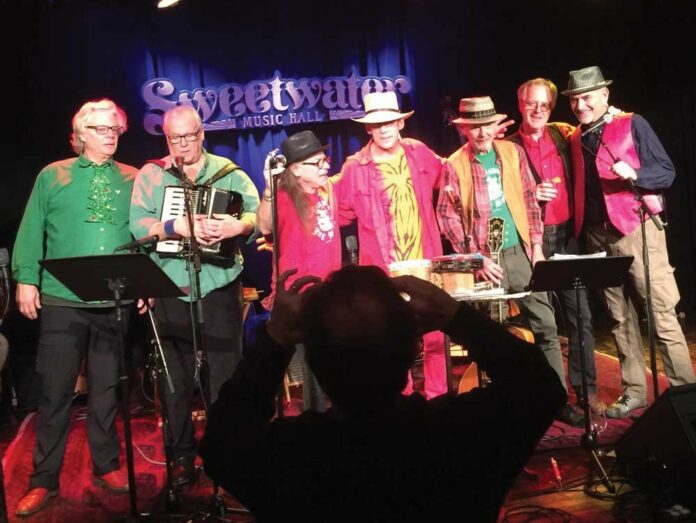
The rest is history. For over 30 years, Russell has played in groups like the soulful country band Modern Hicks, blues-rock outfit the Rhythm Rangers and Americana act Laughing Gravy, as well as fronting his own ensembles, the bluegrass-centric Kevin Russell & His So Called Friends and his current country and rockabilly band Kevin Russell & Some Dangerous Friends, who play at Redwood Cafe in Cotati on May 9 in a release show for the group’s new live album.

Featuring 12 tracks recorded at the spur-of-the-moment last November while the band played a set at Lagunitas Tap Room in Petaluma, the live album features cuts from country hit makers as played by the six-piece band.

In addition to Russell’s guitars and laid-back vocals, the group features guitarist Sean Allen (the Jones Gang), singer Maria Nguyen
(Twang Ditty), longtime Nashville-based vocalist and bassist Markie Sanders, drummer and educator Rick Cutler and multi-instrumentalist Steve Della Maggiora.

Whether they’re swaying to Loretta Lynn’s “Blue Kentucky Girl,” harmonizing on Merle Haggard’s “Running Kind,” or shaking things up on Carl Perkins’ “Restless,” the band’s live shows always end up with audiences dancing along, and that energy is perfectly captured on the live album.

“I just want to surround myself with music as much as possible,” says Russell. “That’s what it’s all about.”

Kevin Russell & Some Dangerous Friends play on Thursday, May 9, at Redwood Cafe, 8240 Old Redwood Hwy., Cotati. 8pm. $10. 707.795.7868

Super Soy Me

0

Like any typical chump, I planned to start an ambitious new diet on New Year’s Day. Fine, the day after New Year’s Day.

The diet was strict, but had just one simple rule: Eat food, mostly frozen, as much as I want, on a $100 per week budget. And here’s the kicker: Eat only food that’s made by Amy’s Kitchen, the privately held natural foods manufacturer based in Petaluma. Yes, it was a bold plan.

Day 1: I load a frozen, gluten-free tofu scramble breakfast wrap in the microwave oven, starting the day’s calorie count at 300. At lunch it’s a chili mac bowl, 420 calories, and later a spinach pizza pocket sandwich, 280 calories. Dinner brings a longtime favorite to the table; veggie loaf with mashed potatoes, peas and carrots. But those 340 calories don’t feel like enough, so I round out the evening with a spinach pizza snack, and 380 additional calories.

Day 2: I’m a little hungover. Ugh, what happened?

The Perils of a Cruelty-Free Diet

I’m on this diet partly to see if man can live on Amy’s alone. While it’s a controlled experiment, it’s not an inhumane experiment, so I did not forswear the enjoyment of a few glasses of wine with dinner, before dinner, or after dinner. Besides, eliminating the beverage variable might have skewed the results, right? Instead, I opt for certified organic wine, in the spirit of Amy’s Kitchen, whose listed ingredients are nearly all prefaced with “organic,” save the sea salt and black pepper.

The problem: after unpacking five frozen meals from five cardboard cartons, I’d only packed in 1,720 calories on that first day. No doubt the wine hit a little harder because that’s well below the 2,000 daily calories that nutrition labels are based on, or the recommended 2,400 calorie diet of a moderately active male of my age, and weight.

Ah, that weight. The other reason for the diet was to lose a little of it. I demur from saying what that weight is, lest some readers then wish to knock me around a bit, but suffice it to say that I feel like the image of some kind of corpulent, late career Orson Welles. (More like Audrey Hepburn, remarked a more portly friend a few years back. That smarts a bit, but then again—such style!) What’s that about body image self-acceptance? Stuff self-acceptance in a cheeseburger. I demand to get back that flat belly that I haven’t seen since age 29, and I’ll try any diet in that service. The allure of Amy’s is the quick and easy calorie counting, printed right on the box, and de facto portion control. The convenience of simply reheating frozen food, too, leaves more time for that moderate activity.

Lesson learned, on to Day 2: Country bake breakfast, 420 calories; veggie sausage, 55 calories; brown rice and vegetables bowl, 260 calories; meatless Italian sausage, mushroom and olive pizza, 930 calories. Yes, I know the pizza is supposed to be three separate servings, but the day’s total is only 1,665 calories. Yet I feel stuffed. Might be because I’m not used to consuming so many carbohydrates (see the surprise tally at the end of the article), and that’s a criticism I’ve heard of products like Amy’s: organic or not, isn’t it too high in sodium, too stuffed with carbohydrates, like other processed snack foods? When I announced my dietary goal to someone at the company (who shan’t be named), in fact, the response was: “But what about vegetables?”

In an era when consumers are being advised to eat whole foods, and lower on the food chain, Amy’s occupies an interesting space in between the good reputation of organic foods and the bad rap on processed foods. Frozen foods have taken some heat since the “TV dinner” days of my childhood, when, notwithstanding mom’s cooking being the best, it was a special treat to have those tin foil tray dinners once a week. Meanwhile, Amy’s Kitchen, launched by Rachel and Andy Berliner in 1987 (the original conceit was that they couldn’t find any time-saving convenience foods that were of homemade quality, after the birth of their daughter, Amy, who is now a co-owner in the company), has puffed up from one pot pie sold in what used to be called “health food” stores in Northern California and Oregon, to 260 products sold in megastores the likes of Target, in 29 countries. Revenue in 2017 totaled $500 million.

Can they stay true to home-cooked ideals at such a scale? I’ve got to get behind the kale curtain, and see how the organic tofu sausage is made.

Amy’s, Can You Hear Me?

Day 3: I’ve had no luck trying to contact the public relations desk at Amy’s, so, fueled only by their breakfast scramble, 360 calories, and veggie sausage, 55 calories, I set out by bicycle for the company headquarters in Petaluma. Am I helping to offset the carbon footprint of these packaged meals, or is their economy of scale inherently more efficient than my home stovetop? Will there someday be fewer veal crates, like the ones that I’m passing by on Stony Point Road, because of vegetarian options like Amy’s provides? These are things I think of on my ride. Besides that biking in heavy traffic sucks veggie meatballs.

It wasn’t enough. On Lakeville Highway, a few blocks short, and fatigued, I have to turn back or else miss the last SMART train back to Santa Rosa until late afternoon.

Breakthrough at the Drive-Thru

I get a new idea on the train, remembering the Amy’s Drive-Thru restaurant in Rohnert Park. It’s a long shot, but at the very least, after ordering a single veggie cheeseburger and fries (alas, I am not asked to “super-size” my order to the signature double patty “Amy” burger), I can ask for any kind of help at the register. I’m in luck—Dave Wolfgram, president of Amy’s Drive-Thru Restaurants, is working on his laptop a few tables over. He seems genuinely concerned and promises to hook me up with HQ.

Although this joint is as bustling as it was on my first visit over three years ago (“Understanding Amy’s,” Sept. 9, 2015), Amy’s has rolled out their takeover of the fast food nation at, well, an organic pace. An outpost in SFO (Amy’s “fly-thru”?) is scheduled for July, with a Corte Madera drive-thru opening in 2020.

How the Organic Tofu Sausage
is Made

I’m in! I meet Paul Schiefer for a tour of Amy’s flagship production facility, which has been located on Santa Rosa’s Northpoint Parkway since the early days. Schiefer, who is a nephew to the Berliners, grew up with the business, and is now senior director of sustainability.

On the way to the dressing room where I’ll don a smock, hairnet and beard net, I’m already distracted by a novel sight: two vending machines in the break room are stocked with Amy’s entrées. They’re sold to employees for just $1 to $1.50. But the Blue Sky organic cola in the adjacent vending machine, Schiefer admits, isn’t as popular with employees as Pepsi. No strict diets here: there’s a Frito-Lay option, too.

Workers are everywhere on the plant floor, monitoring computer screens, carting multi-level tray carts here and there. Look, there goes my old friend, the lentil loaf! Over there, veggie sausage, destined for a country bake. In one room, which is as big as most winery cellars I see, pinto beans cascade in an industrial waterfall, while a worker tends to a steaming kettle perched high in the middle distance.

A smaller room houses one of the largest tofu-making facilities on the West Coast, according to Schiefer. Here are whole soybeans, soaked and removed of fiber, which goes to a dairy. Then, hot soy milk pours forth, and further down the line, blocks of fresh tofu, some 9,400 pounds per day, are cut and sent on to their rendezvous with organic oats, organic bulgar wheat and organic onions and more to, yes, make the tofu sausage.

On the kettle deck, an enchilada sauce has just been made—we see it later on down the line, where freshly frozen entreés clank off the conveyor belt. Tomato sauces are made from fresh tomatoes. Vegetables such as broccoli may be fresh, or flash frozen, since there are only two harvests a year from their supplier. “We’d rather get it all fresh, in season, than go to the ends of the earth to bring it in,” says Schiefer.

In the burrito room, bean and cheese filling plops onto tortillas, made fresh in the room next door, in a way that my minder from the marketing department doesn’t wish me to photograph. But it’s all hand work after that. One employee tells me, still folding while turning away from the assembly line to explain, that she’s been honing her technique for 21 years, shaping the filling, and folding six or more ways in a flash of hand movements I can hardly follow.

One thinks of frozen foods as the ultimate deracinated, non-local product. But here, I have the dissonant revelation that, at least for the North Bay, this is truly local. All this time, my frozen bean burrito (and another 160,000 of them per day) has been hand-rolled just across town. (Soups are made in Idaho, however; pizza in Medford, Ore.)

The Results

At the end of a week, I had to stop the experiment. Not necessarily because I felt “over stuffed” on just 1,940 calories, as I noted on Day 6, or “strangely tired” on Day 7. My weight jumped up at first, but I ended up a few pounds lighter. Still, I would have been willing to carry out a more rigorous one-month experiment. But if I didn’t bust my waistline, I busted my budget: $140 for seven days.

I should note that the company does not endorse an all-Amy’s diet. Instead, they offer meal plans on their website incorporating fresh fruits and vegetables, nuts and smoothies, most with just one Amy’s product per day. That said, I felt that I might have had a real serving of veggies with their Asian-inspired entrées, like the dumplings in savory Hoisin sauce, and for a frozen food, they tasted fresh enough. And in the harvest casserole bowl, there’s surely close to a half-cup of sweet potatoes, kale and Swiss chard—it’d be hard to excuse all that quinoa otherwise.

According to Schiefer, I’m correct in my assessment that while the frozen food business is stagnant in general, Amy’s is bucking the trend, and has been growing faster than the category for years. Still, some of the traditional tray-style dinner styles have been pulled off the line: RIP, Southern meal, chili and corn bread, and good ol’ veggie steak and gravy.

All told, I ate not more than 1,700 calories per day. The protein count averaged 67 grams daily — not bad — and carbohydrates actually averaged less than the Daily Value, at 200. But sodium indeed hit more than 3,200 milligrams per day, higher than the Centers for Disease Control and Prevention’s recommendation of less than 2,400, but a little under the average American’s intake. Amy’s does offer low sodium versions with less than half that of the typical entrée.

The next week I flipped a 180 and launched an ultra-low-carb diet of meat, cheese and vegetables for the next month. I felt pretty good on it. And I gained back five pounds.

Difficult Reading

0

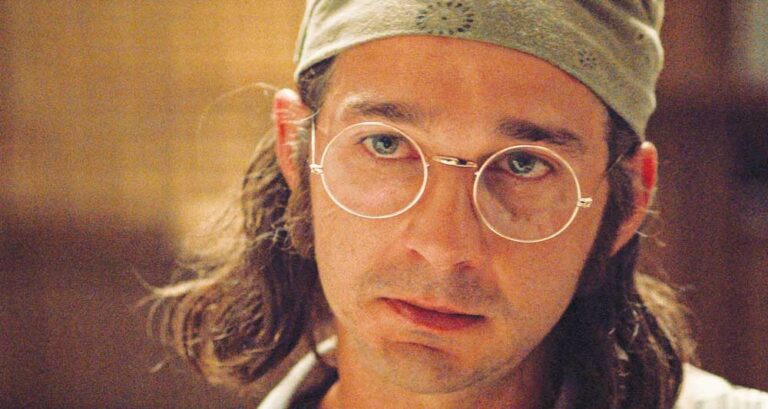
In the 1973 film Soylent Green, Detective Thorn (Charlton Heston) finds a copy of the Soylent Oceanographic Survey Report: 2015 to 2019 in the home of a murdered Soylent Corporation executive.

Thorn gives the book to his roommate, Sol (Edward G. Robinson), an intellectual old man who grew up in a time before the world went to hell from overpopulation and global warming. Sol discovers in the Survey Report‘s pages that the oceans are wrecked beyond repair and cannot produce the plankton the Soylent Corporation claims goes into its miracle food, Soylent Green. This stark revelation sends Sol to a euthanasia center where—spoiler alert—the Soylent Corporation turns his body into a bunch of little green crackers.

Well, it’s 2019 and the real-life Survey Report is spring’s most talked-about book. David Wallace-Wells published The Uninhabitable Earth: Life After Warming, a follow-up to his 2017 New York article of the same name. I knew I had to get my hands on a copy. However, when I logged onto my Sonoma County Library account, I discovered that the reservation queue was 99 people long. To skip the queue, I bought a digital copy for my second-hand Kindle. (Yes, I was trying to be ecologically friendly, but even Amazon was out of physical copies!)

After reading a few chapters, I immediately understood why just about everyone in Sonoma County is trying to get their hands on The Uninhabitable Earth: we’re living it. In the last two years, we’ve been burned, smoked, and most recently, drowned. Of the Camp Fire, the author comes to the same grim conclusion that there is something uniquely awful and foretelling about a town called Paradise burning to the ground.

As a Tubbs Fire survivor, I initially felt strange reading about events I experienced firsthand. It was then I realized that Wells’ book was providing what North Bay residents need: context. The chapters on ocean acidification, sea level rise and economic effects taught me much about how the North Bay’s recent misery ties into climate change’s greater story. To paraphrase Shakespeare, ours is one of the millions of small stages where the climate change drama is playing out. Wells is helping us step back and see the whole story.

As you might expect, The Uninhabitable Earth offers very little hope for the near future. For instance, Wells predicts that by 2050—the year I’ll be the same age my mother is now—we will live in a world without coral reefs, a world where more than 10 million people die each year from air pollution alone. And that’s the absolute best-case scenario.

But Wells clings to optimism. He credits this feeling to becoming a father while writing his book. He mourns the fact that his little girl will come of age in “interesting times,” but even so, he believes that a good future is possible. Because there is still so much we can save.

The Sonoma County Library may not have an available copy of The Uninhabitable Earth for a long time, but considering the book’s message, I hope the queue never dips below 90. If you can’t wait, save a tree and buy a digital copy.

The Xavier Factor

0

By any account, it looked like a pretty busy day yesterday at Xavier Becerra’s office. The state attorney general’s office pushed out four press releases, mostly directed at holding Washington D.C. accountable—but also at police accountability in the state.

In one announcement, Becerra denounced President Donald Trump’s rollback of offshore drilling rules that came about after the 2010 Deepwater Horizon disaster in the Gulf of Mexico.

He also stood ready to defend Californians against Trump’s “faith-based” refusal-of-care announcement at the National Prayer Breakfast this week, that will, Becerra charged, “allow broad, sweeping refusals of care based on religious or moral objections, even in emergency circumstances.” The LGBTQ community has denounced the move and Becerra pledged to protect them.

The activist AG further announced that California, leading a coalition of 20 states had filed a reply brief to Trump’s challenge to their lawsuit, California et. al. v Trump, et al., over the president’s national emergency declaration at the southern border.

While not mentioned by name, the fourth May 2 press release from Becerra was obliquely tied to the president, to the extent that Trump has enacted a Muslim ban while defending racial profiling and stop-and-frisk police policies—and pardoning racial profilers such as former Arizona sheriff Joe Arapio.

The fourth release announced a new video to help enhance public buy-in of an ambitious police-accountability law. In 2015, the state of California passed the Racial and Identity Profiling Act, (AB 953), a first-in-the-nation law which requires, by 2023, that all law enforcement agencies across the state collect detailed information and recordings of stops and searches, including data on the officers’ perception of the person being stopped, in order to combat policing profiling of suspects.

But earlier this year, the board that was created with the passage of RIPA released a report that found very little evidence of racial profiling in California in 2017.

The California Racial and Identity Profiling Advisory Board (comprised of a cross-section of law enforcement personnel, community representatives, and other appointees) was created to “shepherd this data collection and provide public reports with the ultimate objective to eliminate racial and identity profiling and improve and understand diversity in law enforcement through training, education, and outreach.”

In 2017, it cast a wide net to determine the extent of the racial-profiling problem California—but the results indicated that there was practically no racial-profiling problem in California. Of the 453 agencies subject to RIPA reporting in 2017, 79 said they had no civilian complaints reported that year; 374 agencies reported that the had one or more complaint.

According to press reports, the RIPA board was split on what the data meant: For some law enforcement representatives it meant that there wasn’t much of a racial profiling crisis in California. For police-accountability advocates, it meant that the data-collection process under RIPA was either flawed or corrupted by the so-called police “blue wall,” or both.

Multiple civilian complaints were reported by 141 agencies, which received 865 complaints (out of a total of 9,459) that alleged racial or identity profiling during a police stop. Ten percent of the complaints that reached a disposition were sustained. The remainder were either un-sustained, exonerated, or determined to be unfounded.

This spring, eight large agencies—the California Highway Patrol, the Los Angeles Police Department, the Los Angeles County Sheriff’s Department, the Riverside County Sheriff’s Department, the San Bernardino County Sheriff’s Department, the San Diego County Sheriff’s Department, the San Diego Police Department, and the San Francisco Police Department—sent a year’s worth of data to the state Department of Justice on April 1, under the timetable set by the RIPA law when it was enacted.

In all, the data collected over the past year represents 1.8 million “interactions between peace officers and the public,” according to the May 2 release and will be analyzed for next year’s annual report.

As it reported a low number of civilian complaints in its 2017 study (released this March in the RIPA board’s 2019 report), the board addressed a possible absence of public buy-in in RIPA’s data-collection process as the culprit behind what to many police-accountability activists were seen as surprisingly or even shockingly low numbers.

The board aimed in the annual report released in March to “enhance the transparency of the stop data collection process by providing the public with detailed information on how the data is collected and submitted and how the Department [of Justice] and law enforcement agencies ensure the integrity of this data.”

That information includes the date, time and duration of a stop, the reason for a stop, the officer’s perception of the race, ethnicity, age, gender, disability or language fluency of the person stopped.

Now the board has released a video to address the major concern raised by the 2017 study: how to gain and the public’s trust and maintain the integrity of the data collected by officers.

The video sets out to “describe some of the mechanisms in place to data is complete and accurate,” according to the AG’s May 2 press release, which goes on to explain that “these efforts include local internal compliance audits, error notifications automatically built into the state collection system, and review of the data by government and academic researchers who can check for anomalies during analysis.

“The Board recognizes that working to address community concerns by building confidence in the data collection process is an important step in achieving its larger purpose of eliminating racial and identity profiling. Additionally, the video also features community organizations and academic institutions discussing how the data collected on police interactions with the public can be used to better understand who is stopped and why.”

The RIPA rollout is pegged to the size of law enforcement agencies around the state. Under the law signed by then Gov. Jerry Brown, agencies with more than 1,000 peace officers had to file their first reports with the state Department of Justice by April 1 of this year. Agencies with between 667 and 1,000 peace officers will submit their first reports by next April 1; those with between 334 and 667 peace officers will be RIPA-compliant by 2022 (this includes the Sonoma County Sheriff’s Office), and agencies with fewer than 334 officers will issue their first reports in 2023.

Skinhead in the Game

0

Confederate flags at the Petaluma July 4 parade. Racist graffiti scrawled on an RV in Healdsburg. Allegations of bias crime in gay-friendly Guerneville and a Sebastopol Road dollar store. Identity Evropa stickers at Santa Rosa Junior College and in downtown Windsor. Clearly, the North Bay hasn’t been immune to an upsurge in white nationalism, hate crimes and bias-related outbursts over the past few years.

Last July, a report from state Attorney General Xavier Becerra found a 17 percent jump in hate crimes in California between 2016 and 2017. As the AG prepares this year’s “state of hate” report, there’s a big anti-hate event at the Congregation Shomrei Torah in Santa Rosa this weekend. Saturday night starting at 7pm, the documentary White Right—Meeting the Enemy will be screened, and former white supremacist Arno Michaelis will be on hand to give a talk.

Michaelis left his skinhead past behind and in 2017 coauthored The Gift of Our Wounds with Pardeep Singh Kaleka, whose father was murdered at the Milwaukee Oak Creek Sikh Temple massacre in 2012.

Michaelis has come a very long way from his skinhead days, when he would get drunk, crack skulls, and play in a race-metal band called Centurion—while also organizing the world’s largest racist skinhead organization.

He started writing My Life After Hate in 2007 and published it in 2010; the book pulls no punches about Michaelis’ violent, hateful past and how he came to eventually knock on doors for Barack Obama’s presidential run (and form an education-and-healing nonprofit called Life After Hate). His exit from the skinhead movement came about, Michaelis writes, when he became a single parent at the age of 24 and realized that—like many of his friends—he was headed to prison or an early death if he didn’t change his ways and his perspective on his white identity.

“I know where racists are coming from, and I pity them as much as I pity their victims,” he writes. “Hate takes a terrible toll on life. Fear is indeed the mind-killer. We all have the option of living a life of love and compassion, and I’m here to say that the world really is as beautiful a place as you care to envision.”

The North Bay is, by and large, a beautiful place but there’s always room for more love and compassion, even here. In January, a Santa Rosa woman was sentenced to three months in jail and probation after being convicted by Sonoma District Attorney Jill Ravitch for racially charged hate crimes committed against a Mexican woman and her children at a dollar store in Santa Rosa.

“Fortunately, we rarely come upon hate crimes in our community,” Ravitch noted at the time of the sentencing. “But when the facts support charging a hate crime we will do so and will seek an appropriate sanction, including incarceration.”

Guerneville’s gay community has also been victimized by hate, according to the D.A. Last month, a man was sentenced to nine months for a “criminal threat constituting a hate crime” which took place in 2018 when the perpetrator hurled a homophobic slur and threatened to blow up a gay barista at Starbucks (along with Safeway and the Guerneville Sonoma County Sheriff’s Office substation).

The man had previously stolen a gay pride flag from the town flagpole. When he was sentenced, Ravitch said in a statement that “in a community known for tolerance of all sorts of people and issues, this conduct was rightly prosecuted and punished. The outcome of this case should serve as a strong message to anyone considering the use of hateful speech or conduct.”

A third alleged hate crime occurred in Santa Rosa earlier this year when a 22-year-old man beat up a 67-year-old Korean man and tried to rob him. Police scanner reports posted online reported that the assailant questioned the man’s citizenship while assaulting him—“Are you from the United States?”—leading to a hate crime charge. The alleged assailant was charged with elder abuse, battery with serious bodily injury, and robbery. He was sent to jail, and bail was set at $35,000. What’s the takeaway?

“Every minute you spend hating someone is a hole in your life,” Michaelis writes in My Life After Hate. Come hear him talk about it on Saturday.

Congregation Shomrei Torah, 2600 Bennett Valley Road. May 4, 7pm. Free.

Tunnel Visions

0

The California Department of Water Resources announced today that it was withdrawing proposed permit applications for former Gov. Jerry Brown’s twin-tunnel ‘WaterFix’ project in the Sacramento-San Joaquin Delta.

The move formally puts to rest Brown’s much-derided and decades-long pursuit of two massive water- and fish-conveyance tunnels to ensure water security in the state while protecting the fragile Delta ecosystem. That plan would have cost California at least $20 billion—and up to $70 billion by some estimates.

Gov. Gavin Newsom pledged to pull the plug on Brown’s plan as a candidate and has called for a smaller, single tunnel to modernize the state’s water delivery system. The DWR says the single-tunnel project is needed to protect water supplies from seawater intrusion into the Delta, and to mitigate potential damage from earthquakes. “It will be designed,” says DWR of Newsom’s tunnel vision, “to protect water supply reliability while limiting impacts on local Delta communities and fish.”

North Bay State Sen. Bill Dodd cheered Newsom and the DWR’s move to rescind the Brown-era applications and twin-tunnel plan, which he describes as “fatally flawed.”

“By closing this chapter on the euphemistically named WaterFix,” says Dodd in a statement, “I believe we can move to a thoughtful, collaborative approach that meets our water needs while safeguarding the environmental and economic vitality of the Delta.”

Garden Party

Before we get to the wine, first, a word about coffee mugs. Lately, I've gotten a little funny about my morning coffee. I have a coffee mug for different days of the week. Maybe it's a sign of incipient eccentricity, maybe it's harmless, but in any case, it's only taken over three days of the week thus far. It all...

Natural Wonders

The theatrical treatments of two great American novels come alive on North Bay stages with mixed results in productions running through May 19. 6th Street Playhouse is presenting Christopher Sergel's adaptation (not Aaron Sorkin's) of Harper Lee's To Kill a Mockingbird. Sergel had an agreement with Lee to produce a theatrical version of her novel suitable for school or community...

Clean Day No More

Clean Day No More Clean Day? In Guerneville? Where did it go? Why are there no more volunteers for this wonderful service? Retired Vietnam veterans used to give time to this much needed service every Thursday from 10am–1pm. The homeless got free showers and a hot meal. Medical services were offered. Housing resources were available. Clean clothes were offered. The mobile shower...

Out of Joint

As Scott Weiner works with fellow state senator Mike McGuire to selectively preempt local zoning laws to ease the way for more housing construction, Assemblyman Phil Ting—another Bay Area Democrat—is trying to do something similar for the pot industry. If Ting's AB 1356 passes, it would force cities and counties to allow one cannabis retail permit for every four liquor...

Rhythm Rustler

My older brother was the only white kid in an all-Filipino gang in Vallejo," says Kevin Russell, in one of the most unexpected openings to an interview about music ever. Yet Russell explains that in addition to cruising the streets of the East Bay in the '60s, his brother and the gang would come over and play music in the...

Super Soy Me

Like any typical chump, I planned to start an ambitious new diet on New Year's Day. Fine, the day after New Year's Day. The diet was strict, but had just one simple rule: Eat food, mostly frozen, as much as I want, on a $100 per week budget. And here's the kicker: Eat only food that's made by Amy's Kitchen,...

Difficult Reading

In the 1973 film Soylent Green, Detective Thorn (Charlton Heston) finds a copy of the Soylent Oceanographic Survey Report: 2015 to 2019 in the home of a murdered Soylent Corporation executive. Thorn gives the book to his roommate, Sol (Edward G. Robinson), an intellectual old man who grew up in a time before the world went to hell from overpopulation...

The Xavier Factor

By any account, it looked like a pretty busy day yesterday at Xavier Becerra’s office. The state attorney general’s office pushed out four press releases, mostly directed at holding Washington D.C. accountable—but also at police accountability in the state. In one announcement, Becerra denounced President Donald Trump’s rollback of offshore drilling rules that came about after the 2010 Deepwater Horizon...

Skinhead in the Game

Reformed white supremacist in Santa Rosa this weekend to preach anti-hate message

Tunnel Visions

The California Department of Water Resources announced today that it was withdrawing proposed permit applications for former Gov. Jerry Brown’s twin-tunnel ‘WaterFix’ project in the Sacramento-San Joaquin Delta. The move formally puts to rest Brown’s much-derided and decades-long pursuit of two massive water- and fish-conveyance tunnels to ensure water security in the state while protecting the fragile Delta ecosystem. That...
11,084FansLike
4,446FollowersFollow
6,928FollowersFollow