Lost Weekend

0

Amy Poehler, left, and a cast of SNL alums have a bawdy, wine-soaked time in ‘Wine Country.’

Take your average girls’ getaway. Pair it with a booze-induced romp through Napa Valley. Wrangle some of Saturday Night Live‘s finest comedians and put Parks and Rec star and SNL alum Amy Poehler at the helm: Enter the recently released Netflix film, Wine Country. Muumuus are worn, wine is guzzled and DUI playlists take over the dance party airwaves in the ultimate weekend-long birthday bash.

The film was born out of a real-life trip Poehler took to Napa to celebrate Rachel Dratch’s (who stars alongside Poehler) 50th birthday. The cast boasts other SNL alums including Ana Gasteyer, Paula Pell, Emily Spivey (who also co-wrote the screenplay) and Maya Rudolph, who plays weary mom Naomi, and delivers one of the first spit-your-wine-out lines of the movie, “Mama needs to rock out with her cock out.” The scene perfectly sets the table for this boozy ballad about womanhood and friendship; aimed at anyone who has ever fought to figure her life out; and done so, surrounded by girlfriends who swear, fight and swill in the name of friendship.

Prior to a wide release on Netflix May 10, Wine Country screened May 5 at the Cameo Cinema in St. Helena, part of the Napa Valley Film Festival’s (NVFF) year-round programming slate. The event was preceded by a VIP reception at Martin Showroom, where wine flowed and food from the film was featured, including the “lavender popping corn” on a stick, which was the butt of a snarky joke in the film.

“This is our first event of the season,” says Whitney Haskin, director of programming for the NVFF. “We have plans for future events as part of our partnership with Netflix.” After the screening, Whitney offered this about the film: “It had this really beautiful arc about being a woman, in your 40s, 50s, 60s, and what that means to still be friends.”

Poehler shot in several locations throughout Napa Valley, including Baldacci Family Vineyards, Quintessa, Artesa Estate Winery and downtown Calistoga.

Tina Fey floats in and out of the film as the bawdy Airbnb host Tammy, who delivers classic one-liners like, “Whatever gets said, it’s probably what the person has always felt and the alcohol just let it out.”

Jason Schwartzman fills the token-dude slot, as a hilarious girl Friday who acts as the houseboy, chef and bus-driving tour guide who “comes” with the house—in more ways than one.

Hilarity ensues when Pell’s character test drives her new set of knees by cartwheeling down the main drag in Calistoga.

Other scenes in the town were filmed last May, when Lincoln Avenue was shut down to accommodate the shoot. “It was an absolutely great experience,” says Calistoga Chamber of Commerce marketing and communications director (and occasional Bohemian contributor) Charlene Peters. “The film will give a lot of exposure to Calistoga which is a really great thing. As a destination we are absolutely thrilled this movie is coming out and hope it sparks an interest for people to come to the top of the Napa Valley,” says Peters, “where the legend began.”

In another Calistoga scene, Poehler and her pack roll through town bedecked in Welcome Center swag, with gigantic wine goblets in hand. “They were wearing those wine glass sunglasses and all the other goofy gear that every tourist who comes here has to have,” says local resident Christy Fitzpatrick-Webb, an extra in the film. “They were a hoot and a holler.”

The film parodies the tasting room experience to high comedic effect, including a bit that was shot at Artesa Winery in Napa. A techno-wine-geek-speaking tasting room guy plies Poehler’s inattentive crew with wine country factoids and invites them to comment on the wine. Dratch’s character Rebecca says, “It tastes like canned peaches.” Rudolph’s Naomi tastes lemon and jasmine. The tasting pro is quick to correct. “You don’t taste that. You smell it.” Poehler lobs back, “All they ever want to do is talk about wine.” This theme of getting past the tasting lingo in favor of the wine-guzzling repeats throughout the film with each situation upping the next.

The movie does a clever job mining the inherent comedy built in to the tasting room experience, when seasoned staff try to educate uninterested tourists who want nothing more than to get loaded. The point is furthered when Poehler drags her crew out of the winery while the hospitality guy guns for a sale. She declines with a curt, “Thanks, but no thanks, we’ll buy it on Amazon.”

Another scene that pokes at tasting-room experiences takes place at a property adjacent to Baldacci’s public tasting room. Rudolph, as seen in the film trailer, belts out a boozy rendition of the Bangles’ Eternal Flame before falling off the piano.

The tasting unravels when the hospitality person, played by an amusing Liz Cackowski (who co-wrote the screenplay with Spivey), asks if anybody notices the sediment in their wine glass. An impatient Poehler deadpans, “Would you just tell us,” furthering the notion that some tourists care little about wine nuances and more about cramming in as many tastings in as possible. Cackowski’s sunny character, Lisa, remains undeterred as she continues with a dissertation on tartrates and wine diamonds, before she politely insists that nobody walk through the organic vineyards. This prompts Rudolph and Dratch to do just that.

Kellie Duckhorn, general manager at Baldacci, had reservations about being one of the Napa Valley locations, due to concerns over how the region might be portrayed in the film. “We’ve all worked very hard to make the valley approachable,” she says. “But a lot of times it comes off as being inaccessible or pretentious, and that is not the Napa Valley we know and love.”

Despite her initial hesitancy, the experience was a positive one, says Duckhorn. “We were so impressed by the level of professionalism of the production crew. And the shoot was really fun,” she says. “Our location was made in to this crunchy granola–type winery, which suited us just fine and went along with our value set. We make spectacular wines, but don’t take ourselves too seriously.”

Comedic situations continue to unfold as the film bounces between several over-the-top moments, some that stray from the truth. Once such scene comes when everyone files in from a less-than-abundant dinner with fistfuls of food from McDonalds. Let the record show there are no golden arches along the rural routes of Napa Valley.

In other tomfoolery, Schwartzman’s character chases down a rogue cuttlefish that ultimately lands in a massive trough of paella, which he stirs with a canoe paddle. This humor hits a high note when Schwartzman beds Poehler’s character, who sports a CPAP machine during and after sex. He awakens with a flourish and says, “I would love to snuggle, but I have to stir the paella,” which he does, for the duration of the movie.

The film doesn’t stop with playful pokes at Napa Valley. It taps everything from aging and unemployment to cancer and generational battles, including an epic showdown between a middle-aged posse led by Poehler, and a pack of millennials.

The film’s denouement comes when Rudolph’s character is bitten by what may (or may not) have been a snake. The encounter sends everyone rolling down a hill to escape. It’s in this scene that the true heart of the story unfolds. Tears are tossed, cliffside confessions unfurl and the realization comes that the bonds of female friendship can never be broken.

If the crowd at the NVFF screening is any indication, the movie will resonate with and entertain locals. One who shared her impressions following the film says, “I thought it was terrific and really fun with some good meaning behind it.”

As for the portrayal of Napa Valley, she says, “It was perfect. The location stood out as being the really cool place that it is. I haven’t heard an audience laugh that much in forever.” Someone else added, “It made me miss my girlfriends.”

Beyond the gags and boozy tirades and tumbles, Wine Country is, at its core, a love letter to women, lifelong friendships—and the Napa Valley, which plays one hell of a sidekick.

Get Out

0

Rain or shine, it’s the season to step out and get fresh North Bay. From hiking challenges to community arts festivals, here’s a backpack full of family-friendly outdoor activities to partake in this weekend.

Alaska Native Day: Though it was officially established by the Russian American Company, Fort Ross on the Sonoma Coast was built by many diverse people, including Alaska native sea hunters from many Alaskan tribes originating on Kodiak Island and eventually the Aleutian Islands and Alaskan Peninsula.

This year, that heritage is honored in the sixth annual Alaska Native Day at Fort Ross State Historic Park. In addition to traditional activities like the annual John Sperry memorial qayag (sealskin) kayak boat race and the walk to the nearby cemetery for remembrance and blessing, this year’s festival boasts an international lineup of talent with the Anchorage Unangax Dancers sharing their traditional dancing from the Aleutian Islands of Alaska, vocalist Saina Singer, of the Sakha Republic, performing her songs and sharing Siberian native history and Haida and Welsh artist Rachel Langford leading a metal etching project. Kids’ arts and crafts activities, history and ecology exhibits and more celebrate Alaskan culture on Saturday, May 18, at 19005 Hwy 1, Jenner. 10am. Free admission; $8 per car parking. Fortross.org.

Napa Open Space District Spring Trail Challenge: Aside from touring vineyards and tasting rooms, Napa County is a haven for those who love to hike, bike or ride horses in wide open spaces, and the Napa Open Space District is the best place to find out when and where to get outdoors. Each spring, the district offers a trail challenge that invites adventurous participants to take on any five of 11 trails throughout the county. Each completed trail earns points, and bonus points are awarded for additional park-related activities, such as this weekend’s Flower Hike at Moore Creek Park. The hike features views of unique and interesting flora, including Monkeyflower, Baby Blue Eyes, Canyon Larkspur and other native plants, while covering the basics of flower identification. Once on the hike, be sure to take photos and add the right captions when uploading to social media to enter to win prizes like a Tahoe getaway, complimentary winetasting at Olabasi, bike tune-up from Calistoga bike shop and more. The trail challenge continues until June 21 and the Flower Hike commences on Saturday, May 18, at 2607 Chiles Pope Valley Rd., St. Helena. 10am. napaoutdoors.org.

Skaggs Island Bike Ride: Once a top-secret U.S. Navy installation located between Novato and Vallejo on Highway 37, Skaggs Island used to be thriving tidal marsh that’s now returning to its former glory with the combined efforts of the US Fish & Wildlife Service and the Sonoma Land Trust. While the entire island is now part of the San Pablo Bay National Wildlife Refuge, it’s still often off-limits to the general public, though this weekend presents a rare opportunity to tour the 3,300-acre site during the Skaggs Island Bike Ride. Adults and children are invited, and participants can walk the route as well, which comprises a seven-mile loop and optional offshoot trails. You might see wildlife like deer, foxes, coyotes and birds of prey, and you’ll definitely enjoy complimentary ice cream from Straus Family Creamery and chocolate milk from Clover (while supplies last). Registration is required for the Saturday, May 18 ride at Skaggs Island Road and Highway 37, Sonoma. 10am. Free. fws.gov/refuge/san_pablo_bay.

Matsuri! Japanese Arts Festival: Started in 2009 by Sonoma County artist Mario Uribe, whose art and career has long celebrated a love for Japanese arts and culture, Sonoma County Matsuri (the word translates into festival) is a nonprofit educational arts organization dedicated to sharing and promoting Japanese culture through educating intercultural understanding at events like the annual Matsuri! Japanese Arts Festival. The event turns 10 this weekend and returns to Juilliard Park in Santa Rosa.

At first, the festival was little more than a tea ceremony, but as Sonoma Matsuri expanded, so did its vision. Now the festival has become one of the signature cultural events in the North Bay with taiko drumming, calligraphy, martial arts, food, exhibitors and more. Festival-goers are invited to join in the fun and try their hand at drumming, mochitsuki (the pounding of sweet rice into cakes), and learning dance steps on the lawn. In addition to the daylong festival, this year’s events include a Saturday night of music featuring the shakuhachi (a Japanese bamboo flute), on May 18, at the Church of the One Tree (492, Sonoma Ave., Santa Rosa. 7pm. $20). The festival commences on Sunday, May 19, at 227 Santa Rosa Ave, Santa Rosa. 11am. Free admission. sonomamatsuri.com.

Capital Intensive

0

Following Gov. Gavin Newsom’s moratorium on capital punishment via executive fiat in March, will California voters end the death penalty in 2020? New research from the National Institute on Money in Politics indicates that, absent a robust grassroots anti–death penalty effort, it could be a tough sell.

That’s owing to the power and influence—and infrastructure—of statewide unions such as the California Correctional Peace Officers Association, whose small-donor efforts in 2016 helped turn the public opinion tables on a capital punishment proposition twofer on that ballot that year.

Proposition 62 would have ended the death penalty outright; while pro-death penalty Proposition 66 sought to limit appeals in capital cases.

The institute’s research found that even as the state was trending away from support for the death penalty, that pro–death penalty, 62/66-specific committees outspent opponents’ committees by $13.5 million to $9.7 million in 2016.

That year, “corrections officers represented the overwhelming majority of small donors rallying behind the death penalty,” reports the institute’s online research portal, followthemoney.com, adding that “thirty-five public sector unions collectively gave $3.3 million to the pro-death-penalty effort. . . . Almost half ($1.6 million) of the union total came from contributions from CCPOA and the Peace Officers Research Association of California.”

Twenty-eight-thousand CCPOA members contributed $287 each to 62/66-specific committees. Small-donor anti-death penalty contributions were not nearly so robust, as the institute reports that “more than four-fifths of the anti-death-penalty total ($7.9 million) came from just 35 donors that gave $50,000 or more.”

Contributions from opponents were made by George Soros’s Open Society Policy Center ($1 million), Laurene Powell Jobs’s Emerson Collective ($600,000), “and more than $450,000 from the Northern California Chapter of the American Civil Liberties Union.”

The report further noted that Stanford professor Nick McKeown gave $1.5 million, “a 91 percent share of the total from education donors,” while Netflix co-founder and CEO Reed Hastings contributed $1 million of $1.2 million that came from the TV and film industry. Lastly, it found that five people (including Tom Steyer) “accounted for more than 80 percent of $1.1 million from securities and investment donors.”

Small donor contributions from 1,700 opponents totaled $377,000, reports the institute as it recounted the run-up to the 2016 election. That year, opponents contributed an average of $4,750 to the committees; proponents of the death penalty contributed an average of $470.

On Sept. 21, 2016, the Sacramento Bee reported that polling to date indicated that a plurality of voters supported Prop 62, while only a third of voters supported Prop 66. It cited a joint study from the Field Poll and the Institute of Governmental Studies at UC Berkeley, that “found Proposition 62 ahead 48 to 37 percent, with 15 percent of likely voters undecided. Meanwhile, barely a third (35 percent) support Proposition 66, a competing initiative aimed at expediting the death-penalty process. With 42 percent undecided, it appears far less familiar to voters. Twenty-three percent are opposed.”

Then came a late-season, CCPOA-led advertising blitz that raised public awareness of the initiatives. “In the end, 53 percent of voters rejected Proposition 62 and 51 percent okayed Proposition 66,” notes the institute.

In making his announcement, Newsom highlighted that the death penalty discriminates against minorities and poor people as he called the practice “ineffective, irreversible and immoral.” He pledged to give a reprieve to the 737 inmates currently on death row in California, close the death chamber at San Quentin (it was dismantled soon after his announcement), and end a years-long controversy over the state’s execution protocols in the bargain.

Most of the 737 condemned in California are men held in one of three death row tiers at San Quentin. Women on death row are incarcerated at a facility in Chowchilla.

Marin Assemblyman Marc Levine has also introduced a proposed constitutional amendment on the 2020 ballot that would ban the death penalty. In response, proponents have ramped up the grassroots activism in light of the renewed push to end capital punishment in the state.

Families of crime victims and local district attorneys have embarked on a “Victims of Murder Justice Tour.” In April, NBC Los Angeles reported that the organization would take the tour to each of the 80 Assembly and 40 Senate districts in the state.

Can opponents match the grassroots activism? Death Penalty Focus, a California non-profit devoted to ending capital punishment in the state through public education and grassroots organizing, was unsurprisingly supportive of Newsom’s March move and says it might spur grassroots activism at the local level, should Levine’s measure wind up on the ballot in 2020.

“As it stands right now, it’s a bit premature to speculate about an initiative in 2020,” says David Crawford, senior advocacy director at DPF, “although the moratorium does raise questions about the movement’s endgame and whether the moment is right. My organization has many priorities at the moment, including public education, lifting up the voices of impacted communities like victims’ families and the wrongfully convicted, fostering new alliances with other criminal justice reform movements, and advocacy efforts at the local level. We rely on ‘small’ contributions from a broad base of donors to carry out this type of work, along with some funding from foundations and what nonprofits refer to as ‘major gifts.’ As a nonprofit advocacy organization, gifts of any amount really do make a difference for us.”

Meanwhile, it looks as like the most recent polling is favoring capital punishment opponents, by large margins, notes DPF. Even as district attorneys and victims’ families have accused Newsom of thwarting the 2016 will of the voters, recent polling suggests that Californians favor life-without-parole over execution in first-degree murder cases, by a two-to-one ratio. A Public Policy Institute of California poll conducted two weeks after Newsom’s announcement found that 62 percent of voters “chose life in prison over the death penalty,” reported DPF. “The survey found that only 31 percent of adults—38 percent of whom are likely voters—favored the death penalty.”

It remains to be seen whether the polling holds, or whether it will matter. “If a future campaign were to take place,” says Crawford, “it would need to build on the successful aspects of the last campaign’s fundraising strategy, while finding additional ways to raise money. Public figures play a big role in spreading the word about the issues at the heart of a campaign, and perhaps the governor’s bold stance might facilitate additional ‘small-donor’ contributions.”

A CNN investigation last week reported that the prison-healthcare giant Wellpath was the defendant in six federal lawsuits in recent years, most involving pregnant inmates.

The local upshot? Following a 2018 mega-merger, the for-profit Wellpath is now the heath-care provider at the Sonoma County Main Adult Detention Center.

The Massachusetts-based company is, in turn, controlled by private-equity firm H.I.G. Capital. CNN reported that Wellpath became the nation’s largest jail and prison healthcare provider in November 2018 when H.I.G. Capital merged Correct Care Solutions (which it bought last July) with the Correctional Medical Group Companies (CMGC). One of CMGC’s subsidiaries, the California Forensic Medical Group, is the contracted health-care provider at the MADF.

The county signed its latest contract with CFMG in 2017, which paid about $4.6 million a year for the first two years of the contract. The contract runs through 2022, and it appears that Wellfleet is indeed on the scene:

Job sites such as Indeed.com have been reporting for months that Wellpath is hiring for positions at the jail that include mental health professionals, social workers, psychiatric nurses and other positions.

A report in Bloomberg last year reported that the H.I.G. buyout of Correct Care Services was designed to “help the company gain a bigger footprint into the largely untapped behavioral health segment, which include providing mental illness and addictions services.”

With the for-profit mega-merger, CNN reported that Wellpath was projected to bring in annual revenues of $1.5 billion from contracts with jails such as Sonoma County’s. The county is also in the midst of building a new Behavioral Health Unit for inmates struggling with mental illness.

The Wellpath lawsuits cited by CNN “allege that pregnant women have been subjected to inhumane and dangerous conditions and treatment that in some cases have allegedly led to miscarriages and infant deaths.” One of the incidents occurred in Alameda County in 2018, where CFMG had a contract to provide health-care services. The county canceled the contract when a homeless woman allegedly gave birth while in solitary confinement. —Tom Gogola

The Stakes Are High

Following the passing of the Climate Emergency Resolution by the Petaluma City Council on May 6, Climate Action Petaluma and the council will help create a new group that is representative of Petaluma and comprised of stakeholders with climate change experience.

Climate change is not a future problem for frontline communities. It is a now problem. As temperatures continue to rise, people of color are among communities hit first and worst by climate change. Now is the time to start to recognize frontline communities are subjected to ecological injustice and to prepare, protect and sustain our communities during environmental crisis.

What are the frontline realities? Barriers to disaster preparedness, and poor quality immediate and long-term responses following climate disturbances. Economic marginalization, homelessness, lack of disaster preparedness support and the concentration of environmental hazards in low income communities of color make them vulnerable. Frontline communities are often faced with inadequate and discriminatory emergency shelter systems in times
of crisis.

While recognizing that frontline communities are vulnerable to climate change, the composition and narratives of the mainstream climate movement reflect the perspectives of middle/upper class, often leaving frontline communities out of the conversation.

Petaluma will have an opportunity to be an example for other cities in Sonoma County to mirror. Petaluma will get to choose who makes up this climate cabinet. Our community needs candidates who will be a voice for frontline communities, fight for environmental justice and represent the community it serves.

As climate chaos escalates, transitions away from fossil fuel are inevitable, but justice is not. Know that just as we hold our elected officials accountable, we will be watching who gets included in the city’s decision-making and policy-setting in its fight against climate change. After all, this is the survival of people and Mother Earth, and lives are at stake.

Petaluma

Write to us at le*****@******an.com.

At Odds

0

Serendipity. Fate. Chance. Destiny. Karma. Fortune. Kismet.

Call it whatever you like, but playwright Steven Dietz (Becky’s New Car) doesn’t believe in it; so much so that his play This Random World, running through May 26 at Left Edge Theatre, is even subtitled The Myth of Serendipity. The connections that people have, make, or miss are the focal point of this pleasant collection of vignettes featuring pairs of characters.

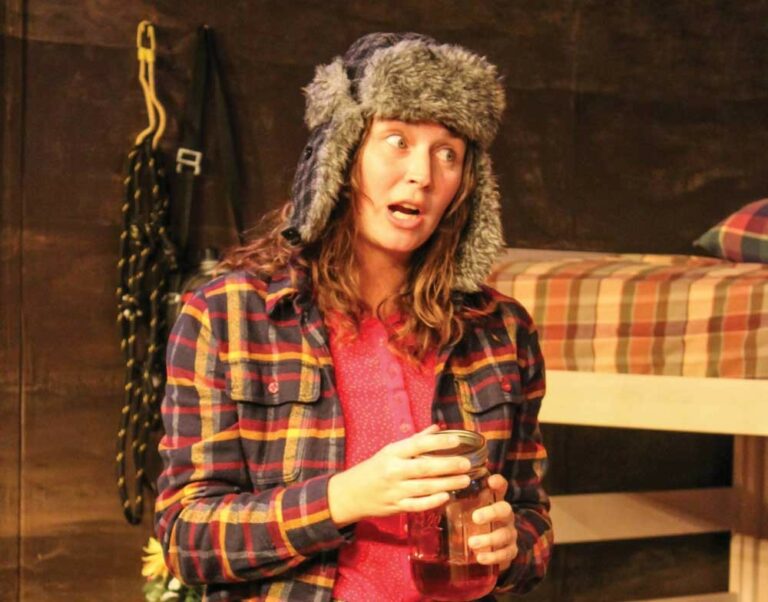
There’s an over-achieving sister (Heather Gordon) and her under-achieving brother (Zane Walters at the performance I attended, Anthony Martinez at all others) bickering over the writing of an obituary. There’s a couple (Paige Picard, Ariel Zuckerman) who are dissolving their relationship from across the table at a bad restaurant. There’s an elderly woman (Trish DeBaun) and her caregiver (Rosie Frater) who travel the world and spend each morning looking at the sunrise. There’s also a funeral home receptionist (Chandler Parrott-Thomas) and a gentleman (Norman Hall) who makes a late appearance.

How these characters connect (or don’t) is something that the audience gets to discover — even if the characters never do — as the show progresses through its 90 intermission-less minutes. No point in ruining that for you now.

The play hopscotches around from such places as a living room to a mortuary to an airport to Nepal to a hospital waiting room—and accomplishes this in Left Edge’s intimate theater with a combination of great technical elements. Argo Thompson’s minimalist set and vibrant projection design are enhanced by April George’s lighting and Joe Winkler’s sound design.

Director Phoebe Moyer has an excellent ensemble at work here with Dietz’s characters (with one exception) pretty much sharing the stage for equal amounts of time and each getting opportunities to shine in both comedic and dramatic moments. As the initial pairings of characters splinter off, each actor gets to display real range as their stories develop. All are excellent, with Gordon in particular exhibiting why she’s one of the best comedic talents around and DeBaun providing the wisdom, strength and weary regret at the center of this World.

This show has humor and heart. What it’s missing is an ending. After 85 minutes of somewhat exaggerated but nevertheless relatable humanity, this smooth-running express train of story-telling inexplicably derails. Dietz’s script has a natural ending point, but he runs right over it.

There’s random, and then there’s random.

Rating (out of 5): ★★★★

‘This Random World’ runs through May 26 at Left Edge Theatre. 50 Mark West Springs Road, Santa Rosa. Fri. & Sat, 8pm; Sun., 2pm. $25–$40. 707.546.3600.

Terroir Track

0

What are mountain vineyards good for, besides mountain-grown wines? They make for great hiking and mountain biking.

Prefer a brisk jog through the vineyard? Notre Vue Estate Winery invites guests to jog, too, at their fourth annual outdoors adventure event, Tour de Cru. Notre Vue is the resident winery (along with sister brand, Balverne) of Windsor Oaks Vineyards, a 210-acre patchwork of vineyard blocks that sprawl across the hills just north of Windsor. Many wineries buy their 16 varieties of wine grapes, but an additional 350 acres is designated “Forever Wild” by agreement with the Sonoma County Agricultural Preservation and Open Space District. Connecting it all is a network of dirt and gravel roads wending through oak woodlands and cresting hills to reveal million dollar views—it’s like a fine regional park, with wine.

I showed up for last year’s Tour de Cru with my hybrid city bike, and 32mm tires, ready to tackle the gravel. This was folly. I knew I shouldn’t have bothered when I saw the initial ascent to where the trails begin. Luckily, Windsor Bike Center was on hand to offer me a more appropriate setup, sporting suspension, fat, knobby tires, the works, for no extra charge. The winery is “95 percent sure” the bike store will return on June 29. For your heel-pounding pleasure, Fleet Feet Sports returns to provide shoe-fitting and warm-up advice.

Don’t expect a special kind of lanyard to hold your glass of wine and your cheese and charcuterie plate. But here’s a pro tip: Balverne Pinot Noir rosé is just as refreshing from a sports bottle.

I chose the 2-mile Red Tail Trail, getting mixed up with the 5.4-mile Summit Trail along the way. At the top of the dam, some lollygaggers are enjoying a tranquil pond scene from a gazebo—lollygagging is allowed. After an easy spin down a tree-shaded road, the marked trail has me climbing between vineyard rows uphill. Further on, I confer with a fellow biker about the route, and pass a group of hikers taking in the view. On a steep downhill in the dirt, those disc brakes really saved me. Then I rounded a corner—hark, the wildlife! Well, turkeys.

Back at the winery, the Healdsburg burger-and-sausage joint the Wurst serves lunch, a couple of local vendors offer samples of fresh juice and yerba mate, and this year’s musical guest is Ragtag Sullivan.

Notre Vue Estate, 11010 Estate Lane, Windsor. Tour de Cru, Saturday, June 29, 10am–3pm. $55 tickets $55 include wine; $25 kids. 707.433.4050.

Musical Messages

0

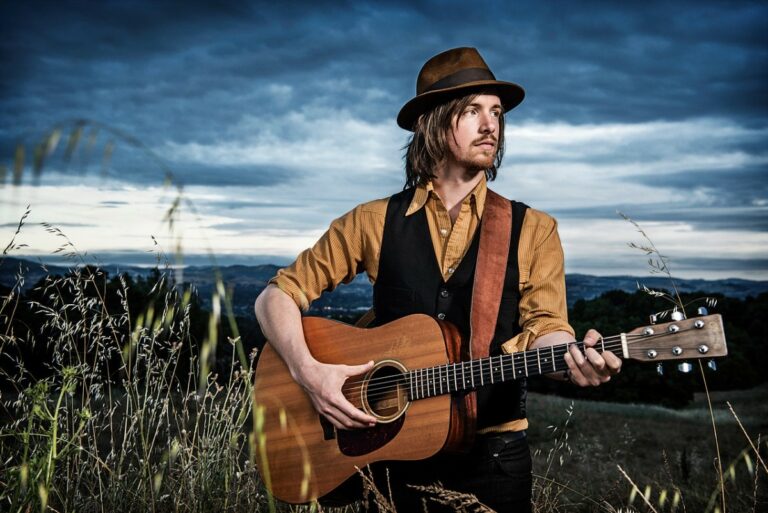
Baba Zumbi of Zion-I, known originally as Steve Gaines, creates music that expands hip-hop as a genre, stretching it out by blending elements of reggae, trance and melodic rapping to produce colorful sounds that mix together seamlessly. His multi-dimensional sound is a reflection of his varied exposure to music during his childhood and his openness to experimentation.

Originally from Philadelphia, Zumbi lived in Texas, New Jersey, Georgia and elsewhere before landing in the Bay Area.

“My experience with hip-hop was like that, too,” he says. “Varied, because I grew up in so many different states and experienced so many different types of people.”

Zumbi’s nuanced understanding of hip-hop contributed to his experimentation with the genre later in life.

“For me, hip-hop has always been a gumbo. African drums, rock, jazz…it has always been a mixture of different things coming together,” Zumbi says. “I vacillate with all these different things at different points of my life, and I love trying new things.”

Hip-hop also acts as a vessel to deepening Zumbi’s understanding of his own identity.

Lyrically, Zumbi delves into the deepest parts of his identity, exploring themes of racism, spirituality and vulnerability to name a few. He hopes by divulging the most intimate parts of himself, his audience will be moved to self-reflect as well.

“This music for me is a spiritual process. Like I am doing psycho therapy on myself, processing all my emotions in a healthy way. It lets me get in touch with myself, a sort of calibration, like going to acupuncture and getting realigned,” Zumbi says.

In the song “Meditation,” off his most recent album Ritual Mystic, Zumbi begins with a quote by the poet Rumi: “The wound is where the light comes in.”

This perfectly summarizes Zumbi’s mission: sharing his vulnerabilities to illuminate the shared experiences we all go through, regardless of race, social status, backgrounds.

Zion-I performs on Friday, May 17, at Reel & Brand, 401 Grove St., Sonoma. 9pm. $20. 707.343.0044.

Vaxx Populi?

0

As an outbreak of measles courses through California, Sonoma County Health Officer Celeste Philip issued a warning and recommendation yesterday that parents immunize their school-age children against the highly contagious disease.

“I . . . write this letter to emphasize to parents and guardians the seriousness of this current measles outbreak and the potential impact to unvaccinated or under vaccinated children,” says Philip in a note distributed to schools and parents yesterday.

As of this week there have been 44 reported cases of measles in California and 750 nationwide, the highest number of cases, reports Philip, “since measles was nearly eliminated in 2000.”

In 2017, the state moved to rein in abuses over a “personal belief exemption” in the state vaccination law and Philip notes that since then, there’s been a 94 percent rate of compliance with state law that requires vaccination as a condition of attending public school. But there are strong pockets of anti-vaxxer resistance, including in Sonoma County, where the immunization rate in some schools is less than half, she says.

None of the measles cases this year originated in Sonoma County, “but we are vulnerable,” she writes, given that “in some (Sonoma) County schools less than half of students are up to date with the recommended vaccination schedule.”

Any measles outbreak in Sonoma County will be met with swift action in the schools, Philip warns. “If your child is unvaccinated or cannot provide laboratory confirmation of measles immunity and there is a case in their school, they will likely be excluded from attending school for 21 days after their last exposure to the contagious individual. This exclusion helps protect the susceptible students and limits further spread of disease.”

Online data indicates that Sonoma County is one of the least-compliant counties in the state when it comes to parents getting their children vaccinated. The state requires that children entering kindergarten be immunized against 10 communicable diseases, including for measles, mumps and rubella. Those three are covered under the so-called “MMR” vaccine, which Philip says “has a long-established history of being safe and effective.” That view is not generally shared by the anti-vaxx community.

Here’s how the immunization debate and changes in state law have played out in one Sonoma County school over the past few years: the Sebastopol Independent Charter elementary school had 45 students enrolled in 2017-18. That year, 35.5 percent of students were up to date in vaccinations; up from 26.67 percent the year previous. Fifty-eight percent of the exemptions in 2017-18 were for medical reasons, up from 25 percent the year before. Thirty-eight percent of students were exempted in 2016-17 because of personal beliefs against vaccination held by the parents.

Those numbers are at stark odds with recent polling around vaccinations. A Pew Research study from 2015 found widespread acceptance of vaccinations, as 68 percent of adults said childhood vaccinations should be required. Thirty percent said the choice ought to be the parents to make—and many of those respondents were young adults aged 18-29 who have no experience with, for example, the devastating effects of polio (which has largely been eradicated thanks to the Salk vaccine).

Philip’s warning comes as the California legislature is considering closing a new loophole in the state’s childhood immunization law that came about after it ended the personal belief exemption in 2017. That moved followed a measles outbreak that year, as reported by KRCR ABC7 and elsewhere.

In closing one loophole, the state opened another: Now California’s vaccination law permits medical exemptions for parents of children whose health might be impacted negatively by vaccinations. The exemptions are currently granted by the family’s health-care provider. Critics say the loophole has been abused by parents who oppose vaccinating their kids, whether it’s for medical or personal reasons.

A state senate bill this year would close the loophole in a bill sponsored by Richard Pan, who is both a senator and a pediatrician. He’s been making the media rounds this month promoting SB 276, which would put the final decision about medical exemptions in the hand of the California Department of Public Health—and create a state registry of all children who have been granted medical exemptions.

As that bill works its way through committee, Sonoma County’s health official Philip is urging that “unvaccinated or under-vaccinated children should be vaccinated as soon as possible through their healthcare provider so they will have protection, will not further spread illness and will not need to be absent from school.”

One of the most persistent critiques of vaccinations is that they cause or can contribute to autism. The autism-immunization debate continues apace, and one of its biggest proponents is Robert F. Kennedy Jr., founder of the organization Children’s Health Defense (CHD).

Kennedy has compared a purported vaccine-driven rise in autism rates to the Holocaust, and noted in an interview that ran on the CHD site that “life for these children is an endless agonizing progression of twilight and terror. The tormenting gut aches, excruciating sensory sensitivities, the serial head banging and screaming, the isolation and perpetual joylessness. The entire family is permanently devastated.”

State Sen. Pan, in turn, has been stressing his pro-vaxx viewpoint on behalf of public school children with severe health problems and/or auto-immune disorders—who can often only attend public school if everyone is also vaccinated, given the health risks they’d face if one of their peers came down with the measles.

5 takeaways from Newsom’s revised budget plan

Buoyed by California’s strong economy, Gov. Gavin Newsom sent state lawmakers a revised budget on Thursday that boosts his already-hefty January proposal to $213.6 billion. Ka-ching!

Public schools will reap most of the gains if the Democratic-controlled Legislature rolls with him. Newsom also upped his ante on the housing crisis with a proposed $1 billion more to combat homelessness.

Still, Californians can expect some fiscal debate: Some Democrats want to go further on Medi-Cal spending, and others are leery of Newsom’s tax ideas, such as the sales tax break he wants to give on tampons.

And Newsom acknowledged the lessons of past budget exuberance, sounding for all the world like a certain frugal predecessor. Here are five key takeaways:

Public schools will be #winning

Talk about an apple for the teacher: Under Newsom’s revised plan, California will send $81.1 billion to K-12 schools and community colleges for the new fiscal year that starts in July.

Although some Democrats and education advocates continue to complain about lackluster per-pupil spending, that investment would be the biggest ever, up nearly $400 million from Newsom’s January budget. The governor noted that school funding will account for 45 percent of the state’s general fund, much higher than the 40 percent minimum guaranteed under Proposition 98, the state’s education funding formula. Lawmakers may also question whether any money needs to be set aside in a special public school rainy day fund.

One notable change is a scale-down of an earlier $750 million proposal to expand access to full-day kindergarten by building more facilities. Instead, about $150 million would go toward teacher recruitment and training while the other $600 million will be prioritized for districts with high concentrations of poor students.

The tweak was influenced by a new UC Berkeley study that found wealthier communities were more likely to benefit under the governor’s full-day kindergarten proposal because that’s where most part-day kindergarten programs are located.

School districts would also get additional aid to pay for teachers’ pensions. In January, Newsom proposed to contribute $3 billion extra to the California State Teachers’ Retirement System, a move that lowers districts’ contribution rates from 18.13 percent down to 17.1 percent, freeing up local money, the better to address threatened teacher strikes. The May budget revision adds $150 million to bring the contribution rate down to 16.7 percent for one year in 2019-20.

And Newsom’s not done weighing in on the state’s polarizing charter school debate, another labor flashpoint. After signing a fast-tracked charter school transparency law, the governor is proposing regulations to prohibit charter schools from turning down students based on their grades or special education status. The governor wants to prevent charter schools from asking for students’ transcripts or records before enrolling them and to create a new state system for charter families to report complaints.

Fewer excuses to dodge homelessness

NIMBYs beware: Expanding on his push to aid Californians in need and address the state’s mounting housing crisis, Newsom announced a $1 billion investment to combat homelessness.

His plan calls for $650 million to local governments for emergency aid, $120 million for counties to pilot assistance programs for people at risk for homelessness, $150 million to train mental health professionals, $40 million for colleges to assist students going hungry, $25 million for Supplemental Security Income advocacy and $20 million to assist people from getting evicted.

One step or two on universal health coverage?

Newsom is sticking to his guns on expanding Medi-Cal coverage to only young adults up to age 26 regardless of immigration status. That could set up some haggling with legislative Democrats who may push to expand coverage to all low-income residents regardless of their immigration status.

He says he’s open to ideas but wants to make sure the state moves toward universal health coverage in a financially responsible way. “My goal is universal health care for everyone,” he said. “That is the goal ultimately.”

The administration also affirmed its commitment to restore eyeglasses benefits for Medi-Cal patients, although health advocates say Newsom remains silent on other benefits that were cut during the last recession.

Although he tweaked subsidy eligibility and amounts, the governor is also sticking to an idea for a state individual mandate. The idea is to use penalties to help expand subsidies for middle-income earners to purchase health insurance through Covered California, the state’s health insurance exchange.

He’s serious about working parents

Newsom’s options may be limited and he may be burnishing his ‘Governor Dad’ brand, but his agenda clearly is that of a guy who knows the price of Pampers. Earlier this week, he announced expanding the state’s paid family leave program by 2 weeks, threw support behind legislative proposals to eliminate sales tax on diapers and feminine products (even if there isn’t agreement yet for how long) and wants to boost the state’s Earned Income Tax Credit for families with children under 6 from $500 to $1,000.

For working mothers, the administration had already proposed in January increasing CalWORKS grants. For a family of three, the highest grant will go from $785 to $888 per month. While that’s an increase of $103, it still remains 50 percent of federal poverty level.

Channeling Jerry Brown

Rarely have two governors differed more in style than Newsom and his predecessor. Still, at times during his 90-minute budget update, Newsom sounded for all the world like Jerry Brown.

The new governor repeatedly cited the old one’s warnings about the need for healthy state reserves and fiscal prudence. Newsom’s budget staff projects the state could lose $70 billion over three years in a moderate recession.

“We have a record amount of rainy day reserves and a record amount of resiliency. We have well over $30 billion-plus to weather a major storm and I would argue we have much more than that,” Newsom said. “We are preparing for a very different climate and we’ve never been more prepared as a state.”

CALmatters reporter Ricardo Cano contributed to this report.

Death Letter Dues

0

Following Gov. Gavin Newsom’s moratorium on capital punishment via executive fiat in March, will California voters end the death penalty in 2020? New research from the National Institute on Money in Politics indicates that, absent a robust grassroots anti-death penalty effort, it may be a tough sell.

That’s owing to the power and influence of statewide unions such as the California Correctional Peace Officers Association, whose small-donor efforts in 2016 helped turn the tables on a capital-punishment proposition twofer on that ballot that year.

Proposition 62 would have ended the death penalty outright; while pro-death penalty Proposition 66 sought to limit appeals in capital cases.

The institute’s research found that even as the state was trending away from support for the death penalty, that pro–death penalty, 62/66-specific committees outspent opponents’ committees by $13.5 million to $9.7 million in 2016

That year, “corrections officers represented the overwhelming majority of small donors rallying behind the death penalty,” reports the institute’s online research portal, followthemoney.com, adding that “thirty-five public sector unions collectively gave $3.3 million to the pro-death-penalty effort. . . . Almost almost half ($1.6 million) of the union total came from contributions from CCPOA and the Peace Officers Research Association of California.” Twenty-eight-thousand CCPOA members contributed $287 each to 62/66-specific committees.

Small-donor anti-death penalty contributions were not nearly so robust, as the institute reports that “more than four-fifths of the anti-death-penalty total ($7.9 million) came from just 35 donors that gave $50,000 or more.”

Contributions from opponents were made by George Soros’s Open Society Policy Center ($1 million), Laurene Powell Jobs’s Emerson Collective ($600,000), “and more than $450,000 from the Northern California Chapter of the American Civil Liberties Union.”

The report further noted that Stanford professor Nick McKeown gave $1.5 million, “a 91 percent share of the total from education donors,” while Netflix co-founder and CEO Reed Hastings contributed $1 million of $1.2 million that came from the TV and film industry. Lastly, it found that five people (including Tom Steyer) “accounted for more than 80 percent of $1.1 million from securities and investment donors.”

Small-donor contributions from 1,700 opponents totaled $377,000, reports the institute as it recounted the run-up to the 2016 election. That year, opponents contributed an average of $4,750 to the committees; proponents of the death penalty contributed an average of $470.

On September 21 2016, the Sacramento Bee reported that polling to date indicated that a plurality of voters supported Prop 62, while only a third of voters supported Prop 66.

It cited a joint study from the Field Poll and the Institute of Governmental Studies at UC Berkeley, that “found Proposition 62 ahead 48 to 37 percent, with 15 percent of likely voters undecided. Meanwhile, barely a third (35 percent) support Proposition 66, a competing initiative aimed at expediting the death-penalty process. With 42 percent undecided, it appears far less familiar to voters. Twenty-three percent are opposed.”

Then came a CCPOA-led advertising blitz that raised public awareness of Proposition 66. “In the end, 53 percent of voters rejected Proposition 62 and 51 percent okayed Proposition 66,” notes the institute.

In making his announcement this spring, Newsom highlighted that the death penalty discriminates against minorities and poor people as he called the practice “ineffective, irreversible and immoral.” He pledged to give a reprieve to the 737 inmates currently on death row in California, close the death chamber at San Quentin (it was dismantled soon after his announcement), and end a years-long debate over the state’s execution protocols.

Most of the 737 condemned in California are men held in one of three death row tiers at San Quentin. Women on death row are incarcerated at a facility in Chowchilla. The last execution in California took place 13 years ago.

As Newsom was making his announcement, Marin Assemblyman Marc Levine introduced a proposed constitutional amendment on the 2020 ballot that would ban the death penalty.

Opponents to Newsom’s moratorium have already ramped up the grassroots activism in light of the renewed push to end capital punishment in the state.

Families of crime victims and local district attorneys have embarked on a “Victims of Murder Justice Tour” which today is in Riverside. In April NBC Los Angeles reported that the organization (founded by the Orange County District Attorney Todd Spitzer) would take the tour to each of the 80 Assembly and 40 Senate districts in the state.

Death Penalty Action, a California non-profit devoted to ending capital punishment in the state through public education and grassroots organizing, was unsurprisingly supportive of Newsom’s March move.

District attorneys and victims’ families have accused Newsom of thwarting the 2016 will of the voters, but recent polling suggests that Californians favor life-without-parole over execution in first-degree murder cases, by a two-to-one ratio.

A Public Policy Institute of California poll conducted two weeks after Newsom’s announcement found that 62 percent of voters “chose life in prison over the death penalty,” reported Death Penalty Action.”The survey found that only 31 percent of adults—38 percent of whom are likely voters—favored the death penalty.”

Lost Weekend

Amy Poehler, left, and a cast of SNL alums have a bawdy, wine-soaked time in 'Wine Country.' Take your average girls' getaway. Pair it with a booze-induced romp through Napa Valley. Wrangle some of Saturday Night Live's finest comedians and put Parks and Rec star and SNL alum Amy Poehler at the helm: Enter the recently released Netflix film,...

Get Out

Rain or shine, it's the season to step out and get fresh North Bay. From hiking challenges to community arts festivals, here's a backpack full of family-friendly outdoor activities to partake in this weekend. Alaska Native Day: Though it was officially established by the Russian American Company, Fort Ross on the Sonoma Coast was built by many diverse people, including...

Capital Intensive

Following Gov. Gavin Newsom's moratorium on capital punishment via executive fiat in March, will California voters end the death penalty in 2020? New research from the National Institute on Money in Politics indicates that, absent a robust grassroots anti–death penalty effort, it could be a tough sell. That's owing to the power and influence—and infrastructure—of statewide unions such as the...

The Stakes Are High

Following the passing of the Climate Emergency Resolution by the Petaluma City Council on May 6, Climate Action Petaluma and the council will help create a new group that is representative of Petaluma and comprised of stakeholders with climate change experience. Climate change is not a future problem for frontline communities. It is a now problem. As temperatures continue to...

At Odds

Serendipity. Fate. Chance. Destiny. Karma. Fortune. Kismet. Call it whatever you like, but playwright Steven Dietz (Becky's New Car) doesn't believe in it; so much so that his play This Random World, running through May 26 at Left Edge Theatre, is even subtitled The Myth of Serendipity. The connections that people have, make, or miss are the focal point of...

Terroir Track

What are mountain vineyards good for, besides mountain-grown wines? They make for great hiking and mountain biking. Prefer a brisk jog through the vineyard? Notre Vue Estate Winery invites guests to jog, too, at their fourth annual outdoors adventure event, Tour de Cru. Notre Vue is the resident winery (along with sister brand, Balverne) of Windsor Oaks Vineyards, a 210-acre...

Musical Messages

Baba Zumbi of Zion-I, known originally as Steve Gaines, creates music that expands hip-hop as a genre, stretching it out by blending elements of reggae, trance and melodic rapping to produce colorful sounds that mix together seamlessly. His multi-dimensional sound is a reflection of his varied exposure to music during his childhood and his openness to experimentation. Originally from Philadelphia,...

Vaxx Populi?

As an outbreak of measles courses through California, Sonoma County Health Officer Celeste Philip issued a warning and recommendation yesterday that parents immunize their school-age children against the highly contagious disease. “I . . . write this letter to emphasize to parents and guardians the seriousness of this current measles outbreak and the potential impact to unvaccinated or under vaccinated...

5 takeaways from Newsom’s revised budget plan

Buoyed by California’s strong economy, Gov. Gavin Newsom sent state lawmakers a revised budget on Thursday that boosts his already-hefty January proposal to $213.6 billion. Ka-ching! Public schools will reap most of the gains if the Democratic-controlled Legislature rolls with him. Newsom also upped his ante on the housing crisis with a proposed $1 billion more to combat homelessness. Still, Californians...

Death Letter Dues

Following Gov. Gavin Newsom’s moratorium on capital punishment via executive fiat in March, will California voters end the death penalty in 2020? New research from the <a href="http://National Institute on Money in Politics indicates that, absent a robust grassroots anti-death penalty effort, it may be a tough sell. That’s owing to the power and influence of statewide unions such as...
11,084FansLike
4,446FollowersFollow
6,928FollowersFollow