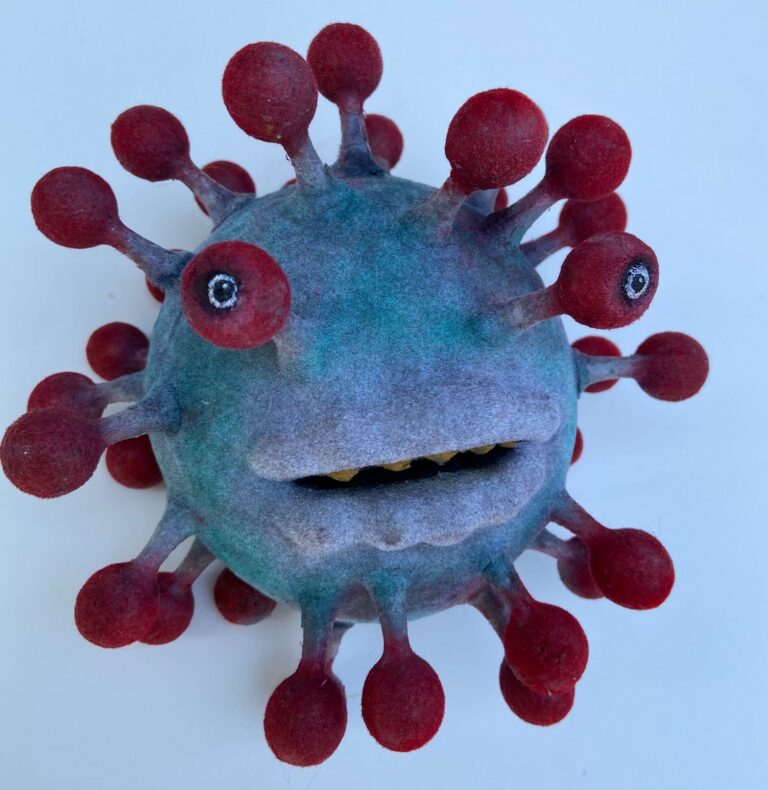
F*@%! Corona

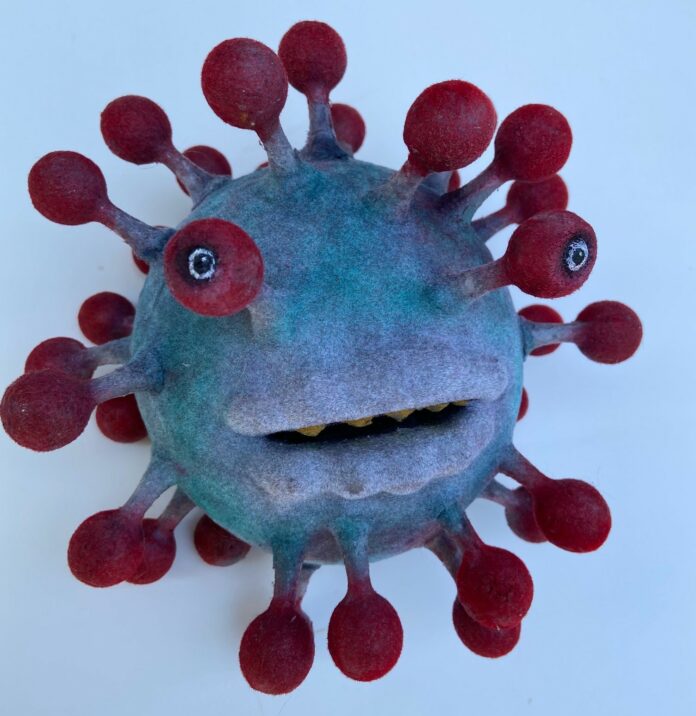
Biodynamic farmer Mike Benziger and medical doctor Thomas Cowan combine forces to boost human health. With COVID-19 lurking everywhere, they’re on high alert.

Dr. Cowan’s office has been closed since mid-March, so for the past five weeks his appointments have been only by phone. Benzinger has had an intense spring, planting and harvesting. At his farm on Sonoma Mountain, he cultivates summer savory, ashitaba and eastern dandelions. After they’re dried, he sells them to Dr. Cowan’s Garden (drcowansgarden.com), a Bay Area company that sells powders made from vegetables.

If it were up to Benziger and Cowan, Americans would eat their way to wellness with nutrient-rich plants.

“People who have optimal health—no cancers, no diabetes and no heart disease—typically eat 100 to 120 different vegetables a year,” Cowan says. “Most Americans only eat 10 vegetables a year and count ketchup as one of them.”

His company sells 30 different kinds of vegetable powders, though he makes no big claims for their medical benefits.

“If we did we’d be sued,” he says.

But his patients are true believers. During the current plague, demand has increased. Benziger can’t grow enough summer savory, ashitaba and dandelions to keep Cowan happy.

“Benziger is one of the best growers around,” Cowan says. “He has optimal conditions to cultivate ashitaba.”

Native to Japan, ashitaba is recommended for high blood pressure, gout, constipation and hay fever. A 40-gram jar costs $55. Cowan sells powders made from parsnips, Swiss chard, carrots, turmeric, burdock roots, leeks and horseradish.

In the thick of the current crisis, Cowan suggests six basic things to boost immune systems: soak up the sun, drink pure water, avoid processed foods, exercise, take vitamin C and eat medicinal mushrooms.

Benziger has battled health problems for years, and, while he has turned to Western medicine, he also believes in the healing powers of mushrooms and marijuana, too, which he also cultivates.

“I will personally drive anyone skeptical about weed to a dispensary, introduce him to a knowledgeable person and ask for a recommendation for joint pain, anxiety and sleep,” he says.

Years ago, Benziger left New York, arrived in Sonoma, grew grapes biodynamically and made premiere pinot noir. Recently, he turned to the cultivation of lettuce and all kinds of greens which he sells to restaurants including Glen Ellen Star (glenellenstar.com), where Ari Weiswasser, his son-in-law, is the chef. His daughter, Erinn, juggles nearly everything else. These days, the Star offers curbside pickup for lunch and dinner, Wednesday to Sunday.

Jonah Raskin is the author of “Dark Day, Dark Night: A Marijuana Murder Mystery”

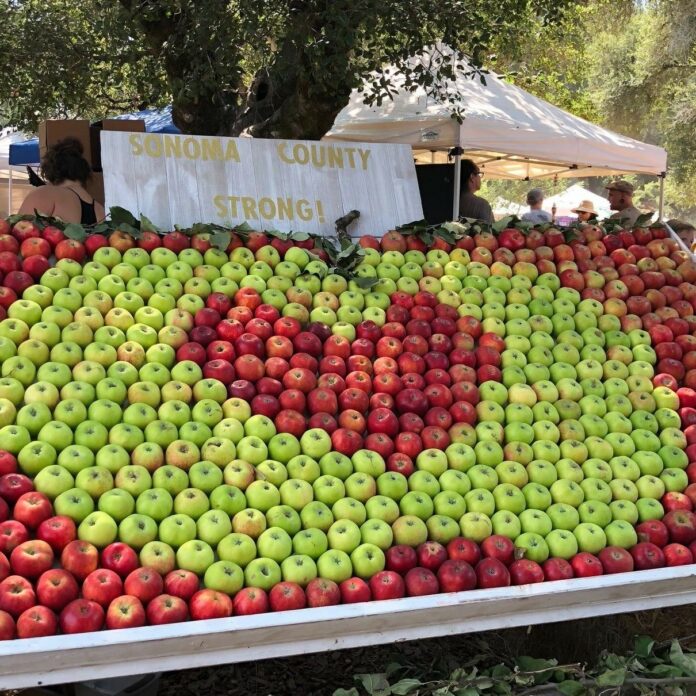
Sonoma County Fair Cancelled Due to Covid-19

0

The Sonoma County Fair will not be held this summer due to Covid-19 concerns, members of the Fair’s Board of Directors announced at a meeting on Tuesday.

“We are deeply saddened about the need to cancel the 2020 Sonoma County Fair, however the health and safety of our community takes precedence during this unprecedented time of crisis,” Becky Bartling, CEO of the Sonoma County Event Center at the Fairgrounds, said in a press release explaining the decision.

“The Sonoma County Fair is a beloved family tradition for our community, as well as a source of livelihood for many individuals and businesses. Our hearts go out to all our partners in the Fair, the exhibitors and especially the youth that will miss the Fair experience this year,” Bartling continued.

Organizers currently plan on hosting the fair in 2021, according to the press release.

The Sonoma County Event Center at the Fairgrounds has cancelled or postponed all events until May 31 in accordance with the county’s health orders related to Covid-19, according to a statement on the organization’s website. Further cancellations are possible.

More information on event cancellations is available here.

Sonoma County Health Officer Updates Parks Closure Order

0

Sundari Mase, Sonoma County’s public health officer, updated rules restricting public park usage Tuesday.

The amended rules go into effect on Wednesday, April 29. The new rules replace Mase’s original March 23 park closure order, which was issued after people flocked to local parks and beaches in the early days of the local shelter-in-place order.

The new rules are “intended to allow residents to access Parks near where they live, without resulting in the crowding and virus transmission risks that led to the previous Parks closure.”

For instance, walking, jogging, hiking or bicycling in parks and on trails will now be permitted, if the users are healthy, obey social distancing guidelines and do not drive to the park.

The full text of the Amended Parks Closure Order along with answers to Frequently Asked Questions, are available here.

Lost & Found

Under normal circumstances, Angie Powers would screen her first feature film, Lost in the Middle, on April 23 at Rialto Cinemas in Sebastopol, in an Occidental Arts & Ecology Center benefit event.

Obviously, things are far from normal, and the fundraising night-at-the-movies event has been postponed due to the shelter-in-place orders in effect in the North Bay.

Local audiences will have to wait to see Powers’ film, though the wait will be worth it, as Lost in the Middle—about a group of friends in their 40s—features a blend of outrageous humor and heartfelt drama.

A Sonoma County–native, Powers taught herself to tell stories while growing up on her family’s apple orchard.

“There was always stuff to do that was wildly boring,” Powers says. “So I just started telling myself stories.”

That internal storytelling transformed into story writing, and Powers earned an MFA in English and creative writing at Mills College in Oakland, studied screenwriting and now works as a corporate and creative filmmaker.

The kernel of Lost in the Middle comes from Powers’ own group of high-school friends. She describes the group as a rowdy bunch; and she says she realized the deeper importance these friendships held after a friend’s wedding several years ago.

“I started thinking about my friends, the things we know about each other, the things we hide from each other,” Powers says. “The story is about what it means to be friends, and that honesty is intimacy.”

Lost in the Middle follows a similarly rowdy group of longtime friends dealing with a very different life moment—spreading the ashes of a recently deceased group member. Tonally, the film is reminiscent of The Big Chill, only more diverse, more queer and more audacious in its comedy.

Actor and writer Guinevere Turner, best known for co-writing and co-starring in American Psycho, heads up the cast of friends. Powers shot the film in Sonoma County with a local crew back in 2017.

“It was phenomenal,” Powers says of the filming experience. “We had 300 people volunteer to be part of this, and we ended up with a core group of locals who committed essentially two full weeks of their time to help bring this together.”

Powers also notes that while the budget was miniscule, the outpouring of support from local restaurants and businesses added untold value to the production.

“It was amazing how much people were willing to give,” she says.

The film screened at select festivals last year, winning Best Feature Award at the Broad Humor Film Festival in Los Angeles. Powers is disappointed the film could not be screened this week at Rialto Cinemas, mostly because the event would benefit the OAEC, where parts of the film were shot.

“I love this county, and I know that sounds cheesy,” she says. “This is a place where people produce things, so I am confident that our county will come back, especially the artists, and I’m hoping they can lead the way in what might be a new way of doing the things we do well.”

Angie Powers also runs Bookwritingworld.com with her producing partner Elizabeth Stark.

Rolling the Bard

0

April 23 or so marks William Shakespeare’s 456th bday. For the sake of this chat, however, let’s just say it’s his 4-20th birthday. Because the question of the day is “Did Shakespeare smoke weed?”

Doobie, or not doobie? That is the question—the one that circulated the Internet a few years ago when anthropologist Francis Thackeray suggested that William Shakespeare might have sought creative inspiration by smoking pot.

Thackeray is the director of the Institute for Human Evolution at the University of Witwatersrand in Johannesburg, and in 2001 he conducted a study that found marijuana residue in pipe fragments unearthed in Shakespeare’s garden.

Though cannabis was cultivated in England during Shakespeare’s day for rope-making and other textiles, it’s unclear if it was used recreationally. “Some Shakespearean allusions, including a mention of a ‘noted weed’ in Sonnet 76, spurred Thackeray’s inquiry into whether Shakespeare may have used the mind-altering drug for inspiration,” wrote Life Science journal-contributor Stephanie Pappas.

About five years ago, Thackeray contemplated petitioning the Church of England to open the Bard’s grave and undertake a chemical analysis of his hair and nails in search of marijuana traces. There has been little mention of the project since. Because—I surmise—Thackeray is no longer high. Given some lines in Sonnet 76, I could see how, in certain states of mind, a phrase like “compounds strange” could be a pot allusion, next to the aforecited “noted weed.” Especially after a bong hit.

Two questions come to mind, however: Why are some always eager to pin the inspirations of creative types on dope? And secondly, who cares? W. H. Auden took Benzedrine in the morning and Seconal at night, but few mention it in the same breath as his poetry. And strung out as he was, even Auden addressed hazards of reading between the lines of Shakespeare’s poetry. This is from an introduction he once wrote to the Bard’s works:

“Probably, more nonsense has been talked and written, more intellectual and emotional energy expended in vain, on the sonnets of Shakespeare than on any other literary work in the world.”

But did Shakespeare smoke pot? Does it matter? Meh. Sure, my own writing is better when I’m high, but I only think that when I’m high. For the record, I wasn’t high when I wrote this … though maybe I should’ve been. Anyway, Happy Birthday, Shakespeare. Get it? Shake…speare. Okay, I’ll stop.

Open Mic: Create Calm

0

We live in uncertain times, especially during the past few months, which have brought us historic climate changes, adversity in our elections and COVID-19—a new global health concern that is making everyone uneasy.

There are an abundance of “stay-safe” coronavirus guidelines being offered by every news network and the CDC, all of them containing vital information to stay healthy.

Medical professionals report that keeping a healthy immune system adds another level of defense against the virus. They advise us to get plenty of sleep and to avoid stress. Yet, stress is the very thing that keeps us from a sound night’s sleep.

In my mind, sleep and stress go hand in hand. Lower your stress and you’ll get better sleep. Easy to say, yet difficult to achieve. That is until now.

Here are seven anti-anxiety strategies in times of stress:

1. Meditation: Boost your immune system with a double dose of deep meditation every day. Your calm will carry on throughout the day.

2. Self-awareness: Pay close attention to how your body is feeling. Relax your shoulders, soften your jaw and release any tension from your hands.

3. Breathe: The simple act of “deep breathing” can stimulate the parasympathetic nervous system, offering instant relief from stress. Breathe in and count to four, then out to a count of six.

4. Eliminate ANTs (automatic negative thoughts): When negative thoughts arise, bring your attention to the present moment. In this moment, practice gratitude. When you feel negative or stressed, think of five things you are grateful for.

5. Create a Calming Affirmation: Take a moment for silence. Then create your unique three-part affirmation. Begin with “I am …” Say the affirmation calmly, slowly and silently.

6. Avoid Unnecessary Obligations: Allow time for self-care and the care of loved ones.

7. Take a Walk: In the ’80s, Japanese scientists found that spending just two hours in a forest offers measurable health benefits. “Forest bathing” has become a cornerstone of Japanese medicine.

Until next time, be well.

Lorraine Alexander is the executive director of DASA Meditation

Battle over Point Reyes continues

0

The latest chapter in the decades-long debate over the ideal use of the Point Reyes National Seashore may come to a close in the coming months as the National Park Service prepares to release an updated usage plan for the park.

The document will determine how the park lands will be split between wildlife preservation and cattle ranching interests in the coming decades. To put it too simply, it’s a battle between cows and elk.

Tule elk were once common throughout California. By the late 1800s, however, over-hunting had severely depleted their population.

Due to a little luck—in 1874, a rancher in the Central Valley spared a few elk sheltering on his property—the elk were saved from extinction. In 1962, the National Park Service established the Point Reyes National Seashore and, in 1978, the Park Service relocated 10 elk from the Central Valley to Tomales Point, a 2,600 acre fenced-in section of the park designated for use by the elk.

The elk began to recover and soon spread out of their designated area onto nearby Park Service lands where ranching is allowed. This resulted in a conflict that has existed ever since: What is the primary purpose of National Parks land, and how should the elk and cows on it be managed?

During the drought years between 2012 and 2014, 250 elk on Tomales Point died, according to a 2015 KTVU report.

“It’s very likely that all of those elk died of thirst during the drought because there are no natural water sources where they’re penned in,” Jeff Miller, an advocate with the Center for Biological Diversity, told the news station.

In 2016, the Resource Renewal Institute, a Marin County environmental think tank, sued the Parks Service over its failure to update its general management plan with a new environmental-impact study. The group also accused the Parks Service of “mismanagement” of the Point Reyes National Seashore.

In 2018, as a result of the lawsuit, the Park Service began crafting a new plan to regulate the future uses of the Point Reyes National Seashore lands currently leased to ranchers. In addition to creating the new plan, the Park Service is also required to study the possible environmental impacts of the new plan.

The Park Service’s preferred plan, Alternative B, would, among other things, extend ranching leases for 20 years—current leases are five years long—and require the Park Service to limit the population of adult elk on Drakes Beach to 120 by culling any excess animals.

The agency is expected to release a final version of the new plan in Spring 2020. Once the document is released, members of the public will have 30 days to comment before it is sent to the Park Service’s regional director for final approval.

If you’d like to learn more about the proposed plans, tune into the event below or visit www.nps.gov/pore.

A group of conservationists, biologists, film-makers and local leaders will host a panel discussion at 6pm on April 29. Find more information and RSVP at www.pointreyesrewild.org/events.

Human-Made Music

0

Lungs and Limbs did not plan on releasing an album in the middle of a global crisis, but it’s difficult to think of a better soundtrack to self-isolate to than the alt-pop quartet’s recently released full-length record, Great Goodbye.

The record follows the group’s 2016 EP, Big Bang. In that time, the quartet—made up of Karina Rousseau (vocals, guitar), Nick Tudor (guitar, vocals, synth), Kristen Power (synth, vocals) and Matt Power (drums)—have matured, faced personal and professional changes and are now channeling those emotions into Great Goodbye.

“I don’t want to say it’s a negative album, but it’s definitely a reflection of feeling worn out by the reality of human society,” Rousseau says. “The timing of having the album come out and having all this happen with the pandemic felt apropos.”

“I think the world is at a point where we have to say, one way or the other, goodbye to the way everything has been,” Tudor says. “I don’t know what that looks like on the other side, but I don’t think it’s possible for the world to continue plodding along and for us to expect things to work out.”

“It’s an acknowledgment, too, of appreciating what we do have while we have it, not knowing what the future looks like,” Rousseau says.

Lungs and Limbs’ signature electro-pop sound has also matured, with layered synths and electric guitar riffs interweaving themselves into melodic backdrops for Rousseau’s ethereal vocals.

“We start with a simple idea, or beat, or guitar part; and Karina writes lyrics post writing the melodies, so there’s a lot of weird sounds during the demo process until we get a theme,” Tudor—who also engineered the record—says.

Kristen Power also reveals that the demos always have a cheese-related element in the title to help the band remember which demo is which.

Despite all the electronic elements in the music, the band stresses the human element, noting that the tracks are played live and 80 percent of the synthesizers on the record are made by instruments, not the computer.

Now that the album is out and everyone is stuck at home, Lungs and Limbs are doing what most bands are doing; trying to figure out how to move forward.

“I make all sorts of crazy ideas for the future in my head,” Tudor says. “I’ve run every simulation, from good to bad, and so many seem equally likely.”

‘Great Goodbye’ is available online now. Lungsandlimbs.com.

Letters: Step Off the War Path

Anyone who now denies we are one interdependent human species across borders on Mother Earth is not alive to the moment we share today.

It’s time to mean it when we speak of the sanctity of life. When people across the globe are working to save lives, we must end this country’s habitual practice of endangering and killing people who are “not like us.”

President Trump declared a “war footing” to combat the “foreign enemy” coronavirus. It might be said that all that unites the U.S. is military spending, our culture wallowing in violence and nationalist fear mongering.

A culture that bankrupted itself on foreign wars while enriching the global One Percent is not a sane or healthy society. The Abrahamic religions teach that ethical behavior and money making don’t go together. We’ve lost this distinction. Let’s demand a global cessation of hostilities. Let’s foster sustainable communities and give space for the world to heal.

United Nations Secretary-General António Guterres has called for an immediate global ceasefire saying, “End the sickness of war and fight the disease that is ravaging our world. … That is what our human family needs… .” Let’s make this more than a pause and rethink the ways in which we interact as people and as nations.

Let us reevaluate our unsustainable way of life. The rule of the One Percent has confronted us with the destruction of our planet. Our prejudice toward war is being revealed. Political-theorist Hannah Arendt wrote, “In every historical crisis, it is the prejudices that begin to crumble first and can no longer be relied upon.”

It should not take a pandemic to awaken us to our interdependence, but now that we are here, let’s make the most of this opportunity.

Jack Wikse

Faculty Coordinator, SSU Extended & International Education

Susan Lamont

Former Board Member and Coordinator, Peace & Justice Center of Sonoma County

Bubbly Planet

0

When raising a glass to toast Earth Day reaching its half-century mark, wouldn’t it seem apropos to fill one’s glass with a thematically on-point wine? Something green, maybe? Is there such a wine? Reds, whites and occasional orange wines, we’ve heard of, yes—but green? Do they exist and who would drink such a wine besides a Dr. Seuss character?

It turns out green wines are everywhere—that’s, of course, “green” in the eco-friendly sense of the word. Some are even sparkling. In fact, the éminence grise of sparkling wine, Champagne (that’s with a capital C, mind you), the eponymous sparkling-winemaking region in France, is at the forefront of the movement to take an environmentally-responsible approach to their craft.

They had to—the changing climate directly impacts the Champagne region. Harvest seasons now regularly arrive early and winemakers have adapted accordingly. To wit, nearly 20 years ago, Champagne was the first wine-growing region in the world to implement a plan to address the changing climate.

“Climate change is a reality that Champagne growers and houses increasingly must take into account,” says Jennifer Hall, director of the Champagne Bureau, USA.

Located in Washington, D.C., the Champagne Bureau is the U.S. representative of the Comité Champagne, France’s trade association representing the region’s grape growers and houses.

“As such, the region is committed to sustainable development and seeks to do its part to reduce its environmental impact and protect the unique terroir of Champagne,” Hall says.

Champagne’s milestone achievements are worthy of popping a few corks themselves. Since conducting a carbon-footprint assessment in 2003, Champagne’s sustainability efforts have resulted in a 20-percent regional carbon-emissions reduction. The hope is that, by 2050, carbon emissions will be reduced to 75 percent of the 2003 benchmark. Presently, 20 percent of the region’s vineyards hold an environmental certification, a number they hope to raise to 100 percent by decade’s end.

Interestingly, a change that resulted in an emissions reduction of 8,000 tons of carbon dioxide (or the equivalent output of a fleet of 4,000 automotive vehicles) wasn’t achieved through mitigating some aspect of the winemaking process, but rather by subtly changing the bottle that contains the finished product.

In 2010, after five years of experimentation, the Champagne region lightened the weight of each bottle to limit the impact of packaging and transport-related CO2 emissions. Working with glassblowers, they shaved 65 grams off the weight of the formerly 900-gram bottle, which is basically imperceptible to everyone—except maybe the earth.

F*@%! Corona

Biodynamic farmer Mike Benziger and medical doctor Thomas Cowan combine forces to boost human health. With COVID-19 lurking everywhere, they’re on high alert. Dr. Cowan’s office has been closed since mid-March, so for the past five weeks his appointments have been only by phone. Benzinger has had an intense spring, planting and harvesting. At his farm on Sonoma Mountain,...

Sonoma County Fair Cancelled Due to Covid-19

The Sonoma County Fair will not be held this summer due to Covid-19 concerns, members of the Fair’s Board of Directors announced at a meeting on Tuesday. ...

Sonoma County Health Officer Updates Parks Closure Order

Sundari Mase, Sonoma County's public health officer, updated rules restricting public park usage Tuesday. ...

Lost & Found

Under normal circumstances, Angie Powers would screen her first feature film, Lost in the Middle, on April 23 at Rialto Cinemas in Sebastopol, in an Occidental Arts & Ecology Center benefit event. Obviously, things are far from normal, and the fundraising night-at-the-movies event has been postponed due to the shelter-in-place orders in effect in the North Bay. Local audiences will have...

Rolling the Bard

April 23 or so marks William Shakespeare’s 456th bday. For the sake of this chat, however, let’s just say it’s his 4-20th birthday. Because the question of the day is “Did Shakespeare smoke weed?” Doobie, or not doobie? That is the question—the one that circulated the Internet a few years ago when anthropologist Francis Thackeray suggested...

Open Mic: Create Calm

We live in uncertain times, especially during the past few months, which have brought us historic climate changes, adversity in our elections and COVID-19—a new global health concern that is making everyone uneasy. There are an abundance of “stay-safe” coronavirus guidelines being offered by every news network and the CDC,...

Battle over Point Reyes continues

The latest chapter in the decades-long debate over the ideal use of the Point Reyes National Seashore may come to a close in the coming months as the National Park Service prepares to release an updated usage plan for the park. The document will determine how the park lands...

Human-Made Music

Lungs and Limbs did not plan on releasing an album in the middle of a global crisis, but it’s difficult to think of a better soundtrack to self-isolate to than the alt-pop quartet’s recently released full-length record, Great Goodbye. The record follows the group’s 2016 EP, Big Bang. In that time, the quartet—made up of Karina Rousseau (vocals, guitar),...

Letters: Step Off the War Path

Anyone who now denies we are one interdependent human species across borders on Mother Earth is not alive to the moment we share today. It’s time to mean it when we speak of the sanctity of life. When people across the globe are working to save lives, we must end...

Bubbly Planet

When raising a glass to toast Earth Day reaching its half-century mark, wouldn’t it seem apropos to fill one’s glass with a thematically on-point wine? Something green, maybe? Is there such a wine? Reds, whites and occasional orange wines, we’ve heard of, yes—but green? Do they exist and who would drink such a wine besides a Dr. Seuss...
11,084FansLike
4,606FollowersFollow
6,928FollowersFollow