The Good Fight

0

Sonoma County marijuana-activist, Sarah Shrader, enjoys quality time with family and friends, though there’s no clear dividing line between her political calling and her personal life. Passionate about the cannabis cause, she’s an inspiration to activists all over the North Bay.

Born, reared and educated in San Francisco, Shrader joined the San Francisco chapter of Americans for Safe Access (ASA) a decade ago. That act changed her life. ASA is the largest U.S. organization of patients, medical professionals, scientists and citizens who want safe, legal paths to cannabis for health, well-being and lab research.

The organization has 100,000 active members in all 50 states. It was recently reborn, Shrader tells me, when it moved headquarters from Oakland to Washington, D.C., and shifted away from “tie-dyed hippie pleas to scientific appeals for legalization.”

After Shrader landed in Sonoma County, she turned the local ASA chapter into a thriving force that now has an extensive network of supporters and an impressive record of educating politicians and citizens.

I’ve seen Shrader in action—she’s fearless when face-to-face with county supervisors such as Shirlee Zane.

At her monthly free workshops at the Arlene Francis Center in Santa Rosa, no one impeaches her facts. She’s also unapologetic about her own use of cannabis to deal with fibromyalgia, a painful disorder she developed after an automobile accident.

“I asked my doctor to prescribe cannabis,” Shrader says. “He said, ‘No,’ but he was willing to give me uppers and downers.”

If Shrader’s auto accident traumatized her, she suffered more trauma after the bust, by DEA agents, of longtime KPFA journalist Jose Gutierrez, the father of her two children. Law-enforcement agents beat Gutierrez during a peaceful protest to prevent the closure of Oaksterdam University, where Shrader is on the faculty.

“Jose’s arrest was streamed live,” she says. “From that experience and others, I saw that ‘The War on Drugs’ was really a war on people.”

After Gutierrez’s arrest, Shrader suffered from PTSD and paranoia. She drove her children to Mendocino, out of harm’s way, though her anxiety level up-ticked when DEA agents descended on her home on Mother’s Day that year.

“We have much to do in 2020,” she says. “Like protect workers fired for using cannabis and also help people addicted to opioids. Ninety-one people die from opioids every day. Cannabis can be a tool to combat their disorder.”

Jonah Raskin is the author of ‘Dark Day, Dark Night: A Marijuana Murder Mystery.’

When in Rome

0

The specter of World War I rears its ugly head once again on a North Bay stage with the Sonoma Arts Live presentation of Enchanted April. Matthew Barber’s adaptation of Elizabeth von Arnim’s 1922 novel runs through Feb. 9.

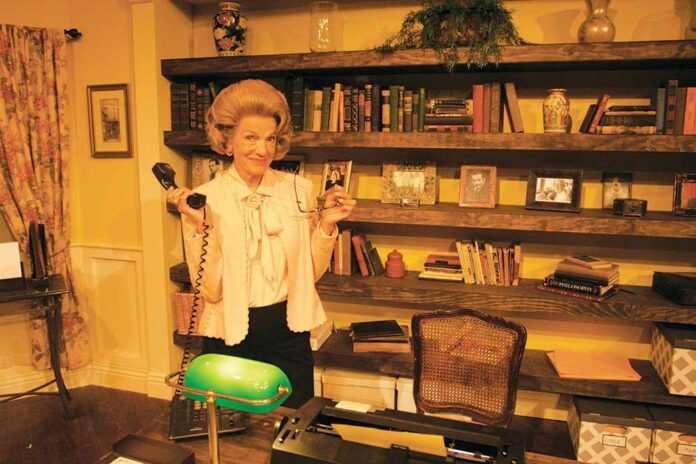
Lotty Wilton (Katie Kelley) dreams of escaping a grey and dreary post-war England and a loveless marriage to parsimonious attorney Mellersh Wilton (Matthew Witthaus). She happens upon an advertisement offering an Italian riviera castle for rent for the month of April. She soon enlists fellow ladies club member Rose Arnott (Lyndsey Sivalingam), who has marriage issues of her own, to join her on her holiday. Seeking to further reduce their expenses, they advertise for two additional travel companions. They receive replies from Lady Caroline Bramble (Julianne Bradbury), a vivacious socialite, and Mrs. Graves (Sheila Lichirie), whose name gives you an indication of her personality.

These four disparate characters soon arrive at San Salvatore (inexplicably and annoyingly pronounced repeatedly as San Sal-va-TOR-e) and though they comedically clash at first, are soon sharing their troubles. A feisty Italian servant (Laura Davies), the arrival of the randy castle proprietor (Giovanni Amador), and Mssrs. Wilton and Arnott (J. T. Harper) serve to compound those troubles.

Fear not, as the transformative powers of wisteria and sunshine shall resolve all their troubles, reinvigorate their existing relationships and assist in the sprouting of a new one.

Barber’s script is a combination of magical realism, comedy of manners and farce that half-works. The first act takes over 50 minutes to cover what the 1991 film did in about 20 and the needlessly mannered set changes makes it feel longer. It did not help that an ever-present and oversized projection of rain often overwhelmed an understandably dreary and minimalist Carl Jordan–designed set.

Conversely, the unveiling of the castle set at the top of the second act led to a round of applause from the opening-night audience.

As did the performances from the Larry Williams–directed cast, who do pretty well with what are now stock characters. There are dialect issues, though, and Kelley’s vocal choice for Lotty often comes off as grating. Sivalingam and Licherie, amusingly haughty in character, provide laughs, while Bradbury supplies the heart. The men are appropriately caddish before their own transformations.

If you can get through the drabness of the first act, there are rewards to be found by joining the ladies of Enchanted April on their holiday.

Rating (out of 5):★★★½

‘Enchanted April’ runs through Feb. 10 at Andrews Hall in the Sonoma Community Center, 276 E. Napa St., Sonoma. Thur–Sat, 7:30pm; Sun, 2pm. $25–$42. 866.710.8942. sonomaartslive.org.

Future Ex

0

Way back in 2001, years before I wrote Swirl, I reported on my experience at the democratic drink-fest that was the 10th annual Zinfandel Advocates and Producers (ZAP) tasting. “How was this possible without a fake ID?” one might ask. And I’m flattered you did.

Here’s an excerpt from my 2002 report, for readers who don’t have the yellowed newspaper-clipping pinned to their wine cabinet: “The crowd outside, still in thrall to the grape, created a scene somewhere between a wedding reception and a soccer riot. I joined others streaming away across the grassy park, feeling a light-headed tinge of pride that Zinfandel, despite its newfound chic, appeared to still be the quaff of choice of the hoi polloi.”

Heady stuff indeed. Back then, Zin was on the up and up, the all-American varietal that was winning hearts and minds with pluck, grit and value. The upcoming ZAP tasting is, by comparison to that double-pier, Fort Mason wine-riot, much smaller. And more expensive. What happened?

“It has transformed rather dramatically,” says Robert Larsen, media point man for the ZAP event.

Now, it’s a three-day slate of fancy dinners, an auction, a seminar and a smaller tasting that still features more than 80 wineries. In: restaurant food pairings. Not-yet-out: the traditional mountain of baguettes. Out: Ravenswood, the one-time Zinfandel-revival leader that’s in limbo after a string of buyouts. Still-in-the-game: Ravenswood-founder Joel Peterson, who leads an educational tasting of single-vineyard Zins.

ZAP’s new focus is on raising both their ticket prices and the price they pay growers to farm Zinfandel—so they don’t rip out this heritage California grape for economic reasons.

“People aren’t willing to pay what it costs to farm Zinfandel,” Kenwood Vineyards–winemaker Zeke Neeley recently told me. “When they have Zinfandel, they love it. But at the same time, they’re only willing to love it at $18.”

For over $18, I loved the olallieberry-fruited, but dry-and-serious, Kenwood Vineyards 2017 Jack London Sonoma Valley Zinfandel ($35). For under $18, 2016 Oliver’s Own Reserve Sonoma County Zinfandel ($10.99) beats a much bigger supermarket brand—2015 Kendall-Jackson Zin ($12.98)—in pretty, typical Zinfandel raspberry aromatics and a more juicy, finer finish. Full disclosure: Oliver’s is an advertiser in the Bohemian. Also: I was maybe a little over 21 at that ZAP tasting.

ZAP Zinfandel Experience, Thursday–Saturday, Jan. 30 to Feb. 1. Grand Tasting, Saturday, Feb. 1 at Pier 27, San Francisco. 11am to 5pm. Members, $75; General Admission $90; more wine, more food, more time, $185. 530.274.4900. zinfandelexperience.com.

New Views

0

There is much to see in Napa Valley this week, as two very different-looking art shows open to the public.

In Yountville, internationally known celebrity Lucy Liu exhibits a wide display of art at the Napa Valley Museum. Opening on Saturday, Feb. 1, “Lucy Liu: One Of These Things Is Not Like The Others” presents the actress and social-justice advocate in a new light, and marks the first art exhibit in the U.S. for Liu, who will appear at the Napa Valley Museum for the upcoming fundraising luncheon, Phenomenal Women, on Feb. 25.

“We wanted to showcase women who were doing something extraordinary,” says Napa Valley Museum Executive Director Laura Rafaty. “I found out she had just done her first art exhibit at the National Museum of Singapore. We invited her to be the keynote speaker at the luncheon, but as those discussions evolved we asked if she would be willing to have us post the first museum exhibit of her work in the United States.”

Liu’s art includes erotic Japanese “shunga” woodblocks and paintings, embroidered works, found-object sculptures and silkscreens featuring bold designs and even bolder subject matter.

“Some of it is kind of provocative, honestly,” Rafaty says. “Lucy’s work is very intimate, in some ways shockingly so. It’s emotional, it wants you to challenge cultural and gender stereotypes and I think people are going to find it thrilling to see.”

Up the road in Calistoga, Napa Valley–native Kate Solari Baker opens a new exhibit, “Keeping Accounts,” at Sofie Contemporary Arts on Friday, Jan. 31. Generations of inspiration lie behind Baker’s latest works, which mark a new artistic direction into mixed-media collage in which she incorporates her mother’s handwriting into colorful overhead landscapes.

“My family bought a property in Napa Valley in 1948,” Baker says.

That property was the historic Larkmead Cellars winery and vineyard, and while Baker’s father worked in San Francisco, her mother ran the co-op property, and in doing so kept meticulous handwritten ledgers and accounts that Baker discovered after her mother’s death in 1992.

“It was a part of Napa Valley history in my mind; the people who worked there, their hours and their time,” Baker says. “It represented to me a different time in Napa Valley, when it was mostly farmers.”

Baker uses those ledger papers as a source for her art, creating large maps of the Larkmead property and other Napa Valley locales superimposed over the ledgers.

Working from her art studio in Sausalito’s Industrial Center Building (ICB), where she’s been since the late ’70s, Baker was best known in Marin and throughout the North Bay for her nature-inspired pastels and figurative paintings before taking a turn toward collage.

“It’s very personal and it’s fun,” Baker says, of her collage. “This is a part of my mother’s history and I’m following in her footsteps and thinking about her part in Napa Valley.”

Detox Du Jour

0

In case you haven’t heard, it’s 2020, a new year and a new decade. And along with that nice, even, round number comes that time of year where people dedicate themselves to getting healthy. At least for the month of January. While setting goals and making the effort to become a healthier person can be done any time of year, the start of a new year seems to go hand in hand with making a change.

Sonoma County is rich in wine, beer, bread and cheese, and let’s face it—those are all unhealthy things unless consumed in moderation. But, as surely as no one can stop at two slices of cheese or one piece of bread, there’s also a reason they sell beer in packs of six. Admit it—it’s challenging to go easy when consuming delicious things that are bad for your physical, and often mental, health. Yet for all the temptation in this county, there are also several options for kick-starting your health in the new year.

Meredith Brown is the Petaluma-based owner of Salt and Sage Nutrition. Throughout the year she teaches classes on healthy habits that include cooking, eating and the ever-chic detox cleanse. At this very moment Brown and her cadre of students are in the midst of a 21-Day Purification program that began Jan. 20 and runs through Feb. 5. The program requires abstinence from sugar, grains, dairy and alcohol—which makes for some interesting stories during the Wednesday-night meetings. But why 21 days?

“There’s a saying that if you can do something for three weeks, it can become a habit,” Brown says.

Which is what the program seeks to do—build healthy habits. Although Brown offers shorter cleanses throughout the year, she feels the longer cleanse is more effective.

“I notice when I do the 21-day program, when I get to day 10, I don’t really notice that many changes in my body and the diet doesn’t feel like it’s having an effect,” Brown says. “I usually haven’t lost much weight. But by the end of the 21 days, I’ve lost weight and I feel much better about the diet overall. The extra week at the end really seals the deal, and a lot of people tend to stick with the new, healthy eating habit after the detox ends.”

For the $295 price tag, participants get a bevy of oils, fibers and supplements—plus a cookbook and Brown’s spunky personality to help them along.

If 21 days is too daunting, never fear. Wes Coffman, who co-owns Santa Rosa’s Juice on the Square with his mother, Theresa Chavarria, has a shorter cleanse option. The juice bar offers several juice cleanses ranging from a one-day cleanse for those who wish to merely dip their toes in juice, to a 30-day cleanse (doctor’s approval required).

Located temptingly between Fogbelt Brewing Company and Cibo Rustico Pizzeria, Juice on the Square is a hip little spot with colorful and freshly made cold-pressed juices. Echoing a similar sentiment to Brown’s, Coffman says they design the juice cleanses to kick-start a person’s health as well as to help them form healthier food habits.

“It’s a good way to break a habit or routine and also create a new, healthy one where your body gets used to eating more fruits and vegetables” Coffman says, of the cleanses. “In one bottle of juice, you get two pounds of vegetables—so they’re really high in macronutrients, which gives
us energy.”

While he admits it’s likely less expensive to research a juice cleanse online and do it yourself, Coffman notes that juicing takes a long time and is typically very messy. To that end, he also says Juice on the Square “offers a lot of convenience and also a big variety of juices that people may not be able to make at home” in a timely fashion. They also offer delivery.

Cleansing and detoxing your body is oftentimes a big, scary and uncomfortable undertaking. There’s really nothing more terrifying than the day after you ingested four beets and forgot about it until you took a bathroom break. If it isn’t for you, that’s OK—perhaps a more magical, mystical new year habit is more your speed.

In that case, head on over to Lucky Mojo Curio Co., next to downtown Forestville. Not only is Lucky Mojo one of the funkier hidden local gems, it also offers a huge selection of candles, oils, herbs and Hoodoo folk-magic paraphernalia to get you headed the right direction in the new year.

After entering the shop and passing a plethora of lit candles featuring various saints and sinners, one can easily get lost in the shelves of oddball items in Lucky Mojo. Fortunately, staffers like Jenne Kaivo are there to help. When asked about items that might help one get a good start on the new year, Kaivo has plenty of suggestions.

While mixing what looks like a large trough of Himalayan salt, Kaivo talks about “Lucky Money envelopes” that are “really good to give people a little bit of money in the new year.” Kaivo says this can “inspire prosperity and abundance. When you give out good luck to people, good luck comes back to you.” Kaivo also points out several glass-encased candles, oils and bath crystals that one can use for “trying to start on the best path which is good for the new year.”

Lucky Mojo also has several “cast off evil” products which can help get rid of bad influences from the past year; and there’s always the burning of sage to cleanse your home.

The underlying message behind all these different “cleanse” options is self-care—which is exactly what Lindsay Kolterman, general manager and director of operations at Sebastopol’s dhyana Center, is all about. Dhyana Center’s entry into the new year kick-start is a 30-day challenge which Kolterman says is “specifically designed for self-care, as self-care is one of the main components of Ayurveda.”

The dhyana Center is offering a discounted price for their 30-day challenge; $140, down from the usual $175. This fee provides customers “one-month, unlimited access” to the Center, which includes the self-care sanctuary that focuses on “steaming, sauna, epsom salts, infrared saunas, amethyst biomats and a copper cold plunge.”

The dhyana Center is open seven days a week, from 9am to 8pm, allowing “challenge” customers ample time to get their money’s worth within the 30-day time frame. And those customers suitably impressed with the experience can become permanent members if they so choose.

Kolterman touches on the idea of self-care as a healthy habit to build, one which ultimately increases productivity as well as physical and mental health. And in the end, no matter what time of year it is, feeling good feels good. While Sonoma County offers a wide variety of hiking trails, gyms, yoga classes and zeitgeist diets, sometimes a kick in the pants via a cleanse or cleansing ritual can be a great way to slingshot oneself into a healthier lifestyle.

Primary Problem

With the Democratic primary fast approaching, some party members are concerned that a state rule will potentially prevent tens of thousands of independent absentee voters from participating in the party’s presidential primary this March.

Here’s the situation: if you are not registered with a political party—or you are registered with a handful of small ones—and you vote by mail, you need to request a new ballot or re-register in order to vote for one of the Democratic presidential candidates.

(If you vote in person but are registered as a no-party preference, then you can request a primary ballot at the polling place.)

In most elections, Californians vote for the top two candidates of any party, so registration doesn’t really matter. The same rule doesn’t hold in presidential campaigns.

In December, registrars in each county sent out postcards to impacted voters offering them a chance to change their registration. The numbers aren’t great.

The deadline to return the letters has passed, but voters can still register with a different political party or request a ballot with primary candidates directly from their county’s registrar.

However, given recent surges in the number of nonpartisan voters—and long-time increases in absentee voters—the policy could impact many voters who are not aware of the problem, according to polls.

“Voters that can’t overcome this procedural hurdle—and there may be as many as 600,000 of them, based on an analysis of 2016 data—won’t be able to vote for a presidential candidate. That’s enough votes to decide who will be the Democratic nominee,” Jessica Levinson, a Loyola Law School professor, and Paul Mitchell, a political commentator, wrote in a Jan. 2 Los Angeles Times opinion piece.

A Growing Category

In California, where Democrats currently hold the vast majority of elected offices, there are more no-party preference voters than there are Republicans.

In Napa County, 26.12 percent of registered voters have no party preference. In Marin County, 24.56 percent are nonpartisan. In Sonoma County, 23.51 percent have no party preference, according to numbers from the California Secretary of State.

Pair that with the fact that vote-by-mail, also known as absentee voting, has grown in popularity steadily over the past 50 years.

In the 1966 primary, only 1.89 percent of California voters voted by mail. The rate increased significantly starting in the 1990s. In the 2016 primary, 58.92 percent of registered voters in California voted by mail.

A 2016 study by Capitol Weekly found that many people in the affected category intended to vote, but did not know about the problem.

“The study found that 88 percent of these [no party preference, vote-by-mail] voters are interested in voting in the upcoming [2016] election. Of those voters, two-thirds are interested in voting in the Democratic primary, while more than 17 percent are planning on re-registering to vote Republican,” Capitol Weekly reported at the time.

Between 2008 and 2016, the number of absentee, nonpartisan voters nearly tripled, from roughly 700,000 to 2,000,000, according to Capitol Weekly.

State law required each county to send a letter to every no-party preference, absentee voter in their county. In order to receive a ballot with the Democratic Primary candidates on them, voters had to fill out and return the letter; however, based on the return rates, it seems that many voters will be surprised they cannot vote in the primary election.

The Sonoma County Registrar of Voters sent out 47,965 letters. As of Friday, Jan. 17, they had received 9,234 back—a 19.25 percent rate of return.

The Napa County Registrar of Voters sent 21,253 letters. They have received 2,758 letters back—a 12.97 percent rate of return.

The Marin County Registrar of Voters sent out “about 30,000 postcards” and, at last count, had received about 5,000—or 16.7 percent—back, Lynda Roberts, the county’s registrar, said in an email on Friday, Jan. 17.

So far, the Marin County registrar has received roughly 1,500 email requests and an uncounted number of calls, according to Roberts.

The deadline to switch party registration is Tuesday, Feb. 18.

According to data from the Secretary of State’s Office, the number of registered Democrats increased from 7.4 million to 8.9 million, a bump in membership of 1.5 million. The number of nonpartisan voters increased from 4.1 million to 5.4 million—a 1.3 million increase. Meanwhile, the number of registered Republicans remained flat around 4.7 million.

Early Bird

That’s not the only significant change to the California primary this time around.

In 2017, then-Gov. Jerry Brown signed a law to move California’s primary to March 3, 2020. In election phraseology, March 3 is a Super Tuesday, when voters in over a dozen states will cast ballots.

Historically, voters in the Golden State would vote in June. But in 2016, the Democratic primary was pretty much done by June.

Recent polling shows that the top three candidates are fairly close together.

A poll from the Public Policy Institute of California (PPIC), released on Jan. 13, put U.S. Sen. Bernie Sanders ahead of the pack with 27 percent of likely voters. Former Vice President Joe Biden received 24 percent. U.S. Sen. Elizabeth Warren got 23 percent.

In 2016, the North Bay counties were split between Bernie Sanders and Hillary Clinton in the Democratic primaries.

Sonoma County, the most populous of the three counties, favored Sanders over Clinton 52 percent to 47.3 percent; Marin County voted for Clinton 56.4 percent to 43.3 percent; and Napa County chose Clinton in a 53.4 percent to 45.9 percent vote.

Writers’ Realm

0

Some people put roots down where they were born. Others find fertile ground elsewhere and sow their own seeds. Either way, if we stay somewhere long enough, and make a connection, it can become an important part of who we are and how we perceive the world.

Author Greg Sarris, chairman of the Federated Indians of Graton Rancheria and author of six books, including Grand Avenue and Watermelon Nights, has a lifelong connection with the local landscape. Likewise, Bohemian columnist Jonah Raskin has grown deep roots in the North Bay, both personally and with regard to the wider literature of California—authoring and/or editing over 20 books. Together on Jan. 29, the two writers will discuss and explore the notion of “place” in “A Sense of Place: Author Greg Sarris in Conversation with Jonah Raskin,” hosted by the Rohnert Park–Cotati Library.

A sense of place is something familiar to those who have it. And for those who don’t, there is a sense of something else, maybe a vague feeling of disconnect. Some people just live with that. Others travel until they find a connection. And many find it in the North Bay.

Raskin explores the diversity of those who are native here, those who grew up here, and those who came here and found what they were looking for. He himself is one of the latter.

“I came here as an outsider in November 1975 and didn’t feel any attachment to the place then. Over the years I’ve developed an affinity—a connection to the land, the people, the agriculture and the literature,” Raskin says.

Sarris grew up in Santa Rosa and didn’t leave for the first 20 years of his life. Growing up in a single place allowed him to learn to perceive the world’s connections in a focused, interdependent way.

In Raskin’s book about Northern California writers, Natives, Newcomers, Exiles, Fugitives, he writes, “Sarris has burrowed so deeply into our region that he’s hit the bedrock of our national experience. He’s made Sonoma County into a metaphor for the nation at large.”

In his books, Sarris explores growing up partly Native American in Santa Rosa. He was born mixed race and adopted and raised by a white family. Like many with complex family situations, the land offers refuge—whether it be a rural, urban or suburban landscape.

“I grew up in and around many different families and cultures here, so I see the place as a complex interweaving—a tapestry if you will—of a unique history,” Sarris says. “Many different people in cultural perspectives inform Sonoma County and populate it with stories.”

And these stories largely informed who he became as a person.

“Much of what formed me as a conscious human being has to do with people as well as places here in Sonoma County,” Saris says. “Everywhere I go here, I see and remember stories. I can walk to a grove of redwoods or up here on Sonoma Mountain where I live and it is like the landscape begins speaking. Of course, I have lived [in] other places—including Los Angeles—but because of my long and first history here, I could say that Sonoma County has filled me with more to think about and write about than any other place.”

For those looking to connect with a place, it’s literally about the land. If you grew up here, you already had your hands in the dirt as children and the landscape holds your stories. In Raskin’s case, he became closely bonded with Sonoma County while working as a field worker at Oak Hill Farm doing research for his book about Sonoma County agriculture, Field Days.

“I believe that it was a turning point in my life when I worked at Oak Hill Farm,” Raskin says. “I wanted to write a book about it and I said, ‘The only way I can really write about this place is to work here, not just interview people, but to get down into the ground and be part of the whole process.’ It made me feel more connected to this place emotionally, psychologically and not just intellectually.”

When you are in a long-term conversation with the landscape, it becomes a text you can pass on. Raskin and Sarris alike now understand the area so well that they are mentors to others.

“A sense of place is sort of like a book or a play,” Sarris says. “You can begin reading it and then know it. But if you are very familiar with the book or play, you’d know it very well, all of its parts. For me, the local landscape is a sacred text full of stories that have been told to me by my ancestors, as well as where many historical events have taken place—and in some cases continue to take place.”

For Raskin, growing up reading the American literature of California instilled in him an appreciation of it.

“This place is changing very rapidly; one reason I’m writing about it is to preserve a record of what has been here,” he says. “It’s important to have a connection to the earth and not just be alienated. It helps to look to people who’ve been there before you.”

For him those people are other California writers. Raskin has written extensively about the literature and landscapes of California—from Jack London to Sarris, from Diane Di Prima to Rebecca Solnit, and, more recently, about the agriculture of the area.

Sarris says of Raskin, “Jonah himself has been a long-time resident of this county and has covered and written about so much of its history and life. Both of us share, albeit in different ways I’m sure, profound love and respect for the land and people.”

Raskin believes in getting these ideas out into the public sphere.

“I believe it’s important to be a public intellectual, to be out there with your ideas, your values and share them,” he says. “And it’s good to remind people of the Native American history and culture—Native Americans have shaped this landscape.”

Stories To Tell

0

Susan Swartz has always had a knack for finding and telling stories. In fact, the longtime reporter, columnist and author made a living of it for over 40 years, using her column space to speak out on social movements and chronicle personal journeys with insight and humor.

Swartz may be best known for her two nonfiction books, Juicy Tomatoes: Plain Truths, Dumb Lies & Sisterly Advice About Life After 50, published in 2000; and its follow-up, The Juicy Tomatoes Guide to Ripe Living After 50, published in 2006.

Now, Swartz is stepping into the world of fiction with the debut of her first novel, Laughing In the Dark. Swartz reads from the book and talks with fellow writer Miriam Silver at an afternoon book-launch event on Sunday, Jan. 26, at the Occidental Center for the Arts.

“I’ve always been a reporter, but more a feature writer,” she says. “I think of myself as more writerly than reporterly, whereas my husband was just the opposite.”

After moving to Sonoma County in 1973, Swartz soon began working as a reporter at the Press Democrat, where she met her husband, reporter Bob Klose. The two stayed married for 39 years until Klose’s death last November.

In her own work, Swartz writes about women with a fearless feminist streak.

“My daughter’s friend in high school at the time asked, ‘Why do you hate men?’ I said, ‘I don’t hate men!'” Swartz says. “I decided I had to write more and more about what feminism really was.”

Up until now, Swartz’s fiction writing has appeared in short-story anthologies like Cartwheels on the Faultline, and the majority of her inspiration comes from women’s writing groups she’s involved with.

“It was fun working with all these women, collaborating and editing and brainstorming,” she says. “I think writers need other writers.”

The writers’ groups also inspired Swartz’s novel, and Laughing In the Dark unsurprisingly centers around three women in Northern California between their late 50s and 60s.

The longtime friends each face their own trials and challenges in aging. Jude is afraid she will inherit her mother’s Alzheimer’s, Franny is a burned-out educator looking for love late in life and Anna is a breast-cancer survivor in a rocky marriage.

The novel’s action takes place over the course of an eventful year, bookended by summer camping trips at Lake Sonoma, which she based on her own experiences with friends. Swartz also adds, there’s an epilogue.

“I love epilogues, so I had to have one in my book,” she says.

Now, with Laughing In the Dark available from Open Books, Swartz continues to look for the next great story, and keeps her notebook close at hand.

“You can always write down a great line you overheard at a coffee place or some idea you have when you’re walking,” she says. “Just keep going and know that you’re going to stumble upon an idea that makes you want to get up in the morning.”

‘Aeronauts’ keeps its head in the clouds

The gallant and thrilling The Aeronauts bypasses the problem of telling an adventure story about Victorians with large beards by making a romantic fiction about two balloon travelers.

James Glaisher (Eddie Redmayne, in his best performance) is a guarded and scorned London scientist in 1862. An auditorium full of beards mocks him for his belief that studying the clouds will give man the ability to predict the weather. Thus, he attempts to break the record for highest ascent, to study the sky with a valise full of gauges and brass instruments.

The actual pilot of the glorious balloon is female daredevil Amelia Wren (Felicity Jones), who is returning to the skies after an inconceivable trauma. She arrives with streamers and a circus dog, turning somersaults in front of a crowd of London thrill-seekers before mounting the wicker gondola. In real life, Glaisher and his partner Henry Coxwell (written out of this script) set a 60-plus-year record when they ascended to a jet-plane altitude.

There are squabbles, of course. Amelia says, “Your reputation is made by paper, my reputation is made by screams.” The two have captivatingly matching frailties; Amelia losing her false daring, James jettisoning his scientific tunnel vision. Here’s a fine balance of what Les Blank called the “burden of dreams,”—fulfill them and suffer, deny them and suffer.

The film had a short IMAX run, the format that does the fear-of-falling like nothing else; and it must have been near-unbearable. On a small screen, it’s still a stomach-wrencher. One watches through their fingers during Amelia’s spidery crawl across the frozen surface of the balloon, or the moments when those air pockets that are bad enough to take on a jumbo jet jerk the balloon upward. The skies are digitally painted with great skill, the cloudscapes startlingly rich (apparently director/co-producer Tom Harper sent up a balloon to get some footage).

The flashbacks that get us out of the basket have a sharp edge. Tom Courtenay is very good as James’ father, a senile watchmaker; Amelia’s sister (Phoebe Fox) never lays her own familial warnings too thick. When the script goes bad, it’s good-bad in a classic, old-movie way. The Aeronauts does what movies used to do; telling us fictions to remind us to be brave and persistent.

‘The Aeronauts’ is available to stream on Amazon Prime.

Star Rising

0

From a young age, North Bay native Anna Dellaria used music as a built-in mode of self-expression. The keyboardist, vocalist and singer-songwriter remembers dragging family members into the living room to perform make-shift concerts and teaching herself music in middle school.

“I went through a lot of weird phases as a kid in middle school, trying to make friends and such, as I’m sure many people go through,” says Dellaria. “The thing that kept my head on straight was writing songs. It allowed me to work through what I was feeling and grapple with these larger issues of what it means to grow up.”

Now based in Los Angeles, Dellaria is a pop star in the making. She graduated from the prestigious and highly competitive USC Popular Music Program in 2017, and through it, she caught the attention of early supporters and industry icons like producer and executive Lenny Waronker and others.

These days, the 24-year-old is ramping up her music career with a steady performing schedule in L.A. and elsewhere, as well as gigs writing music for television programs such as TV Land’s Younger and Paramount Network’s Heathers.

“That’s been an awesome opportunity in a way that I’ve been focusing in on utilizing music not only to express myself but to tie in with film and TV in creating a story,” she says.

Regarding her own work, Dellaria has a debut EP in the works, and is hyping the EP with a series of singles being released throughout this year.

“Coming up in 2020 will be a series of singles that I think are my most cohesive work that I’m most excited about,” she says.

Dellaria’s first single on the way this year is the heart-wrenching “Sorry Doesn’t Work,” which lyrically tells the story of a broken relationship with mournful guitars and Dellaria’s soulful vocals reaching a pitch-perfect state of sadness. Spotify and Apple Music will release the single on Feb. 7.

In addition to performing, Dellaria is also passionate about using her music for good causes, and she possesses a philanthropic streak, donating her talents to organizations like Girls Inc.

“A lot of my songs are centered around the idea of self-empowerment, even through challenging times,” Dellaria says. “As someone who grew up struggling with anxiety and depression without having the tools to describe it yet, I feel strongly about telling people that are also struggling with these emotions that those struggles don’t define your worth, but rather make you stronger because you’re able to battle through them.”

Anna Dellaria’s single ‘Sorry Doesn’t Work’ is available Feb. 7 at Annadellaria.com.

The Good Fight

Sonoma County marijuana-activist, Sarah Shrader, enjoys quality time with family and friends, though there's no clear dividing line between her political calling and her personal life. Passionate about the cannabis cause, she's an inspiration to activists all over the North Bay. Born, reared and educated in San Francisco, Shrader...

When in Rome

The specter of World War I rears its ugly head once again on a North Bay stage with the Sonoma Arts Live presentation of Enchanted April. Matthew Barber's adaptation of Elizabeth von Arnim's 1922 novel runs through Feb. 9. Lotty Wilton (Katie Kelley) dreams of escaping a grey and dreary post-war England and a loveless marriage to parsimonious attorney Mellersh...

Future Ex

Way back in 2001, years before I wrote Swirl, I reported on my experience at the democratic drink-fest that was the 10th annual Zinfandel Advocates and Producers (ZAP) tasting. "How was this possible without a fake ID?" one might ask. And I'm flattered you did. Here's an excerpt from my 2002 report, for readers who don't have the yellowed newspaper-clipping...

New Views

There is much to see in Napa Valley this week, as two very different-looking art shows open to the public. In Yountville, internationally known celebrity Lucy Liu exhibits a wide display of art at the Napa Valley Museum. Opening on Saturday, Feb. 1, "Lucy Liu: One Of These Things Is Not Like The Others" presents the actress and social-justice advocate...

Detox Du Jour

In case you haven't heard, it's 2020, a new year and a new decade. And along with that nice, even, round number comes that time of year where people dedicate themselves to getting healthy. At least for the month of January. While setting goals and making the effort to become a healthier person can be done any time of...

Primary Problem

Element5 Digital/Unsplash
With the Democratic primary fast approaching, some party members are concerned that a state rule will potentially prevent tens of thousands of independent absentee voters from participating in the party's presidential primary this March. Here's the situation: if you are not registered with a political party—or you are registered with a handful of small ones—and you vote by mail, you...

Writers’ Realm

Some people put roots down where they were born. Others find fertile ground elsewhere and sow their own seeds. Either way, if we stay somewhere long enough, and make a connection, it can become an important part of who we are and how we perceive the world. Author Greg Sarris, chairman of the Federated Indians of Graton Rancheria and author...

Stories To Tell

Susan Swartz has always had a knack for finding and telling stories. In fact, the longtime reporter, columnist and author made a living of it for over 40 years, using her column space to speak out on social movements and chronicle personal journeys with insight and humor. Swartz may be best known for her two nonfiction books, Juicy Tomatoes: Plain...

‘Aeronauts’ keeps its head in the clouds

The gallant and thrilling The Aeronauts bypasses the problem of telling an adventure story about Victorians with large beards by making a romantic fiction about two balloon travelers. James Glaisher (Eddie Redmayne, in his best performance) is a guarded and scorned London scientist in 1862. An auditorium full of beards mocks him for his belief that studying the clouds will...

Star Rising

From a young age, North Bay native Anna Dellaria used music as a built-in mode of self-expression. The keyboardist, vocalist and singer-songwriter remembers dragging family members into the living room to perform make-shift concerts and teaching herself music in middle school. "I went through a lot of weird phases as a kid in middle school, trying to make friends and...
11,084FansLike
4,446FollowersFollow
6,928FollowersFollow