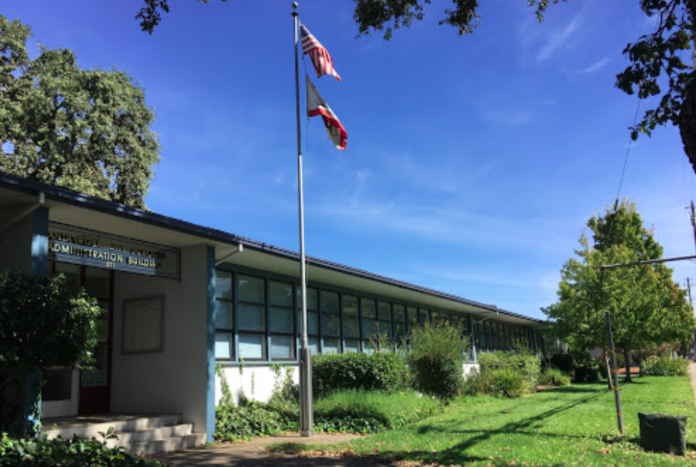
Under Attack

I am an ordinary citizen. I don’t have a high security clearance and get classified information from a large array of expensive government agencies. 

Regardless, it is easy for me to see that my way of life is under attack. By that I mean, the government of The United States of America is under attack. No, not an armed military attack. A concerted effort from not only within the government, but from foreign individuals. 

The man who calls himself President has controllers like the Koch and Mercer families, (and many more); the rich, government people in countries all over the Earth (like Russia and China) and elected officials in our government (like Moscow Mitch, Ted Cruz, and many more) destroying the fabric that holds our country together. Voter suppression, attacks on the Social Security system, destruction of the oldest, most highly supported government agency, The Postal Service, isolating the USA from the rest of the world, leaving WHO (World Health Organization), going against the foundation of the creation of the USA, immigration, promoting White Nationalism, denying health care … it goes on and on. 

I feel like I am being attacked! Leaves a huge hole in my heart as I think of what the future holds for us, the ordinary citizen.

Don Landis

Sebastopol

Harmful

In addition to harming humans, glyphosate is extremely harmful to many pollinators (“Roundup Row,” News, Aug. 5), most notably the honeybee. And we all know what happens when they are gone.

Stevie Jean Lazo

Healdsburg

Chefs Compete to Benefit Napa Food Programs

0

Each year Oxbow Public Market’s “Fork It Over” benefit and St. Helena’s “Hands Across The Valley” fundraiser raise money for the Napa Valley Food Bank and other local safety-net food programs such as Meals on Wheels.

This summer these two events canceled due to Covid-19, and the Napa Valley Food Bank and Meals on Wheels stand to lose approximately $250,000 in funding at a time when the number of families using these programs has nearly tripled due to the pandemic.

In place of these canceled live events, the organizers behind both Fork It Over and Hands Across the Valley are working together to create a new virtual event to help close the funding gap.

On Sunday, Aug. 23, Fork It Over and Hands Across the Valley co-host the first-ever virtual Napa Valley Champions Cook-Off, pitting two acclaimed Napa Valley chefs against each other in a friendly challenge. Both of the participating chefs have won national televised cooking contests, and now North Bay viewers are invited to watch the live-streaming event, which will determine the ultimate champion.

Chef Elizabeth Binder and Chef Chris Kollar—both slated to appear in the showdown—each have experience cooking in front of crowds.

Chef Binder, owner of Hand-Crafted Catering in Napa, helped her team “Beat Bobby Flay” on the popular cooking competition show’s seventh episode of Season 23, which aired on Jan. 26, 2020.

Chef Kollar, recently named Yountville’s 2020 Business Leader of the Year, is best known as the owner of Kollar Chocolates. Chef Kollar was named a “Chopped Champion,” winning a sweet and salty challenge on an episode of Food Network’s “Chopped” that also aired in January of this year.

The upcoming Napa Valley Champions Cook-Off will be held at the Culinary Institute of America at Copia.

Radio personality Liam Mayclem, known as the Foodie Chap on KCBS Radio, will host the streaming competition. Chef Ken Frank (La Toque in Napa), Chef Anita Cartagena (Protéa in Yountville) and Chef Tanya Holland (Brown Sugar Kitchen in Oakland) will be on hand to judge the event.

The free Napa Valley Champions Cook-Off fundraiser will stream via Facebook Live, and viewers can donate money throughout the approximately hour-long program to support The Napa Valley Food Bank and Meals on Wheels. Donations received during the event will be eligible to win $500 in OxBucks, redeemable at any Oxbow Public Market merchant.

The Napa Valley Champions Cook-Off streams online Sunday, Aug. 23, at 2pm. Free. Facebook.com/OxbowPublicMarket.

Open Mic: Working Hands

0

A la supervisora Shirlee, es clave decir lo que uno siente y ser leal con la palabra.

Against the backdrop of rolling hills, pristine rivers and photoshopped wine glasses glistening in the sun, our county continues to peddle tourism ads, inviting strangers to our county while we adapt to our second lockdown. You would not even know the county is breaking down unless you peeled back these layers. What is carefully cropped out are the businesses closing for good, the families set for eviction and the Latinx peoples still recovering from the fires and devastated by Covid-19, terrorized by ICE and still ignored.

¿Al supervisor James, voy a perder mi casa?


¿A la supervisora Lynda, me puede ayudar a solicitar el desempleo?

If you want to continue to offer refreshments to our wealthy guests, honor the laborers. Keep them housed, keep them fed, keep them here. It’s necessary if you want to keep your cups filled with expensive wine, to swish it around your mouths, to taste the ash and exploitation, only to spit it into a bucket. This is your pleasure, and their work.

Al supervisor David, yo cosecho las uvas pero no puedo pagar el vino.

As I write this, the county has just introduced more restrictions on public participation at their weekly meetings. All of this, and still they are only conducted in English. No translator. Essentially, gatekeeping over 1/5 of the people they serve. Mostly poor, mostly working class.

¿A la supervisora Susan, por qué no me dejan sentarme en la mesa?

There is perhaps no better metaphor for the way our county has softened its exploitative history than the “white hand” art piece in Santa Rosa. The white hand, owned by a multimillion-dollar development firm, designed by a white man living a thousand miles away, was built to honor our BIPOC labor class. Recently painted black, it was soon restored to its original color and as the black paint was stripped away the other day, it is another painful reminder of what we find underneath every facet of our socioeconomic experience here in Sonoma County—something old, rich and white.

“Sin embargo, frente a la opresión, el saqueo y el abandono, nuestra respuesta es la vida.”

—Gabriel Garcia Marquez

—-

Roman Campos lives in Santa Rosa. We welcome your contribution. To have your topical essay of 350 words considered for publication, write op*****@******an.com

The Dream of the ’90s Comes Alive at Bear Republic Lakeside Brewpub

The year is 1995. Space shuttle Atlantis docks with the Russian Mir space station; Steve Fossett becomes the first person to cross the Pacific Ocean solo in a hot air balloon; millions watch the O.J. Simpson trial; the San Francisco 49ers win their fifth Super Bowl; and third and fourth generation Sonoma County locals, the Norgrove family, establish the Bear Republic Brewing Company.

Twenty-five years later, Bear Republic Brewing Company has become one of the most awarded and beloved independent brewers in the North Bay and across the U.S., best known for their hand-crafted, time-tested beers like the Racer 5 IPA.

In addition to their main brewing facility in Cloverdale, Bear Republic showcases their brews at their Lakeside Brewpub, located at Roberts Lake in Rohnert Park. Visitors to the brewpub enjoy the company’s wide selection of beers, specialty cocktails, pizza, burgers and more.

This summer, in the wake of Covid-19, the Bear Republic Lakeside Brewpub reopened its massive outdoor seating area on the lake for safe and socially-distant dining, and the brewpub now also offers curbside pickup and beer to-go, as well as a home-delivery option.

Now, in commemoration of Bear Republic’s 25-year anniversary, the company is turning the clock back for an anniversary event featuring a ’90s throwback menu on Friday, Aug. 21.

Old-school fans of the brewery will happily welcome back menu items from yesteryear including the Rocket Burger, featuring fire-roasted mild green chili and cilantro aioli, and The Press grilled chicken sandwich with brie, bacon and caramelized onions.

The special menu also features throwback prices on menu items such as the BRBC Wings and garlic fries, as well as Racer 5 IPAs. The ’90s menu is available on Aug. 21 until supplies last. The Lakeside Brewpub is open for outdoor dining, socially-distant indoor dining and to-go service daily from 11:30am to 9pm. Visitors are asked to wear a mask or facial covering and respect social distancing recommendations to help curb the spread of Covid-19.

For those who can’t make it to the 25th anniversary throwback event on Aug. 21, Bear Republic Brewing Company offers an easy way to find BRBC beers closer to home with its online “Bear Tracker,” which lets users search by Zip Code to find bottles and cans at a store near them.

In addition to classic beers like the Racer 5 and the Hop Shovel IPAs, Bear Republic is still creating new, tasty brews, such as the “Hoppy Pilsner” and “Bear Necessities.”

The latest addition to the company’s Brewmaster Series, the “Hoppy Pilsner,” blends clean malt flavor, classic Pilsner bitterness and hoppy aromas, and is described as a “decidedly West Coast take on the classic lager beer.”

The simple and straightforward “Bear Necessities” is an American-style ale brewed with cascade hops and pale barley. Bear Republic says the release “pays homage to the people who show up daily to keep us going.”

Bear Republic Brewing Company’s Lakeside Brewpub is located at 5000 Roberts Lake Rd., Rohnert Park. Open daily, 11:30am to 9pm. 707.585.2722. BearRepublic.com.

Deputy Sheriffs’ Association Files Legal Challenge with State Board

0

A labor group representing Sonoma County Sheriff’s Deputies has filed a legal action with a state board in charge of regulating disagreements between public agencies and their employees over the County’s decision to add a measure to the November ballot intended to increase oversight of the Sheriff’s Office.

A law firm representing the Sonoma County Deputy Sheriffs’ Association (SCDSA) filed the initial document, known as an Unfair Practice Charge, with the California Public Employment Relations Board (PERB) on Monday afternoon. An attorney with the state’s Office of General Council will review the SCDSA’s charge and, if it is found to have legal merit, the County and SCDSA will enter into further legal proceedings, potentially concluding with a final decision by PERB.

The SCDSA threatened to file the complaint last week after the Sonoma County Board of Supervisors voted unanimously on Aug. 6 to add the Evelyn Cheatham Effective IOLERO Ordinance to the Nov. 3 ballot. The ordinance, identified on the ballot as Measure P, would increase the funding and oversight powers of the Independent Office of Law Enforcement Outreach and Review (IOLERO), a County office tasked with reviewing the Sheriff’s internal investigations and interacting with community members.

The SCDSA is requesting that PERB require the County to rescind the Ordinance on the grounds that the County failed to meet with the law enforcement union in accordance with a state labor law.

In the document filed Monday, the SCDSA, represented by Rains Lucia Stern St. Phalle & Silver, PC, asks PERB to order the County to make the situation right by “rescinding the Ordinance, and refrain from enacting any similar future ordinance unless and until it [the County] complies with its obligations under the MMBA [Meyers-Milias-Brown Act, a state labor law].”

“[If] the County had complied with labor laws, the issues could have been addressed and allowed the ordinance to lawfully proceed for the voters’ consideration,” SCDSA president Mike Vail said in a press release distributed Monday. “Unfortunately, the County’s disregard of basic legal requirements have left the DSA no choice but to pursue formal legal action to enforce its collective bargaining rights with the Public Employment Relations Board.”

Representatives of the County and the Measure P campaign both reject the SCDSA’s legal argument.

“In passing the Ordinance, the Board of Supervisors acted well within its policy making authority and the County is very confident the Board’s action will withstand legal review,” Bruce Goldstein, Sonoma County Counsel, told the Bohemian in an email.

Jerry Threet, a Measure P campaign advisor and former director of IOLERO, called the SCDSA’s charge “a classic political feint, dressed up as a legal challenge.”

“It is designed to bully the County into backing down from putting stronger civilian oversight of the Sheriff on the ballot, despite its broad public support. In reality, the complaint has little to no legal merit,” Threet stated.

A letter attached to the SCDSA’s charge shows that the County offered to meet with representatives of the SCDSA on Aug. 13 or 14. So far, the two parties have not met.

Goldstein said the County is “confident that [the DSA’s] concerns can be addressed in a mutually satisfactory manner once we have a chance to discuss the issues.”

In an interview, Timothy Talbot, an attorney representing the SCDSA, said that the SCDSA declined to meet with the County after the Board added Measure P to the ballot because the “law says it is essentially futile to talk about something that’s already done.”

Instead, the SCDSA is asking PERB to take action to right the County’s alleged wrong.

Ultimately, the decision of a fitting solution is up to PERB, if the SCDSA’s charge makes it that far.

“California law gives the Board wide latitude to fashion a remedy that is appropriate and cures the violation,” Felix De La Torre, PERB’s general counsel, told the Bohemian in an email. “Of course, the Board considers the remedies requested by the charging party, but ultimately orders a remedy that best effectuates the purpose of the law.”

The SCDSA’s full charge is available here.

Sebastopol Center for the Arts Launches Online Fall Season

Founded in 1988 in a one-room office, the Sebastopol Center for the Arts has grown into a multi-disciplinary organization supporting all manner of arts in Sonoma County. Now located on South High Street, the center boasts a spacious venue that exhibits visual arts and various creative events such as the springtime Sebastopol Documentary Film Festival and the autumnal Sonoma County Art Trails self-guided art studio tours.

In 2020, the Sebastopol Center for the Arts saw most of its available programming erased by the Covid-19 pandemic that has kept social gatherings and events on hold. Determined to continue enriching the North Bay through arts, the SCA is transitioning to several new online and socially-distant endeavors for the fall season.

First up, SCA is offering the community a chance to engage with local artists and creatives in a series of fall classes that launch Aug. 24. The program includes lessons for kids, adults and families, with visual arts classes such as watercolor and pastels; dance classes covering salsa and the Cha-cha; and performance arts classes encompassing singing, ukulele, storytelling and more.

These classes are accessible to beginners or intermediate artists or musicians, and the roster of instructors features community members including “Mr. Music” Jim Corbett, theater and dance artist Starr Hergenrather, local storyteller Georgia Churchill, Berkeley Playhouse founder and artistic director Elizabeth McKoy, Emmy-nominated writer and National Public Radio storyteller Doug Cordell, and others.

Most classes take place over Zoom, though some classes, such as the Introduction to Hula Hooping or Ballroom Dancing Class with Katherine DuVal, will be held outdoors at SCA, following advised safety protocols to allow for outdoor social distancing. Some online classes and gatherings only ask for $10-$15 suggested donations. Other six-week sessions range from $60 to $240. Classes are limited, so early registration is recommended.

In September, the online offerings continue as the Sebastopol Center for the Arts produces the SebArts Virtual Open Studios, which takes the place of SCA’s now-canceled open studios programs Art at the Source and Sonoma County Art Trails.

The SebArts Virtual Open Studios launched a new website in mid-July, featuring more than 140 artist profiles accompanied by visual content. Throughout September, visitors will be able to interact with the artists in a slew of virtual events and live-streaming studio tours. A full schedule of upcoming events will be posted soon.

On its website, SCA writes, “This program was designed for maximum flexibility; artists can adapt to evolving circumstances and still provide a rich experience for both visitors and the online public. During the month of September, the site will also feature an online gallery with works for sale by all of the artists. Participating artists will be available virtually, with the potential for by-appointment or drop-in studio visits in person if public health guidance allows. Safety first, beauty next—we all need art to uplift and support us while we shelter through uncertainty. Support your local artists and bring art into your home!”

In October, the Sebastopol Center for the Arts will present its latest virtual art exhibit, “Who Are You?”, which invites artists to explore identity. Juried by Sebastopol artist Barbara Stout, the exhibit will digitally display works that tackle ethnicity, gender, political or religious affiliation and other cultural touchstones that are increasingly changing in the modern era. “Who Are You?” opens online Oct. 10 and will remain online through November.

Sebarts.org / Sebartsvirtual.org

Documentary Filmmakers Make Their Pitch in Virtual Competition

The California Film Institute brings compelling true-life films to the North Bay each spring in the popular Doclands Documentary Film Festival; though this year’s festival was postponed due to the Covid-19 pandemic.

One of the most highly anticipated elements of the annual DocLands festival is the fundraising DocPitch; a forum to support filmmakers with documentaries in production through financial rewards based voting by the public and industry professionals.

This fall, the California Film Institute works to incorporate the DocLands festival in their annual Mill Valley Film Festival, still scheduled to take place in October. Before that happens, CFI hosts DocPitch online this month, beginning with a live stream pitch meeting featuring several filmmakers on Thursday, Aug 13, at 7pm.

For DocPitch, eight filmmaking teams with feature documentary projects currently in early-to-late stages of completion will pitch their ideas, offering details in a pre-recorded video and showing a trailer of the work-in-progress.

After watching the eight documentary pitches, the public is invited to place their vote to help decide which project will receive the $25,000 Audience Choice Award. The jury of industry professionals, including Academy and Emmy Award-winning documentary filmmaker Lee Mock and Grammy Award-winning musician and documentary film producer Speech Thomas, will award filmmaking grants totaling $100,000.

Each year, the DocPitch selection committee in charge of choosing the eight participating films looks for projects that showcase diversity of subject or theme as well as storyteller. They also seek out stories that are surprising or awe inspiring in their narrative as well as cinematic in their approach.

This year’s DocPitch films include 500 Days in the Wild, a feature documentary by Dianne Whelan about her solo journey on the world’s longest trail; American ESPionage, which traces the true story of the United States’ top-secret psychic espionage program as told through the story of Major Paul Smith; Black & Gold, which tells the previously untold stories of African-American gymnasts who must battle racism in the pursuit of Olympic gold, and My Name Is Andrea, covering the life of feminist outlaw and maverick thinker Andrea Dworkin.

Other in–the-work documentaries competing for DocPitch awards are focusing their lens on varied topics of interest such as the darker side of Silicon Valley, the work to disrupt America’s cycle of police violence and a Chilean community fighting to survive as a mining operation drains their water supply.

All DocPitch awards will be announced during a virtual conversation with the filmmakers on Friday, August 21, at 7pm. Participation in these events is free, but registration is required.

The 43rd annual Mill Valley Film Festival is scheduled to take place October 8 through 18. The festival, which holds a reputation for launching new films and creating awards season buzz, is keeping tight-lipped about it’s 2020 schedule for now, though CFI has suspended all public programs light of the circumstances related to Covid-19. The institute will resume regular screenings at its Smith Rafael Film Center when the current directives issued by state and county officials are lifted.

Cafilm.org

Santa Rosa Considers Offering Alternative to Calling the Cops

In the wake of nationwide police-reform protests, North Bay activists are pushing governments to move funding from law enforcement agencies to other social programs, including increased investments in mental healthcare in an effort to offset law enforcement agencies’ workload and keep residents safe.

Partly inspired by activists’ pleas to reallocate funding from law enforcement budgets to preventative social services, two Sonoma County public meetings focused on mental health services last week. Similar discussions took place in Marin County in recent months, but, as in Sonoma County, politicians have not yet found extra funding and seem largely hesitant to take it from law enforcement agencies as some activists have suggested.

On Friday, Aug. 7, Santa Rosa’s recently-formed Public Safety Subcommittee met to discuss crisis response alternatives to armed police dispatch for calls concerning mental health and homeless people. On Tuesday, Aug. 4, the Sonoma County Board of Supervisors voted unanimously to put a measure on November ballots that would create a quarter-cent sales tax to fund local mental health, addiction and homeless services.

At their Aug. 7 meeting, the three members of Santa Rosa’s Public Safety Subcommittee—including Mayor Tom Schwedhelm—were enthusiastic about launching a program like Eugene, Oregon’s Crisis Assistance Helping Out On The Streets (CAHOOTS).

CAHOOTS dispatches teams of two, consisting of an EMT or nurse and a crisis worker with a mental health specialization—both unarmed—to calls for mental health support and other non-violent situations.

Santa Rosa Police Captain John Cregan gave a detailed presentation about CAHOOTS alongside other models of crisis response, including dispatching police officers in polo shirts and jeans, which Cregan says happens in San Antonio, TX. Cregan is also on the Board of Directors of National Alliance on Mental Illness (NAMI) Sonoma County.

CAHOOTS, which launched in 1989 through the nonprofit organization White Bird Clinic, is now a 24-hour service in Eugene and Springfield, Oregon, dispatched through the Eugene police-fire-ambulance communications center and Springfield’s non-emergency police number.

Cregan noted in his presentation that Eugene, which has a population of about 171,000, is a similarly-sized city to Santa Rosa. Eugene Police Department (EPD) received almost the same number of calls for service as Santa Rosa did in 2019, according to Cregan.

In 2018, CAHOOTS responded to nearly 23,000 calls, which accounted for almost 20 percent of EPD’s public safety call volume. Among other things, these calls might have included people experiencing psychosis, suicidal ideation and substance addiction, or people in need of shelter.

Not only does CAHOOTS offer an alternative to police response in these cases, the scope of CAHOOTS work goes beyond that which law enforcement officers provide.

Cregan said that some of CAHOOTS’ work is “out of the scope of the work of the police department or the fire department, but definitely provides a service to their community. So they’ll transport people to get their prescription drugs refilled. They’ll transport people to doctor’s appointments, they’ll even transport people, like, to Social Security.”

Calling these types of support an “upstream approach” to crises, Cregan echoed a sentiment expressed by NAMI Sonoma County Executive Director Mary-Frances Walsh.

“Crisis care is the most expensive form of care,” said Walsh. “We’re spending so much money at the most expensive levels of service, because people need it, obviously. But it’s taking away from the programs that could help avoid crises in the first place.”

Live public comments during the meeting were nearly all in support of Santa Rosa establishing a CAHOOTS-type program, many calling for it to be created by reallocating funds currently within the SRPD budget.

A community member named Jolie called for a more compassionate response to mental health crises, addiction and homelessness.

“I feel very emotional about this topic,” Jolie said. “I was a youth that struggled with drug addiction and was in programs and was a ward of the court. And now I’m sitting in city council meetings and trying to get you guys to see that … adding more money to the police and having them respond to mental health crisis calls and homelessness is not the way of our future.”

An educator named Melissa said, “We need to be supporting the folks in our communities, rather than punishing them—which is essentially what we are doing now. You are punished for being homeless, you are punished for having a mental health crisis.”

Although the current proposals in Sonoma County wouldn’t remove funding from law enforcement agencies—in the case of Santa Rosa, it seems that funding for a CAHOOTS-like program would go through the police department, possibly leading to a budget increase—the council’s discussion indicates renewed thought about a question raised by activists around the country. The core question: Are law enforcement officers best equipped to respond to calls related to a mental health crisis?

Activists who support defunding law enforcement tend to say no.

“Defunding the police moves in the direction of eliminating roles that police have taken on—like crisis mental health support—for which they are not experts and which could be done by trained people for less. So it is making budget decisions that reallocate funds to services like mental health and education instead of policing, and in that sense it certainly eliminates some of the work that police are doing,” Lisa Bennett, a representative of Showing up for Racial Justice’s Marin chapter, told the Marin Independent Journal in June.

Current Alternatives

Kelley Payne, a Santa Rosa resident, recently created a mini-zine called Who to call instead of 911: Sonoma County Resources for when you don’t want to call the cops. Payne was inspired by an image she saw in local activist groups online listing mostly national numbers to call instead of the police.

Who to call instead of 911 is my offering to the community to not only help folks on the ground right now, but also to encourage the public to begin envisioning a world where calling the police is not the first course of action for non-emergency situations,” Payne said.

Payne’s zine presents dozens of wide-ranging resources, from mental health support phone lines to local food banks to domestic violence shelters. However, when it comes to critical mental health care needs, Payne finds that Sonoma County falls short of offering resources that don’t involve police. The zine notes, “Some police jurisdictions have something called the Mobile Support Team (MST) that is available certain hours to respond alongside police. They are clinicians who are much more skilled and trained to respond to mental health crises.”

Payne said, “Being able to receive help from a culturally competent agency or nonprofit, without the threat of arrest or (in some cases fatal) harm could be life changing for the Black, Brown and Indigenous communities in Sonoma County.”

The current annual budget for CAHOOTS is $1.16 million, which includes a fleet of vehicles that allows the team to transport clients. Santa Rosa Vice Mayor Victoria Fleming noted there is more demand for CAHOOTS’ services than their budget enables them to meet.

“I would love this program to be robust and to meet as many of the community’s needs as possible so that we can work toward de-escalation, demilitarization and decriminalization of things that are not actually criminal behavior,” Fleming said.

Mayor Schwedhelm said, “I’m at the point where we need to bring the CAHOOTS model to Santa Rosa. We don’t need to wait.”

Santa Rosa is not alone in looking to implement a CAHOOTS-like program. Denver launched its own version in 2019, and cities across the nation are considering similar pilot programs.

After visiting White Bird Clinic, Oregon Sen. Ron Wyden introduced a national CAHOOTS Act on Aug. 4, which would grant enhanced Medicaid funding to “help states adopt their own mobile crisis response models….”

Critically, the CAHOOTS Act stipulates, “Mobile crisis teams must not be operated by or affiliated with state or local law enforcement agencies, though teams may coordinate with law enforcement if appropriate.”

This is distinct from the model of Sonoma County’s current MST, mentioned in Payne’s zine. MST is a small team of mental health professionals whom law enforcement officers may call, if they choose, to a scene once the officers have deemed it secure.

Since its inception in 2012, MST has gradually expanded the geographical areas it serves and the police departments it partners with, yet budget cuts have also shortened its hours.

In Marin County, the Health and Human Services department operates the Mobile Crisis Team (MCT) which offers similar services to Sonoma’s MST. However, historically, Marin County’s crisis response program has not had much funding either.

According to the Point Reyes Light, staff at Marin’s MCT received an average of 35 calls and responded 18 times each week this May. And, although the county received a one-year state grant to boost the program, MCT will still only have a minute fraction of the capacity of local law enforcement agencies.

Today, Sonoma’s MST has offices in Petaluma, Santa Rosa and Guerneville. Its coverage boundaries extend from Petaluma in the south to Windsor in the north and Sonoma in the east to much of West County. Though it does not have an official partnership with Healdsburg or Cloverdale Police, MST Director Karin Sellite says the team has occasionally been called upon for support in these jurisdictions.

When asked if there is a plan to make MST available 24 hours a day, seven days a week, Sellite said, “We would love to. There’s a desire for it in the community, certainly. We don’t have the budget to be 24/7. We could certainly be, if we had the funding.”

Sellite explained that MST used to be in Santa Rosa and Windsor seven days a week from 2pm until midnight. Then, around 2015, a shift in funding required them to cut their hours back. Presently, MST works from 1–9pm Monday through Friday, but their phones are only on between 1:30pm and 8:30pm, and with no overtime budget, a request toward the end of the shift may not allow time for MST to respond to the call.

In his presentation to Santa Rosa City Council subcommittee, Cregan noted that SRPD utilized MST on 137 calls in the 2018 fiscal year and 101 calls in the 2019 fiscal year, 0.07 percent of the 137,690 calls for service the department says it responded to in calendar year 2019.

While someone calling 911 may request that they would like MST to be dispatched right then, police go to the scene first and decide whether they feel MST will be helpful.

In the worst situations, the difference between dispatching a mental health professional and a law enforcement officer can have lethal consequences if an officer responds to a person’s mental breakdown with force, instead of successfully deescalating the situation.

“Although we have really excellent working relationships with all of the law enforcement entities that we work with, there are individual officers who just love us and they call us all the time—and there are probably officers who don’t really get it and just don’t call us,” Sellite says.

Sellite says that, just before Covid-19 began, MST was starting to pilot with West County Community Health Center to allow the health centers to call them directly rather than going through law enforcement first.

If the quarter-cent Sonoma County tax passes in November, it will generate an estimated $25 million dollars annually, some of which will support the chronically underfunded MST, according to Leah Benz, Sonoma County Program Planning & Evaluation Analyst.

County polling indicates strong support for the measure—greater than 70 percent support in a recent survey of 615 likely voters throughout the county. That said, it will need two-thirds support to pass, which is a substantial hurdle.

Three groups of North Bay business leaders—North Bay Leadership Council, North Coast Builders Exchange and Sonoma County Farm Bureau—have voiced opposition to all proposed tax increases until 2022, citing economic concerns amidst the pandemic.

Supervisor Lynda Hopkins expressed concerns about funded opposition to the measure and said that the county should be thinking about a Plan B to ensure the county’s Behavioral Health programs can be secured and expanded.

How the money would be used is already largely determined.

“The goal of the expenditure plan is to protect programs that are in jeopardy and expand needed services,” Benz said.

Jewel Mathieson: Fearless Activist

She called herself “a breast cancer survivor, dancer, award-winning storyteller and poetry slam champion.” Jewel Mathieson was all those things and much more. She was a wife, a mother, an educator, a fierce truth-teller and a vigilant advocate for medical marijuana who helped put the Sonoma Patient Group (SPG) on the map for cannabis dispensaries in Northern California. Her husband, Ken Brown—a longtime mayor (and city council member) in the town of Sonoma—emailed me to say that Jewel “passed” on August 5, 2020. Brown added, “It was very lovely and very sad too.”

Mathieson leaves behind a huge legacy and a big vacuum no one person will be able to fill anytime soon. The cannabis community, along with her family members and friends, will miss her heart, her soul and her fearlessness in the face of odds that might have seemed overwhelming.

I met her about a decade ago, saw her perform her poetry at the Sonoma Valley Museum of Art, interviewed her several times and wrote about her for local publications, including Valley of the Moon magazine. Born Julia Mathieson in 1957, she grew up in Simi Valley in Southern California and adopted “Jewel” as a nickname, moved to Sonoma, met and married Brown, and gave birth to, and raised, two children: Moses Zion, a son, and Eden, a daughter. 

After she was diagnosed with cancer, she underwent chemotherapy, suffered most of the negative side effects—including nausea and loss of appetite—and turned to cannabis for her mental and physical health. At first she used pharmaceuticals, but they didn’t help. Then she tried a batch of cannabis, but it was mixed with cat hair and made her physically ill. Finally she found a source of good, clean, homegrown cannabis, which helped immensely and led her to become a firm believer in “safe access.”

After her first bout with cancer, Jewel seemed to become more outspoken and defiant. Wonderbread Sonoma preferred white wine to weed, at least on the plaza, but behind closed doors the politico potheads got high and brought creative juice to the town culture. Jewel was a shining dark star.

“I’ve wanted to be an example to all women to challenge the status quo, speak out and make our voices heard,” she told me. Much of her passion comes through in these lines from her poem titled “Altared,” from 2006, in which she wrote, “I no longer pray at the altar of indifference / in my queendom of ether / I AM that magical substance that permeates all creation.” We hear you, Jewel, and we honor your memory.

Jonah Raskin is the author of “Marijuanaland: Dispatches from an American War.”

Inauthenticity cure

0

Some flack from West L.A. beamed me a release for a premium, naturally-alkaline spring water from some Nordic country that hopes to inspire individuals to find their own “pure authenticity.” Ha. When I lived in L.A., I visited the FAQs on the municipal water company’s website. The answer to the question, “Is my water safe to drink?” was a shruggy, “Probably.” I’ve seen Chinatown—everyone knows L.A. and water don’t mix. But here’s the real irony—“authenticity” is a trigger word for creative types, or more precisely, it’s photo-negative, “inauthenticity.” Thanks, flack.

Maybe it’s a Gen X thing, or an artist thing, or a byproduct from all the Fake News we read. Maybe it was because Nirvana’s bassist played a Guild B30E Semi-Acoustic Bass for the Unplugged album, which technically is not totally unplugged.

Fortunately, I was fortified against the pitch, thanks to art. Not in the hippy-dippy “art will save your soul” kind of way but rather through an art installation at the stARTup Art Fair in San Francisco three years ago, when we could still go to such events.

The fair took over the entire Hotel Del Sol and each guest room was converted by an artist into their own exhibit space. Situated in the courtyard by the pool was an artist named Hunter Franks, who was in a booth described by the event’s organizers as a space to open up to a stranger and share a fear to receive a custom, typewritten philosophical prescription from a certified Fear Doctor. So, I sat down and told the Fear Doctor about my fear of inauthenticity. 

This is my prescription:

“Fear of inauthenticity: You have identified what you want to do and who you want to be, that is the hardest part. Now comes the fun part. Take five deep breaths daily as reassurance that you are headed to where you need to be. Take two tablespoons of faith that the process is part of the deep beauty of the journey.”

Instead of washing up writing press releases for water or drowning in printer’s ink, I’m gonna dog-paddle in those two tablespoons of “faith in the process” until I’m safely ashore. Better yet, the prescription is still good. It never expires (unlike the SRRIs in the back of the cabinet). Per his website (HunterFranks.com), “His participatory installations in public space break down barriers and help us reimagine our relationships with each other, our neighborhoods, and our cities.” 

I’ll take a swig of that. — DH

Under Attack

I am an ordinary citizen. I don’t have a high security clearance and get classified information from a large array of expensive government agencies.  Regardless, it is easy for me to see that my way of life is under attack. By that I mean, the government of The United States of America is under attack. No, not an armed military...

Chefs Compete to Benefit Napa Food Programs

Each year Oxbow Public Market’s “Fork It Over” benefit and St. Helena’s “Hands Across The Valley” fundraiser raise money for the Napa Valley Food Bank and other local safety-net food programs such as Meals on Wheels. This summer these two events canceled due to Covid-19, and the Napa Valley Food Bank and Meals on Wheels stand to lose approximately $250,000...

Open Mic: Working Hands

A la supervisora Shirlee, es clave decir lo que uno siente y ser leal con la palabra. Against the backdrop of rolling hills, pristine rivers and photoshopped wine glasses glistening in the...

The Dream of the ’90s Comes Alive at Bear Republic Lakeside Brewpub

North Bay brewing company celebrates silver anniversary with throwback menu on Friday, Aug. 21

Deputy Sheriffs’ Association Files Legal Challenge with State Board

A labor group representing Sonoma County Sheriff’s Deputies has filed a legal action with a state board in charge of regulating disagreements between public agencies and their employees over the County’s decision to add a measure to the November ballot intended to increase oversight of the Sheriff’s Office. ...

Sebastopol Center for the Arts Launches Online Fall Season

Zoom art classes, virtual studio tours and online exhibits keep local arts visible

Documentary Filmmakers Make Their Pitch in Virtual Competition

California Film Institute hosts DocPitch online Aug 13–21 and awards $125,000 in funds.

Santa Rosa Considers Offering Alternative to Calling the Cops

In the wake of nationwide police-reform protests, North Bay activists are pushing governments to move funding from law enforcement agencies to other social programs, including increased investments in mental healthcare in an effort to offset law enforcement agencies’ workload and keep residents safe. Partly inspired by activists’ pleas to reallocate funding from law enforcement budgets to preventative social...

Jewel Mathieson: Fearless Activist

She called herself “a breast cancer survivor, dancer, award-winning storyteller and poetry slam champion.” Jewel Mathieson was all those things and much more. She was a wife, a mother, an educator, a fierce truth-teller and a vigilant advocate for medical marijuana who helped put the Sonoma Patient Group (SPG) on the map for cannabis dispensaries in Northern California. Her...

Inauthenticity cure

Some flack from West L.A. beamed me a release for a premium, naturally-alkaline spring water from some Nordic country that hopes to inspire individuals to find their own “pure authenticity.” Ha. When I lived in L.A., I visited the FAQs on the municipal water company’s website. The answer to the question, “Is my water safe to drink?” was a...
11,084FansLike
4,446FollowersFollow
6,928FollowersFollow