Founded in 1985, nonprofit organization Stewards of the Coast and Redwoods aims to preserve and restore the North Bay’s most precious natural and cultural resources.
Aligning with California State Parks, the Stewards maintain and monitor the Armstrong Redwoods State Reserve, Austin Creek State Recreation Area and Sonoma Coast State Beach, including the Willow Creek watershed. The Stewards also take the time to educate the public on how to safely and ethically appreciate the outdoors.
The last year of pandemics and wildfires tested the Stewards, though the mostly volunteer group is stepping up to help the redwoods recover from last fall’s Walbridge fire, and working to maintain a Sonoma coast that is seeing record numbers of visitors who are escaping the pandemic’s social isolation.
“At Armstrong and Austin Creek, because of the Walbridge fire, those two parks are closed, so our efforts there are focused on fire recovery, and we’ve been doing a lot of work towards opening those parks as soon as possible,” says Michele Luna, executive director of the Stewards. “We have volunteer crews working on getting rid of hundreds of tree logs that were brought down after the fire. We are processing all of that into firewood, we are clearing trails and we’re trying to do as much rehab at the campground at the top of Austin Creek.”
As the public is forced to stay away from these beloved parks, Luna says that the Stewards and many small businesses in the Russian River area are seeing revenue drops due to lack of visitors. Currently Stewards and the state parks department are working together to open the parts of Armstrong Woods that were untouched by the Walbridge fire, though the timeline for reopening there is still uncertain.
What’s not uncertain is the massive surge of crowds flocking to the coastline since the pandemic’s onset. Normally at this time of the year, the Stewards are out at locations like Bodega Head to help guide visitors on whale watching weekends.
As of now, whale-watching gatherings are on hiatus due to the pandemic, though many Stewards volunteers are on the coast working to repair and maintain pathways and other areas, and monitoring seals and seabirds as per usual.
“There’s always trees and trails to clear [on the coast], and we’re getting close to the time of year where we need to start working on the steps that lead down to the various beach locations,” Luna says. “That’s something that traditionally our volunteers do and are very proficient at.”
While there is work everywhere, Luna notes that the Stewards are taking on more volunteers, who are inspired to help in the fire-recovery efforts or who simply want to get out of the house during Covid.
“They work really hard, but they have a smile on their faces because they feel like their work is worthwhile and they can see the results from it,” Luna says of the trail-crew volunteers.
The Stewards are also taking on more citizen science volunteers, who collect data on the coast. Those endeavors include the Pinniped Monitoring Program, where volunteers help ensure the protection of harbor seals who live at the mouth of the Russian River and elsewhere on the coast.
“We also have docents that just rove the trails and monitor conditions and help park visitors as they need to,” Luna says.
The monitoring programs allow the volunteer Stewards to maintain social distancing at the beach, where Luna says many visitors are more relaxed about rules than they would be elsewhere.
“I got a report from a whale watcher who went out on his own, and he said only about half the people were wearing masks,” Luna says. “That’s not a good sign, and that’s one of the reasons we are having to hold back, because people are not abiding by the rules.”
Luna also worries for the safety of visitors who visit the coast without understanding the ocean’s powerful undertow. In January, rough ocean conditions drowned four people in one weekend, including a father who died trying to save his two young children who were swept out to sea.
“That was just horrific,” Luna says. “Unfortunately, it’s just people not paying attention to the signage, or paying attention to the conditions. We talk constantly about what more we can do.”
As a member of the Sonoma Marine Protected Area Collaborative, the Stewards is also looking into adding signage and other alerts about where the Marine Protected Areas are, and what regulations are in place in those areas.
“When we were looking at that issue, we found that there could be better signage in some areas, and signage in different languages,” Luna says. “We are trying to look at how we can improve education.”
As part of its educational programming, the Stewards of the Coast and Redwoods hosts an online “Outdoor Ethics Awareness” seminar on Thursday, March 4, at 3pm.
Longtime Stewards volunteer William Nay, a.k.a. Father Nayture, leads the online session. Nay is an experienced naturalist and an educator and trainer with the national programs Leave No Trace and Tread Lightly. He will share tips and techniques to become more aware of our surroundings to minimize our impact on the land.
In addition to online sessions and socially distant work, Luna hopes the Stewards can restart programs like the whale watching weekends as more volunteers are vaccinated against Covid and are comfortable to resume gatherings at the coast.
“The best time to see the whales and calves coming north is in March and April, and if people just want to go out themselves, I have a suspicion there might be a few people out there who know enough about watching whales who can give them direction,” Luna says. “We just encourage everybody to abide by the rules; wear your mask, social-distance, and get out there and enjoy.”
Register for the Outdoor Ethics Awareness seminar and find more information about the coast and redwoods, including volunteer opportunities, at Stewardscr.org.
Larry Peter may have bought his beloved Petaluma Creamery a little more time.
In a last-minute twist, a representative of the historic business delivered a cashier’s check for $844,328.17 to Petaluma City Hall on Monday afternoon, a substantial payment which covers more than half of the company’s debt to the city of Petaluma for unpaid water fines and fees accrued since Peter purchased the Creamery in 2004.
Jordan Green, an assistant city attorney, told the Bohemian that the Creamery’s Monday-afternoon payment will cover the business’s unpaid wastewater discharge bills. The company has yet to pay additional sewer capacity rental fees ($426,096.20) and permit violation fines ($552,248.30).
Green did not immediately respond to a request to clarify how the city calculated its total bill of $1.425 million, since the three separate categories total $1.822 million.
The latest chapter in a long-running battle between the City and the Creamery began on Dec. 21, when City Manager Peggy Flynn sent a letter to Peter threatening to effectively shut down the Creamery, at least temporarily, if Peter did not complete a long list of tasks by March 1. The threat letter, which came after the city had worked with Peter to comply with safety and environmental requirements for years, caused a rush of work at the Creamery.
In a Friday, Feb. 26, letter to Peter, Flynn acknowledged the Creamery’s efforts over the past two months to comply with city regulations. However, due to uncompleted work and an unpaid debt, Flynn said the city would revoke the business’s wastewater discharge permit on Saturday, March 13, if the business missed the March 1 deadline.
So far, it is unclear whether the Creamery’s 11th-hour payment will change the city’s plans laid out in Flynn’s Feb. 26 letter. In a statement on Monday, March 1, Green said only that city officials “will meet this week to further discuss next steps.”
But, in her Feb. 26 letter, Flynn stated that the Creamery would have to pay its total outstanding wastewater debts and fines by March 1, rejecting Peter’s request of the city to allow him to follow a payment plan.
The city’s decision not to accept a payment plan may be explained by Peter’s earlier failures to pay fines and fees in a timely fashion.
As the Bohemian has previously reported, the Creamery, which Peter purchased in 2004, owed the city $604,720 by September 2010. In November 2018, a judge ordered Peter to pay the city $624,046 in 24 installments. Peter did not pay the installments, according to the city.
In addition to paying the fees, the Creamery will need to prove it has cleaned up the water it is pumping into the city’s treatment plant.
According to Flynn’s Feb. 26 letter, the city believes the Creamery’s wastewater pollution levels may still test higher than the levels delineated by the company’s wastewater discharge permit. The discharge permit allows the Creamery to send wastewater to the city’s Ellis Creek Water Recycling Facility for further treatment, provided the wastewater is not too dirty. The city is currently reviewing recent water-quality data provided by the Creamery, according to Flynn’s letter.
Peter did not respond to a request for comment.
Unfinished Work
Flynn’s letter, and other documents obtained by the Bohemian,indicate a flurry of work at the Creamery as the city’s March 1 deadline loomed.
On the morning of Feb. 10, a neighbor filmed a mysterious column of white smoke or steam approximately 150 feet tall emanating from the Creamery. Green said the city is still looking into the event.
A week later, on Feb. 18, city officials posted a “stop work” notice at the business after inspectors discovered crews had carried out unpermitted demolition work on the premises.
Green said on March 1 that the workers obeyed the stop work notice and that the city is currently reviewing several work permit applications.
In another step forward, workers finished removing the ammonia used in the cheese-making process from the Creamery on March 1, according to Green. The Creamery’s decision to remove the ammonia, rather than get approval to run the ammonia storage system safely, takes one item off of the Creamery’s to-do list, formally known as a Process Hazard Analysis (PHA).
State regulations require some businesses, including the Creamery, to complete a PHA once every five years based on industry best practices to ensure safety and regulatory compliance.
“Petaluma Creamery had a PHA in 2015, but never submitted proof to the City of completion of all the recommendations from the 2015 PHA,” Green told the Bohemian. Green says the Creamery hired a contractor to oversee the completion of the 2015 PHA and a subsequent 2019 PHA, but has yet to prove it has completed all of the items.
According to Flynn’s Feb. 26 letter, the Creamery claims to have completed all of the highest-priority items on its PHA. City officials are reviewing the Creamery’s work to determine whether it was done properly.
Lastly, the Creamery is required to install a new fire alarm monitoring system, using a licensed contractor, before April 1. Although the Creamery has started that work, the company it hired to install a new alarm system does not have the proper license to complete the work, according to Flynn’s letter.
Last Chance
If the Creamery’s wastewater permit is revoked, Peter may submit an application for a new one. However, the city’s review process generally takes three months, which would mean that the Creamery wouldn’t be able to operate as it currently does.
Peter could possibly continue operating without a discharge permit while Petaluma processes a new permit application, albeit using a more complicated water-disposal method. For instance, Flynn’s letter suggests that the Creamery might be able to haul wastewater to Santa Rosa’s Laguna Treatment Plant.
If the Creamery loses its wastewater permit, even temporarily, this chapter of Peter’s long-running feud with the city will likely have bad consequences for his employees.
In a sign of the city’s concern about this outcome, Flynn’s Feb. 26 letter includes information about how the Creamery’s employees can sign up for unemployment benefits.
Whatever does happen, Monday’s cashier check raises the question: If Peter had access to this kind of money all along, why didn’t he pay up earlier?
Utility giant Pacific Gas & Electric accused two of its former employees of accepting bribes to funnel business to a waste-hauling company after the Camp Fire, the deadliest wildfire in California history.
One supervisor for PG&E allegedly had his driveway paved on the power company’s dime. A subordinate is accused of having received a bribe in an unorthodox property transfer of a multimillion-dollar house in a wealthy suburb of San Francisco.
PG&E alleges that in exchange for these kickbacks, the employees provided lucrative clean-up jobs to Hayward-based Bay Area Concrete Recycling.
The allegations track closely with the results of an investigation last year by ProPublica and the Bay City News Foundation, which found that PG&E had overlooked numerous warning signs when it hired Bay Area Concrete.
The company is owned and managed by the husband-wife team Yadwinder “Kevin” Singh and Preet Johal, according to local and state documents. The firm was tied to illegal dumping on federally protected wetlands and had engaged in a long conflict with regulators in the city of Hayward, where Bay Area Concrete operates a dump. Later, the news agencies revealed a suspicious real estate transaction that connected Singh and one of the PG&E employees. Singh did not respond to requests for comment.
PG&E’s filing is in response to a breach of contract lawsuit filed against the utility in October by Bay Area Concrete. Dawn Sweatt, an attorney for Bay Area Concrete, said her clients “vehemently deny” the allegations by PG&E. “The allegations are patently false and not supported by the evidence,” she said. “The litigation process will make this clear in time.”
The accused PG&E employees, Ronald Huggins Jr. and Ryan Kooistra, did not respond to requests for comment. Huggins retired, and Kooistra sold his home and moved out of state after being confronted by PG&E investigators, the counterclaim by PG&E said.
In a statement, PG&E spokesperson James Noonan called the alleged actions of Bay Area Concrete “completely unacceptable.”
“We will pursue every available action to remedy the situation and do right by those that we have the privilege to serve,” Noonan said. “As we have stated previously, PG&E will continue to hold ourselves and those that do work on our behalf to the highest ethical standards.”
The new court filings show that PG&E had a longer business relationship with Bay Area Concrete than previously known. PG&E first started disposing of waste in the company’s Hayward yard in 2016, and the business expanded to include the cleanup of PG&E yards throughout Northern California.
That business grew substantially in November 2018, when a PG&E transmission line sparked a wildfire in Butte County that destroyed more than 18,000 structures and killed 85 people. PG&E hired Bay Area Concrete to dispose of waste from hydrovac trucks — special vacuum trucks that use pressurized water for precise excavation. Bay Area Concrete opened a dump in Paradise to take the waste from the cleanup.
In its suit, Bay Area Concrete alleged that it had saved PG&E millions of dollars by doing disposal work in Paradise more cheaply than a competitor. Bay Area Concrete also said that it continued to work for PG&E as other companies fled when the utility declared bankruptcy in January 2019. At the time, PG&E owed Bay Area Concrete nearly $4 million, according to bankruptcy filings. Bay Area Concrete stuck around and opened a new dump on PG&E property in Petaluma. According to the disposal company, it racked up $14 million in unpaid invoices. Bay Area Concrete has said that PG&E’s accusations of fraud are false and the bankrupt utility was just trying to get out of paying its bills.
PG&E’s counterclaim, filed earlier this month, names Bay Area Concrete, both former PG&E employees, Singh, Johal, several of their other companies and Bay Area Concrete CEO Kevin Olivero as defendants.
PG&E alleges that Kooistra and Huggins steered PG&E contracts to Bay Area Concrete and other companies controlled by Singh and Johal. As a result, the value of Bay Area Concrete’s contracts with PG&E increased “exponentially” over a period of four years, the lawsuit said. Meanwhile, competing companies lost work with PG&E.
PG&E did not say how much the utility believes it was overcharged by Bay Area Concrete as it continues to investigate. Public records show that the company’s income increased substantially, from $16.5 million to $43.5 million, after receiving a contract to dispose of waste in connection with the Paradise fire.
Here’s how the scheme worked, according to PG&E’s allegations in court filings. Bay Area Concrete overcharged for travel time while hauling and billed PG&E for work that was never done or was unnecessary. The complaint alleges that Huggins and Kooistra approved the overbilled work in exchange for kickbacks. The pair were careful to keep Bay Area Concrete’s purchase orders low enough that Huggins would not have to seek approval from his supervisors.
To pay the bribes, Singh used a series of real estate transactions involving a 5,600-square-foot home in Saratoga to transfer money to Kooistra, PG&E alleges. The Bay City News Foundation and ProPublica first reported the exchange, which one expert described as possible money laundering.
PG&E’s court filing alleges that Regal Rose LLC, a shell company established by Singh, was also in possession of a property in Arizona when it was transferred to Kooistra.
Another shell company, CCI Management, was owned by Kooistra and acted as a subcontractor for Bay Area Concrete in Paradise. According to PG&E’s complaint, CCI did hauling work for Bay Area Concrete, which would submit invoices directly to PG&E. PG&E paid CCI $150,000 over five weeks without knowing that the company was owned by Kooistra, a violation of PG&E employment and supplier policies. PG&E alleges that Huggins was aware of Kooista’s actions and did not disclose them.
In late 2019, PG&E learned of the alleged fraud and launched an investigation. Kooistra was interviewed in January 2020 by PG&E investigators, who confronted him with evidence of his interest in companies connected to Bay Area Concrete. According to the countercomplaint, Kooistra denied any wrongdoing or having an interest in the companies, despite the interest being disclosed in public records. PG&E asked Kooistra to turn over his company-issued phone, which he did, but he refused to provide his passcode so investigators could access text messages and other data. Two days later, Kooistra quit his job, according to the complaint. He sold his home in Rocklin and moved to Arizona.
PG&E alleges that Huggins approved false invoices and concealed fraudulent charges throughout PG&E’s contract with Bay Area Concrete. In exchange, the lawsuit alleges, a company linked to Johal and Singh repaved Huggins’ driveway while they were supposed to be working on a PG&E job. When confronted by PG&E investigators, Huggins told the investigators he had paid the $16,750 bill in cash, which he happened to have on hand in his house. Four days later, he retired.
In February 2020, PG&E canceled Bay Area Concrete’s contracts and publicly announced its belief that the waste company had committed fraud.
Butte County District Attorney Michael Ramsey said last year that PG&E alerted his office to the allegations against Bay Area Concrete. Ramsey said in an email that he received no further information from PG&E but had determined that his office did not have jurisdiction in the case.
Sonoma County District Attorney Jill Ravitch’s office sent a search warrant to PG&E Wednesday seeking information as part of the county prosecutor’s ongoing investigation into the utility’s role in starting the October 2019 Kincade Fire, the company revealed in an annual financial report published today.
“On February 24, 2021, the Sonoma County District Attorney’s Office sent a search warrant to the Utility through its counsel in connection with the investigation [into the Utility’s role in the Kincade Fire]. The Utility expects to produce documents and respond to other requests for information in connection with the investigation and the search warrant,” a 400-page report PG&E filed with the federal Securities and Exchange Commission (SEC) states in part.
The news comes seven months after CAL FIRE released a press release on July 16, 2020, stating that “the Kincade Fire was caused by electrical transmission lines owned and operated by Pacific Gas and Electric (PG&E) located northeast of Geyserville. Tinder dry vegetation and strong winds combined with low humidity and warm temperatures contributed to extreme rates of fire spread.”
The Kincade Fire ignited on Oct. 23, 2019. The fire injured four first responders, burned approximately 78,000 acres, and destroyed 374 structures, including 174 homes.
The SEC report also states that PG&E entered an agreement with the Sonoma County District Attorney’s Office in which PG&E agreed to waive certain statutes of limitations in the case for six months. The SEC report states that the agreement delays the expiration date of some unspecified charges from Oct. 23, 2020, to April 23, 2021.
As of Wednesday, Feb. 24, the utility and its parent company were facing 22 legal complaints related to the Kincade Fire, according the SEC report. A judge at the Sonoma County Superior Court will determine whether the cases will be considered individually or in a coordinated case, the SEC report states.
In a statement, a PG&E spokesperson said that the company has cooperated with county and state investigators following the fire.
“We received this request for information from the Sonoma County DA, are currently reviewing it, and will respond within the time requested,” the spokesperson said.
The company is conducting its own investigation into the Kincade Fire, but does not have access to the information CAL FIRE provided to the Sonoma County District Attorney’s Office, the spokesperson added.
The search warrant was first reported by ABC 10, a Sacramento TV station, which reported on Wednesday that a PG&E vice president had acknowledge that the company’s equipment played a role in the Kincade Fire.
“We understand at a high level that our equipment was responsible for that fire,” Aaron Johnson, PG&E’s vice president for wildfire safety, reportedly said during a workshop hosted by the California Public Utilities Commission this week.
The Sonoma County District Attorney’s Office did not immediately return a request for comment on Thursday afternoon.
A former state court judge appointed to serve as trustee for PG&E’s “fire victims” re-launched on Wednesday a massive lawsuit in San Francisco Superior Court against PG&E’s former officers and directors.
The suit alleges that the defendants breached their fiduciary duties to PG&E as officers and directors and argues that they should be held liable for damages resulting from the 2017 North Bay fires and the 2018 Camp Fire.
The background to the suit is complicated.
In order to exit the Chapter 11 bankruptcy case it filed in the U.S. Bankruptcy Court for the Northern District of California in 2019, PG&E proposed a plan of reorganization that contained the terms by which PG&E would resolve its prodigious liability to creditors.
Among the creditors were victims of devastating wildfires in PG&E’s service territory prior to the bankruptcy.
Many of the fire victim claimants were injured by or suffered losses as a result of the fires but their claims had not been adjudicated and accordingly, the amounts they were owed by PG&E were not determined before the bankruptcy.
Given the number of fire victim claimants and the complexity of their claims, it was not feasible for there to be an individual determination of the amount of their individual claims during the bankruptcy case.
In its plan, PG&E proposed to deal with that practical problem by creating a special trust called the “Fire Victim Trust” to be used to pay the fire victims as their claims were resolved.
In order to fund the payments to these claimants, PG&E proposed to transfer substantial assets to the trust.
Among the assets used to fund the trust were approximately $6.75 billion in cash to be paid in three installments and $6.75 billion worth of common stock in the reorganized PG&E. In addition, PG&E proposed to transfer to the trust all of PG&E’s legal rights and claims against the directors and officers who served prior to the bankruptcy.
The transfer gave the trust the right to take over a “derivative” lawsuit previously filed in San Francisco Superior Court on behalf of PG&E. A derivative suit is an action filed in the name of a company by a shareholder when the company improperly fails to take legal action that is alleged to be in the company’s interest.
The derivative suit was filed in 2018 but was put on hold by the bankruptcy filing. The suit alleged that the directors and officers had breached the fiduciary duties they owed to PG&E.
The potential that the suit would generate significant funds was enhanced by the fact that PG&E, as is customary with large corporations, maintained “Directors and Officers Liability Insurance” that, under certain circumstances, would cover liabilities incurred by a company’s officers and directors during the course of their service.
In order to access those potential assets, the trust assigned all PG&E’s rights to the insurance to the trust.
PG&E’s plan was approved by the bankruptcy court on June 20, 2020 and it took effect shortly thereafter.
John K. Trotter, a retired state court judge, was appointed as the trustee for the trust. Trotter had experience with fire-related litigation, having “formulated a resolution program for the 2007 San Diego fire cases and supervised the resolution of all the victims’ claims,” according to a filing in the bankruptcy proceeding.
On Wednesday, Trotter took a key step for the fire victims by filing a 53-page amended complaint in the pending lawsuit.
The complaint asserts that 15 former directors and 10 former officers breached their duties to PG&E in connection with the group of 2017 North Bay fires and also with respect to the 2018 Camp Fire.
The North Bay fires, the complaint alleges, were 21 major wildfires that collectively burned 245,000 acres, caused the evacuation of 100,000 people, destroyed 8,900 structures and killed 44 people.
The Camp Fire burned 153,336, destroyed 18,804 structures, and caused the death of 85 people, according to Cal Fire.
The complaint charges the defendants with liability for each of the incidents, though for different reasons.
The complaint alleges that the damage from the North Bay fires could have been prevented if PG&E had “implemented a de-energization program,” in which electricity to power lines can be shut off in dry and windy conditions.
PG&E’s recent “Public Service Power Shutoffs” employ de-energization as a strategy to reduce the risk of fire in hazardous weather conditions.
With respect to the Camp Fire, the complaint alleges that the fire was caused by old and failing equipment. According to the complaint, the defendants were responsible for failing to inspect and maintain the equipment despite knowing that it could cause great damage in dangerous conditions.
The complaint states that “Defendants’ gross failure to provide oversight and intervention … has led to billions of dollars in corporate liability in excess of the entire market capitalization of the Company.”
The complaint notes that during the period that the defendants served, many were collecting substantial compensation, including bonuses. Charts embedded in the filing purport to show that Anthony F. Early, a former PG&E chairman, received more than $35 million in compensation over the years 2014 to 2016.
The complaint also faults the company and defendants for failing to “clawback” (that is, recover) excessive compensation paid to directors and officers in the past.
“The Defendants put profits before safety, which has resulted in the two separate catastrophic events which are the subject of this lawsuit.”
PG&E has been subject to ongoing monitoring in a criminal case pending in federal court in San Francisco presided over by U.S. District Judge William Alsup.
The complaint quotes Judge Alsup stating at a Feb. 3 hearing that “PG&E has been a terror, T-E-R-R-O-R, to the people of California.”
Santa Rosa leaders want to hear what long-term changes residents want to see in their city.
The effort is part of a community-wide plan to gather feedback to update the general plan for the city.
City officials are asking residents to complete an online survey — available in English and Spanish — here.
From resiliency and sustainability to inclusivity and housing, the new plan will determine how the city will develop housing, infrastructure, community amenities and other improvements, laying the foundation for how the city will grow and change over the coming years and decades.
“General plans provide a shared vision for the future of our city,” Mayor Chris Rogers said. “They transform the neighborhoods and the environment where people live, work, learn and play.”
Residents interested in receiving additional information about the plan or in learning how to get involved in the discussion may visit SantaRosaForward.com.
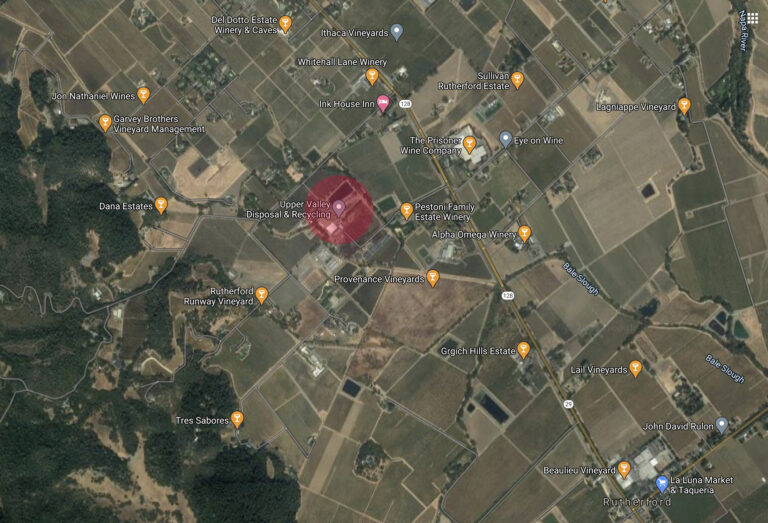
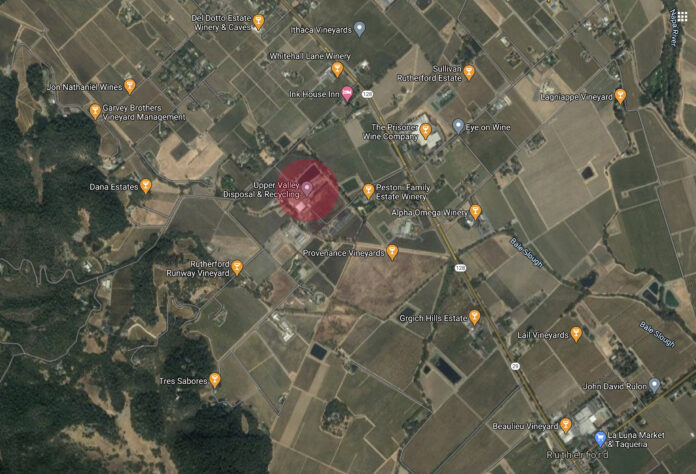
A group of Napa County neighbors fed up with odor, noise and light intrusions are pushing for a review of how Upper Valley Disposal Service operates its Whitehall Lane facility.
About 35 residents, county officials and UVDS representatives met via Zoom Tuesday evening to have what county Supervisor Diane Dillon hoped would be “a productive dialogue” regarding years of complaints about the facility’s impacts on the local community.
Neighbors in the bucolic agricultural area say they’ve endured terrible smells, loud noises and bright lights that intrude on their sleep and prevent them from enjoying their homes and property.
Whitehall Lane resident John Williams said the facility’s impacts are so bad that “you’re ready to sell your property.”
“This is not a small problem,” Williams said.
Another neighbor, Lauren Pesch, said the odors ebb and flow during different times of the year but “when it’s smelling, it smells really bad.”
“For the past three or four years, we haven’t been able to enjoy where we live,” Pesch said.
Some residents said they’ve complained about the facility, which handles recycling and processes compost, to county and company officials but still feel like their concerns are falling on deaf ears and would like an independent third-party to review the facility’s operations.
Christy Pestoni, UVDS chief operating officer, assured the neighbors that the company is working hard to address their concerns and has taken several steps to reduce the facility’s impacts.
“We’ve made a lot of what we feel are accomplishments in the past 20 months,” Pestoni said, noting that she has met with neighbors a number of times to listen to their concerns.
The company has taken on a new management team, worked to clean up the facility and added a new aeration system to a holding pond that in the past has been a source of odors, she said.
She also said UVDS has installed new equipment and improved the way they process grape pomace from the wine industry in an effort to reduce odors and have decided against accepting commercial food waste at the facility, which has been processing recycling since 1963 and compost since 1966.
This year, the company does plan to start accepting residential food scraps equal to 1 percent of the of all the household green waste and grape pomace it processes, which totals roughly 20,000 tons in a typical year.
Pestoni said the residential food scrap program won’t require additional trucks or operating times at the facility.
Also, the company has made changes to the facility’s outdoor lighting and told neighbors that if the lights are still bothering them “to reach out and let us know,” Pestoni said.
UVDS has also taken steps to reduce some of the noise neighbors have complained about and plans to add more than 200 trees and shrubs around the facility in order to help screen it from nearby homes, she said.
Bryce Howard, the company’s general manager, said they’re looking at additional steps they can take to further mitigate the noise issues.
“There have been dramatic improvements and there’s still more to do,” Howard said.
Pestoni, who said her family has lived in the neighborhood since 1921, also offered to give people a tour of the facility if they’re interested.
Peter Ex, the county’s solid waste program manager, said the facility’s operations were “trending in a positive direction” and that he will work with the company on a better process for neighbors to report odor issues.
Dillon, the Napa County supervisor, also sits on the Upper Valley Waste Management Agency board, which has some oversight responsibilities for the facility.
She said she would look into to the neighbors’ request for a third-party review of the facility’s operations and get back to them.
In the North Bay’s agricultural community, Larry Peter is often presented as a hardworking and charitable dairyman who took a big risk by going into debt to purchase the Petaluma Creamery in 2004.
However, public records obtained by the Bohemian show that the story is more complicated. Over the past 20 years, Peter has racked up complaints with city, county and state regulators, and often failed to fix problems in a timely fashion.
Instead, Peter and his attorneys often cite his central role in the North Bay’s historic dairy industry and his business’s financial struggles as a reason regulators should go easy on him.
For a long time, Peter’s strategy seems to have worked well enough, but, as the Bohemian reported last month, Peter’s time running the historic Petaluma Creamery may be coming to an unceremonious end.
In a Dec. 21 letter to Peter, City Manager Peggy Flynn, citing the Creamery’s history of unpaid fines and uncompleted safety requirements, threatened to effectively shut down the business at the end of February if it does not complete a long list of safety improvements. Two months later, as the deadline nears, it appears Petaluma is sticking to its threat, despite Peter’s request for extensions.
In a Feb. 5 letter to Peter, Flynn stated that the city is still considering placing a lien on the Creamery to collect some of the business’s unpaid water use fees and fines, which city officials say total $1,425,258. On Friday, Feb. 19, Flynn told the Bohemian “we are working with the Creamery to gain compliance and that effort continues. There have been no extensions granted, and the February 28 deadline currently stands.”
The prospect of closing the historic Creamery, even temporarily, no doubt dismays members of the North Bay’s agricultural community. However, Peter’s track record begs the question: when do repeated code violations require a stronger response from regulators?
For instance, at the same time the Petaluma Creamery racked up fines and unpaid water bills in Petaluma, officials from the Sonoma County permitting and North Coast Water Quality Control Board attempted to get Peter’s Two Rock dairy to comply with environmental and building regulations.
And, although Peter and his attorneys routinely referenced the struggles of Peter’s businesses in conversations with regulators, public records show Peter has taken out loans to purchase numerous North Bay properties instead of paying off his decade-old debt to the city of Petaluma or bringing the Creamery into compliance with safety requirements.
Peter did not reply to a request for comment.
County Complaints
Over the past 20 years, Peter’s dairy business, located on Spring Hill Road in Southern Sonoma County’s dairy-heavy Two Rock area, was under scrutiny by Permit Sonoma, the county’s building code enforcement agency, for over a decade, and raised serious concern from a regional water regulator.
Between 2001 and 2004, inspectors with Permit Sonoma opened a series of investigations about the state of Peter’s property.
The range of alleged code violations included operating a creamery out of an unpermitted building, burying trash on the property, completing grading work without a permit and installing a handful of unpermitted buildings to house workers and host visitors on educational tours.
In a July 28, 2006 hearing with Permit Sonoma officials in front of an administrative law judge, Peter, who had recently purchased the Petaluma Creamery in downtown Petaluma, said he thought the structures were allowed by the property’s agricultural zoning or, in the case of the Creamery building, which he said was built in 1947 by a previous owner, were grandfathered into the property.
Peter told the judge he purchased the Creamery, in part, to comply with Permit Sonoma’s investigation. Now, he said, the Creamery was on the verge of bankruptcy.
The administrative judge ultimately ordered Peter to receive proper permits for some of the buildings identified by Permit Sonoma, to stop making cheese on the property, fix some other problems on the property and to pay fines for some of the unpermitted work discovered by inspectors.
But the case, which might have seemed close to complete, remained open for nearly a decade. After years of stops and starts, all of the necessary work was finally permitted and completed in October 2014. Then, all that remained was to come to a financial settlement, to cover Peter’s unpaid fines and cover the county’s expenses.
Eric Koenigshofer, an Occidental attorney and former West Sonoma County supervisor, represented Peter in his drawn-out fight with the county’s building permit agency.
On Dec. 8, 2015, Deputy County Counsel Holly Rickett responded, in frustration, to a May 2015 letter in which Koenigshofer laid out Peter’s defense.
“In sum Mr. Peter ‘argues’ that he is a good guy who provides important components to the Sonoma agricultural economy; that he did not rebuke the county and didn’t benefit financially from the delay; that he made some mistakes; and that ‘financial constraints’ kept him from coming into compliance sooner,” Rickett wrote.
Still, despite Rickett’s skepticism about whether Peter’s story would hold up in front of a jury, she told Koenigshofer that the county had agreed to knock down the fine considerably.
During the July 2006 hearing, a county permit official calculated Peter’s outstanding fines at $33,775, if Peter failed to file for the proper permits within 30 days.
By December 2015, Rickett said that the total bill had reached $83,717.88, due to daily non-compliance fines in addition to county lawyer’s fees.
But, instead of standing firm, Rickett told Koenigshofer that the county had agreed to drop a daily fine against Peter and cut the five years of county lawyers’ fees by 15 percent.
On Jan. 5, 2016, the Sonoma County Board of Supervisors approved a $35,000 settlement with Peter for his permit violations, a meeting document shows. So, despite spending almost 10 years trying to get Peter’s property into compliance, the county settled for little more than it asked for in the 2006 hearing.
Koenigshofer did not reply to a request for comment about his work for Peter.
Waste Waters
But that wasn’t all. While county officials hounded Peter for building violations, the Sonoma County District Attorney’s office and state regulators pursued him for spilling nearly 50,000 gallons of wastewater into a streambed near his dairy property.
The saga began on Jan. 2, 2009, when state environmental regulators, responding to a tip, discovered dairy employees attempting to pump the manure waste water out of a stream bed down the hill from Peter’s Spring Hill Road dairy.
According to an account written by the state inspectors, dairy employees said the manure water spilled while they were trying to transfer it from one holding pond to another, days ahead of a projected rainstorm. Instead, the waste water spilled from the transfer pipe and down the hillside, where it began to form pools—some of them two-feet deep—in a dry stream bed nearly a mile from the sewage storage ponds on Peter’s dairy.
According to an account of the spill by a North Coast Regional Water Quality Control Board (NCRWQCB) inspector, dairy employees hauled away 13 truckloads of the manure water on the afternoon of Jan. 2, for a total of 49,100 gallons of manure water. The dairy employees later used 35 truckloads of fresh water to wash the creek bed clean.
One of the neighbors told state regulators they first saw the spill on the afternoon of Dec. 31, two days before the state investigators arrived.
Two of Peter’s neighbors told inspectors at the time that manure spills were a common occurrence, though maybe not on the same scale.
“Manure water releases similar to this have been an ongoing problem, but agencies have not done anything about it,” one neighbor was quoted as saying.
In a July 2009 letter to the Sonoma County District Attorney’s office, Luis Rivera, then the acting assistant executive director of the NCRWQCB, recommended the District Attorney’s office press criminal charges against Peter for failing to notify regulators of his plans to move the wastewater, or of the spill once it happened, a violation of the state’s Water Code.
“Mr. Peter never filed a report of waste discharge prior to pumping out his pond, and allowing the waste water to flow to the creek,” Rivera wrote in his letter to county officials.
The spill was particularly notable because of the location of Peter’s dairy in the Stemple Creek watershed, a dairy-rich area surrounding a creek which bisects the Sonoma-Marin County border.
The Stemple Creek watershed, which is home to many dairies, was added to a federal list impaired waterways in 1990.
The watershed has been listed as “impaired” since 1990, a undesirable designation under the federal Clean Water Act, which indicates that a body of water has excessive levels of pollutants. In the case of Stemple Creek, it’s an excessive amount of nutrients and sediments in large part tied to the region’s heavy concentration of industrial agriculture operations.
A 1997 Water Board report states that the “Manure from concentrated animal feeding operations (dairies and poultry) has been identified as the primary source of the impaired water quality conditions in the Stemple Creek watershed.”
Sonoma County District Attorney Jill Ravitch’s office did not press criminal charges, but did pursue a civil case against Peter for unlawfully discharging wastewater.
On Feb. 14, 2012, Peter reached a court settlement with Ravitch’s office which required Peter to pay a small fine and to join the Water Board’s dairy waste regulation program, which, among other things, required him to file annual reports with the board.
However, Peter failed to follow the rules of the settlement.
In June 2014, Ravitch’s office took Peter to court again for failing to file his report with the Water Board two years in a row. In November 2014, the Water Board fined Peter $37,125 for failing to file reports properly.
Cherie Blatt, a water resource control engineer with the Water Board, told the Bohemian that Peter has paid the fine and filed annual reports properly since 2014. The Water Board has not received reports of a significant spill on the property since the 2009 incident, according to Blatt.
Purchases
Over the past six years, Peter has received press coverage for buying new businesses. The articles do not mention that he owed hundreds of thousands of dollars to Petaluma at the time of the purchases.
In July 2015, while Koenigshofer negotiated a settlement with Permit Sonoma, Peter purchased the Washoe House, a historic bar outside of Petaluma, according topress coverage from the time. Also in 2015, he purchased the Tomales Bakery in Marin County, Marin Magazinereported.
Property records reviewed by the Bohemian indicate that those purchases were part of a larger trend. In recent years, Peter took out large loans from banks, as well as smaller loans from members of some of Sonoma County’s older dairy families, to finance a string of property purchases.
In September 2018, for instance, Peter’s dairy property company, Western Dairy Properties, paid $3,900,000for a property near his Spring Hill Road dairy.
On Nov. 20, 2020, Western Dairy Properties purchased a dairy farm on Peterson Road outside of Sebastopol for $2.1 million.
Peter has even continued to buy property after Petaluma ramped up its threats to close the Creamery in December. In January, Peter purchased two properties on Santa Rosa’s Mission Boulevard, according to public records.
Petaluma Cracks Down
In her Dec. 21 letter to Peter, after two small fires broke out at the Creamery in six months, Flynn, the Petaluma city manager, threatened to effectively shut down the business if it fails to meet a long list of safety improvements before the end of February.
Two follow-up letters sent by Flynn to Peter on Feb. 5 and Feb. 19 indicate the city is sticking to its threat to revoke the Creamery’s water-use permit and to decline to issue a crucial safety permit on March 1, despite Peter’s pleas for more time.
In a Feb. 5 letter, Flynn batted away Peter’s go-to argument: that his business is central to the region’s agribusiness and that its struggles to comply with regulations and pay fines are an inherent trait of the modern dairy business.
“We would like nothing better than to have the Creamery around for another 100 years—if it were operating responsibly,” Flynn wrote.
“While the dairy industry continues to struggle, the issue with the Creamery is not one of sustainability, but of accountability. Similar ag-supporting businesses in our community meet the rules and regulations, despite the challenges experienced in the industry. It is good, and necessary, for business,” Flynn added.
While it seems the city will stick to its threats this time, the crackdown has been a long time in coming—and, at least in part, pushed by an outside actor.
A February 2018 audit of the city’s wastewater pretreatment program obtained by the Bohemian states that members of the city’s Environmental Services staff outlined seven ways to increase the city’s enforcement efforts in a Jan. 5, 2016, letter to the city’s Director of Public Works and Utilities.
The recommendations ranged from requiring the Creamery to install additional monitoring equipment, temporarily shutting down the Creamery until it “demonstrates permit compliance” or immediately revoking the Creamery’s wastewater permit.
Although a city permit issued on Nov. 1, 2016 required the Creamery to install additional water bypass equipment, “none of the other recommendations in the memo have been implemented,” the 2018 audit, which was completed by a contractor to fulfill an Environmental Protection Agency requirement, states. As a result of the lack of action, the audit ordered the city to increase its enforcement efforts.
“The City is required to implement its [enforcement response plan] ERP by taking enforcement action to address Petaluma Creamery’s pattern of noncompliance and failure to comply with the bypass monitoring requirement of its permit,” the audit stated.
In April 2018, two months after receiving the audit, the city launched a legal action against the Creamery. And, in November 2018, a judge ruled that Peter owed the city $624,046.06 in 24 monthly installments. But, Peter did not pay the full amount by the Dec. 31, 2020 deadline, according to Jordan Green, a deputy city attorney.
Now, the city appears to be on the verge of closing the Creamery, at least temporarily, until Peter, or a new owner, brings it into compliance with safety regulations.
Throughout February, the Marin County Free Library has hosted a slew of virtual events and other programming pertaining to Black History Month. This week, the library presents several more events, including “Food for the Soul: Black Experience in Marin,” which invites the public to hear a cross-generational panel discussion about living while Black in Marin. The online event brings together County of Marin African American Employee Association leader Meloni Page, youth activist Sophia Martin, Tam Wellness coordinator Amber Allen-Pierson, PLAY Marin Executive Director Paul Austin and others on Thursday, Feb. 25, at 7pm. Free. Marinlibrary.org.
Virtual Reading
Longtime educator Lauren Coodley is the author of three books on Napa history, as well as a textbook of California history and a biography of Upton Sinclair. On March 1, Coodley will release her latest book, Lost Napa Valley; and this week she participates in an online reading and discussion with the Napa County Historical Society as part of the society’s “Who Tells Our Story” event series. Lost Napa Valley takes a deeper look into once-beloved Wine Country landmarks, like the Kay Von Drive-In and the Bel Aire Bowl, that now live on only in memory. Coodley launches the book on Thursday, Feb. 25, at 7pm. Free. Napahistory.org.
Virtual Event
Later this year, the Museum of Sonoma County will exhibit “Collective Arising: A Positionality of Insistence from Black Bay Area Artists,” which tells the story of how Black artists in the Bay Area turned to artists’ collectives to help amplify their voices. This week, exhibit co-curators Ashara Ekundayo and Lucia Olubunmi Momoh will discuss the history of artists’ collectives and their philosophical and political foundations. The two will also preview the forthcoming exhibit, which will feature varied works made by contemporary Black artists living in the San Francisco Bay Area. Join the discussion on Thursday, Feb. 25, at 7pm. Free. Museumsc.org.
Virtual Variety Show
Last year, Occidental Center for the Arts took to the internet to present streaming entertainment in the wake of Covid, and the center wraps up February with its fifth virtual variety show, titled “Winter Classic.” The show will emphasize early 20th century classics and standards, and features pianist Mary Watkins (pictured) and members of the Santa Rosa Symphony. Other stellar musical acts to be included are Dirty Cello Band, Meredith Axelrod and Craig Ventresco, Eric Wiley, Black Brothers Band, Jazz Messengers, Black Sheep Brass Band and a dramatic performance by Steve Fowler and Andrea Van Dyke from Richard Sheridan’s comedy of manners, “The Rivals” (1775). The “Winter Classic” is presented on Saturday, Feb. 27, at 8pm. Free; Donations appreciated. Occidentalcenterforthearts.org.
Virtual Concert
One of the first orchestras to make virtual orchestral concerts a reality, the Santa Rosa Symphony returns to the digital stage this weekend for another stirring presentation as part of its “SRS @ Home” series. Music director Francesco Lecce-Chong conducts the orchestra in a performance of Antonín Dvořák’s “Czech Suite,” Richard Wagner’s “Siegfried Idyll” and works by prolific African-American composer William Grant Still and Pulitzer Prize-winning composer Ellen Taaffe Zwilich. The online presentation is preceded by a live, pre-concert talk and followed by a live, post-concert Q & A with Lecce-Chong—all on YouTube on Sunday, Feb. 28. Talk, 2pm; concert, 3pm. Free. Srsymphony.org.
Artist and educator M. Louise Stanley—“Lulu” to her friends—captures the imagination and confronts social issues through a humorous storytelling style of art that has made her a Bay Area legend for half a century.
Now, MarinMOCA in Novato is celebrating Stanley’s impressive body of work in a new retrospective exhibition, “M. Louise Stanley: No Regrets.”
Drawing from 50 years of Stanley’s art—and highlighting her socially conscious subject matter—the exhibit opens for by-appointment viewing on Saturday Feb. 27 and runs through April 18.
“When you begin, you don’t know where you’re going, and you don’t know where you’ll end up,” Stanley says. A granddaughter of missionaries, Stanley says she knew at a young age that “art was going to be my religion.”
Already a technically proficient artist when she came to the Bay Area in 1965 from Southern California to attend the California College of Arts and Crafts—now called the California College of the Arts—she wanted to be more than proficient.
“In those years, you had to have an authentic mark,” Stanley says. “You had to develop your own style that you could put your name to. That was my big quest.”
In graduate school, Stanley and her friends started a practice of making “bad art” that would allow them to break all the rules of “serious art.”
From there, she became involved in artist movements like the feminist movement of the 1970s. Yet, Stanley often stands alone in the art world for the boldness and deft commentary found in her richly colored paintings, which can simultaneously evoke the power of ancient Gods or the milieu of modern banality.
Stanley’s most famous works feature exaggerated characterizations of subjects that range from 1940s housewives to ancient Roman deities. These subjects often appear in juxtaposing, post-modern scenarios that find angelic muses hunched over computers or Venus applying lipstick while surrounded by beer cans.
“You don’t draw what you see, you draw how you feel about it,” Stanley says. “The reason I was distorting the figures, I was trying to get at the idea of a person, not necessarily what they looked like, but how I felt about them.”
At times, Stanley enhances her neoclassical scenes by painting classical faux-frames on the edges of her canvas or creating works that resemble altarpieces called “predellas.”
“I paint Italian paintings with an American accent,” Stanley says.
After exhibiting in five solo shows in 2019, Stanley went into retrospective mode at the onset of Covid, though she still draws in her sketchbooks and makes artistic protest signs.
“I like to paint with my friends and have a dialogue over the paint,” she says. “I don’t know when it’s going to get back to that, but you have to live day to day and do what you’re going to do. I can’t wait to finish framing (for this show) so I can get back to painting!”
“M. Louise Stanley: No Regrets” opens for by-appointment viewing on Saturday, Feb. 27, at MarinMOCA, 500 Palm Dr., Novato. Marinmoca.org/visit.
Founded in 1985, nonprofit organization Stewards of the Coast and Redwoods aims to preserve and restore the North Bay’s most precious natural and cultural resources.
Aligning with California State Parks, the Stewards maintain and monitor the Armstrong Redwoods State Reserve, Austin Creek State Recreation Area and Sonoma Coast State Beach, including the Willow Creek watershed. The Stewards also take the...
The news comes seven months after CAL FIRE announced it had foun that "the Kincade Fire was caused by electrical transmission lines owned and operated" by PG&E.
A former state court judge appointed to serve as trustee for PG&E's "fire victims" re-launched on Wednesday a massive lawsuit in San Francisco Superior Court against PG&E's former officers and directors.
The suit alleges that the defendants breached their fiduciary duties to PG&E as officers and directors and argues that they should be held liable for damages resulting from the...
Santa Rosa leaders want to hear what long-term changes residents want to see in their city.
The effort is part of a community-wide plan to gather feedback to update the general plan for the city.
City officials are asking residents to complete an online survey -- available in English and Spanish -- here.
From resiliency and sustainability to inclusivity and housing, the...
A group of Napa County neighbors fed up with odor, noise and light intrusions are pushing for a review of how Upper Valley Disposal Service operates its Whitehall Lane facility.
About 35 residents, county officials and UVDS representatives met via Zoom Tuesday evening to have what county Supervisor Diane Dillon hoped would be "a productive dialogue" regarding years of complaints...
In the North Bay’s agricultural community, Larry Peter is often presented as a hardworking and charitable dairyman who took a big risk by going into debt to purchase the Petaluma Creamery in 2004.
However, public records obtained by the Bohemian show that the story is more complicated. Over the past 20 years, Peter has racked up complaints with city, county...
Virtual Event
Throughout February, the Marin County Free Library has hosted a slew of virtual events and other programming pertaining to Black History Month. This week, the library presents several more events, including “Food for the Soul: Black Experience in Marin,” which invites the public to hear a cross-generational panel discussion about living while Black in Marin. The online event...
Artist and educator M. Louise Stanley—“Lulu” to her friends—captures the imagination and confronts social issues through a humorous storytelling style of art that has made her a Bay Area legend for half a century.
Now, MarinMOCA in Novato is celebrating Stanley’s impressive body of work in a new retrospective exhibition, “M. Louise Stanley: No Regrets.”
Drawing from 50 years of Stanley’s...