As spring comes to Marin County, the Marin Art & Garden Center in Ross celebrates the blooming season with an exhibition of “Abstract Nature.”
The two-person art show features sculpture by Fort Bragg artist Nick Taylor and large- scale monotype prints and other works on paper by San Anselmo artist Katherine Warinner, who has lived and worked in Marin for 30 years.
“I went to New York City and found that wasn’t the place for me,” Warinner—a Midwest native—says. “Came out to San Francisco and when I came to Marin, I said, ‘This is it, this is utopia.’”
With a background in painting, Warinner’s artistic body of work centers primarily on printmaking, and she specializes in making monotypes that reinvent the traditional forms of printing through modern technology to capture natural objects in their abstract forms.
“The prints in this show are a culmination of years of experimentation in printmaking,” Warinner says. “When I tried monotype, I completely fell in love with it.”
Warinner describes monotype as a hybrid of painting and printmaking, in that each print is a one-of-a-kind piece of art, rather than one of a series of prints.
“The work in this exhibition combines a lot of different methods,” Warinner says.
Those methods include laser-etched woodcuts and a cyanotype sun-printing process that Warinner developed over the course of the last year in social isolation.
Utilizing these methods, Warinner makes large-scale monotypes that can be as big as 60-inches long, and she depends on the massive printmaking press machines at locations like Kala Art Institute in Berkeley and In Cahoots Press in Petaluma, where she prints her works on paper.
In her prints, Warinner illuminates the symmetrical and fractal patterns she finds naturally forming in the wild, and her floral subjects can resemble cellular structures or clouds.
“I love the scientific basis and relationship of nature and its structure,” Warinner says.
With over 40 of her prints in the show, Warinner says it will be interesting for people to see her works in combination with Nick Taylor’s sculptures, which express similar abstract ideas in a completely different way.
For “Abstract Nature,” curator Kate Eilertsen paired Warinner’s prints and Taylor’s wood and metal sculptures to create a show that should be seen in person if possible.
“You can see things in the online exhibition; but if you go, people will definitely feel safe. It’s 2,000 square-feet, three rooms, totally social-distanced,” Warinner says. “Especially experiencing sculpture, you have to walk around it. And my work is large, and I emboss the paper so it has subtle dimensions. It’s about slowing down and looking and sensing and feeling. I think it will be an uplifting show for people.”
“Abstract Nature” opens with an online reception on Friday, March 12, at 5pm, and can be seen online or in person March 13 to April 25. Marin Art & Garden Center, 30 Sir Francis Drake Blvd., Ross. In-person hours are Fridays and Saturdays, 10am to 4pm; Sundays, noon to 4pm. Free. Maringarden.org.
On any given summer day, scores of families gambol and picnic on the shores of Abbotts Lagoon and Kehoe Lagoon at Point Reyes National Seashore. The stream-fed waters are warmer than the Pacific Ocean into which they periodically drain, beckoning waders and swimmers, toddlers and adults alike.
But humans are not the only life forms splashing in the pools.
It turns out that microscopic fecal bacteria known as E. coliare at home in the brackish waters. And they just live to burrow deep into mammalian guts, cow, elk, or human. It’s dark and warm there, steaming with delicious foods, and an exit for traveling E. coli cells surfing waves of gaseous excrement in search of new guts to inhabit.
Don’t get it wrong; most of the 100 trillion bacteria thriving inside your stomach and intestines are essential and benign, serving useful digestive, disease-fighting, and even cognitive purposes. But strains of E. coli can cause meningitis, septicemia, urinary tract and intestinal infections, diarrhea, pneumonia and respiratory illness.
E. coli can be fatal to children and the elderly and those with weakened immunological systems, including bodies traumatized by Covid-19. You really do not want to wade in waters where it waits.
Consequently, state and federal regulatory agencies have developed complicated formulas to measure the safe amount of fecal bacteria allowed in swimmable waters. In a January test of the water in Abbotts Lagoon by an aquatic toxicology laboratory hired by environmentalists, the number of E. coli cells found in water samples was twenty times the safe amount.
At Kehoe Lagoon, the safety margin was exceeded by a factor of 40. It gets worse for E. coli’s nasty bacterial cousin known as Enterococcus. It can devour your heart, stomach, brain, and spinal cord. This monster thrives in raw sewage and intestines. Abbotts Lagoon contains 60 times the safe number of Enterococcus, which is resistant to antibiotics.
And Kehoe Lagoon seethes with 300 times the acceptable amount of this voracious creature. That is not a typo: Enterococcus is three hundred times more prevalent than the maximum safety level.
Gee, you’d think the Park Service would put up a few warning signs.
But, no, there are zero signs cautioning those who touch these waters that a drop can wound and kill. There are no Park Service info signs indicating that swarms of the dangerous bacteria emanate from the 130 million pounds of poop and urine excreted annually in the park by thousands of privately-owned dairy cows and cattle. No FAQs on the Park’s website acknowledging that manure-dropping bovines roam barbed-wire fenced pastures inside leased ranches riven by cow-polluted streams running into the lagoons, Tomales Bay, and the Pacific.
A 2013 study by U.S. Department of Interior scientists determined that California’s highest reported E. coli levels occurred in wetlands and creeks draining Point Reyes cattle ranches near Kehoe Beach, Drake’s Bay, Abbotts Lagoon and Tomales Bay. The report determined, “Drakes Bay watersheds and Kehoe and Abbotts Lagoon periodically exhibit high bacterial counts affecting human uses including swimming and shellfish harvesting.”
Many public records show that Park Service administrators and the California Regional Water Quality Control Board have long known that astronomically high levels of gut-wrenching microorganisms flow directly from the effluvia emitted by livestock into the Park’s recreational and fishing waters.
And these agencies have done nothing to effectively eliminate the source of the potentially lethal bacterial invasions. Recently-appointed Park Superintendent Craig Kenkel told the Bohemian that the January test of fecal bacteria levels is accurate and consistent with the 2013 findings. He said that the Park Service has historically addressed the pollution problem with “livestock exclusion fencing, erosion control, livestock water supply, and stock pond restoration,” and that those measures will continue.
But Kenkel’s explanation begs the question: If these supposedly preventative measures have been implemented for decades, then why has fecal pollution persisted at such unacceptable levels? Clearly, the measures are ineffective.
In 2020, the Park Service released an Environmental Impact Statement which concluded that it is an environmentally sound policy to continue dairy and cattle ranching inside the ocean side park in perpetuity. The report states that the Park Service will continue to monitor water quality and to work with ranchers to alleviate pollution. But it was under Park Service oversight of the ranchers for the last half century that the fecal bacteria were allowed to colonize the waters.
Dodging responsibility for cleaning up the pollution, the Park Service and the state water board have granted pollution “waivers” to the politically powerful ranchers, allowing the problem to metastasize year after year. Logically, there is no practical solution at hand, but to remove the cows. Or to follow them around and bag their poop, which is not likely.
Environmentalists to the rescue
In the absence of regular testing and effective oversight of water pollution at Point Reyes by the Park Service, two national environmental groups—Western Watershed Project and In Defense of Animals—commissioned the January test of aquatic toxicology levels. The field test was conducted in the Park after a brief rain by Douglas Lovell, a state certified environmental engineer. The samples were analyzed by McCampbell Analytical Inc. of Pittsburgh, California.
The lab results, although astonishingly high and dangerous, are probably lower than they would be in a non-drought year. The toxicology report concluded:
• “Bacteria contamination of surface water significantly exceeds applicable water quality criteria despite the reported implementation of cattle waste management actions.”
• “Imminent human health risks exist regarding exposure to bacterial contamination in surface water, particularly for locations with documented or likely direct water contact.”
• “Reductions in the localized abundance of cattle waste will likely be necessary to adequately protect surface water quality.”
Of course, it is not only humans whose lives are endangered by the fecal materials flowing into streams and pools and the Pacific Ocean. At risk are endangered Coho salmon and California red-legged frogs and orca, blue whales, gray whales, northern elephant seals, Steller sea lions, Southern sea otters, Western snowy plovers, brown pelicans, steelhead trout, tidewater goby, black abalone, and many other species, according to concerned scientists.
Environmentalists are urging the California Coastal Commission to address the pollution issue as it proceeds to rule in April on whether to accept or reject the water safety elements in the Park Service’s plan to permanently continue dairy and cattle ranching at Point Reyes National Seashore.
Congressperson Jared Huffman, whose district includes Marin County and the entire North Coast, did not respond to repeated requests for comment.
So, you’re worried your seemingly innocent teenager is a secret cannabis consumer? With good reason.
Cannabis is the “drug” most widely used by American teens. It’s also a multi-billion-dollar-a-year industry. I’ve put the word drug in quotation marks because it isn’t a pharmaceutical that anyone can purchase over the counter at Rite Aid or Walgreens.
Still, cannabis is more potent now than ever before, with higher percentages of THC, the psychoactive ingredient. It’s also more readily available now than at any time in the past. As author Marin Lee points out in his book Smoke Signals, “Marijuana is a controlled substance whose use proliferates everywhere in an uncontrolled manner.”
While teens can’t buy weed at dispensaries, they can persuade adults to make purchases for them. In California, Prop. 64 legalized cannabis for adults 21 and over, not for teens, many of whom likely resent being excluded by law. Whether they’re 13 or 19, they’re not waiting until they’re 21 to use it.
But are teens smoking more than they were prior to legalization? According to the National Organization for the Normalization of Marijuana Laws (NORML), “Studies suggest that marijuana legalization has not had much overall effect on marijuana use by children and adolescents, at least during the past two decades.” The NORML website says that “rates of problematic cannabis use by young people have declined for the better part of the past two decades.”
Moreover, legalizing marijuana has reduced crime, not increased it, in part because it takes marijuana out of the hands of outlaws and criminals. When Sebastopol’s first dispensary, Peace in Medicine, opened, Chief of Police Jeff Weaver fielded phone calls from cops all over California asking if crime had gone up. “No,” he would say. “Even littering has declined.”
One can find studies that purport to show the dangers of cannabis for teens, but many of them are funded by the federal government, which considers marijuana a drug as dangerous as heroin. Teens know that isn’t true. They also know the U.S. government has lied about cannabis for decades. Advocates for normalization rightly point out that the White House lost its credibility on the subject of drugs long ago.
For the past 42 years, I’ve written about California marijuana. I’ve interviewed hundreds of people of all ages, races and social classes: growers, doctors, sheriffs, traffickers and more. This article is based on decades of experience in and around the cannabis community, from Sebastopol and Sonoma to Willits and Ukiah, plus a deep dive into the world of North Bay teens, their parents, teachers and friends. Teens are at the heart of this story.
No one has ever died of a marijuana overdose, though teens told me they’ve had bad experiences. A Bay Area mother of two teens says, “The last time I used, when I was in college, I was hallucinating and having major anxiety, so I stopped smoking.” More often than not teens make sound decisions on their own.
The mother of two teens adds, “I would, in a heartbeat, use it for medical conditions for me or anyone in my family, purchased from a safe place. It is way better and safer than alcohol.” That is the prevailing point of view among North Bay parents.
I’m reminded of the time former Mendocino County Sheriff, Tom Allman, told me in his Ukiah office that cars could not logically be outlawed because automobile accidents have resulted in tens of millions of deaths. “Also,” he said, “the police can’t arrest everyone for speeding on 101, but that doesn’t mean that no one should be arrested, nor does it mean that the state should abolish all highway rules and regulations.”
Teens point out the hypocrisies surrounding drugs. “Alcohol is more dangerous than cannabis, and it’s legal,” one 15-year-old tells me. “That’s hypocrisy.”
Black market marijuana money infuses many California towns; kids get Christmas presents, school supplies and video games thanks to cannabis cash. Business owners look the other way. State and local governments accept tax dollars from the cannabiz, even while they consistently fail to provide accurate information about cannabis. Educating the public about cannabis is the responsibility of the private sector, government officials tell me. For the most part, teens educate themselves. They conduct research online and also experiment on their own bodies and minds and compare notes with peers. That is the case with Martin Bolz, who might be described as a dedicated user.
Teen Tales
Bolz began consuming marijuana at 16. Three years later, he’s still smoking, though he says he won’t smoke forever. His “marijuana habit,” as he calls it, won’t help him get into the U.S. Air Force. He wants the Air Force to pay for grad school.
When asked to describe his relationship to weed, Bolz says, “It’s complicated.”
Many, if not most, Norcal teens say much the same thing. They deplore weed and they praise it, insist they’d like to stop, but go on using it. Are they addicted? It depends on how one defines addiction. With “vaporizing” and dab pens, or e-cigarettes, kids are more likely to be hooked than if they smoke a joint. That’s a choice they make, but the manufacturers of dab pens make it easy for teens to become psychologically, if not physiologically, addicted.
Recently, the SSU police caught Bolz smoking weed and told him to get off campus. On another occasion, he smoked in front of a cop. “I wanted to see how he might react,” Bolz tells me. “He did nothing.” Cops don’t want the hassle of arresting teenagers, especially if they’re white, for violating marijuana laws.
When Bolz’s parents caught him using it, he moved out of their house and went on smoking in his own Rohnert Park apartment. “I started as a secret smoker,” he tells me. “But everyone knew.” I suppose he looks like a stoner, though that’s a stereotype that increasingly doesn’t apply.
Bolz isn’t afraid of an addiction to marijuana, nor are most of his contemporaries, the post-Millennials, who belong to the latest in a long line of demographic groups in the U.S. targeted by the drug warriors.
The Drug War
Marijuana, opioids, heroin, cocaine, acid and speed are readily available on Main Street, U.S.A. The pandemic has persuaded Americans, including teens, to use more uppers and downers, pills, salves, tinctures and edibles—and play more addictive video games—than they ever did before, out of boredom, loneliness and isolation.
“The kids are not alright” has become a popular media meme. Ever since the birth of “youth culture” after World War II, teens have been rebels with and without causes. Drugs have played a part in their rebellion.
“It’s impossible to separate people from drugs,” 16-year-old Cadence Sinclair Eastman (not her real name) tells me. “You can’t stop people from having sex, either. The drug war was lost long ago.”
Sixteen-year-old Cadence Sinclair Eastman turned her back on weed. Photo: Jonah Raskin
A half-century after President Nixon launched the “War on Drugs”—which was a war on people—the drug warriors have lost three generations of Americans to marijuana. Those same drug warriors have bolstered the prison-industrial complex, arresting and incarcerating tens of millions of Black and Latino boys and men, and thereby helping to perpetuate Jim Crow.
If scare tactics don’t persuade today’s post-Millennials to stay away from weed, the drug warriors might as well give up the ghost and do something useful, like provide accurate information about drugs.
Dr. Jeffrey Hergenrather has recommended marijuana ever since he lived on “The Farm,” an intentional community in Tennessee, in the 1970s. Before then, he smoked when he was an undergraduate at UC Berkeley. Hergenrather has worked with thousands of patients, old and young, parents and children, and with all kinds of ailments and infirmities.
”Cannabis helps young people get through their teen years, which can be stressful,” he tells me. “It helps them focus, alleviates depression and anxiety and eases insomnia.” Hergenrather adds, “It’s unreasonable to expect that teens won’t use cannabis. It’s their drug of choice, and, while new users sometimes get spacy and abuse weed, they usually come to terms with it.” Hergenrather suggests that teens ought to use marijuana in safe environments, that they respect the wishes of their parents and that their parents let them use it at home.
His January 2020 scientific paper showed that high dose consumption of cannabis helped relieve the symptoms of ADHD in adults. He and his fellow researchers concluded that “more studies are needed.” If only other researchers didn’t rush to unwarranted conclusions.
More Teen Tales
Eastman gets her weed from her father, a longtime cannabis farmer and dealer. “Parents who are okay with their kids smoking are rare,” she tells me. “When parents forbid it, kids do it more often.” She adds, “I think it’s cool if parents allow, but not cool if they encourage.” Her father insists that she only smoke his weed, which she gets for free and which he also sells to some of her friends, if they’re over the age of 16.
Eastman is often uncomfortable with her own use. “Sometimes weed makes me anxious and sad,” she tells me. “When I’m high I forget things and don’t pay attention. Also, sometimes when I smoke with friends I think they’re excluding me. We talk about it. Turns out, they have the same thoughts I have.”
Eastman would rather smoke with friends than smoke alone, but that has been difficult during the pandemic. She can be as negative about cannabis as any drug warrior, though she has no scientific evidence to offer, merely personal experience. “Smoking is bad for you,” she tells me. “It kills brain cells and interferes with learning, though I have some friends who say it opens their creativity.”
The pandemic curtailed much of Eastman’s social life, which revolves around skateboarding, where drugs are part of the scene. Some kids smoke and skate, others only skate, while still others only smoke. Adults are rarely present. There’s sex in the bushes and a teenage male macho culture.
Sixteen-year-old Debbie (not her real name), a high school sophomore, smoked for the first time at 13. “It was in a car with a friend,” she says. “I felt natural, organic and fun. I went home, watched a movie and went to sleep.” Debbie grew up in a family of marijuana smokers and growers. Her parents told her, “don’t talk about it at school.”
These days she mostly uses on weekends. “There’s a lot of misinformation about cannabis,” she tells me. “Some people think it’s as bad as heroin. I think weed should be legalized.” When she looks around, she sees the growth of the cannabis subculture: more cultivating, selling and using. Indeed, it’s a growth industry that offers employment, benefits and decent wages. “Scaring people won’t work,” Debbie says. “The kids who smoke the most are the ones whose parents tell them not to smoke.”
Education and Miseducation
The Sonoma County Department of Health Services offers a social media campaign meant to educate teens about the dangers of marijuana. The website, www.cannabisdecoded.org, features a photo of a 16-year-old girl who is quoted as saying “When I was getting high I thought I was having a good time. But what I started to realize is I was actually missing out on a lot.”
I didn’t smoke pot until I was 25, when a law student who became a New York State Supreme Court Judge got me high. I giggled, ate ice cream and experienced spatial alteration, though two hours later I was back to normal. More than 50 years later, I still get high. When I told my older brother—a psychiatrist who prescribed pharmaceuticals for his patients—that I wrote six books under the influence of weed, he said, “You would have written 12 books if you hadn’t smoked at all.”
Like Sonoma, Marin has a program to educate teens about weed. The Marin Prevention Network explains that the county has “a long history of widespread marijuana use and cultivation,” and that marijuana use among teens has “become commonplace” with “widespread acceptance.”
Not long ago, I attended Dr. Jennifer Golick’s lectures to students, parents and educators. “The weed that hippies smoked wasn’t dangerous,” she told an audience at Redwood High School. “Now it is. Marijuana causes mental illness.”
There does not seem to be a substantial body of evidence to support that allegation, as Dr. Hergenrather and others in the medical field will attest. In fact, the weed hippies smoked in the ’60s was often more dangerous than the weed that is used today. In hippie times, it was often grown in Mexico with toxic chemicals. It was usually months, if not years, old and had mold and mites.
The Sonoma County Department of Health Services collaborates with Panaptic, an organization with a website that says, “marijuana prevention is more urgent now than ever before.” On its website Panaptic says: “Imagine growing up in a state where there are twice as many retail marijuana stores and dispensaries as Starbucks and McDonalds.”
Panaptic’s co-founder, Sarah Ferraro Cunningham, 43, lives in Petaluma and has a Psy.D. in psychology. She’s old enough to remember the ad that went viral that showed a man who fried an egg in a hot skillet and said, “This is your brain on drugs.” A member of the new generation of psychologists, she doesn’t demonize. “If you tell students ‘Just Say No,’ they will clam up and you won’t connect to them,” she tells me.
Cunningham tells me that she smoked marijuana in college, that her grades dropped and that when she “cut down dramatically” her grades went up. Panaptic—the name means “view from above”—offers consultations, online courses and workshops, all of them focused on marijuana, with teens, parents, families, teachers and schools.
“We emphasize neuroscience,” Cunningham says. “We can’t honestly say that marijuana causes anxiety, but we can say that it’s more likely to cause it with those who do use marijuana.” Local therapists say there’s more anxiety now than ever before and that it’s not caused by cannabis, but by the pandemic, fears of global warming and economic hardship.
Some studies conclude that cannabis damages teen brains, though none of them offer conclusive proof of harm to the prefrontal cortex, which orchestrates thoughts, actions and goals. None of the teens I interviewed showed a lack of core cognitive skills. I observed them navigating the internet. They made omelets over hot stoves and didn’t burn themselves or wreck skillets. They read books, wrote book reports for school and received top grades. They understood the questions I posed and had no difficulty conversing with me, recalling events from years ago as well as from the previous day.
I ask Cunningham what success in her line of work would look like. “It would mean getting teen wheels turning,” she says. She adds, “I’m reluctant to say success would also mean teens not using marijuana.” Indeed, that would doom Panaptic to failure.
Who Will Stop the Reign?
Thirteen-year old Jack Black Jr. (not his real name) smokes once a week. His father rolls his joints. Last year, he grew his first commercial crop, though he has been helping his father cultivate since he was eight. Not long ago, he witnessed armed police officers storm his house, arrest his father, handcuff him and take him away in a squad car. That’s drug education! Arrests won’t stop Jack Black Jr. from planting seeds and harvesting weed, and they won’t stop the reign of drugs, either.
Indeed, the war against drugs does more harm than the drugs themselves. That has been the position taken by former police officers who founded Law Enforcement Against Prohibition (LEAP), an organization that recently morphed into Law Enforcement Action Partnership, that wants to end the war on drugs.
“Growing weed is hard work,” Jack Black Jr. tells me. “You have to give the plants lots of sun, water and compost tea.” What does he see in his future? “I want to grow up and be a marijuana farmer and also have a real job, maybe at a fast-food place,” he says.
Colin, a 19-year-old, longtime cannabis user, has been in therapy for eight years. “I’m introverted,” he tells me. “Therapy has helped with insecurities.” When a peer pressured him to do drugs, he exclaimed, “Fuck off.” He adds, “I’m glad I gave up dab pens. They were ruining my life.”
If you’re concerned about a son or daughter smoking weed then sit down, listen and try not to be judgmental. You could learn something, even if you smoked dope in the ’60s. After all, it’s a brave new cannabis world out there. “Just Say No” has never worked. It doesn’t work now. Too often teens are demonized by adults. The ills of society ought not to be tied to teens. They didn’t create the society into which they were born. They inherited it.
Jonah Raskin is the author of “Marijuanaland: Dispatches from an American War.”
Anthropologists believe the “domestication event” that led to wolves becoming Canis lupus familiaris—a.k.a. the modern dog—occured about 10,000 years ago. Coincidentally, this is also the same time frame that Neolithic humans started making wine from grapes.
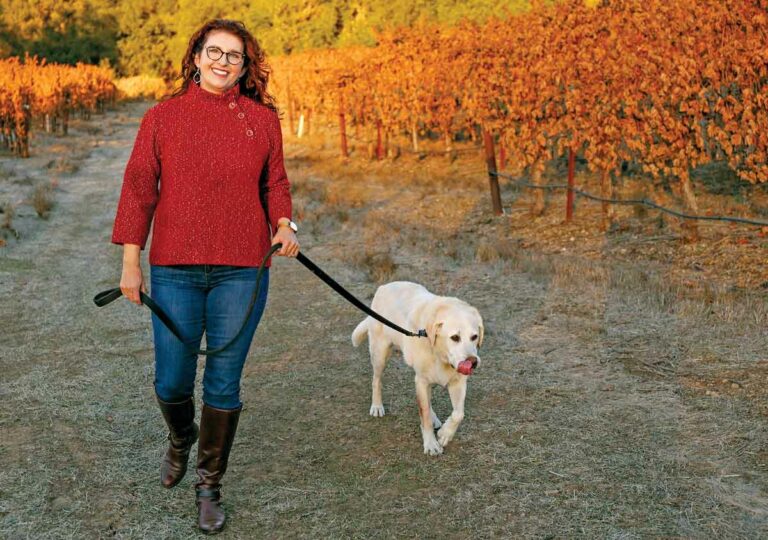
By my reckoning, that makes the concept of a “wine dog” inevitable and a “Dogs of Wine Country” cover of Wine Spectator magazine irresistible. Yep, the world’s leading authority on wine has gone to the dogs.
The March issue of the venerable wine magazine profiles over a dozen dogs who accompany their winemaker owners at wineries throughout Sonoma and Napa.
“The issue’s purpose,” according to a statement, is to “bring smiles and spread happiness. Because why not?” This is the same rationale I use when opening a second bottle, so I wholeheartedly endorse the project.
“This special issue, which is near and dear to my heart, has been three years in the making,” said Marvin R. Shanken, the mag’s editor and publisher. “If you have a pet, you will especially enjoy this issue. If you don’t have a pet, we hope to inspire you to consider adopting one.”
For those who like to pair their pinot with a pup, the Dogs of Wine Country issue also features a roundup of pet-friendly tasting rooms (so no more fibbing that Butch is a trained “emotional support dog” as he gnaws on your pant leg).
Dogs have long worked in the wine biz. Vineyard dogs ward off intruding animals and stray bachelorette parties, and some are trained to use their keen senses of smell to sniff out vine diseases such as grapevine mealybug. They protect flocks of sheep, which are increasingly used to do the weeding, and in the post “5 Reasons Every Winery Needs a Dog,” Modern Farmer offers anecdotal evidence that dogs boost on-premise wine sales.
Wine Spectator isn’t the only fan of canines and wine; Wine Dogs has been publishing books, calendars and other merch featuring dogs living and working in the vineyard, winery and tasting rooms of “wineries around the globe” since 1997, indicating that mutts and merlot is less a trend and more a cottage industry. Can cats and cannabis be next?
Readers are encouraged to submit their own dog photos for an opportunity to be featured on the Wine Spectator website at WineSpectator.com/DogPhotos. The March issue becomes available Feb. 16 to humans and pets everywhere.
And, since I’ve run short on pupper puns, permit me to crib from Shakespeare, who would cry havoc and, “Let sip the dogs of wine!”
You come home to find your front door open. Inside, your laptop is missing, your wallet and passport are gone, and the jewelry box lies on its side, empty. You’re angry; you always thought you lived in a safe neighborhood. Once the police report has been filed and the insurance company notified, you make your house secure. You buy reinforced entry doors, invest in home-monitoring equipment, install motion-detection lights and seriously consider getting a dog. You spend whatever it takes to make sure you’re safe.
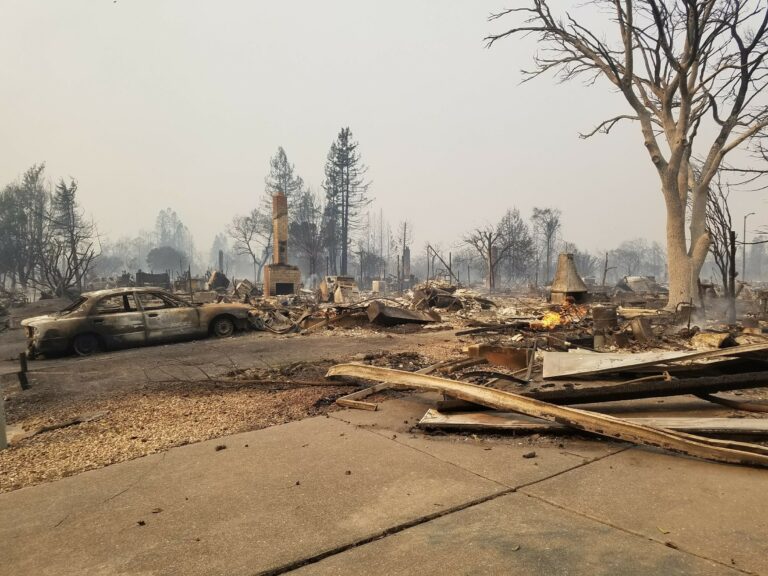
Since 2017, massive wildfires have destroyed wide swaths of Sonoma County, taking lives and destroying tens of thousands of homes and other structures. Billions of dollars have been lost by property owners, the wine and tourist industries, and small businesses. We’ve all been through panicked nights and smoky, ash-filled days, waiting for evacuation orders.
We know that another wildfire might erupt anywhere in the county any time during an expanding “fire season.” Yet, unlike the homeowner who’s been burgled, we’re not doing much to make our future safer. Fuel continues to build up in our forests and open spaces, just waiting for a fateful spark. Neighborhood groups and small nonprofits are doing what they can to clear small lots and some roadways, but Sonoma County is a big place. We need a big effort to keep us safe.
Fire scientists, local tribes and hundreds of residents (many who have already lost a home) agree that the only way to mitigate the destructiveness of wildfires is to reduce fuel buildup by aggressive, widespread and ongoing vegetation management. Thinning undergrowth, removing smaller trees, and conducting prescribed burns are proven methods to reduce the likelihood of hugely destructive wildfires, which threaten not only the wildland-urban interface of Sonoma County but all the areas adjacent to that.
Just as wise homeowners protect their property from burglars, Sonoma County needs leaders who will find funding and start preventive vegetation management on a huge scale. All of us who live and work in Sonoma County should be ready to support such efforts.
Joan Broughton lives in Windsor and runs Protectsonomacounty.org.To have your topical essay considered for publication, write to us at op*****@******an.com.
As a twenty-five year resident of Fairfax, I am both proud and happy that our town council has voted to remove the name Sir Francis Drake from the portion of this main highway that passes through Fairfax. Renaming our main highway in Fairfax shows a genuine respect for the rights and feelings of not only Native and African Americans but also for all those people of any racial background who feel sincerely committed to ending the lingering ties of our society with racial injustice and the brutal and savage mistreatment by all those like Sir Francis Drake who have continued to maintain a subtle influence on our nation’s ethical character and our nation’s future spiritual possibilities.
The names we choose for our streets, schools and other landmarks are far from merely superficial symbols. Those we choose to honor through these dedications show much about ourselves and about our deepest and most valued feelings. And to finally remove the name of someone who was known to have not only enslaved many innocent human beings but to also have brutally murdered countless others is a hopeful sign that we as a potentially beautiful nation may finally be on the path toward truly living the great ideals that our nation had supposedly been founded upon.
Rama Kumar, Fairfax
Duly Noted
Dear Editor,
Two brief notes:
What a pleasure to see a simple camper ad in place of any cigarette ad. That is catering to the Sonoma Marin audience. I’m going to contact them about their services as a result of your ad.
And Mr. Howell, the epitaph written by Lawrence Ferlinghetti (Press Pass, Mar. 3) brought a tear to my eye. His words addressing Kenneth Patchen bear repeating:
The City of Santa Rosa is currently accepting applications for its Musician Relief Grants, which will award $2,000 to Santa Rosa musicians facing financial hardship due to the ongoing Covid-19 pandemic.
With clubs and venues shut down for a full year this month, many musicians and artists who rely on performing for their income have been devastated financially as the pandemic has rolled from 2020 into 2021.
This Musician Relief Grant program aims to support working musicians in the Santa Rosa arts community by providing funds to assist the musicians in the city who have lost income due to the inability to perform live.
The grant program is run by the City of Santa Rosa Public Art Program in conjunction with the City of Santa Rosa Economic Recovery Task Force. The funding is intended for professional musicians who earn at least part-time income through their career and/or generate income from their music. To be eligible, Santa Rosa-based musicians must be able to demonstrate a sustained commitment to their musical career, must be experiencing financial hardship due to the Covid-19 pandemic and must be at least 18-years-old.
On its website, the city of Santa Rosa writes that “The Musician Relief Grants strives to ensure that musicians across Santa Rosa have access to this relief funding. Eligibility will NOT be affected by gender, race, sexual orientation, age or US resident status. To ensure equitable distribution of funds, we encourage individuals who identify with vulnerable demographics to apply including musicians of color, native and Indigenous musicians, immigrant musicians, disabled musicians, and LGBTQ musicians to apply.”
Musicians who want to apply for the relief grant can go online here. Select the icon for ‘City of Santa Rosa Musician Relief Grants’ and complete the online form. Once submitted, a follow-up email will notify the applicant that their application has been successfully received via the email provided in the online form.
The grant application deadline is end-of-day on Sunday, April 11. Applicants will be notified of their application status in mid to late May.
In addition to local musicians, Santa Rosa is looking for qualified visual artists to design, fabricate and install site-specific public art for one wall of the Fifth Street Parking Garage in downtown Santa Rosa.
A “Call for Artists” is currently on the City of Santa Rosa’s webpage. The city is looking for practicing, professional artists residing in Northern California and Sonoma County artists are encouraged to apply. The total available funding for the project is $20,000 (all inclusive – design and construction) and comes from the City of Santa Rosa Parking Division and the Public Art Fund. The deadline to apply is 5pm on March 15.
On the website, the City of Santa Rosa Public Art Program writes that, “the goal of this completed project is to draw positive attention to and increase the visibility of the Fifth Street Garage, which even regular visitors to the downtown often do not know exists. The art will distinguish the garage from nearby structures, serve as a wayfinding element through identification and draw people to the site. The artwork will improve the aesthetics of the garage as seen from the street and by pedestrians.”
A report released last week found that warnings about California residents fleeing the state are over-hyped. While it appears that San Francisco residents have left the city at an increased rate, they tend to have moved elsewhere in the Bay Area or the outer reaches of the state, rather than leaving the state, a trend which is consistent with earlier patterns.
“Approximately two-thirds of San Franciscan movers remaining in the Bay Area economic region and nearly 80 percent remaining in the state… This is consistent with pre-pandemic patterns,” states the new report released by the University of California’s California Policy Lab.
“In short, to date the pandemic has not so much propelled people out of California as it has shifted them around within it,” the report, which is based on credit reporting data and may not have captured all of the movers over the past year, concludes.
During the pandemic, the rate of people leaving and moving into the North Bay have both increased significantly. However, the changes in rates of movement are not as high as other parts of the state.
For instance, 5,539 people left Marin County, a 23 percent increase over the 2019 rate, while 4,948 people arrived, a 21 percent increase over the 2019 rate. All told, Marin County experienced 591 net exits, the number of people who arrived subtracted from the number who left. The rate was 44.5 percent higher than in 2019.
In Napa County, 2,619 people left the county, a 14 percent increase over the 2019 rate, and 2326 people arrived, an 11 percent increase over the 2019 rate. Napa County had 293 net exits in 2020, a 21.6 percent increase in rate compared to 2019.
In Sonoma County, 7,002 people left the county, an 11 percent increase over the 2019 rate, and 6,415 people arrived, a seven percent increase over the 2019 rate. Sonoma County had 587 net exits in 2020, a 67.2 percent increase in rate compared to 2019.
All told, the North Bay was less impacted than many other California counties, according to the report. San Francisco experienced a 428.6 percent increase in net exits in 2020 compared to 2019, a trend which caused the city’s sky-high rental market to deflate for the first time in decades.
While it’s too early to tell what this all means, the California Policy Lab report does indicate that the North Bay’s population may look fairly different after the pandemic than it did back in 2019.
CalMatters visualized the findings of the California Policy Lab’s report here.
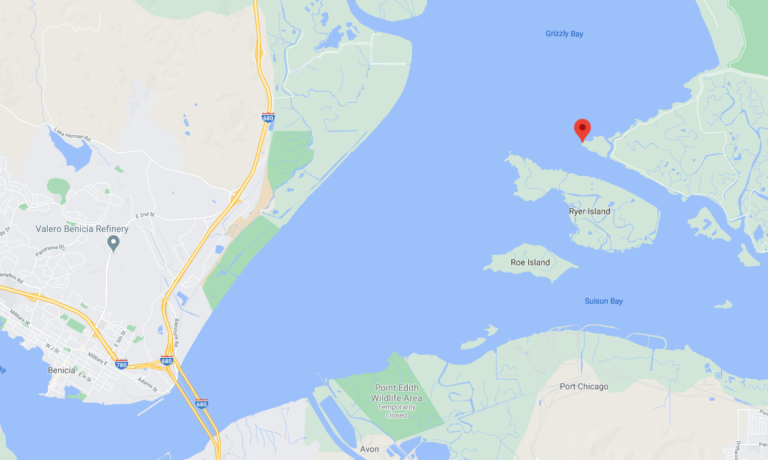
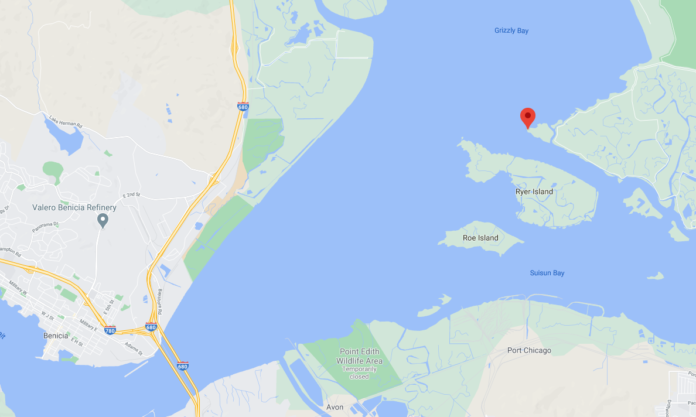
A man accused of illegally repairing a levee and damaging sensitive aquatic habitat in the Suisun Marsh is facing a $2.8 million fine following a California appeals court decision last month.
John Sweeney, who ran a kiteboarding club on Point Buckler Island in Solano County after buying it in 2011, must also abide by a cleanup and abatement order that requires him to restore the marshlands and tidal channels damaged during the levee work.
The 39-acre island in Grizzly Bay had previously been used by duck hunters and was surrounded by a levee that had fallen into disrepair, according to documents filed in California’s First District Court of Appeal in San Francisco.
Sweeney wanted to build the earthen berms back up in order to once again promote duck hunting on the island.
Because the levee no longer held back the waters of Grizzly Bay, the island “had long reverted to a tidal marsh due to neglect, abandonment, or the forces of nature,” so any work on the levee would have required authorization from the San Francisco Bay Regional Water Quality Control Board and the San Francisco Bay Conservation and Development Commission, according to a court filing.
Both agencies issued multiple violations for the levee work and subsequent environmental damage, including the Water Board’s $2.8 million fine and BCDC’s $752,000 fine, both issued in 2016.
Sweeney successfully challenged the agencies’ actions in Solano County Superior Court.
In ruling on behalf of the agencies last month, however, state appeals court Justice Peter Siggins reversed that decision stating, in part, that the island is “critical habitat for Delta smelt and Chinook salmon, and the drainage and diking of the site risked reductions in food and precluded access to tidal channels for foraging.”
Water Board officials said Siggins’ ruling is a major victory for Suisun Marsh, the largest contiguous, brackish marsh on the west coast of North America, and could further strengthen wetlands protections across the state.
“This is an enforcement case with the most positive impact to wetlands we’ve seen in a long, long time, and it stems from the most egregious violation involving a wetland impact we’ve seen in decades,” said Xavier Fernandez, planning division chief with the San Francisco Bay Water Board.
Larry Bazel, Sweeney’s lawyer, said they plan to ask the California Supreme Court to review the appeals court decision.
“John Sweeney is being penalized because the previous owners of the duck club did not repair the levee quickly enough. After some unspecified time, according to the (Water Board), a duck club is no longer a duck club and the owner is prohibited from repairing the levee, even when (as in this case) the land has been a duck club since the 1920s,” Bazel said in an email.
“Point Buckler Club is being penalized for no good reason at all, since it did not participate in the levee repair,” Bazel said.
Neither Sweeney nor the club can afford the fines or the repair work ordered by the Water Board, he said.
Gov. Gavin Newsom and state legislative leaders celebrated the signing Friday of a $6.6 billion legislative package intended to support the statewide reopening of grades K-6 by the end of the month and grades 7-12 in early April.
The package includes $2 billion in grants to support safety measures for students and educators returning to in-person classes, including personal protection equipment, improvements to classroom ventilation and regular coronavirus testing.
The remaining $4.6 billion will fund voluntary learning expansions, including extending the school year into the summer, tutoring to make up for learning lost amid the pandemic and mental health services for students.
“We all recognize how stubborn and challenging this process has been over the last 60-plus days,” Newsom said during a virtual signing ceremony for the legislative package.
The reopening plan comes after months of negotiation between officials in the Newsom administration, state legislators and teachers’ unions over details like required vaccinations and a reopening timeline that all sides agree is safe.
While the package does not require the vaccination of educators before in-person classes resume, state officials have argued they’ve taken steps to ensure there are vaccine doses available to educators who want them.
On Monday, the state began reserving 10 percent of the weekly vaccine shipments sent to local health departments and multi-county health care entities for K-12 educators and child care workers.
Assemblyman Phil Ting, D-San Francisco, framed the legislative package as the first of several steps toward reopening schools and cited his children’s experience with distance learning to underscore the need for schools to reopen.
“I have two children in San Francisco public schools and they’ve been Zooming since last March,” he said. “I’ve seen the effects on them firsthand, whether it is their drop in their desire to learn, their withdrawal, their inability to connect with friends. We’ve seen the devastating effects.”
Ting added that while the San Francisco Unified School District has yet to approve a reopening plan, he is still excited to offer resources from the legislative package to schools in need.
“We’re going to go home to all our districts and beg all our (school) districts to open up, use this money and do everything possible,” he said.
The deal stops short of mandating that all grades return to in-person classes across the state, instead using state funding as an incentive.
The deal requires in-person instruction at public schools to resume for K-2 students and all “high-needs” students in grades K-12—including English language learners, students in the foster care system and unhoused students—by the end of the month.
Non-complying schools would lose 1 percent of their funding per day if they are not open by then.
Once a county is in the red tier of the state’s pandemic reopening system, schools would risk the same penalty if they do not offer in-person instruction to all elementary grade students and students in at least one middle or high school grade level.
State officials noted on Friday that the state’s legislative package is also not contingent on federal funding or the Covid-19 relief bill Congress is currently considering, allowing the state to avoid waiting on political machinations in Washington, D.C., to reopen schools.
“I feel very confident that the resources provided in this (legislation) in combination with those we anticipate from the federal government will provide us the sufficient funds for our classrooms to open safely,” said state Sen. Nancy Skinner, D-Berkeley.
Schools in at least 35 of the state’s 58 counties have already resumed in-person classes in some form, according to the state.
The state’s school reopening website can be found here.
As spring comes to Marin County, the Marin Art & Garden Center in Ross celebrates the blooming season with an exhibition of “Abstract Nature.”
The two-person art show features sculpture by Fort Bragg artist Nick Taylor and large- scale monotype prints and other works on paper by San Anselmo artist Katherine Warinner, who has lived and worked in Marin for...
Anthropologists believe the “domestication event” that led to wolves becoming Canis lupus familiaris—a.k.a. the modern dog—occured about 10,000 years ago. Coincidentally, this is also the same time frame that Neolithic humans started making wine from grapes.
By my reckoning, that makes the concept of a “wine dog” inevitable and a “Dogs of Wine Country” cover of Wine Spectator magazine irresistible....
By Joan Broughton
You come home to find your front door open. Inside, your laptop is missing, your wallet and passport are gone, and the jewelry box lies on its side, empty. You’re angry; you always thought you lived in a safe neighborhood. Once the police report has been filed and the insurance company notified, you make your house secure....
Changing Names
Editors,
As a twenty-five year resident of Fairfax, I am both proud and happy that our town council has voted to remove the name Sir Francis Drake from the portion of this main highway that passes through Fairfax. Renaming our main highway in Fairfax shows a genuine respect for the rights and feelings of not only Native...
The City of Santa Rosa is currently accepting applications for its Musician Relief Grants, which will award $2,000 to Santa Rosa musicians facing financial hardship due to the ongoing Covid-19 pandemic.
With clubs and venues shut down for a full year this month, many musicians and artists who rely on performing for their income have been devastated financially as the...