Letters: Point Reyes Shame

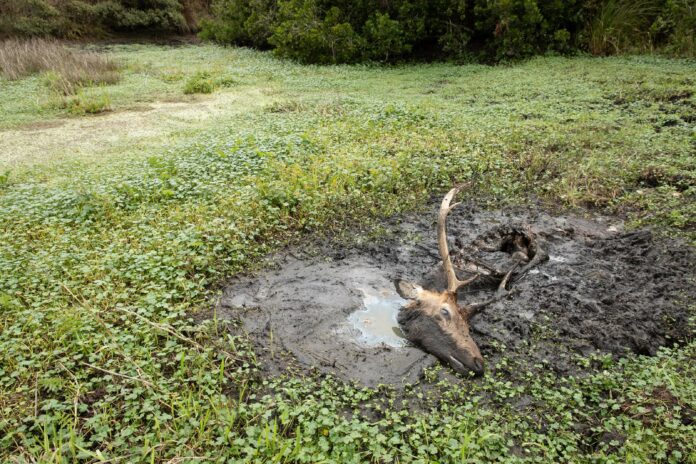
The updated “plan” for Pt. Reyes is a cynical way to give the 24 ranchers (who were paid for their land over 20 years ago) more latitude to graze even more livestock, to put slaughterhouses on federal land, and to kill native tule elk.

Don’t fall for the National Park Service’s calling these ranches our “cultural heritage,” any more than killing off native people and native species can be called “cultural heritage.” The cattle destroy coastal scrub habitat and pollute the limited water. Veal crates with babies taken from their mothers and piles of old tires are prime features of the dairies.

Please contact Woody Smeck (sm***@*ps.gov), our governor, state senators and Jared Huffman (who FAVORS this “plan”) and demand that this disgusting expansion of business rights be scrapped now. We made the oyster people leave. Now make the ranchers do the same.

Nancy Hair

Sebastopol

MALT Shame

So shameful (“MALTED Millions,” News, Sept. 30). I donated for years thinking my money was keeping open space for public use, not providing loan money for board members. I won’t donate further until changes are made.

Patminorcpa

Via Bohemian.com

Yes, shame on MALT for straying so far from the original intention(“MALTED Millions,” News, Sept. 30); saving these beautiful lands from developers—not enriching themselves! Especially disappointing to read they refused an easement to support an organic farming project.

Looking forward to reading about “the federal government paying millions of dollars to dairy ranchers who agreed to leave after 25 years, but as of yet are still there.” Thank you for the investigative reporting.

Leslie2

Via Bohemian.com

Mill Valley Director’s ‘The Book Makers’

0

There are many books about filmmakers, but not a lot of films about bookmakers—specifically art bookmakers. Filmmaker James Kennard’s feature documentary, The Book Makers, remedies this with aplomb.

Produced by Mill Valley’s InCA Productions, the hour-long love letter to the printed book is an official selection of this year’s Mill Valley Film Festival and also airs on PBS in the coming weeks. It also marks the feature documentary directorial debut of 31-year-old filmmaker James Kennard, whose film, in part, asks the question, “What should books become in the digital age?”

“They say, anytime a technology goes out of date, it just becomes art,” says Kennard, who studied history at Oxford University before returning to Marin County to join the family business (InCA Productions was founded in the ’80s by his father, lauded documentary filmmaker David Kennard).

The filmmaker interviewed a raft of artists, authors, collectors and historians who are preserving both the artistry and craft of bookmaking. They include Bay Area luminaries Dave Eggers and Daniel Handler, a.k.a. Lemony Snicket. Also included are Berkeley-based artists fine-press printer Peter Koch—who made the 30-pound lead book pictured above—and artist Julie Chen, who re-invents the physical form of the book to enhance the reader’s tactile experience.

Another Bay Area personality who features prominently in The Book Makers  is Oakland’s Mark Sarigianis, who sets out to print a limited run of Charles Bukowski’s cult novel Ham on Rye using the traditional metal type process that leaves absolutely no room for error. The arc of his story is as beguiling as it is nerve-racking, and it begs the question as to whether or not book-making in the Digital Age is a quixotic undertaking. Spoiler alert: It isn’t.

The film proves that digital isn’t the death knell for books so much as a herald of their emancipation as mere content-delivery systems. Books aren’t just coexisting in harmony with a digital world, they’re actively redefining and re-imagining what books can be.

This is proved by the sheer variety of books showcased at the CODEX Book Fair in San Francisco—a moment in the film that neatly binds its various stories together. Kennard acknowledges the narrative device with a laugh and admits, “Oldest trick in the book.”

The Book Makers” airs at 8pm, Oct. 17 on Northern California Public Media (KPJK), and at 4pm, Oct. 27 on KQED WORLD and again at 8pm, Nov. 13 on KQED channel 9. The film will stream as part of the Mill Valley Film Festival October 9–18. thebookmakersfilm.com.

BJ Hughes Instagrams Cannabis

Bobby James Hughes III, known to friends as “BJ,” went online for the first time in 1991. Two years later, he built his first computer and joined early marijuana message boards like Overgrow.com and ICMag. In 2011, he posted on Instagram before it became popular. Find him now at @sogarmy on IG.

“It’s been crazy,” BJ tells me. “I’ve used Instagram in all aspects of my cannabiz: hiring employees, making friends, branding new products and sharing tips on various aspects of cultivation.”

Brand Recognition is essential for survival in a competitive marketplace.

BJ makes all of the materials for his Instagram account, which has over 22,000 followers, many of them local. With his iPhone, he goes live while working. Some of his videos are funny, with background music and eye-catching pop art. He posts regularly on his IG Storyline. Followers get the latest news and can pick up fresh products at dispensaries. BJ gets the most “likes” with high-resolution photos.

“We love Sonoma County and want to give back,” he says. He and his team serve food at the Guerneville Winter Shelter. As a member of the Sonoma County Growers Alliance and the Hessel Farmers Grange, he’s involved in the local community.

BJ’s love affair with the cannabis plant goes back even farther than his relationship to computers, email, the internet and Instagram. Born in Atlanta, Georgia, and raised in Birmingham, Alabama, he learned about growing food from his grandfather, Bobby Hughes I, who owned a small farm. His son, Bobby James Hughes II, ran an auto body shop, where BJ learned essential skills that helped make his business the success it is today.

As a teen, he tried weed with his peers, and learned about it from High Times and message-board friends around the world who are still part of the industry. In college, he studied network engineering, graduating with a degree in computer science. When voters approved Prop 215 and medical marijuana was legalized, he told himself, “California seems like the place to be.” He moved here in 2006.

 “SOG Cannabis” is the name of his company. SOG = “Sea of Green,” which is a tried-and-true method of growing primo weed. BJ’s company is licensed. It’s an indoor facility that features only one plant per square foot. A multiple High Times Cannabis Cup winner, BJ is known for his speciality products, including small-batch, high-end flower, pre-rolls and concentrates which are available at Organicann, Mercy Wellness and Harborside in Oakland.

“I’m a cannabis grower!” he tells me. “I love what I do, where I do it and I love sharing via Instagram!”

Jonah Raskin is the author of “Dark Past, Dark Future: A Tioga Vignetta Murder Mystery.”
Comedian Aidan Park Shares The Art of Being YAY!

0

Grammarly, the online writing assistant, says I’m a “vocabulary virtuoso,” which is just a polite way of accusing me of thesaurus abuse, to which I readily admit.

Hence the tweet-ready stat provided to me that reads, “This week, I used more unique words than 98% of Grammarly users.” There are two words I didn’t use, however, which I’ve just learned.

The first, “acedia,” comes courtesy of Jonathan L. Zecher, a research fellow at Australian Catholic University, who describes it as “an ancient Greek emotion” that aptly captures the “bored, listless, afraid and uncertain” feelings of our present moment. The second new word is “YAY!” The all-caps exclamation is more than a word, however—it’s a kind of “art of being” that’s been perfected by comedian and author Aidan Park.

Naturally, I’ve heard of “Yay” before, but not quite in the way Park uses it—effervescing with ardent, infectious enthusiasm for life that is simultaneously an adjective, noun and art form (take that, Grammarly). His new book, The Art of Being YAY!: The OMG NSFW Memoir and Guide to Authentic Joy, promises and delivers all that, plus much more.

His beginnings weren’t auspicious—Park was basically air-dropped into the U.S. from South Korea as a kid with no English and tons of family dysfunction and facing prejudice galore, not least of which because he’s gay. Since he was undocumented, work was hard to come by and surviving as a sex worker was cut short due to an HIV diagnosis. Instead of despairing, Park threw myself into the world of self-help and cognitive behavior—specifically, neuro-linguistic programming.

“So, then it was like, ‘All right, I’m at the bottom,’” Park recounts. “So, it was at that point where a friend of mine saw my situation and pushed me into the world of empowerment. I went to this empowerment workshop and I loved it because it was actually my first taste of what empowerment felt like. From then on, I studied that a lot and I applied that to career concepts, money, relationships, communication and so on, using the tools that I learned over those years. I did neuro-linguistic programming and I literally just threw myself into that world. That’s how I got to be an ‘accomplisher.’”

Comedy became his bailiwick, and he worked his way to becoming a headlining standup (his friend, comedian Margaret Cho, wrote the forward to his book). Park found not only success but also love. Due to the unpredictable vicissitudes of life, however, Park eventually lost his husband of five years to cancer.

“It was a crazy loss, it hit me hard,” Park says. “At that point, I was so miserable, I didn’t care about anything. Like, who cares about my comedy career? …So, I was like, ‘It’s either do or die, man. It’s like, ‘Okay, let’s crap or get off the pot here.’ Like, ‘If I’m going to stay, I refuse to stay feeling this bad.’ Every day was so hard on me that I was like, ‘There’s just no way that I’m going to feel this bad.’”

Friends interceded with advice, some of which Park considered—at the time—“hippie, dippie bullcrap,” but as he later reflected, “I think that when you’re in enough pain, you’ll do anything.”

Park’s grief fueled his inspiration to apply all he had learned in empowerment workshops regarding his career goals towards his new emotional goals.

“What if I apply those to an emotional result?” he asks. “The emotional result of feeling better, going after ‘happy.’ What does that even mean? What is the emotional satisfaction? How do I go after that directly? When I started doing that, that’s when things really changed and it made me completely re-prioritize everything.”

If the existence of The Art of Being YAY! is any indication, Park’s plan worked. But could it help those suffering a bout of acedia?

“It’s a really tough time right now, and nobody really talks about emotion, everybody just goes, ‘Oh, you feel bad, here drink this or let’s ignore it,’” he says. “And, speaking from the perspective of having dealt with extreme emotion, I’ve found that the best way is to address it and go into it. The joy is on the other side of that; you need to go within. You can’t dance around it and think you’re going to run forever, because it’s going to sneak up. It will get you.”

A complimentary Kindle version of The Art of Being Yay! is available to Bohemian readers at aidanpark.com/bohemian. Listen to the complete interview with Aidan Park on The Bleed podcast hosted by Daedalus Howell, at storygramme.com/the-bleed.

Sonoma Community Center Makes Fall Events Accessible to All

Sonoma Community Center was one of the North Bay’s early leaders in offering quality virtual programming when the Covid-19 pandemic halted in-person events and gatherings in the North Bay this past March.

For the last six months, art enthusiasts from around the world have Zoomed in on the center’s digital platform, and the Fall series currently underway covers an array of subjects including ceramics, culinary, fiber, painting, drawing, printmaking, mixology, music and more. These classes and programs are designed to serve everyone from youth to seasoned artists; and the center is also hosting its Dia de los Muertos programming virtually through the month of October.

“This series is friendly to all budgets and is not to be missed,” Creative Programs Manager Eric Jackson says in a statement.

To that point, the Sonoma Community Center is offering the grassroots-funded Equity in Arts Scholarships to provide workshop space at a reduced cost to anyone who self-identifies as an underrepresented or marginalized individual.

To get the discount, self-identified marginalized individuals simply register for the events on Sonoma Community Center’s website using the code EQARTS20. The classes and programs will then be available at a minimal fee that covers the cost of the ticketing software and licensing to run the class.

In conjunction with the Equity in Arts Scholarships, the Sonoma Community Center is offering fall youth classes at a sliding scale for anyone under 18 with funding by a grant from the Sonoma Plein Aire Foundation.

“We are committed to making change that bolsters our educational programming and accessibility,” Kala Stein, Director of Sonoma Ceramics, says in a statement. “Through virtual programming and our scholarships, we are able to reach a broader audience than ever before”

That virtual audience is also invited to celebrate Dia de los Muertos at the Center through the month of October with a series of online art classes, altar tours and more that are also available at a pay-what-you-can sliding scale.

Acclaimed artist Diego Marcial Rios, whose work has been featured in International museum and public collections, helps open the center’s celebrations with his online exhibit, “Fine Art of DIEGOMARCIALRIOS.” The online exhibit features intricate and colorful masks and woodcuts that are inspired by Latin history including Aztec and Mayan symbols, and the show will be available online during the month of October with the option to reserve a time to visit the center’s Gallery 212 in person.

Rios will also be an Instructor for two of the center’s four upcoming bilingual cultural art classes being offered on a “pay-what-you-can” sliding scale, including a Mexican Sugar Skull Art Class on Tuesday, Oct. 13, and a paper-mache Sacred Heart and Mask Making Class on Monday, Oct. 19.

Mexican-born artist Ernesto Hernandez-Olmos leads the other two virtual art classes, opening the series with a paper-cutting Papel Picado Class on Saturday Oct. 10, and concluding the series with an Altar Making Class on Saturday, Oct. 24.

“I find pride in the fact these classes are truly affordable to everyone,” Jackson says in a statement. “What excites me the most is that both of this year’s Instructors, Diego Rios and Ernesto Hernandez-Olmos, not only teach specific Day of the Dead crafts but also integrate the historical and cultural background behind each project.”

In following another tradition, the center will erect its 12-foot Dia de los Muertos Public Altar, designed by local sculptor Jim Callahan, at the end of October. The public altar will be decorated in lights and will feature portraits of recently-passed Sonoma Valley loved ones and lost “heroes.” Anyone who would like to contribute to the altar’s portraits can do so by submitting a scanned photograph to the center by Wednesday, Oct. 14. The person’s birth and death dates as well as a brief description of their life should accompany the mailed or emailed photos.

To view the Sonoma Community Center’s current online art exhibit and register for a virtual class with the code EQARTS20, visit sonomacommunitycenter.org or call 707.938.4626 x1, Mon–Fri, 10am to 4pm.

Pete Kronowitt Rallies on Record and Online

San Francisco–based musician Pete Kronowitt combines playful folk melodies with serious political messages in his new album, Do Something Now.

The music is inspired by the folk songs of the late ’60s and ’70s, and the messages touch on timely topics, though Kronowitt doesn’t simply talk the talk; he is taking action as the founder of Face the Music Collective, which mixes music and fundraising for progressive political candidates throughout the country.

Before Kronowitt—a longtime professional in the tech industry—moved to San Francisco from the East Coast in 2012, his music was largely a personal endeavor.

“I was just playing guitar and writing songs, I didn’t have a sense that I could sound like those folks on the radio,” he says.

Once Kronowitt decided to record his first album some 25 years ago, he was introduced to producer John Alagia (Paul Simon, Dave Matthews, John Mayer) and suddenly Kronowitt’s hobby became more than that.

“I continued to write and record while I was working in tech,” he says. “It’s something that became part of me. I interpret life through writing songs, whether it’s something eternal or something personal. I wasn’t writing for other people, I wasn’t writing to sell music.”

Fast forward to 2016. Kronowitt had recently left his job in tech to focus on songwriting, recording an album in Nashville and touring a bit. Then, Donald Trump got elected.

“I had been writing political songs because of the environment we were in,” Kronowitt says. “When Trump got elected, my wife and I decided we were going to dedicate more of our lives to grassroots activism.”

In learning how grassroots activists organized and accomplished their goals, Kronowitt wondered how to combine his music and his newfound activist spirit. Earlier this year, Kronowitt formed Face The Music Collective to help foster civic engagement through music and art.

Before the Covid-19 pandemic ended social gatherings, Kronowitt was taking Face The Music on the road and touring places including Virginia to fundraise for progressive political candidates.

“It was heartening and fun and all the things you would want in a music tour,” Kronowitt says. “We were playing for people who cared about the cause that we were dedicating ourselves toward, and we got new people to get engaged.”

When the pandemic hit, Kronowitt and Face The Music Collective began organizing and performing online shows for progressive candidates that still featured local guest performers and artists in those markets. Recently, popular Wisconsin-based singer-songwriter Willy Porter headlined “Songs for Robyn Vining” to raise $7,000 for the re-election campaign for the Wisconsin State Assembly District 14 representative.

Other artists who have joined the collective include Nashville-based singer-songwriter Will Kimbrough, who says the collective, “is providing the tools and resources to inspire action, one event at a time.” Bay Area artists participating in the endeavor include Vicki Randle of Oakland alt-rock band Skip The Needle, indie-pop songwriter Dawn Oberg, Americana artist Jesse Brewster, and longtime songwriter and producer Scott Mickelson, among others.

“In each of these shows, there is definitively hope,” Kronowitt says. “The enthusiasm to make a difference right now is visceral.”

For his own new record, Do Something Now, Kronowitt worked with engineer Spencer Hartling at Tiny Telephone Studios in San Francisco and employed several of his closest musician friends—including bassist John David Coppola, drummer Darian Gray, guitarist Justin Kohlberg, steel-guitarist Tim Marcus and vocalist Veronica Maund—to fill out his studio band.

“I was really moved by the musicians who played on the album,” Kronowitt says. “It was a small group of people who were phenomenal, it was a joy to record the album.”

Many songs on the album take shots at the current political moment, with titles like “Are We Great Yet?” and “Truth Will Set Us Free.” Other tracks, such as “Roly Poly” and “Stay Safe,” touch on issues like climate change and the pandemic, though the album is not all gloom-and-doom. In fact, many songs take a light-hearted approach to the melody, and Kronowitt admits he gets lyrically “sarcastic and obnoxious in some songs on purpose.”

While Kronowitt is not planning any large album-release party, he and Face The Music Collective are staying busy on the performance front. This weekend, Kronowitt and award-winning bilingual singer-songwriter Nancy Sanchez will lend their support to Kathy Knecht’s campaign for the Arizona state House in Legislative District 21 with a virtual concert on Saturday, Oct. 3, at 7pm; Kronowitt will also perform alongside banjo-master Joe Newberry in a online fundraising concert for Jeanne Supin’s campaign for North Carolina State Senate, District 45 and Jenna Wadsworth’s campaign for Commissioner of Agriculture on Sunday, Oct. 4, at 4pm.

“We have maybe 10 more shows in the queue before the election,” Kronowitt says. “I wanted to encourage people at this moment. It’s the action that is meaningful.”

Listen to “Do Something Now” at petekronowitt.bandcamp.com, and get details on Face the Music Collective virtual concerts at facebook.com/FacetheMusicCollective.

Novel Puts Pot Farmer in Dystopia

Alison Stine’s new thriller takes place in a world racked by climate chaos. The main character, a woman named Wylodine (Wil to family and friends), cultivates cannabis and vegetables. She’s a valuable human being in an apocalyptic near-future in which she must fight to survive.

Road Out of Winter ought to be of special interest to pot farmers and dystopians, though one doesn’t have to be either to enjoy the narrative that takes Wil through a series of adventures and misadventures in Appalachia, a region the author knows well.

Stine grew up in a family of farmers. She lives now in Denver, Colorado, but she spent much of her adult life in Athens County in rural Southern Ohio, where there was poverty aplenty and music, food and community.

“The idea for my novel was a world in which spring never comes,” Stine explained during a phone conversation. “Road Out of Winter has been classified science fiction, but it doesn’t feel like that to me. We’re barrelling toward the world I’ve written about.”

Until recently, growing cannabis in Ohio was illegal and underground, with aspects of criminality.

“I have used cannabis,” Stine says. “For me it’s like drinking champagne. I think all plants are magic. The Earth can give us so much if we take care of it.”

Road Out of Winter is dark, but not depressing. Readers will probably identify with Wil and enjoy the other main characters, including an environmentalist named Dance, who seems as if he might have stepped out of the forests of Northern California.

“Everything’s fucking falling apart,” he says soon after he shows up in the pages of the novel.

Dance has some of the best lines, but so does Wil, who tells her  friend, Lisbeth, that cannabis “can do good things. It’s medicine and I believe it should be legal.” Dance is New Agey, but some of the other male characters are menacing and a threat to Wil.

Stine tells me: “I’m a single mom raising a 10-year-old son, which can be a challenging thing in a world in which many men often don’t show their feelings and vulnerabilities and express compassion.”

She’s completed another novel, titled Trashlands, in which plastic has taken over the Appalachians. It features a young mother who must choose between “love and survival.” Publication is fall 2021. “If the world is still here,” Stine says.

Her dream, she says, “is to live on a farm and grow things.” That’s ironic. “Having grown up on a farm, farming was the last thing I wanted to do.”

Jonah Raskin is the author of “Marijuanaland: Dispatches From an American War.”

Covid-19 vs. Live Music

0

Never, in my wildest dreams, did I think there would come a time when a dedicated professional musician would not be able to find a stage to perform on.

Granted, opportunities for paid live performances have shrunk exponentially for the entirety of this century, but I’ve made it my mission to find the bars, nightclubs and eateries that pay enough for me to hire quality players. There’s a standard gallows-humor joke among musicians that every gig just might be their last, largely because the music “industry” is about as whacky as Ted Nugent’s gun-ownership philosophy—and always has been. 

My last gig took place on Feb. 23, Fat Tuesday, at a place called Taps, in Petaluma. There I presented a 4-piece blues band. It went well—the audience was appreciative and I got paid. I guess the question is, “Was that my last gig?”—the one that will be etched, along with my name, on my gravestone?  

Covid-19 has created daily life-and-death situations all over the world, with tens of millions of people losing their ability to put a roof over their family’s head and to buy groceries. I’m the first to admit it is only logical for live music to have subsequently taken a place at the bottom of humanitys’ priority list. On March 18 the “Shelter-in-place” order was issued and Petaluma immediately transformed into a Rod Serling-esque, post–World War III movie set. It was as if someone pulled the pin on the sidewalk hum and energy we’ve always taken comfort in. The town appeared to be in dire need of instant ventricular fibrillation. So … what to do?

I took stock of the situation: First, there was going to be absolutely no budget for any local venues to hire bands. Second, as a front man (a singing horn-player) I have never considered performing by myself. Third, I have never played on the street, largely because I consider it to be the opposite of anything remotely professional. Fourth, I used to be so strict about the concept of professionalism that I never considered having a tip jar until two years ago.

So, at the end of that following week, I devised a plan: I took my small horn (the flugelhorn) down to the base of C Street, stood between the Riverfront Cafe and Ayawaska, and began to play. The restaurants were all still on lockdown; so I only played to the overtly non-responsive cement, bricks and glass. Once in a while a stray, wandering couple would wave and applaud from 40 yards away. The slow, plaintive single-line blues I played seemed to match the city’s mood. Plus, the hour-and-a-half I performed allowed me to believe there was a tiny ray of hope for the return and continuation of live music in my lifetime and in my adopted town.

At last, after six weeks, when businesses partially reopened, I had a small Sunday breakfast audience to the left and to the right. I swallowed my pride and placed a tip bucket on the sidewalk. People responded generously. What was happening? Had I unwittingly become the street musician I never wanted to be? 

And so it goes. Every Sunday morning I set up on the sidewalk, promptly at 10:30am, and proceed to pretend there are lights, curtains, microphones and all the rest of the former trappings of my trade—hoping that the future is kind enough to allow the real thing again one day.

Letters: On the Grange

In a recent article titled “Cannabis Growers Revive the Hessel Grange” (Rolling Papers; Sept. 23), it was erroneously mentioned that Community Alliance with Family Farmers (CAFF) “steers clear of anything that smells or smacks of cannabis and hemp.” Not true. While our organization does strive for a strong local food system, we promote any crop grown by family farms using practices rooted in healthy soils, ecological stewardship and equity. 

Diversity is what makes an agricultural community resilient. For the North Bay, that means working to ensure our farmland can sustain a myriad of food crops alongside more lucrative medicinal or recreational crops such as cannabis and wine grapes. Even better is when farmers can integrate holistically, rotating crops year-to-year, grazing sheep through vineyards, even subsidizing lower-profit carrots with higher-margin cannabis. Whether it’s dairy, hemp or wine, the question really ought to be how we grow, not just what we grow. 

Evan Wiig

Director of Membership & Communications

Community Alliance with Family Farmers

Tale of Two Centers

Read your article (“RH’s New Rooftop Restaurant,” Sept. 23), starting with “After months of construction at the North end of the Town Center of Corte Madera’s parking lot…” Only problem is you got the wrong shopping center! 

I drove twice around the Town Center of Corte Madera today, couldn’t find RH. Decided to check the internet and found RH is located in the Village at Corte Madera. The Town Center is on the west side of 101; the Village on the east side.

Have you been? Check them out. Two shopping centers with a somewhat different flavor. The Village caters to more upscale tastes, the Town Center more to practical needs.

Margaret Schlachter

Mill Valley

Toilet Paper: A Poem

0

By Sandra Rae Davies

 Only white please

 Kleenex for a sneeze

 Two ply for me

 Recycled green

 Doesn’t matter now

 No choices

 Shelves are bare

 We don’t care

 Paper towels will suffice

 Not nice on pipes

 Have to wipe

 Bring home to wife

 Sends me back

 Another store

 Another roll

 Last one just sold

 Home empty handed

 I’m branded

 A fool no less

 Without paper to clean a mess

 Take a shower

 Ask neighbor to borrow

 One ply will do

 Pay extra for two

 World’s a mess

 Crazy no less

 Fresh air in demand

 Closed all the cans

 Paper hoarder

 Get a life

 Leave some for others

 Share with your brothers

 Sandra Rae Davies lives in San Anselmo.

Letters: Point Reyes Shame

The updated “plan” for Pt. Reyes is a cynical way to give the 24 ranchers (who were paid for their land over 20 years ago) more latitude to graze even more livestock, to put slaughterhouses on federal land, and to kill native tule elk. Don’t fall for the National Park Service’s...

Mill Valley Director’s ‘The Book Makers’

There are many books about filmmakers, but not a lot of films about bookmakers—specifically art bookmakers. Filmmaker James Kennard’s feature documentary, The Book Makers, remedies this with aplomb. Produced by Mill Valley’s InCA Productions, the hour-long love letter to the printed book is an official selection of this year’s Mill Valley Film Festival and also airs on PBS in the...

BJ Hughes Instagrams Cannabis

Bobby James Hughes III, known to friends as “BJ,” went online for the first time in 1991. Two years later, he built his first computer and joined early marijuana message boards like Overgrow.com and ICMag. In 2011, he posted on Instagram before it became popular. Find him now at @sogarmy on IG. “It’s been crazy,” BJ tells me. “I’ve used...

Comedian Aidan Park Shares The Art of Being YAY!

Grammarly, the online writing assistant, says I’m a “vocabulary virtuoso,” which is just a polite way of accusing me of thesaurus abuse, to which I readily admit. Hence the tweet-ready stat provided to me that reads, “This week, I used more unique words than 98% of Grammarly users.” There are two words I didn’t use, however, which I’ve...

Sonoma Community Center Makes Fall Events Accessible to All

Scholarships, sliding scales available for Dia de los Muertos art classes and more.

Pete Kronowitt Rallies on Record and Online

San Francisco singer-songwriter mixes music and politics with a new album and Face The Music Collective.

Novel Puts Pot Farmer in Dystopia

Alison Stine’s new thriller takes place in a world racked by climate chaos. The main character, a woman named Wylodine (Wil to family and friends), cultivates cannabis and vegetables. She’s a valuable human being in an apocalyptic near-future in which she must fight to survive. Road Out of Winter ought to...

Covid-19 vs. Live Music

Never, in my wildest dreams, did I think there would come a time when a dedicated professional musician would not be able to find a stage to perform on. Granted, opportunities for paid live performances have shrunk exponentially for the entirety of this century, but I’ve made it my mission to find the bars, nightclubs and eateries that pay enough...

Letters: On the Grange

In a recent article titled “Cannabis Growers Revive the Hessel Grange” (Rolling Papers; Sept. 23), it was erroneously mentioned that Community Alliance with Family Farmers (CAFF) “steers clear of anything that smells or smacks of cannabis and hemp.” Not true. While our organization does strive for a strong local food system, we promote any crop grown...

Toilet Paper: A Poem

By Sandra Rae Davies  Only white please  Kleenex for a sneeze ...
11,084FansLike
4,446FollowersFollow
6,928FollowersFollow