Sonoma County Synth Artist Casts a Dance Party Spell on Debut Album

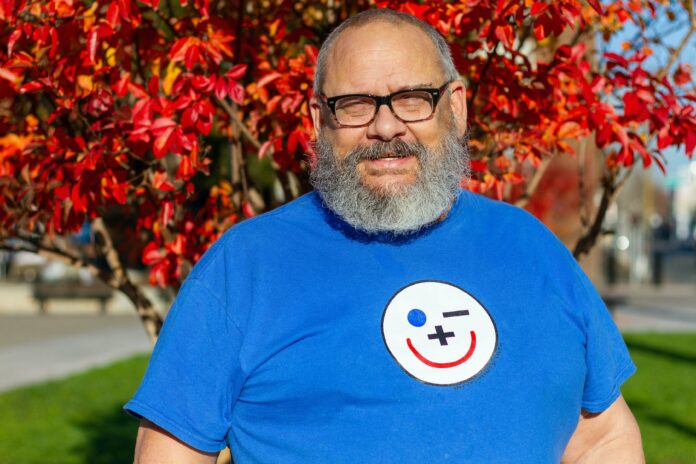
Like the Big Bang, the music of North Bay solo artist Krane Alis began with a spark of an idea before expanding into a cosmic tapestry … of electronic pop music, in Alis’ case. This month, Krane Alis, a.k.a. Chelsea Walsh, debuts her darkly danceable sound on the album Shake What Sticks.

The longtime Sonoma County resident always loved music and played piano when she was younger, but she was in her 20s when she became interested in performing music.

“I just had a bit of an epiphany,” she says.

That spark of inspiration came from a book her friend lent her—The Artist’s Way, by Julia Cameron.

“It’s a book about challenging artists,” she says. “One of the questions was, ‘What’s something you’ve always wanted to do but have not allowed yourself to do out of fear of failure?’ Out of nowhere, ‘being a musician’ came into my head. It surprised me a little, but I decided to go with it.”

Walsh started learning drums, and then began attending production school at Pyramind in San Francisco in order to match her technical and musical skill sets with her natural songwriting skills.

“Initially, when I started all this, my goal was to play one show on the drums,” she says.  “But, you can never set too many boundaries on anything, because it usually evolves into something different than what you thought it would; and that’s what happened here.”

For her solo project, Walsh adopted the moniker Krane Alis­—with nods to literary characters Ichabod Crane and Alice from “Alice in Wonderland”—to pursue dance music that’s heavy on synths and drums and filled with dark and dreamy lyrical themes.

“I love dancing and dance music, for myself that is one inspiration I draw on,” she says. “I think, too, that I was at this point where I wanted to let go of genres in my own music and see what I could do as far as bringing different elements in.”

Falling in love with the recording process as much as the writing process, Walsh spent countless hours in her bedroom studio perfecting the beats and embellishments on the nine-track album as both songwriter and engineer.

Possessing a dark edge in its synthesizers and programmed rhythms, Shake What Sticks is a rich collection of bedroom-pop and indie-electronica that also tells personal stories and explores significant emotional lyrics among the beats and breakdowns.

For the past year, the creative endeavor of making Shake What Sticks helped Walsh navigate the social isolation of the pandemic. Now, with the album available online, she says she feels a mixed bag of emotions ranging from nervousness to catharsis.

“Ultimately though, I think it’s always a good thing to put your creative self forward and put out what you’ve made, regardless of what anyone else thinks,” she says. “At the end of the day, I do this for myself and that’s what matters most.”

“Shake What Sticks” is available online now. Get links to Krane Alis at linktr.ee/KraneAlis.

Homeless Advocates Launch Fundraiser for Slain Santa Rosa Woman

Sonoma County Acts of Kindness, a nonprofit which provides assistance to some of the estimated 1,700 people living on the streets of Sonoma County, is raising funds to support the family of Kellie Jones.

Jones, a 43-year-old mother of two, was killed last week by a man who drove his car into an encampment on Roberts Avenue in Santa Rosa. Police have named Clifford Adams as the suspected driver, but have yet to announce his arrest. 

Proceeds from the GoFundMe fundraiser, which was launched on Saturday, March 27, will be used to pay for funeral expenses and provide financial support for Jones’ family. 

“Kellie’s two beautiful children are in the care of Kellie’s mom and all need financial support during this time,” the description of the fundraiser states in part.

Sonoma County Offers Covid-19 Vaccine for Homebound Residents

Sonoma County has launched a mobile coronavirus vaccine clinic to vaccinate people who are homebound. 

Anyone 16 and older who is homebound for a medical reason can receive a shot where they live. 

Medicare considers a person homebound if they need the help of another person or medical equipment such as crutches, a walker, or a wheelchair to leave their home, or their doctor believes that their health or illness could get worse if they leaves their home.

Medicare also considers a person homebound if it is difficult for the person to leave their home and they typically cannot do so.

Even if a person is considered homebound, they can still leave their home for medical treatment, religious services, and/or to attend a licensed or accredited adult day care center without putting their homebound status at risk.

The Sonoma County Department of Health Services is working to prioritize homebound individuals in collaboration with service providers, including In-Home Supportive Services, North Bay Regional Center, Council on Aging, and the county’s Adult & Aging Division. 

Homebound individuals who fit the criteria should call (707) 565-4667 or email st********@**************es.org for more information.

Sonoma County to Hold Climate Action Town Hall on April 6

Sonoma County will hold a virtual “town hall” meeting on Tuesday, April 6, to allow residents to weigh in on the county’s efforts to reach its climate goals, including becoming carbon neutral by 2030

“Bold countywide actions are needed to combat our new climate reality,” said Supervisor Lynda Hopkins, chair of the Sonoma County Board of Supervisors, said in a county press release. “We invite the community to join us in advancing the County’s plan to tackle climate change head-on.”

Sonoma County has been ahead of the curve in setting ambitious goals to reduce emissions, but will no doubt face great challenges in meeting those goals in the coming years.

Last month, Petaluma grabbed national headlines when its city council voted not to permit any new gas stations

On March 8, the county’s Regional Climate Protection Authority (RCPA) adopted the Sonoma County Climate Mobilization Strategy, which sets a goal for the county to become carbon neutral by 2030. 

Also this month, Rohnert Park’s City Council unanimously signed a “climate emergency resolution,” making the city the last in the county to sign such a pledge. Sonoma County is the first county in the country where all of the cities have signed such a pledge which, although non-binding, does acknowledge the unfolding and projected impacts of climate change. 

The April 6 meeting will serve as a Special Meeting of the full Board of Supervisors, and was organized by the Board’s Climate Ad Hoc Committee, which consists of Hopkins and First District Supervisor Susan Gorin.

“After presentations about current climate initiatives in the County, particularly related to transportation, vegetation management, energy & built environment, zero waste and adaptation and social resilience, participants will be invited to give feedback, voice concerns, identify priorities and brainstorm future initiatives,” according to a county press release.

The public comments at the April 6 meeting will be presented at a meeting of the full Board of Supervisors on Tuesday, April 20. 

The April 6 meeting will start at 5pm and end at 6:30pm. Participants who would like to speak during the meeting are encouraged to register here. The meeting will also be streamed live on Facebook. Spanish interpretation will be provided in Zoom, and a Spanish live stream will be posted on the county’s YouTube channel.

Landowners Allege SMART Improperly Took Their Land for Biking, Hiking Trail

In a federal lawsuit filed last week in San Francisco, dozens of landowners from Sonoma and Marin counties accused Sonoma-Marin Area Rail Transit of a land grab. 

At issue is the “multi-use pathway” that SMART is building on a 43-mile stretch between Airport Boulevard in Sonoma County and San Rafael in Marin County. According to a progress report on its website, SMART has completed 24 miles of pathway and another 8.8 miles are “fully funded and planned for construction.”

SMART was created in 2002 to develop and operate a commuter rail line parallel to U.S. Highway 101 in Sonoma and Marin counties. Train service began in 2017 and SMART controls the railroad right-of-way that runs through private lands adjacent to the railroad tracks. 

The plaintiffs in the suit filed March 15 allege that SMART’s rights under the right-of-way are derivative of the rights obtained by predecessor railroads through condemnations going back into the late 1800s. According to the complaint, those railroads only obtained authority to use the land in the right-of-way for “railroad purposes.”

The pathway is being used for hiking and biking, not rail purposes, the plaintiffs contend, and therefore amounts to an unauthorized “taking” of their property for which they are entitled to compensation.

According to the complaint, “SMART has improperly and illegally invaded, taken, and burdened Plaintiffs’ fee ownership in their land.”

The plaintiffs are represented by Sacramento attorney Stuart Talley, and a Kansas City, Missouri law firm, Stewart, Wald & McCulley LLC, that has developed a specialty legal practice of bringing such claims against trail projects on railroad rights-of-way throughout the country. 

According to its website, the law firm is handling roughly 50 “Rails-to-Trails” cases. It touts its expertise in the area stating, “there are very few law firms who have the ‘niche’ of successfully representing property owners in Trails Act cases and no lawyers have been as successful.”

A section of the Sonoma-Marin Area Rail Transit’s multi-use pathway in San Rafael, Calif. on March, 25, 2021. Photo: Joe Dworetzky/Bay City News

Rails-to-trails refers generally to building trails for public use on the beds of train tracks no longer being used for rail service or on adjoining property included in a railroad’s right of way.

A section of a federal statute, the National Trails System Act, creates a “railbanking” process that allows un-utilized rail lines that would otherwise be abandoned to be preserved and used for trails until such time in the future as the railroad seeks to use the lines again for service. 

Andrea Ferster is general counsel of the Rails-to-Trails Conservancy, a non-profit organization that defines its mission as building “a nation connected by trails.” Ferster says that the federal railbanking process is based on the supremacy of federal law over state law so that when an agency proceeds with railbanking under the Trails Act, otherwise applicable state law is “pre-empted” by the federal process.

SMART has not, to date, pursued railbanking.

In the view of attorney Thomas Stewart from the SWM firm representing the plaintiffs, SMART has not been smart in its approach.

According to Stewart, SMART should have pursued converting its easement to one for hiking and biking under the railbanking provisions of the Trails Act. Following that process would mean that the United States—not SMART—would be responsible for compensation due to landowners through a process at the U.S. Court of Claims. 

Stewart predicts that SMART will ultimately decide to follow that process.

Thomas Lyons, general counsel for SMART, agrees that SMART could possibly pursue such an approach under federal law but he does not think that it is necessary.

Lyons says the multi-use pathway is a “railway purpose” and is therefore permitted in the right-of-way under California law.

Lyons points to the California statute that created SMART and notes that it contemplated that SMART would have passenger service “along with ancillary pathways connecting our stations.” 

Those pathways are important, among other things, to allow access to SMART stations for disabled riders, he says.

More generally, Lyons notes that the multi-use pathway is a part of SMART’s overall rail strategy of creating a green alternative to car commuting. SMART’s website says that its “investment in bicycle and pedestrian facilities connects people to other pathways and to train stations, providing opportunities for multi-modal commuting and recreation.” 

To that end, each two-car SMART train has space for up to 24 bikes and SMART stations have bike storage. 

SMART envisions the pathway as a way that commuters can access the train without driving to a station, and then, with their bikes on the train, they can pedal from their stop to work or home. 

Under this view, “railroad purposes” includes making pathways for bikers to reach trains, just as in times past, railroads made space for train riders arriving by horseback, carriage, automobile or bus.

Lyons acknowledges that every easement granted is different and the agency is “in the process of evaluating the claims and determining what our interests were granted back in the 1800s.”

According to Stewart, what SMART is really trying to do is change the easement into one for biking and hiking. He says that if the federal law approach is not used, SMART will have an uphill battle because “under almost all state laws, when you change the scope of an easement to a different purpose or use, it extinguishes the original easement … California is no different.” 

Stewart says SMART is “trying to have their cake and eat it too. They’re trying to change the use and change the scope without utilizing the regulatory process correctly.”

Stewart says he doesn’t know why SMART hasn’t pursued the federal approach.

He predicts that “if they don’t do that, then they’re going to get hit with one hell of a big price tag. And I think that would be a monumental error.”

State to Make Vaccine Available to Residents 16 and Older Beginning April 15

California will open Covid-19 vaccine access to all residents age 16 and up starting on April 15 based on expected increases in the supply of vaccine doses, Gov. Gavin Newsom announced Thursday. 

Vaccine doses will first become available statewide to residents age 50 and over on April 1, with eligibility opening for all residents 16 and up two weeks later. 

According to Newsom’s office, the state expects to receive 2.5 million first and second vaccine doses per week in the first half of April. That will increase to 3 million doses per week in the second half of the month. 

Newsom credited President Joe Biden’s administration for the exponential rise in vaccine supply that has already enabled some states like Texas and Arizona to open vaccine access to all adults. 

“With vaccine supply increasing and by expanding eligibility to more Californians, the light at the end of the tunnel continues to get brighter,” Newsom said in a statement. “We remain focused on equity as we extend vaccine eligibility to those older than 50 starting April 1, and those older than 16 starting April 15.”

Newsom and state Health and Human Services Secretary Dr. Mark Ghaly cautioned that it will still take several months to vaccinate all residents to want to receive a dose. 

The state will also continue to reserve 40% of the weekly vaccine shipments sent to local health departments and health care providers for the ZIP codes that have been hardest-hit by the pandemic. 

“It will take time to vaccinate all eligible Californians. During this time, we must not let our guard down,” Ghaly said. “It is important that we remain vigilant, continue to wear masks and follow public health guidance.”

California residents can contact their local health department for information on how to sign up for a Covid-19 vaccine when they become eligible. 

Residents can also use the state’s My Turn vaccine notification and scheduling tool to sign up for a vaccination appointment when they are eligible.

Best Place to Get Juiced: Sonoma Clean Power

The news broke this week that last year’s deadly Zogg fire was instigated by a tree hitting electrical lines that were owned and operated by PG&E. The mystery—which, frankly, didn’t seem all that mysterious—was solved by the California Department of Forestry and Fire Protection and serves to highlight the need for alternative energy sources that won’t burn down California. Making a sure-footed step in this direction is Sonoma Clean Power (SCP), which, according to its website, is “committed to realizing a clean energy future,” presumably without the nightmare red skies we’ve experienced since the advent of “Fire Season” (how did that even become a thing?). Albeit SCP and PG&E share the same lines, but many might feel more karmically-aligned with the former. Moreover, SCP also sources energy that is 50% renewable and 97% carbon-free. That’s all well and good, you say, but where do I plug in my new Tesla Model 3? Go to SCP’s GridSavvy Community Web Store and get yourself a JuiceBox for less than half the list price with a variety of incentives, and then spring for an adaptor. That way Elon Musk doesn’t get all your money and you’re participating in our clean energy and—hopefully less fiery—future. www.sonomacleanpower.org. —DH

Best Place To Get on a God’s Good Side: Goatlandia

Sonoma County: the seat of Wine Country, a rich and talented theater scene and a vibrant and knowledgeable agricultural community, all of which get set ablaze every year, putting us all in firm need of a good party. Hippies, wiccans and theologians of all walks would likely agree these are the necessary ingredients for a ritual to honor Dionysus, known as “Bacchus” to his Roman pals.

For the uninitiated, ol’ Dio (dee-oh; him/his) is the Greek god of theater, wine and fertility, and is often associated with all-around debauchery. Basically, he’s the god of parties. Rad ones. And he’s closely associated with goats for a myriad of reasons, not the least of which is his buddy Pan the satyr—picture Mr. Tumnus of Narnia, if that helps—but also likely because goats are just awesome in general.

A great nearby place to find a ton of goats is Goatlandia, a farm animal rescue sanctuary tucked into Santa Rosa’s rural reaches between River Road and the west end of Piner. Fueled by the efforts of volunteers, Goatlandia offers many opportunities for the layperson to help out with the animals. In fact, according to their website, they have a large family of highly photogenic goats, sheep, piggies, hens, ducks and more.

The Beastie Boys had to fight for their right to party; all you have to do is sign up to pet or brush a goat, and a Greek god will take care of the rest. It’s the deal of a lifetime.—ED

Goatlandia, 2336 Olivet Lane, Santa Rosa. 707.541.6216. www.goatlandia.org

Best Local Chinese Food Monarch: Empress M

Premium Napa wines have long been enjoyed in China, so it’s only fair that gourmet Chinese cuisine finally arrived in Napa, thanks to entrepreneur and visionary, Margaret Wong, and her executive chef, Peter Huang. Yes, for ages there have been Chinese restaurants in Napa. But there has never been a Chinese restaurant in Napa as extraordinary as Empress M, which features eight distinct regional cuisines. That would be like a single U.S. restaurant offering food in the style of New Orleans, New England, the Southwest, the Pacific Northwest, the Southeast, the Deep South, California and Tex-Mex. Empress M offers food from Canton, Szechuan, Shanghai, Beijing, Hunan, Fujian, Jiangsu and Hui. Remember folks, China is larger than the U.S., with more than one-and-a-half billion mouths to feed and regional dishes for every taste.

Empress M is a theme restaurant that’s built around the life and legend of Wu Zetian, the only woman who ever ruled China during the Tang Dynasty. You can’t help but learn about Chinese history and culture while you eat at the Empress, where Wu Zetian herself is at the center of the mural in the VIP room, where Thomas Megna seated Rachel Kohn Obut, a Napa farmer, her fifteen-month old daughter, Arya, and I, once I explained I came from the Bohemian. Megna helped us order six dishes from the more than two-dozen items on the menu, which include spectacular dim sum, elegant small plates like crispy walnut shrimp and amazing dishes like Peking roast duck that’s served with steamed buns, cucumber, scallions and sweet soy paste.

If I were to name the 10 best restaurants in Northern California, Empress M would be near the top of the list. You can eat indoors or outdoors. You can take your time, as we did, sipping one of the many Chinese teas, then begin your meal with potstickers before moving on to spicy Szechuan calamari, and if you’re adventurous you can try the “wood ear salad” that’s made with black and silver mushrooms. The menu is in Chinese and in English. Children are welcome. The wait staff is friendly. The steamed rice is tasty. Thomas Megna, who created the concept for the restaurant, is a fount of information about nearly everything Chinese, and deserves credit for helping to “bridge the food gap” between the U.S. and the nation that gave the world the Great Wall, gunpowder, printing, silk & wontons.—JR

Empress M, 221 Silverado Trail, Napa. 707.927.5485. www.empressm.us

Best Place To Catch a Romantic Buzz

Born in the summer of ’93, I barely missed out on the “Just Say No” campaign I’ve heard so much about. But I can picture what it was like.

“Aww, what’s the matter, Billy?” asks Sergeant Sober, the Captain Planet look-alike chosen as the movement’s budget-friendly mascot. “What’s got you down?”

Billy, a downcast cartoon child stunted from years in a morose factory town, kicks a rock aside. “I dunno,” he says. “Clyde, the neighbor boy, wants me to try drugs.”

“What? Drugs?” An astounded Sergeant Sober stares at the camera as he tussles Billy’s greasy hair. “Don’t do drugs, Billy. They’re icky.”

“But Clyde and his pop say it’s cool to get high.”

“Silly goose,” chuckles the Sergeant, wiping his hand on his leg. “You don’t need drugs. You can get high on LIFE, Billy!” His nose quivers as he pushes the boy out of frame. “You smell that fresh air? Yum!”

Like the biblical Samson drawing power from his great mane, or Achilles from … well, everywhere but his unarmored foot, our hero needs a source for his goodness. Since his image is being recycled from that of Captain Planet, Sergeant Sober will need to draw upon the power of the land, and—setting jokes aside for a moment—will find no greater wellspring than Bees N Blooms in Santa Rosa.

Ha-ha! You thought this whole thing was about drugs, but it’s not! It’s about bees! And romantic walks among them! Bwahaha!

Well, mostly. In truth, it’s about a super-friendly, sprawling organic farm with a lavender labyrinth, flower gardens and bee hives, that’s also a great place to take a stroll with one’s honey (see what I did there?).

For those in need of making romantic memories for their future self to someday snuggle with, Start Here. It’s a deeply intimate, interpersonal refuge and certainly worthy of sweet, fragrant reflection.—ED

Bees N Blooms, 3883 Petaluma Hill Rd., Santa Rosa. 707.293.8293. www.beesnblooms.com

Sonoma County Synth Artist Casts a Dance Party Spell on Debut Album

Like the Big Bang, the music of North Bay solo artist Krane Alis began with a spark of an idea before expanding into a cosmic tapestry ... of electronic pop music, in Alis’ case. This month, Krane Alis, a.k.a. Chelsea Walsh, debuts her darkly danceable sound on the album Shake What Sticks. The longtime Sonoma County resident always loved music...

Homeless Advocates Launch Fundraiser for Slain Santa Rosa Woman

Kellie Jones memorial
Proceeds from the GoFundMe fundraiser, which was launched on Saturday, will be used to pay for funeral expenses and provide financial support for Jones’ family.

Sonoma County Offers Covid-19 Vaccine for Homebound Residents

CDC Covid-19 Illustration
Anyone 16 and older who is homebound for a medical reason can now receive a shot where they live.

Sonoma County to Hold Climate Action Town Hall on April 6

Solar panels Indiana
Residents are invited to weigh in on Sonoma County's climate action plans at an upcoming town hall meeting.

Landowners Allege SMART Improperly Took Their Land for Biking, Hiking Trail

In a federal lawsuit filed last week in San Francisco, dozens of landowners from Sonoma and Marin counties accused Sonoma-Marin Area Rail Transit of a land grab.

State to Make Vaccine Available to Residents 16 and Older Beginning April 15

Vaccine doses will first become available statewide to residents age 50 and over on April 1, with eligibility opening for all residents 16 and up two weeks later.

Best Place to Get Juiced: Sonoma Clean Power

The news broke this week that last year’s deadly Zogg fire was instigated by a tree hitting electrical lines that were owned and operated by PG&E. The mystery—which, frankly, didn’t seem all that mysterious—was solved by the California Department of Forestry and Fire Protection and serves to highlight the need for alternative energy sources that won’t burn down California....

Best Place To Get on a God’s Good Side: Goatlandia

Sonoma County: the seat of Wine Country, a rich and talented theater scene and a vibrant and knowledgeable agricultural community, all of which get set ablaze every year, putting us all in firm need of a good party. Hippies, wiccans and theologians of all walks would likely agree these are the necessary ingredients for a ritual to honor Dionysus,...

Best Local Chinese Food Monarch: Empress M

Premium Napa wines have long been enjoyed in China, so it’s only fair that gourmet Chinese cuisine finally arrived in Napa, thanks to entrepreneur and visionary, Margaret Wong, and her executive chef, Peter Huang. Yes, for ages there have been Chinese restaurants in Napa. But there has never been a Chinese restaurant in Napa as extraordinary as Empress M,...

Best Place To Catch a Romantic Buzz

Born in the summer of ’93, I barely missed out on the “Just Say No” campaign I’ve heard so much about. But I can picture what it was like. “Aww, what’s the matter, Billy?” asks Sergeant Sober, the Captain Planet look-alike chosen as the movement’s budget-friendly mascot. “What’s got you down?” Billy, a downcast cartoon child stunted from years in a...
11,084FansLike
4,606FollowersFollow
6,928FollowersFollow