World AIDS Day: The State of Treatment and Prevention in Sonoma County

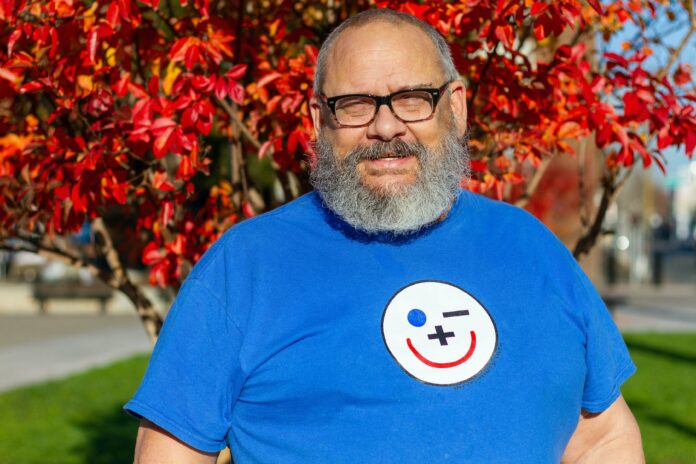
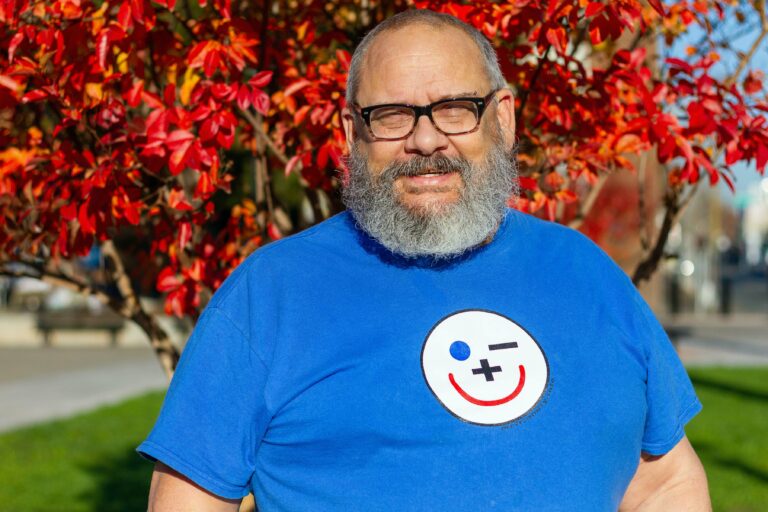
“In the beginning, we had to pull every resource together in order to take care of each other,” says Ray Tilton, 58, who has been living with HIV for almost 40 years.

“People aren’t dying like they used to, because of the medications available and the population of HIV/AIDS people doesn’t grow as fast as it used to,” he says. “Those are good things, but I think HIV/AIDS gets pushed back on the backburner so far that [people living with it] are almost an unseen minority, when our issues and concerns and problems still exist.” 

Dec. 1 is World AIDS Day. Observed since 1988 as an official global health campaign by the World Health Organization, it is a day for raising awareness about HIV/AIDS prevention and treatment, as well as for mourning those who died because of the disease. This year, the U.S. theme of World AIDS Day is “End inequalities. End AIDS.”

While today HIV/AIDS is highly treatable, and new cases in Sonoma County are a fraction of what they were in the 1980s and ’90s, stopping the spread of infection necessitates addressing inequalities in our social fabric. The illness—which is most commonly spread through sexual contact between men and intravenous drug use—disproportionately impacts populations that mainstream society stigmatizes.

The Bohemian spoke to local AIDS service organizations, healthcare workers and individuals living with HIV to learn about the history of AIDS activism in Sonoma County and the challenges the area faces in the prevention and treatment of HIV/AIDS today.

According to the most recent annual report, Sonoma County had 1,358 confirmed cases in 2017. A national estimate that 15% of people living with HIV don’t know that they are infected suggests that there are likely more than 1,600 HIV+ people in the county.

The social movement for gay liberation began to gain traction about a decade before HIV was first diagnosed, and then proceeded alongside AIDS activism for several decades. Although there is greater social acceptance of cisgender gay people today—especially in white populations—societal stigma remains high for transgender women, queer people of color, injection drug users, sex workers and unhoused people. In these populations, HIV/AIDS infection rates aren’t declining at the pace they have among cisgender white men who have sex with men.

Dr. Ele Lozares-Lewis, an HIV specialist at Santa Rosa Community Health, says that a combination of fires, a newer pandemic and the survivability of HIV all mean that the disease is less talked about than it was at its peak.

“I worry that the attention on HIV/AIDS has kind of fallen by the wayside, and we have so much work to do,” she says.
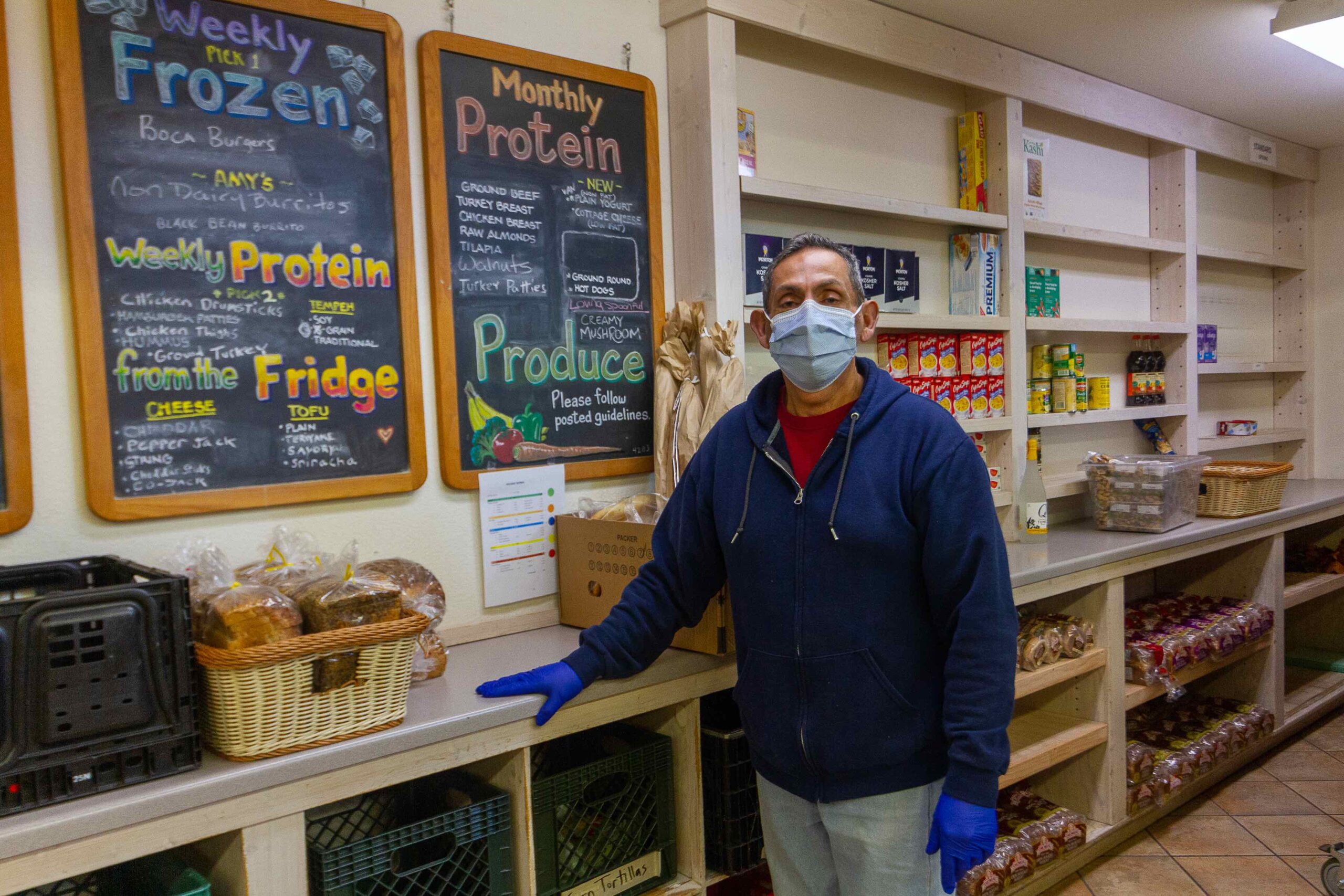
SERVICE AND SUPPORT Food for Thought Food Bank was founded by activists who saw that many AIDS patients were not getting enough food. In 2014, the nonprofit expanded its mission to provide groceries and medically-tailored meals to people living with other illnesses.

In the Beginning

Sonoma County’s first diagnosed HIV case was 40 years ago. By 1987, Sonoma County had the third-highest per-capita rate of infection in California, with 31.2 cases for every 100,000 people. The prevalence of AIDS in the area can be attributed to Sonoma County’s proximity to San Francisco and to Guerneville being a popular gay and lesbian travel destination and home. At that time, San Francisco’s infection rate was more than 10 times higher than anywhere else in the state, with 4% of the total population, and nearly 50% of the estimated population of gay men, facing the illness at the time, according to a 1988 LA Times article.

For the first eight years of the AIDS epidemic in Sonoma County, AIDS service organizations did not receive federal funding, so much of the care for people dying of the illness fell on volunteers, many of whom who were already gay- and lesbian-liberation activists.

Two of Sonoma County’s earliest AIDS service organizations were Face to Face (est. 1983), and Food for Thought (est. 1988). 

“The volunteers who advocated for Face to Face clients performed critical services that included, domestic assistance, communication with friends and relatives, and providing personal care. This care often involved kindnesses outside of transportation to doctor’s appointments and meal preparation,” writes Kate Todd in her thesis, Sonoma County’s Responses to the AIDS Epidemic, 1981-1997

Activists, who saw that many AIDS patients were not getting enough food, founded Food for Thought Food Bank. Additionally, HIV wasting syndrome—which is characterized by involuntary weight- and muscle-loss—was a common effect of the illness.

Ron Karp, executive director of Food for Thought, says “At first, people were dying quickly. By 1996, the [treatment] drugs became so effective that people almost abruptly stopped dying. Around that time, the death rate [in Sonoma County] went from around 100 people per year down to maybe 5, which is just remarkable.”

As this change occurred, the nature of the work at Face to Face and Food for Thought shifted from end-of-life care to ongoing support of people who were now expected to live with HIV/AIDS.
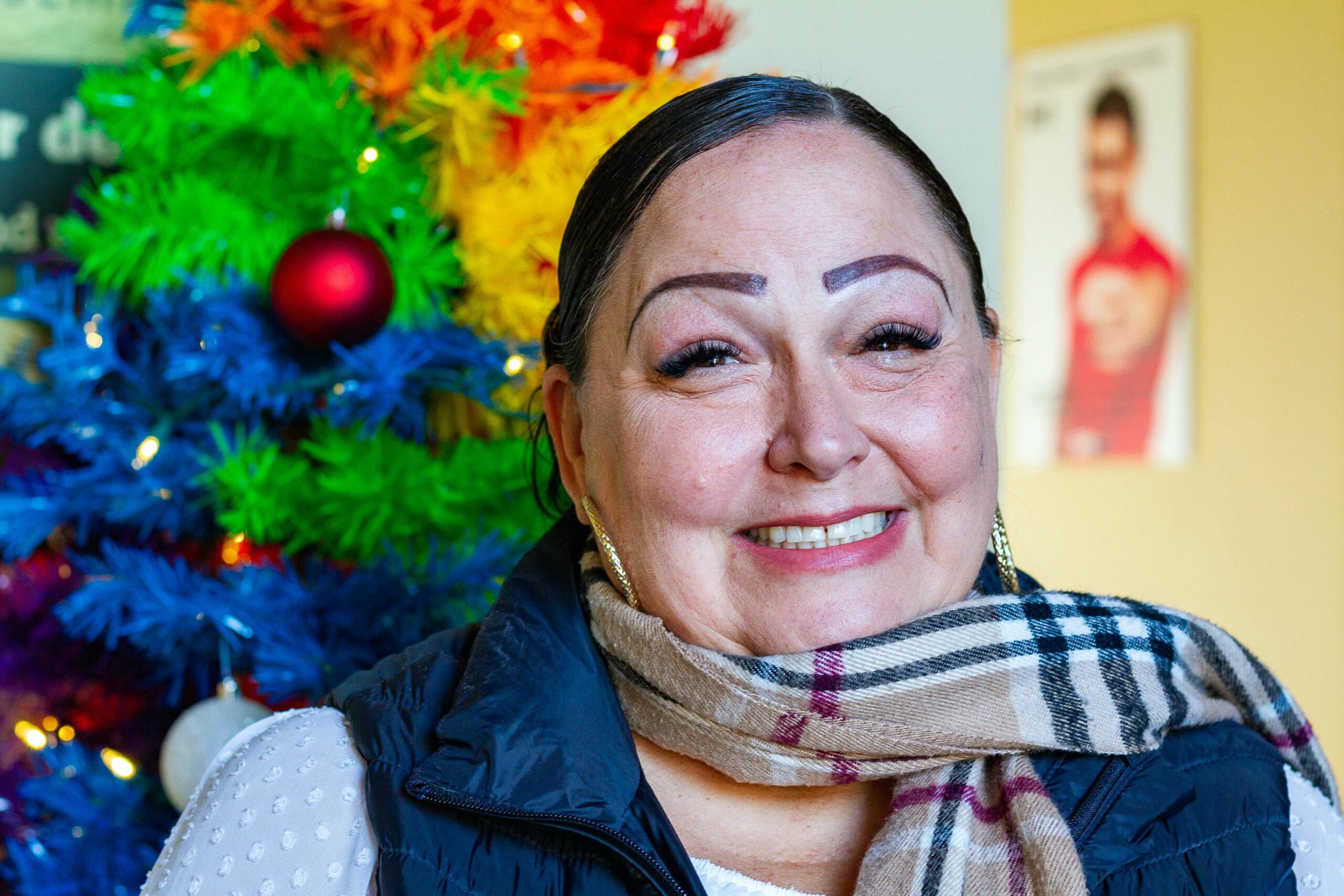
FACE TO FACE With regards to substance use, Lorie Violette says “Harm reduction is about showing love, compassion and dignity to people who use drugs, without judgement, and providing them with safer ways to use substances as well as ways to get into resources in the community.”

The Resources Today

Face to Face Executive Director Sara Brewer says, “In 2021, we provided 452 HIV tests, enrolled 18 people onto [the preventative drug] PrEP, housed 15 clients and housed 9 clients in temporary hotels.” They also provided 182 clients with financial assistance, case management, and legal and medical advocacy. 

“Stable housing is a huge part of your mental, emotional and physical stability,” says Tilton, who lives in a Section 8 apartment in Santa Rosa.

Lorie Violette is the director of prevention at Face to Face. Her work is rooted in the principles of harm reduction. With regards to substance use, she says “Harm reduction is about showing love, compassion and dignity to people who use drugs, without judgement, and providing them with safer ways to use substances as well as ways to get into resources in the community.”

She continues, “We know people can make changes when they feel love, support and connection. We are here to provide all of that, and very much keep it real with risks that people may be engaging in.”

Along with providing HIV testing and safer-sex barriers like condoms and enrollment on PrEP, Face to Face provides syringes—and a no-contact retrieval box for used needles, smoking implements and Naloxone kits to reverse opiate overdoses.

In 2014, after many years witnessing the positive effect consistent nutrition has on people living long-term with HIV, Food for Thought expanded their mission to provide groceries and medically-tailored meals to people living with other illnesses. A combination of staff and volunteers prepare orders and often deliver groceries and meals to people living with serious medical conditions in Sonoma County. In 2020, the organization served 6,500 people, of which about 400 live with HIV.

Nina Redman, client services director at Food for Thought, says, “The rates in our county of people [with HIV] who are in care, stay in care and sustain a suppressed viral load are really good. They’re some of the best in the country. And I think a lot of that has to do with the fact that we have really good services here.”

Despite a relative abundance of services, Tilton says, “There’s a huge older HIV/AIDS community in this county, I know that, but sometimes I’m like, ‘Where have we all gone?’ The isolation—especially during Covid—has just been crushing.”  

He also points to economic disparity exacerbating loneliness and taking a toll on his self esteem.

“[When I was younger] I was always contributing, always doing things in the community, so I always had that sense of value. Now, as I’m aging, when I think about [going out and socializing], I sometimes think, ‘I have AIDS, I’m older, I have Section 8, you know—what do I have to offer?’ I don’t like that those things are becoming a little more prevalent in my thought process,” Tilton says.

In 2017, there were 30 new cases diagnosed in Sonoma County, of which 10% were not diagnosed until the virus had progressed from HIV to AIDS. That said, treatment is so effective now that even people diagnosed with advanced AIDS can reduce their viral load to an undetectable level, at which point the illness cannot be transmitted sexually. This process can take as little as three months.

Santa Rosa Community Health’s VISTA Clinic treats 550 of the people diagnosed with HIV/AIDS in Sonoma County. Dr. Lozares-Lewis says, “[At SRCH], we’ll do a rapid start where someone can get their diagnosis and get started on treatment, sometimes that day. And then, we also have a HIV psychologist, so we get to connect people to mental health services and support groups.”

While effective treatment has existed since the mid-1990s, it has improved a lot since then.

Lozares-Lewis says, “I had a patient once who just cried when she saw what current treatments are, because she used to have to take handfuls of pills and some with food, some without, three times a day—and they all made her sick … . Now there are full regiments for treating HIV that are taken in one pill, once a day, with little-to-no side effects for most patients.”

Newer still, Lozares-Lewis says SRCH also offers once-monthly injectable treatment. Injectable PrEP is forthcoming, too. She is hopeful that this will increase access to preventative measures. “When someone [who is afraid of being outed] can come in and get a shot, they don’t have to worry about being found with a bottle of pills,” she says.

Lozares-Lewis says that, around 2008, new case rates dropped among white men who have sex with men, but transmission rates have held steady or increased since then in the Latinx population. “Most of the new diagnoses we’re getting are in the Roseland area … among migrant communities and the Latinx population, there can be such a huge amount of stigma and some challenges with accessing care that really need to be addressed.”

Letters to the Editor: Appreciation for Good Journalism and More Thoughts on Time

Dirty Deeds

The two-part expose on the railroading of taxpayers’ $$ into the coffers of Darius Anderson and Doug Bosco—two owners of The Press Democrat—was fascinating (News, Nov. 3 and 10).

I had to read it twice to get the full effect, but it was worth the effort. It’s pretty clear that the public railway—taxpayers—is funding the private rail company—Bosco—with no end in sight. Add SMART to the mix and some political pocket-lining at a state and maybe national level … it goes on and on, and all with our taxpayer dollars.

My hat is off to the reporter Will Carruthers and the team that dug through all of this dirty deeding. I’m not sure what should happen next, but the investigative journalism was quite impressive. Please keep it up.

Liz Froneberger

Fairfax 

Good Time

I really enjoyed reading Michael Giotis’ piece on daylight savings (Open Mic, Nov. 3). I wholeheartedly agree! Daylight savings is an outdated and disruptive system set in place back during wartime. Coming to rule a bigger and bigger share of our year, it has been proven to take a toll on people’s health.

For starters, it throws off our circadian rhythm, causing some people to not even adjust to the time change after several months.

From personal experience, the gloomy event of it getting dark at 5pm has made the days significantly less lively knowing that I’ll be losing an hour of sunlight. I like my sunlight and I like my health when it is light out! I would rather not have to worry about a higher risk of heart attack, workplace injuries and car accidents.

By moving sunlight into the morning, we continue to encourage dread and chronic misalignment. So yes, on with the revolution. Something needs to change!

Cece Trifoso

Novato

CULTURE CRUSH—North Bay Turkey Trots, Open Studios in Point Reyes, and more.

North Bay

Walk, Run or Trot

Before getting stuffed on stuffing, get out of the house on Thanksgiving with a Turkey Trot on Thursday, Nov. 25. The St. Helena Hospital Foundation hosts its annual AHEAD Turkey Trot, a two-mile outing at Crane Park, 360 Crane Ave., St. Helena (shhfoundation.org). The Bank of Marin Turkey Trot offers 5K, 10K or one-mile runs at Indian Valley College, 1800 Ignacio Blvd., Novato (marinturkeytrot.com). The Healdsburg Turkey Trot returns with a 5K walk or run starting at the Healdsburg Running Company, 333 Center St., Healdsburg. (healdsburgrunningcompany.com). Registration is required for all runs, and Covid-19 safety protocols, including proof of vaccination, will be in place.

Napa

Holiday Resort

Napa’s Meritage & Vista Collina Resorts are embracing the holiday season and transforming into a Winter Wonderland Village. The merry offerings include a Holiday Ice Rink open daily through December for guests and locals, and events like the Thanksgiving Brunch Buffet on Thursday, Nov. 25, from 10am to 4pm; and the annual Tree Lighting Ceremony, complete with an artisan market full of seasonally-inspired items, tasting rooms, holiday carolers and a visit from Santa Claus, on Friday, Nov. 26, from 4–6pm, on the lawn at 850 Bordeaux Way, Napa. The tree lighting is free, but ticketed—RSVP at Cellarpass.com. Find more events at Meritagecollection.com.

Point Reyes Station

Art Up Close

While the masses are spending Thanksgiving weekend shopping, Bay Area art lovers can spend time with more than 20 artists in their studios throughout West Marin during the self-guided Point Reyes Open Studios tour. The three-day showcase features an array of sculptors, photographers, potters, painters, printmakers and woodworkers located along the scenic back roads of Point Reyes Station and Inverness, each of whom open their doors to display their latest original works, share their creative process and sell art that’s perfect for the gifting season. Point Reyes Open Studios runs Friday to Sunday, Nov. 26–28, at various locations. 11am to 5pm each day. Masks required. Pointreyesart.com.

Sonoma & Santa Rosa

Gut Busters

When the Thanksgiving food coma wears off, three North Bay Stand-up Comedy shows are ready to make bellies ache with laughter. The Comedy Night After showcase features veteran comedians Johnny Steele, Larry “Bubbles” Brown and Michael Meehan on Friday, Nov. 26, at Sebastiani Theatre, 476 First St. E, Sonoma (sebastianitheatre.com). That same night, Barrel Proof Comedy brings headliner Wendy Lewis and others to 3 Disciples Brewing, 501 Mendocino Ave., Santa Rosa (barrelproofcomedy.com). Then, come out for Comedy Under the Tent, featuring Bay Area headliner Dauood Niamyar, on Saturday, Nov. 27, at Iron Ox Brewing, 3334 Industrial Dr., Santa Rosa (ironoxbeer.com).

—Charlie Swanson

Every Murmur Becomes a Wave: Exhibition in Sonoma Provides a Platform for discussion of current political and economic issues

Double Trouble: Enrique Chagoya and Kara Maria, Sonoma Valley Museum of Art’s current exhibition, sits at the intersection of political unrest and visual art. 

Chagoya and Maria, a married couple and long-time art-activists, each bring their own striking and unforgettable interpretation to the ongoing issues of migration, extinction, climate change and economic disparity.

Chagoya has been active in the art world since he first came to Berkeley at the age of 26. Full of well-known cartoon characters and ancient indiginous symbols, his work is at once comical and deeply unnerving. 

His use of characters such as Donald Duck and Dopey—from Snow White and the Seven Dwarves—juxtaposed with hanging bodies or hungry children, calls attention to the American capacity for disconnection through distraction, pleasure seeking, laziness and other vices. He and Maria produced a series, on display in this exhibition, depicting each of the seven deadly sins. Chagoya’s images are full of skeletons, cigarettes, Winnie the Pooh and glass eyes. His work, though overtly critical, is also inviting, though not all viewers share this opinion—a collection of his painting critiquing the sexual abuse cases in the Catholic Church was destroyed in 2010 by a woman with a crowbar. 

A Mexico City–native and a current professor at Stanford University, Chagoya was awarded a Guggenheim Fellowship this year for his contributions to the art world.

Maria’s paintings, by contrast, have been described—by the Sacramento News and Review—as a visual representation of human emotions. Large, vividly-colored and teaming with motion, Maria’s pieces call to mind neurological activity. 

To engage with this work is to take a much-less immediately directed journey through concepts of environmental crises and extinction. The colorscapes, which feature myriad different shapes and representations of animals and buildings, offer a wide space for introspection and interpretation. As a viewer, traversing each work and coming across unexpected images, I felt I was looking at an externalized map of my own cognitive activity. 

Originally from New York and a graduate of UC Berkeley, Kara has served as an artist-in-residence at Recology, in San Francisco, and her work can be found in permanent collections at the Crocker Museum and the San Jose Museum of Art.

Kara and Enrique are married, making them a powerhouse couple in the world of art activism, and viewing their work side by side offers a powerful opportunity for multi-dimensional reflection on our current socio-political and environmental situation.

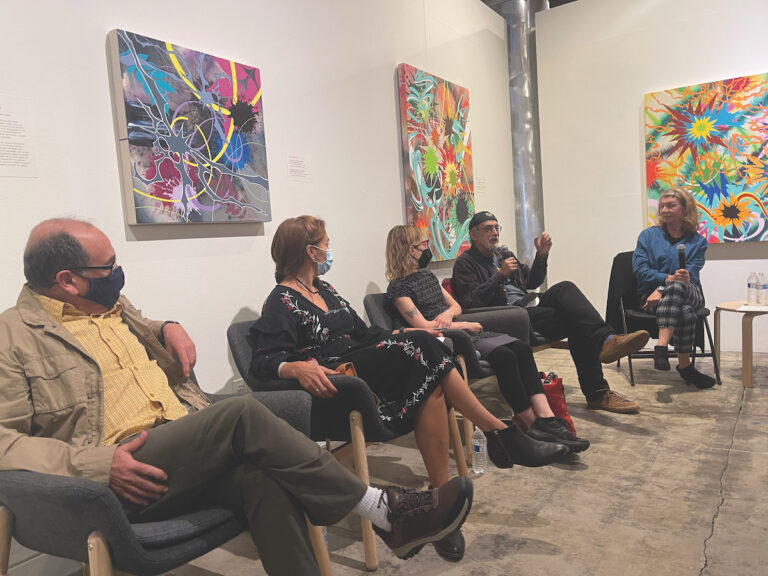
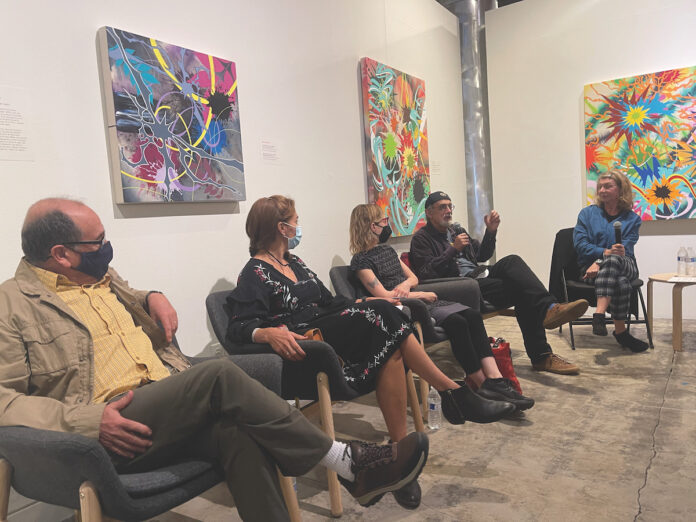
Recognizing the pertinence of this exhibition, and the potential for community dialogue, SVMA went a step further, and earlier this month hosted Every Murmur Becomes a Wave, a discussion panel named for one of Maria’s featured works. This discussion, moderated by SVMA’s Director of Development and Marketing Debbie Barker, featured Chagoya, Maria and two UC Berkeley professors and climate activists—Miguel Altieri and Clara Nicholls. The intent was to address, in no uncertain terms, past, present and future circumstances of climate change, species extinction, farming politics, and immigration issues.

Each participant brought a specific voice to the discussion, and several responses particularly stood out.

Barker asked Professor Nicholls, who specializes in agroecology and entomology, if she could elucidate on the extinction of critical insect species in the last 50 years. Nicholls explained that the macro-scale monocrop production in the United States—and abroad—was drastically affecting the lives of pollinating insects. Cornfields, soybean fields and other macro-scale monocrops in America all leave the soil exhausted from lack of nutrient diversity and pollinators struggling to find the flowering plants that used to grow in the now-monopolized fields. This mono-production of crops has further detrimental international impacts on immigration and migration issues. Barker used the example of the North American Free Trade Agreement, which, when it went into effect, required Mexico to open its borders and allow in massive amounts of American corn. Highly subsidized U.S. corn then flooded Mexico’s economy, pushing a previously thriving population of corn farmers out of their home country and into the United States to seek work. Chagoya picked up this thread, further expanding on the detrimental effects of macro-scale monocropping and GMO farming, using a historical perspective for emphasis:

“Consider the transformation of the economy that took place over 500 years ago with the arrival of the Europeans. Consider all of the Native American cultures that had very stable economic systems. For example, Central Mexico, Peru, most Native American systems in the North, they didn’t have private property of the land. The land was stewarded communally. Chief Seattle, in his famous speech, was confused about why European colonizers wanted to buy land. He said that in Native American cultures the land was not something to be owned, but something to be worshipped, to be taken care of. This kind of concept was destroyed in the establishment of European economic structures—centuries-old systems that survived the changes in climate successfully. The diversity in crops—onion, zucchini, tomato, beans—was taken over by cotton, coffee, sugar cane and wheat. And the part that puzzles me is that all of this knowledge was wasted, when it could have been integrated. Even if the colonization of the Americas was inevitable, it would have been wiser to really adopt and learn from what was practiced by these cultures for centuries. And to note that they were not experiencing climate change.”

Strikingly, Chagoya also said, “We’re not going to change the world with art, but we can at least create some thought-provoking situations. Because these issues, they’re all connected. The world has been divided into producers of materials, usually pushed to be mono-producers, exchanging with manufacturers. And this unequal exchange creates massive poverty problems in countries that were former colonies, and in places affected by something like NAFTA, when these farmers are displaced because their communal land became privatized. The only way they could survive was in coming to the U.S., but the U.S. was inhospitable to them. These issues are symptoms of the transformations that have taken place worldwide.”

After this context from Chagoya, Professor Altieri reiterated the current gravity, in no uncertain terms: 

“Twelve percent of the growing population has produced 50% of the greenhouse gases that have caused the 1.2-degrees celsius elevation of temperature over the last 100 years. The countries that are suffering climate change—farmers in Mexico, South America, Asia, Africa—they are the most vulnerable and have only contributed about .25% of greenhouse gases. We have around 21 million ecological refugees in the world at this point. And that number is expected to go up to 1 billion if we don’t control the situation, which isn’t looking promising. And I want to give you an idea of what these numbers mean: 1.5 degrees celsius means that on average, in the world, we’ll have two months of drought and 41% more wildfires. The yield of industrial agriculture will decline by about 40%. If we go to 2 degrees celsius it will mean four months of drought on average in the world, 52% more wildfires and a further decline in crop yields. If we go to 3 degrees, we’re looking at 10 months of drought on average and 97% more wildfires, no crop production and a great deal of hunger. These environmental crises displace people, fleeing for their lives.”

Professor Nicholls impressed Altieri’s point, speaking specifically to the jarring imbalance in greenhouse gas-emission perpetrators, saying, “Often agriculture is cited as the activity causing the most issues, but what they don’t say is what type of agriculture. Corporate farms are responsible for these emissions. But the small-farm agriculture that produces 50% of the food that we eat, they actually cool the planet. They are not responsible for greenhouse emissions.”

Barker, in response to this, cited a 2015 report from the Pentagon which acknowledged the grave nature of the mounting climate crisis. “Global climate change will aggravate problems such as poverty, social tensions, environmental degradation, and ineffectual leadership,” it stated. 

The message becoming more and more apparent with each passing year is that corporations, governments—macro-scale players—impact the planet most and remediate the least. A poignant final question from the audience drove home the deep sense of uncertainty felt by all. “So,” an audience member asked, “What can we do? We’re here, we’re listening, but what can we do?”

The answer given by the panel is one I’ve repeatedly championed in my last few articles—work within your community. We face significant hardship, and endeavoring to reach too large of a scale diffuses and exhausts our efforts. When we scale down and work within our community we see real change, in our lives and the lives of those around us. In addition, we can continue to ask for more from our local and state government officials. This sort of action is far from fruitless, and may perhaps be the only thing we can do.

SVMA recognizes the need for community collaboration and takes their role as a community museum deeply to heart. “Providing programs that are relevant to our region is one way of building community around art, which is SVMA’s mission,” Barker said in a follow-up conversation. 

Look for more events like these at SVMA and beyond. Join your community, in conversation and in action. 

For more information on this exhibition, the artists and the ongoing community-based events happening at SVMA, visit SVMA.org.

Free Will Astrology

0

Week of November 24

ARIES (March 21-April 19): Aries author Chris Brogan says, “Don’t settle. Don’t finish crappy books. If you don’t like the menu, leave the restaurant. If you’re not on the right path, get off it.” That’s the best possible counsel for you to hear, in my astrological opinion. As an Aries, you’re already inclined to live by that philosophy. But now and then, like now, you need a forceful nudge in that direction. So please, Aries, go in pursuit of what you want, not what you partially want. Associate with the very best, most invigorating influences, not the mediocre kind.

TAURUS (April 20-May 20): Author Kurt Vonnegut wrote wistfully, “I still catch myself feeling sad about things that don’t matter anymore.” If similar things are running wild in your head, dear Taurus, the coming weeks will be a favorable time to banish them. You will have extra power to purge outdated emotions and reclaim at least some of the wild innocence that is your birthright. PS: There’s nothing wrong with feeling sad. In fact, feeling sad can be healthy. But it’s important to feel sad for the right reasons. Getting clear about that is your second assignment.

GEMINI (May 21-June 20): “I’ll walk forever with stories inside me that the people I love the most can never hear.” So says the main character in Gemini author Michelle Hodkin’s novel The Evolution of Mara Dyer. If that heart-rending statement has resonance with your own personal experience, I have good news: The coming weeks will be a favorable time to transform the situation. I believe you can figure out how to share key stories and feelings that have been hard to reveal before now. Be alert for unexpected opportunities and not-at-all-obvious breakthroughs.

CANCER (June 21-July 22): A study of people in 24 countries concluded that during the pandemic, over 80% of the population have taken action to improve their health. Are you in that group? Whether or not you are, the coming weeks will be a favorable time to go further in establishing robust self-care. The astrological omens suggest you’ll find it easier than usual to commit to good new habits. Rather than trying to do too much, I suggest you take no more than three steps. Even starting with just one might be wise. Top three: eating excellent food, having fun while exercising right and getting all the deep sleep you need.

LEO (July 23-Aug. 22): Leo-born scholar Edith Hamilton loved to study ancient Greek civilization. She wrote, “To rejoice in life, to find the world beautiful and delightful to live in, was a mark of the Greek spirit which distinguished it from all that had gone before.” One sign of Greece’s devotion to joie de vivre was its love of play. “The Greeks were the first people in the world to play,” Hamilton exulted, “and they played on a great scale. All over Greece, there were games”—for athletes, dancers, musicians and other performers. Spirited competition was an essential element of their celebration of play, as was the pursuit of fun for its own sake. In resonance with your astrological omens, Leo, I propose you regard ancient Greece as your spiritual home for the next five weeks.

VIRGO (Aug. 23-Sept. 22): Virgo singer-songwriter Florence Welch, of the band Florence and the Machine, told an interviewer why she wrote “Hunger.” She said, “I looked for love in things that were not love.” What were those things? According to her song, they included taking drugs and performing on stage. Earlier in Florence’s life, as a teenager, “love was a kind of emptiness” she experienced through her eating disorder. What about you, Virgo? Have you looked for love in things that weren’t love? Are you doing that right now? The coming weeks will be a good time to get straight with yourself about this issue. I suggest you ask for help from your higher self. Formulate a strong intention that in the future, you will look for love in things that can genuinely offer you love.

LIBRA (Sept. 23-Oct. 22): There’s a Grateful Dead song, with lyrics written by John Perry Barlow, that says, “You ain’t gonna learn what you don’t want to know.” I propose you make that your featured advice for the next two weeks. I hope you will be inspired by it to figure out what truths you might be trying hard not to know. In so doing, you will make yourself available to learn those truths. As a result, you’ll be led on a healing journey you didn’t know you needed to take. The process might sound uncomfortable, but I suspect it will ultimately be pleasurable.

SCORPIO (Oct. 23-Nov. 21): Scorpio author and philosopher Albert Camus was a good thinker. At age 44, he won the Nobel Prize for Literature—the second-youngest recipient ever. And yet he made this curious statement: “Thoughts are never honest. Emotions are.” He regarded thoughts as “refined and muddy”—the result of people continually tinkering with their inner dialog so as to come up with partially true statements designed to serve their self-image rather than reflect authentic ideas. Emotions, on the other hand, emerge spontaneously and are hard to hide, according to Camus. They come straight from the depths. In accordance with astrological potentials, Scorpio, I urge you to keep these meditations at the forefront of your awareness in the coming weeks. See if you can be more skeptical about your thoughts and more trusting in your emotions.

SAGITTARIUS (Nov. 22-Dec. 21): Poet Renée Ashley describes what she’s attracted to: “I’m drawn to what flutters nebulously at the edges, at the corner of my eye—just outside my certain sight. I want to share in what I am routinely denied or only suspect exists. I long for a glimpse of what is beginning to occur.” Although I don’t think that’s a suitable perspective for you to cultivate all the time, Sagittarius, I suspect it might be appealing and useful for you in the coming weeks. Fresh possibilities will be coalescing. New storylines will be incubating. Be alert for the oncoming delights of the unknown.

CAPRICORN (Dec. 22-Jan. 19): What could you do to diminish your suffering? Your next assignment is to take two specific steps to begin that process. You’re in a phase of your astrological cycle when you’re more likely than usual to see what’s necessary to salve your wounds and fix what’s broken. Take maximum advantage of this opportunity! I proclaim this next chapter of your life to be titled “In Quest of the Maximum Cure.” Have fun with this project, dear Capricorn. Treat it as a mandate to be imaginative and explore interesting possibilities.

AQUARIUS (Jan. 20-Feb. 18): “It is a fault to wish to be understood before we have made ourselves clear to ourselves,” wrote my favorite Aquarian philosopher, Simone Weil. I agree. It’s advice I regularly use myself. If you want to be seen and appreciated for who you really are, you should make it your priority to see and appreciate yourself for who you really are. The coming weeks will be a favorable time to make progress in this noble project. Start this way: Write a list of the five qualities about yourself that you love best.

PISCES (Feb. 19-March 20): Nigerian author Ben Okri, born under the sign of Pisces, praises our heroic instinct to rise above the forces of chaos. He writes, “The most authentic thing about us is our capacity to create, to overcome, to endure, to transform, to love, and to be greater than our suffering.” You’ve been doing a lot of that excellent work throughout 2021, dear Pisces. And I expect that you’ll be climaxing this chapter of your life story sometime soon. Thanks for being such a resourceful and resilient champion. You have bravely faced—but also risen above—the sometimes-messy challenges of plain old everyday life. You have inspired many of us to stay devoted to our heart’s desires.

[Editor: Here’s this week’s homework:]

Homework. Gratitude is the featured emotion. See how amazing you can make yourself feel by stretching it to its limits. Newsletter.FreeWillAstrology.com

SMART Projected to Lose at Least $400,000 per Year Hauling Freight

Among its critics, SMART, the North Bay’s passenger rail service, has gained a reputation as an opaque money-pit of an agency. Unfortunately, the agency’s takeover of freight service is proving no different.

Last May, the board of directors voted nearly unanimously to take on freight service in the North Bay. At the time, SMART had not formally studied the money-making prospects of the new business venture, but State Senator Mike McGuire and state officials vouched for the plan—and allocated millions of dollars to cover the agency’s start-up costs.

At a May 20, 2020 meeting, SMART board members largely embraced the idea, with some speculating which North Bay companies would be interested in switching to freight rail service. The idea of having direct control over all of the trains operating on the agency’s lines also appealed to board members.

Still, there were plenty of reasons to be skeptical. The privately-owned Northwestern Pacific Railroad Company has run freight in the North Bay since 2011, but the company’s CEO, Press Democrat-investor Doug Bosco, has long been secretive about the company’s specific revenues and operating costs. At the May 2020 SMART board meeting, Bosco said that the company had revenues of around $2 million per year but declined to offer specifics, claiming that that information is “proprietary.”

(As we reported recently, Bosco’s NWP Co received $7.47 million from the state as part of the process of passing the freight management from another state agency to SMART. NWP Co is currently running and storing freight cars on SMART’s lines for free throughout the takeover process. For more details, read “Freight Railroaded,” Nov. 3, and “Train Lines,” Nov. 10.)

However, a year and a half after SMART’s May 2020 meeting the agency is projected to lose hundreds of thousands of dollars a year on freight for the foreseeable future.

At their Nov. 17 meeting, SMART’s board of directors discussed handling freight in-house or through a private contractor. The presentation promised to offer rail enthusiasts a glimpse at the agency’s developing freight plans.

Instead, staff largely offered potential freight revenues based on “conversations with NWP Co” and neglected to highlight an in-depth study which the agency hired a Marin County–based business consultant to prepare.

In February, SMART signed a contract with Project Finance Advisory Ltd. “to conduct a thorough and unbiased analysis of existing and potential freight rail customers within the North Bay Area.”

Over the summer, SMART staff told the board they would receive an executive summary of the full freight market report by Sept. 1. SMART staff have said they sent the summary to board members, however the agency never published the document for public consumption. Matt Stevens, an agency spokesman, did provide the Bohemian with a copy in early September upon request.

As we’ve previously reported, the executive summary estimates that NWP Co brought in between $1.2 and $1.3 million in revenue last year. However, Project Finance Advisory Ltd. could not estimate what it will cost SMART to operate freight trains, because NWP Co declined to share “detailed, itemized financial records.”

Curiously, the one-page Nov. 17 staff report for the freight discussion did not include any mention of Project Finance Advisory’s study, which, according to the February contract, will cost SMART up to $67,726. The Nov. 17 agenda packet did not even include a copy of the executive summary, which was completed months ago.

Instead, the agenda packet only includes staff reports from past board discussions about the freight takeover. Even more strange, a Powerpoint presentation for the agenda item cites revenue data based on “conversations with NWP Co,” Bosco’s private company. In short, instead of presenting the “thorough and unbiased” analysis of the freight market the agency paid a contractor to prepare, SMART staff opted to cite vague revenue estimates from NWP Co itself.

During the meeting, SMART Director of Finance Heather McKillop said that “we don’t feel super comfortable with the [revenue] numbers and what those costs are at this time.” McKillop suggested that SMART should gain experience and information by handling freight in-house to start, with the option to contract with an outside company later on. SMART General Manager Farhad Mansourian said that Project Finance Advisory Ltd.’s final report would be completed and published “within two weeks” of the Nov. 17 meeting. 

Mansourian, Stevens, SMART board chair David Rabbitt and vice chair Barbara Pahre did not respond to questions about staff’s decision not to cite or include Project Finance Advisory Ltd.’s executive summary with the meeting documents.

Still, comparing the available financial projections offers a rough picture of SMART’s freight prospects. Financially, they range from bad to worse.

The executive summary completed by Project Finance Advisory Limited Ltd. estimates that NWP Co brought in between $1.2 and $1.3 million in revenue in 2020, with about 49% of revenues coming from storing rail equipment and cars filled with Liquid Petroleum Gas—commonly known as LPG—for processing at refineries. The executive summary also states that “The study did not reveal any new traffic opportunities that are likely to increase freight volume dramatically on SMART’s trackage.”

The executive summary offers three possible outcomes. The most optimistic projection, which assumes that SMART will increase “track capacity for car storage” and make other pro-freight choices, projects revenue growth from $1.4 million in 2021 to $2.5 million in 2030.

In contrast, SMART’s Powerpoint, “based on conversations with NWPCo,” estimates the company’s current total annual revenues at $1.7 million, with $1.2 million coming from freight hauling cargo and $466,000 from the storage of rail equipment and LPG. All told, 27% of current revenues come from LPG storage, according to SMART’s presentation.

Freight also comes with political considerations. The possible impacts of freight on communities neighboring train lines was a major issue of debate in the lead-up to the passage of Measure Q, the 2008 sales tax which currently provides a significant portion of SMART’s revenue. There are still political considerations today because SMART needs to pass another tax measure by 2029 when Measure Q expires.

Since 2016, NWP Co has stored LPG cars near Schellville, near the City of Sonoma. Well-organized residents have raised concerns about the safety of storing the potentially-explosive cars.

So, SMART’s freight takeover left the agency’s board of directors with a politically-sensitive choice: Continue storing LPG, which accounts for a considerable chunk of the projected revenue from SMART’s newly-acquired freight operation; or risk the rage of Sonoma Valley voters next time a SMART sales tax is on the ballot.

Susan Gorin, a SMART board member who represents Schellville and surrounding areas on the Sonoma County Board of Supervisors, laid out the situation bluntly at a Nov. 17 SMART meeting: “Sonoma Valley has probably 20,000 voters … . And we’re looking at reauthorization of the sales tax. This could be a political issue for the Valley if in fact there is no movement on the tanker cars … . This very visible, graffiti-laden reminder is not a good representation of the possibilities of SMART.”

Ultimately, the board conceptually supported the idea of ditching the LPG storage business as soon as possible and handling the freight business in-house rather than contracting with a private company. 

According to SMART staff cost projections included in the Nov. 17 Powerpoint presentation, it will cost the agency approximately $1.7 million to run freight in-house.

That means, if the SMART board decides to continue storing LPG—and NWP Co’s revenue estimates cited in the Powerpoint prove to be accurate—SMART will just break even on its freight operations.

However, since the board favors ditching LPG, it appears the agency will lose over $400,000 on freight every year until it finds new revenue streams, according to SMART’s Nov. 17 Powerpoint. If Project Finance Advisory Ltd’s projections—baseline revenues of approximately $1.3 million, including LPG storage—are accurate, then SMART’s freight business will be even deeper in the red.

At the Nov. 17 board meeting, McKillop, the chief financial officer, said that, given the boards’ support for ditching LPG, SMART staff will prepare short- and long-term proposals to fill the financial hole. It’s not yet clear where the money will come from. However, since Measure Q funds are earmarked for passenger rail costs, SMART can’t use that pot of money to pay for the freight losses.

North Bay Organizations Honor Transgender Day of Remembrance

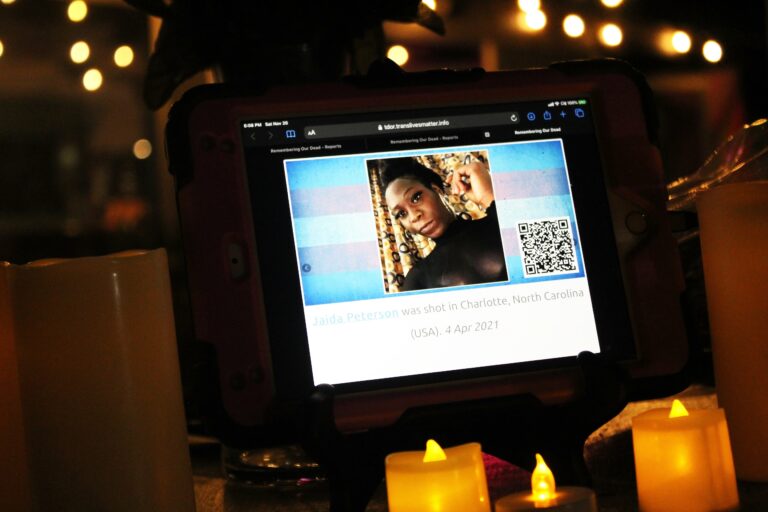
On a clear, chilly Saturday night in Santa Rosa, approximately 100 community members, college students and local activists gather on the patio outside Brew Coffee and Beer along Healdsburg Avenue.

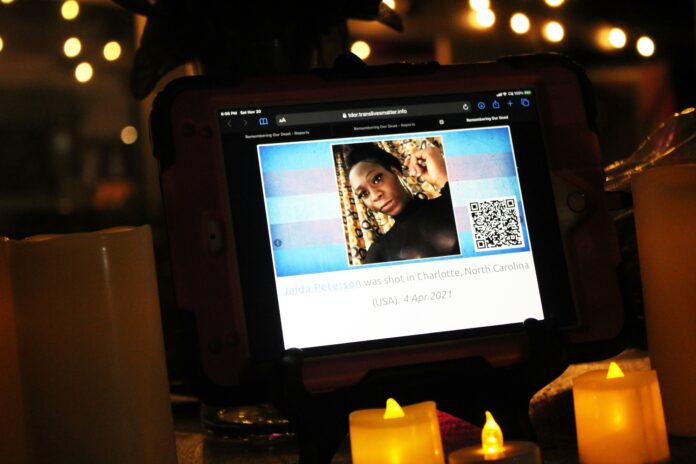
Clutching plastic cups filled with electric tea lights, a distinct, tangible sense of grief grips the crowd. A poster board, set up near the front of the cafe, lists the names of transgender men, women and nonbinary people who were killed in 2021. In conversation, organizers point out to me that the list has grown significantly since last year’s event.

At one point, a man leans out the window of a passing car, yelling “white lives matter!”, loud enough to be heard over one of the evening’s speakers.

This is what Transgender Day of Remembrance looks like in the North Bay. 

Remembering Our Dead

An annual event founded in 1999 by advocate and writer Gwendolyn Ann Smith, Transgender Day of Remembrance, celebrated on Nov. 20, memorializes those who have been killed in acts of hate violence and transphobia. Smith’s prior activism included “Remembering Our Dead,” a 1998 project which timelined anti-transgender murders in the United States and ultimately laid the groundwork for what TDOR is today.

In 2020, TDOR gained national recognition when Vice President Kamala Harris tweeted “Today and every day we must recommit to ending this epidemic.”

But despite the increased mainstream visibility for transgender issues over the past few years, the community still continues to face violence, crime and murder at an alarming rate, TransLife Sonoma committee member Orlando O’Shea says. TransLife Sonoma is a volunteer-run organization which holds educational and social events for the larger LGBTQIA community in the North Bay.

“It’s amazing how things have changed for trans people in the last decade,” he says. “But we’re still in the weeds, we’re still in the thick of things. Things change so slowly, and times feel so uncertain right now.”

In 2021, at least 47 transgender and nonbinary people were killed in the United States, making it the most devastating year on record for transgender people in the U.S. A majority of the victims were Black and Latina transgender women; one of the youngest victims, a Black trans boy named Jeffrey “JJ” Bright, was only 16 years old when he was shot and killed this past February.

For O’Shea, Saturday’s vigil was a bittersweet experience, like it is every year. A 50-year-old transgender man, O’Shea attended his first TDOR event in Guerneville close to seven years ago. Since then, the number of transgender people killed in the U.S. has only increased, along with the ever-present feeling of loss, sadness and despair within the community.

“It’s a double-edged sword,” he says. “You want to have hope, but when you’re seeing more people die than the year before, it’s a heavy thing. It’s a difficult thing to wrap your head around, that you’re doing this every year and things are getting worse.”

Still, O’Shea and other organizers recognize the work they do as imperative to the transgender community, no matter how painful the reality of the situation may be.

“This is an opportunity for us to come together and have a moment of reflection and sadness and sorrow and mourning,” Jessica Carroll, director of programs for Positive Images, a Santa Rosa-based LGBTQIA nonprofit, said to me shortly after the vigil. “But it’s also an opportunity to recommit ourselves to fighting for justice and against the transphobia that is so deadly in the world.”

“You can look around and see that there are so many trans people in Sonoma County, but also so many allies and accomplices,” she added.

C.L. Muir, a committee member for TransLife Sonoma and one of the event’s speakers, told me that they felt grateful to be invited to speak and attend. 

“When I was first asked to do this, I was scared. It’s such a heavy topic, and I didn’t know what I could personally do,” Muir, a trans man, said. “Seeing so many people come out to show support and show love and remember those within our community who [have been murdered], I was humbled.”

In Marin County, organizers from the Spahr Center held a similar vigil in San Rafael, highlighting the importance of Black transgender voices in the ongoing fight against hate violence.

The Spahr Center, founded in 2015, is Marin County’s only nonprofit serving the LGBTQIA community. They offer services ranging from youth programs to harm reduction to education around HIV/AIDS awareness.

Suzanne Ford, who serves as the president of Spahr’s board of directors, says that having that marginalized voice in a primarily white area like Marin County was one of the organization’s main goals for the event.

“I thought it was really important for a Marin audience to hear a Black trans person talk about the death and violence [transgender people] face in other areas,” she says. “He called on [white, cisgender people] not to just be allies, but accomplices.”

Making a Better World 

What does a safe world look like for transgender and nonbinary people, as long as we continue to exist on the margins of society? As O’Shea notes, the answer is not as simple as it seems. Much of the work that needs to be done in order to better protect the transgender community has to come from cisgender allies—or, as Carroll says, accomplices—not necessarily from transgender people themselves.

“More needs to be done systematically,” he says. “Not everything can be done by the transgender community in a day. A safe world is where trans people can exist without worrying about their safety, without worrying about the high level of violence that is perpetrated against them.”

A 2014 report from the National Coalition of Anti-Violence Projects found that among victims of anti-LGBTQIA hate crimes in the U.S., 80% were Black, Indigenous and people of color; 55% were transgender women; and 50% were transgender women of color.

Due to the intersections of transphobia, racism and misogyny that exist within their identity, transgender women of color are more marginalized than their white or cisgender queer counterparts. This marginalization can lead to employment discrimination, experiences with sexual violence, and poverty and housing insecurity.

As Carroll notes, these issues are typically systemic.

“There is a lot of violence [that people are likely to face when] unhoused, there is a lot of violence in having to do things like survival sex work, there is a lot of [risk of] violence being a person who is lower income or who is poor,” she says. “I don’t think we can underestimate the safety that comes with housing and healthcare.”

In addition, suicide rates remain high among transgender, nonbinary and gender non-conforming people, especially adolescents. More than half of the transgender boys who participated in a 2018 survey published by the American Academy of Pediatrics reported one or more suicide attempts in their lifetime, while 29.9% of transgender girls surveyed said that they had attempted suicide at least once.

“It’s a response to the fact that we live in such an unsafe world that people feel like that is their only option,” Carroll added. “[Violence] is preventable if we just cared about each other.”

O’Shea says that while he sometimes feels as if a truly safe world for trans people is a pipe dream, the importance of continuing the work—fighting for those who are still around and remembering those who are not—can never be overstated.

“Is [a safe world] a dream?” he asks. “Yes. But I like to hold out hope.”

Cine-meh: Small-screen Blues

0

TV is not really TV anymore. It’s more like a video jukebox fed by the internet. It’s also one of the few remaining platforms on the internet that we can talk back to and only annoy the person next to us. Anything else shared online could get us digitally dogpiled, so do what my dad did and yell at the TV. It can’t hear us, but it knows we’re watching.

And it knows our tastes better than we do. Not the refined cineaste selections we purport to like in polite company, but the real, binge-worthy, sleazy shit we actually like.

For example, someone might ask me, “Hey, how did you learn Swedish?” and I might admit, “From bingeing months of Nordic Noir.” Give me a laconic, dead-eyed cop and a frozen corpse thawing in the midnight sun, and I’m happy. Or at least unhappy in that existentially affirming Swedish way. Sval!

But now my wife can’t turn on Netflix without being greeted by dead Swedes. Basically, every suggested show is a bloody snow cone of blond on blond murder.

I tried to bring down the body count by queuing up one of her childhood favorites, the three-hour Spaghetti Western, The Good, the Bad and the Ugly, or, as she referred to it growing up, “the babysitter.” As a generation weaned on the boob tube, films like this are why we have such great taste in cowboy movies—not to mention an affinity for Boba Fett, who’s just The Man With No Name in space.

Speaking of names, I had no idea Clint Eastwood was called “Blondie” and his adversary, Lee Van Cleef, was “Angel Eyes”—they sound like dancers in a cartoon nightclub.

Of course, all this royally skewed the suggested films in my account. The algorithm is remixing my recent viewing into some kind of Nordic-cowboy hybrid. The genre departs from the Spaghetti Western and arrives at the Swedish Meatball.

We open on a windblown fjord. A man in a serape astride a reindeer spits into the virgin snow. Another man, “Snow Bunny,” cowers at the reindeer’s hooves.

“You see, in this world, there’s two kinds of people, my friend,” the reindeer man gruffs between puffs on a cigarillo. “Those with their own Netflix password, and those who use someone else’s …”

Cue Morricone: “Wah, WAH, wah.”

Editor Daedalus Howell makes movies at DaedalusHowell.com.

Open Mic: Love Comes First, a Dialogue Poem

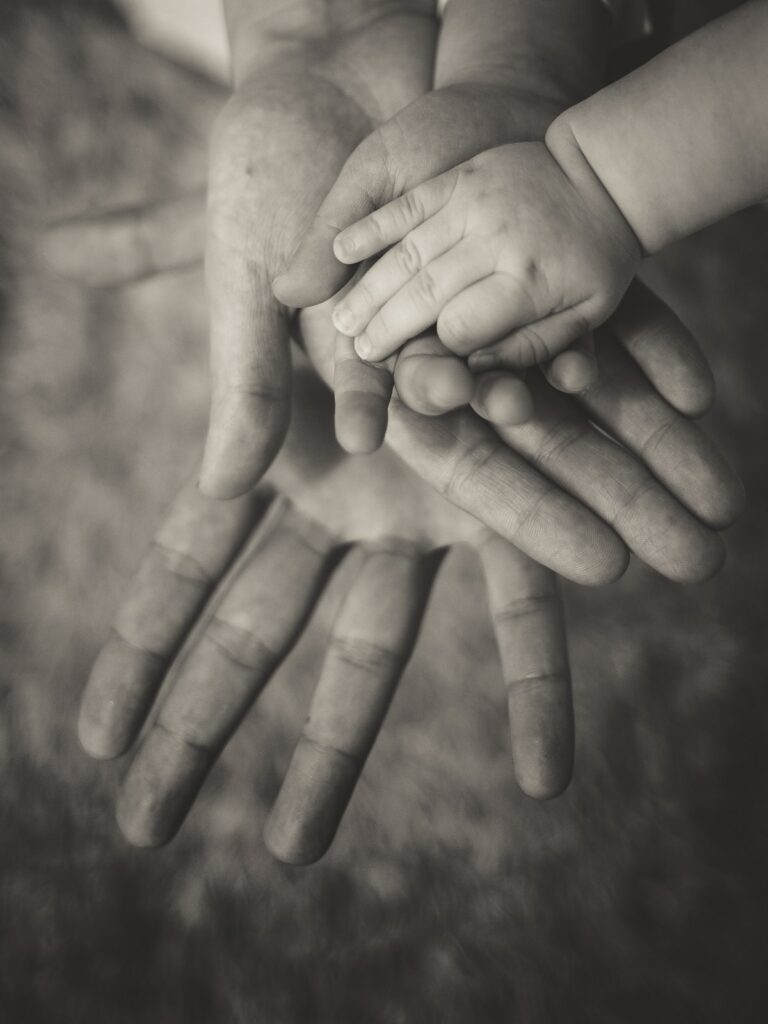
Parent

“C’mon stop crying.”

Grandparent

“When you did that, I picked you up and held 

you.”

Parent

“I was like that?”

Grandparent

“Yes, and you snuggled into my shoulder.”

Parent

“I think parents should create more 

independence.”

Grandparent

“But these are baby steps, first comes love.”

Parent

“I do love, but I must teach.”

Grandparent

“Plenty of time to learn when they are capable 

of understanding.”

Parent

“What does a baby understand?”

Grandparent

“Love”

Parent

“When will I know it’s time to teach?”

Grandparent

“When they ask to learn?”

Parent

“How can I teach love?”

Grandparent

“Mercy.”

Parent

“Love comes first. Come here Baby, I love 

you!”

Grandparent

“Mercy! And in the same spot you once found 

yours. Love comes first.”

“One” is the pen name of North Bay author Eddie Campagnola. Austin Macauley Publishing UK will publish his forthcoming book of dialogue poems, “Directions in Dialogue,” in spring 2022.

Climate Fatigue Coverage: SRJC Journalism Students Produce Nationally Syndicated Podcast

0

Something really special has emerged from Santa Rosa Junior College, and it is garnering national recognition.

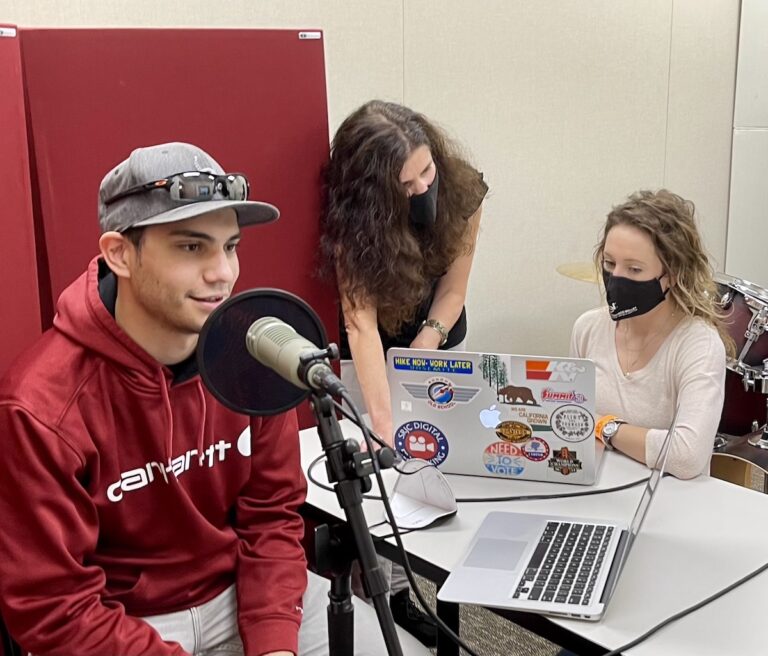
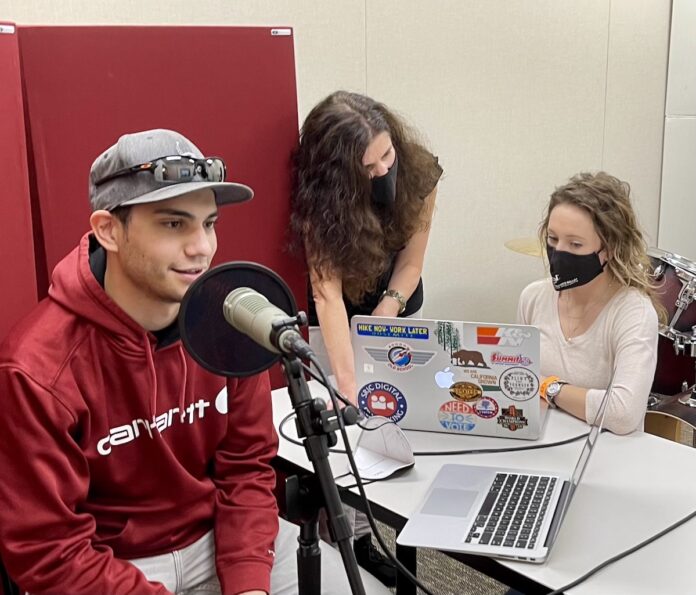
In the spring of this year, four SRJC journalism students were selected to take part in a California Humanities’ Democracy and the Informed Citizen Emerging Journalist Fellowship program and chose to report on the experience of crisis fatigue in Sonoma County. With support from SRJC instructor and team-mentor Anne Belden, students Rebecca Bell, Maritza Camacho, Lauren Spates and Nick Vides produced a four-part podcast series called Chronic Catastrophe. Three days after sharing the project with Northern California Public Media, Chronic Catastrophe was picked up by NPR.

The pick-up makes a lot of sense. Chronic Catastrophe is the result of nearly a year of dedicated work, under the strenuous and binding circumstances of the pandemic, to produce an accurate and discerning representation of the toll that constant climate crisis takes on us. This podcast belongs on a national broadcast.

We are living in a state of emergency, compounded by a global pandemic, compounded by critical and ever-growing socio-political unrest. Tensions are increasingly high locally, nationally and globally. Only a few days ago, the 2021 Climate Change Conference closed, and the resulting Glasgow Climate Act—which endeavors to limit global warming to 1.5 degrees Celsius—has been referred to by the UN Secretary-General António Guterres as “…An important step, but not enough.” (www.UN.org)

In the face of radical global climate change, the Glasgow Climate Act is implementing minimal changes and imposing nebulous parameters on detrimental energy practices, leaving citizens all over the world feeling a heightened sense of concern for the planet’s future. Relying on our national leaders for climate remediation seems more and more futile, as decisions are made that benefit big business and macroscale economic progress versus immediate environmental remediation. Statewide, nationwide and worldwide, communities need to start thinking differently in our approach to climate change, working from the inside out. I find myself returning again and again to the ripple effect as a metaphor. Our efforts need to start with our locality, wherever we may be. This is what makes Chronic Catastrophe so powerful, and so nationally applicable.

The broadcast consists of four parts, and addresses climate change on personal and community levels—levels on which we experience it the most and sometimes consider it the least. Bell, Camacho, Spates and Vides spent eight months collecting audio interviews from people affected by the increasingly intense natural disasters in our area, to better illustrate the toll they take. In the four episodes—”Mind,” “Body,” “Spirit” and “Is it Worth it?”—loss of identity after losing a home and all personal possessions to a fire, compromised decision making due to increased CO2 exposure, a loss of faith in God and whether or not it’s worth it to stay in Sonoma County are all compassionately and openly examined.

On a call this past Saturday with Rebecca Bell, who hosts Episode 4, “Is it Worth it?,” we discussed a striking point regarding the effort she and her colleagues are making as part of this project to re-label the psychological strain under which Californians live during this ongoing disaster.

“They refer to what we experience with the fires as PTSD,” Bell said. “But PTSD is Post Traumatic Stress Disorder. We’re not done with this. If you’re experiencing fires over and over and over again, you’re never done with itthere’s always a fear that it will happen again.” Sonoma County is not living in the aftermath of a catastrophe; it is facing wave after wave of climate disaster, with no immediate end in sight. This state of sustained anxiety can’t be classified as PTSD.

Hearing the voices of our community, from priests and professors to medical experts and district supervisors, localizes our shared trauma. It helps us to understand the acute and shared nature of our experience. Lauren Spates, host of Episode 2, “Body,” succinctly summed up what some people—myself included—still struggle to reconcile with: “There is already a quantifiable toll on human health. It is not abstract, and it is not something that will happen in the nebulous future. It’s already here.” The sooner we accept the frightening but undeniable truth about our circumstances, and the need to respond accordingly, the better chance we stand of implementing lasting change. We truly are living not only in a state of anxiety, waiting with unconsciously bated breath for the next disaster, but also in a state of compromise from disasters already experienced. Consider this: due to the change in air composition as a result of massive fires, our cognitive function has been compromised. As carbon dioxide levels increase and oxygen levels decrease, our decision-making and critical-thinking skills are impeded, effecting everything we do, from our day-to-day experience and relationships to quick action in the event of another emergency or evacuation.

For better or for worse, humans have an astounding capacity for denial—often we mistake it for resilience. But we surpass a sturdy, stoic mentality and stray into a harmful rejection of reality when we endeavor to be too adapting to threatening circumstances. We are fundamentally creatures of habit, and adapting to the sort of changes necessary to solve our climate crisis, even on a local level, will take work, conversation and support. 

Again, this is what makes Chronic Catastrophe so valuable. It sheds light on our shared grief. Not in a voyeuristic manner, but in such a way as to help us see better what we are up against, and to foster a sense of community as we work to resolve it. Nick Vides, host of Episode 3, “Spirit,” said during our call:

“We have a new sense of duty as a community here in Sonoma County, because of the fires. We need to be more aware of our neighbors. Who may need help in an evacuation? Who has important prescriptions that we might need to help them grab so they can survive after evacuation? Who’s on oxygen, who has a broken leg, who doesn’t have a car? You have to start making sure that your block is safe, because that’s a part of your family as well. A lot of people will say that good fences make good neighbors, but in Sonoma County, that’s not true. You’ve got to create a community, because not everyone knows how to turn off a gas line. Not everyone knows where the spare key is. And if we don’t know how to help each other, if we don’t foster community, then what are we doing here?”

These are the kind of community-oriented, nationally applicable practices we need in 2021 and beyond. Localizing is a tactic any community can adopt, and it directly informs not only our sense of connection through calamity, but our sense of capacity and capability. When we think of our circumstances in local, measurable doses, we’re empowered to effect change and establish support systems. Chronic Catastrophe provides the same sense of hope I felt in covering the Cool Cities Challenge in Petaluma—a $1 million initiative granted to Petaluma to establish carbon neutrality by 2030 using a community-based system called Cool Blocks. Learn all about this immensely hopeful initiative at www.coolpetaluma.org.

Initiatives like this represent honest, earnest change, from the inside out—not in lieu of, but in tandem with, efforts made by our national and international governments. They are the result of grassroots efforts by the community we call home, by us, the community members.

To this end, I want to close by expressing immense gratitude on behalf of Bell, Camacho, Spates and Vides to Santa Rosa Junior College, for its astounding support of academic, personal and professional development to students of all ages and circumstances. Without the unwavering stewardship and dedication of Anne Belden and the Department of Journalism, Chronic Catastrophe would not have been possible. I asked each of the four journalists how it felt to be picked up by NPR, and all of them responded with some version of “surreal, and beyond validating.” Each one of these students, individuals from our community, worked tirelessly, through multiple jobs, raising children and even contracting Covid, to collect, script and edit this series, which not only makes us proud as a community—it provides us with hope. Thank you Rebecca Bell, Maritza Camacho, Lauren Spates and Nick Vides, and thank you Santa Rosa Junior College.

To listen to “Chronic Catastrophe,” visit www.npr.org, or your podcast provider.

World AIDS Day: The State of Treatment and Prevention in Sonoma County

Ray Tilton portrait
“In the beginning, we had to pull every resource together in order to take care of each other,” says Ray Tilton, 58, who has been living with HIV for almost 40 years. “People aren’t dying like they used to, because of the medications available and the population of HIV/AIDS people doesn’t grow as fast as it used to,” he says....

Letters to the Editor: Appreciation for Good Journalism and More Thoughts on Time

Click to read
Dirty Deeds The two-part expose on the railroading of taxpayers’ $$ into the coffers of Darius Anderson and Doug Bosco—two owners of The Press Democrat—was fascinating (News, Nov. 3 and 10). I had to read it twice to get the full effect, but it was worth the effort. It’s pretty clear that the public railway—taxpayers—is funding the private rail company—Bosco—with no...

CULTURE CRUSH—North Bay Turkey Trots, Open Studios in Point Reyes, and more.

Click to read
North Bay Walk, Run or Trot Before getting stuffed on stuffing, get out of the house on Thanksgiving with a Turkey Trot on Thursday, Nov. 25. The St. Helena Hospital Foundation hosts its annual AHEAD Turkey Trot, a two-mile outing at Crane Park, 360 Crane Ave., St. Helena (shhfoundation.org). The Bank of Marin Turkey Trot offers 5K, 10K or one-mile runs...

Every Murmur Becomes a Wave: Exhibition in Sonoma Provides a Platform for discussion of current political and economic issues

Double Trouble: Enrique Chagoya and Kara Maria, Sonoma Valley Museum of Art’s current exhibition, sits at the intersection of political unrest and visual art.  Chagoya and Maria, a married couple and long-time art-activists, each bring their own striking and unforgettable interpretation to the ongoing issues of migration, extinction, climate change and economic disparity. Chagoya has been active in the art world...

Free Will Astrology

Click to read
Week of November 24 ARIES (March 21-April 19): Aries author Chris Brogan says, “Don’t settle. Don’t finish crappy books. If you don’t like the menu, leave the restaurant. If you’re not on the right path, get off it.” That’s the best possible counsel for you to hear, in my astrological opinion. As an Aries, you’re already inclined to live by...

SMART Projected to Lose at Least $400,000 per Year Hauling Freight

SMART-Petaluma-Freight
Among its critics, SMART, the North Bay’s passenger rail service, has gained a reputation as an opaque money-pit of an agency. Unfortunately, the agency’s takeover of freight service is proving no different. Last May, the board of directors voted nearly unanimously to take on freight service in the North Bay. At the time, SMART had not formally studied the money-making...

North Bay Organizations Honor Transgender Day of Remembrance

Trans Day of Remembrance - Santa Rosa, California
On a clear, chilly Saturday night in Santa Rosa, approximately 100 community members, college students and local activists gather on the patio outside Brew Coffee and Beer along Healdsburg Avenue. Clutching plastic cups filled with electric tea lights, a distinct, tangible sense of grief grips the crowd. A poster board, set up near the front of the cafe, lists the...

Cine-meh: Small-screen Blues

Click to read
TV is not really TV anymore. It’s more like a video jukebox fed by the internet. It’s also one of the few remaining platforms on the internet that we can talk back to and only annoy the person next to us. Anything else shared online could get us digitally dogpiled, so do what my dad did and yell at...

Open Mic: Love Comes First, a Dialogue Poem

Parent “C’mon stop crying.” Grandparent “When you did that, I picked you up and held  you.” Parent “I was like that?” Grandparent “Yes, and you snuggled into my shoulder.” Parent “I think parents should create more  independence.” Grandparent “But these are baby steps, first comes love.” Parent “I do love, but I must teach.” Grandparent “Plenty of time to learn when they are capable  of understanding.” Parent “What does a baby understand?” Grandparent “Love” Parent “When will I know it’s time to teach?” Grandparent “When...

Climate Fatigue Coverage: SRJC Journalism Students Produce Nationally Syndicated Podcast

Click to read
Something really special has emerged from Santa Rosa Junior College, and it is garnering national recognition. In the spring of this year, four SRJC journalism students were selected to take part in a California Humanities’ Democracy and the Informed Citizen Emerging Journalist Fellowship program and chose to report on the experience of crisis fatigue in Sonoma County. With support from...
11,084FansLike
4,606FollowersFollow
6,928FollowersFollow