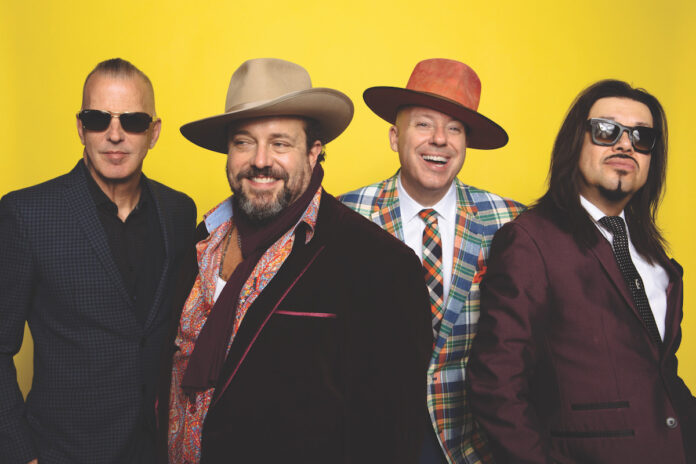
Earlier this month, Marin County music lovers were saddened to learn that San Rafael’s iconic Terrapin Crossroads was closing after nearly 10 years of live music and community. This weekend, the public can take a piece of Terrapin home when the venue hosts a garage sale at the adjoining Beach Park. Items for sale range from furniture to kitchenware to merch, and all proceeds go to the Canal Alliance and Ritter House. In addition, the bar will be open, the food truck will be on site and live music will be on hand to help say goodbye to Terrapin Crossroads on Saturday and Sunday, Nov. 20–21, 100 Yacht Club Dr., San Rafael. 11am. Ages 12 and up; proof of vaccination required. facebook.com/TerrapinCrossroads
Santa Rosa
Handmade Market
Discover a curated selection of handmade goods by more than 100 local makers, crafters and artists when the traveling Patchwork Modern Makers Festival returns to Sonoma County for a two-day outdoor shopping experience to help you prepare for the holidays. Attendees can find artisanal clothing, home goods, accessories, art, ceramics and even apothecary items. In addition, the festival features a vintage-record pop-up shop, DIY activities, Tarot and Reiki Healing, and even an ice-skating rink. Visit local makers on Saturday and Sunday, Nov. 20–21, at Old Courthouse Square, Fourth Street and Mendocino Avenue, Santa Rosa. 10am to 4pm each day. Free admission. dearhandmadelife.com
Napa
Eye-Opening
Oakland-based painter, printmaker and sculptor Oliver Lee Jackson creates complex artworks that take visual inspiration from the Renaissance, modern African cultures and American jazz. This weekend, the di Rosa Center for Contemporary Art collects an assortment of Jackson’s work in a new exhibition, “Oliver Lee Jackson: Any Eyes.” The show opens with several events on Saturday, Nov. 20, including a hands-on art session inspired by the exhibit at 1pm. Following that free activity, di Rosa hosts a Patrons Reception & Curator Tour with the artist at 4:30pm, and a Members’ Reception at 5:30pm. 5200 Sonoma Hwy., Napa. dirosaart.org
Novato
Coming Back
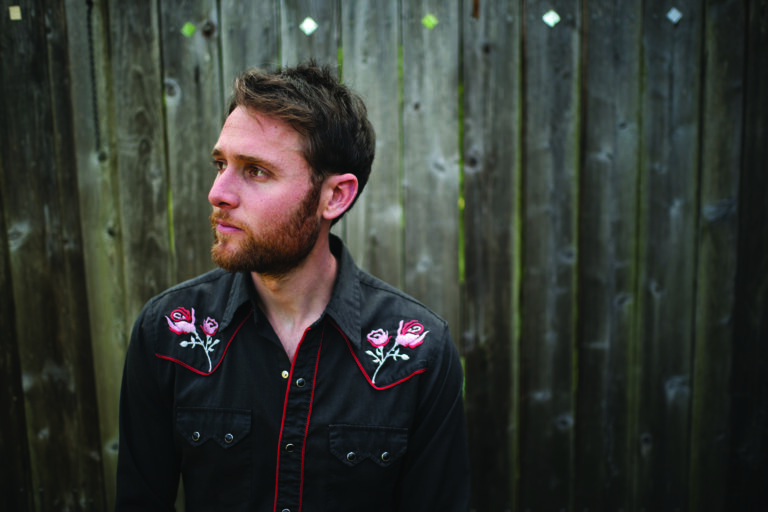
Since appearing on the Santa Cruz scene in 2015, bluegrass ensemble AJ Lee & Blue Summit performed around the world, though they still love to play the Bay Area, and they hit several spots in the region this month in support of their sophomore album, I’ll Come Back. Released in August of 2021, the band’s second album captures their live sound better than ever, with acoustic jams, mandolin-led romps, country and soul-inspired ditties and more. Prolific promoter KC Turner presents the band live in concert with support from the Coffis Brothers on Saturday, Nov. 20, at HopMonk Tavern, 224 Vintage Way, Novato. 8pm. $18. kcturnerpresents.com
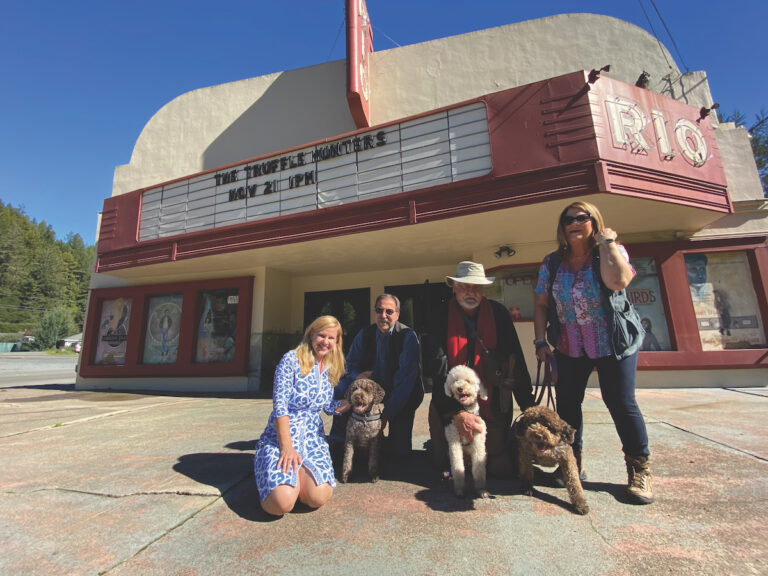
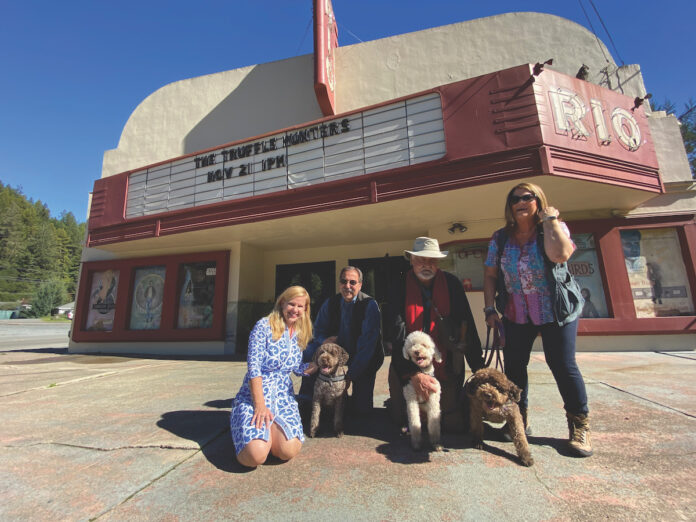
From its unmistakable half-cylindrical steel exterior to its charming vintage interior, complete with a piece of Christo and Jeanne-Claude’s “Running Fence” draping the ceiling, the small theater located in the town of Monte Rio is nearly as iconic to West Sonoma County as the redwoods and the Russian River it sits near.
This year, the venue and community landmark begins another era of events with a new group of owners dedicated to continuing the theater’s local legacy.
Now named the Monte Rio Theater & Extravaganza, the venue hosts an interactive community event this weekend and next, three screenings of the award-winning documentary The Truffle Hunters paired with wine and cheese tastings and a demonstration by real truffle-hunting dogs on Sunday, Nov. 21, and the following Saturday and Sunday, Nov. 27–28.
“It’s a magical place,” new co-owner David Lockhart says of the theater.
Lockhart has held a special place in his heart for the region ever since spending his childhood summers in and around the Russian River. After moving to the North Bay from Southern California in early 2020, he saw the theater was for sale.
“I really just wanted to help,” Lockhart says. “That was my initial thought; maybe I could join their team and bring my resources.”
When it became clear that the previous owners wanted to sell the space, Lockhart—a regional Emmy Award-winning producer and actor—created his own team to purchase the theater; including his wife and co-owner, Kim Lockhart, and partners Bryan Gallinger, Paul Popper DuBray and Dan Jahns.
Jahns and his family also recently relocated to Monte Rio from Southern California, and he also quickly noticed the theater’s “for sale” sign. When he met the Lockharts, Jahns joined their team to revamp the theater.
“One of the offers on the table was to turn it into a parking lot,” Jahns says. “We all jumped into action and organized a plan.”
In addition to making several necessary renovations to the World War II–era Quonset hut that houses the theater, the new owners’ plan includes expanding on the theater’s capacity for community events beyond films.
Thus, the group renamed it the Monte Rio Theater & Extravaganza to highlight the multipurpose venue’s ability to host a wide variety of extraordinary indoor and outdoor events ranging from concerts to festivals and more.
“We want to bring it back to being a gathering place for the community,” Jahns says.
Lockhart, Jahns and the rest of the theater’s team have already seen tremendous support from West Sonoma County businesses and individuals who want to donate to the cause or to simply reminisce about the theater’s past and share their excitement over its new future.
“This theater means so much to people,” Jahns says. “It’s incredible to see the positivity surrounding it.”
“I’m an advocate for bringing community together and having shared experiences and promoting artistic endeavors,” Lockhart says. “Having a community like this, where people come together and support each other, is integral to our happiness.”
“The Truffle Hunters” screens on Sunday, Nov. 21, and again on Nov. 27–28, at Monte Rio Theater & Extravaganza, 20396 Bohemian Hwy., Monte Rio. 10am to 12:30pm each day. Tickets start at $40. monteriotheater.com
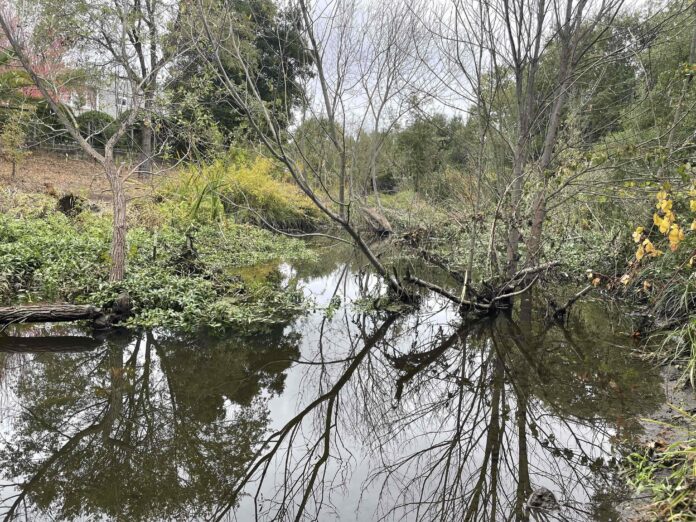
On the southwest side of the City of Sonoma, a small stream named Fryer Creek cuts through a quiet neighborhood.
In late October, the creek was, like most waterways in the Bay Area, inundated with water during the “bomb cyclone” storm. However, as the rains pounded Sonoma with seven and a half inches of rain, Fryer Creek stayed fairly tame for the beginning of the storm, according to nearby residents Barabara and Larry Audiss.
“The water was really low [during the storm], even with the heavy rain, and then all at once the water was extremely high,” Larry Audiss said. “We went up and you could see where the dam had been breached.”
Larry Audiss is referring to a beaver dam close to MacArthur Street. The waters proved too strong for part of the recently built dam along this tributary of Sonoma Creek, likely pushing more water downstream.
This was not the only beaver dam in Sonoma Valley that was affected by the storm. In upper Sonoma Creek, most beaver dams were leveled by rushing waters.
However, the three beaver dams along Fryer Creek remained largely intact after the storm, perhaps due to the smaller size of the waterway. Even the dam that was breached could be rebuilt come next spring.
“[Beaver] dams in less flash flooding systems can act as a speed bump in a big torrential downpour,” Kate Lundquist, co-director of the Water Institute at the Occidental Arts & Ecology Center, said. This is what the Audisses noticed in reverse as the water rapidly rose on Fryer Creek—the sudden disappearance of a speed bump.
Advocates like those at OAEC argue that beavers play a key role in creating healthy waterways and ecosystems. The role of beavers in the recent storm is just one example of why advocates want to reintroduce—and protect—beavers throughout the state.
However, under state law, beavers are considered a “detrimental species” due in part to their dam-building, which can damage agricultural land and flood human developments. They are feared, and often killed, by landowners for this reason.
Beavers, which are native to California, are considered a keystone species due to their ability to drastically change any ecosystem they are a part of, leading to greater biodiversity. Due to their outsized impact on a landscape, their return to Sonoma Valley means many aspects of the land will change with their presence.
Often, when a beaver colony moves into an area, they begin to slow the movement of water by building their dam. This, over long periods of time, has many positive impacts on native wildlife.
“Even if all they can do is show up and build one little pipsqueak dam and create a bank burrow, they’re already jacking up the habitat diversity and providing all kinds of refuge for a bunch of different species,” Lundquist said.
Beavers use their dams to create deeper waters, making it easier for them to use their strength as swimmers to evade predators. They often build their burrows, or lodges, in the ponds to ensure a safe underwater entrance to their home. These Beaver ponds in turn create a better environment for willow trees, one of the rodent’s favored foods. It is here, just upstream from the dam, that species of fish, birds, and plants thrive.
Beaver ponds also raise the height of the groundwater, bringing cooler water up into a stream. Endangered coho salmon, which are particularly sensitive to changes in water conditions, benefit greatly from beaver dams, both as a haven for juveniles, and by keeping the water at a cooler temperature than it would be otherwise.
Not only do beavers aid in providing more habitat, their dams also filter the water, making it cleaner downstream.
In Sonoma, this could mean that if beavers were to return in significant numbers, residents would see a greater increase in biodiversity, along with a rise of the water table, which could help increase the amount of water in Sonoma Valley by keeping the water in the streams for longer. It should be noted that the town of Sonoma receives its water from the Russian River Watershed, because Sonoma Valley’s groundwater supply was drained decades ago due to farming.
“Sonoma Valley long ago outstripped its water supply, which is why there’s a big fat pipe that comes across the watershed from the Russian [River Watershed],” said Brock Dolman, co-founder and program director of OAEC.
Dolman believes we should not bank on beavers to solve our water issues in Sonoma or in California.
“I don’t think we should burden beavers with trying to save [us] in that regard,” he said.
However, they could be a great help in preventing or reducing the damage done in large storms, he pointed out.
Displaying a map of the Sonoma Valley watershed, Dolman noted that the parts of the land where beavers could thrive are also where the most porous soils are. If beavers were more present in those areas, floods might have less of a damaging impact on those areas, and, in the fire season, could create larger refuges for wildlife.
Landowners, who sometimes kill beavers, often believe they are a nuisance to the land. However, sentiments are changing. Idaho rancher Jay Wilde is advocating for the rodents after witnessing beavers create a perennial creek out of a seasonal stream on his water-parched land. In a 2019 case study in Elko, Nev., the Forest Service found that ranchers there mostly believed that “the benefits of beavers outweigh the drawbacks.”
As Dolman sees it, “The beaver glass is more than half full with benefits than half empty with problems.”
When asked if they were concerned about beavers damaging property or flooding the area surrounding Fryer Creek, Barbara Audiss said, “It doesn’t worry me, look what we’ve done.”
“We built houses, we built these,” Audiss added, pointing to the concrete path running along the creek. “We changed everything. But that’s okay. We’re learning.”
Even if one is concerned about the impacts of beavers, there are many cheap options to mitigate these issues, according to Dolman. In Fryer Creek, for instance, when beavers were first spotted in 2019, some were concerned it would create more flooding in the area, potentially drowning out the walking trails and emergency roads for vehicles.
In response, OAEC, along with beaver management consultants at Swift Water Design, helped the city of Sonoma install a pond leveling system on one of the dams in order to insure the water did not completely inundate the area.
With their presence growing in Sonoma Valley, many are happy to see the markings of beavers on these streams. And while this past storm may have breached many dams, the beavers will likely rebuild next spring, creating necessary habitat for endangered species and perhaps making local waterways flow more safely in future climate change–driven storms.
Several Sonoma County art spaces are opening their doors to debut new exhibitions this weekend.
In Santa Rosa, the Museum of Sonoma County and the Sonoma County Woodworkers Association (SCWA) collaborate each Fall for the annual “Artistry In Wood” exhibition. Over the years, “Artistry in Wood” has evolved from a modest exhibition featuring the work of local woodworkers into a show that draws participants from across the state, and is now one of the most respected annual exhibitions of woodwork in North America.
While an in-person show was canceled in 2020 due to the pandemic, the SCWA members still presented a stunning selection works online. This year, the exhibit is back on display at the Museum of Sonoma County, and the 33rd annual “Artistry in Wood” exhibition opens on Saturday, November 13, and runs through January 9, 2022.
For the show’s opening on Saturday, Nov. 13, the entire museum will be open free of admission, 11am –5pm, and will host art activities for all ages. Several exhibiting artists from the Sonoma County Woodworkers Association will also be in attendance throughout the day to discuss their works. In accordance with Sonoma County Mandates and Guidelines, masks will be required indoors for all visitors and capacity is limited. museumsc.org.
In Healdsburg, the contemporary art gallery Legion Projects debuts “The Points That Connect” duo show with Bay Area artist Eileen Noonan and Australian artist Kasper Raglus, co-curated by Legion Projects owner Sydney Pfaff and San Francisco gallery Glass Rice.
Noonan’s abstract paintings contain playful designs that boast curvy lines, brightly colored highlights and other evocative expressions. Raglus, on the other hand, uses straight lines and fractal patterns in his abstract work, creating Prism-like shapes and objects done in a varied palette of color.
Legion Projects opens “The Points That Connect” on Saturday, Nov. 13, at 1pm. legion-projects.com.
In Petaluma, the Riverfront Art Gallery hangs works from one of the local artists that the gallery represents. For 14 years, founding gallery member Henry White has shown his work at Riverfront Art Gallery. This month, his art is featured in the exhibit, “Paints & Pencils, Canvas & Paper: Paintings & Drawings by Henry White.”
The show will feature White’s penchant for creating art in different mediums and of subjects, such as portraits, landscapes, and still-life works in oils, as well as historical drawings and portraits done with pencils or pastels. These subjects include figures and scenes depicting the Big Sur and Monterey area, as well as several familiar Sonoma and Marin scenes.
White will be in attendance for the show’s opening on Saturday, Nov. 13, at 4pm. riverfrontartgallery.com.
This article is the second part of a series. Read the first story here.
Last week, we reported that two owners of the Press Democrat, Darius Anderson and Doug Bosco, helped craft a state-funded bailout deal benefiting Bosco’s privately owned Northwestern Pacific Railroad Company while Anderson’s Platinum Advisors was a contract lobbyist for SMART from 2015 to 2020.
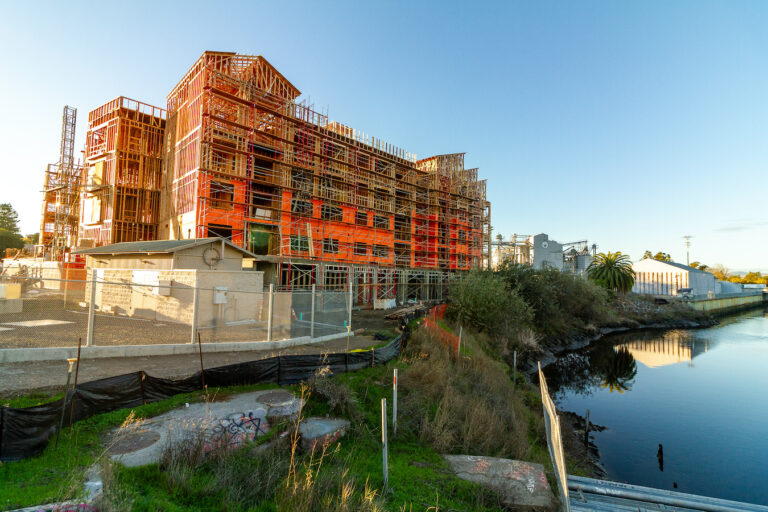
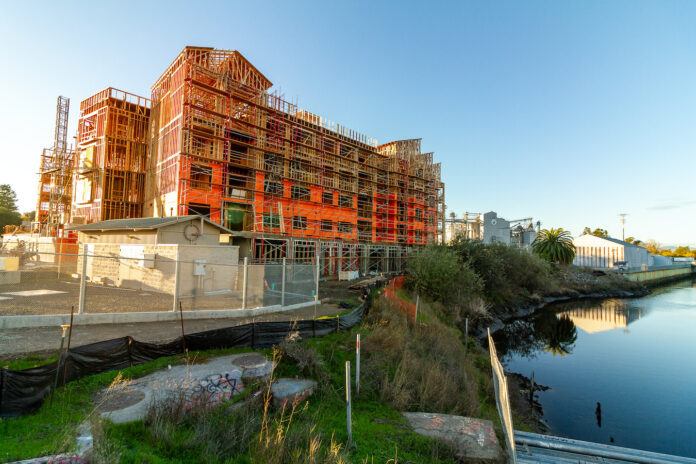
This week, we report the details of a real estate transaction in downtown Petaluma in which the A. G. Spanos Corporation paid $1.4 million to SMART and $1 million to another public rail agency which is financially intertwined with Bosco’s railroad company for their “right of ways” on less than 600 feet of railroad track traversing the triangular lot upon which Spanos is currently building the North River Apartments. A right of way is a perpetual, transferable easement allowing its owner to traverse the property of another. Without securing these easements, Spanos’ project was dead in the water and could not move through Petaluma’s planning process.
The Spanos property abuts the Petaluma tidal estuary, a row of historic businesses and restaurants on Petaluma Blvd. North, and Hunt & Behrens livestock, poultry and pet-feed operation. Public records show that SMART’s executive director, Farhad Mansourian, allowed Anderson to guide SMART’s easement sale to Spanos. Simultaneously, Bosco negotiated Spanos’ purchase of an overlapping right of way on the short spur owned by the North Coast Railroad Authority. “NCRA” is a state-chartered rail agency which critics say was largely operated to benefit Bosco’s company, commonly known as NWP Co.
Mansourian allowed Anderson to work on several projects that were outside the contracted scope of work of Platinum Advisors’ role as SMART’s Sacramento lobbyist, which began in 2015. Last week, we reported on how Anderson’s firm, as part of its work for SMART, lobbied on state legislation which helped the interests of his business partner, Bosco, as the NCRA and the NWP Co foundered. This week we report another instance of Anderson leveraging his position as SMART lobbyist to benefit his media business partner and political mentor, Bosco.
VIEW FROM ABOVE Pre-development satellite imagery shows the properties impacted by SMART and the NCRA’s rail easements, with decaying rail lines running along the left side of the property. Photo: Google Earth
Selling the Right of Ways
Our story begins before Anderson began lobbying for SMART, when, in November 2012, Poppy Bank, then known as First Community Bank, settled an outstanding $3.45 million debt by foreclosing on the owner of a property at 368-402 Petaluma Blvd. North, according to county real estate records.
In a phone call on March 29, 2016, Michael Spanos, Anderson and Mansourian initiated 18 months of negotiations between the rail agencies and Spanos’ family real estate development company, the A.G. Spanos Corporation. Once they received the easement rights, and were positioned to line up building permits from local agencies, Spanos planned to purchase the property from Poppy Bank.
In September 2017, Spanos bought the lot from Poppy Bank for just over $2 million, while Bosco served on the bank’s board of directors. But it is the events that transpired in between that first phone call and the sale of the lot to Spanos that raise eyebrows.
On Monday, April 25, 2016, less than a month into the negotiations, Mansourian emailed Anderson and Bosco: “It is my sense that Darius [Anderson] and Spanos will now approach Petaluma for discussions.”
Anderson reached out to Petaluma’s then–City Manager John Brown.
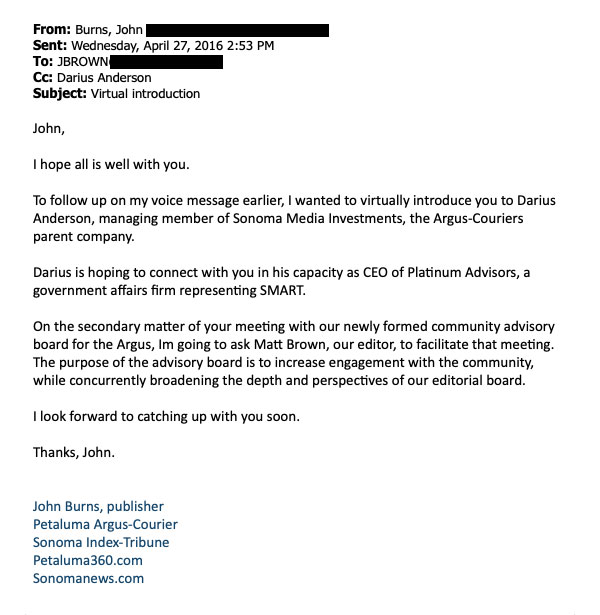
On Wednesday, April 27, John Burns, the longtime publisher of the Petaluma Argus-Courier, and Anderson’s employee, introduced Anderson to Brown in an email.
“Darius is hoping to connect with you in his capacity as CEO of Platinum Advisors, a government affairs firm representing SMART,” Burns wrote to the city manager.
Documents show that Bosco was, at the same time, formalizing his role in the real estate negotiations.
On July 28, 2016, Bosco signed an agreement with NCRA Director Mitch Stogner, allowing Bosco’s privately owned NWP Co to negotiate the sale of the Petaluma easements on behalf of the public agency. In return for NWP Co’s work, NCRA agreed that “All proceeds from the sale of the Petaluma Easements shall first be used to reimburse NWP Co.” for a portion of the millions of dollars the public agency then owed Bosco’s NWP Co, as we reported last week.
Bosco wore multiple hats during the negotiations. In some email exchanges, he appears to speak on behalf of the NCRA. In other emails, he shares information about the internal discussions going on at Poppy Bank, which owned the property Spanos hoped to buy after the rail agencies relinquished their easements.
The two parties Bosco seemed to be representing had fundamentally different interests in the negotiations. If the NCRA negotiated a higher price for its easements, Spanos would presumably have less money available in its project budget to purchase—and later develop—Poppy Bank’s property. According to emails obtained by the Bohemian/Pacific Sun, this dynamic led to tensions and delays in the negotiations.
In early 2017, the Spanos Corporation complained to Anderson about Bosco’s role in the project.
In a Jan. 4, 2017 letter, sent about eight months after Spanos began negotiating with the two rail agencies, Bosco’s NWP Co informed Petaluma’s Planning Manager, Kevin Colin, that, although Spanos had approached the railroad company, “no agreement [to sell the rights] has been consummated.” Apparently Bosco was not satisfied with the amount of Spanos’s initial offer to purchase the easements.
On Jan. 10, Alexandro Economou, an executive at the Spanos Corporation, warned Anderson that the letter from Bosco’s NWP Co threatened to delay the whole project.
“Petaluma will not move us forward to [the] planning commission because they are concerned with the issues at hand here. In light of Doug [Bosco]’s recent letter to them it is easy to understand why they might feel that way,” Economou wrote.
On March 6, after further failed negotiations, Economou emailed Poppy Bank employee, Kevin Downey, who appears to have been managing the property sale, with a similar complaint.
“I am aware of some discussions happening between Doug Bosco and others at the bank regarding our property… Because of the letter Doug Bosco sent to the city six weeks ago, the city has refused to process our application any further and our entitlements have been delayed… It is a direct result of the Bosco letter which has cost us time and lost momentum with the city,” Economou wrote.
Two days later, on March 8, Anderson forwarded Economou’s complaining email to Bosco. Bosco responded by sharing Poppy Bank’s view of the situation.
“The bank will not go along with any encumbrance on their property. It would be too risky for them to put a lien for $750k on their property while the SMART right of way is still in existence. The bank could end up with SMARTs rail easement and a $750k lien if things fell through,” Bosco wrote.
Anderson then shared the whole conversation with Mansourian.
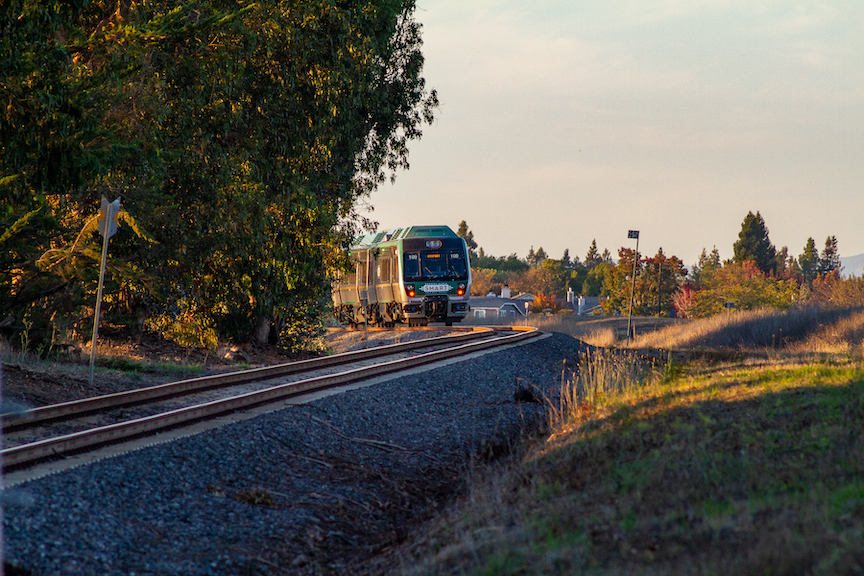
END OF THE LINE A rail car sits on a dead-ended track nearby the Spanos Corporation’s Petaluma Blvd. North development. Photo by Peter Byrne
Ultimately, the parties reached an agreement. In April 2017, Spanos signed agreements to pay SMART $1.4 million and the NCRA $1 million to release their claims to the property. In other words, Spanos paid approximately $4,285 per linear foot for a run of old railroad track that was disintegrated and unuseable, as recorded by a pre-development Google Earth satellite photo.
According to county records, Spanos purchased the property from Poppy Bank for $2.15 million in September 2017.
Notably, the price paid for the real estate itself was hundreds of thousands of dollars less than the price exacted by Anderson and Bosco for the right to tear up the track.
In an August 2017 memo, NCRA director Mitch Stogner suggested that the public agency’s board of directors, which is composed of representatives of the counties and cities along the freight line, use $264,712 of the $1 million easement sale proceeds to pay down a $4.1 million debt owed to Bosco’s company.
According to Stogner’s memo, the NCRA had already paid $50,000 from the easement proceeds to NWP Co, which did not own the right of way. All told, Bosco’s NWP Co received $304,712 from the sale of the publicly-owned property, according to the NCRA documents. And, as we learned in last week’s report, a few years later, NWP Co would pocket $7.47 million in state funding as part of the NCRA shut-down process.
Photo by Chelsea Kurnick
Amnesia
Despite Bosco and Anderson’s overlapping business interests, no one at SMART, the NCRA or Poppy Bank appears to have complained about the conflict of interest during the negotiations which resulted in windfalls for SMART, NCRA and NWP Co. Astoundingly, SMART now claims to have forgotten why Anderson was involved in the negotiations.
After receiving questions from the Bohemian/Pacific Sun about Anderson’s role in the easement discussions, SMART spokesman Matt Stevens requested to review the emails related to the negotiations. In response, we provided Stevens, Mansourian, Anderson and two SMART board members—chair David Rabbitt and vice-chair Barbara Pahre—with copies of the emails, most of which were released by SMART in response to our public records requests.
In a written response on Nov. 2, Stevens said that SMART officials “do not recall what involvement, if any, Mr. Anderson had on negotiations or the project.”
In written responses to similar questions, Bosco acknowledged that he represented the NCRA and NWP Co in the negotiations, but denied that Poppy Bank had anything to do with the easement sale.
Bosco wrote, “Neither NWP Co nor I personally received any compensation from this transaction. I have no idea what, if any, relationship Spanos had with Poppy Bank or what benefit, if any, accrued to the bank… the bank was not a party to this or any other railroad related transaction.”
The records obtained by the Bohemian/Pacific Sun show otherwise.
Anderson, Poppy Bank and the Spanos Corporation did not respond to requests for comment. Through its legal counsel, Elizabeth Coleman, who also serves as the Deputy Counsel of Sonoma County Office, NCRA provided documents cited in this story, but declined to respond to specific questions.
John Pelissero, Ph.D, a senior scholar at the Markkula Center for Applied Ethics at Santa Clara University, told the Bohemian/Pacific Sun that the numerous overlapping interests on display during Anderson’s time working for SMART raise serious ethical questions—even if it’s just an appearance of a conflict of interest.
“When it comes to ethical issues, it doesn’t matter whether it’s an intended or a perceived conflict of interest. They both present ethical problems for those who are involved. And when you’re dealing with government, when you’re dealing with the public citizens and taxpayers, that’s where one really needs to pay special attention to the perception that you’re acting in your role as a government agency or somebody who works for a government agency in a way that creates a conflict of interest,” Pelissero said.
For their part, Sonoma Media Investments’ publications didn’t scrutinize the Spanos easement deal too closely.
On Nov. 24, 2017, the Petaluma Argus-Courier published a reported article about Spanos’s “long-stalled” North River Apartments project, which, according to the paper, had run into “complications with rail agencies’ easements that took two years and $2.4 million to resolve.”
The article did not mention that Anderson and Bosco, two of the Petaluma Argus-Courier’s owners, were deeply involved in the prolonged negotiations, the delay of which appears to have benefited Bosco.
Instead, on Feb. 1, 2018, Anderson’s and Bosco’s Petaluma paper ran an editorial blaming the city officials for the delays in the Spanos project.
“Why is it that whenever a developer proposes a visionary project to remake a blighted area of Petaluma and add badly needed housing, officials demand the developer do more than is reasonable?” the editorial reads. “If developers find Petaluma’s planning process too onerous, costly or time consuming, they will simply walk away, leaving the city’s vision unrealized. There are, after all, ample opportunities elsewhere.”
The editorial once again failed to mention Anderson and Bosco’s deep involvement in the project—or that, judging from the Spanos executive’s letters to Anderson and Poppy Bank, Bosco’s letters to Petaluma delayed the project.
Other articles about SMART in the Argus-Courier and Sonoma Media Investments papers routinely failed to mention that Anderson’s Platinum Advisors had a lobbying contract with SMART. In the case of the Argus-Courier, the newspaper’s longtime publisher, John Burns, clearly knew about Platinum Advisors’ relationship to SMART. After all, he introduced Anderson to Petaluma’s city manager John Brown as a SMART lobbyist in his April 2016 email to Brown.
Burns did not respond to a request for comment.
Rubbing Shoulders
Anderson’s extra work for SMART wasn’t restricted to helping to negotiate the NCRA multi-million dollar wind-down that benefitted the NWP Co as we reported last week, nor to guiding the Petaluma easement deal that benefited the financially conjoined NCRA and NWP Co.
Emails show that, between 2015 and 2018, Mansourian often turned to Anderson for help with SMART’s federal lobbying efforts despite the fact that SMART pays Van Scoyoc Associates $10,000 per month to lobby federal officials. And, while Platinum Advisors does sport a Washington, D.C., office, records show that the firm never formally registered to represent SMART in the nation’s capital.
In May 2015, Anderson invited Mansourian to a fundraiser for Rep. Kevin McCarthy, a Republican congressman from Bakersfield who served as Republican Majority Leader between June 2014 and January 2021. The fundraiser, held on Friday, June 19, 2015, at Anderson’s Wing and Barrel Ranch in Southern Sonoma County, cost $43,800 to “sponsor” and $2,700 for an individual ticket, according to an invitation obtained by the Bohemian/Pacific Sun. Mansourian was invited to the “Special Sonoma Trap Shoot and Wine Reception” as Anderson’s special guest.
Weeks later, emails show that Anderson directly connected Mansourian with McCarthy. In July 2015 Mansourian told Anderson that he had met with McCarthy, although it is unclear based on the emails, what they discussed.
In September 2015 Mansourian asked Anderson to intervene with McCarthy again after SMART’s Washington lobbyist reported that McCarthy would ask the Chairman of the House Transportation, Housing and Urban Development Appropriations Subcommittees for a $20 million appropriation for SMART.
“You asked me to give you a heads up so you can call Mr. McCarthy on his private cell BEFORE our lobbyist in DC follows up with his staff,” Mansourian wrote to Anderson on Sept. 16, 2015.
In January 2016, Mansourian sent Anderson a Politico article profiling McCarthy’s incredible fundraising ability: raking in $11 million in 2015, more than any of his Republican colleagues.
“We did our part!!!” Anderson responded.
Anderson then invited Mansourian to two more fundraisers—one on Oct. 21, 2016 and another on Sept. 17, 2018—for Congressman Jeff Denham, a Republican who went on to chair the House Railroads, Pipelines and Hazardous Materials Subcommittee. During the same time period Mansourian also asked Anderson to contact Denham in coordination with SMART’s federal lobbying firm.
Anderson’s federal lobbying and fundraising efforts weren’t restricted to well-placed Republicans. Emails show that Anderson’s firm also invited Mansourian to a San Francisco fundraiser for Kamala Harris, then running for a Senate seat, and that Anderson’s firm attempted to arrange a meeting between Mansourian and an employee of then-Vice President Joe Biden.
When SMART moved to renew Platinum Advisors’ state lobbying contract in late 2018, the scope of work was updated in just one way. In addition to guiding the transportation agency’s state efforts, Platinum Advisors was now expected to “support SMART as requested in any federal legislative efforts.”
However, despite its work under the first contract and the tacit acknowledgement of the federal work included in the second contract, Platinum Advisors still did not formally register to represent SMART in federal matters.
SMART-spokesman Matt Stevens said that SMART used Anderson’s firm to lobby on federal issues because “Platinum Advisors was familiar with those issues.”
Photo by Chelsea Kurnick
Closing the Contract
SMART’s contract with Platinum Advisors ended unceremoniously in early 2020 while SMART’s supporters waged a high-cost fight over the agency’s future.
In the months ahead of a March 2020 election, Molly Gallaher Flater, a member of Poppy Bank’s board of directors and CEO of real estate developer Gallaher Homes, dumped nearly $2 million into a campaign opposing Measure I, a ballot initiative which would have extended the quarter-cent sales tax supporting SMART from 2029 to 2059.
Although Bosco served on Poppy Bank’s board of directors for more than 10 years and co-founded California Clean Power—an energy-consulting company—with Gallaher Flater’s father, Bill Gallaher, in 2014, Bosco was on the other side of the table from the Gallahers when the Measure I campaign flyers were stuffed into voter mail boxes.
In December 2016, Bill Gallaher sued Bosco and Anderson’s Sonoma Media Investments for libel over a series of Press Democrat articles scrutinizing the legality of Gallaher’s political contributions to local candidates in the November 2016 elections. A court dismissed the case in March 2019, requiring the Gallahers to pay SMI’s legal bills.
Bosco told the Bohemian/Pacific Sun that he left Poppy Bank’s board in April 2019 for personal reasons.
In a mid-February 2020 mailer, the Gallaher-backed anti-Measure I “Not so SMART” campaign called out Darius Anderson personally, questioning whether the media mogul’s work as a SMART lobbyist had swayed the judgement of the Press Democrat’s editorial board, which endorsed Measure I in early February.
On Feb. 20, the Press Democrat’s editorial board responded to the “No” campaign’s “scurrilous flier.”
“For the record, Darius Anderson isn’t a member of our editorial board, and neither are any of the investors named in the anti-SMART flier. None of them has ever tried to influence our positions. They see our editorials at the same time you do—when they appear in The Press Democrat,” the editorialstated.
Still, the reputational damage was obvious. Anderson signed paperwork terminating Platinum Advisor’s lobbying contract with SMART on Feb. 20, the very same day the Press Democrat’s editorial ran.
In a March 3 election, Measure I failed to reach the required two-thirds voter approval in either Sonoma or Marin County. Weeks later, SMART’s ridership numbers were crushed by the first Covid-19 shelter order. The agency, like public transit agencies across the country, has struggled to balance its books ever since.
SMART has an additional handicap. More than a year after parting ways with Anderson’s lobbying firm, SMART’s board of directors has yet to hire a new lobbying firm to represent the ailing transit agency’s interests in Sacramento. Stevens, the SMART spokesman, says that the agency is handling its state-advocacy affairs in-house for the time being, which begs the question of why it ever needed Anderson’s firm.
Last month, SMART announced that the agency’s long-time director Farhad Mansourian is retiring. His replacement, the former chief operating officer of the Utah Transit Authority, is scheduled to take over on Nov. 29.
For better or worse, SMART appears to be entering a new era. The roles of Anderson and Bosco in shaping the agency’s future remains to be seen.
Peter Byrne contributed to this report and edited it. Read the first part of this series at Bohemian.com/freight-railroaded.
ARIES (March 21-April 19): For much of her life, Aries poet Mary Ruefle enjoyed imagining that polar bears and penguins “grew up together playing side by side on the ice, sharing the same vista, bits of blubber, and innocent lore.” But one day her illusions were shattered. In a science journal, she discovered that there are no penguins in the far North and no bears in the far South. I bring this to your attention, Aries, because the coming weeks will be a good time to correct misimpressions you’ve held for a while—even as far back as childhood. Joyfully modernize your understanding of how the world works.
TAURUS (April 20-May 20): Actor Elizabeth Taylor described her odd rhythm with actor James Dean. Occasionally, they’d stay awake till 3am as he regaled her with poignant details about his life. But the next day, Dean would act like he and Taylor were strangers—as if, in Taylor’s words, “he’d given away or revealed too much of himself.” It would take a few days before he’d be friendly again. To those of us who study the nature of intimacy, this is a classic phenomenon. For many people, taking a risk to get closer can be scary. Keep this in mind during the coming weeks, Taurus. There’ll be great potential to deepen your connection with dear allies, but you may have to deal with both yours and their skittishness about it.
GEMINI (May 21-June 20): There are many different kinds of smiles. Four hundred muscles are involved in making a wide variety of expressions. Researchers have identified a specific type, dubbed the “affiliation smile,” as having the power to restore trust between two people. It’s soothing, respectful and compassionate. I recommend you use it abundantly in the near future—along with other conciliatory behavior. You’re in a favorable phase to repair relationships that have been damaged by distrust or weakened by any other factor. (More info: tinyurl.com/HealingSmiles)
CANCER (June 21-July 22): According to feminist cosmologists Monica Sjöö and Barbara Mor, “Night, to ancient people, was not an ‘absence of light’ or a negative darkness, but a powerful source of energy and inspiration. At night the cosmos reveals herself in her vastness, the earth opens to moisture and germination under moonlight, and the magnetic serpentine current stirs itself in the underground waters.” I bring these thoughts to your attention, fellow Cancerian, because we’re in the season when we are likely to be extra creative: as days grow shorter and nights longer. We Crabs thrive in the darkness. We regenerate ourselves and are visited by fresh insights about what Sjöö and Mor call “the great cosmic dance in which everything participates: the movement of the celestial bodies, the pulse of tides, the circulation of blood and sap in animals and plants.”
LEO (July 23-Aug. 22): Your heart has its own brain: a “heart-brain.” It’s composed of neurons similar to the neurons in your head’s brain. Your heart-brain communicates via your vagus nerve with your hypothalamus, thalamus, medulla, amygdala and cerebral cortex. In this way, it gives your body helpful instructions. I suspect it will be extra strong in the coming weeks. That’s why I suggest you call on your heart-brain to perform a lot of the magic it specializes in: enhancing emotional intelligence, cultivating empathy, invoking deep feelings and transforming pain.
VIRGO (Aug. 23-Sept. 22): How did naturalist Charles Darwin become a skillful thinker who changed the world with his theory of evolution? An important factor, according to businessperson Charlie Munger: “He always gave priority attention to evidence tending to disconfirm whatever cherished and hard-won theory he already had.” He loved to be proved wrong! It helped him refine his ideas so they more closely corresponded to the truth about reality. I invite you to enjoy using this method in the coming weeks, Virgo. You could become even smarter than you already are as you wield Darwin’s rigorous approach to learning.
LIBRA (Sept. 23-Oct. 22): You could soon reach a new level of mastery in an aptitude described by author Banana Yoshimoto. She wrote, “Once you’ve recognized your own limits, you’ve raised yourself to a higher level of being, since you’re closer to the real you.” I hope her words inspire you, Libra. Your assignment is to seek a liberating breakthrough by identifying who you will never be and what you will never do. If you do it right—with an eager, open mind—it will be fun and interesting and empowering.
SCORPIO (Oct. 23-Nov. 21): Scorpio theologian Eugene Peterson cleared up a mystery about the nature of mystery. He wrote, “Mystery is not the absence of meaning, but the presence of more meaning than we can comprehend.” Yes! At least sometimes, mystery can be a cause for celebration, a delightful opening into a beautiful unknown that’s pregnant with possibility. It may bring abundance, not frustration. It may be an inspiring riddle, not a debilitating doubt. Everything I just said is important for you to keep in mind right now.
SAGITTARIUS (Nov. 22-Dec. 21): In 2017, Richard Thaler won the Nobel Prize for Economics. His specialty: researching how unreasonable behavior affects the financial world. When he discovered that this great honor had been bestowed on him, he joked that he planned to spend the award money “as irrationally as possible.” I propose we make him your role model for the near future, Sagittarius. Your irrational, nonrational and trans-rational intuitions can fix distortions caused by the overly analytical and hyper-logical approaches of you and your allies.
CAPRICORN (Dec. 22-Jan. 19): “Neurotic” and “neurosis” are old-fashioned words. Psychotherapists no longer use them in analyzing their patients. The terms are still useful, though, in my opinion. Most of us are at least partly neurotic—that is to say, we don’t always adapt as well as we could to life’s constantly changing circumstances. We find it challenging to outgrow our habitual patterns, and we fall short of fulfilling the magnificent destinies we’re capable of. Author Kenneth Tynan had this insight: “A neurosis is a secret that you don’t know you are keeping.” I bring this to your attention, Capricorn, because you now have extra power to adapt to changing circumstances, outgrow habitual patterns and uncover unknown secrets—thereby diminishing your neuroses.
AQUARIUS (Jan. 20-Feb. 18): Author Darin Stevenson wrote the following poetic declaration: “‘No one can give you the lightning-medicine,’ say the people who cannot give the lightning medicine.” How do you interpret his statement? Here’s what I think. “Lightning medicine” may be a metaphorical reference to a special talent that some people have for healing or inspiring or awakening their fellow humans. It could mean an ingenious quality in a person that enables them to reveal surprising truths or alternative perspectives. I am bringing this up, Aquarius, because I suspect you now have an enhanced capacity to obtain lightning medicine in the coming weeks. I hope you will corral it and use it even if you are told there is no such thing as lightning medicine. PS: “Lightning medicine” will fuel your ability to accomplish difficult feats.
PISCES (Feb. 19-March 20): The superb fairywren gives its chicks lessons on how to sing when they are still inside their eggs. This is a useful metaphor for you in the coming months. Although you have not yet been entirely “born” into the next big plot twist of your hero’s journey, you are already learning what you’ll need to know once you do arrive in your new story. It will be helpful to become conscious of these clues and cues from the future. Tune in to them at the edges of your awareness.
When a letter arrives at her Northern California vineyard saying, “I think you may be my grandmother,” local author Meredith Keller is transported to a tragic memory from 50 years earlier. In her new memoir, The Unraveling: The Price of Silence, Keller revisits her darkest moments—a sexual assault and unwanted pregnancy during 1950s America. The book reflects on a time when women had no say in their own productive rights—an issue that remains relevant today—and Keller discusses all that and more during a virtual author event on Thursday, Nov. 11, hosted by Napa Bookmine. 7pm. Free, $5 donation appreciated. Napabookmine.com.
Cotati
Worth the Wait
Made up of several Sonoma County actors and directors, Off The Page Readers Theater celebrates the written works of local authors with staged readings that include stories, plays and poems. Each performance follows a theme, and the troupe chose the appropriate theme of “Detour” for their delayed autumn offering, happening this weekend. Off The Page Readers Theater performs works by 10 local writers, Friday–Sunday, Nov. 12–14, at Church of the Oaks, 160 W. Sierra, Cotati. Friday and Saturday, 7pm; Sunday, 3pm. $15 at the door. Proof of vaccination and masks required. Offthepagetheater.com.
Novato
Art Encounters
Two engaging exhibitions of thought-provoking art open at the MarinMOCA this weekend. The museum’s Main Gallery features a group show, “Happenstance,” that celebrates the artistic process and the unexpected outcomes involved. In the Second Floor Gallery, the museum’s artist-in-residence Orin Carpenter presents the culmination of his year-long residency at MarinMOCA, “Bridges and Walls,” a solo exhibition of mixed media works inspired by humanity’s ability to both build connections or create borders. Both shows open with a reception on Saturday, Nov. 13, at 500 Palm Dr., Novato. 2pm. Free; RSVP required. Marinmoca.org.
Santa Rosa / Sebastopol
In Season
Two North Bay groups dedicated to classical and chamber music welcome audiences back indoors this week with live concerts. Note: Proof of vaccination and masks required. The all-volunteer Sonoma County Philharmonic presents its Fall Masterworks concert, “Memories,” on Saturday and Sunday, Nov. 13–14, at Sonoma Country Day School, 4400 Day School Place, Santa Rosa. Saturday, 7:30pm; Sunday, 2pm. $15. Socophil.org. Redwood Arts Council opens its 42nd season of concerts with a performance from the Telegraph Quartet on Sunday, Nov. 14, at Community Church of Sebastopol, 1000 Gravenstein Hwy N., Sebastopol. 4pm. $30. Redwoodarts.org.
Wild as it may seem, it’s the holiday season once again because time is apparently, in a word, flying. This article, however, is not an examination of theories of temporality—it’s a holiday gift-and-catering guide. Because, regardless of how strange time or the circumstances of our lives might be, we are here at the time of year allocated for appreciating friends and family with time spent, meals served—regardless of who cooked them!—and gifts given.
This guide will direct you toward local, affordable, community-supporting shops, markets and bakeries to fill your gift-giving and dinner needs. I also highly recommend, for those considering the environment and their wallets, making gifts at home this year, or sticking to home-cooked meals. You can’t go wrong with homemade ornaments, and this might be the year you wow your family and yourself with a full Thanksgiving dinner. Onward, my wayward craftsmen and chefs, to stuffing and glory!
Regardless of your choices, you have options. See a few below.
Thanksgiving
They say it takes a village
Village Bakery, Sebastopol
Dessert-making is challenging, and while we may all be feeling bold, perhaps the holiday season isn’t the best time to execute our first princess cake. That was an unintentionally French Revolution-esque sentence, by the way. Rolling and coloring marzipan might be a whisker out of the wheelhouse this time around, and that’s more than OK. For your patisserie needs, look no further than Village Bakery. A bakery for the ages—I’m not just saying it because I worked there as a 14-year-old and lived solely on linzer cookies and lemon rolls—this holiday season VB is providing breads, pies, tres leches cakes and breakfast pastries. Just get those orders in by Nov. 20. Visit villagebakerywinecountry.com.
Baby it’s cold outside—but inside there’s turkey
Sonoma County Catering Co., Sonoma County
Dessert-making is challenging, yes, and let’s be honest, sometimes cooking in general is challenging. We don’t always have the space or the time or, hey, the desire. None of this is problematic—dinner can be catered! Sonoma County Catering Co. is not only one of the best local places to offer catered Thanksgiving meals in terms of quality, price and ingredients, it’s also an exceptional company in terms of community support. Sonoma County Catering Co. and Head Chef Caesar provided meals to firefighters and victims during the Tubbs Fire, and are actively involved in the local community. This is a great opportunity to take dinner off your plate, while putting it on your plate—if you’ll humor me—while supporting a great company. Go to Sonomacountycatering.com to place an order, and go fast—because they will sell out!
Holiday Gifts and Events
Deck the halls with local artwork
The Barlow, Sebastopol
This Holiday season revelers can’t go wrong with a visit to Sebastopol’s cutest shopping center, The Barlow. Everyone loves the Barlow. I mean it; name me one person who’s gone to the Barlow and not had an adorable time. I’m waiting. Fully stocked with local and artisanal products from eco-friendly fashion purveyors, almost everything onsite is produced right here in Northern California. From apparel like Indigineous Organic + Fair Trade Fashion and Barge North Company to art galleries like Gallery 300 and Lori Austin Gallery, you’ll find everything you need here and have time for a lunch pit-stop at Fern Bar. I truly cannot recommend the smash burger more highly. I shed a single tear writing this sentence, it’s that good. The Barlow is a great spot to put presents under the tree and dollars back into the community. Those who are holed up and prefer to shop online can save 10% on their first order with the code SHOPBARLOW21.
The Barlow is located at 6770 McKinley St., Sebastopol, and is open 7 days a week. Hours of individual stores may vary, so visit thebarlow.net for more information. Happy shopping!
A selfie with Santa before he checks his naughty-and-nice list
East Washington Place Holiday Celebration, Petaluma
This one is going to pop, and may I say, I’m loving the amount of community celebrations we’re able to have this season—I’ve missed you all! Petaluma is putting together an epic day of festivities this Nov. 21. Among other things, we will all have the opportunity to meet Santa Claus; selflies and DIY’s with the guy are free, by the way. There will also be balloon twisters, arm painters—in lieu of face-painting as we are, alas, still in mask territory—holiday-themed musical entertainment and free treat bags until they run out! Hint: Show up early. There is also a raffle attendees are encouraged to enter, with a gift-bag prize valued at $500. Y’all, this is going to be a scene! Come out, bring the fam, have some apple cider, unload your hopes and dreams on good old Kris Kringle—and happy holidays to you!
The East Washington Place Holiday Celebration is held on Sunday, Nov. 21 from 2–4pm at 401 Kenilworth Drive, Petaluma. For more information visit eastwashingtonplace.com
Chestnuts roasting over an open fire, Jack frosting your glass of IPA …
Lagunitas Early Gifting
Lagunitas Petaluma Taproom and Beer Sanctuary, Petaluma
I’ve lived all over the U.S.—from New York to New Mexico—and I’ve always taken pleasure, when people order a Lil Sumpin’ or a Lil Sumpin’ Stoopid, in saying “Oh, Lagunitas? Yeah, they’re from my area code.” Let’s be honest, this is damn good beer. I still remember a phenomenal afternoon with friends, fondly referred to as “Day Drunk of the Jungle,” which featured Lagunitas-fueled drinking games while watching George of the Jungle. I ended on a couch with an agonizing case of hiccups … and it was fully worth it. Drink responsibly. This holiday season, Lagunitas Schwag shop is coming through hot with gifts for him, her, them and the furry friends. We’re talking sweet treats, swag, and of course, beverages. Come snag, and then take a load off in the taproom. You earned it, you gift-giver you!
Lagunitas Petaluma TapRoom & Beer Sanctuary is open Wednesday through Sunday, 11:30am to 8pm, for outdoor dining and takeout.
Carol of the bells, but it’s carol of the modern makers instead
Patchwork Modern Makers Festival, Santa Rosa
I’m truly stoked for this event, which we will all have two opportunities to attend—Nov. 20 and Nov. 21. Produced by Dear Handmade Life, this free community event is designed to showcase the incredible local creativity and talent Sonoma County has to offer. Not only will all attendees be able to view and purchase handmade goods, they’ll also get to participate in hands-on DIY craft stations—this might be the spot for my earlier suggestion to make gifts this year—enjoy live music and great food, and patron the Patchwork Junior Booths, featuring artists and makers who are under 18. Turn out to support the creative community and youth, and bring your friends to this one—it’s going to be fun. Expect to find jewelry, apothecary items, clothing, ceramics, home goods and more.
Patchwork Modern Makers Santa Rosa will be held Saturday, Nov. 20 and Sunday, Nov. 21, from 10am to 4pm in Old Courthouse Square at Santa Rosa Avenue and 3rd Street, in downtown Santa Rosa. There are also Patchwork events in several other California locations including San Francisco; for more information visit dearhandmadelife.com.
After the many canceled or online-only holiday festivities of 2020, this year’s mostly in-person parties, plays and other pleasures are a welcome return to normalcy.
Make sure to check your list twice and find North Bay holiday events with our annual guide.
Holiday Ice Rink & Winter Wonderland Village
The Meritage & Vista Collina Resorts are kicking into high gear as the holiday season approaches, and opening a new Holiday Ice Rink at 850 Bordeaux Way, Napa, for guests and locals, Nov. 11 through Jan. 2, 2022. The resorts also offer seasonal events such as the Thanksgiving Brunch buffet in the Meritage Ballroom on Nov. 25; the Olive & Hay Thanksgiving To-Go package, available to order before Nov. 22; and the annual Tree Lighting Ceremony, complete with carolers and Santa Claus, on Nov. 26. Meritagecollection.com/vista-collina.
Holidays Along the Farm Trails
Sonoma County Farm Trails celebrates local agriculture with holiday-themed offerings from several local food producers. Find farm-fresh food and drink, wreaths and other goodies, while enjoying family-friendly activities like Christmas tree-cutting throughout the county. Nov. 12 through Jan. 1, 2022. Farmtrails.org.
Warren Miller: “Winter Starts Now”
Each year, adventure-film producers Warren Miller Entertainment assemble a feature-length film based on winter sports spotlighting world-class skiers and other sports figures performing mind-bending stunts around the world. This year’s film, Winter Starts Now, features the best snow-riding footage from Tahoe to Maine. Winter Starts Now screens at the Rafael Film Center, 1118 4th St., San Rafael, on Saturday, Nov. 13; and at Summerfield Cinemas, 551 Summerfield Rd., Santa Rosa, on Dec. 4. Warrenmiller.com.
The Mountain Play
You don’t have to sit on Mount Tamalpais to enjoy The Mountain Play’s holiday production of the classic musical Camelot. The long running company is moving the rousing, re-imagined take on the show—directed by Zoë Swenson-Graham, and music directed by Phillip Harris—to the indoor Barn Theatre at the Marin Art & Garden Center, 30 Sir Francis Drake Blvd., Ross. The show opens Saturday. Nov. 13, and runs through Dec. 19. Mountainplay.org.
Marin Theatre Company
Concluding a holiday trilogy, Marin Theatre Company once again brings Jane Austen’s beloved characters to the stage for a yuletide sequel to Pride and Prejudice. Penned by MTC Mellon National Playwright in Residence, Lauren M. Gunderson, and former Director of New Play Development, Margot Melcon, Georgiana and Kitty: Christmas at Pemberley is the final installment of the “Christmas at Pemberley” series that began with Miss Bennet: Christmas at Pemberley and The Wickhams: Christmas at Pemberley, and follows Mr. Darcy’s younger sister, Georgiana, and the youngest Bennet sister, Kitty. Georgiana and Kitty: Christmas at Pemberley will perform at Marin Theatre Company, 397 Miller Ave., Mill Valley, Nov. 18 through Dec. 19. Marintheatre.org.
Spreckels Theatre Company
For theater-goers who are not fully caught up on the “Christmas at Pemberley” trilogy, Spreckels Theatre Company treats audiences to the second play in the series, The Wickhams: Christmas at Pemberley, at Spreckels Performing Arts Center, 5409 Snyder Lane, Rohnert Park, from Nov. 19 through Dec. 12. Rpcity.org.
Charles M. Schulz Museum
Kid-friendly holiday celebrations take place this season at the Charles M. Schulz Museum, 2301 Hardies Ln., Santa Rosa. Bring food items to donate to the Redwood Empire Food Bank, and enjoy movies, popcorn and hands-on activities at the Thanksgiving Celebration with Snoopy on Nov. 20; assemble and decorate Snoopy’s house at the Gingerbread Doghouse Workshops, Dec. 11–12; make an array of fun gifts a the Holiday Gift-Making Workshop on Dec. 18; and say, “Happy New Year, Charlie Brown!” at the museum’s annual New Year’s Eve party on Dec. 31. Schulzmuseum.org.
Holidays in Yountville
Each winter, the Town of Yountville becomes the “Brightest Town in the Napa Valley” during the annual Holidays in Yountville, featuring six-plus weeks of holiday-related events, activities and shopping. Holidays in Yountville kicks off at the Town & Tree Lighting event, featuring tens of thousands of magical twinkling lights that light up the town. The town also hosts dozens of events and experiences, both in person and virtually, including wine tastings and pairings, holiday painting events, wreath making, chocolate seminars, turkey and snowman hunts, holiday Wine Train experiences, Thanksgiving and Christmas dinner menus, letters to Santa for kids of all ages, photo opportunities at Santa’s Village at the Yountville Community Center, New Year’s Eve happenings and much more between Nov. 21 and Jan. 1, 2022. Yountville.com/events.
Miracle at Brewster’s Beer Garden
Find an oasis in the holidays at Miracle, the Holiday pop-up bar at Brewsters Beer Garden, 229 Water St., Petaluma. The bar offers over-the-top kitschy, festive décor and a themed cocktail menu with fan favorites such as Christmapolitan, Christmas Carol Barrel, Snowball Old-Fashioned, Jingle Balls Nog and freshly updated and renewed recipes for the Jolly Koala, On Dasher and SanTaRex. Nov. 22 through Jan. 3, 2022.
Napa Tree Lighting & Christmas Parade
These long-running, family-friendly events come back to downtown Napa. First, enjoy hot chocolate, cookies and entertainment at the Tree Lighting at Veterans’ Memorial Park, Third and Main Street, on Nov. 24. Then, see the popular evening Christmas Parade, featuring creative floats built by Napans themselves and traveling down Second, Brown and Third Streets in Napa, on Nov. 27. Donapa.com.
Santa’s Riverboat Arrival
Santa and Mrs. Claus give the season its start when they arrive by tugboat at the Petaluma River Turning Basin and disembark to hand out candy and take holiday photos with kids at River Plaza Shopping Center, 72 E. Washington St., Petaluma. Nov. 27. Visitpetaluma.com.
Napa Valley Wine Train
Harkening back to the glory days of train travel, the Napa Valley Wine Train offers holiday-themed rides leaving from 1275 Mckinstry St., Napa, this season for locals and visitors alike. Give thanks onboard the train during a special Thanksgiving Tour featuring a culinary feast on Nov. 25. The train also hosts a “Jingle & Mingle” experience with holiday cocktails and gourmet food throughout the season, and the train rings in 2022 with “A Journey to the New Year,” featuring sparkling wine and more on Dec. 31. Winetrain.com.
Sonoma Arts Live
Two alternating holiday shows take over the Rotary Stage at the Sonoma Community Center, 276 E. Napa St., Sonoma, during Sonoma Arts Live’s repertory productions of Forever Plaid: Plaid Tidings and Winter Wonderettes. Director Michael Ross initially came up with the idea of producing two shows in repertory as a way to make it possible for theater couples with small children to be in a show simultaneously. By having an all-female cast (Winter Wonderettes) and an all-male cast (Forever Plaid), they would rehearse and perform on opposite schedules. “My goal was to lessen the burden of finding childcare for those couples. It seemed like a creative way to help keep theater moving forward,” Ross says. Forever Plaid opens the repertory run on Nov. 26, and the two shows play out on alternating dates through Dec. 19. Sonomaartslive.org.
Winter Lights
Downtown Santa Rosa’s annual holiday party expands for 2021. In addition to the Remembrance Candle and Tree Lighting ceremony on Nov. 26, the event features a synthetic ice rink open to all at Old Courthouse Square, Santa Rosa. Nov. 19 to Jan. 9, 2022. Downtownsantarosa.org/winterlights.
Holidays in Healdsburg
Charming small-town delights mix with festive fun in the annual “Holidays in Healdsburg: Sip, Savor, and Shop” guided tours led by Wine Country Walking Tours this winter. The day and evening tours show off Healdsburg’s colorful Christmas sights and feature carolers, horse-drawn carriage rides and more, Nov. 26 to Dec. 30 (winecountrywalkingtours.com). Healdsburg also gets into the holiday spirit at events like the Healdsburg Center for the Arts’ “Holiday Gift Gallery” Nov. 18 to Dec. 30 (healdsburgcenterforthearts.org); “Wintersongs,” vocal ensemble Kitka’s critically-acclaimed and wildly popular annual concert offering, happening at The 222 on Dec. 4 (The222.org). Holiday Tea at Hotel Healdsburg on Saturdays and Sundays, Dec. 4–19; Breakfast with Santa program at Costeaux French Bakery, Dec. 4, 11 and 18; and the Holiday Tour and Tasting at Jordan Vineyard and Winery, Dec. 6–16.
6th Street Playhouse
Everyone knows that Ebenezer Scrooge discovers the holiday spirit at the conclusion of A Christmas Carol. But, what happens next? Find out in the musical Scrooge In Love, presented by 6th Street Playhouse, 52 W. 6th St., Santa Rosa. Jacob Marley and the spirits take Scrooge on more adventures, this time to find romance, in a show full of merry songs and a cast of 6th Street Playhouse favorites Brandy Noveh, Ezra Hernandez, Noah Sternhill and Alanna Weatherby. Scrooge in Love runs Nov. 26 through Dec. 19. Additionally, 6th Street playhouse also presents a special holiday show, ’Tis the Season to Be Barbara, featuring Leah Sprecher, starring as the fictional Barbara Dixon, satirizing the holiday cabaret shows for one night only on Dec. 3. 6thstreetplayhouse.com.
Cirque de Bohème
Inspired by his grandfather’s old-fashioned Parisian circus from over a century ago, Sonoma resident and French native Michel Michelis formed the popular Cirque de Bohème back in 2008. This year, Cirque de Bohème proudly returns to Cornerstone Sonoma, 23570 Arnold Dr., Sonoma, and presents a new show titled Behind the Mirror. This original spectacle features poetry, music and more from world-class performers including Japanese dancer, contortionist and performing artist Yuko Haka; longtime circus mime and clown Michelle Musser; veteran juggler Dan Holzman; slack rope artist Beth Clark and mentalist Ken Garr. Get a peek Behind the Mirror Nov. 26 through Dec. 26. Cirquedeboheme.com.
The Enjoy Mill Valley Winterfest
Presented by the Mill Valley Chamber of Commerce, the Enjoy Mill Valley Winterfest will be presented both virtually and dispersed in a variety of activities this season. Festivities kick off on Saturday, Nov. 27, with a three-week scavenger hunt-style contest at more than 30 of the town’s businesses. Kids accompanied by adults can take photos (selfies) wherever they find blue stars in the windows of at least eight participating businesses to be entered into a raffle. Then, on Sunday, Dec. 5, the Winterfest commences in an afternoon filled with live holiday music and dance performances, games and activities, holiday carols and a tree lighting at dusk. Join the fun on Dec. 5, at the Depot Plaza, 87 Throckmorton Ave., Mill Valley. 1pm–5pm. Free admission. enjoymillvalley.com/winterfest.
Chanukah Festival
Montgomery Village Shopping Center in Santa Rosa lights up the night with live music, latkes, prizes and a giant ice menorah-lighting ceremony on Nov. 28. Mvshops.com.
Chanukah Celebration
Chabad Jewish Center of Petaluma’s Seventh Annual Chanukah celebration goes all out with several offerings, including a big party at the Sonoma-Marin Fairgrounds, 175 Fairgrounds Dr., Petaluma. The celebration includes a nine-foot menorah, the world’s biggest dreidel, live DJ spinning Chanukah music, life-sized decorations and hands-on fun on Nov. 28. Jewishpetaluma.com.
Nitzanim Hanukkah Party
Congregation Ner Shalom invites families to bring a picnic dinner along with their menorah and candles for a gathering at 85 La Plaza in Cotati. Nov. 29. Nershalom.org.
Sausalito Gingerbread House Competition
This 15th Annual citywide event features festive and delicious gingerbread houses displayed in the windows of local businesses that are mostly within walking distance of each other, meaning this is a family-friendly diversion from the hustle and bustle of holiday shopping. Dec. 1–31. Downtown Sausalito. Sausalito.org.
Hanukkah Party with SF Yiddish Combo
The rockin’ Bay Area klezmer band led by cellist Rebecca Roudman headlines a congregational party at Congregation Shomrei Torah, 2600 Bennett Valley Rd., Santa Rosa. There will also be a group Hanukkah lighting and latkes. Dec. 1 Cstsr.org.
Chanukah: Dancing Together with Darkness
Recognizing that the community is still experiencing pain and loss from the pandemic, Congregation Rodef Sholom at 170 North San Pedro Rd., San Rafael, hosts an evening of art and song to express that grief, before a candle lighting that signifies brighter days to come. Dec. 2. Rodefsholom.org.
An Irish Christmas
Most folks in the North Bay will not be able to travel to Ireland for the holidays this year, so Ireland will come to the North Bay for the popular dancing, singing and Irish traditional music celebration, “An Irish Christmas.” See award-winning dancers, led by World Champion dancers Tyler Schwartz (Magic of the Dance) and Emily MacConnell, hear traditional Christmas Carols from the Kerry Voice Squad and superb music from the Kerry Traditional Orchestra, and enjoy “An Irish Christmas” at Uptown Theatre, 1350 Third St., Napa. Dec. 3. Uptowntheatrenapa.com.
Calistoga Holiday Village & Lighted Tractor Parade
This small town celebration of the holiday season and Napa Valley’s agricultural heritage begins with a Holiday Village in Pioneer Park, 1308 Cedar St., Calistoga, featuring a tree lighting, visit from Santa, baked goods and other treats on Dec. 3. Then the annual Calistoga Lighted Tractor Parade travels down Lincoln Avenue in town, boasting dozens of tractors, floats and farm equipment decked out in brightly lit looks. Dec. 4. Visitcalistoga.com.
Transcendence Theatre Company
Transcendence Theatre Company takes the stage at the breathtaking Belos Cavalos equestrian estate at 687 Campagna Lane in Kenwood this season to perform The Broadway Holiday Spectacular, a new version of the company’s popular show for the whole family featuring holiday favorites, show-stopping dance numbers, Broadway show tunes and modern twists on some of the world’s most uplifting and cherished songs. All performances will take place under a big-top tent, and food and beverages will be available. The production runs Dec. 3–12. Bestnightever.org.
ICB Artists Winter Open Studios
FIND ART Sausalito-based textile artist Paula Valenzuela is one of many local creators who will share their visions in the studios where they create at the ICB Artists 2021 Winter Open Studios, Dec. 4–5. Photo courtesy ICB Building
An art destination for over five decades, the ICB Building opens its doors once again for the annual Winter Open Studios. The weekend event boasts internationally recognized, award-winning abstract and figurative painters, photographers, sculptors, textile artists and others showing their work where it’s created, at 480 Gate Five Rd., Sausalito. Dec. 4–5. Icbbuilding.com.
Winterfest Sausalito
Get ready to return to Sausalito’s waterfront for this annual two-day party for the whole family. The festivities begin with the 34th Annual Lighted Boat Parade and Fireworks that can be seen from Gabrielson Park, Humboldt Avenue and Anchor Street, followed by the Captain’s After Party at Spinnaker Restaurant, 100 Spinnaker Drive. The next morning, run in the Jingle Bell 5K before brunch at Spinnaker Restaurant. Dec. 11–12. Winterfestsausalito.com.
Jack London Piano Club
Enjoy a variety of uplifting musical selections, including holiday music, jazz, classical and popular music of times past, at the Jack London Piano Club’s winter concert. The club performs on Charmian London’s 1901 Steinway piano, located on the second floor the House of Happy Walls at Jack London State Park, 2400 London Ranch Rd., Glen Ellen. Dec. 12. Jacklondonstatepark.com.
A Chanticleer Christmas
The holiday favorite from the vocal orchestra tells the Christmas story in beautifully sung music ranging from classical to carols at St. Vincent’s Church, 35 Liberty St., Petaluma. Dec. 17. Chanticleer.org.
Sebastopol Ballet Nutcracker
The popular production will be different from the show that the North Bay expects from Sebastopol Ballet, yet it promises holiday fun for all at West County High School, 6950 Analy Ave., Sebastopol. Dec. 18–19. Sebastopolballet.com.
San Francisco Gay Men’s Chorus “Holigays Are Here … Again!”
After missing last year’s concert, the San Francisco Gay Men’s Chorus returns to the stage at the Green Music Center, 1801 E Cotati Ave., Rohnert Park, to presents it’s annual “Holigays Are Here … Again!” Featuring the chorus’s favorite musical selections from the past 10 years, the performance will raise funds to benefit Face 2 Face, which works to ending HIV in Sonoma County, on Dec. 18. Other holiday shows happening at Green Music Center include “Joy To The World: A Christmas Musical Journey,” featuring Damien Sneed’s original arrangements of gospel, jazz and classical favorites on Dec. 9; the 35th Anniversary of the Windham Hill Winter Solstice concert series on Dec. 16 and Sonoma Bach’s Early Music Christmas concert in Schroeder Hall on Dec. 18–19. Gmc.sonoma.edu.
Dave Koz & Friends Christmas Tour
SANTA KOZ The holidays get a smooth-jazz makeover in the annual Dave Koz & Friends Christmas Tour, performing at Luther Burbank Center for the Arts in Santa Rosa on Dec. 22. Photo courtesy Dave Koz
For fans of smooth jazz, the holidays don’t start until chart-topping saxophonist Dave Koz comes to town for his annual holiday concert. This year, Koz assembles a group of musicians such as South African guitarist/singer Jonathan Butler, trumpeter Rick Braun, saxophonist Richard Elliot and vocalist Rebecca Jade to perform fresh renditions of timeless Christmas classics. “After the challenges of 2020, there’s never been a time when ‘we need a little Christmas’ more than this year,” Koz says. “So much of the magic of this tour comes from those of us onstage being able to actually see the faces and smiles of concert-goers who’ve made our show their annual holiday tradition.” Dave Koz & Friends appear at the Luther Burbank Center for the Arts, 50 Mark West Springs Rd., Santa Rosa, on Dec. 22. Other holiday shows happening at the LBC this year include Cirque Musica Holiday Spectacular on Nov. 16; the virtual Posada Navideña streaming Dec. 10–12; Holly Jolly Pops featuring the Santa Rosa Symphony on Dec. 12; Mat & Savanna Shaw’s “The Joy of Christmas Tour” on Dec. 14; A Christmas Carol, the Musical by the Apprentice Program of Roustabout Theater Dec. 17–19 and “Comedy, Country, Christmas” with Oliver Graves and Pete Stringfellow on Dec. 18. Lutherburbankcenter.org.
Find more holiday arts at Bohemian.com and Pacificsun.com.
There is great interest in the outcomes of COP26, the UN Summit in Glasgow, Scotland, Nov. 1–10. With the climate ever more in crisis, we need ACTION now. HOW can that happen?
End fossil fuel use. Impossible? Kim Stanley Robinson, author of Ministry for the Future, will speak to the assembly, calling for compensation to fossil-fuel companies to keep billions of dollars of oil in the ground.
Robinson tells gas companies to “stop sucking oil; suck water” out from under glaciers so they secure again to rock, slowing ice melt greatly, thus preventing or slowing the demise of the Gulf Stream that would render Western Europe all Iceland. A nearly possible science fix.
Robinson points to breaking climate feedback loops threatening utter disaster, overcome if we put our minds and serious money to the task! And this before COP26, the 26th time the U.N. attempted a fix. As Paul Hawken said in a recent Instagram post, “What good is money on a dead planet?”
Now add Just Transition to the call, and much changes! Whole cultures turned inside out and smart people scrambling to do this Great Turning without war or extremes of violence. Learn to be an anti-racist in an intimate pool of humans. “Love Thy Neighbor, No Exceptions” says an AFSC (American Friends Service Committee) bumper sticker.
Switch up your mind! Many at COP26 will have read Robinson’s prescient Ministry for the Future; add Paul Hawken’s Regeneration: Ending Climate Crisis in One Generation, and hope abounds.
Marvelous nature-based solutions are found in Hawken’s Regeneration: Ending Climate Crisis in One Generation, and his Instagram feed is a daily inspiration.
With 7.9 billion people on the planet, we must wake up, smell the gasoline and move to electric cars, buses, airplanes and homes. A rebalance with nature, She Who Knows Best.
Youth activists, Sunrise Movement, Extinction Rebellion and many more are fighting for a livable future while mentor-in-chief, Bill McKibben, is now devoted to getting adults active.
How can YOU help tell friends far and wide to wake up and shift to deep adaptation before floods, fires and fear engulf us?
Connie Madden runs Oasis Community Farm in Petaluma.
San Rafael
Take It Home
Earlier this month, Marin County music lovers were saddened to learn that San Rafael’s iconic Terrapin Crossroads was closing after nearly 10 years of live music and community. This weekend, the public can take a piece of Terrapin home when the venue hosts a garage sale at the adjoining Beach Park. Items for sale range from...
From its unmistakable half-cylindrical steel exterior to its charming vintage interior, complete with a piece of Christo and Jeanne-Claude’s “Running Fence” draping the ceiling, the small theater located in the town of Monte Rio is nearly as iconic to West Sonoma County as the redwoods and the Russian River it sits near.
This year, the venue and community landmark begins...
On the southwest side of the City of Sonoma, a small stream named Fryer Creek cuts through a quiet neighborhood.
In late October, the creek was, like most waterways in the Bay Area, inundated with water during the “bomb cyclone” storm. However, as the rains pounded Sonoma with seven and a half inches of rain, Fryer Creek stayed fairly tame...
Several Sonoma County art spaces are opening their doors to debut new exhibitions this weekend.
In Santa Rosa, the Museum of Sonoma County and the Sonoma County Woodworkers Association (SCWA) collaborate each Fall for the annual "Artistry In Wood" exhibition. Over the years, "Artistry in Wood" has evolved from a modest exhibition featuring the work of local woodworkers into a show that draws participants...
This article is the second part of a series. Read the first story here.
Last week, we reported that two owners of the Press Democrat, Darius Anderson and Doug Bosco, helped craft a state-funded bailout deal benefiting Bosco’s privately owned Northwestern Pacific Railroad Company while Anderson’s Platinum Advisors was a contract lobbyist for SMART from 2015 to 2020.
This week, we...
Week of November 10
ARIES (March 21-April 19): For much of her life, Aries poet Mary Ruefle enjoyed imagining that polar bears and penguins “grew up together playing side by side on the ice, sharing the same vista, bits of blubber, and innocent lore.” But one day her illusions were shattered. In a science journal, she discovered that there are...
Napa
Timely Story
When a letter arrives at her Northern California vineyard saying, “I think you may be my grandmother,” local author Meredith Keller is transported to a tragic memory from 50 years earlier. In her new memoir, The Unraveling: The Price of Silence, Keller revisits her darkest moments—a sexual assault and unwanted pregnancy during 1950s America. The book reflects on...
Wild as it may seem, it’s the holiday season once again because time is apparently, in a word, flying. This article, however, is not an examination of theories of temporality—it’s a holiday gift-and-catering guide. Because, regardless of how strange time or the circumstances of our lives might be, we are here at the time of year allocated for appreciating...
After the many canceled or online-only holiday festivities of 2020, this year’s mostly in-person parties, plays and other pleasures are a welcome return to normalcy.
Make sure to check your list twice and find North Bay holiday events with our annual guide.
Holiday Ice Rink & Winter Wonderland Village
The Meritage & Vista Collina Resorts are kicking into high gear as the...
There is great interest in the outcomes of COP26, the UN Summit in Glasgow, Scotland, Nov. 1–10. With the climate ever more in crisis, we need ACTION now. HOW can that happen?
End fossil fuel use. Impossible? Kim Stanley Robinson, author of Ministry for the Future, will speak to the assembly, calling for compensation to fossil-fuel companies to keep billions...