Eric Lindell

0

Digging It


old sound to a new audience

By David Templeton

THE WORD is spreading. Every Monday night, in the upstairs game room at Santa Rosa’s Third Street Aleworks, a hardworking rocker named Eric Lindell kicks back and takes a little quality time–just for himself–to re-juice his musical battery.

What that means for this immensely popular local musician is that he leaves his trademark suit in the closet and sits down to a night of loose, laid-back, totally improvised rock and roll, one long blues-tinged number after another, backed up by a once-a-week cadre of similarly inclined players.

It may be only casual, off-the-cuff, dressed-down noodling around, but Lindell still manages to pack the place; what few tables there are fill up early, and latecomers must sit or stand wherever they can find an unoccupied spot.

“He’s hot,” gushes one waitress, zigzagging her way through tonight’s largely female crowd. “He’s really great. Monday nights are usually dead here until about 10 o’clock. Then everyone suddenly shows up to hear Eric.”

Until two years ago, Lindell, 27, had been a mostly peripheral face on the Sonoma County music scene, honing his style in various small-time bar bands while working as a baker during the day. When he started playing under his own moniker–bands variously named Eric Lindell’s Rockin’ Blue Revue, Eric Lindell and the Reds, and Eric Lindell and his Big Band–he began to accrue something of a cult following, attracting a core audience of younger people, many of whom had never heard a blues lick in their life. His songs are danceable, high-energy romps through up-tempo R&B territory, occasionally straying into the borderlands of surf and funk, with intense, soulful vocals supported by raw, energetic bursts of harmonica and some very solid guitar playing.

On stage, often stylishly dressed in a suit and tie for the larger venues or stripped down to jeans and a T-shirt to display the multiple tattoos on his arms, Lindell projects an aura of sexy, charismatic combustibility that is like catnip to a growing legion of fans. In private, Lindell–who is clearly unused to the rigors of an interview–is soft-spoken and retiring, an artist more comfortable before a microphone connected to an amplifier than to a tape recorder.

Not surprisingly, Lindell’s first CD–the independently produced Bring It Back (Flying Harold Records, 1996)–captures much of the excitement of his live performances, and has been selling like Tickle Me Elmo ever since its release a few months ago.

“People were coming in weeks before the CD was even out,” laughs John Brenes of the Music Coop in Petaluma, producing a copy of the disc that he keeps handily right by the cash register. “When it did come out, they’d walk in and buy three or four copies! It’s wild. For one thing, the CD is really as good as any major record label debut I’ve seen. But it’s more than that. I’m telling you, this guy has a rabid, rabid following around here. They can’t get enough of him.”

Brenes is not alone in his assessment of Lindell’s appeal. Sonoma County Blues Festival producer and KRSH 98.7FM DJ Bill Bowker hired Lindell to play the festival, and watched as thousands of people were whipped up into a dancing, singing frenzy. “He’s breathing new energy into the art form of the blues, that’s for sure, ” says Bowker. “A lot of old-time blues people like him, and he’s attracting a younger group of people to this kind of music. He has all the capabilities to break out to the next level.”

“For a white guy, he’s got a whole lot of soul,” laughs Jacek Kras, owner of Jasper O’Farrell’s Pub and Restaurant in Sebastopol, where Lindell has played a number of times. “He likes playing to the crowd. The bigger the audience, the better he likes it. He sure fills our place up, mostly with younger faces, but the older ones still stick around, and that’s not something you see very often.”

“I like the idea that I’m somehow preserving something from a musical form that I dig a lot,” Lindell says. “Hopefully, I am carrying something on. I really like old music. I mean, my stuff isn’t old–I write all my own songs. But I take what I can from the old stuff and spice up what I write myself.”

Citing vintage Stevie Wonder as his “ultimate inspiration,” Lindell can’t name any other contemporary whose music he likes. “I’m kind of not into the new stuff,” he says, laughing. “My only music box is an 8-track, so that probably tells you something right there.”

With his local exposure reaching the point of near saturation, Lindell has eyes on touring. He plans to spend some time in Hollywood next spring to follow up on some recording business leads.

“I dig it when I play and I can see people, right there in front of me, having a reaction to my music. Music is for people, right? Not just musicians.

“Now I want to take it out to more people,” he adds. “Let’s see how far I can go.”

Eric Lindell and his Reds play the Inn of the Beginning on Friday, Dec. 20, at 9:30 p.m. The Chrome Addicts open. Tickets are $6. 8201 Old Redwood Hwy., Cotati. 664-1100.

From the December 19-25, 1996 issue of the Sonoma Independent

This page was designed and created by the Boulevards team.
© 1996 Metrosa, Inc.

Talking Pictures

0

Culture Goes Pop


the cannibalizing of pop

By David Templeton

For three years writer David Templeton has been taking interesting people to interesting movies in an ongoing quest for the ultimate post-film conversation. This time out, he coaxes collector/curator Mickey McGowan out of his Unknown Museum to see Tim Burton’s offbeat space-invasion flick Mars Attacks!

Surrounded by a chattering throng of “advance screening” viewers milling about, shouting across the theater, and generally behaving in an enthusiastic manner, my guest, frequent Talking Pictures participant Mickey McGowan, is stretched out in his aisle seat, happily taking in the hoopla as he tightly clutches a small, well-preserved cigar box, the contents of which he is about to display.

We are here to see , Tim Burton’s twisted, mayhem-filled sci-fi spoof that is based, in part, on a series of gory Topp’s bubble-gum cards released in 1962. Appalled by their vivid illustrations of alien carnage, parents’ groups objected loudly, and the cards were withdrawn. The few original sets that still exist are in high demand among collectors of memorabilia.

“You’re dying to see these, aren’t you?” McGowan teases, patting the cigar box. With only a few minutes to spare before movie time, he lifts the lid. Each card is individually stored in a hard plastic case; they click as McGowan shuffles through them.

“Here’s the one that upset the moms,” he says, unaware of the faces behind him, peering over his shoulder for a better look. “‘A Dog Is Destroyed,'” he reads, lifting up the card depicting a nasty little green Martian cruelly disintegrating an Irish setter down to its bones as the dog’s boyish master looks on in horror. “Parents thought this was terrible. Kids thought it was great.”

McGowan is the admittedly eccentric curator of the Unknown Museum, a once-popular Northern California tourist attraction (currently warehoused pending a new location), and one of the world’s largest private collections of pop cultural artifacts from the ’50s and ’60s. The book Incredibly Strange Music (RE:search, 1993) devotes a full chapter to McGowan’s estimable record collection, which provided the unsettling auditory backdrop to his visitors’ explorations of the museum.

“I’ve had these cards forever,” he says with a laugh. “The Martians were perfectly re-created for the movie. They look exactly the same. To me, this was like seeing old friends. It feels like a high school reunion.

“I’m so tired of all the slimy aliens–the thing in Alien and the slimy guys from Independence Day,” he sighs. “Give me little green men from Mars any day. They’re not here to assimilate the planet. They’re ornery little buggers. They’re just here to screw us; they’re rowdy teenage kids who happen to fry people.” He pauses a moment.

“I suppose I can see why that might disturb some people.”

I pose a question: Since it is commonly believed that the aliens in Martian movies from the ’50s were metaphors for communists, and the Alien variety are metaphors for Mother Nature taking revenge on humans for sticking their noses where they’re not wanted, then what do these little green fellas symbolize?

“Criminals!” McGowan replies. “We’re afraid of crime now, more than anything else. So these are like gang members from outer space. Instead of the red and blue colors of the Crips and the Bloods, we have green–the gang color of Mars.

“I was weaned on these movies. To me they’re like breathing. My parents gave me complete carte blanche about what I did. I could stay up late and watch The Twilight Zone. When I was 13, they dropped me off at the theater to see Psycho. Few of those movies ever scared me.”

Though he enjoyed tonight’s big-screen adaptation of the beloved gum cards, McGowan is quick to state that he is growing tired of all the cinematic rehashes of material from days gone by.

“We’re all so retro now,” he says, shaking his head. “Everything is a reissue of a copy of a thing that was based on something else. I get catalogs in the mail every day with reissues of lunch pails, Barbies–you name it. Even the Mars Attacks! cards are being reissued. We are using up the culture of our past.

“The age of innocence is over,” McGowan adds. “Even our memories are being converted into cold cash. I kind of dread opening my doors again and letting people into the museum to see the mass quantities of artifacts.

“I know they’ll be standing there calculating its value in 1990s dollars, and I resent that. The true value of this ‘roots material’ is not what it could sell for, but what it tells us about who we are . . . or, at the least, who we were.”

From the December 19-25, 1996 issue of the Sonoma Independent

This page was designed and created by the Boulevards team.
© 1996 Metrosa, Inc.
Sonoma County Wine Library

0

Strange Fruit

By David Templeton

ROWS OF AGED BOOKS stand waiting, the numerous leather-bound volumes neatly positioned behind a barrier of glass, warm and glistening under the touch of the mid-afternoon sun. With a chimelike rattle of keys, librarian Zita Eastman unlocks the cabinet and rolls the doors aside, as the sweet, unmistakable scent of cowhide and 100-year-old paper and glue wafts up from the shelves.

“Here’s one that’s almost two centuries old,” she announces, reaching for a slender, dun-colored volume with a brittle exterior. She slides the book out and into her palm, displaying its title embossed in crumbling gold-leaf: A Few Practical Remarks on the Medicinal Effects of Wine & Spirits, With Observations on the Economy of Health.

Printed in London in 1799, the text is stately and formal, a collection of anecdotes. Before returning the book to its place, I read the author’s opinion that port wine is too expensive to give to 5-year-old children as a sleep tonic; he suggests instead a spoonful of laudanum–a now illegal tincture of opium.

Welcome to the Sonoma County Wine Library, a vast, one-room treasure trove, appropriately located smack in the middle of California’s wine country, in the heart of downtown Healdsburg. A rich repository of both historic and up-to-the-minute information on wines and the wine industries of the world, this 11-year-old institution, occupying a wing of the town’s public library, has built an international reputation, resulting in hundreds of requests annually. Among Eastman’s chores is tending to the countless daily calls from around the globe, fielding questions on everything from the chemical makeup of certain libations to who does the hiring at which wineries.

“We get a lot of heavy-duty questions. We had a call from Francis Ford Coppola once,” Eastman recalls. “He was about to direct the movie Dracula, and he needed to see a picture of a 19th-century Hungarian wine bottle. We told him that the count probably wouldn’t have been drinking Hungarian wine. He’d have had French wine, since he was a bit of a snob.” Nevertheless, Eastman located the picture.

The Sonoma County Wine Library is the potent brainchild of Alexander Valley writer Millie Howie. While working as a publicist at the Geyser Peak Winery, she was given the task of developing ways to educate the public’s viticultural palate and to simultaneously sing the praises of Sonoma County wines. Howie had already developed an extensive personal library and had accumulated thousands of clippings on wine-related topics.

“The idea of a public-access wine library seemed like a natural,” she explains by phone. “There were already two notable collections of wine information at that time–the wine industry research library at UC Davis, and a fine but limited collection in Napa, at the city library in St. Helena. We decided that we wanted a world-class wine library. We wanted it to serve the local industry, as well as to help agricultural students, wine connoisseurs, whomever.”

To raise money for the project, the Wine Library Association was formed. After a series of fundraisers put money in their coffers, Howie and company began acquiring books. They were able to purchase an extensive collection that was put up for sale by the Vintner Society of San Francisco, an impressive assemblage of 700 volumes in nine different languages, most of them dating from the 18th and 19th centuries. Donations of smaller collections make up the rest of the library. Though a large number of the books and periodicals are not released from the premises, there are hundreds of titles that can be checked out with a library card.

“The Wine Library is an incredible, and somewhat odd, assortment of things,” offers Bo Simons, its first official librarian. Though he’s now moved on to another post, Simons’ knowledge of the collection is impressive.

“There are a lot of the frou-frou, bibliographic treasures,” he says, “The things you saw in the cases. But the bread and butter of the library are things that people use on a day-to-day basis: crush reports, statistical things, official methods of analysis. It’s got the most complete source in print for descriptions of obscure French and German varieties of wine.

“The collection is often used by people who may have an interview at XYZ winery,” he adds, “and maybe they want a little background to impress the human-relations folks. Then a lot of winemakers come in to check the wine-rating publications to see how their wines are doing. It’s a very practical collection.”

BACK AT THE LIBRARY, Eastman leads me over to a shelf opposite the glass cabinets. “My favorites are the oral histories,” she says. “We’ve got transcripts of local winemakers from way back. Some of it is fascinating history.” We browse the hardbound volumes a moment, then she unlocks another cabinet, displaying stacks of multicolored film canisters.

“Wine movies,” she smiles. “We’ve got one of Vincent Price tasting wines, we’ve got various documentaries. There’s even a rumor that one of these has Ronald Reagan drinking wine with the Playboy Bunnies–but I haven’t found it yet.”

A phone call summons Eastman away, and I am left alone to peruse the rest of the library. Among the circulatable books I am drawn to one titled Hic, Haec, Hock! by C. R. Benstead, published in London in 1934. The book is subtitled A Low Fellow’s Grammar and Guide to Drinking, a Low Fellow Being Anyone Who Is Not a Connoisseur or a Teetotaler. In Chapter 4, “The Art of Drinking,” there is a humorous description of what Benstead has termed “The Connoisseur’s Technique: A finicky, squinting, Polly-I-have-toyed-and-kissed technique.”

Returning the book to its appointed slot, I search the neighboring titles. Removing a book at random, The Aesthetics of the Greek Banquet: Images of Wine and Ritual, an innocent-looking 1990 text published by Princeton University Press, I open to a chapter titled “Drinking Games.”

“Treated as bodies,” I read, “Greek vases can be used as erotic partners, too.”

Hmmm.

What follows are several lively illustrations, taken from urns made thousands of years ago of various randy and spectacularly well-endowed Greeks pleasuring themselves with wine bottles, some of which are equipped with vase-stands in the shape of male genitalia. One illustration is devoted solely to demonstrating the dual-use function of such a device.

Apparently the ancient Greeks were not the “Polly-I-have-toyed-and-kissed” type.

“Finding anything interesting?” Eastman asks, returning from her call.

“Oh, just Greek drinking practices,” I reply, quickly tucking the book away.

“I have one more thing to show you,” she says. “I think this is the most charming thing.” She locates a row of loosely bound county records, each wrapped in paper and encased in a cardboard slip. “These are the records of who was growing what grape, what town their farm was in, dated all the way back to the turn of the century.”

She opens the book, exposing a roster of hundreds of winemakers and vineyard owners, almost all of them running small family-owned operations. She runs her finger down the list.

“It’s amazing to see all these names,” she says. “A lot of them are people no one has thought of in years. Most of them were wiped out during Prohibition.” She returns the book to its place. “Sometimes someone will come in and say their grandfather owned such and such a vineyard, and want to see some record of them.

“If for no other reason than that,” she smiles, “I’m glad this library is here.”

From the December 12-18, 1996 issue of the Sonoma Independent

This page was designed and created by the Boulevards team.
© 1996 Metrosa, Inc.
Talking Pictures

0

Peace Talks


Elliott Marks

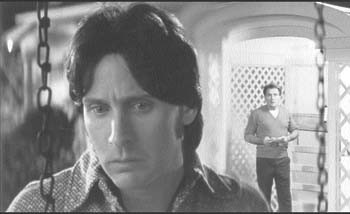
Coming Home: Emilio Estevez and Martin Sheen star in ‘The War at Home,’ the third film about the war experience made by this family.

Emilio Estevez discusses Vietnam and his new film ‘The War at Home’

By David Templeton

David Templeton takes interesting people to interesting movies in an ongoing quest for the ultimate post-film conversation. This time out, though, he simply listens to actor and director Emilio Estevez talk about his latest film, The War at Home.

I’VE GROWN UP with the shadow of Vietnam, to some degree, always hanging over me, over my country,” says actor/director Emilio Estevez, taking the stage at this fall’s Mill Valley Film Festival to introduce his stunning new directorial effort, The War at Home. “With all the films that have been done about that war, few have really dealt with what the war did to the people who stayed home, and the people who came home wounded, physically and otherwise, from the war.” After a few additional words, Estevez takes his seat, and the film rolls.

Produced by Disney’s Touchstone Films–in exchange for which Estevez agreed to appear in Mighty Ducks 3–the $4.2 million film is based on a play by James Duff. In a small Texas town in 1972, a couple (Estevez’s father Martin Sheen and actress Kathy Bates, with Kimberly Williams as their daughter) struggles with their deeply troubled son, Jeremy (Estevez), who’s just returned from a tour of duty in Vietnam and appears to be falling apart. The movie has tested well at various film festival audiences, including the one in Mill Valley, but with minimal promotional effort from the studio, it’s currently floundering at the box office.

“It’s going to take a real grassroots effort to sell this movie, I know that,” Estevez concedes. “If any movie ever relied on word of mouth, this is it.” It is the day after the festival screening, and Estevez is upbeat, though guardedly so, at the rousing response of the audience. Asked to elaborate on last night’s opening remarks, he admits that many have asked how someone who was so young during the war (he’s now 34) has so much passion for the subject of Vietnam.

“The Vietnam War was a televised war, obviously,” he replies. “It was an event war, so it wasn’t lost on me, partly because of my father being as politically active as he is. I actually became a news junkie as a result of my father’s interest. I remember watching television one day. I was 6, and we were watching the lottery draw for the draft. I remember seeing my birth date–May 12th–come up. It was another year, obviously, but we were sitting there watching this. My mother was sitting next to me, and she said, ‘If this war continues, we’re going to Canada.’

“That’s kind of a lot to heap on a 6-year-old kid,” he goes on. “But my parents were very open about their feelings. So I had an awareness of what was happening at a very young age.”

Not surprisingly, since Estevez is the son of the man who played Apocalypse Now‘s brooding assassin, the public’s reaction to that film made a profound impact as well.

“After my father did Apocalypse, Vietnam vets were always trying to reach him,” Estevez says. “They just wanted to talk to him. They believed he was that character. My father ended up employing one vet. He lived in our backyard, in a trailer, for four or five years. I was 14 at the time, and we’d talk a lot. He was kind of out there. This guy was teaching me escape and evasion, he was teaching me all kinds of things.

“I didn’t realize it at the time, but he was obviously going through post-traumatic stress syndrome, and I was like a sponge, just soaking it all up.”

To prepare for his part in The War at Home, Estevez visited a Vietnam veterans’ outreach program in Waco, Texas, where he staged readings of the script for several groups of vets recovering from PTSS. Their reactions helped shape his performance.

“I hired a vet to be on the set as a consultant,” he explains. “This is a guy who was all shot up. He saw a lot of combat over there. He pulled me aside one day and said, ‘It’s like the ghosts of the vets are moving through you. This is becoming very authentic, it’s giving me chills, and I really have to leave now.’ So he left, but I knew I had his stamp of approval.”

There is a scene in the film where Jeremy is noticed by a little girl at a bus stop. He’s obviously been crying. When she asks if he’s all right, he responds, simply, “I will be.”

“‘I will be,'” Estevez repeats when reminded of that moment. “Yeah. Vets who’ve seen the finished film have come up to me and said, ‘Thank you for that line. It gives us hope.’ I think the whole country is dealing with post-traumatic stress syndrome as a result of that war. It’s still part of our national consciousness. And until we can openly grieve about the war, we won’t be able to shake it.”

From the December 12-18, 1996 issue of the Sonoma Independent

This page was designed and created by the Boulevards team.
© 1996 Metrosa, Inc.
Joe Louis Walker

0

Blues Survivor


Carol Friedman

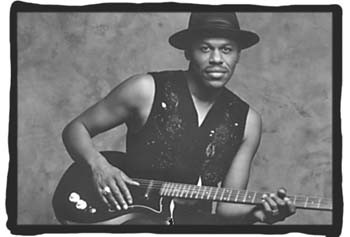
Like a Bullet: Walker is so hot that his next record will feature an all-star cast of blues and soul guitar greats.

Joe Louis Walker strikes a deep groove

By Greg Cahill

ASK Joe Louis Walker about the pressure he feels as one of the top new blues artists in the music industry and the usually shy guitarist will give you an earful. “Every night you’ve got to be good–people don’t understand anything else, especially the critics,” he says. “For younger guys, like myself, we have a lot more to compete with, including reissues of classic blues sides and reissues of those reissues. You’re lucky if you even get heard. It’s feast or famine.”

These days, it’s a feast for Walker. The handsome 46-year-old Novato resident has just placed second in the prestigious 61st annual Downbeat Readers Poll, carried by the force of his powerful Blues of the Month Club (Verve).

Earlier this year, he and his Bosstalkers–who deftly walk a fine between traditional blues and modern funk and delivered blistering performances at this year’s San Francisco Blues Festival and the Monterey Jazz Festival–were hailed as the Blues Band of the Year. His songwriting skills have earned a host of accolades, including a nod for his contribution to B. B. King’s 1993 Grammy-winning album, Blues Summit (MCA).

And next year should be even bigger. Walker recently completed an as-yet-untitled album, due in April on the Verve label, that features an impressive lineup of great blues and soul guitarists, including Bonnie Raitt, R&B pioneer Ike Turner, former Elvis sideman Scotty Moore, Little Charlie Baty, Stax Records legend Steve Cropper, Buddy Guy, Clarence “Gatemouth” Brown, Otis Rush, Matt Guitar Murphy, Taj Mahal, and Robert Lockwood Junior. The Tower of Power Horns and members of the Johnny Nocturne Band also appear.

The star caliber of the upcoming album is quite a tribute to Walker’s status as an up-and-coming blues powerhouse. “It’s great company and I was real pleased that they could take the time out to contribute,” he says modestly, adding that “I like it already.”

But it’s been a long, hard trek for this blues survivor. Enjoying a rare day of relaxation at his Novato home, this San Francisco native reflects on his days scuffling around Haight-Ashbury in the ’60s while the city was in the throes of a blues revival. For a spell, he shared a Mill Valley home with the late Mike Bloomfield, the then-influential guitarist with the Paul Butterfield Blues Band.

“He opened my eyes to a lot of stuff, a lot of guitar styles,” Walker says of Bloomfield. “He allowed me to see how he dealt with the music business, which was hard on him. He didn’t like the business side because he felt like he was getting screwed, which he was, along with everybody else.”

Walker later jammed with the Grateful Dead and Steve Miller, before launching a 10-year stint with the Spiritual Corinthians. In 1985, he rejoined the blues fold, recording five critically acclaimed albums for the Hightone label that spawned bluesman Robert Cray. Some saw Walker as the next Cray, but Walker’s visceral style is far grittier than the sweet soul of his former labelmate.

But it’s the incessant touring that has brought Walker to the attention of world audiences. That growing fame has not come without a cost. “It’s like dog years, figuring all those days spent on the road,” says a road-weary Walker, who celebrates his 47th birthday on Christmas Day, “because it doesn’t always take into account that you have to get up at four in the morning to get from here to there, and after a while, it can wear you out. But I ain’t complaining–I’m happy with what I’m doing.”

Joe Louis Walker and his Bosstalkers perform at 9:30 p.m. on Friday, Dec. 20, at the Mystic Theater, 21 Petaluma Blvd. N., Petaluma. Admission is $7. 765-6665.

From the December 12-18, 1996 issue of the Sonoma Independent

This page was designed and created by the Boulevards team.
© 1996 Metrosa, Inc.

Sherry Glaser

0

Pagan’s Progress


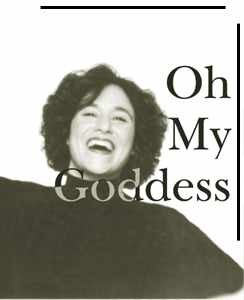
All Smiles: Sherry Glaser brings her latest effort, ‘Oh, My Goddess!,’ to Sebastopol for its second-ever performance.

Photo by Janet Orsi


Comic Sherry Glaser proves you can’t fool Mother Nature

By Gretchen Giles

PAGAN TRADITION may have begun with folks frolicking in wooded glens and wearing nothing but wine stains on their chins and scented garlands in their hair, but lately the pagans have been as serious as mud. The very term is more likely to conjure up an image of deadly intent–an Adult Child of Alcoholics smelling of musk and inexplicably shaking a feathered rattle–than of anything even remotely relating to fun (unless, of course, you are yourself a deadly intent musk-smelling ACA’er with a feathered rattle, and then we may as well be looking in the mirror).

Sherry Glaser, a pagan earth-mother goddess-loving artist with a sense of humor, is out to change all that. Sure, she used to be a lesbian (c’mon, who didn’t–in one life or another?) but is now happily married to the father of her children. Her long-running show Family Secrets recently caused the San Francisco Chronicle‘s staid critic Peter Stack to gush that she “is nothing short of amazing.” She brings her newest effort, Oh, My Goddess! An Outrageously Sacred Comedy, to the Sebastopol Veterans Auditorium on Dec. 21.

A two-character show utilizing Glaser’s unique ability to literally shift shapes (in Family Secrets she shrugged into the aspect of an aging Jewish man as deftly as she morphed into his sullen teenaged daughter), Oh, My Goddess! concerns two very disparate personages: a young Chicano man named Miguel and the Goddess herself–the familiarly named Ma.

“I think this piece is a cumulation of where all my life is going right now,” says Glaser by phone from her home in the Mendocino wilds. “And I think that it’s important comedy. I think that it’s the kind of comedy that we’re really missing–the type that affects us while it moves.”

All seriousness aside, Oh, My Goddess! has a serious touch of the sillies. “Miguel was channeling Kumbiya for a while, but now he’s come upon Ma, and this is his greatest channel to date,” she cracks. “But he’ll be making a lot more money at seminars, because people will pay a lot more money for Ma than for Kumbiya.”

Miguel will be familiar to those familiar with Family Secrets as the one who impregnated daughter Kahari, née Fern, a goddess worshiper and a lesbian until she got accidentally knocked up–is this beginning to sound familiar? The longest-running off-Broadway one-woman show ever produced, Family Secrets has spilled the guts of Glaser’s family’s secrets for the last seven years in places as far flung as South Africa and Canada. “Yes, it’s my family. They adore it,” she asserts of this piece that has won both the L.A. Drama Critics Circle Award for best solo creation and the L.A. Weekly‘s Drama Critics Award.

When Glaser created Oh, My Goddess! for the Michigan Women’s Music Festival last year, she decided to continue her exploration of the character of Miguel. “Miguel is my spiritual side,” she says. “First it was just to play this sexy macho guy that I really liked to play in my early days of improvisation. And then I thought, I don’t want to just play a stereotype, I want to break that and make him somebody really different, someone,” she laughs, “who is into colonics and vegetarianism.”

As for Ma, well, Glaser says it best. “She’s the biggest Jewish mother of us all,” she boasts. “She doesn’t have commandments, she’s got rules. She’s so full of love, and she says everything that every mother’s ever said.” Adopting a New York Yiddish accent, Glaser intones, “‘Why? Because I said so. I’m the mother.’

“Stuff like that,” she says. “She loves the children–the audience–so much and she’s appalled because of the state of things. What Our Father Who Art in Heaven has wrought. She’s not even talking to him at this point.

“She’s very upset with him,” Glaser adds, breaking back into Ma. “He didn’t even tell the kids about her. She just went off for a little while and now she’s back and look at the place! The place is a mess! The water is undrinkable, the air is unbreathable!

“See?” she continues in her own tone, “She’s a real mother. She’ll talk about the rules, like the Ten Commandments, but they’re real rules. The first rule is to love yourself, the second rule is, oh–I’m not going to tell you,” she breaks off with a laugh.

Does Glaser adhere to these rules?

“I try to,” she chuckles. “After all, I made them up.”

Oh, My Goddess! plays Saturday, Dec. 21, at 8 p.m. Musicians Diane Patterson, Janelle Burdell, and the Sapphire Percussion Ensemble open. Sebastopol Veterans Auditorium, 282 High St. Tickets are $12-$15. 829-9820.

From the December 12-18, 1996 issue of the Sonoma Independent

This page was designed and created by the Boulevards team.
© 1996 Metrosa, Inc.

Holiday Gifts From Sonoma

0

Made in Sonoma


gifts made close to home

Okay, it smacks of bumper-sticker sentimentality, but these days more and more people are seeking ways to think globally and shop locally. So, hey, pass the eggnog and seek out the perfect gift made close to home.

From the local color of Sonoma County showcase calendars by photographer Robert Janover (marketed by True Images; $10.99) to the simple elegance of Tony Black’s custom, handcrafted willow furniture, from the comfort of Mishi Apparel’s natural cotton fashions (201 Western Ave., Petaluma) to the rich bounty of locally produced wines and gourmet delicacies, there is something here for every taste and budget. Here are a few new ideas, and a couple of old favorites, to start you on your merry way.

Greg Cahill, Gretchen Giles, Sara Peyton, Bruce Robinson, and David Templeton contributed to this article.

Toys

Fun Science

Here’s an attractive idea. Dowling-Miner Magnetics Corp. in Sonoma (21600 Eighth St. E.) has an array of magnetic games and kits for children, products developed as a part of the 50-year-old company’s children’s educational toy department. Magnetic frogs, magnetic snakes, and magnetic fish are just some of the items available in their “Wonderboard” series, which feature stick-on creatures along with a magnetic board. Other items in this series include Build-a-Bouquet–with magnetic blooms, stems, and a pot–Build-a-Bug, Build-a-Snake, and various math and alphabet sets. The science of magnets is explored in a vast number of experiment kits manufactured by Dowling, including an Electric Motor Generator sets for older whiz-kids and My Very First Magnet Set for beginners. Dowling Magnet toys–featured just last month in USA Today on ways to entertain children in business offices–are available across the country. Local stores that feature some of the above-mentioned items are The Toy Shop in Sonoma, Early Works in Petaluma, and The Toy Works in Santa Rosa.

For unusual toys, Sebastapol’s HearthSong
strikes an individual note.

Smart Software

As programmers for hire, Bruce Ford and Melinda Bell of the Petaluma-based Play Again Interactive have designed the software and visual elements for numerous high-profile computer games since landing in Sonoma County two years ago. Until recently, though, all these projects were conceived by others. Now, with the unveiling of their new CD-ROM, The Night Before Christmas Holiday Crafts and Activity Center, the entrepreneurial twosome is boasting and beaming like proud parents.

“There is no other software product on the market that emphasizes Christmas and crafts in a tactile manner, like this one,” Ford enthusiastically pronounces. “This is a thoroughly unique Christmas item.”

Targeted for children between the ages of 3 and 10, the imaginative computer program features an animated, interactive retelling of Clement Moore’s famous Christmas poem, in addition to several onscreen activities to kindle a kid’s holiday creativity. Users can make “virtual cookies” in Mrs. Claus’ kitchen, decorate multicolored Christmas trees, print out and construct ornaments, explore an 18th-century household on Christmas morning, and design Christmas cards and thank-you notes.

“It’s great for keeping the kids busy while you’re trying to get ready for Christmas,” Ford laughs. The kit comes as the CD-ROM program alone ($19.95), or in a gift package including the CD, a hardback book version of The Night Before Christmas, and a Christmas craft guide ($29.95). They’re available by mail order (888/66-SANTA) or over the counter at Reading, Rhythm, and ROM in Petaluma (6 Petaluma Blvd. N.); Santa also has a website.

The website is worth a peek. Kids can read each sleigh-pulling reindeer’s campaign promises and then vote on which animal will lead the pack on Christmas Eve. They can even leave an e-mail for the Jolly Man himself, and Ford guarantees that the messages are getting through. “Santa has been receiving e-mails from around the country,” he confirms, “and responses have been going out.” Santa’s trickiest message so far? “One girl wrote in to say that her Daddy needs ‘guns and money.’ Santa wrote back that he never delivers guns–they scare the reindeer.”

Arts & Crafts

Hand Goods

You won’t have a problem finding a special holiday gift at Hand Goods in Occidental (3627 Main St.) Nearly 200 local artists sell their wares in this landmark crafts store. Started by Nancy Farah 25 years ago, Hand Goods was purchased recently by longtime employee Heidi Schmidt, after Farah died last year. The current owner is committed to carrying on the tradition of supporting local artisans.

For holiday gift giving, Schmidt recommends checking out their finely crafted collection of pottery. Barbara Hoffman, Perry Lynch, Sheila Jenkins, and Linda Timberlake are among the well-known local potters selling mugs, plates, bowls, and platters. “We have people who drive up from San Francisco once a month to purchase a new mug made by their favorite potter,” says Schmidt. Anita Perry creates unusual raku vases that are pit-fired and cooled quickly–a process that produces an unusual opalescent glaze.

Soothing ceramic fountains designed for the inside of your home are something new this year. They range in price from $100 to $300. Or, if you’re in a do-it-yourself mode, you can select fountain parts and make your own bubbling gift. “The other day we walked around the store with a customer to help him create his fountain from a handcrafted ceramic bowl and polished rocks,” explains Schmidt. All this customer needed was a little immersible pump that can be purchased at any hardware store.

Jewelry, candles, incense holders, kites, and more–these one-of-a-kind handcrafted gifts are sure to please loved ones near and far.

Putto & Gargoyle

Not only is everything in Putto & Gargoyle made locally, but most items are created by owners, Gerrie Walker and Peter Lu. Located in downtown Sebastopol (7202 Bodega Ave., across from the library), this tiny store is one of the prettiest in the county. Look here for whimsical garden angels and gargoyles (made of cement), jewel-colored velvet berets and mad-hatter hats, pillows, handmade note cards and stationery, planters, vases, wall sconces, candleholders, and colorful dishware. One of their most popular gifts is the Big Cuppa, which is sure to delight the caffè latte lover on your list. This ceramic, giant-sized cup comes in a rainbow of colors and sells for $8. This year the artistic duo have introduced a new hot/cold two-tone tumbler, in delicious colors like watermelon and teal ($8 each). “One of the things that has inspired our work this holiday season is that we have a lot of new colored glazes,” explains Walker about her creative motivations. “The hat-making is whole different thing. It just sweeps me along.” But if what you really want for Christmas is a haircut, you can get that, too. Lu, who owned a hair salon in Los Angeles before moving north, has started snipping again.

Great Silkie Artwear

This holiday season there’s a great new line of Great Silkie Artwear T-shirts for both men and women by Sebastopol textile artist, Karen Bell, renowned for her silk-screened images of feminine archetypes, musical fantasies, mermaids, and cloud-leaping horses. A seasonal purchase of a Karen Bell T-shirt is practically a ritual for some locals.

“Most of my work is based on personal mythologies for modern people to relate to in their own way,” explains Bell. The new line of empowerment images are printed on 100 percent cotton, black, short-sleeved T-shirts. For men, Bell has chosen a turquoise and silver Thunderbird silk-screened across the front of the shirt. For women, there’s an updated version of her popular image, the Healer, silk-screened in silver, teal, and purple. All shirts are $16 and available at Quicksilver Mine Co. in Guerneville (14028 Armstrong Woods Road), Natural Connections in Occidental (3641 Main St.), and the Cotton Rose in Sebastopol (851 Gravenstein Hwy. S.).

Tribal Beginnings

For those who love Native American arts and crafts, both old and modern, beautiful collectibles and affordable gifts are found at Tribal Beginnings in Sebastopol (6914 Sebastopol Ave.). Some of the finely made jewelry, crafts, and baskets have been created by local Native American artists, also both past and present. There are five traditional Pomo baskets for sale, including a beautiful small feather basket made by late master basketweaver Laura Somersal. Lightning Thunderhorse’s medicine pouches from deer or elk hide are priced from $20 to $35. Each is unique. One typical example is a long, deep, deerskin-fringed pouch with buckskin ties strung with glass beads. Sonoma County’s Colin Kingfisher’s bone-bead chokers, $50 to $95, are made with long, thin bone-beads separated by glass and copper beads and have a center rosette of leather finely decorated with beads and porcupine quills.

Food

Carol’s Country Cuisine

Susan B. Wise used to crunch numbers. Now she’s involved in a much tastier pastime. “We’re making restaurant-quality sauces that you can take home,” beams Wise, the marketing half of Carol’s Country Cuisine (2546 Warm Springs Road, Glen Ellen; 996-1124). The sauces themselves–each formulated to be used as either a salad dressing or a marinade–are the creation of the Carol half of the business.

That would be Carol Frankenfield, the former proprietor of Cafe La Palma in the quiet west Marin hamlet of Lagunitas, who exorcised her burnout from the restaurant as a corporate accountant for several years before drawing on both backgrounds to launch the new food business a little more than two years ago.

“We thought of this business in July of ’94, and two months later we had two products on the market,” Wise marvels.

After some trial and error, they now have four: Roasted Garlic Balsamic, White Balsamic Cilantro, Ginger Citrus, and Lemon Curry–perfect additions to a gift basket of locally produced foods. All are free of cholesterol and sugar, as well as low in saturated fat, and the last three are also saltless. The ingredients are fresh, all natural and top quality, Wise stresses, pointing with particular pride to their use of imported Italian white balsamic vinegar, something rarely used in competing products.

The delicate balance between flavors makes Carol’s sauces suitable for baking, sautéing, and grilling, as well as for marinades and dressings. “You can do anything in the world with them with anything,” Susan says.

Now carried at “a hundred Bay Area stores and some wineries” as well as outlets in Southern California, Texas, Louisiana, and Oklahoma, Carol’s sauces are also available at such local independent grocers as Fiesta Market, Oliver’s, Community Market, and the Glen Ellen Village Market. Typical prices are $4.99 for a 12-ounce bottle and $5.95 for 16 ounces.

Hot Pepper Jams

Red and green are traditional Christmas colors. Same goes for the county’s best pepper jams. You might have to chase these down at a local farmers’ market, but they’re worth the search. A sassy gift to send to a friend or bring to a party. Perfect for friends who love chilies, dancing, all things from New Mexico, and cream cheese and bagels, too. William Adamson, the owner of Happy Haven Ranch in Sonoma (1480 Spering Road), has been making and marketing his spicy red and green hot pepper jams since 1984. “It has a different flavor than jelly,” Adamson explains. “It’s all natural, and I don’t use any food coloring.” A 11-ounce jar is $3.50; three jars are $10. Make an appointment to visit the ranch by calling 996-4260.

The Mushroom Pot

To show your family and friends how much you care, give them the gift of fungus this Christmas. Gourmet Mushrooms in Graton, a leading grower of exotic mushrooms for 19 years, now offers an appealingly offbeat gift idea: a do-it-yourself mushroom farm. Elegantly named The Mushroom Pot, this unusual item is a deceptively small, six-inch pot, seeded with spores in your choice of three varieties: Sonoma Brown, Pom Pom Blanc, and Golden Oyster. These are thoroughly gourmet-quality mushrooms, ready to eat within two weeks. The chef on your holiday list will be giddy with culinary good intentions, and science-minded youngsters will be tickled by the overwhelming ooeyness of growing mushrooms, on purpose, right in their own rooms. The Mushroom Pot ($14.95 to $19.95) is available by mail order only. Orders made soon will arrive in time for the holidays. To place an order, call 829-7301 or 823-1507.

Purely Personal

Mr. Music

It doesn’t get more homegrown than Jim Corbett’s Songs of Christmas Joy CD. Recorded at Cotati’s own Zone Studios and featuring a veritable plethora of backyard genius, this snappy 23-song compilation of favorites and originals just about puts the tree up all by itself. All you have to do is sit on the floor and untangle all those lights–while you sing along. Featuring such local artists as Norton Buffalo, the late Jim Boggio, Michael Bolivar, Nina Gerber, the Wildflower Band, Bill DeCarli, and Zone’s own Blair Hardman, this tour of musical styles–traditional holiday tunes are given every possible treatment ranging from polka to reggae–is professional, polished, and a whole lotta fun. The Cool Kids Chorus (every musician’s kid chorusing) chimes in for a long sampling of sing-alongs, but the “Silent Night” rendition by Wildflower, Keith Allen, and Doug Harmon ends the disc with a quiet beauty. Available at all local record stores or by mail order from Diamond Universal Music Co. in Sebastopol (823-5849).

Outdoor Massage

Bountiful relaxing body treatments are available throughout Sonoma County. One favored way to unwind is with a full-body massage. Osmosis (209 Bohemian Hwy., Freestone), renowned for its unique enzyme baths, has something new to offer just in time for the holidays–outdoor massages in Japanese-style pagodas along Salmon Creek in Freestone. A combination enzyme bath and outdoor-massage gift certificate may be just what a loved one, a friend, or even your boss really wants this Christmas. The enzyme bath, or heat treatment, is a 20-minute dip in a dry bath composed of fragrant cedar fiber, rice bran, and enzymes. Heat is generated biologically through the natural fermentation. The 75-minute outdoor massage takes place in one of two fully enclosed light-filled pagodas. It’s like receiving a massage in your own private greenhouse. Swedish/Esalen, shiatsu, polarity, acupressure, and deep-tissue massages are available. An enzyme bath and outdoor pagoda massage is $125. Individual gift certificates for bath, garden massage, or indoor massage are also available.

From the December 5-11, 1996 issue of the Sonoma Independent

This page was designed and created by the Boulevards team.
© 1996 Metrosa, Inc.

Talking Pictures

0

Talking Down


Elliott Marks

SmorgasBorg: Data minds his captors, Borg drones wired for sound.

Author Mark Vaz bemoans mass culture as seen in the new ‘Star Trek’

By David Templeton

Writer David Templeton takes interesting people to interesting movies in his ongoing quest for the ultimate post-film conversation. This time out, he boldly goes to the latest Star Trek spectacular, along with the technologically savvy author and FX specialist Mark Cotta Vaz.

WE HAVE ARRIVED early at the mall and are standing around in front of the massive 15-screen theater where is playing on four separate screens. Informed that the box office will not open for another 10 minutes, we wander about the mall as custodians install giant Christmas decorations.

Pointing toward “Santa’s Magical Village,” I inform my guest, Mark Vaz, author of the splendid new book Industrial Light and Magic: Into the Digital Realm (Ballantine; $80), that at this particular mall the Jolly Old Elf does not give candy canes to the wide-eyed children sitting on his lap. He hands them a sample bag of breakfast cereals and a book of coupons.

“That’s the creepiest thing I’ve ever heard,” Vaz responds. “I guess you’re never too young to be indoctrinated into the consumer culture, but that’s so aggressive it’s almost repugnant.”

Vaz has devoted the majority of his writerly efforts to the subject of popular culture and film, and to cinematic special effects specifically. He has contributed numerous pieces to the high-tech journal Cinefex and authored books on the history of Batman and on the phenomenon of trance channeling, and an earlier book on the films of George Lucas. In his latest work, co-authored with Patricia Duignan, Vaz has assembled an all-encompassing history of the North Bay­based ILM, nicely illuminating the creative wizardry of the world’s predominant special-effects company. Included, incidentally, are details on the effects from the previous Star Trek films.

First Contact, the first Trek film to feature none of the original cast, presents instead the members of the popular Next Generation TV series. It’s a rousing adventure, with the crew battling the Borg, a frightening swarm of zombielike, cybernetic techno-punks that assimilate everything in their path and have set their sights on Earth. A subplot involves our planet’s “first contact” with aliens, an event that, in Star Trek lore, becomes the catalyst for humanity’s evolution toward peace and prosperity.

“The Borg,” Vaz laughs, sipping a pint of ale after the film. “I got the impression that they’re sort of a comment on our modern mass culture. Maybe the Borg are representative of what we feel is this impersonal culture that surrounds us–the government or the force of overpopulation. We tend to feel depersonalized by our culture, don’t we?”

Individuality versus the needs of the collective whole. This is a recurring theme in the Star Trek ideology. In this latest film, humans existing on the planet just before the extraterrestrials land are individual to a fault.

“I felt sorry for the aliens at the end,” Vaz commiserates. “Being subjected to our lousy whiskey and loud rock and roll.” When I counter that the visitors seemed willing enough to slam back a second shot of booze, Vaz bursts out laughing. “And there’s something odd about that,” he says. “We can say, ‘Oh, these aliens are just like us. They can relate. But why can’t we relate to them? Why can’t we sit and be quiet like they were doing?

“But this movie was made by humans, trained in a human viewpoint. Our culture is very loud and brash and profane. It doesn’t embrace subtlety, at least it hasn’t recently. The nature of mass media is to get out there and to catch your attention, to be loud and boisterous. To act like everyone else.

“On the whole, with marketing and commercial tie-ins and cereal samples from Santa Claus and everything, we’ve already become the Borg! ‘Oh, I’m sorry–I can’t wear those jeans. It would be uncool,'” he mocks.

He takes another sip.

“Maybe the Borg are behind all this,” Vaz laughs. “Maybe if you get Donald Trump and all these people and you pull their face off, it will reveal a bunch of Borgs.

“Back to the issue of aliens making contact, I doubt we’d share our whiskey. I think you’d see abysmal behavior on the part of the human race.

“Even me,” he grimaces. “Just the other day in my house I killed a tarantula. Somehow it got into my house, and it was so creepy I had to kill it. And I’m the kind of guy who lets spiders have their little nests in my place. But all of a sudden this tarantula crawled by–so I dropped a stack of books on it.

“That’s the classic invasion scenario, isn’t it?” he asks. “The aliens come–they look terrifying–so we blast ’em!” He smiles, adding, “And the noble humans live long and prosper.”

From the December 5-11, 1996 issue of the Sonoma Independent

This page was designed and created by the Boulevards team.
© 1996 Metrosa, Inc.

Gary Snyder

Dharma Sums


Raku Mayers

Zen and the Art: Poet Gary Snyder laughed when asked if he could be seen as a mountain writing a river. “More like a river writing down a mountain,” he said.

Gary Snyder’s epic is complete, but his journey is far from over

By Gretchen Giles

IF THE LIFE of an artist is a journey, a long travail down the perennial roads less traveled, seeking with intent a life lived for the chunky joy of experience, for the hopeful accompaniment of knowledge, and with a relish for hard knocks, then poet and activist Gary Snyder has just come around one hell of a bend in the road.

With the publication of his eagerly anticipated masterwork, Mountains and Rivers Without End (Counterpoint; $20), Snyder, 66, has finally completed his own version of what his comrade Jack Kerouac attempted with his innovative beat epic On the Road. Snyder’s road has just been a mite bit longer.

Mountains and Rivers, 40 years in the making, chronicles the life of the artist as a young, middle-aged, and aging man as he investigates both the mutable world and the immovable elegance of nature. Snyder appears Dec. 11 at the Luther Burbank Center to read from and discuss this effort.

Informed by his deepening devotion to Zen Buddhism–one that has encompassed all his adult life–the project was inspired by Snyder’s graduate studies as a young man at UC Berkeley in the 1950s, studying calligraphic art and Oriental languages. Moved by the differences in Eastern landscape paintings from those painted in the West, he was particularly affected by one scroll, entitled Mountains and Rivers Without End, in which the movements of pen and brush depicted the spiritual world of the natural in a way that prompted new sight.

“I pursued it intuitively,” Snyder says by phone from his office at UC Davis, where he is a professor of creative writing as well as the co-founder of the innovative interdisciplinary Nature and Culture program. “I was letting [Mountains and Rivers] show me itself as it would. But on the other hand, I was researching things about it, and some sections took as long as five years to complete. It was a very deliberate process that nonetheless opened itself up to intuition.”

Snyder’s research led him to learn about geomorphology, about river systems and watersheds. An ancillary effect of his preparations for sections of Mountains and Rivers has been his work on the Yuba Watershed Institute, an effort he joined with his “brilliant and cranky neighbors”–so called in the book’s end piece–to protect the fierce nature of their homesteads. And it also has led him to deeply consider those opposing complements: stone and water.

“The term ‘mountains and rivers’–those two combined in Chinese mean ‘landscapes,’ and that’s an interesting note,” Snyder says, “because that’s exactly what [the Chinese] mean when they refer to landscapes. But in Buddhism, there is also a traditional metaphoric association that goes way back, with mountains symbolizing a kind of stubborn, fierce, persistent energy–which, indeed, they do. Rocks are hard; they resist erosion. And there’s is an old tradition of the forces and nature of water as being fluid, flexible, all-permeating, all-embracing, and necessary to life.

“So, in Buddhist thought,” he continues, his voice warming to his subject, “those are shorthand symbolic terms for wisdom as willed spiritual energy, and compassion as the wise fruit of that energy. They go on to say in the Buddhist tradition that for the bird of enlightenment to fly, it must have two wings: the wing of wisdom and the wing of compassion. That wisdom without compassion is cold and arrogant, and that compassion without wisdom is often foolish. So, there’s also the sense that the two are essential to each other.

“Mountains bring the precipitation down, and precipitation brings the mountains down,” he finishes, “so there’s this sharing here and this giving there–an interaction that is persistent throughout all of geological time.”

But don’t let Snyder’s professorial tone put you off. What makes Mountains and Rivers such a pleasure to read and discuss is the almost tuneless depth of the schemes and the scenes wrought. Accompanied with the elegiac and the dense are soaringly simple pieces of reflection and addition. A midpiece, “Three Worlds, Three Realms, Six Roads” examines the various habitats of Snyder’s life in “Things to Do” lists that begin with his upbringing on a Northwest dairy farm, which section ends:

“Peeling cascare/ Feeding chickens/ Feeling Penelope’s udder, one teat small./ Oregon grape and salal.”

The poet traces his young manhood, the solitude of his internship as a fire-lookout (for which job Kerouac immortalized him as Japhy Ryder in his Dharma Bums), through his travels in San Francisco’s frenetic artist milieu of the ’50s (“Suck in the sea air and hold it–miles of white walls–/ sunset shoots back from somebody’s window high in the Piedmont hills/ Get drunk all the time. Go someplace and score”) to his long residence in Kyoto, Japan (“Get up at four in the morning to go meet with the Old Man./ Sitting in deep samadhi on a hurting knee./ Get buttered up by bar girls, pay too much/ Motorcycle oil change down on Gojo/ Warm up your chilly wife, her big old feet”).

Invited by a fellow artist on Buddha’s birthday in 1956 to sip the ceremonial green tea reserved for high occasions, Snyder decided to write a work of poetry that would render in words that which the scroll had depicted in images. Of the 16 other books that appeared along the way, one–Turtle Island–won the Pulitzer Prize for poetry in 1975.

Snyder lived in Kyoto for some 13 years. There he spent his days in the solitary pursuit of Zen wisdom, translating texts from Chinese and Japanese and teaching English. Returning westside, he traveled by foot and by thumb throughout the United States, working logging stints and on oil rigs, and making a point of walking the great vasts of his birthland. He has married several times, raised four children, and built a home in the tough environs of the Sierra Nevada’s Yuba River, living for more than a decade without electricity and running water. But through all the changes and challenges of his life, Snyder has dutifully kept a notebook, never letting the thought of this epic go.

Forty years is one long time to be immersed in the same project, and Snyder finally knew that he had come to the end when he wrote a poem about the desert in this epic of land and water. Centering on a return to an arid plain he had visited as a youth, this time accompanied by his children and fourth wife, writer Carole Koda, Snyder depicts a moonlight revel, Venus benevolent in the heavens, the company crunching contentedly on fried grasshoppers. Ever aware of his script as a scroll, the poet leaves the scene upon the page, noting:

“The space goes on./ But the wet black brush/ tip drawn to a point/ lifts away.”

“This is a realm where there is neither mountains nor deserts–but this is about going out into another space,” Snyder says, “into what you might call emptiness, which,” he laughs, “is also a Buddhist philosophical term.”

He refuses to sentimentalize his life’s journey. “I was lucky to hit on some good things early in my life,” he says, “and one of them was Buddhism, and that has steered me in a good direction.” As to his next effort, Snyder is similarly workmanlike.

“Now I gotta clean up the workshop,” he says simply. “Sweep the sawdust off the floor, pick up the wood chips, finish this project up, and then I’ll look around and see what I want to do next.”

Gary Snyder reads from and discusses Mountains and Rivers Without End on Wednesday, Dec. 11, at the Luther Burbank Center, 50 Mark West Springs Road, Santa Rosa. 7 p.m. $7.50-$10; benefits the Friends of the Russian River. 823-8991.

From the December 5-11, 1996 issue of the Sonoma Independent

This page was designed and created by the Boulevards team.
© 1996 Metrosa, Inc.

Mushrooms

0

Shiitake Happens

By Bruce Robinson

MALCOLM CLARK was crawling through a high Himalayan meadow on his belly, parting the grasses with his hands just inches in front of his eyes, when he lit upon his quarry. Poking up through the soil was a tendril of cordycerps, a rare fungus prized by Nepalese sherpas for its curative properties.

“It’s a parasite that attaches itself to insect larvae,” Clark explains, showing a visitor a preservative-filled test tube that holds a long greenish finger of fungus growing out of a much smaller caterpillar. Clark is two miles lower and halfway back around the globe now, in the modest Graton office of Gourmet Mushrooms, the company he and partner David Law have built on such unusual fungi over the past 20 years.

It is here that Clark is continuing his study of the peculiar plant, not because of its gastronomic applications, but to unveil its potential as an agent of human healing. For this improbable fungus produces a substance closely related to cyclosporin, which is derived from another variety of insect parasitic fungus and is the most widely used immunosuppressive drug for combating rejection of human transplanted organs.

This is just one of a multitude of fungal compounds that are being examined for their medicinal possibilities. Others have been used for centuries in Chinese medicine, including reishi and shiitake mushrooms, two traditional healing mushrooms that Clark and Law have combined into a product called Rei-Shi-Gen, which has become their largest non-culinary product.

“We kind of married them together,” says Law. They produce roughly a ton of the compound every month, which is marketed nationally and in 17 other countries in powder, capsule, and tincture forms as a blood tonic and aid to liver, heart, and lung function.

Another extract from a strain of shiitakes is undergoing FDA studies for use as “a non-invasive adjunct to chemotherapy,” Clark says, and major pharmaceutical companies are beginning to display serious interest in the healing properties of other fungal derivatives. “All those deaf ears are not so deaf anymore,” he says with a note of vindication, like a prophet belatedly gaining a little hometown honor.

The versatile shiitake mushroom has for generations been a staple of Oriental cooking, most often dried for storage and shipment before it is rehydrated at the time of cooking. Clark and Law are champions of fresh shiitakes, and their determination and promotion of these hardy ‘shrooms over the past two decades have gradually brought the fungi to their current status as a familiar element in many styles of contemporary cuisine.

“Our goal was to bring shiitakes to the Safeway level,” Clark says. “Now they’re there in Safeway, but the quality is not quite there yet.” In addition to popularizing new varieties of mushrooms, Gourmet Mushroom’s goals now include “setting a standard,” he adds. “If we can do it, somebody else can.” When their standards are upheld, “the public benefits,” he concludes.

But Clark and Law are doing more than redefining the standards for mushroom cultivation. They have aggressively developed new methods. Most of the company’s fresh mushrooms, in fact, are types that it has trademarked with names designed to underscore their gastronomic and visual appeal: Pom Pom Blanc, Cinnamon Gap, Golden Oyster, and the tan-tipped Trumpet Royale.

These are grown in patented square containers on long racks in a quiet, dimly lit one-acre building, where the entire life cycle is accelerated to take about 12 weeks. The freshly harvested “fruits” are then trucked to upscale restaurants in San Francisco, or shipped by overnight freight to chefs in Los Angeles, Chicago, New York, Zurich, and even Japan. Curiously, Law says, they have found Chinese chefs resistant to the new types of mushrooms, as many are reluctant to depart from the traditional recipes and ingredients that have been used for generations.

Even without the traditionalists, “there’s a bigger market out there waiting for our products, and we can’t meet it,” says Clark.

That should change when the company moves into a 43,000-square-foot building soon to be constructed on a 20-acre site along Highway 116, not far from their current location. In addition to being nearly three times as large and significantly more efficient than their existing growing facilities, the new location will also have room for a demonstration garden to showcase the benefits of spent mushroom mycelium as an organic fertilizing agent. It may also allow Gourmet Mushrooms to appear in a limited number of local retail stores (they now are sold only occasionally at Sebastopol’s Fiesta Market).

With site work already completed, Clark and Law hope to be moved into their new plant by late spring, a transition that will allow Clark to resume his global search for new varieties and mutations with untapped commercial potentials. Like the time he was in Bali, ostensibly on vacation, when he visited an outdoor farmers market. “They had some fresh mushrooms I recognized as oyster mushrooms,” but they were a shade of blue he had never seen before, Clark recalls.

At his urging, “they took me out the next day, we found some, got some samples,” and rushed back home, where the first crop of Gourmet Mushroom’s newly trademarked Blue Oyster mushrooms went to market just seven weeks later.

With hundred of thousands of varieties of fungus known on the planet, it’s clear that this “Indiana Jones of mushrooms,” as he has been dubbed by a niece, still has plenty of work left to do.

From the December 5-11, 1996 issue of the Sonoma Independent

This page was designed and created by the Boulevards team.
© 1996 Metrosa, Inc.

Eric Lindell

Digging Itold sound to a new audienceBy David TempletonTHE WORD is spreading. Every Monday night, in the upstairs game room at Santa Rosa's Third Street Aleworks, a hardworking rocker named Eric Lindell kicks back and takes a little quality time--just for himself--to re-juice his musical battery.What that means for this immensely popular local musician is that he leaves his...

Talking Pictures

Culture Goes Popthe cannibalizing of popBy David TempletonFor three years writer David Templeton has been taking interesting people to interesting movies in an ongoing quest for the ultimate post-film conversation. This time out, he coaxes collector/curator Mickey McGowan out of his Unknown Museum to see Tim Burton's offbeat space-invasion flick Mars Attacks!Surrounded by a chattering throng of "advance screening"...

Sonoma County Wine Library

Strange FruitBy David TempletonROWS OF AGED BOOKS stand waiting, the numerous leather-bound volumes neatly positioned behind a barrier of glass, warm and glistening under the touch of the mid-afternoon sun. With a chimelike rattle of keys, librarian Zita Eastman unlocks the cabinet and rolls the doors aside, as the sweet, unmistakable scent of cowhide and 100-year-old paper and glue...

Talking Pictures

Peace TalksElliott MarksComing Home: Emilio Estevez and Martin Sheen star in 'The War at Home,' the third film about the war experience made by this family.Emilio Estevez discusses Vietnam and his new film 'The War at Home'By David TempletonDavid Templeton takes interesting people to interesting movies in an ongoing quest for the ultimate post-film conversation. This time out,...

Joe Louis Walker

Blues SurvivorCarol FriedmanLike a Bullet: Walker is so hot that his next record will feature an all-star cast of blues and soul guitar greats.Joe Louis Walker strikes a deep grooveBy Greg CahillASK Joe Louis Walker about the pressure he feels as one of the top new blues artists in the music industry and the usually shy guitarist will...

Sherry Glaser

Pagan's ProgressAll Smiles: Sherry Glaser brings her latest effort, 'Oh, My Goddess!,' to Sebastopol for its second-ever performance.Photo by Janet OrsiComic Sherry Glaser proves you can't fool Mother NatureBy Gretchen GilesPAGAN TRADITION may have begun with folks frolicking in wooded glens and wearing nothing but wine stains on their chins and scented garlands in their hair, but lately...

Holiday Gifts From Sonoma

Made in Sonomagifts made close to homeOkay, it smacks of bumper-sticker sentimentality, but these days more and more people are seeking ways to think globally and shop locally. So, hey, pass the eggnog and seek out the perfect gift made close to home.From the local color of Sonoma County showcase calendars by photographer Robert Janover (marketed by True Images;...

Talking Pictures

Talking DownElliott MarksSmorgasBorg: Data minds his captors, Borg drones wired for sound.Author Mark Vaz bemoans mass culture as seen in the new 'Star Trek'By David TempletonWriter David Templeton takes interesting people to interesting movies in his ongoing quest for the ultimate post-film conversation. This time out, he boldly goes to the latest Star Trek spectacular, along with the...

Gary Snyder

Dharma SumsRaku MayersZen and the Art: Poet Gary Snyder laughed when asked if he could be seen as a mountain writing a river. "More like a river writing down a mountain," he said.Gary Snyder's epic is complete, but his journey is far from over By Gretchen GilesIF THE LIFE of an artist is a journey,...

Mushrooms

Shiitake HappensBy Bruce RobinsonMALCOLM CLARK was crawling through a high Himalayan meadow on his belly, parting the grasses with his hands just inches in front of his eyes, when he lit upon his quarry. Poking up through the soil was a tendril of cordycerps, a rare fungus prized by Nepalese sherpas for its curative properties."It's a parasite that attaches...
11,084FansLike
4,606FollowersFollow
6,928FollowersFollow