The Scoop

Bootie Rule

By Bob Harris

PRESIDENT CLINTON’S Feb. 4 State of the Union address to Congress focused on education, encouraging every family to follow Hillary’s example and read to their kids, although he didn’t specify which futures contracts Chelsea liked best. The president also advocated zero tolerance for schoolyard guns and drugs–apparently those should stay in the CIA, where they belong–and called for serious, bipartisan campaign finance reform. Never mind that new Starbucks franchise in the East Wing.

Clinton didn’t say anything unexpected–his only break from the text was to tell the GOP that he knows life is a bitch–but the speech was still a major womping deal. If you know what to watch for, you can scope the whole political year.

State of the Union addresses are always rife with lines expressing political positions as vapid aphorisms; e.g., “This Congress should not engage in child cannibalism, because [fist pounding podium]  . . America  . . should . . . not  . . eat  . . the future.”

Next comes a 30-second stroke break, during which everybody who agrees hops up and applauds as if Jehovah One just read the author’s preface to the Book of Life, and everyone who disagrees smiles tolerantly as though someone else’s 6-year-old just blew school glue through his nose.

The more folks standing, the more likely a particular bill will become law. This is Bob’s Big Rule of Bootie: butts in the air, high fives a-slappin’; butts in the chair, ain’t gonna happen. Exceptions to the Bootie Rule occur when the public passionately wants something that the corporations abhor, in which case the obvious presidential lip service is received with thunderously facetious support.

This year’s best example was campaign finance reform: Clinton, who has more dirty money than Papillon, vigorously called for cutting off the lifeblood of everyone in the room. All butts arose, but these asses lie. The McCain-Feingold campaign finance act is toast.

Still, if you watched the speech closely, you learned the Balanced Budget Amendment doesn’t have the votes, public school “choice” does, aid to legal immigrants will probably be restored, and a whole lot of other stuff that will definitely affect your life.

You don’t exactly need a big throbbing lobe to tally this.

Just a passing interest.

I watched Clinton’s speech from the studios of Politically Incorrect. P.I. might just be the most important show on TV, for two reasons: It’s one of the few shows where actual debate occurs, and it’s the only one where genuine progressives are respectfully allowed to speak their peace. Frankly, I’d like to be on the show someday, so I thought I’d go hang out and be friendly.

It turned out that P.I. was preparing for a special live show to follow Clinton’s address and the scheduled rebuttal from J. C. Watts, the GOP lawn jockey du jour. So everybody had to watch the speeches on the monitors and wait.

It was less than 20 minutes before the audience lost interest.

Granted, Clinton’s a lousy speechifier. We’ve all seen the lip-biting pain-feeler deal before, and the guy’s answering machine probably has a 10-point plan for how he’ll return the call. Still, he can declare a nuclear war, so you probably at least want to make sure he’s lucid.

However, P.I.’s studio audience–a reasonably hip group–got so fidgety waiting for Elvis to leave the building that the producers actually had to pass out candy to keep people in their seats. Amazing.

The networks couldn’t toss a similar smelt to the folks at home, so they delivered up the next best thing–the new O.J. verdict. The P.I. audience immediately began cheering and making animal sounds. So much for minutiae like pending constitutional amendments and the restructuring of Social Security and the public school system.

Instead, we all watched (through our TVs) Peter Jennings watching (through his monitor) a reporter watching (through a window) another reporter listen-ing (through a small square speaker) to the announcement of a financial judgment (yet to be determined). All because a guy you’ve never met is accused of killing two other people you never met in a place you’ve probably never been and will never go, a crime that will never affect you in any way other than to provide a thrilling taste of trickling blood.

To its singular credit, P.I. treated O.J. as a minor amusement. Everybody else–the media and public together–have made O.J. bigger than the president of the United States.

The Scoop is archived at www.goodthink.com.

From the February 13-19, 1997 issue of the Sonoma County Independent

This page was designed and created by the Boulevards team.
© 1997 Metrosa, Inc.

Talking Pictures

0

Words Words Words


Red Diaper Bard: The infinite complexity of Shakespeare’s “Hamlet,” as revealed by Kenneth Branagh, pleases language-loving Josh Kornbluth.


Renowned monologuist Josh Kornbluth revels in Branagh’s wordy new take on Hamlet

By David TempletonWriter David Templeton takes interesting people to interesting movies in his ongoing quest for the ultimate post-film conversation. This time out, he meets renowned San Francisco monologuist Josh Kornbluth to size up Kenneth Branagh’s enthusiastically wordy adaptation of William Shakespeare’s Hamlet.

A severely blond Kenneth Branagh, in the role of , has just uttered his fiery proclamation that all his thoughts will henceforth be bloody ones. The camera pans back, the music swells, and the word Intermission float up onto the screen. Moments later, the lobby is raucously packed with people, many forming into loose-knit clusters to murmur and debate with unreserved intensity.

Josh Kornbluth, calmly munching on a bagel, is moving beelike from group to group, sampling the various verbal nectars before moving on to the next cluster. A common topic is the epic four-hour length of the film, a measure that is due to director Branagh’s decision to edit not a single line from Shakespeare’s original text.

When word is given that the film is about to resume, Kornbluth returns to his seat, commenting, “I don’t know. I’ve sat through plenty of 90-minute films that seemed a whole lot longer.”

Verily.

Hamlet, lush and entertaining, energetically performed by such watchable performers as Derek Jacobi, Charlton Heston, Julie Christie, Robin Williams, and Kate Winslett, is remarkable in spite of its prodigious length. In fact, the inclusion of lines and scenes that have been excised from previous film versions only illuminate the Bard’s mastery at plot and characterization, while never diminishing his knack for thick, showy monologues.

Kornbluth, though he might blush to be compared with Shakespeare, is himself a master of the insightful single-person oratory. His sly, smart, gleefully autobiographical one-man shows have thrust this mild-mannered son of New York communists into a luminous class of performers that includes Spalding Gray, Lily Tomlin, and Eric Bogosian. His remarkable work has now been published in book form. Red Diaper Baby: 3 Comic Monologues by Josh Kornbluth (Mercury House, 1996) is wise and funny, full of language-loving riffs on human nature that demand–much like Shakespeare, only far, far different–to be read joyously aloud.

“It’s really sort of cool to hear all of the lines spoken,” Kornbluth gushes, sipping a cup of coffee after the show. “That it wasn’t reduced to those few things that have become our little cliché friends–the ‘To be or not to be’ scene, and all the different speeches we know so well–is very exciting.

“Shakespeare, when he’s clicking on all cylinders, jumps in and just talks about people’s shit,” he continues. “And he talks about it really, really directly. Claudius says, ‘Sure, your dad died, but he had a dad who died, and his dad died, and his dad died–so what’s the big deal?’ That’s some very profound shit!”

He stares down at his coffee for a moment.

“I think the lives we live today, as we live them, are not generally represented in the commercial visual media with anywhere near the complexity or the richness that our experiences deserve,” he finally remarks. “But Shakespeare does that. He has an amazing grasp of the complexity of human nature. Hamlet is good, but he’s also bad. Everyone is complex.

“But in mainstream stuff,” Kornbluth goes on, shaking his head, “Obi Wan Kenobi is good and Darth Vader is evil, and that’s as complex as it gets. It’s like a binary system. It’s zero and one.

“But in Shakespeare, there are all the possible numbers. We are 0.000111, or we’re 0.001222. You know? We’re the square root of minus one! Within the human character, all numerical values are possible.

“What most movies and plays do, though, is to say the opposite. Zero and one. They say, ‘The things that you feel about yourself, the contradictions that come to you as you are falling asleep, the contradictions you see in other peoples lives, the paradoxes that cannot be reconciled–forget about those! Those are fruity phantasms. You should simply understand that you are either zero or one. You’re a superstar or you’re nobody. You are a success or a failure. You’re evil or good. You’re either a fine upstanding parent or a bad parent.’

“But why not both in conflict with each other?” Kornbluth demands. “Hamlet is all about how we are both. At least, I think that’s what it’s about. What do I know?” He laughs again, throws back the last swallow of coffee, and concludes thusly.

“Here’s what I do know,” he smiles. “I know that watching Shakespeare, it seems to opens you up, and I realize afterwards that I am not even scratching the surface of what it means to be alive. I am not scratching the surface, intellectually, of what I want from my own experience.”

Very cool shit indeed.

A web exclusive to the February 13-19, 1997 issue of the Sonoma County Independent

This page was designed and created by the Boulevards team.
© 1997 Metrosa, Inc.
Foie Gras

0

Liver Let Die


Janet Orsi

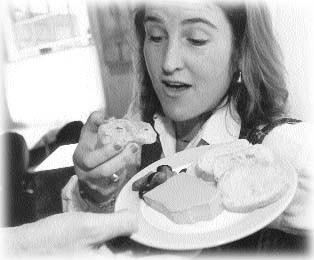
Duck Duck Goose: Samantha Williams, server at Babette’s Restaurant, pronounces foie gras “orgasmic.”

Foie gras enthusiasts say paté takes the cake

By David Templeton

GUILLERMO GONZALES first tasted foie gras at the start of a yearlong stay in France. Full of entrepreneurial notions of starting his own foie gras farm in America, Gonzales–a native of in El Salvador–had gone to France to study, working side by side with the duck farmers who produce the rare centuries-old European delicacy–a dish that gourmet chefs routinely call “The Food of the Gods.” Gonzales’ first taste, he is amused to report, was far from heavenly.

“I didn’t like it,” he confesses with a laugh. “You have to develop your palate. Like learning to appreciate a fine wine or any other delicacy, foie gras is an acquired taste.”

Fortunately for Gonzales, it is a taste he soon acquired, and in 1986 he and his wife relocated to Northern California, purchasing a small ranch outside the town of Sonoma, where they promptly founded Sonoma Foie Gras.

The Gonzales’ company is the one and only American competitor to the larger Hudson Valley Foie Gras company in upstate New York. In over a decade of playing David to Hudson Valley’s Goliath, Gonzales has watched demand for his product increase slowly but steadily. Once only a seasonal Christmas and New Year kind of dish, foie gras is now being offered year-round by a legion of fine local restaurants, eagerly devoured by gourmands who have definitely acquired their own tastes.

Affirming that most of his requests come during the holidays, Oliver’s Market meat manager Daren Huddlestun has watched demand for the grand comestible grow at his Cotati store, resulting in a year-round availability of foie gras paté in the deli and his current stock of fresh foie gras at the meat counter.

Pronounced fwah grah, and literally meaning “fat liver,” foie gras is the oversized liver of a duck; goose was the traditional foie gras bird, but since demand for duck meat is higher than for that of goose, duck is now commonly used. Expensive, running from $38 to $50 per pound, foie gras is the primary ingredient in pricey patés and some terrine dishes, and can also be sautéed, roasted, steamed, salt-cured, or grilled.

Usually eaten spread upon toast sweetened with unsalted butter in paté form, foie gras is extremely high in fat. In fact, foie gras is almost nothing but fat, inspiring some of its fans to maintain strict diets for weeks in advance of a special dinner. The average duck liver weighs about a pound and a half, is a pale luminescent color, and has a slightly sweet, peculiarly intense flavor that is difficult to characterize. Most foie gras fans find it easier to describe it in terms of its mouth-feel than its taste.

“Texture is a very important component of foie gras,” agrees Daniel Patterson, head chef at Babette’s Restaurant & Wine Bar in downtown Sonoma, as he displays an elegant platter of foie gras paté. “The flavor is really wrapped up in the texture. It’s got a tough cellular structure, so it’s very creamy.” Babette’s uses only Gonzales’ locally raised foie gras, also serving dishes using the magret (breast meat) of the Sonoma ducks, which are a pure Muscovy variety.

“The Sonoma County livers tend to be very custardy,” Patterson continues, and when pressed to name another food to compare to the flavor of foie gras, he is at a loss. “What do oysters taste like?” he shrugs. “Foie gras tastes like foie gras.”

ON THE OTHER SIDE of the spectrum from those debating how to describe the flavor of foie gras are those who see the whole industry as being in bad taste, period.

In recent months, the ethics of duck liver production have been challenged by various animal rights groups, who specifically cite gavage, the force-feeding process of the birds by which the livers gain their distinctive size. Seeking a ban on American-raised foie gras, People for the Ethical Treatment of Animals have staged a number of public protests against the industry, though they admit that consumption of any meat is anathema to them. A spate of online Web sites, such as one by the U.K.-based FarmWatch, use garish, appetite-deadening illustrations in their campaign against the foodstuff.

Gonzales is aware of the protests, and speaks carefully of the ethical issues in his profession. “It is a commercial farming operation,” he says, “and there is a possibility that an untrained person may do harm to a duck during feeding. But that would go against my best interests.

“This is a noble species, and the bounty they produce gives us much pleasure. It is in everyone’s interests to treat them well. Not only is it the proper way to treat this noble animal, it is the only way to produce a superior product.”

In addition to the numerous West Coast restaurants that Gonzales provides with livers and duck breast–the livers make up 60 percent of his business, with the rest derived from duck meat–he has also built up a thriving mail-order business selling smoked magret and fresh foie gras around the country, and has developed a recipe booklet to start beginners off on the right track (call 800/427-4559 for a catalog).

“The demand is building, yes,” Gonzales says, “but it is slow. Many of my customers are those who have traveled to Europe and were first introduced to foie gras there. They defeated the fear of having something so exotic.

“Like me,” he adds, “they have come to love it.”

From the February 6-12, 1997 issue of the Sonoma County Independent

This page was designed and created by the Boulevards team.
© 1997 Metrosa, Inc.
Mose Allison

0

Sly Sage


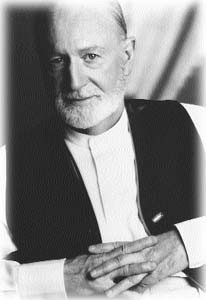
Allison Wonderland: Mose Allison, the unflappable King of Cool.

Photo by Carol Friedman


Mose Allison slips into the Mystic

By Greg Cahill

YOU KNOW I used to joke in interviews, whenever a reporter would ask me how long I’m going to keep playing music, that I’m going to get myself a Gray Panthers punk-rock band and retire in Arizona. So I wrote that into a song lyric once,” says 69-year-old jazz great Mose Allison, in a rich Southern drawl, during a phone call from his Long Island home. “Then I found out that there already is a Gray Panthers punk-rock band in Arizona. It’s called One Foot in the Grave.

“That’s the trouble when you write songs and hold them–the weird stuff comes true.”

And “the weird stuff” has come steadily over the years. Allison, an unflappable Mississippi native, is known for a laconic wit that some critics confuse with cynicism. “It’s erroneous,” he says of that perception. “They don’t get it. My songs usually have a joke in them. To me, it’s a form of humor. A lot of them are ironic–the ironic couplet, that’s my staple weapon.

“But cynical is the last thing that I am.”

You need only listen to his critically acclaimed 1994 album The Earth Wants You (Blue Note), his latest–featuring some of the hottest Young Turks on the jazz scene, including guitarist John Scofield and sax player Joe Lovano–to grasp his point. For example, “Who’s In” is a sly poke in the eye at enquiring minds, trash TV, and tabloids. “Let’s get excited about the party to which we’re uninvited,” Mose invokes.

That kind of lyrical twist has earned Allison a loyal cadre of fans, including some of the music industry’s biggest names. In 1970, the Who included his anthemic “Young Boy Blues” on their classic Live at Leeds (MCA)–one of just a few cover tunes the iconoclastic British rockers ever recorded. Indeed, the list of those who have tapped the Mose Allison songbook is impressive: Bonnie Raitt (“Everybody’s Cryin’ Mercy”); John Mayall (“Parchman Farm”); Van Morrison (“If You Only Knew”); the Clash (“Look Here”); and the Yardbirds (“I’m Not Talking”), among others. In 1994, a pair of retrospectives hit the racks: Allison Wonderland–The Mose Allison Anthology (Rhino) and High Jinks! The Mose Allison Trilogy (Columbia).

More recently, Tell Me Something: The Songs of Mose Allison (Verve)–a 1996 tribute album featuring Mose acolytes Van Morrison, Georgie Fame, and Ben Sidran–took a scintillating romp through the master’s bluesy jazz catalog.

“My songwriting just sort of develops little by little,” Allison muses when asked about his gift. “I might write a song when I can’t sleep one night. Or I might finish another. It’s just a matter of accumulation and pulling them together.”

AS THE SON of a stride jazz pianist, Allison took up piano lessons at age 6. In the backwater town of Tippo, Miss., he was immersed in jazz and country blues. While he’s lived on Long Island for nearly 40 years, he has retained a Southern state of mind–a condition that is evident in his breezy musical style.

“Oh, some of the things that come with [being raised in the South] are the ironic comment, the exaggeration, the understatement,” he says. “That’s just part of the way people think and speak down there, particularly in the rural areas.

“So I catch myself thinking in the idiom of my ancestors.”

In 1956, he moved to New York City and began playing piano with some of the “cool” jazzmen, including sax players Al Cohn, Zoot Sims, Stan Getz, and Gerry Mulligan. “We used to call them ‘Lesterians,’ ” he says of those reedmen. “That was the swing thing and that was my primary motivation. I never wanted to know if a guy was a good technician or could play a lot of notes–I wanted to know if he could swing.”

The following year, Allison began singing and started his own combo. He quickly became known for his understated, laconic style that remains his signature.

He has done it in a manner that has earned him the title King of Cool. “I tell everybody that if I was in this for the money, I’d be in trouble,” says Allison, who still tours extensively and remains a legend in jazz circles. “I still get gratification out of a good performance. That’s one of my rules: a good performance is its own reward.”

The Mose Allison Trio performs Saturday, Feb. 15, at the Mystic Theater and Dance Hall, 21 Petaluma Blvd. N., Petaluma. Tickets are $12. For details, call 765-6665.

From the February 6-12, 1997 issue of the Sonoma County Independent

This page was designed and created by the Boulevards team.
© 1997 Metrosa, Inc.
The Scoop

Tobacco Goad

By Bob Harris

AT THE PHILIP MORRIS factory tour in Richmond, Va., the PR begins before you even enter the door. From the outside, the place looks less like a manufacturing facility than a tobacco theme park. A stylized metal sculpture incorporates the logos of all PM’s major brands, including Marlboro, the best-selling coffin nail in the world. The smokestacks are decorated to look like cigarettes, turning belching pollution into a sight gag.

Even the footlights leading to the building are cylindrical with little filter tops.

Once inside, you fill out a guest register. After name and address on the form, there’s a space for “brand,” as if smoking was as automatic as a zip code. They don’t miss a trick.

The lobby is a giant exhibit on smoking’s place as an essential part of America. The company propaganda proudly trumps that almost a hundred million Americans light up every day. They don’t mention the 500,000 customers who die every year, including my dad. There are also displays about Philip Morris’ part in our culture, from TV sponsorship of I Love Lucy to the company’s recent acquisition of Kraft, Miller Beer, Oscar Mayer, and Tombstone Pizza (an apt name if there ever was one).

The company paints itself as politically progressive, pointing toward its Virginia Slims brand’s “positive” messages toward women. The doubling of female lung cancer since 1970 is again somehow neglected.

It’s all bright and polished as heck. The hookahs and snuff boxes in the display cases are as antiseptic and as well presented as the Smithsonian’s exhibits. The schoolkids going along on the tour are getting the idea that smoking is patriotic and clean.

Even the air smells nice.

The humming noise continues. What the hell . . . ? The tour begins with a short film in a viewing room that has large ashtrays screwed prominently on an arm of every seat.

The movie is an extended sales pitch, trumpeting PM’s concern “for consumers of today and a world of tomorrow.” It opens with the familiar old Marlboro Man ads, with the guy on the horse and the western music. The camera zooms in, the gnarly studboy opens his mouth, and out comes . . . Japanese. The schoolkids all laugh. The ads still run in Japan, where the cancer rate has skyrocketed in the last 10 years. Fully half of PM’s sales come from operations in 170 countries. The U.S. Commerce Department and trade representatives have spent the last decade subsidizing tobacco ads overseas and blackmailing smaller countries into lowering trade barriers against cigarettes.

The film boasts of the company’s concern for its people, its work at “creating and improving communities,” and its history of “meeting consumer preferences since 1854.” There’s nothing about the morality of pushing an addictive substance into undeveloped countries for profit. Am I expecting too much?

On we go to the tour bus. Both Vicki, our guide, and the bus are decorated in the red and white Marlboro color scheme. There’s a lot to see–the work area is three football fields of cadaverous contraptions sucking tobacco through underground pipes at 75 mph, requiring the services of 100,000 employees working three shifts to whap out a billion cigarettes a day. In small quantities, tobacco smells OK. But a billion butts’ worth? The place kinda reeks.

No one smokes on the factory floor. Pressed for an explanation–after all, smoking is a healthy patriotic American tradition, right?–Vicki puts it down to “insurance reasons,” newspeak for admitting that smoking is a messy, dirty habit that would eventually make the PM wage slaves cough up blood.

The tour ends at the company store, where visitors can pay for all sorts of PM advertising geegaws and snag as many cigs as their wallets can support. There’s a suggestion box–shaped like a pack of Marlboros, natch–for anyone who has a bright idea on how to increase the efficiency of this gruesome machine.

And of course, the adults get complimentary packs of any brand they want. Drug dealers always give you the first one for free.

The kids are clearly impressed with the whole thing.

Can’t allow that on my watch.

I open a pack of “lights,” light one up, and suck hard. I don’t smoke. The sounds of my lungs’ mortifying fight for air give the kids an idea what being clean and patriotic would be like.

Vicki doesn’t know whether to help me or scold me. Instead, she just smiles wanly and keeps handing out the cigarettes.

The Scoop is archived at www.goodthink.com.

From the February 6-12, 1997 issue of the Sonoma County Independent

This page was designed and created by the Boulevards team.
© 1997 Metrosa, Inc.

Foreplay

0

Foreplay

Who says vaudeville is dead? You don’t have to be Demi Moore–and you certainly don’t need a pair of $12 million bosoms–to appreciate the sense of playfulness elicited by that age-old pastime, stripping. Rhino Records, the music industry’s leading pop culture archivist, has plumbed the vaults to compile the 22-track CD Take It Off! Striptease Classics (due in stores April 1). The lively selections span the ’50s and ’60s–and every baby boomer who ever sneaked a listen to his or her parents’ risqué Rusty Warren comedy records knows just how bawdy the supposedly sanitized Eisenhower era could be. The disc itself is cloaked in a flashy lenticular cover (reminiscent of ’50s artwork) that depicts a fully clothed busty babe alternating into a suggestive state of undress, depending on which way the light hits. It opens with David Rose’s bump ‘n’ grind classic “The Stripper” and moves swiftly through such exotica-style sounds as “Shivas Regal (Theme for Gypsy),” “Perfume and Pink Chiffon,” and “Swingin’ Shepherd Blues,” to name a few. Perfect fare for that Cocktail Nation rendezvous.

Come Together

Let San Francisco have its Good Vibrations, now the North Bay has its own clean, well-lighted place for sex toys, sex talk, and the sweet pleasures of fingering silk. Called Rejuvenessence Sensuality Shop, this Sebastopol store serves up a host of erotic treats (who needs nipple coverings in bras, anyway?), as well as an intriguing slate of upcoming events. Each month features a Sex Salon facilitated by registered nurse Oona Mourier in an open-forum discussion of the mysteries of our most primal desires, while upcoming months focus on the joys of autoeroticism, the feng shui way, how to articulate desire (other than just grunting “You. Me. Now”), just exactly what it is that men and women want from each other in the bedroom, and finally–tantra, tantra, and more tantra. 2489-A Gravenstein Hwy. S., Sebastopol. 829-3999.

From the February 6-12, 1997 issue of the Sonoma County Independent

This page was designed and created by the Boulevards team.
© 1997 Metrosa, Inc.

Tantric Non-Sex

Pleasure Rut


Just Say No: Mystical sexologixt Meredyth Yates deflates the big O.

Photo by Janet Orsi


Tantra, love, and the big death

By Gretchen Giles

MEREDYTH YATES was doing what every other liberated, exuberant, and attractive young woman in Boston was doing in 1966. She was making love. Astride her partner, she enthusiastically pursued their congress, conscious of how she looked while she made love with him, conscious of her appeal, focused on the expectations of pleasure.

Finally her partner spoke.

“Would you please relax,” he asked, wearily.

“I lay down, and I was quite embarrassed, because I thought I was being so sexy,” Yates recalls, seated in her Santa Rosa home. “And I think that it was this embarrassment that diminished my ego.”

Supine next to her partner, too shamed to speak, Yates began simply to breathe. Gradually, the rhythm of her breath joined the rhythm of his, and the two entered a state of suspended consciousness in a renewed lovemaking that Yates can only describe as being mystical. In fact, she passed out.

“I was very naive,” Yates recounts, “and the next morning I asked him if he had experienced anything unusual the night before. He said, ‘Do you think that you could do something like that by yourself? It’s called tantra.'”

Yates hied herself right off to the library to study tantra. She found one book. But she knew that she was on to something. “It was certainly better than any ‘Big O’ I’d ever had in my life,” she smiles.

“I started to have [this experience] on more than one occasion, and I started paying attention to the circumstances. I started developing what I found to be the magic ingredients,” says Yates, a specialist in the Chinese feng shui method of home harmony who lectures on sexuality. “I call them the secret keys to the mystical, sexual experience.”

The biggest secret of all is that Yates advocates intense lovemaking in which devoted partners mesh in a spiritually and physically intimate manner and no one ever has an orgasm unless they’re purposefully making babies. Think that sounds like some kind of adolescent’s nightmare cooked up by priests and mothers? Think again.

“One of my keys is to see the divine in your partner,” Yates says. “Your partner is the beloved. There is intercourse, but no thrusting, no effort at creating genital fire. What people notice is that when they stop focusing on their genitals, their whole bodies start to get involved, and people are connecting in ways that are absolutely divine. It gets so that, through a glance, you can have this orgasmic multicellular experience.

“It’s my conviction that it’s our birthright,” she continues firmly. “I think we all deserve to be connected to the ineffable.”

Culled from ideas of egolessness and heightened awareness found in the Hindu, Taoist, and Buddhist traditions, Yates’ form of tantra relies as well on a Victorian notion known as Karezza, the Italian word for embrace.

Espoused by one Dr. Alice B. Stoockham in her Ethics of Marriage manual, published in 1896, Karezza advocates that partners take vows of essential celibacy within marriage, ejaculating only for procreative purposes, and harnessing their energies away from their genitals, allowing the power of desire to flood their entire bodies. Reports are that when those couples who practiced Karezza came together in a darkened room, electrical sparks could be seen literally flying from their bodies.

“The real secret is the dissolution of the ego,” Yates says, “because the ego wants fulfillment. Orgasms are fine, I’m not against orgasms–but the body is demanding. It wants another one, because it isn’t the ultimate fulfillment. We think that if we have a bigger orgasm, we’ll get closer. I don’t think that’s the way.

“Spend some serious time together without getting involved in that sexual fire, but rather getting involved in intimate sharing,” says Yates, who advises that couples spend at least three days cut off from their ordinary world together. Three glorious days in bed, doing nothing but offering massages, looking into each other’s eyes, bathing each other, breathing in rhythm, and feeding each other from food kept near the bed. Make love as it moves you, but, um, don’t move too much.

“The orgasm is sometimes called the ‘little death,'” Yates smiles. “This is the big death. The little death is over in a second. When you lose your ego, and really dissolve so that your mind is not here, when you merge into your partner and then into something that isn’t even your partner, you don’t know if you’re coming back. It’s like the ultimate drug experience.

“If you can have three days of really focusing on each other and maintain these spaces for each other, you’ve learned to surf, and then you can surf for life.”

But you have to be willing to die big rather than little.

“In my opinion, that’s a prerequisite,” Yates affirms. “And not just for three days. If you’re not willing to give up your orgasm, you’re not going to be willing to give up your ego. It’s that simple. You’re not going to be willing to die. And you have to be willing to surrender so that at some level you do die: all the ideas of what you thought you wanted, or what you thought [sex] was, have died.”

From the February 6-12, 1997 issue of the Sonoma County Independent

This page was designed and created by the Boulevards team.
© 1997 Metrosa, Inc.
Talking Pictures

0

Mother Load


Shakespeare’s Sister (and Nephew): Albert Brooks and Debbie Reynolds.

Photo by Elliot Marks


Author Molly Giles sees the write stuff in new Albert Brooks film

Writer David Templeton takes interesting people to interesting movies in his ongoing quest for the ultimate post-film conversation. This time out, he views the brilliant new comedy Mother, in the company of award-winning author-teacher-mom Molly Giles.

THERE IS A PIVOTAL and much-discussed scene in Albert Brooks’ new psycho-comedic satire Mother, in which a grievously blocked writer (Brooks) discovers that his sharp-witted mom (Debbie Reynolds)–whose chilly disapproval he’s been blaming for all of his problems–was once a promising writer herself.

“Now I know why you hate me,” Brooks crows merrily on screen. “You hate me because you had to give up writing to raise me!” As Reynolds begins her reply (“Well, I wouldn’t have put it that way, but on the whole I’d say yes, that’s true”), I glance over at my guest, writer Molly Giles.

With a deep and audible gasp my companion suddenly stops breathing. She then holds her breath, eyes locked on the screen, as Brooks answers, “From now on I won’t see you as my mother. From now on I’ll see you as what you are–a failure!” Still not breathing, Giles waits as Reynolds reaches up, touches her son’s face, and says, “If that will make you happy, dear.”

Only now does Giles allow herself to breathe again, jubilantly exhaling in a quiet little rush of satisfied approval.

“There is an awful definition of childhood,” Giles tells me a few moments later, taking a seat at a nearby coffeehouse. “Childhood is being locked in a room for years with a woman who hates you.” Noting my mirthful response, she leans closer and whispers, “Not everyone laughs at that, David.”

Giles, an associate professor at San Francisco State University (and, it so happens, the mother of my friend and colleague, Independent associate editor Gretchen Giles), is an acclaimed author and teacher of writers whose luminous first book, Rough Translations (University of Georgia Press, 1984), received much praise and numerous awards, including a nomination for the Pulitzer Prize. Her new collection, Creek Walk and Other Stories (Papier-Mache, 1996), seems destined to a similar fate; written beautifully, with an abundance of irony and a keenness of insight, these 14 stories tell of women in tough situations, zeroing in on the tiny, defining moments that determine their futures. Like Giles’ response to our movie today, I found myself holding my breath as each story came to a close.

“I think that was a very motherly thing to do,” Giles says of Reynolds’ retort to being labeled a failure. “She gives her son back his own sense of autonomy, and he’s able to go out into the world–as big a fool as he ever was. In the end though, this film is far more about two writers than it is about a mother and son.” She rises to get a spoon for her decaf mocha. On returning, she is ready to speak of her own mother.

“My mother was exactly like the Debbie Reynolds character,” Giles says. “She was a writer, and–like the Debbie Reynolds character–the responsibility for women of that generation was to be mothers, and she also hated it.

“She had one book published when she was 30–and she didn’t publish any more. It was titled Cold Heaven, and was a story of a woman who finds her real self while her husband is a way fighting during World War II, and who is expected to be a wife and mother again when he comes back. It was quite an ambitious novel for its time. It had some really interesting questions, questions that later overwhelmed my mother, because she wasn’t able to write and raise a family.

“But she really did want to write,” Giles goes on. “One year she sat down and she wrote 12 short stories, one a month. She’d given herself that assignment, and she would lock us out of the house with sandwiches while she worked. All 12 stories came back rejected on the same day. I remember coming home from school one day, and she was sitting in our driveway with these manila envelopes scattered all around her.”

I ask Giles if she and her mother had ever experienced any of the writer-to-writer jealousy so deftly enacted in Brooks’ film?

“I think my mother was proud of me, as I am of my children,” she shrugs, noting that her own first book was released just a few days before her mother died. “The first story I ever had published had my mother in it,” she smiles. “It ran in Playgirl. My story was sandwiched in between ads for stay-hard cream, so I had to cut it out column by column. Then I held my breath after showing it to my mother–because I’d killed her off in it. She never recognized herself, though.”

As we finish our coffee, Giles suddenly laughs and says, “I know that my daughter is going to write a killer novel about me someday. I only hope it’s after I’m gone.

“But,” she smiles, “I do hope to come back and haunt her.”

Molly Giles will read from and sign Creek Walk on Tuesday, Feb. 11, at 7 p.m. at Copperfield’s Books in Montgomery Village. 2316 Montgomery Drive, Santa Rosa. Admission is free. 578-8938.

From the February 6-12, 1997 issue of the Sonoma County Independent

This page was designed and created by the Boulevards team.
© 1997 Metrosa, Inc.

Sex Online

Wet and Wired


Christopher Gardner

On the Receiving End: Cybersluts come in all ages, shapes, sizes, and genders. The bi-curious coed could just as easily be a 78-year-old grandfather.

Sex within the online void
is completely surreal

By Richard Camp

WELCOME . . . ” Canned voice. Like the computer in Star Trek. “You’ve got mail.” Your electronic mailbox is overflowing with mostly dirty pictures. You’ll download them later. Click quickly past the headlines, newsstand, software forum, bulletin boards. Float to the chat areas. Cruising. People Connection. Lobby. Flirt Nook. Small talk, small talk, small talk. Cruising. Back in your secret life. Here you’re more comfortable–it fits you better than your real life. You feel connected instantly, intimate in the dark. Lobbing gibberish in the chat rooms, but whispering to others, reaching out, eavesdropping.

Check the names: HotJill4U, SxyGal123, BiDeb4fem. The profiles. Hobbies include “cheerleading, going to the mall, talking on the phone, sex with girls, sex with guys.” Looking for clues. Does she or doesn’t she? Doesn’t she “put out”?

Who’s really a girl, who’s really a guy? Sometimes you find yourself wondering if it really matters. It’s all part of the turn-on.

In your wired world, your so-called life, you’re a cyberswinger, a cyberstud, and all the girls are 16, 18, 21, and bi-curious (which sounds cuter somehow than bisexual). They are coeds who work as models on the side or as strippers in the dark blue night, or they are lonely housewives, teen virgins, or sly Lolitas, or leatherdom’s leather-bound, pierced and wrathful. All the men are six feet tall, square-jawed, and hung like John Holmes.

And the funny thing is that it all may be true. Or not. Doesn’t matter. In the void, you can be whoever you want to be. It’s as real as your mind can make it. Suspend your disbelief.

Have Any Pets?

I know I am nearing the end of my cyberlife, my dubious semi-journalistic adventures online, when somebody, some stranger in the void, sends me, unexpected and unencouraged, a Tijuana sideshow online picture of a woman fellating the member of a horse. Not a horse, really. More like a pony. Neither the woman nor the pony appears to be having a particularly enjoyable time. I don’t know whether to be disgusted or to laugh out loud.

The sender includes only a brief note, which reads, “Do you have any pets?” Welcome to the virtual community.

I’m new to America Online. I’ve stumbled into the cyberhood singles bar. And tonight is disco night. . . .

What are you wearing? What do you look like? What are you wearing? 38-24-34. What do you look like? What are you wearing? Pulling you close. What are you wearing? Leather and lace. Silk. Nothing at all. Kissing you. Touching you. Silk, leather, and lace. Feeling you. Touching you. Feel me. Touch me. What do you look like? Wearing? Pulling you closer, closer. Want you. Need you. Need you. Need you . . .

Yes, online we are a nation sitting up late in the dark alone in our rooms, shades drawn, lights dimmed, pants around our ankles, naked in front of the computer, our pale flesh cast blue and dead in the flickering glow of the computer screen. Stripped of flesh, of touch, of taste, a sense of heat and cold, hot skin, and goose-bump flesh, seduction is a game of mental Twister, a crossword puzzle. Grease up your vocabulary and get ready. Find the right combination of words, get them just right and maybe you’ll turn the conversation dirty.

The pull is seductive. You are whoever you want to be. Your best version of yourself. Sex–or what passes for sex–is free and easy and safe, without consequences. Everybody is beautiful. Healthy. No flabby stomachs, no VD, no crooked dicks. No date rape, no pregnancy, no morning-after question marks. No specter of AIDS. We can play out our brightest desires and darkest fantasies. Best of all, we never have to worry about tomorrow.

Wade in, feel the undertow.

One night, wandering through the chat rooms, spying on everyone, I discover a woman, a real entrepreneur, who will, for a mere $10, send me–safe and secure and fresh in a Ziploc bag– a pair of her panties in which she has recently masturbated.

Brian, a young college kid from the Midwest, finally admits to me during an impromptu discussion of embarrassing cybermoments that he engaged in frantic, fast, and sweaty one-handed typing, sans pants, with a woman he understood was a young, hot bi-curious coed. As they neared the end–the part with all the ‘ohhhhhhhhhhs’ and ‘ahhhhhhs,’ CAPITAL LETTERS and !!!!!!!!!!!–she suddenly dropped an information bomb on him: She was, in fact, not a young and nubile nymphet with a gymnast’s flexibility, as she had previously said. Rather, she was a 79-year-old grandmother who’d snuck into the rec room of the nursing home for a little AOL cyberfling.

“You loved it, admit,” she typed. “I got you off, young man.”

Then the screen erupted in a flurry of giggles.

As Brian recalls, “She just kept typing ‘heeeheee heeeheee heeeheee.'”

A young girl, brazen on screen, is nervous when I call her for our interview. Her sweet, lilting Southern accent makes her sound younger than she actually is, at least that’s what I tell myself. The echo and clink of dishes being put away follow our conversation around the room. I ask her questions, but mostly there is only the sound of her putting the dishes away.

“Look,” she says finally. “I know that I said I’d answer some of your questions . . . “

She pauses. “But you sound old.”

“I am old,” I say. And I feel it as I hear her young, wavering voice.

It dawns on me that she doesn’t believe I am a legitimate writer.

“Look, I’m sorry,” she says, presumably putting the last dish away, “but my boyfriend just showed up, so I gotta go.”

I arrange to talk over the phone to another woman I’d met online. I ask if she is alone. “No,” she says. “My daddy’s down in front of the TV. The game is on.” I ask her to explain her $1,000 AOL bill. She won’t.

One night, a woman whispers to me that she saw from my profile that I am a writer. She says she would like to call me up and read me some of her erotic stories, which she writes under the name “O.” I think she is the only one in the void to believe that I am truly a writer.

(Cyber) Affair to Remember

I meet “John” in the void, lurking in a chat room called “M4hotf4phx.” He’s a 35-year-old Bay Area marketing professional who married his college sweetheart 10 years ago.

“At first you feel awkward,” John says, “embarrassed, like, ‘This can’t be real. Can it be this easy?’ Then it’s, like, cool–there are so many uninhibited, sexually adventurous people. You quickly begin to feel like Don Juan or somebody. My wife had no idea. It was like I had this secret life. It was a real blast of confidence. I felt great, sexy even. Sex with my wife improved.

“Online, there is this feeling of distance, of safety. At the same time, there is an instant intimacy. As the words appear on your screen, they are like whispers. You are like co-conspirators. I always talk a little first. Tell them I was unhappily married. It was easy,” John explains. “I was just playing around. Meeting people and doing it online. Late-night seductions and lunchtime quickie nooners.

“Then I met Jane, a 25-year-old medical student in New York who lives with her boyfriend,” John continues. “She was sweet. I met her one night just cruising around as usual. We talked about all sorts of things. Mindless chatter, our lives, our spouses. We seduced each other and later began having phone sex. We’d meet and chat online, arrange a time to call. She’d send me these hot little notes. It was great. I felt wanted. The situation felt dangerous.

“Don’t get me wrong,” John quickly adds. “I met some really sweet girls online. Began to feel very emotional about a few of them, especially Jane. But sooner or later, you lose perspective. I mean, when I wouldn’t hear from Jane for a day or two, I’d actually get worried. When she told me she was doing this with other guys online, I got jealous.”

John laughs here; then the tape is quiet for several heavy moments.

“One night she sends me this message . . . her brother had been in a car accident and was in the hospital. She said she wanted me to call her. That she couldn’t stop crying and didn’t know what to do. She said she needed someone to hold her. And my first thought was like, ‘What do I do? What can I do?’ I felt helpless, totally unable to help this poor woman. But, though I hate to admit it, my second reaction was stronger–it surprised me how strong it was. It was like, ‘Why the fuck are you calling me?’ I mean, come on, I’m really a goddamn stranger, aren’t I?

“That’s when I decided to pull the plug on the thing,” John says. “It was getting boring anyway. You start to get paranoid. At first it’s fun trying to figure out who’s telling the truth and who’s pulling your chain. But, after a while, it becomes a drag. It starts to feel stupid. It’s like suddenly you realize that this fantasy world doesn’t really exist, that you are alone in front of the computer or on the phone jacking off.

“I was having other doubts, too. Was I really having an affair? My wife never had any idea. I started thinking, ‘Why am I doing this? This isn’t my life.’

“When I wrote Jane to tell her that I was breaking it off, canceling my America Online account, she started sending me these psycho messages. ‘Don’t ignore me! I won’t let you ignore me. I love you!’ It got scary, stupid, ridiculous.”

He pulled the plug on the relationship, but not on AOL.

Then there’s Jane’s side of the story. “I was a newbie [newcomer online],” Jane recalls. “I’d met a couple of guys and had cybersex before I met John. One of them even talked me into phone sex. It wasn’t great, but I liked the sense of anticipation. The attention. John was sweet, articulate, older. We talked about things other than just sex. He was having problems with his marriage. We talked a lot. The phone sex was great–great voice, John, if you’re out there. I guess I kinda fell in love with him.

“I met other guys online after I met him. But he was, like, my first. You know, special,” Jane says. “I’m afraid now I’m becoming a cyberslut. I sleep with guys online who I’d never even approach in real life. It’s like I’m addicted. Besides, it’s fun and safe. How many other things can you say that about these days? I even arranged to meet a couple of guys in real life. One of them was this total nerdy freak–nothing like he was online. But the other one was really cool. I was really nervous. Like a blind date, only with all these expectations. He turned out to be really cute and really sweet. I felt like I already knew him. We had this great, really hot sex. But we haven’t been able to get together since.

“After that, I told John that I wanted to meet him for real,” Jane says. “I think this must have really freaked him out. He agreed, but said he couldn’t do it until the springtime. At the time, I didn’t think that anything was wrong. I pictured, like, this wonderful, sexy, romantic weekend. But then he got weird, withdrawn. I guess he couldn’t handle it. I guess you could say he dumped me.”

Operation Sex Change

Sex is undergoing a change in America. We’ve passed through the free-love ’60s, through the sex-fest ’70s, and the sex-is-death ’80s. Now we’re hip to be turned on again. But this time, we want to make it safe. In the void, we’re protected. Anonymity and distance are the safest sex.

We can’t get hurt in cyberspace, because cyberspace is really nowhere.

Many I talked to online think I’m a killjoy. They think this is all just a kick, fun. Killing time. Beats sitting around the TV. They tell me I’ve overreacted, misunderstood. Say I’ve overlooked the turn-on, the spirit of play. I have to ask myself, Can so many be so wrong?

We want to feel naughty, we want to feel hip. Have a secret underground life. It’s the flip side to our Puritan impulse. And it seems safe. The world today is a dangerous place, especially for giddy young lovers. Sex can mean death. Sex kills. Close the distance between us and you take a big risk. People kill each other all the time. We know it. We see it every night on TV. Our world is a dangerous place and distance protects us. But remember, it separates us, too.

“We are a generation whose rallying cry was ‘Make love, not war! Life not death!'” writes David Black, author of “The Plague Years,” one of the first in-depth magazine pieces on AIDS. “Because of AIDS–or rather because of our attitude toward AIDS–we have deprived ourselves of that alternative. Now there is only death. . . . Before AIDS, the sexual instinct was a force for life. It was a specific against all the horrors–political and personal–we endured. It allowed a last refuge of hope. After AIDS, we have allowed ourselves to surrender that last refuge. We no longer have the power to deny death by an act of love. Even making love is tinged with doom.”

Is sex in the void really an act of defiance, our last remaining refuge against death? Maybe. The problem is that it isn’t real. In the face of AIDS and death, technology, and alienation, we’ve traded making love–if not making love, then actual human contact, skin on skin, body heat–and cashed it in for relentless masturbation. Instead of having sex, making love, we talk about it to each other, chatting across this distance we have created between us to protect ourselves.

Talk, Talk, Talk

We are already a nation that talks too much. Talk radio, daytime TV, the evening news. Our culture is voyeuristic, our experiences vicariously lived, our lives filled and filled and filled with onanistic chatter. We are audience participants. We’ve got Ricki Lake and Jenny Jones and Hard Copy and Cops and Dan Rather, Tom Brokaw, and all those talking heads on Entertainment Tonight and A Current Affair.

Maybe we should just shut up. Sign off. Go outside and feel the wind on our faces. Smell the autumn leaves drifting and tumbling along the gutter. Remember how it feels when someone smiles at us with their eyes. Feel the thrill of sitting next to someone, barely touching. Go wave to our neighbors across the back fence. Go sit on the toilet with the sports page. Because sex flying across the screen becomes nothing but a desperate try for connection, arousal across the cold wasteland we have created for ourselves.

Sex in the void becomes a sad, nostalgic tale, a bittersweet script for what might have been. Want to meet a potential lover?

Go to the supermarket.

From the February 6-12, 1997 issue of the Sonoma County Independent

This page was designed and created by the Boulevards team.
© 1997 Metrosa, Inc.

Sex Anthology

Take It Lying Down

Loving It: From the modern to the arcane to the just plain weird, the collected writings of ‘The Sex Box’ satisfy.

Collected erotica of ‘The Sex Box’ a great bedside read

By Gretchen Giles

GUT LIVE hummingbirds. Dry the hearts and powder them. Sprinkle the powder on the person whom you desire. So advises “Gumbo Ya-Ya,” an anonymously written almost-poem on the black arts of winning those whom you love to your side.

Consume the delicate testicles of spring lambs; daub a Eucharist wafer with semen; crunch down the water of a celery stalk: any of these edibles will help induce lascivious feelings in one–so says essayist W. L. Howard, writing on aphrodisiacs in 1896.

Because the bed is where the heart is, at least according to the authors collected in The Sex Box (Chronicle Books, 1996).

Coyly declaring editorship by “Anonymous,” this anthology–edited in fact by one John Miller–is a provocative compendium of the arcane and the erotic. Split into three volumes–“Man,” “Woman,” and “Sex”–which slide comfortably into one firm box, these readings range widely from the teachings of the Kama Sutra to Anaïs Nin’s Delta of Venus, to a lengthy essay by Havelock Ellis on the joys of foot fetishism (in which he not once mentions smell).

Sensuously titled in small, flamed-colored letters, the books in this series can’t be told by their covers. Spending one I-love-my-job afternoon curled up in my office with jazz vocalist Betty Carter coolly swinging on the CD player, I began naturally enough with “Woman,” which itself practically begins, naturally enough, with a recipe.

Curiously (and freed erotic impulses are nothing if not curious) citing sauerkraut as a childhood love begotten from a sick day spent doing nothing but watching cows cud grass, writer Sabrina Sedgewick craves the stewed stuff after lovemaking. She recommends simmering it with plenty of phallic images (read: sausages) and with shreds of the very fruit of temptation itself, the apple, putting the casserole on the heat before making languorous two-hour love, then decamping nude to the table to savor the meal.

An excerpt from Pauline Réage’s famous 1954 The Story of O concerns itself as much with the vagaries of female dress as it does with submission and seduction, while Nin’s Delta of Venus selection centers on the erotic components of a heavy silver belt and long blonde hair.

Food, clothes, hair, and sex: all this girl stuff is presented in such an adult manner that you almost forgive Miller’s collective metaphor. That’s particularly true when reading Christina Rossetti’s long 1859 “Goblin Market” poem, which fairly bursts its juicy seams with images of ripened breast-heavy fruit waiting to be taken into the mouth like a strawberry in Tess.

The selections in “Man” begin jovially, with ancient Roman author Ovid (he of the Metamorphoses) describing a midday nap delightfully eclipsed by the appearance of a disrobing woman who joins him on his couch. He ends rapturously, “Jove send me more afternoons as this.”

Sixteenth-century Arabic author Muhammed Al-Nefzawi’s writings on gymnastic sexual positions include convoluted descriptions of such lovemaking techniques as “the fitter-in,” “sheep fashion,” the beauteous “rainbow arch,” and “frog fashion”–the last as complicated as an engineer’s wet dream.

And guys, listen up, because Vatsyayana’s famed Kama Sutra has suggestions for enlarging your “lingam”: hit it with stiff brushes and allow stinging insects to take their pleasure there. It’s sure to swell.

Pleasures of a mutual order play out in “Sex,” boasting what must surely have been the first printing of the phrase “flying fuck”–Thomas Rowlandson’s 19th-century poem “Pretty Little Games,” which describes a lass riding her “steed” to ecstasy. Running the gamut from a sweetly told night of fellatio in 19th-century China, to Ellis’ toe tales, to the matter-of-facts of anthropologist Margaret Mead, the slim “Sex” volume gives us more from the sage Vatsyayana, who advises differing methods of slapping one’s partner to euphoria, but who saps any appeal from the idea of orgy, terming it “congress of a herd of cows.”

Most compelling of all is Molly Bloom’s sweet surrender to joy taken from James Joyce’s Ulysses, found in the “Man” volume. Joyce’s familiar breathless run, occupied by such homebody concerns as mustache cups and the always-present lack of money and the need for clean linens, builds as surely as an orgasm to its final, glorious assertion of the act of love. Yes.

From the February 6-12, 1997 issue of the Sonoma County Independent

This page was designed and created by the Boulevards team. © 1997 Metrosa, Inc.

The Scoop

Bootie Rule By Bob HarrisPRESIDENT CLINTON'S Feb. 4 State of the Union address to Congress focused on education, encouraging every family to follow Hillary's example and read to their kids, although he didn't specify which futures contracts Chelsea liked best. The president also advocated zero tolerance for schoolyard guns and drugs--apparently those should stay in the CIA, where...

Talking Pictures

Words Words WordsRed Diaper Bard: The infinite complexity of Shakespeare's "Hamlet," as revealed by Kenneth Branagh, pleases language-loving Josh Kornbluth.Renowned monologuist Josh Kornbluth revels in Branagh's wordy new take on Hamlet By David TempletonWriter David Templeton takes interesting people to interesting movies in his ongoing quest for the ultimate post-film conversation. This time out, he meets renowned San Francisco...

Foie Gras

Liver Let Die Janet OrsiDuck Duck Goose: Samantha Williams, server at Babette's Restaurant, pronounces foie gras "orgasmic."Foie gras enthusiasts say paté takes the cakeBy David TempletonGUILLERMO GONZALES first tasted foie gras at the start of a yearlong stay in France. Full of entrepreneurial notions of starting his own foie gras farm in America, Gonzales--a native of in El...

Mose Allison

Sly SageAllison Wonderland: Mose Allison, the unflappable King of Cool.Photo by Carol FriedmanMose Allison slips into the MysticBy Greg CahillYOU KNOW I used to joke in interviews, whenever a reporter would ask me how long I'm going to keep playing music, that I'm going to get myself a Gray Panthers punk-rock band and retire in Arizona. So I...

The Scoop

Tobacco GoadBy Bob HarrisAT THE PHILIP MORRIS factory tour in Richmond, Va., the PR begins before you even enter the door. From the outside, the place looks less like a manufacturing facility than a tobacco theme park. A stylized metal sculpture incorporates the logos of all PM's major brands, including Marlboro, the best-selling coffin nail in the world. The...

Foreplay

ForeplayWho says vaudeville is dead? You don't have to be Demi Moore--and you certainly don't need a pair of $12 million bosoms--to appreciate the sense of playfulness elicited by that age-old pastime, stripping. Rhino Records, the music industry's leading pop culture archivist, has plumbed the vaults to compile the 22-track CD Take It Off! Striptease Classics (due in stores...

Tantric Non-Sex

Pleasure Rut Just Say No: Mystical sexologixt Meredyth Yates deflates the big O. Photo by Janet Orsi Tantra, love, and the big death By Gretchen Giles MEREDYTH YATES was doing what every other liberated, exuberant, and attractive young woman in Boston was doing in 1966....

Talking Pictures

Mother Load Shakespeare's Sister (and Nephew): Albert Brooks and Debbie Reynolds. Photo by Elliot Marks Author Molly Giles sees the write stuff in new Albert Brooks film Writer David Templeton takes interesting people to interesting movies in his ongoing quest for the ultimate post-film conversation. This time out, he...

Sex Online

Wet and WiredChristopher GardnerOn the Receiving End: Cybersluts come in all ages, shapes, sizes, and genders. The bi-curious coed could just as easily be a 78-year-old grandfather.Sex within the online voidis completely surreal By Richard CampWELCOME . . . " Canned voice. Like the computer in Star Trek. "You've got mail." Your electronic mailbox is overflowing with mostly dirty...

Sex Anthology

Take It Lying Down Loving It: From the modern to the arcane to the just plain weird, the collected writings of 'The Sex Box' satisfy. Collected erotica of 'The Sex Box' a great bedside read By Gretchen Giles GUT LIVE hummingbirds. Dry the hearts and powder them. Sprinkle the powder on the...
11,084FansLike
4,606FollowersFollow
6,928FollowersFollow
