Patrick Ball

0

Playing Ball


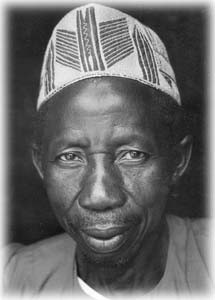
Irish Eyes Are Smiling: Patrick Ball emcees this year’s Festival of Harps.

Celtic harp master celebrates source of his inspiration

By David Templeton

I’D BEEN TO IRELAND twice already,” recalls Patrick Ball, the local musician and storyteller who is widely regarded as the reigning musical master of the 1,000-year-old steel-stringed Celtic harp, an instrument that was banned from Ireland by the British over 200 years ago. “I’d heard the gut-stringed harp, but had never tried to learn the instrument. Then–it was 1980 or so–I went to the Renaissance Pleasure Faire in Novato with the girlfriend of my best friend. She was in real estate and had quite a bit of money,” he continues, warming to the tale.

“So there we were, walking along. All of a sudden I heard this sound. I thought it was the most captivating sound I’d ever heard in my life.”

Following the music, he found a seller of small, wire-stringed lap harps. “I had no money, so I said to my friend, as a joke, ‘Gad! You should buy one of these things for me.’ She said, ‘All right,” and plunked down 500 bucks and bought me my first harp.

“I paid her back eventually, of course, but in a way, I will never be able to repay her.”

Ball had his first lessons from Jay Witcher, the maker of the harp, who showed him how to pick using his fingernails instead of the fingerpads used on softer stringed harps. Within six months, Ball had outgrown the lap harp, and he asked Witcher to make him a full-sized instrument. He uses it to this day.

“I had studied so much Irish folklore and history,” says Ball, whose solo shows invariably feature much Celtic storytelling, “but when you play this ancient instrument it immediately illuminates the whole period. All the information and books are secondhand, but as soon as you hear the music, it’s exactly what you would have heard back in those times. It’s exactly what those individuals we read about were listening to. It bonds us to them.”

He laughs again, adding, “It really is living history.”

THAT the difficult-to-play ancient harp is making something of a comeback among world music enthusiasts is a fact that this Sebastopol resident acknowledges with obvious pleasure. He responds with equal enjoyment to the assertion that his own ethereal recordings on this instrument are the chief reason for its revival, though he adds a dose of heartfelt humility.

“It’s probably safe to say that my work has had a lot to do with it,” he murmurs, adding, “But I was very fortunate. My first album came out in the early ’80s. It was one of the very first recordings of the wire-stringed harp, and it sold a lot of records. So I did get in on the ground floor.” He has since recorded numerous CDs, including the perennial The Christmas Rose (Fortuna) and the score for the popular Rabbit Ears children’s recording of The Ugly Duckling, with narration by Cher.

Ball will take the stage locally, playing master of ceremonies at the Festival of Harps, an annual event held Nov. 30 at the Spreckels Performing Arts Center, with an eclectic mix of harpists on the roster.

In addition to his emcee duties, Ball will be performing excerpts from a full-length theater piece he’s written with Bay Area playwright Peter Grazer. Titled Turlough O’Carolan’s Farewell to Music, the play (which Ball premiered in its entirety during this fall’s Sebastopol Celtic Festival) illuminates the life of Ireland’s most famous harpist. O’Carolan, blind from smallpox at age 18, was a musician and composer who rose above the circumstances of his life in the late 18th century to become a beloved folk figure of his country.

“Turlough! He’s the man,” Ball enthuses. “His stuff is the reason I started playing the harp in the first place. That and the sheer beauty of the sound of the wire-string harp. What intrigued me about O’Carolan was that he wrote these beautiful, sprightly, stately things. I was always fascinated with how this blind guy living under such ghastly oppression could write pieces of music like that.

“Some force of character within him prompted him to write beautiful music,” he marvels. “It makes for quite a good story.”

Festival of the Harps–featuring Ball, the Andres Jazz Ensemble. jazz harpist Lori Andrews, Konghou harp player Cui Junzhi, the Pacific Arts Trio, and classical pedal-harp player Natalie Cox–takes place Saturday, Nov. 30, at the Spreckels Performing Arts Center. 5409 Snyder Lane, Rohnert Park. Tickets are $13-$17. 584-1700.

From the November 27-December 4, 1996 issue of the Sonoma Independent

This page was designed and created by the Boulevards team.
© 1996 Metrosa, Inc.

Spo-Dee-O-Dee

0

Party Spirits

By Steve Bjerklie

AH, THANKSGIVING, Oh, Tannenbaum!, Hanukkah, Kwanzaa, New Year’s, and that insufferable office get-together. Like it or not, it’s time to warm the wassail. Warning: Lots of drinking ahead. Lots of food, too. And lots of people. And so, ah, that’s our problem of the day. With so little, how do you give so much to so many? Face it: Winston Churchill notwithstanding, the RAF you’re not.

Of primary importance–choosing a wine to accompany the jungle of flavors and textures presented by your typical party’s hors d’oeuvres tray. What kind of wine, for example, goes well with both goat cheese and tortilla chips? How about with slices of kiwi fruit and slices of salami? Or with Swedish meatballs and cocktail weenies? (Call me a traditionalist: I refuse to attend a party without cocktail weenies. I bring my own as necessity requires. Doesn’t the Bible say that Jesus once turned a cord of firewood into a bowl of cocktail weenies? I’m sure it does. But I digress.)

Fortunately, the wine industry provides a number of fine solutions to our problems, which are all, as it happens, providentially available right now. Here are three suggestions to get you through the grueling calendar of upcoming holiday engagements.

Lithos 1994 Napa Valley Chardonnay Barrel Select. The buttery, almost cheesy nose of this excellent value might be a bit strong for some, but the wine’s strong, full, oaken flavor makes it an ideal white-wine party choice. This baby will stand up to the toughest you can throw at it: guacamole, jicama spears, cheese niblets. Rather than fighting off clashing flavors, the Lithos diplomatically blends them. Another plus: At a party last year a gentleman who apparently had a disagreement with me poured an entire glass of this wine on my shoes, yet the next morning–no stain! Two stars. $6.47.

Davis Bynum 1994 Russian River Valley Pinot Noir. Turkey-based meals such as those served on Thanksgiving and Christmas are real challenges for wine. The old adage about white wine going best with poultry doesn’t work at all: the strong flavor of roast turkey knocks any white wine right out of the house. Not only that, but those damn cranberries are total wine-killers. I learned after several years that pinot noir is actually the best wine to accompany turkey, and this Davis Bynum–with a mildly cedary, brambly nose and a not-too-tannic, not-too-dense yet very smooth flavor–is my table’s choice this year. Try it with the yams. Three stars. $9.79.

Hacienda Brut, Methode Champenoise. Sparkling wine experienced a revolution in the 1980s and early ’90s, and we–meaning everyone who can’t imagine a party or reception without a tulip glass in hand–are the winners. Where once there were two kinds of bubblies, super-expensive and super-awful, now there’s a nicely populated middle-class of tasty, affordable sparklers. This Hacienda is very dry, so not only will it stand up to a wide variety of party food, but the dryness will discourage anyone from drinking too much of it without eating some food as well. But some of you will want to know: Are the bubbles small enough? How the hell should I know? There are bubbles, lots of bubbles. They look plenty small to me. Two and a half stars. $5.99.

Appearing on a regularly irregular basis, Spo-Dee-O-Dee explores $10-and-less wines fitting today’s real-life lifestyles, without bias toward snob appeal, rarity, or source.

From the November 27-December 4, 1996 issue of the Sonoma Independent

This page was designed and created by the Boulevards team.
© 1996 Metrosa, Inc.

Drug Use & DARE

0

Truth or DARE?


Janet Orsi

Is Bill Clinton really to blame for the sharp rise in teen drug use? Or is the nation’s leading anti-drug program failing our children?

By Bruce Robinson

MARY KADRI RECALLS driving to San Francisco one day with her 14-year-old niece when the National Public Radio program they were listening to broadcast a segment on heroin addiction. “Heroin addicts were talking about how the thrills were very short-lived and then the need was so purely physically without any attendant entertainment or fun value, and the pain of quitting was so intense, excruciating pain in the fingertips,” Kadri says, “and she commented to me, ‘What are they talking about?’

“I said, ‘They’re talking about heroin and how bad it is.’

“She said, ‘I never heard any of this before.’

“‘Haven’t you learned it in DARE?'”

“‘No, they never tell you anything really about specific drugs. They just tell you they’re very bad and to stay away from them. And to just say no.'”

Back at her Petaluma home, Kadri and her niece spent several hours with the family encyclopedia, looking up drug names and slang terms, reading up on “medical facts, not just propaganda,” Kadri explains. “I know that afterward she felt she’d really learned a lot and it was going to be very helpful to her. She said, ‘I don’t know why DARE doesn’t tell you any of this. I think it would make a much bigger impact if they did.’ “

DARE–Drug Abuse Resistance Education–is the dominant drug education program in America’s schools today. But even as DARE proliferates in Sonoma County public schools, parents and law enforcement officials across the nation are beginning to question the efficacy of this popular anti-drug program–and some are even starting to turn their backs on it.

Founded by former Los Angeles Police Chief Darryl Gates in 1983, DARE is now used in nearly three-quarters of the nation’s public school systems, and has been circulated in all 50 states and abroad. By design, it is taught exclusively by uniformed police officers, such as Rohnert Park police officer Rich Mathis, who has led the DARE program in the Rohnert Park­Cotati School District for the past three years.

A large, avuncular man who came to police work late in his career, Mathis feels that he serves a dual role in the classroom, acting as both a role model and a source of more authentic information. “The officer knows, supposedly, more than the teacher about what’s going on on the outside,” he explains.

DARE is now taught to all fifth graders in the Rohnert Park­
Cotati School District, a total of 14 one-hour classes on nine campuses, as well as at one local Lutheran private school, with Mathis supervising six other patrol officers who share in the instructional effort. The 16-week DARE curriculum is incorporated into the students’ health studies, and the entire program is provided to the cash-strapped school district at minimal cost.

“Basically, it doesn’t cost anything but my salary,” says Mathis, and that cost is shared between the budgets of the school district and the Rohnert Park Public Safety Department. Donations from local Rotary and 20-30 Clubs, the Rohnert Park Police Officers Association, and other groups pay for the workbooks, other materials used in the classrooms, and T-shirts.

DARE is also taught in public schools in Petaluma and Sonoma, and is being introduced this fall at two campuses in Windsor. In addition, the Sonoma County Sheriff’s Department is preparing to launch a DARE program in the Geyserville area.

“DARE is exciting because we go in once a week and talk to the class about real-life issues,” says Sheriff’s Deputy John Blenker, who took the 80-hour teaching training in Los Angeles last summer, before starting the program in Windsor in September. “It’s not like the traditional ways that I was introduced to when I was in school.

“Years ago they used to say if you do [drugs], your brain will be fried right away, but I don’t do that. I tell them prolonged use of anything is harmful, and that’s what the curriculum is based on.” Blenker cites other differences between the 1996 version of DARE and older drug education efforts. “One of the lessons is based on dealing with consequences, dealing with the police. [Also] what peer pressure is and how it works, the fight-or-flight syndrome,” he elaborates, “stuff that I can’t recall getting when I was in high school.”

BUT KHARLA VEZZETTI has other memories of her experiences as a DARE student at a junior high in Southern California. A Santa Rosa resident who has been active in the campaign for medical use of marijuana, Vezzetti says that when DARE’s absolutist stance cannot be reconciled with the students’ own experiences, the anti-drug teachings are invalidated. “By the time I was a freshman in high school, I was having the teachers and movies on one side telling me the horrors of drugs, and I remember thinking, ‘That’s not true because I know this boy over here, and he smokes pot, and that didn’t happen to him.’

“Whom are you going to believe at 14 or 15–people telling you things, or what you see?

The classes laid on heavy-handed scare tactics meant to reinforce the basic “just say no” message, Vezzetti says. “They showed us this movie, and the one story that stuck in my mind was this woman who was high on PCP and had fried her baby in a frying pan! It must have really upset me because I remember joking with my friends about it. That’s how we handled something that atrocious at the age of 12 or 13, we made jokes.

“You can’t scare teenagers into submission,” she says firmly. “They’re too smart for that.”

“Research proves [that scare tactics] really don’t work,” agrees Hillary Abramson of the Marin Institute for the Prevention of Alcohol and other Drug Problems. “It’s like drunk driving. You go into the high school and you bring in some kid in a wheelchair who was drunk driving and it’s very shocking. But it doesn’t stop them from getting in a car and drunk driving. That kind of scare stuff, research proves, does not permanently stop the behavior you’re trying to prevent.”

The DARE program designers have learned that lesson, says Mathis. In the current version of the curriculum, which was updated in 1994, “We’re not telling them not to take drugs. We’re telling them what drug abuse can do to the body and to the mind. We let the students decide what the problems are of too much alcohol or becoming addicted to tobacco or marijuana.”

THE CENTRAL FOCUS of DARE is on what are termed “gateway drugs”–alcohol, tobacco, and marijuana–chosen because “they are usually the easiest to obtain by the younger students,” Mathis explains. The curriculum also mentions cocaine and inhalants, but there is scant reference to speed, LSD, crack, downers, heroin, or the dangers of mixing drugs. The program has incorporated a significant anti-gang thread, with a strong emphasis on avoiding violence.

DARE is also supported by a nationwide non-profit corporation, DARE America, which provides standardized training for officers who serve as DARE instructors at five regional training centers from California to North Carolina. In addition to active fundraising, the stated goals of DARE America are to create “a national awareness of the DARE program, encourage the adoption of DARE in all states and in all communities,” and “protect the DARE trademarks from misuse and exploitation.”

This kind of aggressive marketing has made DARE the unquestioned leader in “name brand” recognition among drug education curricula, a status that is continually reinforced by hundreds of logo-bearing goodies–pins, T-shirts, banners, flags, rulers, balloons, bumper stickers, Frisbees, etc.–that are sold to local supporting groups and passed out to the kids in the DARE classrooms. “I have a reward system for the kids who participate in class” using DARE paraphernalia, Deputy Blenker says. “Pretty much everybody gets something.”

But DARE is also very touchy about people who make fun of the program. Mark Hornaday, a retailer of hemp products in Claremont, east of Los Angeles, says he was harassed by his local police department for selling T-shirts emblazoned with the DARE logo that said, “I turned in my parents and all I got was this lousy T-shirt.”

In March 1995, “someone from trademark management” representing DARE, and accompanied by the police officer who taught the program locally, visited Hornaday’s store, the Hemp Shack. “He told me that I must cease and desist selling the shirts,” Hornaday recalls. They also wanted to take his supply of parody T-shirts and wanted to know where they came from.

When he subsequently continued to sell the shirts, his store was visited again, this time by an undercover police officer sent “to determine if I was still selling those evil T-shirts.” A raid with a search warrant followed on July 19. “They seized five shirts and searched my entire shop from top to bottom.” Hornaday says. “You’d think they were looking for things besides T-shirts, although that’s all there was on their search warrant.”

Hornaday was charged with four counts of selling counterfeit merchandise, a laughable case that was quickly dismissed after his attorney went public with it, threatening an embarrassing countersuit. “Cops have tried to do this before and it has failed. It’s parody and satire and it’s protected under the First Amendment,” he says. “I haven’t heard from DARE in almost a year.”

The wiseacre T-shirts clearly hit a sensitive nerve, and anecdotes abound about youthful DARE enthusiasts who have led authorities to their drug-using parents, friends, or family members. To avoid such situations, “we tell the kids they can’t use names” when discussing others’ behavior. “It’s got to be, ‘someone I know,'” says officer Mathis. Even when a student tells him privately about someone’s illegal drug use, “that’s confidential information. I’m not going to go out and arrest the guy, because it was told to me in confidence.”

But the biggest question facing DARE these days is also the most basic: Does it really work? According to an analysis of multiple tests and studies of the DARE program conducted by the Research Triangle Institute and published in the American Journal of Public Health, the answer is yes, but not all that well. Studies of changes in the patterns of reported drug use by students taking the program “suggest that D.A.R.E.’s core curriculum effect on drug use . . . is slight, and except for tobacco use is not statistically significant,” the authors write. While this may be attributable to “the relatively low frequency of drug use by elementary-school pupils targeted by D.A.R.E.’s core curriculum,” they continue, “there is no evidence that D.A.R.E.’s effects are activated when subjects are older,” a finding that is consistent with other studies of the long-term effects of drug education.

However, their article also concludes that DARE students do benefit in the areas of knowledge about drugs and social skills. “Other D.A.R.E outcomes, such as its impact on community law enforcement relations, also may yield important benefits,” they write.

But the researchers also suggest that the policemen who typically administer the DARE program “may not be as well equipped to lead the curriculum as teachers,” adding that even if they were, “the generally more traditional teaching style used by D.A.R.E. has not been shown to be as effective as an interactive teaching mode.”

Ultimately, the article concludes, “D.A.R.E.’s limited influence on adolescent drug use behavior contrasts with the program’s popularity and prevalence. An important implication is that D.A.R.E. could be taking the place of other more beneficial drug curricula that adolescents could be receiving.”

Predictably, this conclusion is not welcomed by the program’s proponents. “D.A.R.E Michigan Answers the Critics,” a rebuttal written by Robert E. Peterson, director of that state’s Office of Drug Control Policy, spends more than half of its 11 pages denouncing “drug-using parents angry that D.A.R.E has made their children too anti-drug!”

In a section headed “The Drug Culture’s Attack on D.A.R.E,” Peterson poses the rhetorical question “If D.A.R.E is so ineffective, one might ask why leaders of pro-pot and pro-drug legalization groups are so intent on destroying the program.” As evidence of this destructive intent, he cites a single critical article in the June 1994 issue of High Times.

Elsewhere, Peterson acknowledges that there are “sincere concerns regarding D.A.R.E. program effectiveness and evaluation that require thoughtful review and response.” After noting that the National Institute of Justice declined to publish the Research Triangle Institute study, Peterson lists a series of methodological criticisms before concluding, “It certainly has serious limitations and there is a potential for various interest groups to use it to promote an anti-D.A.R.E. agenda. The study may also be viewed as providing some interesting insight and opening up a range of issues worthy of further exploration.”

DESPITE SUCH EFFORTS to defuse criticism, the accumulation of questions about the program’s efficacy is beginning to trigger defections from the DARE ranks. The city of Oakland dropped the program two years ago, its officials saying they saw few results for the $750,000 a year that was being spent. Spokane and Seattle have recently made similar decisions. So has Fayetteville, N.C., whose police chief, Ron Hansen, recently told CBS News, “Ever since we changed our philosophy on D.A.R.E., I’ve gotten calls from police chiefs all over the country, saying, ‘I wish there was a way out, because I feel the same way, but it’s a political hot potato.'”

DARE’s defensiveness toward critical examination is often shared by the educational establishment that collaborates in delivering the curriculum. A $100,000 study commissioned by the California Department of Education, which analyzed data from 5,000 students, was quietly shelved after it concluded that drug education in state schools is not working.

According to the findings of Dr. Joel Brown of the Pacific Institute for Research and Evaluation in Berkeley, more than 40 percent of the students said their classes had no effect on their own substance use, and many found the basic “just don’t do it” premise at odds with their own experience. Most damning, Brown’s study found that zero-tolerance school policies tend to drive substance-abusing students out of schools, rather than providing any means for them to address their problems.

The report, “In Their Own Voices: Students and Educators Evaluate California School-Based Drug, Alcohol, and Tobacco Education (DATE) Programs,” does not examine DARE exclusively, but summarizes the results of the estimated $1.6 billion that the state has spent on substance-abuse education over the past five years. DARE has been the dominant component in that effort.

“The kids who have a true abuse problem are the first ones kicked out of the school system,” Brown says. “And what [the report] shows in the students’ own voices is that they understand that paradox. These results show that a majority of these middle- and high-school students are aware of what a drug problem is; many question why the school is not helping them or their friends when they have such a problem.”

Had Brown’s research been conducted a decade earlier, Kharla Vezzetti could have contributed similar input. “I remember just wanting desperately for my teacher to distinguish between use and drug abuse,” she recalls. “It set up a very destructive climate of guilt and fear for teenagers, where if they feel they may have a problem with a substance, they really don’t know whom they can go to. They’re taught that if they smoke pot, they’re really bad persons. We weren’t really given the skills to look at ourselves.”

Marsha Cameron, a special education teacher with the Sonoma County Office of Education, believes that critical self-examination is the key to developing drug programs that can truly be effective. “We have to start by being very honest with ourselves: What drugs do we use? Why do we use them?” she says. “We absolutely have to tell our kids the truth. And before we can tell kids the truth, we have to know the truth ourselves.”

The criminalization of substance abuse tends to perpetuate the problem, Cameron says, especially with young people. “Once they start using the drugs, they’re criminals. It puts them in a place where they can’t discuss them openly and honestly. And I see much more of a problem with alcohol than any other drug.”

The passage this month of Proposition 215–which legalizes the medical use of marijuana–may be an opening for a less hysterical attitude toward pot, Cameron hopes, which in turn may allow drug education in general to concentrate more on education and less on shaping behaviors.

“I’m not advocating for kids to use drugs,” she concludes. “What I want is for them to understand what drugs do and why people use them. Drugs are not the problem, they’re merely symptoms.”

From the November 21-27, 1996 issue of the Sonoma Independent

This page was designed and created by the Boulevards team.
© 1996 Metrosa, Inc.

Vegan Thanksgiving

0

No Bones About It

Vegans go cold turkey on the meat at Thanksgiving

By David Templeton

ON THANKSGIVING MORNING, weeks after her preparations first began, Juliet Jackson will rise early, light the oven in her rustic ranch-house kitchen, and begin an energetic homestretch sprint toward the annual holiday dinner. But with a twist.

A small mountain of broken cornbread biscuits, made a week ahead, will be taken from the freezer and mixed together with walnuts, pine nuts, and some seasonal berries. The potatoes, the gravy, the cranberries, and the pumpkin pie will all receive their finishing touches as her family gathers about the table in eager anticipation of a traditional Thanksgiving meal.

Traditions, however, shift from family to family. And one of the Jackson’s dearest traditions–one that may come as something of a shock to many salivating celebrators of Turkey Day–is that on this table there will be no turkey.

“I haven’t done Thanksgiving with a turkey for all of my adult life,” Jackson affirms. “We don’t want it. And we certainly don’t miss it.”

To a wide slice of the nation’s populace, the very notion of a meatless Thanksgiving might seem strange and jarring and a little bit sad. After all, Thanksgiving dinner is the turkey–an enormous, juicy, piping-hot, sage-seasoned, cornbread-stuffed, golden brown Meleagris gallopavo, brought to the table with a fanfare of “oohs” and “ahhs,” subdivided into preferences of white or dark meat, and served beneath spoonfuls of gravy and heaps of stuffing. Now that’s a Thanksgiving dinner, right?

Not necessarily.

A growing number of vegetarians and vegans (the former will indulge in dairy products and the occasional egg, while the latter touch neither flesh nor fowl nor the by-products thereof) are boldly redefining the very meaning of Thanksgiving, claiming a keener affinity with the true meaning of the holiday, much the same way that they have redesigned their own diets to reflect a cleaner, more natural lifestyle.

Every reason you can think of sounds good to me,” Jackson says of her choice, made 30 years ago, to go meatless. “Health is probably the predominant reason. I’ve raised three children as vegetarians. They’ve all stayed eating this way.”

The former owner of a vegetarian cafe in Sebastopol and a health food store in North Carolina, Jackson makes no attempt to replace the absent bird in her Thanksgiving dinners, relying instead on the traditional side dishes, “most of which are vegan to begin with.” With only minor adjustments here and there–soymilk in the mashed potatoes and an organic non-dairy creamer in the pumpkin pie–Jackson has developed a holiday spread that looks pretty much like everyone else’s, while accentuating her philosophy of culinary ethics and healthful living.

“Thanksgiving is not about turkeys,” she says. “It’s about giving the best you have to give, and being truly thankful for the good things around us. All of that is heightened, I think, by the way my family chooses to live and eat.”

GREG SCHMITZ AGREES. As deli manager at the Food for Thought natural-foods grocery store in Sebastopol, Schmitz caters to a savvy clientele who demand innovation in their meatless dishes, and who look to him for unusual Thanksgiving ideas.

“No vegan must ever go hungry on Thanksgiving,” he laughs, “and the best food to put on the table is the food that is growing right now. As for the ‘turkey thing,’ I’ve found that, in general, most people don’t really care about the turkey anyway. Traditionally, they may have a slice, but what they really want is the pumpkin pie or some of Aunt Vida’s famous casserole.

“With that in mind, I pay special attention to my side dishes,” he says, pointing out a popular raw cranberry sauce with grapes and oranges. He also suggests such intriguing fare as sweet potatoes with chipolte peppers, mashed potatoes with leeks, a watercress salad, bean soup, and cornmeal pones, a dish he plans to serve for his own friends as part of the Native American theme he’s developed for this year.

“I like Thanksgiving to be a spiritual event,” he says. “I want us to think about what the day means and how it connects us to our Native American brothers and sisters. Thanksgiving, in general, is far more meaningful to me today that it ever was before.”

Some vegans, however, will admit that Thanksgiving for vegans can be complicated, even infuriating, especially at family gatherings where everyone keeps passing them the turkey plate. Celebrated vegetarian chef Molly Katzen, author of the Moosewood series of cookbooks, comments in her best-selling cookbook Still Life with Menu that “turkey, on Thanksgiving, is often the hardest meat for new vegetarians to give up.”

Kate LeTourneaux-Platt, a Santa Rosa nutritionist and private chef, agrees. “Along with the absence of the meat, there’s the context in which you hold your memories of eating that turkey,” she says, “of going home for the holidays, whom you sat next to, who helped you carve the turkey the first time. There is so much emotion that goes into our food, at holidays in particular. Thanksgiving can be extremely uncomfortable.”

But, as a strict vegan who gave up meat 12 years ago, Le Tourneaux-Platt observes, “I don’t even associate Thanksgiving with turkey anymore. I associate it with autumn, with what is available seasonally.”

And then there are those who have given up meat for ethical reasons, considering it especially difficult to sit idly by on this day that some consider an annual turkey holocaust. “I know some vegetarians who won’t show up for dinner if they know a turkey will be on the table,” says Schmitz.

“Rule No. 1: ‘Don’t trip on the turkey,'” offers organic chef Marguerite Gabe of Sundance Catering in Sebastopol. “I mean, there is so much good food to eat, who really needs the bird?” As examples, she cites the Cajun-themed menu she’s planned for this year, with Tempeh Jambalaya, mashed potatoes with rutabaga, and her specialty: baked orange cups stuffed with yams and honey, topped with pecans.

“Thanksgiving is about friends,” she adds. “And you don’t serve your friends junk, right?”

I LOVE THANKSGIVING,” Bonnie Macias says dreamily. Now working as an accountant, Macias is a former cafe owner who is “between restaurants.” A dedicated vegetarian, she claims Thanksgiving is her favorite holiday. “It’s a beautiful tradition. It’s about bringing out the best you have to offer, your special dishes, your best foods. It’s about remembering the best things in life, being thankful for that.”

Macias’ specialty is a baked pumpkin stuffed with a mixture of wild rice, cranberries, and nuts. She may also whip up her signature cranberry chutney or roasted garlic mashed potatoes with mushroom gravy. And how has she adjusted to Thanksgiving without the turkey?

“What turkey?” she laughs.

Bethany Barsman, owner of Out to Lunch Catering in Petaluma, has carved a niche making healthful vegetarian dishes. “What’s really big for Thanksgiving,” she says, “is potato and vegetable pot pies. They’re festive, and hearty, and they look beautiful on the table. The thing about Thanksgiving without the tradition of the turkey is that people change. You can incorporate healthy changes into your holiday rituals. So you lose the turkey. You have new traditions.

“Either way,” she adds with a laugh, “you still spend your whole day in the kitchen, cooking.”

A vegan Thanksgiving potluck, hosted by Jules Michael, will be held from noon to 4 p.m., Nov. 28, in Guerneville at 16363 Wright Drive (cross streets are Drake Road and Hwy. 116). Bring a holiday dish to share. For more details, call 869-0603.

From the November 21-27, 1996 issue of the Sonoma Independent

This page was designed and created by the Boulevards team.
© 1996 Metrosa, Inc.

Kelly Joe Phelps

0

Honest Blues


No Fret: Kelly Joe Phelps plays dobro style, strumming and plucking.

Photo by Chris Strother


Kelly Joe Phelps: Seeker with a bottleneck slide

By Gretchen Giles

THE PRESS has been making much about the fact that the newest blues sensation to hit the club circuit is really just a white guy from Washington state. Though his silvery slide guitar–played dobro style across his lap–and his low smoky voice combine to elicit thoughts of sultry, Delta, after-church Sundays spent waiting on the porch for supper to cook, Kelly Joe Phelps is more of the flannels of the Northwest than the chitlins of the South.

Moreover, Phelps is singularly unimpressed by all the hype. In fact, his greatest hope as a musician is to get old. Really old.

“Sometimes you think that you’re telling the truth, and you find that you’re really not,” says the soft-spoken 37-year-old musician by phone from his Vancouver, Wash., home. Noting that his belief is that increasing age tends to increase one’s ability to be honest, Phelps cites the work of country blues master Fred McDowell as the artist whose music persuaded him six years ago to switch from jazz to blues. “It seems so succinct, what he does. He is very folk-oriented, but there’s a lot of improvisation going on. His music is also plainly visceral, very tied into the earth, very pure and straighforward, and the considerations all seem to be in lyric and expression.

“It’s stripped away of all youthful ambitions.”

In the Phelps lexicon, youthful ambitions get smack in the way of telling the truth, and it is truth-telling that means the most. “What I mean by that is being willing and able to lay myself completely out and on the line,” he says. “The things that I think about, including the inconsistencies: who I am as a person. Being able to put myself out fully, so that if there are some areas that I don’t understand about myself, that’s going to show too.”

Produced in 1994, Phelps’ last album, Lead Me On (Burnside), is composed of 13 songs, six of which are originals. This seductive, quiet disc pulls the listener into a world of traditional beauty, evoking the kind of cross-legged intimacy that comes from floor-sitting silently next to a singer. He’ll be headlining Nov. 23 in the angel’s share of the Mark West Winery on the last Full Moon Blues show of the season.

“People respond when someone is giving straight from the heart,” Phelps says. “I’ve tried to maintain that as well as I can, but I don’t feel that I’ve reached into uncomfortable areas; they seem to have come for reasons that I can’t pin down.”

Born to a Seventh Day Adventist household where music was a prime pastime, Phelps grew up playing piano, switching to guitar as a teen. Seduced by the free exchange of ideas exemplified in the playing of such jazz artists as Miles Davis, John Coltrane, and Ornette Coleman, Phelps made a living playing combos around the Pacific Northwest, picking up teaching gigs here and there. Then he really heard the country blues.

“For me, it’s the same thing,” Phelps says of the two musical styles. “I went through this period when I playing nothing but jazz. I found that the interactive creativity was a big drawing card for me. The way that you put your instrument in your hands and get right into something inside you, trying to get some sort of musical conversation going. That’s one of the most beautiful things in music, because that’s the way that I get to experience the power of the music almost the same way as the audience does. It’s the sense of hearing something for the first time–we all end up sharing something which is different than if I just wrote songs and played them the same way every time.

“It’s very demanding to have to create something new every time.”

But it is through his solo career that Phelps has been able to get to the heart of his work. “When I play by myself, I stand a better chance of being honest,” he says. “With someone else, you’re sort of battling it out, trying to meet in the middle. It’s beautiful–but it’s much different.”

Fighting repetition, Phelps refuses to perform by rote, still struggling to create a conversation with the audience that is meaningful to both. “I keep it fresh by keeping the structure of an individual song very loose,” he says. “The way I play on [Lead Me On]–you’ll never hear that again. The songs stay roughly the same; those are things that I use as the outline or a blueprint. I try to keep the foundational things of a song as unthought-out as possible.”

Kelly Joe Phelps headlines the Full Moon Blues show on Saturday, Nov. 23, at 8 p.m. Guitarist Rusty Zinn opens. Mark West Winery, 7010 Trenton-Healdsburg Road, Forestville. Tickets are $15. 544-4813.

From the November 21-27, 1996 issue of the Sonoma Independent

This page was designed and created by the Boulevards team.
© 1996 Metrosa, Inc.

Star Trek Archetypes

0

Trekkies Unite!


Janet Orsi

Brave New Worlds: Therapist Meg Pierce searches for archetypes and other universal meanings within the humble plot lines of ‘Star Trek.’

Local therapist boldly goes where ‘Star Trek’ has gone before

By Zack Stentz

ROSS PEROT PROMISED that, if elected, he would fix the economy “at warp speed.” Gene Roddenberry’s cremated ashes orbited on a real space shuttle. Inner-city crack addicts ritualistically mumble “Beam me up, Scotty” before taking a hit on the pipe.

These are only a few indications that, 30 years, four series, eight movies, countless novels, comic books, action figures, conventions, and other tie-ins after its origin, the one-time cult phenomenon known as Star Trek has made a huge impact on global popular culture. So, given the potent chords the show strikes in the American Zeitgeist, could Star Trek provide a fruitful launching point for serious discussions about love, life, and other universal human concerns?

Well, duh.

The idea of using Star Trek as grist for analyzing serious themes might be self-evident to any enthusiast (and according to one poll, 50 percent of the American population identify themselves as Star Trek fans), but it took Santa Rosa therapist Meg Pierce, MFCC, to turn the concept into a monthly lecture/discussion series. “I’ve had the idea in my mind for a long time, and the response so far has been very encouraging,” says Pierce, a statuesque woman whose outward appearance belies any pointy-eared, geeky Trekkie stereotypes one might harbor.

But Pierce’s pleasant exterior conceals a mind brimming with a great enthusiasm for and encyclopedic knowledge of things Trek, as I discover when we quickly digress into a discussion of our shared favorite hour of Trek. Entitled “Darmok,” this Star Trek: The Next Generation episode finds Picard encountering a race of benevolent aliens who communicate entirely through elaborate, colorful metaphors–which could in itself be viewed as a metaphor for Pierce’s lectures.

With monthly attendance including a dozen or so souls, Pierce soon plans on offering the discussion series in San Francisco as well. “It came from me asking myself why,” she says. “Why have I and so many other people been watching this for 30 years?”

As Pierce discovered, what makes Star Trek so rich with discussion possibilities are the number of ideological and analytic lenses through which one can examine the show. There’s the political angle, which sees the evolution of Star Trek in its various incarnations as charting the development of modern liberalism, from the Kennedyesque swaggering of Captain Kirk to the introspective, multi-culti cultural relativism of the latter-day Next Generation, Deep Space Nine, and Voyager. Then there are the analysts who view the different Star Trek series as illustrations of workplace environments, as reflected by the widely varying leadership styles of Captains Kirk, Picard, Sisko, and Janeway. (Hint: Never wear a red shirt and beam down to a planet with William Shatner–minor characters suited red, are, to rhyme simply, marked dead.)

Pierce’s own enthusiasm for Star Trek isn’t widely shared in the therapist community–“though there are a few of us”–but she still finds the show to be a useful tool for communicating with patients in the language of symbols. “I look at the show through my orientation as a depth therapist, so the Jungian model is the closest for me,” she says.

Pierce also finds rich metaphorical potential in the Next Generation characters. Using as its starting point the characters of Enterprise security chief Worf and Guinan–Whoopi Goldberg’s 400-year old sage/bartender (imagine Yoda with braids)–Pierce found herself Jung again. “Worf, of course, is the warrior archetype, the conflicts of which have been explored several times in different episodes,” she explains. “And Guinan, of course, is a wonderful representation of the wise old woman character.”

Other upcoming lecture and discussion topics include the rich metaphoric realms of sex, love, and dreams–though Pierce will have to search hard for the sex part. Despite Captain Kirk’s predilection for bedding an alien babe-of-the-week in each episode, The Next Generation is notoriously prudish about passions of the flesh, with Captain Picard getting lucky a mere two times over the course of the series’ seven-year run.

And then there’s the symbolic significance of the Borg, the frightening race of hive-minded cybernetic villains whose abduction of Captain Picard resonated with themes of bodily violation. “With the new movie out, that one should be an especially interesting,” says Pierce, anticipating the impending release of (slated for Friday, Nov. 22), which promises to bring the Borg back for another round of combat with the Enterprise crew.

And despite the somewhat highfalutin intellectual level of her monologues, which might send Mr. Spock scrambling for his thesaurus, Pierce’s hopes for the lectures are a bit more, well, down to earth. “I just want people to have fun,” she says. “I think it’s enjoyable to get a group of people together to talk about things that interest them.”

Meg Pierce’s next lecture is scheduled for Dec. 12 at 7 p.m. at 1049 Fourth St., Suite C, Santa Rosa. Admission is $10. 526-2118.

From the November 21-27, 1996 issue of the Sonoma Independent

This page was designed and created by the Boulevards team.
© 1996 Metrosa, Inc.

Earthquake Insurance

0

Shook Out


Janet Orsi

Shaky Ground: While consumer groups are less than enthusiastic about the state’s earthquake insurance fund, insurance agent Dayna Sibert of Healdsburg says that as a stopgap measure, it works.

Californians who scramble for earthquake insurance are in for a surprise

By Bruce Robinson

THIS YEAR has been an extremely excruciating time for virtually everyone involved with homeowners’ insurance,” says Lee Lewis, the self-described “answer man” for the Insurance Brokers and Agents West, an industry trade association based in Sacramento. “Virtually everyone–I mean the insurance-buying public, the insurance brokers and agencies, regulators, legislators, the insurance companies–has had a problem with this thing.”

That “thing” is earthquake insurance, a commodity that has become scarce throughout California in the wake of the disastrous 1994 Northridge temblor, when the economic foundation of the insurance business was wrecked as thoroughly as an apartment complex at the quake’s epicenter. Millions of dollars in claims quickly depleted the resources of the companies that provided earthquake coverage to San Fernando Valley property owners, and the insurers quickly pulled back to avoid further exposure to that kind of risk.

Because a 1985 state law requires all companies selling homeowners insurance in California to also offer earthquake coverage, the industry’s wariness caused its own form of aftershock, as all homeowners insurance became more expensive, and much harder to find.

A recent survey of insurance agents and brokers in California “indicated that 99.8 percent of the marketplace either would not issue any new business at all or would issue it only on a restricted basis,” reports Lewis, who notes that is an increase from 89 percent in another survey at the beginning of the year. “It’s been extremely tight.”

“The price of regular homeowner insurance premiums has doubled in the last 18 months,” concurs Ken Willis, president of the League of California Homeowners, while earthquake coverage has shot up even more. Consequently, “the percentage of California homeowners who carry earthquake policies has dropped from only 25 percent of the state prior to Northridge to less than 10 percent today.

“Most people simply cannot afford it.”

Willis says his own “former $200 [earthquake] policy went to $1,050–and I dropped it!”

To address this situation, the state Legislature last year created the California Earthquake Authority, a $10.5 billion state-run fund to guarantee limited quake coverage for those who want it. That program is due to begin full operation in mid-December.

“Consumers will probably not see much difference” under the new agency, says state Insurance Commissioner Chuck Quackenbush, who masterminded the fund’s creation. Homeowners will continue to deal with their own insurance agents, who will begin offering a standardized earthquake policy underwritten by the CEA. Those same agents will handle any claims that arise, “but the [settlement] check will be cut by the California Earthquake Authority,” Quackenbush says.

The innovative CEA has been widely praised by the insurance industry, although it has been accepted with somewhat less enthusiasm by consumer groups. “I think that as a stopgap measure, it was the only choice that California had,” says Dayna Sibert, owner of Sibert Insurance Services in Healdsburg. Without it, “there was going to be absolutely no homeowners [earthquake] insurance left.”

Under CEA, earthquake coverage will become standardized, Sibert says. “They’re going to have a basic policy to cover the primary living structure: $1,500 for additional living expenses [during repairs] and $5,000 for contents. It will be the same policy offered to everybody. There won’t be any changes that will be available. All of the companies have already gone to this particular policy.”

That basic policy also comes with a uniform 15 percent deductible, and in a particularly troublesome bit of language for rural areas such as Sonoma County, coverage is restricted to the primary residence only. “All other structures” are specifically excluded.

“I don’t think they were using their heads” when that provision was drafted, says Jack Rosetti, a Farmers Insurance agent in Santa Rosa. “What they were trying to eliminate were some of the small frivolous claims in the Los Angeles area, where we were replacing decks and hot tubs and gazebos. I think they could have clarified the difference between a second dwelling and ‘all other structures.'”

That seemingly simple omission could “wipe out an entire class of businesses,” worries Rebecca Smith, owner of the Farmhouse Inn, a Forestville bed and breakfast. “How many people do you have running a business out of their home? Many vintners live on the winery property, she notes, and B&B owners do so by definition.

“I don’t think the people drafting the legislation think a lot about people who don’t drive to work every day and who operate a myriad of businesses out of their homes,” she continues. “I think that needs to be looked at.”

For those who want quake coverage for detached offices, studios, granny units, barns, or other secondary buildings on a residential property, options are limited. “There might be a few small companies that will continue to offer earthquake insurance on their own,” says Rosetti, “but I don’t anticipate their premiums to be any better, and you’re with a small company,” rather than with a large organization able to raise matching resources to pay claims.

Premium rates for CEA coverage will range from $2.75 to $5.75 per $1,000 of assessed value, with rates set by zip code areas. The statewide average is expected to be $3.29, according to Richard Weibe, a spokesman for the state Department of Insurance, but Sonoma County’s rates will be “pretty close to the top.”

As for the limits of the CEA policy, “Obviously there are people who are not going to be satisfied with $5,000 coverage for contents,” Weibe says. “We think the private market will make coverage available to supplement the basic coverage offered through CEA.”

One company trying to fill that niche is F+G Specialty Insurance Services of San Francisco, whose president, Rich Campagna, says they have sold 8,000 quake policies statewide since setting up shop early this year. “We’ll be competing with CEA,” Campagna says. “I think some people are going to be surprised when there is a big event. The cost of replacing contents and the cost of living expenses will far exceed what that [CEA] policy offers.”

However, Campagna’s company carefully screens the homes it insures on the basis of age and location, making sure its business is geographically diversified. “We won’t offer this to everyone in the state, which [CEA] will,” he notes.

“CEA is an imperfect thing,” concludes Lee Lewis. “The real solution, we believe, lies in national legislation” to create a Natural Disaster Protection Act, “something similar to what CEA would do but on a national basis.” While such a bill has been proposed in each of the last several sessions of Congress, it has yet to win broad nationwide support.

Meanwhile, concerned homeowners can find our more about their individual options by calling the state Department of Insurance consumer hotline at 800/233-9045 or the IBA consumer hotline at 800/772-8998.

From the November 21-27, 1996 issue of the Sonoma Independent

This page was designed and created by the Boulevards team.
© 1996 Metrosa, Inc.

Talking Pictures

0

Board Games

By David Templeton

Writer David Templeton takes interesting people to interesting movies in his ongoing quest for the ultimate post-film conversation. This time out, he experiences the souped-up new film William Shakespeare’s Romeo + Juliet along with renowned Bard-busting comedian Reed Martin.

Shakespeare.

Filmmakers just can’t leave him alone, a remark that is meant in more ways than one. In the current downpour of Bard-based films, only the upcoming Hamlet, directed by Kenneth Branagh, is presented untouched, untrimmed, unmessed with. Looking for Richard, by Al Pacino, intercuts the story of Richard III with man-on-the-street interviews examining popular culture’s take on the meaning of Shakespeare’s work. Trevor Nunn’s Twelfth Night updates the Renaissance comedy to the Victorian era, with an emphasis on gender-bending kinkiness, a definite stretch of the author’s original vision.

“Stretched” is an understatement, however, when discussing Baz Luhrmann’s daring, hallucinogenic new take on Romeo and Juliet, English lit’s all-time favorite teen suicides. is a bold modernization of the tragedy, set in a tacky, hip-hop fantasy world where feuding families wave guns and shout Elizabethan curses while driving fast cars and dropping Ecstasy. Though critics have torn it asunder, R+J is nevertheless so enticingly strange and feverish, so campy and full of fun, that filmgoers have gobbled it up, placing it in the top 10 for four weeks running, in spite of the fact that it represents a near-total trashing of the original work.

“If you don’t shake them up now and then, Shakespeare’s plays just die,” explains Shakespearean comedian Reed Martin, emerging from the theater where R+J has just screened to an enthralled audience. “You have to work him over once in a while or he sort of becomes a museum piece.”

Martin is a long-standing member of the traveling comedy troupe The Reduced Shakespeare Company. Known around the globe for their witty, irreverent stage shows, the RSC caused a theater-world stir in the mid-’80s by cheekily condensing the complete works of William S. into a single performance. Currently they are touring two non-Shakespeare shows, spoofy condensations of equally untouchable subject matter: the Bible, and the history of the U.S.A.

“I think it’s fair game to do whatever you want with Shakespeare, or God, or history,” Martin asserts, taking a sip of a post-film latté. “God can handle it, trust me. And I really don’t think Shakespeare would mind. He wasn’t an icon yet. He knew he was writing for the popular audience.”

So what did Martin think of Romeo + Juliet?

“I think this is a very serious movie about the dangers of teenage sex,” he deadpans. “It frightened me.

“The actors’ handling of the text was a mixed bag,” he adds, making a stab at serious criticism. He chides the mumblings of Leonardo DiCaprio and Clare Danes, who play the lovers, while praising Pete Postlethwaite, who does much better as Friar Lawrence, the potion-pushing priest who puts Juliet in a fake coma, thus bringing about the libidinous kids’ doom.

“Anything people take too seriously is ripe for lampooning,” he says, returning to his original train of thought. “In my work, we always look for something with weight to it, to undermine and make fun of. That weight comes when people take a thing too seriously–and then they want everyone else to take as seriously as they do.”

At my suggestion that a Romeo and Juliet sequel may be in the offing if the film’s popularity continues, Martin concocts the storyline he’d devise were he called in to write the screenplay.

“It would be called, R+J: Part 2–The Cure,” he pronounces. “Friar Lawrence has been fiddling in his lab, and he comes back and gives them a new potion, thus bringing them back to life. They immediately go after all the people who screwed them over when they were alive. They’d get the friar first, then the CEO of delivery service that failed to get the crucial message to Romeo. It will be a cross between R+J and Frankenstein. Maybe we’ll call it William Shakespeare’s and Mary Shelley’s, R+J 2. The posters could say, ‘Romeo and Juliet–They’re Back, and They’re Pissed!'”

Gee, would they still like each other? “Oh, sure, they’d have to,” he insists. “People would hate it otherwise.” And would it have as much sex and violence as the original? “More. Lot’s more.” Martin sips his coffee a moment.

“You know, we’re so quick to put down all the films with sex and violence,” he suggests, “but Shakespeare was full of sex and violence. The Bible is full of sex and violence. These are universally compelling themes, that have always been compelling. Same thing with politics. Everyone says how nasty political campaigns have become. I’m reading this book, sort of debunking the myths of American history, and [the authors] say, ‘You know what? Political campaigns have always been nasty.’

“I think Americans know so little of history that they sort of lose track that a lot of what we say is so terrible about modern society has in fact been around forever. The names they called George Washington and Thomas Jefferson would shock you.

“It’s a very old sport, this pulling down of icons,” he grins. “As old as sex and violence.”

This page was designed and created by the Boulevards team.
© 1996 Metrosa, Inc.

Inspecting Carol

0

Holiday Ham


Acting Silly: Terra Shelman caresses Cameron McVeigh while Betty Cole-Graham smiles for the camera.

Photo by Jane Krensky


‘Inspecting Carol’ full of salt with just a bit of fat

By Gretchen Giles

THE HOLIDAY SEASON induces dread in theater people for more reasons than the usual drear chill of shopping on (bad) credit and the prospect of spending quality time in hot, closed rooms with those well-intended types who ruined their childhoods. Because for theater people, the holidays mean but one thing: another production of Charles Dickens’ ghost of Christmas perpetual, A Christmas Carol.

Inspecting Carol, sure to cause much hilarity at Sebastopol’s Main Street Theatre through Dec. 21, draws us into the antics of one such group, a failing theatrical troupe preparing for their 13th production of this Cratchity chestnut. And 13 is such a lucky number.

Placed in the present–ostensibly at Main Street Theatre itself–the gang is led by Zorah (the assured Terra Shelman), a feisty Lithuanian beauty running the company alone after her husband hanged himself as the result of a bad review. The troupe is flat broke and on the cusp of losing its National Endowment for the Arts grant–even though the politically conscious Zorah has hired the African-American Walter (Jonathan Taylor–who, we hope, was suffering only from opening-night jitters and will soon know his lines fluently) to play the ghosts.

Dumbing down their repertoire for years to please subscribers (even going so far as taking all the “fucks'” out of Glengarry Glenn Ross, resulting in a whistle-clean five-minute performance), the troupe is further racked by the NEA’s grant-bound request that it offer quality as well as familiarity.

An NEA inspector is due to arrive and review the group’s efforts, and when the hapless Wayne (in a wavering performance by Cameron McVeigh) wanders into the theater looking to audition, Zorah and stage manager Kevin (Ken Griffin) judge this sad sack so unlikely to be a budding thespian that they decide he must be the inspector. Groveling in several delicious ways to please him, the troupe ends up putting on a dress-rehearsal performance of A Christmas Carol so disastrous that it could have been imagined only by veteran stagehands.

So spins ’round this devilish comedy, written by playwright Daniel Sullivan four years ago during his tenure with the Seattle Repertory Theatre. Fresh and modern, poking fun at most every politically correct conceit of the ’90s, Inspecting Carol is nonetheless built upon the sturdy chassis of classic farce, setting up first-act situations that play themselves out with a pleasing predictability.

Directed by Peter Nyberg (whose efforts for the Pacific Alliance Stage Company at the Spreckels Performing Arts Center have included such cerebral hits as Oleanna, The Benefactors, Painting Churches, and A Walk in the Woods), Inspecting Carol is a tightly choreographed ensemble piece with hit-and-miss performances just a click away from being outstanding.

Among the hits is Grey Wolf’s performance as Larry. The troupe’s radical, he once performed Scrooge’s role entirely in Spanish as a protest against U.S. involvement in Central America. Wolf is actorly and energetic and completely absorbed in his role, as, in theirs, are Betty Cole-Graham as the aging Dorothy, her doting nephew Sidney (Matt Farnsworth), and the businesslike stage manager M. J. (Peggy Van Patten). Phil (Alan Kaplan, an aggrandizing hoot in a backwards back brace), suffers under the weight of the growing Luther (Derek Fischer), whose Tiny Tim still rides piggyback, though he ain’t so tiny anymore.

The slight imperfections of performance (McVeigh and Taylor fall just enough below company standards to be noticeable) don’t keep Inspecting Carol from being a refreshing holiday offering–cynical and wise, and sure to induce belly laughs at the end.

Inspecting Carol runs Thursdays-Saturdays through Dec. 21 at 8 p.m., with Sunday performances Nov. 17 at 2 p.m. and Dec. 1, 8, and 15 at 7 p.m. No show Nov. 28. 104 N. Main St., Sebastopol. Tickets are $12. 823-0177.

From the November 14-20, 1996 issue of the Sonoma Independent

This page was designed and created by the Boulevards team.
© 1996 Metrosa, Inc.

SSU Fee Hikes

0

Class Struggle

By Bruce Robinson

COMPETING VISIONS of the future at Sonoma State University are heading for a showdown on the quiet Rohnert Park campus later this month in the form of a student-fee increase vote that holds dire implications for the entire California State University system.

Critics charge that the proposed 15 percent fee hike is a thinly veiled attempt to transform the publicly funded university into an Ivy League­type campus, just to assuage the ego of its president.

The issue as to whether SSU’s 5,871 undergraduate students will agree to pay an additional $150 per semester for their education seems simple enough. But the process by which the matter is being brought before the students has drawn sharp criticism from such fee-reform proponents as Mario Savio, the late SSU math and logic instructor and free-speech leader, one of whose last acts was to denounce the proposal.

A lawsuit filed late this week by Savio’s widow, Sebastopol resident Lynn Hollander, seeks to block the election through a court order to prohibit the release of state funds to hold the vote. Hollander’s suit charges that the administration has failed to live up to the CSU trustees’ directive that a “open, fair, and objective” process precede the voting. The suit also alleges that SSU has failed to meet the trustees’ requirement that a code of ethics to govern the activities of SSU’s Fee Advisory Committee be adopted before the FAC takes other actions.

SSU PRESIDENT Ruben Armiñana blames the need for a fee increase on the loss of $8 million a year in state funds since 1991. Eighty percent of the budget, he adds, goes to personnel costs. Rather than see the university grow to offset those losses through “economies of scale,” Armiñana wants the campus population to remain limited, offering a better education by asking the students to pay the price.

“The strong desire of almost everybody on this campus is for this institution to remain relatively small, with classes taught by the faculty member and not a teaching assistant,” he elaborates. “The fact is that being small costs more. It costs about $8,000 [a year] to educate a student in this type of environment. We get $5,700 from the state, we get $2,000 from the student. That leaves a gap of $300.”

The university’s enrollment, which is just under 7,000 this semester, is 300 more than the SSU budget anticipated, Armiñana says. But that kind of growth runs counter to the president’s vision, and he anticipates that enrollment will be capped if the fee increase passes.

“I’m told, ‘Why don’t you grow 3,000 more students but don’t grow your faculty component on the same ratio?’ You can teach those students much cheaper if instead of a class of 20, you put in a class of 100. You don’t need four faculty, you can do it with one,” Armiñana says. “But my whole argument is based on remaining small.”

With enrollment surging upward throughout the entire California University system, small-sizing will require setting a limit on admissions at SSU, something Armiñana says he is prepared to do if the referendum passes. He adds that “our niche is as a very small, residential, liberal arts college with a very strong blending of technology.”

But campus critics charge that while class sizes are holding steady, the growing size and cost of the SSU administration is contributing to the deficit. Humanities student Mette Adams contends that “since Armiñana arrived, there has been an increase of at least four administrators and vice presidents” with five and six figure salaries, plus their well-paid assistants, while departmental budgets are being cut back.

If approved, the new fee would start next fall, raising roughly $1.6 million annually, with just over half going to teacher salaries and to classroom equipment and supplies. A third would be set aside for financial aid, as required by the state, and the remainder would go to support student activities and student-run programs (8 percent), to replace course fees (4 percent), and for reserves (2 percent).

In addition, the fee increase would enhance the university’s ability to borrow a proposed $108 million, to be used to renovate classrooms, add dormitories, upgrade athletic fields, and make other improvements to the physical plant. Without the students’ vote of confidence in the vision of the administration, obtaining those loans would be compromised, says Armiñana.

If the fee increase is not approved in the two days of student election (Nov. 20-21), 125 classes could be eliminated, he adds, a figure that represents a third of those taught by temporary and part-time faculty. The remaining classes would be larger and offered less frequently, which in turn would make it more difficult for students to graduate in only four years. And the campus population would have to increase, lessening the “small and intimate feeling of SSU,” Armiñana warns.

These dire results are being challenged by a small but vocal group of students who have banded together as the League of Student Voters. “All of us feel that it sounds really great, and we want our degrees to have more worth. When you look past that, you have to look at what this means for public education,” explains LSV member Adams. “We see it as the privatization of public education.”

Armiñana’s ideal has been branded “public ivy,” an attempt to create an Ivy League­like institution within the public university framework. But Adams believes, “That is not the direction higher education should go. If you want that kind of environment, you should to a private school.” The students are also concerned that higher fees would reduce the access education for some. “A lot of people come to Sonoma State because it’s the only school they can afford,” Adams says.

From the November 14-20, 1996 issue of the Sonoma Independent

This page was designed and created by the Boulevards team.
© 1996 Metrosa, Inc.

Patrick Ball

Playing Ball Irish Eyes Are Smiling: Patrick Ball emcees this year's Festival of Harps.Celtic harp master celebrates source of his inspirationBy David TempletonI'D BEEN TO IRELAND twice already," recalls Patrick Ball, the local musician and storyteller who is widely regarded as the reigning musical master of the 1,000-year-old steel-stringed Celtic harp, an instrument that was banned from Ireland...

Spo-Dee-O-Dee

Party SpiritsBy Steve BjerklieAH, THANKSGIVING, Oh, Tannenbaum!, Hanukkah, Kwanzaa, New Year's, and that insufferable office get-together. Like it or not, it's time to warm the wassail. Warning: Lots of drinking ahead. Lots of food, too. And lots of people. And so, ah, that's our problem of the day. With so little, how do you give so much to so...

Drug Use & DARE

Truth or DARE?Janet OrsiIs Bill Clinton really to blame for the sharp rise in teen drug use? Or is the nation's leading anti-drug program failing our children?By Bruce RobinsonMARY KADRI RECALLS driving to San Francisco one day with her 14-year-old niece when the National Public Radio program they were listening to broadcast a segment on heroin addiction. "Heroin addicts...

Vegan Thanksgiving

No Bones About ItVegans go cold turkey on the meat at Thanksgiving By David TempletonON THANKSGIVING MORNING, weeks after her preparations first began, Juliet Jackson will rise early, light the oven in her rustic ranch-house kitchen, and begin an energetic homestretch sprint toward the annual holiday dinner. But with a twist.A small mountain of broken cornbread biscuits, made...

Kelly Joe Phelps

Honest BluesNo Fret: Kelly Joe Phelps plays dobro style, strumming and plucking.Photo by Chris StrotherKelly Joe Phelps: Seeker with a bottleneck slideBy Gretchen GilesTHE PRESS has been making much about the fact that the newest blues sensation to hit the club circuit is really just a white guy from Washington state. Though his silvery slide guitar--played dobro...

Star Trek Archetypes

Trekkies Unite! Janet OrsiBrave New Worlds: Therapist Meg Pierce searches for archetypes and other universal meanings within the humble plot lines of 'Star Trek.'Local therapist boldly goes where 'Star Trek' has gone before By Zack StentzROSS PEROT PROMISED that, if elected, he would fix the economy "at warp speed." Gene Roddenberry's cremated ashes orbited on a real...

Earthquake Insurance

Shook OutJanet OrsiShaky Ground: While consumer groups are less than enthusiastic about the state's earthquake insurance fund, insurance agent Dayna Sibert of Healdsburg says that as a stopgap measure, it works.Californians who scramble for earthquake insurance are in for a surprise By Bruce RobinsonTHIS YEAR has been an extremely excruciating time for virtually everyone involved with homeowners'...

Talking Pictures

Board GamesBy David TempletonWriter David Templeton takes interesting people to interesting movies in his ongoing quest for the ultimate post-film conversation. This time out, he experiences the souped-up new film William Shakespeare's Romeo + Juliet along with renowned Bard-busting comedian Reed Martin.Shakespeare.Filmmakers just can't leave him alone, a remark that is meant in more ways than one. In the...

Inspecting Carol

Holiday HamActing Silly: Terra Shelman caresses Cameron McVeigh while Betty Cole-Graham smiles for the camera.Photo by Jane Krensky'Inspecting Carol' full of salt with just a bit of fatBy Gretchen GilesTHE HOLIDAY SEASON induces dread in theater people for more reasons than the usual drear chill of shopping on (bad) credit and the prospect of spending quality time in...

SSU Fee Hikes

Class Struggle By Bruce RobinsonCOMPETING VISIONS of the future at Sonoma State University are heading for a showdown on the quiet Rohnert Park campus later this month in the form of a student-fee increase vote that holds dire implications for the entire California State University system.Critics charge that the proposed 15 percent fee hike is a thinly veiled attempt...
11,084FansLike
4,606FollowersFollow
6,928FollowersFollow