Zak Zaikine

0

Soul Food


Michael Amsler

Dog days of autumn: Zak Zaikine and his canine companion pose before one of the artist’s angelic pet portraits.

Artist Zak Zaikine and that joyous feeling

By

The Housekeeper

0

Playing House

By Daedalus Howell

DON’T BE DUPED by the mawkish title–James Prideaux’s The Housekeeper is a bloody, psychic-abattoir masquerading as romantic comedy. Largely concerned with the class ranking and retarded sexuality of its two characters (a trashy, self-invented housekeeper and a failed, self-published author), The Housekeeper–playing through Oct. 26 at the Main Street Theatre–predictably reconciles and unites this conflicted duo with such a jagged suture that the result is a maudlin, emotional Frankenstein . . . with plenty of laughs.

Prideaux’s is a complicated work. An aspiring live-in maid and husband-hunter, Annie Dankworth (an animated Diane Bailey) arrives at the stately manor of middle-aged Manley Carstairs (estimably deployed by Gerald Haston) after learning that the wannabe scribe is in need of a housekeeper.

His ailing mother freshly dead (he still entreats her phantom advice), Manley proves an easy mark for Annie’s career-conniving as she sashays into the curmudgeon’s home sporting a bogus résumé and boasting fictional references. She is hired more because of Manley’s closeted and lecherous nature than for her contrivances, however, and the ghastliness begins: a tête-à-tête on the chopping block.

Thankfully, director Jennifer King crafts an accessible interpretation of Prideaux’s befuddled morass (essentially a two-act dialogue rife with rancor and dementia) that makes for entertaining theater despite the play’s tired convolutions and the snap-on satisfaction of the ending.

King’s keen casting accounts for much of her production’s cogency. Haston (last seen as Sir Toby Belch in Main Street’s Summer Shakespeare production of Twelfth Night) is remarkably adept at portraying psychological defeat and resignation. In Haston’s hands, the ironically named Manley is a prissy specimen of sexual, professional, and artistic failure–a truly grating presence played with poise.

Bailey, too, creates an utterly repugnant character of Annie, handsomely meeting the author’s intention in a photo-finish with Haston. Bailey’s Annie rasps against her ruse until her obnoxious braying and heinous antics puncture and reveal her crude machinations.

Bailey shapes her character with cognizance. In the second act when Annie’s Alice in Wonderland-style frock and apron are upgraded to a monstrous black sateen affair tip-topped with a rhinestone tiara (succinct costume design by Jennifer Mingoia), Bailey comically endows Annie with a sense of self-worth despite her wretched circumstances.

At times The Housekeeper is a relentless barrage of verbiage with which the players mostly succeed. Complications arise like weeds: Annie not only is trying to camouflage her bag-lady existence, but admits to being an “aging virgin”–a sexual status that she wants altered immediately. Correspondingly, Manley, regardless of his self-called “monastic existence,” believes that he is a repressed sex maniac because of a tepid fantasy he entertains about a registered nurse and a bicycle. This match-made-in-Heaven subplot is one which Prideaux defaults to the most saccharine outcome. Director King, however, navigates these murky waters with a commendable agility, managing to keep the show afloat in defiance of its predilection for sandbars.

The set, also devised by King, makes admirable use of Main Street’s cozy quarters: a budget-Victorian sitting room flanked by burgundy walls (thank Brian Marr’s scenic painting), a couch, and writer’s desk conspicuously lacking clutter–all nicely lit by Peter Fallon’s mellow light design. The classical music that ushers in new sequences is an especially nice touch and a credit to Fallon’s talents as a sound designer.

The Housekeeper is a pitch-black comedy that appears amiable, even benign, in the beginning but soon reveals itself as a psychological chamber of horrors. Not recommended for dates, this material will warm the hearts of anyone who revels in dysfunction.

Like the horrible fascination that makes one slow down to view a car wreck, The Housekeeper is a must-see.

The Housekeeper plays Thursday-Sunday through Oct. 26. Thursday-Saturday at 8 p.m.; Sunday at 7 p.m. Main Street Theatre, 104 N. Main St., Sebastopol. Tickets are $12. 823-0177.

From the Oct. 16-22, 1997 issue of the Sonoma County Independent.

© Metro Publishing Inc.

Santa Rosa Wastewater

0

Boiling over Hot Water


Michael Amsler

Steaming mad: Santa Rosa City Coucilwoman Pat Wiggins tells officials from the city’s Board of Public Utilities that she is “appalled” over a proposal to push ahead with plans to send local wastewater to The Geysers without comparative studies.

SR Council splits over plan to pipe wastewater to The Geysers

By Paula Harris

BOARD of Public Utilities Chairman Richard Dowd jokes that his snowy white hair was still brown when he first started looking at possible solutions for disposing of Santa Rosa’s treated wastewater a couple of decades ago. “It’s been a while,” he quips.

Indeed, it’s been 12 years since state water officials ordered the city to find an alternative to dumping millions of gallons of wastewater each year into the Russian River, following a disastrous spill of untreated sewage into the river and neighboring property. Now, finally, some Santa Rosa city officials believe they are closing in on a solution. Or are they?

“Yes, we are. We’re getting to the end of the race,” says an optimistic Dowd after a sometimes heated discussion this week between City Council members and the BPU. “We should make a decision by the end of the year.”

The city has been pursuing several wastewater-disposal alternatives, including massive irrigation in southern or western Sonoma County, increased discharges into the Russian River, and the use of wetlands to transform wastewater into drinking water. It even considered employing a system of incinerating, waterless toilets. But, until recently, the Russian River option seemed to be the leading contender. Under that controversial but inexpensive plan, the city would be allowed to increase discharges to 20 times the current permitted level.

Then, last week, after several weeks of public hearings, the city’s BPU fixed its sights on the Geysers option, which would pipe 11 million gallons of treated wastewater daily to the geothermal electrical generating plant along a 34-mile pipeline. On Tuesday, the BPU met with council members at a joint study session to explain its recommendation that the City Council zero in on the plan to pipe its unwanted wastewater to The Geysers, the remote geothermal wells 12 miles east of Cloverdale in the foothills of the Mayacamas Mountains.

The proposal had been deemed impractical at first because of high pumping and maintenance costs. But, in August, the option re-emerged when an offer by a consortium of six geothermal energy companies–affectionately known to the BPU as “Team Geysers”–entered the discussions. In the eyes of the BPU–and a majority of the City Council–the energy consortium’s offer to pay more than $50 million of the pipeline project’s $132 million construction costs makes the option fiscally competitive with the alternative of increased river-dumping.

According to the BPU officials, ratepayers would also benefit. Instead of the original $74 per month increase under the original Geysers proposal, they say, the average ratepayer would pay between $6 and $12 more per month under the Geysers plan.

“Because of the money that Team Geysers has put on the table, that particular alternative may make more sense then the others,” says Dowd. “That’s not to say this is the final one the board has selected, but we’re not spending any more money [to consider] other alternatives.”

However, some council members are balking at the thought of shelving the other options. “When you have a multifaceted solution, you tend to last longer,” says City Councilman Mike Martini. “I was encouraged that components were coming together, but now we’ve gone back to a single solution.”

COUNCILWOMAN Pat Wiggins echoes Martini’s concerns. “I’m appalled that [the BPU is] saying we’re not to look at any more studies,” she says. “I don’t think the Geysers [option] is a savior. No one’s benefiting from profits coming into this private industry. [Instead] we could be helping our biggest industry–agriculture.

“The Geysers are good for the [elimination of] wastewater, but they don’t serve the economic growth of our own community.”

Councilwoman Noreen Evans points out that the Geysers option has “a number of uncertainties and is not a long-term solution.” During the study session, she encouraged the BPU to conduct supplemental studies, and not just focus on the one alternative.

“We’ve not selected the Geysers alternative; we’re just focusing attention on it to get the nuts and bolts,” reiterated Dowd.

“How can I evaluate that in a vacuum without looking at the nuts and bolts of other alternatives?” Evans shot back.

Still, the majority of the seven-member council clearly favors the Geysers proposal. “You’re moving in the only direction possible at this point,” Councilwoman Janet Condron told BPU members. “It’s put up or shut up time. We really don’t have a concrete option in front of us for ag reuse and no names for viable storage reuse.”

While Councilman Dave Berto says he has no problem with the BPU’s recommendation to pursue The Geysers as the city’s main option, he wonders what will happen “if they run out of the need for water economically.”

Under the Geysers option, north county farmers and vineyard owners in the Alexander Valley must be willing to provide land for storage ponds and irrigation so wastewater can be siphoned off along the pipeline’s route for agricultural use. But BPU members say expectations that farmers will come forward with offers to let the city use their lands have not been realistic. Some council members disagree, saying the agricultural community has shown an interest in using the wastewater for irrigation.

“Any solution for ag reuse would have to have 1.2 billion gallons of additional storage upfront,” says Dowd, who adds that the primary opposition to the Geysers plan is that the pipeline would bisect private property. The National Audubon Society has complained that the proposed pipeline would disrupt a 1,400-acre wildlife sanctuary. Another concern is that the increased activity at The Geysers could contribute to additional earthquakes. “Our consultants say that won’t happen,” Dowd says.

The City Council and the BPU will continue their joint study session on Tuesday, Oct. 21. A final decision on the selection of one option is expected sometime in December.

In the past four years, the council has paid $15 million to study the problem. In the past two years, state officials have granted several extensions and set a firm Sept. 30, 1999, deadline for a long-range solution.

From the Oct. 16-22, 1997, 1997 issue of the Sonoma County Independent.

© Metro Publishing Inc.

Marin Brewing Co.

0

[ Brewpub Index ]

Marin County Brewpub Guide

1809 Larkspur Landing Circle, Larkspur
415/461-HOPS (4677)

Hours: Sunday-Thursday, 11:30 a.m. to midnight; Friday-Saturday, 11:30 a.m. to 1 a.m.
Credit Cards: All except Diners’ Club
Parking: Ample

Beer
AN EVER-ROTATING selection of beers from 27 different recipes, including several Great American Beer Festival medal winners; four to seven are usually offered on tap at this, the oldest brewpub in Marin. They use hops from the Yakima Valley in Washington and from Kent, England, and malts from the American Northwest. Between four and seven selections on tap. Four-ounce samplers are 75 cents (pints $2.75).

Specialties we tried included the following: The Raspberry Trail Ale smelled like a jelly doughnut, but the sweet-dry flavor was light and refreshing. However, the tinge of raspberries did not pair well with the savory flavors of the food. It may pair well with chocolate cheesecake! The Marin Hefe Weiss is an unfiltered wheat beer with an unappetizing cloudy yellow appearance, but looks can deceive, as this paired well with the food. It’s light and yeasty, with a dry bite at the finish. A real standpout is the Mt. Tam Pale Ale; an amber-hued beer, medium-bodied and well-balanced, with a long, slightly metallic finish, this ale never leaves the menu, clearly defining it as a house favorite. The quaintly named San Quentin’s Breakout Stout can best be described in two words: espresso coffee. This beverage looks, smells, and tastes for all the world like java, an intensely black brew with a tan head. Big, creamy-textured, roasted, and malty, with hints of bitter hazelnut, it’s a meal in itself.

Seasonal: “Hoppy Holidaze” spiced Christmas ale, “Harvest Ale” honey malt brew for Thanksgiving, and “Star Brew 1000” barley wine-style commemorative wheat beer, to be released
Feb. 29.

Brewmaster: Arne Johnson.

Take-out/Keg Availability: 22-oz. bottles ($3-$4); 5-gallon kegs ($40-$45).

Food
SUPERIOR PUB GRUB, including such beer buddies as jalapeño pepper poppers, buffalo wings, and calamari fritti. Our selections included the following:
Onion rings: Beer-battered bermuda onions served piping hot and crisp ($3.95). Soup of the day: A thick, gluey, salty potato-leek; lotsa leeks, not much potato ($2.25 a cup; $3.25 a bowl). Vegetarian pizza: Colorful, sautéed chunks of carrots, zucchini, and bell peppers atop a good semolina crust from the wood-burning oven ($9.95, regular-sized; $5.95, mini). Turkey burger with honey-chili sauce: Served on a fluffy Kaiser roll, a moist and tasty burger–not dry and sawdusty like many of its kin–with a spicy-sweet sauce and addictively crunchy fries ($5.95). Desserts include a standard carrot cake, a New York cheesecake, and a tiramisu–none house-made ($3.50), and none even offered by our server.

Service
ADEQUATE but uninformed

Ambiance
SPORTS-MEETS-SUDS. Dangling mountain bikes and model aircraft surrounded by beer memorabilia. Deep-bar dark even at lunchtime. Low lights made menu-reading a challenge even at midday. A small area for al fresco dining in the outdoor shopping mall setting.

Din: The blaring recorded rock and soul music actually prevented conversation.

Restrooms: Small, untidy, and prone to long lines; not a good place to escape your dining companions.

Non-drinkers: Non-alcoholic bottled beers, organic apple juice; has a restaurant feel but with plenty of pub games.

Fizz
BEER SELECTION, food, Friday night jazz on the outdoor patio.

Flat
RESTROOMS, service, and noise.
–P.H.

From the Oct. 16-22, 1997 issue of the Sonoma County Independent.

© Metro Publishing Inc.

Moylan’s Brewery & Restaurant

0

[ Brewpub Index ]

Marin County Brewpub Guide

Moylan’s Brewery & Restaurant
Vintage Oaks Shopping Center
15 Rowland Way, Novato
415/898-4677 (HOPS)

Hours: Daily, 11:30 a.m. to midnight; Friday-Saturday, 11: 30 a.m. to 1:00 a.m.
Credit Cards: Visa, MasterCard, American Express
Parking: Limited but convenient

Beer
AT MOYLAN’S, where a boisterous appreciation of beer–in all its cold, foamy glory–hangs thick in the air like religion at a tent revival, there are eight beers on tap at any moment, with special seasonal brews rotated through when it strikes the brewmaster’s fancy. A recent pilgrimage to Moylan’s began with a sampler of eight 4-oz. shots (75 cents each). “A good, diverse range of beers,” our group’s amateur beer brewer remarked, going on to observe that all offerings tended toward the sweet side of the beer-tasting spectrum.

Especially tasty were the light and flavorful Wheatberry; the strong-flavored India Pale Ale; the rich, nutty Mt. Burdell; and the N2 Amber, a nitrogen-infused ale with a good balance of flavors and a spicy, complex finish. The stouts, however, were generally watery, lacking the muscular robustness that stouts require.

Seasonal: We liked the the sneak peek we were given of the brewery’s naughtily-named Kilt Lifter Ale, an autumn delight just now being brewed. It’s a rich, spicy, heady brew perfect for the pastoral sensory assault that is Autumn in Northern California.

Brewmaster: Paddy Giffen.

Take-out/Keg Availability: Select beers in bottles ($3-$5); all on-tap beers in half-kegs ($40-$45).

Food
OUT ON THE comfortably heated patio, we sipped and gobbled as the sun sank slowly and the baseball game played thoughtfully overhead. Running counter to the English pub decor, the food reflects a good old-fashioned American grub sensibility, featuring thick, juicy burgers, sandwiches, pizzas, and appetizers that–while delicious–tend to be fried. Cajun-style sautéed prawns ($8.95) were the big hit, plenty spicy and cooked to pop-in-your-mouth perfection. A mountainous helping of onion rings ($3.95) was hot, tasty, and fresh, and just this side of too-greasy, and the popular garlic fries ($3.95) were equally generous and garlicky enough to dissuade the interest of Dracula himself.

A baby spring mix salad ($5.95) was excellent, one of those everything-in-the-garden kinds of salads, with everything crisp and fresh. Moylan’s chili burger ($6.95) came heaped with savory black-bean chili, mounds of melted cheddar, and chunks of crisp onion. Moylan’s offers four wood-fired pizzas: the vegetarian, the meat-eater, the Hawaiian, and Ron’s taco pizza. We tried the veggie, a delicious two-person pizza ($8.95) with a light and chewy crust that could have been eaten without toppings.

Service
OUR WITTY AND JOVIAL SERVER was more than committed to our enjoyment, was quick and capable, and demonstrated an aficionado’s in-depth knowledge of Moylan’s beers. When we asked a question he could not answer, he summoned the manager to our table within 90 seconds.

Ambiance
INSIDE MOYLAN’S cavernous interior, the decor has the look of an English pub during a beer-can collectors’ convention. Owner Brendan Moylan’s eye-popping collection of brew cans from around the world is displayed on the soaring rafters overhead. There are dual televisions near the bar for sports fans, and a pleasant outdoor patio, heated at nights.

Din: In the evenings the place becomes rather noisy but hardly deafening, exuding a happy, partylike feeling.

Restrooms: The men’s has a bare-bones interior, giving no reason to hang around longer than absolutely necessary, but with an overhead speaker so that ball games can be enjoyed even in the john. The women’s is a bit better: the walls are tiled and they hold up a few paintings.

Non-drinkers: The food and meeting-place atmosphere more than balance Moylan’s brewpub identity. There is no reason a non-drinker would feel uncomfortable sipping soda and espresso. Limited non-alcoholic beer list: Bitburger and Coors’ Cutter.

Fizz
WHEATBERRY ALE, Kilt Lifter Ale. Excellent prices, good range of beers, great pizza, and an easygoing atmosphere.

Flat
WATERY stouts.
–D.T.

From the Oct. 16-22, 1997 issue of the Sonoma County Independent.

© Metro Publishing Inc.

Sonoma, Marin, Napa & Mendocino County

0

Suds & Grub

The Independent‘s guide to bellying-up to North Bay brewpubs

Edited by Gretchen Giles

THIS SEEMED LIKE a sweet deal: We each got a few bucks to take friends and family out to lunch and dinner; we were forced to drink copious amounts of the best housemade beer in the North Bay; we were darn near threatened if we didn’t have a good time–even Amnesty International was beginning to get just a little curious. So what’s to complain about?

It’s over.

Our drab, hey-what’s-in-your-brown-paper-bag lunches are back. We are suspiciously sober all the time. There have even been a few renegades talking about eating fruit.

Ah, well, all good things have to come to an end. But it’s just the beginning for you, the reader, as you travel with writers Greg Cahill, Gretchen Giles, Paula Harris, David Templeton, and Marina Wolf to the back roads and the front roads of the booming microbrew pub scene in Sonoma and Marin counties and Calistoga, a scene that we’ve watched bubble up before our dazzled eyes. When we first reported on this fizzy phenomenon in February of ’95, there were a modest two players on the local brewpub market. Today you’re looking at the longest food feature we’ve ever run.

And before you legion of beermakers begin to write nasty letters, just calm down: We visited only those pubs that serve food and brew their own beer, we didn’t scour Napa and Mendocino counties, and we didn’t intend to leave you out. So sit back, pop a cold one, and let your mouth water.

Sonoma County
Bear Republic Brewing Company
Dempsey’s Restaurant & Brewery
Korbel Delicatessen & Market
Powerhouse Brewing Company
Santa Rosa Brewing Company
Sonoma Mountain Brewery & Hopyards
The Southwest Corner Brewpub
Third Street Aleworks

Marin County
Marin Brewing Company
Moylan’s Brewery & Restaurant
Willow Street

Mendocino County
Mendocino Brewing Company

Napa County
Napa Valley Brewing Company

From the Oct. 16-22, 1997 issue of the Sonoma County Independent.

© Metro Publishing Inc.

The Scoop

Big, Big News

By Bob Harris

I’M FLIPPING through the Los Angeles Times the other day and I come across a one-paragraph item, an inch high and 63 words long, buried in the corner of page A11: “Mad Cow Disease Linked to Humans.”

The story: Two separate studies in England and Scotland conclude that a new variant of Creutzfeldt-Jakob disease (CJD) is directly caused by eating beef contaminated with Mad Cow disease. Doctors weren’t certain before, but the virus definitely jumps species. That’s where the Times story ends.

Gee, thanks, guys.

Here’s the rest of the story, the part that most papers left out: The new form of CJD, which turns your brain into Swiss cheese, recently arose in humans because of the recent factory-farm cost-saving practice of grinding up the carcasses of sick animals and mixing them into the feed of perfectly healthy animals, which we then eat.

Nobody stopped this little viral food chain until only a couple of years ago. Unfortunately, the incubation period of the disease can be as long as a decade. So the folks who recently died from CJD might have gotten it from meat they ate while the Berlin Wall was still standing.

You’re probably OK–so far most of the problem has been in Britain–but keep your fingers crossed. We’re looking at anything from a handful of new cases every year to a major problem. No one really knows.

This might all blow over, but it might be a big deal. That’s also true of El Niño, and we’re getting prepared for that, just to be safe.

So how come proof that Mad Cow disease can kill us humans rates only one tiny paragraph, not just in the Times, but all over the country? Of course, if tiny murder victim Jon-Benet Ramsey had died of Mad Cow disease, that would be front-page news.

SHOULD ONE ENTERPRISE be tax-exempt, even though all its competitors and customers are paying their fair share, and its employees aren’t being paid a cent? Let’s back up. I went to the engineering college at Case Western Reserve University. They didn’t do athletic scholarships. They held competitions to do things like design a functional robot out of three crayons and a CB radio, or build an atomic clock from a brick of tofu. I once saw a guy use a chicken and integral calculus to back-engineer an egg.

CWRU had a full schedule of varsity sports, but we played most of our games against other Starfleet Cadets, which is probably the only reason most of our athletes survived to graduate. Watching us play football against Carnegie-Mellon was pure joy. Our quarterback could use fractal geometry to describe random variations in the parabolic flight of a forward pass; actually throwing one was another matter.

We passed the time at the games by making up our own cheers: With Heisenberg and Schroedinger’s equations all implausible, the quantum view of physics says a touchdown’s not impossible! Yay!

If it wasn’t for all the stirring pep talks from Stephen Hawking, we never would have won a game. I’ve found that most people outside Cleveland have never heard of CWRU. Which is a shame.

Academically, it rocks.

Of course, if we’d given athletic scholarships to a bunch of 320-pound steroid jobs and lost to Ohio State every year, you’d know us really well. It wouldn’t have anything to do with anybody learning anything, but hey, what’s a college for, anyway?

That’s precisely what the Kansas City Star has asked in a recent series of articles it has carefully researched for over a year. You already knew that NCAA sports are big, but did you know that their basketball TV contract is worth more than the contracts for the Super Bowl or World Series? Or that the largest college football teams are worth more than some NFL franchises?

As you realize that the players themselves are forbidden from seeing a dime, you can imagine the amount of cash flying around. And guess what? The NCAA, because it’s tangentially related to college education, is tax-exempt.

Granted, some of the money does find its way into actual educational stuff, which is great. But do college sports really deserve their tax-exempt status?

Oh, sure. If nothing else, the unpaid players making millions for others are learning a lot about how the world really works.

A WHILE BACK, I had the temerity to suggest that maybe the world media were overselling their coverage of Diana Spencer’s car accident just a teensy bit. I got plenty of angry e-mail, but some new data have arrived to corroborate my position.

According to a British company that compiles newspaper articles by subject, the car wreck in Paris got more coverage in England than any single event that happened in all of World War II.

In fact, Durants Press Cuttings–which has kept track of such things since the Bonapartes were driven from France–says that the crash and funeral got more than 25 percent more daily coverage in Britain’s major papers than the Nazi invasion of France, the withdrawal at Dunkirk, the bombing of London, the invasion of Normandy, or the final Nazi surrender.

Thank goodness Diana wasn’t around during the 1940s. No one would have even noticed the war.

From the Oct. 16-22, 1997, 1997 issue of the Sonoma County Independent.

© Metro Publishing Inc.

Korbel Delicatessen & Market

0

[ Brewpub Index ]

Sonoma County Brewpub Guide


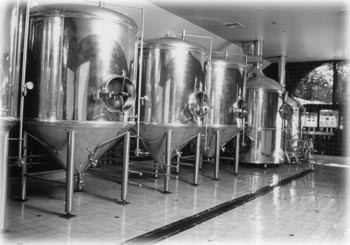
Tanks for the Memories: Korbel’s Russian River Ale will be available in six-packs in November.

Korbel Delicatessen and Market
13250 River Road, Guerneville
869-6313

Hours: Monday-Friday, 6 a.m. to 6 p.m.; Saturday-Sunday, 9 a.m. to 6 p.m.
Credit Cards: Visa, MasterCard, American Express
Parking: Large lot provided

Beer
WHILE KORBEL is certainly more famous for its sparkling wine (and now for its Harvest Fair-award-winning chardonnay), this powerful vintner now has hopped into the microbrew market by founding the Russian River Brewing Company. Four beers are offered year-round: the caramel-infused Amber Ale, the light Golden Wheat Ale, the spicy, citrusy Pale Ale, and the toffee- and chocolate-informed Porter. Pints are $3.50, and 5-oz. samplers are $1 each.

Seasonal Offerings: Extra Special Bitter, Christmas beer (something delicious is promised for the spring).

Brewmaster: Randy Meyer.

Take-out/Keg Availability: 1-gallon beer boxes are $16.50; 5-gallon kegs, $48; 12- oz. six-packs are available in November for about $7.50; kegs are $90 (wholesale only).

Food
WE STOPPED IN to get picnic supplies to add to an already bulging basket on a recent drizzly afternoon. After squeezing through the winetasting crowds, we ordered the potato salad ($3 per half-pint), a delicious variation on the traditional made with Yukon Gold spuds, apples, capers, dill, and red onion. Roasted garlic ($1 a bulb) spread beautifully onto bread already laden with their house-cooked roast beef ($4 per half pound), rare and peppery. We grabbed a small assortment of cured olives ($3 per half-pint; 10 cents an olive), and gnashed our teeth at missing the grilled beef tri-tip sandwich ($5.95) with caramelized onions, gorgonzola, and chimi churi; the roasted turkey sandwich ($5.95) with a cranberry horseradish chutney, white cheddar cheese, red onion, spring greens, and a tarragon mayonnaise; and the spring salad ($5.50) with baby spinach, raspberries, chèvre, and pancetta in a raspberry viniagrette. We packed PB&J; we were condemned to eat PB&J. This upscale market and deli is a super, inexpensive stop on the way to a gourmet feast along the river. Thanksgiving brand coffee is available at the espresso bar.

Service
THE PEOPLE behind the counter remained brave and smiling under the press of yups yapping at them. (One customer actually waved a $50 bill to ensure advance service. We did not pinch him.)

Ambiance
SET AMONG THE TREETOPS on the north end of the Korbel property (which itself looks like the Versailles of wineries), one walks past the beautiful plantings and the tasting room to find this high-windowed retreat surrounded by refreshing greenery: very nice.

Din: It gets loud as winetasters crowd in for deli treats.

Restrooms: Large, new, and clean.

Non-drinkers: Although it’s at a winery, this is still a deli, so coffees, juices, and waters are available. And, hey, there are certainly Korbel products.

Fizz
LOVELY DELI, good food, reasonably priced for picnics, a patient staff.

Flat
HELL is other people.
–G.G.

From the Oct. 16-22, 1997 issue of the Sonoma County Independent.

© Metro Publishing Inc.

Talking Pictures

0

Close Encounters

Dead Again

By David Templeton

Writer David Templeton takes interesting people to interesting movies in his ongoing quest for the ultimate post-film conversation. This time, VCR in hand, he attends a national past-lives convention to discuss the little-known reincarnation thriller Dead Again with author Carol Bowman and counselor Phillip Schultz.

In the hotel, on the way up to room 2029, I pause to shift my pack–containing a VCR, several connector cables, and a video of Kenneth Branagh’s Dead Again–from one arm to the other. The large, sunlit lobby is nicely crammed with people, many of them attendees of the annual convention of the Association for Past Life Research and Therapies, an international group dedicated to increasing the acceptance and therapeutic use of past-life memories.

As the elevator opens, the name-tagged gentleman in shorts who has been standing beside me is spied by another man, also (as the APLR on his tag indicates) a guest of the convention.

“Good to see you again,” they each exclaim. Given the circumstances, I can’t help but marvel at the deeper implications of this remark. The doors slide shut, and with a gentle lurch upwards, I am on my way to meet Carol Bowman and Phillip Schultz.

The subject of reincarnation has been often dealt with in print; there are thousands of books discussing past lives from both pro and con directions. Until Bowman’s recent book, Children’s Past Lives: How Past Life Memories Affect Your Child (Bantam; $19.95), however, there has been almost nothing written about how our past lives–if they exist–might affect us as children. In Bowman’s enlightening, autobiographical how-to book, she describes how she came to believe that her own son’s fear of loud noises was the result of his past-life experience in the Civil War. This eye-opening revelation led her to inquire about other children’s possible past-life stories, retold in the book. She went on to found the Children’s Past Life Research Center in her home town of Philadelphia. She is visiting San Francisco this weekend as the convention’s keynote speaker.

Having discovered that Bowman, like myself, is a fan of Dead Again–the eerie, 1991 reincarnation-themed thriller starring Kenneth Branagh and Emma Thompson as lovers who discover they might have been tragically involved in a past life–I’ve finagled this opportunity to watch the film again. Bowman, in turn, has invited her friend Phillip Schultz–another attendee of the convention–to come over as well. Schultz, a Marin County therapist, is the father of David Schultz, the Olympic Gold Medal wrestler whose meteoric rise to fame ended in January of 1996 when he was shot to death by his long-time benefactor, billionaire John DuPont.

As I attempt to hook my VCR to the hotel’s television set, they tell me how they came to meet.

“Well, at David’s memorial, I’d shared the story of something David told me when he was 4 years old,” Schultz explains, looking over my shoulder as I attach and reattach cables. What David had told him was that he remembered a conversation he’d had before he was born, a conversation with 12 men who explained that he would be sent to Earth to be “tested,” and that he was certain he would pass the test. David concluded by warning, “But I won’t be here long.”

The story, when related at the memorial service, had an immensely calming effect on the crowd. Eventually, Bowman heard of it, and contacted Schultz. They’ve been friends ever since.

“To me,” he adds, “when I really think of it, and when my sense of grief and self-pity aren’t in the way, I think David’s death wasn’t anything but what was meant to be. And that David in many ways, in his 36 years, had fulfilled his life, and there was to be no more.”

I’ve apparently hooked the machine up incorrectly. As I disconnect the cables to try another way, Bowman keeps the conversation going.

“I think we come into this world with certain information as to the probabilities of what could happen in each lifetime,” she suggests. “I think children are aware of this when they’re very young.

“And somehow they are taught out of it again,” he adds. “We lose the ability to communicate, to be intuitive, to be ourselves. It’s as if the journey is to lose yourself by the time you’ve become a socialized creature at 5 or 6. Then the rest of your life is spent getting back to yourself.”

“And that’s the journey.” Bowman summarizes.

I’ve stopped. I cannot get the machine working.

“Oh well,” Bowman laughs easily, waving me to a chair. “It must not have been meant to be. What I do remember of the movie, and what I’d liked so much, was that it seemed true to the past-life experience as I’ve come to know it. There’s a lot of ‘bleed-through’ of past lives into our present reality.

“I actually had the experience, in this life, of uncovering my most recent past life in the Holocaust,” she says, matter-of-factly, though with just enough lightness to suggest that she knows how it might seem. “The memories had been coming to me in flashes, through dreams in childhood, and then when I did my first regression, I was able to see the pieces that had been missing. I saw clearly that I’d been married and had two children, and that we had all died in the camps. My husband had been political. I’d wanted to leave Vienna, but he’d said no. And I had blamed him, up until my death, for not taking us away.

“Within four months of that regression, I met someone at a concert–a professional musician, a violinist. I realized immediately that he had been that husband in that life. It was a total recognition. I knew it without any doubt. I believe that we came together because there was something we had to do.”

“What was that?” Schultz wonders.

“I had to forgive him,” she answers simply. “It took three months of crying and sobbing and grieving to do it.”

I remark that her story, with its emphasis on forgiveness, runs counter to the unwatched film’s notion that we are born in each life to revenge the wrongs suffered in the previous one. My companions laugh, shaking their heads.

“Would you have perceived David’s death any differently had he not told you what he did when he was 4?” Bowman asks of Schultz.

“I don’t think I could have put it in a better context. No,” he answers softly, “it would have been more difficult. And it would have been more difficult for everyone else as well. Because that story gave pause to everyone when it was shared. It gave everyone a sense . . . ” He stops, searching for the words.

Bowman, having written the book on the subject, finishes the sentence. “That there’s much more to all of this,” she says. “than meets the eye.”

From the Oct. 16-22, 1997 issue of Sonoma County Independent.

© Metro Publishing Inc.

Social Security

Net Worth


Wake Up and Smell the Coffee: Experts say Gen Xers should trade in their journals for a stock portfolio, unless they don’t mind being broke in retirement.

Photo by Janet Orsi


Restringing the safety net

By Elizabeth Barrett

I DON’T EXPECT IT to be there for me when we retire,” says 25-year-old Tom Lamoureux. “It” refers to Social Security; “we” refers to his generation; and the sentiment as a whole is one that can be found throughout Generation X. Social Security is breaking, and no one knows what to do about it.

Enacted in 1935 by President Roosevelt, Social Security was envisioned as a tool to be used to buffer the effects of old age, a tool that would help smooth out the peaks and valleys of an unstable economy. Sixty-two years later, that vision has become an integral part of your grandparents’ well-being, of your parents’ well-being, of your own well-being. But, given the state of Social Security today, the young workforce wonders if this social safety net really will be around when today’s college graduates become tomorrow’s senior citizens.

It’s not something that the average 25-year-old contemplates, and it is for just that reason that experts say the average 25-year-old must begin to plan for his or her future. “I don’t think people our age think about retirement, but if anybody should be forced to think about retirement early, it’s us,” states Lamoureux.

Although not apparent to all young people, it has been known for years now that the system on which so many depend is in financial straits. This means that the future of the 95 percent of the American workforce who are covered by the program is uncertain. And that uncertainty arises from the way the program and its trust funds were designed.

Social Security and Medicare (a part of Social Security since 1965) monies are distributed among four trust funds. So, with all of these “trust funds,” why does Social Security operate on a pay-as-you-go basis?

As it stands, the paycheck that my grandparents receive does not come from the “trust fund,” per se, but from my paycheck. And yours. The Social Security Administration takes its allotment of our paychecks and puts it into three of the four Social Security funds. The benefits that are received by the elderly, disabled, etc., are taken from the interest made by our Social Security deposits. Because the system works this way, a “minimum floor of benefits” is attainable by all. Low-income retirees receive the same benefits that high-income retirees receive. This is the redistributive nature of the program.

“The emphasis was more on social adequacy than equity,” says John Fitzgerald, professor of finance at Ball State University. And, as long as there are more people paying into the system than are receiving benefits, the system works. “When the Social Security Program began in the 1930s, there were 16 people for every one beneficiary. Now I think the numbers are around 2.9. It’s projected that the numbers are down to 2.5 people for every beneficiary coming up after the year 2000,” states Fitzgerald.

And when the baby boomers become the new elderly in a rapidly approaching future, the numbers will be even worse. Once the number of people paying in is exceeded by the number of people taking out, we will begin to draw on the principal. And when that’s gone, that’s it. It is true that as long as there are people working, there will be income for the funds, but the baby-boomer generation is big–too big to be solely supported by the present non-boomer population. Plus people are living longer and are doing so with the help of expensive technology, so one sees that the equation can’t be balanced. The Social Security dollar has to stretch farther to simply keep people alive.

The statistics and the time frames figured by the Advisory Council on Social Security are appalling: In 2012, the Social Security trust funds are expected to start paying out more in annual benefits than they collect in payroll and income taxes. Beginning in 2029, if the administration and Congress don’t make further changes, the system will not be able pay full benefits. The Federal Disability Trust Fund is projected to be exhausted by 2016. And Medicare and its social counterpart, Medicaid, are struggling to make it through the first years of the new millennium. This means that if big changes aren’t implemented soon, by the time Generation X retires, Social Security will be a distant memory.

Some firmly oppose the idea of privatization–an alternative that proposes taking retirement out of the hands of Social Security and putting it into the hands of personal, individually chosen, government-approved retirement accounts. Others see government-supervised privatization as the way to go, holding up the Chilean system as an example of privatization at work.

Social Security involves two things that no government agency and no elected official want to touch: taxes; and the largest voting block in the nation–the elderly. To stymie the cancer that has hold of this program, taxes have to go up or benefits have to go down. Either way, the public loses.

“It’s what you’d call a political hot potato. Nobody wants to tackle it. It’s such a big problem because you can’t come up with a solution that’s going to make everybody happy. There’s going to be some pain,” Fitzgerald says. “Are you going to inflict the pain on the people who are just coming under Social Security now, or are you going to inflict it on the ones who say, ‘Look, I’ve paid into Social Security for years, I’m getting ready to retire. Now you’re going to cut my benefits?'”

But the fight continues. On the national level, the Senate recently voted to gradually raise the national retirement age from 65 to 67, and President Clinton has called for legislators to pass a reform that will increase the Medicare premiums for well-to-do seniors. And by staggering the payment period over the course of the month, a change that took effect on May 1 of this year, there is no longer a monthly peak program expenditure. Additionally, by Jan. 1, 1999, all Social Security benefits will be administered through direct deposit, saving taxpayers $8.9 million a month.

THESE CHANGES, though well-intentioned, do not change the simple fact that there are more baby boomers than there are men and women to support them. But even then, Lamoureux is optimistic. “The baby boomers will set a new standard, as they do for everything. I don’t think people will stop working; they’ll just work less. Retirement isn’t what it used to be.”

Of course, this doesn’t change the fact that there are, and will be, elderly who are simply not able to continue working. What will happen to them?

It is obvious that a complete system overhaul will have to take place. The problem is, there is no way to overhaul such a vast system without causing some pain. Some propose privatization, but privatization, as it has been theorized thus far, cannot guarantee a minimum level of benefits for all without resorting to a welfare-esque model, nor can it guarantee disability or survivor insurance. And then, what about Medicare?

Professor Fitzgerald offers this advice: “Concentrate on your own individual retirement plan; company pension, if your company has a pension plan; 401K plan–something separate, because the whole theory of Social Security was like a triangle. One leg of the triangle was Social Security. Another leg of the triangle was the employer-paid pension plans, and the third leg was personal savings. A lot of people forget about those second two legs. Be vocal. Make sure your voice is heard, but don’t overlook personal retirement and financial planning.”

Fitzgerald also recommends that today’s young people investigate private life insurance (the public benefit provided by Social Security takes the form of Survivor’s Insurance) and your company’s disability income plan (the equivalent of Social Security’s Federal Disability Insurance).

If your company does not have such a plan, look into personal disability income insurance. Unless we can come up with something better, Social Security is our problem and we’ll have to resolve it. If we don’t, it’ll resolve itself, leaving millions out in the cold.

From the Oct. 9-15, 1997 issue of the Sonoma County Independent.

© Metro Publishing Inc.

Zak Zaikine

Soul FoodMichael AmslerDog days of autumn: Zak Zaikine and his canine companion pose before one of the artist's angelic pet portraits.Artist Zak Zaikine and that joyous feelingBy Gretchen GilesI'M SORRY that you're late," calls artist Zak Zaikine standing in his Sebastopol driveway as I pull the car in, rolling down my window. Only five minutes tardy and I'm sorry...

The Housekeeper

Playing HouseBy Daedalus HowellDON'T BE DUPED by the mawkish title--James Prideaux's The Housekeeper is a bloody, psychic-abattoir masquerading as romantic comedy. Largely concerned with the class ranking and retarded sexuality of its two characters (a trashy, self-invented housekeeper and a failed, self-published author), The Housekeeper--playing through Oct. 26 at the Main Street Theatre--predictably reconciles and unites this conflicted duo...

Santa Rosa Wastewater

Boiling over Hot WaterMichael AmslerSteaming mad: Santa Rosa City Coucilwoman Pat Wiggins tells officials from the city's Board of Public Utilities that she is "appalled" over a proposal to push ahead with plans to send local wastewater to The Geysers without comparative studies.SR Council splits over plan to pipe wastewater to The GeysersBy Paula HarrisBOARD of Public Utilities Chairman...

Marin Brewing Co.

Marin County Brewpub Guide1809 Larkspur Landing Circle, Larkspur415/461-HOPS (4677)Hours: Sunday-Thursday, 11:30 a.m. to midnight; Friday-Saturday, 11:30 a.m. to 1 a.m.Credit Cards: All except Diners' ClubParking: AmpleBeerAN EVER-ROTATING selection of beers from 27 different recipes, including several Great American Beer Festival medal winners; four to seven are usually offered on tap at this, the oldest brewpub in Marin. They use...

Moylan’s Brewery & Restaurant

Marin County Brewpub GuideMoylan's Brewery & RestaurantVintage Oaks Shopping Center15 Rowland Way, Novato415/898-4677 (HOPS)Hours: Daily, 11:30 a.m. to midnight; Friday-Saturday, 11: 30 a.m. to 1:00 a.m.Credit Cards: Visa, MasterCard, American ExpressParking: Limited but convenient BeerAT MOYLAN'S, where a boisterous appreciation of beer--in all its cold, foamy glory--hangs thick in the air like religion at a tent revival, there are...

Sonoma, Marin, Napa & Mendocino County

Suds & GrubThe Independent's guide to bellying-up to North Bay brewpubsEdited by Gretchen GilesTHIS SEEMED LIKE a sweet deal: We each got a few bucks to take friends and family out to lunch and dinner; we were forced to drink copious amounts of the best housemade beer in the North Bay; we were darn near threatened if we didn't...

The Scoop

Big, Big NewsBy Bob HarrisI'M FLIPPING through the Los Angeles Times the other day and I come across a one-paragraph item, an inch high and 63 words long, buried in the corner of page A11: "Mad Cow Disease Linked to Humans."The story: Two separate studies in England and Scotland conclude that a new variant of Creutzfeldt-Jakob disease (CJD) is...

Korbel Delicatessen & Market

Sonoma County Brewpub GuideTanks for the Memories: Korbel's Russian River Ale will be available in six-packs in November.Korbel Delicatessen and Market13250 River Road, Guerneville869-6313Hours: Monday-Friday, 6 a.m. to 6 p.m.; Saturday-Sunday, 9 a.m. to 6 p.m.Credit Cards: Visa, MasterCard, American ExpressParking: Large lot providedBeerWHILE KORBEL is certainly more famous for its sparkling wine (and now for its Harvest Fair-award-winning...

Talking Pictures

Close EncountersDead AgainBy David TempletonWriter David Templeton takes interesting people to interesting movies in his ongoing quest for the ultimate post-film conversation. This time, VCR in hand, he attends a national past-lives convention to discuss the little-known reincarnation thriller Dead Again with author Carol Bowman and counselor Phillip Schultz. In the hotel, on the way up to room...

Social Security

Net WorthWake Up and Smell the Coffee: Experts say Gen Xers should trade in their journals for a stock portfolio, unless they don't mind being broke in retirement.Photo by Janet OrsiRestringing the safety netBy Elizabeth BarrettI DON'T EXPECT IT to be there for me when we retire," says 25-year-old Tom Lamoureux. "It" refers to Social Security; "we" refers to...
11,084FansLike
4,606FollowersFollow
6,928FollowersFollow