MLKJ Assassination

0

Who Shot Martin Luther King?

Why it’s ludicrous to put all the blame on unsophisticated, doomed James Earl Ray

By J. J. Maloney

As 69-year-old James Earl Ray wastes away in a Tennessee prison–suffering from terminal liver disease–even the family of Dr. Martin Luther King, Jr. argues that he should be allowed a trial on whether he killed the Nobel Prize winning civil-rights leader. The latest furor in the case came last week when Shelby County Judge Joe Brown ruled that 12 of 18 test bullets fired recently through the rifle long thought to be the murder weapon had markings different from the markings on the bullet that killed Dr. King.

The rifle tested was the rifle that was found near the murder scene, within minutes of the shooting, with Ray’s fingerprint on it. It has long been alleged, by Ray and many others, that the rifle was planted and that Ray was just a “patsy” in the conspiracy to kill Dr. King. These test results support that contention.

One expert argued that the defense should be allowed to clean the rifle’s bore, because there was evidence of “bubbling” on the test bullets–which could be caused by a buildup of lead or copper from previous test firings. The government argues that cleaning the rifle’s bore could destroy evidence–even though no expert has ever been able to say that the fatal bullet was fired from this rifle.

In last month’s proceeding the fatal bullet was described as fragmented and deformed to such a degree that no ballistic comparison is possible.

However, in the late 1970s, when I interviewed Arthur Hanes and Bernard Fensterward, former attorneys for James Earl Ray (Hanes is also a former FBI agent), they both said they had held the fatal bullet, that it was in good shape and should be more than suitable for ballistics comparison. In act, when Ray entered his guilty plea, in 1969, the prosecutor told the jury that, had the case gone to trial, he would have introduced ballistics evidence linking the fatal bullet to the 30.06 rifle with Ray’s fingerprint on it.

Even that fingerprint is in question, however. The first book on the King case, The Strange Case of James Earl Ray, by Clay Blair, said it took the FBI’s fingerprint section two weeks to identify the fingerprint – even though it was comparing the print against only 720 sets of prints. That would indicate a fingerprint of dubious quality. These types of questions are more troubling because the House Select Committee on Assassinations, after releasing its report on the case in 1979, immediately sealed all of the evidence it had, including all of the test bullets, for 50 years.

Ray had purchased the rifle days before the killing. If only one bullet had ever been fired through it, then the test bullets fired in 1968 would be the best bullets for use in comparison. We do not know how many bullets were fired in 1978. The more times a rifle is fired, however, the more wear and tear there will be inside the barrel, and this can change the markings left on a bullet.

HSCA didn’t seal the evidence for the benefit of the King family – they’ve been after the truth since the day King was murdered. Nor was it sealed for the benefit of Ray – he’s been denying his guilt since March 13, 1969, three days after he pled guilty to the murder. Ray claims he was coerced into pleading guilty by his lawyer, Percy Foreman, who convinced him it would be suicide to go to trial. (Ray had also signed a contract with Foreman, giving him a piece of any book by Ray, as a way of paying legal fees – he had the same arrangement with Arthur Hanes, whom he fired after four months. Such a book was obviously worth more if Ray were convicted.)

Ray’s plea of guilty was a bitter disappointment to many people, who felt that without a trial–where witnesses could be subpoenaed to testify–that the truth of who and what was behind the assassination would never be known. In fact, the day after Ray pled guilty, The New York Times wrote a blistering editorial denouncing the plea, and the fact that there would be no public trial where the facts could be brought out. The 1978 HSCA investigation was supposed to answer the countless questions surrounding the death of Dr. King–not the least of which was whether FBI Director J. Edgar Hoover, or anyone else in the federal government, had a hand in his killing. While at first this suggestion might seem ludicrous, Hoover had in fact developed a deep hatred for King. Hoover was certainly not alone.

J. Edgar Hoover

J. Edgar Hoover was director of the FBI for 48 years until his death in 1972. In the years following his death, Hoover has been widely demonized–to the point of being characterized as a closet drag queen who sold his soul to the Mafia because it had photographs of him in drag. These efforts to turn Hoover into a cartoon character trivialize him, and make him seem less formidable than he really was. Hoover was the most powerful man in America for decades.

He built the modern FBI. And, while social activists dwell on COINTELPRO, and the other evils perpetrated by Hoover, it was his FBI that prevented even one act of sabotage from being perpetrated on American soil during World War II (even though the Germans landed a dozen saboteurs on the East Coast). To millions of people Hoover was a hero–still is.

Hoover at all times was Machiavellian. For decades he outmaneuvered his political enemies, which included more than one president of the United States. (Nixon is on tape saying that if he fired Hoover, Hoover would ” bring down the temple,” including the presidency.) The source of Hoover’s power was information. He compiled dossiers on the drinking, sex and gambling habits of many thousands of prominent Americans. Writers, actors, musicians, ministers, politicians–anyone with a public following was fair game. Hoover’s agents not only cultivated armies of informers, but used illegal wiretapping to gather information on the more prominent targets.

From the end of World War II until Hoover’s death his great crusade was fighting communism. In fact it was during World War II–when America’s intelligence focus was on Germany and Japan–that Hoover received an anonymous letter, warning him that a particular Soviet official was a double-agent. On no more than that, Hoover turned the guns of intelligence on Russia. History proves that was the right decision (although it was later determined the Russian official in question was not a double agent).

After World War II, Russia developed an atom bomb. The Rosenbergs were charged with divulging top atomic secrets to the Soviets, tried for treason, convicted and executed. Communism was a real threat, and hundreds of prominent Americans were willingly feeding information to Hoover, including the head of the Screen Actors Guild by the name of Ronald Reagan.

Among those prominent Americans was Thurgood Marshall, general counsel of the NAACP. Marshall, who in 1967 became the first African-American member of the U.S. Supreme Court, first came to FBI attention in the 1940s when he was a lawyer with the National Lawyers Guild, a group suspected by some of being a communist front. Marshall often complained that the FBI failed to investigate attacks on blacks, including lynchings. However, in 1952, Marshall contacted Louis B. Nichols, assistant to Hoover, saying he was worried that the Communist Party was trying to infiltrate the NAACP and “forge to the forefront.”

This dovetailed with a fear of Hoover and many others that the millions of blacks in America were ripe for recruitment by foreign agents, who would then use them to foment unrest and civil disorder across the United States.

It was not an unreasonable fear. In the early 1950s, blacks were strictly segregated across the nation. They were called “niggers” and they were treated as such. They could not eat in white restaurants, use white restrooms or public drinking fountains. Merely looking at a white woman could–and sometimes did–get a black man killed. Even the bigots, and Hoover was one, understood that a lifetime of humiliation, being forced into ghettos, and exploitation at every level, left the black population of America a bit cynical about the attainability of The American Dream. Racism in the Northern states was bad, but in the South it was virulent. Although downplayed by the FBI, the KKK was still a powerful force in the deep South (along with even more extreme white supremacist groups, such as J.B. Stoner’s National State’s Rights Party, which was so extreme it was publicly disavowed by the KKK).

Into this picture, then, burst the Rev. Martin Luther King, Jr. He was the right man in the right place at the right time. General unrest over the Vietnam War created a social climate conducive to change.

Army Intelligence

The U.S. military buildup in Vietnam began in 1961. In early 1963 King led the month-long demonstrations in Birmingham, establishing himself as a national leader among the black population. His preparations for Birmingham were monitored by Army Intelligence. On Aug. 2, 1964, North Vietnamese torpedo boats attacked the U.S. Destroyer Maddox in the Gulf of Tonkin, resulting in a Congressional resolution allowing President Johnson to provide military assistance to Vietnam. A second attack by North Vietnam allegedly occurred on Aug. 4, resulting in U.S. bombing of North Vietnam. In 1965 the first U.S. combat troops shipped out to Vietnam.

By early 1967 we were a nation divided on the war, but coming together on many other fronts. There was widespread resistance to the draft. Children from affluent families – or families with an influential friend (ala Bill Clinton) frequently avoided the draft, but the poor were in the front of the line, and no one was poorer or more disenfranchised than black youths. The issue wasn’t cowardice, as so many conservatives wish to pretend–the issue was fighting in and dying in a war that had no moral underpinning. In 1993 the Memphis Commercial-Appeal, following a 16-month investigation, revealed that by 1963 Army Intelligence considered King a threat to the country’s security. Dr. King wasn’t the first member of his family to bear such scrutiny.

The Army began watching King’s maternal grandfather, Rev. A.D. Williams, pastor of Atlanta’s Ebenezer Baptist Church, in September, 1917. When King’s father, Rev. M.L. King, Sr., became pastor of the same church, the Army started watching him, too. In 1947, while still a college student, King himself became the target of government spies and informers. The Army, beginning in 1917, feared that the black population was ripe for subversion by foreign interests, so they tried to keep its pulse on that community. A lot of the spying was done by black informers.

In the case of King, however, the Army (and the FBI) went high-tech. In early 1963 King led a march in Birmingham that resulted in widespread arrests of marchers over a month-long period. Maj. Gen. Charles Billingslea, commander of the 2nd Division, sent a plea for help to his superiors, saying he feared a full-scale revolt in Birmingham. President John F. Kennedy ordered an additional 3,000 troops into the area. It was with the Birmingham disturbances that the Army began to use a U-2 spy plane to keep tabs on Dr. King. By 1967 Maj. Gen. William P. Yarborough, of Army intelligence, was convinced the communists were bankrolling Dr. King. Yarborough was relying on information from the Mexican minister of national defense, to the effect that black militants were receiving training and funding from the Havana-based Organization of Latin American Solidarity.

By 1967, the U.S. government feared King. His speeches in the United States were affecting black troop morale in Vietnam. He had announced he would lead a massive march on Washington the following spring. The government’s ultimate fear was that King, the apostle of non-violence, would ask the black soldiers in Vietnam to lay down their arms. Once college students became galvanized against the war, they reached out to black people, Native-Americans, Mexican-Americans, even convicts. In that context Martin Luther King loomed large as a moral figure. As a recent recipient of the Nobel Peace Prize (1964), he also had international stature.

Counter Intelligence

The FBI’s answer to this cauldron of dissent, widely perceived as endangering America’s ability to effectively wage war, was COINTELPRO (Counter Intelligence Program). The purpose of COINTELPRO was to destabilize radical groups, which included the American-Indian Movement, Black Panthers, white hate groups (however, they also enlisted the aid of white supremacists in countering black activists), the New Left, etc. The FBI generated a large file on Cesar Chavez, head of the National Farm Workers Association.

The FBI shadowed Chavez, because of unfounded rumors that he may be a communist, and enlisted the aid of military intelligence, local police and the Secret Service–without ever finding a shred of proof to substantiate its suspicions. (In 1994 Clinton awarded Chavez the Presidential Medal of Freedom posthumously and described him as a “Moses figure.”)

While Chavez was viewed with deep suspicion by the FBI, Dr. King was viewed as the enemy. Under COINTELPRO, the FBI used a wide variety of methods to discredit people –including forged documents, false arrests, pamphlets–and it is known that white supremacists were enlisted in the fight against black organizations. COINTELPRO was approved in Washington but operated at the local FBI office level. The FBI was itself a racist organization. (Just a few years ago, African-Americans accounted for only 5 percent of FBI agents, an underrepresentation that caused them to file a class-action discrimination suit against the Bureau, which included allegations of pernicious discrimination in promotions, assignments, etc.)

By late 1967, at FBI field offices in the South, there were white agents enlisting the aid of white supremacists to try to neutralize black activists. The key target was Dr. King. It is common knowledge that the FBI used wiretaps on King (approved by Attorney General Robert Kennedy, who would later express regret for signing the wiretap authorization). The most infamous recording involves King making love to a woman in a hotel room–a tape that Hoover enjoyed sharing.

James Earl Ray

I first met James Earl Ray in early 1960. I had arrived at the Missouri State Penitentiary in Jefferson City on February 8, 1960, and Ray arrived shortly afterward. We didn’t have much in common: I was 19 years old, and serving four life sentences for murder and armed robbery, and Ray was 32 and serving 20 years for armed robbery. We knew some of the same people. I was born and raised in South St. Louis, an ethnic neighborhood that Ray had moved to from a small town. In September, 1961, I tried to escape from Jefferson City, and Ray tried to escape several months later. We spent approximately four months in E-Hall (solitary) together without ever speaking to each other.

Ray was a low-key guy. He was considered a solid convict. He minded his own business and kept his mouth shut. For a while he ran a magazine stand on the yard (renting out magazines like Argosy, True Detective, etc.), from which he made enough money to get by, since he didn’t smoke, drink or do drugs. In 1963 I became friends with Jerry Davis, and through him with Rollie Laster and Ronnie Westberg. Those three had taken some guards hostage in 1959, in a failed escape attempt, and Laster and Davis were shot. At that time, there were only a dozen men in the prison who had ever tried to escape from inside the walls, so it created a small fraternity. Ray didn’t run around with us, but he and Westberg liked each other, and Westberg would talk about him from time to time.

In late 1966 Westberg discovered a way to escape from Jefferson City. The prison bakery also baked bread for Renz Farm and Church Farm, delivering the bread via pickup truck to these nearby satellite institutions in a four-foot square box. Westberg’s problem, however, was that he was viewed as such an extreme security risk by the guards that it was impossible for him to be absent for more than a few minutes without the guards looking for him. Had he disappeared for 15 or 20 minutes, the guards would have shut the prison down.

Ray, although having tried to escape twice, had a generally good conduct record except for the escapes. The guards did not view him as a dangerous convict–nor did they take him very seriously as an escape risk (the first time he fell off the wall and knocked himself out, the second time, in March of 1966, he was found hiding in a ventilation shaft in one of the factories).

On April 23, 1967, Ray climbed into the bread box, another convict covered him with a tray of bread, and he successfully escaped from Jefferson City. The prison officials were so convinced that he was hiding in the prison that they did not turn in a general alarm until several days later. Ray’s brother, John Larry Ray, was waiting in a car, picked Ray up and drove him to South St. Louis. John Ray owned a tavern in South St. Louis that faced Benton Park. The tavern was a local gathering place for George Wallace supporters. From St. Louis, Ray went to Chicago, where his other brother, Jerry Ray, was living. Jerry Ray is known to have assisted James Earl Ray during this Chicago period.

The Ray brothers have frequently lied since the assassination of Dr. King. At one point Jerry Ray was accusing author Harold McMillan of lying, and McMillan was accusing Jerry Ray of lying. McMillan had been paying Jerry Ray for information and apparently got burned. In fact, McMillan quoted Jerry Ray in his book as saying, “What surprised me even tho you are a liberal how I with a limited education could get a fee from you without telling you anything and making up all that bull.”

On the other hand, it is McMillan who is mostly responsible for portraying Ray as a rabid racist. In his book, The Making Of An Assassin, published in 1976, McMillan wrote: “In 1963 and 1964, Martin Luther King was on TV almost every day talking defiantly about how black people were going to get their rights, insisting they would accept with nonviolence all the terrible violence that white people were inflicting on them until the day of victory arrived, until they did overcome.

Ray watched it all avidly on the cellblock TV at Jeff City. He reacted as if King’s remarks were directed at him personally. He boiled when King came on the tube; he began to call him Martin ‘Lucifer’ King and Martin Luther ‘Coon.’ It got so that the very sight of King would galvanize Ray.”

That is utterly untrue. There were no cellblock TVs in Jefferson City while Ray was there. Three years after Ray escaped, they finally began to sell televisions to the convicts. I knew a lot of racists in Jefferson City, but James Earl Ray wasn’t one of them. Although McMillan’s book was gravely flawed, Time promoted the book heavily, and what McMillan wrote later permeated much of what was written about Ray.

The Assassination

On April 3, 1968, Dr. King arrived in Memphis to support a strike by 1,300 sanitation workers. He would stay at the Lorraine Motel. Someone–it’ s never been determined who–identified himself as an advance man for King, and had the motel manager switch King’s room from the ground floor to the upper level. Everyone in King’s group later said there was no such advance man.

The following day, at 6:01 p.m., King stepped out on the balcony. He was speaking to a friend below him when a shot rang out and he fell mortally wounded. A famous photograph shows several persons pointing toward a rooming house about 80 yards away. The FBI would later say the fatal shot was fired from a second-floor bathroom window at the rear of the rooming house. Several minutes after the shooting, a bundle was discovered in a doorway at the front of the rooming house. It contained a Remington Gamemaster 30.06 rifle, with a fingerprint on it that would later be attributed to James Earl Ray, and a small plastic radio that was said to be purchased by Ray while he was in the Missouri State Penitentiary.

Earl Caldwell, then a reporter for the New York Times, was in his room on the ground floor of the Lorraine Motel when the shot was fired. He ran out of his room and saw a man crouching at ground level near the base of the apartment house. Caldwell was never interviewed by the FBI. Harold “Cornbread” Carter, a wino, said a man with a rifle walked right past him, to the edge of an embankment (exactly where Caldwell said he saw a man crouching), and that the man fired at the motel. The FBI dismissed Carter’s account. Two community-relations agents from the Justice Department were staying on the same level of the motel with King, and rushed out of their room when they heard the shot. They, also, were never interviewed by the FBI (even though these agents didn’t see anything, the fact they weren’t interviewed speaks volumes about the FBI’s “investigation.” )

The following day Roger Wilkins, then head of the Community Relations Service of the Justice Department, flew from Washington to Memphis with Attorney General Ramsey Clark and Cartha D. “Deke” DeLoach, assistant director of the FBI. DeLoach was already pushing the lone-gunman theory, although the FBI had no clue yet as to whom that lone gunman would be, or why Dr. King was killed. The murder of Dr. King set off nationwide rioting, including Kansas City. It is likely that Hoover was pushing a lone-gunman to avoid the even more intense rioting that a white conspiracy might generate. It would later be determined that Ray traveled from Memphis to Atlanta, then to Montreal, Canada, then to London, then to Portugal, then back to London where he was arrested at Heathrow Airport by Scotland Yard.

Shortly after Ray’s arrest, J.B. Stoner, head of the National States Rights Party, volunteered his services as Ray’s attorney. Several years later Jerry Ray served as Stoner’s campaign manager when Stoner ran unsuccessfully for governor of Georgia against Jimmy Carter. Jerry Ray shot a 17-year-old boy who broke into Stoner’s office, and served as Stoner’s bodyguard and chauffeur.

Conspiracy

The federal government, and Tennessee authorities, aggressively pushed the lone-gunman theory–although this explanation was rejected out of hand by millions of Americans. At Ray’s sentencing, as the state was telling the jury what the evidence would have been at a trial, Ray interrupted the proceedings to say he did not agree with the statement of Ramsey Clark, U.S. attorney general, that there was no conspiracy. Three days later Ray tried to withdraw his plea of guilty, even though that would subject him to a possible death sentence. The court refused.

From that day forward there has been a tug-of-war between conspiracy believers and lone-gunman advocates. In 1979 the House Select Committee on Assassinations issued a report saying there probably was a conspiracy, and that it originated in St. Louis, with a reward being offered for King’s death by two racists, one of whom was a patent lawyer. Both of these men were conveniently dead by 1978. It began with an informant telling the FBI in 1974 that Russell G. Byers claimed to have been offered $50,000 to kill King, but had turned the offer down. The FBI put that information in a memo and filed it away.

Byers, a high-profile thief, was the brother-in-law of John Paul Spica, who was convicted in the early 1960s of a hired killing in St. Louis County. For about a year, Spica was my cellmate, and we worked in the hospital together. Of the contract killing, Spica always denied doing it. He told me that the victim’s wife had approached him, offering him $5,000 to kill her husband, and Spica turned it down. However, when the man was killed, Spica went to the wife and said, “Well, I took care of that matter for you –where’ s my $5,000.” The woman, however, was smarter than Spica thought. She went to Capt. Pete Vasil, chief of detectives in St. Louis County, and told Vasil that she had approached Spica, but that she had later told him she changed her mind, but that Spica had ignored her wishes and killed the husband anyway. Spica, on the basis of her testimony, and a tape-recording of him asking her for $5,000, was convicted and sentenced to life imprisonment. The wife was acquitted and collected approximately $200,000 in insurance. Spica kept his sense of humor however, by complaining that, “I asked the bitch to send me the $5,000, and she won’t do it.”

In prison, Spica eventually got involved in selling drugs and other scams. One scam was to run off extra license plate stickers and smuggle them out of prison. Byers was involved in that. The prison officials finally caught on to it, but were unable to make a case against Spica. By 1978 Spica had made parole. That year Russell Byers was one of the key suspects in burglarizing the St. Louis Art Museum and stealing several valuable statuettes. Another suspect was Sam E. White. On June 6, 1978, White walked out of the FBI office in St. Louis and was found five days later shot to death in Madison County, Ill. Byers was never convicted of the art museum burglary, because two witnesses were murdered and another refused to testify. During this period, however, the FBI turned the memo about Byers being offered a bribe to kill King over to the House Select Committee on Assassinations.

Conrad “Pete” Baetz, a deputy sheriff from Madison County, Ill., was serving as an investigator for HSCA. At the time of King’s death, Baetz had been in an Army intelligence unit that specialized in electronic surveillance. Baetz, and HSCA, latched onto the Byer’s story as though it were the holy grail. HSCA also subpoenaed Judge Murry Randall, who had been Byer’s attorney before being appointed to the St. Louis Circuit Court. Randall (whose brother, Alvin Randall, is retired from the Jackson County Circuit Court) desperately sought to evade appearing before HSCA. Randall sent a letter to U.S. Rep. Louis Stokes, D-Ohio, chairman of the committee, saying Byers was “one of the most dangerous criminals in this city.” However, once Randall began testifying, he made it clear that he thought Byers was lying, and that the “St. Louis Connection” to the King assassination lacked credibility.

Randall was certainly in a position to keep his finger on the pulse of the St. Louis underworld. As a lawyer Randall had been affiliated with the law firm of Morris Shenker, the most influential criminal lawyer in St. Louis history. A number of circuit and federal prosecutors, along with circuit and federal judges, were former members of the Shenker firm. Shenker had represented many gangsters, and was Jimmy Hoffa’s lawyer. Shenker would later borrow more than $100-million from the Teamsters, and bought the Dunes Hotel and Casino in Las Vegas. After six years with the Shenker firm, Randall went into practice with Lawrence Lee, then a state senator from St. Louis. Lee, himself, was one of the more highly regarded criminal lawyers in St. Louis. Randall was also a good friend of Mark Hennelly, regarded as probably the best criminal trial lawyer in the city’s history. By the late 1970s, Hennelly was president of Missouri-Pacific Railroad.

In a conversation I had with Hennelly in 1977 he admitted to me that he was still friends with Tony Giardano, head of the St. Louis Mafia, and Jimmy Michaels, head of the Syrian mob in South St. Louis. All of this is to say that, once he’d been subpoenaed to testify, Randall had the contacts to find out whether a $50,000 reward to kill King had been floating around the St. Louis underworld. Randall told the committee that Byers had concocted the story about the bounty on King as a way of trying to pinpoint whether Richard O’Hara was an FBI snitch. Byers told that story to O’Hara–knowing that, if the FBI later asked him about the story, the only place it could have heard it would be from O’Hara. The FBI, however, figured out what Byers was doing, and never questioned him (until the memo was turned over to HSCA four years later).

Baetz, and HSCA, however, chose to believe Byers over Randall. Baetz later told The Riverfront Times in St. Louis: “Honestly, we believed Byers, and so did the committee. I think he told the truth. I don’t think he would have lied to us once he got to Washington.” That has to stand as either one of the most naive, or most disingenuous statements I’ve ever heard. The Riverfront Times questioned Baetz concerning his knowledge of Sam White, who was killed in Madison County–and Baetz said he’d never heard of White until The Riverfront Times brought up the name (even though White was allegedly killed by Byers, the witness on whom Baetz and HSCA based their findings.) When The Riverfront Times filed a Freedom of Information request with the FBI, asking for the file on Sam White, the FBI said it had destroyed the file.

The New York Times bought into the Byers story, also. It published a story implying a Spica-Byers-Ray connection (strongly implying that Byers had told Spica about the reward, and that Spica then set it up for Ray to meet the money men). The Times reporters had sought me out, and I told them that it was an untenable proposition. Spica and Ray ran in completely different circles in Jefferson City. Had someone offered Spica $50,000 to kill King, he would have asked for half the money up front, then he would have told you to go sit on a fire hydrant. (Spica was killed by a car-bomb some years ago, over a union dispute.)

The statement by John Larry Ray, that James Earl Ray, after escaping, had hidden in East St. Louis, at a gambling joint owned by Frank “Buster” Wortman, is the fuel for current speculation that organized crime was involved in the King assassination. Buster Wortman ruled East St. Louis from the early 1940s to his death in 1968. My stepfather, Julius “Dutch” Gruender, was a close friend of Wortman’s. They had served time together in Leavenworth (before Wortman was transferred to Alcatraz), and Dutch had done time with Elmer Dowling, Wortman’s chief lieutenant (until he was murdered in the early 60s). I had known Wortman most of my life. His brother, Ted Wortman, had married my mother’s cousin. As I was growing up my stepfather often took me to the Paddock, a tavern that served as Wortman’s headquarters. After I was locked up, Wortman tried to help me in whatever way he could. Had James Earl Ray gone to Wortman for help–and had Wortman actually hidden him out–I would have learned of it through my stepfather.

John Ray also said his brother had tried to get help from the Egan’s Rats, an Irish gang in St. Louis. The Egan’s Rats went out of existence decades before James Earl Ray escaped. The Ray brothers were as penny ante as criminals get in St. Louis. Wortman would never have gotten involved with them. Buster Wortman was under constant investigation by the FBI. He would never have risked hiding an escaped convict, particularly a petty thief who could do him no good, and to whom he owed nothing.

The Present

When Jerry Ray appeared before HSCA in 1978 he was represented by a lawyer named William Pepper. Originally from New York, Pepper has worn a variety of hats: freelance journalist (in Vietnam), operator of a group home in Rhode Island, school consultant, civil-rights activist, author and lawyer. At the time of his appearance in front of HSCA, Pepper was in serious trouble in Rhode Island. Charges had been filed against him alleging he had solicited teenagers: “transporting boys for immoral purposes”, the charges read.

Those charges arose out of a federal investigation into a state-funded foster care program that Pepper operated. In 1975 he’d been fired by the mayor of Providence, who questioned his close personal relationship with the superintendent of Providence schools.

After the HSCA investigation, Pepper moved to London, to pursue international law, he says. He began to represent James Earl Ray. Pepper eventually convinced the BBC to produce a mock trial of Ray. With that money he hired investigators and began to prepare the two-hour show (because of a need for additional financing, HBO later got involved and it aired on HBO in 1993).

One of the investigators Pepper had hired was James E. Johnson, who had served time with me in the 1960s. He had a life sentence for second-degree murder and worked as a clerk in the Catholic Chapel, where we occasionally played chess. Johnson was living in Los Angeles and working full time on the Ray project. To put it as gently as possible, Johnson was living in a fantasy world. He came to Kansas City to meet with me, spinning some tales that left me shaking my head. His holy grail was George Ben Edmonson.

I’d first met Edmonson at the Algoa reformatory near Jefferson City, where he’d taught me how to type. At that time I was 15 (although the minimum age for inmates at Algoa was 17, I’d been transferred to Algoa after four escapes from Boonville Training School) and Edmondson was about 22. The next time I saw Edmondson was in Jefferson City. He arrived several years after I got there. In 1966 he was assigned to L-Hall, an honor unit just outside the walls, and was working at the State Capitol as a computer programmer (he’d completed about two years of civil engineering in college before robbing a savings and loan).

One day Edmondson walked away from his job and disappeared–along with about $5,000 in state funds. About a year later, after being put on the FBI’s 10 most wanted list, Edmondson was captured in Canada. It was learned that he’d been the project engineer for the West German Pavilion at Expo-67 in Montreal. Because James Earl Ray claimed to have been recruited by a mysterious “Raoul” in Montreal, even William Bradford Huie, author of They Slew The Dreamer, tried to find a way to connect Edmondson to the assassination. However, Edmondson had been captured before Ray went to Montreal.

Try as I might, I couldn’t get Johnson to see the folly of trying to connect Edmondson to the King killing. At one point he spun a theory that, at the time Edmondson was in Algoa (1956) he was really in military intelligence and was building a “deep cover.” Johnson, who was also working on the Kennedy assassination, was looking for a way to connect Edmondson to that, as well. I couldn’t get him to see the illogic of Edmondson building a cover in 1956, in preparation for assassinating a president who wasn’t even elected until 1960.

When I met with William Pepper in Memphis, in 1993, during filming of The Trial of James Earl Ray I quickly discovered that he was as impervious to logic as Johnson. He was already launched on his theory that King was killed by the FBI and the military and the Mafia. My suggestion that King was murdered by white supremacists, possibly including J.B. Stoner and Jerry Ray, didn’t persuade him. There is even the possibility that FBI agents in the South deliberately deflected the investigation away from the white supremacists.

No matter how much one would like to believe it, I just can’t see Hoover getting involved in a murder plot involving dozens of people. The man was simply too smart for that. Now, once the murder was committed, I could see Hoover limiting the damage to James Earl Ray. There is proof that the FBI had three witnesses who saw suspects near the Birmingham church in which four young girls were killed by a bomb in 1964, and Hoover withheld that information from Alabama authorities, on the ground he didn’t think anyone would be convicted anyway. And there is always the possibility that some FBI agents in the South were deeply sympathetic to, if not actual members of, white supremacist groups. In any event, Pepper stuck to his guns and the HBO special ran, and Ray was, of course, cinematically acquitted.

In 1995 Pepper published a book, Orders To Kill: The Truth Behind the Murder of Martin Luther King He was recently sued by Billy Ray Eidson, a former green beret. In his book Pepper claimed Eidson had been murdered to keep him quiet (about military involvement in the conspiracy to kill King). Pepper said he welcomes the suit because it allows him to have discovery against the Army.

Conclusion

No matter what Judge Joe Brown rules in Memphis about granting Ray a new trial, time is against the truth. If Brown rules in favor of Ray, the state of Tennessee will appeal his ruling. The state knows, after all, that Ray is dying. The prison authorities have ruled against Ray being allowed to travel for a liver transplant. Jesse Jackson says Ray should not get a new trial unless he confesses all he knows first.

Ray also knows that, should he get a new trial, a prosecutor might have serious difficulty convicting him. Should he get a new trial, he might well decide to clam up and let the state prove what it can prove. James Earl Ray has never been a rat, and I can’t see him starting now, when death is giving him daily hugs.

As a journalist I’ve been following the Ray case for a quarter-century. The more I study it, the more convinced I become that Ray did not personally shoot Martin Luther King. I am also firmly convinced he was involved in the assassination. I believe Ray is covering up for white supremacists. Too many people, however, think of Bubba when they hear that phrase–some Cro-Magnon foreheaded, tobacco-spitting redneck.

In the South, when you speak of white supremacists, you are often speaking of lawyers, police officers, businessmen. After Ray escaped from prison, as he was hiding from the law, how did he come in contact with these people? I’m sure these people weren’t walking around, asking strangers, “Hey, are you an escaped convict who’d like to shoot an internationally known man?”

The theory that Ray acted alone is ludicrous. Ray was simply too unsophisticated to have arranged by himself the elaborate escape to Canada, London and Portugal and back to London, with multiple false IDs and passports. Someone who was in contact with Ray, was also in contact with the people who wanted Martin Luther King, Jr. dead. I’ll give you four guesses as to who I think that person was. Hint: he has a history of shooting people. Several members of the first HSAC have suggested a new committee be formed. That may be the only hope for getting at the truth.

We damned sure aren’t going to get it from James Earl Ray.

Web exclusive to the August 7-13, 1997 issue of the Sonoma County Independent.

© Metro Publishing Inc.

The Scoop

Tabloid Trash

By Bob Harris

BACK ON JULY 25TH, while that whole Andrew Cunanan deal was happening, the L.A. Times wrote an editorial condemning the major media coverage of the case. The editorial was called “Distortions of the Tabloid Style: Cunanan Coverage Shows How Perspective Can Be Lost.”

Here are a few excerpts:

“Violent crime may be declining . . . but it has become all but impossible to avoid on TV. . . . TV may be overexposing us. . . . Commentators filled the airtime with wild speculation about how a gay party animal turned into a suspected serial murderer. . . . Why the massive coverage? Violence is news. Many TV news directors structure their programs based on the ghoulish formula, ‘If it bleeds, it leads.'”

It’s a great editorial and righteous as all heck, but there’s this one nagging little detail: The very day this L.A. Times editorial was published, the front page of the exact same issue was headlined by . . . Andrew Cunanan! “Suicide Is Dramatic Finale to Case,” shouted the Times‘ lead story, accompanied by a photo of the FBI’s Cunanan website. Cunanan’s picture was slashed with a red line and captioned “Found Dead.”

Incidentally, the red slash through the dead man’s face looked remarkably like the lipstick-through-victim-photo thing serial killers did on old episodes of Dragnet and Charlie’s Angels. Kinda creepy, coming from the FBI.

Well, at least somebody at the Times wanted to stay above the gutter. Maybe the folks over there writing editorials criticizing the TV coverage might take a minute and actually read their own paper.

Now that the whole Andrew Cunanan deal is over, something still bugs me about the way everyone discussed the case. It’s the phrase “gay serial killer.”

Yes, Cunanan was gay, and yes, he was a serial killer. But why slam the two together as if they were related?

Granted, all the networks and major papers reported the rumor that Cunanan was HIV-positive and on some sort of Charles Bronson Death Wish-with-a-Swish thing, but that was only an unfounded rumor. Reliable? Two words: Richard Jewell. Cunanan didn’t have HIV after all.

So, um, he’s a “gay serial killer” because his victims were gay? Nope. What about the rich real estate guy in Chicago and the caretaker whose car he stole? Not gay. Versace was gay, but there was no known relationship. So Cunanan killed more people randomly than he did because of any sex preference thing.

OK, then, he’s a “gay serial killer” because he was gay? Rubbish. The guy they convicted of the Atlanta child murders was black, and so were his victims, but no one calls him the “black” child murderer. And Ted Bundy was a heterosexual Republican who killed several other heterosexual Republicans. No one calls him the heterosexual Republican serial killer.

We don’t know for sure why Cunanan killed anybody and probably never will. Which means that everyone’s using a phrase with no grounding in reality that slanders an entire group of our fellow Americans, a group that already receives more than its share of hate crimes.

Cunanan’s dead. Maybe we can bury our foolishness with him.

A LOT OF PEOPLE seem to think that America’s greatest failing in the Gulf War was that we didn’t just go ahead and kill Saddam Hussein. As if all of foreign policy really boils down to George Bush and Saddam wrestling around in Air Force One, and George is supposed to tell Saddam to “Get off my plane!” and if he doesn’t, we want our eight dollars back.

Meanwhile, we were told over and over again to Support Our Troops. Now, thanks to a new study, maybe we’re finally getting our chance.

As you know, thousands and thousands of soldiers who served in the Gulf War came back complaining of fatigue, sore muscles, sleep and memory disorders, and so on. The Pentagon says it’s all in the soldiers’ heads. The Pentagon is apparently more right than it imagines..

Researchers at the University of Texas recently tested 46 members of a U.S. Navy Reserve unit that served in the Gulf War, and found that more than half showed signs of brain damage, probably caused by large amounts of various toxins.

The source of the poisoning isn’t clear. It could be chemical weapons, or the anti-chemical-warfare pills they were given, or a combination of those and other stuff like bug spray and various vaccinations all slapped together in one big neural cocktail. We don’t know. What we do know is this: Study after study shows that the symptoms are real. It seems to me that Supporting Our Troops might include believing them.

Even if you disagreed with the war (as I did), the soldiers are still our brothers and sisters. Bad enough they had to suffer in the war against Iraq. They shouldn’t have to fight the American government, too.

Who won the war, really, if Saddam Hussein finally outlives the young men and women who went overseas to fight him?

From the August 7-13, 1997 issue of the Sonoma County Independent.

© Metro Publishing Inc.

Drug War

0

Marines “Score” One in Drug War

By Jim Hightower

The United States Drug War, with its multibillion-dollar budget, its high-tech arsenal and its use of the U.S. military on American soil has gunned down Ezequiel Hernandez Jr. just outside of Redford, Texas, right on the Mexican border.

Far from chalking-up a successful hit, though, it turns out that Hernandez was not a drug king-pin, a runner or even a user. He was just an 18-year old kid, herding goats about 400 yards from his family’s home. The people here are not involved in drug trafficking, don’t know of any drug routes in the area, and had no idea the U.S. Marines had heavily-armed, camouflaged patrols all around them.

Why kill a goat-herder? The Pentagon claims that Zeke, as he was known to his friends, was shooting at the four-man patrol, so it was self defense. But all who knew Zeke say there’s no way he would do such a thing — he was a straight-arrow who even had a Marine poster in his room. Yes, he carried a gun to fend off coyotes and snakes — but his [quote] “weapon” was an ancient, 22-caliber shooting-gallery gun his grandfather had given him. Not exactly a threat to four Marines.

Indeed, when they killed him with a blast from an M-16, he was 230 yards away from them, he received no warning and the autopsy shows that he was turned away from the patrol, not facing them in a firing position.

What we have here is not merely a personal tragedy, but an infuriating example of a grossly-wasteful, misdirected and monstrous “drug war” that essentially is making criminals out of innocents and now has murdered an 18-year old goat herder outside of his own home.

After Zeke’s death, his younger brother tore down that Marine poster and ripped it to bits. But it’s not the fault of that four Marine patrol — the fault is in George Bush and other politicians who militarized this sorry “war” — and put the Marines where they don’t belong.

Web exclusive to the August 7-13, 1997 issue of the Sonoma County Independent.

© Metro Publishing Inc.
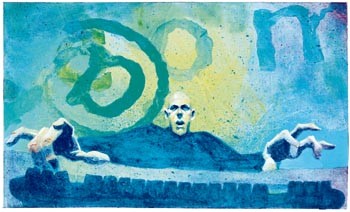
Talking Pictures

0

The Problem of God


François Duhamel

1, 2, 3, ‘Contact’: Jodie Foster’s character must declare her religious convictions before she can meet aliens in ‘Contact.’

Eugenie Scott and the linguistics of faith

By David Templeton

Writer David Templeton takes interesting people to interesting movies in his ongoing quest for the ultimate post-film conversation. This time out, he takes anthropologist/educator Eugenie Scott to see Contact.

YOU KNOW WHAT I think?” asks Dr. Eugenie Scott suddenly. “I think we non-believers need to find a term other than ‘spiritual’ to describe many of our profound experiences. I wish we could find a word that means awe and wonder and excitement and love, without the supernatural twist that ‘spiritual’ has.”

As we wait for our coffee to arrive, we’ve been rehashing our favorite moments from the film Contact, a remarkably powerful drama based on the 1984 novel by the late scientist Carl Sagan. Concerning a worldwide clash between science and religion that occurs when radio signals from deep space are detected by a single-minded scientist, Contact stars Jodie Foster as Ellie, a woman whose intense empiricism becomes an issue when she volunteers to be the first emissary to the solar system from which the signals originated.

In one key scene, Foster is asked by an international selection committee if she is a ‘spiritual person,’ by which they mean, does she believe in God? She doesn’t, and, squirming uncomfortably, it is clear that she doesn’t like the ambiguity of the word spiritual.

“It must have been terribly awkward,” Dr. Scott continues. “I can certainly identify with her. How do I talk about something that is non-material yet is also non-supernatural? How do I talk about the awe that descends on me when I go to the top of a mountain? Or when I hear the Queen of the Night’s aria from The Magic Flute, and the hair goes up on the back of my neck?

“I don’t think those feelings are supernatural, but they’re not exactly material either. So I wish I could come up with a term–one that wasn’t clunky–to express that. ‘Non-material non-supernaturalist’ doesn’t exactly fall trippingly from the tongue, now does it?”

Scott, a physical anthropologist with a résumé full of distinguished teaching appointments, is the executive director of the National Center for Science Education, a non-profit watchdog group; headquartered in Berkeley, the NCSE has monitored creation/evolution skirmishes in public schools since 1982. Additionally, Scott was a recipient, in 1991, of the Public Education in Science Award from the Committee for the Scientific Investigation of Claims of the Paranormal, and serves on the National Advisory Council of Americans United for Separation of Church and State.

“I would agree with good old Thomas Henry Huxley,” says Scott, as our order lands on the table, “who said, ‘The only reasonable attitude for a scientist to take would be agnosticism, because you really cannot know if God exists, so you shouldn’t be an atheist.’

“For a scientist, ‘I don’t know’ is a perfectly acceptable answer,” she continues. “You don’t accept the first explanation that comes along. Somebody shows up and says, ‘Aunt Rosie can find water with a forked stick. She’s found it five times in the last 10 years.’

“OK. Is there another explanation? To me the best thing we can do in our society–in terms of teaching people to think–is to get children trained immediately to say, ‘Is there a better explanation?’ And of these explanations, which is the better supported when I go to nature and look for the support?

She ponders this a moment, then switches gears.

“I remember reading–when the Martian meteorite was discovered in Antarctica–about some religious leader saying, ‘Maybe God seeded the universe with the potential for life and is just waiting to see what kind of intelligent creatures arise to worship him.’ Which here turned out to be pentadactyl featherless biped–and who knows what it’s going to be on Alpha Centauri?

“That approach of God seeding the universe is a real deistic view that scares the bejeezus, so to speak, out of the conservative Christians, deism being the idea that God is the prime mover of the universe, the divine clock-maker who designed the universe, wound it up, and set it to ticking but doesn’t really give a damn. It’s the flip side of the view of a personal God who listens to all your prayers and believes in you. In deism, he’s there, but he’s off in the hinterland someplace not really paying attention.”

“I don’t have a problem with that idea of God at all,” I shrug.

“And that’s why agnosticism works!” Scott slaps the table. “You know, I saw a bumper sticker the other day,” she laughs. “It said, ‘Thank God for Evolution.’ I can appreciate that. I wish we had more people with that kind of sense of humor. It would make my job a whole lot easier.”

From the July 31-Aug. 6, 1997 issue of the Sonoma County Independent.

© Metro Publishing Inc.
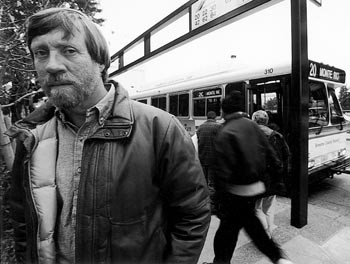
The Riot Grrrl on Mars

0

Life on Mars


What a Riot: Riot Grrrl Julia Perani and King of Mars Richard Goodman square off in Berkeley Opera’s latest adaptation.

Berkeley Opera brings a riot grrrl to town

By Gretchen Giles

LAST YEAR, the Sonoma City Opera went flashing into the past, commissioning an original opera about the life and dreams of Bear Flag Revolt loser General Mariano Vallejo. This year, they’re doing the only natural thing: they’re going to Mars. Via Berkeley. But of course.

Actually, this is easy to figure, given Sonoma City’s long affiliation with the Berkeley Opera, a well-respected company that has brought many summer productions up north.

Never ones for the stodgy, this year they’re putting on a production eloquently entitled The Riot Grrrl on Mars. Yep, in this production, it ain’t over ’til the riot grrrl sings.

Leaping from Gioacchino Rossini’s 1813 score for the commedia dell’arte romp The Italian Girl in Algiers, Berkeley Opera librettist David Scott Marley devised an entirely different story and lyric while disdaining to alter Rossini’s music, save for the addition of a theremin.

A theremin? “It’s a ’50s electronic sound,” explains Marley by phone from his East Bay home. “Oooooooooooh,” he demonstrates. Oh, that sound.

As familiar as the theremin should be the conceit of Riot Grrrl. Taken from the rich loam of 1950s comic book lore, the story is loosely based on Rossini’s original tale of a man who is kidnapped and sold into slavery in Algeria. The Italian Girl of the title travels to that exotic land to find her loved one and restore his freedom. To modern-day audiences, Marley reports, the concept of slavery and the ridiculing of foreigners is actually “not so funny.”

But take the story out of a real-life context, add some cool-looking ray guns and brightly costumed Martians, make the title character a punk-rock singer set to rescue her musician boyfriend from a TV-addled alien king, and you’ve got yourself a comedy.

Marley’s struggle has been to take the broad archetypes of commedia dell’arte, instantly recognizable to the audience of Rossini’s day, and to give this generation of opera-goers the same sense of the absurd and the wondrous.

“What,” Marley asks rhetorically, “is the equivalent of Algeria to a modern audience? We were looking for those things that have the same significance as they would to a period audience.”

When someone suggested that being kidnapped by a UFO had that same “never-neverland quality” to it, the idea was initially pooh-poohed. But the appeal grew, and so did Marley’s perplexities. Take the Italian Girl, for example. In Rossini’s time, the coupling of those two simple words evoked an image of an independent woman with wiles. Today, Marley correctly notes, that just means “a woman who comes from Italy.”

“So,” he continues, “my challenge became to find a typical archetype of a strong woman. I spent,” he sighs, ” a couple of months on that theme alone.” And then he hit upon the riot grrrl phenom of the early ’90s, exemplified by such go-it-alone rockers as Liz Phair and righteous babe Ani DiFranco.

“Some people were concerned that since an opera audience is made up primarily of older people, they might be put off,” says Marley. “But at no point do we expect the audience to come in armed with the finer points of punk rock.”

Keeping it light is the key for this popular rendering, which has received rave reviews in the San Francisco Chronicle during its continuing run at the Julia Morgan Theater.

Marley has a pretty good grasp on why his production is wowing ’em. “I’m concerned with keeping the theatrical values high and not sacrificing them for the musical values solely.

“Opera has had a strange history in America,” he mulls. “Since it was brought over by immigrants, it seems exotic and as though it’s just for rich people. Unfortunately, that’s the best way to fund it, and in order to attract contributors, you have to make it look like something that rich people would like. All of this leads to a kind of snobbery, and that,” he says, “is a shame.”

The Riot Grrrl on Mars plays Saturday-Sunday, Aug. 2-3, at 6:30 p.m. outdoors at the Sonoma Barracks. 20 E. Spain St., Sonoma. Tickets are $9-$22; box suppers are available with advance order. 939-9036.

From the July 31-Aug. 6, 1997 issue of the Sonoma County Independent.

© Metro Publishing Inc.

Silicon Vineyards

0

Silicon Vineyards


Michael Amsler

Heady Times: Mariposa Technologies’ Mark McGrady is part of a hi-tech boom that is transforming the local economy.

Cow chips to microchips: Sonoma County rides hi-tech boom.

By Paula Harris

WHEN NEW Sonoma County resident Christina Sunley paints a charming verbal picture of her “incredibly glorious drive to work down country roads” between Sebastopol and Petaluma, she isn’t describing the daily commute to a farm or a winery. Sunley, who recently relocated here from San Francisco, works in the research and development department at KnowledgePoint, a Petaluma-based computer software company.

Since leaving the daily grind of the city, she says, her mornings have become “uplifting.” Sunley has discovered not only an affinity with the Redwood Empire, but employment worth the relocation. She’s not alone.

Tom Mayer–manager of alternate deposition technologies at Flex Products Inc. of Santa Rosa, which uses hi-tech processes to manufacture anti-counterfeiting measures–moved his family here in February from Rochester, N.Y., where he worked at Eastman Kodak Digital Imaging Group. “We’d pretty much had it with the weather in Rochester,” he says of the harsh East Coast winters, adding that the other main selling point is “the country-type environment.”

Sonoma County, once synonymous with apples, wine, chickens, and dairies, is beginning to reap a whole new yield: a hi-tech harvest that’s increasingly attracting scores of newcomers toward a range of technologies emerging in the North Bay.

Until recently, most hi-tech workers and companies had not ventured north of Marin County, but the changes in the Sonoma County workplace are now being evidenced everywhere.

For instance, within the space of one month, a splashy half-page color ad for Rohnert Park’s Next Level Communications–that would have looked right at home in the San Jose Mercury News–appeared recently in the classifieds of one local newspaper. “I bet you didn’t know that the technology is being designed and manufactured right in your own neighborhood. Well it’s true and we’re thrilled to be here,” gushed the ad copy, ending with an impassioned “Sonoma County is a wonderful place to work and live.”

Soon afterward, an ad for Petaluma’s Advanced Fibre Communication showed up, complete with an alluring color photograph of lush, verdant vineyards. It also was fishing for prospective employees, declaring, “We’re located just 35 miles north of the Golden Gate Bridge in the heart of the Sonoma County wine region. Spend your free time hiking, mountain biking, exploring the coast, or discovering the perfect chardonnay.”

The hi-tech firm, which bills itself as “the best company in one of the best places in the world,” offers “competitive salaries, AFC stock options, relocation assistance, visa sponsorship, and generous benefits.”

That same week, yet another classified ad appeared, this time seeking employees for DSC Communications of Petaluma. Here, the bucolic town, formerly known as the “Egg Basket of the World,” has been renamed: Potential employees are invited to come work in “Telecom Valley.” That is a catchy reference to the dozen or so telecommunications companies that have mushroomed in Petaluma and Rohnert Park in the last few years, swiftly making the once-rural area a world leader in the telecommunications industry.

Shortly after running the ad, DSC held an open house with interviews screened by a 20-member management team. The event was advertised throughout the Bay Area, including Silicon Valley and Santa Clara.

“Over 120 people showed up,” says Ron Morgan, DSC’s senior human resources manager, who himself recently relocated here from Silicon Valley. “About 50 of them were from Sonoma County. But a large percentage were from telecommunications companies in Texas, the East Coast, and Canada. We’re one of the largest relocators into Sonoma County, and we’re getting a lot of people coming in and purchasing homes.”

Several days later, Don Ross, president of Ross, Lewin and Associates, a four-year-old Sebastopol-based company that specializes in hi-tech recruitment and that mainly places people in the telecommunications and data communications industries, held a talk at the North Bay Career Resource Center in Santa Rosa. The June 18 forum focused on the need to recruit from outside the area to fill positions. Ironically, the talk, which drew only a handful of local people–most of whom expressed little interest in working in the hi-tech field–blatantly illustrated the dilemma.

“The technology is growing faster than the local talent pool,” explains Ross. “It’s a good time for recruiters like myself. I’m getting paid for selling Sonoma County.”

High-tech in Sonoma County’s top companies.

AS COMPETITION for the hi-tech elite surges nationwide, new local companies are struggling to stand out enough to attract skilled employees to Sonoma County. It’s not a hard sell. Accentuating vines, vintages, and the “Valley of the Moon,” the Wine Country as a workplace is good enough to bottle.

It seems Sonoma County is attracting people from all across the country and beyond, who are seduced by the temperate climate, breathable air, affordable housing, and relatively unclogged freeways.

According to Ben Stone, director of the Sonoma County Economic Development Board, potential employees are beginning to equate this area with such desirable California locales as Carmel, Santa Barbara, and La Jolla.

“Sonoma County,” says Stone, “is becoming an attractive option for people from outside the area who may have been laid off or who are tired of the corporate world–people who are not wedded to a huge conglomerate and find they can fulfill their dreams on a smaller scale.”

He adds that many come here to start up small software companies and computer-based home businesses of their own, such as firms that design Websites.

The demands of the Silicon Valley lifestyle are taking their toll on many employees, says recruiter Ross. “Well-paid couples in the South Bay find themselves working and commuting 11 or more hours a day. They have no life,” he explains. “There’s pressure in every work situation, but nowhere near the level of insanity as in [Silicon Valley].”

Several real estate agents contacted for this article confirm that they are seeing a marked increase in buyers from San Jose, San Francisco, and Marin County. Recent statistics show moderate growth during the past year in the recovering local real estate market, with the lion’s share concentrated in Petaluma, where housing for North Bay hi-tech workers is at a premium.

In some cases, Petaluma real estate agents say home buyers are paying $20,000-$30,000 above asking price to clinch a deal. And there have been reports that Sonoma County homeowners whose houses are on the market have been called by Silicon Valley search companies who want to put them in touch with prospective Silicon Valley buyers.

Many agree that newcomers to this area find they can create a lifestyle they want. They can live on farms or ranches, in small towns or urban centers, amid the diverse local landscapes and various microclimates at what job recruiters like to call “the speed of life.”

Carolyn Graham, director of client services for the North Bay Career Resource Center, agrees that people are moving into the North Bay from San Francisco and the South Bay because of the quality of life. To many, Sonoma County offers a rural alternative to the densely packed corridors, crowded housing, and rising rents of the East Bay, South Bay, and San Francisco. Yet it is still within a comfortable distance to the hi-tech hubs of San Jose and San Francisco.

“These people have clarified their values and are willing to make less money to get out of the rat race of Silicon Valley or the City and to balance personal life and work,” says Graham. “In the last two or three months the employment outlook had definitely improved. There are a lot more jobs posted in the classifieds.”

In addition, Sonoma County salaries are improving, says Ross. “The trend is that salaries are finally coming up to par [with those in neighboring regions], which is a really good sign for the local economy,” he says. “I’ve been in the county 27 years, and generally, across the board, there was a wage inferiority in Sonoma County–employers got away with paying less–but now there’s a change and companies are realizing to grow you’ve got to pay the market rate.”

According to Ross, “It’s not unheard of for someone with five years of hi-tech experience to earn $80,000 to $90,000 in Sonoma County.” Yet some recruitment experts say a significant number of hi-tech workers living here continue to commute into Marin County and San Francisco without realizing that comparable jobs exist in their own back yard.

Ross predicts that, owing to the “critical mass” phenomenon, local technology industries will continue to grow. “A few years ago, there were just a couple such companies here, and it was harder to get people to move out from other areas because there weren’t that many games in town,” he says. “Now there are so many companies–the software and telecommunications industries are clearly burgeoning–it’s becoming known that stuff is happening in Sonoma County and it makes it easier to attract people.

“There’s enough technology here, and now people see a future in the area.”


Michael Amsler

BUT NOT EVERYONE is turned on by this local technology revolution. In Sebastopol, a plan by O’Reilly and Associates, a successful publishing and software company, to build a 168,000-square-foot business park on a 14-acre apple orchard stirred bitter emotions among some residents concerned about the potential loss of small-town charm.

The Sebastopol City Council eventually approved a scaled-down version of the project in October, but there is a lawsuit in the courts attempting to stop it.

“We grew and we were looking at the long-term possibility to stay in Sebastopol,” says company president Tim O’Reilly. “This is a long-term project to build an office park in 10 to 15 years; the outcry was that it was too big, but in 10 to 15 years it won’t be out of scale at all because this area is going to continue to grow.”

An Analysis of Economic Vitality report prepared for the Sonoma County Development Board by Regional Financial Associates, published in September, identified manufacturing/ technology–broken down into information technology, hi-tech electronics, hi-tech instruments and optical goods, and other hi-tech value-added manufacturing–as one of the main engines driving the local economy.

The report finds that within the Bay Area many software firms are migrating north along the Highway 101 corridor from such traditional centers of industry as Santa Clara and Marin counties to less congested and less expensive places to live and work like Sonoma County. The report cites the Marin-based software firm Broderbund, which has expanded its warehousing and distribution operations into Petaluma, as an example. Another Marin company, Autodesk, also moved some of its offices into a Petaluma business park.

Although information technology–technology designed to manage, transmit, and process information–is still a young industry in the North Bay, and a small contributor to the county’s overall growth, the report calls it “the fastest growing cluster when measured by job growth and by output,” and notes that it has great potential.

The study concludes that a skilled workforce is essential to capture a significant share of the industry, noting that most universities and colleges with programs in computer sciences and engineering are concentrated on the San Francisco Peninsula and in the East Bay.

According to published reports, only 10 percent of Sonoma State University students are enrolled in hi-tech-related majors.

IN AN EFFORT to fill job openings, many North Bay software/hardware, engineering, telecommunications, and multimedia companies–including Advanced Fibre Communications, Autodesk, DSC Communications, Hamilton Software, Parker Hannifin/Compumotor, and SOLA Optical–will participate in a huge career fair Sept. 5 and 6 at the Marin Center in San Rafael. Those fairs usually are held in San Jose.

According to Jo Curtan, president of Career Expo, which produces these fairs on emerging technologies, “There’s a major shift–hi-tech businesses are moving into Marin, Sonoma, and Napa. A number of our clients are asking us to produce an event, and we decided the time had come to produce something on-site. There are hundreds of technical positions in the North Bay counties.”

The company hopes that the “Careers at the Speed of Life” event will entice potential employees with career opportunities and a more laid-back, outdoors-related quality of life. It will be promoted in print throughout Bay Area and internationally via the Internet.

“It’s the first time serious [industry] attention is being paid to this particular area,” says Curtan. “It will help put the North Bay on the map as a technical community.”

About 50 companies are expected to participate in the job fair, which now has its own Website ().

“The Website has links to lifestyles in the North Bay and overall basics about the area for people that are thinking about relocating here,” explains realtor Allan Corey of Santa Rosa­based Polley, Polley, and Madsen.

“Sonoma County has been growing, and we’ve been getting involved with more companies here,” agrees John Buchwald, chairman of SOFTECH, a 225-member non-profit organization that since 1994 has acted as the North Bay’s chamber of commerce for hi-tech firms. “We finally have enough jobs to support the industry, and we’re drawing in more expertise.”

The effort is being welcomed by many company executives, who say they are trying to fill an unprecedented demand for technically skilled and support personnel. “There’s not a large pool of engineers in the telecom industry,” says Stefan Mazur, president and CEO of Mariposa Technology in Petaluma, a 7-month-old telecommunications company specializing in a technology that chops data and voices into small, 53-byte cells and transmits them over high-speed links to the Internet.

Mazur says his company searches from Connecticut to Indonesia for prospective workers. Out of his 20 employees, over half are from outside the area, he adds, speaking from Santa Barbara, where an ad is running in the local paper in hopes of attracting engineers into Sonoma County.

He sees a big future for hi-tech in Sonoma County if housing and employee issues can be resolved. “There’s no question that it’s a growing area. The Bay Area has reached a limit expanding its geographic capabilities–the only place left is north. Clearly, Petaluma, Santa Rosa, and Rohnert Park are in the right spot,” says Mazur.

“The speed of expansion is directly linked to the growth of housing. It’s not going to shrink; the area is definitely on an expansion course.”

From the July 31-Aug. 6, 1997 issue of the Sonoma County Independent.

© Metro Publishing Inc.
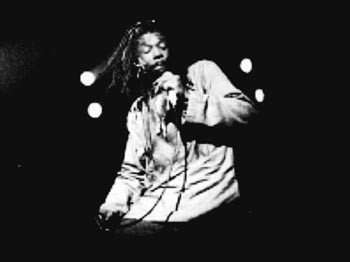
Purple Berets

0

Local Discord


Michael Amsler

Seeing Red: Annie Haught, left, of the Purple Berets joined protesters Monday.

Women’s rights advocates say they’re tired of the same old song and dance

By Paula Harris

A LANGUID GRAY Monday morning at the rose garden outside the Sonoma County sheriff’s offices is abruptly shattered by the cacophony of a dozen piercing whistles and noisemakers. Two large banners are unfurled. Suddenly, louder still, the voices of some 15 women–aged teens to 60-plus–erupt in a chorus of whooping and singing.

The lyrics aren’t pretty.

“I don’t know but I’ve been told/ Sheriff’s Department is mighty cold./ Women here ain’t got a chance/ When those guys do their hateful dance,” chant the members of the Purple Berets, a local women’s activist group led by Tanya Brannan. The group is out to “blow the whistle on the Sheriff’s Department for its treatment of women in this county,” she says.

A fervent Brannan checks off a list of reasons for the demonstration:

First, free Irene Hoener–the wife of Sheriff’s Department sexual assault detective Ed Hoener–an ex-sheriff’s dispatcher who on July 9 held a gun to her head and threatened to commit suicide at the sheriff’s dispatch center. She was subsequently incarcerated, was denied a meeting with her counsel, and is awaiting charges. The Purple Berets want Hoener freed or at least transferred to a mental health facility, rather than remaining in the county jail.

Second, investigate the circumstances surrounding the death of Joanie Holmes, 35, who died in custody in early June just two days after being booked into the Sonoma County Jail and reportedly after being denied medical help.

Third, fire Sheriff’s Capt. Casey Howard, head of the patrol division and former head of internal investigations. He was arrested June 8 on suspected felony drunken driving after running over his wife’s head following a night of partying with fellow law enforcement officers in Marin County. He reportedly failed a breath test, but was allowed to return to work two days later, charged with a misdemeanor.

Finally, the Purple Berets are demanding that Acting Sheriff Jim Piccinini step down and that the Board of Supervisors appoint a law enforcement official from outside the county as acting sheriff until the next election in 1998. Piccinini didn’t respond to phone calls this week.

“That’s unlikely to happen,” says county supervisor Mike Reilly. “We’ve not sensed a groundswell of support to topple that department. If there is sufficient public interest in making a change, the public can vote on it.”

The July 28 demonstration was just the latest confrontation in an ongoing battle between local women’s rights advocates and Sheriff’s Department officials, who have been criticized during the past couple of years for mishandling domestic violence, sexual assault, and child abuse cases. A recent Sonoma County grand jury report and a 1996 state attorney general’s investigation supported those allegations.

The Purple Berets say they will continue to make their grievances heard. “It’s time for the Board of Supervisors to appoint an outside sheriff to clean the place up,” says Brannan, and the women whoop their approval.

“I’m trying to show my daughter what’s going on,” says Linda Purrington of Parents for Title IX, who is participating with her daughter Cheyenne, 14. “How women are treated in the system.”

Branka Thompson agrees, saying she has “lots of anger” about the system. “There’s no justice, nobody cares,” she complains.

During the demonstration, the women march, singing and handing out 500 fliers about the incidents. At one point, they enter the Sheriff’s Department offices, still singing, and are quickly hustled out by two sheriff’s deputies. “Can you go outside to do this so we can conduct business?” asks one deputy.

Later, about a dozen members of Purple Berets sit in court to demonstrate support for Irene Hoener during her scheduled preliminary hearing. Hoener, shackled at the waist–a thin and pale figure with thick dark hair and glasses–appears dazed by the court proceedings. After some discussion, the preliminary hearing is continued until Aug. 25.

“She’s holding on,” answers her attorney, deputy Public Defender Robert Faux, when asked about Hoener’s emotional state.

Faux, who recently got the case, says he is concerned that although Hoener is observed and monitored in jail, it is not a full mental health facility. “No actual treatment is provided in limbo status,” says Faux, adding that Hoener’s husband has not contacted him.

Brannan is angry about the tight security measures she observed in the courtroom. “Why do you need seven bailiffs for a 90-pound woman?” she asks. “And [Hoener] looks overmedicated. This woman is being held at her husband’s jail instead of a mental health facility. It’s just despicable.”

Brannan, a member also of the Coalition Organizing for Police Accountability in Sonoma County, says that that ad hoc group continues to consider the possibility of creating a citizens’ police review board in the wake of several recent cases in which suspects have died or suffered severe injuries after confrontations with local law enforcement officials.

She says the first meeting drew 100 people. “They’ve divided into three work groups,” explains Brannan. “One to investigate the different citizens’ review models, one to organize the community to build consensus, and one to investigate and provide support to families of victims.”

“I’m concerned on many levels for the safety of women, the mentally ill, drug addicts. I’m shocked about the amount of apathy about police ineffectiveness,” says Cynthia Ott, who moved to Sonoma County from Oakland in January, and is one of several organizers hoping to start a citizens’ police review board locally.

“We want to get something going that’s palatable for the average Sonoma County resident,” she says.

From the July 31-Aug. 6, 1997 issue of the Sonoma County Independent.

© Metro Publishing Inc.
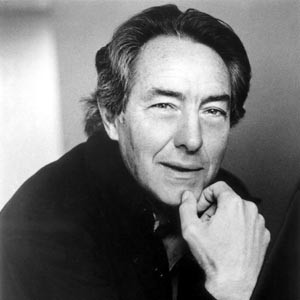
Varietal Wines

0

Eccentric Uncles


Michael Amsler

Mix Up: Exotic varietals have been lurking in bottles and vineyards for years. Your father just didn’t know it.

Strange stuff and other varietals

By Steve Bjerklie

USED TO BE, the world was understandable because Walter Cronkite explained it for us. Order was our comfort: The Yankees appeared every year in the World Series, every morning began unfailingly with “Captain Kangaroo,” and our elders’ wine from California never involved more than cabernet, zinfandel, pinot noir, and chardonnay. If they wanted something exotic, a Gewürztraminer once a year more than sufficed. Maybe a Johannisberg riesling. Sebastiani’s barbera was bought on occasion, of course, just out of loyalty, but barbera was the only weird red.

When merlot first appeared as a separate varietal about 10 years ago, my father sniffed, “What’s this for? Merlot’s a junk blending wine.” He was a bank auditor, and I think merlot offended his sense that all things must fit into columns in order to be appreciated; merlot back then was like a note scribbled in the margin. Now Dad lives in New Hampshire, and it’s a good thing, too: The wine shelves here are loaded with strange stuff: viognier, mourvedre, pinot gris, grenache, syrah. It’s as if Ford manufactured Volvos, Ferraris, Yugos–and Fords.

In truth, strange stuff has been grown in California for decades. Sean Thackery, who specializes in odd, celestially named blends (“Orion,” “Pleiades”), has discovered a 70-year-old syrah vineyard in the Napa Valley, and Ted Bennett up at Navarro Vineyards in Mendocino County found 50-year-old head-pruned mourvedre in the Redwood Valley near Ukiah.

Before varietals began to take prominence at the upper end of the California wine market back in the 1960s, most of the strange stuff went into generic burgundy. We’ve been drinking mourvedre, grenache, carignane, and the like all along, we just didn’t know it.

Now a new generation of winemakers is taking these grapes on their own, sometimes with excellent results. At the very least, the snazzy, startling fruit of syrah provides welcome comedy after so much self-absorbed pinot noir; carignane’s salt-of-the-earth nobility is like drinking folk music; and grenache’s combination of Chanel No. 5 nose and redwood-tree flavor brings forth scenes of May Day frolics–not really a picture created by, say, BV Private Reserve. So let’s have more of these, please–and the usuals as well, of course.

Here are three wines from Sonoma County made from some of these eccentric-uncle grapes, rated on a four-star system (one star is drinkable, four stars unforgettable):

Pellegrini 1995 Alexander Valley Carignane

Jancis Robinson, editor of the authoritative Oxford Companion to Wine, calls carignane (known as carignan in France, carignano in Italy, and carinena in Spain) “the bane of the European wine industry” because its widespread planting crowded out nobler grape varieties, but I find the grape to produce, on most occasions, a worthwhile and drinkable red.

Pelligrini’s is typical: soft on the edges, fruity and slightly tannic in the center, and cedary in the nose–an ideal table wine in other words, not complex but otherwise full-flavored. Indeed, complexity misses carignane’s purpose. While vintners are naturally attracted to cabernet, chardonnay, pinot noir, and the other celebrity varietals, the wine industry would do well to make more carignane. The way to get more people to drink more wine is through $10-or-less daily quaffs, not $20 or $30 collectors’ bottles. Carignane is cheap but goes well with dozens of foods, from mild white cheeses to pasta to beef. Two and a half stars. $9.75.

Philip Staley 1994 Russian River Valley Allegre

This is 100 percent grenache–the world’s second-most planted grape variety, believe it or not. (First place is held by airen, a grape variety unknown in the United States but from which the Spaniards make most of their wine and all of their brandy.) A few years ago grenache became one of the darlings–mourvedre was another–of the “Rhône Rangers,” a posse of California winemakers led by Bonny Doon’s Randall Grahm and Joseph Phelps in Napa dedicated to the idea that California, with Rhône-clone soils and a more consistent climate, could produce better Rhône-style wines than could the Rhône Valley in France. I don’t know about that, but this Staley grenache is a well-balanced, well-made wine that I’d pair with pork or lamb because of the wine’s small center of fruit surrounded by satisfying dryness. Like the Pellegrini carignane, an excellent vino di tavola. Two and a half stars. $12.00.

Christopher Creek 1993 Russian River Valley Syrah

In a blind tasting with my nose pinned, I’d guess this smooth beauty was zinfandel. It’s got zinfandel’s characteristic redwood forest/wildflower meadow argument going on. But the fresh-cut-hay nose gives it away as syrah, the grape known as shiraz in Australia and the basis for many fine Rhône wines in France. Like zinfandel, syrah–not to be confused with “petite sirah,” which is another, arguably inferior grape variety–seems to adapt well to whatever style its vintner desires. Most Australian shiraz is fruity and non-tannic, great wine for drinking now. Most French syrah Rhônes could age longer than you. I’m glad Christopher Creek held its ’93 syrah back: the tannins have softened a bit now, allowing a dark chocolate and raspberry combination to come through. The nose reminds me of eating barbecue after a day picking blackberries, all brambles and sweetness and smoke. This is great stuff. Three stars. $12.95.

From the July 31-Aug. 6, 1997 issue of the Sonoma County Independent.

© Metro Publishing Inc.

The Wild Bunch: An Album in Montage

0

Something Wild


Image as Everything: Director Sam Peckinpah and actor William Holden caught unaware on the set of ‘The Wild Bunch.’

Director Sam Peckinpah caught in ‘Montage’

By David Templeton

FOR OVER a quarter of a century, crammed onto a back shelf in the cavernous film vaults of Warner Bros. Studios, a box of old 16-mm film cannisters waited, unopened since being abandoned and forgotten in 1968. Addressed to “Warner Bros.–Hollywood, Ca.,” adorned with a weathered Mexican shipping label, the mysterious box was sealed up as tight as a drum.

In 1995, celluloid archivist Bill Rush accidentally stumbled upon the package while poking through a portion of the vault scheduled to be cleaned out, with the contents targeted for the dumpster. Upon opening the box, Rush discovered 72 minutes of raw footage–all black and white, all silent–of legendary director Sam Peckinpah and crew filming a movie in the desert outside Torreón, Mexico. The movie being made was The Wild Bunch–Peckinpah’s masterpiece, a film that redefined the Hollywood western–and the discovered celluloid was behind-the-scenes, amateurishly shot, and fully anonymous.

“No one was credited with the footage,” exclaims Peckinpah scholar Paul Seydor, into whose hands the footage eventually landed. “All attempts to identify the shooter have come up empty.” A respected film editor (Tin Cup, White Men Can’t Jump, The Program), Seydor is also renowned as the author of Peckinpah: The Western Films (University of Illinois Press, 1980), an inventive, insightful, surprisingly emotional study of the late director’s life and work, recently rereleased with new material and the added subtitle A Reconsideration.

When asked to put the footage into some kind of order as part of a lavish Wild Bunch collector’s edition, Seydor was at once exhilarated and stymied.

“Looking at all those random, disconnected pieces,” he says, speaking by phone from his Los Angeles editing room, “my first thought was a combination of fascination and ‘My God! What am I going to do with this?’ Everybody wanted a half hour, but I thought I’d be lucky to get 10 minutes out of it.”

He underestimated himself.

The result of his labors is The Wild Bunch: An Album in Montage, a 32-minute documentary that was nominated last year for an Academy Award in the best documentary short category, and which has inspired gold rush­like interest in the once-undervalued contents of film vaults throughout Hollywood. An Album in Montage screens Aug. 3 at the Sebastiani Theatre as part of the Wine Country Film Festival. Seydor will attend.

Intercutting the black-and-white footage with voice-over recollections of the cast and crew, remarks from Peckinpah’s own writings–voiced by actor Ed Harris–and wide-screen, full-color clips from The Wild Bunch itself, Seydor has fashioned a film that captures the excitement of the creative process, a witness to Peckinpah’s invention of unscripted scenes out of the thin air and of his own intensely focused mind.

Some sequences–such as the elaborate preparation and countdown toward the famous “bridge scene,” in which a posse on horseback is dropped 25 feet into a raging river while a bridge is dynamited beneath it–are at least as exciting in Seydor’s documentary as they are in the film itself. There are many such delights. The footage of Peckinpah improvising what he termed “a ‘walk’ thing”–in which actors William Holden, Ben Johnson, Warren Oates, and Ernest Borgnine stride purposefully to their deaths–adds an extra heaping of power to a scene already considered one of the most memorable in film history.

Remarkable also is that the black-and-white footage, which just happens to have captured the Wild Bunch’s two most famous scenes, was the result of only two or three days of filming.

“Whoever it was behind the camera,” acknowledges Seydor, “picked the right three days to shoot. And it’s all so loose and spontaneous, almost as if Peckinpah and the crew were unaware they were being filmed. I’ve theorized that the shooter was a member of the camera crew. The camera on which it was shot was a handheld Bolex, with a wind-up motor. They were essentially like the video cameras of today; people just shot them the way they take snapshots.”

Seydor, who holds a Ph.D. in American civilization from the University of Iowa, is fond of evoking Emily Dickinson’s well-known definition of poetry when describing the first time he saw The Wild Bunch .

“You know you’re in the presence of poetry when you feel the top of your head coming off,” he says, with a short, appreciative laugh. “That’s generally been my experience of Peckinpah’s films, but it describes my first viewing of The Wild Bunch particularly well. He’s just so exciting to watch. What he could do with violence and collision!”

Asked what it is about Peckinpah’s work that excites him, Seydor is momentarily silent. “Every time I’m asked that, I get tongue-tied,” he finally replies. Then, as if to prove himself a liar, he erupts into a passionate display of non-tongued-tied oratory.

“Each time I see The Wild Bunch,” he enthuses, “it’s like listening to Beethoven, it’s like watching Beethoven’s symphonies brought to life. There’s such a remarkable, wonderful, sensual imagination at work, a real physical, kinetic imagination, almost a tactile quality to the imagery. I find it very exciting.”

And has his work with the mysterious box of footage enhanced his appreciation of the film?

“I’ve learned more about Peckinpah by seeing him in action, making things up as he went,” Seydor replies, “but my fondness for The Wild Bunch is so complete, I don’t think anything could make me appreciate it more than I already do.”

The Wild Bunch: An Album in Montage screens with Edward James: Builder of Dreams on Sunday, Aug. 3, at the Sebastiani Theatre. On the Plaza, Sonoma. Films begin at 3 p.m. Admission is $5. For details, call 935-3456.

From the July 31-Aug. 6, 1997 issue of the Sonoma County Independent.

© Metro Publishing Inc.

The Scoop

Alive & Smoking

The flaming truth about a burning desire

By Bob Harris

REMEMBER a few months back when Pedro Molina was executed in Florida, and the chair caused his head to burst into flames a foot high? That was the second time Florida’s chair did that to somebody, which is why the locals proudly call their chair “Old Sparky.”

While I don’t agree with what they’re doing, at least they have a dark sense of humor.

A judge in Jacksonville–a circuit judge, as it happens, whose friends call him by the initials A.C.–has now ruled that strapping somebody into “Old Sparky” and smoking their head is not cruel and unusual punishment.

Hello? Since when is a flaming head not unusual? That’s the whole reason it was in the news. I don’t know anyone whose head has burst into flame recently, and I think I’d remember it if I did. “Old Sparky” has its own special nickname because it is unusual, and for no other reason. Burning hasn’t been an accepted form of execution since medieval times.

A.C., the circuit judge, also says the electricity wasn’t cruel, because Molina died quickly and didn’t suffer conscious pain. But doctors disagree about that, so how can the judge claim to know that for sure? We’d really have to ask Pedro, but he’s not saying much.

Thing is, most folks in Florida were glad to hear that Pedro flamed up real good. State officials even bragged about it. In fact, proposals to change the manner of execution aren’t gaining a lot of ground, because, darn it, lethal injections just don’t make the sprinklers kick on the same way. The flaming head satisfied a lot of angry people.

Which means that, for a lot of folks, cruelty was the whole point.

Cruel and unusual? Absolutely.

But we’re getting revenge for the victims, right? Go ask the relatives of Pedro’s supposed victim if they enjoyed the barbecue. You might be surprised. Some of them think he was innocent.

But hey, the family’s supposed to enjoy the execution the most. Molina might have been innocent? We don’t want to hear that. That’s also cruel. Too bad it’s not unusual.

SOMETIMES THE BEST intentions in the world don’t mean something’s a good idea.

Kids growing up in some parts of Venice, Calif., have it tough. They’ve had gang problems, and there were a bunch of drive-bys a while back. You know the story: too many kids with not enough hope and too many guns.

The Boys and Girls Clubs of Venice have been working hard to keep kids on the right side of the street, and they’re trying to build a new facility. So you’d think there wouldn’t be any objections to somebody who decides to hold a raffle and raise $15,000 to help out.

Except for one thing: The raffle prizes were brand-new revolvers, with a grand prize of a new semiautomatic rifle.

That’s right–a well-intentioned fellow named Yank Price thought that the way to reduce the numbers of drive-bys was to go to a show sponsored in part by Guns & Ammo magazine and Corbon, an ammunition maker whose slogan is “Street Proven Performance,” and raffle off a bunch of handguns.

To their credit, the Boys and Girls Clubs turned down the money.

Thank goodness they did. Otherwise, next they’d also have to accept aggression counseling from Albert Belle, racial sensitivity training by Fuzzy Zoeller, and an anti-arson program sponsored by Zippo lighters.

At least this Price guy was aiming to do the right thing; he just missed. Let’s hope his aim is better on the range.

WE ALL KNOW that public school teachers have to put up with a growing amount of crap. Now, unfortunately, that’s finally true in a literal sense.

In Compton–it’s California’s week, apparently–Dominguez High School teacher Shannan Barron says that while she was leaving her classroom recently, four students poured a wastebasket of liquefied feces on her.

The good news: She’s physically OK, although she’s getting vaccinations for tetanus, and whatever other cooties might be in play. The bad news: The police haven’t arrested anyone in the assault, and no witnesses have so far been willing to come forward to help identify the perps. Not surprisingly, Ms. Barron doesn’t intend to go back to work. Can you blame her?

According to the California Department of Education, the percentage of teachers who quit because of discipline problems has more than doubled in the last decade. Teachers across the country have also been attacked recently with handguns, poison, and sledgehammers. Great–all we need now is a noose and a candlestick and you’ve got a game of Clue.

The worst part of Ms. Barron’s story isn’t even the attack itself. Get this: School district officials are insinuating that she made the story up, even though a vice principal saw the stains on her clothing and escorted her to the shower, and the school board president and another teacher have put up 10 grand from their own pockets as a bounty on the chip tossers.

The district officials want to prevent the Compton schools from getting a bad name. Which is precisely what they’re giving it. Bad enough the teacher gets dumped on by the students. She shouldn’t have to get it from her bosses, too. Shannan Barron deserves better. Hell, she ought to become some sort of poster girl for the teachers’ unions. What happened to her is a perfect metaphor for what teachers everywhere are dealing with.

From the July 31-Aug. 6, 1997 issue of the Sonoma County Independent.

© Metro Publishing Inc.

MLKJ Assassination

Who Shot Martin Luther King?Why it's ludicrous to put all the blame on unsophisticated, doomed James Earl RayBy J. J. MaloneyAs 69-year-old James Earl Ray wastes away in a Tennessee prison--suffering from terminal liver disease--even the family of Dr. Martin Luther King, Jr. argues that he should be allowed a trial on whether he killed the Nobel Prize winning...

The Scoop

Tabloid TrashBy Bob HarrisBACK ON JULY 25TH, while that whole Andrew Cunanan deal was happening, the L.A. Times wrote an editorial condemning the major media coverage of the case. The editorial was called "Distortions of the Tabloid Style: Cunanan Coverage Shows How Perspective Can Be Lost." Here are a few excerpts:"Violent crime may be declining . . ....

Drug War

Marines "Score" One in Drug WarBy Jim HightowerThe United States Drug War, with its multibillion-dollar budget, its high-tech arsenal and its use of the U.S. military on American soil has gunned down Ezequiel Hernandez Jr. just outside of Redford, Texas, right on the Mexican border.Far from chalking-up a successful hit, though, it turns out that Hernandez was not a...

Talking Pictures

The Problem of GodFrançois Duhamel1, 2, 3, 'Contact': Jodie Foster's character must declare her religious convictions before she can meet aliens in 'Contact.' Eugenie Scott and the linguistics of faithBy David TempletonWriter David Templeton takes interesting people to interesting movies in his ongoing quest for the ultimate post-film conversation. This time out, he takes anthropologist/educator Eugenie Scott to...

The Riot Grrrl on Mars

Life on MarsWhat a Riot: Riot Grrrl Julia Perani and King of Mars Richard Goodman square off in Berkeley Opera's latest adaptation.Berkeley Opera brings a riot grrrl to townBy Gretchen GilesLAST YEAR, the Sonoma City Opera went flashing into the past, commissioning an original opera about the life and dreams of Bear Flag Revolt loser General Mariano Vallejo....

Silicon Vineyards

Silicon Vineyards Michael AmslerHeady Times: Mariposa Technologies' Mark McGrady is part of a hi-tech boom that is transforming the local economy.Cow chips to microchips: Sonoma County rides hi-tech boom. By Paula HarrisWHEN NEW Sonoma County resident Christina Sunley paints a charming verbal picture of her "incredibly glorious drive to work down country roads" between Sebastopol and Petaluma, she isn't...

Purple Berets

Local DiscordMichael AmslerSeeing Red: Annie Haught, left, of the Purple Berets joined protesters Monday.Women's rights advocates say they're tired of the same old song and danceBy Paula HarrisA LANGUID GRAY Monday morning at the rose garden outside the Sonoma County sheriff's offices is abruptly shattered by the cacophony of a dozen piercing whistles and noisemakers. Two large banners are...

Varietal Wines

Eccentric UnclesMichael AmslerMix Up: Exotic varietals have been lurking in bottles and vineyards for years. Your father just didn't know it.Strange stuff and other varietalsBy Steve BjerklieUSED TO BE, the world was understandable because Walter Cronkite explained it for us. Order was our comfort: The Yankees appeared every year in the World Series, every morning began unfailingly with "Captain...

The Wild Bunch: An Album in Montage

Something WildImage as Everything: Director Sam Peckinpah and actor William Holden caught unaware on the set of 'The Wild Bunch.'Director Sam Peckinpah caught in 'Montage'By David TempletonFOR OVER a quarter of a century, crammed onto a back shelf in the cavernous film vaults of Warner Bros. Studios, a box of old 16-mm film cannisters waited, unopened since being...

The Scoop

Alive & Smoking The flaming truth about a burning desireBy Bob Harris REMEMBER a few months back when Pedro Molina was executed in Florida, and the chair caused his head to burst into flames a foot high? That was the second time Florida's chair did that to somebody, which is why the locals proudly call their...
11,084FansLike
4,606FollowersFollow
6,928FollowersFollow