
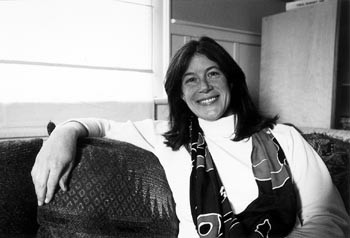
California Art

0

Art History


Golden State: The work of painter Millard Sheets, such as “Burns Bros., 1936,” above, documents California as it was.

“California Scenes” exhibit paints the state

By Gretchen Giles

SURELY THERE ARE MANY of us left who remember those times, in the 1930s and ’40s, when California was still an unmolested land of yellow hills, green oaks, and golden promise. The Depression was bending the nation at the knees, but California remained relatively untested, booming still with land developers, timber harvesters, farmers, speculators, filmmakers, and the tidal bounties of the ocean.

That time is not lost for those with memories or life too short to recall it, captured yet in the paintings of the era. “California Scenes,” an exhibit of some of these works opening Aug. 21 at the Sebastopol Center for the Arts, evokes that decade before the Second World War when young painters such as Millard Sheets armed themselves simply with a set of watercolors and an eye for the land.

Curated by Sheets’ son David Stary-Sheets, a Laguna Beach gallery owner who formerly had a gallery in Gualala, “California Scenes” features the work of Sheets and 26 contemporaries. After leaving Sebastopol, the exhibit will travel to the Orange County Museum of Art and the Ventura Museum of History and Art, not dismantling back into the collectors’ homes from which it was culled until early next summer.

“I think that the important thing from the standpoint of a show like this is that [the artists] are portraying a period of time in history. They are a commentary on that time, and in relationship to that time. It was two of the roughest decades that this country’s ever been through,” says Stary-Sheets by phone from his Southern California gallery.

“They portrayed it in the sense of how they lived it, and luckily for Californians, it wasn’t so bad as the rest of the country, so there’s an optimistic quality to the works.

“Art is as important in describing historical events as all of the articles in all of the papers of all time,” he continues. “For centuries, art was the communicative force, and now it’s TV and radio and newspapers, which I think are very important, but we’ve lost the sense of the importance of communication through the arts.”

Communicating is paramount to the works shown in “California Scenes.”

“They were early American impressionists,” Stary-Sheets says of the artists. “They were painters who were painting real life, and what was happening in city streets and the construction of buildings and those kinds of views were much more interesting to this young group of artists.

“Now, it wasn’t just in California where the idea of the American scene was being recorded,” says Stary-Sheets, who is an expert on this era. “It was a national movement. It just happened that in California there was this absolute fascination with watercolors.”

Long considered useful for sketching, for containing quick ideas, and for grading out color concepts, watercolors are often the sneered-at sister of the painting media. For Sheets and his contemporaries, they were pure magic.

According to Stary-Sheets, the work of his father–who was also a renowned architect, known for his murals and for the brilliance found in his designs for over 40 Home Savings and Loans buildings statewide–“brought watercolor to national recognition as a finished form of art. When I say that, I’m not ignoring the fact that [painter] Winslow Homer had done that almost a century before, but he was an individual who only served himself and his art; he didn’t cause watercolor to be accepted nationally.

“Millard and his contemporaries brought watercolor to the masses,” says Stary-Sheets, who refers to his father formally in conversation as ‘Millard Sheets.’

More masses may become familiar with these watercolors if a plan to house a permanent collection of Sheets’ work is successful. A donor stands poised to bestow some 55 of the painter’s works on the center if matching funds to build a separate housing for them can be raised. Inspired in part by Tony Sheets, Millard’s Sebastopol-based son, and an artist who sits on the center’s board, this endowment could prove very significant to the center and to the county as a whole.

IRONICALLY, Sheets is best known for his oil paintings, in which medium he painted a yearly exhibit; the watercolors generally languish in drawers. “His watercolors are in every museum in the country; you just never get to see them,” says Stary-Sheets shortly.

Not slid away, however, are his wartime works, paintings done in Burma depicting the brutality of the war and the terrific injustices of life, such as children starving outside of restaurants while rich people dined richly. They are on permanent display at the Department of Defense in Washington, D.C.

“It’s probably going to be recognized as one of his most important contributions,” says Stary-Sheets, “but it’s very tough stuff. And the pictures that I’ve picked for the exhibit in Sebastopol are not the starvation pictures. I want people to come in and enjoy the show and gain knowledge, but not turn people’s stomachs.”

Millard Sheets lived for almost 82 years, not an inconsiderable time. “He had a heckuva a life,” says his son. “I wish that he was still here, but he was pretty well satisfied that he had met the challenge.”

And like his life, his work lives on. “Properly cared for, just like any work of art, watercolor is as durable as time. After all,” says Stary-Sheets, referring to tomb and cave paintings, “the oldest paintings known to man are watercolors.”

California Scenes” shows Aug. 21 through Sept. 28 at the Sebastopol Center for the Arts. A public reception is planned for Thursday, Aug. 21, from 6 to 7:30 p.m. Tony Sheets gives a special presentation on Thursday, Sept. 4, at 7 p.m. 6821 Laguna Park Way. 829-4797.

From the August 14-20, 1997 issue of the Sonoma County Independent.

© Metro Publishing Inc.

100 Black Men

0

100 Strong

SINCE ITS INCEPTION in 1990, 100 Black Men has awarded some 41 scholarships and raised over $200,000 for area youth. That buys a few books. Of the many such chapters nationwide, Sonoma County is the only one that honors the culinary profession.

“The idea was to do something that made sense in the county,” says president Bill Clarke of the tie-in to our eat-and-drink capital. Polling 1,000 food professionals from all over the country, the 100 Black Men group each year devises a list of the most revered cooks, flies them into the county, and makes the honorable souls cook up one heck of a four-course meal.

But shouldn’t they be tucked in with linen napkins and allowed to pick up a fork and knife for once?

“A chef wants to cook,” chuckles Bea Beasley, who serves as the event’s coordinating chef, and who is preparing the dessert. “Most of us are pretty thick anyhow. We get immediate gratification from seeing smiles on people’s faces. And what better way to show their talents? They don’t look at it as a chore.

“The other thing that this serves,” she continues seriously, “and I need to mention this: Blacks don’t just do soul cooking. A lot of people don’t know that. Not so much in Sonoma County, but in Idaho, in North Carolina . . . “

What? They think the whole thing is going to be nothing but chitlins and greens?

“Yeah, right,” she says, before breaking into a hungry giggle. “Oooooh, gosh, have you ever had them? Umm.”

From the August 14-20, 1997 issue of the Sonoma County Independent.

© Metro Publishing Inc.
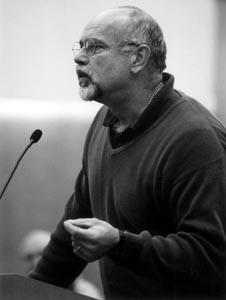
Talking Pictures

0

Wonder Women


Close Call: In ‘Air Force One,’ Glen Close plays a tough, clearheaded vice president of the United States who takes over when the president’s plane is hijacked.

Author says sisterhood is powerful

By David Templeton

Writer David Templeton takes interesting people to interesting movies in his ongoing quest for the ultimate post-film conversation. This time out, he tags along as reformed romance novelist Doris Mortman and husband go see the entertaining action-thriller Air Force One.

DORIS MORTMAN is badgering the waiter. Seconds after taking her seat, the best-selling author–feigning displeasure–has playfully goaded him into a sassy exchange of semi-confrontational, New Jersey­style banter.

“I’ve got a problem, Charlie,” she announces, reading his name tag. “I can’t find your all-day breakfast items. You serve breakfast in the afternoon here, or what?”

“You’re in a diner, ma’am,” rumbles Charlie, reaching over to flip her menu around to the hidden breakfast listings on the back. “We serve breakfast all day.”

“That’s good,” she replies, “‘Cuz, Charlie? I was beginning to have a few doubts about your establishment here. I’ll take the French toast.”

Charlie raises an eyebrow, smiles, and jots down the order.

“So. Air Force One! ” Mortman exclaims.

A huge hit, Air Force One is a wild, bloody action-thriller about a president (Harrison Ford) who single-handedly defends his family, his country, and his airplane against terrorists who’ve taken over the famous presidential jet, while his female V.P. handles the emergency from the White House. Mortman–whose novels are famed for their descriptions of resourceful, powerful women–especially liked Glenn Close’s portrayal of the tough, clear-headed vice president.

“I liked that nobody explained how a woman had ended up in the White House. She was just there,” she says. “She was competent. She knew her job. I also liked that the first lady was very competent, that she’d been his helpmate all along, that they were political partners. I loved that.”

“They were strong women. Both of them would have been your readers,” chips in her husband, David, nodding at my copy of his wife’s latest book, The Lucky Ones (Kensington; $22.95). “Though I’ve got to add that men are beginning to discover these books as well.”

“Men should read more so-called women’s fiction,” Doris almost shouts. “They’d be able to identify with it better than they think.”

While not exactly a household name, Doris Mortman is nevertheless a frequent flyer on the New York Times bestseller list, where seven of her books (including True Colors, Rightfully Mine, First Born, and Circles) have earned a seat, and where The Lucky Ones –an extremely absorbing and undeniably fun read about four women, all friends, who rise to prominence during a particularly contentious presidential election and a frightening international hostage crisis–will most likely end up.

“Heroines are changing,” she explains. “I do believe there will be a woman in office soon, and there will be a person of color, probably as vice president, so the old ‘Cinderella sagas’ are not as easy to buy as they once were.

“You know, Anne Richards made a comment in ’92. She was on one of the talk shows around the time of the convention, and someone said, ‘Wouldn’t you be happier if there were a woman candidate on the ticket?” and she said, ‘No. We’re not ready yet.'”

“I thought that was a very interesting comment,” Doris continues. “She said, ‘We don’t have the bench strength yet.’ And probably in reference to Geraldine Ferraro [the 1984 Democratic candidate for vice president], without meaning to diminish her in any way, she said, ‘We need the bench strength so that when a woman is selected as a vice president or presidential candidate, we know that she is truly the best person for the job and not simply the only woman available at that moment.'”

Charlie returns with the food.

“Better watch what you say,” he warns Doris, eyeing my tape recorder at the edge of the table. “He’s taping you.”

“It’s under control, Charlie,” she tosses back. “Thanks for the warning. Can I have some syrup?”

“In regard to Ferraro,” she says, picking up where she left off, “I can still remember where I was, the thrill of it, when she was nominated. My daughter and I were watching it on TV. She was 13. I was sitting there crying, I was so excited. And I remember saying to her, ‘You see, sweetheart? You can do anything you want, you can be anything you want.’ and she said, ‘Of course I can, mother.’

“And I thought that was fascinating. Because my generation was weeping that this had happened, but my daughter–who was the beneficiary of pathfinders like Ferraro–thought, ‘Well, yeah. Of course.’

“What I loved about the vice president in this movie was that heroism, for her, was very thoughtful,” Mortman says. “She was thinking things through. She did not get hysterical. She could make a decision that affected millions of other people, and if she teared up a little while doing it, well . . . it was all right.

“She’s the kind of heroine that I feel women are looking for today. Women don’t need Cinderella sagas anymore. I know what those are,” she shrugs, as Charlie steps up with a giant carafe of syrup.

“I wrote them, and I haven’t been writing them for a long time. This book, in a sense, and this movie, too, shift things forward a bit, because the heroines are in a place you haven’t ever seen women. They weren’t even on the radar.

“Now,” she says, taking a bite of breakfast, “they’re saving the world.”

From the August 14-20, 1997 issue of the Sonoma County Independent.

© Metro Publishing Inc.
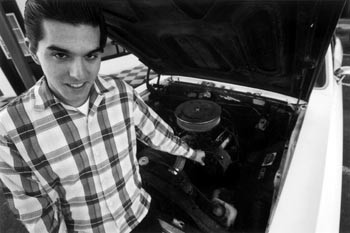
Scooby Doo

0

Scooby Doo: Icon of a Generation?

By Joab Jackson

Douglas Coupland? Douglas Rushkoff? Who needs ’em? Their thinly written books and $7,500-an-hour speaking engagements scarcely explain Generation X. No, the key to understanding this lost generation lies in a cartoon series about four teenage slackers and one dog wandering the globe in a multicolored van. Get Scooby and you get Gen X.

Oh, sure, it may be hard to believe Scooby-Doo, Where Are You? is anything more than fodder for a good drinking game (The Unofficial Scooby Doo Drinking Game). But as the longest-running continuously produced children’s cartoon show, Scooby-Doo provided role models for countless children.

And what models they were! One may not find much evidence of their multilayered resonance at the official Scooby-Doo Web site (Scooby Doo on TBS).

To get beyond the obvious, one must venture to the fans’ Web sites, where speculation and gossip intermingle with fact to reveal deeper truths. A mythology has built up around the gang, and it encompasses several fan-shared truisms only hinted at in the show itself. Here are the main ones:

Scooby and Shaggy are stoners: Shaggy’s goatee and pale skin? Scoob’s hyperactivity and the ability to see ghosts long before anyone else? You don’t need to be a rehab counselor to see how toasty Scoob and Shag are. Ten Reasons Why Scooby Doo Was a Drug-Influenced Cartoon notes these two “always had the munchies” and “were always giddy and laughing.”

In Scooby Doo, an Analysis, Seth Macy speculates that Shaggy “would work the slide on Shaggy’s bong when they would pull tubes in the back of the Mystery Machine.” Hmmm, perhaps Macy saw a different show from the rest of us.

But what the hell was that “Mystery Machine” they traveled around in, anyway, if not a hippie bus?

As for those Scooby Snacks, one anonymously penned Scooby site has it that they are, in fact, hash brownies: “Whenever Scooby, or Shaggy for that matter, eats a Scooby Snack, they go ape! It just blows their mind and they do whatever they are told, because they are so lit!”

Fred and Daphne are lovers: Fred has the buff bod, Daphne is the leggy redhead, and it was obvious to any kid with an older sibling that these two are just itching to get alone. In almost every show, Fred says, “Let’s split up, gang,” sending Velma, Scooby, and Shaggy off to find some clues.

What happens next depends on who does the telling. Here is what the official TBS site claims: “[Fred] and Daphne search for information.” Here is what the anonymous Scooby site concludes: “It’s no real mystery what these two are really doing–they’re getting busy in the back of the Mystery Machine.” Mark Dorr, Tim Solley, and Chad Holder, creators of the Web site Scooby Doo: Lost Voice of Generation X, concur: “Fred and Daphne went to try to wear out the warranty on the shocks on the Mystery Machine.”

Velma is a lesbian: The evidence that this logic-minded bespectacled character being a closet case may be pretty weak (Dorr et al. offer only that in hundreds of episodes “Velma never had even one romantic interest”), but it’s accepted as fact in most quarters. In Where the Gang Is Now, Joey Carlton fantasizes that after leaving the ghost-chasing business, “Velma was grocery shopping one day when she met the woman of her dreams. She was whisked off her feet and right into the middle of the gay-rights movement. Velma now lives in lovely San Francisco with her loving wife, Martina, and their two adopted children, Brian and Kate.”

Interestingly enough, it was Velma, not Daphne, who’s become the group’s female pop icon. It was Velma who got her own Web page (Mmmmm … Sweet Velma). And it was Velma who came in 95th in a Foxy zine poll of coolest girls, beating out Camille Paglia (96), the original staff of Sassy (98), and the band L7 (104).

Velma gay? Shag a stoner? Is this some sort of group hallucination? We’re talking about a Saturday-morning cartoon. You gotta admit, though, that there’s more happening here than Hanna-Barbera lets on. Perhaps the best explanation of Scooby’s influence comes from Laura Laytham, who, in her Web page A Marxist Reading of Scooby Doo, argues that Scooby and the gang helped little TV viewers understand the changing world around them. Scooby debuted in culturally tumultuous 1969; as Laytham has it, the show’s unusual but friendly characters made their real-life counterparts more accessible. Scooby-Doo “taught our generation to accept what had decades before been seen as entirely unacceptable,” she concludes. “Without a doubt, the Scooby-Doo cartoon greatly contributed liberality to its audience.”

So, if not for those meddling kids, an entire generation would be more way conservative than it is. Zoiks!

Research assistance: David Cassel.

Web exclusive to the August 14-20, 1997 issue of the Sonoma County Independent.

© Metro Publishing Inc.

Homeless Task Force

0

Last Exit


Telltale Signs: Petaluma police rousted this homeless encampment last week.

Photo by Eric Reed, courtesy of Argus Courier


Sept. 24 homeless forum will search for solutions

By Greg Cahill

MY FEELING is that if you see someone as being not human, then it is much easier to blame them for their circumstances,” says John Records, director of the Petaluma-based COTS homeless shelter program. “For instance, a year ago we had a call from a Bay Area police officer who said that ‘homeless people are garbage.’ If a person has that viewpoint and can stigmatize someone who is homeless, then it is very hard to help them. After all, what do you do with garbage? You throw it away, you get rid of it.

“I want to help people to understand that the homeless are not garbage.”

Records will get a chance to do just that next month at the Community Call to Action, a forum that will focus on the plight of the many single men and women living on the streets of the county. The Sept. 24 forum, organized by the Sonoma County Task Force on the Homeless, is co-sponsored by more than a dozen organizations.

“The task force feels this is the most neglected group of homeless people,” says task force coordinator Tula Jaffe. “There is a lot of sympathy for homeless families with children–and a lot of programs to serve them–but there is virtually nothing for homeless single men and women for day and night shelters except the armories, and those are closed 70 percent of the year.

“We’re trying to get the community to become more politically active and to encourage the county to find a solution, because this is a national problem of enormous magnitude,” she adds. “Yet everywhere in the United States, people are shining it on.”

The forum comes on the heels of a pair of evictions in the past month of about 40 homeless people living in makeshift encampments along the Petaluma River. It is the result of deep frustration after the Board of Supervisors voted last year not to back the Holiday Inn project in Santa Rosa, which would have turned a vacant Mendocino Avenue motel into a countywide homeless shelter for singles and a multiservice center.

The ambitious project–which enjoyed broad-based community support–would have been funded by state grants and divided between the county and seven of the nine incorporated cities.

The supervisors objected to the Holiday Inn project because it would have concentrated so many homeless–including those with mental illnesses or drug- and alcohol-related problems–in one neighborhood. Instead, the supes endorsed “a scattered approach,” placing homeless shelters and services in several key cities around the county.

“We want to encourage the county to keep its pledge to find an alternative to the Holiday Inn project,” says Jaffe. “We are waiting for them to act on the so-called scattered approach. We haven’t seen any solution.”

The Holiday Inn project would have replaced the part-time National Guard armories, which have provided temporary shelter during inclement weather but are scheduled to close this year to the homeless. A state plan to keep the armories open for the next three years collapsed last week when it fell victim to the budget axe.

Meanwhile, there is a scramble in Santa Rosa and Petaluma–which share much of the cost of homeless services in the county–to create more shelters. County and Santa Rosa officials are negotiating with the Governor’s Office and the California National Guard to lease the Santa Rosa armory for the next two rainy seasons as a 135-bed shelter for homeless single men and women.

Assuming that plan succeeds, says Steve Burke, director of housing and redevelopment in Santa Rosa, local and county officials hope to meet with homeless advocates to develop a permanent shelter, perhaps at the current armory site if the National Guard agrees to relocate elsewhere in the area. “All of that is something we need to work on in more detail,” he adds. “Right now, our focus is finding a place for homeless single men and women when the bad weather comes this fall.”

So far, the high cost and neighborhood resistance are blocking efforts to find a suitable location for the permanent shelter. “Very few people are comfortable with having a homeless shelter in their neighborhood,” Burke concludes.

In Petaluma, COTS has opened a day-services program at the Elwood Opportunity Center at the Sonoma-Marin Fairgrounds. The program provides showers, phones, and washing machines, as well as job, housing, and substance abuse counseling services, and has helped several people find jobs and housing.

Still missing in Petaluma, however, is a permanent homeless shelter for single men and women, though COTS and the Burbank Housing Development Corp. are searching for a place to erect prefab buildings for a year-round facility.

“It’s important for people to understand that there are a certain number of indigenous [shelterless] people in every community, who regard this as their home,” says Records, adding that locally that number includes several second- and third-generation Petalumans.

“The idea that a shelter is a magnet that draws people from outside the community may be somewhat accurate, but in general that’s not the case.

“On the other hand, there are no physical barriers to homelessness–no passport required–and none of our communities lies in isolation.”

The Community Call to Action will be held Wednesday, Sept. 24, from 7 to 9 p.m. at the Forum Room, Santa Rosa Public Library, 3rd and E streets. Call 575-4494 for details.

From the August 14-20, 1997 issue of the Sonoma County Independent.

© Metro Publishing Inc.
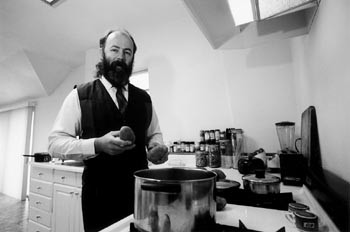
Commuter Trains

0

Railroad Ties


Michael Amsler

The Big Gamble: Train enthusiast Lionel Gambill paints a compelling picture of the future of North Bay rail.

Can commuter train service save Sonoma County from urban sprawl? Do newly adopted urban growth boundaries hold the key to success for light rail?

By Bruce Robinson

STANDING in a vacant lot strewn with broken glass and rusting industrial debris, Lionel Gambill sees nothing but possibilities. To our left stands an aged red-brick warehouse, its doors and windows thick with plywood, but beyond the weeds and rubble to our right lies the pivot point for his optimism, the newly restored Santa Rosa railroad depot.

And in between are the railroad tracks themselves, the steel ribbons that not only run from Marin County north to Eureka, but hold the promise of connecting the 19th century to the 21st in terms of North Bay public transit. The resumption of limited tourist train service between Healdsburg and Willits this summer is a harbinger of the resurrection of the publicly owned railroad, Gambill believes, and expanded excursion services will open a floodgate of other benefits.

“I see tourism as paving the way to every other kind of passenger train,” the two-time Democratic congressional candidate and rail enthusiast says with thoughtful enthusiasm, “not just commute, but city to city.”

Outlining a logical progression–increased freight, more tourism, then limited commuter services that grow as local demand increases–Gambill paints a compelling picture of a future that combines less congested highways, urban renewal, a thriving tourism industry, and even reduced pressures for continued developmental sprawl. And it all rests on “the health and prosperity of the railroad and what it can do for the entire corridor and its environment.”

How do we get from here to there? “We need vision,” Gambill replies. “And it has to be big vision, not just paltry little ideas, bit by bit.

“Political will is the key.”

That is a big unknown. Local elected officials in Sonoma and Marin are setting the stage for the residents of both counties to vote on a half-cent increase in the sales tax to fund a package of transit improvements that is expected to include widening major portions of Highway 101 and the creation of a commuter rail line between the two counties. But stung by the failure of a previous attempt in 1990, they are cautiously testing the electoral winds to ensure that the package–and its price tag–are palatable to the voters.

Early indications are mixed. A poll of North Bay voters in mid-June found more than 70 percent support the transit tax concept in both counties. Significantly, that level of support drops sharply, to below 50 percent, if rail is not part of the package.

But much of that enthusiasm for rail appears to be philosophical, as only 14 percent say they expect to ride the rails regularly. Another 50 percent see themselves as occasional users, while 30 percent say they will never ride the train.

A $400,000 feasibility study released in early June found that a commuter rail service between Cloverdale and Larkspur Landing in southern Marin could be up and running in less than 20 years. The study is the first step toward a new bi-county sales tax initiative, which may seek $655 million for a combination of improvements on Highway 101–including additional lanes between Windsor and Petaluma–and the construction of the new light rail line in the old Northwest Pacific Railroad right-of-way paralleling the freeway.

Getting to that point will require unprecedented cooperation between Sonoma and Marin counties, as well as local business interests and environmental groups, before the final hurdle of a sales tax initiative can be attempted. And some popular notions about growth, jobs, commute patterns, and land use may have to change.

“Everybody’s afraid of growth and what growth is going to do,” reflects Bill Kortum of Petaluma, a longtime leader of the Sonoma County environmental community. “Growth in people’s minds is a mental image of sprawl. What we could introduce with rail is a different form of growth that is more pedestrian-friendly, more transit-oriented.

“I would predict that 25 or 30 percent of the population, given the chance, would buy into that.”

Adding rail to the transit mix “gives you the capacity to absorb growth in a different way,” adds Peter Calthorpe, the Berkeley-based architect and planning consultant who conducted the rail feasibility study. “It induces growth, but it gives you an opportunity to reorganize growth.”

All General Plans allow for additional housing, he reasons, including some multifamily housing, such as apartments, town houses, condominiums, and senior complexes. “Rather than allow that to dribble out around the periphery, if the multifamily [development] is clustered toward the transit, it makes more sense,” Calthorpe says.

“The same with jobs. Either they can be spread out and cause congestion on all local arterials, or they can be closer and provide people a choice about using their cars.”

Likewise, says Gambill, by adjusting the distance between rail stations, “you can design a railroad to promote sprawl”–he cites BART as a prime example–“or you can design a railroad to promote compact land use, containing the growth as infill in cities. Even high-density growth, which is a lot less destructive than the low-density sprawl we’ve been getting.”

One antidote to sprawl is urban growth boundaries, which were approved by voters in Santa Rosa, Rohnert Park, and Healdsburg last fall and are now under consideration in Petaluma and Windsor. Those measures–and a voter-approved county ordinance that establishes firm community separators around any city that adopts a UGB–were designed to curtail growth-inducing annexations and challenge city planners to find creative ways to focus commercial and residential development inside existing boundaries.

“Urban growth boundaries are a good start, and the county General Plan is really strong in terms of encouraging city-centered growth and preservation of ag lands,” says Krista Shaw, the Sonoma County spokesperson for Greenbelt Alliance, “but political winds change and the ag lands can’t protect themselves.

“We need to make sure we respect the General Plans as we go.”

Greenbelt Alliance is less concerned about the lands adjacent to the railway corridor than about the potential ripple effect on outlying rural areas. “When you have new transit infrastructure, you have to be careful that you don’t create a bigger problem than you started with,” Shaw cautions, “because [those improvements] tend to lift the barriers against development in the rural areas where it doesn’t belong.”

And while good planning is a vital part of the process, planning alone is not enough. “The problem is, when those projects come up, they don’t get built the way they were planned,” Shaw observes. “The neighbors see ‘higher density’ and they think ‘ghetto,’ so when that kind of project comes forward the neighbors band together to fight it and the project becomes considerably downsized by the time it gets built.

“Then we have the same old development we have all over town.”

In Petaluma–where work is getting under way on the 18-month process of preparing a specific plan for a 300-acre strip through the center of the city, an area that encompasses the Petaluma River, the railroad tracks, and the city’s old railroad station–residents will get a chance to put these ideas to the test. Most of the land is commercially zoned, and much of it is vacant; virtually all of the study area lies within a redevelopment district. But even as it prepares to accommodate the railroad, the Petaluma study is being careful not to count on it, either.

“It assumes that at some point, light commuter rail will occur, but its purpose is not to establish that use,” says Petaluma planner Vin Smith, project manager for the specific plan.

“The goal is to introduce more residents in close proximity to the downtown as well as provide for a larger job base, but a lot of that is going to be tested through economic analysis.”

Already, the city anticipates some form of mixed-use development along the tracks in the future. “It’s a very broad definition today,” Smith notes. “The largest task of this specific plan is to give it some more definition.”

How to get there from here.

THIS KIND OF PREPARATION is essential if rail transit is ever going to come to pass, says Supervisor Mike Cale. “We have to get all the individual cities in Sonoma County to buy into it,” Cale says. “Each city that’s on the corridor is going to have to revisit its General Plan, how it wants to build out, for this to work. Because ultimate population centers are important for the rail to work.”

Jim Harberson, the south county supervisor who also sits on the Golden Gate Transit board of directors, predicts that local governments will have to spell out their plans for future development around each proposed train station before an initiative can go very far. “It would be helpful if there were general plans or specific plans for those areas around the train stations. That would set people’s minds at ease a bit,” he says.

“I think it will be a requirement that you have high-density development” in those areas, he continues, “but it won’t necessarily be residential.”

He suggests that workers don’t mind driving a modest distance from home to a train station as long as they don’t face another trip when they get off the train: “It’s better to have high-density jobs at the transit nodes, rather than high-density housing.”

Yet jobs are a sore point for many rail skeptics. Bob Harder, executive director for the North Coast Builders Exchange in Santa Rosa, contends that a two-county commuter rail line “will really perpetuate the situation where Marin provides the jobs but people live up north, so Marin is not required to provide adequate housing for all the jobs they provide.”

Harberson agrees cheerfully. “In Marin, I’m sure that is an ulterior motive,” he says. But he is not terribly concerned. “People are going to work where they work and live where they want to live. Individual citizens are not too concerned about jobs/housing imbalance.”

However, that imbalance is lessening, a trend that is expected to continue. Kortum notes that while the Association of Bay Area Governments projects that Marin will develop 40,000 new jobs over the next 15-20 years, they also say that Sonoma County will create 90,000 new jobs during the same years, figures that were confirmed by the Calthorpe study.

“About 64 percent of those jobs, if local planners pay attention, could be within reach of that transit line,” Kortum says. “Think about it, what an effect that would have on traffic, if you could get your labor force to use [public] transit.”

Even now in the two counties, “the jobs/housing imbalance is much healthier than most people think,” Calthorpe insists. “Eighty percent of the commute trips are within Sonoma County, and not across the county line. The idea that Sonoma County is a bedroom community is a bit outdated. And the job growth that is projected by ABAG will move Sonoma County to an even better balance.”

Calthorpe also disputes the contention that there must be significant increases in the density of development along the railway. “The densities are already in the General Plans. It’s not a matter of increasing them, but just relocating them,” he stresses.

“The densities we’re talking about are 10-12 units per acre, which can be achieved with small, single-family homes. We’re not talking about radical multistory buildings; we’re talking about densities that can be accomplished by using what used to be the traditional starter house, the bungalow.”

In Calthorpe’s vision, the key is “walkability, not density,” he explains. “Making a neighborhood an area where you can walk to local shops and cafes and restaurants and where jobs are within walking distance of the station.”

But this idealized concept is not a prerequisite for rail to work, Calthorpe says. “We also analyzed the system without any land-use changes at all. We went from 25,000 passengers to 20,000, which is still a very healthy system. So even without any land-use changes, the system still makes a lot of sense, because the existing land-use pattern is so transit-oriented.”

Mark Green is also a fan of walkable neighborhoods, but he views mixed-use developments as the design of choice. “It’s not so much housing or job sites, but how you do them,” he explains.

“We’ve developed this strange planning model where people don’t live anywhere near where they work, so people have to use cars to get back and forth. That’s a very recent phenomenon and a very weird one.

“What we need to be doing around the train stations is develop multi-use mixed development that provides retail uses for the people who live there, a variety of multifamily housing, especially above commercial or office uses,” he elaborates. In such a neighborhood of 3- to 4-story buildings, “you could have vital economic activity, and people able to get to and from their transportation and their basic services without using an automobile.”

Green lauds the Calthorpe study for providing hard data to support the viability of mass transit in the North Bay. The key finding: “There is enough ridership” even under the status quo, and “if you push land use into a more progressive direction around the rail stations, you get even more ridership.”

Supervisor Cale believes there is now widespread agreement that rail will be a key part of Sonoma County’s future, even if it doesn’t happen right away. “Some people may have unreasonable expectations about how and when it will come together,” he says. “You really have to project it out over 20 years to make it a truly integrated system that’s going to be functional.

“If we’re going to have a rail system that’s going to work, we’d damn well better plan for it, and plan well,” Cale says bluntly. “If we rush to judgment, we’re going to fail. It’s as simple as that.”

From the August 7-13, 1997 issue of the Sonoma County Independent.

© Metro Publishing Inc.
CD reviews

0

Rock-o-rama


Muy Caliente: Puro Eskañol delivers serious skanking sounds with a Latin flavor.

New CDs from Megadeth, Stevie Ray Vaughan

Stevie Ray Vaughan
Live at Carnegie Hall (Epic)

Patsy Cline
Live at the Cimarron Ballroom (MCA)

ON THE NIGHT of Oct. 4, 1984, Texas blues guitarist Stevie Ray Vaughan and Double Trouble–bolstered by the Roomful of Blues horn section, New Orleans pianoman Dr. John, brother Jimmie Vaughan, and blues singer and former bandmate Angela Strehli–transformed the venerable New York concert hall into a stomping roadhouse. Road-hardened and hot on the heels of his platinum-selling Couldn’t Stand the Weather, Vaughan poured heart and soul into this blistering set. For a solid hour, Vaughan shreds his way through early hits, like “Love Struck Baby” and “Rude Mood,” and offers tributes to past blues greats Albert Collins, Guitar Slim, and Albert King. No less awesome, in her own way, is vocalist Patsy Cline, captured during her first concert after a near-fatal 1961 car crash (word is that the Cimarron shows were seldom recorded, but thank goodness someone hit the record button for this one). Fronting an ace western swing band for country legend and ex-Bob Wills sideman Leon McAuliff, Cline struts her stuff in fine form and with an exuberance that could come only from beating death–a tragic plane crash would claim her life two years later. She soars powerfully through such set pieces as “Walking After Midnight” and lends her touch to a handful of classic country tunes by Hank Williams, Buck Owens, and Bob Wills. Sheer magic. Together, these two unexpected live recordings offer a rare glimpse of two musical giants in their prime–like postcards from long-lost friends.
Greg Cahill

Megadeth
Cryptic Writings (Capitol)

The Future Sound of London
Dead Cities (Astralwerks)

DOES ELECTRONICA MATTER? Not much. Recent Billboard Top 200 charts show new discs by Aerosmith and James Taylor outselling the Chemical Brothers and the Orb. Yet, electronica’s worth isn’t in sales, but in rock’s old fist-in-the-air standard: Youngsters like Prodigy don’t really try to mean more than an oldie like Paul McCartney, but their audience hears them as if they do. While rock, electronica, and pop listeners dance this tug of war for importance, the picture is clearer on new discs by metal stalwarts Megadeth and British rave-faves the Future Sound of London. Megadeth are veterans secure with their identity and audience, so Cryptic Writings is smart thrash that doesn’t even glance at techno. The razor-guitar riffs, thumping rhythms, and familiar Megadeth themes of betrayal and social decay are signs of the band’s pop instincts, just as the blues harmonica on “Have Cool, Will Travel” is a reminder of hard rock’s strong tradition. The Future Sound of London are contenders in an amorphous genre, so Dead Cities cries to be understood. Rough blocks of “tracks” move from hyper and slamming to placid and airy like many classical symphonies. Flutes follow crashes, and singles like “We Have Explosive” are followed by choral layers; the samples aren’t meant to make you dance or trance, but to yearn and scream. While much of metal is about shoving a message in your face, Megadeth sound totally at ease; and while much of electronica is about avoiding a message, F.S.O.L. are working desperately to create one.
Karl Byrn

Various Artists
Puro Eskañol: Latin Ska Underground, Vol. 1 (Aztlan)

Various Artists
Los Punkeros: Raza Punk Y Hardcore (Aztlan)

IN THE WAKE of this year’s excellent Reconquista! The Latin Rock Invasion (Zyanya/Rhino), the world of roc en español continues to grow with these two energetic collections of Spanish-language skanking sounds and punk bombast from San Francisco­based Aztlan Records. Puro Eskañol–with bands ranging from New York to Texas to Puerto Rico, including the Voodoo Glow Skulls and Slow Gherkin–is a contagious, high-octane onslaught through territory previously worked by such British two-tone ska bands as Madness and the Specials, but with a distinct infusion of Latin percussion and verve. How you feel about Los Punkeros–which kicks off with a raw, frenzied Latin version of the Sex Pistols’ “God Save the Queen” performed by Manic Hispanic–depends on your take on punk in general. But you’ve got to give Aztlan a big hand for providing theses young bands a forum.
G.C.

From the August 7-13, 1997 issue of the Sonoma County Independent.

© Metro Publishing Inc.

Sheriff’s Dept. & Sexual Harassment

0

Broken Badges

By Greg Cahill

IT SEEMED like a perfect choice. Heather O’Donnell-Mills has law enforcement in her blood–her mother, father, and a brother all did duty as cops–so it wasn’t surprising that the 36-year-old Santa Rosan enrolled at the police academy on Pythian Road in 1990 when she decided to leave clerical work. “I come from a family of cops,” she explains. “It just seemed natural to gravitate toward that.”

Little did O’Donnell-Mills know then that she was heading for a hellish ordeal, becoming the target of what she calls a male-dominated “wolf-pack” mentality at the Sonoma County Sheriff’s Department after top brass allegedly ignored complaints about a fellow officer who she says taunted her mercilessly.

In October, she received a $47,400 settlement from the county after filing a federal sexual harassment lawsuit. Acting Sheriff Jim Piccinini did not return phone calls this week to comment on her case.

O’Donnell-Mills is not alone. In the past two years, five female deputies and correctional officers have filed similar complaints against male supervisors and co-workers. Since 1991, the county has paid out $1.2 million for various misconduct claims–ranging from use of excessive force to sexual harassment, eight times more than paid out by the comparable-sized Santa Rosa Police Department.

Piccinini has said that he doesn’t know why his agency has been the target of such complaints. But in the past year, the department has been criticized for its mishandling of domestic violence, rape, and child abuse cases; both a recent Sonoma County grand jury report and a 1996 state attorney general’s report found several flaws in the department’s handling of cases involving women. That situation–and the numerous sexual harassment complaints–has led local women’s rights groups to charge that there are fundamental flaws at the agency, which employs about half the number of women as the national average for law enforcement agencies.

The problems are mounting. Last year, ex-deputy Monica Quinn filed a federal lawsuit claiming that the Sonoma County Sheriff’s Department endorses a systematic policy of sexual harassment against women who join the force. Quinn says that her supervisor boasted that he had driven another female deputy to quit through a campaign of harassment. County officials have called her charges unfounded. Her suit is still pending.

In May, the county paid $100,000 to ex-deputy Tamara Bassette after she claimed that her training officer drove her in a patrol car to a secluded spot and tried to kiss and fondle her. A second male co-worker allegedly made discriminating comments and repeated advances to her.

And this spring, Sheriff’s Deputy Ann Duckett, who works on the agency’s sex crimes unit and is often cited by sheriff’s officials as a prime example of how far a woman can advance in the department, startled many when she also filed a sexual harassment complaint.

O’DONNELL-MILLS–who won numerous commendations as a sheriff’s deputy–had some inkling early on that she was in for a rough ride. During her training, two other female deputies had warned her, “Just keep your mouth shut. We have a lot of trouble hanging on to women here, good ones.”

“Both of those women have had complaints [about male deputies] before, too,” she says. “They’ve had their own hell.”

Seated amid the Western-style furnishings, Old West landscapes, horse saddles, and antiques in the living room of her southwest Santa Rosa cottage, O’Donnell-Mills, a riding enthusiast who suffered several injuries on patrol, recently spoke to the Independent about her experience–the first female deputy to discuss publicly sexual harassment encountered at the Sheriff’s Department and her first interview since the settlement.

On a small end table, her brass deputy badge now rests in a wooden frame.

“I was just trying to be the best cop that I could be,” she says of her rocky tenure at the agency. “I was trying to be a good female deputy, or good deputy, and trying to just be myself. They kept saying, ‘Don’t try to be one of the guys.’ I never, ever went in there with the intention of being one of the guys. I entered this job in my early 30s, and I had already formed a sense of self and had quite a bit of life experience.

“I didn’t go in there with any plans to take over or anything. I just wanted to go in and be a good cop.”

According to O’Donnell-Mills, the problems started the first night on patrol when her partner came on to her. During briefings, she says, the same male deputy began drawing pictures of her, complete with earrings, lipstick, and curly hair. “He passed it around and it made me uncomfortable, but I laughed and went along with it,” she recalls. “I thought, This is the way to fit in.”

The harassment continued in what she calls “a hostile . . . malicious fashion” while in the field working the graveyard shift as a patrol deputy. She asked the male offender to change his behavior, that he was hurting her. Instead, she says, he berated her on duty in front of other officers and teased her about asking for backup in tense situations. “If I asked a question at briefing, he’d repeat it for months to tease me,” she recalls. “He always was questioning my judgment. His statements to me on several occasions were: ‘Well, we smell blood. We know you’re hurt, We’re going after you,’ ” she says. “He had called himself a wolf. Basically, it was shut up or put up. He called it a rite of passage, this abuse.

“He told me, ‘Well, I was abused when I first came here.’ “

Frustrated by his attitude, and 18 months after the harassment began, O’Donnell-Mills started the slow, arduous journey through the department’s chain of command. First, she reported the harassment to her patrol sergeant.

“He was very interested in it,” she says. “I thought we could mediate it at that level and keep it as quiet as possible.” But the sergeant was obligated to go to his superior, a patrol lieutenant. “He was very angry and promised that action would be taken against the offender,” she says.

The lieutenant informed then-patrol Captain Piccinini about the problem, and that’s when the mediation stalled, O’Donnell-Mills says. “I initially felt that he cared and he wanted to get to the bottom of this,” she says. “He perceived that there might be a problem. At that point, I didn’t exercise my rights. I should have had a lawyer present. If I had known then what I know now, I possibly could have saved my career.

“But all I wanted to do was just say, ‘Get him off my back. I don’t care what you do.’ I was extremely uncomfortable. I was very, very frightened, and I told [Piccinini] that I was frightened.”

According to O’Donnell-Mills, word got back to her that Piccinini believed the whole affair was just a case of two people who couldn’t get along. But others in the ranks already were harboring resentment that she had reported a fellow officer. A second sergeant warned her: “Just because we wear the same badge and the same uniform does not make us friends.”

“My conclusion was that he was putting himself in an enemy mode,” she says, adding that from then on she was ostracized by many of her co-workers.

Missing in action during this whole episode, she says: Sheriff Mark Ihde. “I didn’t feel like I could [approach him],” she says. “I thought that it would be taken care of. I thought, at this level, Ihde’s hired these guys to take care of this problem. We are trained every year about harassment in the workplace and sexual discrimination. It’s part of the annual training, and they say, ‘Well, we’re all officers, trained and everything.’

“But that’s where the compassion doesn’t come in. That’s where the wolf-pack syndrome comes into play.

“Mark Ihde–when he saw all that was coming down and all the stuff that came down after it for a year and a half later, all the crap that they wrote about me and how they discredited me and ultimately tried to get rid of me, all this stuff–never once said, ‘Hey, come into my office and talk to me. What’s going on?’ I felt like he was completely out of my reach.”

Meanwhile, O’Donnell-Mills believes that she was being held to a higher standard than her male colleagues–a situation that led her to push herself harder and ultimately contributed to four debilitating on-the-job injuries. “A woman can’t just go in there and prove herself once. . . . You got to keep doing it. “

In April 1996, O’Donnell-Mills decided she’d had enough and filed a federal lawsuit. “I knew I was getting nowhere and that these people at the county level weren’t working in my behalf.” Two months later, she resigned from the department. She is now retired from law enforcement.

These days, she is pursuing a new career as a different kind of public servant, studying holistic medicine at the Institute for Educational Therapy in Cotati. “The program will take me through the ranks to become a nutritional consultant, which will lay a foundation for practicing alternative medicine. I’m also studying to be an herbalist,” she says.

“I always had that feeling that I want to help people. So, essentially, I’ve gone from being a cop to granola in a year, and it’s a lot nicer way of life.”

From the August 7-13, 1997 issue of the Sonoma County Independent.

© Metro Publishing Inc.

Marvin Klebe

0

Perfect Excess


Keys of Life: Petaluma Summer Music Festival director Marvin Klebe (and friend).

Photo by Michael Amsler


Marvin Klebe’s life in song

By Gretchen Giles

PERHAPS the operatic art form seems rarefied and blue-veined, practiced solely by European-trained artistes who are gently fed like queen bees from birth on spun-sugared sweets and high notes. But baritone Marvin Klebe trained his voice in the farmlands of Crosby, N.D. And he was simply trying to out-sing the din of his tractor.

“I had a loud voice,” chuckles Klebe, 62, the founder of Petaluma’s Cinnabar Theater and the progenitor of its innovative Summer Music Festival, which continues in its 10th year through the end of August. Brought up in a rural town in the glorious pre-TV days of yore, Klebe, his family, and schoolmates were used to fending for themselves for entertainment. In fact, they were used to being the entertainment. And then, of course, there was the Texaco Radio Hour, which beamed the high, clear voices of the world’s best opera stars into Klebe’s living room, giving the little boy big ideas.

Fortunate to have a music teacher in school who was classically trained, Klebe learned to sing German art songs as a boy soprano. “And then,” he smiles, sitting in the darkened morning light of the Cinnabar’s renovated barn-like interior, “my voice went vroooooom, down into the basement.”

Waiting a suitable number of years for the crackle in his throat to subside, Klebe emerged from adolescence with the kind of deep, rumbling timbre that reaches the rafters and the back of the house. And, indeed, he did train in Europe, though Klebe, a tall, rangy man with an easy smile and easy ways, hardly reminds one of a queen bee.

While singing in 1970 for the Western Opera Theatre, the touring arm of the San Francisco Opera, Klebe shocked the audience by announcing from the outdoor Stern Grove stage that he was kaput with traditional opera. He, his wife, and their four sons moved to Petaluma (“I was the hippie on the hill,” he says). He bought and renovated the old Cinnabar school for a song–at $26,500, it was a song most of us would choke to sing–and set up the cabinetry shop that helps support the theater today.

“That’s my day job; there’s no money in theater,” he says. “President Reagan always said that instead of expecting the government to take care of things, you should take your money and put it into charities. Well, OK, then this becomes a charity,” he waves his hand around the bare stage. “My wife’s a teacher, and her money’s kept us in food and clothes. I make my money, and it goes into the charity. That’s deductible, right?” he chuckles.

While proficient in the limelight side of the stage, Klebe had very little idea of how to muster the works from the desk side of things. Corralling friends from all walks of the arts, some of whom–like members of the Oakland Symphony–were denied service in some Petaluma bars because of their wild look, Klebe “sucked their brains” for input, determined to put on modern operas that would challenge and delight.

“As Artie Shaw said,” he smiles, “‘How do you get a divorce? You call a cab.’ Right.”

It’s safe to say that the Cinnabar experiment, afloat for some 25 years, has been successful. Extremely successful is the Summer Music Festival, which brings chamber music, world beat, children’s programming, and an eclectic assortment of other to the Cinnabar, to the Polly Klaas Performing Arts Center, and to local Victorian homes for three weeks of ear-indulgence.

Klebe laughs heartily when asked which is the big moneymaker for the festival. Breaking even is his highest hope, dependent as he is upon yearly money from the city of Petaluma hotel tax fund for the necessary advertising.

“Two years ago,” he says, “I had the Arlekin Russian String Quartet,” a group playing this year on Aug. 21. “I had to get on the phone to get people to come here, because I had sold only 30 tickets. People heard this group and there was this tremendous word of mouth. So, last year, I had 130 people plus.

“You take a chance here; sometimes it works, sometimes it doesn’t. It’s a balancing act. But there is no ‘big moneymaker.’ To me, it’s always been a beggar’s game,” he shrugs. “Haydn was working for this prince or that prince, and it’s always been that way.

“But you don’t have babies to make money, and you don’t have art to make money,” he says, crossing his legs. “It’s a quality of life. That’s what it’s about; what makes us different from the animals. We’re not just foraging all the time for food. And to me, that’s what money really is: an exchange of services. Some of it we use to eat, and if we have excess we make art. And art is an excess.”

The Petaluma Summer Music Festival continues through Aug. 23 with events of all stripes, including The Jumping Frog of Calaveras County. Call 763-8920.

From the August 7-13, 1997 issue of the Sonoma County Independent.

© Metro Publishing Inc.

Jeffrey

This Modern World


Mark Tillie

Boy’s Life: Clockwise from top left are Ross Hagee, David Moll, Stephen Thrush, Corisa Aaronson, and David Costner.

The scary hilarity of abstinence in ‘Jeffrey’

By Daedalus Howell

THE LIGHTS GO DOWN. Theatergoers’ knees are grazed by a late attendee groping toward a seat. The rustling sounds of cast and crew scurrying across the stage fall suddenly silent as the hue and cry of what sounds like lower primates performing an a cappella act ensue. The lights go up to reveal that the stentorian din was after all just a couple of guys doin’ it–a comic, if somewhat awkward start to Studio BE’s production of playwright Paul Rudnick’s Off-Broadway hit (and screen flop)–Jeffrey–directed by Studio BE veteran Robert Pickett.

In two beats, the play embarks on a tour of the life of a gay New York actor–the audience ambling alongside Jeffrey (Ross M. Hagee) from bedroom to gym, men’s masturbation club to 12-step programs for sexual compulsives, clinics to memorial services. Hagee agreeably plays Jeffrey, conveying emotional and sexual vulnerability with seemingly little effort.

A broken condom in the play’s first minutes (a daunting circumstance to partners of any sexual persuasion) is the impetus for the title character to stave off sex whilst living in the era of AIDS–a pledge that the affable Jeffrey is constantly tempted to abandon.

No sooner has Jeffrey committed to celibacy than he meets the man of his wet dreams pumping iron at the gym: hunkier-than-thou Steve (portrayed by the capable, swaggering, Matt Strong, a delight from Studio BE’s recent Crimes of the Heart).

Jeffrey’s resolve begins to cave from the onset of this “boy meets boy” story until a predictable curve ball (Steve is HIV-positive) is tossed into the fray and Jeffrey launches into a series of self-analytical asides. Throughout, Jeffrey’s intent to remain sexually abstinent is systematically chiseled away by physical needs, peer pressure, and finally love.

Director Robert Pickett (who also plays Jeffrey’s preening interior decorator friend Sterling) has extracted a functional if skeletal production from Rudnick’s text; Pickett does a serviceable job, given the company’s spatial, cast, and budgetary limitations. The set (conceptually spanning a dozen locations) is a whirling mélange of creatively rearranged furniture, recalling those comic improvisational party games where players find new uses for mundane objects. The somewhat listless costuming contradicts the antiquated stereotype that gay men are always the best dressed in the house, with the notable exception of Darius, a character whose chorus-line costumes from Cats are lavished on actor David Costner, who here makes a favorable debut.

Stephen Thrush, David Moll, and Joshua Reed turn in diverting multicharacter performances, shining particularly as a menacing, leather-clad, bare-bottomed trio whom Jeffrey encounters at the male masturbation club. Thrush proves to be an engaging comic performer, playing the roles of a sexually irrepressible gay priest, Jeffrey’s dead-in-the-water father, and an overwhelmed TV news personality.

Corisa Aaronson, the only female cast member (barring actor David Moll’s hilarious attempt to be female as Angelique, a pre-op transsexual male lesbian) appears in eight different roles, including top-drawer performances as a “postmodern evangelist” motivational speaker and as Angelique’s own zealously proud mother. Fortunately, Aaronson’s sequences come whenever the show begins to drag, her animated antics quickly re-enlivening it.

While the acting is commendable, director Pickett’s primary failing with Jeffrey is, in the overheard words of one audience member, “splitting the footlights”–that is, wearing the two harried hats of both actor and director in the same production. Pickett is a proficient actor and a competent director, but Rudnick’s sprawling and digressive play requires coddling and undivided attention. Pickett’s double duty results in a production bereft of distinct vision–a good show that could have benefited from a more monocular perception.

Jeffrey plays Aug. 10, 16-17, 21-22, and 30-31 at Studio BE. Thursday-Saturday at 8 p.m.; Sunday at 6 p.m. Lincoln Arts Center, 709 Davis St., Room 210, Santa Rosa. Ticekts are $10. 578-7142.

From the August 7-13, 1997 issue of the Sonoma County Independent.

© Metro Publishing Inc.

California Art

Art HistoryGolden State: The work of painter Millard Sheets, such as "Burns Bros., 1936," above, documents California as it was."California Scenes" exhibit paints the stateBy Gretchen GilesSURELY THERE ARE MANY of us left who remember those times, in the 1930s and '40s, when California was still an unmolested land of yellow hills, green oaks, and golden promise. The...

100 Black Men

100 StrongSINCE ITS INCEPTION in 1990, 100 Black Men has awarded some 41 scholarships and raised over $200,000 for area youth. That buys a few books. Of the many such chapters nationwide, Sonoma County is the only one that honors the culinary profession. "The idea was to do something that made sense in the county," says president Bill Clarke...

Talking Pictures

Wonder WomenClose Call: In 'Air Force One,' Glen Close plays a tough, clearheaded vice president of the United States who takes over when the president's plane is hijacked.Author says sisterhood is powerfulBy David TempletonWriter David Templeton takes interesting people to interesting movies in his ongoing quest for the ultimate post-film conversation. This time out, he tags along as reformed...

Scooby Doo

Scooby Doo: Icon of a Generation?By Joab JacksonDouglas Coupland? Douglas Rushkoff? Who needs 'em? Their thinly written books and $7,500-an-hour speaking engagements scarcely explain Generation X. No, the key to understanding this lost generation lies in a cartoon series about four teenage slackers and one dog wandering the globe in a multicolored van. Get Scooby and you get Gen...

Homeless Task Force

Last ExitTelltale Signs: Petaluma police rousted this homeless encampment last week.Photo by Eric Reed, courtesy of Argus CourierSept. 24 homeless forum will search for solutionsBy Greg CahillMY FEELING is that if you see someone as being not human, then it is much easier to blame them for their circumstances," says John Records, director of the Petaluma-based COTS homeless...

Commuter Trains

Railroad TiesMichael AmslerThe Big Gamble: Train enthusiast Lionel Gambill paints a compelling picture of the future of North Bay rail.Can commuter train service save Sonoma County from urban sprawl? Do newly adopted urban growth boundaries hold the key to success for light rail?By Bruce RobinsonSTANDING in a vacant lot strewn with broken glass and rusting industrial debris,...

CD reviews

Rock-o-ramaMuy Caliente: Puro Eskañol delivers serious skanking sounds with a Latin flavor.New CDs from Megadeth, Stevie Ray VaughanStevie Ray Vaughan Live at Carnegie Hall (Epic)Patsy Cline Live at the Cimarron Ballroom (MCA)ON THE NIGHT of Oct. 4, 1984, Texas blues guitarist Stevie Ray Vaughan and Double Trouble--bolstered by the Roomful of Blues horn section, New Orleans pianoman Dr. John,...

Sheriff’s Dept. & Sexual Harassment

Broken BadgesBy Greg CahillIT SEEMED like a perfect choice. Heather O'Donnell-Mills has law enforcement in her blood--her mother, father, and a brother all did duty as cops--so it wasn't surprising that the 36-year-old Santa Rosan enrolled at the police academy on Pythian Road in 1990 when she decided to leave clerical work. "I come from a family of cops,"...

Marvin Klebe

Perfect ExcessKeys of Life: Petaluma Summer Music Festival director Marvin Klebe (and friend).Photo by Michael AmslerMarvin Klebe's life in songBy Gretchen GilesPERHAPS the operatic art form seems rarefied and blue-veined, practiced solely by European-trained artistes who are gently fed like queen bees from birth on spun-sugared sweets and high notes. But baritone Marvin Klebe trained his voice in the...

Jeffrey

This Modern WorldMark TillieBoy's Life: Clockwise from top left are Ross Hagee, David Moll, Stephen Thrush, Corisa Aaronson, and David Costner.The scary hilarity of abstinence in 'Jeffrey'By Daedalus HowellTHE LIGHTS GO DOWN. Theatergoers' knees are grazed by a late attendee groping toward a seat. The rustling sounds of cast and crew scurrying across the stage fall suddenly silent as...
11,084FansLike
4,606FollowersFollow
6,928FollowersFollow
