
The Scoop

Media Madness

By Bob Harris

A COUPLE WEEKS BACK I had some really harsh words about the public and media obsession with Diana Spencer. In short, I called it foolish and unhealthy. Naturally, I got a bunch of foaming hate mail. And then . . . damn.

I’m enough of a windbag that I usually enjoy I-told-you-sos, but not this time. Instead, let me say a few more sharp words about the media, and I don’t mean the paparazzi or the tabloids. Those are easy targets.

I’m talking about the TV networks, who criticized the tabloids for exploitation, often at the very same moment showing pictures of Diana taken directly from the tabloids and breathlessly reporting the latest rumors. The doublethink is remarkable. Fox News’ initial reporting was extremely critical of the paparazzi. Never mind that Fox owner Rupert Murdoch is the tabloid king.

NBC reporters yapped all that Sunday morning about how tabloids will do anything for money–and then during the football games, the ads for Dateline NBC showed footage of the mangled car two or even three times an hour while a voice-over promised the latest lurid pictures from Paris.

At one point, CNN, which suddenly replaced its normal Atlanta anchor with some second-string host with an English accent, went live to Murdoch’s British SkyNews feed–which was at that moment reporting on American reaction to the accident, showing CNN footage of Yanks reacting to SkyNews pictures of the wreck. This was not actual news, but a report on a report on a report of people reacting to actual news.

In no way is network reporting inherently superior to the supermarket glossies. Just because you’re a CBS or ABC reporter doing a story about pornography, that doesn’t make it OK to show the centerfold from Hustler. It’s still pornography, even in your hands.

Same thing with the tabloids.

If it walks like a vulture, and it talks like a vulture, what kind of bird do you suppose you’ve got?

OKAY. NOW THAT WE’RE DONE with that, let’s dig a little deeper. (Warning: if you think “The Emperor’s New Clothes” gave the King a bum rap, stop now.)

Here are a few more observations to stimulate even more blithering hate mail (although, if you take a breath, you’ll realize I’m not dissing Diana, but the media circus and our complicity):

1. The market for intrusive photographs of Diana existed only because her fans were willing to buy them. Which means, unpleasant though it may be, many of the very same people lining the streets and weeping at her funeral were the ones whose money put a price on her head. Repeated exposure to media images should not be confused with actual intimacy. It is indeed a lonely world, but the fact remains: Newspaper readers and TV viewers did not know Diana. Neither did you or I. Diana’s death is indeed a tragedy, but primarily for her sons, her family, and her friends. It’s none of our business, and if more people had thought so all along, the woman would probably still be alive.

To whatever extent you feel sad about Diana Spencer, I hope you’re also grieving for the other victims in the Paris wreck. (Until the driver’s name was finally reported, I was beginning to wonder if he even had one.)

2. Diana’s sudden media transformation from throne-shaking divorcée to canonized warrior princess has been downright Orwellian. Mere days ago, before the accident, Diana Spencer was a human being who did both good things and bad. She had affairs, enjoyed her immense wealth, and, like most celebrities, sometimes used the media for her own personal ends (unless you think all those high-fashion People photos were taken by CIA surveillance satellites).

Now, however, this eminently human being is being rapidly transformed into the focus of hero-worship by media shills eagerly citing the merest scrap of normality as proof of her magnificence. Yes, Diana was a good babysitter, she loved her kids, she felt bad about amputees and AIDS patients, and she opposed maiming people with land mines. All true. And all good for her. But is there anything in that list that isn’t also true of almost everyone you know?

Remember who’s beatifying her and why. These same reporters suddenly praising Diana’s godliness are also the very ones who reveled in lurid images of her last hours on earth. The gentle urge to canonize is exploited every bit as eagerly as the morbid desire for bloodshow. If you want to remember Diana fondly, turn off the TV, put away the newspaper, and use your own memory. Otherwise, you’re just feeding the same greedy machine that may have contributed directly to her death.

3. To prove to yourself once and for all that most media coverage has been emotionally driven, tabloid-style mythmaking, try the following mental exercise: Suppose for a moment that, after a failed marriage, Ted Kennedy (or Walter Cronkite or Rush Limbaugh or Bill Gates or anyone else) goes out for the evening with a glamorous new flame, dining at the very public Mayflower Hotel in downtown Washington. Suppose some paparazzi snap a few pictures, and so the couple decides to blow the joint in a hurry. Now imagine that Ted Kennedy (or whoever) disdains his seat belt as his drunken limo driver recklessly races photographers up Connecticut Avenue at over 100 mph until finally crashing in the tunnel that runs under Dupont Circle.

How many seconds would the media hold Ted Kennedy blameless for the accident? Think about it.

And then ask yourself if there’s any objective, non-tabloid news reporting left in this country.

From the Sept. 11-17, 1997 issue of the Sonoma County Independent.

© Metro Publishing Inc.
Allaudin Mathieu

Note Worthy


Michael Amsler

In tune: Allaudin Mathieu’s new work compares differences in cultural hearing.

West meets East in musical theory

By Bruce Robinson

FOR THE LAST 400 years, one half of the world has been hearing music quite differently from the other. The microtones and multipitched scales of Arabic and Indian music include many notes that simply cannot be produced by keyboard instruments and sound quite foreign and often “wrong” to Western ears.

But the two are fundamentally the same, says Sebastopol composer, teacher, and author Allaudin Mathieu in his new book, Harmonic Experience: Tonal Harmony from Its Natural Origins to Its Modern Expression (Inner Traditions; $45).

“This book is new because it reconciles two heretofore opposing views of music, basically the old and the new,” Mathieu explains. “The old being ‘just intonation’–the harmonic sounds and tunings of people’s music, folk music, ancient music–and the new being Western music, keyboard music, and the tempered scale.

“G-sharp is not the same as A-flat,” says Mathieu, using his voice to demonstrate the small but distinctly audible difference. At the piano, however, both notes are represented by a single black key. This is tempered tuning, in which the 30 separate notes are represented by just 12 keys on the piano.

How? “You do it with mirrors,” he laughs, likening the effect to aural puns or optical illusions for the ears. “None of the notes are in tune, but you have a huge area open to you.”

This development changed an entire culture. “Equal temperament was a dramatic occurrence in the history of music,” Mathieu says. “It caused the Western ear, which adopted it, to hear in an expansive, evolutionary way. But it also allowed it to forget what it once knew, which was the pure resonances of just intonations.”

Using nearly 1,000 musical illustrations and graphics, Harmonic Experience reaches back to the basic Pythagorean physics of sound and relative pitch, exploring the interrelationship between harmony and the overtone sequence.

Despite its strong theoretical foundation, Mathieu believes that Harmonic Experience is a book that only a musician could have written. “Whatever success I’ve had with this lies with the fact that I am basically a composer,” he says. “I ask questions that enable me to become a deeper and more expressive composer. So the questions tend to be real questions that are rooted in sound and its expression.”

This is Mathieu’s third book, following The Listening Book and A Musical Life, two engaging collections of musings and short essays on the ways we perceive sound and music, and the ways they affect us. Although he grew up in a publishing household–his father founded Writer’s Digest and several other magazines–Mathieu concentrated strictly on music until he chanced to meet Coleman Barks, whose eloquent translations of Rumi have reawakened Western appreciation to that Sufi poet.

“His joy of language was so extreme and infectious that I caught it,” Mathieu recalls. “I realized that I had discovered something about the way that music behaves and the way we live inside it that had not yet been articulated in the culture. And it was very helpful to my creative process and to the progress of my students. I realized that God would not let me die in peace until I wrote this down.”

From the Sept. 11-17, 1997 issue of the Sonoma County Independent.

© Metro Publishing Inc.
Video Picks

Couch-Bound


Betsy Bruno

Burn, baby: The coast is toast and we like it the most (of the disaster flicks).

New and old blue-light specials

By
Edited by Gretchen Giles

VIDEO REVIEWING is like cleaning out the attic: Over there by the skates is that film that came to town too late for review; stored overhead is the movie that was just a skoosh too mainstream for a full review; and moldering away over there is that film that you meant to shout about two years ago, but forgot.

We cleaned out von Busack’s attic.

Faithful
PITY YOU CAN’T BUY into an undervalued director in the same way that you can buy into an undervalued stock on the exchange. Paul Mazursky, who is unfashionably old and whose last movie, The Pickle, went straight to video, is the kind of director one could practically pick up for a song.

And he certainly deserves another chance on the basis of Faithful, a movie that’s funnier, deeper, and more honest than Mighty Aphrodite.

Cher stars as a rabbit who captures the hunter. It’s her 20th anniversary, and her husband Jack’s (Ryan O’Neal) infidelity and her own loneliness have driven her to the brink of suicide.

Before she can take the pills, however, she’s ambushed in her empty mansion by Tony (Chazz Palminteri, who also wrote the play on which the film is based), a hit man. Tony explains that Jack is having her snuffed for the insurance money and that he’s been hired to do the job.

But Faithful isn’t a thriller, primarily because Cher excels in a role that calls on her to use her bare feet and legs as much as her deeply wounded eyes and voice to contrast her character’s misery with her stirring lust.(R; 91 min.)

Kicking and Screaming
I STILL HAVE NIGHTMARES about graduating from college. If I could have connived it, I would have done pretty much what Chet (Eric Stoltz) does in Kicking and Screaming: take a job bartending in my college town, the world forgetting and by the world forgot.

It’s a much more graceful movie than the title suggests: Grover (Josh Hamilton), a budding writer, has just lost his girlfriend, Jane (Olivia D’Abo), to an overseas program in Prague.

Jughead figure Otis (Carlos Jacott), a soft, calf-faced goof in pajamas, avoids an inevitable move to grad school in Milwaukee through a McJob at a video store run by a frustrated filmmaker. An increasingly testy Miami (Party Girl‘s Parker Posey, pretty but miscast) schemes to break up with her boyfriend, another member of Grover’s circle of jerks.

Kicking and Screaming is a sharp-witted film, but it’s sensitive; it refuses, in short, to make “Get a life” the moral of the story. (R; 98 min.)

Volcano
THE PLEASANT SURPRISE isn’t just that L.A. looks good under the volcano; it’s that director Mick Jackson makes the town look worth saving. Jackson (who directed another salute to the city, L.A. Story) stages the spectacular destruction on the handsome Miracle Mile corridor.

After a bad earthquake, a volcano rears up out of the muck of the La Brea Tar Pits. The film follows Tommy Lee Jones, head of the Office of Emergency Management, as he organizes a stand against the river of red-hot lava oozing down Wilshire Boulevard. Anna Heche plays a seismologist who helps and instructs Jones.

Dante’s Peak had a leaden tone, as if it were a social protest against vulcanism. Volcano is often serious, but the harsher moments are done with a necessary awe; Volcano is a witty but not cynical picture. (PG-13; 104 min.)

From the Sept. 11-17, 1997 issue of the Sonoma County Independent.

© Metro Publishing Inc.

Talking Pictures

0

Fat Chance


Button Down: Robert Carlyle takes it all off in ‘The Full Monty.’

Photo by Evan Johnsone


Gender gains weight in ‘The Full Monty’

By David Templeton

Writer David Templeton takes interesting people to interesting movies in his ongoing quest for the ultimate post-film conversation. This time out, he tags along with Petra Forsman, Amy Garcia, and Kym Kelly–outspoken and oft-ogled student/waitresses–as they take in the new shoe-on-the-other-foot comedy The Full Monty.

TWENTY MINUTES to movie time,” announces Petra Forsman, checking her watch. “Chow down, everybody!” As the speed of dinner accelerates, so does the conversation, an impromptu lesson on the proper etiquette for ogling waitresses. My instructors, Forsman and friends Amy Garcia and Kym Kelly, are a loquacious and charmingly opinionated trio, bound in sisterhood through a waitressing job at a small cafe in downtown Petaluma.

While generally agreeing that being stared at by lecherous diners is a distinctly uncomfortable experience, my guests have just confessed that–with a bit of artistry on the part of the ogler–being checked out can be almost pleasant.

“The deal is, if you get caught looking, don’t look away and pretend you weren’t doing it,” offers Amy, pushing her plate back and glancing about for the check. “That’s really creepy.”

“But if you do get caught,” Petra explains, “just smile. A nice smile, ‘You caught me, and I think you’re nice.’ That feels good. The truth is that everybody checks out everybody else. We know that. We just don’t like it when [you’re] a creep about it.”

I see. Thank you. I’ll remember that.

Appropriately warmed up, we head out to see The Full Monty, a charming film in which a band of unemployed English fellows attempt to make some cash by becoming male strippers. It’s quite funny without becoming mired in its own issues, and its gentle message–that men might learn something were they the ones being leered at–strikes an approving chord among my companions, though some disagreement arises from one character’s assertion that, fat being “a feminist issue,” one overweight member of the troupe need not worry about baring it all in front of an audience of women.

“Fat’s not a feminist issue, specifically,” Petra insists, climbing into my car for the ride home. “It’s just an issue.”

“Yeah, but how many men do you see at Jenny Craig?” Amy counters from the back seat.

“Jenny Craig doesn’t encourage men to be there,” Petra replies. “The issue of fat, of feeling the pressure to conform to a certain idealized image, is not just a female issue. Everyone’s under the same pressure, though I’ll give you that the pressure is heavier on women.”

“I don’t know. I know a number of pretty big guys,” Kym chips in. “And none of them are running around freaking out about every new pound the way girls do.” There is a pause, while everyone sits nodding at the thought.

“Don’t you love it,” Petra suddenly laughs, turning around to face her friends, “when you’re out with a bunch of other women and you’re all trying to out-fat one another? ‘Oh, waitress! Make that a triple not-fat.”

“Remember when Dave [the large guy from the film, played by Mark Addy] hides in his little shack in the backyard and wraps his stomach in cellophane? Then whips out this candy bar? That was so ‘girl!,'” Amy laughs.

“Or when they’re sitting around suggesting ways he could lose weight,” she adds. “‘You could do this‘ or ‘I heard of a guy who did that.’ Girls will talk openly with each other about things like that. I thought it was nice that these guys felt so close and personal that they could do that. I suppose it has something to do with taking their clothes off in front of each other.”

“I just liked that the guys weren’t all beautiful,” Kym says. “In fact, quite unattractive, some of them. But they became attractive when they found the courage to be more or less confident of their bodies.”

“But you know what?” Amy interjects. “During the big show, when the audience was going wild and clapping and supporting them, I thought, ‘If these were women up there, women who are not physically perfect, they’d be booed off the stage.’ It would have been a joke.”

“It was a joke,” Kym contends. “That’s why they could support them.”

“But it wasn’t a cruel joke,” Amy replies. “They weren’t shouting fat jokes at them.”

“The thing is, we will never know what the situation would be if there were women on that stage,” says Petra. “Because no woman of normal shape would ever subject herself to that.

“Wait! I take that back,” she adds. “Belly dancers have a tendency to be wonderfully round. A good belly dancer can take her body and make it into an incredibly sensual, erotic thing, where there’s nothing to do but sit there with your mouth open, saying, ‘Now there’s a woman!’ But I don’t know of many round, voluptuous women who would volunteer to do it, for fear they’d be found unacceptable.”

“Um, what about with an audience of other women?” I ask. “Wouldn’t they be supportive?” My question is greeted with a long silence that ultimately ends in uproarious laughter.

“Who says women don’t judge other women?” Amy wants to know.

“When it comes to their bodies,” Kym nods, ominously, “women can be even more competitive than men.”

“And,” laughs Petra, “we have the psychological scars to prove it.”

From the Sept. 11-17, 1997 issue of the Sonoma County Independent.

© Metro Publishing Inc.
Zinfandels

0

Original Zins


Michael Amsler

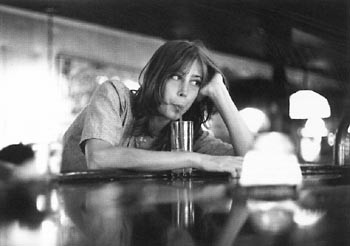
And Thou: A glass of wine, a loaf of bread, and wow.

Three traditional Italian-style zinfandels

By Steve Bjerklie

STEMWARE is for sissies. Or so Italian makers of vino de tavola would have you believe. Real wine drinkers drink their daily quaff from tumblers. When your shirt’s wet with field sweat and vineyard dirt forms black crescents beneath your fingernails, you don’t want to pick up your lunchtime red in a delicate bowl supported by a stiletto heel made of glass. Your calluses alone would chip the glass.

But drinking zinfandel from tumblers is not a hot new trend. Winemaking in Sonoma County by Italian-descent families is one of our region’s oldest industries. Andrea Sbarboro, a native of Genoa, created the Italian-Swiss Colony cooperative near Cloverdale in 1881 as a social experiment to provide steady, dignified work for the large numbers of Italian immigrants arriving in California.

By the turn of the century, the colony’s facility at Asti produced more table wine than any other winery in California. Varietals included zinfandel, carignane, mataro, barbera, pinot noir, and a handful of whites.

The Simi family built its winery in Healdsburg and began making impressive wines in 1881. The same year, Peter and Julius Gobbi established their Sotoyome Winery nearby. Along the Russian River, the Arata family began tending zinfandel vineyards in the mid-1880s.

Sbarboro’s socialist experiment at Italian-Swiss Colony ultimately failed; by the 1960s the colony name was associated with cheap, simple wine advertised on television by the “little old Italian-Swiss winemaker . . . me.” But the Simis held on, as did the Sebastianis.

After Prohibition’s repeal, several other Italian families settled in the county to make fine wine, and the result is a tradition–arguably more noble here than anywhere else in the United States–of excellent working-man wines, particularly reds.

Here are three zins from Sonoma County made by some of our best-known Italian-heritage wineries, rated on a four-star system (one star is drinkable; four stars unforgettable):

Trentadue 1993 Sonoma County Zinfandel
JUST IN CASE your Italian’s a little rusty, Trentadue’s label displays the meaning of the family name, “32.” The winery is located at the top of the Alexander Valley north of Healdsburg, but the label does not indicate if the grapes for this fine zinfandel come from the 250 acres in the valley that the family farms. No matter. Like the Pedroncelli, this is another smooth, delicious everyday drinking wine. I’m especially attracted to its nose, cedary as a cigar box. I find the flavor a bit too simple, but others might appreciate its guilelessness. This is an ideal lunchtime or casual wine, the kind of stuff Don Corleone poured to soothe the souls of supplicants in his office begging for favors. Pour a glass for your friends as you hand them a plate of pasta or make them an offer they can’t refuse. Two stars.

Seghesio 1995 Sonoma Zinfandel
THIS WINE is soft on the corners but strong and forthright in the center. The Seghesio family style is intentionally focused on fruit to intensify zinfandel’s natural berry flavors. In this particular vintage, tannins seem closer to the middle of the taste than to the edges, unusual for a red. I suspect that means that this is a wine to drink now–wait too long and those tannins will disappear, leaving the fruit without any structure to lean on. But you will want to drink this zinfandel now anyway: It’s begging to accompany your Indian summer barbecues, especially the red meats. Two-and-a-half stars.

Pedroncelli 1995 Dry Creek Valley Zinfandel, “Vintage Selection”
JUST A BEAUTIFUL WINE, as smooth on the tongue as first love is on the memory. Some years ago (well, many years ago), my father gave me a bottle of Pedroncelli zinfandel to very desirable effect: he really liked my first love, Mary. I’m happy to report that nothing’s changed, at least as far as this zin is concerned. The ’95 Pedroncelli is as velvety and fulsome as the ’73. You might smell oak in the nose and taste dark raspberry jam in the body; I smell Mary. Come to think of it, I should send her a bottle. Three stars–four if you knew Mary.

From the Sept. 11-17, 1997 issue of the Sonoma County Independent.

© Metro Publishing Inc.
Bill Barich

0

Writer’s Harvest


Window Frame: Marin writer Bill Barich’s Carson Valley tells of vineyard life along the Russian River.

Bill Barich’s ‘Carson Valley’ chronicles wine life in Sonoma County

By David Templeton

Tucked into a wooded Marin hillside, perched among trees just thick enough to make the sunlight have to work to reach the back porch, Bill Barich’s rustic cottage is more or less exactly the kind of house a budding author might dream of owning after a hard-won writerly success.

Inside, a well-worn carpet track leads to a tiny writing space; in the living room there are books everywhere–on shelves, on the mantle, on nearly every flat surface–with random photos and knickknacks tucked in around the edges. A Hollywood set designer would love this place.

For over five years, Barich–the prolific author of numerous praiseworthy works, including the new Sonoma County­based novel Carson Valley (Random House; $25)–has loved it as well. Now he’s considering moving on.

“Five years is something of a record for me,” he acknowledges, ambling out to a seat on the warm but shadowy front deck. “As much as I like it here, I’m getting ready for a change, I think. Writers are among the most restless people on earth, you know. I have a theory that it’s partly because as a writer you exhaust your surroundings. You see so much, you use it up, and then you need to be refreshed. Now that I’m preparing to start a new book, I sort of want a new window to look out as I write it.”

This house, located high in the San Anselmo hills, is the same “earthquake cottage”–built after San Francisco’s 1906 quake and complete with a property deed that prohibits the sale of alcohol and the “harboring of Chinese”–that Barich described at the close of his magnificent travelogue, Big Dreams: Into the Heart of California (Vintage, 1994).

Before that–and the six-month solo journey across the state that was the basis of that book–Barich lived with his then-wife in a rundown trailer on a 14-acre parcel in Alexander Valley, smack on the edge of the Russian River. That setting played a part in a book as well, appearing as the bat-infested residence of Carson Valley‘s free-spirited main character, the oddball vineyard manager Arthur Atwater.

“That was my trailer,” Barich grins. “Those were my bats.”

It was 1976 when Barich–using his entire life’s savings–quit his office job in San Francisco and purchased the trailer to pursue his lifelong dream of becoming a writer. “I was 30,” he explains, “and had finally reached the age where I thought, ‘If you’re going to do this, you had better do it now.’ “

The sprawling property on which the Barichs parked their new home was up for sale; fortunately for Barich, it took five years to sell. Long enough to write several novels that no one wanted, but most important, to write Laughing in the Hills, his sharp-witted non-fiction account of the people and circumstances surrounding the world of horseracing. It was the book that launched his career.

Making a sharp turn from the long-held image he’d had for himself as a novelist, Barich became a writer of real things, producing a string of keenly observed, first-person explorations of the world around him, including several books and countless pieces for The New Yorker magazine. In the process, he left Sonoma County and returned to San Francisco. After his divorce in the early ’90s, he considered returning to Alexander Valley.

“There was no longer anything I could afford,” he shrugs. “And it was a natural inclination to return to the place where things had been so good. That was a place where I managed to accomplish what I’d set out to do; where life made sense and I was at peace.” He taps his head. “But I kept it all for future use. I knew that I’d try another novel, and that the setting would be the wine country.

“Harvest time in Sonoma County is a marvelous, wonderful time, and I wanted to capture some of that,” he continues. “Most of the year there’s that idyllic, pastoral rhythm, and then suddenly, for a month or so, everything and everybody is awake and alive and supercharged. The smells are great, the light is great, and all the workers–the Mexican immigrants and everyone else–are, as they say, a trip. And I knew that not many modern novelists were using agricultural settings, or the sense of people working, laboring physically. I wanted to do all that.”

He did it, all right. When Carson Valley was released last June, the unabashedly emotional tale of an eccentric and troubled grape-growing family was greeted in Sonoma County as a cause for celebration. “For a while there, I was a bestseller,” the novelist laughs. “In Sonoma County, anyway. For one whole week I was outselling John Grisham, and I may never hear that again in my life!

“I admit it,” he smiles. “I’ve enjoyed every minute.”

From the Sept. 11-17, 1997 issue of the Sonoma County Independent.

© Metro Publishing Inc.
Mill Valley Film Festival

0

The Film Life

By Greg Cahill

Ask Mark Fishkin, co-founder of the Mill Valley Film Festival, about his most embarrassing moment at the popular North Bay event and he shakes his head and moans. “There’s always the story about the time we showed Nicholas Ray’s last feature a dozen or so years ago,” he recalls, nursing a cup of espresso at a Petaluma riverfront café.

“We were doing a tribute in memoriam to him. John Houseman was in the audience, sitting next to me. We were going to show a short clip from Rebel Without a Cause before showing Lightning over Water, his last film. Instead, the clip from Rebel Without a Cause went on and on and on.

“Houseman turned to me and said, ‘Mark, are you going to show the whole movie?’ says Fishkin, impersonating the late thespian’s droll manner.

“I said, ‘No, of course not,’ and went up to the booth to find out what was going on. I found the projectionist lying on the floor with the whole print of Lightning over Water on top of him. He had dropped the platter.

“He looked up at me, red-faced, sweating, his eyes twice their normal size, and said, ‘It’s OK! It’s OK! Give me five minutes to fix it!’

“I spent the next half hour running back and forth to the concession booth and handing out free popcorn and wine before finally announcing that the tribute had to be canceled. It took the projectionist all night to put the print back together.”

These days, the popular film festival–which attracts a large contingent of Sonoma County film buffs–operates much more smoothly and has become quite prestigious in the film world.

The 20th annual Mill Valley Film Festival runs Oct. 2-12, with most screenings held at the Sequoia Theatre. The fest will feature more than 100 film and video programs from more than 30 countries, including several world premieres and the U.S. premieres of four African films; a tribute to filmmakers Barry Levinson and Robert Wise; and video tributes to San Francisco performance artists the Residents, and the Independent Television Service; as well as several filmmaking seminars, and an interactive multimedia exhibit. It opens with the Ang Lee’s The Ice Storm and Allen Smithe’s Burn, Hollywood, Burn with a script by Joe Eztarhas. Film industry panels will include producer Saul Zaentz. Music events include bluesman Honeyboy Edwards in a tribute to Robert Johnson, and the Bacon Brothers, fronted by actor Kevin Bacon.

Over the years, Fishkin adds, the film fest has become “more than a sum of its parts,” helping both independent filmmakers who don’t get enough support in the marketplace and a public faced with an increasingly narrow range of choices at the box office.

“We also have a hidden agenda where we illustrate what an amazing medium film is and how it can influence people,” confides Fishkin, 48, who lives in Petaluma with his wife, Lorrie, and their 8-year-old daughter, Lindsay. “We’ve all heard about how it can influence people negatively in terms of children viewing violence. One would also hope that you can influence people positively.

“I believe film gives us the ability to see who we are, where we are, and how we relate to each other, to the planet, to political, environmental, and social issues.”

Idrissa Ouedraogo’s work fits that bill. Often compared to those of Jean Renoir and Satyajit Ray, his films run the gamut of human emotions and exhibit an amazing understanding of the fundamental foibles of humankind.

Ironically, it was filmmaking, and not film programming, that lured Fishkin, a New York native, to the Bay Area in 1976. “I once heard Francis Coppola at the Telluride Film Festival talking about good ways to break into the film industry,” Fishkin says. “He confirmed my gut feeling that it should be done through screen writing.

“Of course, I had visions of six figures dancing in my head.”

Appalled that a community the size of Marin had virtually no alternative cinema, Fishkin began programming a weekly College of Marin film series. For a while, he considered buying the old Plaza Theatre in Petaluma (now the Mystic Theatre & Dance Hall), but decided it would cost too much to remodel the aging movie house.

He later took over Mill Valley’s legendary Saturday Night Movies held at the local Odd Fellows Hall. It was a logistical nightmare. The small staff, mostly student volunteers, had to set up and tear down folding chairs between each show. And then there were the auditorium’s poor acoustics.

“The sound in the hall was so bad that I really could only show films with subtitles,” he laughs.

When the “losses became too much and the headaches too great,” Fishkin bailed out of the enterprise. In October 1977, he and fellow film buffs Rita Cahill and Lois Cole organized a three-day film festival. It featured three film tributes, Coppola’s Rain People, and George Lucas’ The Filmmaker.

“We did a very innovative program that I would not be embarrassed to repeat today,” he says.

It was a big hit. Since then, the fest has gained considerable stature in the industry. It now ranks as one of the top U.S. film fests. Among its success stories was the 1987 world premiere of Walking on Water, with Edward James Olmas and Lou Diamond Philips. That film later went on to achieve critical acclaim and commercial success as Stand and Deliver. It received a 10-minute standing ovation at its premiere.

Fishkin is especially gratified at the role the film fest has played in nurturing such independent films as The Crying Game, My Left Foot, Like Water for Chocolate, and Strictly Ballroom–films that until recently would have enjoyed only a limited audience but which have gone on to widespread success.

“That’s encouraging,” he says. “I also feel some gratification that our growth has paralleled the growth of the independent filmmaker movement. “I think we’ve had some role in that.”

And even if that ill-fated homage to Nicholas Ray ended in disaster, many of the fest’s other tributes have ranked among Fishkin’s most memorable festival moments. Among those who have been spotlighted are Olmas (Zoot Suit, American Me), John Frankenheimer (Seven Days in May, The Year of the Gun), and Jack Arnold (The Incredible Shrinking Man, The Creature from the Black Lagoon).

“It was an especially great thing to see how the audience responded to Jack Arnold,” Fishkin points out. “People came to the midnight screening of The Creature from the Black Lagoon in 3-D glasses and even brought their kids because they wanted them to experience this classic horror film.

“Jack wasn’t in very good health even then, but he just wanted to acknowledge the crowd. When he stood up and faced the audience–with his 3-D glasses on–the roof almost caved in from the applause. He cried.

“It was an incredibly moving moment.”

The Mill Valley Film Festival box office is located at the corner of Blithedale and Throckmorton avenues in Mill Valley. For program and ticket information, call 415-383-5346.

Web exclusive to the Sept. 11-17, 1997 issue of the Sonoma County Independent.

© Metro Publishing Inc.

Celtic Music Festival

0

Celtic Pride


Michael Amsler

Bow to Greatness: Chris Caswell and students in his Graton recording studio.

Sebastopol goes green, again

By David Templeton

MUSICIAN CHRIS CASWELL has been to festivals where the onstage musical stars–technically only a few feet from the audience–might have been miles away, so strong was the implied psychic distance between performer and patron.

However, no such distinction will be in force at this year’s Celtic Music Festival. Held in downtown Sebastopol and nicknamed Celtstock, this increasingly popular annual event comes around for the third time. According to renowned harp-maker and Celtic harpist Caswell, the planners have hand-picked their artists from an international pool of Celtic players with a mind toward minimizing that invisible barrier between performer and audience.

“We’ve worked to make it very hands-on,” he says with a smile. “The ‘unwashed masses’ won’t need to feel so unwashed at this festival.” One of the festival’s original organizers–with colleagues Cloud Moss and Steve Blamires–Caswell describes the roster of musicians, among them a hush-hush, “very special” guest whose identity is being tantalizingly shrouded in mystery, as being “approachable while remaining a world-class line-up.”

Temporarily abandoning his successful harp-building enterprise when last winter’s rains led to the disastrous flooding of his studio, Caswell has nonetheless kept busy. Aside from the festival and such personal musical pursuits as playing with the feisty pub band Road Kilt, Caswell has been developing his talents as a record producer. His label, Gargoyle Records, has undertaken a number of recent projects–including one he can’t stop talking about.

“We just finished recording these kids,” he enthuses. “Well, not kids really–they’re all in their late teens and early 20s, all fiddlers, part of Alasdair Frasier’s Valley of the Moon Fiddling School. We brought them in here and they just blew me away!” The result, to be titled Session: The Future of Celtic Music, will be available around Christmas.

Asked what appeal Celtic music holds for such youthful folks as these, Caswell chuckles.

“It’s very vital, strong, intense music,” he says. “It’s incredibly vivacious. It drives. It cooks. It has the kind of strength that appeals to teenage hormones. A lot of popular music that other kids are aspiring toward doesn’t have the same heart. It’s not as free and openly compassionate as it could be. This music is. That’s the appeal.” Now Caswell is warmed up.

“Take African grooves, and speed them up,” he says. “Then you’ll get some of the intensity that Scottish stuff has, that sweat-on-the-brow intensity, that fire-in-the-eye, almost trancelike intensity you get when you’ve been playing Scottish or Irish reels for hours on end. It transcends age or ancestry. It’s beautiful music.”

Along with the music, the daylong festival will feature a number of ancillary attractions. A half-dozen workshops offering enlightened education on the finer points of fiddling, piping, dancing, singing, guitar playing, and the art of singing sea shanties are scheduled, as well as a favorite from last year: the session tent.

“If you play, bring your instrument,” Caswell encourages attendees. “Listen in, and if you know the tune, play the tune. Sessions are vital to the Celtic tradition; they’re its heart and its center.

“Being on stage with a big fancy band is not the tradition,” he goes on. “In fact, it’s the least traditional aspect of the festival. Bands are a recent phenomenon. Bands–other than those that would play for a wedding or something–are really only a couple of decades old.”

Organizers expect a wide range of people to be drawn to this year’s event, which includes performances on Friday and on Saturday evenings.

“Some come because their grandparents were Scottish or something,” Caswell admits. “But at the core of the group are people for whom the single only draw is the music itself.

“Blood is only blood,” he adds firmly. “But music is music.”

THE THIRD ANNUAL Sebastopol Celtic Festival is a west county highlight Friday-Saturday, Sept. 19-20. Friday: Andy Irvine, Martin Hayes, and Dennis Cahill at the Analy High School Auditorium, 6950 Analy Ave., at 8 p.m.; tickets are $18-$23. Saturday features workshops, kids’ stuff, crafts, and performances by Old Blind Dogs, Craobh Rua, Connie Dover, and others at the Sebastopol Community Center, 390 Morris St., from 10:30 a.m. to 6 p.m.; tickets are $4-$15; kids 6 and under, free. Saturday nightfeatures Alasdair Fraser with Skyedance, Andy M. Stewart and Gerry O’Beirne, and others at the Analy High School Auditorium at 8 p.m.; tickets are $20-$25. For details, call 829-1511 or 829-7607.

The Criunniú Celtic Festival, Marin’s answer to the above, swings Saturday-Sunday, Sept. 27-28, at the Marin Center, Lagoon Park, Avenue of the Flags, San Rafael,from 11 a.m. to 6 p.m. Saturday: Richard Thompson, Mary Jane Lamond, Brian McNeill, Tony McManu, and Danu. Sunday: Ashley MacIsaac, the Lahawns, Old Blind Dogs, and Stocktons Wing. Kíla performs both days. Admission is $10-$15; children under 12, free. Call (415) 472-3500.

From the Sept. 11-17, 1997 issue of the Sonoma County Independent.

© Metro Publishing Inc.

Threepenny Opera

Brecht Wrecked


Dan Greenberg

Lush life: Karol Kopley is among the actors in ‘The Threepenny Opera.’

‘Threepenny Opera’ needs polish

By Daedalus Howell

THE WEST COUNTY THEATRE Arts Guild’s ambitious maiden production, The Threepenny Opera (book by Bertolt Brecht, music by Kurt Weill), surely has its creators turning in their graves–more likely a rotisserie in this case. WCTAG chars the musical beyond recognition but never gets it anywhere near well done.

Director Pauline Pfandler’s first mistake is in using an adaptation of The Threepenny Opera that resets the ensemble of villainous preindustrial-age English rapscallions, cheats, and hookers into modern Washington, D.C., on the eve of a presidential inauguration.

Recent headlines bemoaning socioeconomic injustice are projected onto a screen and the downtrodden are comically venerated, but the intended social satire fizzles. Pfandler’s humanitarian concerns could have been better elucidated through allegory than the rote insertion of the contemporary.

The text soon becomes didactic and patently silly, as when Mac the Knife (a charming Dennis Parks) turns to a compatriot and asks in his English accent, “Remember when we served in Vietnam?” preceding the musical’s “Song of the Heavy Cannon.” What the hell is that?

Sonia Pitsker, an able actress and singer, plays the imminently corruptible Polly Peachum, daughter of the operator of an organized panhandling ring, Jonathan Jeremiah Peachum (satisfactorily played by Elliot Simon). However, it is obvious that Pitsker’s forte is opera.

Unfortunately, The Threepenny Opera, despite the title, is a cabaret-style musical. Pitsker’s high-art singing is misapplied in this production and becomes a land mine in an otherwise even musical landscape. Duets suffer especially as other singers are sonically upstaged and hardly audible.

Brenda Reed brings an effective poignancy to her portrayal of Jenny Diver, the betraying, forsaken prostitute Mac has cast aside for other amorous pursuits, and Pam La Coe’s boozy, snarling Mrs. Celia Peachum is impressively drawn as she staggers, belts liquor, and chain-smokes through a barrage of agreeably deployed song-and-dance routines.

The whores, a nice bunch led by Reed, are strapped into all order of lingerie (costumes by Maureen O’Sullivan), but come perilously close to being outdone by the average Rocky Horror Picture Show cast.

The set is an effective, though skeletal, assemblage of metal piping and catwalks–eerily reminiscent of the “Condo-Kits” that pet stores market to hamster lovers (Pfandler, Rob Ter Beek, and Robert Brent take credit), and the structure is accented by a clean, stark lighting design (by John Connolle).

The band, conducted by the conspicuously talented Sonia Tubridy, showcases the best of WCTAG’s production, performing swimmingly despite Analy Auditorium’s pulpy acoustics.

The august instrumentalists manage not to offend a single note of composer Weill’s distinguished and rhapsodic score, but unfortunately, the insults Brecht endures onstage far outweigh the band’s attempt to redeem the production’s ardent but failed efforts.

Threepenny Opera plays Thursday-Sunday through Sept. 18. Analy High School Theatre, 6950 Analy Ave., Sebastopol. Thursday-Saturday at 8 p.m.; Sunday at 7 p.m. Tickets are $15. 824-9140.

From the Sept. 4-10, 1997 issue of the Sonoma County Independent.

© Metro Publishing Inc.

Las Vegas

0

Vegas Vacation

By R.V. Scheide

There’d been thermal bounce coming in; violent, lurid convulsions that knocked our aluminum-skinned projectile a couple of hundred feet off beam with every buffet, causing the bottom to fall out of my stomach and the blood to rush from my knuckles as I tightened my grip on the arms of the seat I was strapped into.

God, I hate flying.

Suicide, or rather my inability to commit it, is about the only thing that can get me on an airplane. I’m either lazy or a coward or both. Tired of living, but too scared to carry out my own execution, I’d rather have someone do it for me. On takeoff, I unscrew bolts from jet turbines with nonexistent telekinetic powers. I wonder what I’ll think about on the way down when we lose power at 30,000 feet.

Conversely, I know I will never be lucky enough to die in a plane crash. Just like I’ll never be lucky enough to win the lottery. It was up to $32 million before I took off; I saw the billboard on the way to Sacramento International Airport. “Independence Day.” How alienating. Too bad there was no place to stop and get a ticket.

Anyway, if I’m on the plane, you’re safe. But I’ll be scared. I’ll be white-knuckling it the whole way, right up until we touch down with a squeal of smoking rubber and the flight attendant announces “the safest part of your journey is now over.”

“Welcome to Las Vegas.”

“Ain’t that the truth,” says the black guy in the seat next to me. He is about 50, athletic, handsome, with one amber and one blue eye, like one of those Australian sheep dogs, or a shaman.

“Whaddaya mean?” I ask. I figure the flight attendant is joking about losing your shirt playing roulette, but he has taken her more seriously. He wears the native epaulets of Nevada (gold jewelry, including two knobby class rings and a hefty Rolex watch) with the dignity of an Aztec priest.

“The people here can’t drive worth a damn. Turn on the radio, any time of day, you’re always hearing about somebody bustin’ themselves up on the freeway.”

Turns out he came to town from Chicago a dozen years ago. Never get to find out why. I lose him as we deplane into Vegas’ cavernous McCarran Airport. McCarran is one of the most convenient facilities in the nation, a monument to the great savior of the American West, the tourist. It might be (indeed it was) 103 degrees outside, but you’d never know it, rolling along conveyor belts in air-conditioned comfort. Trams and mini-buses handle the ground transportation, so there’s almost no walking.

Directions are clearly spelled out.

You don’t even have to think if you don’t want to. But I am going to have to think.

I am on a working vacation. Somehow, I’d have conned them into sending me to Las Vegas with a spiel that is preposterous at best. Something about gambling taking over California, how Las Vegas is the new capital of the West, the shining symbol of everything that’s wrong with freedom’s dark project. And besides, they sure are making a lot of movies about it lately, aren’t they?

I think maybe it is that last one that gets them, since for weeks I’ve been babbling on and on about how Las Vegas seems to be turning up in almost every film coming out of Hollywood these days.

In some of them–Vegas Vacation, Casino and Leaving Las Vegas–the Sin City setting makes sense. But in countless others, such as Con Air, Mars Attacks! and Beavis and Butt-head Do America, the appearance of Las Vegas, usually in flames at the end of the picture, presents something of a conundrum, or so I suggest.

Why Las Vegas? Why, indeed. Yep. That sure is the question.

“Business or pleasure?” the woman behind the rental car counter smiles.

“Little bit of both, I guess,” I tell her, handing her my Visa and my driver’s license. She hands me the keys to a ’97 Sentra. The car is round and white as an egg; the engine turns right over and the radio is on, tuned to Casino Radio 1140. The voice of Nevada Highway Patrol trooper Steve Harding booms out of the speakers.

“If you’re like many Americans, you probably believe criminal activity constitutes the biggest threat to your well-being and safety,” trooper Harding thunders.

Rather cheery, I think.

“I’m here to tell you that the risk from death, injury or financial loss is greater on American roadways than from some criminal act.”

Cheerier still.

“If you think otherwise, then you’re wrong. Maybe even dead wrong. Don’t fool yourself. Speed kills [echo effect] KILLS KILLS KILLS!”

Geez.

Casino Radio turns out to be a gaming industry tape loop broadcast 24 hours a day, seven days a week, 365 days a year, providing tourists with fun facts about Las Vegas –like the length of Howard Hughes’ fingernails (7 inches) and directions to the best buffets in town. Plus, about every 20 minutes or so, trooper Harding cuts in with his dire warning.

I leave the radio tuned to 1140 to breed familiarity and head for The Strip. Arriving in Las Vegas in the daytime is like waking up in the morning with a particularly unattractive date you picked up on a drunken binge the night before. Let’s be honest. A particularly ugly date picked up during a total blackout. What looks so good in the dark is suddenly cause for queasiness, maybe even alarm.

There is the familiar “Welcome to Las Vegas” sign in the middle of the roadway, flanked on either side by the largest assortment of oddball architecture in the world. To the right, the Luxor, where I’d be staying, with its 10-story high Sphinx and its 30-story high mirrored black pyramid hotel tower looking right at home in the stark Mojave Desert.

Down a long city block is the MGM Grand, its famed lion facade under reconstruction. Across the street, the new kid in town: New York, New York, “the biggest city in Las Vegas,” with its loop-the-loop roller coaster, nearly life-size copy of the Statue of Liberty and authentic Big Apple skyline.

Further down, at the end of the strip, where Las Vegas Boulevard splits off into Main street, is Bob Stupak’s phallic nightmare–the 1,149 feet tall Stratosphere Tower, the fourth tallest structure in the United States.

All this times 100. No. Times 1,000.

Everything in Las Vegas is big, the biggest in the world–from the showrooms to the gift shops to the silicone breasts that jutted from the chests of every third women I see. The fountains at Caesars Palace, where Evel Kneivel once broke nearly every bone in his body. Steve Wynn’s Treasure Island, with its staged hourly sea battles, or his Mirage, with Las Vegas’ biggest draw, the white tigers of Siegfried and Roy. David Cassidy. Jackie Mason. The Imperial Palace. The Rio. The Sands. The Sahara.

Big. Really big.

But really ugly in the daytime–white and gray on white and gray, bristling with construction cranes, crawling with hard hats, in a perpetual process of growth and decay, service workers desperately struggling to repair the facade for one more show that night.

I hang a left at Sahara Avenue, catch the upside-down copper Jell-O mold of Circus Circus out of the corner of my eye crossing the railroad overpass, and head back to the Luxor via the Interstate, nearly piling the Sentra up on the poorly marked Tropicana Avenue overpass, and then again on the 90-degree turn head back to The Strip.

Trooper Harding isn’t kidding. Speed does kill. Especially in a town full of tourists driving rental cars.

I turn into the Excalibur’s parking entrance and drove behind the back lots to get to the Luxor’s parking garage. Excalibur’s castle and Luxor’s Sphinx and pyramid, so impressive when viewed from The Strip, has lost some of their luster in back, where the stench of garbage hung over acres of hot asphalt like a bad toupee. I pull into the Luxor’s expansive two-story parking lot and finally found a spot in the very back. I parked and begin hiking into the hotel, gingerly stepping over long, thin trickles of piss left by vacationers too impatient to wait for the restroom a half-mile away in the casino.

The facade of luxury is restored as I mount the walkway crossing the Luxor’s swimming pool area. The pools on either side of the walkway sparkle like polished turquoise in the 100-degree sun. Hundreds of imported palm trees shimmer in a Club Med mirage. Mostly naked guests of all shapes and sizes sprawl on lounge chairs scattered about the sizzling patio. Acrid chlorine fumes simmer in the hot air.

I begin to sweat from the heat and the weight of the bags I am shouldering.

The Luxor’s glistening obsidian pyramid grows closer. Someone opens the hotel door before me, and a blast of cool, compressed wind struck me in the face. I am inside. Entering one of Las Vegas’ mega casino/resorts is like beginning a Journey to the Center of the Earth. The Luxor’s interior walls slope inward and upward to the pyramid’s apex 30 stories up, making the effect even more pronounced. The terraced levels of the pyramid tower become the sky, lit by an unseen fluorescent sun. A miniature village squats under the pyramid at the top of an escalator that is as long as a football field. A totally artificial environment, one in which the never-ending bing-bong-binging of slot machines is as necessary as air conditioning.

Traditional directions such as north, east, south and west no longer applied; you are at the whimsy of architects who have constructed a crowd-control machine in which the overriding priority is to force patrons into gaming areas, to make them spend money gambling. If you end up at the registration desk, as I eventually do, it is usually by luck or by accident.

I hand the slim, blond clerk behind the desk my Visa and my license, and as soon as she see that I am from Sacramento, her hometown, she breaks down into a litany of complaints about Las Vegas.

“People here don’t care about things,” she sobs.

“I used to live in Reno, so I sorta know what you mean,” I sooth her.

“It’s too fast.”

“I think it’s a little better up there,” I add.

“It’s a horrible place to live, especially if you have kids.”

“I’m sorry.”

It is not the Las Vegas Chamber of Commerce’s finest moment.

As splendid as the Luxor’s interior is, the room isn’t much. A hard, double bed. One wall slants with the pyramid. A teak armoire is decorated with hieroglyphics. Not that I care. I don’t plan on spending much time there anyway. I pretty much scoped the Luxor out last time I was in Vegas; my plan is to get something to eat and make my way to New York, New York and the Stratosphere Tower, both of which are new additions since my last visit a year ago.

Nothing stays new for long in Las Vegas. Indeed, “new” has been completely redefined. Nearly every major hotel/casino on the strip is in a continual mode of remodeling.

For instance, as if navigating its confusing corridors isn’t bad enough already, the Luxor, first opened in 1993, is currently in the middle of a massive makeover. Sheetrock mazes leading nowhere have been added to its labyrinth of passageways.

The MGM Grand, also opened in 1993, is undergoing a complete remodel as well. Same goes for just about every major hotel/casino on The Strip that’s more than three years old. The numbers keep jumping, from nine out of the 10 largest hotels in the world to 11 out of 12.

Bigger is better; biggest is best.

The question is, how much is enough? The answer is, it’s never enough. The powers that be in Las Vegas have created a monster that must eventually cave in on its own asshole. Economists and drug addicts call it the law of diminishing returns. As casino owners spend more and more money trying to one-up each other, the returns–to owners in terms of revenue and to patrons in terms of entertainment value–shrink, eventually to less than zero.

Every good crack fiend knows that not even a rock the size of Gibraltar will evoke the desired euphoria at the end of a three-day run. Las Vegas has been flirting with double-digit growth for more than a decade, but that’s a relatively short time span in economic terms. It’s not clear whether it can sustain this growth in the long run–recent reductions in gaming stocks already have some investors nervous–but as the famous economist John Maynard Keynes noted, “In the long run, we are all dead.”

In the short run, I am hungry, and during the time I check in, find my room, and prepare to go out, night has fallen.

And Las Vegas at night is a completely different city. The Strip becomes a tangled network of engorged veins and arteries, swollen with fat corpuscles of glowing halogen and red incandescence, throbbing with liquid rainbows of malignant neon tumors, subliminal skulls, horseshoes and four-leaf clovers embedded in ice cubes bobbing in an ocean of black bourbon. The city has caught its breath in raspy heaves of white noise, and always, arising from somewhere out of the static, the steady bing-bong-binging of the gambling machines.

New York, New York is a long Las Vegas block down from the Luxor. I snap my fingers to its theme song, but as I come to a stop beneath the Statue of Liberty, I feel more like Charlton Heston at the end of Planet of the Apes than Frank Sinatra. If you can make it here, you haven’t made it anywhere, I muse.

Overhead, beyond the statue’s crown, the roller coaster careens around its 360-degree loop. No one screams. Water sprays from a fake tug boat. The tourists circles around the base of the statue are continually replaced, electrons flow through a circuit board. A Panasonic billboard behind the statue flashes, “A glimpse of yesterday, the vision of tomorrow.”

I have no choice but to go with the flow into the casino.

Inside New York, New York, it is that same Journey to the Center of the Earth feeling. From above, I look out over a gaming area that was a huge crater filled with thousands of slot machines. The bing-bong-binging is tremendous.

A flat, steel gray ceiling serves as the sky. The tourist attractions–the restaurants, the theaters, the hotel towers, the models of Greenwich Village, Central Park, Manhattan, etc., the manhole covers pouring out steam, the Big Apple iconography that will draw millions upon millions to this resort in 1997 alone–are on the far side of the crater.

The only way to reach them is by wading through the slot machines, perhaps losing your change along the way. It is textbook casino design. The architecture of crowd control. As often happens to me under such circumstances, I become overwhelmed. What to eat? New York pizza? A sandwich from a genuine Jewish deli? A Coney Island hot dog?

Too many choices.

Eventually I am herded into a restaurant called America. An enormous 3-D relief map of the United States covered the ceiling. It is curved the wrong way, concave instead of convex. The borders of the states are painted in, and each state has a little scene depicting something that it is famous for. California has models of the Golden Gate Bridge and Hollywood. I look up at Idaho, where I lived as a boy, and up in the panhandle was a small man decked out in coveralls and a flannel shirt, waving an M-16 in the air.

“Is that Randy Weaver?!!” I say incredulously to the waiter.

“Why, I dunno,” he answer politely.

“I’ll have the Reuben,” I said to the waiter, who was still looking up.

A couple sitting at a table across from me stare at me like I am nuts. He has brown curly hair, thinning at the crown, a perfect little computer-programming geek moustache; she has a massive plastic rack and a short, tight miniskirt she keeps trying to jerk down over her butt.

Suddenly I remember that certain unlicensed plastic surgeons in Las Vegas had pioneered the use of injecting straight silicone into the breasts during the 1950s. They’d stolen the idea from Japanese hookers. She is much too young for that, however. Straight silicone injections, I mean.

“Let’s go out and do the town!” she says to her date.

“But we already did the town,” he whines.

“But, but” she stammers. It looked like there is going to be an argument, but she simmers down. “Yeah, you’re right.”

My Reuben sandwich arrives. It’s OK.

If New York, New York is the epitome of a well-designed casino, Stratosphere Tower is its opposite. Its owner and creator, Bob Stupak, is from the old school, the last of a line of self-made men who grabbed Las Vegas by the balls and never let go. Like Las Vegas itself, Stupak does everything big, and the Stratosphere Tower, long, thick, looming over the city like an obscene tribute to John Holmes, is his crowning glory.

At 1,149 feet, it is the fourth tallest structure in the United States, and the tallest west of the Mississippi. Like other such structures, the impulse is to head straight to the top–and therein lies the problem. The conch-like path leading customers from the casino at the Tower’s base to the Tower itself has somehow bypassed the slot machines. Locals are quietly snickering behind Stupak’s back, calling the tower a monstrosity that ignores the No. 1 rule of casino construction: The design must force customers into the gaming area.

The Stratosphere may have its faults, but you can’t beat it for shopping. There are dozens of upscale shops lining the spiral path that leads up to the Tower’s elevators. If one-armed bandits haven’t depleted your bankroll, these the glitzy stores most certainly will. Like the kid at the Swatch store, barely out of his teens, trying to hard-sell me a Michael Johnson sports watch.

“It’s gonna be worth some money some day!” he pitches.

“How much is it worth today?” I hate it when they don’t put the price on things.

“Eighty bucks.”

I guess the kid hasn’t seen Donovan Bailey kick Michael Johnson’s butt in the million dollar dash earlier in the summer.

“Better hold on to it,” I tell him.

Further up the spiral, the shops end. There is a ticket booth where you had to pay to go up in the Tower. Five bucks. And another five bucks for either of the rides at the top, the roller coaster or the Big Shot, a sort of reverse bungee jumping device that sends you hurtling up the top of the Stratosphere. I buy a ticket for the Big Shot and waited in a short line for the elevator.

When it arrives, the elevator, considering it is supposed to haul us up 108 stories, isn’t too impressive. Kind of like the freight elevator they take the garbage out with at your local hospital. The overweight buzzer goes off after about 15 people climb in, but the operator says it’s, “all right, keep ’em coming.” Shakily, like an old mule, the elevator pulls us up to the top.

I can say this. I’ve been up in the Space Needle in Seattle. I’ve been up in the Sears Tower in Chicago. But with the possible exception of the Empire State Building in New York City, I’ve never been greeted with a more spectacular view than the one at the top of the Stratosphere.

The veins and arteries of The Strip seem to pulse even more from 1,000 feet up. At the far end of The Strip, a bright white light shoots straight up out of the Luxor’s pyramid like a beacon to another planet. The Stardust twinkles in parallel rows of pink and blue neon. The MGM Grand is a smooth-cut emerald.

The windows of the Stratosphere’s observation deck slant outward 45 degrees, so that if you lean against the Plexiglas, you can almost see under your feet. To look down is to invite a sudden rush of nausea. People press against the windows, even though the signs say not to. There are more shops in the top of the Tower, and it takes a while to find my way outside, where the rides are. It is almost midnight, but a hot breeze still blows across the deck. One look at the Big Shot is enough to make me wonder if I’ve lost my mind.

The top of the Tower is a square-shaped framework maybe 20 feet wide and 150 feet high; the Big Shot is a smaller square frame that slips over the top of the framework on rails. Attached to the Big Shot are 16 chairs, four on each side. Sixteen human beings are strapped in to them. A series of belts and pulleys are hooked to the Big Shot’s frame like a slingshot.

I am taking all this in when I hear the countdown.

“Ten-nine-eight-seven-six-five-four-three-two-one!”

With a giant WHOOSH! the Big Shot accelerates upward to a speed of 45 mph. It looks as if it will never stop in time, like it will just keep going, right off the top and then down.

But within seconds, the giant rubber bands hauls it to a stop and jerks it back down, almost as fast as it had gone up. It bounces a little at the bottom, goes up again (but not as high), then settles back down to rest to the sound of Elvis Presley singing “Viva, Las Vegas.”

Then it is my turn.

The worst moment on rides like these is that last second when you still have a chance to bail out. It’s like in a dream where you need to scream but can’t. And then it is too late and you are hurtling through space at light speed and the top of your head feels like it’s about to come off and you look out to the horizon and see the sparkling suburbs of Las Vegas against an empty black background and the sky is dark jade green like a dusty television picture tube with no stars because the lights of Las Vegas have siphoned all the stars out of the sky and you’re thinking about how silly the idea of infinity is because everything seems so finite like the lonely black edge at the end of town. “Viva! Las Vegas! Viva! Las Vegas! Viii-va! Viii-va! Laaaas Veegaas!!!”

And you’re back down again thinking that damned Bob Stupak is a freakin’ genius!

The ride back down in the Stratosphere elevator is more interesting than going up, in part because after the Big Shot, you are happy to be heading back down, but mainly thanks to the elevator operator, who has a trace of the vaudevillian showman that used to be commonplace in Las Vegas, but has become rare these days.

“Anyone feel like gambling, remember the Stratosphere has the best odds in town,” he asks enthusiastically. He is in his mid-40s, sandy hair, slight paunch, gold chains, snakeskin cowboy boots, grizzled face with a black patch over one eye. “Wish I was out there, but I’m stuck in this box.”

He pauses to see if we are listening.

“By the way, they call me Jack.”

Pauses again.

“Jack-in-the-box.”

He got a big laugh.

“Actually, they call me one-eyed Jack-in-the-box.”

A roar of laughter.

I finally find the car in the Stratosphere’s parking garage and catch the Interstate back to Tropicana, being careful to watch my speed on the exit this time. Pull in the back way again and just as I park, remember the sex magazines these homeless guys had handed me outside Excalibur on my way to New York, New York.

Las Vegas is littered with these things: pulp newsprint magazines the same size as the TV guide that comes in the Sunday paper, but with pictures of raunchy, big-breasted women wearing nothing at all, the naughty bits–the nipples, the vaginas, you name it–just barely covered with twinkling cartoon stars. The magazines are priced as high as five bucks on their covers, but the winos who distribute them give them away free to tourists who generally throw them down as soon as they get a look at the contents.

I had picked up as many of them as I could find and stashed them in the Sentra’s trunk.

Back in my room, I spread the magazines out on the table and wonder how many married men were in the same position as me. Alone in Las Vegas, with a fistful of phone numbers to women promising they would do anything and could be in the room in 20 minutes. Blondes, blacks, redheads, Asians, transsexuals, dudes. I suppose there was a time in my life when it would have been more tempting. But not now. Not in the least.

Besides, I’m not a very good liar.

I climb into bed alone and fall asleep to the TV set and the bing-bong-binging of the Luxor’s slot machines.

I wake up with One-eyed Jack shaking me. “You know your trip to Vegas will not be complete without the sweat and violence of just one girl,” he says excitedly. “And there are no ugly showgirls!”

He is talking in garbled text culled straight out of the sex pulps. Strangely, I can understand him. We are in some sort of future Las Vegas, which looks a lot like Amsterdam. One-eyed Jack continues:

“You enter nude with bated breath, dancing to rock music; you stop for a second; you can’t believe this is true. Erotica lies. You stumble inside AND THE WOMEN! The admission is reasonable when compared to the coin slot. Your cheerleader quality girl, grinding her womanhood!”

Again, I ascend the spiral stairway of the Stratosphere Tower, but instead of Swatches and Nikes, it is lined with voluptuous, naked women gyrating on pedestals behind display windows, pressing and smashing their bodies against the glass.

“I’ll do anything you want!” a woman moaned.

“In your room in 20 minutes!”

Jack shook me by the shoulder.

“I’ll do anything you want!”

“Come over next Saturday and paint the house!” Jack cackles.

“Butt boy the best for you,” a skinny Asian kid taunts. “I can be a discreet gentleman.”

“Do you play roulette?” a transvestite asks. “Always bet on black, busty and hung. What more could you need?”

“I’ll do anything you want!”

“Just hold still!” Jack says lewdly.

“I don’t like to feel alone,” an auburn-haired Irish cutie said. “It’s against the law.”

“Ya gotta have a place like Vegas, eh?” Jack agrees with himself. “Total decadence. Some place you can let go. Ya gotta have it. Anything you want! In your room in 20 minutes! 10 minutes! In your room!”

I wake up at 10 a.m. I have fallen asleep with the TV on CNN. The Nevada Athletic Commission’s hearing on whether to suspend Mike Tyson’s boxing license for biting Evander Holyfield’s ears is just coming on.

“Nevada represents independence, strength, fortitude and doing the right thing,” Tyson attorney Oscar Goodman is saying. “Nevadans do the right thing, no matter what other people say.”

I suppose now might be a good time to explain that I was once kicked out of Nevada on morals charges.

The charges were that I have any. Morals, that is. Mostly, the charges are unfounded, but what legitimacy they had stemmed from my gambling problem. My problem wasn’t that I gambled too much; my problem was that I lived in a state dominated by gambling interests, where, at least once a month (a conservative estimate!), someone jumps off a parking garage after losing their life’s savings in a casino, where the connection between gambling and a host of social ills couldn’t be clearer. But you have respected state leaders such as Nevada Sen. Harry Reid, when asked if the suicide rate in Nevada is related to gambling, responding boldly, “No, it is not.” (Las Vegas Review-Journal, 4/14/97).

So when I hear someone talking about how Nevada represents independence, strength, fortitude and doing the right thing, especially when that someone happens to be a lawyer for some ear-biting prize fighter, well, I start wondering why I’m being lied to.

Not that Oscar Goodman is the first person who tried this line out on me. You hear it all the time in Nevada, about how legalizing gambling and prostitution was somehow doing the right thing. You hear it in California, too; all this nonsense about how much the lottery has helped the schools, or how Indian bingo has saved California’s Native Americans, as if it was somehow taking place in a vacuum without any ill effects.

The truth is, gambling is not that different from taking drugs. Hit three sevens on a slot machine, and whether you’re playing nickels, quarters or dollars, your heart rate is going to skip a few beats, then shoot up like a rocket, pumping pure adrenaline into the spinal cord and up into the brain, where it flowers like time-lapse photography of prickly pears blooming.

In Nevada, locals learn to stay away from The Strip, where the odds are set to rake as much cash in from tourists as possible. Instead, they go to offbeat places such as Plantation Station, where the slots are loose and no one complains about egg rolls, pancakes and biscuits and gravy being on the same menu.

It is where I go to gamble after I showering and shaving and watching Mike Tyson have his license revoked.

You don’t need much to gamble at a place like Plantation Station. I start with a nickel. I win on the first try. Soon, I have the counter up to 30. Then 60. I have a loose machine, and even though I am only in the nickel section, I am attracting attention.

All winners do in Las Vegas. Because they’re rare.

“Yes!” I squeal after another score.

A women next to me who looks like the Michelin Man in a denim pant suit glances over to see what the commotion is about. Skin hung from her underarm like a hammock. She is chewing the filter off a Benson & Hedges menthol. Her bucket of nickels is near-empty.

“Just enough to keep me in the game,” she scowls.

I keep scoring. Once I get over 100 on the counter–five bucks, whoa!–I start worrying whether I should stop, quit a winner.

I keep going.

Soon, the counter is up to 200. Ten bucks. I quit.

A winner!

It’s not a bad rush, and it’s relatively harmless for most people who understand that the odds are irrevocably fixed against them and have the common sense to quit before they get too far behind. But as with alcohol, cocaine, sex and other substances and activities that bring us pleasure, there seems to be a certain percentage of people who, to borrow Budweiser’s phrase, never know “when to say when.”

In Reno, I had a friend who was a compulsive gambler. He could never leave the tables (blackjack was his game) with money in his pocket. That monster rush was always just one bet away.

He had been busted for embezzling $50,000 from his employer to pay gambling debts. It’s a common crime in Nevada, and he received a relative slap on the wrist: pay restitution and attend Gamblers Anonymous meetings, which use the same 12-step program as AA.

Last time I saw him, he was still attending meetings, staying away from the tables, raising a family, insisting that despite how good everything looked, he would always be one bet away from disaster.

After you’ve been there a couple of times, it doesn’t take long to wear Las Vegas out.

Two days, tops.

I have seen New York, New York. I have gone up in the Stratosphere Tower. I have seen everything new. Casino Radio 1140, the best deal on the dial, blares out of the rental car speakers on the way back to the airport.

“The city’s status as the entertainment capital of the world can be traced back to the 1940s, when increased competition between resorts caused Las Vegas hotel casino owners to bring in big-name entertainers to lure patrons and provide more reasons for them to stay!”

Here we are now; entertain us, as Kurt Cobain once wailed.

The gambling, the Big Shot, the sex, the constant striving toward that ultimate rush. I have friends who call this sort of behavior a disease. But how many empires are based on the disease model? Virtually all of them, when you think about it.

The thermal bounce stops once we are over California. Not that I felt any more safe, or any less suicidal. It’s coming, I thought.

No. It is already here, spelled out in red capital letters on the tin roof of the Santa Anita clubhouse on the way into LAX. C-A-S-I-N-O.

Web exclusive to the Sept. 4-10, 1997 issue of the Sonoma County Independent.

© Metro Publishing Inc.

The Scoop

Media MadnessBy Bob HarrisA COUPLE WEEKS BACK I had some really harsh words about the public and media obsession with Diana Spencer. In short, I called it foolish and unhealthy. Naturally, I got a bunch of foaming hate mail. And then . . . damn.I'm enough of a windbag that I usually enjoy I-told-you-sos, but not this time. Instead,...

Allaudin Mathieu

Note WorthyMichael AmslerIn tune: Allaudin Mathieu's new work compares differences in cultural hearing.West meets East in musical theoryBy Bruce RobinsonFOR THE LAST 400 years, one half of the world has been hearing music quite differently from the other. The microtones and multipitched scales of Arabic and Indian music include many notes that simply cannot be produced by keyboard instruments...

Video Picks

Couch-BoundBetsy BrunoBurn, baby: The coast is toast and we like it the most (of the disaster flicks).New and old blue-light specialsBy Edited by Gretchen GilesVIDEO REVIEWING is like cleaning out the attic: Over there by the skates is that film that came to town too late for review; stored overhead is the movie that was just a skoosh...

Talking Pictures

Fat ChanceButton Down: Robert Carlyle takes it all off in 'The Full Monty.'Photo by Evan JohnsoneGender gains weight in 'The Full Monty'By David TempletonWriter David Templeton takes interesting people to interesting movies in his ongoing quest for the ultimate post-film conversation. This time out, he tags along with Petra Forsman, Amy Garcia, and Kym Kelly--outspoken and oft-ogled student/waitresses--as they...

Zinfandels

Original ZinsMichael AmslerAnd Thou: A glass of wine, a loaf of bread, and wow.Three traditional Italian-style zinfandelsBy Steve BjerklieSTEMWARE is for sissies. Or so Italian makers of vino de tavola would have you believe. Real wine drinkers drink their daily quaff from tumblers. When your shirt's wet with field sweat and vineyard dirt forms black crescents beneath your fingernails,...

Bill Barich

Writer's HarvestWindow Frame: Marin writer Bill Barich's Carson Valley tells of vineyard life along the Russian River.Bill Barich's 'Carson Valley' chronicles wine life in Sonoma CountyBy David TempletonTucked into a wooded Marin hillside, perched among trees just thick enough to make the sunlight have to work to reach the back porch, Bill Barich's rustic cottage is more or less...

Mill Valley Film Festival

The Film LifeBy Greg CahillAsk Mark Fishkin, co-founder of the Mill Valley Film Festival, about his most embarrassing moment at the popular North Bay event and he shakes his head and moans. "There's always the story about the time we showed Nicholas Ray's last feature a dozen or so years ago," he recalls, nursing a cup of espresso...

Celtic Music Festival

Celtic PrideMichael AmslerBow to Greatness: Chris Caswell and students in his Graton recording studio.Sebastopol goes green, againBy David TempletonMUSICIAN CHRIS CASWELL has been to festivals where the onstage musical stars--technically only a few feet from the audience--might have been miles away, so strong was the implied psychic distance between performer and patron.However, no such distinction will be in...

Threepenny Opera

Brecht WreckedDan GreenbergLush life: Karol Kopley is among the actors in 'The Threepenny Opera.''Threepenny Opera' needs polishBy Daedalus HowellTHE WEST COUNTY THEATRE Arts Guild's ambitious maiden production, The Threepenny Opera (book by Bertolt Brecht, music by Kurt Weill), surely has its creators turning in their graves--more likely a rotisserie in this case. WCTAG chars the musical beyond recognition but...

Las Vegas

Vegas VacationBy R.V. ScheideThere'd been thermal bounce coming in; violent, lurid convulsions that knocked our aluminum-skinned projectile a couple of hundred feet off beam with every buffet, causing the bottom to fall out of my stomach and the blood to rush from my knuckles as I tightened my grip on the arms of the seat I was strapped into.God,...
11,084FansLike
4,606FollowersFollow
6,928FollowersFollow