Holiday Movies

Galaxy Quest.

Hollywood Holiday

Winter season delivers usual chestnuts and handful of true gifts

By

ONCE UPON A TIME, before chestnut blight, Americans used to troop out into the frost to gather the semi-edible fruit of these spreading trees. After roasting their nuts over an open fire, they’d dine on that characteristic chestnut flavor–underripe yam, puréed with instant mashed potatoes. What they couldn’t eat, they’d toss to the pigs or shove up a turkey. Today, we can only listen to Nat King Cole–them of us dinosaurs who have ears for Nat King Cole, that is–singing about those elusive chestnuts.

Or else we can pile into the car and head out to the googleplex, where cinematic chestnuts, turkeys, and pigs all three are available in cornucopic abundance. And here it is, the place itself. As they say in AA, everything I’ve learned, I’ve learned in these rooms.

Behind these glass doors in the winter season is the prestigious stuff, grade-grubbing pictures with Oscar written over them. Here, these glass doors would say if glass doors could talk, here awaits Tom Hanks and Robin Williams, fighting twin lumps in their throats . . . in this cubbyhole is Meryl Streep trying on a new accent or a new disease . . . and here’s Gwyneth Paltrow–wait, sorry, that’s a broom handle, honest mistake.

Before us lies the valedictory season, in which the explosions and crashed cars are put aside in favor of human drama, of attractive people with attractive problems. And so, the eternal cycle of the movie release schedule continues. A gentle snow is falling, metaphorically speaking. Soon it will be time to head into the hills to prepare for that most sacred of holidays–Sundance. Once again the Rockies will echo with the merry chirping of cell phones and the yodels of publicists.

Some noteworthy releases of the upcoming season:

Mansfield Park (late November or sometime in December) Patricia Rozema, who did the glossy, elegant women-loving-women film When Night Is Falling, adapts Jane Austen’s lesser-known novel about Fanny Prince (Frances O’Connor), poor relation of Lady Bertram and Sir Thomas. Harold Pinter co-stars (!).

Bicentennial Man (sometime in December) Robin Williams in a Pinocchio story as an android that covets human feelings.

Flawless (late November or sometime in December) After two brain-dead episodes of the Batman franchise and 8mm, a movie fearlessly critiquing the snuff-film industry, Joel Schumacher goes intimate with a New York story about a gruff security guard incapacitated with a stroke (Robert De Niro). Enter his upstairs neighbor and speech therapist, a drag queen (Philip Seymour Hoffman).

The End of the Affair.

The End of the Affair (Dec. 3) More Moore, in an adaptation of Graham Greene’s novel about infidelity and ambient Catholic guilt during the blitz in London. Neil Jordan (Interview with a Vampire) directs.

The Green Mile (Dec. 10) Directed by Frank Darabont, who filmed The Shawshank Redemption, this movie concerns a saintly death-row prisoner (Michael Clarke Smith) in the South in 1935 and a Gump-like guard (Tom Hanks) who begins to believe in the convict’s supernatural yet benign powers.

Stuart Little (Dec. 17) Robert Minkoff, co-director of The Lion King, directs a live-action and animated version of E. B. White’s well-loved children’s book about the suburban mouse-boy. Michael J. Fox does the voice of the mouse.

Magnolia (Dec. 20) Paul Thomas Anderson’s follow-up to Boogie Nights is a magical-realist Altmanesque survey of various disappointed lives in Los Angeles’ San Fernando Valley. The cast includes Julianne Moore, William H. Macy, Jason Robards, Tom Cruise (in a cameo), and Melinda Dillon–and welcome back to Dillon, who was one of the best actresses in ’70s movies, in such films as Close Encounters of the Third Kind and Slap Shot.

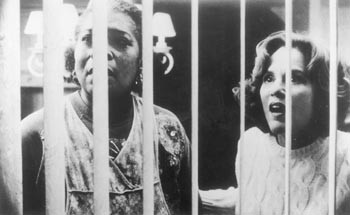
Girl, Interrupted (Dec. 21) It’s a drama about a women’s psychiatric hospital with an all-star cast–Winona Ryder, Angelina Jolie, Vanessa Redgrave, and Whoopi Goldberg)–as the inmates. James Mangold (Heavy, Cop Land) directs.

Snow Falling on Cedars (Dec. 22) Based on David Guterson’s novel, this story of murder in the Puget Sound during the 1950s stars Ethan Hawke. Scott Hicks (Shine) directs.

Man in the Moon (Dec. 22) Director Milos Forman’s biography of a historical enigma: the ill-fated comedian/performance artist Andy Kaufman, whose theater-of-cruelty routines made the man a sort of stand-up tragedian. Those old enough to remember Kaufman’s early death are still not convinced it wasn’t yet another of his cruel pranks. Jim Carrey plays Kaufman.

The Talented Mr. Ripley (Dec. 24) Patricia Highsmith’s novel–the source for that gorgeous Mediterranean chiller of 1960, Purple Noon–is revisited for a new version by Anthony Minghella, late of The English Patient. Matt Damon, Gwyneth Paltrow, Jude Law, and Cate Blanchett co-star in a story of a case of identity theft by Highsmith’s handsome sociopath Ripley.

Any Given Sunday (Dec. 25) Aided by appropriate quotes from Vince Lombardi, Oliver Stone does football, with Al Pacino as an aging coach, Dennis Quaid as a quarterback on the way down, James Woods as a sinister orthopedist named Dr. Mandrake, and Cameron Diaz–excuse me, no, that was another broom handle–as the owner of the Miami Sharks. Plus! Elizabeth “Showgirls” Berkley as “a gorgeous high priced escort.” And Charlton Heston as The Commissioner.

Galaxy Quest (Dec. 25) An irresistible comic premise: the semi-employed veterans of the 1970s television show Galaxy Quest are given a call for help from desperate extraterrestrials who have monitored Earth’s TV broadcasts. Sigourney Weaver and Tim Allen co-star.

Next Friday (Dec. 25) Ice Cube stars in the sequel (which he also scripted and directed) to Friday, his funny, pleasing, lackadaisical comedy about everyday life in South Central L.A.

Angela’s Ashes (January) Alan Parker directs Emily Watson and Robert Carlyle in the adaptation of the Frank McCourt bestseller of Irish starvation, immigration, and infant death–to which a rereading of Flann O’Brien’s bitter satire The Poor Mouth might be an after-movie anecdote (“Émigration is thinning out the remote areas, the young folk are setting their faces toward Siberia in the hopes of better weather”).

Fantasia/2000 (New Year’s Day) In IMAX: the millennial version of the Disney prestige item, complete with seven new sequences and two holdovers.

All dates subject to change. No guarantee of quality is implied by the above descriptions. Films may be smaller than described. No liability is assumed on the parts of the Sonoma County Independent or its heirs from moviegoers disappointed, confused, overcharged, lulled to sleep, or pestered by sassy teenagers. Happy holidays!

From the November 18-24, 1999 issue of the Sonoma County Independent.

© Metro Publishing Inc.

Holiday Arts

0

Photograph by Michael Amsler

Holiday schemes: Christmas Day brings trouble in the tropics when a hapless French Guiana family is threatened by evil relatives in Pacific Alliance Stage Company’s production of My Three Angels, opening Nov. 26 at Spreckels Center.

Holiday Arts

Deck the halls, ’cause here comes our selective guide to the season’s happenings

Edited by Patrick Sullivan

TREE? Check. Menorah? Check. Shopping list? Check. Checkbook? Check. And so we’re off, plunging faster than a speeding sleigh into another season of gifts and good cheer. But before you get all tangled up in tinsel and ribbons and credit card slips, we’d like to present the other side of Christmas, the sights and sounds of the holiday arts in Sonoma County. Every year, local creative types, from bearded fat men to bouncing ballerinas, present the gift of their talents on stages and dance floors and main streets across the North Bay.

How can you keep it all straight? We’ve got you covered: Below, you’ll find our selective guide to holiday happenings.

All listings penned by Paula Harris, Liesel Hofmann, Patrick Sullivan, and David Templeton.

Downtown Santa Parade
It’s wild. It’s wonderful. It’s a little bit weird. But it’s got Santa Claus, so we’ll be there. Santa Rosa’s 15th annual Downtown Santa Parade is always a don’t-miss spectacle of creative whimsy. This year, the course will be even longer. Starting at 10 p.m. on Nov. 20, the parade will stretch from Fourth and E streets to B Street, then north to Ross Street, east to Mendocino Avenue, and on to Courthouse Square, where a full day of activities and seasonal sunshine is planned. 284-2300.

Santa & Mrs. Claus in Petaluma
Santa Claus sure is smart. Somehow he always remembers that Petaluma is a river town. Instead of being dragged into town by reindeer, the Jolly Man always comes to Pet-aluma via water. This year, he and Mrs. Claus will arrive on the deck of their usual all-decked-out tugboat, at high noon on Nov. 27. After coming ashore at the Turning Basin, and after handing out iconic candy canes, they’ll take a ride through downtown Petaluma. Giddyap. 769-0429.

Give Santa a Call
One thing about that Santa Claus: he sure knows how to listen. Whether you’re on his knee or on the phone, the roly-poly man can’t seem to get enough of people jawing at him. He’s even made himself available for a little long-distance quality time on Dec. 7 and 8, from 6 to 8 p.m. On those nights only, the North Pole can be reached by calling 763-6051. Who can say “Ho! Ho! Hold the phone!”?

Tinsel

Yountville Festival of Lights
A daylong holiday street fair precedes a dazzling procession that sets the entire town aglow with thousands of lights on Nov. 26. Among the fair highlights: the first annual Napa Valley Ice Art Championship, in which some 20 ice carvers will create art from 300-pound blocks of ice. Festivities run from 2 to 9 p.m. along Washington Street in Yountville. Admission is free. 944-0904.

Bob Burke’s Christmas Party
For decades now, Forestville’s Bob Burke has taught us all a bit about the spirit of human kindness. Founder of a 26-year-old program that offers free year-round support groups and fun events to children with cancer and other serious illnesses in Sonoma County, the benevolent Burke is our own homegrown Santa. Revenues for the program come from donations made during events such as Burke’s annual Christmas Party. This year’s event, hosted by the Gonnella Family, will be held at the Union Hotel Restaurant in Occidental. It will feature a spaghetti plate supper, Christmas music from local schools, and appearances by various surprise guests and personalities. The party is on Wednesday, Dec. 1, from 5 to 9 p.m. Admission is free, but donations (at any time) are greatly appreciated–all money goes directly to West County Community Services’ Bob Burke’s Kids Program. 887-2222.

Snoopy on Ice
If happiness is a warm puppy, shouldn’t Snoopy get the heck off the ice rink? Nah! This year the round-headed boy and his dog are at it again as the Redwood Empire Ice Arena presents its holiday show “A Christmas Celebration.” The visual feast also stars champion skaters, extravagant costumes, and holiday scenery. The fun runs Dec. 3 and continues through Dec. 28 with most shows at 3 p.m. and 7 p.m. Redwood Empire Ice Arena, 1667 W. Steele Lane Santa Rosa. Tickets are $10-$40. 546-3385.

Light up a Life
This annual tree lighting–sponsored by Hospice of Petaluma–has become a major focal point of the community over the years, as hundreds gather to cheer on the lighting of the enormous Christmas trees. On Dec. 3, starting at 6:30 p.m., celebrants will light candles, sing songs, and remember the departed ones who’ve brought joy and light into their lives. For information or to sponsor a tree light in the name of a loved one, call 778-6242.

‘Tis the Season for Crafts
It’s holiday hustle-and-bustle time once again, and this year why not give some lovingly crafted homemade gifts a try? The 23rd annual Spirit of Christmas Crafts Faire is the largest holiday gift show in the North Bay, with a cornucopia of handmade goodies to delight even the pickiest person on your Christmas list. Shop to your heart’s content from a myriad of marvelous items such as hand-blown glasswork, metal and wooden furniture, toys, wreaths, and other such Yuletide delights. Minstrels and carolers will also be wandering the aisles, spreading musical cheer to all the holiday shoppers. The fair is open Dec. 3-5 and 10-12, on Fridays from noon to 9 p.m., and on Saturdays and Sundays from 10 a.m. to 6 p.m. at the Sonoma County Fairgrounds, 1350 Bennett Valley Road, Santa Rosa. Admission is $4 for adults and $2 for seniors and children ages 6 to 12. 575-9355.

Holiday Victorian Tea
Flex those pinkies: The Petaluma Museum will be transformed into an elegant setting for a genuine high tea, with buttery scones, dainty sandwiches, costumed servers, and much more as the Museum Association sponsors this annual delectable holiday tradition. Tea will be served at three seatings on Sunday, Dec. 5, at 1, 3, and 5 p.m. at Fourth and B streets, Petaluma. Tickets are $25. 762-3456.

Christmas Parlor Tour
The Victorian homes of Petaluma are famous for their beauty, their awesome seasonal decorations–and their sheer size. Four of these homes will be opening their doors this year for Petaluma’s annual Heritage Homes Christmas Parlor Tour on Dec. 5 from 6 to 9 p.m. (Parlors only: Stay out of the closets!) Sponsored by the Petaluma Historical Library–where the tour begins with Tea Time and special exhibits–this is a breathtaking opportunity to peek inside the homes we all drive by and salivate over. But, hey, no drooling on the hardwood floors. 762-3456.

Alexander Valley Area Wineries
Looking for an inexpensive way to make merry? Canyon Road, Trentadue, and Geyser Peak wineries in Geyserville will hold a Winter Wonderland Parade of Lights, a free community event for the whole family, on Dec. 9 from 5 to 8:30 p.m. The evening will feature light displays, outdoor bonfires, hot cider, mulled spiced wine, toasted marshmallows, and traditional carolers from the Santa Rosa Symphonic Choir, who will perform at 7 p.m. at Canyon Road Winery (19550 Geyserville Ave. S.). Other activities include winetasting and gift shopping. 857-3417.

Flotilla on Parade
Here’s a Christmas parade of a different sort: 25 festively lit and decorated boats will be on display in the Petaluma River Turning Basin. The local yacht clubs sponsoring this event invite individual boaters to join in this holiday parade on water. Visitors can view the brightly adorned boats all evening at the Turning Basin (Petaluma Boulevard North and B streets, behind the Great Petaluma Mill), Santa himself will trade in his sleigh to arrive aboard a sailing vessel known as the Bonnie Lass, and live music will entertain visitors. This event sets sail on Dec. 11 at 6:30 p.m. 765-6750.

Other Traditions

Hanukkah
For symbols of the season, the Christians have their manger, the Jews have their menorah. On an eight-branched candlestand, special Hanukkah candles are lit, one the first evening, two the second, and so on until the end of the eight-day holiday. Hanukkah, or the Feast of Dedication, is said to have been inspired by Judas Maccabeus and his brothers in 165 B.C. to commemorate the Jews’ triumphant battle against the Syrians and Greeks for desecrating the Jewish temples; later the holiday was linked to a miraculous cruse of oil that burned for eight days. Since Hanukkah always falls on variable dates in December, in this year of 5760 the celebration will be held Dec. 3-11. (So what’s to worry about the millennium? The next millennium, in the Jewish calendar, is Y6K, or 6000, arriving in the Christian year 2240.)

Here are some local Hanukkah festivities in the offing:

Beth Ami Congregation/Santa Rosa Jewish Community invites families to a dinner and play on Dec. 7, starting at 5 p.m., at the Friedman Center, 4676 Mayette Ave, Santa Rosa. Tickets for members and non-members, respectively, are $4/$5 for adults, $3/$4 for children, $10/$15 for a family. 545-4334.

Petaluma’s Congregation B’nai Israel holds a Hanukkah dinner (chicken or vegetarian) on Dec. 5 at 5 p.m. Bring your own menorah and candles for a special lighting ceremony. Cost is $20 for adults, $10 for kids; and those under 5 or over 90 get to feast for free. For reservations, call Phyllis at 762-0340.

On the Sabbath, Dec. 4, at 10 a.m., Congregation Ner Shalom will hold a free meditation service, along with chanting, to which Christians are invited. That evening, at 7 p.m., there’ll be a family party, with a potluck dessert and a latke contest, at the temple, 85 La Plaza, Cotati. Admission for a non-member family is $12. 665-8622.

Keeping the holiday humming, the River Choir, directed by Sonia Tubridy, performs Sonny Vale’s “The Magnificent Maccabe,” a modern Hanukkah cantata with a klezmer chamber ensemble. Based on Howard Fast’s novel My Glorious Brothers, the unique 45-minute composition will be played at Beth Ami Congregation on Dec. 4 at 7:30 p.m.; at Congregation Ner Shalom on Dec. 5 at 4 p.m.; at the Guerneville Community Church (14520 Armstrong Woods Road) on Dec. 7 at 7:30 p.m.; and at the Sebastopol Methodist Church (500 N. Main St.) on Dec. 12 at 3 p.m. Cost is $6 for adults and $3 for children, but no one will be turned away for lack of funds. 869-0516.

Winter Powwow
The American Indian Cultural Education Committee presents its third annual one-day intertribal celebration of American Indian culture. The event features traditional music, drumming, food, arts and crafts, and several kinds of dancing, including Pomo dancers, Aztec dancers, and Gourd dancing. All are invited, and even Santa Claus will put in an appearance. The Winter Powwow takes place on Dec. 4 from 10 a.m. to 10 p.m. at the Veterans Building, 1351 Maple Ave., Santa Rosa. Admission is free. 869-8233.

Winter Ritual Celebration
They’ll be walking in a Wiccan wonderland in Sebastopol, when famed pagan novelist and spiritual leader Starhawk, joined by Luisah Teish, makes a little seasonal magic at the 11th annual Winter Ritual and Workshop, Dec. 19, from 7 to 10 p.m. Held at the Community Center, 390 Morris St., in Sebastopol, the event will be a time of reflection and joy, as members of Earth-based spiritual traditions join in dance, song, and storytelling to welcome the winter and call back the sun. Cost is a sliding scale: $3-5 for kids under 16; $10-15 for adults. 823-9377.

Winter Solstice Santa Rosa
The last winter solstice of the millennium will be celebrated on Dec. 22 from 6 to 9 p.m. at Santa Rosa’s Veterans Building (1351 Maple Ave.), with a spectacular performing arts celebration honoring Earth and the “rhythms of community.” Join Bo Estrella’s Exist Dance and an eclectic village-full of expert drummers and world musicians in a one-of-a-kind winter experience. A $10 donation will benefit Planting Earth Activation. 793-2126.

Dance

Nutcrackers Galore
Dancing mice, dazzling costumes, fairy-tale kingdoms–The Nutcracker has it all. Indeed, as far as we can tell, this timeless holiday classic has only one drawback: Nearly every dance company in the North Bay stages a version, so it’s tough to decide which one to see. We can’t make that decision for you, but here are your options.

As usual, Ballet California offers a jam-packed holiday season. First, meet the characters and view a mini-performance at the company’s annual Nutcracker breakfast on Dec. 5 from 9:30 a.m. to noon at the Sonoma County Hilton, 3555 Round Barn Blvd., Santa Rosa. Tickets are $17 for adults and $12 for children. 537-0140.

Then it’s on to the full-scale production as Ballet California offers the only Nutcracker in Sonoma County with a full live orchestra. The musicians perform under the baton of Simyon Lohss, newly appointed assistant conductor of the Santa Rosa Symphony, and this year’s ‘cracker also features guest dancers from the Diablo Ballet. Catch the production on Dec. 17 at 8 p.m., Dec. 1 at 2 and 7 p.m., and Dec. 19 at 2 p.m. at the Luther Burbank Center, 50 Mark West Springs Road, Santa Rosa. Tickets are $19-$22 for adults and $14 for children, students, and seniors. 546-3600.

See excerpts from The Nutcracker as well as a new interpretive conclusion on Dec. 4 and 5 at 5 and 7 p.m. at the Romantic Tearoom, 209 Davis St., Santa Rosa. Tickets are $7. 545-9323.

The Petaluma City Ballet and the Petaluma School of Ballet team up to present the city’s 13th production of The Nutcracker. This year’s presentation–which features Charles Torres, formerly of Smuin Ballet, as the Cavalier–takes place on Dec. 10 at 8 p.m., Dec. 11 at 2 and 8 p.m., and Dec. 12 at 2 p.m. at the Person Theater, Sonoma State University, 1801 E. Cotati Ave., Rohnert Park. Tickets are $16 for adults and $11 for children. 765-2660.

The Sonoma County Ballet Company features over 100 dancers from two companies in its eighth annual Nutcracker in Sebastopol. The production takes place on Dec. 10 at 8 p.m., Dec. 11 at 2 and 8 p.m., and Dec. 12 at 2 p.m. at the Analy High School theater, 6950 Analy Ave., Sebastopol. Tickets are $12 for adults and $8 for children. 824-8006 or 576-0506.

The Marin Ballet presents its 28th seasonal production of the holiday classic, offering the full tale, complete and uncut, on Dec. 11 and 12 at 1 and 4:30 p.m. at the Marin Veterans Memorial Auditorium, Marin Center, Avenue of the Flags, San Rafael. Tickets are $17-$22 for adults and $10.50 -$14.50 for children. 415/472-3500.

Finally, the Theatre Ballet of San Francisco serves up its version on Dec. 14 and 15 at 7 p.m. at the Lincoln Theatre, Veterans Home of California, Yountville. Tickets are $18 for adults and $14 for children. 415/626-6623.

The Night before Christmas
The Healdsburg Ballet presents a new full-length ballet version of Clement B. Moore’s holiday classic. Some 100 dancers will perform, and guest artist Frank Russel will appear as Santa Claus. Catch the production on Dec. 12 at 2 p.m. at the Raven Theater, 115 North St., Healdsburg. Tickets are $9.50 for adults and $6.50 for children and are available at Amoruso Printing and Healdsburg Safeway. 431-7617.

Sophie & the Enchanted Toyshop
Marin Dance Theatre’s enchanting new ballet, created by two award-winning local choreographers, features a cast of 100 characters, including the Snow Prince and Princess, Valentina Ballerina, and the Dancing Bear. The toys come to life on Dec. 18 at 1 and 5 p.m. at the Marin Veterans Memorial Auditorium, Marin Civic Center, Avenue of the Flags, San Rafael. Between performances, at 3 p.m., bring your child to the Teddy Bear Tea Party for food, face painting, and a chance to meet the characters. Performance tickets are $20 for adults and $12 for children; party admission is $5. 415/499-7687.

Three Angels
It’s trouble in the tropics on Christmas Day: three convicts must use their criminal arts to help a hapless family escape the schemes of their evil-minded relatives in this Pacific Alliance Stage Company production. Enjoy the Broadway classic Nov. 26-28, Dec. 2-5, and Dec. 9-12, at 7:30 p.m. on Thursdays, 8 p.m. on Fridays and Saturdays, and 2:30 p.m. on Sundays at the Spreckels Center, 5409 Snyder Lane, Rohnert Park. Tickets are $10-$15. 588-3400.

The Swallow’s Tale
The Cinnabar Young Repertory Theater presents an original holiday musical. Based on Oscar Wilde’s The Happy Prince, The Swallow’s Tale features cooking crocodiles, dancing hippos, and singing statues. Catch the production on Dec. 3-4, 10-11, and 17-18 at 7:30 p.m. and on Dec. 5 and 12 at 2 p.m. at the Cinnabar Theater, 3333 Petaluma Blvd. N., Petaluma. Tickets are $9 for adults and $5 for youth. 763-8920.

A Child’s Christmas in Wales
The Cinnabar Teen Acting Ensemble presents a stage adaptation of the immortal poem by Dylan Thomas. Take a holiday trip to a tiny Welsh village on Dec. 10-11 and 17-18 at 7:30 p.m. and Dec. 12 and 19 at 2 p.m. at the Polly Klaas Theater, 417 Western Ave., Petaluma. Call for prices. 763-8920.

A Christmas Carol
Get a double dose of Tiny Tim and a bevy of ghosts this season. Theater @ the Center presents a musical version of Dickens’ classic tale on Dec. 10, 11, 16, and 18 at 8 p.m. and on Dec. 12 and 19 at 3 p.m. at the Community Center, 276 E. Napa St., Sonoma. Tickets are $12. 938-4626.

Sonoma County Repertory Theatre reprises last year’s critically acclaimed production with Eric Thompson again bringing unusual depth to the role of the curmudgeonly Scrooge. The show opens on Nov. 19 and runs through Dec. 18, with evening showtimes at 8. and Sunday matinees at 2 p.m. at SCRT, 415 Humboldt St., Santa Rosa. Tickets are $15 for adults and $10 for students and seniors. 544-7278.

Songs of the Season

Going deep: Musician/storyteller David Auerbach performs “Carols in the Caves.”

Carols in the Caves
This popular event is celebrating its 14th year with performances by multitalented local musician David Auerbach. He will play traditional Christmas music from America and beyond on rare folkloric instruments in the cast-lined caves of local wineries. His vast collection includes the Celtic harp, hammer dulcimer, pan pipes, and bowed psaltery (an ancestor of the violin). Auerbach plays at the Clos Pegase Winery (1060 Dunaweal Lane, Calistoga), Nov. 27 at 2 and 7 p.m. and Nov. 28 at 4 p.m.; Storybook Mountain Winery (3835 Hwy. 128, Calistoga), Dec. 4 and 5 at 2 p.m.; Folie à Deux Winery (3070 St. Helena Hwy. N., St. Helena), Dec. 11 and 12 at 2 p.m.; and Schug Carneros Winery (602 Bonneau Road, Sonoma), Dec. 18 at 7 p.m. and Dec. 19 at 6 p.m. Tickets are $30. 224-4222.

Candlelight Christmas Concert
For its annual candle-lit concert, the Marin Symphony’s baroque ensemble will be joined by members of the College of Marin Community Chorus and the Winifred Baker Chorale. The evening includes excerpts from Handel’s Water Music and an audience sing-along. The concert takes place on Dec. 4 at 2 and 4:30 p.m. at St. Vincent’s Chapel, St. Vincent Drive, San Rafael. Tickets are $20. 479-8100.

Golden voices: Petaluma Sings! presents the songs of the season on Dec. 3 and 11.

Petaluma Sings
Audiences never know what to expect when Petaluma Sings! takes the stage for its annual Christmas Concert. Now under the direction Nina Shuman, the award-winning chorus–both the women’s contingent and the children’s ensemble–is sure to offer a stocking-full of auditory delights and acoustical surprises. Children’s concert: Dec. 3 at 7:30 p.m., at the Church of Christ, 370 Sonoma Mountain Parkway, Petaluma. Women’s and advanced children’s concert: Dec. 11 at 8 p.m., at St. Vincent Church, Bassett and Liberty streets, Petaluma. Call for price. 778-7441.

Napa Valley Symphony
The acclaimed Sonos handbell ensemble headlines the Napa Valley Symphony’s annual Holiday Pops concert, which will also feature music from Hänsel and Gretel and a selection of seasonal favorites. The concert, ending with a carol sing-along, takes place on Dec. 5 at 3 p.m. at the Lincoln Theater, California Veterans Home, Yountville. Tickets are $20 for adults and $10 for students and children. 226-8742.

Vivace Chorale
Check out a winter concert chock-full of Gloria selections, including Vivaldi, Haydn, and Rutter. The concert takes place on Dec. 10 at 8 p.m. at the First Congregational Church, 2000 Humboldt St., Santa Rosa. Tickets $8. 576-1231.

Santa Rosa Symphony
The symphony celebrates the holiday season with a two-part concert featuring two masterworks by Mozart and a special appearance by Santa Rosa soprano Carol Menke. Face the music Dec. 11 and 13 at 8 p.m. and Dec. 12 at 3 p.m., at the Luther Burbank Center, 50 Mark West Springs Road, Santa Rosa. Call for ticket prices. 546-8742.

Sing-Along Messiah
Though news to some, Handel’s Messiah actually does contain more words than just “Alleluia.” Even if you don’t know them, you can sing them, at the 19th annual Redwood Empire Sing-Along Messiah, Dec. 15 at 7:30, at the Luther Burbank Center, 50 Mark West Springs Road, Santa Rosa. Join the Santa Rosa Symphony Chorus and a multitude of angels. Loner scores are available in the lobby. For more details, call 566-9600. Or tune in to the Messiah production on Dec. 11 at 3 p.m. at the United Methodist Church, 500 N. Main St., Sebastopol. Hallelujah, etcetera! Tickets are $5. 823-2831.

Chanticleer Christmas
The Chanticleer Men’s Chorus performs the kind of music that makes people sit and stare in wonder. It wraps you up in a goose-bumpy blanket of beauty and amazement. Their annual Christmas tour of medieval and Renaissance sacred music (along with traditional carols) brings them to Petaluma on Dec. 18 at 8 p.m., at St. Vincent Church, Bassett and Liberty streets. Be amazed. Be very amazed. $21-$32. 415/392-4400.

New Year’s Eve

First Night
Revelers of all ages can descend on downtown Santa Rosa for the largest street party in miles. The fifth annual First Night promises to be a biggie. The drug- and alcohol-free celebration encompasses much of the downtown area from City Hall to Fourth and Fifth streets, through Santa Rosa Plaza, and on to Railroad Square. It will feature a myriad of musicians, performance artists, poets, dancers, food vendors, and activities for kids. Millennium treats include a Y2Kazoo band; organizers are also planning a “Time Tunnel” on Fifth St. where “people can walk through each decade.” This year will feature two fireworks shows: at 9 p.m. (to bond with East Coast revelers) and at midnight. The action begins at 4 p.m. Entry badges (available at Copperfield’s bookstores) cost $5 in advance, $10 on the night. 579-ARTS.

Hangman’s Daughter
They’ve got a new look–fewer pounds and less hair–but the sound, we presume, is the same bluesy magic that made Hangman’s Daughter a Northern California favorite before they took off for Nashville. 5AM opens, and the show starts at 9 p.m. at the Mystic Theatre, 23 Petaluma Blvd. N., Petaluma. Tickets are $50. 765-2121.

Eric Lindell
Sonoma County’s favorite native son returns home for an end-of-the millennium night of blues-flavored rock, at the Inn of the Beginning, 8201 Old Redwood Hwy., Cotati. Call for time and ticket prices. 664-1100.

Roy Rogers & Zigaboo Modeliste
This all-star, action-packed lineup tops off an evening that includes a five-course meal and champagne. The show starts at 7:30 p.m., and both bands come together for a jam at midnight at the Powerhouse Brewing Co., 268 Petaluma Ave., Sebastopol. Tickets are $250. 829-9171.

Michael Savage Live
Frankly, we wish Michael Savage would just go away. Instead, the ultra-right-wing talk-radio host and reigning Clown Prince of Thinly Veiled Hate Speech will be holding court at the Marin Center on New Year’s Eve, as the host of a unique New Year’s Party called Michael Savage Live. Boasting an assemblage of “Compassionate Conservatives”–if these conservatives are so darn compassionate, why don’t they shut up and leave us alone on New Year’s?–there will be music, food, drink, and speeches. Hallelujah. Call for times and ticket prices. 415/472-3500.

Angela Strehli & the Sundogs
The inimitable Texas blues belter swings into Marin for her last show of the year. The evening, which includes a five-course meal, begins at 9:30 p.m. at Rancho Nicasio, on the Town Square, Nicasio. Tickets are $200. 415/662-2219.

Holiday Headliners

Concert for a Landmine-Free World
If you’re looking for big names and a good cause, this may be the biggest bang of the holiday season. Check out this lineup: Emmylou Harris, Bruce Cockburn, Nanci Griffith, Steve Earle, Patty Griffin, and some special guest still to be announced will deliver an intimate acoustic show on Dec. 2 at the Luther Burbank Center to benefit Campaign for a Landmine Free World. The concert starts at 8 p.m. in the Main Theater, 50 Mark West Springs Road, Santa Rosa. Tickets are $45, $65, or $85. 546-3600.

The Knitters
Here’s a rare chance to hear most of the members of legendary L.A. punk band X come together to show off their hillybilly roots. On Dec. 7, the show starts at 8:30 p.m. at the Mystic Theatre, 23 Petaluma Blvd. N., Petaluma. Tickets are $18 in advance and $20 at the door. 765-2121.

Joanne Rand
The former Sonoma County singer returns home on Dec. 17, to grace us with her unmistakable voice and power-folk style. Billed as a Winter Solstice Gathering, the event will feature Rand & the Little Big Band, as well as the Ruminators and Spiral Bound. The evening begins at 7:30 p.m. at the Inn of the Beginning, 8201 Old Redwood Hwy., Cotati. Tickets are $12.50 in advance and $15 at the door. 874-3150.

Bryan White
Oklahoma’s best-looking son, named one of the “50 Most Beautiful People in the World” by People magazine, brings his multiplatinum country music to the LBC. on Dec. 10. The concert starts at 8 p.m. Tickets are $26-$30. 546-3600.

From the November 18-24, 1999 issue of the Sonoma County Independent.

© Metro Publishing Inc.
Millennial Dining

0

Toasting the new century: Mistral owner Michael Hirschberg will be offering a millennial menu for holiday revelers this year.

Dinner Date

Local restaurants unveil multicourse millennial menus for New Year’s Eve

By Paula Harris

FIFTY DAYS (or so) and counting. So, what will you be doing on New Year’s Eve? Even Y2K worry warts, who swore they wouldn’t stray from their La-Z-Boys and the broadcast of Times Square festivities, are beginning to wonder whether they shouldn’t mark the momentous occasion in some manner. A happy medium–between jetting to the South Pacific to gaze upon showers of fireworks reflected in tropical waters and barricading oneself in the basement with flashlight, freeze-dried food, and a firearm–might simply be a celebratory dinner at a local restaurant.

Local chefs are cooking up some mouthwatering festivities, but don’t procrastinate–seating is limited and reservations are filling fast.

Here’s just a taste of what’s on some millennium menus:

Santa Rosa’s Syrah is having a true blowout. “We’re calling it ‘An Obscenely Decadent New Year’s Eve Menu,’ ” says chef-owner Josh Silvers. And he’s not kidding. Bring your appetite and a loaded wallet. The 12-course extravaganza costs $225 per person plus tax (without wine). The mammoth menu: oysters on the half shell with blood orange and champagne sorbet; eggs with caviar, chive, and potato; lobster bisque cappuccino with tarragon chantilly; “ménage à trois” tartare of scallops, salmon, and tuna; grapefruit-chervil ice; sweetbread and foie gras vol-au-vents; wild mushrooms, whole-grain mustard cream, and herb demi-glace; grilled venison loin with mascarpone polenta and cranberry jus; tournados of filet mignon with lobster hash and fines herbes hollandaise; baby greens with a Meyer lemon and truffle vinaigrette; brioche beignet with café latte crème anglaise; syrah-port poached pear with caramelized filo; and finally, eggnog and orange baked Alaska with a glass of champagne at midnight.

For an extra charge, you can pair each course with a different libation–uh, Alka-Seltzer perhaps? Not at all, says Silvers. “This is just a tasting of these dishes. Otherwise you wouldn’t be able to walk!”

Silvers says he wanted to create a traditional and opulent New Year’s supper. “How are you going to bring the millennium in with a Burger King dinner and the tube?” he asks. “These are almost all classic dishes from the last century. We wanted to go out with all the classic food.” Seating is between 7 and 9:30 p.m. Call 566-9468.

If you consider Syrah pricy then brace yourself–John Ash & Co. beats it. Bring your appetite and a bank loan. The damage will be $275 per person for six courses (each paired with alcoholic beverage) should you reserve the second seating from 8:30 to 10 p.m. The 5:30 to 7:30 p.m. first seating costs $175 per person. Dinner choices include baked Tomales Bay oysters on spinach leaves with champagne and chive vinaigrette; confit of Sonoma duck with arugula blood orange salad; and Maine lobster tail with risotto and chanterelle mushrooms. And there’ll be live music. Call 527-7687.

AT THE OTHER end of the spectrum, the folks over at Dempsey’s Alehouse in Petaluma tell us they’ve decided not to “gouge, spiff-up, or go hog wild” on New Year’s Eve. Instead, the restaurant and microbrewery will extend Happy Hour and offer notable nightly specials at the regular prices. Call 765-9694.

Mistral in Santa Rosa is offering two alternatives: ” ‘The Early Show’ is intended for diners who want to enjoy a special meal before proceeding to wherever they will be on the stroke of midnight,” explains owner Michael Hirschberg. “And ‘The Late Show’ is intended for diners who want to ring in the new millennium at Mistral.”

The Early Show four-course dinner is $35 per person. Tables are available from 5:30 to 9 p.m. The Late Show (which also features a tasting flight of sparkling wines, a dessert buffet at midnight, and dinner jazz) is $49 per person and begins at 10 p.m. For details, call 578-4511.

In Sonoma, Heirloom is celebrating with a six-course dinner for $95 per person. Highlights include quail consommé with truffle essence; monkfish medallions with lobster dumplings and chanterelle mushrooms; organic beef filet with salsify purée, marrow, and truffle jus; and warm chocolate torte with ginger sabayon. Staffers say the dinner will a relaxing affair with no live music. Seating is between 5:30 and 10 p.m. Call 939-6955.

Sondra Bernstein, owner of The Girl and the Fig, also promises a tranquil alternative, this time in Glen Ellen, with a five-course meal paired with Rhône wines for $75 per person. “It’s going to be a friendly, mellow fine dining experience as opposed to frenzy and noisemakers,” she says. Menu choices include grilled scallops with apple and smoked bacon; mushroom risotto; and pan-seared Liberty duck. Call 939-3634.

And Papa’s Taverna on the Petaluma River guarantees a rollicking good time for all in fine European fashion. The festivities (which cost $65 per person) will include a Greek singing duo, live polka music, and a belly-dance show, plus a four-item dinner featuring “New York steak, lamb, and fish–and champagne at midnight,” according to manager Jimmy Pappageorge. “It’s going to be very festive and nicely decorated,” he enthuses. “And everyone’s going to join in.” Call 769-8545.

From the November 11-17, 1999 issue of the Sonoma County Independent.

© Metro Publishing Inc.
Vegetarian Mexican Cooking

Veg-Mex

Meatless Mexican cooking for the holidays

By Yovanna Bieberich

I LOVE MEAT. I’d be a failure as a vegetarian. Now, don’t get me wrong. It’s not as if everywhere I eat, a cow must die. I just happen to enjoy an occasional slab of medium-rare juicy joy.

A couple weeks ago, when I obtained a copy of Nancy Zaslavsky’s Meatless Mexican Home Cooking (St. Martin’s Griffin; $15.95), I eyed it rather skeptically. Zaslavsky’s first book, A Cook’s Tour of Mexico, was nominated for the 1996 James Beard Award, and for good reason: her recipes are authentic culinary recordings of the flavorful heritage of Mexico.

From Nov. 11 to 13, Zaslavsky will be participating in a three-day series of workshops and seminars on traditional Mexican cooking methods and recipes at the Culinary Institute of America at Greystone. On Nov. 16, she brings a special presentation of Mexican-style holiday dishes to Ramekins, the Sonoma Valley culinary school. “Mexico, of course, doesn’t have a Thanksgiving celebration, but I’ve chosen some recipes used during the holidays in Mexico to suggest people try out,” she says.

The recipes include both meat and meatless dishes.

Originally from the East Coast, Zaslavsky was brought up in a household full of good cooks, so it was natural for her to experiment in the kitchen. She spent much time discovering international dishes and exploring the cultures from which they came. Zaslavsky moved to Southern California in 1970 and fell in love with not just the area, but the flavor of the fresh, rich Mexican food there.

“There was basically very little and very mediocre Mexican food in New York City. As I kid I can remember eating canned tortillas. . . . Mexican food was just too exotic back there at the time,” she says.

Zaslavsky’s new-found love of Mexican food led her to travel extensively throughout Mexico on quests for authentic culinary delights. The recipes she brings back for her books are given to her by the people she meets, often while in the Mexican marketplaces, while observing their purchases. “I just start chatting with them. At first, they’re in shock, but when they realize how serious I am, they become quite enchanted and flattered that a blonde gringa is interested in what they’re cooking for dinner that night,” says Zaslavsky.

She also has deep interest in what their mothers and grandmothers taught, and how recipes have been passed down in households. Through the recording of these traditional recipes, Zaslavsky is actually playing the part of an anthropologist: compiling cultural and family histories. The people she meets are quite receptive and happy that their family dishes are being written down–often for the first time. “Often times I’m invited into people’s homes to try their dishes and watch them prepare a meal,” she says. “The best part about doing this has to do with the friends I’ve made over the years. The Mexicans are such a warm and receptive people; I always feel welcomed.”

THE RECIPES found in the meatless cookbook are authentic dishes you’d find in the various regions of Mexico. Though not a vegetarian herself, Zaslavsky couldn’t help noticing how many of the dishes, particularly of southern Mexico, were meatless.

“I’m really hesitant to call anything I write ‘vegetarian.’ When I hear the word vegetarian, often I think of brown rice and tofu, so meatless to me doesn’t mean that at all,” Zaslavsky comments. “Meatless means having a great pile of spaghetti on your plate and after eating it saying, ‘Hey, I didn’t have any meat!’ ”

Nancy Zaslavsky’s will present “Thanksgiving in Southern Mexico” on Tuesday, Nov. 16, at 6:30 p.m. at Ramekins, 450 W. Spain St., in Sonoma. Events will include a re-creation of a Mexican marketplace. The cost is $45. For details, call 933-0450. For information about the CIA’s “Worlds of Flavor International Conference and Festival,” call 967-1100.

From the November 11-17, 1999 issue of the Sonoma County Independent.

© Metro Publishing Inc.
Festival Africa

0

Drumming up Support

Healdsburg Armory gears up for the arts with Festival Africa

By Paula Harris

WHEN VICTOR Hall took on the full-time job as commander of the acting reserve guard at the Healdsburg Armory in April, he had a specific vision: to garner armory improvement funds from the world of music and arts–preferably without involving any dogs. Dogs?

“One way armories create funds is by renting out the building for events,” he explains. “And I last worked at Concord Armory where regular dog shows were the main source of funding.”

Hall recalls that he spent so much time “cleaning up dog poop and picking up dog hairs” that he decided that if he was to put effort into increasing the rentability of his new baby–the Healdsburg Armory–he’d have to ditch the canine carnivals and pursue some other source of revenue.

“I decided to target a specific group–people who want to take part in arts and music–because that’s where my soul is,” he says.

So Hall, who in his other guise is keyboard player for local world-beat band Midnight Sun, began his quest. The result is an unlikely new alliance between the U.S. Army and the Healdsburg Arts Council. “Talk about strange bedfellows,” says Mary Stratton, executive director of the Healdsburg Arts Council, with a laugh. “It’s certainly an interesting partnership.”

The arts council is working with Hall to transform the 50-year-old concrete military installation into a new arts venue. So far, renovations have included new landscaping, interior improvements, and a portable stage (built by Hall himself), which can be set up and then broken down after performances.

“We’re all just pouring ourselves into this,” says Stratton, who is also involved in the building’s makeover and is sewing 30 10-foot-long fabric wall panels to improve the acoustics for musical events.

“It’s especially exciting for the arts council in Healdsburg because we don’t have a physical facility that’s an arts center,” she explains. “We have a very small office and we offer programming, but we do it in various venues throughout the community, so we’re always seeking out locations. Then Victor came forward and offered the armory for a lot of things we wanted to do, plus the timing was great.”

Hall touts the armory (which event organizers say has the capacity for 1,000 people) as an easy-access, low-cost alternative to traditional Healdsburg venues such as Villa Chanticleer. He says a non-profit organization can rent the armory space for $17 an hour.

On Nov. 13, the first event to be held at the revamped armory will be the third annual Festival Africa (held last year at the Sebastopol Community Center)–an exhilarating six-hour bash celebrating the commonalties between the music and culture of ancient Africa, the Americas, and Europe.

“Our goal in doing these events is to bring us as people to celebrate all the things we have in common and show how our cultures interact,” says Festival Africa coordinator John Chapman, who is also president of Tribal Records, a Santa Rosa-based music production company. “If you delve into each of our cultures there are so many things that we have in common, yet we spend so much time pointing out the things that are different about us. If we would get into the things we had in common we could really uplift ourselves as human beings.”

Festival Africa will bring traditional world music to the forefront with performances by the African Rhythm Messengers (whose band members hail mainly from Nigeria) and Midnight Sun. There will also be drum-circle instruction, arts and crafts, spices and scents, tribal dance and African aerobics instruction, and plenty of authentic African food provided by the arts council, such as spicy Moroccan chicken with garbanzo beans over couscous.

Festival Africa is just the first of a whole series of concerts slated for the Healdsburg Armory, says Chapman. There are plans for a reggae show and Martin Luther King Jr. celebration in January, a Cajun show in February, a Celtic festival in March, and a Cinco de Mayo celebration in May.

“We’re working to bring new arts and cultures into the north part of the county,” says Chapman. “We want to expand our horizons.”

Presumably, dogs aren’t invited.

Festival Africa takes place from 6 p.m. to midnight, Saturday, Nov. 13, at the Healdsburg Armory, 900 Powell St., Healdsburg. Tickets are $10; children under 12 get in free. For details, call 433-0705.

From the November 11-17, 1999 issue of the Sonoma County Independent.

© Metro Publishing Inc.
Cookbooks

0

On the Shelf

New cookbooks cater to every taste

By Greg Cahill and Marina Wolf

The Rose Pistola Cookbook Broadway; $35 By Reed Hearon and Peggy Knickerbocker

SINCE ITS OPENING in 1996, the Rose Pistola in San Francisco has been a focal point of the burgeoning North Beach cafe and restaurant scene. Everyone from the New York Times to Gourmet has sung the praises of this fine Italian eatery (which garnered a prestigious James Beard Award in its first year). Chef and restaurateur Reed Hearon offers 140 Italian recipes that reflect his simple adaptations of Genoese and Ligurian cuisine. The entertaining (and let’s face it, cookbooks are mostly about entertainment) and informative aspect of this unpretentious volume are the interspersed profiles spotlighting such Bay Area food producers as Sue Conley of the Cowgirl Creamery at Tomales Bay Foods in Point Reyes Station and organic farmer Warren Weber of Star Route Farms in Bolinas, as well as a hundred and one tips on keeping it simple. G.C.

Moosewood Restaurant Daily Special Clarkson N. Potter; $35 By The Moosewood Collective

I STOPPED USING my Moosewood cookbook a couple of years ago. The back index pages were falling out, and I was getting a little tired of cheesy casseroles and beans, beans, beans. But the newest offering in the Moosewood Restaurant library (there are eight books so far, not including Mollie Katzen’s solo efforts) may be just the thing to bring me back to the meat-free fold, at least for lunch. The collectively owned and operated Moosewood Restaurant has been serving up mostly vegetarian fare for more than 25 years. The collective’s efforts recently earned Moosewood a place in Bon Appetit‘s list of the most revolutionary restaurants of the century. Never has the collective’s dedication been so delicious–and accessible–as in Moosewood Restaurant Daily Special. The book offers close to 300 recipes that form the backbone of the restaurant’s lunch menus. Here there are soups enough to drown a horse, and salads of all sorts to revive it. The offerings span the globe, from Algerian Tomato Soup with Vermicelli to Westphalian Vegetable Stew, and the presentation spans the spectrum of dietary requirements–vegan, low-fat, low-carb, quick-n-easy. Each recipe is accompanied with a string of possible accompaniments, following Moosewood’s simple tradition of the daily special: soup and a selection of salads. M.W.

Julia and Jacques Cooking at Home Knopf, $40 By Julia Child and Jacques Pepin

DO TOO MANY cooks spoil the broth? Not if the cooks are TV chefs Julia Child and Jacques Pepin, whose opinionated approaches to good cooking are as delightful as they are different. The PBS television show featured the two master chefs engaged in unscripted discussions about all of their favorite foods and ways to make them. Predictably, the resulting show was a bit, er, lively at times, but hey, a vigorous exchange of views can only benefit the art. The companion cookbook has captured much of the vibrancy of the television show, with each concept, ingredient, and recipe flanked by comments from both chefs. In this book, even simple salads merit the full focus of Julia and Jacques’ attention, and the resulting dialogue is full of good flavorful hints at what cooking can and should be. Don’t let the detailed photography and simple layout fool you: this is not a book for beginners, who may not be able to deal with the ambiguity and diversity of views that are inherent, perhaps even essential, to the book’s structure. However, it is the perfect tome, weighty and filled with some of the classics from French and American cuisine, for the home cook who is reasonably comfortable with sharp knives, multistep recipes, and special orders at the butcher counter. M.W.

The Northern California Best Places Cookbook Sasquatch; $19.95 By Cynthia C. Nims and Carolyn Dille

YOU COULD ARGUE about the exclusion of some very fine restaurants from this anthology of recipes and essays, but there’s no denying that the folks who made the cut are all worthy. This Seattle-based publisher is known for its culinary guidebooks, and this is the first attempt to cull those collections for the firm’s first cookbook. There are a few challenging items included here, but for the most part the authors have kept their offerings mercifully simple. And you’ll recognize several North Bay names, including Hemenway’s in Santa Rosa, Belle de Jour Inn in Healdsburg, Huckleberry Springs Country Inn in Monte Rio, Glenelly Inn in Glenn Ellen, the Gables Inn in Santa Rosa, Brix of Yountville, Half Day Cafe in Kentfield, and the Wine Spectator Restaurant at Greystone in St. Helena. And while you may find the braised Napa cabbage and Beaujolais sauce from Left Bank in Larkspur too daunting, the tequila-marinated Cornish hen (from Las Camelias Mexican Restaurant in San Rafael) is a walk in the park. G.C.

From the November 11-17, 1999 issue of the Sonoma County Independent.

© Metro Publishing Inc.
‘Angels in America’

0

Gay fantasia: Cameron McVeigh and Peter Downey star in Actors’ Theatre’s production of Angels in America, Part One.

War in Heaven

Two local theater companies offer no-holds-barred productions of ‘Angels in America’

By Daedalus Howell

GET READY for a battle royal. … Or maybe not. You might expect to see some serious butting of halos on local stages on the evening of Nov. 12, when dueling productions of Angels in America, Part One: The Millennium Approaches are opened by both Actors’ Theatre and Sonoma State University’s Drama Ensemble.

But according to the leaders of the two small armies of actors involved, there’s no conflict here at all.

An epic three-hour gay fantasia set during the maelstrom of conservatism and AIDS tragedies that marked the mid-’80s, playwright Tony Kushner’s globetrotting plot line braids religious, racial, and political concerns into a Gordian knot that binds together the real world and the supernatural. The play, controversial for its explicit sexuality, has won a Tony Award and a Pulitzer Prize, so it’s no surprise that a Sonoma County theater company would decide to stage it. But why two rival productions? And why now?

“Even though the play takes place 15 years ago, it talks about what’s happening right now,” says Harry Waters Jr., director of the SSU production. “A character mentions at one point that ‘it’s 1985–15 years until the next millennium.’ Now here we are literally on the threshold.”

Back in 1991, Waters starred as Belize, an African-American ex-drag queen and registered nurse, in the world premiere of Angels at San Francisco’s Eureka Theatre.

“The play is not only a barometer of how far we’ve come, but of how prophetic Kushner was about the change in politics,” says Waters. “We’ve retrenched our liberal agenda and everyone’s being more centrist and has become economically rather than socially oriented.”

It’s rare for two neighboring theater companies to bring the same play to the stage at the same time, but neither AT nor SSU seems interested in clipping the other’s wings.

“It’s one of the best plays written in the past 10 years, and nobody in this area has produced it until now,” says Actors’ Theatre artistic director Argo Thompson, who directs AT’s Angels.

Thompson did not become aware of the SSU production until last spring when, during a conversation with then-director Mary Coleman (a career move to Pixar Studios later made her no longer available to the SSU production), he discovered the productions also shared the same opening night.

“We were discussing the upcoming seasons, and Angels in America came up,” Thompson recalls. “She said ‘Wait, I’m directing Angels at Sonoma State.’ We discussed the possibility of one company doing part one and the other doing Part Two: Perestroika, but I already had plans of doing part two the following season.”

The directors decided that the proximity of their venues (they are separated by 20 miles) and the distinction between academic and general audiences would have little impact on either production’s box office.

“Our audiences probably won’t overlap, and if they do, it’s good they get two different interpretations,” says Thompson.

Angels.

One of the characteristics that distinguishes between the shows is the size of the venues themselves. Actors’ Theatre seats 70 around a 650-square-foot stage. Conversely, SSU’s Evert B. Person Theater seats 470 in front of a 3,400-square-foot proscenium stage.

Keeping to the maxim that “it’s not size but experience that counts,” Thompson concentrated his efforts on mining the play’s subtleties rather than creating a spectacle.

“Kushner himself, in his notes on producing the play, says that it benefits from a pared-down style of staging. The bits of magic are to be realized as ‘theater magic.’ The audience should always be able to see the wires,” says Thompson, who touts the relative professionalism of his cast as one of his production’s assets.

“I imagine the [SSU] students are all very talented,” he says. “I know they have a great program at SSU, and they certainly have a good director to do it, but they are younger.”

Waters concedes that his student ensemble is indeed youthful, but he’s confident it is up to the challenge.

“Most of my cast are in their early 20s, but many of the characters are in their 30s or older. The actors have responded to my pushing them as far as they can go, and I’m not done yet,” he says with a laugh.

A scene where productions of Angels often diverge from one another depicts a sexual encounter between two men in Central Park for which Kushner penned only the laconic stage direction “They begin to fuck.”

Interestingly, both companies have elected to take the scene head-on.

“We kept it in there and didn’t shy away from it. We heard that some productions have made it into a campy send-up,” says Thompson. “We wanted to walk that thin line–if the audience feels it has to laugh because it’s uncomfortable, it will feel OK about laughing, but can take it seriously as well.”

Says Waters of the SSU crew’s no-holds-barred approach to the scene, “We’re doing it. That’s what Kushner wrote. There will be people who will only see that scene, regardless of everything else that’s happening in those three hours–they will focus on two minutes of the play. That’s really sad to me.

“So I’m going to give them those two minutes, but it means you have to stay and watch the rest of the play,” Waters laughs.

SO HOW IS IT that the powers that be permitted two productions of the same show to open on the same night in the same county? Christopher Gould, owner of Broadway Play Publishing, the New York-based outfit that licensed these productions, says the decision to allow a double dose of Angels comes down to keeping Kushner cushy.

“They’re both amateur licenses, meaning neither of the companies are using equity [unionized] actors. Those that do use equity actors get exclusive rights,” says Gould.

“Our contractual agreement with the author states specifically that we will do our utmost to earn royalties for him at the highest amount. We’ll charge as much as we can. That’s our job,” he says. “It’s basically impossible for any sort of licensing company that’s doing any volume of business to keep track of every single license of a play and compare it to every other license that comes in.”

Local audiences, however, can compare, which Thompson and Waters encourage. The directors do not consider themselves competitors so much as comrades in service to Kushner’s work, and ultimately, their audiences.

Says Waters, “One way or the other–either on the grand scale or on an intimate scale–see it!”

Actors’ Theatre’s ‘Angels in America’ runs Nov . 12-Dec. 18, Thursdays-Saturdays at 8 p.m. and Sundays at 2 p.m. at the LBC, 50 Mark West Springs, Santa Rosa. $8-$15. 523-4185.

The SSU Drama Ensemble production of ‘Angels in America’ plays Nov. 12-21: Thursday (Nov. 18), Fridays-Saturdays at 7 p.m., and Sundays at 5 p.m. (Nov . 14) and 2 p.m. (Nov. 21) Evert B. Person Theatre on the SSU campus, 1801 E. Cotati Ave., Rohnert Park. $8-$15. 664-2353.

From the November 11-17, 1999 issue of the Sonoma County Independent.

© Metro Publishing Inc.
Persimmons

0

Finding a mouthful of joy in the concrete jungle

By Marina Wolf

SOME PEOPLE WAKE up when spring rolls around. I’m the exact opposite: fall is my favorite season. Around this time of year, my pulse quickens. During the darkening autumn twilight I drive the car through alleyways and hushed back streets, quietly, slowly. Sometimes I get out and peer up into the tossing trees, my vision keen, my breath shallow.

I’m stalking the wild persimmon.

They aren’t really wild, but they’re as good as I’m going to get in the heart of the city: untended, and on someone else’s property. The only tree I’ve found so far has grown unchecked for at least 40 years at the back of one of those big mid-block plots. The rambling Victorian has been renovated into a blank-faced hive of law offices, which means that if I get caught I could get sued 10 ways to Sunday. But my conscience is clear about my nighttime raids.

If those lawyers can’t be bothered to tend the tree, they don’t deserve to pick the produce.

And as they say, “It’s not stealing, it’s liberating.”

For starters, I’m liberating the fruit from a certain and untimely fate of squishing onto the uncaring pavement.

Every year, from August through early winter, the streets of Santa Rosa literally overflow with bushels of fruit: plums, apples, lemons, loquats. In older times this fecundity would have been cause for celebration. Children would be conceived, goddesses praised, communal banquet tables loaded with the harvest.

Instead, the rain of ripe fruit incites only cries of disgust as it bounces off cars and stains the sidewalks.

Picking the fruit before that fateful fall is a little like adopting mongrels from the pound. No one wants them, owing to all their apparent defects, and at first glance I’m not sure I want them, either. Semi-wild apples are knotted and often seething with worms. Untended plums vary from one branch to the next, sometimes sour and pinched from lack of sun, sometimes baked in their skins to a mushy pulp.

The persimmons from “my tree” are sooty and small, almost feral in contrast to their smooth-skinned domesticated cousins. And any fruit that’s ripe enough to eat by the time I get to it has almost certainly been visited by the birds.

I overlook a lot in my foraged goods: anything short of complete decay is fine when the fruit is for free.

Why do I forage if the fruit can be so nasty? Well, looks aren’t everything. Wild and semi-wild foods are more intensely flavored than the froufrou cultivated stuff. And foraging connects me to the food chain in a way that’s truly miraculous. I’m not a religious person, but finding food growing in the middle of the city sometimes feels like tripping over a chunk of manna in the desert.

It’s an adrenaline rush, too.

The persimmons are a challenging prey. Not only is the fruit high up, but some of it hangs over the parking lot of a bank. It’s hard to act nonchalant in a bank parking lot, but I just hold to the first rule of urban foraging: act as if you belong there. A bucket and a long-handled apple picker provide a certain air of forethought, and self-possession covers the rest.

By comparison, most of the other empty lots are easy targets. They harbor some fine fruit trees, and no one ever questions my presence, if indeed anyone can even see me through the underbrush. Getting fruit out of yards where people still live is a bit tricky. Sometimes I ask–especially when they’re standing right there, or if the tree is in front of the living-room window–but I also will take, if the moment presents itself, a casual nibble as I pass the fence line.

YES, I’M A BIT OBSESSED. But I didn’t always think this way. Once I walked with the oblivious masses, trodding blithely on the sad castoffs from someone else’s tree. I must have stepped over my first wild fruit a thousand times before I noticed it, one date among the thousands that littered the asphalt under a row of scraggly palms. For some reason I picked it up, rolled it around in my fingers. The date was tiny, all pit and wrinkled skin; it looked nothing like the plump, well-watered dates from the store. But when I tentatively nibbled on it, a honeyed sweetness exploded in my mouth, and my view of the natural world changed forever.

Now, as I pace through the concrete jungle, I can scarcely take three steps without noticing some new food source: here a particularly prolific patch of blackberries, there an untrimmed hedge of rose hips. I try to carry some small container in the car, in the event that I stumble across a real harvest, but usually the take is so limited that I end up eating it right where I pick it. I take a bite and toss the remains into a bush, then move on to the next piece of fruit. I pry out the pit, bite away the wormy part, and spit it out.

I scan the foliage for other fruits, my hands busily pawing away in search of the next mouthful.

My wild mind forgets that I have juicy, clean grapes and blemish-free pears sitting neatly in a bowl at home. I am caught up in the quest.

Right now, in the moment, I want to hunt for my supper.

From the November 11-17, 1999 issue of the Sonoma County Independent.

© Metro Publishing Inc.

Wine Country Cuisine

0

Blurring the borders of regional food. Or just what the heck is wine country cuisine?

By Marina Wolf

CERTAIN regional-based food fads have come and gone–from blackened Cajun everything to red-hot Southwest machismo–yet the hyper-awareness of American regional food is reaching an all-time high. Regional showcases, symposiums, and culinary tours–including the Fine Cooking tour hosted recently in Sonoma County–are sprouting up around the country. Saveur magazine (“A World of Authentic Cuisine”) is running stories about Baltimore crab soup, East Hampton fish bakes, and St. Louis’s Little Italy. Upscale restaurants in Nashville serve pork marinated in balsamic vinegar with bourbon gravy, and chefs in New England are talking seriously about “New Maine Cooking.” Meanwhile, the old-but-new California cuisine is queen of kitchens up and down the Gold Coast, and a strange newcomer called “wine-country cuisine” is creeping into the parlance.

Forget melting pot. The metaphor for our contemporary culinary culture is a varied buffet with several hundred little platters.

Observers ascribe the increased interest in regional-based fare to an overall heightened interest in foods.

“People aren’t just interested in recipes anymore,” says food historian Sandra Oliver. “They want the story behind the story. Once you start looking at the history of your food, you’re bound to run into regionalism.”

Louis Osteen, chef-owner of Louis’s in Charleston and a leading proponent of deep-South cooking, agrees. “People are catching up to European interest in good food,” he says. “And when you talk about really good food, you have to talk about regional food.”

The question is, how much of the talk about regionalism is an authentic interest in the expression of place and how much is restaurant hype?

And how much further can it go?

Hype or Help?

IN GENERAL, chefs and restaurateurs have been fairly upfront about the value they place on regional cuisine as a marketing hook in an ever-competitive and sophisticated business.

In the February 1993 issue of Nation’s Restaurant News, Osteen says of his cooking, “Low-Country cooking [of the coastal Deep South] is geographical, traditional, cultural . . . and it’s a real good marketing aid, too.”

John T. Edge, director of the Southern Foodways Alliance at the Center for Southern Studies at the University of Mississippi in Oxford, is another proponent of Southern food traditions, combining an academic point of view with the enthusiast’s appetite. He has little patience with the faux Southern specialties that have ended up on the menus of national restaurant chains.

Yet even he is able to look upon the p.r. buzz about regional cuisine in a fairly calm manner. “I think right now there’s a good mixture of both [marketing and authentic cuisine],” he says. “The thing is, if you can sell people Low Country or Mississippi Delta or some subregional variant, then they’re going to feel like they’re having a special dining experience.

“I think it’s very smart marketing.”

The South, of course, is struggling with particular culinary stereotypes–“grits, greens, and grease,” as Edge so eloquently puts it. But other regions have found equally compelling reasons to establish their own regional style. In Hawaii, for example, local chefs and promoters began organizing such chef events as “The Great Hawaiian Cook-Off” and “A Taste of Paradise: Dining with the Great Chefs of Hawaii” to spiff up resort-town offerings for a new wave of food-savvy tourists.

“Now we’re more concerned with not hiding the flavors of the natural ingredients, whether it’s the fish or the produce. That notion comes from mainlanders. The locals, they don’t really care,” says Keith Cevoli, executive chef with Celebrations Catering and creative partner with Beverly Gannon, one of the leading promoters of what is now called “Hawaiian regional cuisine.”

Even “California cuisine” has emerged as an eminently marketable catch phrase, used both inside and outside of California’s geopolitical boundaries to sell a certain concept. Its use has become an issue for even the most seriously committed California-style chefs, some of whom are beginning to be a little leery of the phrase’s overuse. “It doesn’t mean that much anymore,” says John Ash, culinary director at Fetzer Vineyards in Hopland, whose John Ash & Co. restaurant helped define the term.

“It’s just a phrase. The term California, anything California, has this special cachet to it. It’s the golden land, the beautiful people. Its value for a lot of people, as much as anything, is its marketing cachet.”

Indeed, for every region whose gastronomic identity has recently emerged to public recognition, you can find a chef from that region who refuses to be pigeonholed. Caprial Pence, for example, is an acknowledged pioneer in what is called “Pacific Northwest cuisine,” which generally means an elegant and satisfying blend of local products with an Asiatic flair on the plate and/or palate. But Pence is quick to dismiss the very field that she leads. “I think it’s just somebody wanting to put a name on it, I really do,” she says. “I did some work with a woman who’s doing her thesis on Northwest food, and she kept asking me if there was a Northwest cuisine. I said no. I think a cuisine is dictated by specific dishes that have been made for years and years, and there just aren’t dishes like that here.”

California Dreaming

BY PENCE’S strict definition of cuisine, few regions in the United States would have their own cuisine. Certainly not California, a state that has existed for just 151 years. There are vinegars in Italian attics that are twice as old. But many chefs will testify that California cuisine is an established tradition. “To me, California cuisine describes something very specific,” says Mary Evely, executive chef at Simi Winery in Healdsburg.

“It means fresh, seasonal foodstuffs, quick cooking, and bright, fresh sauces and seasonings.”

California cuisine is widely considered to be the child of chef Alice Waters and her groundbreaking food at Chez Panisse in Berkeley in the early ’70s. Her showcasing of absolutely fresh seasonal foods in simple preparations was a masterful amalgamation of then current trends such as vegetarianism and nouvelle cuisine.

But in some ways, she was simply continuing and magnifying an already existing style of California cooking, says Janet Fletcher, a Napa-based food writer and author of a book on California cuisine forthcoming from the Williams-Sonoma publishing company. “They didn’t call it California cuisine, but there was already an identifiable Cal way of entertaining [in the ’40s and ’50s],” says Fletcher.

“A lot of it was outdoors. There was grilling even then. There were Asian influences on the food, and there was much greater use of fresh vegetables than in other parts of the country.”

What about the new phrase “wine-country cuisine”? That’s a little too new, even for these winery chefs. It’s true that in most wine-growing regions of the world, the food has developed alongside the wine. But American wine country is still too new for it to be a useful descriptor, says John Ash. “In California we’re still very much in the adolescent stage, where we’re finding out what works with what wine,” he says. “It’s complicated by the fact that food styles and wine styles are changing so quickly that there’s never been a gestation period for them to kind of perk along together.”

But lack of a distinct, dish-based orientation hasn’t stopped California cuisine from spreading as an attitude or strategy, asserts Daphne Derven, curator of the American Center for Wine, Food, & the Arts in Napa. “One of the hallmarks of what we call California cuisine is taking a tradition and exploring it,” says Derven. “You could almost say it’s a metaphor for American cuisines. We take a traditional ingredient or technique or preparation, and modify it to fit the current circumstances.”

Other parts of America, though, have had the relative isolation and specific ingredients necessary to establish a cuisine in the traditional sense. In the South, for example, barbecue is a close contender. “Someone observed once that barbecue in the South is the closest America has to the regional cheeses and wines of Europe,” says John T. Edge of the Southern Foodways Alliance.

“You drive 50 miles and it changes.”

In the Northeast, island communities such as East Hampton, the region covered in the September/October 1998 issue of Saveur, have been farmed and fished for nine or 10 generations, with a simple style of cooking that has seen little change over the past 300 years.

Food in the Future

WHERE DOES that leave us? Even when we stipulate that regional cuisines do exist, at least in the homes of the people of the region, and that even though California cuisine isn’t 400 years old, it does have some meaning in the collective mind of the food world, we are still left with sorting out the complicated nomenclature and indistinct future of American regional cooking.

The first problem stems primarily from media and restaurant abuse of phraseology, which, it would seem, is a necessary hazard of the business. Mary Evely of Simi Winery recalls visiting a Southwestern restaurant where the food was described as “elemental American cuisine.”

She and her dining companion spent a good hour before dinner trying to guess what such a cuisine might entail, and arrived to find it merely the California cuisine concept–fresh, local, seasonal–prepared with Southwestern ingredients.

“The chefs are just trying to define their cooking to the prospective customers,” says Evely. “It’s hard to intellectualize what is essentially a sensory experience.”

And however difficult or pervasive the use of regional cuisine as a hook, it’ll never catch up with reality.

California cuisine has spread over the land, even changing itself as its practitioners begin integrating Asian influences more fully into their techniques. Southern food, which many people think of as static since before the Civil War, is evolving as new influences have come in with recent groups of immigrants; some neighborhoods on the Mississippi Delta now boast as many pho noodle shops as fried-chicken shacks, says John T. Edge.

It’s the story of food. “Blurring boundaries is inevitable. It’s the story of cuisine over millennia,” says Janet Fletcher. “People move and ingredients move, and therefore ideas [about food] move, too.

“It would be impossible to stop.”

Paradoxically, even while American regional cuisines are shifting in fusion, they are being split into ever smaller and more place-specific parts. Call it the opposite of fusion cuisine: fission cuisine. Chefs, ever on the lookout to spiff up the menu with esoteric ingredients, do the next best thing and elevate simple ingredients–duck, lettuce, peaches–by slapping a geographic label on them, the more specific the better.

Increasingly the word terroir is being used to describe produce and food products. In winemaking, terroir refers to the different climatological, hydrological, and geological influences on a particular patch of land, and the differences those influences make in aroma and flavor of different bottlings of the same varietal of wine. It stands to reason that grapes aren’t the only fruit that would vary with changes in the environment.

For other chefs, micro-regional eating is as much a matter of gastrology as it is of gastronomy. Take Ralph Higgins of the award-winning Higgins Restaurant in Portland, Ore., whose devotion to eating locally takes on an almost macrobiotic air. Higgins believes that there are actual physical benefits to be had from eating from the place you’re in. “If you eat faithfully what’s available in that region at any given time of the year, you’ll automatically be getting more nutrition,” says Higgins.

“Your body goes through cycles where it adapts to climactic changes, and the plants and animals [in that same area] are following those same cycles.”

Home Cooking

NUTRITIONAL analysis aside, it’s entirely possible that Higgins’ brand of micro-regional cuisine will indeed be the wave of the future in regional cookery in American restaurants. Restaurants have good reasons to foster this attention to detail. It creates a strong unified statement to customers. It supports local producers.

Regional cooking may even be the catalyst of a return to a region’s roots. In the south, chefs have dressed up many down-home classics of the Southern kitchen, which has in turn increased appreciation of the food in the general population.

“Rediscovery of Southern food by restaurants has changed Southern culture and Southern cooking more than anything,” says Edge. It’s turned the Southern-food stereotypes on their ear, and what’s more, it’s changed the way Southerners see themselves. “In some ways it’s emboldened Southerners who may have had a chip on their shoulders about their own food,” Edge says. “They’ve figured out that if cornbread is worthy of a mahogany inlay table, it’s worthy of their tables at home.”

Clearly, then, the reinterpretation of regional food by restaurants is a powerful act. If we have scorned our food roots, the respect that food gets by being on a white tablecloth bridges the alienation. Scattered by time, tide, and interstate transportation, we can return to our homelands, at least in our minds and in our stomachs, with a single bite.

That is an elemental magic, and essential to feeling at home in the world, according to Daphne Derven.

“In the world today, we have become so global,” she says. “To feel like we’re really here, we need to celebrate the spot we’re in . . . and regional cuisine helps us do that.”

But when chefs–and mea culpa, writers–take poetic liberties with the naming of cuisines, we may be stirring up the already murky waters, clouding the regional heritage that is already hard enough to find.

“It seems like such small stuff, but little by little it’s being picked away,” says Sandra Oliver with a sigh. “If you’re not aware what your regional foods are, it’s hard to defend them.”

From the November 11-17, 1999 issue of the Sonoma County Independent.

© Metro Publishing Inc.

Live Organ Donation

0

Holding her own: Diagnosed with advanced kidney disease, local author and grief counselor Sukie Miller has had several friends and relatives consider the possibility of making a living donation of one of their kidneys. But so far none has panned out.

Living Gifts

Thinking about donating organs after your death? How about coughing up a kidney now?

A shimmering blanket of warm, midmorning Sebastopol sunshine has wrapped itself softly around Dr. Sukie Miller, who sits waiting by the telephone, talking easily–though not without emotion–of her own possible death. Up above, a long, narrow skylight reveals a sky of blinding-bright blue, as Miller–her legs curled up beneath her, swaying gently as she speaks–sits below, her expressive 58-year-old face gliding in and out of the sunlight, literally glowing with light before easing back into soft shadow.

“I was always a smoker,” Miller says, laughing, shaking her head in mock shock and wonder, “so I thought it would be cancer that would get me. Also, I treat a lot of people with cancer, so I figured, ‘Hey! Cancer’s my disease.’ But, kidneys? What the hell is a kidney? Forget about it.”

Last March, as Miller prepared for a national book tour, she was diagnosed with advanced kidney disease. The popular lecturer, author, and therapist–ironically, one of the world’s leading experts on the subject of death and grieving–learned that her kidneys were failing at an alarming rate. She would need a transplant as soon as possible. Should her kidneys continue to deteriorate as she waits for a donor organ to become available, she’ll need dialysis.

Without such measures, she will die. “I couldn’t believe it,” she says. “I was sure the doctor had made a mistake. I crawled home, canceled everything for a week. You could say, in California-speak, that I ‘went into retreat.’ The truth is, I cowered in the corner, sobbing. I was a wreck, just overwhelmed.

“And I kept saying, ‘Kidneys? What did I ever do to my kidneys?’ ”

The answer is that Miller, according to her doctors, did nothing to bring on the disease. As many people, newly diagnosed with kidney disease, quickly learn, the condition is likely caused by some common viral infection picked up in childhood, or after years of unchecked high blood pressure. Unlike conditions such as heart disease, however, there is no known treatment to reverse the damage.

Which leads Miller to her next question.

“When do I get a new kidney?” she shouts, her hand tapping the phone lightly. “The average wait for a donor kidney, one that comes from a cadaver, is three to five years.”

According to U.S. government reports, as of Nov. 1, there were 43,317 people waiting for kidneys, and a total of 65,963 patients waiting for donor organs of any kind. The only alternative to waiting is to find a suitable living donor who is willing to give one of his or her kidneys to the patient in need.

It’s not an easy prospect.

When Miller–who has no immediate family–was first diagnosed, a flood of offers came in, an even dozen friends and associates, asking to be tested for suitability. Several were immediately eliminated for having a non-compatible blood type; Miller is type O, so her donor must also be type O. After a series of blood tests were performed, it turned out that two of Miller’s potential donors were a match, but after further reflection, the donors both backed away from their initial offer, expressing serious concerns that hadn’t been present at the time they first volunteered.

“I understand, of course,” Miller says, graciously. “Their impulse to offer their kidney was a very heartfelt one. If I’d needed a pint of blood, nobody would have given a second thought, but giving up a kidney–even when you can function perfectly on just one–is not something that is common in our culture yet.

“So I understand. But it’s been hard on me. I had my bags all packed. I was mentally preparing myself for surgery. And now I’m waiting again.”

The phone rings. She’s clearly been expecting this call. A second cousin, also type O, has offered to be tested. She’s calling to say that she just returned from having blood drawn and is preparing to send it off to the hospital in Los Angeles, where the surgery will be performed.

“God bless you!” Miller exclaims. “But I have to be completely straight with you.” She then tells her cousin of the two last-minute cancellations, and says, “Frankly, I don’t think I can take a lot more of that. So please think this through before you proceed, and be sure this is something you are really comfortable with.”

They talk about what happens next: by Wednesday morning, the hospital will know if the donor’s blood is rejected by Miller’s, and by Friday they will know if the kidneys are a match.

Miller shares details of the procedure, performed laparoscopically, that will have them both in the hospital for two to four days. “So here’s the really important thing,” Miller jokes. “If you give me your kidney, will I still be able to yell at you?”

Down to My Bones: An open letter from a bone marrow donor to a recipient.

THERE’S AN ORGAN shortage in America. According to the U.S. Department of Health and Human Services, of those now waiting for organs, only about a third are certain to undergo a transplant, leaving the remaining patients to wait, growing more ill as time passes. Best estimates are that 5,000 of those patients are certain to die before receiving a donor organ.

An estimated 18,000 to 20,000 additional organs each year are needed to meet current and projected demands.

There are many reasons for the shortage of available organs, the majority of which have always been taken from deceased donors. There’s been a sharp decline in those carrying donor cards on their driver’s licenses, and, ironically, a decline in fatalities as safety-belt and motorcycle-helmet laws have been more strictly enforced.

Also, as medical science improves the reliability of transplant procedures, and makes better drugs used to prevent the new organs from being rejected by the recipient’s body, there has been an increase in the number of transplants performed.

In 1998, 2,345 heart transplants were performed, 862 lung transplants, 4,487 liver transplants, and 12,166 kidney transplants. Of the last, 4,016 were donated by living people.

Last April, a congressional hearing took place before the House subcommittee on health and the environment to address the shortage of transplant organs. At that time, Dr. Robert Metzger, co-chair of the United Network for Organ Sharing’s Council on Organ Availability, made a bold proposal of a way to meet the demand for donor organs.

His suggestion solution: recruit more live donors.

In 1996, according to U.S. Morbidity and Mortality reports, there were 3,960 surgeries in the United States that involved living donors, a number that rose to 3,905 in 1997 and up to 4,100 by the end of 1998. This increase, though slight, reveals a very positive gradual trend.

Medically, live transplanted organs are preferred over cadaveric organs because, simply put, they last significantly longer. The half life of a cadaveric kidney is around eight years, compared to 15-24 years average for a kidney from a live donor.

Congress has been asked to help by requiring Medicare and other third-party payers to foot the bill for lost wages and out-of-pocket expenses that some donors incur when they undergo organ donation surgery. Additionally, such groups as the National Kidney Foundation would like to see Medicare pay for more than three years’ worth of anti-rejection drugs. Without the drugs, transplanted organs will begin to fail, requiring additional transplants, putting obvious strain on an already overstrained organ-transplant system.

In October, Vice President Al Gore announced a number of federal grants to various donor education programs, and unveiled a large-scale national public-awareness advertising program, aimed at increasing the country’s organ donation literacy level–and spark an increase in donors, living and not.

In Minnesota, a strong effort is under way to increase the number of donations from non-related living donors.

Most transplant units now ban any walk-in donations, and willing non-related donors–be they friends, business associates, or even in-laws–must undergo lengthy psychological tests that immediate family members are not subjected to.

Still, as the public education goes head-to-head with a powerful cultural squeamishness about organ donation, the number of non-related organ donors is gradually increasing. In September, an anonymous Minnesota woman made headlines when she was allowed to donate a kidney to a total stranger. An Arizona businessman gave a kidney to an employee’s son.

According to Margaret MacPhail of Santa Rosa’s Satellite Dialysis Center–where almost a third of the patients are on transplant-waiting lists–a local woman successfully donated a kidney to a member of her church.

“Doctors are much more willing to consider spouses and friends than they once did,” says MacPhail. “There’s been such a significant decline in available organs that a lot of transplant units have had to reconsider what they would call an appropriate donor.”

Some have even suggested that a move to anonymous organ donors–much like blood donors in modern-day blood and bone marrow drives–is the answer to our national organ shortage. An ethics debate on the subject is currently going on within the medical community.

“Because of the incredible emotional, psychological, and physical impact of donation, most transplant centers feel that some connection to the recipient is really important,” says Nancy Swick, transplant coordinator at Santa Rosa Memorial Hospital.

Swick is herself a transplant recipient. Seven years ago she received a kidney from her brother-in-law–something that would once have been strongly discouraged–and both are feeling wonderful today.

“I’m pretty lucky,” Swick says, clearly meaning it. “Anonymous donation may become common in the future,” she concedes, “but I would never want to see any strong-arming of people. If people decide they can’t be donors, for whatever reasons, that decision has to be honored.”

LYNN CHABOT-LONG, of Wisconsin, can quote organ donation statistics as if she were reciting Bible verses or the multiplication table. She laughs at the suggestion that most people who have either given or received an organ–including the members of deceased donors’ families–immediately become unofficial transplant educators.

“It seems that way, doesn’t it?” she says with a chuckle. “Once you’ve undergone this experience, it becomes a kind of passion, wanting to raise public awareness about organ donation.”

Thirteen years ago, Chabot-Long gave one of her kidneys to her then-seriously ill brother. It was an event, she says, that significantly changed her life.

“It was a marvelous experience, really, a once-in-a-lifetime thing,” she explains. “Most donors feel that way. It’s like giving birth. My brother was going to die. But today, he’s alive.”

She is quick to say that she studied the subject extensively before offering her own vital organ. “I wouldn’t have made the decision to do it if I wasn’t convinced that I’d come through it fine,” she says.

Her book, A Gift of Life: A Page from the Life of a Living Organ Donor, was written to guide others thinking about becoming a donor. She’s become a tireless organ activist, encouraging others to sign their donor cards, eagerly telling her own story to nervous folks who are thinking of becoming living donors.

“It’s a difficult thing to do, to become a living donor,” Chabot-Long admits. “I understand that. It’s not for everyone. But all it takes to be a donor is to sign your donor card. Only 19 percent of those who don’t carry donor cards have actually decided not to be donors. The rest are still thinking about it, or haven’t gotten around to signing the card.

“If all of those people signed their cards today, there wouldn’t be five-year waits for organs. And a lot fewer people would die waiting.”

BACK IN SEBASTOPOL, Sukie Miller hangs up the phone. She stretches her arms out, spreading her fingers in the sunshine, shrugging as if to say, “Now we’ll see happens next.

“I’ve started looking at my life, the way I have my clients look at their own lives,” she says. “And you know what? I’ve had a terrific life. I’m carrying no baggage, there’s nothing I’ve left unsaid or undone. I love my life. And now I’m not ashamed to say that I want more of it. I want to live more. I want to learn more.”

Asked what she’s learned so far, as a result of her illness, she closes her eyes. After a moment, she says, “When I was first diagnosed, and I started getting calls from friends saying, ‘I’ll give you a kidney. Take one of mine,’ I learned something I never knew.”

As she leans forward, her face begins to glow again, illuminated by the light.”I always knew I was popular,” Miller says with a sigh. “But I never knew I was loved.”

For information about learning your donor type, call the Blood Bank of the Redwoods at 545-1222. Contact Heart of America at 800-366-6711 for information on how to become a bone marrow donor.

From the November 11-17, 1999 issue of the Sonoma County Independent.

© Metro Publishing Inc.

Holiday Movies

Galaxy Quest. Hollywood Holiday Winter season delivers usual chestnuts and handful of true gifts By ONCE UPON A TIME, before chestnut blight, Americans used to troop out into the frost to gather the semi-edible fruit of these spreading trees. After roasting their nuts over an open fire, they'd dine...

Holiday Arts

Photograph by Michael Amsler Holiday schemes: Christmas Day brings trouble in the tropics when a hapless French Guiana family is threatened by evil relatives in Pacific Alliance Stage Company's production of My Three Angels, opening Nov. 26 at Spreckels Center. Holiday Arts Deck the halls, 'cause here...

Millennial Dining

Toasting the new century: Mistral owner Michael Hirschberg will be offering a millennial menu for holiday revelers this year. Dinner Date Local restaurants unveil multicourse millennial menus for New Year's Eve By Paula Harris FIFTY DAYS (or so) and counting. So, what will you be doing on New...

Vegetarian Mexican Cooking

Veg-Mex Meatless Mexican cooking for the holidays By Yovanna Bieberich I LOVE MEAT. I'd be a failure as a vegetarian. Now, don't get me wrong. It's not as if everywhere I eat, a cow must die. I just happen to enjoy an occasional slab of medium-rare juicy joy. ...

Festival Africa

Drumming up Support Healdsburg Armory gears up for the arts with Festival Africa By Paula Harris WHEN VICTOR Hall took on the full-time job as commander of the acting reserve guard at the Healdsburg Armory in April, he had a specific vision: to garner armory improvement funds from the world...

Cookbooks

On the Shelf New cookbooks cater to every taste By Greg Cahill and Marina Wolf The Rose Pistola Cookbook Broadway; $35 By Reed Hearon and Peggy Knickerbocker SINCE ITS OPENING in 1996, the Rose Pistola in San Francisco has been a focal point of the burgeoning...

‘Angels in America’

Gay fantasia: Cameron McVeigh and Peter Downey star in Actors' Theatre's production of Angels in America, Part One. War in Heaven Two local theater companies offer no-holds-barred productions of 'Angels in America' By Daedalus Howell GET READY for a battle royal. ... Or maybe not. You might...

Persimmons

Finding a mouthful of joy in the concrete jungle By Marina Wolf SOME PEOPLE WAKE up when spring rolls around. I'm the exact opposite: fall is my favorite season. Around this time of year, my pulse quickens. During the darkening autumn twilight I drive the car through alleyways and hushed back streets, quietly,...

Wine Country Cuisine

Blurring the borders of regional food. Or just what the heck is wine country cuisine? By Marina Wolf CERTAIN regional-based food fads have come and gone--from blackened Cajun everything to red-hot Southwest machismo--yet the hyper-awareness of American regional food is reaching an all-time high. Regional showcases, symposiums, and culinary tours--including the Fine...

Live Organ Donation

Holding her own: Diagnosed with advanced kidney disease, local author and grief counselor Sukie Miller has had several friends and relatives consider the possibility of making a living donation of one of their kidneys. But so far none has panned out. Living Gifts Thinking about donating organs after your death? How about...
11,084FansLike
4,606FollowersFollow
6,928FollowersFollow