The Wide-Eyed Gourmet

Will work for food

By Marina Wolf

I WAS CRAVING fresh seafood the other day, and feeling posh, too, so I did the logical thing and took my girlfriend to a restaurant that serves plain boiled crab. The crab came with the standard nutcracker thingy and a seafood fork, neither of which actually work against the fiberglass shell and tiny little pockets of crustaceous resistance. Of course we got sticky crab juice all over our faces within 30 seconds, and of course we had to wait until the end of the meal for those little lemon-scented warm towels to do a proper clean-up.

Somewhere in the middle of all this, while I was wrenching and picking my way through a leg, it hit me: crab is possibly the most inefficient food on the face of the planet. The paltry return in kilocalories in no way justifies the energy spent on getting at the goods in the first place. In other words, it takes a lot of work for one mouthful of crab.

Such moments of awareness–cold showers on the lusty work of crab eating–are the curse of the modern appetite. They come because we are becoming more and more used to not doing any work at all. The food comes to us preprocessed, after all the effort in cleaning, extracting, chopping, seasoning, and/or cooking has been applied in far-away factories. The more processed the food, the easier the eatin’, a truism that leads us right up to astronaut squeeze-tube entrées and cans of Slim Fast.

Hey, I didn’t say the food is tastier. It’s just easier to get in your mouth.

Some of the best food in the world is a real pain in the ass to eat. Artichokes. Fresh pineapple. The bit of meat left in the corner of the pork chop bone. Food worth having often involves getting fibers in one’s teeth, as in mangoes or fresh corn on the cob, and sometimes it’s just downright dirty work. Like pomegranates.

For years I carefully, cheerfully peeled them, accepting any stray spurt of blood-red juice as my toll for the sensual pleasure that would follow. And even though I’ve learned the trick about peeling them while submerging them in a bowl of water, the tough peel still manages to work its way under my fingernails every time. This, I think while digging under my nails with a painful grimace, is the price for pleasure.

Not working for our food creates a valueless menu. Without some level of brute physical engagement with the process, there is no striving, no contrast of pain or temporary deprivation or nasty toxic bits to make the final mouthful so delicious. Is this too moral an overlay for the simple facts of digestion? Perhaps. But there is no denying the elation I experience in finding and mining an overlooked section of crab leg.

Contrast that with the easy foods (they call them convenience foods for a reason). There is no triumph in a corndog. Yes, it’s good, and there is a certain dexterity involved if you put too much mustard on before walking a crowded fairway. But it’s on a stick: How can you miss your mouth? Or take preprocessed cheese slices, which, in addition to being oversalted and strangely textured, take all the science and suspense out of cutting a piece of real cheese off an unwieldy block. And let’s not even talk about Krab meat, which bears enough resemblance to its namesake to use for display in cheap deli-case salads, but not enough to put on my plate

Hell, yes, I’ll work for my food. If it’s easy, we pay for it in other ways.

From the January 4-10, 2001 issue of the Northern California Bohemian.

© Metro Publishing Inc.

Driving Soccer Moms

0

The Wheel Deal

Sprawl: Soccer moms’ public enemy No. 1

By Linda Baker

I HATE TO DRIVE. I’m also the mother of two young children, ages 3 and 5. A few years ago, if you’d asked me what the former had to do with the latter, I’d probably have responded, grumpily, that I wasn’t looking forward to shuttling my kids to music lessons, soccer practice, and friends’ houses five days a week. Only recently have I realized how inextricably connected driving and motherhood really are. And in the process, something personal–chauffeuring my kids around town–has become something political: understanding the deleterious effects of an automobile-centered society on women, children, and the institutions that sustain them.

According to a study released last year by the Washington, D.C.-based Surface Transportation Policy Project, spread-out development caused mothers with school-aged children to spend more than an hour a day driving. Whether they work or not, women with kids now make as many as five car trips a day, 20 percent more than the average for all women and 21 percent more than the average man.

“Women drive more because they do the bulk of household production tasks such as shopping for groceries and dropping kids off at day care–what we call ‘trip chaining,’ ” says Catherine Lawson, a researcher at Portland State University who studies gender and transportation patterns. It’s not that fathers never perform family driving tasks; it’s just that mothers, by and large, do more.

And what mothers do has changed over the years as more and more drive their kids away from neighborhood schools to high-performing public and private institutions. That daily exodus coupled with the sprawl that often puts families miles away from the essentials–supermarkets, laundromats, hardware stores, and the like–have conspired to create an unlikely situation. The simple act of walking–to school, to the store– increasingly belongs to the affluent.

As a work-at-home mother, I find it impossible to avoid driving my kids: to the doctor’s office, to the dentist, to friends’ houses, to swimming pools, to indoor play parks, and to children’s museums located only in far-flung areas. Like many women with children, I spend a good portion of every week strapping my kids in and out of car seats, negotiating back-seat squabbles while changing lanes, and scooping up wayward preschoolers as they skip dangerously through one of an infinite number of parking lots. It’s as if automobile access has become a necessary adjunct to child rearing, on a par with caring parents, health care, and a good education.

The specter of mothers haunting the streets creates several problems. First of all, the stress women incur from driving their kids around town is tremendous, if not yet quantifiable. Ask any mother; road rage is a tame descriptor when you’re stuck in traffic with a screaming child in the back seat.

A far more complex issue is the connection between mothers’ increased drive time and the erosion of urban institutions. This enormously complicated set of relations between land use and transportation patterns, between suburban development and inner-city decline, became clear to me this year when my husband and I enrolled our son in our neighborhood school. As it turns out, we are part of a dying breed. Concerned about deteriorating quality in the public school system, most of our friends and acquaintances now forgo the neighborhood school and instead enroll their children in the best magnet program or private institution they can find.

“There are six kids on our block, and all of them are going to different schools,” one mother recently told me. The majority of these travelers, you guessed it, are driven to school by mom.

SENDING your child to the best school you can find–or afford–carries with it an infallible logic. But what happens to the community school when half the parents send their kids to institutions outside of the neighborhood? How has inadequate funding for urban school systems led to an increase in the number of cars on the road . . . and the number of mothers who drive them? And what happens to the neighborhood when no one is walking to school?

The health of a community, says urban social critic Ray Oldenberg, can be measured by the number of amenities located within walking distance. By this standard, the community is far from well. Largely because walking has become both unpleasant and dangerous, the number of adults and children walking to school and to work has declined dramatically since the 1970s, according to Sprawl Watch Clearinghouse. Although it used to be the most common way of getting around in cities and towns, today only 5.5 percent of all trips are on foot.

Interviews with department of transportation officials in 10 states reveal that kids are walking to school less than in the past, mostly owing to parental concerns for safety and to siting of new schools in outlying areas where lack of sidewalks makes it difficult to walk. It’s no surprise, perhaps, that a study released last year by the Centers for Disease Control links increasing childhood obesity rates to automobile-centered lifestyles.

The connection between gender, sprawl, and transportation first drew national attention under welfare reform, when state officials found that the lack of affordable child care, inner-city employment, and suburban mass transit prevented many single mothers from keeping new jobs.

Today, traffic congestion has added a startling new dimension to class-based travel problems. Reversing a decades-old trend, walking, not driving, is becoming a privilege of wealth. Compare the rising poverty rates in the nation’s older “carburbs” with upscale New Urbanist communities like Seaside in Florida or award-winning Orenco Station in Portland. Or consider the gentrification that is claiming inner cities across the country, replacing affordable housing with premium-price condos located only a stone’s throw from work, shopping, and entertainment.

THE LOGIC is simple. When gridlock takes over, cars are no longer synonymous with mobility. And as Lawson puts it, “Single mothers . . . who have the greatest need for mobility have the greatest problems when their mobility is limited.”

With the advent of new light-rail systems, U.S. metropolitan areas plan more family-friendly transit projects, such as putting dry cleaning businesses and day-care centers along rail stations. The Metro rail system in the Washington, D.C., region has child-care facilities at two of its train stops. In San Jose, the Tamien Child Care Center is located at a light-rail stop and offers family dinners to go, dry cleaning, and hair cutting for the children.

But these developments alone won’t get mothers out of their cars. As the link between driving and out-of-favor public schools suggests, strong educational institutions are essential for thriving–and sustainable–communities. Good urban planning can’t solve all social problems. But it can certainly put communities back on the map and–don’t forget–give mothers some of their time back.

From the January 4-10, 2001 issue of the Northern California Bohemian.

© Metro Publishing Inc.

First Night Santa Rosa

0

At the helm: Organizational coordinator Leslie French works to bolster funds for Santa Rosa’s First Night, which has been strapped for cash this year after the event fell far short of its fiscal projections.

Party Pooper

Will this be last call for First Night?

By Paula Harris

FIRST NIGHT in Santa Rosa is at a crucial turning point. Whether the New Year’s Eve arts and entertainment monster block party, touted by organizers as “the single largest multicultural expression of creativity that takes place annually in the North Bay,” will survive past this year remains to be seen.

Arrangements have never run quite smoothly for Santa Rosa’s street celebration–which puts the spotlight on local musicians, thespians, clowns, mimes, dancers, and other artists performing in the streets and downtown venues–since its inception in 1995. Miscalculation of attendance, lack of continuous leadership, low levels of sponsorship, and poor weather have all contributed to its rocky history.

Santa Rosa’s alcohol-free community celebration of the New Year is modeled on the First Night party in Boston, which began in 1976 with the aim of bringing the neighboring communities of the city together in a joint celebration that eschews drunken revelry while providing the public with an alternative way of ushering in the New Year.

Boston’s idea caught on, and now some 200 cities in the United States and Canada have started their own First Night celebrations. But it hasn’t been much of a party at times for Santa Rosa First Night organizers.

IN THE FIRST year, organizers researched how the event fared in similar-sized cities and anticipated a crowd of 10,000. It was a gross miscalculation–between 25,000 and 30,000 people showed up. The following year, wary organizers prepared for a far bigger crowd–but the event was practically rained out.

Expected annual growth in turnout never materialized, remaining at a steady 25,000 for the next couple of years. Then last year’s “Millennium Madness” First Night event (actually something of a nonevent) almost killed it.

Overspending organizers envisioned hordes of Y2K partygoers. But instead, spooked folks stayed home in droves, a fact that caused many millennium New Year’s Eve celebrations across the country to bomb. The city of San Rafael, for example, reportedly lost $1 million on its frizzled extravaganza. The miscalculation in Santa Rosa created a $30,000 deficit in the shaky First Night budget–which doesn’t have an operating reserve fund.

Yet, although Santa Rosa’s First Night appeared to have withered on the vine five months ago, it’s clawing its way back to the streets this year with a scaled-down celebration, an increase in button prices (from $5 to $7), and, according to organizers, a more focused vision.

“Y2K put us in the hole,” admits Leslie French, First Night’s new part-time coordinator, a job she’s held since October. Before French’s arrival, the event had been without a coordinator since March, when the previous one, Brooks Leete, resigned after three years on the job.

“First Night is like a business,” French continues. “Sometimes it works and sometimes it doesn’t. It might take five years to get the event back at full force.”

French is working long hours during the final run up to this year’s crucial celebration. Volunteers are going through orientation (it takes about 400 volunteers to hold the event), decorations are being prepared, and deals are being made.

“We’re trying to work with artists at reduced fees,” explains French. “For example, a band that charges $1,000, we’re asking to perform for $750 or even $500. It depends on how we can negotiate.”

In addition, organizers have cut back the number of artists from 150 to 90, reduced the number of stages from five to three, and scaled down the physical size of the event, which will now center on Fourth Street, from E street to Wilson Street in Railroad Square, while increasing the children’s area with some paid activities.

THE ORGANIZERS ARE also attempting to garner more community support for First Night. When some 25,000 people attend the event, only about 18,000 pay for buttons to get into the indoor venues–the other 7,000 or so roam the streets and get to watch free entertainment. “We’re looking to close that gap up,” says French.

Ellen Draper, board president for the Cultural Arts Council of Sonoma County, the parent organization of First Night, adds that downtown Santa Rosa doesn’t have as many indoor concert venues as other cities, so revenue from button sales is lower to begin with.

“While the philosophy of First Night is that it’s accessible to all people of all income levels, we’re trying to educate the community that purchasing a button isn’t just a way to get into the concert venues,” Draper says. “It’s a way to support the arts in Sonoma County.”

In July, community leaders met to discuss First Night’s future and decided to scale back. The event had reached a point where the budget required $275,000 cash, increasing to $450,000 with in-kind donations, according to Draper. This year, the budget is $175,000 and increases to $275,000 to $300,000 with in-kind donations figured in.

“We are very in-kind rich,” Draper says. “The city provides bus and police services, the printing is donated, and a lot more.” Unlike other First Night cities, Santa Rosa does not contribute cash funding. However, this week, the Sonoma County Board of Supervisors made a $10,000 one-time contribution through the county’s Department of Health Services.

Draper says First Night’s main challenge is the need to increase long-term corporate sponsorship to cover costs. That would allow the money raised by the sale of buttons to be used as seed money, creating an operating reserve. “We need to do a better job of recognizing our sponsors so that more will want to join,” Draper admits. “We have not done as good a job with that as we could have.”

However, organizers have finally been able to scrape together enough donations from businesses and individuals to hold the scaled-down event this year. Notable donations come from Beatle John Lennon’s widow, Yoko Ono, who is donating prints of Lennon’s manuscripts for a countywide schools fundraiser; and from the Charles Schulz estate, which has donated a drawing of Linus by the late cartoonist to be used in a design for the First Night entry buttons.

SANTA ROSA is not the only city to have problems funding a First Night party. The city of Annapolis, Md., was poised to kill its celebration last year until a major corporate sponsor stepped in at the last minute. Lima, Ohio, canceled its party because of costs, and –like Santa Rosa–Edmonton in Canada is having to cut way back this year.

“There have been First Nights that have gone dark, and it’s very difficult to bring them back up again, ” says Serene Earls.

Earls is president of the International Alliance of First Night Celebrations (the umbrella organization for First Night) and organizer of the first First Night 23 years ago in Boston. She headed up that event for 14 years.

“I hear of financial reasons, but what that really means is volunteer burnout, lack of leadership, and a community not entirely interested in the event,” Earls says.

Earls adds that Santa Rosa is at a typical juncture and must re-evaluate its needs, particularly after having changes in management of the event. Barbara Harris, executive director of the Cultural Arts Council of Sonoma County for 10 years, resigned this month.

“In Santa Rosa’s case it all started with a big bang and did well,” Earls says. “But the more continuity in leadership, the further you’re going to go. Each change brings new image building and relearning, and you need very strong volunteer leadership–just one person can’t make magic in the community.”

Earls says that a First Night celebration thrives if the community is interested enough not to let it go. “The fact that Santa Rosa didn’t go dark shows that the community is still interested–otherwise the event would have gone off the map,” Earls concludes. “This is an event that pulls the community together. It’s the time of year to look ahead. This is New Year’s Eve, and with it comes a special set of collective needs of a city and the people who live there.”

Meanwhile, Draper contends First Night organizers aren’t to blame for the festival’s near demise in Santa Rosa. “If there was any mismanagement, it was done out of ignorance and flying by the seat of our pants, not out of incompetence or maliciousness,” Draper says. “The event took off like a horse at the gate and we’ve been racing to slow it down.”

Ritzy Washout in San Rafael

It’s no wonder San Rafael city officials were red-faced about last year’s failed millennium bash. The city had hoped the high-profile, exclusive extravaganza–featuring celebrity rockers Bonnie Raitt and Huey Lewis, a couple of dozen other performers, and a $22,000 balloon drop– would draw in masses and moola. Instead, the swanky event took a $1.2 million bath with taxpayer money. Rather than attracting the 11,000 partygoers needed for the city to break even, the event drew only 6,100 to pay the $225 to $300 ticket price. The financial loss, which reportedly represented some 2.5 percent of the city of San Rafael’s 1999-2000 budget, caused a political uproar between city officials and community leaders. As one city spokesperson put it: “We did it last year to celebrate the turn of the millennium, and I think we’ll do it again in 2999.”

From the December 28, 2000-January 3, 2001 issue of the Northern California Bohemian.

© Metro Publishing Inc.

Manka’s Inverness Lodge

0

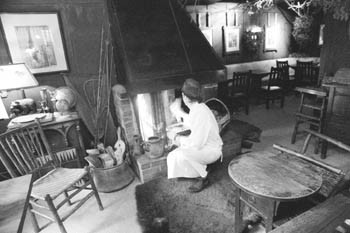
Keeping the home fires burning: Comforting food and cozy surroundings greet diners at Manka’s Inverness Lodge.

Rustic Romance

Inverness Lodge the perfect winter retreat

By Paula Harris

WEND YOUR way this dark wintry night through the foggy backroads to Marin’s wildly beautiful Point Reyes Peninsula and your reward for the trek is a cozy superb supper served in the rustic and romantic comfort of an old lodge tucked away atop a hill under the stars. If you can find it!

It’s a real challenge to locate the turnoff for Manka’s Inverness Lodge in the misty darkness. We know there’s a signpost, we know there’s a hill, but we can find neither as we drive back and forth over the same stretch of road beside Tomales Bay.

The owners of neighboring restaurants must get really pissed off with all the lost souls heading for Manka’s who stop by in a panic (jeeze, they may lose their reservations) and ask for directions, as we did in two places on either side of the elusive eatery.

All fretting is forgotten, though, when you at last find the elegant old hunting lodge, built in 1917. Step into the cold, pine-scented night air and crunch your way through the leafy ground to a pumpkin-laden porch accented with a couple of creaky hickory rockers.

Inside is pure casual though sneakily indulgent comfort. The reception room is dark, but dotted with the golden-orange glow of mica table lamps. The light from a crackling fire dances in the large rock fireplace. The room is filled with deep plaid-covered couches, rustic wood furniture, baskets of logs, vintage fishing gear, and antique game boards. There are classic photographs on the walls, a chandelier fashioned from antlers hangs from the ceiling, and smoky jazz lazily emanates from the sound system.

The room is also filled with diners waiting to be seated. Lots of diners. It’s not usual to have to wait half an hour or more (even with reservations) to get into the dining room. Still, the ambiance is so mellow that any complaints are quashed by the warm room, the soft lights, and the relaxed and charming hostess in the ankle-grazing dark skirt who sips red wine and offers to bring you a glass of champagne (alas, not free) while you bide your time.

The wait is worth it. We are lulled into a state of relaxation seated in the shadowy dining room, which also has rustic wooden chairs, snowy linen tablecloths, more glowing mica lamps, and real ivy sneaking in through the window frames.

There is a five-course supper for $58. All that’s required is to sit back and relax and let the server bring you the chain of courses.

The large majority of what is served is grown and raised and caught within 15 minutes of Manka’s. The daily changing menu highlights wild game, local fish, locally raised birds, rabbits, lamb, abalone, and oysters–plus an array of greens roots, fruits, and olives grown on the property. Foragers ferret out wild mushrooms and pick buckets of huckleberries for the restaurant.

TONIGHT’S dinner begins with local goat’s milk camellia–a soft, delicate, not too “goaty” cheese served with a sweet syrup and fruits in square silver bowl. The delicious dish features a chutney of sun-dried sour cherries and pieces of candied pumpkin that were “plucked from the porch.”

Next up are bites of sweet soil-flavored baby Bolinas beets tumbling over a fluffy egg-rich parsley-garlic custard encircled with a butter sauce dotted with piquant black olives. Pure decadence.

The soup of Tomales Bay mussels is a creamy saffron-scented brew topped with ribbons of fresh green sorrel. The mussels are plump and perfect.

At this point, the “clearing ice of lemons” is a lovely palate scourer. It’s a tart, slightly creamy sherbet served in a small martini glass.

The main course is a choice between grilled axis deer or (for vegetarians) local wild mushroom risotto. Manka’s may be heavy on the game meats, but will accommodate vegetarians in all the courses offered on the menu. For example, the vegetarian in our party was served a delicate salad of spicy-bitter wild arugula dotted with pomegranate seeds and flecks of goat cheese.

The risotto is a nutty-textured delight flavored with cauliflower and served with porcini, beech mushrooms, and leeks. It’s a very satisfying alternative to the meat.

And the tenderloin chop of wild axis deer grilled in Manka’s fireplace is a rich-pink tender morsel on a slender bone. It’s accompanied by mashed parsnips, slow-roasted shallots, and a venison sauce flavored with oranges and autumn spices. What could be more perfect with a glass of deep red wine on a night like this?

The wine list, by the way, is expansive (and expensive), with more than 150 selections, a number of which are from small and often quirky domestic and foreign wineries.

Finally comes the dessert, a puddinglike bittersweet double chocolate gelato atop a pumpkin syrup-soaked pastry wedge (which is more the texture of a sponge cake) served with crunchy salty-sweet seasoned walnuts. The pastry base is too stodgy, but the rest of the dessert is wonderful.

Linger by the fire afterwards or plan to stay overnight in one of the lodge’s luxuriously rustic rooms or cabins.

Final note: Restaurant times at Manka’s frequently alter, so plan to call ahead for seasonal changes (and please note that the restaurant will be closed for several weeks from January to March) and complete directions.

Manka’s Inverness Lodge Address: 30 Callender Way (Argyle St.), Inverness; 415/669-1034 Hours: Dinner; the restaurant will close between January and March Food: Local delicacies, heavy on game meat Service: Usually a wait to get into the dining room, but service is great Ambiance: Woodsy, romantic, and relaxing Price: Expensive Wine list: Large selection Overall: 3 1/2 stars (out of 4)

From the December 28, 2000-January 3, 2001 issue of the Northern California Bohemian.

© Metro Publishing Inc.
‘Vertical Limit’

0

High Times

Mountaineering doc dissects ‘Vertical Limit’

Writer David Templeton takes interesting people to interesting movies in his ongoing quest for the ultimate post-film conversation. This is not a review; rather, it’s a freewheeling, tangential discussion of art, alternative ideas, and popular culture.

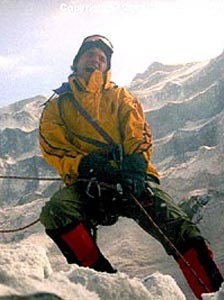
DR. KENNETH Kamler has maneuvered his way up mountains all over the world. From South America to Antarctica, Kamler–a keenly introspective surgeon-turned- mountaineer–has hiked to some of the highest points on this planet, serving as expedition doctor on numerous high-altitude mountain ascents, including six on mighty Mount Everest. He’s helped map parts of that mountain for National Geographic Magazine, and has worked with NASA, scaling Everest to test high-altitude medical equipment.

Most notably, in 1996, he was team doctor on Everest during the infamous storm that killed climber Rob Hall and five others, a disaster that would have claimed more lives had Kamler not been there. He’s captured this experience, and others, in a new book, Doctor on Everest: Emergency Medicine at the Top of the World (Lyons Press; $21.95), a mesmerizing first-person tour through the mind and body of a high-level mountain climber.

To all of these achievements, add Kamler’s role as a gifted microsurgeon and his position as director of the Hand Treatment Center in New Hyde Park, N,Y. Taken together, it’s an impressive list, revealing one remarkable accomplishment after another.

And now Dr. Kamler has added one more to that list.

Last night he went to the movies.

“It’s really kind of an amazing thing, because I haven’t been to the movies in years,” Kamler admits, somewhat shyly. “The last film I saw was Everest, the IMAX movie, ’cause, um, I was in that.”

But that was then and this is now.

The film that lured Kamler into a theater this time was Vertical Limit, the rock ’em-sock ’em action flick starring Chris O’Donnell, Bill Paxton, and Scott Glenn. The film is set on Pakistan’s K2–at 28,000 feet, the second highest mountain in the world (after Mount Everest’s 29,035 feet). It follows a team of crusty mountaineers as they attempt to rescue three climbers–a ruthless millionaire (Paxton) and two others–who survived an avalanche but were swept into an icy crevasse near the summit. The rescue team, including one climber (O’Donnell) with a sister in the crevasse, is led by a toeless Zen climber with “issues” (Glenn).

The team hauls nitroglycerin up the mountain for poorly explained reasons.

Bad things happen. Stuff blows up. People fall down.

“I actually enjoyed the movie,” Kamler reluctantly confesses, “but don’t tell anyone. It would ruin my reputation as a serious mountaineer.”

“I take it there are a few inaccuracies,” I surmise.

“A few?” Kamler says, laughing. “I think there were parts of Vertical Limit that were pretty gripping, but the story requires a suspension of disbelief that’s greater than the height of K2.

“I’ve never been on K2, but I’ve been on Everest several times, twice with NASA,” he continues. “The NASA expeditions were very well funded, but we didn’t have anywhere near the helicopters, computer stations, and throngs of champagne-drinking party people that the millionaire brought up to that base camp. Base camp in the movie looked like a cross between Mission Control and Mardis Gras.”

It’s true. To celebrate his attempt on K2, the millionaire throws what he calls “the highest party on Earth.” It’s catered. The kegs are flowing. It looks like fun.

“So,” I say, “base camps aren’t really like that?”

“They’re nothing like that,” Kamler insists. “Not with hundreds of people partying. That’s absurd. For one thing, base camp on K2 is at 15,000 feet, where you’ve got maybe half as much oxygen as you’d have at sea level. Trust me, when you can’t breathe, nobody’s in much of a party mood.”

Kamler ticks off a whole spate of other mistakes.

“First of all, any real climber in a crevasse like that,” he says, “would have just climbed out. They had all of their gear. On Everest we climb in and out of crevasses all the time.”

Next: none of the climbers carry oxygen.

“Oxygen is a must at those altitudes,” Kamler says, “especially with all the running and leaping these guys are doing. And nobody was using their goggles. Every climber and every rescuer in this film would have been snowblind within hours.”

Another thing. The millionaire and his team take a helicopter from base camp to 24,000 feet and plan to climb just the final 2,000 feet to the summit, a plan Kamler calls an elaborate suicide. “If somebody climbed suddenly from 15,000 feet up to 26,000 feet in just a few minutes, the sudden lack of oxygen wouldn’t be tolerated by the body. They’d be dropped onto the ice, gasping for air, just waiting to die.

“Besides, if you climb a mountain, you climb from base camp,” he says. “The mountain wouldn’t be considered truly climbed, by any serious climber, if you simply stepped off a helicopter 2,000 feet from the summit and then walked to the top.”

Worst mistake of all: in the movie, O’Donnell addresses the base-camp climbers, begging for volunteers. Kamler found this insulting.

“Climbers are always ready to risk their lives for another climber,” he says. “During the Everest disaster, nobody needed to ask for volunteers. The only questions were what to bring and when to leave.”

Those who do volunteer in the film are mostly kinda nuts.

Vertical Limit,” says Kamler, “reinforces the myth of the climber as cowboy, as a risk-taking daredevil. But real climbers tend to be softspoken, reflective, educated, intelligent. On off days in base camp, they read and write poetry, they play the violin.”

The violin? That doesn’t sound like a Bill Paxton movie.

“But it’s true,” Dr. Kamler says. “The attractions of climbing are quiet attractions. Climbing’s a thoughtful sport. Big mountains open you up to grand thoughts. In those quiet moments, you learn about your own limits. You discover what’s important to you.

“When all is said and done,” he concludes, “that’s the reason I do it.”

From the December 28, 2000-January 3, 2001 issue of the Northern California Bohemian.

© Metro Publishing Inc.

Gentle Waves

0

Gentle Waves don’t rock the boat

By Michelle Goldberg

ANYONE who witnessed the orgy of hype surrounding grunge in the early ’90s or advertising’s rapid embrace of electronic music in the last couple of years knows that terms like “alternative” and “underground” have become nearly meaningless. After all, what is a cutting-edge alternative to a society that bends over backward to épater itself?

Today, the homicidal rantings of Eminem are seen largely as the benign antics of the latest mediagenic enfant terrible. Last year’s most controversial artistic event, the Brooklyn Museum’s Sensation exhibit, was sponsored by Margaret Thatcher-boosting advertising magnate Charles Saatchi, a fact that no one seemed to find surprising. Shock, spectacle, raw sexuality, Grand Guignol decadence–its all the lifeblood of Western consumer culture.

It’s this atmosphere that makes distinctly tuneful, ethereal, and intelligent musical acts like the Gentle Waves–the side project of Belle and Sebastian cellist and sometimes singer Isobel Campbell–seem so oddly removed from the mainstream. I say oddly because it’s hard to imagine a record more accessible, lovely, and inviting than the Gentle Waves’ new Swansong for You (Jeepster).

A follow-up to last year’s Green Fields of Foreverland, Swansong offers a dreamy melange of kittenish female vocals, melodies derived from ’50s girl groups and ’60s folk, and chamber-pop arrangements that occasionally borrow from bossa nova and cocktail jazz.

It’s pure confectionery indulgence, full of shimmery celestial strings and pastoral reveries. Swansong would be exquisite whatever the social climate, but the lobotomized brutality of recent pop culture makes it especially welcome.

The album’s 10 songs form an empyreal haven, a place to revel in picturesque melancholy.

Unlike Looper, a band that spun off from Belle and Sebastian to explore whimsical indie electronica, the Gentle Waves hew close to the legendary Glasgow septet’s sound, focusing on worldly but pining pop ballads backed by cascades of luminous strings.

On several songs, the Gentle Waves consist basically of Belle and Sebastian with a few polarities reversed. Most of the players are the same, but Campbell takes Stuart Murdoch’s place as primary singer/songwriter. Murdoch plays bass on every song but one, and Belle guitarist Stevie Jackson appears on four, while Belle keyboardist Chris Geddes and drummer Richard Colburn contribute to five apiece.

In fact, no individual track from Swansong for You would be out of place on a Belle and Sebastian record. Yet Swansong as a whole is, if you can imagine, even softer and more delicate than any of that band’s albums. Partly that’s owing to Campbell’s tiny angel voice, which is breathy and clarion and almost impossibly pretty. Belle and Sebastian have always used strings, but here strings are far more prominent, with heavenly harp playing on two tracks and lots of violin, cello, and flute.

THE MUSIC is all spun-sugar, but Campbell’s wry morbidity cuts the sweetness and ensures that Swansong For You never grows cloying. Campbell seems to have picked up some of Murdoch’s famously incisive irony since the last Gentle Waves outing, though she’s always more plaintive than acerbic.

Even when the music is upbeat, as it is on “Sisterwoman,” a song with shades of girl-group harmony and jazzy, percussive soul, the sentiments are bleak, recalling the Smiths’ fey, fanciful gloom. Campbell’s voice trills happily over shiny horns, “Every day, every day, every day is a step to the grave.”

If anything, Swansong for You is comforting, since it quietly asserts the charms of introspection, isolation, and even sorrow, all of which are usually relentlessly stamped out by the shrill cacophony of mainstream music.

The songs pumped out through radio, MTV, and nightclub speakers may speak to those in the throes of hysterical passion or bacchanalian partying, but they’re willfully oblivious to life’s darker, lonelier places.

For anyone who’s ever felt lost, exhausted, shattered, or sad, Campbell’s music is a balm and a gift. In a world where garish vulgarity is the norm, music that glows with elegance and eloquence is the real alternative.

From the December 28, 2000-January 3, 2001 issue of the Northern California Bohemian.

© Metro Publishing Inc.
Open Mic

0

Yard Sale Bait

By C. D. Payne

AFTER THE BRIEF but manic fondue rage of the early 1970s, surplus fondue sets became a common sight at countless garage sales. Here’s my take on current popular consumer items likely to suffer a similar fate:

“Miracle” ab machines. Your internal parent craves abs of steel, but your inner child prefers to snack while watching TV. This dynamic works to keep yard sales well stocked with lightly used fitness equipment. Lucky shoppers can still score the occasional harvest gold Exercycle from when our parents’ generation was trying to pedal off the flab.

George Foreman grills. Like all oddball-function kitchen appliances, these grills will follow the pioneering waffle iron first to the back of the cupboard, then to the garage, and on to the yard sale. There to compete with discarded hot-dog cookers, burger warmers, sandwich pressers, salad shooters, etc. (Be honest, when’s the last time you shot a carrot at your salad?) A similar fate awaits those heavily promoted rotisserie ovens. Be thankful these devices are just passing through America’s kitchens. Imagine the shock to our overstressed electrical grid if they were all still sizzling those succulent low-fat kabobs.

Palm Pilots and their ilk. Yes, these gadgets are cool, but how many of us need to carry around a machine in order to remember our semi-annual dentist appointment? After the novelty wears off (and the batteries die), into the sock drawer they’ll go. A few years hence they’ll bloom like dandelions at 10 million garage sales.

Mini-wheeled aluminum scooters. In the 19th century, gizmo-minded guys rode around on bone-shaking contraptions equipped with solid-rubber wheels. Then John Boyd Dunlop perfected the pneumatic tire, and the bicycle brought efficient transportation to the masses. Now, unaccountably, we have regressed back to the hard-wheeled era. Junior may be clamoring for a scooter, but these machines have “hula hoop” written all over them. It’s scary to contemplate the immense factories in Asia that must be running triple shifts to churn out this future garage-sale staple. Our only hope may be to recycle them into walkers for aging baby boomers.

Yes, these now-hot items are destined for yard sales and thrift shops. But even heavily marked down, will they find any buyers? Well, here’s a clue: When’s the last time you invited the gang over for an evening of cheese fondue?

C. D. Payne’s novels are featured at www.nicktwisp.com.

From the December 28, 2000-January 3, 2001 issue of the Northern California Bohemian.

© Metro Publishing Inc.
Fair-Trade Coffee

0

Fair-trade coffee: Coming to a cafe near you

By Tamara Straus

HERE’S A breathtaking statistic: The $3 many Americans shell out every day for a latte at Starbucks is equivalent to the daily wage of a Central American coffee picker. Nonplussed? Here’s another heart-stopper, specially designed for the nongourmet coffee drinker: Those $3.95 cans of Maxwell House and Folgers you pick up at your local supermarket, well, the beans that fill them are bought for around a quarter and come from corporate farms that use environmentally poisonous pesticides and clear-cut forests to produce the highest possible yields.

This may just serve as more fodder for those already sufficiently demoralized by the practices of big business. But what is interesting about such stats is they are being used to create a new American political animal: the ethical consumer.

True, the ethical consumer may pale in comparison to the do-gooders of old–the abolitionist, the suffragist, the fighter for civil rights or no nukes–since his primary act is figuring out how to ethically empty his wallet. Yet considering multinational corporations like Microsoft have annual revenues higher than the GNP of most countries –and deregulation in the United States is on the rise–ethical consumerism may be the best political weapon Americans have got.

Enter Fair-Trade Coffee

CONSIDER the example of fair-trade coffee, or “politically correct coffee,” as Time magazine has dubbed it. Fair-trade coffee sells for a minimum of $1.29 per pound–which goes directly to coffee farmers, not to “coyotes,” the middlemen who pay farmers usually no more than 35 cents a pound. It is grown on small farms, which tend to cultivate in the traditional way: under the rainforest canopy and without pesticides. And because fair-trade coffee has doubled farmers’ annual incomes, more than 500,000 people in 20 developing nations are now living above the poverty line.

Nothing wrong with that. Indeed, those who hear about the benefits of fair-trade coffee tend to support it. The only problem is that a nationwide advertising campaign is needed to get the word out, and large coffee retailers–the ideal candidates for such an effort–will not do it, since buying coffee at fair trade prices would cut into their profits.

“Oh, it’s the same old story again,” you might say. “Good ideas, impossible to implement.” But what is different about the fair-trade coffee campaign is that, thanks to a coalition of nonprofits, good ideas are being implemented using ethical consumerism as a bargaining chip.

Dutch Innovation

THE STORY of fair-trade coffee begins in 1988, in Holland, motherland of the international human rights movement. A group of fair traders selling coffee and other products at a crafts market decide to create a fair-trade seal–a label that will let customers know the product was bought at a decent price. They call the seal Max Havelaar after a bestselling 1860 book about the exploitation of Javanese coffee workers by Dutch merchants. In doing so, the traders remind their countrymen that coffee is a commodity tied to the history of colonialism.

In the same year, the Fairtrade Labeling Organization is founded, an umbrella institution for European certification organizations like Max Havelaar, which have begun to help coffee farmers create fair-trade cooperatives and connect them to retailers in the North. During the next decade, FLO’s members draw a whopping half million farmers. The reason? Coffee farmers receive a tripled-per-pound price and FLO’s arrangement eliminates their dependence on middlemen.

The farmers’ end of the bargain is also relatively simple. In exchange for letting TransFair England, for example, inspect their farms and collect 10 cents per pound on coffee sold, coffee farmers get the right to use the fair-trade logo.

By 2000, FLO’s efforts are a success. Fair-trade coffee cooperatives have spread from Guatemala to Indonesia, and the TransFair certification seal is found in 16 European countries as well as Japan and Canada. Worldwide, over 100 fair-trade coffee brands are sold in approximately 35,000 markets. Organic fair-trade coffee is also on the rise, as farmers are using their increased incomes to cultivate coffee without chemicals.

America the Late

Where were Americans during all this time? you might ask. Well, for one, wasting time over cups of joe. Americans consume an estimated one-fifth of all the coffee trade, making it the largest consumer in the world. Moreover, as anyone who lives near a Starbucks outlet knows, Americans have developed a yen for gourmet coffee, for cappuccinos and lattes and decaf mocha frappés.

This is the main reason Paul Rice, who worked with coffee farmers in Nicaragua for 11 years, founded a U.S wing of TransFair in the summer of 1999. “I just took the next logical step,” says Rice. “In Nicaragua I saw fair-trade coffee cooperatives find markets in Europe, and I assumed the same could be true for the United States.”

Rice started local. FairTrade USA’s headquarters in Oakland meant it could take advantage of the San Francisco Bay Area’s historic gourmet coffee tradition and liberal politics. Within four months, the Bay Area’s reputation proved true: 12 local roasters signed up to sell fair-trade coffee. Today 35 fair-trade brands are available in 122 Bay Area supermarkets and cafes. The city councils of San Francisco, Oakland, and Berkeley also have passed resolutions to support the sale of fair-trade coffee.

Fair-Trade Frappaccinos?

BUT FAIR-TRADE coffee advocates’ real coup did not come until April 2000, when Starbucks, which controls 20 percent of the U.S. specialty coffee industry, agreed to carry fair trade.

Of course, the agreement did not come without a fight. At first Starbucks refused to carry fair trade, explaining that until there was consumer demand it could not sell the politically correct bean in its 2,300 stores. But after being subject to a year long campaign organized by Global Exchange, a San Francisco-based human rights organization–a campaign that eventually culminated in plans to stage protests at Starbucks in 29 cities–the retailer decided to avoid a public relations nightmare and sell the beans.

“Fair trade gets the benefit back to the family farmer,” said Starbucks vice president David Olsen shortly after the decision was made. “It is consistent with our values.”

Starbucks’ decision to sell fair-trade coffee, however, does not mean the company will brew it in their stores. This will depend on “consumer demand,” say Starbucks corporate heads. So, once again, this will mean that Global Exchange and other fair-trade coffee advocates will have to prove–through a combination of grassroots organizing, educational outreach, and threat of protest–that a demand exists.

Deborah James, fair-trade director of Global Exchange, says that consumer demand is not the chief problem. “Since fair trade became available at Starbucks in October,” she says, “consumers have told us that they are buying it by the pound and that they want to see it as a ‘coffee of the day,’ something that Starbucks, it seems, will not do.”

Alan Gulick, Starbucks’ public affairs director, says the reason Starbucks does not serve fair trade as a daily brew is because “the volume of fair-trade coffee needed in not available.” Yet, according to Nina Luttinger, communications manager of TransFair USA, there is evidence to the contrary. She reports that in 1999, of the 60 million pounds of fair-trade coffee produced globally, only half sold on the fair-trade market.

“This meant that farmers had to sell their product through the usual channels and got paid much less,” says Luttinger, who doubts that the fair-trade coffee sale figures will be drastically different in 2000.

Is Fair Trade Just for Gourmands?

Still, Starbucks’ introduction of fair-trade coffee is a victory for the movement. And the victory extends beyond the creator of the Frappaccino. During the 18 months fair-trade coffee has been available on the U.S. market, the number of retailers has grown from 400 to 7,000, according to Paul Rice. In November, Safeway, the supermarket king, launched fair-trade coffee in 1,500 of its stores nationwide–a decision Rice says came about not through threats of protest but through the supermarket’s “enlightened self-interest.”

“Companies are coming to me now,” says Rice. “And some, such as Choice Organic Teas, have decided to eat the cost of buying fair trade rather than raise prices. They want to support fair trade, introduce it to their customers, and figure losing a few cents now is worth it.”

But what about the big guns of the coffee industry: Nestlé’s, Folgers, Maxwell House? “I think it’s going to be a challenge to convince companies who are paying less than 50 cents and selling it for around $4 that they should pay $1.29,” says James. “Fair-trade coffee successes so far have all been in the gourmet coffee industry.”

This fact makes activists in the ethical consumer movement cringe. For it raises the question of how wide the movement can be. Will enough Americans care about labor conditions in the Third World and the environmental problems created there by American coffee corporations to force real change in the industry? Will they, as James has decided, “never voluntarily put someone in a situation of poverty, exploitation, and debt just to enjoy a cup of joe.”

You may say no, but activists like Ronnie Cummins, national director of the Organic Consumers Association, argues that Americans have little choice: “We have an obligation to the environment, we have an obligation to human rights, to drive unsustainable coffee off the market. We need to reach that point, like when it became socially unacceptable to buy products from South Africa because of apartheid.”

The Fair-Trade Pitch

How fair-trade advocates will accomplish this sort of mass educational outreach depends on their mission and point of view. Rice, who works directly with coffee retailers, argues that the introduction of fair trade in the American gourmet coffee industry is having a domino affect. “Corporations realize they must meet the demands of their customers,” says Rice. “And if their customers want fair trade, they provide it.”

James, whose organization Global Exchange is focused on international social-justice issues, believes consumer knowledge about globalization is the key. She and her colleagues have tied coffee farmers’ work conditions to the more familiar issue of sweatshop labor.

“We call nonfair-trade coffee ‘sweatshop coffee’ because many Americans know about sweatshop conditions in Asia and Mexico,” she says. “They know the people who make Nike sneakers and Gap T-shirts are paid inadequate wages and work in unhealthy conditions.”

Cummins, whose Organic Consumers Association is devoted largely to environ mental issues, also uses the term “sweatshop coffee” in its activist literature. But he also tries to get consumers to think about agricultural and environmental sustainability.

“I tell people that the way coffee was grown for hundreds of years had a low impact on the environment,” says Cummins. “And that with sun-grown coffee–the ‘innovation’ of the international coffee cartel–what you do is chop down everything and use a lot of chemical fertilizer, pesticides and so on. In essence, you destroy the environment.”

European Sophistication

Activists like James and Cummins have wondered why Europeans are ahead of Americans in bringing fair trade to market. Since 1998, seven different products–coffee, tea, chocolate, bananas, honey, sugar, and orange juice–have been available with the fair-trade label in Europe. Fair-trade products were also available in Japan and Canada before the United States. Why are we were behind?

“In Europe the media [are] better,” says Cummins. “The political system is based on proportional representation. There are the same number of people here as in Europe who support Green Party ideas; the difference is they have 10 percent of the seats in the European parliament and we have no seats in Congress.”

Cummins adds there is mass support for organic food–and mass antipathy toward chemically altered or genetically engineered food–because of Europe’s Nazi past, which makes people extremely wary about a super-race of anything or genetic enhancement. The recent outbreak of mad cow disease is also an undeniable factor.

“We just can’t comprehend what it feels like to know that you might die because the government lied to you about industrial agriculture practices,” says Cummins. “Europeans now say: ‘Never am I going to just accept something because establishment science and the government tell me it’s safe.'”

As for a more sophisticated understanding of globalization, James says Europeans are ahead because they are able to tie the lessons of their colonial past to today’s global future.

“Europeans have a direct understanding that the system of agriculture we have now–where farmers are exploited and their products are unfairly sold–is based on a colonial system,” she says. “Whereas in the United States we do not feel responsible for the fact that in the Windward Islands of the Caribbean people there are entirely dependent on banana plantations because we put them there.”

James would like to link nonfair-trade coffee to the history of colonialism or the concept of “neocolonialism,” but she says, “If you bring up the word colonialism or imperialism here, people have no idea what you’re talking about.”

The Future of Ethical Consumerism

Although Americans may be somewhat blind to history, polls show they are awake to the present. According to a December 1999 US News & World Report poll, six in 10 Americans are concerned about the working conditions under which products are made in the United States and more than nine in 10 are concerned about working conditions under which products are made in Asia and Latin America.

This is good news for ethical consumerism. It shows that consumer choice based on criteria of economic justice and environmental sustainability has a future. But does it mean that ethical consumerism can grow beyond the 50 million Americans who supposedly practice it? Can ethical consumerism–without government support and positive mainstream media attention–be viewed as something other than the ultimate knee-jerk liberal issue?

Argues Ronnie Cummins: “It’s a very good historical trend that consumers are becoming more aware, but unless trade unions and churches, consumer groups and environmental groups work together–North and South–we’re not going to solve this problem. Sure, we can alleviate some of our bad conscience on a day-to-day basis, but that’s not getting to the root of the problem, which is unchecked globalization. Even if you can produce cheaper in China the hidden costs of doing something like that are pretty darn convincing.”

From the December 28, 2000-January 3, 2001 issue of the Northern California Bohemian.

© Metro Publishing Inc.

Tobacco Company Charity Advertisements

0

Smoke & Mirrors

Philip Morris puts up good-citizen smokescreen

By Lori Dorfman

TOBACCO is not supposed to be advertised on TV, yet Philip Morris was there again last night. The ad told the poignant story of a woman who was helped by a donation that the company made to a domestic violence shelter. Philip Morris, the world’s largest and most profitable producer and marketer of consumer packaged goods, recently spent $2 million on domestic violence programs nationally, part of $60 million it spent on charity in 1999.

That same year, Philip Morris spent $108 million on the advertising campaign to tell us about it.

On Dec. 5, Philip Morris announced that it has given an additional $210,000 to domestic violence programs in California, including a $10,000 Doors of Hope grant to Catholic Charities of the Diocese of Santa Rosa, a community-based program that provides services to immigrant victims of spousal abuse.

There is nothing wrong with a corporation supporting good causes. But why advertise about it?

Philip Morris spent 80 percent more on its advertising than on its charity, almost $30,000 every day last year, so we would know what a good corporate citizen it is. This is what corporations do when they’re under fire. Philip Morris is using commercial speech to influence public opinion and political action.

Using advertising to influence public opinion and legislation is not new. In 1908, AT&T launched a campaign to remain a monopoly, followed in 1910 by the railroads using ads to influence local rates hearings, in 1916 by Bethlehem Steel to protest a government armor plant, and the same year by Armour and Swift meat-packing companies to prevent the breakup of their oligopoly. In the 1930s, Du Pont, General Motors, and the National Association of Manufacturers used ads to sell capitalism and refute President Franklin D. Roosevelt’s New Deal.

The domestic violence program and the rest of Philip Morris’ “good works” ad campaign follows in this tradition. The campaign is a smokescreen, specifically calculated to distract your attention from the company’s role in manufacturing, promoting, and selling a product that kills 420,000 Americans each year. (To be fair, judged by its 46 percent market share, Philip Morris tobacco is responsible for 193,200 of those deaths.) Philip Morris is trying to purchase goodwill by associating itself with the tremendously important work of domestic violence programs.

Philip Morris’ motives are transparent. Big Tobacco has never been more vulnerable. Every day, as new documents discovered in the litigation process are distributed, we learn more about its tactics to lure teens into smoking and thwart regulation. The Department of Justice is contemplating federal lawsuits. The Supreme Court heard arguments about whether the FDA should have jurisdiction over tobacco, and the U.S. Congress will now have to decide whether to make that happen. Philip Morris has much to lose. It needs public opinion on its side; it needs to be thought of as a good corporate citizen.

If Philip Morris really cared about preventing domestic violence, it would stop sexist advertising that objectifies women and contributes to attitudes that allow domestic violence to continue. It would discontinue the practice of using women’s bodies to sell cigarettes and beer. It would stop using the idea of independence and slender beauty to sell Virginia Slims. It would take its Miller Beer logo off the breasts of the “Laker girls” who entertain at Los Angeles Laker basketball games. It would recognize the well-established connection between domestic violence and alcohol and prohibit its beer companies from connecting sex with beer in their advertising.

THE REAL tragedy is that domestic violence programs have such a desperate need for funds that they feel they can’t refuse tobacco and alcohol money. It’s no wonder the programs feel desperate: nearly one-third of American women (31 percent) report being physically or sexually abused by a husband or boyfriend at some point in their lives. Where is the support from government, whose job it is to protect all its citizens? Why hasn’t Congress increased support for shelters so they don’t have to turn women and children away? Shelters for women who have been beaten and terrorized should not be at the mercy of tobacco and alcohol companies.

Philip Morris knows all about lobbying. Is it using that expertise in order to lobby for adequate resources so any woman who is battered has a safe place to go?

This campaign is not about domestic violence. It is about diverting national attention from the evils of the tobacco industry, evils that, through litigation, are finally coming fully to light. Philip Morris is hoping that the public and future juries will see its ads and think kindly of the company. Mostly it is hoping that Congress will not enact law that places the drug nicotine under the purview of the FDA.

If the company really cared about eradicating domestic violence, it would spend all its philanthropic monies on the program and none on advertising to tell us what a good corporate citizen it is. The contribution to domestic violence was simply a line item in Philip Morris’ advertising budget. The purpose of making the contribution was to advertise about it.

That is shameful.

From the December 28, 2000-January 3, 2001 issue of the Northern California Bohemian.

© Metro Publishing Inc.

Newsgrinder

0

Important events as reported by daily newspapers and summarized by Daedalus Howell.

Tuesday 12.12.00

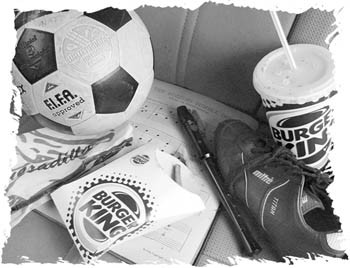
A 29-year-old man was taken to Petaluma Valley Hospital after being a victim of a “kick and run” in the area of Erwin and East D streets, according to an ArgusCourier.com police report. A rash of the so-called “kick and run” incidents has broken out on playgrounds throughout Petaluma. The Petaluma Police Department has attempted to blow the whistle on the menace, also known as “soccer,” but the culprits only yell, “Hands!” and begin their tyranny afresh. . . .

Thursday 12.21.00

A 100-pound sea turtle found floating listlessly in the Sausalito Channel last weekend is on his way to Sea World in San Diego, where he will be locked up for the rest of his natural life. The federally protected Eastern Pacific black sea turtle (which means no turtle soup) was named Mothra by sci-fi fans at the Sausalito Mammal Center that initially received the wayfaring amphibian. A Sheriff’s Deputy discovered Mothra behind Sausalito’s Margaritaville Restaurant (it’s unclear why the deputy or the turtle was loitering in back of the nightspot). The Deputy told the Marin Independent Journal, “He was lethargic.” Well, duh, it’s a freakin’ turtle. With apologies to Aesop, who would finish first here, the tortoise or the cop?

Thursday 12.21.00

Marin County’s Judge Vernon Smith refused to hold Gerald Armstrong in contempt yesterday for his long-standing battle of bile against the Church of Scientology. Church attorneys filed a contempt motion against the former Scientology archivist for violating a judge’s 1995 order to cease criticizing the church and discussing his experiences as an employee there. As evidence, church attorneys submitted a ream of messages Armstrong had posted in the Internet newsgroup alt.religion.scientology. “There is a collision course between $cientology’s [sic] determination to dominate, and thus in some way, imprison people, and the people’s determination to have all men free,” wrote Armstrong. “Very stupid of $cientology [sic] to be on the wrong side of this battle.” Scientology was founded in the 1950s by former Hollywood scribe L. Ron Hubbard. He is presumed to have died in 1986 at the age of 74.

Friday 12.22.00

Paging Johnny Cochran: Louis Pelfini, a Petaluma family practice physician, was arraigned Thursday on charges that he murdered his wife last year, reports the Press Domcrat. Pelfini called 911 in November of 1999 and reported that his wife had committed suicide by putting her head in a bucket of water. Two pathologists concluded, however, that the 63-year-old woman was suffocated; there was no water in the woman’s lungs. “People don’t commit suicide by sticking their head in a bucket of water,” said Deputy District Attorney Brook Halsey Jr. “There were only two people there. And one is dead.” There’s a hole in me story, dear Liza, dear Liza . . .

Sunday 12.24.00

A partial solar eclipse blocked out a bit of the sun early Christmas Eve morning, reports the local daily. Those who snoozed through the celestial display will have to wait until the 24th century, when it next returns on this date. Why is a partial eclipse interesting, one might ask? “A partial eclipse of the sun is interesting because the moon is moving and blocking out a little part of the sun,” said Santa Rosa Junior College planetarium director Ed Megill (someday Ed will find his people and they will rejoice). The last Christmas solar eclipse was in 1954–oddly, that’s the same year that actor James Belushi was born. Experts warn that looking at a solar eclipse with the naked eye can cause permanent damage to the retina–the same as looking at James Belushi on screen.

Monday 12.25.00

Last-minute shoppers Meghan and Mason Mark, siblings from Sebastopol, received an unexpected gift from the Press Democrat. When interviewed for a capitalism-in-action piece, they had no idea their gift purchases would be published before their intended recipients could open them. This is what Mother Mark received from her children: “Candles, they are always good, and I bought my mother a vase,” said Meghan. The Grinchesque paper went on to reveal brother Mason’s surprise contribution to the holiday fete–smoked salmon–before tipping the young man’s hand yet again by quoting him as saying, “Personally, I think a wire Ethernet card is a great gift.”

Monday 12.25.00

Sonoma County sheriff’s deputies are searching for a man who allegedly fondled himself in front of a group of teens Wednesday evening in a Boyes Hot Springs park, reports the Sonoma Index Tribune. The suspect was described as wearing a baseball cap embroidered with “Just Call Me Grandpa.” One of the teens had a camera, and the suspect invited them to photograph his act. The junior pornographer attempted to take a picture with “the intent of furnishing law enforcement with the photo as evidence” before posting it on the Internet.

From the December 28, 2000-January 3, 2001 issue of the Northern California Bohemian.

© Metro Publishing Inc.

The Wide-Eyed Gourmet

Will work for food By Marina Wolf I WAS CRAVING fresh seafood the other day, and feeling posh, too, so I did the logical thing and took my girlfriend to a restaurant that serves plain boiled crab. The crab came with the standard nutcracker thingy and a seafood fork, neither of which actually...

Driving Soccer Moms

The Wheel Deal Sprawl: Soccer moms' public enemy No. 1 By Linda Baker I HATE TO DRIVE. I'm also the mother of two young children, ages 3 and 5. A few years ago, if you'd asked me what the former had to do with the latter, I'd probably have responded, grumpily,...

First Night Santa Rosa

At the helm: Organizational coordinator Leslie French works to bolster funds for Santa Rosa's First Night, which has been strapped for cash this year after the event fell far short of its fiscal projections. Party Pooper Will this be last call for First Night? By Paula...

Manka’s Inverness Lodge

Keeping the home fires burning: Comforting food and cozy surroundings greet diners at Manka's Inverness Lodge. Rustic Romance Inverness Lodge the perfect winter retreat By Paula Harris WEND YOUR way this dark wintry night through the foggy backroads to Marin's wildly beautiful Point Reyes Peninsula and your...

‘Vertical Limit’

High Times Mountaineering doc dissects 'Vertical Limit' Writer David Templeton takes interesting people to interesting movies in his ongoing quest for the ultimate post-film conversation. This is not a review; rather, it's a freewheeling, tangential discussion of art, alternative ideas, and popular culture. DR. KENNETH Kamler has...

Gentle Waves

Gentle Waves don't rock the boat By Michelle Goldberg ANYONE who witnessed the orgy of hype surrounding grunge in the early '90s or advertising's rapid embrace of electronic music in the last couple of years knows that terms like "alternative" and "underground" have become nearly meaningless. After all, what is a cutting-edge alternative to a society...

Open Mic

Yard Sale Bait By C. D. Payne AFTER THE BRIEF but manic fondue rage of the early 1970s, surplus fondue sets became a common sight at countless garage sales. Here's my take on current popular consumer items likely to suffer a similar fate: "Miracle" ab machines. Your internal parent craves abs of...

Fair-Trade Coffee

Fair-trade coffee: Coming to a cafe near you By Tamara Straus HERE'S A breathtaking statistic: The $3 many Americans shell out every day for a latte at Starbucks is equivalent to the daily wage of a Central American coffee picker. Nonplussed? Here's another heart-stopper, specially designed for the nongourmet coffee drinker: Those $3.95 cans of...

Tobacco Company Charity Advertisements

Smoke & Mirrors Philip Morris puts up good-citizen smokescreen By Lori Dorfman TOBACCO is not supposed to be advertised on TV, yet Philip Morris was there again last night. The ad told the poignant story of a woman who was helped by a donation that the company made to a domestic...

Newsgrinder

Important events as reported by daily newspapers and summarized by Daedalus Howell. Tuesday 12.12.00 A 29-year-old man was taken to Petaluma Valley Hospital after being a victim of a "kick and run" in the area of Erwin and East D streets, according to an ArgusCourier.com police report. A rash of the so-called "kick and...
11,084FansLike
4,606FollowersFollow
6,928FollowersFollow
