Sausage-Making

0

Missing Link

Art of sausage-making is a lesson on living

By Marina Wolf

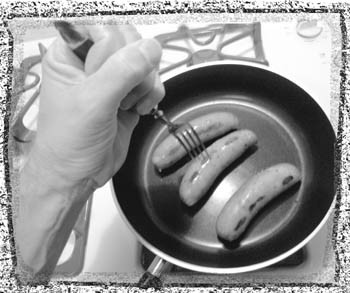
BRUCE AIDELLS, founder of Aidells Sausage Co., may be on the forefront of sausage innovation. But he still remembers 25 years ago, when he was just a poor post-doc in London, developing a strong revulsion to the indigenous sausagelike items called bangers. “They tended to be overcooked; plus they’re made with a considerable amount of bread crumbs, which makes them kind of dry and grainy,” recalls Aidells with diplomatic understatement. “I think it’s a cultural thing. You have to grow up with them to find them edible.”

Spurred by memories of the flavorful ethnic sausages of his homeland–Los Angeles–the young Aidells began experimenting in his own kitchen, and found the results a savory lifesaver. Aidells continued his self-education in Berkeley’s “gourmet ghetto” and opened his own sausage company in 1983. He was among the first sausage makers to put out the now commonplace chicken-and-apple sausages, and his innovative blends such as turkey andouille, lamb with rosemary, and chicken with tequila or sun-dried tomatoes helped put sausage on the culinary road map. Now Bruce Aidells’ Complete Sausage Book (Ten Speed Press; $21.95) gives home cooks a chance to get in on the trend, hands first.

Of course, there are other reasons besides trendiness to try sausage-making at home. One is quality control: you can skip the preservatives and pig lips, which are commonly used in the biggest commercial brands. For making sausage at home, Aidells recommends shoulder cuts, which are cheap, tasty, and easy to bone.

Aidells’ recipes also tend to be lower in fat than most commercial varieties, 15 to 25 percent fat, as opposed to 30 to 50 percent fat. There must always be some fat in sausages to keep them juicy. “We go as low as I feel comfortable with, without compromising texture,” says Aidells. “There are certain sausages that are even lower in fat, but they get dry and rubbery.”

Finally, with homemade sausages you have the chance to experience authentic flavors. In spite of his nouveau contributions to the art of sausage-making, Aidells’ sympathies lean solidly in the direction of the honest seasonings of traditional ethnic sausages, which are much more varied than one might guess from supermarket offerings. “When sausages, or any ethnic foods, go mainstream, they start to lose their ethnic identity,” says Aidells. “The texture and spices, the kind of meats, get lost in the mass-produced product. I mean, you’d be hard put to find something like our [supermarket] Italian sausage in Italy.”

Aidells and co-author Denis Kelly offer up a bewildering selection of sausage recipes, including six kinds of Italian sausage and eight from Louisiana alone. If you don’t live in a big city, near ethnic enclaves with their own meat shops, making sausages at home could be your best chance to try those spicy, Old World flavors.

FOR THE TIMID cook, Aidells has compiled a sizable collection of sausage-based recipes. But if you’ve an ounce of adventure in you, you’ll try to make some yourself, and you won’t be sorry. General principles are straightfoward for all but the most novice cook: keep everything clean, cold, and sharp. Sausage grinders are cheap, says Aidells–$30 through the butchers’ supply shop listed in the book’s resource section–but a standard food processor works fine, as long as you don’t overprocess. You don’t even need such gadgets, adds Aidells casually: “You can do it with a good knife.”

Right, I thought, and checked out Aidells’ recommended recipe for beginners, a Kentucky-style sausage. How hard can it be to cut up meat? Let my experience be a lesson: cutting raw meat by hand is both boring and challenging. If I had a rocking knife the length of my arm, like the German sausage-maker had 200 years ago, it might work, but even my Wusthof was no match for squishy cold meat. After 45 minutes of hacking, I ended up with more of a fine dice.

However disappointing my cutting was, the spices involved were a pleasant surprise. The usual suspects were there–sage, salt, a mountain of black pepper, and a molehill of cayenne–but there were also “sweet” spices in abundance, coriander, and nutmeg, giving the sausage a truly rich, complex flavor. I fried it up for a late breakfast, in patties that held together by willpower alone. And they were delicious. My verdict, though, and Aidells would probably agree: skip the knife and dust off the Cuisinart.

In sausage, as in life, almost every tradition has room for technology.

From the January 18-24, 2001 issue of the Northern California Bohemian.

© Metro Publishing Inc.

George W. Bush Inaugural Address

0

Dubya’s Debut

The inaugural address you won’t hear on MSNBC

By Stephen Kessler

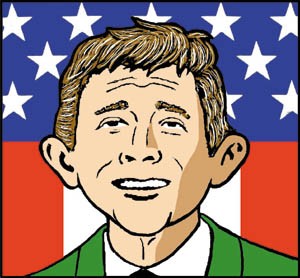
MR. CHIEF Justice, Mr. Speaker, Rev. Graham, Mom, Pop, Clarence, Tony, my fellow Americans: Today we embark together on a great adventure–my presidency. I know it’s incredible, but I am your president, and for the next four years there’s nothing you can do about it. During that time I promise you I will do my darnedest to get the hang of this job, and don’t you worry, I’ve got plenty of people on my team with enough experience that they can practically run the country in their sleep–or in my sleep, which I guess is more likely, heh heh.

Why, Vice President Cheney alone has more energy on his deathbed than I do throwin’ Frisbees to my dogs. I mean, this is a man who’s had four heart attacks, and it doesn’t even slow him down! We were eatin’ some cheeseburgers and French fries the other day–just to give his cardiologists something to chew on–and he said to me, “Dubya,” he says, “I’m so hungry for power not even death can stop me.”

Now that’s my kind of tough son of a gun.

And just in case Dick does kick the bucket while in the saddle, so to speak, I’ve got a lifesaver up my sleeve, yes sir. You all remember Dan Quayle, don’t you? Well, you can bet your potatoes that my old intellectual sparring partner is ready to return to the Bush administration at a moment’s notice, just like most of the rest of my babysitters–I mean Cabinet members.

Now, I know I didn’t exactly win this latest election, but that’s what I love about America. It’s a place where just about any rich white boy with the right connections–it doesn’t hurt if his pop was president, heh heh–can goof his way through school, achieve head cheerleadership, get into and out of Yale without reading a book, avoid having to go to Vietnam–not out of any principles or convictions but basically to save his own ass–get drunk for 20 years, lose a bundle in the oil business, get bailed out by family friends, buy his own big-league baseball team, be elected governor of a great state, run for president, lose by half a million votes, and still wind up in the White House!

I tell you, my friends, that’s my kind of country. And I am truly humbled by this terrific opportunity you’ve given me to be, well, let’s shoot straight here, basically the most powerful person in the world.

You all know from my stump speeches what I intend to do in office–mainly avenge my daddy’s honor, drill like hell wherever we can for whatever oil’s left in the ground anywhere, and give back to the people, the rich people especially, as much of the federal treasury as possible, but I’ve got a few policy jokers up my sleeve, heh heh, that you’ll be happy to hear about, I’m sure.

My good friend Charlie Heston had it wrong when he said the NRA would have an office in the White House–dead wrong. Their office will be down the street where the NEA used to be. What a difference a single letter can make, heh heh. No more desecrational anti-American postmodernist pornographic effete intellectual jackoffery in the name of so-called art, no sir and no way. From here on, friends, in this administration, it’s all guns all the time.

I’m proud to announce here for the first time our Saturday Night Special Self-Defense Initiative. As in my great home state of Texas, only more so, citizens over the age of 12 will not only be permitted to carry a gun, concealed or otherwise–I know how hard it can be to conceal an assault rifle–they will be required to. Anyone caught not carrying a gun will be subject to arrest and possible deportation to some unarmed sissy-ass country I haven’t even heard of, geography not being my strongest subject.

But I do know one thing, even though that whole controversy about evolution is a little over my head: I’m pro-life 150 percent, no buts about it. And that’s why you can look forward under a Bush administration to a Supreme Court packed with strict-constructionist right-wing minority religious fundamentalists, if I have anything to say about it. We’re gonna protect those unborn babies if we have to lock up their mothers to do it.

And that goes for all those other criminals, too. I mean I’m pro-life, you bet, but only up to a point. Beyond that, death.

When I push the plunger on those worthless scumbags clogging up our prisons, why, they won’t even know what hit’em. That’s what I call compassionate conservativism–or however the heck you say it, English not being my best subject, heh heh.

Which brings me to the Remedial English Initiative, for all those Americans who are verbally challenged when not under the influence of a speechwriter, TelePrompTer, or other artificial means of linguistic assistance. By executive order, I am hereby abolishing grammar. It’s just words anyway, know what I mean? So everybody should just feel free to talk however they like, like I do when I don’t have a script in front of me.

My record on education speaks for itself.

Finally, all you sore losers will be pleased to hear about my Ralph Nader Memorial Environmental Cleanup Initiative. As a gesture of tripartisanship, reaching all the way across the Democrats, I am appointing my good friend and secret weapon, Ralph Nader, to a vital position for our collective moral hygiene: Oval Office Carpet Cleaner. With his own toothbrush and a bottle of Mr. Clean, grumpy old Ralph will be on his knees scrubbin’ those rugs till their spic-and-Hispanic. There’ll be no semen stains on this presidency, I promise you, and Ralph will be my personal watchdog on that.

Well, jeez, all in all this whole experience of getting to be your president has been a lot more complicated than I expected. If I knew anything about history I might even say it was historic. But I’ll leave that to the histrionics. For me personally, as our friends the Israelians might say, it’s been sort of like a big bar mitzvah–like really becoming a man. Better late than never, is what I say.

And so, my fellow Americans, ask not what your country can do for you; ask what the Supreme Court has done for me.

Thank you, and God bless.

OK, let’s party!

From the January 18-24, 2001 issue of the Northern California Bohemian.

© Metro Publishing Inc.

Wayne “The Train” Hancock

0

Wayne’s World

A musical journey into clean and sober twang

By James Rocchi

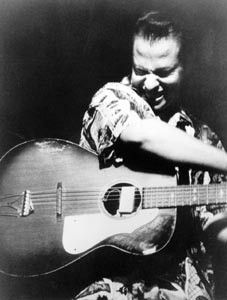
WAYNE “The Train” Hancock’s musical style is made of many parts, like a secret barbecue-spice dry rub or good chili. Honky-tonk sounds mix with swing horns and country courtliness, good humor and rock and roll. It all gets taken for a spin on the floor by Hancock himself, whose twang delivery, “gee-tar” stylings, and unapologetic enthusiasm are used to craft a sort of music that’s specifically American and distinctively his own.

Hancock’s road to semistardom hasn’t exactly been a direct one. After winning the Wrangler Country Showdown songwriting contest in 1984, he signed up for six years in Uncle Sam’s Marine Corps. (Hancock’s 1997 album, That’s What Daddy Wants, starts with a convincing horn version of “Reveille” that deftly swings into the title track.) After that stint ended in 1990 he was, not to put too fine a point on it, drinking and idly gigging his way through his native Texas. In ’93, though, Hancock quit drinking and landed in Austin determined to succeed, despite naysayers who told him his style of music would get him nowhere.

Hancock doesn’t squeeze his boozy past for drops of poignancy, however–his 1995 album, Thunderstorms and Neon Signs, contains the 12-step two-step “Double-A Daddy” (the title track was recorded last year by Hank Williams III). In that tune, Hancock explains to his baby, “You can dance all night till you fall on the floor/ Knock yourself out till you can’t stand it no more/ I’m a double-A daddy, I’m sober all the time.” The song’s such a swinging good-time stomp that you realize only in retrospect that “Double A” is Alcoholics Anonymous.

Much of Hancock’s work is firmly rooted in the American Western tradition of music that’s sad but happy. That’s What Daddy Wants contains a song called “Misery,” but the track has such stylized lap steel guitar and hip-swinging Latin rhythm behind it that it makes you feel glad that Wayne feels like hell, if his sadness sounds this good.

Hancock probably feels pretty good lately; after Thunderstorm‘s independent release in 1995, he found a home at Ark 21, the micro-label run by ex-Police manager Miles Copeland. The release of That’s What Daddy Wants was so well received that Ark 21 promptly reissued Thunderstorms and Neon Signs in 1998. The critically acclaimed Wild, Free & Reckless followed in ’99.

Hancock has sweat beneath his swing and hard work under the honky-tonk; he tours constantly and, with the exception of the two covers that close each of his albums, writes all his material. Gershwin’s “Summertime” closes Neon Signs, and the Clash rave-up “Brand New Cadillac” rounds out Daddy. The fact that Hancock can embrace those extremes and celebrate them is a good starting point for understanding his style.

Hancock’s music evokes a time somewhere just after the invention of beer refrigeration and neon signs, where the highways aren’t multilane interstates but still take you wherever you want to drive, all night long.

If Hancock has a manifesto, it’s in his note on the back cover of Daddy: “This album was recorded live for many reasons: A.) It’s easier to sing with a band that’s in the groove . . . B.) Live music captures the emotion and high energy of the music . . . C.) This album was recorded and finished in three days, and it cost very little to make. Let’s see all you Music Industry cats beat that one.”

It’s pure Hancock: he loves music, he has a Texan’s aptitude for boasts and dares, and it sounds as if he’s having a hell of a time.

Wayne Hancock performs Sunday, Jan. 14, at 7:30 p.m. at the Powerhouse Brewing Co., 268 Petaluma Ave., Sebastopol. Tickets are $10. 707/829-9171.

From the January 11-17, 2001 issue of the Northern California Bohemian.

© Metro Publishing Inc.

Sonoma Mission Inn

0

On a Mission

A quiet brunch at the Sonoma Mission Inn

By Paula Harris

OK, I KNOW a visit to the world-class Sonoma Mission Inn and Spa is meant to be a tranquility-drenched, relaxing experience, but Sunday brunch in the resort’s upscale “Restaurant” (formerly the Grille) is a little too peaceful.

We’re the only people in here.

And it’s a shame, because the kitchen is capable of turning out some stellar dishes, if only the interest were here. All the brunch action is at Sonoma Mission Inn’s more casual Big 3 Diner. The place is packed and buzzin’. People are standing three deep in the entrance, waiting to nab a precious table in the noisy room. We don’t stay. On a whim, we walk over to the recently renovated Mission Inn to check out the impressive lobby and upscale spa.

We’re surprised to discover the classy restaurant inside is also serving a brunch. Three courses for $30 per person ($15 children 12 and under). While the informal (though still pricey) diner is busy with lines of people, here it’s practically empty.

“The lack of people in here in no way reflects the quality of the food,” apologizes the hostess as she seats us. Hmm, don’t people know about the restaurant? Or is the set brunch price too steep (unlikely, since the spa treatments cost $100 to $200 a pop)? Or do dazed, overly chilled-out guests actively seek out a bit of life at the frantic Big 3 to revive their spa-induced torpor. It’s all rather a mystery.

What’s not a mystery is the natural elegance of the Restaurant’s dining room, with its hardwood floor, rustic wrought-iron chandeliers suspended by ropes, stone counter, pots of fresh herbs on the tables, and lovely poolside views.

This Sunday’s excellent brunch offers various course choices. A basket of homemade breakfast pastries–two small buttery croissants; two crumbly raisin and fennel-seed scones; a cinnamon-bran muffin and a small jar of Kozlowski strawberry jam–is a good start.

The house-cured gravlax is a riot of piquant flavors: slices of slightly oily black pepper-edged salmon topping half a bagel, plus capers, red onion, tomato, zesty watercress, and diced potato salad with feathery fresh fennel. And the excellent SMI eggs Benedict features poached eggs, Canadian bacon, lemon hollandaise, sautéed “morning” potatoes, and wonderful cornbread instead of English muffins. Desserts include two slices of rich Valrhona chocolate cake, caramel sauce, dried cherries, and a puff of cream; and a luscious maple crème brûlée, a beautiful silky cool custard with walnuts.

We’re eager to repeat the elegant brunch experience a few weeks later, but are dismayed by a drop in quality. Once again we’re about the only patrons. (With this lack in clientele, it’s really no wonder interest in the kitchen and dining room is diminishing.)

The gravlax this time is a smaller portion. The server brings a hamburger instead of the sweet potato-and-multigrain burger ordered by the noncarnivore in the group. Oops. Worse, the staff abandons us, so–short of marching into the kitchen–we cannot inform anyone. When the sweet-potato burger does finally arrive, the consistency is sloppy and it lacks the promised avocado salsa.

And a roast lamb sandwich with feta cheese and mint pesto on pita bread is just a bad dish with too many intense flavors resulting in a lingering chemical taste. However, the accompanying thick, crisp french fries flecked with seasalt are perfect.

Our server tells us the Sunday brunch trend is fading, and that restaurants are increasingly having to up the ante (with free bubbly, made-to-order omelets, all-you-can-eat desserts, and other gimmicks) to lure in clientele.

I don’t know if this is an accurate observation, but it would be a shame to ultimately lose the option of an elegant and leisurely Sunday brunch in such a lovely space as the Restaurant at the Sonoma Mission Inn.

The Restaurant at the Sonoma Mission Inn Address: 18140 Sonoma Highway, Boyes Hot Springs; 707/939-2415 Hours: Sunday brunch, 10 a.m. to 2 p.m.; dinner nightly from 6 p.m. Food: Sonoma County gourmet Service: Changeable Ambiance: Brunch is very quiet Price: Expensive Wine list: Distinctive selection; also full bar Overall: 2 1/2 stars (out of 4)

From the January 11-17, 2001 issue of the Northern California Bohemian.

© Metro Publishing Inc.

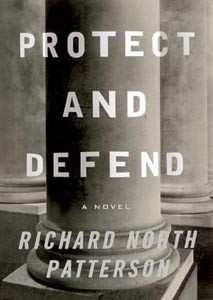
‘Protect and Defend’

Politics and law collide in ‘Protect and Defend’

By Liesel Hofmann

LAWYERS are a dime a dozen. Ditto lawyers who write mediocre novels. But lawyers who write provocative, mesmermizing novels with a literary flourish are rare.

Richard North Patterson (a former trial lawyer, Ohio assistant attorney general, and the SEC’s liaison to the Watergate special prosecutor) is one of those few. In his 11th novel, Protect and Defend (Knopf; $26.95), written just before the recent ignominious presidential election, he is eerily prescient, focusing on a political-legal quagmire that builds up into an intellectual and emotional page-turner.

The fate of 49-year-old Caroline Masters, the first female nominee for Chief Justice of the Supreme Court, coalesces with the fate of Mary Ann Tierney, a 15-year-old girl who seeks a late-term abortion against the wishes of her unbending pro-life parents–the hydrocephalic fetus is likely to be born without a brain and may endanger the girl’s fertility.

Nimbly wielding his literary scalpel, Patterson dissects the motivations and machinations of the movers and shakers in Washington. As he steers us through the labyrinthine corridors of judicial and political power, Patterson intersperses the abortion trial, the appeal, and Masters’ confirmation hearing with vignettes of the intrigues that are the lifeblood of Capitol Hill. The precedence of partisanship over principles is achingly familiar.

The major characters come vividly to life: Masters, whose keen ambitions are overshadowed by her compassion and integrity; politically brilliant President Kerry Kilcannon, a man of Clintonian intelligence and non-Clintonian principles, who whips up a “conspiracy of decency” and tries to put an end to the politics of scandal; Republican Sen. Chad Palmer (yes, Chad!), a John McCain-like politically independent military hero whose favorite maxim is “There are worse things in life than losing an election”; malevolent Majority Leader Macdonald Gage, who rules the Senate with “velvet tyranny” and, abetted by sleazy journalists, digs for dirt–any dirt–to bring Masters down; the unseasoned but gifted 29-year-old Sarah Dash, who represents Mary Ann and once clerked for Masters on a federal appeals court; Mary Ann and her father, Martin, torn with love for each other but each clinging to divergent beliefs.

And Patterson deftly limns the minor characters, often with a few choice words (a reactionary senator is “mean as a snake, with the sincere voice and constant eye contact of an evangelist or a stockbroker”).

Private lives are laid bare by the nationally televised abortion lawsuit, and devastating secrets are turned into public fodder by politicos whose moral compasses are so skewed that they suggest never-married Masters is lesbian, or, if straight, is probably sleeping with the president.

The courtroom scenes are almost unbearably realistic, to the point that they go on and on, though they could have been carefully shortened without loss of comprehension. But throughout the novel, Patterson infuses spurts of wit (Masters on minimalist short fiction: “stories where some deracinated male crawls out of bed, brushes his teeth, spends five pages deciding whether to leave his apartment, then doesn’t”); and so remarkably even-handed is Patterson’s treatment of the abortion issue that we never know for sure what side he favors.

Protect and Defend is backed up by formidable research, including talks with Patterson’s “old friend” former President George H. Bush and with President Clinton, who “shared his thoughts and opened doors.”

Judge Learned Hand once wrote that “the only country which any man has a right to love is one where there is a balanced judgment, justice founded on wisdom, a free spirit and a temperate mind.” Patterson confirms what a tall order that has increasingly proved to be.

From the January 11-17, 2001 issue of the Northern California Bohemian.

© Metro Publishing Inc.

Open Mic

0

Peaceful Path

By Shepherd Bliss

MY COLLEGE SWEETHEART would argue that the Vietnam War was wrong. One day, during the mid-’60s, she invited me to hear Martin Luther Jr. I had recently finished basic training in the U.S. Army. I agreed to drive to Nebraska with her, mainly because I wanted an intimate overnight experience with my sweetie, not knowing much about King. I was born on a military base and had spent my life as a military dependent. Hearing King speak about racial justice, peace, and nonviolence dramatically changed my life.

King stimulated within me what is now called a “spiritual emergency.” The warrior world of my father’s lineage crashed, and I decided to attend seminary, following King’s ministerial path.

These memories have lain dormant. But as I prepare to nonviolently defend my home, land, and health from the chemical assault of forced pesticide spraying against the glassy-winged sharpshooter, they reappear vividly.

I was studying at the University of Chicago Divinity School in l968 when news of King’s assassination reached us. Our group, Seminarians Organized for Racial Justice, drove to the funeral in Atlanta and then to a march in Memphis, where King was killed. Our Illinois license plates marked us as outsiders, and we were literally stoned. Back in Chicago, I found myself in the streets with a group called Non-Violent Training and Action Center and soon in Mayor Daley’s Cook County Jail. My parents were not happy when I resigned my Army commission.

So the nonviolence that I plan to practice to resist the forced spraying emerges from a personal history. I simply cannot cooperate with the violation of property and civil rights that the county plan authorizes. When I first heard that plans to combat a small insect that does no harm to humans but can threaten grapevines could include the forced spraying of my organic farm, I did not believe it. As the plans that would end my livelihood and threaten the health of others became clearer, I knew that I needed to move toward direct action.

We are now preparing for nonviolent direct action to prevent state and local governments from the intended chemical assault. Our No Spray Action Network is fully committed to the principles of nonviolence with respect to both people and property. I encourage Sonoma County residents to consider the consequences of forced mass pesticide spraying to human and animal health and to our clean water.

It is simply not worth it to protect the profits of the luxury wine industry.

For further information, contact the No Spray Action Network online at no*********@***oo.com or call 707/874-3119.

From the January 11-17, 2001 issue of the Northern California Bohemian.

© Metro Publishing Inc.

Lee Press-On and the Nails

0

Up from the Dead

Lee Press-On still comes out swinging

THE GRAVEYARD air is stinging, crisp, and cold. The crumbling cemetery sits waiting for a funeral in the misty winter afternoon light, while the faint chimes of church bells rise in the distance and Mr. Lee Press-On dances happily on his own grave.

OK, so it’s technically not Lee Press-On’s grave. In truth, he barely knows the occupant. Or occupants. But the enormous crypt he’s now strutting his stuff on does bear his name in big, bold, stone-carved letters. It glares down from the top of the ornate, 15-foot granite tomb.

It says LEE.

“I stumbled upon this crypt a few years ago,” remarks Press-On, with a wicked grin that makes his pencil-thin mustache arc up in a wide V. “I was taking a little stroll one day through the graveyard. I saw my name up here and thought, ‘Cool. That could be me.’ ”

Such thoughts would unsettle most mere mortals, but this one only makes Press-On giddy. Really giddy. Without warning, the little man lets loose a sweet, spontaneous burst of jitterbugging.

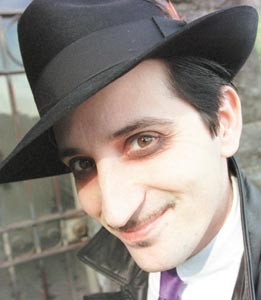
PRESS-ON is the whimsical leader and fierce driving force behind Lee Press-On and the Nails. That’s the goth-tinged Bay Area swing band that has been raising eyebrows and setting toes to tapping for about six years now.

Arriving on the scene in 1995, just before the swing craze that gave them a nice boost in popularity, Lee Press-On and the Nails–known to their fans as LPN–is arguably the most theatrical swing band on the scene, supporting a solid repertoire of authentically played swing tunes with an on-stage carnival of macabre merriment that has included choreographed fist fights and zoot-suited horn players who spit blood.

Then there’s the band leader himself. A consummate showman, he’s possessed of incredible stores of energy, bouncing, dancing, and skipping around like “some coked-out zombie” (in Lee’s words).

A master of improvisation, Press-On revels in his back-and-forth exchanges with the fans and fellow band members. He once invited the entire audience onstage, where he sat them down and told them a story.

At LPN’s recent appearance at Petaluma’s Mystic Theater, he snatched a European patron’s video camera and, after shooting in-your-face close-ups of the band, leaned in close to shout, “Hello! Hello! You over there in Europe. It’s Lee Press-On. Over here in A-mer-i-caaaaaa!”

Asked where he gets all that energy, he says, “I just really want people to get their money’s worth.”

Press-On–whose band opens for Big Bad Voodoo Daddy Jan. 12 at the Luther Burbank Center–often takes the stage in a blast of smoke, routinely popping out of a coffin with a scream before stalking up to the mike to “hiedie hiedie hie” his way through “The Ghost of Smokey Joe” or a swing version of “Ghost Riders in the Sky.”

Equally eerie, though undeniably classy, is the band’s sharp-tongued chanteuse, Leslie Presley, Press-On’s real-life wife, whose midshow appearance is always greeted by a loud audience shout of “Lesley! Presley!”

The band’s latest CD–Playing Dirty: LPN Live at the Derby–nicely captures the intensity of these shenanigans and shows Press-On’s musical versatility as he alternates between his scorching vocals and lively vibraphone playing.

But staying alive hasn’t been easy. Over the years, a revolving-door roster of musicians has hurt LPN a bit, frequently forcing the big band to re-establish its musical unity, while other swing acts have become household names. Moreover, the size of the band, currently a 10-piece ensemble, makes it expensive to operate.

Then there’s the slow decline in the swing fever, which has caused many bands to quit. Some superstar swing groups like the Cherry Poppin’ Daddies–whose latest CD was more punk than swing–have begun to rethink their dependence on the sound that made them famous. Though such bands are still getting gigs, the audiences–many of them hard-core swing dancers–have been much smaller now that the fad-hoppers have moved on.

“November,” Press-On admits with a wince, “was a pretty thin month.” But he insists he’s not worried.

“Our culture builds things up to Herculean proportions, and then delights in tearing them down,” he says. “I could care less whether I’m hip or not, though being hip was fun while it lasted. We’re not in this for the money, though that does put bread on the table and everything. We do this ’cause we love it. And having fewer people show up won’t stop us from loving it.”

THE MULTITALENTED scion of Marin College drama professor Harvey Susser, Press-On has put remarkable energy into building his gleefully sinister stage persona–often described as a cross between Gomez Addams and Pee-Wee Herman.

But he deflects most personal questions, preferring to keep his real life in the background, if not completely, um, buried. A pack of rabid wolves couldn’t drag his original name out of him; though offstage, Presley does get away with calling him Leland. Press-On will admit to being 35, but only as the setup to a typically dark joke.

“When John Belushi was my age,” he says, “he’d been dead two years.”

He also reluctantly confesses to having other alter egos; for instance, he’s played the part of Edgar Allen Poe at the San Francisco Dickens’ Christmas Fair for the last several years.

On the other hand, when it comes to his relationship with his wife, Press-On can’t keep himself from gushing a bit.

“She’s wonderful,” he says of Presley, whom he married just over four years ago and with whom he lives in San Rafael. One of their wedding gifts was a coffin they use as a coffee table. It’s the same coffin Lee leaps out of during his shows.

“Our relationship onstage–the whole affectionate Nick and Nora Charles thing–is pretty much the way we are,” Press-On says. “Couples come up to us after shows and say, ‘You two have been so inspirational to us in our relationship.’ We love that.”

“IT’S 38 SECONDS after midnight on KRCB FM,” Press-On reports. “I’m Lee Press-On, welcoming you to the Graveyard Shift.”

It’s Monday night in Rohnert Park, and Press-On is at the controls of the local public access station for his weekly two-hour radio show–a mix of swing music, comedy bits, show tunes, and unexpected comments.

“I’ve had an ear infection,” he confesses to his listeners. “So if you are the type who is squeamish, you might want to turn off the radio, because I’ve discovered that my ear can actually transmit noise.” With that, he places his ear to the microphone, pinches his nose, and blows.

A raspy, high-pitched squeak emits from his ear.

“I’m going to have that looked at tomorrow,” he announces, and returns to the music, playing “Big Boss Lee” by the Royal Crown Review, followed by a Hammond organ rendition of “Let it Snow” by Eddie Dunstedder.

Press-On has been doing the Graveyard Shift gratis for the last two years.

“It’s a shameless way to pimp the band,” he says, dancing and snapping along to the music, before stopping to massage his ear.

“Maybe I shouldn’t have done that ear thing,” he remarks. “I can’t hear a damn thing out of it now.”

Between songs, Press-On talks about why he loves swing. “Hey! This is the happiest music,” he says.

“Originally, swing came at a time when the world really needed something,” he explains. “The Great Depression was raging. People needed to get away from their troubles, and swing helped, even though the politicians at the time thought it was a morally corruptive form of music. That’s another thing I like about it. People used to think it was evil.”

Though swing faded after the ’40s, it never completely went away. There have been a steady number of big-band stations and ballroom swing-dance clubs ever since. The upsurge of swing among young people came in the mid-90s, edged forward by the cult-film Swing Kids. It was pushed into hyperdrive by, among other things, that infamous “Jump, Jive, and Wail” Gap commercial on TV. Suddenly swing was hot.

Now it’s not. In fact, isn’t it officially dead?

“Dying is not the same as dead,” Press-On says, “though locally it might appear that way. We actually have a bigger following in L.A. than we do around here. Swing is very popular in L.A. But it’s true. A lot of clubs are shying away from swing. Even so, swing is not going to vanish into obscurity. Swing was here before the craze, and swing will be around after.”

“NO MATTER what happens with swing, as a musical fad, Lee Press-On has a chance to survive because his act is more than swing. It’s a total show.”

This endorsement comes from Santa Rosa’s David, from the popular swing-dance teaching team known as David and Sirkl. The dynamic duo has been teaching swing lessons since the height of the movement and, says David, has never been busier than it is now. “We’re actually glad that a lot of the fad people have dropped away,” he says. “What’s left are the people who really care about this music.”

David, it turns out, first caught the swing bug when a friend took him to an LPN show. “It literally changed my life,” he says. “Lee knows how to put on a show that entertains the people who stay in their seats, and also gives a good time to the people who come to dance.”

According to David, he and Sirkl have around 800 students who are active North Bay swingers, traveling to whatever club has the music that night. “When people tell me swing is dead, I laugh,” he says. “If it’s dead, then what are we doing every night?”

Or, in the words of LPN fan Lora Lorden, minutes after leaving the floor during the Mystic show, “If swing is dead, I just got bruises on my shins from all those ghosts out on the dance floor.”

“‘GHOSTS ON the dance floor.’ I like that image,” says Press-On, concluding his tour of his favorite graveyard. Returning to the delightful LEE crypt, Press-On is moved to consider what kind of epitaph he might want on his own tombstone.

“How about, ‘Here lies Lee Press-on. Finally’?” he suggests. “Or maybe, ‘Hey. I told you I was sick.’ ”

What about “Here lies Lee Press-On. NOW you can say swing is dead”?

Press-On laughs, dancing out a few final steps in front of the tomb. “Hey, I like that,” he says “It’s perfect.”

Lee Press-On and the Nails open for Big Bad Voodoo Daddy on Friday, Jan. 12, at 8 p.m. at the Luther Burbank Center, 50 Mark West Springs Road, Santa Rosa. Tickets are $20. For details, call 707/546-3600.

From the January 11-17, 2001 issue of the Northern California Bohemian.

© Metro Publishing Inc.

The Wide-Eyed Gourmet

It’s winter and thoughts turn to the motherland

By Marina Wolf

THE NIGHTS ARE COLD, my job sucks, and cabbage is the freshest thing in the produce aisle. Don’t bother me. I’m having a Russia moment. They come along every winter, when I look up and remember that good tomatoes are at least six or seven months away. It might be just another case of seasonal affective disorder, or SAD, except I have a place and time to attach to the feeling: St. Petersburg, 1992-93. I’m simply homesick.

Why I should have warm feelings for this winter wonderland of food shortages is not immediately clear, even to myself. This was a place in which sugar disappeared from stores for weeks at a time, and the best price for fish could be found in the back of a dirty truck. Aren’t I just romanticizing a state of anarchic malnutrition?

Yes and no. Yes, my experience was rosier than the reality for most Russians. My companion and I were earning dollars, which meant that the farmers’ markets, with decent produce at exorbitant prices, were a viable option. And there were two of us to stand in lines, plus a Russian roommate who was happy to schlep shopping bags and make Turkish coffee in exchange for his share of the rent.

In spite of such luxuries, however, the pursuit of food demanded a significant expenditure of time, money, and energy, so we learned to appreciate the thrill of the hunt. There was always something on the street, melons from Moldavia or soy sauce or British crackers. One December we feasted for three weeks on mandarin and blood oranges, which had entered the country as aid from Italy and “fell off the back of a truck” at prices well below market value. If that’s not a humanitarian act, I don’t know what is.

The deli shops had their moments of excitement, too. If you could see past the smudged showcases and cats dozing on the scales (hey, at least there weren’t any mice!), there were some real finds, like imported Dutch cheese, instead of the chalky domestic stuff. As for the kielbasa counters, well, charcuterie would be too posh a term for the coarse-grained, thick-skinned bologna, but when meat prices soared, we looked.

It’s a long drive for what is essentially dry-cured pork fat, but the smell of it, salty and rich, takes me back to a little shop near the Mayakovskaya metro station. There the hurried shopkeeper pulled a small piece of salo out of a barrel of salt, brushed it off, and wrapped it in plain waxed paper, as expertly as an origami artist.

Our Russian roommate showed us how to cut it into bits, fry it crisp, and crack eggs over the whole greasy mess. Traditionally, though, salo was eaten raw on bread spread with fiery mustard.

I have the mustard; at the back of my cupboard, all that’s missing is the salo. And yes, I know about cholesterol and trichinosis, but I don’t care. I just need a break from here and now, and a taste from then and there might help.

From the January 11-17, 2001 issue of the Northern California Bohemian.

© Metro Publishing Inc.
Well-Being

Mind, Body, Spirit

Wellness is all in your head

By Nancy Stearns Bercaw

WHO THE HELL do you think you are? Sort through the media’s images of who you should be. Measure them against the self that some say is determined by genetic makeup. Cross-reference with the self your parents raised you to be. And if you can’t stand your concocted self, you can always adopt a Prozac-induced persona.

Or, you can ask Richard DeGrandpre, Ph.D., visiting assisting professor of psychology at St. Michael’s College, Burlington, Vt., and prolific author on the subjects of “health and self.” His forthcoming book, The Changeable Self, co-written with well-published psychologist Stanton Peele, challenges the recent wave of behavioral genetic research and champions mind over gray matter.

DeGrandpre’s answer is this: You are who you think you are. Stop blaming your genes, your Calvin Klein jeans, your inner child, and your dysfunctional parents. Stop consoling ills by popping pills. In other words, get a hold of yourself.

“It appears that as the world is becoming a more stressful, impersonal, and harsh place,” explains the 32-year-old graduate of the University of Vermont, “people are more willing to give up on their sense of self-determination and freedom, embracing instead crippling ideas about how childhood or genetic history predetermines one’s future.”

In DeGrandpre’s view, the age-old question of free will vs. fate is best addressed by social critics, not maddening scientists. Biology lets us off the hook with the “my-genes-made-me-do-it” paradigm. Pop psychology provides quick fixes for broken psyches. But sociology holds society accountable. What we have on our hands is a cultural tragedy, he posits, and what we need is to change our minds about what’s important.

DeGrandpre doesn’t mean to sound like a motivational speaker, a spiritual guru, or a patronizing shrink; he simply intends to promote genuine well-being over the guise of well-becoming. His model is that hopelessness is a modern construct fueled by the capitalist rat race.

In fact, he elucidates, it’s only the so-called advanced societies that suffer from suicide, depression, and like-minded problems–“the inevitable by-products of an inward, materialistic culture,” he says. “If you’re caught up in keeping up with the Joneses, there is no solution. You can never achieve the romanticized version of chronic bliss. It will always elude you.”

But people who simplify their lives, he adds, find that they gain a lot by losing a lot. It’s the pursuit of happiness that has made us unhappy. We’re miserable because there’s no finish line. The corporate American mandate is to consume and to possess, which sends vastly conflicting messages to our heads. Our society is now marked by dichotomous diseases: We weigh in with the highest incidence of both anorexia and obesity.

DeGrandpre believes that we’re hurdling toward a giant national nervous breakdown. The trend almost reversed itself in the ’60s when dropping out spawned new social orders like communal living. But the ’90s and the present seem to be about opting out entirely. This is a decade of self-indulgent angst where body piercing is perceived as the alternative and amphetamines are the panacea. This is a time when genes are the bad guy. This is a place where money talks and we listen to Prozac. This is your brain on hiatus.

“As the inside gets more and more shallow, the outside gets more and more decorated,” DeGrandpre cautions. “And as long as you only consider simple and easily adoptable solutions, you’re not engaging the long-term struggle to reclaim some sane identity.”

Feeling that we’re losing our minds results from the extreme messages we receive. “There’s a tendency to polarize the narcissistic self from the socially oriented self. It has become a question of inwardness versus outwardness. Strike a balance between selfishness and selflessness,” DeGrandpre recommends. “Give up the roller-coaster ride of ambition to recover a mediated existence.”

THE ULTIMATE goal should be to change society, not individual perceptions. We can’t all be well until the trappings that make us sick are removed. A great deal of what Western medicine calls developmental problems are really social diseases, according to DeGrandpre, who dismisses the rise of attention deficit disorder as “a wholesale psychiatric myth.”

“There always have been a few excessively hyperactive kids, but what I’m saying is that one of the behavioral by-products of this high-saturation population are new inattentive and hyperactive children,” he explains. “In a classroom setting where things don’t go that fast, students fall into self-stimulation behaviors. Classrooms are out of date with high-speed society. But the answer is to slow down the world, not speed up the classroom.”

Basically, we’re unable to feel at home with ourselves when external stimulation shuts down. For evidence, DeGrandpre contrasts our current sensory-laden lifestyles with those at the turn of the century, when the debut of silent movies actually made people nauseous. Today, even billion-dollar thrillers can be boring. Kicks just keep getting harder to find.

Certainly part of the problem has been “prosthetic solutions.” Give a drug to solve a need, which creates further need. “Ritalin use has increased 2.5 times since 1995,” DeGrandpre points out. “Pretty soon all parents will want their kids on it, which is far more likely to create an intolerance of difference, rather than improved childhood well-being. With more prosthetics available, it’s becoming more acceptable to ridicule exceptional people than to fight for social justice.”

A one-dimensional Cosmetic Self–characterized by high-tech, super-duper treatments–is emerging. We’re nipping and tucking, buying and selling, and kicking and screaming our way to becoming just like everyone else.

But the obstacles are external and eternal. The world just isn’t worth being well for, so we’ve found a number of reasons to justify our perceived shortcomings, and an equal number of ways to overcompensate.

What’s most disturbing to DeGrandpre is this very shift from the social community to the individualized psychological society that breeds marketable solutions like drugs and short-term fixes. “Corporate America doesn’t make a buck on social change. The message is, if it can’t be sold, then it’s not an option for change,” he laments. “It seems we can’t have a moral society and capitalist one at the same time.”

THE ONLY cure will be a critical mass of dissatisfaction, DeGrandpre contends. Everything else is a Band-Aid. “The New Age movement is a classic example of American narcissism. It’s a cultural phenomenon,” says the social psychologist cum Marxist philosopher. “People remove themselves from mainstream culture, but still adopt rituals, practices and ideals that are highly individualistic, rather than reorganizing into social groups that can really care for each other.”

Apparently I’m OK, you’re OK, but the world isn’t. In the classroom, DeGrandpre tries to emphasize the power and influence of social and historical forces on thought and action. “There is nothing inside you that needs to be searched for and fixed,” he counsels. “The depth metaphor of inwardness sets the stage for current ideas like the wounded inner child and the gene myth.”

The truth is that we need to be more co-dependent–not, as one bestselling self-help book advised, Co-dependent No More. The only way out of this self-absorbed black hole, warns DeGrandpre, is to be sympathetic and selfless. Real mental health will come from reorganizing our lives around a responsible agenda. People who sacrifice their own personal gain for the improvement of others should be the new role models.

“It doesn’t matter whether free will or fate prevails once you believe that you’re not in control,” DeGrandpre urges. “The hundreds of stories we hear about people overcoming obstacles tell us that genetics and childhood as prophecy are moot when we take responsibility for ourselves.”

DeGrandpre isn’t advocating a “pull yourself up by your bootstraps” work ethic. He is instead lobbying for humans to literally pull together. And only then will we be well.

From the January 11-17, 2001 issue of the Northern California Bohemian.

© Metro Publishing Inc.
Health and Nutrition

0

Shedding pounds naturally by eating healthfully

By Sarah Martel

AND NOW for the anticlimax: the holiday frenzy is over, the rich holiday foods gobbled up, and very possibly you feel lousy. As the last few weeks may have made all too obvious, there’s a vital link between what you eat and drink and how well you feel and look.

But cheer up. You can bounce back better than ever. Follow these small, easy steps and you’ll soon see and feel a difference.

1. Activate your body’s natural cleansing and healing mechanism.

Whole vegetables and fruit are 85 to 95 percent water. Since the body is 70 percent water, try increasing your intake of these foods. Whole, raw, juicy fruit–not a pasteurized fruit juice–and water-rich vegetables, along with six to eight glasses of pure water a day, deliver the nutrients you need to support the health of your body’s 6 trillion cells.

2. Adopt a healthy morning routine.

Try to begin the day with 12 to 16 ounces of pure water, warm if you like, with the juice of 1/4 fresh lemon or a cup of fresh ginger tea. If only a java jolt will get you out of your stupor, try to postpone it until at least 10 a.m. Here’s a breakfast for high energy and natural weight loss: a fruit salad with two juicy fruits, 1/2 a ripe banana, and 1/4 cup of raw sunflower seeds or almonds that have been soaked in water overnight. If you thrive on more protein in the morning, make a vegetable omelet using one or two egg whites and one yolk (from an organically fed free-range chicken, if possible) and chopped veggies.

If you prefer grains, try quinoa or millet for an easy-to-digest whole grain rich in absorbable nutrients, including proteins. Serve it with almond milk, fresh fruit, or a teaspoon of maple syrup. Refined cereals like Wheatena or Cream of Wheat just don’t cut it. Amid all the eye-catching hoopla on boxed cold cereals you’ll often see the words natural and grain, but read the fine print and you’ll note that the main ingredients are refined grains (carbohydrates that quickly turn to sugar and soon have you craving even more sweets), sugar (in various disguises), and salt.

3. Replace processed foods with whole foods.

Refined foods require tremendous digestive energy and don’t deliver the nutrients you need. Rely on the real stuff. For example: corn on the cob rather than corn chips; an apple instead of applesauce; brown rice in place of white rice; a baked potato instead of fries; an orange rather than orange juice.

4. Eat lighter and earlier in the evening.

Since digestion takes more energy than any other body activity, you don’t want to make it work so hard while you sleep. Ideally, you should have completed digestion of the day’s foods by the time you hit the sack, so that energy can be freed up for healing and recuperating. A light evening meal could be a large salad with dressing you love (but not a cheesy one) and a bowl of vegetable or lentil soup; or a pot of steamed vegetables, including leafy greens and a starchy vegetable such as yams or winter squash, and a salad; or vegetable mu-shu or a vegetable stir-fry with brown rice; or a tostada (Mexican-style tortilla) topped with beans and rice, steamed veggies, and shredded lettuce and tomato–without the sour cream or cheese (guacamole is fine).

Above all, don’t think you have to go on a stringent diet to shed those pounds. If denied calories, the body, anticipating famine, starts to store fat and slow down your metabolism, making the problem worse. You don’t even have to deprive yourself of rich or refined foods. Trouble is, you probably don’t stop after just a taste. But, after all, does a big slice of rich cake taste any better than a small slice slowly savored?

The simple steps suggested here really work. They’ll help you achieve moderation, regain and maintain your vitality, and encourage natural weight loss without effort. Follow them and your body–and your mirror–will thank you.

From the January 11-17, 2001 issue of the Northern California Bohemian.

© Metro Publishing Inc.
Sausage-Making

Missing Link Art of sausage-making is a lesson on living By Marina Wolf BRUCE AIDELLS, founder of Aidells Sausage Co., may be on the forefront of sausage innovation. But he still remembers 25 years ago, when he was just a poor post-doc in London, developing a strong revulsion to the indigenous...

George W. Bush Inaugural Address

Dubya's Debut The inaugural address you won't hear on MSNBC By Stephen Kessler MR. CHIEF Justice, Mr. Speaker, Rev. Graham, Mom, Pop, Clarence, Tony, my fellow Americans: Today we embark together on a great adventure--my presidency. I know it's incredible, but I am your president, and for the next four...

Wayne “The Train” Hancock

Wayne's World A musical journey into clean and sober twang By James Rocchi WAYNE "The Train" Hancock's musical style is made of many parts, like a secret barbecue-spice dry rub or good chili. Honky-tonk sounds mix with swing horns and country courtliness, good humor and rock and roll. It all gets...

Sonoma Mission Inn

On a Mission A quiet brunch at the Sonoma Mission Inn By Paula Harris OK, I KNOW a visit to the world-class Sonoma Mission Inn and Spa is meant to be a tranquility-drenched, relaxing experience, but Sunday brunch in the resort's upscale "Restaurant" (formerly the Grille) is a little too peaceful....

‘Protect and Defend’

Politics and law collide in 'Protect and Defend' By Liesel Hofmann LAWYERS are a dime a dozen. Ditto lawyers who write mediocre novels. But lawyers who write provocative, mesmermizing novels with a literary flourish are rare. Richard North Patterson (a former trial lawyer, Ohio assistant attorney general, and the SEC's...

Open Mic

Peaceful Path By Shepherd Bliss MY COLLEGE SWEETHEART would argue that the Vietnam War was wrong. One day, during the mid-'60s, she invited me to hear Martin Luther Jr. I had recently finished basic training in the U.S. Army. I agreed to drive to Nebraska with her, mainly because I wanted an...

Lee Press-On and the Nails

Up from the Dead Lee Press-On still comes out swinging THE GRAVEYARD air is stinging, crisp, and cold. The crumbling cemetery sits waiting for a funeral in the misty winter afternoon light, while the faint chimes of church bells rise in the distance and Mr. Lee Press-On dances happily on...

The Wide-Eyed Gourmet

It's winter and thoughts turn to the motherland By Marina Wolf THE NIGHTS ARE COLD, my job sucks, and cabbage is the freshest thing in the produce aisle. Don't bother me. I'm having a Russia moment. They come along every winter, when I look up and remember that good tomatoes are at least six...

Well-Being

Mind, Body, Spirit Wellness is all in your head By Nancy Stearns Bercaw WHO THE HELL do you think you are? Sort through the media's images of who you should be. Measure them against the self that some say is determined by genetic makeup. Cross-reference with the self your parents raised...

Health and Nutrition

Shedding pounds naturally by eating healthfully By Sarah Martel AND NOW for the anticlimax: the holiday frenzy is over, the rich holiday foods gobbled up, and very possibly you feel lousy. As the last few weeks may have made all too obvious, there's a vital link between what you eat and drink and how well...
11,084FansLike
4,606FollowersFollow
6,928FollowersFollow