
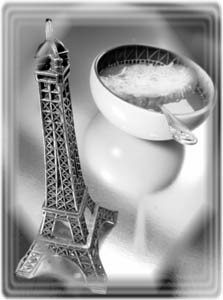
Jill Prescott

0

Cutting Cuisine

No-nonsense approach to French food and Jell-O

By Marina Wolf

EIGHTY-FIVE percent of Jill Prescott’s students are professionals: doctors, teachers, lawyers. But when they step through that door to Prescott’s Ecole de Cuisine, something strange happens.

“Adults turn into kindergartners when they walk into my school,” Prescott in a interview from her home near Milwaukee, Wisc. “It’s pitiful. I think it’s specifically French cooking. It’s so intimidating. It’s known for being the best cuisine in the world. But it’s easy once you know the rules.”

Those rules form the substance of Prescott’s new book, Jill Prescott’s Ecole de Cuisine (Ten Speed Press) and the show by the same name that began airing earlier this month at nearly 100 PBS affiliates around the country. The book is explicit and no-nonsense, almost stern as to technique, and the TV show puts the viewer as close as you can get without actually putting your nose in the pan. If taken together, the Prescott école approach retains Prescott’s friendly Midwestern attitude, yet it is as rigorous a regimen as any Saturday cooking show for dedicated home cooks to learn basic French technique.

Prescott herself learned the really hard way over the course of several years of frequent visits to France starting in 1986. Before that, she had trained with the U.S. representative from Le Cordon Bleu, which had been a reprieve from her previous experience with French food through a series of bad books. “The books didn’t make any sense. I had no idea what they were talking about. Like, do a crème anglaise until it leaves a trail [if you coat a spoon with it and run your finger down the back]. Mine would do a trail for the first minute, but it was all watery, and then if I cooked it too long it turned to scrambled eggs. Now, that is the type of thing, especially on the show, I can clearly show people what it is.”

Of course, even in TV-Land you don’t start with desserts. Prescott begins with the savory building blocks of classic French cooking-stocks, sauces, sautés. Oh, wait, does even the word sauté make you nervous? It’s just a fancy word for a quick pan-fry on high heat, proving that the same techniques that go into the most delicate nouvelle cuisine can also be applied to a plate of steak and fries. “Even people who don’t want to fuss in the kitchen can learn some good techniques,” says Prescott.

Asked for some tips on sautéing, Prescott reels them off in a perfectly practiced, front-of-the-class spiel: hot pan, dry piece of meat at room temperature. Flip it over when it turns the color of cinnamon, nice and dark golden brown. You test it with your finger, using a method that Prescott illustrates both in her book and on TV, not with a meat thermometer and definitely not by cutting into it.

“We’re all guilty of doing that, but you must not do it. You’re draining away the juice,” she says. “Oh, and don’t flip the meat over and over. You toughen it dramatically if you do that. The juice always moves up to the top of the steak, and all the flipping dehydrates it.”

Show-and-tell is Prescott’s specialty, a teaching strategy that actually takes some thought to translate from a classroom to mass media. “Doing the book was the most difficult,” she admits. “I’m very hands-on, and when I’m teaching I can look in your eyes and see where you’re at. And even TV was hard at first, because people aren’t smelling it, and I’m not sure what they’re seeing. I was panicked. It felt like I was standing in the dark, babbling to myself,” says Prescott. “Then I realized that people will get it if the crew gets in there and shows people what that consistency is, what the color is, and how it changes.”

SOME of Prescott’s show-and-tell is more political in nature. She is beginning to gain a reputation for her tirades against certain commercially available food products that she regards with almost moral indignation. Why do people use margarine, she asks, when they could use sweet, real butter? She relates with disgust a home-economics class she visited in which the students were making rolls from dough-in-a-tube. In place of sodium- and MSG-laced bouillon cubes, Prescott shows how to make glacé de viande, beef stock that has been cooked until it is reduced to a thick gelatinous paste, which may be cut off and used to flavor soups, stews, or sauces. “If you’re sick, put a cube of that into some water and drink it, not a bouillon cube,” she says.

Jell-O is a favorite target of hers. After demonstrating the dubious culinary qualities of Jell-O, Prescott then proceeds to Bavarian, a creamy gelatin-based custard that is the dignified alternative, and even ancestor, of Jell-O. “The Jell-O thing, I really got into that on one of my shows,” says Prescott. “You go to the hospital, you go through surgery, and they give you Jell-O. Let’s see, it’s made of chemical scent, chemical color, and chemical flavor. Now what part of your body is going to heal and get better from eating that?”

“I’d love to be sued someday,” Prescott continues with enthusiasm. “If I get sued, I will be able to put a company out of business, because nobody will ever eat [the product] again.” Prescott’s confidence may well be warranted: the attorney who represented Oprah Winfrey in her case against the beef industry was in one of her classes and handed her his card. “He said, ‘You’re going to need me someday. But just so you know, you’ll win.’ ”

From the April 19-25, 2001 issue of the Northern California Bohemian.

© Metro Publishing Inc.

North Bay Authors

North Bay authors offer an eclectic array of new books

Reviews by Greg Cahill, Liesel Hofmann, and Patrick Sullivan

SPRING always yields a fresh crop of books from local authors, and lo! here they are, sprouting up on bookshelves across the North Bay. This season’s offerings from native scribes include poetry, novels, and nonfiction about everything from global warming to a doomed expedition to the North Pole to a kidnapping racket run by murderous thugs. Flick on your reading lamp and enjoy the bounty.

IN THIS FIFTH St. John detective novel, Santa Rosan William Babula, an SSU professor, again has sardonic St. John (a former lawyer before he’d “come to [his] senses”), aided by his two tough partners–beauteous Mickey, an ex-Playmate; and outsized Seminole Chief Moses Tamiami, a former alligator wrestler. This time, they unearth a kidnapping racket and come up against a dirty handful of murderous characters. Witty repartee, poignant moments, a rekindled love affair, realistic episodes countered by wildly improbable ones, and a San Francisco background make this fast-paced story a kick to read.–L.H.

Susan M. Gaines Carbon Dreams (Creative Arts Book Company; $17.25)

HOW OFTEN do you see the quest for scientific truth lying at the heart of a novel? Yet that’s the driving force behind Carbon Dreams, a reasonably engrossing first novel from writer Susan Gaines, who divides her time between Healdsburg and Uruguay. Set in the early ’80s at an oceanography institute in Northern California, Carbon Dreams follows the adventures (scientific and otherwise) of Dr. Tina Arenas, a young geochemist whose research into climate variations in the distant geological past yields unexpectedly modern implications. Her findings yank Arenas rudely out of the ivory tower and thrust her into the growing controversy over global warming. To complicate matters, Arenas finds herself falling for a local farmer.

Gaines has an extensive background in chemistry and oceanography–a fact that shows up to both good and bad effect in Carbon Dreams. The author’s knowledge certainly lends considerable authenticity to her portrayal of her character’s research and the wider academic community. On the other hand, Gaines will bore the socks off some her readers with rather long-winded passages teeming with isotopes, HPLC-Mass spec interfaces, and paleo CO2 methods. Still, these are worth wading through, because Gaines, who is an accomplished short story writer, always picks up the narrative thread and runs with it again.–P.S.

Interrogation at Noon (Graywolf; $14)

IN THESE two new paperbacks, Santa Rosa poet Dana Gioia–author of Can Poetry Matter?: Essays on Poetry and American Culture–proves that he has a knack for writing about love, unrequited and otherwise. The tension between that intensely personal sense of longing and becoming, especially in his considerations of marriage, is most compelling. Interrogation at Noon, a collection of poems, employs various styles–from rhymed couplets to free verse, surrealist elegy to satirical ballad–to explore the affairs of the heart, often with considerable grace and depth.

In the ambitious Nosferatu: An Opera Libretto, Gioia taps into one of the all-time great love stories, which, as author Anne Williams notes in her thoughtful foreword, is ripe for operatic treatment. And that’s exactly what it gets here. Gioia’s poetic version of this popular fable, based on the 1922 silent film Nosferatu by F. W. Murnau (the inspiration for the recent movie Shadow of the Vampire), was written for the neoromantic composer Alva Henderson. It will soon be staged in New York as a joint production of Derrière Garde and Verse Theatre Manhattan. Hard to believe that Gioia–an acclaimed essayist and critic–has published only two previous volumes of poetry. These two works show that Gioia, at his best, possesses a powerful and often provocative voice.–G.C.

SEBASTOPOL author and researcher Bruce Henderson is hardly the first to write a book about the great 19th-century attempts to explore the frozen wastelands at the ends of the earth. These intrepid journeys have been the focus of a slew of books by the likes of novelist Thomas Keneally, whose Victim of the Aurora is at least as compelling as the author’s better-known book, Schindler’s List. But Fatal North is a gripping entry in the crowded field, and it stands apart from many such works because Henderson, who has authored a number of well-received nonfiction books, has worked hard to keep his narrative firmly rooted in the facts.

And what a story it is! The facts are these: In a bid for international glory after the Civil War, President Ulysses S. Grant sent Captain Charles Hall north to make America’s first attempt to reach the North Pole. Hall was smart, brave, and an experienced explorer. He had an expensive ship, a talented crew, and a clever plan to make his way through the ice to the closest possible landing point to the pole. But trouble was there from the start: personal rivalries and animosities among his companions eventually came to a boil of dissension.

Hall ended up dying under suspicious circumstances, and his ship sank, leaving several dozen men women and children stranded on the polar ice.

A naval board of inquiry concluded that Hall died from natural causes, but the controversy lingered. Almost a century later, a team of forensic scientists unearthed his corpse from a grave in Greenland and came to some shocking conclusions about his death. How did Hall really die? Suffice it to say that Henderson does a marvelous job of following the thread of that mystery through the story of this doomed expedition and offers a gripping conclusion. –P.S.

UNDERLYING this first novel by Santa Rosan Amalie Langmueller is a plea for mass transit, with the book’s title referring not only to the fictitious tale, but also to the railroad’s historic triumph over environmental and human deterrents. The heroine of this Eel River Valley mystery is Julie Setten, a 24-year-old archeologist whose diggings here are strictly cerebral as she discovers a marijuana plantation and tries to trace a missing couple. But this is also a refreshing love story (Julie and a new friend don’t immediately head for the bedroom after falling in love) and, above all, a paean to trains. Mystery fans may be somewhat derailed by the dogged pace, mired as it is in superfluous details, but railroad buffs may find it all on track.–L.H.

Bob Nugent and Donn Brannon Insetos (Abandoned Press; $3,000)

FOR 30 YEARS, Santa Rosa artist Bob Nugent has collaborated with National Humanities Scholar poet Donn Brannon, a denizen of the San Francisco Beat era, merging visual art and poetry. Over the past 16 years, Nugent has traveled to Brazil, drawing inspiration from that mainly tropical country’s vivid palette of flora and fauna. “There are bugs everywhere in the jungle,” he says. Those crawling things are the subject of Insetos, a limited-edition hardbound portfolio of 20 hand-colored etchings (only 30 sets were created) that combines Nugent’s beautiful renderings of Brazilian insects with Brannon’s understated poetry. At $3,000 a pop, the set is targeted at high-end collectors. But for Nugent, the project also was cathartic, so to speak. “It was a way to get the bugs out of my system,” he muses.–G.C.

Dr. William Shipley Tales of Sonoma County: Reflections on a Golden Age (Tempus; $29.99)

AT A TIME when Sonoma County is transforming from a once-sleepy rural North Bay community to a player in the fast-paced high-tech get-out-of-my-way-or-I’ll-run-ya-over modern world, it’s easy to wax nostalgic for a time that, for many us, never was. Fortunately, before his death in 1960, Healdsburg native Dr. William Shipley–founder of Cloverdale’s General Hospital–kept a detailed and highly personal account of the way things used to be. Now the Healdsburg Historical Society has compiled those records, most of which appeared as columns in the Healdsburg Tribune, into a charming and often witty remembrance of swimming holes and firemen’s picnics and stage drivers and patent medicine shows. A chance to remember–even if you missed it.–G.C

From the April 12-18, 2001 issue of the Northern California Bohemian.

© Metro Publishing Inc.

‘One Day in September’

One Day in September.

Munich Standoff

Olympic catastrophe recalled in ‘One Day in September’

By

NOTHING LOOKS more like a harbinger of doom than film footage of an old festival. In the riveting documentary One Day in September, the 1972 Munich Olympics awaits trouble under cloudless blue skies. The city’s boosters show us a tourist Munich, a city of dazzling blondes carrying trays of beer glasses. The Nazi nightmare is dead and buried. The city appears to be “open and modern and shorn of its past,” as British journalist Gerald Seymour puts it.

But One Day in September takes us on a sidetrack, paralleling two personal narratives.

First is the story of Jamal Al Gashey. He is the last living Black September terrorist who, 28 years ago, participated in the kidnapping of the Israeli track and field team at Munich. Alternating with Al Gashey’s account is the memoir of Ankie Spitzer, the wife of a fencing coach captured by the Palestinians.

These two histories are joined in a tragedy symbolized by a famous image: a ski-masked figure peeking over a brutal modern concrete balcony at the Olympic Village.

One Day in September tells the less familiar side of the story: how the various branches of the German government–military, municipal, Bavarian, and federal–completely muffed the crisis. They might as well have left the job to some junior high school hall monitors.

The security force at the Village were baby-blue polyester-clad docents, unarmed and untrained. The local police had no SWAT team. The various military organizations were uncoordinated. First they gave in to the kidnappers’ demands out of desperation. Then the German authorities planned a pair of clumsy ambushes. Journalists were apprised of the first of these two surprises, and they duly broadcasted the planned assault. (No one stopped to think that the terrorists might be watching their own standoff on television.)

Narrated by Michael Douglas, One Day in September tells its story with the sharp editing and drive of a Bond movie. Computer graphics show us exactly how the finale occurred at a suburban airport in the dead of night. The hostage drama was extensively covered, so director Kevin McDonald (who won the Best Documentary Oscar for this film last year) has a wealth of material to cut from. He has vintage ABC Wide World of Sports broadcasts and what looks like segments from the 1973 documentary Visions of Eight as resources. You can talk about Leni Riefenstahl at the ’36 Olympics, but the ’72 Olympiad had Kon Ichikawa and Arthur Penn on hand filming the athletes.

The music selected also builds up the exhilaration and tragedy of the Olympics. The contrast of “Joy” by Apollo 100 and “Immigrant Song” by Led Zepplin are musical cues that contrast the Olympic festivities with the kidnapping drama. For that matter, those two songs sum up the 1970s: burbling idiot delirium and war screams. (McDonald also borrows, just as appropriately, some of Philip Glass’ doomsday arpeggios from Koyaanisqatsi.)

One Day in September is an alternative to the diluted, falsified politics of negotiation in Thirteen Days. But the lesson isn’t complete, though McDonald ends on what might (to the simpleminded) be considered an upbeat closing note about the Israeli Secret Service’s vengeance.

Al Gashey mentions that he became a radical from being born in Lebanon’s Shatilla refugee camp. Years after the Munich attack, Shatilla suffered a bloody massacre staged by clients of the Israeli army (under the watch of Israel’s recently elected Prime Minister Ariel Sharon). Thus the documentary doesn’t tell us enough about how the Israeli/Palestinian strife was carried on to the next generation.

‘One Day in September’ opens Friday, April 13, at Rialto Cinemas Lakeside, 551 Summerfield Road, Santa Rosa. For details, see or call 707/525-4840.

From the April 12-18, 2001 issue of the Northern California Bohemian.
© Metro Publishing Inc.

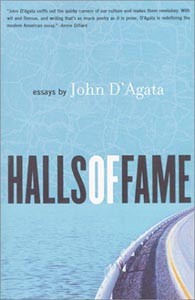
John D’Agata

‘Halls of Fame’ demonstrates power of lyric essay

By Susan Bono

A SPECIAL FORM of creative nonfiction lives in the territory between poetry and essay. These alluring hybrids are meditative, musical, artful, more imagistic than informational. First called lyric essays in 1997, when editor Deborah Tall and associate editor John D’Agata began publishing them in the Seneca Review, these works often challenge our notions of what essays are supposed to look like, what they’re supposed to do.

John D’Agata’s Halls of Fame (Graywolf Press; $24.95) demonstrates the power and experimental nature of the lyric essay. Readers drawn to contemplate the mysteries of Las Vegas, sperm banks, Route 66, the world’s tallest thermometer, or the Flat Earth Society will find plenty of intriguing subject matter in this collection, and some surprising ways of examining it.

D’Agata is something of a mad scientist who is, according to Phillip Lopate, “pushing the envelope of the modern American essay.”

In “Notes toward the Making of a Whole Human Being,” D’Agata uses a periodic sentence to construct a monster as impressive and terrifying as any of Dr. Frankenstein’s. He plays with form, injecting clues about himself and his subjects into unexpected places.

Each essay opens with a door fashioned out of Library of Congress catalog listings. In “Flat Earth Map: An Essay,” his effusive footnotes threaten to bubble over the margins and engulf the text. At other times, D’Agata places key information at a considerable distance from his essays. Don’t pass over “Notes” at the back of the book.

D’Agata knows how to serve up glorious images, such as this unfaltering description of the bus driver conducting a tour from Las Vegas to Hoover Dam in “Round Trip”: “His words emit circles, whip bubbles around our heads. His sentences wrap around the bus and greet themselves in midair. All the way to the dam the bus rumbles inside this cloud, the date slips steadily away, the tour transforms into a silent scratchy film that is slowly flitting backward through frames of older dreams.”

In “Collage History of Art, by Henry Darger,” D’Agata is equally good at grappling with experiences that defy understanding. Henry Darger was a Chicago recluse who lived for 40 years in a room whose window he covered in tinfoil and walls he papered with hundreds of pictures of little girls with their eyes X-ed out.

Two-thirds of the way into D’Agata’s tender yet disturbing portrait of the disenfranchised collage artist, he stops short and writes: “I’m sorry if I misled you into thinking this would be fun. That a paragraph could stand in for Henry Darger’s room. That this essay could be a gallery you could walk through on your own, that you could get to know Henry on a Sunday afternoon. What I meant to say is that Henry never had any guests. I didn’t mean to say apartment, but maybe stanza instead.”

Some readers may find D’Agata confoundingly elusive, a tour guide who refuses to keep his charges company. He often seems intent on erasing his tracks entirely, leaving us to contemplate the blank spaces in the text where his footprints might have been.

There is no question that Halls of Fame remains an intensely private journey. But that can work to our advantage, as in this example: When our host slips off in the section of the title essay called “Western Heritage Museum of Freedom, Oklahoma City, Okalahoma” and leaves us alone with 157 different kinds of barbed wire, he allows us to experience our own wonder and come to our own conclusions.

Each time we ask D’Agata, “What do you mean here?” we hear him reply, “Tell me what you think.”

John D’Agata reads from ‘Halls of Fame’ on Monday, April 16, at 7 p.m. at Northlight Books, 550 E. Cotati Ave., Cotati. For details, call 707/792-4300.

Susan Bono is the editor of ‘Tiny Lights: A Journal of Personal Essay.’

From the April 12-18, 2001 issue of the Northern California Bohemian.
© Metro Publishing Inc.

Kenneth Cleaver

Consumer Correspondent

United Fresh Fruit & Vegetable Association 727 N. Washington St. Alexandria, VA 22314

Dear UFFVA:

The crisis of the American Eggplant flies in the face of well-sung wisdom about judging books by their covers. With a coat reminiscent of the majestic tones of Rembrandt and Vermeer, the Eggplant could not possess a better cover. The crisis facing the American Eggplant is its name. Eggplant? The compound of egg and plant evokes fetid aromas of city dumps and genetic debacles fit for “The Far Side” cartoon. Not a palatable image, especially for finicky youngsters trying it for their first time. Is it not ironic that in an age of hyper-consumption, where image is master of all it surveys, even the most handsome of vegetables must be reconfigured?

I beg you not succumb to knee-jerk decisions and adopt the plant’s European name of “aubergine.” With the growing popularity of soccer and Austin Powers, American culture must safeguard itself from feminizing European influence. At risk of occupying the role of a curmudgeonly critic, I have taken it upon myself to offer several titles for a new American Eggplant. (1) The E-Plant; (2) E2001: The Millennial Vegetable; (3) The Purple Power Plant; (4) Purple Power Bombs; and (5) Squash 2.

Recognizing that the Eggplant is not part of my cultural identity or means of subsistence–I humbly offer my analysis. I hope it is of some use.

Sincerely, Kenneth H. Cleaver

Kenneth H. Cleaver P.O. Box 810 Bedford, NY 10506

Dear Mr. Cleaver:

We truly appreciate your interest in the eggplant and the fruit and vegetable industry. In this day of political pandering, it is refreshing when someone takes a definitive stance on an issue as you did with the eggplant. Your points are valid, many people do judge a book by its cover and will deny themselves the wonders of the eggplant simply because of its name. You have created several excellent options to rename the eggplant (my personal favorite being “purple power bombs”), but unfortunately we are not in the position to initiate such a change. Your best bet would probably be to focus on the eggplant producers themselves, and with their blessing decide and implement the next step.

Once again, we appreciate your concern.

Sincerely, Scott Porter Marketing Communications Coordinator

From the April 12-18, 2001 issue of the Northern California Bohemian.
© Metro Publishing Inc.

Isadora Duncan Dance Awards

0

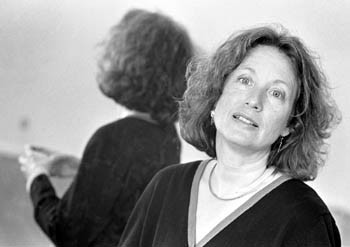
Local motion: Sebastopol resident Virginia Matthews rides herd on the controversial selection process for the Isadora Duncan Dance Awards.

Tizzy over Izzies

Awards honor dizzying array of dance talent–but judging dance is controversial

By Marina Wolf

SAD BUT TRUE: no one will ever wage a lengthy court battle over illegal distribution of choreography on the Internet. But many dancers long for some kind of public recognition. For them, and for Bay Area dance fans, the Isadora Duncan Dance Awards were born.

The Izzies, as they are affectionately abbreviated, were founded in 1985 by Dance Bay Area, the earliest of the region’s service organizations for dancers. The awards quickly became an essential part of the Bay Area’s celebration of National Dance Week; this year they take place April 23.

Schedule Info: The North Bay celebrates National Dance Week.

Then, as now, one of the primary functions of the Izzies was to address what local dancers saw as a serious lack of attention on the part of the critics.

“I have to contrast it to the theater community in San Francisco, where the critics themselves give awards and constantly talk about the local scene,” says Virginia Matthews, a Sebastopol resident who is chair of this year’s awards committee. “There would be years when our dance critics, maybe one or two of the articles out of the whole year, would be local. Instead they did interviews with Merce Cunningham or talked about Alvin Ailey, really concentrating on dance from out of town.”

Wayne Hazzard, director of the Cowell Theater in San Francisco, remembers the charged atmosphere surrounding those first awards. “There was a lot of excitement about the idea of acknowledging the breadth and depth of talent that’s really always been here, in an art that doesn’t get a lot of recognition,” says Hazzard, a modern dancer who headed up the service organization Dancers’ Group until last year.

“Probably all artists feel that way,” he continues. “But dancers in particular feel ignored. People wanted a sense of validation and a way to acknowledge local dancers doing truly amazing work.”

Finding that amazing work is no easy task. Over 200 dance companies call the Bay Area home, and the Izzy award committee must see as many as possible in action. Over the course of a year, the 15 to 20 committee members, themselves active dance professionals, see at least 20 live performances. Works under consideration range from classic Balanchine ballets to the most unscripted improv event. Virtually anything goes, as long as it’s performed by Bay Area dancers.

In September the committee begins reviewing videos and discussing the field of contenders, eventually arriving at a list of four to six nominees in each of seven categories. But how the awards should be decided is controversial–even within the awards committee itself.

“We’re still looking at how divisive it might feel to have nominations,” says Matthews, adding that she sees many dancers listing their Izzy nominations in program notes and grant applications.

“Do people feel bad that they don’t win?” she wonders. “We don’t want anybody to feel bad. This is supposed to feel good.”

Some committee members have suggested adding categories and spreading the awards around. Others, including East Bay dance writer Paul Parish, have argued for weakening the importance of categories, or eliminating them all together. “If people are hanging from bridges, and it’s great, then they should be awarded, rather than chopping things up into categories, and if it doesn’t fit, they don’t get considered,” Parish says.

SO HOW should one assess the artistic merit of people hanging from bridges? “In their own terms,” Parish says firmly. “What is this a metaphor for? How effectively is that metaphor conveyed? Because different people can hang from a bridge in very different ways.”

Hanging from a bridge is an extreme example of a dance performance, and one that only Volkswagen Beetles are doing these days. But it’s a good metaphor to underscore how wide a spectrum of dance genres lies before the judges.

The list of this year’s nominees is–to say the least–eclectic. The individual category pits Uli Schmitz, a member of the small but rising East Bay Axis Dance Company, against Julie Diana and her performance in San Francisco Ballet’s Romeo and Juliet. In the company performance category, Axis Dance again appears, next to the Diablo Ballet and a Sudanese dance program of Harsanari.

Parish doesn’t find the apples-and-oranges nature of the nominations to be a problem. “If a thing is delicious, the fact that it’s an apple or orange is secondary,” he says. “You have a bad apple at the market? Go home with oranges this week.”

But others remain skeptical. “It’s sending mixed messages,” Hazzard says. “‘We want to honor you, but we’re judging you. You’ve done good work, but really not as good as the work of the person we’re giving the award to.

“I’ll still go this year,” Hazzard hurries to add. “I still think it’s a great thing. But I really believe that without challenging itself to change, the Izzies will continue to be controversial. That’s the nature of doing awards.”

From the April 12-18, 2001 issue of the Northern California Bohemian.
© Metro Publishing Inc.

Open Mic

Open Mic

Free Verse

By J. David Hester Amador

IT HAPPENS to me every month. At a gathering of poets and writers the same experience takes hold of me: There is something sublime suffused throughout this county, a divine force that takes hold of certain people, overwhelms them, breaks open something deep within them that must come out.

The Muse is alive and well in this county.

Ancient texts report a somatic effect that poetry had: the very bodies of ancient audiences were affected, leaving them literally dazed, awestruck, amazed by the brute force of poetry. She was a force so powerful that philosophers beginning with Plato sought to forbid Her presence in their utopias.

In fact, at the very heart of the Western metaphysical divide between sense and reason, body and mind, is a reaction by ancient philosophers to forbid the Muse any legitimacy at all: Her words were “manipulative,” her poems were “manufactured,” (poieisis, which gave us our word for “poem,” is the Greek word for “product,” “something crafted”).

Poetry was termed a “contrivance,” a pejorative term that still resonates in our modern use of the word fiction.

Interesting how long we have suffered from this belief and how little attitudes have changed over time. Here and there we see resistance: Sophists taught us to value probabilities over certainties, mystics gave voice to Her divinity, Romantics helped us to appreciate Her sublime power, the Beatniks howled Her name.

But still, this deep suspicion haunts our culture. Materiality, the philosophical and scientific search for universals, empiricism, and positivism: all feed our belief that if only our rational mind could control and eliminate all the messiness of our words, everything would be all right. And as long as metaphor, irony, ambiguity, and possibility exist, as long as poetry and fiction and art are allowed to thrive, our world will never be set right.

I think the philosophers were right. There is something to be terrified of when you read a poem. But they were completely wrong about the object of that terror.

When we come together, I listen to an old women spin her limericks, a young man slam out his rhythmic chants, a child share her fears, an adult woman weave her tales of love and loss.

And I think, Yes, you logicians, scientists, positivists: Beware. Because it is not “fiction” that poetry creates, but a Truth far beyond your meager ability to comprehend.

Like people.


David Amador is the founder of the (not just) Poetry Slam, which goes down the second Monday of every month at Actors Theatre in Santa Rosa.


From the April 12-18, 2001 issue of the Northern California Bohemian.

© Maintained by .


National Dance Week

0

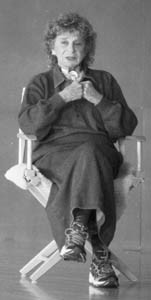
Movement pioneer Anna Halprin.

Schedule Info

National Dance Week

By Marina Wolf

The North Bay is ready for more dance. We’ve certainly got the room for it, which is one of the reasons why there aren’t more North Bay names in the Izzy nominations: we don’t yet have the cultural density to bring critics north of the Golden Gate Bridge. But there are still lots of ways to celebrate National Dance Week, which kicks off at noon on April 20 with an open-air extravaganza at the Yerba Buena Gardens in San Francisco. There you can pick up a complete schedule of open studios, rehearsals, discussions, and performances around the bay–(almost) all free and open to the public. Here are some highlights and local events:

Chitresh Das Dance Company

Master artist Chitresh Das teaches the basic sound and movement vocabulary of North India’s Kathak dance. April 20 at 6:30. Dance with Sherry Studio, 4140 Redwood Hwy., San Rafael. 415/499-1601. . . . Das performs traditional solo works, accompanied by renowned tabla player Pandit Swapan Chaudhuri. April 21 at 8. Marin Center, Showcase Theater, Avenue of the Flags, San Rafael. $25/general, $22/seniors and students. 415/472-3500.

The Izzies

No red carpet or Joan Rivers here, just a big ol’ party with Isadora Duncan Dance Awards, honoring excellence in Bay Area dance. April 23 at 6. Performing Arts Library and Museum, Green Room, War Memorial Building, 401 Van Ness Ave., fourth Floor (at Grove and McAllister streets), San Francisco. Free. 415/399-1809, ext. 303.

Roco Dance & Fitness

This popular Marin County dance studio opens its doors for a day of different dance styles. April 23: at 10:10 a.m., Afro-Brazilian dance with Anna Gottreich; at 4:30 p.m., modern dance with owner Annie Rosenthal; at 6 p.m., ballet with Gabrielle Thompson; and also at 6 (in an adjacent studio), hip-hop with Eric Fenn. 237 Shoreline Hwy., Mill Valley. 415/388-6786.

Deborah Slater Dance Theater

They’re based out of San Francisco, but Slater is from Marin. Show your North Bay support at the preview of the company’s May season, “The Sleepwatchers.” April 28 at 1. Studio 210, 3435 Cesar Chavez (at Valencia), San Francisco. 415/267-7687.

Planetary Dance

Movement pioneer Anna Halprin (pictured above) leads this annual circle dance and ritual for healing, community, and celebration of life. April 29. Come at sunrise (that’s around 6 a.m.) for a peak experience (literally!) at the top of Mt. Tam, or sleep in and join the Earth Run at Santos Meadow at 11 a.m. (dress in white or black). Potluck follows, so bring some to share. Take Stinson Beach exit off of Highway 101, turn left at Tam Junction and follow Highway 1 north towards Muir Beach. Turn right onto Muir Woods Road north of Pelican Inn. Santos Meadow is 1/2 mile east, on the left. 415/461-5362.

From the April 12-18, 2001 issue of the Northern California Bohemian.

© Metro Publishing Inc.

Robert Hass

0

Intimate Art

Robert Hass celebrates the quiet joys of poetry

“POETRY . . . is . . . an . . . intimate art.” Robert Hass speaks softly and slowly this afternoon, choosing each word as carefully as if he were selecting an expensive bottle of wine. Or a diamond. Or a new puppy. He’s answering a question about the intense passion poetry fans often reveal when talking about the art form.

“Poetry’s basic material,” Hass says, “is the voice in which we talk to ourselves in our heads. Against all the noise and fury and pressures and deadening routines of external reality, poetry functions as that still, small voice of what it would feel like, were it not buried under the circumstances of our lives, to be our true and authentic selves.”

Stop. Read that quote again. If you can do so without being thrown out of the coffee-house, try reading it out loud.

There now. You have to agree that poets–even when engaged in routine conversation, even when giving yet another interview–do have a way of making their words sing.

Hass especially.

One of America’s best living poets, Hass is also one of poetry’s most eloquent and energetic spokespersons, a prolific, award-winning poet who has found time to be a syndicated columnist, a college professor, and the U.S. poet laureate, serving in that post from 1995 to 1997.

On April 20, Hass will be joined by Irish poet Seamus Heaney and acclaimed Mill Valley poet Jane Hirshfield onstage in San Rafael to breathe music into the work of yet another master, Polish-born Nobel laureate Czeslaw Milosz.

Concluding the Marin Center’s 2001 Literary Arts Series, the event was originally to have featured Milosz himself in conversation with Heaney, who won the Nobel Prize for Literature in 1995 and scored a place on the bestseller list with his recent translation of Beowulf.

But the 90-year-old Milosz announced that ill health would prevent him from traveling from his home in Kraków.

So Hass–Milosz’s longtime friend, translator, and sometime collaborator–agreed to step in.

Hass, who lives in Berkeley but has a house in Inverness where he often comes to write, is looking forward to the event.

He and Heaney are also old friends, having bonded back in 1971 when the two young poets met while teaching at UC Berkeley. Since then, they’ve each achieved a remarkable degree of fame for their work, with translations of other poets’ writings ranking high among their achievements.

“I think the event will be wonderful,” Hass says, “because Seamus always has such witty things to say. I remember him saying once that the basic relation of a poet to his translation is like the relation of the Vikings to Ireland. Some of the time it’s a colony, and some of the time it’s a raid.

“I think he was saying that, as poets who also translate other people’s work, we’ll occasionally do a translation that turns out to be, well, a lot like a raiding party. But other times–as with his Beowulf or my work with Milosz–you kind of settle in and colonize the subject for a while.”

Since poetry is so intimate an art form to begin with, the act of translation must only intensify that intimacy.

“It’s true,” Hass agrees. “Having been given the chance to work with Milosz, studying this huge body of poetry, in detail, over many years time, I’m sure the experience has changed me. It’s soaked into me and colored my way of seeing things. It’s a very intimate thing.”

THE SPECIAL intimacy of poetry and the written word is a subject Hass has thought a great deal about. In his research, he’s traced the emotional soul of the art form all the way to its roots.

“Poetry . . . was first an oral art form . . . that at one point began to be written down,” Hass elaborates. “In its written form, it participates in a particular kind of intimacy that wasn’t brought into the world until the arrival of silent reading.”

Silent reading, Hass says, changed everything.

“I was reading St. Augustine’s confessions not long ago,” he says, “and there’s a part where he comes across Ambrose–who was, I think, the Bishop of Milan–and when Augustine goes in to visit him, Ambrose is sitting there bent over a book, reading silently.

“And Augustine is just astonished, because he’s never seen anyone do silent reading before,” Hass continues. “It sort of gives him the creeps. But it’s also a revelation to Augustine: you can read without speaking the words out loud.”

To Hass’ delight, poetry over the last two decades has made a sharp U-turn. A growing audience shows up for poetry slams and poetry readings, yanking the art form back off the page and pushing it onto the stage.

But who, exactly, turns out for these readings?

“There is, in this country, a small class of technocrats, like George W. Bush, who never read anything except one-page summaries of things, mainly for business purposes,” Hass says.

“Then there are the 30 percent of Americans who never read anything,” he says, “because they’re too busy trying to get their car started or dealing with whatever is coming down the pike.

“In between,” he continues, “is that middle group that sometimes reads books and has ideas and thinks about their life, and some of them come to poetry readings.”

While the intimacy of the work is significantly lessened by the egoism and onstage theatrics of performance poetry, Hass still sees it as a positive shift.

“In oral presentations, you can convey anger, comedy, impatience, a whole range of rhythms that you can’t really intone in a written work,” he explains. “Written-down poetry can do accents but it can’t do pitch. It can’t tell you which words are meant to be spit out, which ones to be hissed.”

What is emerging, Hass says, is a new hybrid, a fusing of written poetry’s intimacy and oral poetry’s energy.

“Whenever genres start to collapse and get blurred,” he says, softly and slowly, “it becomes . . . really interesting.

“I suspect that something quite wonderful is going to come out of this.”

Robert Hass, Seamus Heaney, and Jane Hirshfield take the stage on Friday, April 20, at 8 p.m. at the Marin Center, Avenue of the Flags, San Rafael. Tickets are $18 and $26. For details, call 415/472-3500.

From the April 12-18, 2001 issue of the Northern California Bohemian.

© Metro Publishing Inc.

‘Someone Like You’

0

Someone Like You.

Full of Bull

Livestock doc examines cow theory of ‘Someone Like You’

Writer David Templeton takes interesting people to interesting movies in his ongoing quest for the ultimate post-film conversation.

COW THEORY. Perhaps you’ve heard of it. First proposed by Laura Zigman in her comic novel Animal Husbandry, Cow Theory has just gone Hollywood–and is suddenly on the lips of moviegoers across the country. A lot of those lips are laughing. Some are bellowing in protest. But Dr. Jeff Pelton is laughing, because he knows a thing or two about cows.

In Someone Like You, the film version of Zigman’s book, Ashley Judd plays a jilted woman who authors a magazine column in which the no-good, cheatin’ nature of all men is compared to the sexual behavior of bulls.

All this is based on the shocking scientific discovery that a bull will never mate with the same cow twice. Which is bull. But I’ll get to that.

Once copulated with, goes the theory, a New Cow becomes an Old Cow, and a bull would rather end up on a bun at McDonald’s than touch her again. In the movie, scientists slather an old cow with the scent of a new cow, but the bull won’t buy it. He knows where he’s been, and he ain’t going back. That’s why men have trouble with commitment, why men cheat, why men are scumbags. Because sooner or later, a man wants a new cow.

Now, I’m not here to defend men. I mean, who could? Anyway, the ones getting the bad rap in this movie are the bulls.

“I’ve never heard of anything that would support Cow Theory,” says Pelton, an amiable Northern California veterinarian who specializes in large-animal medicine and has seen plenty of horny bovines in action. “A bull,” he insists, “will jump on the same cow multiple times.”

AFTER GOING over a few sexual terms–estrus refers to a female in heat–Pelton quotes from one of his textbooks: “Bulls may serve an estrus female a number of times (1 to 10 or more) depending on his sex-drive, the stimulus pressure, and the female–who often terminates sexual contact at some point with evasive tactics.”

Hmmm. Sounds right. Pelton adds that some bulls will service a single female up to three times in a half hour. “Same bull, same cow. Boom, boom, boom,” he remarks. Now wait a minute. Three times in 30 minutes? Hell, based on the lag time the average human male needs between procreative episodes, it sounds like most guys could take a few pointers from the bulls of the world.

It gets better. “If you throw a bull into a pen with a number of cows in heat–and we’ve never been able to come up with a better ‘heat detector’ than a bull: it’s like freaking radar–a bull will go to the cow that is in the best heat,” Pelton explains.

“If you want to get even more psychological,” he adds, “it’s been shown that if you put two bulls in one pen with a lot of cows in estrus, the breeding goes up. There’s a competition. It’s always a good idea to put two bulls in the pen, because they kind of get jacked up seeing each other breed.”

I’m sure there’s a human parallel to that phenomenon, but who wants to go there?

“I heard another theory once, from a woman who was studying psychology,” Pelton says. “She said that women actually gravitate toward different kinds of men at different times during the month.

“When they’re getting ready to ovulate, they have a tendency toward being drawn to guys who are just, you know, out cruising the bars. But during the off periods, when their hormones are quiet, they are generally drawn to men who are more stable.

“I don’t know if that’s true or not,” the doctor says, laughing. “That’s just something I picked up in a bar.”

From the April 12-18, 2001 issue of the Northern California Bohemian.

© Metro Publishing Inc.

Jill Prescott

Cutting Cuisine No-nonsense approach to French food and Jell-O By Marina Wolf EIGHTY-FIVE percent of Jill Prescott's students are professionals: doctors, teachers, lawyers. But when they step through that door to Prescott's Ecole de Cuisine, something strange happens. "Adults turn into kindergartners when they walk into my...

North Bay Authors

North Bay authors offer an eclectic array of new books Reviews by Greg Cahill, Liesel Hofmann, and Patrick Sullivan SPRING always yields a fresh crop of books from local authors, and lo! here they are, sprouting up on bookshelves across the North Bay. This season's offerings from native scribes include poetry, novels, and nonfiction about...

‘One Day in September’

One Day in September. Munich Standoff Olympic catastrophe recalled in 'One Day in September' By NOTHING LOOKS more like a harbinger of doom than film footage of an old festival. In the riveting documentary One Day in September, the 1972 Munich Olympics awaits trouble under cloudless blue skies. The city's...

John D’Agata

'Halls of Fame' demonstrates power of lyric essay By Susan Bono A SPECIAL FORM of creative nonfiction lives in the territory between poetry and essay. These alluring hybrids are meditative, musical, artful, more imagistic than informational. First called lyric essays in 1997, when editor Deborah Tall and associate editor John D'Agata began publishing...

Kenneth Cleaver

Consumer Correspondent United Fresh Fruit & Vegetable Association 727 N. Washington St. Alexandria, VA 22314 Dear UFFVA: The crisis of the American Eggplant flies in the face of well-sung wisdom about judging books by their covers. With a coat reminiscent of the majestic tones of Rembrandt and Vermeer,...

Isadora Duncan Dance Awards

Local motion: Sebastopol resident Virginia Matthews rides herd on the controversial selection process for the Isadora Duncan Dance Awards. Tizzy over Izzies Awards honor dizzying array of dance talent--but judging dance is controversial By Marina Wolf SAD BUT TRUE: no one will ever wage a lengthy...

Open Mic

Open MicFree VerseBy J. David Hester AmadorIT HAPPENS to me every month. At a gathering of poets and writers the same experience takes hold of me: There is something sublime suffused throughout this county, a divine force that takes hold of certain people, overwhelms them, breaks open something deep within them that must come out. The Muse is...

National Dance Week

Movement pioneer Anna Halprin. Schedule Info National Dance Week By Marina Wolf The North Bay is ready for more dance. We've certainly got the room for it, which is one of the reasons why there aren't more North Bay names in the Izzy nominations: we don't yet have...

Robert Hass

Intimate Art Robert Hass celebrates the quiet joys of poetry "POETRY . . . is . . . an . . . intimate art." Robert Hass speaks softly and slowly this afternoon, choosing each word as carefully as if he were selecting an expensive bottle of wine. Or a...

‘Someone Like You’

Someone Like You. Full of Bull Livestock doc examines cow theory of 'Someone Like You' Writer David Templeton takes interesting people to interesting movies in his ongoing quest for the ultimate post-film conversation. COW THEORY. Perhaps you've heard of it. First proposed by Laura Zigman in...
11,084FansLike
4,606FollowersFollow
6,928FollowersFollow