American Roots Music

0

High Lonesome: Bill Monroe and His Blue Grass Boys

Kiss Kiss

Love–American roots music style

By Greg Cahill

America’s love affair with roots music is heating up. This on-again, off-again romance–which most recently saw the O Brother, Where Art Thou? soundtrack rocket onto the pop charts–is likely to get a fresh start with the airing this week of the PBS four-part documentary American Roots Music (with a companion book and CD box set on the shelves this week as well), which traces the roots of rock by exploring a century of blues, folk, gospel, Tex-Mex, Cajun, zydeco, Native American, and country music.

This infatuation rises in the national psyche every once in a while–witness the 1960s plundering of blues giants by the British rock bands, the blockbuster success of Robert Cray’s 1986 smash hit “Smoking Gun,” the enduring hillbilly hipsterism of Dwight Yoakam, or Moby’s gospel-inflected electronica–all leading the mainstream media to trumpet the resurgence of roots music.

These days, American roots music enjoys a comfortable niche. There’s a legion of celebrated underground acts (including such autumnal singer/songwriters as Gillian Welch, Lucinda Williams, Julie Miller, and Iris Dement); numerous indie record labels, both big and small (Rounder, Bloodshot, Vanguard, et al.); a struggling radio format (Americana); a handful of magazines (No Depression, Living Blues); and now, after a century of commercial neglect, canonization in a PBS documentary bristling with rare film clips, interview footage, and a glorious music that personifies the ethnic and social diversity of the nation.

Now we’ll see if America really was cozying up to the old-timey music of O Brother (the soundtrack of which sold more than 2 million copies), or if it was just George Clooney’s comedic parody as one of the fabled Soggy Bottom Boys that won their hearts.

The four-CD set (a single disc of highlights also is available) showcases eight uniquely American musical forms. It contains single CDs dedicated to country and blues, respectively; a third disc split between gospel and folk; and a fourth CD devoted to Cajun/zydeco, Tejano, and Native American artists. There also is a 56-page booklet with an essay by Robert Santelli, a timeline, lots of photos, and artist biographies.

And there’s so much to love here: the high, lonesome wail of bluegrass pioneer Bill Monroe; the blistering harmonica solo of James Cotton, the inspiring power of gospel great Mahalia Jackson, the foot-stomping zeal of zydeco king Clifton Chenier.

Among the other highlights are a rare version of blues great Son House’s “Death Letter Blues,” a previously unreleased rendition of the radical chic Weavers’ (with folkies Pete Seeger and Ronnie Gilbert) “So Long, It’s Been Good to Know Yuh,” a vibrant “Ossun Two-Step” by Cajun journeyman Steve Riley and the Mamou Playboys, and a rockin’ “Sorry Boy” from Tex-Mex star Flaco Jimenez.

Of course, purists will argue that the box set barely scratches the surface of the vast repertoire, and they’d be correct. But as a sampler for enthusiasts (the 68-song collection has several new recordings and numerous rare tracks taken from archival film sources) or a primer for novices, this small sampling of seminal music is an important overview of what documentary film series director Jim Brown has called “our country’s most important cultural force.”

From the November 1-7, 2001 issue of the Northern California Bohemian.

© Metro Publishing Inc.

‘K-PAX’

0

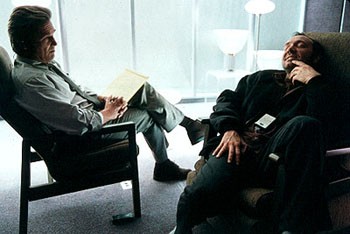
The Talking Cure: Jeff Bridges and Kevin Spacey go mental in ‘K-PAX.’

Crazy Talk

Comic Debi Durst wants ‘K-PAX’ put away

Writer David Templeton takes interesting people to interesting movies in his ongoing quest for the ultimate post-film conversation.

Torture. The much-anticipated new Kevin Spacey drama, K-PAX, is not specifically about the intentional infliction of pain. No, K-PAX is about a man named “prot” (Spacey) who claims he’s from another planet and has a profound effect on a burned-out psychiatrist (Jeff Bridges) and the wacky inmates he meets at a New York mental hospital.

Still, it is torture that my unsuspecting guest, comedienne Debi Durst, is inspired to discuss after catching a midweek screening of K-PAX.

Actually, the first subject she mentions is beer. As in, “Man oh-man, after that I really need a beer!” The subject of torture comes up gradually, beginning with a succinct but pointed review of K-PAX.

K-PAX,” Durst states, in her best wine-snob voice, “is beguilingly repetitive, yet boring, in an annoying, Enya sort of way.” In other words: “It was torture. I used to think that when we catch Osama bin Laden, we should make him listen to ‘It’s a Small World’ over and over,” she says, grinning. “Now I think we should make him watch K-PAX. For that matter, make him watch every Stallone movie ever made. And every Steven Seagal film.

“That’ll teach him not to mess with America.”

Durst is a San Francisco comic with a cockeyed fixation on movies. Her one-of-a-kind voice is sometimes heard in animated films–including Nightmare before Christmas and Monkeybone. She has a viciously contagious laugh that resembles a slightly inebriated Bert (as in Ernie and Bert) attempting to impersonate Woody Woodpecker. And, yeah–she’s married to political satirist Will Durst. But the most important thing about Debi Durst, right at this moment, is that she was expecting a whole lot more from K-PAX.

“As if there weren’t enough disappointing movies already out in the theaters,” she remarks, a pint of Heineken now in hand as we perch bar-side in some mostly empty noodle place. “I kept thinking, ‘Ah Jeez, it would be nice if there was actually a good film worth seeing.’ Guess we just have to wait for Harry Potter.”

“So what bugged you?” I ask.

“What didn’t?” she says, revving up that famous laugh. “I mean, I lost track of the clichés and the obvious messages. There were so many messages in this film you had to dodge them in your seat to keep from being pummeled to death. And if I saw one more rainbow, I was gonna puke.”

The “rainbows” of which she speaks are the cute pink-and-red, tissue-paper window coverings that Spacey’s fellow mental patients put up in the hospital to simulate the perpetual sunset on his home planet. All of which made it the nicest, prettiest mental hospital this side of Green Acres.

“Hell, if insanity is that nice, sign me up,” Durst says. “I’ll go. Right now. Who knew the funny farm was so much fun? And what a classy bunch of crazy people, huh?

“Speaking of crazy,” she goes on, “I don’t know what I think of that philosophy prot espouses toward the end. That idea about the universe expanding and contracting over and over, making time go forwards and backwards, so that every mistake we make in our lives is a mistake we’ll have to repeat every time the universe expands again. Over and over and over and over.

“This is uplifting? It’s depressing. Oh man! I’m going to have braces in high school again? Let me just slash my wrists right now.”

“Don’t,” I suggest. “You’d just have to do that over again too.”

“Hmmmm. Good point.”

“It gets worse,” I suddenly realize. “It appears you’re going to have to see K-PAX again. Over and over.”

“Well, damn!” Debbie Durst, laughing through the pain. “Damn! I guess I just can’t win.”

From the November 1-7, 2001 issue of the Northern California Bohemian.

© Metro Publishing Inc.

Randy Newman

0

Satirical Poke in the Eye: Singer-songwriter Randy Newman gets a bit nasty.

Good Acid

Acerbic musician Randy Newman spreads joy in Santa Rosa

There was no shortage of short people in the audience last Saturday night when musical curmudgeon Randy Newman took the stage at Santa Rosa’s swank Jackson Theater, the acoustically stacked performance space of the very upscale Sonoma Country Day School.

A fundraiser for the Valley of the Moon Children’s Foundation, the event paired a special advance screening of the Pixar-Disney flick Monsters, Inc. with such charity-ball staples as free wine, celebrity sightings, and a live auction–anyone for a private tour of Pixar? How ’bout a party of 12 inside New York City’s brand-new Toys R Us store?

Oh yeah, then there was that concert by Randy Newman.

Exceptionally short but exceptionally rare–these days, Newman gives but half a dozen live concerts a year–the performance preceded the movie, for which Newman composed the musical score.

Happily, the Sonoma Country Day School turned out to be the perfect venue for Mr. Newman’s talents. Not only did he sound great, vigorously accompanying himself on a big grand piano, but the environment inspired him to expose, however subtly, that signature streak of caustic cynicism one tends to find only on his delightfully harsh solo CDs. (Not that anyone’s knocking his charming, Oscar-nominated contributions to Toy Story 1 and 2 or his work for such films as The Natural and Awakenings).

Barely aware that there were kids present–his suggestion that Buzz Lightyear is gay may have inspired some interesting bedtime conversations–but clearly cognizant that he was surrounded by, you know, rich people, Newman let loose a short but bittersweet torrent of high-spirited rib-jabbing.

Newman sang six tunes, beginning with his 1977 hit “Short People”–“It feels kind of nasty in this setting,” he gleefully admitted, midsong–and ending with “I Love L.A.,” a satirical poke in the eye that the audience could laugh at, in part because they’ve all chosen not to live anywhere near Los Angeles.

In his introduction to the Toy Story anthem, “You Got a Friend in Me,” Newman acted as if no one had ever seen the movie, describing the plot in terms of its musical high points. First he confessed, “I never really saw the whole picture. Just the parts I had to do music for.” He later amended that statement, saying, “I finally did see the whole picture on a plane. I guess it turned out all right.”

He also performed a rowdy rendition of “You Can Keep Your Hat On”–the song those British guys got naked to at the end of The Full Monty. The uncharacteristically sweet “Feels Like Home to Me”–not written for any movie, and still remarkably warm and touching–was sung with no jokes or introduction, and was thoroughly lovely.

The most interesting moment of the evening came as he prepared the crowd for a song from his latest solo effort, the very dark CD Bad Love. The song, titled “The World Isn’t Fair,” is a letter to Karl Marx attempting to explain the failure of Marxism by defending the right of rich, “froggish” men to acquire trophy wives and send their progeny to expensive private schools.

Glancing around the hall, Newman noted, “This place is nothing like the schools my kids went to when I was poor.” That, he said, was before he divorced his first wife and then married again. “Surprisingly,” he added, “to a much younger woman. Can you believe it?”

With that, he sang the song. The irony of this particular piece being performed to a crowd full of rich, trophy-wife-clutching gentlemen (though not necessarily “froggish”-looking; hey, Joe Montana was there!) was apparently understood: the song received the loudest applause of the show.

As Newman prepared to sing that aforementioned closing song about Los Angeles, he had some sincere words for Pixar mastermind John Lasseter, the affable host of the evening’s festivities. “I don’t think I’ve ever told John how much I love him,” Newman said. “In a really bad way, too.”

He praised Lasseter and the Pixar animators for giving him the chance to work on such fine films.

“Those last couple,” he proclaimed, “were even funnier than Awakenings.”

From the November 1-7, 2001 issue of the Northern California Bohemian.

© Metro Publishing Inc.

Oscar Guajardo

0

Blast From the Past: Classic footage gets a new home in Healdsburg filmmaker Oscar Guajardo’s ‘The Golden Age of Mexican Cinema.’

Lost & Found

Local filmmaker explores hidden treasures of Mexican cinema

The class was titled “Cinema of the World,” and the course description promised an in-depth look at Latin American films. All this made student filmmaker Oscar Guajardo assume that the cinematic “world” he’d be exploring would include at least a few films from his birth home of Mexico.

So when the class’ segment on Latino cinema ultimately rolled around, Guajardo was surprised to find that Mexico and its movies were not so much as mentioned.

“I asked the teacher,” Guajardo recalls, in between sips of clam chowder at Bistro Ralph in Healdsburg, where he works in the kitchen when not making movies. “I said, ‘Where are the films from Mexico? What about Mexican cinema?’ And she said, ‘Well, I don’t really know anything about it.’ ”

Guajardo laughs, shaking his head. .

“In every film class I took, I’d look for information about Mexican cinema,” he goes on, “but there was never anything. The film books I had would talk about Mexican cinema for maybe a couple of pages. But I knew that Mexican cinema had been a big part of early Hollywood, that the studios used to give money to Mexico to encourage people to make movies. Mexican film is an important part of the whole story.”

That story–as any enlightened cineaste will tell you–cannot be told without describing the contributions and innovations of numerous countries. Every contemporary film student knows that in the evolution of modern film, artistic movements like the German New Objectivity and the French New Wave have played as influential a role as the experiments of Russia’s Sergei Eisenstein and the addictive visceral intensity of the 1970s Hong Kong action films. The story of film is a story about the whole world.

Which includes Mexico.

Whether people know it or not.

“Mexican cinema,” Guajardo says, “is a neglected chapter in the history of film.”

Cinema Salsa: The Sonoma County portion of the Latino Film Festival offers a slew of films at Sonoma State University.

It was this realization that inspired Guajardo, 32, to make his first film, a feature-length documentary titled The Golden Age of Mexican Cinema. The result is an eye-opening blend of archival film footage and interviews with noted film historians, a number of them professors at Sonoma State University, where Guajardo earned his degree in communications studies last May.

Covering a period between 1936 and 1956, the film explores a time when Mexico was making thousands of films a year, exceeded in output only by the film factories of Hollywood.

These films ranged from the sweet-natured ranchera films–basically singing-cowboy flicks–to a Mexican brand of melodrama, such as the lushly photographed Maria Candelaria, which won the Grand Prize at Cannes in 1948.

Guajardo–who not only wrote directed, photographed, and edited the movie, but also served as narrator–allows the film to show the positive contributions of Mexican film as well as the negative. Many of the country’s Golden Age films, he admits, were patently sexist, relocating women to the limited roles of servant, mother, or “fallen woman.”

The film, a year in the making, has already been making waves. In September a little-advertised San Francisco advance screening of Golden Age drew a full house, largely peopled, says Guajardo, with enthusiastic teachers and film historians who greeted the film with riotous appreciation.

Now Guajardo and Golden Age are about to get another boost. The film has been chosen to premiere at the Sonoma County section of the Latino Film Festival–an annual multipart celebration of Latino cinema that screens films in San Jose, San Francisco, and Marin and Sonoma counties (see sidebar, “Cinema Salsa,” on this page).

Oscar Guajardo grew up in the small town of Urupuan, in the state of Michoacán, about three hours from Mexico City. As a young boy, he developed an appetite for the movies–“Kung fu movies, Italian movies, really bad Japanese movies, and, of course, old Mexican movies,” he recites–watching them on television when he couldn’t get to the town’s movie theater. In describing his childhood fondness for movies, Guajardo compares himself to the young boy in Giuseppe Tornatore’s Cinema Paradiso.

“That was me,” Guajardo says. “Every Sunday I used to go to the movies, because from 9 to 1 in the morning they showed three films, badly cut to fit the time. In Cinema Paradiso, it showed people yelling and eating in the theater. That was my first movie experience.”

And now Guajardo is making his own. He’s already at work on a follow-up feature, a documentary about the history of mariachi music.

“I like making documentaries because you don’t have to put up with actors,” he jokes.

That said, he’s toying with the notion of a nondocumentary film based on the folktales he learned from his mother and grandfather.

Until then, he’s enjoying his Golden Age experience, hoping it may be a step toward a renaissance of appreciation for the classic Mexican films of his youth.

“More than anything,” he says with a smile, “I just want to show people how beautiful these movies are.”

From the November 1-7, 2001 issue of the Northern California Bohemian.

© Metro Publishing Inc.

Green Music Center

Hot Seat: Sonoma State University President Ruben Armiñana says critics of a plan to spend millions of public dollars on a gilded concert hall on campus just lack his vision.

The Color of Money

Is the Green Music Center a $48.7 million white elephant?

By Paula Harris

I hope you’ll be alive to see this thing when it’s built,” quips Sonoma State University President Ruben Armiñana to a pair of reporters, referring to the much-anticipated Donald and Maureen Green Music Center, an opulent performing arts center planned for the small campus.

He may not be kidding.

The acoustically advanced 1,400-seat facility, slated to be the future home of the Santa Rosa Symphony, is projected to cost $48.7 million to build. The brainchild of high-tech entrepreneur Don Green–the millionaire father of Petaluma’s Telecom Valley–the arts center is the most ambitious arts project ever attempted in the North Bay.

In 1997, when it was first proposed, organizers estimated that building the music center would require $15 million, with the cost being covered mostly by private donations. But the tally ballooned as plans became more ambitious, construction costs escalated, and donors demanded expensive additions, including a huge $500,000 concert organ, a founder’s room, and a grander lobby.

Now the project, which is slated to draw upon several million dollars of taxpayers’ money (see sidebar, “Show Me The Money”), is running into serious financial trouble. And critics are seeing red over Armiñana’s support for the Green Music Center, claiming that the president could be jeopardizing academic programs at the university.

What a difference a year makes. In an elaborate public ceremony last fall, Armiñana broke ground for the construction of this state-of-the-art concert hall on a 53-acre field at the intersection of Rohnert Park Expressway and Petaluma Hill Road. Optimistic organizers hoped to complete the project by fall of 2002. But there’s been no further activity for a year. Now, the grassy field remains empty, apart from a “Future Home of . . .” sign.

In the meantime, an economy in free fall has all but halted donations to the project, especially from the beleaguered high-tech industry, and delayed the beginning of construction–perhaps indefinitely.

And criticism is mounting. The controversial music hall project–captured in an artist’s rendering as a sprawling, L-shaped complex with a dramatic sloping roofline–is causing alarm because of its expense, potentially limited appeal, and dubious academic relevance.

Show Me the Money: How much will the ambitious Green Music Center project wind up costing the public?

A Tangled Mess

The Green Music Center has garnered considerable attention for being modeled on the world-renowned Seiji Ozawa Hall at Tanglewood, the Boston Symphony’s summer home in western Massachusetts. Indeed, some have dubbed the venue “Tanglewood West”; the campus newspaper has called it “a tangled mess.”

Yet in stark contrast to the Green Music Center project, currently weighing in at $48.7 million, Ozawa Hall cost just $10.7 million to build in 1994. Ozawa Hall seats 750 audience members in the orchestra and loges, and another 450 in two balconies, plus a couple of thousand more concert-goers on the lawn outside.

“That’s the total figure [for Ozawa Hall], including design and construction,” explains Boston Symphony spokesman Jonathan Mack. “It also includes a $1 million maintenance endowment,” he adds.

Indeed, Green Music Center promoters have long compared the pricier SSU project to Ozawa Hall. During several junkets paid for with private money, they’ve taken potential donors and reporters from the daily press to the renowned Massachusetts facility, and they’ve even hired the same architect and acoustics designer who worked on Ozawa Hall.

But when questioned about the huge difference in building costs for the two projects, Green Music Center promoters say that looking at the two facilities is like comparing “apples and oranges.”

“Ozawa Hall is a very different structure,” says Larry Schlereth, SSU’s vice president of finance and administration. “The acoustics and the interior are the same, but the Green Center is a year-round structure and is being built 10 years later.”

Still, critics wonder how the Green Music Center, designed to rank among the top five concert halls in the world, will fare on a sleepy university campus in Rohnert Park. Can the facility compete with such Bay Area venues as Davies Symphony Hall in San Francisco and attract the world-class entertainers and huge audiences envisioned by planners?

Sour Note

Critics are quick to point out other significant flaws in the ambitious plan. For instance, they worry that a facility funded in part by public money and situated at a state university is not being designed for academic use. Indeed, it’s unclear exactly how the Green Music Center will benefit students, especially since the construction of such academic features as classrooms is being postponed owing to the fundraising shortfall–and could be canceled altogether, by Armiñana’s own admission.

SSU is not known for having a major music program. Last May the school graduated just 14 music majors. Eleven campuses in the California State University system offer graduate-level music programs–but SSU is not one of them, nor is there a plan to start such a master’s program.

And demand for music classes is not likely to increase in the near future, according to Jeff Langley, who is chair of the performing arts department at SSU, future artistic director of the Green Music Center, and a member of the board of directors of the Santa Rosa Symphony.

“I think it’s a trend in our culture that college students don’t tend to major in music,” Langley explains. “They think very practically and think of it as an avocation rather than a profession. We can compare it to the 1970s, when everybody was a music major. Our numbers are way down from 20 years ago. I can’t tell how that will change [with the new music center in place.]”

Indeed, plans to expand courses and bring in more music students to take advantage of the Green Music Center seem sketchy at best. When asked exactly what type of instructional activity would happen at the center, Schlereth replies. “At this point that’s a bit unclear to me.”

Neither Armiñana nor Langley had a concrete plan to present for the project’s role in enhancing SSU’s academic programs.

“Hopefully [the university’s music program will expand],” responds Armiñana when questioned. “It’s like that movie: ‘If you build it they will come,’ and they build a baseball field in the middle of nowhere.”

In a recent interview, he had little more to add on the subject.

Humble Beginnings

What’s the origin of this plan to create a world-class concert hall for a regional orchestra on a small university campus at which music is one of the least popular majors?

According to published reports, the idea for the center was born when Armiñana’s wife, Marne Olson, was impressed by Tanglewood during a visit there in 1990. But some GMC organizers say the project all started when Telecom Valley tycoon Don Green wanted to build a simple choir room.

In 1997, Green–who founded Digital Telephone Systems, Optilink, and Advanced Fibre Communications–and his wife, Maureen, an SSU alumna, were eager to indulge their longtime passion for choral music. Green also hoped to lure high-tech workers to Sonoma County. So the couple donated $10 million of their personal fortune as seed money toward the planned facility, and the center was named for them.

The idea was to capitalize on the allure of arts and grapes. “I’m told the 7 percent slope of the grass will allow a wine glass to stand up without tipping over,” Green told the Bohemian last spring. At the same time, he also expressed surprise at the way the project had increased in scope and cost since he first became involved.

During the past three years, the Greens have been actively fundraising for the project by sponsoring and attending weekend receptions. Mostly because of Green’s influence, individuals from North Bay high-tech companies have made significant contributions.

“[A]fter Don Green’s challenge, more than $4.5 million was committed, which resulted in nine of the top 11 donors coming from the high-tech industry in the area,” states an SSU newsletter published last year on the California State University system website.

Then the economy took a nosedive. “Most gifts have been in the $5,000 to $25,000 range, which doesn’t make a dent in what we need to get,” says Jim Meyer, SSU’s vice president for development. “Let’s face it–we need another $10 million donor.”

After the Bohemian first wrote about the slowdown of donations to the project several months ago, local philanthropist Jean Schulz kicked in a cool million–the only significant contribution in months.

Perhaps reflecting the economic slump, promotional slogans for the center have gone from “For the Love of Music” to “Aim High and Reach Wide.”

Most donations arrived before the economic slowdown and the Sept. 11 terrorist attacks. But Santa Rosa Symphony conductor Jeffrey Kahane and its conductor laureate, Corrick Brown, recently kicked off a new fundraising “Conductor’s Campaign” and are looking for donors for a challenge gift scenario.

The facility was originally supposed to open in time for the Santa Rosa Symphony to celebrate its 75th anniversary. “We are excited about having it happen, but a little disappointed that it won’t be in 2002 as originally hoped,” says Connie Wolfe, the Santa Rosa Symphony’s director of development. “But it’s not a death knell. We just have to wait another couple of years longer.”

And Wolf believes the financial picture is improving: “Fundraising has been a bit slow since Sept. 11, but it’s picking up a bit,” she says.

But project organizers seem to have an inkling that their plans are too ambitious. This spring, SSU officials decided to build the project in two phases, rather than simply scale back the ambitious plan altogether.

The first phase will house the main concert hall. The second phase will contain the recital hall, practice rooms, classrooms, and administration. This second section of the Green Music Center will be used primarily for academic purposes, including senior student recitals and faculty concerts.

A plan for a lobby in phase two has been scrapped. And organizers admit it’s a possibility that phase two could be nixed completely.

Unfortunately, no money has yet been raised for the project’s second half–and it requires at least $9 million to build. At the current rate of donations, phase two may never see the light of day. “If we can’t raise the money, it has to be scrapped,” Meyer admits.

Langley says the loss of this 350-seat recital hall, with movable seats for use by theater and dance students, would be very disappointing. “It would be a blow to the music department,” he laments.

Though SSU officials seldom acknowledge it anymore, the campus already boasts an excellent recital hall in the Evert B. Person Theater. It’s little wonder that some faculty members see the Green Music Center as a $48.7 million vanity project and have expressed concern that it will dip into already stretched academic budgets.

“This thing started without the blessing of the faculty,” says Rick Luttmann, an SSU professor of mathematics since 1970 and faculty chair for the upcoming academic year. “We’re concerned where the money is going to come from to operate this facility, and that the academic programming is pre-empting the right of the faculty to determine curriculum.”

Such concerns are likely to be aired at a public meeting of the Academic Senate on Nov. 8 at 4 p.m. in the SSU Commons.

Mum’s the Word

Since its inception, the Green Music Center project has been marred by confusion over costs and discrepancies in financial figures, which critics attribute to either secrecy or incompetence. When told by a reporter that individuals are confused by the changing financial figures on the project, SSU Director of Communications Susan Kashack replied, “We’re finding it confusing, too.” She added that there was no business plan for the Green Music Center because that consideration was “way in the future.”

SSU Vice President for Academic Affairs Lynn McIntyre told another Bohemian reporter who had requested documentation on the project that “the information is in bits and pieces.” She added, “You’re going to be surprised that there aren’t a lot of records.”

Certainly, SSU officials have been less than enthusiastic about responding to questions concerning the university’s financial relationship to the Green Music Center. Earlier this year, SSU journalism student George R. Quarles met repeated roadblocks in his inquiries about the project.

And the Bohemian had to take the unusual step of filing a California Public Records Act request demanding access to financial reports at the university (home to media watchdog group Project Censored) after a month of unsuccessful attempts to obtain basic facts and documentation about the project from SSU officials.

To further complicate matters, almost every SSU official interviewed for this story has personally donated significant sums of money to the Green Music Center project.

Only recently have organizers begun to bring significant facts about the financial workings into the public light. And only recently have SSU officials admitted that there is no preliminary business plan in place for the music center.

Critics allege that the project is tinged with nepotism, and they wonder if this is merely a grandiose vanity project for Armiñana and his wife, who is president of the board of directors of the Santa Rosa Symphony. Indeed, a highly critical May article in The Star, the SSU campus newspaper, called the Green Music Center Armiñana’s “Personal Hearst Castle,” referring to the excessively opulent showplace constructed from 1922 to 1947 as the home of newspaper magnate William Randolph Hearst in San Simeon, San Louis Obispo County.

The Vision Thing

Speaking from his wood-paneled office, the SSU’s heavy-set, gray-bearded head honcho shrugs off criticism of the ambitious plan.

“I am known for high vision,” says Armiñana in his rich Greek accent. “Is [the Green Music Center] a stretch in the vision? Absolutely, and that’s what I am here for. . . . Vision carries with itself a level of criticism, and if you are not good at taking criticism you should not take this chance.”

He adds that the decision to bring in the Santa Rosa Symphony as a partner in the project occurred before his wife became chair of the board of directors. “I don’t see a conflict of interest,” he concludes.

Armiñana, who with 10 years in the position is SSU’s longest-serving president, is quick to dismiss other concerns as being simply part of the process of change, adding that he heard similar criticisms about the university’s recently constructed Schulz Information Center. “I think the Green Music Center is a worthwhile place to put time, effort, and money in and at the end of the day will make an enormous contribution to the university and to the region,” Armiñana says.

Still, not all university officials are so convinced. A member of the President’s Budget Committee at SSU, speaking on condition of anonymity, expresses concern that hiring new professors and staffers for positions that essentially duplicate those at the university’s 475-seat Evert B. Person Theater will eat into the precious Arts and Humanities budget. “We only have a certain amount,” explains the source. “I have concerns that other academic programs will suffer.”

Langley says it’s too early for concern because it may take a decade before the music center is fully functional. “Any new facility will take a new staff, but I think the first years will be very lean and will have some dark nights,” he comments. “It may be 10 years before [the music center] is fully operational and staffed to make maximum use of the facility.”

He adds that, to save money, programming may focus on emerging local artists rather than prestigious household names.

Furthermore, Langley says there’s no plan to deplete limited university resources. Instead, the GMC will tap into more private donations. “I think the money will come from private resources just like the bricks and mortar, and it will come in because the community will want to make use of the facility. The campaign will continue.”

Yet the source on the president’s budget committee doesn’t agree. “I am concerned about creating a huge arts and theater empire for only maybe 50 majors,” says the source. “I compare this to the Sonoma County Museum’s goal of raising $20 million to expand. It’s absolutely ludicrous. There’s only so much money to be given to the arts in Sonoma County. It’s not an endless pool, and what’s going to happen to the rest of the arts projects?

“It’s awful to pour all the money into one focus.”

Project supporters say raising money for the Green Music Center actually helps the university find money for other needs. “Because of this project we have developed a new group of donors who had no relation to this university whatsoever,” Armiñana says. “They didn’t even know we existed, and some have made contributions other areas.”

But critics say SSU’s main fundraisers have neglected other projects. “Our main concern is that [vice president for development] Jim Meyer has raised a lot of money for scholarships in the past, but since the Green Music Center came up, he became focused on that and in the meantime isn’t raising money for other things,” says Rick Luttman.

Money Matters

About $20.5 million has been raised for the Green Music Center since 1997, and promoters currently face the huge challenge of raising almost as much again by next spring. That’s when SSU must take a detailed financial proposal to the CSU board of trustees for approval to meet deadlines for springtime construction schedules. If donors don’t come through, construction will be delayed another year, and the center won’t open until at least the fall of 2005.

CSU trustees approved the center’s building (though not financial) plans in May of 2000. According to published minutes of that meeting, CSU trustee Harold Goldwhite asked for clarification about the relationship between the proposed music center and the university’s instructional program and music. Goldwhite also wondered, given the modest local population, how the community expected to support “such an impressive facility.”

Under current plans, the main building will house a majestic, 1,400-seat indoor concert hall and offer additional outdoor seating for up to 11,000. Outdoor monitors will provide a view of the performers. Besides becoming the new home of the Santa Rosa Symphony, organizers say the hall will be the chief venue for SSU music programs, summer festivals, and year-round arts events, hopefully attracting such world-class artists as cellist Yo-Yo Ma. “The facility will put Sonoma County in the heart of musical culture on the West Coast,” gushed an SSU newsletter last year.

By comparison, a 1998 article in Boston Magazine states that “Tanglewood attracts about 350,000 music lovers to its festival each summer–approximately half of them from the New York metropolitan area–for 10 weeks of alfresco concerts on more than 500 unspoiled acres of grounds.”

Armiñana explained to trustees that the proposed center is an academic building that will house the university’s performing arts department. He added that SSU conducted a marketing study that reflected that this performing arts center would attract patrons from all over the Bay Area.

This marketing analysis, conducted by AMS Planning and Research of Petaluma in August of 1999, compared the proposed Green Music Center to other concert venues, including the Luther Burbank Center for the Performing Arts in Santa Rosa; the Lincoln Center in Yountville; the Marin Veterans Memorial Auditorium in San Rafael; and a new concert facility at the extensive American Center for Food, Wine, and the Arts in Napa and slated to open next month (the Napa Opera House, not included in the study, also is being renovated).

The analysis concluded that the LBC and the Marin Center will be the Green Music Center’s two most important competitors because of their ready accessibility, good visibility from Highway 101 (in sharp contrast to the Green Music Center, which is several miles from the freeway), seating capacity, and long history of serving the community.

“It will be important to inform potential audiences of the aesthetic and technical features of the [new music center] and to position it as the ‘quality’ musical and theatrical experience in the North Bay,” states the report.

“Management will need to pursue a strategy of total customer satisfaction to successfully compete. That means that from the time the decision is made to purchase a ticket through exit from the parking lot, patrons should be pampered.”

There’s certainly no shortage of nearby concert venues, though they may not be as acoustically advanced as the proposed Green Center. Among these is the Spreckels Theatre in Rohnert Park–about a quarter of a mile from the SSU campus–as well as the Ives Theater and the Evert B. Person Theater, which are both on the SSU campus. In addition, the Santa Rosa Symphony is currently promoting its new chamber music series in another new hall–“the elegantly appointed and acoustically superb 750-seat Jackson Theater at the Sonoma Country Day School,” to quote the symphony’s brochure.

There is widespread belief that the Santa Rosa Symphony could benefit from a hall with better acoustics. “The hall is certainly one of the culprits,” states music writer Michelle Dulak in a recent review of a Santa Rosa Symphony performance in San Francisco Critical Voice. “Every player I’ve talked to who has worked in the Luther Burbank Center hall has told me how difficult it is to hear across the stage, or indeed to hear even sections relatively nearby.”

But critics wonder if a $48.7 million “world-class” concert hall operated with a hefty share of public money is the answer–especially in a recession economy.

Marking Time

Despite fundraising problems, Jim Meyer, SSU’s vice president for development, says there’s no way the university will turn its back on the project, even though it may be losing momentum.

“We were in a totally different world as far as the local economy was concerned when we got this started,” he observes. “Telecoms were being bought out with huge dollars, and almost all of that wealth was in telecom stock and that’s all disappeared. And we have to find additional prospects, and since we don’t have major corporations in our home base here that’s really not a possibility. Most of it is going to have to come from individuals.”

However, the donor pool for the music center appears limited. Much of the money raised so far has come from the telecom industry, Sonoma State University staff, and individuals connected with the Santa Rosa Symphony. For instance, at least 42 of the symphony’s 57 officers have donated.

Still, Meyer, Armiñana, Corrick Brown, and Don Green are pouring energy into looking for prospects at a string of four-hour receptions in the area’s more affluent households. They pin some hope in looking beyond Sonoma County, but they also admit it’s more difficult to find prospects outside the region. “If people don’t have a direct connection, like a weekend home here, the odds of obtaining a major gift are not as good as someone who lives in Sonoma County, made their money here, and wants to invest back into the community,” Meyer explains.

Despite the setbacks, organizers view the project as a future cultural masterpiece. As Schlereth puts it, the center will provide “an audible experience that will actually move people to tears.”

And Langley sees great benefit for the university. “One thing leads to another and it snowballs,” he says. “What used to be a quiet hippie school behind the eucalyptus trees suddenly takes form as an intellectual hub.”

Can Green Music Center supporters really make the project happen? Armiñana fiddles with one of his gold and turquoise cufflinks and mulls the question.

“Sure, you have doubts,” he shrugs. “But you also have to have confidence in your beliefs that it can be done. And I’m a confident fellow.”

Greg Cahill, Patrick Sullivan, and George R. Quarles contributed to this article.

From the November 1-7, 2001 issue of the Northern California Bohemian.

© Metro Publishing Inc.

‘Waking Life’

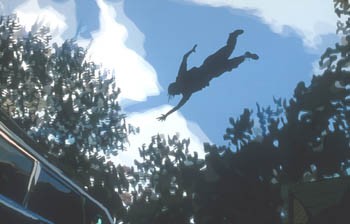
Pie in the Sky: Big ideas get a beautiful setting in ‘Waking Life.’

Big Dreams

‘Waking Life’ offers animated course on modern philosophy

By

Waking Life offers an unforgettable tip on how to tell the difference between dreaming and wakefulness. Supposedly a dreamer has a hard time visualizing numbers on a digital clock, fine print, or shades of lighting. If you think you’re dreaming, try flicking a light switch; if the room doesn’t dim, you’re in a dream–and now it’s time to take charge of it.

This latest film from Richard Linklater (Slacker, Before Sunrise) is a tour through a sleeper’s dream state. Waking Life features an unidentified traveler (voiced by Wiley Wiggins) who drifts through a chain of conversations with other figures. Sometimes he tries to awaken and finds himself in another dream. He never quite emerges into the real world.

The film is rotoscoped by Bob Sabiston, director of those unsettling burnt-orange Earthlink television commercials, with the eyes and mouths floating in little lazy circles. The animation gives a tendency to make backgrounds wobble and shift.

While the coloring is lovely, the way the facial features drift here may make those who remember that short Canadian cartoon “The Big Snit” think: “Stop shaking your eyes!” Watching Waking Life, I had the twin sensations of being fascinated and seasick.

The images drift, but Linklater’s little mosaic of ideas forms a scheme. If we could control the action in our dreams, we’d have a little taste of being God. But in our waking life–the true subject of this film–how much are we in control?

Linklater’s dialogues form a treatise on the freedom to act. Robert C. Solomon, an existentialist prof from the director’s beloved Austin, gently counters the old argument that the godless can’t really have happiness in their lives. But the dreamer also encounters postmodern philosophers, who speculate that we’re all just functions of social programming. “I’d rather be a gear in a big deterministic physical machine than just some random swerving [sic],” says one grad-student type.

And the director follows the idea of free will to a negative extreme: if we’re all free to do as we please, why not just go on a murder spree? Linklater stages that argument via the ravings of a jailed psycho, voiced by Charles Gunning. On a less threatening level, we drift by a few intellectual thugs, striding purposefully to nowhere.

Waking Life has a length problem common to all unplotted films; after the first hour restlessness sets in. And where are all the women? There are a handful of memorable female characters here, particularly a dialogue by Julie Delpy and Ethan Hawke (continuing some of their discussions from the film Before Sunrise–and in a bed at last). Still, it’s mostly men who have their say.

One warning about Waking Life: Egghead haters, beware! Still, these dialogues on the unchained mind are music to the ears right now, when almost all the public discourse is one big howl for conformity. “Things have been tough for dreamers,” says one of the characters here.

Jonathan Schell, the informed pessimist who wrote The Fate of the Earth, wrote that the most horrific aspect of Sept. 11 was watching people rain from the sky. I love Waking Life for its beginning and ending, a beautiful anecdote to that horror: a man aloft, gently pulled into the sky, a symbol of limitless possibilities and freedom.

‘Waking Life’ opens Friday, Nov. 2, at Rialto Cinemas Lakeside, 551 Summerfield Road, Santa Rosa. For details, see , or call 707/525-4840.

From the November 1-7, 2001 issue of the Northern California Bohemian.

© Metro Publishing Inc.

Politics At Sonoma Farmers’ Market

0

Farmer plants seeds of dissent at local farmers’ market

By Tara Treasurefield

“I WAVE NO FLAG. I support no war against the peoples of the world. I oppose U.S. policies that impose injustice and misery on so many people around the world.” These are the words that farmer Neal Dunaetz wrote on a sign that he displayed at the Sonoma Farmers Market on Sept. 14. Alarmed by the increasing presence of the American flag and by talk of war and vengeance, Dunaetz made space for alternative views. He attracted people to his stall by giving away produce and, while he had their attention, engaged them in a discussion about U.S. foreign policy, a move that has stirred a storm of controversy over free-speech issues in that usually quiet Sonoma County town.

Some welcomed the opportunity to share ideas and information that the mainstream media scrupulously avoid. Others were deeply offended by what struck them as insensitive, even treasonous, behavior. One vendor carried a sign of his own throughout the market: “America–love it or leave it!” and at one point thrust it in Dunaetz’s face.

To avoid further conflict, on Sept. 25 the Farmers Market board of directors circulated a statement to all vendors that read in part, “The Farmers Market should not be a place to air political views. We hope vendors will consider how their actions impact those around them.” One or two vendors say that market manager Hilda Schwarz discouraged them from displaying the flag, and on Oct. 2, the town’s weekly community newspaper, the Sonoma Index Tribune, ran a front-page article critical of the market’s board of directors.

Rushing to the defense of their flag, irate patriots flooded the Index Tribune with letters condemning the Farmers Market board, and on Oct. 9, a half dozen members of the local chapter of the Veterans of Foreign Wars, some carrying huge American flags, walked through the Farmers Market.

Assembling at Dunaetz’s stall, the veterans found that he had pinned a burnt American flag to his shirt and was passing out a letter that described America as a bully, the people who destroyed the World Trade Center as brave, and the bombing of Afghanistan as a crime against humanity. Some insisted that Dunaetz leave the market. One veteran even urged him to leave the country, and offered to pay his airfare.

But several nearby shoppers supported Dunaetz and expressed their own opposition to the war. Longtime Sonoma resident Bette Timm was furious with those who were trying to silence Dunaetz, and shouted, “He has a right to speak!”

Sonoma Mayor Ken Brown, a Vietnam War veteran, says, “My personal reaction is that the burnt flag and letter are like a poke in the eye. But I believe he has a right to his opinion.”

Retired Navy Capt. Bob Piazza agrees. “We were willing to sacrifice our lives for the right to free speech, the right to carry arms, all the freedoms we have in this country. The minute we prevent, or attempt to prevent, those who disagree with the country’s current policies from voicing their opinion, we’ve just defeated the reasons we spent our time in the military,” he says.

A former Vietnam combat medic, Ted Sexauer, not only defends Dunaetz’s right to speak; he also shares some of his views. He says, “I believe that bombing Afghanistan is absolutely the worst thing we could have done. We need to stop terrorizing poor people who happen to live where resources ‘vital to the United States’ are found. I know very well I’m not the only one who feels this way, yet our voices are not represented in government or the media. This country needs its loyal dissenters.”

Since Oct. 9, Dunaetz has received four anonymous phone calls threatening him with bodily harm, and four others from people who were content to simply call him names. Marty Bennett, a professor of history at Santa Rosa Junior College, isn’t surprised. “Always, when this nation goes to war there’s an attempt to suppress dissent and to force all patriotic Americans to rally around the flag,” he says.

There’s no question that the threats against Dunaetz are unlawful and unconscionable. But he isn’t simply an innocent victim; his words and actions have been intentionally provocative. Unrepentant, he says, “The world doesn’t need one more voice mourning American deaths while ignoring the countless victims of U.S. aggression all over the world. Americans should be asking what’s happening that people have so much hatred they’d actually sacrifice their lives to give such a kick to this country.

“Because we live in a democracy,” he says, “we’re responsible for the actions our government takes.”

From the October 25-31, 2001 issue of the Northern California Bohemian.

© Metro Publishing Inc.
Cuban Music CDs

0


Havana Nights: Lydia Cabera

Spirit Quest

Smithsonian’s new CDs exorcise Cuban ghosts

By Greg Cahill

OVER THE YEARS, Americans have plundered Cuba for everything from sugar cane to yuppie music, world-class cigars to cheap sex. But few take the time to appreciate the subtleties of this complex society. A pair of newly released CDs on the Smithsonian/Folkways label explore the 19th-century religious roots of Cuban culture with its deep ties to the spiritual and social traditions of West Africa.

The two volumes–Havana, Cuba, ca. 1957: Rhythms and Songs for the Orishas and Havana Cuba, ca. 1957: Afro-Cuban Sacred Music from the Countryside–are culled from an obscure 14-album series recorded in the field and collected by revered ethnographer and folklorist Lydia Cabera and photographer Josefina Tarafa. The original albums were pressed for a small label and privately issued. The two new discs–which include rare bembe lukumi ritual drumming of a bygone era in the rural province of Matanzas, as well as ceremonial urban rhythms from Havana–reveal some of the most significant threads of Afro-Cuban music history and underscore Cuba’s prominence in the web of Afro-Atlantic music in Brazil, Trinidad, Miami, New York, and elsewhere.

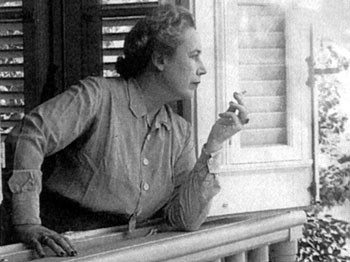
For her part, Cabera was no stranger to Cuban culture. Born in 1900 to a prominent Havana family, she moved to Paris in 1927–the same year that American entertainer Josephine Baker became the toast of Paris, sparking a huge interest in black culture–to study painting at the Ecole des Beaux Arts. During her schooling, Cabera began to delve into the art and religions of India and Japan, which reawakened her interest in Afro-Cuban subjects. Cabera later said that she discovered Cuba on the banks of the Seine.

It was a period that incubated Cabera’s first published work, Cuentos Negros de Cuba (Black Tales of Cuba), originally written to entertain a friend, a Venezuelan novelist convalescing in a Swiss sanitarium.

In 1938, Cabera returned to Cuba, restoring a dilapidated Spanish colonial mansion. During the next few years, she expanded her studies of the island’s African heritage. That research culminated in 1954 with the publication of Cabera’s masterwork, El Monte, with photography by Tarafa.

Cabera’s contributions as a musicologist are perhaps the least-known aspect of her celebrated life’s work. With Tarafa’s portable tape recorder and the assistance of two sound engineers, Cabera recorded secretive Santeria priests, many of whom were descendants of Nigerian Yoruba slaves, evoking orishas (or spirits) through ceremonial songs that serve today as a window on life in the 19th-century sugar mills and slave plantations that peppered the landscape.

The languid chants, the clattering rhythm sticks, the pulsing drums–these are songs that salute the powerful Shango (king of Oyo Yoruba), pray for protection from the scourge of smallpox, or honor the otherwordly protectors of the land.

For those serious about searching for the roots of Afro-Cuban music, Cabera is the ideal guide on that armchair spirit quest.


Photograph by John Cohen

Spin du Jour

Various Artists
There Is No Eye: Music for Photographs (Smithsonian/Folkways)

He’s a renaissance man. Musician, filmmaker, sound engineer, and photographer John Cohen (a member of the Grammy-nominated old-timey folk ensemble the New Lost City Ramblers) aimed his camera lens on some of the pivotal folk, bluegrass, blues, and beat figures of the ’60s. Set for a Nov. 6 release, this companion CD to the newly published book “There Is No Eye” (PowerHouse Books), includes a smartly packaged 32-page booklet of photos and previously unreleased tracks by Bob Dylan and the Rev. Gary Davis, as well as classic material by Elizabeth Cotton, Bill Monroe, Doc Watson, Muddy Waters, Woody Guthrie, and many others. At a time when interest in American roots music is running high–thanks to the smashing success of the “O Brother, Where Art Thou?” soundtrack and the buzz on the upcoming multi-episode PBS documentary series on roots music–Cohen’s work captures the passing of the torch from backwoods authenticity to traditional urban folk music. A nice addition to any serious folk- and roots-music collector’s library. (GC)

From the October 25-31, 2001 issue of the Northern California Bohemian.

© Metro Publishing Inc.

Word Core

0

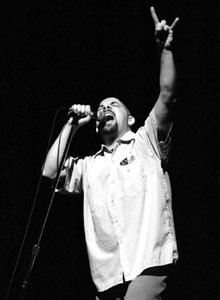
First Words: Poetry slam champion Big Pappa E (a.k.a Eirik Ott) leads the newly formed Word Core into the North Bay for a performance on Nov. 2 at Sonoma State University.


Photograph by Rory Macnamara


Poetry in Motion

Word Core puts a new spin on an ancient art

By Patrick Sullivan

POET EIRIK OTT is sleeping in on a Tuesday morning, snuggling in bed with his two cats. But don’t get the idea that he’s comfortable. “I’m starting to get sick, and I’m really hoping it’s not anthrax,” he says. “I’m in a little college town, and I’m thinking, what a perfect place to dump anthrax.Think about what it would do to the national psyche.”

Does that sound wussy? Well it might, because Eiric Ott, who sports the ironic stage name Big Pappa E, is the self-proclaimed king of wussy-boy poetry. But that doesn’t mean he’s not willing to take on a challenge.

As co-founder of a brand-new band of poets called Word Core, the 34-year-old Ott is also in the spearhead of a movement to spread a new gospel of poetry to a nation that is, as he sees it, hungrier than ever for the spoken word. Calling themselves “a rock band that uses words instead of power chords,” Word Core is on a mission to take poetry beyond English classes, beyond coffeehouses, and even beyond the increasingly popular poetry slam format.

Ott, who now lives in Chico, recalls going to a poetry reading in an L.A. coffeehouse some years back that still makes him bristle with scorn: “They sucked. They were terrible. There was just people reading from pieces of paper, moaning and groaning about their girlfriends.”

Word Core–which performs Nov. 2 at Sonoma State University–is out to change that. Drawing on influences ranging from hip-hop to punk rock to spoken-word artists like Henry Rollins, this four-man team offers a performance that’s about as far from a quiet little coffeehouse reading as you can get. “Give us an audience and we will rock them,” Ott says.

Of course, Ott and his crew are hardly the first to take up this challenge. For more than a decade now, poetry slams have been shaking up traditions by offering dramatic live readings that encourage fierce competition and audience participation. The members of Word Core have done their share of slamming. In fact, Ott and fellow Word Core member Eitan Kadosh were on a San Francisco team that took top honors in the 1999 National Poetry Slam in Chicago.

But the team’s win there underscores Ott’s ambivalent attitude toward the slam scene. At the end of the competition, Ott, Kadosh, and their comrades were tied for first place with a San Jose team. Many people in the 3,000- member crowd were insistently calling for a sudden-death elimination round to pick one winner. But the poets demurred. “We don’t take this scoring shit seriously, so we refused,” Ott recalls. “We said, ‘If you guys are calling for a death match, there’s something wrong.’ So we tore the trophy in half and shared it.”

Ott, despite his own rock-star rhetoric, is disturbed by the fact that some poets are simply not comfortable with slamming. “It’s very in-your-face and masculine,” Ott says.

Some critics also charge the slam format with elevating attitude over craft. Word Core does its share of screaming and joking. But Ott says that quieter pieces can work more sophisticated wonders. “To make that audience fall into rapt silence where all you can hear is the ice machine in the back of the room, ahh–that’s even better than making them scream,” Ott says.

Word Core aims to combine the best parts of the slam world with elements that offer a better chance for thoughtful, sophisticated poetry to reach people. “We have faith in the audience,” Ott says. “They’re not crows and we’re not dangling keys in front of them.

Whatever else poetry may be to the members of Word Core, it’s certainly not a hobby. All four members have toured extensively before, spending night after night on living room couches. But Word Core–which will perform its third show ever at SSU–represents an even bigger commitment for this crew, who used to make real money being bartenders, graphic designers, or substitute teachers.

“We’ve all quit our jobs to be poets,” Ott says. “How fucking ridiculous is that? Excuse my language, but how do you explain that to your parents?”

Word Core performs Friday, Nov. 2, at 7 p.m. at Sonoma State University’s Cooperage, 1801 E. Cotati Ave., Rohnert Park. Tickets are $5. 707/664-2382.

From the October 25-31, 2001 issue of the Northern California Bohemian.

© Metro Publishing Inc.

Charlie Haden

0

Bassist and bandleader Charlie Haden has consistently been at the heartbeat of modern jazz, whether churning out dissonant sounds as a member of Ornette Coleman’s landmark 1959 free-jazz ensemble or laying down profoundly lyrical bass lines with guitarist Pat Metheny on the ethereal 1996 collaboration Under the Missouri Sky (Verve). The roots of Haden’s latest project, Nocturne (Verve), goes back more than 20 years when the bassist led his avant Liberation Music Orchestra to Cuba. Nocturne-a stunning collection of boleros from Cuba and Mexico-teams the Haden with pianist Gonzalo Rubalcaba, saxophonist Joe Lovano, drummer Ignacio Berroa, and violinist Federico Britos Ruiz and brings this remarkable band to the San Francisco Jazz Festival on Wednesday, Oct. 31.

How good is it? “In a perfect world,” Billboard opined, “the sun would never rise without some jazz radio station having played Nocturne in its entirety.

Haden and his cohorts perform at the Herbst Theatre, Van Ness & McAllister, San Francisco. Tickets are $20/$27/$38 Gold Circle. 415-776-1999. For schedule details, check out www.sfjazz.org.

From the October 25-31, 2001 issue of the Northern California Bohemian.

© Metro Publishing Inc.

American Roots Music

High Lonesome: Bill Monroe and His Blue Grass Boys Kiss Kiss Love--American roots music style By Greg Cahill America's love affair with roots music is heating up. This on-again, off-again romance--which most recently saw the O Brother, Where Art Thou? soundtrack rocket onto the pop charts--is likely to get a fresh...

‘K-PAX’

The Talking Cure: Jeff Bridges and Kevin Spacey go mental in 'K-PAX.' Crazy Talk Comic Debi Durst wants 'K-PAX' put away Writer David Templeton takes interesting people to interesting movies in his ongoing quest for the ultimate post-film conversation. Torture. The much-anticipated new Kevin Spacey...

Randy Newman

Satirical Poke in the Eye: Singer-songwriter Randy Newman gets a bit nasty. Good Acid Acerbic musician Randy Newman spreads joy in Santa Rosa There was no shortage of short people in the audience last Saturday night when musical curmudgeon Randy Newman took the stage at Santa Rosa's...

Oscar Guajardo

Blast From the Past: Classic footage gets a new home in Healdsburg filmmaker Oscar Guajardo's 'The Golden Age of Mexican Cinema.' Lost & Found Local filmmaker explores hidden treasures of Mexican cinema The class was titled "Cinema of the World," and the course description promised an in-depth look at...

Green Music Center

Hot Seat: Sonoma State University President Ruben Armiñana says critics of a plan to spend millions of public dollars on a gilded concert hall on campus just lack his vision. The Color of Money Is the Green Music Center a $48.7 million white elephant? By Paula Harris I...

‘Waking Life’

Pie in the Sky: Big ideas get a beautiful setting in 'Waking Life.' Big Dreams 'Waking Life' offers animated course on modern philosophy By Waking Life offers an unforgettable tip on how to tell the difference between dreaming and wakefulness. Supposedly a dreamer has a hard time visualizing numbers on a...

Politics At Sonoma Farmers’ Market

Farmer plants seeds of dissent at local farmers' marketBy Tara Treasurefield"I WAVE NO FLAG. I support no war against the peoples of the world. I oppose U.S. policies that impose injustice and misery on so many people around the world." These are the words that farmer Neal Dunaetz wrote on a sign that he displayed at the Sonoma...

Cuban Music CDs

Havana Nights: Lydia CaberaSpirit QuestSmithsonian's new CDs exorcise Cuban ghostsBy Greg Cahill OVER THE YEARS, Americans have plundered Cuba for everything from sugar cane to yuppie music, world-class cigars to cheap sex. But few take the time to appreciate the subtleties of this complex society. A pair of newly released CDs on the Smithsonian/Folkways label explore the 19th-century religious...

Word Core

First Words: Poetry slam champion Big Pappa E (a.k.a Eirik Ott) leads the newly formed Word Core into the North Bay for a performance on Nov. 2 at Sonoma State University.Photograph by Rory MacnamaraPoetry in MotionWord Core puts a new spin on an ancient artBy Patrick SullivanPOET EIRIK OTT is sleeping in on a Tuesday morning, snuggling...

Charlie Haden

Bassist and bandleader Charlie Haden has consistently been at the heartbeat of modern jazz, whether churning out dissonant sounds as a member of Ornette Coleman's landmark 1959 free-jazz ensemble or laying down profoundly lyrical bass lines with guitarist Pat Metheny on the ethereal 1996 collaboration Under the Missouri Sky (Verve). The roots of Haden's latest project, Nocturne (Verve), goes...
11,084FansLike
4,606FollowersFollow
6,928FollowersFollow