‘Rivers and Tides’

Nature’s Mercy

Andy Goldsworthy’s ever changing art is made permanent in film

By

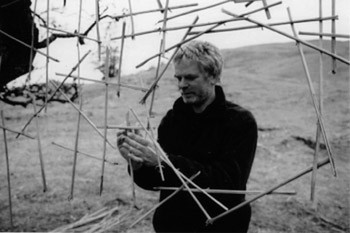
We comfort ourselves with the idea of the permanence of art. Against cataclysm, against the ultimate fall of our civilization, we hope that something of the best of our world will survive. But much vivid art today is made to vanish–think of fireworks, poetry readings, tattoos. Think of musicians who onstage send out their energy into the ether, leaving behind only untrustworthy memories of what witnesses thought they heard or saw. Thomas Riedelsheimer’s exquisite documentary Rivers and Tides gives you an hour and a half in the presence of a man who is in contact with something essential, maybe eternal. Yet much of his work is made to fall apart.

Andy Goldsworthy is an environmental artist, a sculptor of untreated natural materials. In Rivers and Tides, we see the creation of about a year’s worth of pieces. Goldsworthy has signature work–those egg-shaped cairns often encountered in modern art museums, sculptures made from flat pieces of slate, stacked as high and as wide as a person. Yet he uses a wide variety of mediums: materials as ephemeral as the heads of flowers, as tender as leaves, as massive as boulders, as doomed as the broken ice from a frozen pond.

Early in the film, he completes a squiggle of ice, formed from icicles painstakingly fused together. The same morning sun that lights up his sculpture like neon also melts it. Working against a persistent breeze, Goldsworthy assembles a fragile mobile of twigs and thorns in a pasture. At the end, he’s working with simpler materials yet: clay, red iron pigment, and, at last, handfuls of snow.

As a subject, Goldsworthy is both open and enigmatic. He talks of how he started as an artist, the local history of the town he lives in. We glimpse the personal life of the world-traveling artist at home in between commissioned pieces in Nova Scotia and Storm King, in New York. Goldsworthy has a family and several children, but his rapport with them is left vague.

The Internet helps a little. There, you can glean such information as the details that Goldsworthy’s home in Penpont is near the city of Dumfries. He was raised in Yorkshire; he worked as a farm hand and then moved to his present home in Scotland “due to a way of life over which he did not have complete control.” (That cryptic comment is verbatim from www.sculptor.org.)

Like Goldsworthy’s art, Rivers and Tides is sturdy yet delicate. It offers some clues to the mystery of his art but few clues to the mystery of the man. The art, as Goldsworthy says, focuses on those things that cause upheaval and shock–the tides, the power of water flowing, the seasonal changes. Yet the upheavals and shocks in the subject’s life are mostly suggested between the lines.

Rivers and Tides is worth watching and rewatching as a mystery and not just because it brilliantly conveys the beauty in decay, of ever shifting forms. By including the element of time–and how Goldsworthy works against it–the film gives the artist’s work tension, which keeps Rivers and Tides from being beautiful but dull.

‘Rivers and Tides’ opens Friday, July 12, at the Rafael Film Center, 1118 Fourth St., San Rafael.

From the July 11-17, 2002 issue of the North Bay Bohemian.

© Metro Publishing Inc.

Randy Newman

0

New from Newman: The rough draft for ‘Good Old Boys’ finally sees the light of day.

Southern Discomfort

Rare Randy Newman disc surfaces

By Greg Cahill

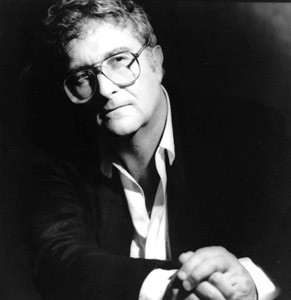
It’s been called the Holy Grail for Randy Newman fans. Johnny Cutler’s Birthday, the previously unreleased 13-song rough draft for Newman’s controversial 1974 album Good Old Boys, has surfaced as a bonus disc in the first wave of Rhino Records’ extensive reissue series devoted to the iconoclastic singer and songwriter that includes extended editions of Sail Away and the score to Ragtime, Newman’s first foray into film work.

On the Birthday disc, included with Good Old Boys, Newman performs alone on the piano and narrates the backstory for the producer, delivering sometimes insightful asides and cynical self-criticism. Johnny Cutler’s Birthday is a highly theatrical work–a collection of short stories set to music, really–that forms the basis for the resulting concept album about Southern life and its cast of misfits. The disc includes eight songs that never made it onto the eventual Good Old Boys and is so different in its focus that Johnny Cutler’s Birthday stands alone as a “lost” Newman masterwork.

For its part, Good Old Boys serves as a richly hued history lesson, a snapshot of Southern culture haunted by the ghosts of the past–including racism, poverty, and rampant political corruption–as the region stood on the cusp of the so-called liberalism that has transformed parts of the New South. But Johnny Cutler’s Birthday is a much more personal tale, perfectly illustrating Newman’s uncanny ability to step into the shoes of his characters.

For instance, the lament “Shining,” later dropped from Good Old Boys, details the pain and disillusionment of Johnny’s wife, Marie, who bitterly complains about being little more than a trophy wife. It gives a whole new layer of meaning to “Marie,” Johnny’s wistful homage to his wife and a sadly beautiful song included on the final album.

Other Birthday songs, like a planned rendition of the Albanian national anthem that was to be sung by the West Point Glee Club (no, really), lend little or no insight to the project. “I haven’t decided whether to include this,” Newman announces to the producer before introducing the track. “Who the fuck am I talking to anyway?” he ponders. “Who’s gonna hear this?”

While Johnny Cutler’s Birthday is getting a lot of well-deserved praise in the press, it would be a pity if it overshadowed the brilliance of Good Old Boys. That album explored the dark heart of a nation grappling with the racial hatred and prejudice of the past and facing an uncertain future led by political hucksters and charlatans– “Mr. President (Have Pity on the Working Man),” featured on Good Old Boys, was recorded on Aug. 9, 1973, the day Richard Nixon resigned from office.

The album, from its racially tinged satire to its Huey Long-inspired populism, remains stark and relevant. Upon its release, however, Good Old Boys generated a lot of controversy. That was due largely to the provocative nature of the opening track, “Rednecks,” in which the New Orleans-born and L.A.-raised Newman made liberal lyrical use of the n-word at a time when that was almost unheard of outside the black community.

The song also drew fire for juxtaposing the stereotypical ignorance of white Southerners (“We’re rednecks, we’re rednecks / We don’t know our ass from a hole in the ground”) with the sanctimonious attitudes of Northerners who lived in denial about their own mistreatment of blacks. The song delivered a sardonic blast at a time when major desegregation battles, from widespread economic inequality to forced bussing of blacks and whites to public schools, raged though Boston, Chicago, Newark, Detroit, and elsewhere–supposedly enlightened Northern cities that had seen their share of racial violence in recent years.

In light of the flood of jingoistic pop and country music flooding the airwaves in the post-Sept. 11 period and the utter failure of contemporary Americana artists to come up with anything even remotely as poignant as Newman’s bittersweet 1974 ode to America, Good Old Boys stands as a highly influential masterwork akin to such literary counterparts as the best of Flannery O’Connor’s writings.

As O’Connor once wrote, “In the long run, a people is known, not by its statements or its statistics, but by the stories it tells.” Good Old Boys continues to speak volumes about America.

From the July 11-17, 2002 issue of the North Bay Bohemian.

© Metro Publishing Inc.

‘Minority Report’

0

‘Geek Love’ author takes a bite out of ‘Minority Report’

Writer David Templeton takes interesting people to interesting movies in his ongoing quest for the ultimate postfilm conversation. This is not a review; rather, it’s a freewheeling, tangential discussion of life, alternative ideas, and popular culture.

The popcorn-scented hall is crammed with humanity, a big, babbling Exodus of movie-goers, all surging across the theater lobby and out to the street beyond. Author Katherine Dunn–never one to be caught up in the movements of the masses–snakes her way out of the crowd and over to a cluster of plastic benches. As we wait here for the crowds to subside, Dunn takes the opportunity to deftly roll herself a little cigarette for future use.

“Well . . . I must admit I’ve been very, very curious about that movie,” Dunn remarks as she works, shooting a glance at the swinging blue doors behind which we have just seen Minority Report (That would be Steven Spielberg’s creepshow featuring Tom Cruise as a drug-using cop in the not-too-distant future, using aquatic psychics to bust bad guys before they commit their crimes).

Dunn almost liked it.

“It’s easily the most adult film, and the most complex film, that Spielberg has ever done–of those that I’ve seen,” Dunn suggests, “but the ending was so mawkish and so cliché and so Ladies Home Journal, that all I can say is, Stevie? You just went and fucked up another movie.”

Dunn–57, a longtime resident of Oregon–is best-known as the author of the wicked underground classic Geek Love (Vintage, 1989, $13.00), about a circus owner and his chicken-chomping wife, who deliberately breed their own family of freaks, and the phenomenal dismemberment cult that rises up around the figure of Arturo the Aqua Boy, the couple’s four-flippered first-born. Clearly attracted to what you might call edgy material, Dunn was predictably primed for a movie like Minority Report, with its philosophically rich depictions of mutant detectives, Future Crime departments, icky eye-swapping surgeries, and vast Detainment Units packed with electronically lobotomized prisoners. That latter notion–a warehouse full of convicts eternally locked in neural slumber–is of particular interest to my guest. By the time we’ve reached the theater exit, had a quick smoke, settled ourselves in a nearby bar and ordered up a couple of coffees, Dunn has dispensed with her entire list of critical judgments: thumbs up to mechanical spiders, the shots of dribbling snot, and the pizzazzy fire-escape fight scene between Cruise and four cops on flying jet packs–“it was Buck Rogers meets Jackie Chan,” says Dunn–and thumbs down to the “sappy, heart-tugging holographs” of Cruise’s missing son. With such observations out of the way, Dunn can sink her teeth into the meatier issues explored by Minority Report.

“I must admit that years ago I sort of played with the idea of cryogenics as a more versatile solution to the problem of the death penalty,” Dunn laughs. “I began thinking that, should we make cryogenics a reality, then simply turning our convicted felons into thugcicles might be the best way to go.”

“Thugcicles?” I repeat. “Like, popsicles with a rap sheet?”

“Exactly,” she smiles. “The problem with the death penalty, of course, is that it’s so final–but thugcicles could be thawed out if necessary and when proper. They could be stored in relatively inexpensive ways, on the various Poles of the earth or on some of our chillier planets and moons. I even toyed with the idea of giving individual citizens tax rebates in exchange for storing one or two thugcicles in their basement freezer. Though if there were ever a power failure,” she adds, making a face, “you’d have problems, wouldn’t you? The thugs would thaw out–and then where would we be?”

“Up to our ankles in dribbling snot?”

“Exactly.”

The central idea of Minority Report–based on a story by the depressing visionary Philip K. Dick–is that crime could be eliminated, in the future, by arresting violent criminals who have yet to be violent. Sounds good until you consider things like the American Constitution–and human nature. Still, Dunn believes that an anti-violent society is already blossoming into reality.

“I think the argument could be made that most of the First World really is moving toward a very nonviolent social stance,” she says. “Things have changed dramatically just in my lifetime. When I was a small child, it was absolutely acceptable to whip and spank your children. Now you’d go to jail for it. When I was a small child, boxing was one of the biggest sports in America, and now boxing is considered vulgar and barbaric. It’s all moving toward a kind of nonviolent representation of human activity, in which violence is increasingly seen as unacceptable.”

I remind Dunn of a certain scene in Minority Report, in which a middle-aged guy–he’s got a vaguely postal-worker vibe–enters a Holograph Lounge, where folks go to have tailor-made virtual experiences, and nervously requests the experience of murdering his boss. It is clear from everyone’s reaction that such a fantasy is strictly illegal. That scene makes her think of a fiction class she once taught for seniors and grad students at a university in Oregon.

“It began with a simple assignment,” she explains. “To pick a person they’d really like to kill, and then find a way to do it. And step by step, they’d plan these murders, and write it all out. My students had a wonderful time, planning the murders of their parents, their roommates, their teachers, and all kinds of people who were subjected, on paper, to some very hellish fates. But I could never teach that class today. Every single one of my students, and I, would be hauled off to jail.”

An event that would certainly leave Dunn’s devoted readers-and-fans up to their ankles in dribbling snot. But her story brings up another issue, one that runs all the way through Minority Point: How can a civilized America eliminate violent action without eliminating violent thoughts, and how can a society control its citizens’ thoughts without damaging the society’s collective imagination and the ability to create something better?

Dunn’s answer: It can’t.

“One of the things that alarms me the most is the failure of imagination in this country,” she says. “That’s what limits us the most. And it’s ironic, because I think this nation is a dream country, that we are founded on the dreams of extraordinary dreamers. So it is our job–not just to go on dreaming–but to bellyache loudly at every opportunity, every time the dream fails.

“America is never going to be perfect, because–as Philip K. Dick might point out himself–America is human. But the dream is always there. I only hope it’s still alive in the not-too-distant future.”

From the July 11-17, 2002 issue of the North Bay Bohemian.

© Metro Publishing Inc.

Cafe Japan

0

Fresh Choice

Cafe Japan gets it right

By Maria Wood

My sister had a three-year-old neighbor in Los Angeles who would always tell her, “I love strawberries.” So one day, she picked the freshest, plumpest fruit from her strawberry patch and brought it over to him. He tasted one and wrinkled up his little nose. “Strawberries don’t taste like that,” he informed her. He then ran over to his cupboard, pulled out a jar of Smucker’s jam, and announced “These are the yummy strawberries.”

Me, I love Japanese food. So you can well imagine my surprise when I discovered that, after all these years, I was eating Smucker’s-style Japanese cuisine.

When I first went to the newly opened Jenn and Yo’s Cafe Japan in downtown Santa Rosa, the food tasted a bit off, like it was missing something. It was. It’s missing the monosodium glutamate. Unlike most other Japanese restaurants, Cafe Japan uses no MSG. Plus, the food is almost exclusively organic. Needless to say, it takes a little getting used to. It’s like eating corn-syrup-laden jam all your life and then being confronted by a fresh, ripe strawberry. What to make of this subtle flavor? Luckily, living in Northern California has taught me a thing or two about giving real food a chance. It always pays off. And this was no exception.

Take, for example, the humble inari, a bean-curd pocket stuffed with rice. Like vanilla ice cream, inari is a straightforward food that serves as a good gauge of the quality you’re getting. And Cafe Japan serves some of the best (if not the best) inari I’ve ever had ($3.50 for two).

Typically, restaurants use ready-made pockets that are already fried and seasoned with MSG, oil, and sugar. At Cafe Japan, 35-year-old chef and co-owner Yosuke Saito uses organic tofu and seasons it with a mixture he prepares of mushroom stock, kelp stock, organic sugar, soy sauce, and a sweet, cooking sake. He then fries it and stuffs it with organic rice.

Now, on to the fish. Sushi is not raw fish on rice. Sushi is an art form.

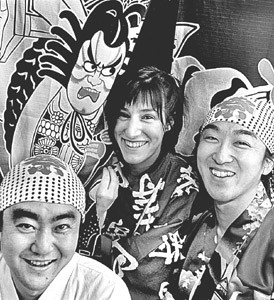
In his native Japan, it takes about five years of training before one can be considered a sushi chef, says Saito, who apprenticed at the Asahi Sushi restaurant in Kesennuma city. After moving to California in 1994, he worked at the Samurai Restaurant in Mill Valley and, most recently, at JoJo Restaurant and Sushi Bar in Santa Rosa.

“In Japan, you have to earn your uniform little by little,” he says. “After a couple of years, you are allowed to wear this,” he adds, pulling at his shirt, “but the pants must remain usual.” After a couple more years, the trainee is allowed another piece of the ensemble. “At the very end, you can wear the entire uniform, and it is a very big honor,” Saito says. His brother Junpei, who was trained at the Miyagi Chorishi Senmongakko culinary school, came to Santa Rosa last month so that he too could work at the new restaurant.

There are only a handful of Japanese restaurants in Sonoma County where the chefs were actually trained in Japan, and it seems that some of the traditional techniques that took generations to perfect are being lost. For example, the albacore tuna sushi at Cafe Japan is outstanding ($4 for two), partly because Saito takes the added step of searing the fish so that it retains its natural juices. He was taught that each type of fish needs to be treated differently: red tuna is seared with soy sauce; halibut is salted and marinated overnight with sea kelp; shrimp is marinated in sweet vinegar. And, of course, everything needs to be sliced with precision at the right angle.

Even the little tricks of the trade make a big difference. I don’t know how many times I’ve pulled off hunks of sushi rice from under the fish so that I could get a better balance between the two. “In Japan, you learn to make a little air pocket inside [the rice ball] so that it’s firm on the outside but soft when you bite into it,” Saito says. “And that way, you also don’t use as much rice.”

Not only is Saito trained in Japanese cuisine, he also makes a mean American-style barbecue. He learned the proper techniques when he was a youngster and an American family moved in next door. “Our families couldn’t speak together well, but we could eat together very well.”

As a teenager, Saito visited relatives in Marin and decided there was a lot more to California than just barbecues. Twelve years later, he moved to Mill Valley and started working at Samurai Restaurant. Just before the company Christmas party, Saito and Jennifer Bessette, one of the waitresses there, were asked to help provide the entertainment.

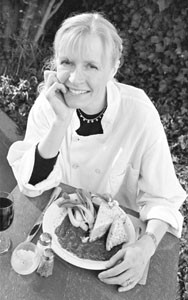
Saito plays guitar and has the broad smile and laid-back manner of a California musician. Although I haven’t heard it, I’m sure he uses the word “dude.” On the other hand, Bessette has a certain tentative giggle and other mannerisms that I’ve noticed in many Japanese women. Yet she’s also quite the rocker and sang lead vocals and played rhythm guitar for the local band Bella Luna. When she was 22, Bessette, now 33, came out to California from the East Coast on a Greyhound bus, bringing along little else besides a guitar, an amplifier, and hopes of becoming a rock star. In the meantime, she waited tables to pay the rent.

Bessette always insisted on working at Japanese restaurants. That way, she could satiate her other passion: sushi. “I can’t say I liked sushi much the first time I tried it. I was a little scared of it,” she says with a giggle. But after that initial attempt, she tried sushi again. And again. “And I became addicted to it,” she says. She’d drive from New Hampshire to Boston specifically for sushi. “I spent all my spare money on it,” she adds.

Soon she started waitressing at Japanese restaurants. She spent six months in Japan. She took eight semesters of Japanese language classes at a couple of different colleges. “I think about 10 percent of my brain is Japanese by now,” Bessette says.

So while barbecue helped lure Saito to Marin, sushi helped hook Bessette into the restaurant. Then, before the Christmas party, the two got together to create a Japanese rendition of “Please Mr. Postman.” They practiced each night and got to know each other. Six months later, they married.

Right around the time they were discovering each other, they discovered the Whole Foods Market across the street from the restaurant and started eating the organic produce there.

Saito says his own emphasis on organic cooking can be attributed as much to Northern California culture as to his training. “Luckily, around here, wherever you look, there’s great organic produce,” he says. “And once you taste it, you can’t go back.”

Little by little, Saito and Bessette began talking about opening their own restaurant and using all those tasty, organic ingredients and throwing away the MSG. And Cafe Japan was born.

If there’s any fault with the restaurant, it’s that Saito and Bessette are so true to their vision. I couldn’t get my customary dessert of green tea ice cream because they haven’t found any that doesn’t contain artificial coloring. They’ll probably make their own once they settle into a routine with the new business. But until then, I’ll just have to fill up on extra albacore.

Jenn and Yo’s Cafe Japan is at 98 Old Courthouse Square in Santa Rosa (near 4th and Mendocino). Open Tuesday through Saturday. Lunch, 11:30am-2:30pm; dinner, 5-9pm. Lunch special, $10. Entrées range from $9-$14. 707.566.7650.

From the July 11-17, 2002 issue of the North Bay Bohemian.

© Metro Publishing Inc.

Classic Rock Tributes

0

Strings Attached

Classic rock becomes a classical gas

By Greg Cahill

Forget everything you know about cool. The hippest record of the year is “War Pigs” performed as a Latin mass. That’s right, heavy metal god Ozzy Osbourne–Black Sabbath frontman, organizer of the Ozzfest summer tours, and co-star of MTV’s wildly popular reality series featuring the singer’s foul-mouthed family–gets a chamber music treatment that sounds so right, it’s frightening.

This ultracool manifestation of Ozziness comes from the Estonia-based group Rondellus, a chamber ensemble that performs Medieval and Renaissance music on replicas of period instruments. After three little-noticed but stellar recordings of sacred and secular music from the 12th to 15th centuries, Rondellus is riding the crest of a wave of string quartet tributes to rock’s heroes and has released a 12-song Black Sabbath tribute titled Sabbatum (Beg-the-Bug Records) that is getting a lot of attention.

These apocalyptic songs, penned by Osbourne and first released by the protometal band Black Sabbath in the late ’60s and early ’70s, seem destined to rest comfortably alongside the early music of 12th-century mad abbess Hildegard von Bingen.

Meanwhile, the string quartet tributes continue to pour in. Last week, just a day before the death of Who bassist John Entwhistle, the Hollywood-based Vitamin label (distributed by the label that brought you The Cocktail Tribute to Nirvana and which is responsible for about a dozen similar string quartet homages) released The String Tribute to the Who’s ‘Tommy.’ It’s a natural choice for this type of arrangement–Tommy, the landmark 1969 rock opera, already has been recorded in orchestral form on a 1972 album with the London Symphony. And, indeed, the “Amazing Journey/Sparks” medley is a minisuite that adapts well under the Section, the studio string quartet headed by violinist Eric Gorfain (who also produced the album).

This version of the tribute craze started nearly 15 years ago when the Grammy-nominated Hampton String Quartet adapted the songs of Led Zeppelin, the Rolling Stones, Kansas, and even *NSYNC as part of the What If Mozart Wrote . . . series. That series, created by the Juilliard-trained quartet, has sold over 750,000 copies. Of course, Kronos Quartet raised eyebrows in 1986 with a cover of Jimi Hendrix’s “Purple Haze,” and the Brodsky Quartet has tasted from the rock well on numerous occasions and even recorded an entire album with Elvis Costello.

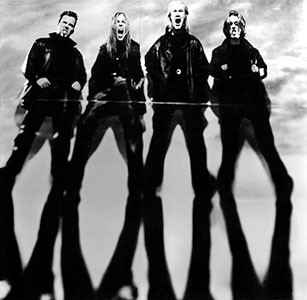
But Hampton String Quartet’s success hasn’t gone unnoticed, especially at a time when classical record sales are plummeting. In 1996, the unorthodox leather-clad quartet Apocalyptica released its debut CD, Apocalyptica Plays Metallica by Four Cellos. The title says it all. The Finnish foursome have released a pair of follow ups, including last year’s Cult, featuring a ripping rendition of Grieg’s “Hall of the Mountain King.”

“Oh, we love to punish our instruments!” Apocalyptica’s Paavo Lotjonen recently quipped to Strings magazine. “Most of the time they are full of hair and sweat and rosin–our old teachers definitely wouldn’t be happy!”

Meanwhile, the Vitamin label has been busy this year, releasing, among other titles, a tribute to Led Zeppelin. Of course, those British rockers were no strangers to string instruments or bowing techniques, both natural and synthesized. (Such classic Zep songs as the bluesy “I’m Gonna Crawl” and the exotic “Kashmir” made liberal use of a string section, and axeslinger Jimmy Page frequently employed a bow to coax eerie sounds from his electric guitar.)

But who ever would imagine that a string quartet would want to tackle that band’s loping drum solo centerpiece “Moby Dick”? Enter The String Quartet Tribute to Led Zeppelin, a recently released 11-track ode to the gods of heavy metal thunder. The recording–which features contributions from the Section, Stereofeed, the Prague Collective, Interior Rides, and Painting Over Picasso–is a mixed bag of the inspired and not-so-inspired.

Other recent subjects for the Vitamin string quartet tributes have included Icelandic rock diva Björk (who has recorded in the past with the Brodsky Quartet), Sarah McLaughlin, and New Age vocalist Enya. The best of the new batch, however, is a string version of Radiohead’s wistful 1997 masterpiece OK Computer, rife with post-punk angst and rich textures that readily lend themselves to this treatment. Highly recommended.

Can a string tribute to rage rockers Limp Bizkit be far behind?

From the July 4-10, 2002 issue of the North Bay Bohemian.

© Metro Publishing Inc.

Black Sparrow Press

Photograph by Michael Amsler

A Flashing Heaven of Luck

Black Sparrow Press leaves a mighty legacy

By Geneviève Duboscq

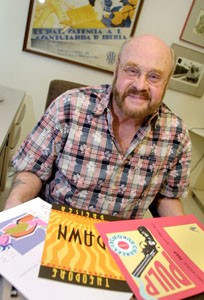
It had to bite the dust sooner or later,” says John Martin, founder of Santa Rosa’s Black Sparrow Press. On July 1, Martin will close the doors on 36 years of independent literary publishing. “I mean, I’m 71 years old. I’ve been doing this since I was 35. That’s over half my life.”

Far from looking tired, Martin radiates energy, and he’s a born storyteller. With oval wire-framed glasses, bushy red-brown eyebrows and beard, and a bald spot up top, he could play Santa at a Christmas party. He’s wearing a short-sleeved button-down shirt with little blue palm trees marching across it, dark pants, and tennis shoes. A faded blue tattoo colors his right forearm.

“Black Sparrow is really considered, by English-reading people all over the world, to be one of the very best and most successful literary publishers in the world. . . . To have lasted 36 years and been profitable that whole time–I’m very proud of that, damn it.”

Martin was manager of a Southern California office supply company that did some printing when he read the work of writer Charles Bukowski in mimeographed magazines in 1965, and sought him out. Meeting over the next six months, the two men worked out a deal. Bukowski needed $100 a month in order to quit his post office job and work on the writing that was stacked waist-high in his closet. Martin gave up one-fifth of his monthly salary to sponsor Bukowski and become his publisher.

In an interview with Transit magazine before his death in 1994, Bukowski said, “Black Sparrow Press promised me $100 a month for life if I quit my job and tried to be a writer. Nobody else even knew I was alive. Why shouldn’t I be loyal forever? And now the royalties from Sparrow match or surpass all other royalties. What a flashing heaven of luck.”

A book collector since the age of 20, Martin sold his collection of D. H. Lawrence first editions for $50,000 to UC Santa Barbara, leaving $30,000 after taxes and fees to establish Black Sparrow Press. The first publication in April 1966 was 30 copies of Bukowski’s poem “True Story,” which Martin priced at $10 and mostly gave away. “I wasn’t trying to sell those. They’re worth a fortune now, like $2,000 or $3,000 apiece, and I would give them to my delivery boy at that office supply company or one of the secretaries.

“I thought, ‘Well, maybe I’ll do a little book.’ And then I did another little book and another little book, and I did other people’s books.” Martin regularly worked 16-hour days: eight hours at the office supply company followed by Black Sparrow work until 2am and all weekend. After about five years, he realized he needed help. Besides his wife, Barbara, who has designed the press’s distinctive book covers from home since 1966, Martin employs an assistant, a bookkeeper, and a book packer. The print shop he opened in Santa Barbara with typographer and fine printer Graham Mackintosh in the early 1970s employs six people.

Combining his background as a book collector and businessman with Mackintosh’s skills and literary connections, Martin made the savvy business decision to offer expensive, hand-bound limited editions of every title, as well as cheap paperback editions of the same work.

He began publishing short collections by literary lights such as Robert Duncan, Denise Levertov, Robert Creeley, Diane Wakoski, Sonoma County’s David Bromige, Joyce Carol Oates, John Ashbery, and Paul Bowles. Many Black Sparrow authors are heavy hitters who shaped the direction of American literature in the 20th century.

Selling to “a built-in group of maybe 50 booksellers all over the world” who took everything he published, the press turned its first profit in 1971. Martin has never looked back, though he did have to give up his unlisted telephone number. “I was horrified at the thought of people actually calling the office and trying to order books. We were too busy!” But he relented, and business improved. Word of Black Sparrow spread, and New York began watching who Martin was publishing.

The press has never borrowed money or applied for grants. “I’m a Yankee. If a thing can’t support itself, it’s not worth doing.” When short of funds, Martin sold the press archives–including bills and correspondence–to university library collections, leaving a paper trail for future researchers to follow. But the hard times are over. “For many years, we’ve done in excess of a million [dollars] a year. Some years we’ve done considerably more than that.”

Once established, Black Sparrow issued first 12 and then 10 books per year in print runs from 3,000 to 15,000. “We would print or reprint a book, about one a week,” most recently keeping 300 titles in print.

According to Len Fulton, who has published The International Directory of Little Magazines & Small Presses since 1965, many small presses never see a fourth anniversary. Calling 36-year-old Black Sparrow “an institution,” he says that Martin has accomplished every small publisher’s dream: discovering authors whose work readers seek out. “A small press to survive must have an obligatory notion of publishing. For instance, if you publish a book about cheese making, you’re not going to sell a lot of copies, but everyone who makes cheese will have to have a copy. . . . The market that it suits must have it–the same goes for poetry.”

And Martin has a knack for picking winners. “My whole thing was [that] I would publish only what I really liked myself, and there’s got to be two or three thousand people in the world who would agree with me.” But unlike many other publishers, Martin was able to get his books in those people’s hands.

“Writing has to have some fire and some soul in it,” he says. It must be “artful while appearing to be artless.” How does he know when he’s found a winner? “Sometimes you can read just the first story. I mean, how long do you have to listen to someone audition on the violin? . . . If they strike those first few notes, and they’re right on and they’re beautiful–great tone and great technique and real feeling for the music–you don’t have to go much further.”

Asked whether he still comes across good writing these days, Martin strides into another room and returns with Black Sparrow’s last book: Weep Not, My Wanton, short stories and poems by Maggie Dubris. “Wonderful writer,” he says, “just what I always looked for. I mean, if I was going to go on, she’d be one of my best stars.”

The press’ office and warehouse on mostly residential Tenth Street stand nearly empty now. In May Martin sold the rights to publish 49 titles by high-selling authors Paul Bowles, Charles Bukowski, and John Fante to the Ecco Press imprint of HarperCollins in New York. Well-respected David R. Godine Publishers in Boston bought rights to publish most other Black Sparrow titles and hauled away 66,000 copies of books. Gingko Press in Corte Madera bought the rights to titles by artist and writer Wyndham Lewis. Santa Rosa’s Treehorn Books swept up the remaining inventory.

Asked how he feels about selling rights to HarperCollins, part of Rupert Murdoch’s News Corporation Ltd., one of six media groups that own publishing houses worldwide, Martin says, “That’s just business.” He’s been impressed by the care Harper has shown. “Maybe they are a big conglomerate, but those people are so nice when you get down the line to the people who will deal with me.” After meeting Harper’s San Francisco sales force, he says, “What a fun, interesting bunch of people–completely familiar with all my books, as readers.

Jeffrey Lependorf of the Council of Literary Magazines and Presses says that for a small press, being acquired by a large press “can turn out to be the best of both worlds.” The imprint can give personalized attention to authors and yet have the clout and distribution of a large publishing house.

Martin agrees, “I don’t feel pushed into some glacial dimension now–‘Black Sparrow’s going off to be put on a shelf and ignored’ or anything. I think they’ll do the best they can. I know it’ll be different, but they’ll do a good job.”

Despite the closing, Martin refuses to speak of Black Sparrow in the past tense. “The books are out there, and they’ll always be there, circulating. . . . Whatever I’ve accomplished, there it is. Forever.”

From the July 4-10, 2002 issue of the North Bay Bohemian.

© Metro Publishing Inc.

Open Mic

Visiting Castro’s Cuba the legal way

By Christian Kallen

Castro is the devil,” said the baggage handler at Miami International Airport when I told him where we were going. “He is ruining my country.” The baggage handler looked to be about 40, which means he had probably never been to “his country,” where Castro came to power in 1959. So how could he know? For that matter, how can any of us know if we cannot see for ourselves?

That’s why I went, and that’s probably why anyone travels to Cuba, legally or otherwise. For despite what you may have heard, it is legal to visit Cuba–but not as a tourist. If you follow all the rules–engage in sponsored people-to-people exchange; are involved in educational, religious, or humanitarian projects; work as a journalist or athlete; or fall into any one of a handful of categories–you can get permission from the U.S. Department of the Treasury to enter Cuba. Just stick to your itinerary and don’t spend too much money. You can even fly out of Miami, LAX, or JFK–Continental jets are chartered daily to take legal travelers to Havana, perhaps a foretaste of things to come.

Last month I traveled to Cuba as one of these legal visitors, attending a conference on sustainable tourism co-sponsored by the city of Habana Vieja, or Old Havana. The buildings of Old Havana are architectural curiosities, many dating from the 18th and 19th centuries, in some cases falling apart and in many cases being renovated to preserve the qualities that led UNESCO to declare Habana Vieja a World Heritage site in 1982.

Our trip lasted five days, and we saw what we were supposed to: renovation projects in Habana Vieja, the historic forts of Havana Bay, and the pervasive musical energy that saturates the atmosphere in this most musical of islands. After all, Cuba is the birthplace of the mambo, the rumba, and the cha-cha, making the senior citizens of the Buena Vista Social Club relative latecomers.

We also saw tired, undernourished men selling 50-cent newspapers for a dollar, old women posing for photos by smoking cigars, and beautiful, young women available al fresco. It’s a country with a literacy rate of well over 99 percent, with the highest doctor-to-population ratio in Latin America, with 55 universities, of which 11 are in Havana–where the broken city streets often smell like sewage. But it sure didn’t feel like a police state–the uniformed officers we saw were young, easy-going, and unarmed.

These contrasts are as much a part of Cuba as syncopation is of its music. The busy street in front of our hotel was filled with Chevies, Fords, and Oldsmobiles from the pre-Revolutionary 1950s. They circulated smoggily around the Parque Central, the green square half a block from the opulent Capitolio, former home of Cuba’s legislature. Within the park, all paths converged on the statue of José Martí, the original Cuban revolutionary, who seemed to helpfully point out Ernest Hemingway’s favorite bar, the Floridita.

Many in our group were U.S. travel agents, and we arrived a couple weeks after Richard Copland, president of the American Society of Travel Agents, put out a statement critical of the official ban on tourism to Cuba. “We believe it is a constitutional right of Americans to have freedom to travel anywhere in the world. . . . [T]ravel promotes peace and understanding among peoples,” he said. Not surprisingly, what most of the group was really interested in was learning how to navigate the bureaucracies and legalities in order to bring their clients to Cuba legally, now and in the future.

Of course, it’s not just travel that’s banned, but doing business as well–“trading with the enemy,” in the official terms of the 1917 act that set up these outdated restrictions. Our rice farmers cannot sell rice to Cuba, our pharmaceutical companies cannot sell medicine to Cuba, and obviously our car companies cannot sell the latest models.

These and other industries are calling for an end to the embargo, seeing in Cuba a lucrative market and willing trading partner. Even U.S. legislators are increasingly frustrated with being held hostage by a small group of anti-Castro Cuban nationals in Miami. A bill to end the Department of the Treasury’s stranglehold on visitation to Cuba easily passed the House last year, only to disappear in the avalanche of jingoism following Sept. 11.

We left just a week before Jimmy Carter visited Cuba at Fidel Castro’s personal invitation. It was a visit that set off a public debate about our Cuba policy, which resulted only in President Bush hardening his commitment to the embargo–possibly, just possibly, to solidify his brother’s base of support among Florida’s anti-Castro minority.

It remains an irony, if not a puzzlement, that the United States allows travel to former Cold War enemies such as China, Vietnam, and even North Korea, all of which are still Communist states. Why not Cuba?

From the July 4-10, 2002 issue of the North Bay Bohemian.

© Metro Publishing Inc.

Sharon Boorstin

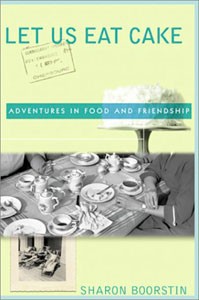
Sharon Boorstin examines the ties that bind in ‘Let Us Eat Cake’

By Sara Bir

Light and pleasing as angel’s food, Sharon Boorstin’s Let Us Eat Cake is a food memoir that’s shorter on meaty substance than it is on heartfelt sweetness. Former restaurant critic for the Los Angeles Herald-Tribune, food writer Boorstin’s album of recollections, recipes, and reconnections with close friends of bygone days is remarkable for its utter lack of remarkability. Boorstin’s own journey through baby-boomer life has a nostalgic, Everywoman gleam whose details are easy to cozy up to: the huge freezer her parents kept in their kitchen with almost everything, from marshmallows to salmon, inside; the fancy French dinner parties she fumbled through to impress dates as a young co-ed.

Even though Let Us Eat Cake is a book about food, it’s more about friendship. The food forms links in the chain of friends Boorstin fuses together. Even though Boorstin and the women she’s become close with over the years have moved through career changes, decaying relationships, and growing children, the food they’ve cooked together has remained a touch point.

Boorstin begins with her middle-class childhood in Seattle, growing up in a close family that loved food but who were far from gourmets–her mother fed them a steady stream of ground beef casseroles.

She then recounts becoming a woman just before the cusp of women’s lib and flower power, in that generation of women who still adhered to the pre-WWII ideals of their parents though were willing to cautiously explore the newly relaxed cultural atmosphere. After marrying, elaborate red-meat-oriented dinner parties with Liebframilch and Chianti came to be the prevailing social activities.

Throughout this all, Boorstin recalls her best friends at the time, from giggling girls in the go-go ’60s to affluent, educated couples in the ’70s. Once Boorstin wraps up covering the more pivotal moments of her life, she switches the focus from herself to her close friends, and their own personal–and diverse–experiences and associations with food.

The second half of the book loses its momentum once Boorstin begins straying from the path of her life story and relating the tales of other women on the periphery of her story in short, choppy chapters that have the breezy tone of a magazine article. (Let Us Eat Cake, in fact, sprouted from a series of articles Boorstin wrote for More magazine.) Even though it’s fun to flutter through anecdotes of such big names as Julia Child, Nancy Silverton, and the Food Network’s Too Hot Tamales, Boorstin writes most convincingly when she focuses on tales of her own old friends and how their paths come to intersect through the years, the bonds only growing stronger as they face life’s challenges.

The recipes at the end of the chapters drive home the women’s connection through food; it’s sort of like meeting someone after you’ve heard so many good things about them. Even though many of the recipes offer a retro appeal (Moonshadow chicken, Grandma’s blintzes, and a very ’50s Canlis salad), Boorstin wisely includes only dishes that can still whet the appetites of cooks in 2002 (she shrewdly omits Aunt Myra’s pickled salmon).

However, the recipes tacked on to the chapters profiling famous women who never figured prominently into Boorstin’s life somehow don’t ring as true, even if they do sound tasty. Which just goes to prove the whole point of the book: when you really examine the stories and trials that bind a friendship together–including the foods shared–it transforms a recipe from a mere list of ingredients to an album of memories come to life.

One of the book’s pluses is that even though Boorstin was a restaurant critic and avid cook, she’s no kitchen professional–just as the rest of us aren’t. Like most home cooks, she’s simply enthusiastic about exploring new foods and reminiscing about classic ones. Let Us Eat Cake offers no voyeuristic thrills of life on a frantic, demanding line in a high-profile restaurant. Instead, Boorstin assembles a casual gallery of kitchen follies that many of us have gone through ourselves: foiled batches of brownies, dinner-party pheasants that refused to brown. It’s what infuses the book with the breezy yet affirming tone that makes it an amiable quasi memoir.

Boorstin’s writing may not be as elegant as M. F. K. Fisher’s or as enchanting as Ruth Reichl’s, but Let Us Eat Cake infuses just enough warmth and reflection into its chatty reminiscences to make it a worthwhile read.

From the July 4-10, 2002 issue of the North Bay Bohemian.

© Metro Publishing Inc.

Sparks

0

Sparks, Flying

Sparks lights a fire under tired old vegetarian cooking

By Davina Baum

With all the mad cowboys and fast-food nationalists singing the gospel of knowing your food, it makes sense that vegetarianism should be getting its just desserts by way of increased food awareness. Meat–whether it’s grass-fed Niman Ranch or corn-fed Anonymous Ranch–remains a staple in the American diet. However, as ravenous Americans have widened their food scope, meatless eating has ceased to be a novelty, moving from the domain of food activists into wide acceptance.

Ten years ago, a meatless request might send a kitchen scrambling for a bland plate of rice and mixed grilled vegetables that had to be doused in olive oil and salt to become palatable. If a “vegetarian” option didn’t contain chicken broth or some sort of hidden gelatin, it was surely a pasta doused in heavy cream sauce, veganism being a relatively new addition to the food lexicon. Since then, everything has changed.

California cuisine has done wonders for the vegetarian lifestyle. With an increased value placed on individual flavors and freshness, the typical restaurant patron has learned to expect interesting textures, flavor combinations from all over the globe, and tastes that sing. Fleshless cuisine–as well as eggless and dairyless cuisine–relies on individual flavors and creative combinations rather than fancy footwork in the kitchen, making vegetarian cooks tomorrow’s celebrity chefs.

But today, a vegan restaurant smack in the middle of Main Street, USA (albeit Guerneville’s Main Street–not exactly the national heartland) attracts lifelong vegetarians and dedicated carnivores alike. Patrons who on another night might enjoy a pork tenderloin or roast chicken will happily munch their way through a phyllo roulade with spinach and miso-cured tofu–which, in fact, is what my companion and I had on a recent visit to Sparks–and dedicated vegans and vegetarians can be assured that there are no animal products hidden in their risotto.

In the year that Sparks has occupied this storefront on Guerneville’s Main Street–after a six-month stint at the Inn of the Beginning in Cotati–it has proven itself a comfortable, reliable haven for people looking for a slightly upscale though decidedly unpretentious paean to the pleasures of the meatless table.

The pretension level at Sparks is so low as to be almost a detriment. A customer presented with an amuse-bouche and a $14 entrée has come to expect a slightly more formal atmosphere, but that is part of Sparks’ charm–and part of its inherent dissonance. There’s an underlying tension between the beautifully plated dishes featuring additions like rich truffle oil and the slightly shabby blue chairs and faded cloth napkins. The overall aesthetic of the space just doesn’t match up to the aesthetic of the plates, while at many more expensive restaurants, the opposite is true–which is even more disappointing.

Unidentified snapshots on the wall by the door greet customers as they come in. The restaurant closes at 9pm, but when I called ahead at 8pm on a Friday night, I was told that we would surely be accommodated even if we arrived after the witching hour. And we were: in fact, when we left a little before 10pm, customers were still dining happily.

Once seated, we were brought glasses of water garnished with a mint leaf and a slice of lemon, and the aforementioned amuse-bouche–in this case, a small plate with a mixture of Golden apples, celery, and raisins in a garlicky olive oil dressing dashed with curry. Service throughout the meal was friendly and unobtrusive.

We started off the meal with wine–a glass of sweetly dry Badger Mountain 2000 Johannesburg Reisling ($5.75) for me and a glass of well-balanced 1999 Barra of Mendocino Pinot Noir ($6) for my companion.

The wine was shortly followed by our appetizers. Rice-paper spring rolls filled with sunburst squash, apples, carrots, basil, and mint were drizzled with a mango sauce ($6.95). The colors were beautiful: the brilliantly orange julienned carrots tumbling out from their white wrappers, the peachy-hued mango sauce suavely trickled over. The dish was cool and crisp and the tangy sauce contrasted nicely with the lightly steamed carrots, though something–perhaps the filling–was overly spiced, the flavor of coriander masking that of the vegetables.

The phyllo roulade ($6.95) won me over at first glance, because it was garnished with a beautiful sprig of lavender. It tasted good, too–the nicely herbed and flaky-crispy phyllo encasing firm miso-cured tofu (approximating the consistency of feta) and tender spinach.

Our entrées continued to tempt the eye but didn’t win over the palate. A spinach and herb polenta with pesto, caramelized onions, and carrots ($10.95) was a riotous combination of colors, the yellow polenta flecked with green and sitting on a richly red marinara sauce. But the polenta tasted bland, and the marinara sauce didn’t go the distance in perking up the dish.

The morel and corn risotto ($13.95) was rich and comforting. The truffle oil sprinkled over it added a luxurious richness, and the morels shone through with their trademark nutty earthiness. Lightly steamed broccoli added contrasting color and texture. The dish would be hard-pressed to explain its risotto moniker, though. The familiar pearly, creamy grains of arborio rice were nowhere to be found; the dish was more of a porridge than a risotto.

Despite how full we were, desserts have to be sampled in a food review. So with you, the reader, in mind, I dug my spoon into the apricot upside-down cake ($5.50), a moist, richly spiced cake topped (or bottomed) with fruit that had stewed in its own juices. It was accompanied by a scoop of cinnamon soy ice cream. With the dessert, we drank a Barra of Mendocino muscat ($3.25)–less cloyingly sweet than most muscats, with a tangy fizz. Along with our check came small bites of palate-cleansing crystallized ginger and a big cocoa-macadamia nut cookie that accompanied us home.

It’s not only the food that makes Sparks a phenomenon; it’s also the philosophy. Run by five locals, the restaurant has a grass-roots business model that embraces community spirit. From using local organic produce to paying their staff above minimum wage, Sparks works with a commitment to be a sustainable and progressive business–in farming and in support of the community.

Furthering the idea of food as community celebration, Sparks offers seasonal gala dinners like the recent summer solstice celebration, which featured a seven-course gourmet organic experience for $35 (beverages and gratuity excluded). In addition, an array of cooking classes (see below) seeks to train the novice chef in the ways of the good life, the organic life, the meatless life. It’s a great way to participate in Sparks’ own little slice of revolution.

Sparkful Cooking

For information on Sparks’ classes and to reserve a spot, call the restaurant at 707.869.8206 or e-mail sp***************@*****il.com. Classes must be reserved and prepaid. Classes are usually $65 (discounted if you sign up for an entire series).

July 8 and 9: Appetizers, soups, and salads July 15 and 16: Tofu and tempeh cookery July 22 and 23: Vegan desserts July 29 and 30: Ethnic cooking Aug. 5 and 6: Mexican cuisine Aug. 12 and 13: Cooking with chocolate Aug. 19 and 20: Thai cuisine Aug. 26 and 27: Wine and food pairing

16278 Main St., Guerneville. Dinner, Thursday- Sunday, 5:30-9pm; brunch, Saturday-Sunday, 10am-3pm. 707.869.8206.

From the July 4-10, 2002 issue of the North Bay Bohemian.

© Metro Publishing Inc.

Literary Trends

The God of Literary Trends

The language of culture, writ large on bookstore shelves

By Noy Thrupkaew

You know, you really should be looking for the next Arundhati Roy.” I plucked at the phone cord wrapped around my neck, sighed, and said, “Oh, absolutely.” It was 1998, and I was working at a publishing company that had just launched an imprint featuring “the writing of women of all colors.” It was my internly task to call independent booksellers across the country to find out what and whom they thought we should publish. Their advice inevitably boiled down to variations on one response: “That Indian subcontinent is really hot. Oh–oops–do you say ‘South Asia’ now?”

“Nah, our customers don’t really like stuff in translation. But have you read that Jhumpa . . .”

Yes, yes, yes.

Literary brown ladies were the new new thing. Arundhati Roy’s poetic, multilayered novel, The God of Small Things, had just been awarded the Booker Prize. Jhumpa Lahiri would debut in 2000 with Interpreter of Maladies, her collection of elegantly written short stories that went on to win a Pulitzer. But Roy and Lahiri were just the beginning of what was to become a craze for South-Asian and South Asian- American women’s writing.

Of course, this wasn’t the first time the publishing world had found its newest darlings in female writers of color. And it wasn’t the first time bookstores would create pretty displays of books by authors of a “hot” ethnicity, or the first time readers would strip those displays as neatly as ants eating a sandwich at a picnic. The early ’90s saw an explosion of Latina narratives à la Laura Esquivel’s Like Water for Chocolate. And Terry McMillan’s success with Waiting to Exhale in the mid ’90s ushered in a rash of books in which middle-class black women griped about their no-‘count men.

Color has become a marketing boon.

Interviewers probe into a writer’s upbringing, seeking out ethnic factoids for a voracious public. Details about unusual foods, struggles with immigrant parents, and cultural oddities are all fair game. And in the case of attractive authors, whose images are emblazoned all over magazines and poster-size publicity photos, one can hardly be sure what is for sale anymore–the “company” of a beautiful, exotic woman or the power of her words.

The Importance of Being Exotic

What is it that makes a certain ethnic genre hot? If I could nail that one down for sure, I’d be rolling around in a room filled with nothing but money. But one can hazard some guesses.

Many of the Asian-American and Latina books contain lots of incense and spirits–“ancient Asian wisdom” and religious tidbits, or mystical realism in the form of pissed-off ghosts and fantastic visions. They also feature nearly pornographic discussions of food; Isabel Allende’s Aphrodite: A Memoir of the Senses even had recipes. The mystical stuff and the food seem to reflect the reasons why some white people are drawn to different cultures–either in search of religious or spiritual enlightenment or to exhibit their open-minded adventuresome selves by eating our food. Our cultures are tagged as better somehow–closer to the earth, purer, more attuned to sensory pleasure–but in nice, nonthreatening ways, wrapped up neatly in fortune-cookie wisdom or duck tamales.

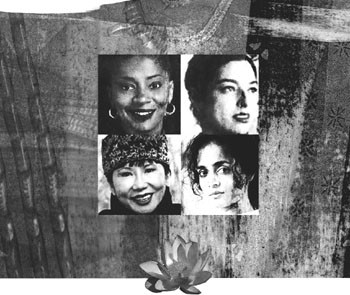
The doyenne, the matriarch, the empress dowager of all women-of-color literary trends is Amy Tan. The success of The Joy Luck Club prompted a flood of Asian-American novels, whose “exotic” content was mirrored in their titles. Asian-American women’s fiction titles often featured either (a) some nature-related motif to show that we are in touch with the elements (Gail Tsukiyama’s The Samurai’s Garden, Mia Yun’s House of the Winds); (b) a familial relationship that displays how wonderfully traditional we are (Tan’s The Bonesetter’s Daughter, The Kitchen God’s Wife); (c) or the number “100” or “1,000,” which demonstrates that we are an ancient, wise people fond of the fairy-tale trick of enumerating knowledge (Mako Yoshikawa’s One Hundred and One Ways, Tan’s The Hundred Secret Senses). Some titles even double up on these themes, such as Mira Stout’s One Thousand Chestnut Trees.

Two other Asian-American minitrends emerged in the late ’90s. One comprised novels like Mei Ng’s Eating Chinese Food Naked and Catherine Liu’s Oriental Girls Desire Romance. Instead of Tan’s bickering kitchen wives, here were hard-bitten, angst-ridden Asian-American protagonists who had ostentatious sex by page 30. Hot-pants Asian books seemed to fulfill readers’ appetites for sex that was extra spicy for being ethnic.

But if Asian women weren’t screwing, the publishing world wanted them suffering (and maybe bravely triumphing after they got themselves to the United States). The Asian historical memoirs were based on a simple formula: Asia was hell; the United States was a hell of a lot better. This is not to disparage the truly awful circumstances of many of the authors’ lives. Being abandoned, purged, “reeducated,” jailed, tortured, chased, hunted, raped, and/or nearly murdered in Cambodia, Vietnam, or China would leave scars on anyone’s soul. But the Asian-hell-to-Western-heaven motif leaves a U.S. reader in a nicely complacent spot, reclining in a La-Z-Boy and thinking, “Well, thank God for America!”

Attack of the South-Asian Women

Despite all this doom and gloom, literary trends can be good for women writers of color. At least more voices are finding their way onto the store shelves. And one can’t protest the fact that Americans are expanding their reading horizons or that female authors of color are receiving much-deserved attention. I’m not advocating a return to the color closet for authors. Why shouldn’t ethnicity be ripe for novelistic exploration? And even if the books are published as part of a trend, they are often far from formulaic.

While Ruth Ozeki’s My Year of Meats fits the multigenerational aspect of Asian-American women’s writing, this tale of a feminist documentary filmmaker who uncovers the sordid underbelly of the U.S. meat industry is radically wonderful. And even the much-imitated Joy Luck Club hit on something lasting and powerful: the fierce, complicated love between mother and daughter.

So I tried to feel optimistic when the South-Asian craze appeared in the late ’90s. It became a juggernaut among ethnic trends, shaking the book world from top to bottom with the potent combination of crossover appeal and literary acclaim. The work of Indian women had been notably absent from our bookshelves. But now stores were suddenly flooded with it: Kiran Desai’s Hullabaloo in the Guava Orchard, Indira Ganesan’s Inheritance, Jhumpa Lahiri’s Interpreter of Maladies, and Chitra Banerjee Divakaruni’s Mistress of Spices, among others. The books and the attention they brought with them were especially welcome, considering that the modern Western literary realm was already a rich one for South-Asian male writers like Vikram Seth, V. S. Naipaul, and Salman Rushdie.

On the happy side, the books were generally wide-ranging in style and topic, some drawing on Raymond Carver more than Rushdie or Seth, others exploring the complexity of a diasporic identity. As much as one can generalize, these authors were writing some wonderful literature. And although the texts were often seen as part of a single, monolithic publishing identity, their styles and subject matters varied greatly, with a broader range than was usually present in a given ethnic trend.

Inevitably, however, I started to feel an itch of irritation. It wasn’t just the spread of the craze and the concurrent cultural obsession with all things Indian; something chafed beyond the sight of a Sanskrit-mangling Madonna, blotchy with henna, or the ubiquity of foul-tasting boxed chai. There were many other dark reasons why this infatuation annoyed as much as it pleased.

For one, there was the distasteful fawning over the authors’ beauty: Roy was gushingly named one of People magazine’s “50 Most Beautiful People in the World” in 1998. After her Pulitzer, Lahiri was crowned a “Woman We Love” in Esquire. There was the awful sameness to booksellers’ responses when asked about exciting female authors of color–all South Asian this, Indian that.

And although most of these writers avoid mystical realism (also called “Rushdie-itis”), some share a certain tinkling, quirky, food-based exoticism, offering a tired roundup of the angst of arranged marriages, bitchy squabbles over whose chutneys and pickles are better than whose, and slobbery details about saris.

Perhaps the most egregious example is Hullabaloo in the Guava Orchard. Kiran Desai’s debut features Sampath, an affable dreamer who seeks to escape the hubbub of life by climbing into a tree. Unfortunately, he then finds himself besieged by crowds who claim he is a holy man. Riotous hijinks ensue: drunken monkeys marauding through the village, Sampath’s mother embarking on a mad quest to plunk a monkey into her curry, etc. This pleasant, pastoral, chutney-flavored fable is sort of entertaining, but Desai’s characters are that easily dismissed brand of colorful, weird, and harmless; one can close the book and think fondly disparaging thoughts about their foreign, little ways.

Writing in the Vancouver Sun, Punjabi-Canadian critic Phinder Dulai offered up a biting criticism of what he termed the Indo-North American novel: “In the North American-style Indian novel, the focus is on domestic family prattle while larger themes of migration, racism, caste, and generational conflict are barely touched. When things get too hot, the characters can slip away to the kitchen or the pickle factory to cool off.”

The Failure to Represent

Though Dulai’s attack on such gloppy romanticism is well-deserved, his critique also reveals trendification’s double-edged sword: Readers of color can place as many restrictions on “their” writers as main-stream expectations can. Many do grapple with serious themes: Lahiri, for example, addresses the bloody creation and partition of Pakistan and India, poverty, harsh discrimination against women, and familial fractures. However, there is a certain amount of variation in any given literature–is the onus of political seriousness necessarily greater for writers with brown skin?

Some would say it is–that if writers makes it past the gatekeeper of literary trends, they have a responsibility to speak for the people. When an author of color makes it big, he or she is sometimes viewed as the returned messiah, full of potential uplift but also heavy with the responsibility to take on all the experiences of the oppressed and relay them to the world in great tablets of wisdom. When the author reveals himself or herself to be a mere human telling a tale spun from one imagination, the crown of thorns is angrily snatched back, to be placed on the head of the next likely candidate to come along.

This sort of pressure is almost too much to bear: Who wants to be a sure-to-fail Jesus, dealing with the dashed expectations of a disappointed people? And critics of color often blame the wrong individuals. Those crushed hopes have more to do with the gatekeeping forces of literary cool than the power of any one author’s pen. If there were truly more diversity in the literary realm, we wouldn’t have to rely on only a handful of imaginations to represent us.

Another oft-heard criticism of immigrant literature is that it is not true to the motherland. It’s part of the endless debate about the effects of diaspora on cultural identity–and no one’s going to win that fight. People have been waging it since kids first left their parents’ homes. What boils down to arguments of purists-traditionalists vs. rebellious hybridists-iconoclasts ultimately makes for tiresome book reviews. Better questions might be: Is this author exoticizing her ethnicity? Is she just feeding the public more stereotypes of lotus-blossom ladies and guacamole-hipped mamas? If she’s inaccurate or exceptionally critical or dewy-eyed in depicting the culture of her forebears, is it done in a way that suits the general public’s fixed ideas?

Then there’s the final pitfall of being the darling of a literary trend: Stray from the pigeonhole into which you’ve been placed, and you can kiss your darlinghood goodbye. Two years after her People Beautiful Person crowning, Arundhati Roy cut off her long hair, telling the New York Times that she doesn’t wish to be known as “some pretty woman who wrote a book.” Instead of another work of fiction, she has since produced two books of essays, The Cost of Living and Power Politics, and wholeheartedly thrown herself into activist work.

But Roy’s radical activism has received little support either in the United States or India. Critics who once lauded her have turned their backs: “One Indian intellectual compared Roy to Jane Fonda–a celebrity troublemaker superficially grooving on cultural uproar,” notes Joy Press in the Village Voice. For Western critics, her intense scrutiny of the World Bank and globalization marked her as just another famous face touting the political cause du jour.

Just as being too politically ethnic can make one unpopular, not being culturally ethnic enough can also bump a writer from the in crowd. Aspiring authors attending the South Asian Literary Festival in Washington, D.C., last year told stories of editors who declined their manuscripts because they didn’t deal with traditional Indian life. Their works were, in essence, too American. In seminars sarcastically titled “There Are No Poor or Huddled Amongst Us” and “No Sex Please, We Are South Asians,” participants grappled with widening the diversity of South-Asian and South Asian-American narratives appearing in the Western press.

Critic Amitava Kumar once wrote, “If immigrant realities in the U.S. were only about ethnic food, then my place of birth, for most Americans, would be an Indian restaurant.” The language of cultural consumption is particularly apt here. At its worst, South-Asian and South Asian-American writing is just like tasty Indian food–to be chewed, digested, and excreted without a lot of thought.

But hope springs eternal. Perhaps Americans, having tasted something delicious, will seek out books that outrage and challenge, narratives written from the diaspora or in translation that don’t rely on bindis or kulfi to make their points.

In the meantime, South-Asian and South Asian-American writers are making themselves at home on the New York Times bestseller lists and within literary-prize committee sessions. But they have their eyes wide open. “I would be wary of the notion that South Asia is hip and can attract publishers,” said Yale English professor Sara Suleri at the literary festival. “Those fashions come and die. Maybe in five years, we will be hunting for Tasmanian writers.”

Maybe so, but maybe some readers will demand more, and writers will be able to find success while defying trendiness. Perhaps we can all wedge the door open a little more firmly, making room for stories that will last longer than a peel-off mehndi tattoo.

A version of this piece first appeared in Bitch magazine.

From the July 4-10, 2002 issue of the North Bay Bohemian.

© Metro Publishing Inc.

‘Rivers and Tides’

Nature's Mercy Andy Goldsworthy's ever changing art is made permanent in film By We comfort ourselves with the idea of the permanence of art. Against cataclysm, against the ultimate fall of our civilization, we hope that something of the best of our world will survive. But much...

Randy Newman

New from Newman: The rough draft for 'Good Old Boys' finally sees the light of day. Southern Discomfort Rare Randy Newman disc surfaces By Greg Cahill It's been called the Holy Grail for Randy Newman fans. Johnny Cutler's Birthday, the previously unreleased 13-song rough draft for...

‘Minority Report’

'Geek Love' author takes a bite out of 'Minority Report' Writer David Templeton takes interesting people to interesting movies in his ongoing quest for the ultimate postfilm conversation. This is not a review; rather, it's a freewheeling, tangential discussion of life, alternative ideas, and popular culture. The popcorn-scented hall is crammed...

Cafe Japan

Fresh Choice Cafe Japan gets it right By Maria Wood My sister had a three-year-old neighbor in Los Angeles who would always tell her, "I love strawberries." So one day, she picked the freshest, plumpest fruit from her strawberry patch and brought it over to him. He tasted one and wrinkled...

Classic Rock Tributes

Strings Attached Classic rock becomes a classical gas By Greg Cahill Forget everything you know about cool. The hippest record of the year is "War Pigs" performed as a Latin mass. That's right, heavy metal god Ozzy Osbourne--Black Sabbath frontman, organizer of the Ozzfest summer tours, and co-star...

Black Sparrow Press

Photograph by Michael Amsler A Flashing Heaven of Luck Black Sparrow Press leaves a mighty legacy By Geneviève Duboscq It had to bite the dust sooner or later," says John Martin, founder of Santa Rosa's Black Sparrow Press. On July 1, Martin will close the doors on...

Open Mic

Visiting Castro's Cuba the legal way By Christian Kallen Castro is the devil," said the baggage handler at Miami International Airport when I told him where we were going. "He is ruining my country." The baggage handler looked to be about 40, which means he had probably never been to "his...

Sharon Boorstin

Sharon Boorstin examines the ties that bind in 'Let Us Eat Cake' By Sara Bir Light and pleasing as angel's food, Sharon Boorstin's Let Us Eat Cake is a food memoir that's shorter on meaty substance than it is on heartfelt sweetness. Former restaurant critic for the Los Angeles...

Sparks

Sparks, Flying Sparks lights a fire under tired old vegetarian cooking By Davina Baum With all the mad cowboys and fast-food nationalists singing the gospel of knowing your food, it makes sense that vegetarianism should be getting its just desserts by way of increased food awareness. Meat--whether it's grass-fed...

Literary Trends

The God of Literary Trends The language of culture, writ large on bookstore shelves By Noy Thrupkaew You know, you really should be looking for the next Arundhati Roy." I plucked at the phone cord wrapped around my neck, sighed, and said, "Oh, absolutely." It was 1998, and...
11,084FansLike
4,606FollowersFollow
6,928FollowersFollow