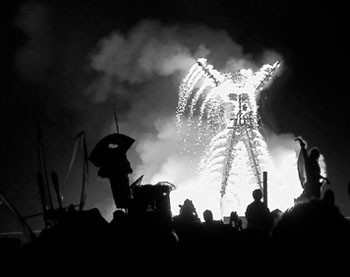
Santa Rosa High School Poetry Slam

High-school slam puts teen poets in the spotlight

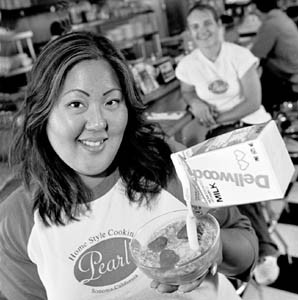
This is the moment. The keyed-up teens packing the auditorium of Santa Rosa High School have patiently endured 30 minutes of welcomes and introductions and explanations. Now the lights dim and the crowd falls silent. Sophomore Maayan Simon takes a long, deep breath and then almost sprints into the spotlight’s glare.

She halts before the microphone and turns to face the crowd.

“If people will pay a dollar-ninety-nine for wheat grass, why won’t they pay for the dandelions in my back pocket?” Simon begins with a confrontational shout. “Or the mud on my left shoe? Sheep may say bah, but so do most other animals . . . when they are in . . . extreme . . . pain.

The first annual Santa Rosa High School Poetry Slam has begun.

After less than 60 seconds–and exactly 101 politically charged words–Simon is finished, and the audience rewards her with a boisterous round of applause. Smiling, she steps away, allowing 10th-grader Chelsea Busch to take her place in the spotlight.

By day’s end, that intimidating pool of illumination at the front of the stage will have played host to the feet and sweat and words of 34 nervous young poets, all competing for cash prizes and a serious shot of self-esteem.

The event is the brainchild of Laurie Lovekraft, a Sonoma County musician and writer who’s been a visiting poet at SRHS for more than five years. The poetry slam is sponsored in part by the school’s groundbreaking ArtQuest program, best described as a way for qualifying SRHS students to major in arts-based disciplines.

ArtQuest is working in tandem with the Santa Rosa Symphony to create visual art and poetry to accompany the symphony’s presentation in the spring of Sir Michael Tippett’s A Child of Our Time. (A similar collaboration in 1999 yielded a critically acclaimed production of Benjamin Britten’s War Requiem.)

Many of the poems heard during today’s event were written on that theme, attempting to illuminate what it means to be a modern “child of our times.” But others bubbled up from the collective triumphs and tragedies of the student body. Case in point: A handful of poems touched on the stunning suicide last December of a well-known SRHS sophomore.

As if tensions weren’t running high enough, the poetry slam is being filmed by Academy Award-winning documentarian Tommie Dell Smith (Broken Rainbow). Her finished film, targeted for broadcast on PBS, will capture the enormous challenge of bringing A Child of Our Time to the stage.

But for now, all eyes are on the girl in the spotlight.

“Sugar clouds frost the periwinkle sky–not bad for mid-October,” Busch recites, perched at the edge of the stage. Her untitled poem compares taking a solo swim in a pond to taking bigger chances in life. As Busch speaks, she begins to remove her shoes and socks. She ends her poem with a leap from the stage to the floor.

She, too, is bombarded with applause.

And so it goes. The poems run the gamut from sad and sorrowful to angry and confessional. Some are even silly. Some performers stand still, calmly reading their work from handwritten pages, while others dance, scream, toss glitter, wave beribboned spears and fishing poles, or fall down writhing on the floor.

Raychelle Bell, pacing forward and back like a caged animal, eyes blazing with fury, recites “Ride to Destiny,” a passionate reaction to homelessness. She ends the poem with a polite curtsy.

The audience eats it all up, rarely responding with anything less than a deafening roar of approval. Many poems–such as Michelle Bourret’s “An Average Day,” which includes the phrase “My face burned like forgotten toast and my eyes boiled in their tears,” or Pacal Ezaki’s emotion-packed “News Flash from the Emergency Broadcasting System”–are received in pin-drop silence and rewarded with standing ovations. In one way or another, every poet is a winner.

But this is a poetry contest, and once the last poem is performed–Brennan Brockbank’s outrageous “Clothing Limit”–the panel of judges award the prizes. Bourret and Ezaki take third and second place, respectively, and Bell–who has read her poems in public exactly twice, counting today–takes the $100 first prize.

“Till now, my biggest fear has been getting up in front of people,” she admits after the show. “But once I got up there, it all just flowed. I always believed I’d never share my poetry with anyone.

“But now,” she says with a grin, “now, I’m hooked!”

From the February 14-20, 2002 issue of the North Bay Bohemian.

© Metro Publishing Inc.

Terry Healey

Second Sight

‘At Face Value’ author overcame cancer and prejudice

By M. V. Wood

“I remember how beautiful women would sometimes look at me,” Terry Healey says, his voice softening. “Our eyes would meet, and I’d know she was attracted to me. But then, after the operation, I’d see all these pretty women staring at me, and I’d know it was out of shock or disgust. Same action, completely different idea.

“It’s kind of funny.”

Healey, 37, has many memories of what it was like to be good-looking and popular. In high school, he was elected Homecoming Prince, and he was president of his fraternity at UC Berkeley. With plenty of friends, a loving family, good grades, and endless potential “life was pretty simple,” he recalls.

Then, at age 20, Healey discovered what appeared to be a pimple growing by his right nostril. After finally getting it checked, he was stunned to learn it was a tumor.

“But I was too young to take it that seriously. I was strong and healthy, and I had never been really sick before,” says Healey, who reads from his recently published memoir, At Face Value: My Struggle with a Disfiguring Cancer (Xlibris; $21.99), on Feb. 7 at Book Passage.

The operation to remove the tumor was minor, and Healey returned to college thinking his battle with cancer was over. But six months later, while horsing around with his frat brothers, Healey got a bloody nose. He checked himself in the mirror, and his stomach cramped in panic when he saw the lump inside his nostril.

This time the tumor was larger and the operation more extensive. When he awoke from surgery, Healey discovered that half his nose and upper lip had been removed. The bone and muscles had been extracted from his right cheek, allowing that part of his face to sink in. The shelf of his right eye had been removed, causing the eye to droop. Six teeth and part of his hard palate were gone.

As difficult as it was to see his new face, that experience wasn’t as devastating as what awaited him after his discharge from the hospital. “My mother and brother went to get the car, so I sat down in the waiting room by myself, ” Healey recalls. “I looked up, and it seemed like everyone was staring at me.”

Kids pointed, some laughed. People stopped dead in their tracks, mouths agape, staring. “I felt like the Elephant Man,” Healey says. “But I told myself things would get better soon.”

They didn’t. When Healey rode BART to work, teenage girls would stand in a circle giggling and peeking over at him. In bars, grown men would yell, “What the hell happened to you?” A fraternity brother told the other guys in the house that if he had been Healey, he would have either stayed hidden in a closet or just killed himself.

“People can be pretty cruel,” Healey says. “Their actions leave a mark on your psyche. Little by little you start thinking, ‘I’m a freak,’ and that just feeds on itself. You carry yourself differently. You cower. And then, people treat you differently because you act that way.”

At Face Value describes Healey’s transformation from a cowering, self-described “freak” to a confident, self-assured man. That transformation began when he started viewing his facial deformity as a blessing in disguise. “In a weird way, I’m proud of my battle scars,” he says. “They are what has brought me wisdom. I’ve become much more sensitive, and I try not to be judgmental. I’m a better person now than I was before the cancer.”

This transformation began around the time a beautiful girl fell for Healey–and then dumped him. ” She was smart and full of energy and absolutely gorgeous,” Healey says. “And she wanted to be with me. I figured if a girl like this could like me, it can’t be that bad.

“But then,” he continues, “after I asked for the millionth time how she felt about my looks, she told me that my problem wasn’t physical, it was mental. I was just too insecure, and she couldn’t deal with it. So she broke up with me. It was devastating, but also eye-opening and liberating. I thought, ‘This is great! It’s not my looks that are the problem–it’s me!’ I mean, there was nothing I could do about my looks. But me–that’s something I could work with.”

Terry Healey reads from ‘At Face Value’ on Thursday, Feb. 7, at 7:30pm at Book Passage, 51 Tamal Vista Blvd., Corte Madera. 415.927.0960.

From the February 7-13, 2002 issue of the North Bay Bohemian.

© Metro Publishing Inc.
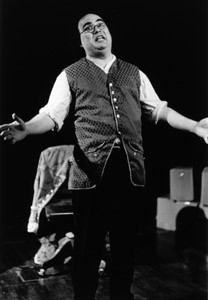
‘The Mothman Prophecies’

0

The Haunting: Gere gets spooked in ‘The Mothman Prophecies.’

Mystery Man

Real-life monster hunter takes on ‘The Mothman Prophecies’

Loren Coleman wasn’t all that frightened by The Mothman Prophecies, the freaky new creep show starring Richard Gere as a journalist on the trail of an eerie supernatural being.

To Coleman, the fact that his 16-year-old son is getting his driver’s license this week is a whole lot scarier. Were he any other moviegoer, however, The Mothman Prophecies might have had Coleman shaking in his well-worn boots. But Loren Coleman is a different breed of man.

A professional cryptozoologist (that’s a person who tracks and studies unknown critters), Coleman has authored numerous books (Cryptozoology A to Z, Mysterious America) exploring a plethora of hard-to-fathom phenomena, from Bigfoot and the Loch Ness monster to the goat-sucking chupacabra.

Then there’s Mothman, described in detail in Coleman’s popular book Mothman and Other Curious Encounters. Mothman is a big, shadowy shape with giant wings and glowing red eyes, supposedly sighted by dozens of folks near Point Pleasant, West Virginia, over a 13-month period beginning in 1966. The sightings stopped after the mysterious collapse of the Silver Bridge on the Ohio River, a tragedy that killed 46 people. These events were also chronicled in John Keel’s book The Mothman Prophecies, on which the film is based.

In the movie, Gere plays a tense investigative reporter trying to connect the Mothman sightings to his wife’s death. With the help of a local sheriff (Laura Linney), Gere talks to the locals, sees a bunch of supernatural things, and gets a lot of very strange phone calls.

Coleman, who has studied the phenomenon for years, has a much less mystical view of Mothman than does Keel. As a cryptozoologist, Coleman suspects that the so-called Mothman–named, he says, by a newspaper copywriter with a fondness for Batman–was a bird. Not the skinny sandhill crane that some theorists have pointed to, but a very large, very secretive creature that may be a descendant of what some South American Indians called the Thunderbird. Or maybe it was just a big owl.

“Either way,” he says, “I think there might be some overlap between the Mothman and these other big bird crypteds–‘crypted’ means unknown–that are talked about in Native American tradition.”

Coleman, who lives in Maine, liked the movie. “When I go to things like The Mothman Prophecies, where I know the book so well and know the phenomenon so well,” he says, “I realize that it’s a fictionalized version of the real story. So I can just sit back and enjoy myself.”

Sounds reasonable enough.

“What’s interesting about Mothman,” Coleman continues, “is that there are so many peripheral phenomena around this story–more than just the creature itself–that have impacted my own life.”

“Really? What, for example?” I ask.

“Well, I was in Point Pleasant a month ago,” he says. “While I was there, I sat in my hotel room and talked to John Keel about what I was doing and who I was interviewing, and while I was talking to him, I had telephone trouble.

“Then I go on these radio shows,” Coleman continues. “I was doing a phone interview on this one show in Toronto last Saturday night, and five times throughout the interview the phone would start blasting and echoing, and then I’d be thrown off the line. A couple seconds later the technician from the show would call back and apologize, and he said, ‘We’ve been having telephone problems ever since we started talking about Mothman.’ So that’s kind of spooky, I suppose.”

“It could be a coincidence,” I suggest.

“Definitely. Sure, it could be a coincidence,” Coleman replies. “The fact that I then went upstairs and a light bulb blew out over my head could have been a coincidence, too.”

Hard to argue with that.

“It’s just that when they’re all happening so close to each other,” he goes on, “right around the time we’re all talking about Mothman, people start putting these events together and saying, ‘Hmmmmm. This is pretty weird.’

“I mean, even the collapse of the Silver Bridge after 13 months of Mothman activity–for all of those sightings to end in that way–it spooks people out enough that they may start drawing conclusions where there are none.”

From the February 7-13, 2002 issue of the North Bay Bohemian.

© Metro Publishing Inc.

Kissing

First Kisses

Wanna know how kissing got started? Are you sure?

The truth isn’t always pretty. Consider the act of kissing. Smooching. Locking lips. Grabbing some sugar. Whatever you call it, kissing is a worldwide pastime so popular, so pleasurable, so commonplace that the average human being will spend two full weeks of their lives doing it. That’s 336 hours–or 20,160 minutes, or 120,960 seconds–spent engaged in the act of ardent osculation.

There are, of course, all kinds of kisses. Diane Ackerman lists a few in her book A Natural History of the Senses: “wild hungry kisses,” “rollicking kisses,” and “kisses as fluttery and soft as the feathers of cockatoos.”

In short, kissing is a wonderful thing. We do a lot of it. Most of us enjoy it. And almost all of us remember our very first kiss with some degree of wistful nostalgia.

So leave it to anthropologists to spoil everything, to yank the pulse-pounding romance from one of our favorite human activities. In particular, blame goes to those unsentimental science sleuths who’ve gone and figured out why we started kissing in the first place.

To repeat: It isn’t pretty.

Just as children are frequently freaked after learning the truth about where they really came from–“Wait! Wait! Daddy did what?”–it’s quite certain that many modern lovers will be appalled and revolted to learn that the act of kissing began with prehistoric mothers chewing up food–then pushing it into their children’s mouths with their tongues. “Hungry, honey? Then come give Mama a kiss!”

There are other theories, of course. According to one, kissing evolved from the smelling of a companion’s face as an act of greeting, as if to determine the mood, disposition, and recent adventures of the newcomer (much like your cat or dog does on welcoming another pet into the house after a frolic in the yard). While performing this animalistic smelling ritual, the theory goes, certain groups began touching foreheads or noses or lips, a comforting custom that remained long after its original motivation had faded into the mists of time.

Another possibility is that our primitive lip-locking ancestors, imagining that human breath carried the power of one’s soul, were attempting to inhale the hot breath of their loved ones and, by exchanging breaths, fusing their souls together. At least that suggestion is kind of sexy.

If these conjectures are true–and they certainly are bizarre enough to be true–then the evolution of the kiss, from its rough, regurgitative beginnings to the elevated state of romantic respect it now enjoys, is surely one of human culture’s most remarkable, and unpredictable, transformations.

Just take the jump from those first caveman kisses to 16th-century England, where the game of passing a clove-studded apple proved a popular staple at Elizabethan country fairs. Players first prepared an apple by piercing it with as many cloves as the fruit could hold. A maid then carried the apple through the fair till she spied a lad she thought worth kissing. She would offer him the apple, and once he’d selected and chewed one of the cloves, they would share a kiss. After that, the apple passed into the man’s possession, and he would venture off in search of another lass to continue the game with.

By the time the apple had lost its cloves, at least a hundred people had been kissed twice. The cloves, by the way, were for freshening the breath–proving that those Elizabethans were as clever as they were horny.

Jump again to the sort of kiss described by 18th-century Scottish poet Robert Burns with these gentle words:

“Honeyed Seal of soft affections, Tenderest pledge of future bliss, Dearest tie of young connections, love’s first snowdrop, virgin kiss.”

Yes. Yes. These lines might inspire some modern people to barf, thus proving that the kiss hasn’t changed all that much in the last several thousand years. Or that may also just reveal how much our taste in poetry has changed since the days of Bobby Burns.

“Kissing must now be seen as an art form,” explains Santa Rosa sex therapist Dr. Victoria Lee, author of the newly published book Ecstatic Lovemaking (Conari Press; $16.95). “To me, kissing truly is an art form. It’s the most intimate of physical acts, more intimate than sex–think of the prostitutes who will do anything but kiss. Like other kinds of sexual and sensual acts, it’s an opportunity to express the deepest essence of our being, and when we see it that way, everything changes, from the way we kiss to the way we make love.”

On the other hand, history shows that kissing, art form or no, hasn’t always been approved of. While the Elizabethans were passing the apple, the government of Naples, Italy, was banning the practice of kissing entirely, making it an offense punishable by death. Certain ancient Finnish tribes might bathe together in the buff in coed groups with everyone’s naked genitalia on conspicuous display, yet oddly they believed kissing to be indecent and distasteful.

Even today, right here in America, kissing can get you into trouble. In Indiana, there is a law on the books making it illegal for a mustached man to “habitually kiss human beings,” and in Hartford, Conn., a husband is prohibited from kissing his wife on Sunday.

While anthropologists continue to nail down the specific origins of kissing, other scientists are working to discover its medical and social effects on us. Did you know that the average kisser burns 26 calories a minute while smooching? There have even been studies suggesting that people who kiss their spouses goodbye before leaving for work average higher incomes than do those heartless people who don’t.

So when all is said and done, it seems that the reason we kiss is that, on a hundred different levels, it’s good for us.

“Humans need enjoyable physical contact,” Dr. Lee says. “However it was that kissing evolved, however it continues to evolve, we cannot overestimate the spiritual and physical importance of one human being kissing the lips of another.”

From the February 7-13, 2002 issue of the North Bay Bohemian.

© Metro Publishing Inc.
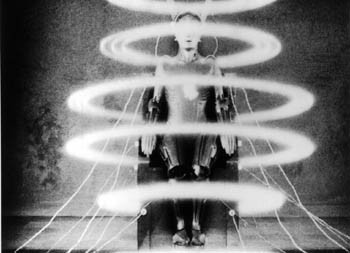
Polyamory

0

More than One

One woman’s path to polyamory

By M. Volkova

Say you have a friend, a fine, upstanding lesbian friend who’s in a long-term relationship that you’ve always envied. She and her girlfriend have been together for over a decade. They’re a fucking institution. The only reason they don’t have an actual picket fence is because they rent and their landlord keeps saying something about building permits.

So one day, after you and your friend have drunk to the murky bottom of several cups of coffee, she turns to you and says, “I’ve taken a male lover. But, um, I’m still with my girlfriend.” You pick up your jaw from the table, but then what do you do? Condole? Congratulate?

Both. Neither. Just listen.

It was a clear and sultry night, like any other summer night in Phoenix. The pool was warm, the triple margarita was well and truly tripled, and the fresh-faced young salesman was pleasantly persistent. The conference had come to an end, and we had nothing better to do than each other.

Back in my hotel room, I sprawled in an easy chair and watched him take off his swim trunks. Somewhere underneath my drunken haze and growing excitement, something prompted me to ask: “Did you know that I’m a lesbian?”

“Um. No.” He had the decency to pause.

“Yeah,” I said, my head lolling back. “I’ve been with my girlfriend for eight years.”

“Oh. Well. Do you want to stop?”

Something else uncurled in me. “No,” I said.

One of these days I should write that young man a thank-you note. That one drunken fuck set me on the path to polyamory.

Sitting on my shoulders as I write this is a crowd of poly people, folks in the polyamory community whom I haven’t met yet but want to. I imagine it howling in protest, this subculture that is tired, perhaps, of being sensationalized in the media but always will be because certain aspects of our (sex) lives are more titillating (sex sex sex) to the general public.

Your whiplash entry into the world of multiple loves, say these shoulder-sitters, is not what polyamory is about. It’s about conscious living, loving more, like snugglebunnies in a big puppy pile, dismantling the dominant paradigm of mono-hetero domesticity, remaining open to the magical realm of possibility.

Well, yeah. These days no one could ever accuse me of not being, you know, open to possibilities. And I don’t want to be labeled a traitor to the cause, whatever that is.

But I’m beginning to understand that there are many paths to polyamory. Some people always knew about themselves; they could never settle down. Some people are drawn ever upward to Love, a higher state of being that transcends a marriage license. And some people get shitfaced and wake up with a bra on the lampshade and their world turned upside down.

So shut up and let me tell my tawdry truth.

I can speak of that time now with some calmness and even humor, but on June 3, 2000, I was not dealing well. I was hurtling down the dark desert highway at 100 miles per hour, feeling sick and hyperventilating and listening to the poignant harmonies of the Indigo Girls on endless repeat. (With my hetero indiscretion, had I resigned the right to listen to them?) I wept so hard I could barely see the road.

At home I stumbled into the bedroom and flung myself on the mercy of my partner, L., who was still half asleep and therefore quick to offer at least surface forgiveness.

Unconvinced of my worth and her sincerity, I called a counselor the next day.

Existential angst is not in the DSM-IV–every mental-health professional’s guide to psychological disorders–but it ought to be. Because for months and months I had nothing to pin my problems on.

This whole thing confused the hell out of me. The uncomfortable urgency of my sexuality disgusted me, angered me, shook me to the core of my lesbian-feminist being. I had slept with men in college, but that was a long time ago, in a galaxy far, far away, as they say.

Yes, yes, I was getting in touch with my deepest desires, which is a radical act for women. But some of my deepest desires revolved around dick, around getting hard evidence, so to speak, of male appreciation for me and my physical attributes. I wanted to be adored, objectified, flirted with, sought after–and how fucked up is that?

Not so very, it seems, not for me. Of course, it took me six months of counseling to get to that point. (Don’t ask me to show you the bills.) That’s about the time I began to realize I wasn’t going to get any of the aforementioned action from L.

L. is a calm, serene woman, less verbally expressive than I am by far, and psychologically incapable of spilling torrents of trash-talk in my ear. She would never eye me up and down before grabbing my shoulders and ravishing my mouth–ugh, it’s right off the cover of some paperback romance novel. And she will certainly never grow a penis.

But I didn’t want to leave L. We had years of shared history, a comfortable, sweet home life. She thinks I’m crazy for all the impossible projects I pursue, but she supports me nonetheless. I like to cook for her, watch movies with her, take road trips, snuggle.

The sex? I knew you’d ask. Her heavy-lidded gaze makes my chest ache. Her lips are so soft and giving when I lean down to kiss her. We can make out for hours. After all this time I still love to do her, to make her gasp. She makes love to me tenderly, tentatively–she does not have the stamina to fuck me hard for long–and she always holds me while I pound myself and cry out and come in violent waves, asking no questions and wiping away my sweat.

Was it worth jeopardizing this seemingly sure thing for the uncertain lusts of the flesh? What kind of sex-crazed nympho was I for even asking?

I couldn’t answer any of these questions. I was trapped in this state for months, until one day my counselor asked me what I really wanted, if I could have it free from fear or shame or judgment or scheduling complications. And I started crying, again–oh, for fuck’s sake, where’s that tissue box?–and said, “I want to stay with L., and I want to sleep with men.”

In psychobabble, this is known as “a breakthrough moment.” Other people might call it “wanting to have your cake and eat it too.” That’s how irrational and crazy and greedy I felt.

In a movement theater piece I choreographed at the time, I had myself walking around and around in a circle, saying, “I ask too much.”

I ask too much. I ask too much. I ask too much.

You get the drift.

Eventually, on Independence Day, 2001, I did ask. That conversation was the most frightening thing that L. and I ever did.

After several such talks, we agreed not to discuss it anymore at night in our bed. The uncertainties were strongest then, their monstrous shadows stretching out long from the closet and leaving a chill around our shoulders, even in the midsummer heat.

Instead, we took to driving out to a nearby lake, where we sat on some gnarled tree roots by the water and carefully negotiated the protocol of this new relationship. The swimming ducks and paddleboats lent a surreal calm to the waterscape as we stared up at the improbably blue sky and tried to patch together some rickety framework on which to hang our tattered hearts.

I still have the original notes from those first tortured talks. “Not in the house.” “Not in L.’s car.” “Call if spending the night.” “No messages on our shared voice mail.” “Nobody who L. knows socially.” Can you read between the lines? Can you imagine the cracks in our coupleness that had to happen for us to even speak those ideas aloud?

L. agreed to give an open relationship a try, but I knew, I knew she was deeply unhappy about it. And I wrestled with the guilt of going through with it anyway.

My one source of relief in the middle of the tumult was the thought that I actually wasn’t the only one. I found the alt.poly newsgroup, a fractious bunch that, like many newsgroups, had little cohesion but great FAQs.

And it turned out that a few female friends who I thought were dyed-in-the-wool dykes were actually managing multiple long-term relationships with both men and women. I came out to one of those acquaintances at a retreat, while we were skinny-dipping in a country pond. (Hey, we were naked. It felt like a self-disclosure kind of moment.) Her response was gratifyingly calm, something along the lines of “Wow, that’s great. Are you and L. doing okay?”

Were we? Yes, about as well as could be expected. But so far, the whole thing was hypothetical. Any real-world application felt beyond me. I was, however, intensely curious about what would happen if I did put myself back on the market.

As a birthday present, a friend wrote my personal ad, which I posted to a local online bulletin board. The ad read: “Fierce, articulate bi-dyke with big tits seeks caring, confident man who won’t bore me. We both make conscious choices about our atypical sex lives.”

Most of the men who responded sounded like Neanderthal fuckwits. (Ah-ha, grumbled my inner feminist, still chafing at the embarrassing implications of my true sexual preferences. That’s what you get when you mention tits.)

Not always. Occasionally you get men like S.

Obviously articulate, ironic without being completely detached, S. introduced himself as a mischievous South Asian lad, a doctoral student in an advanced field of science who liked to cook, read voraciously, and wanted a no-strings-attached sexual adventure with someone who could hold up her end of the conversation. Works for me, I thought, and wrote back.

Things happen fast on the Internet. Fortunes are made and lost, news travels at lightning speed, and lust blooms like a flower in one of those fast-forward nature documentaries. Within a week we were exchanging porn fantasies, and a month later S. and I met for a coffee chat.

I wore my schoolgirl-gone-bad outfit: short plaid skirt, very unbuttoned shirt, and thigh-high fishnet stockings. The getup made me look much more assertive than I felt.

Sitting across from S. in the dimly lit cafe, I toyed with some coffee that I didn’t really need. I was jittery enough, terrified of what we were doing. He saw my fear before I said anything and talked to me softly about everything except what we were doing, about his work, about movies, about childhood books, about I don’t remember what–and it didn’t much matter. He was just making calming noises to coax me down from the ledge, all the while gently stroking my shaking hands with his delicate fingers.

Eventually I stopped trembling and blushing, and we agreed to head out for dinner. On the way there, my chutzpah came roaring back, and I pulled S. into an empty doorway. When he pressed me up against the wall, gazing at me darkly and running those soft fingers up my thigh, I knew.

The next day S. e-mailed me to explain that our encounter, which went on to include nine noisy hours in a hotel room, had “surpassed [his] expectations by orders of magnitude.”

Ah, that S. Ever the scientist.

That was five months ago, five months of more or less weekly trysts that leave me wrung out for a day or two afterward. I did not know back then how much I craved this kind of connection.

S. meets me blow for blow and gets off on the intensity of my appetite. He is confident to the point of arrogance, explicit in every sense of the word, snuggly or sadistic at just the right moment, a truly twisted pervert with impeccable manners. He has a disconcerting postcoital habit of bringing up science news of the day, but it’s cute when he’s naked and nuzzling my wrist.

Complications have arisen, of course. This is no poly paradise (which I’m not sure even exists, except maybe at the end of some Robert Heinlein novels). The more L. and I are honest with each other about how we are growing and changing, as individuals and as a couple, the less certain we are about our long-term future.

In our lakeside summit meetings, we had said we were committed to the relationship; that was the truth but not the whole truth. Now we know that we are committed to the relationship as long as it works for both of us, which does look possible, even likely, but is not the sure bet we once thought we had.

And S. and I have actually fallen in love, despite our original intention of keeping things on a fuck-buddy basis. This goes against everything I had intended at the beginning, when I was feeling all jaded and gritty and I-can-keep-my-distance. But I must be forgiven. Turns out I can’t resist a man who calls me his little girl and feeds me mango ice cream, and then beats me with his belt and screws me senseless. (Yes, my emergent BDSM tendencies are a complicating factor, yet another thing that L. can’t, won’t help me with. But that’s a different story.)

What about this story? How will it end? Soon, for one thing, at least as a tale featuring S. as a central character. He told me from the beginning that he would probably be leaving the area for his postdoc work. It seems also that he might have an arranged marriage in the near future, something that happens with some frequency among the upper class in his culture.

Whatever happens, I am an interested party with no right to speak. All I can do is laugh at the notion of this Muslim-turned-atheist top arrayed in the chaste white of a bridegroom and marrying a virgin and cleaving unto her forever.

A few months ago I was having a hard time swallowing the bitter irony of this conclusion. Though I had thrown over the monogamy paradigm, I got stuck in the true-love-is-forever conundrum. But this true love, it turns out, is perfect in its short-term, limited-warranty way.

Besides, if I got lucky once with that ad, who knows who might answer it next time?

These days I’m feeling philosophical like that. I mean, I will cry my eyes out at our last rendezvous, and I won’t move on right away to someone new, as a couple of my friends have suggested with only the slightest touch of cattiness. And yes, it is a messy, messy business, leaving tearstains on pillowcases and scribbled-out pages in my day planner.

But I would not rewrite this story for anything. From my ecstatic date last weekend with S. to yet another heart-wrenching talk with L. this morning, this is the way it has to be, as I remind myself with a string of poetry magnets on S.’s fridge:

you have saved me from an eternity of what if with one moment of yes

From the February 7-13, 2002 issue of the North Bay Bohemian.

© Metro Publishing Inc.

David Byrne

0

Making Sense

The thinking man’s rock star gets accessible

By Alan Sculley

In the course of recording Look into the Eyeball, David Byrne realized that he had written some of the most melodic and accessible music of his career for this 2001 release. It was a thought that unnerved the multitalented songwriter, performer, filmmaker, and artist.

“I have a little bit of that prejudice that I think a lot of us have,” Byrne says. “That if something sounds too easy on the ears, if it sounds kind of pretty or beautiful, your first assumption is that it doesn’t have much depth to it, or it doesn’t have anything radical or important to say.”

“I think it’s an erroneous assumption,” he continues. “But it’s one that’s there. And I tie that over into when I hear my own stuff. If something sounds real pretty, I think, ‘Oh, that’s not very good.’ But I think it’s a false assumption to [dismiss things] that way.”

The need to challenge himself musically has been an ongoing thread throughout Byrne’s career, be it with the Talking Heads, the innovative, multifaceted group he cofounded in 1975, or since leaving that band in the late ’80s to concentrate on his solo career.

Over the course of eight studio albums, the Talking Heads’ music evolved from spare, angular pop into a full-bodied, groove-oriented sound that drew strongly on African and other worldbeat rhythms without losing the pop sense that had always been a major facet of the band.

In fact, Byrne’s decision to leave the Talking Heads came partly from realizing that he couldn’t pursue some of his musical ambitions within the context of the group.

At the time, the Talking Heads had released their final studio CD, Naked, and Byrne had turned his attention toward his ever-growing interest in worldbeat music. He wanted to release a Latin-flavored album, an idea that didn’t fly with the three other members of the Talking Heads, guitarist Jerry Harrison, bassist Tina Weymouth, and drummer Chris Frantz.

“I wanted to do a Latin record, and, well, I took some of the songs to Talking Heads, but they didn’t want to do them,” Byrne said. “That didn’t leave me too many choices.”

Of course there were other issues, one of which was the tension resulting from Byrne’s growing prominence as the Heads’ focal point during the latter stages of the band’s tenure.

By the mid ’80s, Byrne had branched out into a variety of outside projects. Working with producer Brian Eno, he had explored African music on 1981’s My Life in the Bush of Ghosts. He had directed the 1986 movie True Stories. He had also collaborated with Robert Wilson on the theatrical production The Knee Plays and with noted choreographer Twyla Tharp on the Broadway production of The Catherine Wheel.

Amid such projects, the New York Times Magazine did a cover story on Byrne, proclaiming him the “thinking man’s rock star.” He was also featured on the cover of Time magazine, which called Byrne “rock’s renaissance man.”

It was clear that the other members of the Talking Heads resented the assumption that Byrne was the creative engine behind the group. In some circles, it was suggested that Byrne had essentially taken over the Talking Heads.

“They’re right about part of that,” Byrne says when asked about the situation. “I don’t know about taking over [the band]. I don’t think that part happened. But the press was definitely focusing on me, which I think was not a good thing. Yeah, it was very divisive, and of course a lot of the press liked that, too.”

Though the Talking Heads never officially announced a breakup, by 1989 the group had essentially split. “It wasn’t fun when I left, and it hadn’t been fun for awhile,” Byrne says. “I think we were still making good music, so I think that part worked out OK. But I thought, ‘This is not what this is about. I’m not into being a martyr here.’ ”

So Byrne stepped into the next phase of his career with both feet. He founded a record label, Luaka Bop, that focused largely on showcasing the music of South America and Africa.

As a solo artist, he continued to delve further into various combinations of worldbeat and pop. First out was his 1989 album of Latin music, Rei Momo. The set drew mixed reviews, however, and Byrne received a healthy amount of criticism from musicians and writers who felt his music lacked authenticity.

Byrne’s restless spirit was not deterred, and he continued to draw from an eclectic range of musical influences on the solo albums that followed.

Uh-Oh highlighted more of Byrne’s pop tendencies and is the solo album most similar to Look into the Eyeball. David Byrne, released in 1994, found him shifting his music into a leaner, more intimate setting, while 1997’s Feelings went more eclectic as Byrne collaborated with artists ranging from the Colombian music producer Joe Galdo to the new wave art-rock band Devo.

For Look into the Eyeball, Byrne entered the project with a general concept he wanted to pursue.

“The self-titled album pretty much had a simple concept that I would put together a band, a real band, take it on the road and then record after we played a bunch of live dates, which we did,” Byrne said. “The Feelings record, though, was a bit all over the place. . . . The only concept I can think of there was the fact that it was a collaboration with a lot of people. This one was, yeah, more musically defined–bass and drums, some percussion and strings. And pretty much that was the musical palette on most of the songs.”

Working within that format, which Byrne reproduces on tour by featuring a six-piece string section in his current band, pushed Byrne’s music into a more melodic direction.

On the new album, Byrne is especially successful at merging percolating rhythms with soaring string and vocal melodies in the song “The Great Intoxication.” “Desconocido Soy,” a song sung entirely in Spanish, shifts the focus more to a grooving beat without losing the song’s sharp melodic edge. “The Revolution” pushes in the opposite direction, downplaying rhythm in favor of a swooning melody.

He also found himself tapping into sounds and styles that recall some of the Talking Heads’ poppier moments (“Like Humans Do” and “Broken Things” being prime examples).

In various interviews, Byrne has admitted that early in his solo career, he tried to avoid anything that would evoke his former band. These days, he’s more willing to embrace some of the musical trademarks of the Talking Heads, although he approaches such familiar styles with considerable care.

“There was one [song] that I did that didn’t make it to this record that sounded very much to me like an old Talking Heads song,” Byrne said. “It was a good song, but it didn’t fit on this record. So that’s still part of my makeup. But also I’m aware that it’s a danger, that I could slip into a well-worn path there. It’s something that comes a little bit too easily.”

From the February 7-13, 2002 issue of the North Bay Bohemian.

© Metro Publishing Inc.
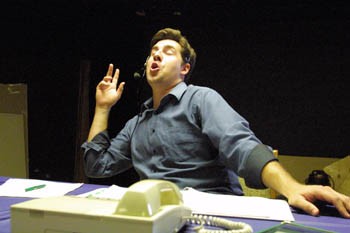
Beausoleil

0

Born on the Bayou

Beausoleil conjures a tasty Cajun stew

By Greg Cahill

Their name is derived from a spiritual term describing the Acadian promised land. Yet the soft-spoken Michael Doucet–fiddler, songwriter, and leader of the influential band Beausoleil, Louisiana’s leading ambassadors of Cajun music–recalls a time not so long ago when it wasn’t cool to be Cajun. “The moment you even mentioned Cajun, you were put down for the way you spoke or criticized because the music was out of tune or the food wasn’t sophisticated enough,” he says.

Tired of being put down, Doucet in 1969 started delving seriously into the music and folklore of Louisiana’s French-speaking Cajun culture. “Certainly my family–which is French Acadian on both sides–are a very proud, fair, and honest people,” he adds. “I felt it was time to right the wrong.”

In the twenty-five years since the release of the band’s first U.S. album, The Spirit of Cajun Music (Swallow), Beausoleil has spread the infectious joy of the Cajun sound, spearheaded a Cajun cultural revival (most notably through the best-selling soundtracks for Belizaire the Cajun and The Big Easy), garnered three Grammy nominations, and remained in the forefront of a commercial renaissance that has made it very cool to be Cajun.

The band’s most recent album, Looking Back Tomorrow: Beausoleil Live! (Rhino), captures the remarkable verve of this Southern regional phenomenon on its first concert recording. Beausoleil perform Feb. 9 at the Mystic Theatre in Petaluma.

The band’s music flows easily from traditional Cajun waltzes and reels to blistering “gombo” music (a cross between gumbo, the spicy, Southern mishmash stew of seafood or chicken, and gonzo, the term coined by journalist Hunter S. Thompson meaning bizarre, crazy, or eccentric). It’s a schizophrenic style that sometimes has brought scorn from purists who complain that the band has drifted too far from its French Acadian roots.

“I sure hope we’re schizophrenic,” Doucet, 50, quips with a laugh when asked about the band’s delicate balancing act between the traditional and progressive musical camps.

Beausoleil’s infectious hybrid of Cajun, Creole, blues, jazz, and French Caribbean island rhythms reflects “the living tradition” of the Southern Louisiana culture, Doucet explains.

“The French Acadian society [in Louisiana] was basically a very isolated, agrarian society that kept its values for more than 300 years and was thrown abruptly into the 20th century via construction of roads and bridges and the introduction of TV and radio,” he says. “So if our music is schizophrenic, it’s time-traveling schizophrenia, because we can play a song from the 14th century and follow it with a new composition that incorporates those influences that have affected the region.

“I think it’s very important to get across that it’s a very diverse culture.”

Beausoleil perform Saturday, Feb. 9, at 9pm at the Mystic Theatre, 21 Petaluma Blvd. N., Petaluma. Tickets are $18. 707.765.2121.

From the February 7-13, 2002 issue of the North Bay Bohemian.

© Metro Publishing Inc.
Zen Food-Sex

0

Hunger Artist

Zen and the art of food-sex

By Gretchen Giles

The gorgeous furred silk of a man’s belly and the dark, lovely hollow a neckline reveals when a woman bends down all make me hungry. Not starving for smooches, but longing for foodstuffs that ooze and goop, that add a touch of sweet to the savory, that are made to be eaten with just fingers or licked from a thigh.

The distinctive physical pleasures of food and sex go together in human history as naturally as do roasted mastodon and cave-born babies. Now that we’re presumably somewhat evolved, we can choose the hunt and control the babies. This is when the real pleasures of food-sex arise.

Food-sex is a Zen concept, if you will, a koan instructing that good food shared well is just as important to intimacy as good lovemaking well shared. In today’s lesson, food-sex is not that meal designed to sweep a potential love-mate off his or her feet and into your consensual clutches for the very first time. Today’s lesson, in fact, is about heightening the gustatory pleasure of that someone who is already well-swept.

Applying the rules of the perpetual picnic, your adventure consists of anything you and your lover both enjoy, delicacies not usually indulged, dishes made ahead, and fresh green things straight from the ground.

Garlic, at least in my small, rosy world, is essential. So, too, are several uninterrupted hours, a reliable source of heat, and the joyous musical religion of Al Green. Texture, shape, and consistency are important, but dress is strictly casual–just one large linen napkin will do.

As with any feast, preparations must be made. Even that impressive soul who rises from the rumple to whip together a postcoital treat has probably thought about such a graceful arising well in advance–or should have. As necessary as the prelove rituals of bathing and brushing are the mundanities of shopping and cooking.

But not everything must be cooked by you. After all, this is about sensual swoon, not Betty Crocker. Simply buying little truffley treats is often just enough; a good loaf of bread and a ripe cheese marry well; a grocer’s roast chicken and deli pasta salad will suffice; and yes, there should always be enough wine.

Allowing time to be thoughtful and unhurried only adds to the anticipation. Your Zen-influenced boink-repast should ideally consist of things that can wait and mellow until you’re ready for them. Risotto, that stir-stir-stir pretty pet of the rice family, is, for example, a poor choice.

However, cheese tortellini that have been cooked to plumpness, well-drained, and then coddled in a bowl with the rough chop of three Roma tomatoes–seeds and all–a handful of fresh slivered basil, a few pressed garlic cloves, the grate of fresh Parmesan cheese, and a three-to-one bath of extra-virgin olive oil and balsamic vinegar, is an excellent choice. Salted and peppered to taste and left to infuse while covered on the table, this dish is always ready when you are.

Similarly, asparagus that have been washed and then dried in a clean dish towel can wait for your attentions. Break the ends just where they wish to bend–never force your edible koan to do anything it doesn’t want to. Arrange on a cookie sheet or pizza pan, drizzle with olive oil and a sprinkle of kosher salt (table salt is fine). Roll these wonderfully green, phallic stems about on the pan until they’re somewhat evenly covered in oil. Broil for about seven minutes, taking the pan out half way through to shake the asparagus around for even cooking. Remove from the broiler, squeeze half a fresh lemon over the stalks, and arrange on a plate. They’ll still be there when your fancy finally produces a taste for produce.

It has somehow held our collective romantic imagination that chocolate-dipped strawberries connote almost unscalable heights of the la-ti-dah, but how many of us actually know how simple these are to make?

Lean closer, and I shall reveal that the large, seeded nipple of a strawberry need merely be dipped in the melt of a bag of ordinary semi-sweet chocolate chips that have been heated in a double-boiler. (In my humble abode, double-boiler refers to a pan of hot water with an old glass bowl set atop it because it happens to fit). Dip your strawberries in the chocolate, swirl, and place on a piece of wax paper. Instant elegance! Crunch and juice and sweet on a plate.

This also works for dried apricots, almonds, banana chunks, raw tuna, nasturtium heads, or any other thing you could possibly ever wish to dip in chocolate.

I often think that the best part of being divorced, other than the glory of simply being no longer married, is Dad’s Weekend, that infrequent event when the children’s father takes them away to troll the malls, watch marathon bouts of TV, and munch fried pies, just five for a dollar. Then, the tyranny of a regular dinner no longer looms, and my lover and I can be fueled solely by exactly that which pleases us best.

This bed-heavy freedom is usually sustained by store-bought goodies that I greedily purchase in lieu of saving for a new car or a down payment on a house.

The local fancy store barbecues meat on weekend nights, so I get a hot, rare slab. Next in the basket go a stout loaf of fresh Campagna bread, a wedge of stinky-ripe Cambonzola cheese, and a container of cured green olives.

Fresh scallions are later washed and shaved into thin, curly sticks. A simple salad is quickly tossed from lettuce cannily washed on Thursday and a vinaigrette mixed up while boiling farewell oatmeal that morning for the children.

Berries or cold grapes? Ripe fragrant cantaloupe to wrap with prosciutto? Such dilemmas. Chocolate, the dark, thick kind that must sometimes be chopped with a cleaver, not that waxy type put out by the good folks in Pennsylvania, is essential.

When considering this lesson, it’s only natural that your food be as naked as you are. This is your life, your spring, your lips and teeth and tongue and fingers and mouth.

Your hunger.

From the February 7-13, 2002 issue of the North Bay Bohemian.

© Metro Publishing Inc.
‘Wisconsin Death Trip’

Hell’s Hamlet

‘Wisconsin Death Trip’ revives some troubling memories

By

In roughly a million movies, amnesiac characters try desperately to remember some urgent, forgotten matter. Most recently, Kurt Russell in Vanilla Sky and Joe Pantoliano in Memento played figures trying to tease reluctant memories awake in their films’ leading characters. The popularity of this kind of mystery echoes a national problem: We in the United States have a chronic case of historical amnesia.

One attempt to wake us up from it is found in Michael Lesy’s fascinating 1973 book Wisconsin Death Trip, which chronicles the wave of late 19th-century crimes and mortality in the vicinity of Black River Falls, a small town in Wisconsin. Reading this book could give you the impression that the hamlet was built on an 1890s version of a Hellmouth, a la Buffy the Vampire Slayer.

The residents of Black River Falls were recent immigrants who came to mine and farm in the newly opened territory. But the land was too scrubby to live off. The banks, railroads, and mines were subject to sudden failure, inflamed by the depression of the 1890s. Even by the standards of the Norwegian immigrants, the winters were cruel. The pressure crushed the settlers through hard work and bankruptcy. Thus the local history, recorded in a small weekly newspaper, is a record of depression, suicide, disease, and murder.

James Marsh’s film version of Wisconsin Death Trip is a 76-minute-long condensation of the book–and the movie is a total success.

Marsh deftly captures the mood of the threatening wilderness. His bare-bones budget complements the rawness of frontier life, which he studies with the velvety cinematic obsession of a David Lynch. Here, a nonprofessional cast silently reenact the old crimes. Marsh divides the film into seasons and connects his almanac of doom with recurring characters.

Wisconsin Death Trip finds a charismatic antiheroine in Mary Sweeney (played fiercely by Jo Vukelich), a traveling madwoman who loved to snort coke and smash windows. In the account of Mrs. Larson (Molly Anderson), who drowned her three children, the film presents a parallel to Susan Smith, sentenced in 1994 to life in prison for driving the car that contained her sleeping children into a lake. And there’s even a decadent celebrity: Pauline L’Allemand (Marilyn White), a noted opera star who retreated to the wilds of Wisconsin–and then into madness.

Actor Ian Holm, most recently seen as the ring-jonesing hobbit Bilbo Baggins in The Lord of the Rings, narrates the casebook. Aside from his narration, Wisconsin Death Trip is mute, accompanied by a beautifully eclectic soundtrack that ranges from Debussy to Finnish folk songs to Blind Lemon Jefferson’s “See That My Grave Is Kept Clean.”

Marsh goes a step farther than the book by visiting Black River Falls today. He seems to wonder: How could a past so infamous be interred beneath this peaceful small town? He observes children playing, the high-school homecoming game and parade, the old people half-dead in the retirement home.

Naturally, some critics have accused Marsh of patronizing the town, especially by filming nursing home residents drowsing through a visiting glee club’s rendition of “The Star-Spangled Banner.” But isn’t this a perfect metaphor for how Black Rock Falls’ memory sleeps? And though the film doesn’t mention this, Black River Falls isn’t a backwater today; it’s heavily touristed, visited in the summer by Chicago area hikers and mountain bikers. What we see today may look a little stodgy, but it’s a triumph over a lurid, agonizing past.

In its way, Wisconsin Death Trip is an optimistic film. Today’s young people are supposed to be lost, addicted to drugs and television, a generation of nihilist lawbreakers whose misdeeds testify to the lapse of family values. Marsh’s film, set in a time of thoroughly religious, strong families, is alive with murders, drug abuse, and teen crime. By forgetting the trouble we once had, we exaggerate the trouble we have today.

‘Wisconsin Death Trip’ opens Friday, Feb. 8, at the Rafael Film Center, 1118 Fourth St., San Rafael. For details, see or call 415.454.1222.

From the February 7-13, 2002 issue of the North Bay Bohemian.

© Metro Publishing Inc.
SAMM

0

They are SAMM

Sonoma Alliance for Medical Marijuana flexes political muscle

By Mari Kane

Marijuana smoke mingled with anticipation in the air of the Forestville home of teacher Marsha Cameron. It was one week before the 1996 presidential election, and a group of signature gatherers, educators, and patients were meeting to plan for the possibility of victory–the passage of Proposition 215, California’s Compassionate Use Act.

Cameron brought the meeting into focus by announcing, “If Proposition 215 wins, our work is just beginning!” That night, the Sonoma Alliance for Medical Marijuana was born.

Now, after five years of dogged advocacy, the organization stands in the vanguard of the movement. Its work has helped make Sonoma County one of the most medical marijuana-friendly counties in the nation.

Next week, SAMM will flex its political muscle by holding a public meeting in which candidates for a range of local offices will debate their positions on marijuana in advance of the March 5 primary. Controversy over the issue has grown again in recent months as the Bush administration cracks down on California marijuana dispensaries.

Among the heavy hitters scheduled to attend the SAMM meeting are Sonoma County District Attorney Mike Mullins and his opponent in the DA’s race, Stephan Passalaqua, a deputy district attorney who opposes prosecuting medical marijuana cases. Santa Rosa Mayor Mike Martini and a representative of Congresswoman Lynn Woolsey will also attend.

What’s the secret of SAMM’s success? “Being a consensus-based educational and advocacy group is SAMM’s biggest distinction,” Cameron explains. “We made a commitment from the very beginning to only do what the law allowed. We didn’t create a cannabis club because that wasn’t part of the law.”

Talking Softly

While the passage of Proposition 215 was igniting a national controversy, SAMM members were quietly arranging meetings with Sonoma County’s Health Department, sheriff, and district attorney to hammer out protocols for enforcement of the vaguely-worded law.

“What impressed me was their willingness to engage in dialogue, not diatribe,” Mike Mullins recalls. “I was struck by how diverse [SAMM members] were. They had a lot of representation and different viewpoints, and they were willing to listen to our concerns.”

SAMM’s first milestone was the peer review process, a verification system by which the Sonoma County Medical Association’s Professional Standards and Conduct Committee determines if patients meet established criteria for medical marijuana use.

“Basically, peer review was set up to protect the doctors and to make them comfortable in writing approvals and recommendations,” says SAMM member Mary Pat Jacobs, a teacher turned caregiver. “Before peer review was established, doctors were afraid to write recommendations.”

Still, arrests of patients and caregivers continued in Sonoma County, and in the Spring of 2001 two test cases went to court. Jurors acquitted the defendants in both high-profile trials, sending a strong message to the district attorney’s office to back off on medical marijuana.

One week after the second court defeat, Mullins and the county’s police chiefs adopted SAMM’s Medical Marijuana Cultivation Guidelines, which allow patients or caregivers to grow up to 99 plants with 100 square feet of canopy, producing an average of three pounds per year.

“The Sonoma guidelines were a real breakthrough,” says Dale Gieringer, California director of the National Organization for the Reform of Marijuana Laws. “They are the most realistic guidelines adopted to date because they are based on growing area, which is much more closely related to yield than plant numbers. Already, the SAMM guidelines have replaced the old Oakland 144-plant guidelines as the favored model, and Del Norte County is seriously considering adopting them.”

Now that SAMM’s garden guide is official policy, Mullins says law enforcement’s focus should be on garden robberies and associated violence. In fact, Mullins envisions going the way of Canada, where that government is under court order to grow medical marijuana for its citizens. “If we’re going to adopt statewide standards, we should also enact state growing,” he asserts. “We need to have a state ID system and a system for growing centrally with distribution by the state.”

The Heart of SAMM

SAMM spokesman Doc Knapp and secretary-treasurer Kumari Sivadas are gathered around the kitchen table in their Sebastopol home stuffing envelopes. Knapp and Sivadas are both patients and retirees, and they operate SAMM’s nerve center. They field approximately 25 calls from patients and would-be patients per week and send “Dear Folks” communiqués to SAMM’s 600-700 supporters.

Because SAMM is not a cannabis club, Knapp says the organization is not afraid of threats from the federal government, even in light of the Drug Enforcement Administration’s recent crackdown on the Los Angeles Cannabis Resource Center and other growers.

“Look, we met with the DEA’s commander of the Sonoma County Narcotics Task Force and he said they weren’t interested in prosecuting cases of less than 250-300 plants,” Knapp explains with a shrug. “One hundred plants is the first line the feds draw, so we advise people to follow our guidelines and stay under the radar with 99 plants. At that level, the feds are simply not interested in Sonoma County growers.”

But Sonoma County’s five marijuana dispensaries are concerned about federal intervention, even though they argue that the DEA lacks jurisdiction in what some call a state’s rights issue. Alan Silverman of Guerneville’s Farmacy thinks the Los Angeles raids were the feds’ attempt “to scare the pants off clubs.”

“I don’t believe the DEA will go any further once the they realize they don’t have any authority here,” Silverman says.

SAMM’s upcoming meeting–which takes place Feb. 11 at the Rincon Valley branch of the Sonoma County Library–will vet local candidates with the aim of facilitating the election of marijuana-friendly candidates.

“The DA’s office is critical for obvious reasons, but the county Board of Supervisor seats are also important,” Knapp says. “We’d like them to sign off on the guidelines, but we haven’t approached the current sups because we don’t think they’re receptive enough. We’re just waiting to get new blood.”

Among the candidates confirmed for the meeting are Fred Euphrat, an environmental consultant running against Fourth District Supervisor Paul Kelley. Last week, District Attorney Mike Mullins also agreed to attend and face off against Passalaqua.

“Knowing Mike is willing to show the public he cares about this issue just proves how far we’ve come,” Sivadas says. “This meeting is going to be very interesting!”

From the February 7-13, 2002 issue of the North Bay Bohemian.

© Metro Publishing Inc.
Santa Rosa High School Poetry Slam

High-school slam puts teen poets in the spotlight This is the moment. The keyed-up teens packing the auditorium of Santa Rosa High School have patiently endured 30 minutes of welcomes and introductions and explanations. Now the lights dim and the crowd falls silent. Sophomore Maayan Simon takes a long, deep breath and then almost...

Terry Healey

Second Sight 'At Face Value' author overcame cancer and prejudice By M. V. Wood "I remember how beautiful women would sometimes look at me," Terry Healey says, his voice softening. "Our eyes would meet, and I'd know she was attracted to me. But then, after the operation, I'd see all these...

‘The Mothman Prophecies’

The Haunting: Gere gets spooked in 'The Mothman Prophecies.' Mystery Man Real-life monster hunter takes on 'The Mothman Prophecies' Loren Coleman wasn't all that frightened by The Mothman Prophecies, the freaky new creep show starring Richard Gere as a journalist on the trail of an eerie supernatural being....

Kissing

First Kisses Wanna know how kissing got started? Are you sure? The truth isn't always pretty. Consider the act of kissing. Smooching. Locking lips. Grabbing some sugar. Whatever you call it, kissing is a worldwide pastime so popular, so pleasurable, so commonplace that the average human being will spend...

Polyamory

More than One One woman's path to polyamory By M. Volkova Say you have a friend, a fine, upstanding lesbian friend who's in a long-term relationship that you've always envied. She and her girlfriend have been together for over a decade. They're a fucking institution. The only reason they don't have...

David Byrne

Making Sense The thinking man's rock star gets accessible By Alan Sculley In the course of recording Look into the Eyeball, David Byrne realized that he had written some of the most melodic and accessible music of his career for this 2001 release. It was a thought that unnerved the multitalented...

Beausoleil

Born on the Bayou Beausoleil conjures a tasty Cajun stew By Greg Cahill Their name is derived from a spiritual term describing the Acadian promised land. Yet the soft-spoken Michael Doucet--fiddler, songwriter, and leader of the influential band Beausoleil, Louisiana's leading ambassadors of Cajun music--recalls a time not so long ago...

Zen Food-Sex

Hunger Artist Zen and the art of food-sex By Gretchen Giles The gorgeous furred silk of a man's belly and the dark, lovely hollow a neckline reveals when a woman bends down all make me hungry. Not starving for smooches, but longing for foodstuffs that ooze and goop, that add a...

‘Wisconsin Death Trip’

Hell's Hamlet 'Wisconsin Death Trip' revives some troubling memories By In roughly a million movies, amnesiac characters try desperately to remember some urgent, forgotten matter. Most recently, Kurt Russell in Vanilla Sky and Joe Pantoliano in Memento played figures trying to tease reluctant memories awake in their films' leading characters. The...

SAMM

They are SAMM Sonoma Alliance for Medical Marijuana flexes political muscle By Mari Kane Marijuana smoke mingled with anticipation in the air of the Forestville home of teacher Marsha Cameron. It was one week before the 1996 presidential election, and a group of signature gatherers, educators, and patients were meeting to...
11,084FansLike
4,446FollowersFollow
6,928FollowersFollow