Citizen Public Appearances

0

Photograph by R.V. Scheide

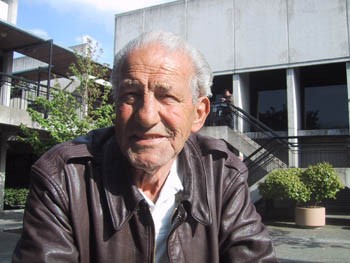
Dignity of Man: Seventy-year-old Ken Hart has made an art of citizen public appearances at city council meetings.

Stand and Deliver

The art of the citizen public appearance

By R. V. Scheide

On the second Tuesday in April, Ken Hart stood quietly before the lectern in the Santa Rosa City Council chambers, a baseball, a tennis ball, a golf ball, a ball of yarn and a folded American flag placed neatly in front of him, waiting patiently as the councilmembers took their seats. Former mayor and current councilmember Mike Martini shook Hart’s hand as he passed by the lectern. Mayor Sharon Wright blew him a kiss as the meeting was called to order.

“I bring these with me each time I get up here,” Hart began, indicating the objects before him, then holding up the ball of yarn. “This is the last one, from Star Man.”

Star Man is one of several alter egos Hart uses when speaking before the council. Sometimes he’s Dignity of Man. Sometimes he’s just plain old Ken Hart, a 70-year-old who claims he’s lived on the streets for the past 25 years. But homelessness has not stopped Hart from attending city council meetings–no matter what city he finds himself in–and using the time councils set aside for public comment to voice whatever’s rattling inside his head.

On this particular day, Hart was concerned with the recent news that a Native American tribe had purchased land for a proposed casino in Ukiah. Never mind that the issue might have been better taken up with the Ukiah City Council. Hart was in Santa Rosa, and he was determined to let someone know how he felt about the issue.

“A couple of months ago, I spoke about my dislike of building a gambling casino in the Alexander Valley,” he said. “The thing that bothers me [about the proposed casino in Ukiah] is that the casino is right across from the high school.” It was only a matter of time before the North Bay would be filled with gambling houses like in Vegas and Reno, he insisted. “I’m against it, and I hope you are too,” Hart told the councilmembers. “But money, God bless the devil, you’ve got to give him his due.”

It would be easy to dismiss Hart as being mentally unstable. For at least the past 15 years, he’s been regularly showing up at Santa Rosa City Council meetings and making such pronouncements. More often than not, he tends to speak about recent events that have directly affected him, his health (which appears to be robust) and his spiritual well-being. Hart himself admits that his behavior is unusual. “You got to be crazy to do what I’m doing,” he said quite lucidly after the meeting. “But it’s a calling.”

Hart isn’t the only person in Sonoma County who’s heard the call. There’s a handful of people who’ve been showing up at city council for years to voice their opinions, regardless of whether their opinions pertain to council business.

Santa Rosa resident Steven Lightfoot’s calling may be the most bizarre. From the moment John Lennon was killed by deranged gunman Mark Chapman on Dec. 8, 1980, Lightfoot has suspected a cover-up. On his website (www.lennonmurdertruth.com), he presents evidence that has convinced him Lennon was assassinated by horror writer Stephen King, with assistance from the Reagan administration and other government officials. Although Hart hadn’t seen Lightfoot at a council meeting for several weeks, Lightfoot has frequently shown up over the years to expound on his theory, which no one has apparently taken very seriously.

Frequent council-goer John Jenkel is slightly more grounded than Lightfoot. Jenkel gained much notoriety last year for the large anti-Bush protest signs he erected at his ranch outside Sebastopol (“Sign Language,” July 31, 2003). The architect of a byzantine conspiracy theory that links former San Francisco mayor Willie Brown, Enron CEO Ken Lay and President George W. Bush to the 9-11 terrorist attacks, Jenkel began attending San Francisco City Council and Port Authority meetings back in 1996 after losing his permit to operate a horse carriage franchise in the city. He blamed the loss on Brown and has been on the former mayor’s case ever since.

To this day, Jenkel and his paid volunteers turn up in city council meetings across the county, urging councilmembers to support House Joint Resolution 20, a little-known bill that would repeal President Bush’s first-strike doctrine. Jenkel claims that 18,000 people have signed his petition so far, including Democratic presidential candidate Dennis Kucinich. So far, no city councilmembers have signed on, but Jenkel remains optimistic. “There won’t be anything left of the Republican Party when I’m done,” he says in a telephone interview. “A Republican won’t be able to run for dogcatcher.”

Of all the people who show up at city council meetings to voice their opinions, Santa Rosa resident Jack Osborne, 81, most closely fits the definition of political gadfly.

“I’ve gone every week for about 20 years,” says Osborne, a former state appraiser who tends to stay on-topic more than his cohorts. “When I retired from the state, we always used to complain about what the city council did, so I decided to go down and see what they do.”

Osborne claims he’s brought the Santa Rosa City Council “up to speed on the Brown Act, because they didn’t know what it was.” The Brown Act governs when city officials must hold open meetings. Osborne and friend Jeff Johnson delight in picking through the minutia of such laws and finding apparent discrepancies, which they then use to torment local officials.

“Only two people in Santa Rosa care about these issues, me and Jeff Johnson,” Osborne says. “I’m kind of an iconoclast. I don’t believe in a lot of the things that other people believe in. It keeps me alert.”

While Hart, Jenkel and Osborne have become acquainted after years of attending city council meetings, no lasting friendships appear to have developed.

“I’ve sat right along side him [Hart] for 15 years, but I don’t know him,” Osborne says. “He recently told me he finally got his veterans compensation, so that’s good.”

“Unfortunately, Ken wastes the time of a lot of people because he talks about things that aren’t pertinent to today’s issues,” Jenkel says. He’s particularly miffed that neither Hart nor Osborne will sign his petition. “They’re both Christians!”

“I get along with him, but we’re opposites,” Hart says of Jenkel. “I was never a troublemaker. He wants to tear the house down.”

If any one of them has won over the Santa Rosa City Council, it’s Hart. “He comes in early, greets everybody in the front office, grabs a piece of candy and fills out his registration card,” says city clerk Sue Stoneman. Several years ago, she said Hart used to perform his three-minute speech–the time allotted for public appearances– to guitar accompaniment provided by a friend. “For me, he’s one of the highlights of every council meeting. I always enjoy whatever he has to say.”

When he’s not pontificating at city council meetings, Hart said he combs the streets, helping alcoholics and drug addicts. After the meeting, he carefully placed the baseball, the tennis ball, the golf ball, the ball of yarn and the folded American flag in a black plastic garbage bag he slung over his shoulder. Then he prepared to look for a place to sleep that night.

“God takes care of me,” he said. “I have a good heart. I’m doing what I feel is right inside.”

From the April 28-May 4, 2004 issue of the North Bay Bohemian.

© Metro Publishing Inc.

‘UnNaturally’

0

Fungus Among Us: Michelle Segre’s ‘Untitled.’

Natural Fool

Artists play God in new COPIA exhibit

By Gretchen Giles

Everyone loves nature–except when it’s inconvenient. Tornadoes are generally considered so, as are ants, mice, termites, window-bursting ivy vines, birds that fly into aircraft propellers, flies, mold and most bacterias. Angry wild animals, poison oak, stinging nettles, stinging bees and spitting beetles also give us pause.

That which we admire about nature we tend to emulate, placing slick sprays of silk flowers in living rooms and having plastic pine trees preside over holiday bowers. Stressed-out New Age audiophiles listen to natural sounds to help reconnect themselves with Gaia, letting the measured beat of ocean waves or the steady shimmer of rainfall lull them into relaxation.

At a new traveling exhibition titled “UnNaturally,” running April 30-Aug. 16 at the COPIA center, artist Iñigo Manglano-Ovalle also produces such soothing sounds for weary museum-goers. Mimicking the popular ambient soundtracks of the irony-starved, Manglano-Ovalle uses a gunshot, recorded accidentally when a shooting occurred near his Chicago apartment, pixilates the tremor and manipulates the deathly sonics so that they sound like the full comforting roll of a distant thunderstorm.

Such intelligent manipulation is at the centerpiece of “UnNaturally.” Conceived and amassed by independent curator Mary-Kay Lombino, the curator of exhibitions at California State University Long Beach, “UnNaturally” consists of 55 works by 15 different artists, all of which examine the way humans strive to co-opt, control and usurp nature, with varying results. Observing the film industry’s perfection of fakery and our society’s bent towards Disney-like tamings of the natural world, “UnNaturally” presents new and improved projections of nature, hoping to prompt the viewer to question the result.

“Why perfect what’s already perfect?” Lombino rhetorically asks, speaking by phone from her university office. “There is a way to perfect nature even though it’s so beautiful and brings us so much joy. But, we have a love/hate relationship with it. We love nature, but we build structures around ourselves to keep our selves safe from it. We want it packaged and almost sanitized and would like to be able to discard it when it’s inconvenient. We’d actually,” her voice almost lowers to a whisper, “prefer a new and improved nature that doesn’t have any unpredictability.”

Lombino’s lowered tones are appropriate, because that’s a shocking statement to make, one that is subscribed to the minute an air conditioner is turned on or a raindrop is cursed.

Lombino very self-consciously chooses not to include painting and drawing as media in the exhibit, citing nature’s ancient history in inspiring representations of itself onto paper and canvas as being “too enormous.” Rather than representations, the works collected in “UnNaturally” emerge as brand-new artifacts.

In Michelle Segre’s mushroom sculpture Untitled, which stands over 5 feet tall and takes on mythic proportions with its overgrown size, each natural feature of a mushroom has been faithfully overblown up. Similarly, sculptor Roxy Paine uses steel, epoxy and plastic to minutely emulate fungus and other botanicals, placing them exactly in appropriate habitats or containers. Creepy yet beautiful, these manmade replicas intend to challenge the viewer to consider the surrogate role that humans have assigned the natural world.

In considering the triumph of human ownership, photographer Marc Quinn has encased his subjects for eternity. For his Garden series of prints, Quinn immersed exotic tropical plants in an aquarium filled with silicone. The plants remain looking wildly vibrant and alive but actually couldn’t be more suffocated and entombed.

Writing in the catalogue accompanying the exhibit, Lombino notes, “The works in the exhibition comprise a many-voiced commentary on the complex issue of real versus fake and an inquiry into the ways in which popular culture has become a major criterion in comparing the two.”

By phone she assures that “UnNaturally” has wider appeal than such scholarly language might suppose. “The exhibit has layers of appreciation: you can just walk in and look at it–because it’s really quite beautiful–or you can really get into the nitty-gritty.”

‘UnNaturally’ shows April 30-Aug. 16 at COPIA, 500 First St., Napa. A reception for members is slated for Friday, April 30, 6-8pm. Admission free with entrance fee. 707.259.1600.

From the April 28-May 4, 2004 issue of the North Bay Bohemian.

© Metro Publishing Inc.

Swirl ‘n’ Spit

0

Swirl ‘n’ Spit
Tasting Room of the Week

August Briggs Winery

By Heather Irwin

Lowdown: Several years ago, Wine Spectator magazine called August Briggs a winemaker to watch. That was, if you could find him. Like many roving wine consultants, Briggs was turning out some impressive wines for larger estates but his own label, founded in 1995, has always been a limited-production affair, housed in leased space from larger facilities. Winning high praise for his moonlighted Zinfandels and Chardonnays, Briggs finally gave up the nomadic life and recently opened the only working winery within the Calistoga city limits.

Vibe: Perched at the northern end of the Silverado trail, Brigg’s big white barn is an eclectic combination of rural charm and modern simplicity. The whitewashed building houses both the barrel room and an intimate tasting room often staffed by Briggs’ wife and mother. A huge skylight showers the tasting room with diffused natural light, and the new paint smell of the facility mingles with the older, darker scent of wine aging gracefully. The family operation is refreshingly small, but the wine is more sophisticated than most mom-and-pop wineries, winning high marks and gushing praise from those who sell and drink it. Briggs buys his grapes from a handful of carefully selected vineyards throughout Napa and Sonoma, with an annual case production of only about 4,000 to 5,000.

Mouth value: After a full day of winetasting in 90 degree heat, the cool, creamy Russian River Chardonnay ($28) was a welcome respite. Briggs is a master of Chardonnay, and the 2001 has intense pear aromas and apple flavors. Malolactic fermentation gives it a bit of creaminess, but this wine isn’t heavy with butter and oak, instead retaining its fruit characteristics. The 2001 Syrah is juicy with dark berry flavors and has a long, lingering finish, while the 2001 Napa Valley Sauvignon Cabernet is a big, flamboyant wine that leaves you on your knees. Briggs’ wines are high in alcohol, generally, making for some zesty, high-powered experiences that pair well with big foods.

Don’t Miss: Briggs releases his 2002 Zinfandel this weekend (Saturday-Sunday, May 1-2) with an open house featuring food, music and wine, noon to 5pm.

Five-second snob: Mal-o-what-tic? Chances are that with just about every pour, you’ll be told whether or not the wine was made with a malolactic process. Should you care? With red wines, the process is pretty much a given and may occur naturally (sometime even in the bottle), but with California Chardonnays, whether or not a wine is malolactic can have a very different effect on the final taste of the wine. The process of converting the tart malic acid of grapes into a softer, creamier malic acid is done by introducing a special yeast culture into the unfinished wine. But the process is tricky. The wine must be monitored closely to make sure that the yeasts don’t get out of control and give the final wine a funky, off-smell. The process also “matures” a wine, mellowing it and giving it a more aged feel. But it can also destroy some of the natural fruitiness and crispness, which is why some Chardonnay producers forgo the process altogether.

Spot: August Briggs Wines, 333 Silverado Trail. Open Thursday through Sunday, from 11:30am to 4:30pm. No tasting fee. 707942.5854.

From the April 28-May 4, 2004 issue of the North Bay Bohemian.

© Metro Publishing Inc.

Jeffrey Kahane

0

Photograph by Michael Amsler

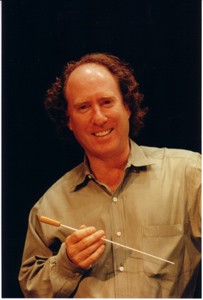
See You in Cee Oh: After 10 years with the Santa Rosa Symphony, Jeffrey Kahane is moving to the Colorado Symphony Orchestra.

Passing the Baton

Santa Rosa Symphony conductor Jeffrey Kahane ends on a high note

By Greg Cahill

Jeffrey Kahane’s career as music director of the Santa Rosa Symphony is hitting a crescendo–the perfect time, he says, for striking up his swan song. During the past nine years, the 47-year-old Kahane has helped shape the orchestra into one the most respected in the nation, attracting younger audiences with programs that include challenging works by 20th-century and contemporary composers, luring such high-profile players as cellist Yo-Yo Ma and pianist Lang Lang, and garnering a national award for excellence in community engagement.

More recently, the SRS became one of three Bay Area ensembles taking part in an innovative program that will spawn nine newly commissioned orchestral works over the next three years, an unprecedented feat for a small regional orchestra. And after a four-year delay, construction is set to begin on a lavish $47 million concert hall that should bring the symphony to a new home on the Sonoma State University campus by fall of 2006 (see side bar below).

“Even I am sometimes surprised at the extent to which this orchestra has become nationally known as a real model for orchestras in its category,” says Kahane, during a brief phone interview from the Santa Rosa home where he lives with his wife, Martha, and their two children. “True, we’re not in the same category as the Boston Symphony, but there are many different kinds of orchestras in this country, and for one with an annual budget of $2 million and a season of seven subscription weeks, we are looked at as a sort of beacon. That’s enormously gratifying.”

So why is Kahane leaving his post, having announced recently that the upcoming 2004-2005 season, his 10th with the SRS, will be his last as music director? As reported in the April 22 edition of the Rocky Mountain News and confirmed at press time, Kahane has accepted the post as music director of the larger Colorado Symphony Orchestra as replacement to the rising star conductor Marin Alsop.

“I’ve always said that somewhere between 10 to 15 years would be the right amount of time for this kind of position,” he muses. “No matter what kind of relationship one has with an orchestra–and I’m immensely proud of the very positive relationship I enjoy with this orchestra–there comes a time when an orchestra needs change. I wanted to do that before it became time. And I wanted to make that change in a way that feels very relaxed and leisurely.”

Of course, “relaxed and leisurely” isn’t a term often associated with Kahane, an affable and energetic artist who leads a whirlwind life. In addition to his duties in Santa Rosa, for the past seven years this L.A. native has served as music director of the 40-member Los Angeles Chamber Orchestra (Sir Neville Marriner and Gerard Schwarz of the Seattle Symphony are among the luminaries to hold the post in the past), an ensemble that specializes in taking classical music out into L.A.’s neighborhoods.

He also is a much-sought-after concert pianist, performing with many prominent symphonies, from Cincinnati to New York to Toronto; an acclaimed recording artist regarded as one of the few capable of mastering the physical rigors of Sergei Rachmaninoff’s manic Third Concerto for Piano and Orchestra (the piece that nearly killed the young David Helfgott, as depicted in the film Shine); and a popular guest conductor who in December made his debut at the podium with the mighty New York Philharmonic, the nation’s premier orchestra.

“I sometimes wonder how I do it all, and so does my wife,” he says with a laugh, adding that the hectic pace has contributed to his decision to cut back on his activities–at least for now. “It’s a wonderful, thrilling, great life, and I often feel like the luckiest guy in the world, but I have to be kind of careful because I have a limitless appetite for learning and challenging myself.

“Every once in a while I realize that I’ve overdone it, and then I have to take it easy, though I do block out a fairly good amount of time every year just to chill out.”

Kahane’s path to the podium has been marked by many twists and turns. At age four, he started piano lessons and was exposed to all kinds of music, but rock ‘n’ roll took center stage in his interests. Intent on the pop life, he learned guitar and played in several rock bands. But at 15, his piano teacher introduced him to the music of Polish pianist and composer Jakob Gimpel. As a result, Kahane experienced what he has called “a reawakening” of his love for the classics. Nine years later, he found himself in the prestigious Van Cliburn International Piano Competition, which aired nationally on PBS-TV that season. Kahane took fourth place, and the event, he says, changed his life.

With a conducting degree in hand, Kahane began a steady ascent as a concert pianist and guest conductor. He made several appearances as a soloist with the Santa Rosa Symphony, co-founded a chamber orchestra at the Gardner Museum in Boston and eventually rose to the top of several hundred applicants vying to replace founding SRS conductor Corrick Brown.

“I’ve also had the opportunity to learn an enormous amount of music, and that’s been the realization of a wonderful dream,” he says. “One of the reasons I was drawn to conducting in the first place was a desire to learn the orchestral repertoire in great depth. It’s music that I’ve always loved.”

In the process, he has helped transform both the focus of the orchestra and the tastes of its audience–sometimes characterized as the “mink and manure set”–by introducing modern repertoire and nurturing the careers of young up-and-coming soloists.

“When I came here 10 years ago, it was safe to say that it was rare that there was more than one work by a living composer during the entire season,” he says. “The repertoire was overwhelmingly 18th- and 19th-century–the audience certainly had a much more conservative outlook and taste. We’ve found a way gradually but relentlessly to move in the direction of bringing a great deal more. We’ve had a number of seasons in which the programming included a majority of music written in the last hundred years. Next season we will have a major work by a living composer on every program except one.”

As part of the Magnum Opus program, Kahane has had a rare chance to commission new works for the SRS, a situation that is almost unheard of for an orchestra of its scope. But Silicon Valley venture capitalist and amateur violinist Kathryn Gould, a founding partner of Foundation Capital and featured on Forbes magazine’s “Midas List” of Tech’s Best Venture Investors, invested $375,000 of her own money to commission nine new orchestral works over the next three years. The Santa Rosa Symphony is one of her beneficiaries.

The landmark project was created in collaboration with Kahane and fellow conductors Alasdair Neale of the Marin Symphony and Michael Morgan of the Oakland East Bay Symphony. The program is operated under the aegis of Meet the Composer, an innovative New York-based program that since 1974 has paired aspiring composers with local symphonies as a means of expanding the repertoire of 20th- and 21st-century music.

The first three works have been created by composers Ingram Marshall, Kenji Bunch and Kevin Puts. The Marin Symphony is set to debut Puts’ Magnum Opus piece, the Vespertine Symphonies, based on pop songs by the Icelandic princess Björk, on Sunday and Tuesday, May 2 and 4. And on April 17, the SRS debuted Bunch’s Symphony no. 1, also known as the Lichtenstein Triptych (a tribute to the late American pop artist Roy Lichtenstein). He’s an amazing young composer,” Kahane says of Bunch, “one of the most talented around.”

For Kahane, participation in Magnum Opus has been “fabulous . . . almost too good to be true,” he says. “When a conductor finds something he is excited about, it’s a wonderful thing, but then you have to figure out how to pay for it. I think Kathryn has set a precedent for other forward-thinking music lovers who might want to do something similar in the future.”

While Magnum Opus obviously holds a special place in his heart, Kahane has enjoyed many other career highlights; the symphony’s growing role in community outreach stands out among his accomplishments, one that he’s sure to remember when he takes up the baton with the Colorado Symphony Orchestra. In 2002, the American Symphony Orchestra League named SRS one of five U.S. orchestras to receive the prestigious MetLife Award for excellence in community engagement, putting the once obscure North Bay ensemble in the same company as the Los Angeles Philharmonic and other larger orchestras.

The award was in recognition of the symphony’s ambitious “Child of Our Time” project, a 2002 performance of the Sir Charles Tippett oratorio, but it also served as a nod to a similar community and educational project undertaken by Kahane and the SRS two years earlier.

“A Child of Our Time,” conceived and directed by Kahane, featured both the Sonoma County Bach Choir, led by Bob Worth, and the Santa Rosa High School Concert Choir, led by Dan Earl, as well as the Santa Rosa High School’s ArtQuest program. It was the follow-up to the symphony’s vast 1999 production of Britten’s War Requiem, the pacifist opus that allowed Kahane to bring together a wide-ranging cast of hundreds from throughout Sonoma County.

“It was the symphony’s first really big community project,” he says, reflecting on the magnitude of the endeavor, “and, artistically, it was a huge stretch.”

That 1999 production featured a far-flung gathering of musicians, singers and visual artists, from the amateur Santa Rosa High School chorus to baritone soloist Thomas Quasthoff, now a star but at the time a relative unknown making his North Bay debut.

“It was an amazing, almost magical confluence of events,” Kahane says of the Britten production. “It was the realization of a dream that I’d had for a symphony orchestra to reach inside a community and actually change the way people think about things and look at the world, to use music to teach about history and raise the level of awareness of philosophical and social issues.

“Quite honestly, this was one of the reasons I’d had to branch out from being a soloist, because I believed passionately in the power of the orchestra as a symbol of a community and a way to increase community awareness.

“And, he chuckles, “it’s worked!”


Greening the Green

Before California voters approved $12.3 billion in state bonds in March for construction and renovation of public schools, backers of the measure (Proposition 55) launched a sad TV campaign showing dilapidated schools marred by broken glass, shabby walls and water-damaged ceiling tiles.

Probably few imagined that within weeks of the election, SSU would have convinced the California State University board of trustees to allocate $16.8 million for a new concert hall that critics say is a vanity project for SSU president Ruben Armiñana, whose wife, Marne Olson, is a past president of the Santa Rosa Symphony board of directors and a key supporter of the Green Music Center, the Santa Rosa Symphony’s future home.

Sonoma State University has contributed the land, a parking lot and other amenities, including a soon-to-be-constructed recital hall and practice rooms that critics say the university doesn’t need. Originally conceived by local hi-tech mogul Don Green, an amateur vocalist, as a modest rehearsal hall, the Green Music Center has blossomed into a splashy $47 million showcase for the SRS, which will abandon its longtime home at the Luther Burbank Center for its new digs. Green and others have raised an additional $20 million for the main concert hall, which will be built next year. Bids for the first phase of the Green Music Center construction are due in later this month.

Though leaving the SRS at the end of the 2005 season and joining the Colorado Symphony Orchestra, Kahane plans to continue serving as the artistic director of the Green Music Festival, a summer celebration of orchestral and chamber music, and jazz.

–G.C.

From the April 28-May 4, 2004 issue of the North Bay Bohemian.

© Metro Publishing Inc.

Red Meat

0

Country Crowd: Red Meat are so cute you almost want to pinch them. Almost.

Country Comfort

Red Meat is back on the menu

By Greg Cahill

They call it high-cholesterol honky-tonk, and the members of Red Meat take their food as seriously as their country-fried song selection. The Oakland-based band’s website–a shrine to authentic country music à la George Jones, Hank Williams, Pasty Cline and Buck Owens–features a page entitled “Meat Eats” that recounts, not the band’s high-energy performances of twangy country fare, but the tangy Texas barbecue and other vittles encountered during their numerous road trips.

It’s a sign that these down-to-earth country-music fanatics have their priorities in the right place: cold beer, hot-spiced rub on a sizzling slab of slow-cooked pork and jukebox hits bristling with plaintive pedal-steel guitar just cryin’ to be cried to.

These days, the rest of the world is catching on to Red Meat, a longtime cult favorite on the Bay Area neo-honky-tonk scene since forming a decade ago in a Mission District garage. The inclusion of the band’s song “Broken Up and Blue” on the soundtrack to the 2002 film Monster’s Ball (which featured roots-music fan Billy Bob Thornton) was quite a coup. Suffice to say, the band was ecstatic when they heard the song scored and played by maestro Bill Conte and his Oscar orchestra for co-star Halle Berry’s acceptance speech for the Best Actress award, the moment immortalized when presenter Adrian Brody put a lip lock on the actress. Meanwhile, the subsequent European release of the band’s 1995 debut Meet Red Meat scored a Top 5 hit in France.

The band boasts a pair of other great albums–1998’s 13 and 2001’s Alameda County Line, their second and third discs respectively– produced by Grammy award-winning singer and songwriter Dave Alvin of the Blasters. Fresh from shows this month with Buck Owens and Ralph Stanley, Red Meat perform Saturday, April, 24, at Rancho Nicasio, on the town square, Nicasio. 8:30pm. $12. 415.662.2219.

Random Notes

Not to be outdone in the twang department, Sweetwater Saloon will play host to Telecaster master Bill Kirchen, formerly of Commander Cody and His Lost Planet Airmen, and more recently heard dishing up red-hot country licks on Nick Lowe’s acclaimed Impossible Bird album and tour. Look for Kirchen at the Mill Valley nightspot on Saturday, April 24. 153 Throckmorton Ave., Mill Valley. 9:30pm. $14. 415.388.2820. . . .

The next night, the Dusty 45’s, a roots-rock and jump-blues band from the Pacific Northwest, make their Rancho Nicasio debut at a special 4pm early show (you can’t party forever, can you?). 415.662.2219. . . .

Texas singer and songwriter Hal Ketchum, the King of Love, sails into the Mystic Theatre on April 30 with his chart-topping Americana. 23 Petaluma Blvd. N. 8pm. $23. 707.765.2121. . . .

Alterna-folk artist Robert Earl Keen, best known for co-writing “This Old Porch” with Lyle Lovett, returns to that Petaluma venue on June 17. That same weekend, on June 19, country-music group Sawyer Brown (nothin’ alterna about them; they landed a recording contract by winning Star Search) will co-headline the Sonoma-Marin Fair in Petaluma.

Spins Du Jour

One of the brightest spots among recent country-music CDs is Scena Records’ Live from the Louisiana Hayride series, which has already delivered great new historical recordings by Johnny Cash and June Carter captured during their formative years. Now this tiny Lee’s Summit, Mo., label has blessed us with another pair of winners, featuring rare live concerts originally broadcast over Shreveport radio station KWKH on the nation’s second most popular country-music showcase. One finds Beaumont, Texas, native George Jones, the King of Broken Hearts, honky-tonkin’ through 16 rarities recorded between 1956 (the year he joined the cast of the Grand Ole Opry) and 1969 (just two weeks before he married Tammy Wynette). These vibrant performances are a window into the evolution of one of the genre’s greatest singers.

A separate disc finds Johnny Horton, who scored 11 country hits (including six pop crossovers) that included such novelty songs as “Sink the Bismarck” and “North to Alaska.” The songs included here should strike a chord: the opening track, Horton’s classic “Honky Tonk Man,” was covered by Dwight Yoakam on his debut album. Horton clearly knew a thing or two about the honky-tonk life; he was married to Hank Williams’ widow, Billie Jean. Kick up your boot heels on this gem.

–G.C.

From the April 21-27, 2004 issue of the North Bay Bohemian.

© Metro Publishing Inc.

MOCA

0

Building Boom

Site as subject and building the big box

By Gretchen Giles

Driving past the Luther Burbank Center for the Arts on Highway 101 is not much of a much. An RV sale seems ubiquitously splayed out on the back acres; the spire-spiked fountain in front may have once remarked the heavens but now does little to inspire Julio Iglesias fans; and the large lift of the roof recalls the worst of 1970s sacred design. But as with two other major museums in Sonoma County, the recently renamed Museum of Contemporary Art housed at the LBC may be leading a new charge in the design trends of the North Bay.

Launching its SpaceFace architectural competition, the LBC is soliciting a new design for its Museum of Contemporary Art from some 48 area architects, intending to relocate the MOCA from its current spot off to the east side of the campus to a prominent spot smack in front of the lobby doors, smack in front of the freeway. The first round of proposals will be shown to the public at the “Contemporary Perspectives” auction event on Saturday, May 1, and three finalists will move forward with their designs in a second competition from there.

SpaceFace is the first phase of a capital fundraising campaign that the LBC is launching, looking to update and revamp many sections of this 53-acre arts campus over the next 15 years. Funding has already been secured to open a cabaret room inside and permanent outdoor festival facilities outside. Pending plans include the installation of a large outdoor amphitheater and a 2,500-seat indoor theater with a full backstage fly section and other amenities making it suitable for major ballet and theatrical performances.

“I’m not attached to the current architecture,” MOCA director Gay Dawson says drily of her museum space. “I’m looking for a transformation.” Aiming to more than double its exhibition space to over 5,000 square feet in the new building–which will hopefully open its doors in 2007–the MOCA aims to better attract traveling exhibitions, such as those sponsored by the Smithsonian and other museums, which need more room than the MOCA can currently accommodate.

One of the architects submitting a proposal, who asked that his name not be used in the event that it skews his proposal’s chances of being considered, says, “I think that it has much more to do with the freeway than it does with the existing building. At least, that’s our take on it. The existing building already has some pretty powerful things happening.

“Some architects will probably render [the new museum] like a screen; others will try to make it fit with the existing building. Our strategy is probably more the former. For us, it has to do with trying to create a compelling space for art. In a way, we craft a house and a museum similarly in that it’s about the experience of moving to and moving through a space. That’s how meaning is created: what you see as you approach a museum or a house, what you experience as you move through them and what you see as you move through them–the building as an object, but also the site as a subject.”

In speaking of subject, Sonoma County Museum executive director Ariege Arseguel uses the term “Bilbao effect” to describe what she anticipates will happen once her museum receives its remodel and full-block expansion under the direction of architect Michael Maltzan, whose most recent high-profile project was the remodel of the Queens MOMA in New York. “We intend to blow people away with this building,” Arseguel says, her voice barely contained. The “Bilbao effect,” she explains, is what happened to Bilbao, Spain, after Frank O. Gehry’s Guggenheim Museum was installed. “It took a depressed blue-collar economy and put it on the map,” Arseguel says. “Cultural tourism is off the charts there now. It has completely changed that economy. That’s sort of the model that we’re thinking about. We certainly feel that this county deserves it.”

Fundraising may still be underway for the MOCA and SCM, but the Sonoma Valley Museum of Art has already completed its remodel on Broadway Avenue in downtown Sonoma. Formerly a nondescript storefront, the new SVMA, opened to the public last month, is now a yowza example of urban remodeling, designed by Sonoma architects Mark Zall and Michael Ross of Ross Drulis Cusenbery. A huge open space with side doors that literally roll up for the sidewalk, the new SVMA is a box in the best sense of the word, with high ceilings and an industrial stripped-chic that offers its own pleasures to walk around inside of but doesn’t compete with the art.

“We used proportion, scale and rhythm to create a sense of permanence and place,” Zall says. “We have attempted to create a flexible, dynamic, state-of-the-art infrastructure that will allow SVMA to change over time, invite the visitor to enter and support a rewarding museum experience.”

The unidentified MOCA contender muses, “What’s interesting about contemporary art as opposed to other, more classical art is that the form is unknown. Rather than painting and sculpture, it’s installation art, mixed media, video art. [A museum] needs to be more of a blank container that has flexibility built within it for multiple formats, and I think that’s probably the biggest issue for a contemporary museum versus an art museum.”

Whether the North Bay building boom in museums will counter this remains to be seen.

From the April 21-27, 2004 issue of the North Bay Bohemian.

© Metro Publishing Inc.

Swirl ‘n’ Spit

0

Swirl ‘n’ Spit
Tasting Room of the Week

Martinelli Winery

By Heather Irwin

Lowdown: It’s all an elaborate ruse, you see. The big red barn, the sign hawking apples, the deftly placed jars of jams and jellies that keep the riffraff from making their way to the tasting bar. . . . Oh yes, we’re on to you, Martinelli. Just like everyone else who isn’t toting around a Parker’s Wine Guide, we blew past the River Road barn for months, assuming it was part of the Martinelli apple empire–you know, the sparkling apple juice you buy for the kids at holidays? How wrong we were.

Vibe: Actually, there’s no relation between the Sonoma Martinellis and the apple-juice Martinellis, aside from the name. The local clan has been farming in Sonoma since the late 1800s, when old grandpappy Giuseppe came over from Lucca, Italy. It wasn’t until the 1980s, however, that the family got the idea to start bottling their own grapes and make wine–pretty good wine, but not great wine. A few years ago, the family hired winemaking legend Helen Turley (once called “the Goddess of Wine”) to consult, giving her free reign over the winemaking process. Lo and behold, the wines got a whole lot better–as in “Robert Parker, the dean of wines, personally visits here once a year” better. The funny thing is that no one seems to get very torqued up about the whole thing. They still have the red barn, the squeaky wooden floors, the “how ya doin’?” attitude going on while quietly churning out some of the best wines in the state.

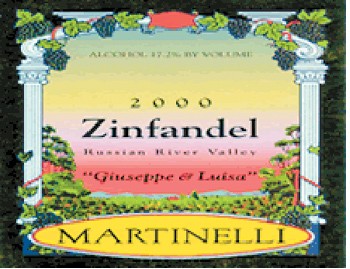
Mouth value: Guess what? Gewürztraminer doesn’t have to make your teeth hurt. The 2001 is an off-dry–meaning not very sweet–and leaves a yummy lingering apricot and peach flavor. The 2000 Reserve Pinot Noir is a powerhouse from 25-year-old vines further inland, while the 2001 Bondi Home Ranch Pinot Noir has a more elegant Burgundian quality. The best bet, however, is the 2001 Giuseppe and Luisa Zinfandel, with its super spicy, super zesty, super-high alcohol (15.3 percent compared to an average 11-13 percent) one-two-three knockout punch.

Five-second snob: The jewel in the Martinelli crown is its Zinfandel–most notably, the Jackass Hill Zin, which is nearly impossible to come by. Only about 500 cases are made from grapes grown on a 60-degree incline. Understandably, the steep slope makes for some challenging harvesting of the more than 100-year-old vines. A hill only a jackass would farm, according to one of the Martinelli ancestors.

Spot: Martinelli Winery, 3360 River Road, Windsor. Open daily, 10am to 5pm. No tasting fee. 707.525.0570.

From the April 21-27, 2004 issue of the North Bay Bohemian.

© Metro Publishing Inc.

‘The Alamo’

0

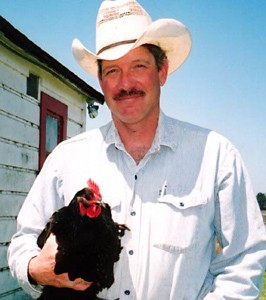
Local Attraction: Petaluma’s own singing cowboy, Scott Gerber.

Death and Texas

Singing cowboy Scott Gerber remembers ‘The Alamo’

In its ongoing quest for the ultimate postfilm conversation, Talking Pictures takes interesting people to interesting movies.

Scott Gerber is a full-time, real-life singing cowboy. The colorful focus of Bonnie Burt and Judith Montel’s recent short documentary Song of a Jewish Cowboy, the 45-year-old Gerber alternates between wrangling cows in Sonoma County and singing old cowboy tunes and Yiddish folk songs all around the country. He’s also something of a philosopher. Being a modern cowpuncher, he’s also seen a lot of Westerns and nearly every movie ever made about the Alamo.

“I don’t why I’ve seen so many of those movies,” the soft-spoken Gerber allows. That list now includes The Alamo, the new big-budget revisionist epic starring Dennis Quaid as Sam Houston, Jason Patric as Jim Bowie and Billy Bob Thornton as a fiddle-playing David Crockett (seems he preferred “David” to the more popular “Davy”).

As we exit the theater, Gerber says that he once came within spittin’ range of the actual Alamo in San Antonio, Texas, the spot where Crockett and company gave their lives in 1836 in an independence battle against the armies of Mexican dictator Antonio Lopez de Santa Anna, who preferred to keep Texas as a part of Mexico.

“I was working for the National School Assemblies Agency,” Gerber says, “and I went out and played concerts for schools, mainly in Arizona and New Mexico. Then I went and played in South Texas. I remember I was heading into San Antonio–I was playing in a school near there–and one of the ladies who was working at the school said to me, ‘It’s great you’re heading into San Antonio, you can check out the Alamo.’ I probably shouldn’t have said it, but I said, ‘Well, I’m not that big a fan of the Alamo. We did steal that land from the Mexicans.’ So that was pretty much the end of our conversation. She didn’t like that too much, I guess. I never did visit the Alamo.”

The Alamo, Gerber believes, is symbolic of all that is unfair about war. “The ones who have the least to gain are always asked to pay the highest price,” he says. “It’s the common people who die. As we say in cowboy lingo, they’re the ones always suckin’ the hind teat.”

There are potent similarities, he says, between the events depicted in The Alamo and the current political situation with Iraq. In the film, Gen. Sam Houston more or less sacrifices the besieged soldiers at the Alamo, letting the famous fort fall because it gives him both time to build a larger army and better leverage to win Texas away from Santa Anna. Despite this, he coins the famous phrase “Remember the Alamo!” to rile up his troops in their assault against Santa Anna’s army at San Jacinto.

“‘Remember 9-11!'” Gerber says. “Isn’t that different from ‘Remember the Alamo.’ That’s why were in Iraq, ’cause Bush keeps yelling, ‘Remember 9-11!’ It’s the same story all over again with different actors. That’s the way it seems to me. New people, new landscape, but the same old greed and–I seem to keep on saying this–it’s the same common folk who gets the brunt of it, on all sides.”

Early in the film, Col. William Barret Travis (Patrick Wilson) tells his young son, “One crowded hour of glory is worth an age without a name.” I ask Gerber what he thinks of that advice.

“What is glory? Was that glory?” he snorts. “I mean, the guys at the Alamo were brave and they fought good and hard, but so what? Was that glorious? It seems to me that they bravely gave their lives for a useless cause. I don’t see how that was heroic.”

“So how would you define the word ‘hero’?” I ask.

“I don’t know, but I don’t think it always has to do with battle,” Gerber replies.

In The Alamo, David Crockett has one great moment, where he climbs on top of the fortress wall to play his fiddle across the field at the awestruck Mexican army.

That was heroic,” says Gerber with a smile. “And if it wasn’t actually true, it should have been.”

From the April 21-27, 2004 issue of the North Bay Bohemian.

© Metro Publishing Inc.

Scott Schmidt

Grasp of the Matter: Designer Scott Schmidt wants to make prosthetics pretty.

Secrets of the Universe

Furniture maker Scott Schmidt designs a better body

By Jordan E. Rosenfeld

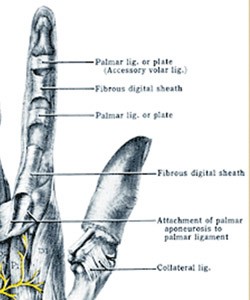
The body is both humble and magnificent, depending on which lens you see it through. At times, it seems debased by its own frailty; at others, it appears worthy of the utmost dignity. The medical emphasis is on frailty; prop up that weary flesh with practical, durable materials that can be tossed out later. Scott Schmidt, a furniture designer, artist and nursing student, views the body as dignified, considering the person inside the skin worthy of, say, a prosthetic arm carved out of rosewood or a cane painted in bright colors and made to feel permanent.

Schmidt, a 45-year-old father of two, knows about the body’s frailty; he nearly lost three fingers on his left hand to an industrial wood shaper in 1993. Three years later, with eight surgeries and only two of the three digits restored to functioning, a hopeful surgeon borrowed a tendon from his forearm, resulting in renewed life for Schmidt’s lame index finger. Through it all, the designer got an unwanted glimpse into a world he would never have chosen on his own.

Schmidt, speaking by phone from his home in Baltimore, Md., recalls his accident with chilling precision.

“It was a Friday afternoon, three o’clock. I was working on a complicated shaping operation, curving the arms of some chairs. My daughter Allie had been born the week before, and I was not operating on a whole lot of sleep. It happened so fast. The machine cut through the bones and tendons, took off my index, middle and ring finger; they were hanging just by tissue. I don’t recall the pain, but I had a sickening feeling that life would never be the same. I’ve had nightmares of the precise sound of the machine–it’s hard to describe, kind of like a jet engine.”

Precision is something Schmidt knows a lot about from more than 25 years in his field. After three years in and out of operating rooms and endless waiting through the tedium and pain of rehabilitation, Schmidt’s fascination with precision and design began to shift toward the human body–the greatest design of all–and those tools that care for it and its recovery.

While undergoing surgeries and rehabilitation, Schmidt imagined what the tools on the doctor’s silver trays were designed for, a game he plays with any tool he’s never seen before. He helped doctors create specific splints for his hand, knowing from a designer’s point of view where his fingers needed more or less support. It was also an opportunity to get to work with the modern thermal plastic they use for splints, known as polyform, which turns into spaghetti in 125 degree water and dries nearly instantly on the body. “It has endless sculptural possibilities,” he says with energy in his voice. “Artists are always looking for material or ideas.”

Having a hand injury also caused Schmidt to notice other people’s hands, or lack thereof, everywhere he went.

“When we see people with problems, we tend to look away, ignore the missing limb, not talk about it,” he says. “When I had an obvious contraption on my hand, it drew a lot of people out who had similar accidents. I would feel compelled to ask people what was up with their hands, and it evoked interesting conversations.

“Once I saw a young man being fitted for a pinching clip in place of a hand,” Schmidt continues. “I couldn’t help but imagine myself in his situation, and I thought I’d rather have a carved rosewood device, something with elegance, not this steel and plastic, so alien, even scary.”

Schmidt’s desire to humanize the alien world of medical science resulted in his decision to enroll in nursing school so that he could both help design prosthetics and assist in surgery upon the perfect miracle of the human body.

A master craftsman driven by “process and form” in his work, it’s easy to imagine how to make Schmidt unhappy. You could settle for those impersonal canes, those flimsy devices of support lined up next to hemorrhoid pillows and plastic bedpans at any pharmacy.

“When elderly people have trouble walking, they’re given a crudely constructed metal cane capped with rubber,” he says sadly. “It does everything it is supposed to do but it looks temporary and it gives the person the sense that they are temporary, too. It achieves its goal, but diminishes the person.”

This crossroads of returning dignity and enhancing utility through design, joined with the realities of his life after the accident, have propelled Schmidt into what might appear to be a divergent career path. “If you’re a designer, you’re always designing one way or another,” he shrugs. “You don’t cease to design just because you’ve moved from one course of life to another.” Yet medicine seems to promise a new platform for his designs to take shape, offering up materials and techniques that the furniture business could never hope to provide.

Much of Schmidt’s furniture and sculptural pieces were sold very successfully through galleries, where he did a large part of his business through commissions, which he considers “collaborations.”

A series of his “Tallus” tables are the opposite of the temporary world of plastic and metal. Each table is slightly triangular, and you aren’t sure whether you should dare to rest a drink on one or even, on the slightly shorter ones, a complacent buttock, their natural contours sloping down like a bicycle seat, their edges soft. What looks like it might be mahogany is actually a mixture of sawdust from various poetic-sounding woods: purple heart, ebony, blackheart and wenge, plus bronze and mica particulate, crushed walnut shell and ground green coffee beans.

“At heart my own designs are about exploration of form, material and texture. I like making objects that evoke a sense of intrigue, purpose and beauty that seems familiar, yet other. I have always liked the way objects branch, the transition of form at meeting places–twigs, bones, feathers, rivulets in the sand. Often I will put details in places that are not readily apparent, say, the underside of a chair rail or the edge of a table, a hidden drawer or compartment–something for people to find later as they use the piece.”

Schmidt’s not about to give up furniture making altogether, but his priorities have shifted.

“If you want to really scramble your hard drive, become a student at 45,” he chuckles. “A lot of times when class has finished, particularly biology, I’m still sitting there, thinking–this is like being given the secrets to the universe! In terms of design, you couldn’t ask for a better subject than the human body, right down to the molecular. It blows you away. I love suddenly having a whole different approach.”

Perhaps in a decade, the Schmidt Line will be born, providing prosthetic limbs made of rosewood and mahogany, decorative splints for dignified cast-wearing and polyform sculptural tables that double as walkers for the unsteady, made to last.

From the April 21-27, 2004 issue of the North Bay Bohemian.

© Metro Publishing Inc.

Orrin Thiessen

0

Photograph by Michael Amsler

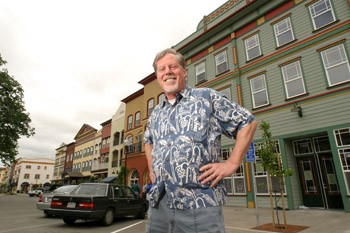
Mr. Downtown: Developer Orrin Thiessen is changing the face of Sonoma County.

The There There

How developer Orrin Thiessen is single-handedly remaking North Bay downtowns

By Laura Hagar

The first hint that Orrin Thiessen isn’t your run-of-the-mill developer is that he describes his work by quoting Gertrude Stein. “Putting the there there,” is how Thiessen characterizes his company’s downtown redevelopment projects. He’s already remade the downtowns of Graton and Old Town Windsor, and has plans on the boards for Cotati, Occidental and the tiny West County burg of Forestville.

Skeptics say the fact that no one has raised any questions about the advisability of handing over the architectural future of Sonoma County’s collective downtowns to one man is a testament to two things: the public’s disaffection from the planning process and Thiessen’s blitzkrieg approach to redevelopment.

There is, of course, another possibility: maybe Orrin Thiessen is just the right man for the job.


I met Thiessen at his office in Old Town Windsor on one of those crystalline blue winter days that make one wince for the sheer beauty of Sonoma County. On a day like this, even Windsor–with its big-box malls, cookie-cutter subdivisions and trailer parks–looks blessed by the gods.

The phrase “Old Town Windsor” is itself a bit of a misnomer. Although there are a few old buildings left–the Presbyterian Church and a scattering of rundown 19th-century houses–Old Town is, by now, almost completely new. The heart of this new Old Town is the Windsor Town Green, a vast, mostly undeveloped expanse of grass, its young flowering plum trees and modernist fountain dwarfed by the giant heritage oak trees on the western end of the park.

The town’s unremarkable civic center–a white and beige ’70s-era police station, library and town hall that used to be a junior high–is almost invisible on the green’s northern edge. Windsor Vineyards’ equally beige corporate headquarters sits on the east side of the green. In comparison, Thiessen’s Town Green Village, with its dense and colorful faux Victorian architecture, almost vibrates on the southern and western edges.

Thiessen’s business offices are in the Town Green Village, the limited-liability partnership that runs every aspect of the Town Green Village project, located around the corner from the green in an attractive white building that looks like a late-19th-century hotel but is actually of new construction. The developer also owns Thiessen Homes, the project’s lead builder, though in typical developer style most of the work is subcontracted out.

Thiessen himself is a big man, over 6 feet tall, with a short shock of graying blond hair and the wind-burned skin of a sailor crinkling around handsome hazel-blue eyes. Walking around the development in his wraparound mirrored shades, he looks the part of the slick developer a little too well, but there’s something indefinably endearing about the man. He’s unpretentious, boyish despite the gray hair, and his enthusiasm as he shows off his massive new project is infectious.

Town Green Village is the largest mixed-use development in Sonoma County. Thiessen began the six-phase project three years ago. Phases one and two are located on the green and feature retail condominiums on the first floor and two-story residential condominiums above. Some of the later phase projects, just a block or so away, will offer professional offices below, residential housing above. A handicapped-accessible senior housing project is part of phase five. Ultimately, the entire project will create 250 new homes and 80 to 100 new businesses.

Thiessen allows no chain stores in his developments. “We want to provide an attractive alternative to mall shopping,” he says. Right now, there are several small restaurants (Vietnamese, Mexican and haute Californian), a couple of coffeehouses and home-decor stores, a children’s clothing store, a children’s bookstore, a jewelry store and a florist. The large, old-fashioned candy store, called Powell’s Sweet Shop, is a marvel and usually the busiest business on the block. The owner lives in the condo above the store.


Windsor’s Old Town began as a redevelopment project. In the mid-’90s, with an environmental majority on the city council, Windsor developed a separate general plan for its downtown. Using redevelopment and open-space monies, the city fixed the streets, put in underground utilities and built the town green. They also bought several parcels to the south of the green and started shopping around for a developer.

Under the leadership of Mayor Debora Fudge and progressive councilmembers, Windsor had a clear vision of what it wanted for its downtown: a large, mixed-use condominium project. Thiessen was one of the few developers in the area with significant experience with mixed-use and an enthusiasm for condominiums.

“It was a great relationship from the very beginning,” Fudge says. “Orrin says we made it easy for him because we knew exactly what we wanted. But he also made it easy for us because he wanted to build what we wanted to have.”

Thiessen is also an incredibly fast builder. “I think the town was amazed and pleased by how fast we were able to do this,” he says. “But part of the credit belongs to them. From the very beginning, we’d have meetings with city staff, and they’d ask, ‘How can we get out of your way?’ In some other towns, it’s like they have meetings to figure out how they can get in your way.”

In terms of scale and cost, Town Green Village is leagues beyond anything Thiessen has ever done before. “It was definitely a big step up,” he admits. “But we had a long track record of successful projects, and the city knew that. We’d done some small subdivisions. We did Graton’s downtown, and then in Windsor we did a mixed-use project called Star Station and some tract homes. The largest project we ever did before this was a 35-home subdivision in Sonoma. That was a $12 million project. Town Green Village is a $120 million [project] and counting.”

Thiessen ended up buying the parcels on the south side of the green from the city, as well as several other parcels on the surrounding blocks–23 parcels in all. “You’ve got to understand,” he says, standing at the north end of the town green, “this was a really blighted area. Right here where we’re standing was a real ghetto. It was probably one of the worst neighborhoods in Sonoma County, as far as aesthetics go. Nothing was really worth saving. We tore down the houses, built new buildings. That’s what redevelopment is designed to do.”

Thiessen isn’t deaf to the implications of such statements, which connote an “out with the poor, in with the rich” (or, in this case, “middle-class”) flavor. But philosophically, he’s got different fish to fry. He is a passionate advocate of New Urbanism, a philosophy of urban planning that emphasizes human-scale development, mixed residential and commercial areas, and walkable downtowns focused around a central plaza.

“What we’re trying to do here,” Thiessen says, “is to build a village from the bottom up, because that’s where people want to live nowadays. They don’t want to live in some vast, impersonal subdivision or some honeycomb-like apartment complex, where nobody knows their neighbors and you have to get into your car to do anything at all. They want to live in a village. If you look at Sonoma County, you’ll notice that the most popular and attractive cities, the ones where people really want to live, have real downtowns, often old Spanish plazas like in Sonoma or Healdsburg. A downtown provides a sense of coherence for the city as a whole and acts as a central gathering place.

“Another aspect of New Urbanism is smart growth,” he continues. “The reason I call it ‘smart growth’ is that I can build on 10 acres what would probably require 50 acres if you developed it using a traditional sprawl model with tract homes and shopping centers. Smart growth conserves land, our most precious resource. Urban sprawl is a big problem in California, especially in Sonoma County, and smart growth is one of the answers to urban sprawl.”

Now all the rage in urban-planning circles, New Urbanism was inspired in part by Jane Jacobs’ 1961 book The Death and Life of Great American Cities, a critique of the urban-renewal schemes of the middle of the last century. Jacobs praised the close-knit, urban neighborhoods of big Eastern cities–those homely, humble places where people worked and shopped just a stone’s throw from their front door and everyone knew everyone else.

Implicit in Jacobs’ critique is a reaction against the modernist aesthetic of the mid-20th century. As a result, the architecture of many New Urbanist developments harks back to the late 19th and early 20th centuries. Although there are New Urbanist villages with modern or postmodern architecture, many of the most famous, like Disney’s Celebration, Fla., community, are nostalgic in feel. Thiessen’s Town Green Village is a case in point.

Development on the south side of the green consists of four very large buildings, broken up into smaller visual units by the use of false fronts. Most are Victorian or late Edwardian in style, though some on small side streets feature Spanish-inspired Period Revival architecture. The choice of colors is bright yet pleasing: sunburst yellow, brick red, navy and forest green and an occasional purple.

There is, one has to admit, a certain Disneyland-like quality to the place. The newness of it all, the nostalgic architecture and the false-front design all add to this impression. From the street, and inside the stores and restaurants, the illusion of separate buildings is very real. To access the residential condominiums, however, you enter through the side of the building into a long central corridor, and from there the buildings look like what they are: big, modern structures.

There’s nothing faux Victorian about the condos. They’re modern in feel, with open kitchens dividing the large downstairs space into two separate areas. The bedrooms are upstairs. The three-bedroom unit I saw had two bedrooms in back and a large master bedroom in front, overlooking the green. The one nod to Victoriana is the New Orleans-like wrought-iron balconies looking out over the green. Large enough to fit just one person, they seem to have been made for parade viewing. One wants to stand on them and wave small flags for some obscure long-lost holiday, like Armistice Day.

Thiessen is the Town Green Village’s main designer. He designs all the buildings and chooses all the colors himself. “I’m the planner, the designer, the builder. My company is the developer, and we’re also the real estate company–everything. Total control. It would be really difficult to do this if you were a developer hiring an architect, hiring a builder. It would be hard to make any money.”

Thiessen has no formal architectural training, a fact that doesn’t worry him at all. “How much does somebody learn in a couple of years of architecture in college?” he asks. “Not very much. Where you really learn things is on the job. I’ve been designing and building buildings for 30 years. It’s just an experience thing.”

For his exterior designs, at least, Thiessen takes his inspiration from historical photos of Sonoma County. He has rebuilt several of Windsor’s long-gone historical buildings, including the Reimann House, a 19th-century hotel, and the McCracken Building, Windsor’s old general store. Another building was inspired by the Occidental Hotel, which collapsed in the 1906 earthquake. “I saw a picture of it in a book, liked it and decided to rebuild it,” Thiessen says.

“This building here,” he says, gesturing to a massive building west of the green, “is going to have Northern European-style architecture, which is something I’ve always liked.” The building has large octagonal cupolas on each corner. Their unfinished roofs sit like grounded flying saucers in a vacant lot across the street.

One hates to quibble with the architecture of a project like this, in part because Thiessen is trying to do something different and important, and also because it’s so much better than what was here before. Kent Patty, a 22-year-old Windsor resident I found lounging with friends on the green, remembers what Windsor was like before Thiessen arrived. “There was a McDonald’s and a library and a whole lot of nothing,” he says. “Before the town center was in, this was just a weedy field. I think Windsor’s town center is awesome, especially for families. It provides a real sense of community.”

Doug Eliot, president of Workforce Housing Associates, a developer of affordable housing based in Petaluma, is equally enthusiastic. His company is building affordable-housing condominiums around the corner from Town Green Village. “As a competitor of Orrin Thiessen’s who is working in the same town, I think that the guy is an absolute visionary. He’s really walking the talk. Everyone talks about in-fill and smart growth, but Orrin is actually doing it.”

Steve Orlick, chair of the department of environmental studies and planning at SSU, is guardedly optimistic about the development as well. “In a lot of respects, it’s very impressive. It’s actually a rather bold effort, considering that cities and lenders usually prefer more standard, less imaginative developments. Have I seen false-front developments that are better? Sure, I have: the Swenson Building on the square in Healdsburg is one. It fits right in with the existing surroundings and doesn’t have that sort of artificial look. You could say that’s the difference between good design and a nice effort.

“But you have to look at the larger picture. Orrin Thiessen is doing an important thing with Town Green Village. His idea of building a mixed-use development around a central plaza is consistent with New Urbanist design principles. There aren’t a lot of examples of this type of development locally, so he’s really starting a track record that, if he’s successful, others can build on.”

But does Town Green Village really work as a New Urbanist development? It’s still a little early to tell. After all, only one of the projects’ six phases has been completed. Still, Orlick has a few concerns. “One of the main ideas behind mixed-use is that people don’t have to get out of their cars to get the basic things they need everyday. They can walk to essential stores that are close by. One potential shortcoming of Town Green Village is that the kind of upscale retail development they’re promoting isn’t what people living in that neighborhood are likely to need on a daily basis. They’ve got some cafes, and that’s good, but they don’t have basic things like a grocery store or drugstore or even a real bookstore. That’s the kind of development you need close at hand to get people out of their cars.”

Getting people out of their cars is a problem that most New Urbanist developments struggle with, Orlick says. Town Green Village, situated on a major rail line, should have a leg up, if Sonoma’s long-promised rail system ever come to pass. The site for the proposed rail station is located directly across the street from Thiessen’s office.

“The real test of the development isn’t what’s happening right now, but what will happen once the rail is in,” Orlick says. “Will people be able to get off the train at the end of the day and walk home, picking up what they need along the way? Can they pick up their dry cleaning or get a quart of milk?”

Mayor Fudge says rail advocates had hoped to get a quarter-cent sales tax on the countywide ballot by this year in order to get a train up and running by 2007, but that the poor economy and cuts to more essential services, like fire and police protection, made that politically impossible. The city is still committed to building a train station, though.

In the meantime, in order to create the population base needed to support a retail center like Town Green Village, the city is authorizing several denser condominium developments in the downtown core. Some of these will feature smaller and more affordable units than those found in Thiessen’s development and will be built by traditional affordable-housing builders like Burbank Housing Development Corporation and Workforce Housing Associates.

Thiessen has never claimed to be a developer of “affordable housing.” Though he sold the first Town Green Village condominiums for $279,000 two years ago, the going price for those same three-bedroom condos is now $390,000. Condo prices range from $190,000 for a very small two-bedroom to $439,000 for one of the larger three-bedrooms overlooking the green. Most are priced between $300,000 and $350,000.

Thiessen doesn’t necessarily see affordable housing as particularly compatible with mixed-used downtown development. “Downtown areas have the most expensive land and the most ornate buildings–neither are a good foundation for affordable housing. A lot of people just can’t get this through their heads. They want affordable housing in their mixed-use downtowns. Well, unless it’s heavily subsidized by the government, it’s just not going to happen.”

In early February, Windsor debated passing a “workforce housing linkage fee” that would require developers of commercial property to pay a fee toward the development of workforce housing. Fudge argued passionately for the measure, but during the public-comment portion of the evening, Thiessen spoke against it–or at least against applying such a measure to his development.

“I’m not against the linkage fee per se,” the Windsor Times reported Thiessen as saying, “but the ultimate linkage is mixed use. It would be ludicrous to take a fee on top of that. If you’re going to pass a fee, don’t hit us with it because it will really hurt the downtown development.”

Before the evening was out, the linkage fee was defeated.

How did Orrin Thiessen become the developer of choice for Sonoma County’s downtowns, and where will he be working next? Though he has lived in the county for more than 30 years, he isn’t a native. He grew up in Southern California, in Ventura County. His father was a machinist and an entrepreneur who built his own large machining company and retired at 43.

After retirement, Thiessen’s father took up building and development, almost as a hobby, and Orrin learned his carpentry skills working on his father’s projects over the summer. After a stint in a junior college down south, Orrin went to SSU, majoring in biology. In his senior year, as a part of his thesis project, he built a cottage completely out of recycled materials and enjoyed the experience so much that he decided to leave school a few months short of graduation and go into construction. “My parents weren’t too happy with me,” he says drily. But construction proved a good game. In time, he married a fifth-generation West County girl and set to work building homes on speculation in his wife’s home town of Forestville.

(I should mention, by way of disclosure, that I actually live in one of the spec homes Thiessen built in Forestville in the early ’90s. We bought the house as a compromise between my husband’s taste and mine. I like old houses with lots of character; my husband, an engineer, likes new houses with lots of insulation.)

Thiessen’s first experience with downtown development was Graton, a stone’s throw from Thiessen’s own home in West County. The pattern of redevelopment that Thiessen established in Graton is one he’s followed ever since. He and a partner basically bought Graton’s entire downtown–nine parcels in all–and set to work fixing it up. It was also Thiessen’s first experiment in mixed-use development. Many of the buildings in the town utilize the concept of “horizontal mixed-use”–that is, retail in front, residential in back. He renovated a few of the historic buildings, but for the most part, he tore down what was there and built new, drawing inspiration for his designs from photographs of Graton at the turn of the century.

Over the next few years, Thiessen plans to build projects in Cotati, Occidental and Forestville. In Cotati he plans to build a three-story mixed-use building just north of the hub. He has just purchased the Harmony School land for development in Occidental. In Forestville he plans to break ground in two years on another mixed-use development–45 residences, 15 to 20 new businesses and a town green–on the much-disputed Crinella property downtown. Though small in comparison to Town Green Village, it’s a huge project for Forestville, a rural burb of 5,000 with a downtown that is currently little more than an underpatronized commercial strip.

How does Thiessen characterize his plans for Forestville? “We’re going to put a there there.”

From the April 21-27, 2004 issue of the North Bay Bohemian.

© Metro Publishing Inc.

Citizen Public Appearances

Photograph by R.V. ScheideDignity of Man: Seventy-year-old Ken Hart has made an art of citizen public appearances at city council meetings.Stand and DeliverThe art of the citizen public appearance By R. V. ScheideOn the second Tuesday in April, Ken Hart stood quietly before the lectern in the Santa Rosa City Council chambers, a baseball, a tennis ball, a golf...

‘UnNaturally’

Fungus Among Us: Michelle Segre's 'Untitled.' Natural FoolArtists play God in new COPIA exhibitBy Gretchen GilesEveryone loves nature--except when it's inconvenient. Tornadoes are generally considered so, as are ants, mice, termites, window-bursting ivy vines, birds that fly into aircraft propellers, flies, mold and most bacterias. Angry wild animals, poison oak, stinging nettles, stinging bees and spitting beetles also give...

Swirl ‘n’ Spit

Swirl 'n' SpitTasting Room of the WeekAugust Briggs WineryBy Heather IrwinLowdown: Several years ago, Wine Spectator magazine called August Briggs a winemaker to watch. That was, if you could find him. Like many roving wine consultants, Briggs was turning out some impressive wines for larger estates but his own label, founded in 1995, has always been a limited-production affair,...

Jeffrey Kahane

Photograph by Michael AmslerSee You in Cee Oh: After 10 years with the Santa Rosa Symphony, Jeffrey Kahane is moving to the Colorado Symphony Orchestra.Passing the BatonSanta Rosa Symphony conductor Jeffrey Kahane ends on a high noteBy Greg CahillJeffrey Kahane's career as music director of the Santa Rosa Symphony is hitting a crescendo--the perfect time, he says, for striking...

Red Meat

Country Crowd: Red Meat are so cute you almost want to pinch them. Almost. Country ComfortRed Meat is back on the menuBy Greg CahillThey call it high-cholesterol honky-tonk, and the members of Red Meat take their food as seriously as their country-fried song selection. The Oakland-based band's website--a shrine to authentic country music à la George Jones, Hank Williams,...

MOCA

Building BoomSite as subject and building the big boxBy Gretchen Giles Driving past the Luther Burbank Center for the Arts on Highway 101 is not much of a much. An RV sale seems ubiquitously splayed out on the back acres; the spire-spiked fountain in front may have once remarked the heavens but now does little to inspire Julio Iglesias...

Swirl ‘n’ Spit

Swirl 'n' SpitTasting Room of the WeekMartinelli WineryBy Heather IrwinLowdown: It's all an elaborate ruse, you see. The big red barn, the sign hawking apples, the deftly placed jars of jams and jellies that keep the riffraff from making their way to the tasting bar. . . . Oh yes, we're on to you, Martinelli. Just like everyone else...

‘The Alamo’

Local Attraction: Petaluma's own singing cowboy, Scott Gerber.Death and Texas Singing cowboy Scott Gerber remembers 'The Alamo' In its ongoing quest for the ultimate postfilm conversation, Talking Pictures takes interesting people to interesting movies.Scott Gerber is a full-time, real-life singing cowboy. The colorful focus of Bonnie Burt and Judith Montel's recent short documentary Song of a Jewish Cowboy,...

Scott Schmidt

Grasp of the Matter: Designer Scott Schmidt wants to make prosthetics pretty. Secrets of the UniverseFurniture maker Scott Schmidt designs a better bodyBy Jordan E. RosenfeldThe body is both humble and magnificent, depending on which lens you see it through. At times, it seems debased by its own frailty; at others, it appears worthy of the utmost dignity. The...

Orrin Thiessen

Photograph by Michael AmslerMr. Downtown: Developer Orrin Thiessen is changing the face of Sonoma County.The There There How developer Orrin Thiessen is single-handedly remaking North Bay downtownsBy Laura HagarThe first hint that Orrin Thiessen isn't your run-of-the-mill developer is that he describes his work by quoting Gertrude Stein. "Putting the there there," is how Thiessen characterizes his company's downtown...
11,084FansLike
4,606FollowersFollow
6,928FollowersFollow