‘A Bright Room Called Day’

0

Dark ‘Day’

AT’s staging of Kushner early work is timely, unforgettable

“We are perched at the brink of a great historical crime.” When playwright Tony Kushner (Angels in America) first put those words in the mouth of a jittery Berlin actress named Agnes Eggling, the gradually terrified central character of his first original play, A Bright Room Called Day, the future Pulitzer Prize winner was drawing a distinct parallel between the crimes of Germany’s Third Reich, at the very beginnings of which the play is set, and the various international and domestic crimes committed by Reagan-era America in the mid-1980s, during which Kushner was writing his angry, energetic, explosive prototype of a play.

Today, in post-9-11 America, such comparisons seem ludicrously naïve; at the same time, they manage to appear unnervingly prophetic. As daily reports appear in our newspapers revealing a parade of war crimes in Iraq; as the Supreme Court considers whether the U.S. government’s state-sanctioned disappearing of its own citizens is constitutional; as Americans passively debate the efficacy of the Patriot Act, while hard-fought freedoms are eradicated beneath our very noses, the numerous social and political harms brought about during the Reagan years seem like a mere warm-up for what many see as the “great historical crimes” of the Bush era. As such, Kushner’s amazing, messy, agitprop bedazzlement, for all its dated paranoiac pronouncements (“Reagan equals Hitler!”), is vibrantly, unsettlingly timely.

Now onstage at Actors Theatre and directed by John Craven, A Bright Room Called Day lurches back and forth between Agnes’ apartment in Berlin in 1932 and ’33, and the unspecified dwelling of Zillah (played with riveting intensity by Danielle Lewis), a young anarchist circa 1987 who acts as a kind of Greek chorus of one, pointedly showing off old photos of the saluting German masses and roaming the stage making entertainingly apt speeches.

“Don’t put too much stock in a good night’s sleep,” she warns. “During times of reactionary backlash, the only people sleeping soundly are the guys who’re giving the rest of us bad dreams.”

The majority of the drama takes place in Agnes’ spacious Berlin apartment, where she is the gracious hostess to a cantankerous band of artists, actors and political activists for whom the apartment has become a comfortable salon for storytelling games and philosophical debate. Husz (Brent Lindsay), Agnes’ lover, is a one-eyed Hungarian filmmaker with a tendency to spend his own activist energies in making witty pronouncements rather than putting up practical resistance.

Paulinka (Danielle Cain), another actress, boasts a tendency toward survivalist compromise of principles, and Annabella (Mary Gannon) is a painter with a little too much confidence in her own considerable intelligence. Baz (Steven Abbot) is an openly homosexual psychologist who glibly believes that fascism is related to sexual repression.

From the opening scene on New Year’s Eve, when the friends drink toast after toast to a hopeful future for Germany even as they make casual, joking references to the fringe-dwelling Nazi party and to Hitler, until late in the first act when the danger seems to be obviously growing, Agnes and her companions keep brushing it all off as amusing, frustrating, exasperating–but not yet very dangerous.

As the days and nights rush by (significant dates and political events are noted during scene changes by text projected on the wall of the apartment) and as it becomes clear that the Nazis are not the joke they once seemed to be, Agnes and company flip-flop between anger and disbelief, vainly supposing that before fascism could actually take root in Germany a popular revolution would come, that the people would riot in the streets. The riots never come, and the opportunity to change the future comes and goes while the artists are busy.

Kushner injects the whole enterprise with the occasional supernatural visitation–a hungry ghost (Mollie Boice), a cameo appearance by the devil (William H. Waxman)–and provides a surprising amount of humor throughout, right up to the play’s ironic and unsettling conclusion. The cast is uniformly excellent, confidently maneuvering through Kushner’s famously poetic verbiage and his potentially daunting soliloquies. Some will find it overstated and preachy, and, hey, it is. The anarchist Zillah even admits it early on, announcing, “Overstatement is your friend. Use it!”

But as history demonstrates, and this production reminds us, whenever we find ourselves perched at the brink of great national crimes, a bit of preaching is not only tolerable, it is perhaps necessary.

‘A Bright Room Called Day’ runs Thursday-Sunday through June 6. Thursday-Saturday at 8pm; Sunday at 2pm. Actors Theatre, Luther Burbank Center for the Arts, 50 Mark West Springs Road, Santa Rosa. $15-$22. 707.523.4185, ext. 1.

From the May 12-18, 2004 issue of the North Bay Bohemian.

© Metro Publishing Inc.

Superbike Showdown

0

Photographs By Rory McNamara

I’m No. 1: Heading into the Superbike Showdown, Suzuki’s Matt Mladin was the man to beat.

Duhamel’s Demon

Winning at Infineon requires skill, luck and divine intervention

By R. V. Scheide

It’s simple. You lost. Go home.
–T-shirt slogan seen at Infineon Raceway’s 2004 Kawasaki AMA Superbike Showdown

“I think I need a young priest and an old priest,” says a frustrated Miguel Duhamel. The second-winningest rider in American Motorcycle Association superbike racing history is convinced that his factory Honda CBR1000RR superbike is possessed by a demon.

It is Friday, April 30, the first day of qualifying for the 2004 Kawasaki AMA Superbike Showdown at Infineon Raceway. The 35-year-old French Canadian has just set the fastest time in practice for Formula Xtreme, one of four classes of motorcycles–Supersport, Superstock, and the prestigious Superbike class are the other three–competing this weekend.

Before Formula Xtreme practice, Duhamel had taken the superbike out on the tight, twisting 2.2-mile circuit nestled in the rolling green hills just southwest of Sonoma. The demon materialized almost immediately, chattering incessantly as a white-knuckled Duhamel struggled to hang on to the 200-plus horsepower motorcycle.

In the pits, his factory Honda mechanics fiddle with the suspension, swap out the front and rear wheels, and tweak on the motor to no avail. The chattering continues unabated, and the normally affable Duhamel is not happy about it.

“Do I have to talk about the superbike?” he asks a small group of race journalists. “I had my tooth fillings falling out in the corners. It’s vibrating like hell. I can’t see the track.”

Not an ideal situation when racing a motorcycle at speeds in excess of 150 mph. Duhamel and the Honda team are faced with the grim prospect of completely tearing down the bike in order to exorcise the chattering devil and have a shot at winning either of the two superbike races that weekend.

Earlier in the week, factory trailers, motorhomes and pickups towing motorcycle haulers began filing into the raceway, located near the junction of Highways 121 and 37. By Friday morning, a small tent city has sprouted on the tarmac behind the main grandstands: nonfactory racers called “privateers” work on their bikes right out in the open, motorcycle industry vendors sell everything from protective gear to custom exhaust systems and local dealers display the latest new models.

For North Bay motorcyclists, the Superbike Showdown is the event of the year, and hardcore fans snag test drives on the fleet of bikes brought by manufacturers Buell and Aprilla, stake out positions in the three enormous new grandstands situated around the track and linger around the paddock hoping to catch a glimpse and maybe even an autograph from their favorite factory superstar.

Superbike racing is to motorcycles what NASCAR is to automobiles, only more so. Both are forms of production racing, meaning that the vehicles to be raced are based on motorcycles and cars sold to the general public. But while Dale Earnhardt Jr.’s Monte Carlo, with its full roll cage, racing chassis and 750 horsepower V-8 engine, hardly resembles the model sold on the local Chevy dealer’s showroom floor, the bikes raced by AMA pros are remarkably similar to machinery anyone with $10,000 or so to spare can buy.

Motorcycle manufacturers have a saying: “What wins on Sunday sells on Monday.” Duhamel’s Honda, aside from a few trick engine and suspension components allowed by the rules, is identical–right down to its paint scheme–to the CBR1000RR sold in Honda shops. Same goes for current AMA Superbike champ Matt Mladin’s factory GSXR1000 Suzuki, Eric Bostrom’s factory Ducati 999S and Josh Hayes’ factory Kawasaki Ninja ZX-10R. Santa Rosa privateer James Randolph turns up on what was essentially a stock Yamaha YZF-R1 with suspension modifications and the lights stripped off of it.

Calling the Shots: Honda’s Miguel Duhamel predicted he’d have something for Mladin on Sunday. He was right.

Aside from a smattering of BMWs and Harleys, such motorcycles–known as “sport bikes”–are the mounts of choice for the racing fans, men and women alike, attending the Superbike Showdown. The median age appears to be about 30, and because sport-bike riding is relatively affordable, Infineon has what might be the most racially diverse crowd in motorsports.

These thirty-somethings bring a certain sexual charge to the atmosphere. For the women, bare midriffs, pierced navels and tattoos across the small of the back (“Made in America,” one reads) are de rigueur. Fit skinny boys wear T-shirts emblazoned with slogans such as “Real Men Ride Twins,” referring both to the twin-cylinder Ducati 999S superbike pictured on the shirt and the identical Barbie-doll-proportioned amazons seen propping the bike up.

The flirtatious air is encouraged by the Umbrella Girls, a dozen models dressed in tight-fitting miniskirts engaged to provide shade for the factory racers waiting on the grid in the blazing sun for the race to start. Tugging at their hems to keep their skirts from creeping up, the Umbrella Girls mingle with the gathering crowd, attracting whistles and catcalls from middle-aged men.

Brand loyalty runs deep here, and many are in attendance to cheer on their respective makes’ top rider. Brothers Eric and Ben Bostrom (the latter is Duhamel’s factory Honda teammate), native Northern Californians who graduated from Petaluma High School and have since gone on to superstar status in the motorcycle-racing world, are clearly the sentimental crowd favorites. A few fans resent the fact that the American superbike series has been dominated for years by “foreigners” such as Australian-born Mladin and Canadian-bred Duhamel (both of whom now reside in the United States), and therefore cheer on the American with the best chance of winning. This weekend, that looks to be 28-year-old superbike rookie Jake Zemke, riding for Erion Honda, a factory satellite team.

If there is one question on the minds of discriminating race fans, it is this: Can anybody stop Suzuki ace Mladin? The four-time AMA Superbike champ has set a sizzling pace so far this season, winning the prestigious Daytona 200 for the third time in March and notching two more victories at the California Speedway in Fontana last month. Mladin broke Duhamel’s record for most career superbike victories (26) with his second win at Fontana, exerting the same dominance over the field that last year led to 10 wins in 18 starts, the most ever in a season.

With 12 challenging corners linked by relatively short straights and numerous elevation changes, Infineon is known as a rider’s track, a venue where skill and motorcycle setup are more important than sheer horsepower. But that fact only works to Mladin’s advantage, as he is arguably the most talented rider at the AMA Superbike today.

For Duhamel, who won a single AMA Superbike championship in 1995, there is plenty to lose. With three consecutive race wins, Mladin is intent on closing in on Duhamel’s record of six straight victories, set in 1995 at Infineon, then known as Sears Point. Moreover, the current champ has gained a significant points advantage in the race for the 2004 title. But it is still early in the season, and Duhamel is well within striking distance. The only thing standing in his way is the chattering demon that has seemingly possessed the CBR1000RR. Maybe calling in a couple of priests isn’t such a bad idea, after all.

Rubber on the Road: Dunlop supplied 80 percent of the tires, changing 1,800 racing slicks during the three-day event.

Competitive superbike riders can lap the 2.2-mile Infineon circuit in under one minute, 38 seconds. That averages out to roughly 93 mph, but average speed doesn’t come close to telling the real story. To understand how difficult it is to turn a 1:38 lap, it helps to recall Newton’s Three Laws of Motion.

First Law of Motion: Every object in a state of uniform motion tends to remain in that state unless an external force is applied to it.

See Miguel Duhamel’s shiny bright red No. 17 bike idling on the checkered stripe that marks the raceway’s start/finish line. Note the aerodynamic shape formed by the front wheel and the plastic bodywork, the massive aluminum swing arm that holds the fat six-inch rear racing slick steady under cornering loads. Underneath the plastic, an in-line four-cylinder engine cranks out enough torque and horsepower to propel Duhamel and the CBR to 192 mph on the long banked straights at Daytona. Nothing like that speed is reached on the shorter, tighter Infineon track, but it illustrates the potential lurking inside this red beast.

Of course, until an external force is applied–which can’t happen until Duhamel climbs on board–the superbike will simply sit there idling. The French Canadian’s wiry, 5’6″, 145-pound frame fits snugly into the contour formed by the gas tank and tail section, helmet tucked behind the small windscreen and chest resting on top of the gas tank to increase the bike’s aerodynamic capabilities.

Duhamel controls the superbike with his hands and feet and by shifting his body weight. Hands outstretched to the clip-on handlebars attached to the front forks and legs scrunched up awkwardly to fit the rear-set foot pegs, Duhamel pulls in the clutch lever with his left hand, snicks the six-speed transmission into first gear with his left toe, turns the throttle with his right hand while simultaneously releasing the clutch, and the CBR screams toward turn one, immediately kicking in Newton’s Second Law.

Second Law of Motion: The relationship between an object’s mass m, its acceleration a, and the applied force F is F = ma.

Force equals mass times acceleration. Duhamel’s factory Honda weighs slightly under 400 pounds and can accelerate with all the violence of a pro-stock dragster. His bike’s engine howling at 10,000 rpm, Duhamel grabs second gear and 100 mph, acceleration pinning him back against the seat rest as he enters turn one, a 45-degree left-hander that heads sharply uphill.

Thanks to Newton’s First Law, the bike wants to keep going in a straight line right off the race track and into the gravel trap. To combat this, Duhamel countersteers slightly to the right just before the corner’s apex, hangs his body over the left side and leans the bike over so low that the fairing would scrape the asphalt if his left knee, protected by a plastic slider, wasn’t extended like an outrigger to guide the Honda through the corner. He grabs third gear up the hill and reverses the process for turn two, an off-camber 90-degree right-hand bend, spinning up the fat rear slick and laying a thick streak of rubber known as a “darkie” all the way to the entrance of turn three.

About 45 seconds through a hot lap, Duhamel rounds turn five and heads into turn six, a wide increasing radius curve known as the Carousel. Imagine hitting one of those 180-degree freeway off-ramps doing 120 mph, both wheels drifting as centrifugal force pushes the bike wide onto the “drag strip,” the longest straight on the track. Duhamel grabs fifth gear and 150 mph. Forget about driving by feel at this speed. With his peripheral vision, Duhamel searches for his braking marker, a preselected spot on the side of the track used to signal when to pull in on the binders before the next turn. Here, Newton’s Third Law of Motion makes itself known in spades.

Third Law of Motion: For every action, there is an equal and opposite reaction.

Just as the bike’s fearsome acceleration throws Duhamel back into the seat rest, jamming on the brakes doing 150 mph compresses the suspension and slams him forward against the tank. He slows the bike to 80 mph entering turns seven and seven-A, a long wide curve that sends him careening down the track in the opposite direction, toward turns eight and eight-A, a series of high-speed esses–or “flip-flops,” as the Southern riders call them–that pass right in front of one of the new grandstands.

Watching riders hit the esses doing 130 mph–flipping right, flopping left, flipping right, flopping left–is one of the most exhilarating sights in motorsports. But hidden in Newton’s Third Law lies Duhamel’s demon. For every action, there is an equal and opposite reaction. Last year Duhamel, challenging for the lead in the 600 Supersport race (he still holds the record for most victories in the smaller displacement class), successfully completed the esses and was entering turn nine, the notorious Chicane, a short, sharp 90-degree kink designed to slow the riders down on the back straight. There, the demon struck, throwing him over the front of the bike, smashing him into the pavement and breaking his collar bone. He’s still not certain what unintended action prompted such a violent reaction, and remains wary of the Chicane.

Blasting through turn 10’s obtuse right-hand bend, Duhamel picks up speed for what many riders consider the most difficult corner on the course: turn 11, a treacherously slow hairpin that can be negotiated at no more than 45 mph, lest the rider run wide and slide out. Many a race has been won or lost in this corner since Infineon opened in 1968, and more than one AMA pro has been picked off in turn 11 by a hard-charging Duhamel on the last lap, watching helplessly as the French-Canadian superbike pilot swooped past them into turn 12 and onto the front straight, where he pulled his trademark standup wheelie across the finish line.

Duhamel has won the Superbike class at Infineon four times–in 1993, 1995, 1997 and 1998–but Friday’s practice and qualifying session do not bode well for a fifth victory. Earning a top qualifying spot is important for three reasons. One, it determines the position on the starting grid, crucial at Infineon, where passing during races is difficult. Two, it helps riders and mechanics set the bike up properly. Three, qualifying for the top spot, the Pole Position, earns the rider one point, which can make the difference between winning and losing the overall championship at the end of the season, determined by the points earned for the finishing position in each of the 18 races.

Mladin owns the all-time record for career Superbike Poles with 34, and immediately begins setting the quickest times in practice, running consistently under 1:38, while Duhamel and the other contenders–the brothers Bostrom, Zemke, Mladin’s teammate Aaron Yates–struggle to find the right setup. Near the end of the first 50-minute qualifying session, Mladin rips off a blistering 1:36:916, a time that would never be headed, earning him his 35th Pole Position for Saturday and Sunday’s superbike races.

Duhamel, beset by a mysterious, chattering demon his Honda mechanics cannot seem to exorcise, ekes out the fifth spot on the grid with a time of 1:37:633, more than a half-second slower than Mladin. That may not sound like much, but multiply that half-second by the 27 laps in a superbike race, and it translates into a 14-second lead by the end of the race. The 2004 Kawasaki Superbike Showdown was shaping up to be yet another Matt Mladin/ Suzuki GSXR1000 blowout.

Made in the Shade: Suzuki’s Aaron Yates was happy with third place in Sunday’s superbike race.

Shortly after 2:30pm on Saturday, 44 snarling superbikes bolt toward turn one, led by Mladin’s teammate Aaron Yates, who qualifies as second fastest and proceeds to light up the rear tire on nearly every corner. Smoke boiling off a fat racing slick looks pretty bitchen, but it’s not the fastest way around the racetrack, and Yates is nipped by rookie Zemke on the second lap. Slow-starting Mladin passes Zemke at the Chicane on lap three and motors away from the field, winning the first superbike race–his fourth victory in a row–by a comfortable seven-second margin over Miguel Duhamel.

With the possible exception of the Suzuki GSXR1000 owners in the crowd, it is by no means a popular victory. “Anybody but him!” mutters one of the journalists in the press box. Besides being an Aussie, Mladin suffers from a malady his racing colleagues wouldn’t mind sharing: he wins too much. He’s one cool customer, and this confidence sometimes comes off as arrogance. When you’ve won 27 superbike races, perhaps you’re entitled to a little arrogance, but Mladin’s aloof personal style hasn’t won him leagues of adoring fans.

AMA superbike double-headers are structured so that the tension and excitement build throughout the weekend. Only the first superbike race is held on Saturday; Sunday features all four classes: Superstock, Supersport, Superbike and Formula Xtreme. The superbike race on Sunday is supposed to be the climax of the weekend, but Mladin’s consistency so far this season has the crowd gritting their teeth in anticipation of another ho-hum Mladin runaway.

But Duhamel has a different idea. His Honda mechanics have labored through the night on the CBR1000RR, stripping it down to a bare-framed skeleton and then meticulously bolting it back together. The demon is miraculously exorcised, and with six laps to go in Saturday’s superbike race, Duhamel passes Zemke for second and sets out after Mladin. He is gaining on the flying Aussie when he hits a false neutral in the Chicane, stretching the superbike’s chain and causing him to back off the pace and settle for second place. But at the post-race press conference, he promises he’ll have something for Mladin the next day.

“I’ve got tomorrow to back up what I just said,” Duhamel insists.

The largest crowd ever to attend an Infineon superbike event turns out Sunday for the grand finale, both men and women scantily clad in 93-degree heat. The temperature on the track is a nuclear 125 degrees. The Umbrella Girls, primping and preening in their miniskirts, are the only ones who seem to be enjoying the heat.

Shortly after 2pm, the howling beehive of superbikes once again funnels into turn one. As the riders came around the turn-11 hairpin to complete the first lap, Yates is in the lead, followed closely by Zemke, Ben Bostrom, Duhamel and Mladin. Zemke zaps Yates on the second lap; by lap seven, Duhamel has worked his way past Bostrom and Yates for second and sets out in hot pursuit of the rookie. The pair of Honda riders quickly begin to gap the field.

Mladin is mired in an uncustomary fifth position, and a report comes in from the pits that the Aussie might have a bent rim. There are no planned pit stops in a 27-lap superbike race, and the precious seconds he’d lose changing the wheel would almost surely preclude victory. But just when it looks like Mladin’s hopes for a fifth consecutive win are dashed, privateer Kenyon Kluge loses control coming out of the Carousel, wadding his bike in a serious high-speed get-off that brings out the red flag on the eighth lap.

A red flag stops the race so emergency crew workers can provide aid to injured riders and remove damaged machinery and debris from the track. During the stoppage, riders are allowed to come into the pits to add fuel and change tires. So much for Mladin’s bent rim. Kluge is carted off by ambulance and the riders return to the grid for restart. The gap Zemke and Duhamel had pulled on the field before the red flag is now negated. Advantage: Mladin.

Duhamel is having none of it. Forty-three superbikes roar into turn one together; when they emerge, the red No. 17 is at the head of the pack, followed closely by the black No. 98, Zemke. For the next three laps, the duo exchange the lead, Zemke passing Duhamel, Duhamel passing Zemke, until the rookie takes control on the 10th lap and begins pulling away from the French Canadian. Meanwhile, Mladin charges to the front, passing Bostrom for fourth on lap 10 and then teammate Yates for third on lap 11, with plenty of time left in the race to catch Duhamel and Zemke.

But the Aussie’s charge fizzles out. Perhaps he’s spent too much energy winning the previous day’s race in the sweltering heat. At any rate, the blue-and-white No. 1 Suzuki can gain no ground on the fleeing Hondas. It is not to be Matt Mladin’s day.

Although the good-natured Duhamel is one of the most popular riders on the circuit, the crowd begins pulling for California native Zemke, hoping the rookie might win his first-ever superbike race. Zemke does not disappoint, holding on to the lead as the pair begin weaving their way through lapped traffic. Coming out of the Carousel on lap 22 at more than 120 mph, both wheels drifting, Zemke zips around the inside of one lapper and the outside of another with a gutsy move that will be talked about by racing fans for years to come. By the last lap, Zemke has pulled a two-second gap on Duhamel, a margin that under ordinary circumstances would have sealed the win.

But having Miguel Duhamel on your tail is no ordinary circumstance. The wily veteran has been in exactly the same position many times before, snatching victory just when it looked like the jaws of defeat were set to clamp down. After the race, Zemke says he slowed down to preserve the win, a typical rookie mistake. Whatever happened, coming through the esses on the back straight and heading into the Chicane, Duhamel somehow gains the two seconds back and nips at Zemke’s heels. He stuffs his big red machine underneath the rookie in the turn 11 hairpin and motors on by, taking the checkered flag with his trademark standup wheelie, like he had planned it that way all along.

Standing on the podium with Zemke and Yates, who passed Mladin near the end to finish third, Duhamel refuses to take credit for the victory, instead thanking his Honda mechanics and plain old racing luck. He dedicates the win to the U.S. armed forces serving in Iraq. Duhamel, Zemke and Yates uncork bottles of champagne and spray the parched crowd with bubbly. Then, the small gold crucifix around his neck glinting brilliantly in the sun, Duhamel rides a red Honda scooter back to the paddock, where mechanics are preparing his Formula Xtreme bike for the day’s final race.

Just to prove that the superbike victory was no fluke, Duhamel wins that race too, once again passing Zemke on the final lap. Asked at the post-race press conference how he had managed to tame the demon residing inside the CBR1000RR, Duhamel thanks his mechanics and racing luck once more before adding with a grin, “We called in a priest, too.”

From the May 12-18, 2004 issue of the North Bay Bohemian.

© Metro Publishing Inc.

Young Jazz Lions

0

Good Vibes: Percussionist Stefon Harris revitalizes jazz.

New Roar

Young jazz lions do it their way

By Greg Cahill

Remember the old young jazz lions? Those neoclassicists, headed by Wynton Marsalis, emerged in the mid-1980s garbed in stylishly tailored suits and possessing impeccable chops inspired by the jazz legends of the ’30s, ’40s, ’50s and ’60s. Marsalis especially mimicked the conservative stance of New Orleans trumpet master Louis Armstrong while penning compositions that resonated with a cosmopolitan Ellingtonia. Some of his peers turned to Miles Davis’ blue balladry. Still others shaped their sound after the instrumental explorations of John Coltrane.

Their aesthetic came to dominate Ken Burns’ multipart 2000 PBS-TV documentary Jazz, which leaned heavily on Marsalis’ historical interpretations. But, as the old adage goes, familiarity breeds contempt. Critics complained that the young jazz lions were little more than preservationists who had freeze-dried a once vital art form.

Since then, Marsalis has lost considerable critical collateral. In the vacuum, a new generation of mostly young jazz players has risen to the front ranks, sometimes building on hard bop and other traditional forms, other times incorporating electric funk, electronica and other modern styles.

In recent weeks, four new jazz releases underscore this new wave of exciting young jazzers who are moving the music into the new millennium with a passion.

Trumpeter Dave Douglas’ Strange Liberation (RCA/Bluebird)–which derives its title from Martin Luther King’s statement that the Vietnamese must have viewed American soldiers as “strange liberators”–is the realization of a longtime dream to record with guitarist Bill Frisell, who brings a complex classicism to Douglas’ dreamlike atmospherics. This new disc, one of Douglas’ most accessible, marks a retreat from last year’s Freak In (RCA/Bluebird), on which Douglas incorporated tape loops and electronic percussion. In its own way, Strange Liberation is musically more liberating.

Less well-known, but no less deserving of praise, is Polish trumpet player and bandleader Tomasz Stanko. At 60, Stanko hardly fits into the young jazz lions category, but his decade-long stint with the influential ECM label has introduced him to a wider U.S. audience of late. His band mates–pianist Marcin Wasilewski, bassist Slawomir Kurkiewicz and drummer Michal Miskiewicz–were still in their teens when they started working with Stanko in the mid-’90s.

Stanko’s newly released Suspended Night is a suitably noirish affair, rife with muted trumpet and moody 4am piano ballads that are startlingly beautiful–sort of like Bill Evans meets the Legendary Pink Dots at a Miles Davis concert.

For those who want an introduction to Stanko’s earlier work, ECM has just released a “best of” disc with tracks featuring Gary Peacock, Jan Garbarek, Dave Holland, Jack DeJohnette and other heavyweights. Also highly recommended is the Tomasz Stanko Quartet’s sorely overlooked 2002 release Soul of Things (ECM), a 13-part suite that is one of the most evocative jazz compositions in recent memory.

A decade ago, saxophonist James Carter was hailed as the heir apparent to Wynton Marsalis, but Carter (a former Marsalis sideman and ex-member of Lester Bowie’s avant-garde band) has proven capable of playing hard bop while steadfastly refusing to be pigeonholed, due in part to a talent for playing anyone’s style without sounding like anyone else. Live at Baker’s Keyboard Lounge, Carter’s first album on the Warner label since jumping ship from Columbia, finds the saxophonist teaming up with several legendary Detroit players, including 88-year-old bebop pioneer pianist Franz Jackson and fellow saxophonists David Murray and Johnny Griffin.

This sizzling set–the most straight-ahead recording yet from a player whose work has run the gamut from a Django Reinhardt tribute to Miles-inspired jazz-funk to lush Billie Holiday covers–absolutely smokes. At every turn, Carter infuses this music with freshness and elevates even the loungy “Soul Street” to high art.

Meanwhile, one of the most adventurous new jazz releases is Evolution (Blue Note) from vibraphonist and percussionist Stefon Harris, arguably the single most exciting player to hit the jazz scene in the past few years. He emerged in 1998 from his role as a session man with Steve Turre and Charlie Hunter with the strong debut A Cloud of Red Dust, garnered a 1999 Grammy nomination and fostered collaborations with such fellow twenty-somethings as Jason Moran, Cassandra Wilson and Greg Osby, among others. Evolution is nothing short of revelatory.

Harris definitely has developed a sense of history about his border-breaking music. “The great thing about it is, it’s sort of a movement that no one talked about,” Harris recently told the St. Louis Dispatch. “It’s not like musicians got together and said, ‘Let’s all try something.’ It was just that, at this point in history, younger musicians have decided that we’re tired of doing the other stuff, and we want to move on. And each of us is doing it in our own way.”

From the May 12-18, 2004 issue of the North Bay Bohemian.

© Metro Publishing Inc.

DIY Madness

0

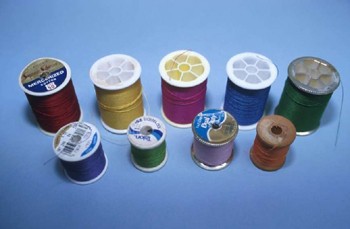
Horrific Blessing: Making something yourself is hella cool, especially if that thing can be worn.

DIY Madness

Craft on, you crazy diamonds

By Sara Bir

There she was, flickering across the computer screen–a woman wearing a yellow cap with a fried egg and a strip of bacon on top, reaching into a purse splotched with another fried egg and a scattering of chips. “Knit Your Own Fry-Up” the banner read.

It came from one of those e-mail forwards, the kind that travel with demonic speed across states and seas and offices. Someone somewhere had discovered this sunny-yolk wool catastrophe in a 1979 book of knitting patterns, presumably British–who here in the states would knit their own fry-up? For that matter, who anywhere would knit their own fry-up? The idea was completely absurd and therefore utterly delightful, as was the resulting scanned photo of the young model’s fashionably late-’70s madeup face beaming under her knitted, wearable food art.

At some point, an anonymous avid knitter and lover of fry-ups decided to combine the two into one perfect entity, inedible and everlasting. And now, decades later, this person’s handiwork has discovered a new life via the Internet. It’s touching, really. Everyone at my office was cracking up over the website. That night, a co-worker dreamed that I had knitted the fry-up myself, but it turned out to be a cursed pattern; once you began knitting your own fry-up, you were doomed never to stop–and once you donned your own fry-up, you were destined always to wear it.

I must admit, all in all, my role in the nightmare scenario is painfully close to the truth. In reality, I don’t knit. I do, however, paint, sew, glue, frame, matte, string, recover, refinish, refurbish or re-outfit any useless item known to man. I am what you would call a “crafty” person, and if craftiness is a blessing, it is a horrific one.

Until recently thought of as dowdy, craftiness–knitting, in particular–has been injected with trendy glamour over the past few years. Making something yourself is hella cool, especially if that thing can be worn. Witness the surge in chunky hand-knitted scarves encircling the necks of boyfriends worldwide. A subscription to the stylishly scrappy ReadyMade magazine carries huge hipster cachet, and Martha Stewart’s imminent stint in the slammer threatens to stop none of it.

How? Why? Who’s doing all of this stuff? I, for one, but it’s hardly a hobby. As any true DIY-er knows, craftiness is not a pastime but a compulsion. A crafty gal’s precious few days off are consumed with trimming vintage fabrics, decoding cryptic instructions from a 1963 McCall’s bathing-suit patterns, unknotting tangled wads of silk and polyester threads, fretting over malfunctioning sewing-machine settings, skipping midday meals and pricking needlepoint fingers. Everything gets done but nothing is finished.

Bills languish unpaid, bathrooms linger in filth, articles (like this one) exceed their deadlines. And for what? All to piece a badly fitted duvet cover together from old prom dresses in 27 hours when a better one could be obtained from Ikea for a mere $29.95. And it would probably have a cute name, too, like “Stümper.”

But that’s the catch: for the crafty, if something can be done, then you must do it yourself. It’s a strange modern-day perversion of the homesteading tradition, an embodiment of the American pioneer spirit led astray. I’ve been using the same ratty old TWA carry-on bag as a satchel for two years, because that’s how long it’s taken me to try and replicate it myself out of red canvas that I bought at a yard sale in Santa Cruz. There’s been a small matter of edging with bias tape that’s thrown me off, and I occasionally drag the half-finished wad of canvas out of the closet to fuss over it in confusion before deciding that now’s not the time, that maybe some other day I’ll triumph over bias tape. So it will continue for a few more years. Purchasing a professionally made satchel from a store, you see, would be a sign of defeat.

Then there are the curtains. I removed the old mildewy vinyl ones from the windows of our apartment because they looked like props leftover from Gummo. But the afternoon sun pours in through the unblocked windows and creates a glare across my computer screen, making it impossible to see the “Knit Your Own Fry-Up” girl I set to my desktop. After a flurry of inspiration, I went to the urban recycling outlet and picked up 17 sheets of gilded ’80s wallpaper samples, which I have been patching together into one big window shade with my sewing machine. I am convinced that when it’s all said and done, I will have created the ugliest window treatments know to man–and yet still I must carry on and finish.

Finishing will take a long time, because there are other semicompleted projects I absolutely must finish first. That is because they are blocking the path to the sewing machine, having piled up like a train wreck of flea-market detritus. There are stuffed felt animals and brocade placemats and plastic wallets on top of pillow shams, all with loose threads sticking out willy-nilly.

There’s an end table whose lacquer is only halfway sanded off, a CD rack awaiting a kiss of wood stain, a toilet paper tube that’s only partially transformed into a mountain goat and a stack of blurry photographs yearning to be arranged into a faux art installation. But the latter will never be a real art installation, because it will be the result of craftiness, which is less . . . intellectual? Crafts are at the same time frivolous and functional, but by nature they cannot be deep or conceptual.

Therein lies the conflict. Behaving craftily makes me feel like a stud, but it also seems like a colossal waste of time. I like to justify it all by telling myself that doing is better than thinking, and that it’s better to be proactive and dynamic than overly reticent. I have yet to complete chapter three of my novel-in-progress, but I’ve got an adorable little cap-sleeve shirt that I made from this wacky Americana-print polyester knit fabric.

And isn’t that more noble in the long run: to provide for oneself? Craftin’ it up is as close as a city-dwelling hipster can come to getting her hands soiled by sewing the ground. Few modern lassies know how to fry up their own damn egg in the kitchen, but possessing the potential to knit one somehow justifies things.

That’s a comforting thought. Instead of embroidery being the vapid drawing-room time-killer of Jane Austin novels, it’s now a way to personalize a pillow with gothic font reading “Bitch, Sweet Bitch,” or some such nonconformist sentiment. If modern existence is about sitting on your butt and lapping up whatever super-sized crud corporate America happens to be flinging at us, taking matters into your own hands–even if by epoxying scrap aluminum molding into a pencil holder–is a way to stick it to the Man: Your pencil holders are not good enough for me! I will make my own!

So craft on, you crazy diamonds. An hour spent in the creation of something utterly worthless and tacky is an hour spent creating, and therefore never wasted. I’ll sew you a scrap wallpaper window shade if you knit me a fry-up.

From the May 5-11, 2004 issue of the North Bay Bohemian.

© Metro Publishing Inc.

Pilar

0

Photograph by Frankie Frankeny

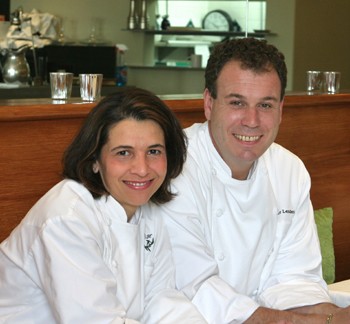
Nude Food: Chef-owners Pilar Sanchez and Didier Lenders of Pilar are devoted to fresh eclecticism.

Beauty of Bounty

Pilar has an unwavering devotion to freshness

By Heather Irwin

Midway through Pilar’s lunchtime crush, the evening’s dinner menu is still a bit nebulous–none of the staff is quite sure what it will be. “They let us know about 4:30pm,” says our waiter, not seeming overly concerned about the restaurant’s notoriously spontaneous menus. In fact, it’s become something of a comedy for early diners and eager food writers trying to describe the new restaurant’s food.

Carrot risotto? Mushroom soufflé? That’s so last week. Instead, Napa’s well-known chefs Pilar Sanchez and Didier Lenders like to keep everyone guessing, creating menus on the fly and switching ingredients and presentations not only daily, but sometimes even during the meal itself. Our waiter remembered that during the dinner service recently, the presentation of one dish transformed itself significantly, to his own confusion and that of a few surprised customers. Ah well, such is creativity. Unwilling to stifle inspiration, the changes aim for the better.

While such a mercurial menu might signal an undisciplined kitchen elsewhere, in the hands of Sanchez and Lenders, the evolution is quite intentional. The cohesiveness is not in the dishes but in Pilar’s unwavering dedication to freshness. Local or exotic, the menu is a living, breathing testament to these chefs’ ability to showcase the simple, unadulterated taste of the food itself. Nude food, you might say.

Though it remains to be seen whether the menu will continue to transform quite so rapidly or settle into a comfortable middle age with a handful of favorites, we’re hoping for the former.

Opened just last month in a tiny, narrow downtown space off Napa’s Main Street, Pilar’s food is described as contemporary Napa Valley-California, which of course could mean just about anything. Perhaps it’s best described as a mixture of classic French, Spanish and Italian, with a little Cali thrown in the mix.

Sanchez’s background in the wine fields of France, the kitchens of Mario Batali, her own Spanish heritage and most recently, her tenure at the Culinary Institute of America at Greystone, all merge harmoniously. Meanwhile, the décor of the restaurant reflects the simplicity of the food with earth tones, black-and-white trim and, as of this writing, no sign out front. A single banquette along one wall can make for close quarters during busy times but offers a good opportunity for checking out your neighbor’s dessert choices.

This early in the season, as anyone who’s been to the farmers market can attest, a reliable supply of any particular food can be a gamble. One week’s bumper crop of fava beans may lead to a fava crisis the next. By remaining flexible with its menus, Pilar allows for last-minute introductions of foods ready for their 15 minutes of seasonal fame. Right now, the spotlight is hogged by asparagus.

Though it may sound overly effusive, a chilled cup of soup ($6) featuring the speared veggie was the essence of spring. Cool and calming, with a wonderfully bright green color, the whole experience was like sipping an Alpine meadow. Each bite was grassy and vegetative with herby bites of chervil and sweet asparagus, creamy with flecks of crème fraîche and floral with the addition of orange peel. Yodel-lay-hee-hoo.

A duck confit rillette ($8) was equally simple and straightforward, paired with tiny cornichons and radishes. Nothing elaborate, just the slightly smoky, preserved duck matched with crisp, vinegary pickles and a pile of julienne spinach drizzled with olive oil and vinegar.

Grilled hanger steak, chilled spinach terrine and garlic herb potatoes ($16) had the same nude beauty. The steak, served medium rare, was meaty and juicy. The terrine was–and I hate to be so simplistic here–spinach-y. But it’s not often that you just taste a restaurant vegetable for what it is. The garlic-herb potatoes were thinly scalloped and packed neatly into a crisp, browned wedge. Though we were originally tempted to call it bland, we realized that with each bite, the pure essence of the food became more and more apparent. Maybe it’s the long-dormant winter palate, so accustomed to tasting heavy sauces and herbs in hearty winter fare, but this was clearly an awakening.

We also tried the grilled mahi mahi with chipotle barbecue sauce and grilled bok choy ($15), a light, fresh affair that was merely brushed with the smoky sauce and served unadorned, save for a few drops of olive oil. Rabbit, in the form of a chile poblano relleno ($13-$15), is served in a large grilled pepper, but presentation varied over three menus, once including rice and salsa, another time, cheese and eggs. Other entrées available for both lunch and dinner included pan-fried Boston mackerel ($14), steamed mussels with a garlic and herb cream sauce ($13) and a sweet rack of Colorado lamb ($25) that friends raved over.

Dessert may be the one relatively unvarying area of the menu. We tried a port poached pear zabaglione ($5) and got caught licking the plate. Twice. But it wasn’t our fault: the zabaglione is thick and creamy with a perfectly cooked caramel flavor that matches well with the slightly too al dente pear. The baked chocolate mousse with vanilla ice cream and coffee crème anglaise ($5) had a different consistency than the rich, puddinglike stuff one might expect. The mousse at Pilar is more like a dense cake given a small crown of vanilla-flecked cream. The dark taste of the chocolate and coffee make for a rich, bittersweet experience.

The wine list entertains the reader by matching American (mostly Californian) wines side by side with comparable French wines, allowing some healthy head-to-head competition. At the suggestion of our waiter, we tried a super-fruity, super-floral Chilean Veramonte Sauvignon Blanc ($8 a glass) served chilled. Despite the frequent menu changes, our waitperson described the food and presentation perfectly and, like the rest of the staff, was eager and willing to accommodate.

By the time you read this, no doubt, the menu will have changed several times over, leaving diners to ponder an array of new choices. But that’s the beauty of bounty and a chef confident enough to let the food speak for itself.

Pilar, 807 Main St., Napa. Open for lunch and dinner, Monday through Saturday. 707.252.4474.

From the May 5-11, 2004 issue of the North Bay Bohemian.

© Metro Publishing Inc.
Boys

Do Clothes Make the Boy?: No more than lipstick and nail polish make the girl.

Snails ‘n’ Spice

Clothes and boys and everything nice

By Camille Clifton

Penis, penis, yes, yes” sang the thoughtful doodle in my 10-year-old son’s notebook. Penis, penis, my ass, thought the kindly mother who read it. Surrounded as I am by a triangle of the pointy, rising, drooping, demanding members of mystery and maintenance, “Son, lover, son, yes, yes” has become my solemn song. I’m all alone with them, menstruating on the somewhat sly, gnawing baker’s chocolate over the sink, sometimes thinking such hair, teeth, yes, yes, deep thoughts as pertain to Gwyneth Paltrow.

Genetically, it wasn’t supposed to be this way. I was born into a purely matriarchal family in which men who weren’t yet grandfathers were quietly disposed of in the 10th year of knowledge. One decade and boom–they were gone, just a whispering signature on the alimony check and some sorry volunteer corn stalks growing out in the garden to prove they were ever there. We were an army of four women, three sisters and one decade-dumping mother who needed men for the symphony, the rent, the occasional crab dinner and not much else.

One delicate month of mourning generally resolved a new man from the wings, much fresher and seemingly more handsome, versed in Joyce and the rougher lyrics of Frank Zappa, who could do something the last decade-holder couldn’t, like camp. Huzzah! We embraced him, borrowed his clothes, pitied him, made fun of his eating habits right in front of him and proceeded to love him as we could.

So when a zygote was announced to be harboring in my blood-rich person, I was thrilled. A new mythic army of girls danced in stolen men’s sweat pants and went to the symphony picking crab from their teeth. But my body surprised me. Where little Sophie and Aja should have been–skirts hitched, knees black, high atop a terribly wobbly tree–crawled two sons.

What the hell am I going to do with a boy, I moaned upon seeing the first little penis-yes-yes resolve on the sonogram screen. I was 13 before I had stopped admiring boys who could actually tie their shoes. They were so foreign to me that I understood them to be marvels if lunch could pass from the bag to the mouth.

Simply put, I was a feminist-raised sexist pig.

But feminism has changed and so have I. Determined to embrace that humanism thing I’d read so much about, I decided to raise my sons without social conditioning: no death toys or weapons, no curiously crotched G.I. Joe dolls, no football crap–none of it. A human being is merely heartbreakingly human and worthy of love, I cooed to my hospital-home bundle. Boy, girl, who cares–human is what matters, human we share.

When Son One was 14 months old, having never, to my knowledge, witnessed an act of violence in his life, having never so much as tasted refined white sugar, having never seen “regular” TV, having never heard a story, poem, or song that didn’t uplift and uphold the glory of life all around us, he picked up a stick. Picked it up and looked at it. Looked at it and pointed it right at my face. “Bang,” he said softly. “Bang.”

What the hell was I going to do with a boy?

Well, take away the baddamn stick, for one thing. But as anyone who’s ever been around a toddler knows, stick schmick–a banana, Lego, fat crayon, or paper-towel roll will work just as well to illustrate “bang.”

“They need to ejaculate, metaphorically,” cooed one friend, dangling her sweet little fair-haired son on one knee while in his sticky dimpled hands he toyed with a plastic AK-47. “It’s good for them to have that release.” Penis, penis, wah, wah, I silently prayed.

And so we had swords, which are in fact the perfect penis attribute, though strictly ejaculate-free. Weapons were tempered with dress-up clothes: my old castoffs as well as wigs, earrings, ties, necklaces, and hats culled from grandparents and the Good Will.

Giddy in blonde braids, fake pearls, and swords, Son One eventually battled Son Two for primacy of the playhouse. Wasn’t I good, I privately saluted, look at them, as genderless as two crazy miniature transvestites tilting at each other in high heels and pirate swags could ever hope to be.

However, state law mandates that children must eventually go to school, where other little boys who have been shouting “You’re blind!” at TV umpires virtually since birth must also attend. Son One was invited to his first kindergarten birthday party. Avidly attached to the read-aloud manners book, Eddy-Cat Goes to a Party, One knew that to show respect to himself and the birthday boy, he should bathe and wear clean clothes. He languorously indulged in the tub and insisted on dressing himself.

He proudly marched down the stairs wearing one of my old lace tops and masses of necklaces that reached to the knees of his jeans. It was festive, as festive was celebrated in our tight little world. It was clean, it was respectful and it was utterly guaranteed to get him teased to tears.

“What’s wrong?” he asked, already too sensitive to the flicker of my face.

“You’ll get beaten up,” I didn’t say. “I’ve made you unfit for society,” I never mouthed. “You’re ruined,” I refused to note.

“Let’s go,” I gaily waved.

I coaxed one strand off him before we arrived, but didn’t get the rest. He wasn’t teased. His own sweet confidence wedded well with the fact that he was wearing a damned good length of rhinestones.

Son Two was born into a world far different than that first inhabited by One. Since Two was gorgeous in a way that I associated with female beauty, I inadvertently punished him for it by dressing him in pink. He looked wonderful in it, his gold and cream coloring set off like a delicate petal. Even mindful of those baby photos of Ernest Hemingway depicting him in long ringlets and white gowns, and knowing that such garb could lead to elephant guns, whiskey and suicide, I nonetheless briefly pretended that Two was a girl. His father knew nothing except that the inexplicably pink things I kept bringing home were on sale, and that thrifty was good.

But it takes more than a length of rose-colored cloth to make a girl. Nature triumphs over nurture many times, and so it is with Two. In fact, so it is with One.

So while my campaign against the horrible sexy nihilism of the media hasn’t abated over the years, I’ve mostly given up on the gender stuff. They still can’t watch TV or play with fake guns, but they can gas on girls, sometimes do that stupid video-game zombie dance that forces them to whack their hips up against pinging machines in public, play those sports that appeal, and they must still allow me to sniff in their deep puppy smell.

Boys, as we have all wearily heard again and again, will be boys. And today–smarter and wiser, though only slightly less icky than I was in my days of whole grain campaign–I wonder: What the hell would I do with a girl?

Penis, penis, yes, yes.

From the May 5-11, 2004 issue of the North Bay Bohemian.

© Metro Publishing Inc.
‘120 Minutes’

0

And Then Again, They May Not Be: They Might Be Giants, seen here in a 1994 photo, are among the bands whose early videos give incredulous heebies today.

Look Back in Horror

What a drag it is getting old

By Sara Bir

Recently, Mr. Bir Toujour returned from our garage with a handful of sticker-encrusted videocassettes in tow. “Look what I found,” he beamed. “Old skateboard videos! I think I dubbed Future Primitive on here. I haven’t seen it in years.”

He popped the tape into the VCR, and we saw about three minutes of the Bones Brigade skating around in what looked like Jams (remember those awful shorts?). And then we saw the old sitcom Alf. Yes, at some point, young Mr. Toujour decided that he’d rather tape a random Alf episode than preserve his own copy of Future Primitive for all time. “My God,” he cried out, “what was I thinking?”

It got even better, though, because after the closing credits of Alf, the tape gave way to an installment of MTV’s 120 Minutes, circa 1993. “So,” I asked, “you taped an episode of Alf in the mid-’80s, and then nearly a decade later, you recorded a bunch of alternative-rock videos on the same tape over more of Future Primitive?”

“What was I thinking?” he moaned again.

Of course we watched the videos, because we had both spent many formative hours with 120 Minutes during the early to mid-1990s, what I had always thought of as the golden age of alternative rock. And as Toujour and I watched this aged collection of bands parading around, we made a sad discovery: the golden age of alternative rock was actually the big turd age of alternative rock videos.

To a kid growing up in the Midwest at that time, isolated from decent record stores, college radio stations or hip concert venues of any kind, 120 Minutes was the way to find out about exciting new music. You had to stay up way late on a Sunday night just to catch glimpses of They Might Be Giants, Jane’s Addiction, Dinosaur Jr.–anything. It was only you and the dark, silent house–Mom and Dad would have been in bed for hours by then–with the television’s light flashing across your pale, skinny young self as you ate ice cream directly from the container. And all of these videos were so crazy and full of deep imagery and cute guys with guitars and tangled, overgrown locks. It was wonderful.

Well. The first video on the old tape was the Smashing Pumpkins’ Gish-era “Rhinoceros” (back before Billy Corgan began cultivating that Uncle Fester look). We see grainy footage of the band–not singing or playing, but vaguely fondling their instruments–lounging in a minimally furnished room. Then we see a fountain, and then we see the Smashing Pumpkins’ bassist, D’Arcy, spilling a bunch of beads or something all over a table. Then we see the fountain again.

“What the hell is this crap?” I ask Toujour. “Look, now they’re showing a cat–why?”

We see very early Red Hot Chili Peppers jumping around on a dirt pile; Social Distortion shooting pool and smoking (“What makes this guy so tough? He’s wearing eyeliner!”); and the Boo Radleys exemplifying bad fashion (“Whose idea were the floppy hat and velvet overalls?”).

The tape cut out, and with it our supply of vintage 120 Minutes episodes–until I dug up about eight lost tapes, jam-packed with good bands miming great songs in completely awful videos that I’d faithfully recorded long ago in my innocence. It’s painful to see musical artists you’ve admired for years defiling themselves in ways you’ve forgotten. After seeing three consecutive blue-screen My Bloody Valentine videos that were probably produced by a junkie at some public access facility in England, I fell into a funk.

That’s because, even though rock music will always be the most wonderful, exciting thing in the world, it will never strike you in the same way that it did when you were 15–and, man, that’s really sad. Probably the most vivid relics of that time in my life are some of the shittiest videos ever put to film. 120 Minutes petered out over the years and, I am told, semi-lives on as MTV2’s Subterranean. They play new videos.

And if you ever see old videos, they’re still the same, but not really. The world changes, and so do you, and that’s the best and worst part.

From the May 5-11, 2004 issue of the North Bay Bohemian.

© Metro Publishing Inc.

Swirl ‘n’ Spit

0

Swirl ‘n’ Spit
Tasting Room of the Week

Trefethen Winery

By Heather Irwin

Lowdown: New appellations don’t come along every day. It takes years of red tape, a gaggle of territorial winemakers and a magnum of eager sommeliers to figure this kind of thing out. But figure it out they have, and after 10 years of wrangling, the Oak Knoll District in Napa has become the valley’s 14th subappellation. While the ins-and-outs of agricultural boundary lines may be about as exciting to the outside world as a vanilla decaf latte, these turf-driven wine ‘hoods are a sort of viticultural gang, complete with their own cryptic label graffiti, internal alliances and external posturing, yo.

The original gangsta of Napa’s Oak Knoll Appellation happens to be Janet Trefethen, of Napa’s Trefethen Vineyards, who’s been leading the fight for nearly a decade. She hopes the distinctive appellation will become a “recognizable indicator of a certain type of quality or taste that can only be found in the Oak Knoll District.” Straight up. Then again, when you’re less than a mile or two from the next appellation, that distinction can be mighty subtle. Armed with their super tasting palates, trusty sommeliers say they can taste the terroir–the difference in “place”–between, say, Trefethen and their neighbors to the north and south. The rest of us just have to nod our heads and pretend we understand.

Vibe: Surrounded by some 600 acres of grapes, both red and white, Trefethen is one of the oldest wineries in Napa. The red-barnlike structure houses the oldest gravity-flow tanks in the valley, and although some critics say that Trefethen’s best days are behind it (their Chardonnay was named the best in the world in the early ’60s), the winery consistently produces reliably tasty wines.

Mouth value: Trefethen’s white wines–Chardonnay and Dry Riesling–lead the pack in taste and value. The 2002 Estate Riesling ($15) sidesteps the varietal’s often insipid sweetness, instead leaning toward the exotic with tropical flavors and an almost perfumelike smell. Similarly, the 2002 Estate Viognier ($30) was described in the tasting notes as “reminiscent of Marie Antoinette’s boudoir.” Um, is that a good thing? For us it had a heavy, lovely floral tone and lots of exotic fruit–perhaps more like Marie’s consorts.

Don’t miss: Just a skip away in Yountville is the new Bouchon Bakery. The pastry hub for nearby Bouchon Restaurant, the petite shop features the Frenchiest of French pastries, Napoleons and éclairs. Almost too pretty to eat, the tiny treats range from $3 to $5.75, and are worth every calorie-laden cent. At lunch, the bakery also serves precut Gruyère and ham baguettes ($5).

Five-second snob: Trefethen isn’t alone in belonging to the new Oak Knoll Appellation. Other wineries include Andretti, Costello, Etude, Frisinger, Kate’s Vineyard, Laird Family, Luna, Monticello Dom Montreaux, Koves-Newlan, Silverado Hill, Trefethen, and Van Der Heyden. Watch for the appellation on future labels.

The Oak Knoll name, however, wasn’t won without a fight. An Oak Knoll winery in Oregon argued that there might be confusion between its wines and those of the new appellation. Seems they worked things out and everyone is happy.

Spot: Trefethen Vineyards, 1160 Oak Knoll Ave., Napa. Open 11:30am to 4:30pm daily. Estate tasting, $10; reserve, $20. 707.255.7700.

From the May 5-11, 2004 issue of the North Bay Bohemian.

© Metro Publishing Inc.

‘High Society’

0

Not Yar: Chaz Simonds and Vanessa Schepps co-star.

Parlor Games

‘High Society’ provides plenty of the wrong kind of fun

There are a number of useful mental exercises known to and practiced by regular attendees of live theater. Strictly for emergencies, these little head games are sometimes played when faced with a show that is clearly and sadly–how shall I put it?–not good enough to recommend. Box Office, for example, is a game in which we mentally adjust the ticket price to reflect what the company should be charging for the show as opposed to what they actually are charging.

Such game playing is seldom admitted to in public, for fear that someone will say, “Well, if you hadn’t been so busy playing Mental Monopoly, you might have noticed how good the show really was.” Trust me: if the show is good, no one in the audience plays games in her head. Good shows don’t require such measures. The good shows take care of themselves. The not-so-good . . . well. . . .

That brings us to High Society, the current season-ending show by the Novato Community Players, a company known for the general excellence of its productions. Directed by Carrie Sugarman (whose joyous 2003 staging of NCP’s The Most Happy Fella proved she is capable of hitting a theatrical home run), High Society is a musical version of the beloved stage play and movie The Philadelphia Story.

With music and lyrics by Cole Porter and book by Arthur Kopit, High Society tells the tale of Tracy Lord (Vanessa Schepps), a rich divorcée with anger-management issues who is about to marry George Kittredge (Ken Bacon), a boring but safe groom when compared to her last husband, Dexter (Chaz Simonds). On the eve of the wedding, the Lord family’s mansion is infiltrated by Mike Connor (Gary Howes) and Liz Imbrie (Pamela Whipp), a pair of reporters from a local society paper. Even less welcome is the arrival of ex-husband Dex, an affable millionaire who’d rather design yachts than run a business.

Though the production is greatly helped by a couple of splendid supporting performances from veteran actor John Conway as Tracy’s skirt-chasing, hard-drinking Uncle Willie and the talented young Melissa Marsh as Tracy’s precocious little sister, Dinah, the cast provided plenty of material for a time-honored little theater game I call Mentally Recasting the Show.

Schepps boasts one of the better singing voices in the production, yet she plays Tracy Lords with too little of the anarchistic fire that would make her character’s actions make sense. Playing the game now, I’d have cast Schepps instead as Liz, the jaded photographer, and put that role’s Pamela Whipp (a Jessica Lange look-alike) into the Tracy Lords role.

And Chaz Simonds is egregiously miscast as the dashing Dex. Too mild-mannered to convey the dangerous raw magnetism required to woo Tracy away from her life’s safe harbor, Simonds is better suited for the role of Kittredge. I’d even have preferred him as Mike the reporter, dropping the not-nearly-impulsive-enough Gary Howes into the role of Seth Lord, Tracy’s father.

As for Simonds, who obviously has talent that isn’t able to shine in this part, I’d like to see him play Motel the tailor in some upcoming production of Fiddler on the Roof. Cast this man as Motel, and I’d be right there in the front row.

Another way to enjoy a below-average show is to play Christopher Guest at the Table, in which one imagines the show is just a series of outtakes from Guest’s community theater mockumentary Waiting for Guffman. High Society, if viewed from this perspective, is frequently hilarious, but not in the way it’s intended to be.

Case in point: while musical director Katy Hatfield does a splendid job directing a tight, capable band, she provided a simultaneous floor show of sorts as she fought a nightlong battle with her sheet music, routinely slapping errant pages back into place (whack! whack! whack!) whenever her music threatened to close on her as she played piano in plain view of everyone. Even the cast seemed distracted by it at times.

Christopher Guest would have loved that.

‘High Society’ runs Friday-Saturday, May 7-8 and May 14-15 at 8pm; Sunday, May 9, at 3pm. Novato Community Playhouse, 908 Machin St., Novato. $10-$17. 415.892.3005.

From the May 5-11, 2004 issue of the North Bay Bohemian.

© Metro Publishing Inc.

Camper Van Beethoven

0

Surreal Absurdist Folk: Camper Van Beethoven finally get some respect.

Camp Songs

CVB stake out new turf

By Greg Cahill

It’s 1984. R.E.M.’s Michael Stipe submits his list of the year’s Top 10 albums to Rolling Stone magazine. Among the selections is a quirky little gem titled Telephone Free Landslide Victory, a revelatory genre-bending blend of punk, ska, country riffs, tropical grooves and Eastern European ethnic folk music coupled with tongue-in-cheek lyrics. The album’s first single, the college hit and anti-skate-rat parody “Take the Skinheads Bowling,” soon guarantees that the album, with an initial run of 1,250 copies, becomes a hard-to-find cult favorite before being re-released the following year.

Fast forward to 2003. “Take the Skinheads Bowling” is the theme song to filmmaker Michael Moore’s Oscar-winning documentary Bowling for Columbine. The song blares over the film’s opening credits and gets the royal treatment when Academy Award music director Bill Conte strikes it up just before Moore takes the stage for his controversial acceptance-speech-turned-antiwar-rant.

Today, Camper Van Beethoven are in the midst of a bona fide reunion. Overlapping members with the commercially successful group Cracker, original CVB members reunited three years ago as Cracker’s opening act, some performing in both sets. The band are back in the studio recording their first album of new material since 1989’s swan song Key Lime Pie. Last week, the SpinArt label reissued four of the band’s albums, all digitally remastered with bonus tracks. They make an in-store appearance on Monday, May 10, at the Last Record Store in Santa Rosa, performing a free concert there, and pair up with Cracker on May 15 for Camper Van Beethoven’s 21st birthday party at the Warfield Theatre in San Francisco.

“This new recording project gathered momentum as we got back in the groove of things at our recent gigs,” explains David Lowery, the Camper Van Beethoven founder and frontman who also heads up Cracker. “We decided to make the new record because we finally got a good batch of songs that really fit our character and legacy.”

Part of that legacy is the band’s musical high-wire act that helped set the standard for the adventurous alt-rock spirit. “Camper Van Beethoven always was eclectic and managed to pull it off most of the time” says the 43-year-old Lowery, a Texas native who formed the band in 1983 after moving to Santa Cruz and connecting with violinist Jonathan Segel and other local musicians. “At least we pulled it off right up to the point where we overextended ourselves. But we always took risks, always liked incorporating some different style and bringing it into the rock fold. We were willing to get in over our heads.”

These days, it’s popular for music critics to maintain that Camper Van Beethoven’s self-described “surrealist absurdist folk” never got the respect it was due as indie-rock pioneers.

“People did write nice things about us after the band broke up,” says Lowery, dismissing the band’s underdog status. “We were included in books as one of the founding alternative-rock bands, so I think we do get respect. Still, at the time that we were starting the band and first putting out albums, there was a tendency, especially on the East Coast, to see us as a novelty band. And we weren’t really that. Sure, there were some songs that we did that could have been covered by [1980s jokester punk-pop band] the Dead Milkmen, but we did a lot more than that.”

Lowery describes the upcoming CD as “a concept record in the grand tradition of the ’70s classic-rock and prog-rock traditions.

“Ultimately, we just naturally find where we need to play it musically.”

Camper Van Beethoven perform Monday, May 10, at 5pm, at the Last Record Store, 1899-A Mendocino Ave., Santa Rosa. Free. 707.525.1963.

Spins Du Jour

Penelope Houston with Pat Johnson, ‘The Pale Green Girl’ (DBK Works)
The Avengers, ‘The American in Me’ (DBK Works)

As lead singer of the seminal San Francisco punk band the Avengers, Penelope Houston blazed a path for Liz Phair, Courtney Love and a generation of female punk singers. The Pale Green Girl, with songs by Pat Johnson, is Houston’s seventh solo album. The conceit is a faux French film soundtrack of sorts that casts Houston’s gentle soprano against tragic lyrics and haunting melodies reminiscent of Marianne Faithfull’s recent albums. It’s arguably Houston’s best work. For those who yearn for the fire of the Avengers, the band that opened the Sex Pistols’ last concert, The American in Me offers a dozen previously unreleased studio and live tracks recorded in 1978 and 1979. You get to hear not only Houston and her adolescent angst, but also bassist Jimmy Wilsey, who went on to fame as the twangy guitar master with Chris Isaak and the Silvertones.

–G.C.

From the May 5-11, 2004 issue of the North Bay Bohemian.

© Metro Publishing Inc.
‘A Bright Room Called Day’

Dark 'Day'AT's staging of Kushner early work is timely, unforgettable "We are perched at the brink of a great historical crime." When playwright Tony Kushner (Angels in America) first put those words in the mouth of a jittery Berlin actress named Agnes Eggling, the gradually terrified central character of his first original play, A Bright Room Called Day, the...

Superbike Showdown

Photographs By Rory McNamaraI'm No. 1: Heading into the Superbike Showdown, Suzuki's Matt Mladin was the man to beat.Duhamel's DemonWinning at Infineon requires skill, luck and divine interventionBy R. V. ScheideIt's simple. You lost. Go home.--T-shirt slogan seen at Infineon Raceway's 2004 Kawasaki AMA Superbike Showdown "I think I need a young priest and an old priest," says a...

Young Jazz Lions

Good Vibes: Percussionist Stefon Harris revitalizes jazz.New RoarYoung jazz lions do it their wayBy Greg CahillRemember the old young jazz lions? Those neoclassicists, headed by Wynton Marsalis, emerged in the mid-1980s garbed in stylishly tailored suits and possessing impeccable chops inspired by the jazz legends of the '30s, '40s, '50s and '60s. Marsalis especially mimicked the conservative stance of...

DIY Madness

Horrific Blessing: Making something yourself is hella cool, especially if that thing can be worn.DIY MadnessCraft on, you crazy diamondsBy Sara BirThere she was, flickering across the computer screen--a woman wearing a yellow cap with a fried egg and a strip of bacon on top, reaching into a purse splotched with another fried egg and a scattering of chips....

Pilar

Photograph by Frankie FrankenyNude Food: Chef-owners Pilar Sanchez and Didier Lenders of Pilar are devoted to fresh eclecticism.Beauty of BountyPilar has an unwavering devotion to freshnessBy Heather IrwinMidway through Pilar's lunchtime crush, the evening's dinner menu is still a bit nebulous--none of the staff is quite sure what it will be. "They let us know about 4:30pm," says our...

Boys

Do Clothes Make the Boy?: No more than lipstick and nail polish make the girl.Snails 'n' SpiceClothes and boys and everything niceBy Camille CliftonPenis, penis, yes, yes" sang the thoughtful doodle in my 10-year-old son's notebook. Penis, penis, my ass, thought the kindly mother who read it. Surrounded as I am by a triangle of the pointy, rising, drooping,...

‘120 Minutes’

And Then Again, They May Not Be: They Might Be Giants, seen here in a 1994 photo, are among the bands whose early videos give incredulous heebies today.Look Back in HorrorWhat a drag it is getting oldBy Sara BirRecently, Mr. Bir Toujour returned from our garage with a handful of sticker-encrusted videocassettes in tow. "Look what I found," he...

Swirl ‘n’ Spit

Swirl 'n' SpitTasting Room of the WeekTrefethen WineryBy Heather IrwinLowdown: New appellations don't come along every day. It takes years of red tape, a gaggle of territorial winemakers and a magnum of eager sommeliers to figure this kind of thing out. But figure it out they have, and after 10 years of wrangling, the Oak Knoll District in Napa...

‘High Society’

Not Yar: Chaz Simonds and Vanessa Schepps co-star.Parlor Games'High Society' provides plenty of the wrong kind of fun There are a number of useful mental exercises known to and practiced by regular attendees of live theater. Strictly for emergencies, these little head games are sometimes played when faced with a show that is clearly and sadly--how shall I put...

Camper Van Beethoven

Surreal Absurdist Folk: Camper Van Beethoven finally get some respect.Camp SongsCVB stake out new turfBy Greg CahillIt's 1984. R.E.M.'s Michael Stipe submits his list of the year's Top 10 albums to Rolling Stone magazine. Among the selections is a quirky little gem titled Telephone Free Landslide Victory, a revelatory genre-bending blend of punk, ska, country riffs, tropical grooves and...
11,084FansLike
4,606FollowersFollow
6,928FollowersFollow