Fall Film Season

King of Kings: Angelina Jolie and Colin Farrell play at royalty in ‘Alexander.’

Distant Thunder

Elephants, Thackeray and dinosaurs rumble up as the fall film season begins

By

After Labor Day, gross summer fare yields to the somewhat higher-brow fall season. Yet, in the distance, one sights the shuffling bulk of an approaching herd of white elephants. I mean, of course, the Oscar film season–still only menacing, but not, thank God, here yet.

There are elephants enough for everyone in Oliver Stone’s Alexander (Nov. 5), the story of the Macedonian emperor who conquered the world. So much for that libel that gay men are unmanly. Colin Farrell plays the 32-year-old emperor who gave the centuries a lasting lesson on the futility of ambition. Angelina Jolie is his barbarian queen, appearing regal in something low-cut.

On the way to elephants there are dinosaurs, as demonstrated by A Sound of Thunder (Oct. 8). Based on Ray Bradbury’s famous short tale, Thunder follows the clumsiness of dinosaur hunters on safari and the repercussions of one false step a few eons down the line. Edward Burns is the guide on tyrannosaurus hunting safaris; Catherine McCormack is the inventor of the time machine.

By contrast, Shane Carruth’s Texas-made Primer (October) is a completely unglamorous chrononaut picture. Often baffling but always smart, Primer uses time travel allegorically, as just one more unhappy way for exhausted high-tech engineers to squeeze 36 hours’ worth of work into a 24-hour day.

Just in time to save parents everywhere from the 500th viewing of Finding Nemo comes Shark Tale (Oct. 1), a slightly more adult version of the computer-animated fish movie. An all-star cast has the voice of Will Smith as a fish in trouble with the Shark mafia. Jack Black co-stars as a shark-enforcer who’s a vegetarian at heart; Angelina Jolie is a fish fatale; and Martin Scorsese voices the role of a fast-talking blowfish. Also for the PG set, The Incredibles (Nov. 5) is Pixar’s newest, concerning a superhero family with the usual family problems. Older Pixar fans finally get to see some leotards, force fields and explosions.

David O. Russell’s I Heart Huckabees (Oct. 15) is an almost indescribable cultural-war allegory by the director of Spanking the Monkey and Three Kings–recommendation enough right there. It’s about conflict between an open-space activist (Jason Schwarztman) in dubious battle with an executive (Jude Law) at Huckabees superstores. Pawns–or perhaps generals–in the game include Isabelle Huppert, Naomi Watts and Mark Wahlberg.

Speaking of culture wars, Kinsey (Nov. 12), one of the more intriguing films this fall, concerns Alfred Kinsey, the pioneering sexologist and most fascinating Hoosier this side of Kurt Vonnegut, having fired the warning shot in the sexual revolution. Liam Neeson plays the good doctor; Bill Condon (Gods and Monsters) directs.

Exhibit A in a study of the less savory side of marriage is Mira Nair’s version of Thackeray’s Vanity Fair (Sept. 1), with Reese Witherspoon as that demigoddess of impertinence, Becky Sharp. Thackeray is impossible to adapt to screen without a hell of a lot of narration; Nair tries to do without, and the film’s a little dizzying. Still, there are worthwhile turns by Bob Hoskins as the slovenly Sir Pitt Crawley, Eileen Atkins as Sir Pitt’s rich relation Miss Crawley and Jonathan Rhys Meyers as the stuck-on-himself Capt. George Osborne.

In decidedly different society rise The Yes Men (Oct. 1), a documentary about a pair of cyber-squatting pranksters who bedevil the World Trade Organization. These masqueraders try to find out how much sadism the moneymen will endorse before realizing they’re being put on by a pair of performance artists in thrift-shop suits.

And while this summer’s been a watershed for political movies, our cinema fortunately hasn’t neglected the ever-present problem of sudden zombie attack. Shaun of the Dead (Sept. 17) isn’t just the funniest British film of the year, it’s also one of the best films of the year, period. Edgar Wright’s grisly satire of desperation-as-the-English-way tells of a McJob sufferer (Simon Pegg) who has his sad little heart broken and drinks too much with his couch-camping (nay, couch-homesteading) mate Ed (the amazing Nick Frost). The duo wake up besieged by hangovers and ravenous zombies alike.

Gut munching, but rib-tickling.

From the August 25-31, 2004 issue of the North Bay Bohemian.

© Metro Publishing Inc.

Industrial Jazz Group

0

: Andrew Durkin’s IJG is devoted to innovation. –>

Industrial Jazz Group get their act in gear

By Greg Cahill

“I realize this is going against the grain of recent jazz pedagogy,” says pianist and composer Andrew Durkin, founder of the Industrial Jazz Group, “but for me, jazz has always signified restlessness, rebellion, innovation, a breaking away from tradition. Bound up in that, of course, is the process of risk-taking, of recognizing and accepting that some new direction you’re heading in–like playing Cyndi Lauper covers, say–may not actually be successful. Failure is part of the paradigm.”

Jazz purists might argue that the Industrial Jazz Group, performing this week at Zebulon’s Lounge in Petaluma, aren’t a jazz band in the strict sense. But Durkin, who grew up in the New Jersey suburbs and first played jazz in a high school band, thrives on the same passion he has felt since he formed this unique group in 1996.

“This band is the result of a happy accident,” he says during a conversation from the road. “I was working with a singer, and we had a few instrumentalists backing her–piano, bass, tenor sax. We would meet for rehearsals on Saturday mornings. Eventually the singer seemed to lose interest in the project–sometimes she would show up for rehearsal and sometimes she wouldn’t. One week I threw together a few charts for the instrumentalists, just to have something more interesting to do in case we were singerless at the next rehearsal. Very off-the-cuff, without any real expectation for success.

“When I started to hear what these charts actually sounded like when executed by players who had some facility with jazz, it opened my ears to a whole new set of creative possibilities.”

Those creative possibilities have shaped three critically acclaimed CDs (including the soon-to-be-released album The Star Chamber on the Innova label), all funded by the National Endowment for the Arts and the McKnight Foundation, and sporting attention-grabbing compositions colored with shades of Ellington, Mingus and Zappa. The result is a pastiche of ’50s, ’60s and ’70s acoustic jazz blended with avant-garde elements.

“Thelonious Monk goes to the circus drunk,” is how one listener once described their music, according to Durkin.

And, no, there are no overtly industrial sounds.

“I guess it’s just a name that stuck,” explains Durkin, 35, a self-trained composer, “but at one time it was also, for me, a metaphor that attempted to address the mathematical, impersonal quality of a lot of modern avant-garde classical music–that’s the ‘industrial’ part–mixed with the lyricism and the personal sound I associate with jazz.”

Since their inception, the Industrial Jazz Group have more than doubled in size and increased their scope exponentially. That transformation has afforded Durkin considerable creative freedom.

“Mostly, it spoils me by providing almost instantaneous realization of each new chart,” he says. “It has also taken me in directions I hadn’t expected. Three years ago, I would never have thought that the quintet version of the group would have morphed into an 11-piece jazz orchestra, which is what we are now. This happens through the inevitable process of players subbing out gigs; a new person comes into the group for a certain show, and if the vibe is good, he or she will stay on even after the original person returns. So there are some cats who have stayed on for long stretches, but there’s also always at least one new person on each gig. That helps to keep everything fresh, and a little bit of a high-wire act.”

The Industrial Jazz Group perform on Friday, Aug. 27, at Zebulon’s Lounge. 21 Fourth St., Petaluma. 8pm. $10. 707.769.7948.

Spin Du Jour

Tony Furtado, ‘These Chains’ (Funzalo)

Slide guitarist and banjo player Tony Furtado has built a solid reputation as a hired gun and occasional solo act, playing on the local bluegrass scene with Laurie Lewis and Grant Street, lending his stinging slide to projects by Béla Fleck and Earl Scruggs, and teaming up with the likes of Alison Krauss and Jerry Douglas on his own infrequent records. On These Chains, produced by Dusty Wakeman (Dwight Yoakam, Lucinda Williams), Furtado emerges as a gifted singer-songwriter, adding bluegrass flourishes to an engaging roots-rock sound on nine often introspective originals, a handful of collaborative efforts (with NRBQ’s Al Anderson, Jim Lauderdale and Jules Shear) and a plaintive cover of Dylan’s “One Too Many Mornings.”

Furtado is aided by a killer crew consisting of drummer Jim Christie and guitarist Doug Pettibone from Lucinda Williams’ current band; veteran keyboardist Skip Edwards; percussionist Michael Tempo (Bonedaddys); Kat Maslich and Peter Adams of Eastmountainsouth; and backing vocalist Gia Ciambotti (Badly Drawn Boy). His vocals recall a young Jackson Browne, his slide-guitar work echoes Ry Cooder. It’s the perfect soundtrack for a late-summer road trip. Pop it in the deck and feed your own nomadic muse.

–G.C.

From the August 25-31, 2004 issue of the North Bay Bohemian.

© Metro Publishing Inc.

Save the Date

0

: The Art for Life auction in a benefit for Face to Face uses smooth stones and small bones to mark each death from HIV-related illness in the county since 1983. So far, 1,111 stones have sadly joined the round. –>

Our short list of those perennial happenings you want to attend

By Bohemian Staff

Sausalito Art Festival Sept. 3-6. Juried art festival pairs great visuals with Bob Weir, Taj Mahal and John Hiatt. Bay Model, Sausalito. $5-$20. 415.331.3757.

Symphony on the River Festival Sept. 5. Napa Valley Symphony and Friends of the Napa River team up for local’s favorite fest. Veteran’s Park at Third Street, Napa. Free. 707.254.8520.

Art for Life Auction Sept. 9-12. Proceeds from art sales benefit Face to Face/Sonoma County AIDS Network. Friedman Center, 4676 Mayette Ave., Santa Rosa. Free, previews. $50, auction, Sept. 12. 707.544.1581.

Habitat for Humanity Benefit Concert Sept. 9. Violin and vocal concert sponsored by Napa Chapter of Solano Habitat for Humanity. V. Sattui Winery, 1111 White Lane, St. Helena. $35 (includes wine intermission). 707.252.1714 or 707.944.0477.

Heirloom Tomato Festival Sept. 11. See red–and every other color of the rainbow–as 175 different varieties of tomato go on display. Kendall-Jackson Wine Center, 5007 Fulton Road, Fulton. $45-$55. 800.769.3649.

31st Annual Trade Feast Celebration Sept. 11-12. Celebrate the acorn harvest, or the Big Time, as local Native Americans call it. Miwok Park, Novato. 415.897.4064.

Napa Valley Open Studios Sept. 11-12 and 18-19. Artists throughout the valley open their doors to the public. Sponsored by the Napa Valley Arts Council. Various locations. 707.257.2117.

San Francisco Comedy Competition Various dates. Comedians square off for a shot at the title. Sept. 16, SSU, Evert B. Person Theatre, 1801 E. Cotati Ave., Rohnert Park. $10; students, free. 707.664.2382. Sept. 17, Marin Center, Avenue of the Flags, San Rafael. $25. 415.499.6800. Sept. 18, Sept. 25 and Oct. 8. Napa Valley Opera House, 1030 Main St., Napa. $25-$35. 707.226.7372. Oct. 1, LBC, 50 Mark West Springs Road, Santa Rosa. $35. 707.546.3600.

Napa Valley Harvest Festival Sept. 18. Benefits Kiwanis Club of Napa. Charles Krug Winery, 2800 Main St., St. Helena. $40-$50. 707.253.2276.

Hands across the Valley Sept. 18. Hollywood celebrities, local politicos and national sports figures raise big bucks for safety-net food programs. Niebaum-Coppola Estate Winery, 1991 St. Helena Hwy., Rutherford. $125. 707.226.6136.

Sonoma County Book Fair Sept. 18. Fifth annual book fair features outstanding area authors and pays tribute to the late Charles M. Schulz. Old Courthouse Square, Santa Rosa. Free. 707.544.5913.

Glendi International Food Festival Sept. 18-19. All about the food. Glendi is Greek for “party.” Need we say more? Protection of the Holy Virgin Orthodox Church, 90 Mountain View Ave., Santa Rosa. $8; under 12 free. 707.584.9491.

Mill Valley Fall Arts Festival Sept. 18-19. Music, art and fun for the whole family. Throckmorton Avenue at Cascade Drive, Mill Valley. $7; under 12 free. 415.383.7955.

Sebastopol Celtic Music Festival Sept. 23-26. World’s greatest Celtic musicians do more than just fiddle around. Sebastopol Community Center, 390 Morris St., Sebastopol. $10-$96. 707.823.1511.

Jarvis Puppet Workshop & Festival Sept. 24-25. This year’s performances include The Singing Turtle and The Bathtub Pirates. Jarvis Conservatory, 1711 Main St., Napa. $10-$20. 707.255.5445.

Petaluma Downtown Antique Faire Sept. 26. Hundreds of vendors, thousands of bargains. Downtown Petaluma. Free. 707.762.9348.

Petaluma Progressive Festival Sept. 26. Music, Tom Hayden, Peter Coyote and the San Francisco Mime Troupe come together out in left field. Walnut Park, Sixth Street and Petaluma Boulevard North, Petaluma. Free. 707.763.8184.

Russian River Food & Winefest Sept. 26. All-day taste-fest includes wine, baked goods, cheese, guest chefs and authors in celebration of river-area bounty. Fife’s Guest Ranch, 16467 Hwy. 116, Guerneville. $15-$25. 707.869.9474.

18th Annual Fall Music Festival & Celebrity Golf Classic Oct.1-2. Party on with the Doobie Brothers, David Mason and the Ford Brothers with Robben Ford while raising money for Valley of the Moon Children’s Foundation. Chardonnay Golf Club, Napa; B.R. Cohn Winery, 15000 Sonoma Hwy., Glen Ellen. $60-$200. 800.330.4064.

Sonoma County Harvest Fair Oct. 1-3. Enjoy the bounty of the county along with the World Championship Grape Stomp competition. Sonoma County Fairgrounds, Bennett Valley Road, Santa Rosa. $2-$6. 707.545.4203.

North Bay EcoFest Oct. 2-4. Features workshops, lectures and exhibits on creating an ideal world. Sebastopol Community Center, 390 Morris St., Sebastopol. Free. 707.829.7153.

Calabash Oct. 3. Bay Area artists go gonzo with gourds to benefit AIDS food bank. Food for Thought, 6550 Railroad Ave., Forestville. $25-$30. 707.887.1647.

Sausalito Floating Homes Tour Oct. 3. Self-guided tour of 15 of the world’s most unique homes. Kappas Marina, Sausalito. $30 (reservations recommended). 415.332.1916.

Mill Valley Film Festival Oct. 7-17. Cutting-edge cinema hits the North Bay for 27th consecutive year. Various venues. Tickets on sale Sept. 15. 415.383.5256.

Calistoga Jazz & Blues Festival Oct. 8-10. Calistoga gets the blues, big time. Calistoga, various Napa Valley locations. $40-$110. 707.942.6333.

ARTrails Oct. 9-10 and 16-17. Best exercise in artistic populism, as various Sonoma County artists open studios to public. Free. 707.579.2788.

Bioneers Conference Oct. 15-16. The preeminent gathering of environmental visionaries brings together practical solutions for social and environmental challenges. Marin Center, Avenue of the Flags, San Rafael. $96-$355. 877.246.6337.

Wine & Food Affair Nov. 6-7. Russian River Wine Road, association of more than 100 local vintners, throws annual bash. Various locations in Alexander, Dry Creek and Russian River valleys. $15-$40. 707.723.6366.

North Bay Veterans Day Parade Nov. 11. Support the troops, past, present and future. Downtown Petaluma. Free. 707.763.6688.

Festival of Harps Nov. 13. World-class virtuosos play to this year’s theme: the harp as part of a music ensemble. Spreckels Performing Arts Center, 5409 Snyder Lane, Rohnert Park. $21-$24. 707.588.3430.

But wait! There’s more! Novelist Lynn Freed (The Mirror) reads from her newest, The Curse of the Appropriate Man, Sept. 7 at Book Passage (415.927.0960). . . . The original opera, Sara’s Diary, 9/11, with libretto by Sonoma County writer Leroy Aarons, premieres Sept. 8 at the Spreckels Performing Arts Center (707.588.3400). . . . Political satirist Will Durst performs Sept. 9 at SSU (707.664.2382). . . . Political pundit Molly Ivins surely shakes the shrubbery Sept. 23 in discussion at Osher Marin JCC (415.444.8000). . . . Movie Lovers Festival launches Oct. 9 at the LBC with San Francisco Chronicle critic Mick LaSalle (707.546.3600). . . . Former House Speaker Newt Gingrich is in conversation with former Clinton Labor Secretary Robert Reich Oct. 16 at the LBC (707.546.3600). . . . General Tommy Franks appears Oct. 18 and former U.S. Attorney General Janet Reno Nov. 29 at the Marin Speakers Series at the Marin Center (415.499.6800). . . . Israeli author Amos Oz in conversation Dec. 5 at Osher Marin JCC (415.444.8000). . . .

From the August 25-31, 2004 issue of the North Bay Bohemian.

© Metro Publishing Inc.
Medlock Ames

0

Photograph by Rory McNamara

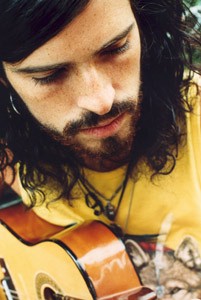
New Breed: Vintner Ames Morison, shown here, works with partner Christopher Medlock James to create a more sustainable product.

How Does Your Vineyard Grow?

Medlock Ames and the making of a winery

By Heather Irwin

Winding down a desolate dirt road for more than a mile, it suddenly becomes clear that I’ve taken a wrong turn somewhere. Though I’d expected to scramble through brush and bramble in search of Ames Morison’s Chalk Hill winery, I’m definitely lost. Plus I’m a half-hour late, stuck on what is less a road than a convergence of dirt, gravel and potholes.

Suddenly, the makeshift road ends–actually stops dead–at the edge of a vineyard that sways greenly for acres below. Sliding to a gravelly stop, I’ve nearly pitched headlong down the hillside toward a grapey demise. But as the kicked-up dust continues to silently swirl around me, I peer across the valley, awestruck by row after row of Morison’s perfectly ordered green vines. Nature, briefly tamed.

Driving through wine country day after day, the beauty so often becomes routine. Whizzing past the trellises at 55 mph, it’s often a vegetative blur. But having bits of fence and leaves pressing against your bumper tends to bring it all into sharp focus. At the back door of this fledgling winery, I’m abruptly reminded to stop and smell the grapes for a moment and enjoy. Sniff. Ah. OK. Done.

And with a spin of tires and rock, I head back over the gravel and through the potholes, back to the main road and what I’m praying is the right entrance this time.

Sprawled out over 188 acres at the far southwest corner of Alexander Valley, Medlock Ames, co-owned by hipster thirty-somethings Ames Morison and Christopher Medlock James, has been quietly getting off the ground for the last two years. Nestled in the Alexander Valley appellation, the winery has only recently released its 1999 and 2000 Merlots, having sold grapes to other wineries and focused on the whole business of getting started. Not a bad neighborhood for two guys who, eight years ago, didn’t know much more about wine than what was in their glass.

The story goes that the two former Tulane University roommates had a crazy idea somewhere around 1996 while quaffing a bottle of Talbott Diamond T Chardonnay. Let’s start a winery, they said. James, who had earned a small fortune in technology, would be in charge of the capital. Morison would run the day-to-day operations. Though a history major, he had grown up on a farm and had recently returned from a Peace Corps stint in Guatemala teaching highland farmers back-to-the-earth farming methods forgotten during disastrous modernization efforts.

It appeared, too, that a few years of viticulture study at UC Davis loomed in his future. As to cost, Morison will only affirm that “building a winery is very capital-intensive.”

But where the story differs from so many others in the valley is in the youthful sensibility that James and Morison bring to the table. Unabashedly as comfortable with indie rock as with the ins and outs of malolactic fermentation, they have created the winery from the ground up according to their own unique personalities and ambitions.

That’s obvious in the design of the winery. Bordered all around by bamboolike horsetail grass shooting skyward from the ground, it is all sleek angles and contemporary lines. Sitting low on the horizon, the stone and wood are bordered by a thin band of dark glass that allows Morison and his workers to take advantage of natural sunlight. Half of one side, facing the parking lot, is open steel and glass, Morison explains, “to give us beautiful views while we’re working.”

In a thrift-store cowboy shirt and Elvis Costello glasses, Morison seems to be more of an urbanite’s ironic interpretation of a farmer than an actual farmer, though his caked and dusty work boots suggest otherwise. Touring the winery and vineyard, he is totally at ease on the property, as we wander through the vines he’s planted here over the last several years.

“What I enjoy most about what I do is the process,” he says. “I love getting up early in the morning to harvest. I love getting my hands stained black with tannin. I love the people I work with. There are so many minor frustrations and things that don’t go my way and a few major ones, and even some sleepless nights when I worry about frost or a stuck fermentation, but I love it all.”

Like the rather new viticulturalist that he is, Morison is all about the process of agriculture, though you don’t get the sense that he’s spending a whole lot of time consulting The Farmer’s Almanac or walking around with divining rods. These days it’s about chemistry and lab results. In fact, the winery has its own small lab inside, filled with beakers and strange tubes, where Morison seems especially comfortable.

What’s ironic, however, is that this new generation of science- and technology-friendly vintners also looks back–way back–for much of its inspiration. For instance, Morison is thoroughly committed not only to organic farming, but biodynamic farming. Biodynamic practices incorporate whole-earth techniques that take into account water, land and animal populations as part of the agricultural practice, rather than just avoiding certain harmful pesticides. Having seen the devastating impact of years of poor agriculture practices during his stint in the Peace Corps, Morison is convinced that respect for the land is not just a faddish notion or a publicity stunt, but a sound, long-term philosophy.

“There are hundreds of wineries in California. I feel strongly that our wines are distinctive, and that we are doing something unique by creating a completely sustainable operation that is organic with a broad diversity of plant and animal life,” he says. This is the type of farming practiced by our grandparents and their grandparents. Soon, the winery will also be fully solar-powered.

With a wildlife preserve neighboring the vineyard, Morison has purposefully left nearly two-thirds of the total property in its natural state. He plans to create a land bridge across the vineyards for animals traveling to and from the preserve. That would make at least one puppy happy. Portions of the land, according to Ames, once belonged to “Peanuts” artist Charles Schulz, and Ames claims to have found on the property a dilapidated old doghouse that closely resembled Snoopy’s.

Additionally, this year, nearly 20 acres of Sauvignon Blanc vines were replanted to be more disease-resistant, as well, Morison says, as “some Cabernet Franc and Petit Verdot to blend with our Bordeaux-style blend.” Pointing to the various lots, he is a new breed of farmer who thinks as much about the future of his land as he does the present. Right now, he says they are thinning the crop to eliminate unripe grapes that add a bitter flavor and will begin harvesting their Merlot grapes at the end of August, the earliest they’ve been picked in the vineyard.

But planting grapes and making wine is one thing; distribution, the biggest challenge of any winery, particularly a small boutique operation like Medlock Ames, is quite another. The two vintners have crossed their fingers and sent their Bourdeaux-informed product both to the prestigious Wine Spectator magazine for review and to the dean of all appraisers, Robert Parker.

“Stellar reviews,” Morison admits, aren’t the “most likely scenario,” given the number of hopeful souls who submit their wines to both Parker and the Spectator each year. “Even still,” Morison says, “we would not be profitable for four years. Our other forecasts, requiring us to rely more heavily on distributors, which offer us the lowest margin, push the profitability out further. It all depends on getting our name out there–and, of course, on the quality of the wine.”

The two are counting on their website (www.medlockames.com) to act as their primary distribution arm, hoping that those who’ve tasted their products at specialty shows will join their wine-club list. Brix and Ravenous restaurants both pour Medlock Ames; a small specialty shop in Yountville carries the wine; and the two just signed a distribution deal with brokers in both Southern and Northern California.

“We are trying to target people like us,” Morison says, “young, forward-thinking, and if not committed to sustainability, at least conscious of it.”

Morison climbs the catwalk to the steel gravity-flow tanks and explains the gentle process behind his wine. As he talks about pressing down caps and the amount of pressure required to gently squeeze (but not totally pulverize) the grapes, it’s hard not to be struck by his absolute earnestness in wanting to create a perfect bottle of wine.

Later, descending the echoing, steel stairs into the cool and cavernous barrel room, it’s unclear to either of us whether or not he’s actually done that yet. Drawing beautiful ruby Merlot out of the barrels, he’s honest about the fact that there is an evolution still in progress here, though he’s justly proud of his initial efforts. However, he’s still in the midst trying to find just the right balance of flavors and varietals–a mysterious recipe that incorporates time, wind, water, earth and a whole lot of luck into that final perfect bottle.

Meanwhile, he asks, “So, you know any good bands playing around here?”

From the August 25-31, 2004 issue of the North Bay Bohemian.

© Metro Publishing Inc.
Bruce Springsteen

0

: The Boss finally uses his cred to sway millions. –>

Springsteen’s plunge into partisan politics

By Bruce Robinson

In 1984, a musically clueless Ronald Reagan tried to co-opt Bruce Springsteen’s “Born in the USA” as a campaign theme song. Never mind that the song was a pointed indictment of the government’s failure to make good on its promises to Vietnam-era veterans, the Great Communicator’s operatives couldn’t see past the chiming chorus and tried to recruit Bruce to the Gipper’s cause. Springsteen demurred.

Four years later, another Republican presidential hopeful, Sen. Bob Dole, again attempted to adopt the Springsteen anthem for his campaign. The Boss quietly told him to knock it off.

Fast forward to 2004. After steering clear of electoral politics for his entire career, Springsteen announces that he and a host of other high-profile rock artists (REM, Dave Matthews, the Dixie Chicks, Pearl Jam and others) will play a series of highly publicized concerts called Chords for Change in a handful of “swing” states, in support of the Democratic presidential ticket.

“I felt like I couldn’t have written the music I’ve written and been onstage singing about the things that I’ve sung about for the past 25 years and not take part in this particular election,” Springsteen said.

It’s about damn time.

Springsteen came of age during an era of unprecedented musical activism. Like most of his fellow boomers, he grew up hearing the topical acoustic urgings of Phil Ochs, Pete Seeger, Woody Guthrie and a young Bob Dylan as the soundtrack to the Civil Rights movement of the early 1960s. A few years later, the music and the politics were both electrified, as the Vietnam war polarized generations like never before.

By the time the Boss-to-be released his debut in 1972, Vietnam was history. Springsteen soon found his voice as a blue-collar sympathizer, chronicling the deflected dreams and dogged determination of the American underclass in a way few of his contemporaries even attempted. Songs like “The Promised Land,” “Night,” “The River” and many more gave potent voice to the disappointments, defeats and unquenchable hopes of his generation, while Springsteen’s live shows with the E Street Band were cathartic marathons dedicated to the redemptive power of communal rock and roll.

But while Springsteen’s songs have portrayed individuals at the mercy of forces far greater than they can even recognize, he has never before sought to publicly connect the dots between the circumstances of his characters and the real-world policies that define their lives.

Like many others who have been galvanized to action over the past four years, Bruce appears to be more committed to domestic regime change in general than the specific policies of the Democratic standard-bearers. In his recent New York Times op-ed piece announcing the Chords for Change concerts, Springsteen wrote that while Kerry and Edwards don’t “have all the answers, I do believe they are sincerely interested in asking the right questions and working their way toward honest solutions.”

And that, it seems, is enough for Bruce to stake some of his own hard-won cred on their ticket. As he told Ted Koppel on Nightline earlier this month, “I stayed a step away from partisan politics because I felt it was always important to have an independent voice. I wanted my fans to feel like they could trust that. But you build up credibility . . . and I think there comes a time when you feel, all right I’ve built this up and it’s time to spend some of it.

“I think this is one of the most critical elections of my adult life.”

Even before the Chords of Change concerts were announced, Kerry was using Springsteen’s “No Surrender” as an unofficial theme song. In it, the Boss sings, “We learned more from a three-minute record than we ever learned in school.”

May his political educating prove equally effective.

From the August 25-31, 2004 issue of the North Bay Bohemian.

© Metro Publishing Inc.
School of the Americas

0

Teaching Torture

Congress keeps the School of the Americas alive

By Doug Ireland

Remember how congressional leaders on both sides of the aisle deplored the torture of prisoners at Abu Ghraib as “un-American”? Last month, the House of Representatives quietly passed a renewed appropriation that keeps open the United States’ most infamous torture-teaching institution, known as the School of the Americas (SOA), where the illegal physical and psychological abuse of prisoners of the kind the world condemned at Abu Ghraib and worse has been routinely taught for years.

A relic of the Cold War, the SOA was originally set up to train military, police and intelligence officers of U.S. allies south of the border in the fight against insurgencies Washington labeled “communist.” In reality, the SOA’s graduates have been the shock troops of political repression, propping up a string of dictatorial and repressive regimes favored by the Pentagon.

The interrogation manuals long used at the SOA were made public in May by the National Security Archive, an independent research group, and posted on its website after they were declassified following Freedom of Information Act requests by, among others, the Baltimore Sun. The National Security Archive noted that the manuals “describe ‘coercive techniques’ such as those used to mistreat the detainees at Abu Ghraib.”

The Abu Ghraib torture techniques have been field-tested by SOA graduates; seven of the U.S. Army interrogation manuals that were translated into Spanish, used at the SOA’s trainings and distributed to our allies, offered instruction on torture, beatings and assassination. As Dr. Miles Schuman, a physician with the Canadian Centre for Victims of Torture who has documented torture cases and counseled victims, graphically wrote in the May 14 Toronto Globe and Mail under the headline “Abu Ghraib: The Rule, Not the Exception”:

“The black hood covering the faces of naked prisoners in Abu Ghraib was known as la capuchi in Guatemalan and Salvadoran torture chambers. The metal bed frame to which the naked and hooded detainee was bound in a crucifix position in Abu Ghraib was la cama, named for a former Chilean prisoner who survived the U.S.-installed regime of Gen. Augusto Pinochet. In her case, electrodes were attached to her arms, legs and genitalia, just as they were attached to the Iraqi detainee poised on a box, threatened with electrocution if he fell off.”

The long history of torture by U.S.-trained thugs in South and Central America under the command of SOA graduates has also been studiously documented by human-rights organizations like Amnesty International (in its 2002 report titled “Unmatched Power, Unmet Principles”) and in books like A. J. Langguth’s Hidden Terrors, William Blum’s Rogue State and Lawrence Weschler’s A Miracle, a Universe. In virtually every report on human-rights abuses from Latin America, SOA graduates are prominent. A U.N. Truth Commission report said that over two-thirds of the Salvadoran officers it cites for abuses are SOA graduates. Forty percent of the cabinet members under three sanguinary Guatemalan dictatorships were SOA graduates. And the list goes on.

In 2000 the Pentagon engaged in a smoke-screen attempt to give the SOA a face-lift by changing its name to the Western Hemispheric Institute for Security Cooperation (WHINSEC) as part of a “reform” program. But as the late GOP Sen. Paul Coverdale of Georgia (where SOA/WHINSEC is located) said at the time, the changes to the school were “basically cosmetic.”

The lobbying campaign to close SOA/ WHINSEC has been led by School of the Americas Watch, founded by religious activists after the 1990s murder of four U.S. nuns by Salvadoran death squads under command of one of the SOA’s most infamous graduates, Col. Roberto D’Aubuisson. Lest you think that the school’s links to atrocities are all in the distant past, School of Americas Watch has documented a raft of recent scandals postdating the Pentagon’s chimerical “reform.” Here are just two of them:

* In June 2001, Col. Byron Lima Estrada, an SOA grad who was head of Guatemala’s bloody D-2 intelligence unit, was convicted of Guatemalan Bishop Gerardi’s murder by bludgeoning–two days after the bishop released a report concluding that the army was responsible for a majority of the 200,000 killed in his country’s civil war.

* In April 2002, two SOA graduates (Army Commander in Chief Efrain Vasquez and Gen. Ramirez Poveda) helped lead a failed coup in Venezuela. The notorious Otto Reich, a failed Bush administration appointee who sat on WHINSEC’s Board of Visitors, met with the generals in the months preceding the coup.

Rep. Jim McGovern, D-Mass., has spearheaded opposition in the House to SOA/WHINSEC, but his amendment to the Foreign Operations appropriation killing money for the school (which had 128 co-sponsors) was withdrawn at the 11th hour on July 15 after a bipartisan agreement limited the number of amendments that could come to the House floor.

The last chance for killing the school’s money this year now rests with the Senate–but when past SOA critics Sens. Boxer and Feinstein were called to find out what they planned to do, the response was a deafening silence from their offices. In light of the School of Americas Watch’s extensive lobbying, our elected representatives can’t claim they don’t know of the school’s record on torture.

This episode calls to mind Mark Twain’s observation that “there is no distinct, native American criminal class–except Congress.”

From the August 25-31, 2004 issue of the North Bay Bohemian.

© Metro Publishing Inc.

Reading

When even the government thinks we’re not reading enough, there may be trouble

By Jordan E. Rosenfeld

The National Endowment for the Arts is one of the more benevolent arms of government, offering financial stipends to artists of all stripes, especially writers. But with the early-June release of the ominous-sounding report Reading at Risk: A Survey of Literacy Reading in America, the NEA dumped dark sentiments on the literary community at large.

Twenty years in the making, with statistics taken from a brawny sample of 17,000 Americans, the report states that if nothing is done about the decline in reading among “every age group, education level, income level, race, region and gender,” literature faces an extinction that only the eight-track and Edsel could understand. Furthermore, a decline as large 28 percent is marked among 18- to 34-year-olds.

The document itself is a polished affair with fancy paper, big, easy-to-read graphs and predigested summaries–all 51 pages of it. “Reading at Risk is not a collection of anecdotes, theories or opinions,” writes NEA chairman Dana Gioia. Yet, to read the hundreds of cranky op-ed pieces Reading at Risk inspired at every outlet from the New York Times to the San Francisco Chronicle, one might think that the report is up for interpretation.

It has been called “an alarum,” a “jeremiad” and a “bleak but needed assessment.” The flurry seems to prove that, while handling statistics is about as natural as trying to make love to a robot, numbers do have the power to move people to action–whether to wail about the decline of civilization or to create programs that encourage more reading.

Before moving to Washington, D.C.–known more for its pundits than poets–Gioia, was one of Sonoma County’s local literati, residing in Windsor. He refused the position of NEA chairman for years. “I knew I’d have to give up my own writing life for the duration of the position,” he said last month on a brief visit home in order to be honored for his work by the Sonoma County Cultural Arts Council. Gioia finally agreed to the job in order to have a hand in those funding programs he believes in.

“I released the report publicly because I believe the burden of change should be placed on the culture itself. I wanted to stimulate a kind of national conversation that might move people to act,” he says.

And a national conversation is what he got. But one need not go to the national scale to find out what writers, teachers and booksellers are thinking regarding the fate of reading. The sentiment among Sonoma County authors and lit-activists suggests hope for literature’s future. In light of these conversations, it seems a better title for the report would have been Reading in Transition.

“Reading isn’t a pastime whose arc we can predict,” says Rebecca Lawton, a Sonoma resident, geologist and author of Reading Water. “My scientist’s mind says I’d have to work with the numbers to know what other interpretations are possible. If it’s a dark time for literature right now, we need to hold to the belief that our work sheds light on the gloom.”

The gloom from Gioia’s point of view is not just the fate of a sturdy book in one’s hand or the profits that publishing houses can generate. Readers–and here come the numbers again–tend to be statistically more involved in all areas of civic life.

“Literature is itself a human institution of irreplaceable value. If we lost our literary heritage, we’d be suffering an irreplaceable impoverishment with civic and social consequences. We’d lose the kind of activism and engagement that reading fosters,” Gioia says. These consequences extend to a reduction in museum- and theatergoers, those who volunteer and give to charity, attend sports events and become politically active.

“I can’t really feel us becoming a nonreading nation,” said Jane Love, events coordinator for Copperfield’s Books. “But I deal with readers every day.”

To combat the doom, Gioia recommends a three-pronged approach. First, he focuses on education, though surprisingly not for the early years. “Over the last 30 years in America, universities and colleges have brought in a kind of parochialism. They’re trying to take undergrads and turn them into little mini-professors by immersing them in the theoretical paraphernalia of the study of literature,” he says. In order to foster a lifelong commitment to reading the act must, Gioia suggests, be pleasurable.

“We’ve tried to get professional development at the expense of spiritual development, and that is a really bad trade for any civilization to make,” he says.

Step two falls on the media, which have been getting the lion’s share of upbraiding. “Media needs to create interesting and engaging conversations about reading and books,” Gioia chides. He cites Garrison Keillor’s Prairie Home Companion and, of course, a better known personality. “Oprah understands more about what’s going on in terms of books than [literary critic] Harold Bloom does,” he says. “The problem is that we need a thousand programs like hers.”

Finally, Gioia stresses that people need to organize activities and create public events around literature. Sonoma County resident Jean Hegland, author of Into the Forest and Windfalls, keeps hope kindled. “I’m willing to believe that reading may diminish, but at the same time I know in my bones that there will always be people who are devoted to books. A good example of the ardency of readers is the great number who belong to readers groups or book clubs.”

While many have sneered at the renaissance of the book club as an excuse for socializing and swapping gossip, and many accuse Oprah of soft-serving literature to the masses (though, after a recent show, Anna Karenina rose to the Top 10), these are exactly the kind of endeavors that have the potential to “inculcate the pleasure back into reading,” as Gioia suggests is necessary. The way to do this may just be through social activities and mass media. Luring people to the page by the promise of the movie or conversation to follow is a creative intersection. Besides, the NEA’s report does not indict any one source alone as the cause of the decline, not even television, to the surprise of many.

In the book-lined walls of the Sitting Room, the free lending library in Cotati cofounded by retired Sonoma State University English professor J. J. Wilson, Wilson and SSU instructor Inese Heinzel discuss the implications of the report. Wilson, who taught the 19th-century novel for years and defends the tactile beauty of books, learned to shift her techniques as technology intervened. “The evolution of the book–and of the reader–is going through some strange growing pains,” she says. “I had to lean away from lecture mode, which reduced the discourse some, but the students responded better.”

Heinzel agrees. “How we process and perceive information is changing. These new technologies are a maturation from the old. The technology is not the thing itself anymore; it’s the tool and the process by which to get information.”

Wilson, who might seem the least likely to defend anything that isn’t paper and ink, is nonetheless open. “Why do we say there’s not reading going on just because we can’t point to the last six books we’ve read? Reading a magazine or a newspaper is still reading.”

“The fact that a show like Oprah’s is so successful says to me that people want to read but they don’t know where to start,” says Heinzel. “I think if the door [to reading] is opened, does it matter what got it open?”

Though she’s staying flexible, Wilson admits it’s not easy. “It is rather like the heartbreaking koan of our times, how fast technology moves in; it’s like we’re getting carpal tunnel of the mind.”

Certainly a sense of grief at the change is natural, even as literary folks will be forced to usher it in. Laments Jane Love, “Wouldn’t it be quaint to see an encyclopedia salesman at your door? I think a set of maroon, leather-bound encyclopedias is all but extinct.”

Ultimately, any society that hopes to prevent the extinction of the mature pleasures of reading and its social consequences must remember where the inculcation begins.

“I remember starting my daughter Rose out on Goodnight Moon on her baby blanket, her arms and legs wiggling away in their state of infant wildness. She was enthralled, and that thrill of reading has stayed with her to this day, at age 14,” says Lawton.

In the laps of parents and in the rooms of public libraries and bookstores, reading–and with it culture–can be saved. In fact, just by reading this article, each one of you has performed a sliver of your civic duty for the day.

J. J. Wilson and Inese Heinzel speak on ‘Books, Who Needs Them?’ on Sunday, Sept. 12, at the Oakmont Sunday Symposium, Oakmont Village, Santa Rosa. For details, call 07.539.1611.

From the August 25-31, 2004 issue of the North Bay Bohemian.

© Metro Publishing Inc.

Fall Stage Highlights

0

: The ‘Godspell’ cast gather to throw their arms up in the air. Templeton is in the back, directly to the right of that Jesus character, his hand appearing to nip delicately into Jesus’ armpit. –>

North Bay theater companies unveil their upcoming seasons

For certain North Bay theater addicts, late summer is a very special time, a little cluster of weeks in which promise and excitement build with each new delivery of the mail. By now, every major theater company in the North Bay has announced its next schedule, featuring several plays that instantly leap to the calendar with must-see urgency.

First out of the gate with a season-starting production are the Santa Rosa Players, now fully and legally joined with Actors Theatre at their new Sixth Street Playhouse (www.6thstreetplayhouse.com). With their ambitious new home still under construction in Santa Rosa’s Railroad Square, it appears that the two companies will be staging their first few productions at the old Merlo Theater location at the Luther Burbank Center.

A political, colorfully set-in-the-sixties spin on the musical Godspell (in which I must treacherously confess to playing Judas) opened Aug. 20. Following in November is Alfred Uhry’s (Driving Miss Daisy) Tony-winning romantic comedy The Last Night of Ballyhoo. The rest of the schedule includes some familiar musicals–The Fantastiks, Mame and Guys and Dolls–and three newer “straight” plays: David Lindsay-Abaire’s wacky Wonder of the World (to be directed by Sixth Street Playhouse executive director Argo Thompson), Melissa James Gibson’s fresh new comedy [sic] and the two-person movie-making satire Stones in His Pockets, set in Ireland.

Petaluma’s Cinnabar Theater (www.cinnabartheater.org) launches its 31st season on Sept. 10 by turning the famous theater-on-a-hill into a vaguely sinister 1930s Berlin-era Kit Kat Klub with a new production of Cabaret. The season continues in October with Christopher Durang’s Laughing Wild, a two-person satire that begins with reports of a man pummeled in a supermarket over a can of tuna, and includes such weirdness as characters invading one another’s dreams.

Opera, as always, plays a part in Cinnabar’s season. Lee Hoiby’s unusual comic opera Something New for the Zoo, opening in late December, will be followed in 2005 by Mozart’s classic Marriage of Figaro and John Millington Synge’s Playboy of the Western World.

Pacific Alliance Stage Company (www.spreckelsonline.com/performingarts/stageco.cfm) opens its five-show season in late September–this is artistic director’s Hector Correa’s first season as programmer, though he directed most of last season’s shows–with Michael Healey’s 2001 comedy-drama The Drawer Boy, the story of two reclusive bachelor farmers whose lives are turned upside down when a young actor appears seeking information about authentic farm life.

Correa will be directing. In fact, he’ll be at the helm of all PASCO’s plays this year, except for November’s production of Neil Simon’s The Odd Couple: The Female Version, to be directed by Gene Abravaya. The season’s other shows are Tennessee Williams’ Streetcar Named Desire, Terrence McNally’s Perfect Ganesh and George and Ira Gershwin’s seldom-seen musical Oh, Kay!

The Santa Rosa Junior College‘s award-winning theater arts program (www.santarosa.edu/theatrearts) kicks off its season in October, beginning with Agatha Christie’s Appointment with Death, followed by Alice’s Adventures in Wonderland in November, The Colored Museum in January, Neil Simon’s Rumors in March, and finishing up with Chicago, if performance rights can be obtained for that show. The standout in that lineup is George C. Wolfe’s The Colored Museum, an acclaimed 1986 satire about race and identity taking the form of several “exhibits,” each a short vignette exploring various aspects of what it means to be black in America.

Sonoma County Repertory Theatre (www.the-rep.com), which runs a January-to-December season, still has a few plays on line in its current run: The Mystery of Irma Vepp, Renaissance and A Christmas Carol. Next summer, the Rep’s Shakespeare in the Park series will expand to three plays, beginning with the new melodrama Bad Day at Gopher’s Breath, Shakespeare’s Twelfth Night and The Complete Works of William Shakespeare (Abridged).

In Marin, the Novato Theater Company (formerly the Novato Community Players, www.novatocommunityplayers.com), launches its new season in September with Sylvia, followed in October by The Sound of Music, Over the River and through the Woods and Mame.

The daring, chance-taking Marin Theatre Company (www.marintheatre.org) in Mill Valley offers some of the most intriguing productions of the season, beginning Sept. 9 with a rare staging of Beggar’s Holiday, Duke Ellington’s only full-length musical (with book by Dale Wasserman). The company’s other shows this season are Yasmina Reza’s Life X 3, the world premiere of Deborah Zoe Laufer’s Fortune, William Inge’s ever-popular Bus Stop and the charming love-and-death fantasy Running with Scissors by Michael McKeever.

To be included on the mailing list of any of these companies, check their websites for information on signing up.

From the August 25-31, 2004 issue of the North Bay Bohemian.

© Metro Publishing Inc.
Fall Music Highlights

0

Sultry Weather: Loungecore singer Storm blows in from Portland.

Autumn Leaves

When it comes to music, the North Bay has any color you like

By R. V. Scheide

Autumn is the season of melancholia. Perhaps that’s why the North Bay’s music scene, from its grungiest roadhouses to its most luxurious symphony halls, turns up the volume a notch or two at the first hint of fall’s approach.

Of course, the autumn muse is subject to as many different interpretations as there are shades of falling deciduous leaves. Fortunately for local-music aficionados, all of these shades, from classical to classic rock, traditional to avant-garde, jazz to blues, country-western to world music, are on brilliant display this coming season, which gets off to a raucous start when Storm and Her Balls blow into the Sweetwater Saloon the first Saturday in September.

A statuesque California blonde with Vargas-pinup good looks, Storm’s special brand of hard rocking jazz known as “loungecore” has pricked up finicky ears in Portland, Ore.’s music scene during the past year. No doubt, that has a lot to do with Her Balls: psycho-bassman Davey Nipples from Sweaty Nipples and Everclear; pianist James Beaton from Everclear; and Motherlode drummer Brian Parnell. “You’ll be grinning ear to ringing ear,” the Sweetwater promises. Saturday, Sept. 4. 9:30pm. Sweetwater Saloon, 153 Throckmorton Ave., Mill Valley. $15-$18. 415.388.2820.

If Storm fails to provide the sufficient quotient in sultry sexuality, then Chaka Khan should do the trick the following weekend at the Russian River Jazz Festival. Like fine wine, Chaka Khan only improves with age. Known as a power mover with a voice that’s “an instrument of knowingness, carnality, spirituality and intellect,” this “Sweet Thing” has come a long way since knocking out hits in the ’70s with the band Rufus. She’s joined at the fest by singer-songwriter Bobby Caldwell, legendary Brazilian composer and guitarist Toninho Horta and the straight-ahead jazz of Harold Jones’ Big Band, among others. Sept. 11-12; Khan headlines on Sunday. Johnson’s Beach, Guerneville. $47.50-$190. 510.655.9471.

The same weekend, world-music group Quetzal demonstrate that there’s definitely more than one way to play all that jazz. This nine-piece ensemble, anchored by charismatic singing siblings Martha and Gabriel Gonzalez, blend Mexican folklorico, Caribbean rhythms and American rock in a steamy, Latin-tinged mélange celebrating the human spirit. Sunday, Sept. 12. 7:30pm. Napa Valley Opera House, 1000 Main St., Napa. $15-$27. 707.226.7372.

Those threatened by such global miscegenation may prefer the whiter, gentler world epitomized by legendary Northern California classic-rock group Journey, for whom the wheel in the sky apparently keeps on turning. The lights go down in the city on Saturday, Sept. 18, at 5pm. Konocti Harbor Resort and Spa, 8727 Soda Bay Road, Kelseyville. $29 and up. 800.660.5253.

The very next day, in a decidedly different light, rockabilly blues trio the Paladins are joined by country traditionalists Red Meat for a lip-smacking musical barbecue that’ll make you wish the ’60s and ’70s had never happened. Rancho Nicasio, on the Town Square, Nicasio. $12. 415.662.2219.

Straight shooting used to be de rigueur in American music, but no longer. One exception to the rule is John Prine, the late-starting folkie who amuses listeners with wry, real-life observations in songs such as “Illegal Smile” and “Christmas in Prison.” Prine tweaks funny bones and pulls on heartstrings on Wednesday, Sept. 22, at 8pm. Luther Burbank Center for the Arts, 50 Mark West Springs Road, Santa Rosa. $45. 707.546.3600.

Prine harks back to a time when troubadours such as Robert Johnson walked the earth, an era that will be celebrated at the first-ever Calistoga Blues and Jazz Festival in October. The event will be held at various locations throughout Napa Valley, including a gala opening reception at the Culinary Institute of America, and features headliners Maria Muldaur and her Red Hot Bluesiana Band, as well as the 55-voice Oakland Interfaith Gospel Choir. Friday-Sunday, Oct. 8-10, from 11am. Various Napa Valley locations. $40 per day; $110 opening gala. 707.942.6333.

Classical music boasts roots that go back further still, which makes the accomplishments of 17-year-old violin virtuoso Caitlin Tully all the more remarkable. It’s not every music student who can claim Itzhak Perlman as a teacher. The teenage phenom performs Beethoven’s Violin Concerto with the Santa Rosa Symphony, kicking off an ambitious season for conductor Jeffrey Kahane, who leaves the orchestra next year. Saturday- Monday, Oct. 9-11. LBC, 50 Mark West Springs Road. $16 and up. 707.942.6333.

The Marin Symphony celebrates the opening of its 52nd season the same weekend with noted soprano Rebecca Evans, who’ll perform a number of opera arias in addition to conductor Alasdair Neale’s interpretation of the “William Tell Overture.” Opening night features an elegant champagne buffet. Marin Center, Avenue of the Flags, San Rafael. $24-$57; gala, $115. 415.479.8100.

As is well known, classical music encourages growth in both plants and the human intellect–a claim Ozzy Osbourne will never be able to make about his oeuvre. Nevertheless, some of us can’t help but bang our heads, and there’s not a better time or place to bang it this fall than the annual Halloween bash at McNear’s Mystic Theatre, featuring the histrionic shrieks and wails of AC/DShe, an all-female tribute to America’s favorite Australian alcoholic import. Saturday, Oct. 30, at 8pm. Mystic Theatre, 23 Petaluma Blvd. N., Petaluma. $20. 707.765.2121.

On an entirely different note, the Brubeck Institute Jazz Sextet from University of the Pacific’s Conservatory of Music pay homage to Northern California’s favorite jazz export, the legendary pianist and composer Dave Brubeck. University of the Pacific is the famous jazz master’s alma mater, and the sextet is comprised of the most gifted 18- to 20-year-old student musicians in the country. Saturday, Nov. 6, at 8pm. COPIA, 500 First St., Napa. $18-$20. 888.512.6742.

That’s a difficult act to follow, but the extraordinarily precise and passionate Mexican chamber ensemble Cuarteto Latinoamericano is more than up to the challenge. Presented by the Russian River Chamber Music Society, the performance includes quartets by Villa-Lobos, Albert Ginastera and Astor Piazzolla as well as Claude Debussy’s timeless classic Quartet in G Minor. Saturday, Nov. 20, at 7:30pm. Healdsburg Community Church, 1100 University Ave., Healdsburg. $20; $10 students. 707.524.8700.

From Storm and Her Balls to Cuarteto Latinamericano, each in their own way reminds us that in spite of our own mortality–indeed, perhaps because of it–autumn isn’t so morbid after all.

From the August 25-31, 2004 issue of the North Bay Bohemian.

© Metro Publishing Inc.

Fall Visual Arts

0

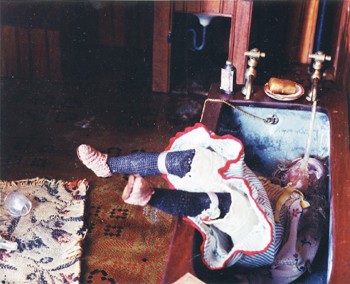
Reserved: Norma I. Quintana’s photo ‘Deployed’ shows at Off the Preserve, Oct. 13-Nov.20.

Earthly Delights

The walls are alive with splendor this fall

By Gretchen Giles

At the end of August, the Marin Headlands offers splendid views as the light begins its low, golden-syrupy slant and the fog dies off, allowing better views of raptors, seals, late-summer flowers . . . and chain-smoking Dutch painters on bikes. In an appealing stunt that is half-serious and indeed half-stunt, Dutch painter Rinus Blomsteel, the self-proclaimed “Beast of Rotterdam,” descends upon an unsuspecting North Bay public to puff about on his bike while observing our exquisiteness for future posterity.

Literally never photographed without an ashy fag set firmly between his nicotine-stained lips, Blomsteel plans to cycle the Marin Headlands, through the Pt. Reyes National Seashore, up to Tomales Bay and, after a short panting break, into the Yosemite Valley. Once sated with beauty, Blomsteel will decamp to San Francisco’s Anja van Ditmarsch Gallery to paint up what he’s observed. Look for the resulting exhibit, “Rinus Blomsteel: First Impressions of California,” to debut Oct. 1 (415.885.2007). . . .

Students at Sonoma State University are going to be hard-pressed to be apathetic about politics this semester, as the University Library Art Gallery launches its interdisciplinary “It Matters!” campaign. Central to “It Matters!” is the work of Camp Meeker artist Lowell Darling, who ran against Jerry Brown for California governor in 1978; whose run-ins with the IRS over his legitimacy as an artist are legendary (and art in their own right); and who launched his “Run Yourself for President” campaign during the last presidential election. Perhaps best known for his “Hollywood Archeology” work, in which cutting-room floor scraps take on new celluloid life, Darling speaks and answers questions about his interactive conceptual work on Sept. 10 at the Jean and Charles Schulz Information Center as part of his “Artist or Politician?” installation at the University Library Art Gallery (707.664.2397). . . .

Currently on show at the Sonoma Valley Museum of Art, “Sonoma Collects” features privately-owned work coming out from living rooms, hallways and, surely, attics, to be enjoyed by more than just family members and the odd guest. Featured artists whose work is owned by Sonoma residents include Manuel Neri, William T. Wiley, David Hockney, Claes Oldenberg and other wonders, on show through Oct. 17.

Next up is the SVMA’s annual Dias de los Muertos community altar Oct. 28-Nov. 1. The museum’s fall season ends with “Views of Oaxaca,” pairing paintings by Jonathan Barbieri with photos of the village by Marcela Taboada. Taboada’s section of the exhibit is titled “Women of Clay,” as she took the photos directly following a devastating earthquake in Oaxaca. While most of the village’s men were el norte, actually working right in Windsor, the women at home rebuilt the town themselves (707.939.7862). . . .

The Museum of Contemporary Art at the Luther Burbank Center starts the season off right with a party on Sept. 1 in honor of sculpture installations by Daniel Oberti, Penny Michel and William Wareham. Once the current “Trinitas” show ends, MOCA rightly names “Five Art Stars,” exhibiting work by Ray Belder, the great Mike Henderson, “Trinitas” contributor Frances McCormack, rising star Chris Finley and encaustic master Mark Perleman, beginning Oct. 23 (707.527.0297). . . .

The di Rosa Preserve in Napa (707.226.5991) celebrates its third annual fundraising auction on Sept. 11, with the show running through Oct. 10. At its retail outlet arm, Off the Preserve, photographer Norma I. Quintana’s portrait of a community, titled “Forget Me Not,” opens with a reception Oct. 16 and runs through Nov. 4 (707.253.8300). . . .

Santa Rosa painter D. A. Bishop, whose Hopper-esque views of ordinary storefronts, rooflines and cars are deep and rich and sometimes scary, opens a one-person show at the Quercia Gallery Sept. 3-Oct. 31, with a reception on Sept. 19 (707.865.0243). . . . Meanwhile, Ned Kahn doesn’t capture the outside but rather plays with it, giving vision to the wind through his sculptural civic art pieces that move and reflect the stir of the elements. Interior-sized examples of his work at the Sebastopol Center for the Arts open with a reception on Sept. 10 and run through Oct. 17; Kahn gives a public lecture on his work Sept. 16, and the gallery space is somewhat shared by an ARTrails preview. “Innovations in Fiberart II” follows, Oct. 21- Nov. 28 (707.829.4797). . . . Kahn, who is amidst work on 14 separate public art pieces, speaks again on Sept. 27 as part of SRJC’s fall arts series (707.527.4372). . . .

Life remains an important celebration at the annual Art for Life auction and exhibit supporting the Face to Face/Sonoma County AIDS Network, in which some 250 artists gladly donate works for free. Preview the work Sept. 9-11; the auction is Sept. 12 (707.544.1581). . . .

Art Works Downtown, a public gallery in San Rafael, welcomes the fall season with “Magic Models,” created for film by the geniuses at Industrial Light and Magic on Sept. 16-Oct. 29, with a reception Sept. 23. Such artful tomfoolery is followed by a juried exhibit of figurative work, Nov. 4-Dec. 23 (415.451.8237). . . . More figurative work is on show at the SRJC Art Gallery, with Healdsburg painter Kathleen Youngquist curating a figurative show featuring such notables as Youngquist herself, sculptor Carol Setterlund and the late Viola Frey from Sept. 16 to Oct. 28 (707.524.4298). . . .

Finishing up the goofy fun of their annual “Box Show” fundraiser with a blowout party on Sept. 5, the Gallery Route One in Pt. Reyes Station features the intriguingly titled “Crunch Goosh Project,” with work by Zakary Zide from Sept. 10 to Oct. 17 and their usually excellent juried show Oct. 22Nov. 28 (415.663.1347). . . .

The Quicksilver Mine Co. in Forestville looks back while looking forward this fall, featuring exhibits by former Sonoma County artists now moved elsewhere. First up are paintings by Libby Hayes and sculpture by Kurt Steger, now Grass Valley residents, opening with a reception on Sept. 18 and running through Oct. 31. . . . Greatly loved sculptor Poe Dismuke, formerly the artist-in-residence at the Sonoma County dump and now a citizen of Bisbee, Ariz., returns with his whimsical toys and duct-tape ravens in “The Poe Show,” Nov. 5-Dec. 12 (707.887.0799). . . .

Formerly known as the Sight and Insight Art Center, the newly renamed O’Hanlon Center for the Arts in Mill Valley hosts “Looking Forward: Innovative Design and Architecture in Mill Valley,” with an opening reception on Sept. 7 and an appropriately swank party with Dwell magazine on Sept. 19. They follow it up with a juried show, “Art and Politics,” judged by gallery owner Claudia Chapline and political cartoonist Phil Frank Oct. 5-30 (415.388.4331). . . .

Things aim toward the outside in the Sonoma County Museum‘s “Botany 12” exhibit, featuring work by 12 artists within and outside of the Bay Area. Locals include painter and Bohemian husband William O’Keeffe, whose rich, chewy investigations of decay and transformation are informed directly by natural processes, as well as husband-and-wife artists Tony King and Pamela Glasscock and abstract landscape artist William Wheeler. “Botany 12” shows Oct. 15-Feb. 15 with an opening reception on Oct. 23 (707.579.1500). . . .

The Cultural Arts Council of Sonoma County previews the annual ARTrails event Sept. 24-Oct. 23; celebrates Day of the Dead with a community altar Oct. 30-Nov. 5; and shows the best of the Thursday Night Drawing Group Nov. 12-Dec. 18 (707.579.2787). . . .

Currently showing its “Word Up” marriage of language and visuals through Sept. 25 in conjunction with India House Gallery’s “Elicit” show (the Aug. 28 opening reception honors painter Alice Thibeau’s new book, Pray for Us Sinners; 707.824.1627) and the Sonoma County Book Fair, the A Street Gallery features the work of seven contemporary West Coast printmakers with “Confluence,” opening with a reception Oct. 2 and running through Nov. 13. The year ends with A Street’s “House” show, exhibiting the work of the artists who rent studio space behind the gallery, Nov. 20-Jan. 15. . . .

From the August 25-31, 2004 issue of the North Bay Bohemian.

© Metro Publishing Inc.

Fall Film Season

King of Kings: Angelina Jolie and Colin Farrell play at royalty in 'Alexander.'Distant ThunderElephants, Thackeray and dinosaurs rumble up as the fall film season beginsBy After Labor Day, gross summer fare yields to the somewhat higher-brow fall season. Yet, in the distance, one sights the shuffling bulk of an approaching herd of white elephants. I mean, of course, the...

Industrial Jazz Group

: Andrew Durkin's IJG is devoted to innovation. -->Industrial Jazz Group get their act in gearBy Greg Cahill"I realize this is going against the grain of recent jazz pedagogy," says pianist and composer Andrew Durkin, founder of the Industrial Jazz Group, "but for me, jazz has always signified restlessness, rebellion, innovation, a breaking away from tradition. Bound up in...

Save the Date

: The Art for Life auction in a benefit for Face to Face uses smooth stones and small bones to mark each death from HIV-related illness in the county since 1983. So far, 1,111 stones have sadly joined the round. -->Our short list of those perennial happenings you want to attendBy Bohemian StaffSausalito Art Festival Sept. 3-6. Juried art...

Medlock Ames

Photograph by Rory McNamaraNew Breed: Vintner Ames Morison, shown here, works with partner Christopher Medlock James to create a more sustainable product.How Does Your Vineyard Grow?Medlock Ames and the making of a wineryBy Heather IrwinWinding down a desolate dirt road for more than a mile, it suddenly becomes clear that I've taken a wrong turn somewhere. Though I'd expected...

Bruce Springsteen

: The Boss finally uses his cred to sway millions. -->Springsteen's plunge into partisan politicsBy Bruce RobinsonIn 1984, a musically clueless Ronald Reagan tried to co-opt Bruce Springsteen's "Born in the USA" as a campaign theme song. Never mind that the song was a pointed indictment of the government's failure to make good on its promises to Vietnam-era veterans,...

School of the Americas

Teaching Torture Congress keeps the School of the Americas aliveBy Doug Ireland Remember how congressional leaders on both sides of the aisle deplored the torture of prisoners at Abu Ghraib as "un-American"? Last month, the House of Representatives quietly passed a renewed appropriation that keeps open the United States' most infamous torture-teaching institution, known as the School of the...

Reading

When even the government thinks we're not reading enough, there may be troubleBy Jordan E. RosenfeldThe National Endowment for the Arts is one of the more benevolent arms of government, offering financial stipends to artists of all stripes, especially writers. But with the early-June release of the ominous-sounding report Reading at Risk: A Survey of Literacy Reading in America,...

Fall Stage Highlights

: The 'Godspell' cast gather to throw their arms up in the air. Templeton is in the back, directly to the right of that Jesus character, his hand appearing to nip delicately into Jesus' armpit. -->North Bay theater companies unveil their upcoming seasons For certain North Bay theater addicts, late summer is a very special time, a little...

Fall Music Highlights

Sultry Weather: Loungecore singer Storm blows in from Portland.Autumn LeavesWhen it comes to music, the North Bay has any color you likeBy R. V. ScheideAutumn is the season of melancholia. Perhaps that's why the North Bay's music scene, from its grungiest roadhouses to its most luxurious symphony halls, turns up the volume a notch or two at the first...

Fall Visual Arts

Reserved: Norma I. Quintana's photo 'Deployed' shows at Off the Preserve, Oct. 13-Nov.20.Earthly DelightsThe walls are alive with splendor this fallBy Gretchen GilesAt the end of August, the Marin Headlands offers splendid views as the light begins its low, golden-syrupy slant and the fog dies off, allowing better views of raptors, seals, late-summer flowers . . . and chain-smoking...
11,084FansLike
4,446FollowersFollow
6,928FollowersFollow
