The Field Effects Series

0

Aural Sects: Avant musicians are creating sounds from the strangest sources.

Sticks and Stones

Rest on a futon and crank up the driftwood

By Sara Bir

“There’s nothing to do!”

You remember saying this as a kid. Sure, there might be chores, homework, physical activity. And yet, there was nothing to do. “Mom, I’m bored!”

I’ve been stuck in the pop-music equivalent for months. Undiscovered great bands might be performing nightly, but it’s not like I want to see any of them. It’s cold and wet out there in the world, and I have to wake up early. But then the weekend rolls around, and Mr. Bir Toujour and I whine in desperate unison: “There’s nothing to do!”

Which is how we ended up in a San Francisco loft sprawled out on a patchwork of futons and floor pillows shared with about a hundred other folks, waiting patiently to hear three musicians play with branches and ice. In the front of the room, gnarled and sun-bleached twists of driftwood dangle from a rack like a bloated rib cage, hovering over a menagerie of rocks, twigs and water vessels. From the look of it all, we are expecting the denizens of Fraggle Rock to traipse out and break into song at any moment.

Welcome to Field Effects, a series that claims to “showcase artists who are interested in framing the hidden beauty of the everyday world.” Tonight’s installment, Field Effects 22, is titled “Quiet Things”; the venerable nature-center display laid out before us is part of composer Cheryl E. Leonard’s piece Ziran, a collection of works inspired by Chinese poetry of the Tang Dynasty. “Oh, Chinese poetry,” mused a friend who’d once taught English in Beijing. “That stuff is all about nature.”

Indeed. Before each piece, a reader recited a poem, first in Chinese, then in English. Then Leonard and fellow performers A. L. Dentel and Patty Liu, sitting Indian-style on the floor, extracted sound from found objects like shamans, blowing on feathers, rubbing stones together and rattling old bones around.

It’s important to note that all of these items were amplified, resulting in sound quite unlike that produced by your average rubbing together of stones. Do you know what wind moving across a feather under these circumstances sounds like? Big. Big, fuzzy and somehow ominous‹as opposed to the hollow tinkling of thin sticks dropped into a bowl, or the muffled drip of flower petals tossed into a basin of water. Ice, meanwhile, stirred in a ceramic bowl, is cold. Cold, chunky and grating.

The most riveting sounds resulted from Leonard playing spindles of redwood and huge, spiky pinecones with a bow. I remember as a teenager seeing footage of Jimmy Page playing the electric guitar with a bow and thinking, “Whoa!” Well, let it be known here that Cheryl E. Leonard can kick some major ass on the pinecone, producing eerie birdcalls and whale songs from beyond. She puts Jimmy Page in his place.

During Ziran, no one stumbled to the bar to get a beer, no really annoying couple crowded right in front of me and proceeded to make out, and no scenesters skulked around the doorway to chain-smoke and talk shit. No one said much of anything, in fact, because we were all listening.

A sweaty, old-fashioned, fist-pumping rock show can bring a crowd to the brink of raw spiritual ecstasy, true. But sometimes it’s refreshing to hobnob in other circles. I figured since I don’t have any music to listen to, maybe it’s time to turn the stereo off for a while and think about the way the rest of the world can sound.

The Field Effects series may be coming to a close, but you can check updates on it here: www.fieldeffects.org. Cheryl E. Leonard’s music can be heard at www.allwaysnorth.com.

From the March 2-8, 2005 issue of the North Bay Bohemian.

© Metro Publishing Inc.

Soup-o-Rama

0

Soup Is Good Food: Weekly soup klatches nourish the body and the soul.

Soup-o-Rama

Girls’ night takes on a whole new meaning with soup

By Ella Lawrence

In mid-October of last year, two of my closest friends had an idea. As they were examining a Syrah sample for bacteria, or whatever it is they do all day in that big lab at that giant winery, Rebecca said to Grace, “Hey, we should have a weekly soup night. You know, invite a bunch of people, take turns making the soup, that sort of thing. It would get us out of the house all winter. Maybe we should have it be a girls’ night.”

Grace, who’s been the idea-instigator since the three of us were 15 years old and our culinary prowess solely consisted of carving frozen chunks from the wild boar her brothers had shot in Bennett Valley, called me and informed me I would be hosting the first soup night.

“It will be great, don’t worry!” she coaxed. “I’ll bring all the stuff over. We invited some girls from work, you should invite some girls too, have ’em bring wine or whatever. If we do it every week, that’s one less dinner each of us has to cook!”

Et voilà–soup night was born. Seven girls trooped into my tiny apartment bearing armloads of salad fixings, bread and cheese to partake of Grace’s homemade chicken noodle soup and my wine cellar (closet, really). Very few of us had met each other prior to the inaugural soup night. Grace, Rebecca and I each simply invited a few friends who we thought might be hip to the idea of a weekly communal dinner. That core group of soup girls has since become what we look forward to every Monday night.

Because winter is so often the time when we hunker down with the sweetie, cat, work and Netflix subscription, the weekly soup excursions are often the only time many of us make it out of the house in the cold or the rain. The e-mail chain leading up to soup night thrives; through perky mass e-mails with subject headers like “Soup-o-Rama!” we decide who’s going to host the next round and what kind of soup she’s going to make, and we look out for new jobs when one of us gets canned from the factory or the office. We’re there for each other, through soup.

Many of these are women I never see outside of our weekly soup meetings, but we’re girls–we know how to pack in quality time over a quick glass of wine, salad and bread and cheese, soup and sometimes dessert. We’re in by 6pm out by 9–we’ve all got to work in the morning, except for my roommate, who is unemployed and plowing through Anna Karenina at an astonishing pace.

There’s the usual job and man talk, of course, but why I like soup night is because it’s so much smarter than that. The soup group is composed of a pack of intelligent food lovers who are sharp as tacks, like to cook, but sometimes don’t because it’s too much of a bother to cook for just one or maybe two.

Like so many other women of our generation, we are simply trying to figure out what the heck we are supposed to be doing in this life. On a recent night we talked about the xiphoid process (the lower part of the sternum), and a pop-art painting of a bald man led to a discussion of the life of Fidel Castro and why everyone wears those shirts with a lino-cut picture of Che Guevara on it. Would Che have approved of his image on hipsters’ lunchbox-purses? We don’t think so.

We talk about training (about half of us are competitive athletes) and if we’re really doing what we are supposed to be doing. I think our mothers would have called our gatherings “consciousness raising,” but we belong to the generation of feminists who want to be empowered and have the door opened for us on a date. In short, soup night is nourishment for the belly and the brain, the place where we know we’re in the company of like minds who know there really is a difference between Slovakia and the Czech Republic, between cilantro and coriander.

Butternut Squash Soup With Pears and Bacon

This soup was a wonderful recent addition to a foul Monday night, using the best of the last of the winter pears.

1 large or 2 small butternut squash
6 strips maple bacon
1 small onion, peeled and chopped
2 large, ripe pears, peeled, cored and cubed
1 large stalk celery, chopped
2 cans (14.5 ounces) chicken broth
1/2 tsp. thyme
1/2 tsp. basil
1/2 cup half-and-half
chopped fresh thyme to taste

Cut squash in half and scoop out seeds. Place flesh-side down in a microwavable dish with a little bit of water, cover with plastic wrap and microwave for 15 minutes. Let cool. Peel and cut squash into cubes when done (you should have about 4 cups). Sauté bacon in a large stockpot until crisp; remove from pan, drain on paper towels and crumble. Remove all but 1 tbsp. bacon grease from pot; add onion and sauté until browned. Add squash, pears, celery and broth to pot. Bring to a boil; reduce heat and simmer, covered, for 30 minutes. Let cool slightly and either mash or purée until slightly chunky or smooth. Return to pot and add herbs and bacon. Simmer for 10 minutes more. Stir in half-and-half. Ladle into bowls and sprinkle with fresh thyme. Makes eight 1-cup servings.

–E.L.

From the March 2-8, 2005 issue of the North Bay Bohemian.

© Metro Publishing Inc.

Swirl n’ Spit

0

Swirl n’ Spit
Tasting Room of the Week

St. Supéry

By Heather Irwin

Lowdown: It’s never a good sign when you get barked at as you enter a front door–by a person, not a dog. Granted, it was a busy Sunday and there was a large group of tourists hogging up the hallway in front of us, and barking out directions was someone’s idea of organizing us. But being herded into an already overcrowded tasting room wasn’t a good start for me. And things didn’t get much better from there.

Now, let me say that I’d been looking forward to this visit for a while. I’d heard that St. Supéry was one of the more fun tasting experiences, with a wonderful gallery and outdoor picnic area. I can’t tell you about the gallery or picnic site, because I spent 15 minutes standing at the bar waiting to get served. And when I was, it was by a staffer who obviously hadn’t been briefed on the wines or his job and was on his very first day. Again, I’m willing to be patient, but the poor boy was completely frazzled. By the time we’d been served by three different people over the course of some 35 minutes, I was done. Ready for home. Ready to get the heck out. Forget the fact that we’d been charged $10 for the tasting, then reimbursed due to our long wait, then asked to pay again. Oy. Let me out.

Mouth value: Much of the winetasting experience has to do with the ambiance, so I’ll be candid in the fact that my frustration, the wait, the staff and the crowd may have colored my patience. Of the six wines we tasted, among the only ones that stood out as interesting were the 2001 Limited Edition Dollarhide Ranch Chardonnay ($30) with a nice butter flavor and a sweet tropical spiciness. The term “cinnamon toast” was tossed around. So were some rather tasty four letter words after we waited another seven minutes to get our glass filled. We also liked the 2002 Virtu White Méritage ($25). With the citrus and flower of a Sauvignon Blanc tempered with the creaminess of Semillon and some nice oak, it’s a departure from the usual brightness of Sauvignon Blanc. Having tasted some powerful Napa Cabernets throughout the day, we were less impressed with the St. Supéry Cabs; they felt weak and a little insecure in comparison.

Don’t miss: Wander through Dean and Deluca, the New York gourmet grocer come to Napa. The wine selections are astounding, the cheese is stupefying, the candy is classy and the spices and rubs are worth a trip alone. You’ll lighten your wallet considerably, but think how cool you’ll look opening up one of those little tin spice cans the next time you cook. Dean and Deluca, 607 S. St. Helena Hwy., St. Helena, 707.967.9980.

Spot: St. Supéry Winery, 8440 St. Helena Hwy., Rutherford, Open 10am to 5pm. $10 tasting fee. 800.942.0809.

From the March 2-8, 2005 issue of the North Bay Bohemian.

© Metro Publishing Inc.

Harry Martin

0

Photograph by Michael Amsler

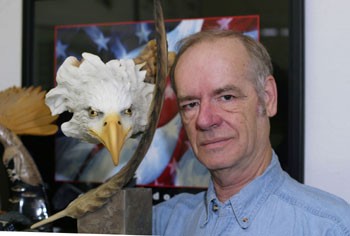
Political Aerie: Newspaper owner and Napa mayoral candidate Harry Martin poses with one of his many pieces of American eagle statuary.

Harry’s World

Black helicopters, mind control and modern-day populism–meet Harry Martin, quite possibly Napa’s next mayor

By Gary Brady-Herndon

The unprepossessing facade of the Napa Sentinel sits just east of the busy Highway 29 wine country thoroughfare in central Napa. Stepping inside the one-story building that houses this low-budget weekly community newspaper, visitors find a warren of small, cluttered offices. Past issues of the newspaper are stacked high on every available surface, telephones ring sporadically and an aura of gravity hovers in the air.

Welcome to the world of Harry Martin, owner and publisher of the Sentinel and just maybe the next mayor of Napa. A controversial figure, Martin is different things to different people. To some, he’s a crusading journalist who isn’t afraid to tackle controversial topics such as mind control, cults and black helicopters in the pages of his newspaper. To others, he’s a rumor-mongering conspiracy theorist with connections to intelligence agencies, militias and other right-wing groups. To the working people who read his newspaper, he’s a populist hero. To Napa’s power elite, he is a blight on the town.

Love him or hate him, the one thing that can be said for certain about Harry Martin is that he cannot be ignored.

His current run for mayor of Napa has split political, business and civic groups–to say nothing of the general public–on his character and ability to lead the upscale center of U.S. wine culture. Nevertheless, many within the community give Martin a better-than-average chance at success when the dust clears and all the votes are counted on March 8.

Martin’s office sits immediately to the left of the front door and is an eclectic mix of chaos and practicality. Two San Francisco 49ers football “helmet” chairs await visitors. Dressed in a fashionable gray suit with suspenders, a crisp white shirt and a power tie, the tall, lean Martin has on this day eschewed his normal attire of jeans and casual shirt, due to an earlier campaign engagement. His calm, warm and engaging demeanor belies the image that he is a loose cannon, which his opponents, and many within the community, would have voters believe about Martin.

Depending on how one views Martin, scheduling his interview with the Bohemian in the offices of the newspaper he owns is a fitting act of either transparency, defiance or humility. The case can be made that much of what is known about Martin within the Napa community, both negative and positive, stems from his work with the Sentinel. Established in 1985, this 20-year-long experiment in journalistic expression is but one of many such endeavors he has had over a long career in the news business.

“I’ve been a writer all my life,” Martin, 65, declares proudly. Born in San Francisco, he has worked in newsrooms in Australia, Hawaii, Alaska and around the Bay Area, including a stint in the 1960s as city editor at the Napa Valley Register, now one of his most vocal critics. From the very beginning, his willingness to explore controversial topics in the pages of the Sentinel has drawn readers like moths to a flame, even as it alienated more skeptical observers.

For instance, there was the string of stories in the mid-1990s on sightings of black helicopters over the Napa and Sonoma hills that initially brought scorn from nonbelievers, including more than a little eye rolling from the wine-and-cheese set. Martin, who was once publisher of Defense Systems Review and Military Communications, stands by the story, citing evidence that the aircraft did indeed belong to the U.S. government and serviced a secret governmental communication site and bunker complex hidden in the vehicle-challenged hillsides. The purported location of the center, on inaccessible Bureau of Land Management property, raised as many questions as answers.

In the early 1990s, Martin and writer David Caul co-authored a 13-part series in the Sentinel on mind control, detailing the allegedly clandestine history of chemical use and other techniques to control the thoughts and actions of citizens by governments around the world. Another series of articles involved alleged malfeasance within the U.S. Justice Department and the CIA and the sale of a sensitive computer program to the Iraqis prior to the first Gulf War. Known as the Inslaw case after the company that developed the software, the details of the affair involved a CIA computer expert, his wife (who was arrested in Napa on charges relating to the case), an ex-Israeli intelligence officer and had all the intrigue of a James Bond film.

With dogged persistence, Martin has challenged orthodoxy, the power elite and perhaps even common sense to seek answers for questions that others refuse to acknowledge or even pursue. That’s earned him praise from both the left and the right. It’s also earned him derision.

Political Research Associates (PRA), a national organization that keeps tabs on the political right, was highly critical of Martin’s Inslaw series. “An analysis of the content and style of the Martin articles raises questions about his credibility as a reporter,” PRA notes in its online publication Public Eye. “Martin uses classic leaps of logic and propaganda techniques in his reporting.”

Martin defends his record.

“Sometimes [as a newspaper writer], you can be ahead of the curve,” he laughs. “I told the Napa City Council 10 years before it occurred that the Napa State Hospital would become a penal facility. Everyone on the council said I was a nut. No one would believe it. I had information from my investigative reporting including everything from the number of patients to the height of the barbed wire fences. Ten years later, they thought maybe I wasn’t so dumb after all.”

His willingness to tackle subjects others might find strange, even wacky, speaks volumes about his dedication to craft–to say nothing of the ample ammunition his work gives those who oppose his political aspirations. Yet Martin is not a one-dimensional creature apt to go off half-cocked on the latest lunacy du jour from the newswire of the bizarre. In his own way, he is a professional journalist, with his own peculiar brand of justice that extends through his writings into his public life.

Populist Appeal

To win the mayor’s seat, Martin must defeat fellow councilmember Jill Techel. With eight years on the council and backing from the Napa Chamber of Commerce and the Napa Valley Register, Techel is in an enviable position in terms of visibility and high-profile support. While her website lists no formal endorsements, there are testimonials from Congressman Mike Thompson, Napa County supervisor Bill Dodd, Napa County sheriff Gary Simpson and outgoing Napa mayor Ed Henderson. The third candidate in the race, the progressive-minded Vincent “Grasshopper” Blake, is expected to finish a distant third.

A Feb. 3 story in the Register listing the candidate’s fundraising successes paints a clear picture of the opposition facing Martin and his backers. Techel’s list of donors runs six hefty paragraphs and represents a who’s who of Napa city and county politicians, business people, wineries, upscale eateries, banks, attorneys and others who were willing and able to shell out cash to support her bid for the mayor’s seat.

Martin’s list runs only three short paragraphs and features a preponderance of retirees, blue-collar workers and other small contributors. The obvious question is why does Martin’s support within the community–financial donations aside–seem to be growing in the face of such well-heeled opposition?

Therein lies the rub. Regardless of how hard the Napa valley tries to project itself as the premier destination point in the world for wine aficionados, Napa is at the most basic level a farming community. A good portion of the population who live in the valley are unpretentious, hard-working people with little connection to the aspirations of those whose business is promoting the area as something other than a great small town for raising a family.

Even though Martin’s stance on controversial issues and his investigative reporting have alienated whole segments of the city’s population, most notably the power elite, the release of the Sentinel on Friday mornings is awaited by many of Martin’s followers as the highlight of Napa’s journalistic week. With a heavy dose of seniors and blue-collar workers in his reading audience, he enjoys a loyal base of fans, many of whom extend their support to the ballot box.

Martin was first elected to the Napa City Council in 1994, retaining his seat in 1999 and 2003. This is his second attempt at the mayoral seat, and even if he loses this time around, he will return to the council to serve out the remainder of his two-year term. He currently serves as the city’s vice-mayor, a position he has held twice before, and has racked up an impressive résumé of service. During the past 11 years on the council, he has held positions on the Napa Sanitation District, Napa Parking Authority, Local Agency Formation Commission, Teen Alcohol Appeals Board and as an elected member of committees to the CALAFCO, Flood Control Executive Board, Housing Authority, Redevelopment Council, Farm Workers Housing and others.

Martin’s willingness to tackle the hard issues facing the city is playing well with his support base. His positions on Napa’s shrinking operational budget, rampant development within the city limits, a dwindling downtown revenue base and what some perceive as a war between the haves and the have-nots has increased Martin’s popularity and his reputation as a savvy political operative.

Most troubling to his two mayoral opponents is the virtual sweep of group endorsements he has pulled in to his camp over the past several months. Included in his endorsement base are associations representing Napa city employees, Napa city firefighters, Napa police officers, as well as the Peace Officers Research Organization of California, the Service Employees International Union, the Plumbers and Pipefitters Union, and the Napa County Farm Bureau, and financial support from Napa-Solano Building Trades Council.

When Harry Gets Savvy

Martin’s success comes partly from a no-nonsense, down-to-earth personality that allows him to speak to people on an equal footing. As a small businessman, he relates to the needs of his supporters and understands the direction they think the city should take in coming years.

“What this election is about is equality,” Martin said. “The problem is the haves and the have-nots. I get less support from the bigger businesses and more from the mom-and-pop stores. They’re the biggest employers in America,” Martin says, noting that small business owners are the bedrock of any community.

Quality of life also ranks high on the minds of Martin’s support base. Many of the challenges the city faces come from the unique history of Napa’s past. As an agricultural region, there has always been a lively interest in protecting the agrarian nature of the community. The town literally grew up in the midst of apple and prune orchards, Christmas tree farms, and more recently, vineyards. When the city incorporated, many existing plots of farmland were contained within the city limits and continued to operate as producing tracts of agriculture land.

As land prices escalated in the 1990s and the flow of newcomers into the city increased, Martin, working with the city council, was instrumental in placing a rural urban limit (RUL) line into the city charter. The RUL restricts city growth beyond its boundaries without a vote of the people. Since 1999, the city’s expansion has been restricted to infill, creating a frenzy of buyouts of existing properties and open land within the RUL.

Neighborhoods that traditionally enjoyed a mix of housing and farmland suddenly saw vineyards disappearing, replaced by over-crowded developments with homes priced just under $1 million. Martin holds current and past councils partly to blame for the community’s anger over the developments.

“On the issue of infill, we’ve got to respect our neighborhoods,” Martin says.

“We passed an ordinance two years ago that required developers to submit a footprint of the proposed development so we could monitor them and protect the neighbor’s privacy. Presently, we’re not seeing the footprints [before developments begin]. Our neighborhoods are falling apart. You need to have a balance and listen to the voices from each area [to help retain] their privacy and character.”

Increased density of homes produces unique concerns for any neighborhood and Martin sees associated problems such as crime, street and sidewalk repair, traffic, water runoff and overburdened school rosters as only the tip of the iceberg. As the developments are completed, Martin says connecting roads to adjacent neighborhoods are creating increased traffic problems throughout the city. He sees this situation as unacceptable. “It ruins the character of the neighborhoods.”

Closely tied to the issue of infill and neighborhood development is the looming dilemma of affordable housing, a matter he says the city has failed to address adequately thus far. While Martin and an overwhelming majority of Napa residents still support the RUL and the objective of retaining the agrarian nature of the countryside outside the city limits, one of the RUL’s consequence is that it limits the number of available lots to build upon. With real estate prices skyrocketing across the county, developers are loath to take up the affordable-housing crusade.

Nevertheless, Martin notes, the need for affordable housing is not going to go away–indeed, it’s mandated by the city’s membership in the Association of Bay Area Governments, which requires a certain percentage of homes within the city be designated as affordable housing.

“The city keeps allowing developers to buy up available land,” Martin says, producing homes far out of reach of many local homebuyers. Already, the community has seen an increase of service personnel that work within the city but live outside the area, where rent and housing prices are lower.

Martin wants the city to increase efforts to purchase land to be designated specifically for affordable housing. He supports the concept of building and selling affordable housing that employs sweat equity in the process. Under these terms, qualified homebuyers would purchase homes with fewer amenities below the current market value. Once the sale is finalized, the new homeowner is free to make changes or alterations at his own expense, either by contracting out the work or doing it himself. Martin believes this process would provide residents the opportunity to buy an affordable home without the looming specter of endless debt hanging over their heads.

Martin is the squeaky wheel in Napa’s political world, attacking issues and institutions others find sacrosanct. His verbal opposition, both in his newspaper and on the council, is legend, and, some might say, mean-spirited and obscene. Before COPIA: The American Center for Wine, Food and the Arts opened in 2001, perhaps no one in Napa was more opposed to the project than Martin.

The center signals “the death of a town and the birth of city,” Martin told the San Jose Mercury News in 1999. “It’s crème de la pooh pooh. The whole wine culture is about snobbism. It’s an artificial society. They are going to hold seminars on how to decorate your table. They want this to be another Carmel, a ticky-tack town full of little boutiques.”

Still decrying the “arrogance” of some involved in the project, Martin’s stance has mellowed somewhat over the years, but the issue continues to be a crusty scab on Napa’s political and social landscape that breaks open periodically, causing verbal barbs to fly on both sides.

An issue closely tied with the COPIA controversy is Napa’s much-beleaguered town center. Never one to run from a fight, Martin has been a longtime critic of the city’s efforts to revitalize Napa’s anemic downtown business climate. Citing the city’s 40-year effort to redevelop the area, he sees the efforts as ill-placed and unproductive, criticism his political opponents take to heart.

“There have been 18 studies done on how to redevelop downtown. The 19th is already funded,” Martin says. “Redevelopment of the Napa River is the key to the future of Napa, not pouring more money into redeveloping the town center.”

Pinning down Martin politically isn’t easy; as PRA notes, his written work has influenced members of both the left and the right. Asked how he sees himself politically, Martin’s answer is understandably complex, coming from a man whose passions span a vast array of topics and subject matter. For years, when asked his party affiliation, Martin refused to answer, but now admits he’s a registered Democrat. He supports Sen. Barbara Boxer and backed John Kerry in the recent presidential election, although he liked Gen. Wesley Clark as well. He calls himself a fiscal conservative but a liberal on human rights. “I’ll protect your dollars, but I’ll protect your personal rights even more,” Martin says.

Martin appears to be one of those unique individuals that people either actively hate or ardently adore. His views, while often contrary to the norm, are based on deep convictions on what he sees as right and just for the masses. Detractor’s comments aside, his track record and current support base speak volumes about how members of the community perceive him. Whatever fate awaits Harry Martin on March 9, the morning after the election, his is a voice that will not be silenced easily.

From the March 2-8, 2005 issue of the North Bay Bohemian.

© Metro Publishing Inc.

North Bay Vote

0

No Child Left Unharmed: The March 8 measures aim to make up in part the education shortfall that the state’s ruinous cuts have wrought.

Every Vote Counts

Sizing up the upcoming special election

By R. V. Scheide

Nothing says “low voter turnout” like an off-season special election with no national, state or countywide candidates or issues in play. Nevertheless, the results of the upcoming election will have a profound impact on citizens, from children to seniors, in all three counties, and there’s plenty of reasons to get out there and vote on March 8.

Napa County

The Napa mayoral contest is perhaps the special election’s most interesting race, pitting maverick newspaperman and longtime Napa City Council member Harry Martin (see Feature) against his equally long-serving council colleague, Jill Techel. It’s shaping up to be a classic battle between the two Napas–the haves and the have-nots–with Techel receiving the majority of her support from downtown business interests and Martin representing the working-class and the small-business set. Wildcard progressive candidate Vincent “Grasshopper” Blake, a staple on Napa Television Channel 28 who has accepted no campaign donations, plays the role of spoiler.

“I compare this to the Bush-Gore election in 2000,” says Blake, who earned his sobriquet playing football in high school. “It’s going to be very close, and I’m Ralph Nader.”

One of the chief obstacles facing the new mayor will be the city’s budget deficit, currently estimated to be $18 million. Blake proposes a countywide sales tax of 3 percent on every glass of wine sold to address the shortfall. Martin advocates a small bump in the city’s sales tax. Techel’s office was unavailable for comment.

Two city council seats are also up for grabs in Napa; nine candidates have thrown their hats into the ring. Businesswoman and educator Dee Cuney calls herself an “independent, cut-to-the-chase leader.” Logistics specialist Chris Edwards is the first openly gay candidate to run for city council in Napa.

Affordable-housing advocate Rachael Frank-Clark seeks to represent “blue-collar and working-class citizens” if elected to the council.

Bartender Brent Houghton, apparently the strong, silent type, declined to enter a candidate statement. Planning commissioner Jim Krider wants to “play a leading role dealing with our current and serious budget problems.” Contract office administrator Pat Rogers, who has a degree in business, says that’s a role she wants to play, too.

Joe Salerno, co-owner with wife, Cathy, of Piccolino’s Italian Cafe, has a “vision for the future that carries forth the traditions of the past and will help us positively manage the changes the future always brings.” Full-time mother Gina M. Thirnbeck, easily the youngest candidate at age 22, says that because of her “adventurous lifestyle, I feel as though I would be able to connect with each and every citizen with no prejudice.” Community relations consultant Mark Van Gorder wants to create “a more family-friendly city for all to enjoy.”

In St. Helena, Ken Slavens and Delford Britton face off in the mayoral race. Four candidates–Joe Potter, Priscilla Dell, Michael Novak and Vincent Martin–vie for two open city council seats. In addition, incumbent R. Kirk Berger, music therapist Elizabeth Clark, Cynthia Noble Jaeger and Cindy Warren compete for two open slots on the St. Helena Unified School District.

In Yountville, Todd Carlson is unopposed in the race for mayor, a position that will change from two to four years if voters also pass Proposition E. Finally, Yountville City Council incumbent Cynthia Saucerman faces challengers Steven Rosa, Richard Gervasio and Chuck Guarino in the contest for two open council seats.

Sonoma County

It’s no secret that education in California is in big trouble. The state, once solidly situated in the Top 10 nationally in per-pupil spending prior to the passage of Proposition 13 in 1978, has been mired near the bottom ever since, and currently ranks 44th. Gov. Schwarzenegger’s reneging on his promise to return $2 billion borrowed from the schools to help balance last year’s state budget merely added insult to a system that has already been injured by $10 billion in cuts over the past four years. One result of education’s continuing crisis at the state level is the 10 measures on Sonoma County’s special election ballot, all of which seek to raise parcel taxes in order to fund school programs.

“The parcel taxes are about the only way we can raise money locally,” says Jim Horn, spokesperson for the Friends of West County Schools, which represents six Sonoma County school districts with measures on the ballot.

The 10 Sonoma County measures, lettered A through J and proposing annual amounts ranging from $26 to $97, seek to extend previous parcel taxes scheduled to expire with the singular exception of Measure D, which seeks to increase Gravenstein’s existing parcel tax and modify its expiration date to conform with the other Sonoma County school districts.

How does a parcel tax work in actual application? Horn explains that Gravenstein, where he is a trustee, lost some $50,000 in state funding last year. Currently, the district receives $65,000 annually from its existing $36 parcel tax. By raising the tax to $52 per parcel–an amount that was deemed tolerable through voter interviews–the district will raise an additional $30,000 a year. It’s not enough to make up the total shortage in state funds, but Horn says it should enable the district to extend foreign language classes to grade school, provide more library services and computer equipment and ensure that the district may keep its full-time music instructor.

While all 10 districts are facing financial difficulties, Horn cites Forestville as one of the most troubled. If voters there fail to approve Measure C, the result will be larger class sizes and the elimination of the music program, the grades K-3 arts program, the entire middle school sports program, the elementary music program and the grades 4-8 fine arts program.

Perhaps in recognition of the uphill financial climb Sonoma County’s school districts face, not a single argument against any of the 10 measures was submitted to the registrar of voters. In fact, Horn says that after representatives from the school districts met with the Sonoma County Taxpayers’ Association–which traditionally opposes almost any tax increase–the association decided not to oppose any of the measures.

Still, experience has taught Horn how difficult it can be to pass such measures. Gravenstein tried and failed to pass a parcel tax four times before the measure finally passed in 1997–by six votes.

Marin County

To discover opposition to parcel taxes, one needs merely to travel to Novato, where Sara Lockwood, a mother of nine children, is helping lead the opposition to Measure A, which seeks to renew the Novato Unified School District’s tax of $155 per parcel for the next six years.

“It’s not fair,” she says, noting that because only four out 10 Novato residents own property, such measures are shouldered by the minority population of homeowners.

Lockwood was instrumental in helping defeat Measure A’s successor, Measure E, which failed by a slim margin last November. It’s rebirth in almost precisely the same form (Measure E sought $185 per parcel for eight years) in a special election estimated to cost the city $200,000 to $300,000 rankles her.

“It’s a matter of principle,” she says. “The principle being that we pay so much in taxes. It’s time that some of those taxes not be spent, and some of us are beginning to wake up.”

Countering Lockwood’s argument, the Novato Unified School District notes that it currently spends $7,210 per student, the lowest amount in Marin County.

Furthermore, the district says that almost all the fat has been cut from its budget, and the only means to reduce at this point is to cut instructional programs.

Lockwood scoffs at the notion that there’s no fat to cut–what about teacher conferences and periodicals? she asks–and suggests that encouraging private philanthropic donations to organizations such as the Novato Foundation for Public Education would be more than enough to plug any budgetary gaps.This same scene–minus any visible opposition–is playing out across Marin County, where four out of the five Measures A through E concern funding for schools, with parcel taxes ranging from $150 to $289. Three out of the four school measures are parcel taxes, the fourth is a facilities bond for the Ross School District.

Lockwood is concentrating her efforts on rallying Novato Republicans to help defeat Measure A. Like Jim Horn in Sonoma County, she knows the battle is going to be close.

“Measure E was the only one that lost in November,” she says, proud that she helped defeat it. “Now my opponents are taking no prisoners.”

Every vote will count. As Lockwood notes on her website, in 1923 Hitler won leadership of the Nazi Party by just one vote.

From the March 2-8, 2005 issue of the North Bay Bohemian.

© Metro Publishing Inc.

News of the Food

0

News of the Food

Not So Sweet

By Stett Holbrook

Consumer and farming groups chose Valentine’s Day to launch a campaign against Johnson & Johnson and its Splenda brand sweetener. The Center for Science in the Public Interest (CSPI) accuses Johnson & Johnson of misleading the public about Splenda, one of America’s bestselling sweeteners. According to the Washington, D.C.-based organization, Splenda’s slogan, “Made from sugar, so it tastes like sugar,” is false. While it is low in calories and doesn’t rot out your teeth, Splenda isn’t made from sugar. It is made in a laboratory. Other groups have questioned the health effects of the sweetener.

Splenda is made from sucralose, a highly processed chlorinated sweetener. The product contains no sugar, but apparently many people think it does. A poll conducted by CSPI last year found 47 percent of Splenda users believed it was a natural product.

“‘Made from sugar,’ certainly sounds better than, say, ‘made from chlorinated hydrocarbons’ or ‘made in a laboratory’ or ‘fresh from the factory,'” says Michael F. Jacobson, CSPI’s executive director. “Splenda’s artificiality may present a marketing challenge, but that’s not an excuse to confuse consumers and lead them to believe that Splenda is natural or in any way related to sugar.” A representative from Johnson & Johnson couldn’t be reached for comment.

Joining CSPI in its criticism of Splenda and its parent company Johnson & Johnson are sugar industry groups and the National Grange, the nation’s oldest farm and rural public interest organization. The National Grange has asked the Fair Trade Commission to investigate Splenda’s marketing practices.

“As a finished product, Splenda contains no elements of natural sugar whatsoever,” wrote National Grange legislative director Leroy Watson to Fair Trade Commission chairwoman Deborah Platt Majoras. “It is made in a chemical plant, not by nature in a sugar cane or sugar beet field.”

Refined sugar isn’t exactly health food, but at least you know what you’re getting.

From the March 2-8, 2005 issue of the North Bay Bohemian.

© Metro Publishing Inc.
Upcoming Festivals

0

Chanteuse: Diana Krall inaugurates the Sonoma Jazz+ Festival in May.

Fest Feast

So much music, so little time

By Greg Cahill

With three jazz and two blues festivals as well as a major chamber-music series on tap for the summer season, there can be no question that Sonoma County is fast becoming the wine country’s chief pleasure center. The lineups for three of these glittering events have just been released, and there are good things in store.

Jazz chanteuse Diana Krall, legendary vocalist Tony Bennett and pop star Steve Winwood headline the four-day Sonoma Jazz+ Festival, the newest addition to the region’s burgeoning festival scene, which runs Memorial Day weekend.

Presented by Jazz Aspen Snowmass (JAS), a major Colorado-based events organization, the Sonoma Jazz+ Festival, running Memorial Day weekend, brings music aficionados, food lovers and wine connoisseurs together under a massive 3,000-seat canopy tent two blocks north of Sonoma’s town plaza, behind the Mission. In addition, a variety of smaller culinary events are planned within walking distance of the main stage.

Bennett, who bills himself as the consummate saloon singer, opens the festival on Thursday, May 26. British pop star Winwood, preceded by Boz Scaggs, performs on Friday, May, 27. Krall will perform on Saturday, May 28. The closing act is yet to be announced. Jazz violinist Regina Carter and soulful jazz singer Lizz Wright, whose Verve debut is set for release soon, open the shows.

Founded in 1991, and now celebrating its 15th season, JAS began as a simple three-day festival and evolved into two major summer fests as well as year-round free and paid concerts replete with educational programs. Over the years, JAS has presented artists from a wide span of jazz and popular music, ranging from Bennett, Wynton Marsalis, Herbie Hancock and Cassandra Wilson to Ray Charles, James Brown, Neil Young and Bob Dylan, among others.

The promoters are banking on that experience, and a host of corporate sponsors from throughout the region’s food and wine industry, to make its inaugural North Bay event a success. Tickets for the Sonoma Jazz+ Festival are $35­$85. Details are available by calling 866.468.8355 or visiting www.sonomajazz.org.

Facing Sonoma Jazz+ is the homegrown Healdsburg Jazz Festival, widely recognized as one of the Bay Area’s premier arts events and now in its seventh year. The festival, founded by Healdsburg businesswoman and jazz buff Jessica Felix, focuses primarily on straight-ahead jazz, bebop and swing acts presented at outdoor wineries and small intimate theaters and restaurants–settings that have created many memorable one-of-a-kind shows. The Healdsburg Jazz Festival is scheduled to run June 4­12 (some of the unannounced acts are still being booked).

The impressive lineup this year includes the New York Quartet, featuring sax great Bobby Watson, Victor Lewis and John Hicks, on Friday, June 10, at the Raven Theater; Brazilian singing sensation Claudia Villela and the Ricardo Peixoto Quintet with keyboardist Marcos Silva, performing Saturday, June 11, at Quivira Vineyards; the Gary Burton Generations Band with 16-year-old Sonoma County guitar phenom Julian Lage, also on June 11, at the Raven Theater; and jazz piano great Kenny Barron with Kiyoshi Kitagawa and Victor Lewis, and the Regina Carter Quintet (Barron and Carter released a widely acclaimed duo CD in 2001), performing on Sunday, June 12, at Rodney Strong Vineyards.

Claudia Villela is one of the most exciting jazz singers around, delivering an exhilarating blend of bossa nova and bebop; Lage has shown himself to be a talented composer as well as a stunning player, contributing three compositions to Burton’s most recent CD; and both Watson and Hicks are veterans of Art Blakey’s Jazz Messengers, the drummer’s legendary school of hard bop.For details, visit www.healdsburgjazzfestival.com.

Meanwhile, the 10th annual Russian River Blues Festival is posting its strongest lineup in half a decade, with headliners that include Los Lobos, soul sensation Al Green–who picked up a Grammy nomination for his recent comeback album I Can’t Stop–and R&B pioneer Ike Turner, whose 2001 comeback album Here and Now won a W. C. Handy Blues Award. The lineup includes Al Green, Deborah Coleman, Coco Montoya, Maria Muldaur and the Johnny Rawls Revue on Saturday, June 18; and Los Lobos, Ike Turner and the Kings of Rhythm, Shemekia Copeland, the Tommy Castro Band and Bettye LaVette on Sunday, June 19. Earl Thomas will appear both days on the Wine Garden stage.

Bettye LaVette alone would be worth the price of admission. She more than lives up to the hype as one of the powerhouse voices of soul, and has a deep, theatrical way of inhabiting a song and making it her own that is almost without parallel. And she gets bottom billing.

The 2005 Russian River Blues Festival is at Johnson’s Beach in Guerneville. Ticket prices go up after March 18 and April 29, respectively. $42.50­$225. Call 510.655.9471 or visit www.russianriverbluesfest.com.

Let the pleasures begin!

From the February 23-March 1, 2005 issue of the North Bay Bohemian.

© Metro Publishing Inc.
Briefs

0

Briefs

Of Mouse and Men

Are Napa County’s restaurants making the grade when it comes to health inspections? That’s the question the Napa Register is asking after a San Francisco couple filed suit against V. Sattui Winery in St. Helena, alleging that last July the winery’s deli served them a turkey focaccia sandwich laced with a nice, fat juicy‹rat! Responding to the allegation, owner Daryl Sattui downgraded the rodent to a field mouse and claimed that out of hundreds of thousands of sandwiches the deli has sold over the years, this is the only such complaint it has received. In a separate story, the Register recommended that the county adopt the public display of health inspection report cards now required by law in San Diego, Los Angeles, San Bernardino and Riverside counties. Might such a measure reduce the chances of rodent repast? Perhaps. According to county health inspection records, V. Sattui’s food preparation area has received A grades for the past several years. However, the deli sales area received a D grade as recently as last December. The alleged rodent’s origin remains a mystery.

Never Furget

As reported previously in these pages ( Jan. 12), the fur just keeps flying in Guerneville. The river resort community has remained divided since December, when local resident Alex Bury, a conference planner for People for the Ethical Treatment of Animals (PETA), organized protests against two local thrift stores for selling used and new fur. Last week, the Russian River Eagle, a popular local leather bar, threw a “Furrr Ball,” a counterdemonstration against Bury and company. However, when the bar attempted to donate the proceeds to a noble cause, Pets Are Loving Support (PALS), a local nonprofit that cares for animals belonging to AIDS patients, PALS turned the money down. So the Eagle donated the proceeds to a slightly less noble cause, the National Animal Interest Alliance. What’s that? According to PETA, it’s “a front organization that promotes and defends the interests of those who exploit animals.” Its board members include “Joan Berosini, wife of orangutan abuser Bobby Berosini, who was forced to repay PETA hundreds of thousands of dollars in legal fees as a result of a suit brought against PETA for showing videotape of him beating the helpless orangutans” and Ed Walsh, whose infamous experiments on the brains of kittens at Boys Town National Research Hospital were halted after a PETA investigation. What’s next on the agenda? Expect the fur to keep right on flying. “One of the big national [animal rights] groups will be staging an event in Guerneville on Monday, Feb. 28,” Bury promises. Could PETA be coming to town? Mum’s the word as this issue heads to press.

From the February 23-March 1, 2005 issue of the North Bay Bohemian.

© Metro Publishing Inc.

Westar

0

Christian, Right?: Perhaps Christ-based religion needs to define itself by what it is, not by what it’s not.

The God Problem

Breaking tradition to fix Christianity

By David Templeton

There is a sign affixed to the door of the Rev. Jerry Stinson’s office at the First Congregational Church in Long Beach, Calif.: “Think for Yourself–Your minister may be wrong.”

This succinct admonition says a lot about Stinson’s church, where he has served as senior minister for five years, and quite a bit about Stinson, who has always encouraged the members of his congregation to do their own thinking on religious and spiritual matters, to trust their own intellects, to put their reason on an equal par with their faith. And the reverend believes that the Christian world at large would be much better off if more of Christianity’s adherents were encouraged by their clergy to do the same thing.

Stinson is not alone.

“There are many, many progressive communities within Christianity today,” he says. “These are groups that are trying to walk in the legacy of the historical Jesus, that are being taught to value religious literacy and intellectual truth, and that are working to develop a powerful, meaningful progressive faith.”

Stinson will be in Sonoma County on March 2 to deliver the opening-night address at the annual four-day spring meeting of Santa Rosa’s controversial biblical think tank known as the Westar Institute. Established by Dr. Robert Funk in 1986 as an advocate for biblical literacy around the world, Westar is also the sponsor of the Jesus Seminar, an ongoing project in which liberal Biblical scholars, teachers and theologians gather to take a hard, open-minded look at the historical accuracy of various pieces of the New Testament. As a result, the seminar has produced volumes of research challenging the Christian community at large and motivating theologians and churchgoers to make up their own minds about who Jesus is, or was, and what he really said.

This year, Westar’s spring meeting kicks off with a series of lectures, workshops and panel discussions on a variety of topics ranging from the challenging (“The God Problem: Options for Making Sense of Christianity”) to the inspirational (“Moral Issues in the Aftermath of 9/11”).

A stellar assembly of guest speakers, including such prominent religious thinkers as Don Cupitt, Robert J. Miller, Arthur Dewey, Nigel Leaves, Paul Alan Laughlin and filmmaker Paul Verhoeven (Showgirls and Robocop), will present the various lectures and panel discussions. Verhoeven (yep, he’s a Biblical scholar–deal with it) will host a Saturday afternoon forum to discuss his scholarly papers examining such esoteric New Testament minutiae as Jesus’ emotional relationship to lepers, the parable of the Good Samaritan and Jesus’ last cup of wine on earth. All events are open to the public.

The seminar’s detractors–most from among the evangelical minority of modern Christians, who believe that every contradictory word of the Bible is resoundingly true–claim that the Westar scholars are hell-bent on destroying Christianity. In the minds of those same scholars, however, the Rev. Stinson included, what they are really attempting to do is fix Christianity, which many of them see as a fractured, dysfunctional, yet intrinsically beautiful religion that has strayed too far afield from what its inspiration, the historical Jesus himself, was talking about all those years ago.

Stripping away 2,000 years of mystical mumbo-jumbo, digging beneath layer after layer of Church-sanctioned dogma and medieval spiritual spin, the scholars of the Westar Institute have led the way–now being taken up by a growing number of progressive faith communities–to building a faith around Jesus the man, rather than Jesus the myth.

“I think there’s a fairly clear notion now of who Jesus actually was, an idea of Jesus that is separate from a great deal that the early church said about him,” Stinson says. “My question is–and I’ll be talking about this in my presentation–if we take that historical Jesus and try to live out his legacy, what would that make the Church, as a faith community, look like?

“I think that the life of the historical Jesus, in which Jesus is a very human figure, points us in the direction of God,” he continues. “I don’t think Jesus was God, but I think that when we look at the life of the historical Jesus we can get some incredible insights into the nature of the divine, and gain insights into what it is that makes life meaningful. I don’t think Jesus has to be God to do that. I think Jesus is one of a number of lights that illuminate the divine for us: the Buddha and Mohammed and other religious figures are also lights and guides toward the divine. I find the historical Jesus to be the best guide on my own pathway to the divine–but it’s certainly not the only pathway, and Jesus is certainly not the only guide.”

Nigel Leaves, who will be leading the “God Problem” workshop, is dean of studies at John Wollaston Anglican Theological College in Perth, Western Australia. He’s the author of Odyssey on the Sea of Faith, and the upcoming Surfing on the Sea of Faith. He agrees that the scholars of the Jesus Seminar are not out to break Christianity–the early Christians already did that.

“Christianity has always been ‘broken’ in the sense that it has always had more than one way of interpreting the life of Jesus,” Leaves says. “The Gospel accounts are responses to the question, ‘Who do you say that I am?’ Each of the Gospel writers–and, indeed, St. Paul–give variations as to who that might be, from ‘son of man’ to the divine logos. Throughout the history of Christianity, there have been various groups who have encompassed a wide spectrum of belief. Unfortunately, the history of Christianity has been written by those who have triumphed orthodoxy. When you actually read ecclesiastical history without the lens of orthodoxy, it is a far more disparate story than is given credit.”

That said, Leaves is not certain Christianity can ever be fixed.

“If by being ‘fixed,'” he says, “Christianity is to be the same all over the world, then it is broken. However, if great variety [within the Church] is permissible, then I’d have to say that Christianity is not broken at all. If we, in the Church, would actually begin with affirming humanity and its wonderful diversity, rather than the usual list of negatives, then Christianity would be seen as a more attractive proposition for people.”

The diversity that Leaves refers to encompasses all of humanity, all of Christianity and all of the world’s numerous religions. Still, Christianity, for centuries, has identified itself as “other than”–and usually “superior to”–other religious belief systems. Some of the Westar scholars believe that what Christianity needs most is a good dose of reality, in terms of its own history and its relationship to other forms of faith.

Paul Alan Laughlin, professor of religion and philosophy at Ohio’s Otterbein College, is the author of the forthcoming book Getting Oriented: What Every Christian Should Know about the Eastern Religions but Probably Doesn’t (Polebridge; $20). At the Westar meeting, Laughlin will present “Getting Oriented to Enlighten the Christian Faith.” Like the Rev. Stinson, Laughlin also has a sign on his office door, a bumper sticker proclaiming, “God is too big to fit into any one religion.”

“My experience as a college professor,” says Laughlin, “is that the students coming to me out of a variety of Christian backgrounds have one thing in common, and that’s that they know very little about their own faith: they don’t know an apostle from an epistle, can’t explain the difference between the Old and New testaments, and have no sense of what the distinctive doctrines of their faith are compared to other world religions. They know nothing about the other religions of the world. I think that’s tragic. But then, as a teacher, I’m biased. I believe that knowledge is always better than ignorance.”

Laughlin asserts that this is an important message in a world where radical Christian fundamentalists equate any and every nonevangelical Christian faith (including all non-Christian religions and a number of Christian expressions such as Catholicism and Presbyterianism) with evil. According to Laughlin, history proves that Christianity would not be Christianity were it not for other belief systems, and that one way for modern Christianity to heal its fractures would be to start taking a look at other faiths again.

“Christianity has a long history of going outside its own comfort zone to find treasures in other philosophies,” Laughlin says. “Christianity, for example, reached out to Greek philosophy early on to understand what Jesus was and what he was about. That’s a process I think that needs to be ongoing. I’m an advocate of looking outside of Christianity, specifically to the three great Eastern traditions–Hinduism, Buddhism and Taoism–and finding resources there that my help us rethink and refashion Christianity into a more plausible faith for the 21st century.”

The Westar Institute’s spring meeting is slated for Wednesday-Saturday, March 2­5, at the Flamingo Hotel. Fourth Street and Farmers Lane, Santa Rosa. $10­$300. 877.523.3545. www.westarinstitute.org.

From the February 23-March 1, 2005 issue of the North Bay Bohemian.

© Metro Publishing Inc.

Traffic

0

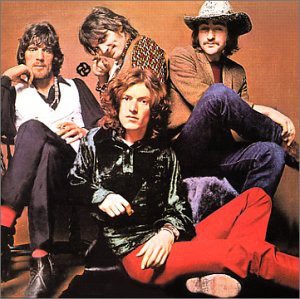
High-Heeled Boys: Part of an era passed with Jim Capaldi, far left.

Misters Fantasy

Traffic are through, but their legacy lives on

By Bruce Robinson

Billings, Mont., 1968. Four casually elegant musicians and a small circular glyph peeked out from a supermarket discount rack, a wordless album cover that somehow spoke volumes. The back revealed that this was, indeed, Traffic, a obscure British band whose praises I must have encountered earlier in some stray scrap of countercultural flotsam. Reason enough to part with a few bucks and check ’em out.

More than half a lifetime later, it remains one of my all-time favorites.

That was my introduction to Traffic, the remarkably inventive band voted into the Rock and Roll Hall of Fame last year, but who came to their undeniable end on Jan. 28 with the death at age 60 of founding drummer Jim Capaldi from stomach cancer.

Steve Winwood, whose distinctive voice and forceful organ playing had led the Spencer Davis Group to British Invasion stardom while he was just a teenager, remains the best-known Traffic member, but Capaldi was the hub around whom the new group coalesced. Guitarist Dave Mason, a transplanted American, was a school chum, and woodwind ace Chris Wood was recruited from the Manchester-area band Locomotive. The foursome legendarily sequestered themselves in a cottage in the Berkshires, emerging several months later with their first single, “Paper Sun,” in May of 1967. It was a huge hit in Britain but was barely noticed stateside.

“Hole in My Shoe,” a whimsical slice of pop psychedelia written by Mason, followed up the British charts, as did a third single, “Here We Go ‘Round the Mulberry Bush.” But none of these singles were included on the band’s first album, Mr. Fantasy, at least in its original British configuration. An American version eventually arrived, with the first two hits prominently featured and other Mason tracks dropped, along with most mentions of him, as he had left the band for a time. Stranded on a label with little idea how to market them (UA’s biggest acts at the time were Bobby Goldsboro and Gordon Lightfoot), Traffic made inroads with U.S. tastemakers, though their debut was not widely heard.

But the second album could not be denied. With Mason back on board, Traffic was and is a landmark collection of memorable melodies, shifting textures, dreamy images and supremely confident performances. “Feelin’ Alright,” a hit for Joe Cocker, became Traffic’s most widely covered song, thanks in considerable part to its relative simplicity. Moodier fare such as “Forty Thousand Headmen” and “No Time to Live” set Winwood’s keening vocals against spare, evocative tracks that blended folk, jazz and even classical elements into something unmistakably original.

In a personal favorite, Mason begins “Cryin’ to Be Heard” crooning gently over a soft acoustic guitar bed, dusted by Wood’s breathy flute (a vocal counterpoint joins in on later verses). Then Winwood’s Hammond organ boldly sweeps in to claim the chorus, as his clarion vocal drives the song to a passionate peak with Wood’s soprano sax wailing atop the crest, which subsides and then rises again, as the lyric darkens from sympathy to self-doubt. All in a little over five minutes.

But that pinnacle was never reached again. Mason left again for good and only two of the subsequent nine Traffic albums came close to the standards set by the first pair: the largely acoustic John Barleycorn Must Die (1974) drew new inspiration from traditional British folk songs, while The Low Spark of High Heeled Boys was carried by a looser rhythmic sound and a good-time rock and roll feel.

Along the way–perhaps inspired by contemporaries such as Cream–Winwood, Capaldi and Wood, plus others, used live dates to explore the seminal jam-band ethic, efforts that are documented on three different recordings, but which don’t offer the listener much payoff. Even as a great admirer of the band, I recall their live shows from the mid-1970s as overlong and underinspired.

Mason, meanwhile, never found another creative foil. Despite one excellent solo album (Alone Together), some appealing work with Delaney and Bonnie Bramlett and a handful of strong songs, he drifted into soft rock mediocrity, even at one point cutting a mismatched duo disc with Mama Cass Elliot.

Chris Wood drifted along as a session man, dying at age 39 from pneumonia while Winwood, of course, has enjoyed a highly successful solo career, albeit with just enough of an edge to keep him from disappearing into the aural sinkhole of KZST play lists.

But the early Traffic albums endure as epitomes of the boundless explorations that characterized their time, music whose energy, invention and imagination remains fresh and deeply satisfying even now.

From the February 23-March 1, 2005 issue of the North Bay Bohemian.

© Metro Publishing Inc.

The Field Effects Series

Aural Sects: Avant musicians are creating sounds from the strangest sources.Sticks and StonesRest on a futon and crank up the driftwoodBy Sara Bir"There's nothing to do!"You remember saying this as a kid. Sure, there might be chores, homework, physical activity. And yet, there was nothing to do. "Mom, I'm bored!" I've been stuck in the pop-music equivalent for months....

Soup-o-Rama

Soup Is Good Food: Weekly soup klatches nourish the body and the soul.Soup-o-RamaGirls' night takes on a whole new meaning with soupBy Ella LawrenceIn mid-October of last year, two of my closest friends had an idea. As they were examining a Syrah sample for bacteria, or whatever it is they do all day in that big lab at that...

Swirl n’ Spit

Swirl n' SpitTasting Room of the WeekSt. SupéryBy Heather IrwinLowdown: It's never a good sign when you get barked at as you enter a front door--by a person, not a dog. Granted, it was a busy Sunday and there was a large group of tourists hogging up the hallway in front of us, and barking out directions was someone's...

Harry Martin

Photograph by Michael AmslerPolitical Aerie: Newspaper owner and Napa mayoral candidate Harry Martin poses with one of his many pieces of American eagle statuary.Harry's WorldBlack helicopters, mind control and modern-day populism--meet Harry Martin, quite possibly Napa's next mayorBy Gary Brady-HerndonThe unprepossessing facade of the Napa Sentinel sits just east of the busy Highway 29 wine country thoroughfare in central...

North Bay Vote

No Child Left Unharmed: The March 8 measures aim to make up in part the education shortfall that the state's ruinous cuts have wrought.Every Vote CountsSizing up the upcoming special electionBy R. V. ScheideNothing says "low voter turnout" like an off-season special election with no national, state or countywide candidates or issues in play. Nevertheless, the results of the...

News of the Food

News of the FoodNot So SweetBy Stett HolbrookConsumer and farming groups chose Valentine's Day to launch a campaign against Johnson & Johnson and its Splenda brand sweetener. The Center for Science in the Public Interest (CSPI) accuses Johnson & Johnson of misleading the public about Splenda, one of America's bestselling sweeteners. According to the Washington, D.C.-based organization, Splenda's slogan,...

Upcoming Festivals

Chanteuse: Diana Krall inaugurates the Sonoma Jazz+ Festival in May.Fest FeastSo much music, so little time By Greg CahillWith three jazz and two blues festivals as well as a major chamber-music series on tap for the summer season, there can be no question that Sonoma County is fast becoming the wine country's chief pleasure center. The lineups for three...

Briefs

BriefsOf Mouse and Men Are Napa County's restaurants making the grade when it comes to health inspections? That's the question the Napa Register is asking after a San Francisco couple filed suit against V. Sattui Winery in St. Helena, alleging that last July the winery's deli served them a turkey focaccia sandwich laced with a nice, fat juicy‹rat! Responding...

Westar

Christian, Right?: Perhaps Christ-based religion needs to define itself by what it is, not by what it's not.The God ProblemBreaking tradition to fix ChristianityBy David TempletonThere is a sign affixed to the door of the Rev. Jerry Stinson's office at the First Congregational Church in Long Beach, Calif.: "Think for Yourself--Your minister may be wrong." This succinct admonition says...

Traffic

High-Heeled Boys: Part of an era passed with Jim Capaldi, far left.Misters FantasyTraffic are through, but their legacy lives onBy Bruce RobinsonBillings, Mont., 1968. Four casually elegant musicians and a small circular glyph peeked out from a supermarket discount rack, a wordless album cover that somehow spoke volumes. The back revealed that this was, indeed, Traffic, a obscure British...
11,084FansLike
4,606FollowersFollow
6,928FollowersFollow