
Go Boom

0

January 24-30, 2007

Duke Ellington once remarked that there are only two kinds of music in the world: good music and bad music. A highly subjective scale by which to judge, to be sure, made all the more amusing by the routine spectacle of music fans, and jazz fans in particular, leaning into each other on the street in front of clubs, arms flailing wildly, arguing pointlessly about a certain musician’s ability to connect to the elusive spiritual unknown.

I know, because I was that guy–until I became a captive audience to the lines outside jazz clubs and overheard the debates native to that rare locale. It’s funny how we often won’t recognize our most irritating characteristics until we witness them displayed flagrantly by someone else, blathering loudly that, say, Pharoah Sanders is “really digging deep” or that James Carter is “a bag of tricks with no feeling.”

As much as jazz fans love to talk about depth and feeling, there’s really only one underlying question that determines if jazz is good or bad: Does it sound good?

To run with the example, let’s look at the great Pharaoh Sanders, whom none other than John Coltrane called a “large spiritual reservoir, always trying to reach out to truth”: most of his recordings simply don’t sound that good, ruined either by vocal warbling, electric instrumentation or excessive “exotic” accompaniment. Conversely, James Carter, perennially criticized by jazz intellectuals for selling sizzle instead of substance, has made a string of dazzling and largely listenable albums, with only one or two missteps along the way.

The difference boils essentially down to context–Carter performs primarily with a traditional small combo. It suits him very well, and it’s important to know that. In jazz, it’s been common to misguidedly focus on an individual instrument and thus bypass the overall sound. By several degrees of separation, that’s how we wound up with Kenny G as the bestselling jazz artist of all time.

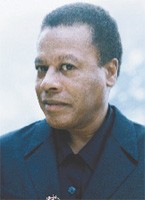
Context isn’t everything, naturally, but it is this key element that brings us to Wayne Shorter, who performs Feb. 3 at the Marin Center. Shorter is an inarguably brilliant titan of the tenor saxophone, a masterful composer of the classics “Nefertiti,” “JuJu” and “Footprints,” among many others, and a surviving member of the golden age of Blue Note Records. He also, for some unknown reason, made lousy-sounding jazz music for almost 30 years.

From the young kid in New Jersey who got his start playing with Horace Silver and Art Blakey to the jazz legend of today, Shorter can be heard in a variety of settings, the bulk of which do him little justice. Think about it: when you reach for a Wayne Shorter album, do you grab 1964’s Speak No Evil with Elvin Jones and Herbie Hancock, or do you pull out 1975’s Native Dancer with Milton Nascimento and Airto Moriera? Both albums feature well-crafted compositions with fine playing, but Speak No Evil still holds up 40 years later, while Native Dancer belongs in the dustbin of early smooth-jazz dreck.

Shorter made his name in the legendary Miles Davis quintet of ’64-’68, a period which will probably always be regarded as his creative apex. But soon thereafter his muse was deterred (and his wallet lined) by the ’70s electric-fusion ensemble Weather Report, a group of musician’s darlings who proved that you should never listen to what a musician tells you. The 1980s were such a low-water mark for Shorter that he largely disappeared from the studio throughout the next two decades.

So when Wayne Shorter put together a traditional quartet at the turn of the century and recorded Footprints Live!, his first all-acoustic jazz album since the early 1960s, the welcome shock prompted an outpouring of honors among the jazz cognoscenti. Signaling not only a return to form but, yes, also to a wealth of depth and feeling, Shorter wasted no time making full use of the open space afforded him by the acoustic format. Its studio follow-up, Alegría, continued the thrust, and last year’s Beyond the Sound Barrier ranks alongside the saxophonist’s best work of the 1960s.

Wayne Shorter is back in the game.

Shorter has thoughtfully kept the same working group intact, and it is this group he will be appearing with in Marin, comprising drummer Brian Blade, pianist Danilo Pérez and bassist John Pattitucci. Such all-star sidemen would be a godsend for any leader, but for Shorter, who plays upon their vast dynamic abilities to staggering advantage, the fresh context is a pathway to unbridled imagination.

“I’m at a point,” Shorter recently declared, “where I’m just going to say, ‘To hell with the rules.’ That’s all I’m doing with the music now. I’m 71, I’ve got nothing to lose now. I’m going for the unknown.”

Wayne Shorter and his quartet perform on Saturday, Feb. 3, at the Marin Center, 10 Avenue of the Flags, San Rafael. 8pm. $25-$55. 415.499.6800.


Wine Tasting Room of the Week

0


For generations of tour and wine country guides, the county seat of Sonoma has been snubbed, breezily dismissed or barely sniffed at. From Idwal Jones’ 1930s and ’40s survey of post-Prohibition California to more recent slights, Santa Rosa is mentioned, if at all, more for its “commuter community” and “industrial center” than for its “vines in the sun.” Such spittle rolls unnoticed off the uncomprehending visage of a city that historically puts its square shoulder to the wheel, busily transforming itself into a parking lot. Squirming tourists bake in the sun as traffic inches the last few miles through this suburban spoiler toward the charming green acres of wine country funland.

But, wait. The romance is in the glass, not the nouveau castle. And wouldn’t it be refreshing, in a way, to find one of the most passionate producers of that most winsome varietal, Pinot Noir, here among the most unromantic locales in wine country?

In Jones’ classic book, he does relate a 1930s visit to Santa Rosa’s venerable Fountaingrove Winery, which looms forgotten above the nondescript warehouse park on Airway Drive. It’s down here that Siduri Winery produces a manic variety of Pinots that showcase single vineyards from Oregon to Santa Barbara.

For Adam Lee, the terroir that matters is where the vines sink their roots, not where the cellar floor is rebarred. Lee and his wife, Dianna, are native Texans who fell in love first with Pinot, then each other. They got so nutted up over Pinot, in fact, that after meeting at an Austin wine shop they pulled up roots and moved to California. They release around 25 wines from each vintage, not including their Novy Family Wines, founded to make other wines, notably Syrah.

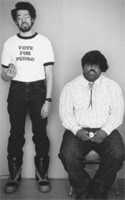
Lee, a self-described wine geek who looks a little like a younger version of computerdom’s most famous geek, says that his tasting room’s low-key setting reflects who they are, and their priorities.

The winery is only open for tasting by appointment, but that shouldn’t be as intimidating as it sounds. During the recent Winter Wineland event, classic rock played in the background, and a large temporary staff of down-to-earth friends and vineyard owners was assembled to pour.

I’d suggest tactfully skipping the Four-Mile Creek Red, blended from odds and ends that demonstrates the, uh, problematic nature of the beast that is Pinot Noir. A whiff, however, of the 2005 Willamette Valley Pinot conjures an oddly pleasant pairing of strawberries and bacon, with light color and not too greenish a taste compared to a similarly styled Argyle Pinot from that same valley, which had no flavor–off or otherwise; a nice job! But expecting to root for the home team, I was scandalized to find I preferred the 2005 Clos Pepe Vineyard Santa Barbara, with its richer color and silky berry fruit, to the Sonoma County versions. Same deal with the Napa Syrah over the Sonoma, a quick blackberry fruit rush that fills the palate and disappears like smoke.

After a 20-wine tour of two states and even more regions, we emerged giddy and blinking in the sun–and still in Santa Rosa! Such a savings in gas. And the bonus was that we were only two blocks from the Bottle Barn and able to beat the drooling crowds at the end of another Winter Wineland weekend.

Siduri Winery, 980 Airway Court, Ste. C, Santa Rosa. Tasting by appointment, Monday-Saturday, 10am to 3pm. 707.578.3882. Bottle Barn, 3331-A Industrial Drive, Santa Rosa. Open daily. 707.528.1161.


View All

News Briefs

January 24-30, 2007

Never at home

With lots of money at stake, North Bay volunteers prepare to seek out those who often try to stay as invisible as possible: the homeless. “The biggest challenge is finding everyone,” says Georgia Berland, executive officer of the Sonoma County Task Force for the Homeless. “People are living in vehicles, and that’s illegal, so they’re afraid to be found.” To stay eligible for Federal Housing and Urban Development Department (HUD) money for services to homeless people, counties must do a homeless count on Jan. 31. There’s a lot at stake: Sonoma County takes in $2 million a year from HUD for helping homeless residents; Marin gets $2.1 million; and Napa county hovers around $500,000. Sonoma County is doing a week of volunteer outreach to contact as many homeless residents as possible, inviting them to special events in 11 cities on Jan. 31 There’ll be hot meals available at every site, with some venues offering services ranging from hot showers to veterinary care for pets. Each homeless person surveyed (only initials and birth date will be recorded, to avoid duplication) will receive a thank-you gift, such as rain gear or warm socks. To learn more about the Sonoma County effort, call 707.536.6111. Marin County has its volunteers lined up, but needs more gifts for homeless participants. “If we could get some nice warm socks, that would be cool,” says Andrea Bizzell of the Marin Continuum of Housing and Services. She’s also hoping for small-denomination vouchers for fast food or groceries. The count is challenging, because Marin has so much unoccupied space. “There are a lot of areas where people can reside that we don’t know about,” Bizzell said. Call 415.506.0125 for details. Napa also needs volunteers, gift donations and details about where to find homeless people, especially in the Lake Berryessa and upper valley areas; call 707.253.6103. “We also have a real need for Spanish-speaking individuals to help do the surveys,” says Charlene Horton of Community Action Napa Valley.

I spy

After Sonoma State University awarded the campus bookstore concession to Barnes and Noble despite strong faculty opposition, most instructors chose to list their textbook orders with North Light Books in Cotati. On Jan. 16, store co-owner Barbara Iannoli observed two students turning over every single textbook and writing down the course number and title, and the book’s ISBN number and price. When questioned, the students explained they were from the B&N campus bookstore. Iannoli says she’s not surprised by the “spy” effort. “I’m radically against big corporate retail business. I don’t put anything past them.” The B&N campus bookstore manager says corporate policy won’t let him comment on the incident.


Rolling on the River

0

At last: Blues singer Etta James, discovered by Sebastopol’s Johnny Otis and managed by Jazz on the River owner Lupe de Leon, is a Russian River festival regular.

By Lois Pearlman

Guerneville’s 30-year-old jazz festival is on sale for $50,000, and the buyer gets a blues festival as a bonus.

Recovering from several years of health problems, Jazz on the River festival owner Lupe De Leon believes it’s time for somebody else to take over his annual events, says partner Meredith Melville.

Everyone who loves jazz or depends upon the Russian River tourist trade for a livelihood is hoping there will be a successful buyer.

Businesspeople on the lower Russian River hope to see the two festivals continue, since they draw thousands of tourists to the area, some for a week or more. Russian River Chamber of Commerce director Dawn Bell says she’s already fielding questions about the dates for the 2007 festivals, and local innkeepers are getting inquiries about room bookings. The Russian River Blues Festival typically takes place in June; Jazz on the River, in mid-September.

Food consultant and promoter Clark Wolf who, like De Leon, lives part-time in Guerneville, is performing his civic duty by attempting to facilitate the sale of the festivals. He says two groups have already expressed serious interest. One of the groups is local; the other is from elsewhere “in the region,” and they both have the expertise to succeed, according to Wolf. They may even be open to collaborating, Wolf suggests, but he isn’t willing to say any more.

Jazz on the River (originally known as the Russian River Jazz Festival) began three decades ago as a locally produced event aimed at boosting the tourist economy. When a 1976 drought preempted Guerneville’s annual Fire Mountain Pageant, barber and musician Clive Hawthorne proposed a jazz festival to replace it. Sonoma County supervisors granted the Russian River Chamber of Commerce $10,000 to make it happen.

With trumpeter Dizzy Gillespie as the main attraction, the first Russian River Jazz Festival brought some 3,000 music lovers to Guerneville’s Johnson’s Beach. According to news reports of the time, it was an artistic–though not a financial–success.

For several years, a committee of locals ran the festival, eventually hiring a succession of paid directors. Over the years, the festival has featured such luminaries as Count Basie, Carmen McCray and Etta James, filling out the two-day bill with lesser-known performers, including area musicians like drummer Benny Barth and pianist Bob Lucas.

Lucas has passed on, but Barth, who lives in Monte Rio and is mostly retired, performed at the festival as recently as 2005. That year, he played on the stage of the winetasting garden with his trio. A jazz purist, Barth bemoans what he describes as an adulteration of the festival by jazz fusion, smooth jazz and even some rock and roll. Still, audiences keep coming back for more. Melville says that the last day of the 2006 festival drew some 5,000 people.

De Leon, a musician’s talent agent, was on the board of directors of the jazz festival for many years. When the organization added a blues festival in 1996 and then decided to discontinue it three years later, he bought the rights to do it on his own.

In 2002, he also took over the jazz festival, but since he did not gain legal title to the name at that time, he called it Jazz on the River. According to Melville, she and De Leon purchased the original name last year.

What a new owner will get for his or her $50,000 are the names of the festivals, the events’ websites, a 14,000-person mailing list, hundreds of vendor contacts, such infrastructure as canopies and tables, and help putting it together for the first year or so.

“That’s what we’re selling, the name,” Melville says.

A new owner could also inherit the disdain some in the local community feel for the two annual events, which tend to jam the town’s roads and parking spaces, leaving little room for residents and other visitors. Some merchants have complained that jazz and blues festival audiences are too busy to spend money in area shops, and make it difficult for others to do so, as well.

But Wolf says that times have changed and there are new avenues through which the community will be able to work cooperatively with whoever purchases the festivals.

“People have been pulling me aside and saying things,” Wolf says. “One thing they have said is that the community needs to be more involved in good ways.”

Wolf, who with his partner Scott Mitchell spearheads the annual Russian River Food and Winefest, envisions that the jazz and blues festivals could become green events. He notes that the local EcoRing organization, which promotes ecological tourism on the river, could help. Wolf also suggests that local businesses could profit from the festival by staging a weeklong series of related events, and that traffic congestion could be kept to a minimum with cooperative planning.

But for now, it all remains in limbo. Melville says nothing will happen for at least a week or so while De Leon recuperates from his recent heart transplant.

“Everything’s on hold,” she says. “There’s a lot of interest. I’m taking information and having short conversations with people.”

Although Melville and De Leon would normally begin organizing the festivals this month, Melville suggests there would still be time for a new owner to make them happen for 2007, even if they start a few months later.


In a Word

0

January 17-23, 2007

Gnarls Barkley’s ubiquitous megahit “Crazy” is the 2006 song of the year. It’s the first single to top sales charts based on downloads, and in addition to being Grammy-nominated, it’s also a frequent entry on informed best-of-2006 lists. We hear it at the gym, at work and while in line at Safeway.

Luckily, “Crazy” is a damned good single. Gnarls Barkley’s debut album, St. Elsewhere, is an oddball pairing of gospel-influenced rapper Cee-Lo and indie hip-hop producer Danger Mouse, yet the disc delivers a unique, forward-looking midpoint between retro soul and alt-rock. “Crazy” is the disc’s commanding gem, at once catchy and unsettled, danceable and ruminative. The uniqueness of “Crazy” is incomplete in only one way: its title.

Even excluding songs that just contain the word in the title, like “Still Crazy After All These Years” by Paul Simon or “Crazy for You” by Madonna, there are still dozens of fine songs titled, quite simply, “Crazy.” How does this newcomer Gnarls Barkley’s hit rate with other songs titled “Crazy”? Does it have what it takes to be an all-time great “Crazy” song?

The path to greatness for a “Crazy” song runs through two standards: Patsy Cline’s hit version of the Willie Nelson-penned ballad “Crazy,” and Seal’s MTV-era dance-rock hit “Crazy.” Both classics have been covered repeatedly, often by notable artists, but more importantly, these top two “Crazy” songs reveal what makes a “Crazy” song genuinely worthwhile. It’s not enough to use the word as a passing adjective or mere descriptive staple. A truly great “Crazy” song imagines and realizes a state of removal and transformation, be it negative, dreaded detachment from the familiar, or positive, desirable freedom from the mundane.

Leading the pack is the Cline/Nelson classic, with its time-tested credentials in the repertoires of country, pop, jazz and rock. The song’s languid melodic beauty is only as powerful as its self-deprecating sense of futility. “Worry, why do I let myself worry? / Wondering what in the world did I do?” sings the suffering shunned lover, so distraught that craziness becomes a convenient excuse for self-hatred.

Seal, on the other hand, advocates moderate craziness as a redeeming mass social balm. “We’re never gonna survive / Unless we get a little crazy,” he gently implores over a future-pop pulse, subtly suggesting that “miracles will happen as we dream.” He’s convinced some sort of unconscious release will make for a collective revolution.

Gnarls Barkley’s megahit contends with these two great “Crazy” songs because, like them, it references craziness not as a term but as an inevitable destination. But GB’s “Crazy” ups the ante, accepting the duality of insanity’s repulsiveness and allure as normal. “There was something so pleasant about that place,” Cee-Lo muses, as if he knows both Cline/Nelson’s isolation and Seal’s optimism. He enrolls us in sweetness and fear, accusing both himself and the listener of the mystery, and the fact, of our shared displacement.

Hard-rock “Crazy” songs tend to either love or hate craziness. Aerosmith’s big ’90s power-ballad “Crazy” melodramatically denounces the term as something opposite the idyllic life the singer begs from his girl. The Georgia Satellites’ shuffling blues-boogie “Crazy” cutely promises insanity in exchange for love, boasting bizarre commitments like “I’d ride bareback on a six-foot monkey.” Aussie hair-band Kings of the Sun like dangerous irresponsibility in their scorching “Crazy,” proclaiming that wanton action is salvation.

Similarly, rapper Snoop Dogg’s new disc starts with a bouncy, laid-back “Crazy” that understands craziness as proactive, carefree fun. For Snoop, crazy is normal and stable, and his loose SoCal territory is a place of freedom where he and a greater community are positively, as the warmly insistent chorus goes, “always up to no good.”

Among many marginal “Crazy” songs by acts like R.E.M. and Kenny Rogers, a notable low point is the recent rap track by Kevin Federline, the former Mr. Britney Spears. This duet with his ex really belongs in a survey of songs simply titled “Superfluous” or “Silly.” Here’s hoping that nobody has ubiquitous 2007 hits with those titles.


First Bite

On a recent weekday afternoon, my wife and I headed over to Sonoma for lunch at the Girl and the Fig. No tables were available, but the hostess offered us a couple of seats at the bar. Rather than wait, we wandered the edges of Sonoma’s plaza.

Less than half a block away, on First Street, we found the Sunflower Caffe. Entering through a narrow door felt like plunging into a wildly unexpected world, a place where delicacies were dripping from the trees, as in Alice in Wonderland or Charlie and the Chocolate Factory.

Impulse buyers beware: the Sunflower has a cafeteria-style set-up, and while on line you pass one treat after another. It would be so easy to add a little bottle of Amala Springs Syrah or a Wellington Zin (all the wines are from Sonoma or Napa counties) or a gourmet Venezuelan-bean chocolate bar from Chuao. Oh, and why not start with a cappuccino ($2.75) or a nice hot mocha ($3.10)? The coffee is organic and comes from local roasters.

The front counter leads to a back dining room, where patrons sip coffee and pound on their computers. And though we’d never have guessed from the front, in the back we found a spacious patio, where we soaked up the mid-afternoon sun and watched a hawk circle and squawk above us.

The Sunflower Caffe is not as refined as the Girl and the Fig; you line up to order, take a number and soon a server brings your meal to your table. That was OK with us.

The varied menu made it hard to decide what to order. We were tempted by the Sonoma Cheese Plate with seasonal fruit, toasted almonds, apple butter and a baguette ($14.75), but the cool weather led us to start with the split pea soup of the day. This can be a boring, routine soup, but the Sunflower’s split pea was bursting with flavor. The fresh peas were spiced up with salted ham and just a enough pepper to tantalize the taste buds. A bowl of this rich soup ($4.90) and the baguette slices that come with it could be a satisfying meal, but we shared the soup and ordered entrées.

I had a lemon-garlic chicken breast on a salad ($4.90, small; $7.90, large). The chicken was tender and the lemon and garlic were just right, noticeable but not overbearing. The portions of both chicken and salad were generous. My wife had the old-fashioned roasted chicken salad ($7.25), which evoked childhood picnics. The chicken was diced into small cubes and prepared with celery, onion and just enough mayo. I washed it down with an orange GuS (Grown-up Soda).

The server who brought our food was warm and friendly, as was the young gent who took our order at the counter. If you can’t finish it all, don’t worry, the staff will pack your leftovers in biodegradable to-go containers.

In the end, we were thoroughly satisfied and couldn’t have been happier that on this day, the Fig was too busy to take us.

The Sunflower Caffe, 421 First St. (on the Sonoma Plaza), Sonoma. Open for breakfast and lunch daily from 7am to 6pm; 7pm on weekends. Starting in May and through the summer, hours are extended by one hour in the evening. 707.996.6645.


View All

Quick-and-dirty dashes through North Bay restaurants. These aren’t your standard “bring five friends and order everything on the menu” dining reviews.

Super Men

0

January 17-23, 2007

Health & Fitness 2007:

Healthy young men need to cultivate a special long-term relationship–with a primary care physician.

But you’re not sick, you say? That’s exactly why you need to make contact now, so you can do a little preventative maintenance and head off any potential problems.

“Young men often don’t have a family doctor or internist who they can identify as their care provider,” says Dr. Leigh Hall, Sonoma County’s deputy health officer. “They wait until they get sick, and then they don’t have anybody, or they get sick and don’t see anyone because it’s too difficult.”

Even after outgrowing their annual visit to the pediatrician, young women are urged to get checked each year by their OB/GYNs. It’s important; plus, it gets them in the system and used to turning to medical personnel for advice and care.

“There aren’t similar risks for men at those ages,” Hall explains. “Women get drawn in by needing breast and pelvic exams, and men don’t have that draw. It’s important for young men to establish a relationship with a family doctor early on, even though they might not see them for a few years at a time.”

Because there are things young males need to pay attention to. What’s your blood pressure? High blood pressure is a major risk factor for heart disease, which kills more men than any other illness. Know what your blood pressure is now, when you’re young and healthy, and keep tabs on it as you age. Both young men and women should get their blood pressure checked every few years, Hall says.

How about your cholesterol level? Ask for a full HDL and LDL cholesterol test, so you know what’s going on with your body.

“We know if you can manage cholesterol early, you can reduce the chance of heart disease and stroke,” explains Dr. Kirk Pappas of the physical medicine and rehabilitation department at Kaiser Permanente Santa Rosa.

What’s your body mass index? Your hereditary risk factors for illness? Your risk factors from poor nutrition, smoking or lack of exercise? All of these are things you should discuss with a primary-care physician or a health educator, to stay as healthy as possible for as long as possible.

“If you don’t want to give the drug companies all your money when you’re old, do all you can to keep your body healthy when you’re young,” Pappas says.

If you’re 22 years old, 25 pounds overweight, drive through the fast food joints on a regular basis and never exercise, your chances are good for developing diabetes in your 40s or 50s.

“We know that a certain percentage of our 15-year-olds today will be pre-diabetic when they’re 20 or 25, and that number is going up; it’s skyrocketing from 25 years ago,” Pappas explains.

And, sorry guys, but have you checked your scrotum lately to be sure there aren’t any lumps or other irregularities? The risk of testicular cancer is highest for males between 18 and 35 years old. If it’s caught early, it’s treatable. It if isn’t caught early, sterility may be the least of the concerns.

But men, especially young men, tend to feel they’re invincible. They often don’t do simple things that can improve their chances of living longer, such as wearing a seat belt or a motorcycle helmet, or even just using sunscreen to ward off skin cancer.

“You are not going to live forever,” Pappas warns. “You definitely need to have a relationship with a primary-care doctor who can relate to you and who you can relate to, and do all you can to reduce the possibility of chronic illness.”

Most young men who do come into his office, Pappas says, come because their wives bring them in. “She says, ‘I’m here because he wouldn’t come in for three months.’ The problem is, how do you encourage people who think they’re indestructible to take care of themselves?”

One answer is having a variety of ways for patients to contact their doctors, Pappas says. “I have the worst trouble getting a 25-year-old to call back and let me know how he’s doing, but if he can shoot me an e-mail, that’s great.”

Another answer is education. Pappas loves a Kaiser Permanente television ad that says, “Whoever lives longer, wins.”

“They need to invest in their health,” he says of these “indestructible” young males. “The more you invest in yourself to be healthy when you’re young, the healthier you’ll be when you’re older.”


Letters to the Editor

January 17-23, 2007

Chip off the old block

“Yippee-ei-kai-yai!” More than 20,000 more troops going into the civil war in Iraq. Bush has also threatened Syria and Iran. Bush has moved up new naval forces to bomb them if need be.

It may come as a surprise to some, but what Mr. Bush is doing is simply following through on his daddy’s threats to Saddam back in ’91. What went out then was, “Withdraw from Kuwait or we bomb you back into the Stone Age!” Now Bush2 has already created a Stone Age in almost every Iraqi city and town. Apparently, he won’t rest until he has added Iran to all the other notches on his six-gun. “Shoot ’em up! Yahoo, cowboy!”

Over 3,000 American troops have been killed and over 650,000 Iraqis have also been killed. Now Bush has ordered 20,000 more troops to go into battle. Six and a half more billion dollars are to be spent. Yet according to the latest AP poll, 68 percent of the American public opposes this war.

Mr. Bush continues to spread lies and to fatten the wallets of his Carlyle Group/Halliburton friends. He really won’t rest until he gets his way: a global (didn’t it used to be called “world”?) war and/or some kind of Arab nuclear response in which at least hundreds of thousands of Americans are killed. “Hey, that’s some kind of round-up, podner!”

F. H. Baumgardner, Sebastopol

Fat chance

There is no satisfactory solution to the quagmire in Iraq. Once you have waded into quicksand up to your chest, it’s too late. Whatever we do now, stay or leave, there will be mass murder, chaos and destruction. For many years to come, our nation will be the butt of unprecedented contempt and hatred all over the world, and we will all be less safe.

The best thing our leadership could do at this point is step up to the plate and say to the world, “We have been wrong, wrong, wrong. Our policies have led to unspeakable destruction and misery, not worldwide prosperity and democracy. We have made a mockery of the ideals on which our nation was founded. But we are resolved to mend our ways! From now on, instead of wasting hundreds of billions of dollars on destruction and world domination, we will direct those vast resources into the elimination of poverty, hunger and disease all over the world.”

Fat chance, huh? Our current leaders would rather sacrifice countless more American and Iraqi lives than face up to their monstrous blunders and eat humble pie. After all, their own lives aren’t at stake, only their monumental egotism and greed.

Richard Hoff, Occidental

Backside of the greenback

The thousands of Californians who will be economically devastated by our governor’s decision to drastically cut CalWorks may take comfort in knowing that our president has pledged $1.2 billion in economic assistance to the Iraqis.

Helen Tackett, Fullerton

Recruiting recruiters

I would like to suggest a U.S. military cost-saving measure and a way that President Bush can access a trained military resource to man the planned surge of forces into Iraq: Send all United States military recruiters to Iraq and privatize the recruiting services with Manpower or Brown & Root/Halliburton staff. I’m sure after the recruiters return from their tour of duty they will think twice about re-upping their commissions and sending our young people to war!

L. E. Tolbert, Cloverdale

Fore!

Regarding (The Byrne Report, Dec. 27, 2006), after decades of investigative and journalistic pursuits, I have yet to discover a California county more corrupt than Sonoma, a western state more corrupt than California or a federal government more criminally insane than that of the United States.

But who really cares?

There are golf games on Saturday, other televised sports on Sunday. Isn’t that what America is all about?

Karl Bosselmann, Forestville


News Briefs

January 17-23, 2007

Hospital woes

Sonoma County isn’t big enough for two full-service nonprofit hospitals, say officials at the 238-bed Sutter Medical Center of Santa Rosa and the 345-bed Santa Rosa Memorial Hospital. In a move that could affect healthcare throughout the North Bay, they issued a Jan. 8 “letter of intent” saying that by early 2008 Sutter will close the aging Chanate Road hospital it leases from Sonoma County and sell its Warwick Avenue facility to Memorial. “This community will best be served by one strong, financially stable, nonprofit acute-care hospital,” says Sutter Medical Center spokesman Mitch Proaps. Under the tentative proposal, Sutter will focus on outpatient services. Memorial will add 80 new inpatient beds and absorb Sutter’s patient load, taking over the contract to provide medical care for poor and uninsured Sonoma County residents. These dramatic changes are prompted by rapidly evolving (or devolving) healthcare costs and funding sources, along with soaring estimates for state-mandated seismic upgrades. Plus, the for-profit Kaiser Permanente–which only treats its dues-paying members, thus sidestepping the skyrocketing expense of caring for large numbers of indigent patients–attracts a large share of the “commercial” or paying portion of the local patient population. “The growth of Kaiser Permanente in this area has made it difficult for two hospitals to compete for less than half of the commercial market,” Proaps explains. “I believe Kaiser has 70 percent of the commercial market, so basically our two hospitals were competing for 30 percent of the market.” Closing the Chanate Road hospital will put 1,200 employees out of work. Sutter should honor its contract to operate the hospital until 2016, says union representative John Borsos of SEIU-United Healthcare Workers West. Closing Sutter “is a deal that was cut behind closed doors by a couple of multibillion-dollar corporations,” Borsos asserts. “Any decisions on the future of the hospital should be done in the open.” But there will be lots of opportunities for community input, Proaps says. In the letter of intent, the two organizations give themselves 90 days to work with the board of supervisors, conflict-of-interest lawyers in the state attorney general’s office, hospital employees and community members to hammer out the specifics. “We think we have the framework of a unique plan, but there are still many details we need to address, with input from all parties,” Proaps explains. One of those details will be the stress placed on regional healthcare facilities as Memorial absorbs Sutter’s patients. Memorial is part of the St. Joseph Health System, which also operates Petaluma Valley Hospital in Petaluma and Queen of the Valley Hospital in Napa; Marin General Hospital is an affiliate of Sutter–a relationship that often appears to be on shaky ground.


Ask Sydney

January 17-23, 2007

Dear Sydney, sometimes I feel overwhelmed by the sad state of humanity. Maybe that sounds sort of lame, but it’s not lame to me when it’s happening. The last time it happened to me, I was standing in line at Safeway waiting to get a money order, and I noticed that behind the counter they had three locked case. One of them was full of cartons of cigarettes; another, nicotine replacement packages; and the third, rows of baby formula. Even though I had been standing in line for 10 minutes already, I just had to leave. Why would they lock up the baby formula next to the cigarettes? Sometimes this happens to me if I have to go to the mall, or if I am stuck in traffic for too long, or especially if I am watching TV or the news. Do other people feel the same way? Sometimes it seems like no one else is even noticing, or if they are, that they don’t mind. I don’t even know what it is that upsets me exactly, just this feeling that maybe we are all crazy.–Neurotic and Alone

Dear NA: We are crazy. You aren’t just imagining things. If you want to know for sure, try explaining the war in Iraq, Adolph Hitler or the KKK to a small child. And so I give you the same answer that I would give an eight-year-old receiving her first course in history: We just have to do the best we can in often challenging circumstances and not let the craziness around us poison our hearts. In fact, your cigarettes-and-baby-formula epiphany is a wonderful analogy for what’s wrong in the world. After all, if baby formula is such a coveted item that people feel as inspired to steal it as they do to steal cigarettes, then shouldn’t Safeway be giving it away for free? But they don’t. Few of us would.

Think of humans as individual locked cases. We each keep a small set of keys to the case, which we give out to a select few (though we reserve the right to take the key back if and when provoked). Next time you are stuck in traffic or in line at the mall, try to look around you with compassionate eyes. It’s really the only tool you have available to you to combat despair. After all, we may be insane, but we also love with great passion, and this is what gives us value.

Dear Sydney, I can honestly say that my boyfriend is a nice guy. He’s pretty sensitive, an attentive lover and intelligent. But there are a few things that really irk me, as hard as I try to overlook them. For example–and I know this sounds petty–I like a guy who can chop wood; right now, the wood pile is dwindling. OK, I can let that one slide, but he only just got a job at a restaurant after months of not working. He’s really not motivated to make a living. I don’t make enough to support him, and it really bothered me when for Christmas he printed out a certificate that read “Good for one massage,” but then, when I tried to redeem it, said he didn’t have the money to treat me to it. What should I do? Should I keep overlooking these few grease marks on his personality, or is it time to move on?–Feeling Sore

Dear Sore: So he’s lazy. Does this mean you should leave him? Well, that depends entirely on how much you value motivation as a personality trait. You’re never going to find someone who has no grease marks on his personality, and the older we get, the more mired in our grease marks we become, so you have to make a decision. Are you going enjoy him for what seems to be a solid list of positive attributes, all the while assisting him in overcoming his laziness (assuming it’s even possible), or are you going to abandon the relationship in favor of someone who is motivated and chops wood but is perhaps shitty in bed? If you do find someone who is good at making a living, chops wood, is nice, sensitive, an attentive lover and intelligent, that would be impressive. But there are a lot of other problems a person can have, all different levels of co-dependencies and hang-ups. So think hard. See if you can express your feelings to him, and listen to what he has to say in his defense. Is he willing to hear you, and possibly make some accommodations for your feelings? If not, you have to decide what your own priorities are and then act accordingly.

Dear Sydney, do you think it’s wrong to eat from the bulk section and not pay for it? Is it OK to do it at Safeway or Whole Foods, but not at the locally owned grocery stores? What about personal integrity? Isn’t a wrong a wrong, and stealing stealing? I understand if you just want a little taste to see if you want to buy it, but I’m talking about knowing you’re not going to buy it and just chowing down. My ex-husband and I fought about this all the time; maybe this is one of the reasons we broke up. I would love to hear your opinion so I could send him this article.–Not Bitter at All

Dear Bitter: We all find ways to justify out transgressions. Yes, stealing is stealing. However, how wrong stealing is depends entirely on circumstances, and how we view those circumstances, in a moral sense, determines how we define each individual act. Is it wrong to steal if you have a hungry baby at home? Would it be wrong to steal that baby formula from Safeway mentioned above? What if you stole baby formula from a mom-and-pop store, would that be more wrong then stealing it from Whole Foods? You don’t steal from the bins, because you feel like it’s wrong. He does steal from the bins, because he feels it’s not. Whether or not he steals from the bins is not really your concern. This is a moral decision he is making, and he will suffer the consequences, should there be any.

I would venture to guess that you are surrounded on all sides by people making questionable moral decisions who then go on to justify them. You probably do the same yourself. Technically, driving a car is much more damaging to humankind then eating peanuts from the bulk bins, and yet most of us drive cars. My guess is that your split probably didn’t have much to do with his justifications for being cheap and having the munchies, and if, ultimately, all you stole from each other in the break up was some trail mix, consider yourself more fortunate than most.

No question too big, too small or too off-the-wall.


Go Boom

January 24-30, 2007Duke Ellington once remarked that there are only two kinds of music in the world: good music and bad music. A highly subjective scale by which to judge, to be sure, made all the more amusing by the routine spectacle of music fans, and jazz fans in particular, leaning into each other on the street in front...

News Briefs

January 24-30, 2007 Never at home With lots of money at stake, North Bay volunteers prepare to seek out those who often try to stay as invisible as possible: the homeless. "The biggest challenge is finding everyone," says Georgia Berland, executive officer of the Sonoma County Task Force for the Homeless. "People are living in vehicles, and that's illegal, so...

Rolling on the River

At last: Blues singer Etta James, discovered by Sebastopol's...

In a Word

January 17-23, 2007Gnarls Barkley's ubiquitous megahit "Crazy" is the 2006 song of the year. It's the first single to top sales charts based on downloads, and in addition to being Grammy-nominated, it's also a frequent entry on informed best-of-2006 lists. We hear it at the gym, at work and while in line at Safeway.Luckily, "Crazy" is a damned good...

First Bite

Super Men

January 17-23, 2007Health & Fitness 2007: Healthy young men need to cultivate a special long-term relationship--with a primary care physician. But you're not sick, you say? That's exactly why you need to make contact now, so you can do a little preventative maintenance and head off any potential problems."Young men often don't have a family doctor or internist...

Letters to the Editor

January 17-23, 2007Chip off the old block"Yippee-ei-kai-yai!" More than 20,000 more troops going into the civil war in Iraq. Bush has also threatened Syria and Iran. Bush has moved up new naval forces to bomb them if need be. It may come as a surprise to some, but what Mr. Bush is doing is simply following through on his...

News Briefs

January 17-23, 2007 Hospital woes Sonoma County isn't big enough for two full-service nonprofit hospitals, say officials at the 238-bed Sutter Medical Center of Santa Rosa and the 345-bed Santa Rosa Memorial Hospital. In a move that could affect healthcare throughout the North Bay, they issued a Jan. 8 "letter of intent" saying that by early 2008 Sutter will close...

Ask Sydney

January 17-23, 2007 Dear Sydney, sometimes I feel overwhelmed by the sad state of humanity. Maybe that sounds sort of lame, but it's not lame to me when it's happening. The last time it happened to me, I was standing in line at Safeway waiting to get a money order, and I noticed that behind the counter they had three...
11,084FansLike
4,446FollowersFollow
6,928FollowersFollow


