News Briefs

April 18-24, 2007

Not so grateful

Firefighters stopped a blaze that destroyed a mobile home on American Canyon Road April 13, but neighbor Frederick Arritt, 64, wasn’t appreciative; he was arrested on felony assault charges for punching a fire captain. The blaze began inside the home of Mike Wilson, who was severely burned attempting to stop it with his bare hands. When Wilson ran screaming outside, someone called 911. Firefighters and police responded, finding Wilson’s home and car almost completely engulfed. Next-door neighbor Arritt was spraying the conflagration with a garden hose. “He started yelling obscenities at the officers and said he could put it out himself,” recalls American Canyon fire chief Keith Caldwell. Firefighters repeatedly asked Arritt to leave, but he refused. He became verbally abusive, then hit a fire captain on the side of the head. Wilson’s burns were treated at Queen of the Valley Medical Center, and Arritt was arrested and booked into Napa County Jail. “It’s just one of those unfortunate events,” Caldwell notes. “It’s only the second time we’ve had something like this happen in my 31 years as a firefighter.”

Jobs well-done

Seamus Ramsey and Chris Throp, who rescued a four-year-old boy from a burning vehicle in January, are among 11 people being honored April 25 at the Real Heroes Breakfast by the American Red Cross Sonoma and Mendocino Counties. Those being singled out as deserving thanks and praise include Sebastopol police officer Dennis Colthurst, who spent months getting help for a family of nine neglected children; Marjorie Davis, 85, who founded and runs Fawn Rescue; Salt Point State Park lifeguard Osh McNulty, 21, who made two lifesaving rescues in one day; and Army Pfc. Caesar Viglienzone, who died Feb. 1 in Baghdad.

Lost labyrinth

Marin County Open Space District rangers stirred up a controversy recently when they removed the small stones outlining a circular labyrinth at the top of Oak Manor fire road near Fairfax. So far, 448 people have signed an online protest petition calling the labyrinth path, reportedly constructed in 2004, “a landmark, public meeting place, sacred space and object of natural beauty.” Ron Paolini, deputy director for the open space district, says man-made structures are routinely removed from the district’s lands, which are kept as natural as possible. A complaint about the labyrinth prompted district rangers to visit the site, remove the rocks and plant native grass seeds covered by straw. “We basically manage the land for the resources. That’s our role,” Paolini explains. He says the district has not received the petition about the labyrinth. “I’m sure our management will look at anything that comes in.”


First Bite

“Wow, you think this is so good because we’re so hungry?” my friend asked. Four of us had just spent a sunny Sunday afternoon hiking from Green Gulch to the beach. We were ready for some hearty grub and suds in a place that had a warm atmosphere but wasn’t too elegant for grubby hikers.

We settled on Rafters Grille and Brewery in downtown San Rafael, an airy, woody brewpub with a relaxed vibe. Rafters is refined and quiet enough to have a conversation without raising your voice, but not stuffy. A jazz quintet, fronted by a woman who sounded a bit like Norah Jones, played in the corner (on other nights the pub features rock, soul or Latin music). On warm days, most of the front wall slides open, giving the dining area the feel of a streetside cafe.

Our server, who was friendly and didn’t make us feel out of place in our sweatshirts and shorts, quickly brought the first round. We quaffed a well-balanced and quenching amber ale that had traces of caramel. The beer was just right: rich with malt flavors but not heavy or overly carbonated. The first one went down so easily, I had to order a second to accompany my chicken pesto pizza ($11.95 for a 10-inch pie).

The pizza was generously layered with slices of chicken, sun-dried tomatoes, spinach and mozzarella. The pesto stood out, its bright basil flavor enhancing the other toppings. The crust was nicely toasted, not brittle, just chewy enough to sink my teeth into. As hungry as I was, it was too much to finish.

My friend had a guacamole burger ($12.95 with avocado, bacon and pepperjack cheese), which she described as “very juicy.” I had a few of her fries, which for me are a litmus test; they were served scaldingly hot (as they should be), nicely browned on the outside and fluffy on the inside.

As the evening wound down and we became sated, we returned to the question: Is Rafters’ food as good as it seemed, or were we just famished from hiking? The clear consensus is that Rafters is the full package with great beer and satisfying food. And here’s the rare part: it’s a Marin restaurant where you can have a big plate and a pint in a comfortable room for under $20. I’ll be back.

Rafters, 812 Fourth St., San Rafael. Open daily from 11am for lunch and dinner. 415.453.4200.


View All

Quick-and-dirty dashes through North Bay restaurants. These aren’t your standard “bring five friends and order everything on the menu” dining reviews.

American Movie

0

April 18-24, 2007

I‘ve been sitting at the counter of Mr. Mom’s cafe in Petaluma for three hours. The crossword puzzle in front of me is a giant splotch of ballpoint ink in 19 layers. I’ve discovered 12 new ways to scratch my head, and my coffee cup has been refilled eight times. My mind is racing but my body must stay still. I figure I’ve got about an hour of inward motionlessness before I can get up and leave.

So goes the crash course I received in the world of independent filmmaking, having agreed to appear in Darwin Meiners’ feature film Fairfield, Idaho.

OK, OK, it’s not really a starring role. There are no awards for Best Guy in the Background with His Head Turned Away. But Meiners assures me that if I want to truly understand the experience of shooting a movie, there’s no other way but to jump right in. And sit.

The setting here is down-home. Country music plays on the stereo while a frizzy-haired waitress in a pink sequined T-shirt wipes down the counter. But surrounding a vinyl booth in the corner are Meiners and his crew clustered around film cameras, light filters and boom mics. Producer Jeremy Moore rushes around between takes, shooting Polaroids for continuity, while director of photography Jon Lohne and production manager Steve Aja try to rescue a fizzled microphone cord with gaffer’s tape.

It’s not exactly an expensive-looking set, until one of the actors pulls some props from a duffel bag: a gun, a bag full of white powder and an enormous wad of bills, all twenties. It must be $5,000, at least. Sensing my surprise, Meiners leans over and lets me in on one of the resourceful tricks for shooting a film on a threadbare budget.

“We needed a bunch of money,” he whispers, “so we Xeroxed it. If we get pulled over on the way home, we’re fucked.”

The modus operandi for making Fairfield, Idaho has been this exact sort of do-it-yourself approach. But with no budget or formal film training, Meiners and his tireless crew have produced a film of remarkable depth and impact. The film premieres April 21 in Santa Rosa.

Fairfield, Idaho opens with a slow pan across an empty field of tall, dry weeds. The camera closes in on a white house, and while the sun sets, a quiet moment is allowed to hang, suspiciously. What breaks this opening silence sets in motion the story of Dayton Miller–his distressed relationship with girlfriend, Maddie, his desire to be a hero and, overridingly, his belief that because of what happens in the white house, he is shackled with a family curse from which there is no escape. When we meet him, he is completely broke, behind on the rent and drowning in a sea of alcohol.

In a last-ditch attempt to salvage everything, Dayton–portrayed to boozy perfection by Paul Hoffmann–raids his estranged mother’s trailer. A wide-angle lens and an effective score provided by the Velvet Teen’s Judah Nagler give the heist an added Rififi-like tension. Dayton is looking for money, but when he ransacks the trailer, he makes off instead with a large bag of crystal meth.

The story that unfolds of Dayton’s quest for redemption achieves a maturity and subtlety rarely seen in no-budget independent film. Even when nothing very much at all is happening onscreen, the viewer feels the tense state of mind of the movie’s characters. Flourishes of focus and angle act as a cracked window into Dayton’s scrambled conflict, and montages abound for a sense of time and atmosphere.

In rounding up a serviceable cast, Meiners has found some unknown gems. As Maddie, Larissa Kasian is excellent, particularly in her pleading with Dayton to return the meth and come home. In these scenes, Hoffman’s natural detachment works perfectly. (“You just said that you loved me, and I just said that I knew I was wrong,” he tells her in the middle of a heated argument, hoping to settle the issue. Ah, the logic of the jilted male.)

Of course, those who live locally will find plenty to recognize, including Grizzly Studios owner Roger Tschann as Dayton’s drug-dealing friend Kyle. Tschann literally drops into the frame to counter Dayton’s festering psychosis with his wise-cracking composure. Two bumbling hit men come into play, and in a dingy hotel room the conflict builds to a nail-biting climax.

Fairfield, Idaho will undoubtedly be applauded at its premiere this weekend. But Meiners is hoping for a different kind of reaction.

“If someone could get in an argument about what the ending means,” he hopes, “that would be awesome.”

Darwin Meiners, 36, has dark brown hair and a lean, healthy gait. A jack-of-all-trades songwriter, promoter, husband, company vice-president, father, singer, guitarist and now filmmaker, he embodies the ideal of accomplishing anything simply by putting one’s mind to it. By turns insightful and sardonic, he talks with an almost impossible confidence, even when addressing his own limitations.

Prior to Fairfield, Idaho, Meiners had made exactly one feature film, an over-the-top secret-agent kung-fu zombie farce called Lance Sterling: Off the Case. He’ll be the first to admit it was intended solely to amuse. “Instead of trying to hide the fact that we had bad actors, bad lighting and a bad story,” he recalls, “we just made it even more apparent by embracing our weaknesses.” The movie looked as if it cost a few hundred dollars to make.

Though Meiners had made short films before, filming Lance Sterling gave him an itch for something more serious and dramatic. He immediately announced a new project, and had started writing a screenplay, recruited a dedicated crew and assembled a cast in less than six months. He still had no money.

“We’ve all seen multimillion dollar movies that are just horrible,” figures Meiners, sitting in a homemade studio in his Santa Rosa garage during a final cut of Fairfield, Idaho. “So it seems like if you get good people–actors, writers, crew and artists–then it’ll be way better than if you get a bunch of money.” Between Meiners and Moore, the project was entirely self-financed, with the exception of two “investors” worth $100 each (one of them was Meiners’ dad). “That’s how I know I’ll probably never be a ‘real’ filmmaker,” he insists. “I don’t like asking people for money.”

With nothing but raw talent, the crew began a weekly regimen of writing, shooting, rewriting, shooting, editing, shooting, mixing, editing and finalizing. The process accumulated its share of sticky situations–a motel owner required bribe money for the use of a dilapidated room replete with real black mold on the walls and an all-too-real discarded hypodermic needle on the floor; makeup artist Dustin Heald applied bloody contusions to an actor who had inadvertently passed out from whiskey. But the toughest obstacle, Meiners says, was realizing what he had gotten himself into.

“I was so unprepared to answer questions from professional actors,” he explains. “You have to find these ways to evoke emotions and portrayals from people without actually asking for it. I had no clue, no idea, and then I had to do it on the spot. And it was really hard. It was totally hard.”

The other down side to having just a four-man crew, Meiners says, is that his own creative flow was often disrupted during shooting to keep everyone on task–acting, he jokes, as “the class clown and the principal at the same time.” But he never felt like throwing in the towel on Fairfield, Idaho. “I just felt like this was a good story,” he insists, “and I wanted to see it through.”

Meiners hasn’t counted up the receipts yet, but he estimates that the 76-minute film cost about $5,000. Nightmares of dealing with Hollywood agents and attorneys are not on his radar; instead, he mentions the enthusiasm he’s received from the chamber of commerce in the actual city of Fairfield, Idaho. The film will hopefully screen at eventual festivals, but as of yet Meiners has no plans to even release it on DVD.

“I’d be happy to show it one time and never show it again, to be honest with you,” he says. “Some people play poker on the weekends, some people play golf. We make movies. It’s just what we like to do.”

‘Fairfield, Idaho’ premieres on Saturday, April 21, at the Roxy Stadium 14, 85 Santa Rosa Ave., Santa Rosa. 7:30pm; $10 advance tickets only, available at the Last Record Store in Santa Rosa and at www.fairfieldmovie.com.


New and upcoming film releases.

Browse all movie reviews.

The Demented

April 18-24, 2007

Moping over his personal and financial success, Woody Allen commented, “Comedy sits at the children’s table.” He meant that only drama gets respect, and that’s what led Allen into the field of faux Scandinaviana.

But when it comes to pure cinematic invention, nothing beats comedy. Comedy is the laboratory where visual ideas are tested; drama picks up on them later, after they’ve been proven to work.

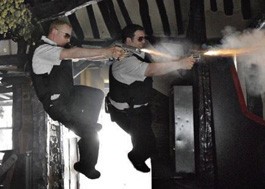
Hot Fuzz is director Edgar Wright and writer Simon Pegg’s follow-up to Shaun of the Dead. It represents movie comedy at its best, an irresistible high-low mix of gross slapstick, whip pans and whiplike wordplay.

Wright and Pegg have built their film in the way the best British comedy is built. Maybe nothing since Fawlty Towers has had such terrific comedic structure to it–the sense of a heavily worked-out plot to make the gags all click in the last reel.

As an action director, Wright has learned from Martin Scorsese and John Woo, but he has subtracted the relentless het-up-ness of such directors. In Hot Fuzz, the speed of the technique looks less desperate and more confident. And the movie boasts stars, too. Seeing Nick Frost and Pegg makes you think more about Laurel and Hardy than Will Ferrell and whomever he is co-starring with this week.

Hot Fuzz runs in haste from the beginning. A montage outlines the superiority of supercop Nick Angel (Pegg), who shames the rest of the London police with his perfect arrest record. Then his bosses–supercilious (Martin Freeman), supercillier (Steve Coogan) and supercilliest (Bill Nighy)–kick him sideways, transferring him to the postcardy village of Sandford. There, being a policeman consists of rousting loiterers and rounding up a stray swan.

Angel is teamed with Danny, the Charles Laughtonish Frost, last seen playing a fragrant but friendly zombie in Shaun of the Dead. Danny is clearly a constable because his dad (Jim Broadbent) is the chief of police.

The Sandford cop shop is packed with cake-eating idlers, including two tremendously snide plainclothesmen (Paddy Considine and Rafe Spall), louts who think they’re the coolest things in town. A policewoman, Doris Thatcher (Olivia Colman), with a sizable overbite and a fondness for horrible double-entendres, and a tottering geezer, whose most important function seems to be the ability to translate what the inbred local farmers say, round out the roster.

Angel’s arrival precipitates a chain of Agatha Christie-like murders. The policeman pursues the mysterious killer as well as pushing against the dead weight of his fellow police, who consider the murders a series of unfortunate accidents. The most likely suspect: a sniggering grocery store owner, played by a gloriously mean Timothy Dalton.

Hot Fuzz offers more than a Naked Gun collection of jokes; it is a postmodern version of a tender Ealing comedy. (If the film looks particularly affectionate, note that it’s shot in Somerset, where the director grew up.) Wright’s retro-heavy soundtrack also has a keen, loping rhythm that keeps the movie in pace. In , Wright told me that he wanted glam rock on the soundtrack, because the beat suggested to him the plodding of a foot patrolman walking. And in the opening, Angel’s résumé, as well as his social retardation, is outlined against the brassy chorus of “Goody Two Shoes” by Adam and the Ants.

Hot Fuzz is an almost insanely high-spirited film, as cheerful and good-natured as a movie can be when depicting a Grim Reaper-dressed assassin depopulating the countryside. (Be warned: The movie has a high gore quotient.)

The movie celebrates placid village life and realizes that such a vegetating life has to be stirred up a little with evenings of crap movies. And Wright isn’t blind to the discontents of all this cozy, half-timbered living; he knows a streak of intolerance can be found out if one digs a little.

If I have any complaint about Hot Fuzz it is that the title is inane. People look at you like you’re missing marbles when you praise a movie called Hot Fuzz. The title just seems too reductive. And then, the other night, we were flipping channels and stumbled on to a cop show called Cold Squad. Like police work, satire depends on careful research.

‘Hot Fuzz’ opens on Friday, April 20, at select North Bay theaters.


New and upcoming film releases.

Browse all movie reviews.

The Byrne Report

April 18-24, 2007

IT WAS FOUR WEEKS to the day that 16-year-old Jeremiah Chass was shot and killed in his Sebastopol driveway by two Sonoma County Deputy Sheriffs. On Monday, April 9, in Roseland, the predominantly Latino neighborhood of Santa Rosa, yet another psychologically troubled person was shot and killed by law-enforcement officers. Richard DeSantis, unarmed, age 30, was gunned down in his driveway by a Santa Rosa police squad.

In both instances, a family member had called emergency services, stating that a loved one was having a mental crisis. In both cases, the responding officers claimed to have tried violent but nonlethal methods before fatally blasting the decompensating men. Chass was of mixed race; DeSantis was apparently Caucasian. Neither posed a life-threatening challenge to the cops who were called to expertly subdue them, not speedily kill them. Many people assume that these are justifiable homicides despite plenty of evidence to the contrary. There is no pattern here, right?

Like hell there is no pattern.

The Sonoma County deputy sheriffs who killed the teenaged Chass are being investigated by the Santa Rosa Police Department. The Santa Rosa Police Department officers who killed DeSantis are being investigated by the Sonoma County Sheriff’s Department. The Santa Rosa Police Department officers who shot and killed Oakland murder suspect Haki Thurston on Feb. 27 in Santa Rosa are being investigated by the Sonoma County Sheriff’s Department. And finally, the Ukiah Police Department officers who shot to death the mentally ill Cesar Mendez on April 2 are being investigated by the Mendocino County Sheriff’s Department.

This type of official back-scratching is a recipe for the cover-up of possible law-enforcement misconduct in all four homicides.

Indicating the trajectory of his investigation a few hours after DeSantis’ death, Sonoma County Sheriff Capt. Dave Edmonds told the Santa Rosa Press Democrat, “Occasionally, in all communities there are a spate of shootings. That’s the way I see what has happened here. You look at the case facts of each independently, and there’s no relationship.”

Please note: Edmonds’ agency is in charge of investigating the DeSantis killing. But he has already declared that the circumstances of the DeSantis killing cannot possibly be related to the circumstances of the Chass killing and the other two homicides committed by North Bay law enforcers in seven weeks. And he justifies the killing of DeSantis as part of a “spate” of law-enforcement-related homicides in Sonoma and Mendocino counties. So if you are bipolar, schizophrenic or just feeling edgy, you’d best duck–or better yet, move somewhere else–because there is a “spate” of deaths going on. When is such a chain of events officially over? When it’s declared to be by Edmonds? By Santa Rosa Police Chief Ed Flint? By Sonoma County district attorney Stephan Passalacqua?

Hey, maybe it is not a “spate,” but a policy.

In July 2005, the California NAACP released a report on police brutality that is particularly relevant because people of color are in the minority in the North Bay. It is prefaced by Sgt. Ronnie Cato of the Black Police Officers Association of the LAPD, who writes: “White Americans don’t see the racism and the discrimination as we do. So when they are on those juries and things like that, they are much more sympathetic to police officers. They tell us all the time, ‘I don’t care what happens. You have a tough job. We understand what you’re going through’–almost sympathizing with the police no matter what they do.”

The NAACP report calls for police departments and the communities they serve to be held accountable for a change. It cites a 1998 Human Rights Watch study (“Shielded from Justice”) of police misconduct in 14 cities, including Los Angeles and San Francisco, which concludes: “The excessive use of force by police officers . . . persists because, overwhelmingly, barriers to accountability make it possible for officers who commit human rights violations to escape due punishment and often to repeat their offenses. Police and public officials greet each new report of brutality with denials or explain that the act was an aberration, while the administrative and criminal systems that should deter these abuses by holding officers accountable, instead virtually guarantee them impunity.”

Human Rights Watch identified obstacles to establishing accountability as the pattern of hiring psychologically unfit people as police officers and the code of omertà by which police (and sheriffs) protect each other from investigations of wrongdoing. The NAACP calls for monthly psychological evaluations of police officers; training officers in verbal skills for use in encounters with the mentally ill, so that a potentially violent situation can be defused; a ban on the use of Tasers and guns, which kill people; and mandating the use of nonlethal weapons.

Since our system of law enforcement system has proven itself to be dangerously incompetent and bureaucratically incestuous, it is time for ordinary people to take this matter in hand.

or


Breaking It Down

0

music & nightlife |

By Brett Ascarelli

When you think of hip-hop, west Marin County probably isn’t the first place to come to mind. But on April 21, the youth-geared Sprout Fest will take over San Geronimo to celebrate what to many has become a notoriously problematic genre, associated with gangster and, more recently, cocaine rap.

Speaking by phone from his West Marin home, festival organizer Noel Bartholomew, 22, explains that the mainstream music industry has changed hip-hop for the worse. “A lot of it has gotten pretty negative towards women and towards everyone else,” Bartholomew says. “That’s not what the original art form was about–it was about creating tools for youth to express themselves in a positive way, a nonviolent way.” Some say that during hip-hop’s age of innocence in the 1980s, gang switchblade wars gave way to break-dancing battles. Maybe that’s just urban legend, but hip-hop definitely gave youth a creative outlet.

Bartholomew says that he used to listen to gangster rap but now prefers underground hip-hop, which is more traceable to its roots. And that’s what Sprout Fest–whose name refs the 2001 Bean Fest in San Geronimo, now in its next stage of natural growth–is all about: the roots of hip-hop. “We want to really honor [its] African heritage,” says Bartholomew, who is originally from Switzerland. Arts workshops during the afternoon will focus on break-dancing, beatboxing, graffiti painting, poi-ball dancing, spoken-word poetry and West African drumming taught by master musician Amadou Camara. Bartholomew will himself teach a workshop on capoeira, the graceful Brazilian martial art which has inspired some hip-hop acrobatics.

Recording artist Radio Active, who has worked with Michael Franti and Spearhead, will lead one of the workshops and also emcee the evening concert which features local artists D.U.S.T., Urban Apache B-Boys, Capoeira Mandinga, Shatzi Rainbow, Jahan Khalighi and Greenroom. Concertgoers can vie for $100 prizes in an old-school B-Boy Battle where the best breaker wins, and in other contests.

Sprout Fest breaks out on Saturday, April 21, at the San Geronimo Valley Community Center, 6350 Sir Francis Drake Blvd., San Geronimo. Workshops, including organic lunch and snacks, for youth and twenty-somethings from 11am to 5:30pm; free. All-ages concert begins at 6pm. $5-$20. Organic dinner available for purchase until 7pm. Blankets or beach chairs recommended. 415.488.8888.


FIND A MUSIC REVIEW

Money Pit

April 18-24, 2007

It’s not as though there isn’t any money. In California, 51 cents out of every tax dollar–including sales and income tax–goes to education. On top of that, voters last year approved a $3.5 billion bond for public schools. Nevertheless, the state has some of the lowest test scores in the country. In 2005, California ranked 47th for education, meaning that only three other states had students who scored worse on standardized tests.

However, the Department of Education believes we still aren’t spending enough. Per-pupil spending in California is 30 percent below the national average, according to DOE director of policy and evaluation Pat McCabe.

Still, others are suggesting that it isn’t so much the amount of money in the educational system as how the money is being used–primarily for inefficient and bloated programs that aren’t reaching the classrooms.

A recent study by the Pacific Research Institute (PRI) and the California Business for Education Excellence claims that one such example is the Academic Performance Index (API), a score that attempts to measure how well schools are doing. According to the study, the state spends $1.25 billion on improvement programs to help struggling schools become proficient, and yet they have had “little if any academic improvement.”

The study, called “Failing Our Future,” compares student test scores from 1,620 low-performing schools that participated in the improvement programs to those of schools that didn’t participate in the programs. It found that there was “no significant difference in academic achievement over time.” Not only that, the study asserts that the state doesn’t have a high enough growth rate for nonperforming schools, and that minority and low-income kids are still being left behind.

“We found no real accountability for the schools,” says Vicki Murray, a senior fellow in education studies at PRI. “There needs to be consequence for failure. As it is, parents don’t have meaningful options in California. If you’re a parent and you have a child enrolled in a school that’s not up to snuff, what do you do?”

In 1999, California established the API score to quantify how well the schools are doing. Every year, students take a series of tests ranging from language arts to math. Based on the overall test scores, the state does a calculation and assigns each school a number ranging from 200 to 1,000. The goal is for all schools to reach 800, which is considered proficient.

The API conflicts with another measurement system, the Adequate Yearly Progress score, part of the No Child Left Behind Act established by the Bush administration. For a school to be proficient under this newer federal system, it would have to have a score of 875.

“The state still stresses 800 because it’s an easier score to meet,” says Lance Izumi, who co-authored the study. “The more schools meet the state target, the greater number of schools appear to be on track.”

For those schools not reaching 800, there are two state programs designed to help them improve. The problem, according to Izumi, is that the billion-dollar programs don’t work because their growth target is too low. Schools that agree to enter the program only have to improve 5 percent a year. At that rate, a school with a score of 635 or less–a plight of more than 3,400 schools–would take between 61 to 84 years to reach 800.

“We’re sacrificing generations of students while the schools are making small incremental progress,” says Izumi.

McCabe believes the study’s criticism is unrealistic. The reason the growth target is low is because it’s so hard for schools to improve with their limited resources.

“It’s a realistic target,” says McCabe. “It’s very difficult to move huge numbers of kids across these proficiency lines. The average gains per year are between 10 and 11 points. We’re holding the schools accountable, but we try to make the targets reasonable.”

In practice, many schools do seem to improve faster than 5 percent a year. From 1999 to 2006 in Sonoma County, median scores steadily increased by 78 points for elementary schools, 67 points for middle schools and 48 points for high schools. The improvement may be slow, but it’s steady.

“There is some logic to what the study is saying,” says Don Russell, assistant superintendent of the Sonoma County School District. “But it’s not what’s occurring in the schools. The schools aren’t saying, you know, we only have to improve 5 percent a year so let’s draw this out for 20 years. People are saying, ‘Golly, we’d better improve our scores and get better.’ So it’s not really a strong argument.”

The study also says that by focusing on overall school performance, kids who are lagging behind will improve at the same rate as everyone else but will never catch up, an issue that is especially troubling for minority or low-income children.

“Let’s say that a school has a score of 400,” says Izumi. “The white students have a cumulative score of 500 and the African-American and Hispanic kids have a score of 350. Even if all the groups hit the growth target, it doesn’t close the gap between the minorities and white students.”

The Department of Education seems aware of this problem. It is in the process of changing the target structure so that some of the subgroups, like minority or low-income kids, will be required to grow faster than they have in the past. In theory, it will start closing some of those gaps.

But blaming the API for the problems in the schools is misdiagnosing the problem, believes McCabe.

“The API is just a measurement,” he says. “It gives us a list of schools that are not making progress and shows us their growth over time. Blaming the API for schools not making progress is like blaming the thermometer for causing the cold.”

For Izumi, the API is one of many expensive programs not making enough of a difference in the educational system.

“They are wasting a lot of the taxpayers’ money, and a lot of folks are calling for more,” he says. “Money has been poured into the system. And it has not improved it one iota.”


War Play

0

April 18-24, 2007

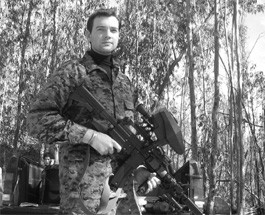
My blood boiled as I raced into the forest. I leaped over logs and tangles of twigs, and moved deeper and deeper into this jungle of darkness. Watching carefully for movement in the dense foliage ahead, I readied my finger on the trigger of my gun. Shots came suddenly, echoing from the southwest, rapid-fire reminders of the battle about to begin, and I wished for a moment that I could turn into a horsefly and buzz safely into the canopy above. But, alas, I was who I was, where I was, and this was war. And war is hell.

Actually, this was just the Paintball Jungle, a 65-acre plot grown over with eucalyptus trees just west of Highway 29 in American Canyon. Every Saturday and Sunday, the Jungle swarms with a hundred or more masked gunmen who shoot each other in good fun with half-inch diameter paintballs. Guests can show up unannounced any time on weekends, rain or shine, but first thing in the morning is best. That’s when owner Robert Delia, aka “Magic Carpet Bob,” a scarred and handsomely grizzled Navy vet and former professional paintballer, delivers his 30-minute orientation speech.

“Gather round for your orientation!” he shouts at about 9am. Fifty eager paintballers do as they’re told, forming a half-circle around Bob, who stands waiting atop an old monster truck tire to enhance his mighty stature. By now we’ve all signed waivers, paid our $55 in dues at the open-air reception desk and been equipped with guns and helmets, but there are some basic safety rules we must hear about, first and foremost of which is to never, ever enter the target range or the forest without first putting on one’s safety goggles.

Bob also briefs us on the various game styles we’ll be enjoying, like Capture the Flag, Center Flag and the Elimination Round. Each, happily, involves running through the woods, hunting people with a relatively harmless gun: a boy’s dream.

Yet a scattered dozen or so of my peers seem to take this business very seriously. They have come dressed in full army fatigues with American flags embroidered on their sleeves. They wear jungle-green bandanas and camouflage foliage in their hair. Several of these men have gigantic $1,000 machine guns with silencers and sights, and I want to tell them that there’s a real army and a real war out in the world, in case they’re interested.

“Now, remember,” says Bob, “the whole point of this in the end is to have fun. Now are you ready?”

Yeaahh!!!” comes the war cry of an army.

Several Jungle employees come around to tie our arms with either fluorescent red or green ribbons, thereby dividing us into teams. I receive a red ribbon, which is actually pink. On a loud speaker, a male voice orders us to our bases. “Greens to the Hornet Nest, Reds to the Airplane Bunker. Game starts in three minutes!” I put on my goggles and follow a gaggle of stern-postured pink soldiers into the thick woods, and this drops me right back into the previously interrupted narrative, which, as you recall, had me racing through the jungle. Ahem.

“Hey, pal, you know where you’re going?” I asked the camouflaged fellow ahead of me.

“Naw, this is my first time here.”

Yet the bumbling lot of us somehow found our base, where a referee sat waiting, holding a walkie-talkie and wearing an orange vest. Our flag–more of a rag, really–flew proudly in the middle of the Lincoln Log-like structure. Sheltered turrets stood at the five corners, and the prospects of dwelling in this cozy inn for the duration of the 30-minute game, taking cheap shots into the woods at enemy and terrorist sympathizers, wooed me into declaring, “I’ll defend the fort!”

With six others, I entered the small complex, climbed up to one of the guard platforms and made myself comfortable at a firing slot in the wooden wall. Momentarily, the ref received a message through the walkie-talkie. Then a loud horn blew in the distance, echoing through the woods, and our man shouted, “Game on! Go get ’em!”

Two dozen of our pink soldiers dashed westward into the woods toward the unseen enemy with the goal of retrieving their flag. For several minutes, we heard nothing while watching the surrounding sphere of jungle for enemies.

And then from one of our sentinels: “Movement to the southwest!” I, too, saw an apparition out in the shadowy woods to the northwest, and a second later a paintball from the south breezed past my face and splattered on a post behind me. We were surrounded. My comrades began shooting from their respective duck-blinds while I stayed low, waiting for the prime opportunity to blast an enemy fighter in his vitals. Opportunity arose when I spied someone about 200 feet away crouched behind a stump. I aimed through the slot in the wood structure and popped off a half-dozen rounds, but I watched each of my paintballs zip waywardly and splatter in the foliage before reaching their target.

There must have been 20 Greens around us, and they were closing in. An armed man ran out from behind a tree and charged forward. He was just 60 feet away, hoping to reach the next patch of cover before anyone could take him out, which I did.

“Hit!” he shouted, nobly obeying the honor system. He straightened up, lifted his hands skyward and calmly walked off the scene. I enjoyed watching him perish.

We picked off several more insurgents, but the Greens had us outmanned. Increasing volumes of paint splattered all around me, and the breeze of paintballs overhead kept me cowering on my knees. And then they were in our fort, swarming viciously like hornets. Presumably, a similar battle was taking place across the forest at the Greens’ base, but the horn had yet to blow and it seemed our flag was going to be the first to go.

I fired feverishly, hitting nothing but wood and earth. Abruptly, a line of machine gun fire pat-pat-patted up my front side. Paintballs hurt, and I screamed in fright and lifted my gun in the air to announce my death. Meanwhile, my men dropped like flies, and the Greens made off with the flag. The ref, still standing by with his walkie-talkie, announced the loss to the horn blower. The trumpet sounded through the woods a moment later, and the game was over. Ten remained before closing time.

While most paintballers at the Jungle make an entire day of running around in the woods and getting shot, I didn’t have what it takes. By 1pm, with a dozen welts rising on my head, neck and torso, I was toast. I was bleeding in several spots, my shirt had been torn open and, frankly, I thought these wounds were pretty darn awesome.

Magic Carpet Bob owns the Paintball Jungle with his partner of 27 years, Karen Kazman. Bob’s adult sons, Eli and Zoe, also help out with the business. Zoe even played on the same professional team as his dad back in the early ’90s, traveling across the country and Europe, and together helping to win for their team the Paintball World Championship in 1991, about the time that we tried to loot Iraq for its oil the first time around.

But the paintballers I’ve seen are a far cry from real soldiers; they’re lovers, not fighters, and Eli believes that paintballing is the second greatest form of recreation in the world.

“It’s the most fun you can have with your clothes on,” he quips.

For others, it’s therapeutic, a chance to blow off some pent-up steam from the office. Ryan Crain, 28, a creative-marketing director from Vacaville, sees paintballing as harmless, a chance to be something that most days of the week he’s simply not.

“It’s great,” he says. “You’re outside, playing dress-up and running around like a soldier in the woods.”

Ditto for me. Stalking strangers with a toy gun answered a long-neglected boyish desire to hunt and be hunted, an urge I once satisfied through classroom daydreams of fighting in wars both ancient and modern, and kicking ass, of course. Perhaps the most satisfying thing about paintball is that the game makes sense; your enemies are as real and tangible as their neon wristbands. In today’s real wars, it’s just so confusing! Men, women, children, newlyweds kissing on the altar–any of them could be terrorists, and the only safe thing to do is to blast them, safety goggles be damned.

But what do I know about war? Paintballing took me to my ultralight personal threshold for violence, and I hope that I never have to put on army fatigues and load a real weapon.

Because I’ve read that there’s a real war going on out there. It’s not in a jungle of eucalyptus trees, and I hear it’s hell.

Paintball Jungle, 2 Eucalyptus Drive, American Canyon. 707.552.2426.


Dutch Courage

April 11-17, 2007

In Paul Verhoeven’s Black Book, the rich, beautiful and talented Rachel (Carice van Houten) has a little problem. It’s 1945 in occupied Holland, and she’s Jewish. Her current residence–a cubbyhole in the barn of a Bible-walloping farmer–was accidentally bombed. She’s left in the cold, with only a sizable packet of diamonds and a wad of $100 bills that would choke an elephant.

Fortunately, the Dutch resistance intervenes and gets her aboard a canal boat to Belgium. The craft is machine-gunned by the Nazis. She survives scratchless, except for a demure ricochet wound to the forehead.

Later, during an assignment for the resistance, Rachel is picked up on by a sensitive SS officer, Ludwig Müntze (Sebastian Koch). She has to make the decision: Will she prostitute herself for the resistance?

As in Paul Verhoeven’s Starship Troopers, Black Book has indecision about whether this is erotica, comedy or a serious statement about the underground fight against the Nazis. Critiquing the ruthlessness of the resistance is not new; a 1996 French movie here titled A Self Made Hero did a memorable job of it. Black Book supposedly has merit as Verhoeven’s return to his Dutch roots. To be fair, this director’s first film since Hollow Man has elements of national color and regional humor.

Some have resented Verhoeven for the titillation of his work (American critics can get punitive when they get aroused), and it’s true the Dutch have a more relaxed attitude toward skin. Thus, the deliberate Gouda cheesecake throughout this film, as Rachel suns herself in her underwear and indulges in frequent bouts of toplessness even in a cold climate. Verhoeven refers to his most famous scene–Sharon Stone crossing her legs in Basic Instinct–in showing Rachel bleaching her pubic hair so as to better play the part of a natural blonde.

Maybe the universal appeal of sex is supposed to leaven the references to today’s occupations, as in this utterly subtle line when a Nazi officer is speaking to the Dutch Gestapo, congratulating them: “You fight against the terrorists for our fatherland.” As that line suggests, Black Book is not a movie to take seriously. It’s simplistic, madly nostalgic and larded with romantic visions of the end of the war. Koch is nearly as magnetic as he was in The Lives of Others, and Van Houten has a hundred years of Hollywood good-time girls behind her to draw upon (Stella Stevens comes to mind when watching Rachel smirk as another man bites the dust).

But because of the episodic and heartless direction in Black Book, because of the dramatic last-minute escapes and the glossy, adventure movie sheen here, Verhoeven is still what he has been for years: a director in the international style. And that means the same thing as an architect who builds in an international style, like an airport hotel.

Verhoeven may think his lack of tone in this story is the ultimate kind of moral relativism, and that it’s daring to suggest that an SS man could be kind and resistance leaders could be brutal. It’s not just a matter of self-respect or the respect of your contemporaries. Once you make a movie as lowball as Showgirls, with such bottom-grade coincidences and ultrabasic melodrama, you never really come back.

‘Black Book’ opens Friday, April 13, at the Century CineArts Sequoia, 24 Throckmorton Ave., Mill Valley. 415.388.4862.


New and upcoming film releases.

Browse all movie reviews.

First Bite

At the General’s Daughter you’re treated like Daddy’s favorite, pampered and indulged. From the moment you enter the 130-year-old Victorian manse General Vallejo gave to his daughter Natalia after ceding Sonoma in a brandy-soaked breakfast conference, the gracious dining rooms welcome you like the precious darling you are.

Adding to the feeling of indulgence is carte blanche permission to assemble your three-, four- and five-course prix fixe menu ($45, $55 and $65, respectively) as your little heart desires. All dishes demonstrate chef Preston Dishman’s French training and Southern roots, with attention to the best local, sustainable and seasonal ingredients. A recent partnership with Benziger Family Winery promises that 90 percent of the restaurant’s produce will come from Benziger’s biodynamic gardens.

Before our choices came, we were served an amuse-bouche that proved the least amusing dish of the evening–a thimbleful of green garlic soup that tasted mostly of salt. My friend Michael picked foie gras as his beginner (though, believe me, I tried to dissuade him). Seared on an island of polenta with dollops of rhubarb compote, it was, he said, delicious, though the creaminess of the elements became a bit monotonous. I had tuna tartare with spicy aioli hearts of palm, and marinated cucumbers: a haute tuna fish salad.

We’d also exercised our choice to not choose, ordering the three-ounce wine pairings ($19, $24 and $29 for three, four or five courses, respectively), all, without exception, well-chosen complements to our food. If you care to select your own wine, the list features mostly young and Californian wines.

Round two brought a Dungeness crab cake, an expert treatment of the standard, and scallops, all two of them, perfectly cooked, on a cauliflower purée, encircled by a moat of ginger carrot foam. A spoon would have been nice, but I made do with bread, served tong-wise (as is irritatingly au courant). When I asked for one of each breads, the server crooned, “Excellent choice.” I noticed Michael received the exact same praise, although he requested only whole wheat. Maybe we were both the favorite.

The servers swarmed around our table, knowledgeable, helpful, nearly coddling. The exception? The fellow who greeted us as ladies. When I corrected him, he recovered by saying that Michael has fabulous hair (which he does, curls down to his shoulders). But when he came back and asked again how we “ladies” were doing, it rankled.

Next up was duck Bolognese pasta, a savory mélange of shredded duck topped with herb ricotta, and an order of spice-rubbed venison loin–like butter and incredibly yummy on a bed of wilted chard and sweet potato purée.

Though each course had seemed small, we were pretty full by dessert, a dense bittersweet chocolate cake, topped with salted caramel cream and pistachio brittle. I loved it; Michael objected to the salt. To each his (or her) own, which just might be the motto of this fine restaurant.

The General’s Daughter, 400 W. Spain St., Sonoma. Dinner, Tuesday through Sunday. 707.938.4004.


View All

Quick-and-dirty dashes through North Bay restaurants. These aren’t your standard “bring five friends and order everything on the menu” dining reviews.

News Briefs

April 18-24, 2007 Not so grateful Firefighters stopped a blaze that destroyed a mobile home on American Canyon Road April 13, but neighbor Frederick Arritt, 64, wasn't appreciative; he was arrested on felony assault charges for punching a fire captain. The blaze began inside the home of Mike Wilson, who was severely burned attempting to stop it with his bare...

First Bite

American Movie

April 18-24, 2007I've been sitting at the counter of Mr. Mom's cafe in Petaluma for three hours. The crossword puzzle in front of me is a giant splotch of ballpoint ink in 19 layers. I've discovered 12 new ways to scratch my head, and my coffee cup has been refilled eight times. My mind is racing but my body...

The Demented

April 18-24, 2007Moping over his personal and financial success, Woody Allen commented, "Comedy sits at the children's table." He meant that only drama gets respect, and that's what led Allen into the field of faux Scandinaviana. But when it comes to pure cinematic invention, nothing beats comedy. Comedy is the laboratory where visual ideas are tested; drama picks up...

The Byrne Report

April 18-24, 2007IT WAS FOUR WEEKS to the day that 16-year-old Jeremiah Chass was shot and killed in his Sebastopol driveway by two Sonoma County Deputy Sheriffs. On Monday, April 9, in Roseland, the predominantly Latino neighborhood of Santa Rosa, yet another psychologically troubled person was shot and killed by law-enforcement officers. Richard DeSantis, unarmed, age 30, was gunned...

Breaking It Down

music & nightlife | By Brett Ascarelli ...

Money Pit

April 18-24, 2007It's not as though there isn't any money. In California, 51 cents out of every tax dollar--including sales and income tax--goes to education. On top of that, voters last year approved a $3.5 billion bond for public schools. Nevertheless, the state has some of the lowest test scores in the country. In 2005, California ranked 47th for...

War Play

April 18-24, 2007My blood boiled as I raced into the forest. I leaped over logs and tangles of twigs, and moved deeper and deeper into this jungle of darkness. Watching carefully for movement in the dense foliage ahead, I readied my finger on the trigger of my gun. Shots came suddenly, echoing from the southwest, rapid-fire reminders of the...

Dutch Courage

April 11-17, 2007In Paul Verhoeven's Black Book, the rich, beautiful and talented Rachel (Carice van Houten) has a little problem. It's 1945 in occupied Holland, and she's Jewish. Her current residence--a cubbyhole in the barn of a Bible-walloping farmer--was accidentally bombed. She's left in the cold, with only a sizable packet of diamonds and a wad of $100 bills...

First Bite

11,084FansLike
4,606FollowersFollow
6,928FollowersFollow