Taking It on the Shins

0

January 24-30, 2007

Give up any Garden State allusions. While the Shins’ newest disc, Wincing the Night Away–the quartet’s first release since 2003’s exceptional Chutes Too Narrow–shows their infectious ’60s pop sensibilities to be intact, it is musically and lyrically dampened by Portland rain clouds.

“Sleeping Lessons” kicks the record off with a circular, flashback-ready vibraphone that reaches its unrelenting, guitar-throbbing zenith with the band sounding more epic than ever before. “Those unrepenting buzzards want your life,” warns singer-songwriter James Mercer, possibly exorcising demons of new success.

But just when you think the Shins have gone arena rock, they jump just shy of the four-minute mark into “Australia,” another hooky, jangly gem culled from their bottomless well of criminally catchy numbers. “Your shape on the dance floor will have me thinking such filth I’ll gouge my eyes,” Mercer coos in his characteristically sweet, sighing falsetto, an image foreshadowing the album’s noticeably darker hues that continue with the caustic Dick Dale digression “Pam Berry.”

“Sea Legs” confirms the Shins’ place in the shadows, with a downtrodden club beat, flamenco-inflected guitar, and airy strings and flutes that evoke mid-’80s Cure. Spewing grotesque, gothic imagery (“the dead moon,” “a cheerless pyre”), Mercer holds his fluttery voice in mid-pitch, with the band finally straying from their melodious home to dwell in the darkness a bit.

Wincing proceeds to seesaw in similar fashion, from the warm and fuzzy “Turn on Me” to the ghostly “Black Wave,” a plane crash narrative which turns their quirky, reverb-shrouded lo-fi muffles spooky. This newfound contrast accentuates each song’s individual potency and spotlights the Shins’ expert celebration of influences through their own identity. They even emulate the Jesus and Mary Chain on the single “Phantom Limb.” With steady drumming and shimmering chord strums recalling “Just Like Honey,” the song’s embellishing fuzz is tastefully limited to the pulsing bass, allowing the scrumptious melody and floating chorus to be paramount.

Whichever direction the Shins move toward, Wincing proves that taking experimental baby steps is the ideal speed.


In with the Old

0

January 24-30, 2007

Forget eating locally, because Europe is all the rage–or at least the European Authentic Taste is. Begun in 2004 under the direction of the European Union as an effort to educate the American trade in identifying and appreciating authentic, high-quality and traditional European foods and beers, the program known informally as EAT is sweeping the specialty-food stalls.

The full story goes back to 1992, when the EU began its current system of protecting and promoting traditional and regional products. Three “designations of quality” were created, and thus the whole fuss about Champagne was born. Then, officials designed a lengthy and sometimes costly application process for farmers, brewers and producers who felt that their goods merited the government’s stamp of approval. The literal stamps are blue-and-yellow sun-shaped figures, each of which differs slightly in appearance to allow consumers to recognize the particular designation of quality. Today, approximately 700 items in over 20 nations reside proudly on the list of recognized products, while 300 more wait in line for approval–or rejection.

According to Ann Connors, project manager for the EAT campaign, about a hundred EU-recognized products are readily available on American shelves and casually served on American tables. These include Kalamata olives, Parmigiano Reggiano cheese, Newcastle Brown Ale and Prosciutto di Parma. Several hundred others can be found in specialty stores, while the rest can easily be tracked down in the Old World if high-quality local products really aren’t good enough for you.

“The European Union does not claim to have cornered the market on good foods,” Connors says. “We recognize that good food comes from all over, but in Europe they’ve had 2,000 years or more to find out what grows best, and to cultivate that. Many Europeans are so accustomed to having regional products and an agricultural food heritage where the food is a huge part of a place’s identity.”

But the American palate is maturing, and with better wine and beer we are also demanding better cheese, ham, bread, oils and spices. While decent products and perhaps even very passable imitations are made locally, many consumers now want the real thing. This is quite a change for a nation that’s grown up on powdery “parmesan cheese” shaken from a green can and rubbery orange “cheddar cheese” oozing oil when grilled on white bread.

(Interestingly, there is also a particular Czech beer whose name has suffered its fair share of abuse by American imitators since the brew was first released in 1802. This old brew pours out in a rich and golden hue, boasting a generous head of foam, a unique aromatic skunkiness and hints of apple, citrus and spice. Its name: Budweiser Burgerbrau.)

The EAT campaign recently visited the Bay Area and brought together several writers and media figures for a discussion, cookout and tasting at the California Culinary Academy. We were welcomed to a kitchen on the third floor, where we grazed over a spread of fine European cheeses and cured meats before Academy chef Damon Barham set us to work preparing the multicourse extravaganza that we would later enjoy in the dining room. We divided into pairs, and a boisterous hour followed. Radio personality Stephen Valentino, dressed impeccably as an unmistakable representative of the good life, sang opera while preparing risotto with Spanish saffron and Manchego cheese. Across the prep table, journalist Edward Schwartz and Epicurean Traveler publisher Scott Clemens quietly prepared an arugula salad and mini croque madame sandwiches. Connors of EAT took the very noble job of deep-frying strips of Danish cheese in beer batter herself.

EAT rep JoLynn Howe and I prepared a halibut-squash dish enhanced with Kalamata olives and organic olive oil from Cyprus. The halibut did not quite appear to be halibut, so I asked an Academy chef about this. He said we were actually preparing “blue-nosed sea bass” fillets. A blue-nosed sea bass is one of those fish that has no Latin taxonomic identity and exists only in the marvelous vocabulary of chefs and food writers. I asked several fellow guests if they knew what the living, swimming version of this entrée was called and where in the world’s oceans it came from, but no one knew or seemed worried. It’s peculiar that these culinary wizards and poets who concern themselves with the precise county, valley or hillside from which some esoteric oil or honey originates were not interested in knowing what fish they were about to eat.

We ate our meal in the first-floor private dining room. A well-trained waitstaff welcomed us to two round tables, where I sat with Ann Connors, blogger Amy Sherman, photographer Jason Tinnaci and Edward Schwartz. Our waiters came tiptoeing around the room to take drink orders, and I swam through the 2003 Vouvray, the 2003 Bourdeaux, the 2004 Côtes du Rhône, a Pinkus Organic Pilsner and a splash of Reissdorf Kölsch, a traditional German beer that dates back to the 1200s.

As the food came out one little plate at a time, prominent retailer (Zingerman’s) and food essayist Ari Weinzweig stood and delivered his thoughts on traditional European food products: “One of my strongest beliefs is that if you start with good ingredients like these it’s not that hard to make really flavorful food. What I think is very difficult is starting with mediocre ingredients and making something that tastes great.”

Not unlike that fancy press spread, the EAT campaign operates on a foundation of benevolence. Its three goals are to protect product names from misuse and imitation; keep rare and special products which have limited practical use, like Austrian pumpkinseed oil from vanishing; and to guide United States consumers in identifying authentic European ingredients. It is then up to the consumer to make a conscious choice: Buy the real thing from Europe, or buy a passable imitation from a local farmer.

Me? Oh, I’m convinced. It’s European all the way. I mean, just imagine the shame if your dinner guests found out that you had shopped local.

Defining Quality

What are EAT’s designations of quality anyway?

Protected Designation of Origin (PDO) For producers, this is the toughest label to achieve. It guarantees that the product has been produced, processed and prepared in a specifically defined geographic region by traditional means and methods. The raw, unprocessed materials must also come from the region whose name the product bears and the quality and character of the product must reflect the terroir, the particular soil and climate conditions of that region in order to gain the stamp. West Country Farmhouse Cheddar cheese from the United Kingdom and Riviera Ligure olive oil from Italy are just two PDO products.

Protected Geographical Indication (PGI) This is a more easily attained designation, for just one stage in the production of a product must be tightly linked to a geographical place. For example, the grain used in a certain type of bread may be grown in one region, with the rest of the prepping and baking process occurring hundreds of miles and several languages away. Most of the baked goods on the list, such as Pyramid cake from Sweden, bear the PGI stamp. Normandy cider is another PGI item.

Traditional Specialty Guaranteed (TSG) This is the most flexible of all the designations. It guarantees that producers used traditional production methods in making their product, with geography, region and terroir playing no key role. Serrano ham–massaged with sea salt, matured, dried and aged for as long as 500 days–is a TSG product.

–A.B.

Quick dining snapshots by Bohemian staffers.

Winery news and reviews.

Food-related comings and goings, openings and closings, and other essays for those who love the kitchen and what it produces.

Recipes for food that you can actually make.

Senator Warbucks

0

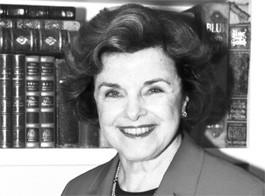
Serious business: Our investigation shows that Democratic senator Dianne Feinstein consistently breached ethical boundaries.

By Peter Byrne

In the November 2006 election, the voters demanded congressional ethics reform. And so, the newly appointed chairman of the Senate Rules Committee, Dianne Feinstein, D-Calif., is now duly in charge of regulating the ethical behavior of her colleagues. But for many years, Feinstein has been beset by her own ethical conflict of interest, say congressional ethics experts.

As chairperson and ranking member of the Military Construction Appropriations subcommittee (MILCON) from 2001 through the end of 2005, Feinstein supervised the appropriation of billions of dollars a year for specific military construction projects. Two defense contractors whose interests were largely controlled by her husband, financier Richard C. Blum, benefited from decisions made by Feinstein as leader of this powerful subcommittee.

Each year, MILCON’s members decide which military construction projects will be funded from a roster proposed by the Department of Defense. Contracts to build these specific projects are subsequently awarded to such major defense contractors as Halliburton, Fluor, Parsons, Louis Berger, URS Corporation and Perini Corporation. From 1997 through the end of 2005, with Feinstein’s knowledge, Blum was a majority owner of both URS Corp. and Perini Corp.

While setting MILCON agendas for many years, Feinstein, 73, supervised her own staff of military construction experts as they carefully examined the details of each proposal. She lobbied Pentagon officials in public hearings to support defense projects that she favored, some of which already were or subsequently became URS or Perini contracts. From 2001 to 2005, URS earned $792 million from military construction and environmental cleanup projects approved by MILCON; Perini earned $759 million from such MILCON projects.

In her annual Public Financial Disclosure Reports, Feinstein records a sizeable family income from large investments in Perini, which is based in Framingham, Mass., and in URS, headquartered in San Francisco. But she has not publicly acknowledged the conflict of interest between her job as a congressional appropriator and her husband’s longtime control of Perini and URS–and that omission has called her ethical standards into question, say the experts.

Insider Information

The tale thickens with the appearance of Michael R. Klein, a top legal adviser to Feinstein and a long-time business partner of Blum’s. The vice-chairman of Perini’s board of directors, Klein was a partner in Wilmer, Cutler & Pickering, a powerful law firm with close ties to the Democratic Party, for nearly 30 years. Klein and Blum co-own ASTAR Air Cargo, which has military contracts in Iraq and at Guantanamo Bay, Cuba. Klein also sits on the board of SRA International, a large defense contractor.

In an interview with this reporter in September, Klein stated that, beginning in 1997, he routinely informed Feinstein about specific federal projects coming before her in which Perini had a stake. The insider information, Klein said, was intended to help the senator avoid conflicts of interest. Although Klein’s startling admission was intended to defuse the issue of Feinstein’s conflict of interest, it had the effect of exacerbating it.

Klein said that he regularly gave Feinstein’s chief of staff, Mark Kadesh, lists of Perini’s current and upcoming contractual interests in federal legislation, so that the senator would not discuss, debate, vote on or participate in matters that could affect projects in which Perini was concerned. “Earmarks, you know, set asides, you name it, there was a system in place which on a regular basis I got notified, I notified her office and her office notified her,” Klein said.

“We basically identified any bid that Perini was going for and checked to see whether it was the subject of already appropriated funds or funds yet to be appropriated, and if it was anything that the senator could not act on, her office was alerted and she did not act on it.”

This is an extraordinary thing for Klein and the senator to do, since the detailed project proposals that the Pentagon sent to Feinstein’s subcommittee for review do not usually name the firms already contracted to perform specific projects. Nor do defense officials typically identify, in MILCON hearings, which military construction contractors are eligible to bid on upcoming work.

In theory, Feinstein would not know the identity of any of the companies that stood to contractually benefit from her approval of specific items in the military construction budget–until Klein told her.

Klein explained, “They would get from me a notice that Perini was bidding on a contract that would be affected as we understood it by potential legislation that would come before either the full congress or any committee that she was a member of. And she would as a result of that not act, abstain from dealing with those pieces of legislation.”

However, the public record shows that contrary to Klein’s belief, Feinstein did act on legislation that affected Perini and URS.

According to Klein, the Senate Select Committee on Ethics ruled, in secret, that Feinstein did not have a conflict of interest with Perini because, due to the existence of the bid and project lists provided by Klein, she knew when to recuse herself. Klein says that after URS declined to participate in his conflict-of-interest prevention plan, the ethics committee ruled that Feinstein could act on matters that affected URS because she did not have a list of URS’ needs. That these confidential rulings are contradictory is obvious and calls for explanation.

Klein declined to produce copies of the Perini project lists that he transmitted to Feinstein. And neither he nor Feinstein would furnish copies of the ethics committee rulings, nor examples of the senator recusing herself from acting on legislation that affected Perini or URS. But the Congressional Record shows that as chairperson and ranking member of MILCON, Feinstein was often involved in supervising the legislative details of military construction projects that directly affected Blum’s defense-contracting firms.

After reviewing the results of this investigation, Wendell Rawls, executive director of the Center for Public Integrity in Washington, D.C., observes that by giving Feinstein notice of Perini’s business objectives, Klein achieved the opposite of preventing a conflict of interest.

Rawls comments, “Sen. Feinstein has had a serious conflict of interest, a serious insensitivity to ethical considerations. The very least she should have done is to recuse herself from having conversations, debates, voting or any other kind of legislative activity that involved either Perini Corporation or URS Corporation or any other business activity where her husband’s financial interests were involved.

“I cannot understand how someone who complains so vigorously as she has about conflicts of interest in the government and Congress can have turned such a deaf ear and a blind eye to her own. Because of her level of influence, the conflict of interest is just as serious as the Halliburton-Cheney connection.”

Called into Question

Here are a few examples from the Congressional Record of questionable intersections between Feinstein’s legislative duties and her financial interests:

At a MILCON hearing in 2001, Feinstein interrogated defense officials about the details of constructing specific missile defense systems, which included upgrading the early warning radar system at Cobra Dane radar on Shemya Island, Alaska. In 2003, Perini reported that it had completed a contract to upgrade the Cobra Dane radar system. It has done similar work at Beale Air Force Base in California and in the United Kingdom. URS also bids on missile defense work.

In the 2002 MILCON hearings, Feinstein questioned an official about details of the U.S. Army’s chemical demilitarization program. URS is extensively involved in performing chemical demilitarization work at key disposal sites in the United States.

At that same hearing, Feinstein asked about the possibility of increasing funding for anti-terrorism-force protection at Army bases. The following year, on March 4, 2003, Feinstein asked why the antiterrorism-force protection funds she had advocated for the year before had not yet been spent. On April 21, 2003, URS announced the award of a $600 million contract to provide, among other services, anti-terrorism-force protection for U.S. Army installations.

Beginning in 2003, both Perini and URS were awarded a series of open-ended contracts for military construction work around the world, including in Iraq and Afghanistan. Under Feinstein’s leadership, MILCON regularly approved specific project “task orders” that were issued to Perini and URS under these contracts.

At a March 30, 2004, MILCON hearing, Feinstein grilled Maj. Gen. Dean Fox about whether or not the Pentagon intended to prioritize funding the construction of “beddown” maintenance facilities for its new airlifter, the C-17 Globemaster. After being reassured by Fox that these funds would soon be flowing, Feinstein said, “Good, that’s what I really wanted to hear. Thank you very much. Appreciate it very much, General.” Two years later, URS announced a $42 million award to build a beddown maintenance facility for the C-17 at Hickam Air Base in Hawaii as part of a multibillion dollar contract with the Air Force. Under Feinstein’s leadership, MILCON approved the Hickam project.

In mid-2005, MILCON approved a Pentagon proposal to fund “overhead coverage force protection” in Iraq that would reinforce the roofs of U.S. Army barracks to better withstand mortar rounds. On Oct. 13, 2005, Perini announced the award of a $185 million contract to provide overhead coverage force protection to the Army in Iraq.

In the 2005 MILCON hearings, Feinstein earmarked MILCON legislation with $25 million to increase environmental remediation at closed military bases. Year after year, Feinstein has closely overseen the environmental cleanup and redevelopment ofMcClellan Air Force Base near Sacramento, frequently requesting that officials add tens of millions of dollars to that project. URS and its joint ventures have earned tens of millions of dollars cleaning up McClellan. And CB Richard Ellis, a real estate company headed by Feinstein’s husband Richard Blum, is involved in redeveloping McClellan for the private sector.

This investigation examined thousands of pages of documents, including transcripts of congressional hearings, U.S. Security and Exchange Commission filings, government audits and reports, federal procurement data and corporate press releases. The findings were shared with contracting and ethics experts at several nonpartisan, Washington, D.C.-based government oversight groups. Danielle Brian, executive director of the Project on Government Oversight, a nonprofit organization that analyzes defense contracts and who examined our evidence says, “The paper trail showing Sen. Feinstein’s conflict of interest is irrefutable.”

On the face of it, there is nothing objectionable about a senator closely examining proposed appropriations or advocating for missile defense or advancing the cleanup of a toxic military base. Blum profitably divested himself of ownership of both URS and Perini in 2005, ameliorating the conflict of interest. But Feinstein’s ethical dilemma arose from the fact that, for five years, the interests of Perini and URS and CB Richard Ellis were inextricably entwined with her leadership of MILCON, which last year approved $16.2 billion for military construction projects.

Melanie Sloan, executive director of Citizens for Responsible Ethics in Washington, remarks, “There are a number of members of Congress with conflicts of interest. [California Republican Congressman John T.] Doolittle, for example, hired his wife as a fundraiser, and she skimmed 15 percent off of all campaign contributions. Others, like [former] Speaker [Dennis] Hastert and Cong. [Ken] Calvert were earmarking federal money for roads to enhance the value of property held by their families.

“But because of the amount of money involved,” Sloan continues, “Feinstein’s conflict of interest is an order of magnitude greater than those conflicts.”

Family Matters

Californians elected San Francisco’s former mayor Dianne Feinstein to the Senate in 1992. She was overwhelmingly reelected in November 2006. She is well-liked by both liberals and conservatives. She supports abortion rights and gun control laws. She politicked this year for renewal of the Patriot Act and sponsored a constitutional amendment to ban American flag burning. She is currently calling for President Bush to set a timetable for withdrawing troops from Iraq, but she strongly supported the invasions, occupations and “reconstructions” of both Iraq and Afghanistan. She sits on the Defense Appropriations subcommittee and the Senate Intelligence Committee, and she is a consistent hawk on matters military.

And she is wealthy. In 2005, Roll Call calculated Feinstein’s wealth, including Blum’s assets, at $40 million, up 25 percent from the year before. That made her the ninth wealthiest member of Congress. Feinstein’s latest Public Financial Disclosure Report shows that in 2005 her family earned income of between $500,000 and $5 million from capital gains on URS and Perini stock combined. From CB Richard Ellis, Blum earned between $1.3 million to $4 million. (The report allows for disclosure of dollar amounts within ranges, which accounts for the wide variance.)

A talented financier and deal-broker, Blum, 70, presides over a global investment empire through a labyrinth of private equity partnerships. His flagship entity is a merchant banking firm, Blum Capital Partners, L.P., of which he is the chairman and general partner. Through this bank, Blum bought a controlling share of Perini in 1997, when it was nearly broke. He named his close associate, the attorney Michael R. Klein, to represent his interest on the board of directors. Blum declined to comment for this story. Perini CEO, Robert Band, deferred to Klein for comment.

In 2000, according to public records, Perini–which partly specializes in erecting casinos–earned a mere $7 million from federal contracts. Post-9-11, Perini transformed into a major defense contractor. In 2004, the company earned $444 million for military construction work in Iraq and Afghanistan, as well as for improving airfields for the U.S. Air Force in Europe and building base infrastructures for the U.S. Navy around the globe. In a remarkable financial recovery, Perini shot from near penury in 1997 to logging gross revenues of $1.7 billion in 2005.

In December 2005, Perini publicly identified one of its main business competitors as Halliburton. The company attributed its growing profitability, in large part, to its Halliburton-like military construction contracts in Iraq and Afghanistan. But the company warned investors that if Congress slammed the brakes on war and occupation in the Middle East, Perini’s stock could plummet.

According to Klein and to public records, Blum’s firm originally paid $4 a share for a controlling interest in Perini’s common stock. After a series of complicated stock transactions, Blum ended up owning 13 percent of the company, a majority interest. In mid and late 2005, Blum and his firm took their profits by selling about 3 million Perini shares for $23.75 per share, according to Klein and reports filed with the SEC. Klein says Blum personally owned 100,000 of the vastly appreciated shares when they were sold. Shortly thereafter, Feinstein began calling for winding down the Iraq war while urging that the “global war on terror” continue indefinitely.

Perini

It is estimated that Perini now holds at least $2.5 billion worth of contracts tied to the worldwide expansion of American militarism. Its largest Department of Defense contracts are “indefinite delivery-indefinite quantity” or “bundled” contracts carrying guaranteed profit margins. As is all too common, competitive bidding was minimal or nonexistent for many of these contracts.

In June, Cong. Henry Waxman, D-Los Angeles, released a report by the House Committee on Government Reform criticizing the Pentagon’s growing use of bundled contracts. Waxman complained that these contracts give companies an incentive to increase costs. One of the “problem contracts” identified by Waxman was a no-bid, $500 million contract held by Perini to reconstruct southern Iraq’s electrical grid.

In fact, bundled military construction contracts fueled Perini’s transformation from casino builder to major war contractor. As of May 2006, Perini held a series of bundled contracts awarded by the Army Corps of Engineers for work in the Middle East worth $1.725 billion. Perini has also been awarded an open-ended contract by the U.S. Air Force for military construction and cleaning the environment at closed military bases. Perini shares that $15 billion award with several other firms, including URS.

Perini regularly performs military construction jobs from Afghanistan to Alaska. It built a biological warfare laboratory for the Navy in Virginia. It built fuel tanks and pipelines for the Navy in North Africa. Details of these projects are typically examined and approved or disapproved by MILCON.

At a 2001 MILCON hearing, Feinstein, attending to a small item, told Maj. Gen. Earnest O. Robbins that she would appreciate receiving an engineering assessment on plans to build a missile transport bridge at Vandenberg Air Force Base. He said he would give it to her. She also asked for and received a list of unfunded construction projects, which prioritize military construction wish lists down to the level of thousand-dollar light fixtures. While there is no evidence to point to nefarious intent behind Feinstein’s request for these details, it is worth noting that Perini and URS have open-ended contracts to perform military construction for the Air Force. The senator could have chosen to serve on a subcommittee where she had no potential conflict of interests at all.

In 2003 hearings, MILCON approved various construction projects at sites where Perini and/or URS are contracted to perform engineering and military construction work. The sites included: Camp Lejeune; the Underwater Systems Lab in Newport, R.I.; Hill Air Force Base, Utah; the Naval facilities at Dahlgren, Va.; projects at the Naval Surface Warfare Center in Crane, Ind., and Roosevelt Roads, Puerto Rico, and military bases in Guam, Diego Garcia and Crete.

There are some serious problems with Perini’s work in Iraq. In June 2004, the Government Accountability Office reported that Perini’s electrical reconstruction contract in southern Iraq suffered from mismanagement and lack of competition. In 2006, the Office of the Special Inspector General for Iraq Reconstruction found that Perini was paid to construct multimillion dollar electrical substations in the desert that could not be connected to the electrical grid. And the company was billing the government for purchasing and subcontracting costs that were not justified, according to the Defense Contract Audit Agency. An October 2005 audit by the Defense Department’s Inspector General criticized the execution of Perini’s cost-plus military construction work in Afghanistan, saying, “The contractor had an incentive to increase costs, because higher costs resulted in higher profit.”

URS & McClellan

URS dwarfs Perini. With more than 100 subsidiaries, it employs nearly 30,000 engineers and workers worldwide. The firm’s largest customer is the U.S. Army, from which it booked $791 million in work in 2005 out of a total revenue of $3.9 billion.

URS is not just a construction company; it also develops and maintains advanced weapons systems. In 2002, URS purchased weaponry firm EG&G Technical Services from the Carlyle Group, in which former President George H. W. Bush was a principal. But as profitable as its arms dealing division is, URS reports that its growth sectors are military construction, homeland security and environmental services for military sites under existing defense department contracts.

According to a database of federal procurement records made available for this investigation by Eagle Eye Publishers of Fairfax, Va., URS’s military construction work in 2000 earned it a mere $24 million. The next year, when Feinstein took over as MILCON chair, military construction earned URS $185 million. On top of that, the company’s architectural and engineering revenue from military construction projects grew from $108,726 in 2000 to $142 million in 2001, more than a thousand-fold increase in a single year.

As Congress gave the Bush administration the green light on military spending after 9-11, the value of Blum’s investment in URS skyrocketed. Between 2003 and 2005, URS’ share price doubled. In late 2005, Blum resigned from the URS board of directors, after 30 years as a member. Simultaneously, he sold 5.5 million URS shares, worth about $220 million at market price.

The Congressional Record shows that in year after year of MILCON hearings, Feinstein successfully lobbied defense officials to increase the budget for military base cleanup and redevelopment, especially at the decommissioned McClellan Air Force Base. The detoxification of McClellan is a plum job: it is estimated to cost $1.3 billion and take many years to complete. There is, of course, nothing unusual about a senator advocating for projects that improve environmental health, particularly when the project is in her home state; and the Pentagon is notoriously lax about cleaning up its Superfund sites.

It turns out, though, that URS specializes in environmental consulting and engineering work at military installations. It holds a $69 million contract to manage the cleanup of Hill Air Force Base in Utah, which was awarded in 2004. It has a $320 million contract to remediate pollution at U.S. Army bases in the United States and the Caribbean, which was awarded in 2005. And from 2000 to 2005, URS and its partners were paid $204 million for work at McClellan Air Force Base, according to Eagle Eye.

At a MILCON hearing in 2001, Feinstein cited the environmental work at McClellan as needing more money. “That is a base that I am very familiar with, and I am glad that we were able to provide that funding so that work at McClellan can proceed,” she said. Feinstein then asked for and received detailed information concerning the Pentagon’s projected schedule to finish the McClellan cleanup and the effect of delaying cleanup upon its potential for commercial reuse.

At a MILCON hearing in March 2002, Chairman Feinstein interrogated Assistant Secretary of Defense Nelson F. Gibbs:

    Sen. Feinstein. Is the Air Force capable of executing greater [cleanup] funding in 2003 at McClellan?
    Mr. Gibbs. Yes, ma’am.
    Feinstein. And how much would that be? How about $22 million?
    Gibbs. That would be very close. That would be almost exact as a matter of fact. . . . If you would like, I can provide for you a list of those individual projects.
    Feinstein. I would. If you would not mind. Thank you very much.

The next week, Gibbs sent Feinstein a memo showing the addition of $23 million to the McClellan environmental budget, mostly for groundwater remediation, URS’ specialty.

In the 2003 MILCON hearings, Feinstein told Dov S. Zakheim, then the Defense Department comptroller, that she “was really struck by the hit that environmental remediation [at McClellan Air Force Base] took. . . . However, I have just [received] a list from the Air Force of what they could use to clean up . . . McClellan, and one other base, and it is 64 million additional dollars this year.”

Dr. Zakheim replied, “Well, let me first say that I remember your concern last year, and I am glad that we took care of [McClellan]. That is important.” Feinstein remarked that the Pentagon had already spent $7 billion on environmental cleanup of closed bases, and that another $3.5 billion should be immediately allocated so that the clean bases can be transferred to the private sector. Demonstrating her grasp of technical details, she remarked, “I am particularly concerned with the dilapidated condition of the sewer line at McClellan that continues to impede significant economic redevelopment of the base.”

That is where CB Richard Ellis comes in.

The real estate firm is politically well-connected. Sen. Feinstein’s husband chairs the board of directors. Bill Clinton’s secretary of commerce, Michael Kantor, joined in 2004. Former Senate Majority Leader Thomas A. Daschle signed on in 2005. The firm specializes in consulting with local governments and developers from California to Puerto Rico on how best to redevelop cleaned-up military bases. It also brokers the sale and lease of redeveloped base lands to the private sector. Since Blum took over CB Richard Ellis, for example, the company has closed deals leasing tens of thousands of square feet of commercial space on cleaned-up portions of McClellan to private developers.

In a 2003 MILCON hearing, Sacramento County redevelopment official Robert B. Leonard told Feinstein, “We wanted to express our appreciation for your efforts over the last year in supporting our needs at McClellan.” During the five years that Feinstein led the subcommittee, support for the McClellan cleanup and the redevelopment deals were particular focuses of her attention.

URS declined to comment for this story. The sole comment that Feinstein’s office made in response to a series of written questions about significant facts reported in this story is that “Sen. Feinstein has never had any knowledge nor has she exercised any influence on the award of environmental cleanup contracts under the jurisdiction of the Military Construction Appropriations Subcommittee.”

Let the Sunlight In

Last week, the Senate voted to close some significant loopholes in its ethics rules. But it stopped short of creating an office of public integrity, which would independently monitor lobbyists and members of congress for ethical compliance. Setting her own limits on the extent of reform she will countenance, Feinstein says she is opposed to the creation of an independent congressional ethics watchdog. “If the law is clear and precise, members will follow it,” she assured the New York Times on Nov. 18, 2006.

The problem with the existing rules governing congressional ethics is that they are neither clear nor precise, and neither are they effective. Senate rules governing conflicts of interest are so vaguely worded, say government watchdogs, that short of stashing cash bribes in the refrigerator, the line between serving constituents and serving oneself is often blurred. The public record shows that Feinstein has a history of crossing that blurry line.

Charles Tiefer is a professor of law specializing in legislation and government contracting at the University of Baltimore in Maryland. He served as solicitor and deputy counsel to the House of Representatives for 11 years. He has taught at Yale Law School and written books on congressional procedures and separation of powers. Tiefer observes that, unlike the executive and judiciary branches of government, Congress does not have enforceable conflict of interest rules. It is up to Sen. Feinstein’s constituents, Tiefer says, to decide if she has a conflict of interest and to take whatever action they want. To make that possible, Feinstein should have publicly disclosed the details of her family investments in Perini, URS and CB Richard Ellis as they related to her actions on MILCON. Tiefer avers that when Klein gave Feinstein lists of Perini’s interests, he worsened her conflict of interest.

“The senator should, at a minimum, have posted Klein’s lists on her Senate website, so that the press and the public would be warned of her potential conflicts,” Tiefer says, noting that she should also make public her correspondence with the Senate Ethics Committee.

As the arbiter of Senate rules on ethics, it is incumbent on Feinstein to provide the public with an explanation of why she did not recuse herself from acting on MILCON details that served her financial interests, and why she failed to resign from the subcommittee after she recognized the potential for conflicts of interest, which, unfortunately, materialized in an obvious way and over a long period of time.

Research assistance for this story was provided by the Investigative Fund of the Nation Institute.



First Bite

Dear Thomas Keller: I will never forgive you for sending Napa Valley to the laundry for a permanent press so you could turn the leftovers into Little France. You are the culinary version of Christopher Columbus, whose “discovery” of America eventually led to the disappearance of the natives. But it’s finally time to buck up and grudge you some praise.

Mr. Keller, your comfort food restaurant, Ad Hoc, is really something. Or, shall I say: not some things. Not stuffy, not pretentious and, thanks to its temporary status until recently, not really for tourists. Now that it’s gone from temp to perm, it won’t be so far under the radar, but hopefully, it will still be not all those things for good.

I took my boyfriend there on a recent Saturday night, and I was impressed, because when I called to see if there would be a wait, someone actually answered the phone. And that someone was friendly!

At the bar, we realized we’d forgotten to bring our own wine (corkage $10) and chose instead from your well-rounded list–mostly wines from California, sprinkled with some New World and European. We ordered a glass of Fog Dog, a Sonoma Coast Pinot Noir ($10) and eucalyptus-tinged Altos los Hormigas Malbec from Mendoza ($8). I’ve heard you may be rethinking the bar area now that the restaurant’s here to stay, and I highly recommend supplementing your beer-by-the-bottle section with a few taps. But for that, Ad Hoc is the quintessential neighborhood restaurant.

Once at table, a relaxed but professional young waiter, dressed in a blue-collar-style uniform, handed us the day’s menu and came back a few minutes later.

“Does everything look OK?” he asked, which seemed kind of a funny formality in a restaurant where, baby, there ain’t no other choice!

Four courses ($45 single menu prix fixe) rolled out unhurriedly, one after the next. Escarole and green leaf salad served family-style came first, followed by roasted beef sirloin tip with black kale cooked in cola. The beef was buttery and juicy with a tiny bit of perfect char.

Drinking a glass of Les Clos des Paulilles, a Banyuls Rimage ($10), we took our time with the cheese course: Bellwether Farm’s pepato with cranberry and currant compote, which was like eating top-shelf cheesecake with cherry sauce. Finally, the blueberry and raspberry fruit tart was quite good, but I was too full to finish it.

Mr. Keller, thanks for a surprisingly relaxed meal that was still focused on quality. Maybe if you dropped the last course, more people would be able to afford to thank you. It would be a nice gesture, you know, for the natives.

Yours, Milo-Celeste Knutsen

Ad Hoc, 6476 Washington St., Yountville. Nightly changing menu offers one meal at a prix fixe $45. Dinner only, Thursday-Monday. 707.944.2487.


View All

Quick-and-dirty dashes through North Bay restaurants. These aren’t your standard “bring five friends and order everything on the menu” dining reviews.

Letters to the Editor

January 24-30, 2007

animals and antioxidants

Yes, pomegranate juice is healthful and tastes great ( Jan. 17). But if you’re going to drink it, please avoid the POM Wonderful brand. POM pays for cruel experiments on animals in an attempt to prove that pomegranate-flavored juice is good for us. The Food and Drug Administration has told us these tests aren’t required by any law. They aren’t even applicable to people. In one study, experimenters lowered the brain oxygen levels in newborn mice to cause them brain injuries—even though human and rodent brains differ significantly in structure and function. In another experiment, erectile dysfunction was supposedly studied in rabbits. But as these animals, unlike human males, don’t experience erectile problems, experimenters artificially created symptoms with sudden and painful balloon injuries of the rabbits’ arteries. If you buy POM, you’re helping to support these atrocities. Try Naked Juice and Frutzzo brands instead. These companies provide delicious pomegranate juice without harming any animals. See www.POMHorrible.com for more.

Melissa Karpel, Studio CIty

Write to the troops!

We are writing from Mr. Turton’s third-grade class at Trinity Christian School in Sacramento. We are writing to ask for your help. We have been studying letter-writing, and we sent letters to soldiers in Iraq and Afghanistan. We hoped to send encouragement to them. We felt bad, though, that we could only send 15 letters (that’s how many of us there are). We want to do more!

We have set a goal of collecting 2,500 letters to send to our troops overseas. We are asking that you print our letter and ask your readers to write a letter to a service member and send it to use to forward to serviceman or -woman. So far, we have had our letters published in more than 20 newspapers in 12 states and have already received more than 300 letters in response! We are asking that those who write a letter include an extra stamp and envelope to cover postage. The troops love to hear about sports teams, school, family and anything else that would remind them of home. Please help us communicate that we are thinking of them often.

Thank you in advance,
Mr. Turton’s 3rd Grade Class
5225 Hillsdale Blvd.
Sacramento, CA 95842

As easy as impeachment

I went to a forum on impeachment last week and learned what impeachment is. Mentioned in several places in the Constitution, impeachment is a methodical legal process that can be accomplished in just six months. The House Judiciary Committee draws up “Articles of Impeachment” for the whole House to debate and vote on each article. If a majority is for conviction, the House is done. The Senate then holds a trial for which it is the judge and jury. A two-thirds majority votes for conviction can result in removal from office. It’s not a rash or radical process, nor is it a criminal trial. It is about abuse of office. State legislatures can bypass the House and also introduce impeachment. Local city resolutions can push this along. Already a hundred cities have petitioned the House to begin impeachment of the president and vice-president. The list of abuses and offenses (criminal and otherwise) of Bush and Cheney are too long to list here.

T. S. Siegel, Santa Rosa

Dept. of Corrections

While we’re certain it will come as a heartbreaking surprise to those who pay huge private premiums for their services, Kaiser Permanente is in fact a not-for-profit institution; it just feels for-profit, as we erroneously last week (“Briefs,” Jan. 17).

Talking about health-insurance premiums naturally makes one long for a martini (and a lovely ciggie), but we’re shaken to admit a terribly bitter part to our recent hard-hitting martini reportage. The extra dry Bridgette Selvig of Sonoma writes with chilly zest to restir the proper homage to the winner of last year’s People’s Choice winner in the ’06 Martini Madness Contest ( Morsels, Jan. 10). In a twist, it was the Carneros Bistro with their Effen Good Black Cherry Martini that went straight up with the people, not Murphy’s Irish Pub. (Pssst: recipe sadly not included, Bridgette!) Murphy’s scored the Judge’s Award, a sober honor indeed. We apologize for muddling it up.

The ed.
High on the fumes


Write of Passage

Living in Oblivion

0

music & nightlife |

Ab fab: Auger shaped boomers’ memories.

By Bruce Robinson

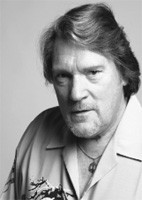
With 30-plus albums to his credit and a career that stretches back to the dawn of the early British Invasion, Brian Auger could be forgiven if he chose to simply rest on his considerable laurels. But even at age 67, the energetic jazz-rock organist, composer, arranger and bandleader will have none of that.

“I haven’t managed to cure myself of wanting to play live,” Auger says wryly over a cup of tea, speaking from his Southern California home. “It’s always been the thing I liked best. I could spend my time in the studios here, but that would probably bore me to the point where I’d stop playing.”

It helps that these days road work is a family affair. The current edition of his band, Oblivion Express, features his 31-year-old daughter Savannah as the primary vocalist, inheriting the role, and some of the songs, once associated with Brian’s noted former musical partner, Julie Driscoll. Her older brother, Karma, is not only the drummer for the group, but has served as engineer and producer for his father’s more recent recordings.

“He kicks me around in the studio, tells me, ‘Dad, you can play better than that. Go and do it again,'” Auger laughs. “He’s generally right.” Auger and Oblivion Express come to the Mystic on Jan. 26.

Although Auger is not quite a household name in America, his anonymous fingerprints can be found on some baby boomers’ musical memories. He contributed the icy harpsichord to the first Yardbirds hit, “For Your Love.” And the version of Bob Dylan’s “This Wheel’s on Fire” he recorded with Driscoll and his early band, the Trinity–a 1968 smash in most of Europe, even if it was ignored on this side of the Atlantic–is now familiar to millions as the theme music from the BBC comedy, Absolutely Fabulous.

He can even lay claim to assembling the first British supergroup, Steampacket, which also included Driscoll, and blues shouter Long John Baldry, guitarist Peter Green, drummer Mick Fleetwood, and yet another up-and-coming singer by the name of Rod Stewart.

In 1965, Auger recalls, “there was really nothing like that on the circuit, and the Steampacket was an immediate smash. The only drag on it was that Rod had a manger, I had a manger and John had a manager, and the managers argued for the life of the band about whose label any recording should come out on. And finally we really didn’t record anything.”

After about a year, the group splintered, with Auger and Driscoll forming the Trinity. “The idea behind the Trinity was to try and make a bridge between the separate scenes of rock and roll and R&B and jazz,” Auger says, “because a lot of jazz player were purists and said, ‘Oh, this rock and roll stuff is just absolute rubbish.’ It wasn’t rubbish, but it was in its early infancy, so in terms of harmony, people were using three and four chords to make music. I had a lot more at my disposal than that, so what I tired to do was build a bridge using the current rhythms with a guitar player, a singer and some good tunes with a positive message and also firing solos on the Hammond that none of the jazz guys could argue with. That really was the recipe for the Trinity.”

Despite his early days as a jazz pianist, Auger is best known for his muscular work on the Hammond B-3 organ, an instrument he adopted soon after he first encountered it. “I was wandering past my record store in Shepherds’ Bush Market, and I heard this sound coming out over the speakers in front of the shop, this amazing sound,” he recalls. “I stood there for a moment in shock, then I ran in and said, ‘What is this you’re playing?’ And they showed me this cover: Back at the Chicken Shack, a Jimmy Smith album.” It wasn’t long before Brian had acquired his own organ, and “Back in the Chicken Shack” became a regular part of his live sets.

These days, however, the set lists draw heavily on his early recordings, both with the Trinity and the original Oblivion Express, though more recent material is mixed in, too. “I’ve done different arrangements of everything to keep them current,” Auger says, “and it’s great to have my kids with me and to have a really blazing band.

“I’m having probably the best play that I think I’ve ever had.”

Brian Auger’s Oblivion Express rolls into the Mystic Theater on Friday, Jan. 26. Local jam faves Plum Crazy open. 8pm. $20; 16 and over. 707.765.2121.


FIND A MUSIC REVIEW

The Byrne Report

January 24-30, 2007

Until the day she visited the Morgue, Irene Beltrán had lived in angelic ignorance, not from apathy or stupidity but because ignorance was the norm in her situation.
–Isabel Allende, Of Love and Shadows

One of my favorite authors, Isabel Allende, resides in Marin County. How lucky we are to have her in our midst. Of course, her books reside everywhere that people read, so the whole world is lucky. Like so many others, I admire Allende because she creates in her fiction a true picture of human reality. Her novels investigate real life with a journalistic flair. They are more true as accounts of human suffering and its causes than the mainstream media articles that typically sanitize stories about poverty, oppression, patriarchal excess, war atrocities and business agendas–smothering emerging political fire with a foam of disinformation.

Like her mother and so many others of her social class, she escaped into the orderly, peaceful world of the fashionable neighborhoods, the exclusive beach clubs, the ski slopes, the summers in the country. Irene had been educated to deny any unpleasantness, discounting it as a distortion of the facts.

When the gruesome video of Saddam Hussein’s lynching popped up in cyberspace, I clicked on it with heavy heart. Witnessing Saddam’s death in the same dark, squalid chamber where he murdered his political enemies when he was America’s friend, I saw beyond the cold-blooded extinguishment of one man. For I do not avert my eyes from seeing the American-sponsored horror that streams daily out of Iraq, Gaza, Beirut, Afghanistan and the Abu Ghraib Archipelago. I have seen the photographs of weeping mothers and stone-faced fathers carrying the limp bodies of children killed by hellfire missiles manufactured in “Christian” America.

In my life, I have seen hundreds of photographs of murdered bodies piled up in anonymous mounds inside the morgues of Baghdad, Kandahar, Mogadishu, Panama City, Managua, Guatemala City, San Salvador, Santiago and on and on. And every time I see them, my heart shudders. And I must see them, because if I refuse to see them, then I am without a heart, without a sense of humanity, without a moral being.

Irene had lived surrounded by the gales of hatred, but remained untouched by them behind the high wall that had protected her since childhood. Now, however, her suspicions had been aroused, and making the decision to enter the Morgue was a step that was to affect her entire life.

The photographs of children being burned alive by American napalm dropped on Vietnamese peasant villages galvanized millions of people around the world to protest and fight for the American withdrawal from that bomb-blasted country a quarter century ago. Our military-informational complex learned a lesson in media-management from the overexposure of the Vietnamese genocide. You will be hard-pressed today to find a major media outlet running photographs of the dismembered Iraqi children we kill for profit. But make no mistake, it is our “angelic” indifference to genocide that fuels genocide. Yes, Bush, Cheney, Rumsfeld, Wolfowitz, Powell and Rice will answer to history for their crimes against humanity, but so will we commodity-satiated Americans who have become adept at hiding from political responsibility behind manufactured ignorance. The truth is we do not want to see real dead children on our televisions.

She had never seen a dead body until the day she saw enough to fill her worst nightmares. She stopped before a large refrigerated cellar to look at a light-haired girl hanging on a meat hook in a row of bodies. . . . Horrified, she stared at the extensive marks of beatings on the body, the burned face, the amputated hands. . . . When she left Irene Beltrán was no longer the same; something had shattered in her soul.

In Allende’s novel, the heroine, Irene Beltrán, who is a journalist, bravely documents a series of political murders performed by North American-approved militarists. Her story, supported by grisly photographs, sparks a rebellion against a Latin American oligarchy. Because Beltrán opens her eyes and dares to report what she actually sees, reality changes for the better.

So often, I hear from people, “Sure, it is horrible what we are doing in Iraq, but I am powerless, I can do nothing.” Learn from Allende: That is not true! When we do nothing, we are doing something. And just as every flutter of a butterfly’s wings matters in the cauldron of global weather that creates both hurricane and Elysian breeze, so does every protest against injustice matter. When we open our eyes and dare to shout, we make a difference, even if it is only to our children. And, believe me, they are watching.

or


Ask Sydney

January 24-30, 2007

Dear Sydney, I have two friends right now who are having terrible times in their relationships caused by their snooping through their husband’s things. In both cases, they found very hurtful evidence of infidelity. One was having a full-blown affair, and the other was having a very flirty relationship with someone from his work. (No real damage was done, but who knows where things might have gone if his wife hadn’t read those e-mails.) Honestly, I would have to say they were happier before! I know it’s important to know the truth, but does that make it OK to pry through someone’s private things? They both feel justified in what they have done, but I can’t help wondering, was it worth it?–Flummoxed

Dear Flummoxed: There is something distinctly disturbing about being lied to, and though the truth can be wickedly painful, many people would prefer the slap in the face of reality than to live the humiliating life of the deceived. Being deceived, especially in love, has a bottom-of-the-barrel, scraping-the-algae-off-of-the-face-of-despair tone to it that few want anything to do with. Does this mean that the truth is worth it? Not necessarily. Sometimes, the things we lose in the face of truth are irreplaceable, and the damage done by a lie uncovered can be far more devastating than if the act had passed unnoticed. After all, who among us has not done something, in the heat of some form of passion, that we later regret? Who among us has never lied? On the other hand, the truth often provides a vehicle for accelerated personal growth. It’s possible that by bringing these issues into the open your friends may be forced into a more authentic existence.

As for prying, unless it’s to save a life, it is not OK to go through someone else’s things. If you want to know the truth, then you should ask, and if the person lies to you, that’s their prerogative. I guarantee that if you explore your loved one’s personal effects–be it a journal, a phone conversation, an e-mail or a letter–you are likely to find something that you will not like. No matter how tempting it might be to pry–and, oh, it is tempting!–we must all try our best to resist. There are other ways to find out the truth, ways that are not nearly so circumspect or likely to be misconstrued.

People have different boundaries in their relationships in regards to privacy. Some couples share an e-mail address; others would not even consider it. Even in times of strife, it is still your obligation to adhere to the agreement that you have with your partner in regards to personal space. Chances are, the e-mail love affair would have amounted to naught and was just a little blip in a moment of weakness that would have been better left undiscovered, and that the infidelity would have made itself known, eventually, because infidelities usually do. It’s in their nature.

Dear Sydney, I was driving home from work when I passed a strange animal on the road. It was a fox with its head stuck in a Frito Lay potato chip bag. This poor animal was disoriented and dangerously close to the road. I had to get the bag off its head, so I did what any good citizen would do, I took a redwood branch and got the bag off. The little fox dashed away. Why can’t people be more conscious about what they do with their garbage?–Sick of the Trash

Dear Sick: Sometimes garbage ends up on the road by accident. A chip bag can fly out of someone’s car window or be dragged from a garbage bin and then discarded by a raccoon. We live in a time where packaging has become an integral part of our existence. In fact, if we humans had to choose between an end to electricity or to no more packaging, we might actually have to a pause for a movement to consider. Until the day someone invents a machine that can consume and render all garbage into organic compost, I’m afraid that it is not just our little foxes that are in danger of getting their heads stuck in the bag, but all of us.

Dear Sydney, I’m in a lesbian relationship, and this has happened to me more than once: A guy befriends my girlfriend and becomes friends with both of us, but in the end it seems like he’s just trying to get down my girlfriend’s pants. Then I feel betrayed, and the friendship has to come to an abrupt end. I feel like if I was a guy, this wouldn’t even come up. Do you think that men would be more respectful of our relationship if we were heterosexual?–Disappointed

Dear Disappointed: What makes you think that if you find your girlfriend so attractive that you want to sleep with her every night, someone else might not as well? Unless the offender has confessed his desire at the onset of your friendship, then you have no way of determining exactly when he began to feel the need to remove your girlfriend’s clothing. Maybe it crept up on him. His initial intentions might not have been sleazy or in anyway covert. There are definitely men who, when told “I have a girlfriend,” will shrug their shoulders and say, “That’s cool, you want to go out anyway?” But there are also men who will say that to a woman when she says she has a husband. If this wasn’t the case, then heterosexuals would never cheat on each other. But they do.

The fact is, as a lesbian, you will be dealing with people who are disrespectful of your relationship all of the time, and not because they want to fuck your girlfriend, either, but because they don’t understand you. Just be happy that your guy friend appreciates you for who you are, and don’t be so quick to throw away an entire friendship simply due to a little misplaced desire. He’ll get over it. Of course, you could request that your girl start dressing in a gunny sack and stop washing her hair, but what would be the beauty in that? Not too many guys would bother with a full-blown friendship, just to nab a married dyke. My guess is, he probably really likes you.

No question too big, too small or too off-the-wall.


Go Boom

0

January 24-30, 2007

Duke Ellington once remarked that there are only two kinds of music in the world: good music and bad music. A highly subjective scale by which to judge, to be sure, made all the more amusing by the routine spectacle of music fans, and jazz fans in particular, leaning into each other on the street in front of clubs, arms flailing wildly, arguing pointlessly about a certain musician’s ability to connect to the elusive spiritual unknown.

I know, because I was that guy–until I became a captive audience to the lines outside jazz clubs and overheard the debates native to that rare locale. It’s funny how we often won’t recognize our most irritating characteristics until we witness them displayed flagrantly by someone else, blathering loudly that, say, Pharoah Sanders is “really digging deep” or that James Carter is “a bag of tricks with no feeling.”

As much as jazz fans love to talk about depth and feeling, there’s really only one underlying question that determines if jazz is good or bad: Does it sound good?

To run with the example, let’s look at the great Pharaoh Sanders, whom none other than John Coltrane called a “large spiritual reservoir, always trying to reach out to truth”: most of his recordings simply don’t sound that good, ruined either by vocal warbling, electric instrumentation or excessive “exotic” accompaniment. Conversely, James Carter, perennially criticized by jazz intellectuals for selling sizzle instead of substance, has made a string of dazzling and largely listenable albums, with only one or two missteps along the way.

The difference boils essentially down to context–Carter performs primarily with a traditional small combo. It suits him very well, and it’s important to know that. In jazz, it’s been common to misguidedly focus on an individual instrument and thus bypass the overall sound. By several degrees of separation, that’s how we wound up with Kenny G as the bestselling jazz artist of all time.

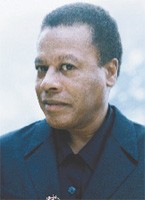
Context isn’t everything, naturally, but it is this key element that brings us to Wayne Shorter, who performs Feb. 3 at the Marin Center. Shorter is an inarguably brilliant titan of the tenor saxophone, a masterful composer of the classics “Nefertiti,” “JuJu” and “Footprints,” among many others, and a surviving member of the golden age of Blue Note Records. He also, for some unknown reason, made lousy-sounding jazz music for almost 30 years.

From the young kid in New Jersey who got his start playing with Horace Silver and Art Blakey to the jazz legend of today, Shorter can be heard in a variety of settings, the bulk of which do him little justice. Think about it: when you reach for a Wayne Shorter album, do you grab 1964’s Speak No Evil with Elvin Jones and Herbie Hancock, or do you pull out 1975’s Native Dancer with Milton Nascimento and Airto Moriera? Both albums feature well-crafted compositions with fine playing, but Speak No Evil still holds up 40 years later, while Native Dancer belongs in the dustbin of early smooth-jazz dreck.

Shorter made his name in the legendary Miles Davis quintet of ’64-’68, a period which will probably always be regarded as his creative apex. But soon thereafter his muse was deterred (and his wallet lined) by the ’70s electric-fusion ensemble Weather Report, a group of musician’s darlings who proved that you should never listen to what a musician tells you. The 1980s were such a low-water mark for Shorter that he largely disappeared from the studio throughout the next two decades.

So when Wayne Shorter put together a traditional quartet at the turn of the century and recorded Footprints Live!, his first all-acoustic jazz album since the early 1960s, the welcome shock prompted an outpouring of honors among the jazz cognoscenti. Signaling not only a return to form but, yes, also to a wealth of depth and feeling, Shorter wasted no time making full use of the open space afforded him by the acoustic format. Its studio follow-up, Alegría, continued the thrust, and last year’s Beyond the Sound Barrier ranks alongside the saxophonist’s best work of the 1960s.

Wayne Shorter is back in the game.

Shorter has thoughtfully kept the same working group intact, and it is this group he will be appearing with in Marin, comprising drummer Brian Blade, pianist Danilo Pérez and bassist John Pattitucci. Such all-star sidemen would be a godsend for any leader, but for Shorter, who plays upon their vast dynamic abilities to staggering advantage, the fresh context is a pathway to unbridled imagination.

“I’m at a point,” Shorter recently declared, “where I’m just going to say, ‘To hell with the rules.’ That’s all I’m doing with the music now. I’m 71, I’ve got nothing to lose now. I’m going for the unknown.”

Wayne Shorter and his quartet perform on Saturday, Feb. 3, at the Marin Center, 10 Avenue of the Flags, San Rafael. 8pm. $25-$55. 415.499.6800.


Taking It on the Shins

January 24-30, 2007Give up any Garden State allusions. While the Shins' newest disc, Wincing the Night Away--the quartet's first release since 2003's exceptional Chutes Too Narrow--shows their infectious '60s pop sensibilities to be intact, it is musically and lyrically dampened by Portland rain clouds."Sleeping Lessons" kicks the record off with a circular, flashback-ready vibraphone that reaches its unrelenting, guitar-throbbing...

In with the Old

January 24-30, 2007Forget eating locally, because Europe is all the rage--or at least the European Authentic Taste is. Begun in 2004 under the direction of the European Union as an effort to educate the American trade in identifying and appreciating authentic, high-quality and traditional European foods and beers, the program known informally as EAT is sweeping the specialty-food stalls....

Senator Warbucks

Serious business: Our investigation shows that Democratic senator Dianne...

First Bite

Letters to the Editor

January 24-30, 2007animals and antioxidantsYes, pomegranate juice is healthful and tastes great ( Jan. 17). But if you're going to drink it, please avoid the POM Wonderful brand. POM pays for cruel experiments on animals in an attempt to prove that pomegranate-flavored juice is good for us. The Food and Drug Administration has told us these tests aren't required...

Living in Oblivion

music & nightlife | Ab fab: Auger shaped boomers'...

The Byrne Report

January 24-30, 2007Until the day she visited the Morgue, Irene Beltrán had lived in angelic ignorance, not from apathy or stupidity but because ignorance was the norm in her situation.--Isabel Allende, Of Love and ShadowsOne of my favorite authors, Isabel Allende, resides in Marin County. How lucky we are to have her in our midst. Of course, her books...

Ask Sydney

January 24-30, 2007 Dear Sydney, I have two friends right now who are having terrible times in their relationships caused by their snooping through their husband's things. In both cases, they found very hurtful evidence of infidelity. One was having a full-blown affair, and the other was having a very flirty relationship with someone from his work. (No real damage...

Go Boom

January 24-30, 2007Duke Ellington once remarked that there are only two kinds of music in the world: good music and bad music. A highly subjective scale by which to judge, to be sure, made all the more amusing by the routine spectacle of music fans, and jazz fans in particular, leaning into each other on the street in front...
11,084FansLike
4,446FollowersFollow
6,928FollowersFollow