
While scientists question the ability of food to loosen the libido, why not conduct some Valentine’s Day experiments of your own with these five reported aphrodisiacs?
Asparagus Given its phallic shape, asparagus is frequently enjoyed as an aphrodisiac food. Feed your lover boiled or steamed spears for a sensuous experience.
Almond A symbol of fertility throughout the ages. The aroma is thought to induce passion in a female. Try serving marzipan (almond paste) for a special after-dinner treat.
Figs An open fig is thought to emulate the female sex organs and was traditionally regarded as a sexual stimulant. Serve fresh black Mission figs in a cool bowl of water as it is done in Italy and be sure to eat with your fingers.
Pine nuts Zinc is a key mineral necessary to maintain male potency, and pine nuts are rich in zinc. Serve pine nut cookies with a dark espresso for a stimulating dessert.
Vanilla The scent and flavor of vanilla is believed to increase lust. According to the Australian Orchid Society, “Old Totonac lore has it that Xanat, the young daughter of the Mexican fertility goddess, loved a Totonac youth. Unable to marry him due to her divine nature, she transformed herself into a plant that would provide pleasure and happiness.”
Quick dining snapshots by Bohemian staffers.
Winery news and reviews.
Food-related comings and goings, openings and closings, and other essays for those who love the kitchen and what it produces.
Recipes for food that you can actually make.
Blues on Tap

Volker Strifler surveys the Nutty Irishman, a faintly lit, clamorous lounge on the industrial side of Santa Rosa, before sliding with me into one of its well-worn booths and sweeping some leftover crumbs from the vinyl table covering. He flips open a menu with all the dry routine of a daily regular, glances at it for a moment and puts it down. “I don’t know why I even look at this thing,” he says. “I have it memorized by now.”
In addition to being a regular at this dark haunt, Strifler is a triple-threat guitarist, singer and songwriter who has just released one of the most richly satisfying blues albums in years, the highly acclaimed Dance Goes On. The Volker Strifler band perform Feb. 10 at the Last Day Saloon.
Instantly impressive from start to finish, the album has a polished sheen that remains rooted in the same well-worn soul that makes places like the Nutty Irishman tick. Strifler reclines in casual jeans and a sweater to talk about his new album, and around the restaurant relics of the past abound: wood paneling, bird’s-eye photos, mesh hats atop grizzled faces.
“I have a lot of respect for things that over time get lost,” he says, harking back to pioneers like Howlin’ Wolf, Robert Johnson and Muddy Waters. “I really respect what these guys did with what they had to work with, considering a lot of the technology that’s here now. Every time something gets invented, there’s something gained–but there’s also something lost.”
Through his refusal to succumb (“Be creative with the technology, don’t let the technology create you,” is how he puts it), The Dance Goes On is a pristinely organic listening experience. But it’s Strifler’s songwriting that elevates his sound. These are expertly crafted songs that achieve the near-impossible feat of not only creeping into the brain but under the skin, borrowing from every decade, not just the classic blues era of the 1940s.
“It’s certainly worth preserving,” Strifler notes of the traditional style that he was raised on. “But if you limit yourself to imitation, you’re not really bringing much progress to the music. I don’t think you’re really keeping it alive, you’re just painting a nice picture of it. It is important to keep developing the music.”
A good example of this is “On a Day Like Today,” a tune that starts out with a finger-plucked intro and a low, guttural lyric about surrender–basic blues stuff. Two minutes later, the drums kick in, the horns and Hammond B-3 organ are blaring, and Strifler works over his guitar like an amphetamine-addled extra from Derek and the Dominoes’ Layla sessions. Even hard-line traditionalists would admit that it kicks at least a little bit of ass.
Strifler, now 44 and a permanent resident of the United States, spent his childhood in Heidelberg, Germany. He didn’t start playing music until he sold his motorcycle and bought a guitar at the age of 17, after he and two friends, Claus and Stefan, discovered that being in a band led to girls. They played a lot of rock and roll (“UFO, Scorpions, the Sex Pistols, whatever was happening”) until an American ex-G.I. who married a German woman hired them as a backup band for American blues songs.
“He introduced us to that particular style,” Strifler recalls, “and it immediately stuck.”
When he turned 22, Strifler moved across the Atlantic, leaving his friends behind–and for the last two decades he’s continued to play with them almost every year, airfare be damned. “There just was that connection that’s really hard to find,” he says of his transcontinental allegiance. “I had a really hard time finding the same thing here, that same connection.”
Strifler breaks into a smile; his food arrives. “This is their idea of a salad,” he asides, motioning to his plate of iceberg lettuce tossed with fried potatoes and blanketed with strips of steak. He digs in and keeps talking.
“I really, really wanted to have a band here that would play the music,” he stresses. “It took me a while to decide on who to ask, and I got lucky–everybody I asked said yes.” It doesn’t hurt that Strifler, who has long been a member of the Ford Blues Band, supporting brothers Robben, Pat and Mark Ford onstage and in the studio. He had more than a few friends to ask.
And indeed, with contributions from his old childhood pals Claus and Stefan, the band for The Dance Goes On is top-notch. Strifler’s first-round draft picks include drummer Gary Silva (on loan from Charlie Musselwhite), David Shrader and Carl Bowers on horn, local veteran Don Bassey on bass, and Chip Roland (whom Strifler calls “the heart and soul of things”) on organ and piano.
Witness the album’s title track, where a single-chord ambience supports Strifler’s spectral snapshot of a preacher’s counsel, a devil’s temptation and a flattened lizard in the hot sun. As to its film noir shadings, Strifler nods. “I love that style of filmmaking, and I love that style of music. Anything from the ’60s junky jazz to the new Tom Waits stuff.”
Threaded throughout the rollicking blues tumble of “Angel,” the Willie Dixon-penned “Evil”–for which Strifler wrote an updated lyric about Iraq–and the Kenny Burrell-flavored soul-jazz instrumental “Shuffelupagus” is a passionate drive, peppered with stunning technique. “I don’t want to limit myself to just constructing blues songs or trying to stay within that idiom,” Strifler says, “and I don’t have a set plan.”
“It’s more like, I have an idea, and I try to go with it,” he adds. “I try not to let myself be limited by, ‘Oh, I can’t do this, because that’s not the way B. B. would have done it.’ I just let it go, and hopefully good things come out.”
The Volker Strifler Band perform on Saturday, Feb. 10, at the Last Day Saloon. 120 Fifth St, Santa Rosa. 10pm. $8-$10. 707.545.2343.
Accidental Bigamists
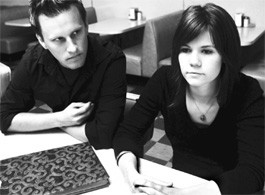
Love the one you’re with: Some 80 percent of California divorces are DIY affairs, meaning that many people are not as divorced as they might think.
By Patricia Lynn Henley
North Bay court officials are discovering that the DIY, Home Depot attitude of “I’ll just do it myself and save money” has spread to a number of other areas, including divorce.
“Unfortunately, it gets a little more complicated than installing a door,” says Stephen Bousch, Napa County’s court executive officer. “Doors have to be done right, too, but you have a lot longer-reaching consequences if divorces aren’t done right. Roughly 80 percent of family law matters in this state involve at least one self-represented litigant.”
North Bay court procedures are rapidly evolving to clean up a backlog of permanently pending divorce cases in order to prevent what are known as “accidental bigamists”–people who file the first round of divorce paperwork and think that’s all there is to it, only to discover their error after they’ve remarried in another state or country. Or they attempt to remarry in California, which requires legal proof of divorce before issuing a marriage certificate, and end up scrambling to legally end their old marriage before taking new vows.
Cameras from the Good Morning America television show recently filmed in Marin County, where an 18-month-old pilot program has cleared up a backlog of about a thousand unfinished divorces.
“What we found was that we had lots and lots of cases that were languishing on the shelves that weren’t moving along to a conclusion,” explains Kim Turner, Marin County’s court executive officer. Realizing something needed to be done, Judge Lynn Duryee set up what’s known as the self-representing litigants calendar. Spouses from those stalled divorce cases were contacted. If they had reconciled and wanted to stay married, court officials wished them well and closed the file. Those who still wanted their marriage dissolved or who thought they were already divorced were given a court date to discuss what was necessary to make everything legal. Volunteer attorneys, mediators and court staff were on hand to help with any details that needed clearing up. If possible, a divorce was granted that same day or another court date was scheduled to help the ex-couple get everything finalized.
With the divorce backlog eliminated, Marin officials are determined not to have the same problems again.
“Our new system is wonderful,” Turner enthuses. “We’ve implemented what we call ‘case management.’ We never let these cases go off calendar; we always give them the next date.”
Divorce litigants are told to always attend their court date even if they haven’t done everything needed to move to the next step. During each hearing they’re given guidance and referrals to keep the process on track. “These cases never go completely off calendar and onto the shelf until they’re resolved,” Turner explains.
The program is highly successful and a national model of how to make the court system more accessible and work better for the average individual. In Napa County, Bousch says, a similar program started Jan. 1, aimed at helping self-representing divorce litigants reach their goal.
“The philosophy of courts is changing,” Bousch says. “Because of the cost of accessing justice, it has disenfranchised a portion of the population. The courts have to act to provide access. In every county in this state, you’ll see a family-law facilitator whose role is to help anyone who has custody or visitation matters get access to the courts.”
Napa’s self-representing litigants program is in place for new divorce cases, with detailed information listed online at www.napacourt.com. Bousch is researching what sort of resources will be required to start whittling away at the county’s backlog. Napa County handles about 400 marriage dissolutions each year; for initial paperwork filed in the five-year period between Jan. 1, 2000, and Dec. 31, 2004, about 395 petitions are still stalled in “pending” status. “It’s not just here,” he adds. “This is a national phenomenon.”
The websites for the Marin, Napa and Sonoma County court systems all link to the state’s EZ file system which lets people download all the required divorce paperwork.
In Sonoma County, if a divorce isn’t finalized after five years, notices are sent to the people involved. If they still want a divorce–or think they are already divorced–they’re given a court date to talk about their case with a judge. Numbers aren’t available as to the number of backlogged divorce cases in Sonoma, but the county is considering a more aggressive assistance program, such as those operating successfully in Marin and Napa counties.
Divorce is complicated, and if it’s not done properly, it’s a mess, says Ronit Rubinoff, executive director for Sonoma County Legal Aid, which runs the self-help legal center on Sonoma County property.
“We have lots of people who come in to get remarried and discover they thought they were divorced 10 years ago but they never were,” Rubinoff says. “There’s a lot of misunderstanding about what it takes. The law makes it a lot more difficult to divorce than to get married.”
Ask Sydney
Dear Sydney, I’m writing to suggest polyamory (responsible non-monogamy) as an ethical alternative for your “Needing Options” reader. Our culture’s monogamy rules are relatively new in the course of human history. Also, there are very few mammals, or other animals, birds, fish, etc., that are monogamous. Polyamory requires support, just like any form of committed relationship. There are books, workshops, tapes, etc., where this support is available. Polyamory is much more holistic than the old “swinging” practices which some people may remember with discomfort, and more responsible than the “free love” of the ’60s and ’70s. High levels of personal integrity are essential to successful polyamorous relationships. We humans have much larger love-filled hearts than we’ve been conditioned to believe.–Polly
Dear Polly: First of all, I’d like to apologize for not printing your entire letter here, but the space constraints insist. By suggesting that “Needing Options” keep her oh-so-desirable friend at an arm’s length, I did not mean that she should turn her back on her own bliss. Monogamy is a choice, one that works for some and not for others. As you point out, polyamory could be a viable option to turning her back on the draw of her friendship. I merely meant to encourage “Needing Options” to change the rules of her relationship first, rather then breaking them. And if she doesn’t want to risk the changes this would inevitably bring about, then she probably shouldn’t risk fucking around. In any case, polyamory seems to work very well for some people, and thanks for bringing it to our attention. It’s so easy to think within the box, while remaining oblivious to the fact that we are in one.
Dear Sydney, it looks like, after two and half years, by boyfriend and I just aren’t right for each other. I think we could break up and remain friends, but the hard part is, even though we have separate cabins, we do live on the same property. Neither of us can afford to move. We have already broken up a few times, but we always manage to get back together. I hate to say it, but I think part of the reason we get back together is just due to proximity. Do you have any suggestion for how to deal with this?–Seesaw
Dear Seesaw: Chances are you will eventually get tired of the emotional nightmare that is the on-again, off-again relationship, and you will either break up for good or decide to stay together. In either case, sometimes you have to be willing to sit back and let the thing run its course. Really get it out of your system. Once you do, you will be ready to commit to a course of action and then stick with it. There is a simple test you can perform, however, if you want to establish once and for all whether or not you can handle breaking up and living in proximity. One of you has to start dating someone else. As soon as this happens, you will have the information you need to know whether you are, in fact, capable of being good friends. If either one of you fails this test, then you have to face reality, which is this: move. No matter what it takes, no matter how daunting the prospect may seem, you can do it, and ultimately you will be much happier for it.
Dear Sydney, I’ve been with my partner for going on nine years, and I think she doesn’t like to have sex–or at least not with me. I understand the normal ebb and flow of long-term-relationship attraction, but lately (i.e., the last three years) our sex life has gone to pot. I am the only one who initiates, and though I feel like I do all the “right” things (sensual touching, massage, foreplay, oral stimulation, etc.), she doesn’t seem into it, or at least not as much as I am. She says she only cums with a finger, which over time I feel at peace with, and I usually manage to give her an orgasm before or after I do, and yet I just don’t feel like she’s satisfied and reeling with contentment. Is this just the fact of a long-term relationship and I should just get over it and be happy I’m getting any at all, or do you think it’s something else? Please help.–Giving It but Not Getting It
Dear Giving: The two factors that most commonly define an intimate relationship are intertwining finances, and sex. Consequently, most couples have the majority of their friction and misunderstanding around sex and money. Taking it personally will never help you. Women do not have the benefit (or at, times, the curse) of having testosterone coursing through their bodies. But you’re stuck with the girl, low sex drive and all, probably because you love her. Many women have ebbs and flows in the levels of their sexual desire, and though they will often demand that you “prove” your love and valiant intentions before sex, it’s likely that they just aren’t in the mood. In fact, they may be trying to make it as difficult for you as possible in hopes that you might decide to forget the whole thing and turn in early.
Don’t be daunted by this apparent lack of desire, and focus your positive energy on when she needs you most. Find out when she’s the horniest. For most women, this “horny” time begins immediately after her period and escalates to her ovulation date (any guess of why that could be?), at which point it tapers off dramatically. Leave her alone during her off times, that way, when she hits her “horny” time, she’s going to want you more.
Most of us long to feel wanted, and the fact that our desires for each other do not always match up is a painful one, but it’s also, for a variety of ever-shifting reasons, unavoidable. It’s not unsolvable, however, so don’t try to just “get over it”; that implies giving up. Just don’t forget what it means to have fun. The more fun you can bring into your sex life, the better. And if you wait patiently, and she just never gets that glint in her eye, then buy her an herbal aphrodisiac at the health-food store, and a vibrator, in order to prove how far you are willing to go to make her feel good. Everyone has fantasies, she’s probably just not telling you hers. See if you can get her to confide, and then you’d better be willing to fulfill.
No question too big, too small or too off-the-wall.
Identity Theft

What is he, a director or a pervert? It’s for him to know and us to find out. In Inland Empire, David Lynch studies the fear, rage and sorrow in the distorted face of a woman. Watching with the same keen observation with which Picasso studied his weeping mistress Dora Marr, Lynch is interested in Laura Dern’s contorted face from an aesthetic angle. And Dern’s emotions are the central obsession that drives this supremely baffling antifilm.
In Inland Empire, the rangy blonde plays at least two different characters: a great movie star with a butler, and a raspy street prostitute with a steel tooth. Dern keeps you watching through unfathomable twists and turns and miles of bafflement, and deserves the award for best actress.
It would take at least three viewings to make up a coherent explanation of what’s going on in Inland Empire. Ultimately, some sort of a diagram will turn out to be more useful than a description. Lost Highway was a Möbius strip, Mulholland Drive was a pair of asymmetrical loops. What’s this one shaped like–an asterisk?
In the mansion of actress Nikki Grace (Dern), a new neighbor comes to visit. (“Neighbor” is a loaded word in Lynchese; it’s what Frank Booth called Jeffrey in Blue Velvet.) With the poisonous insinuation of Bela Lugosi, the neighbor (Grace Zabriskie), starts to interrogate Grace about her new movie. And then she starts to relate an old folktale about the origin of evil: it was a little boy’s reflection that one day walked off with a life of its own.
Inland Empire‘s largest loop begins as Nikki commences work on a new film, starring as an adulteress in On High with Blue Tomorrows. Her co-star (Justin Theroux) is the supposedly irresistible actor who always seduces his leading ladies. It looks like history will repeat itself, despite the fact that Nikki’s husband has a lethal reputation that scares everyone in the industry. And then On High‘s director (Jeremy Irons) has to spill the beans: the movie is based on a never-completed Polish movie that, er, killed its stars.
During the early stages of production, On High with Blue Tomorrows changes. The sets come to life and swallow Nikki up whole and transport her to some place in L.A.’s trackless suburbs, the Inland Empire. With the help of Lynch’s usual team of retainers, Aphasia and Amnesia, the actress morphs into a snarling Hollywood Boulevard whore called Susan Blue. Fictional character that she is, Susan seems to know she’s in a movie within a movie, and so she mocks Nikki: “I’m a whore!” Susan howls derisively. “Where am I? I’m soooo scared!” (This certainly could be read as a parody of Charlize Theron in Monster, or perhaps any fancy that a pampered actress could understand what a street hooker goes through.)
Even after he moved away from linear narrative, Lynch’s films used to suggest which way the power was flowing. Previously, there was some idea of cause and effect. In Inland Empire, one clue is the tale of a circus and one of those B-movie mentalists who can hypnotize an innocent into killing.
It is tragic that the director who gave us the fragrantly erotic surfaces of Blue Velvet and Mulholland Drive is reading film the riot act. (“I’m through with film as a medium. For me, film is dead,” he writes in his new book, Catching the Big Fish.) Inland Empire brings out previously unseen ideas of what one can do with the small camera. There have been exciting moments in digital film: the flat patches of haunted darkness in The Blair Witch Project, the fields of flood-lit color in Bubble, the nimbus of goldenrod light around Chloë Sevigny’s head in julien donkey-boy.
All these films seem mostly serendipitous compared to what Lynch achieves with a far from state-of-the-art Sony PD-150. The grain, the stuttering image when the camera is tracked, and the flurrying specks in dim light are perfect for an exercise in trying to re-create what’s seen by the eye of the subconscious.
Inland Empire is a long version of the dream sequences we usually have to pay for with a dull movie. And in this dim, threatening format, Lynch appears to be leading the pack instead of following it.
‘Inland Empire’ opens on Friday, Feb. 9, at the Rafael Film Center, 1118 Fourth St., San Rafael. 415.454.1222.
New and upcoming film releases.
Browse all movie reviews.
Certain Age
The 2007 Sex Issue:
Hot 13 Challenge | Sex Way After 60 | Words for Loss | Sex & Travel
Photograph by Brett Ascarelli
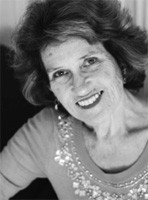
Ageless sexuality: Joan Price is the beautiful face of senior sex.
By Brett Ascarelli
Last fall, ABC Nightline sent a crew to Sebastopol to interview author Joan Price about seniors, sex and dating. Price, a former high school teacher turned fitness author and guru, fell in love a few years ago, drawing media attention when she claimed that she was having the best sex of her life. In 2006, she released Better Than I Ever Expected: Straight Talk About Sex After Sixty (Seal Press; $15.95), already in its second printing. The book features interviews with “sexually seasoned women,” experts’ advice about keeping the nethers in shape and Price’s own musings on the challenges of being a sexy senior. The book’s popularity spawned a related blog, in which Price moderates discussions about sex for the mature set (www.betterthanieverexpected.blogspot.com).
ABC aired its Nightline interview with Price in December, and she was happy with the segment. But she was not happy about the backlash. After the show ran, two shock jocks on XM Satellite Radio started a minor crusade against her project to promote sexual well-being among 60-pluses.
One recent afternoon at her Sebastopol house, the 4’11” Price is wearing a rhinestone-covered blouse and Mary Janes. No wonder she’s getting some; at 63, she’s super-fit, thanks to a frequent work-out regimen and what must still be damn good metabolism, given the chocolate cookies she’s munching.
Perched on a director’s chair in her den, Price laments how the radio ne’er-do-wells lampooned her “old lady sex blog,” to which seniors had written with hardly laughable concerns–sex after prostate cancer, for one. Sickly titillated and perhaps insecure about their own success between the sheets, the station’s listeners posted their own sophomoric thoughts to the blog.
“I had to delete 40 comments that were unbelievably obscene and nasty,” says Price, “and it made me see that society still not only sees this one little area–age and sexuality–as ludicrous and horrible and worthy of denigrating to that extent, but that they see older people as ‘the Other.'”
But the insults only rallied her supporters. One Bonnie posted to her blog: “We’re all seeing you as the beautiful face of senior sex, who turns up whenever the age group is ridiculed.”
In many respects, Bonnie is right. Price is a poster-adult for the cause and now fields sex-related questions from mature adults at workshops across the country.
“I call myself an advocate for ageless sexuality,” Price laughs, “but maybe I’m trying to do more than that: I’m trying to change society one mind at a time, I guess.”
Decrying what she calls “the ick factor”–the way society boos seniors’ sexuality–Price wonders why our culture equates youth with beauty. “We’re seen as sort of a throwaway generation,” she puzzles.
What will it take for society to change its ageist attitude toward sex?
“I think it will take men who go after younger women really looking at what that’s about for them,” Price says. “Is it that they are looking for their eternal youth? Is it that even though they have wrinkles, they think wrinkles aren’t sexy? Well, then what do they see in the mirror?”
Doctors should take initiative to ask their older patients about sexual challenges they may be encountering, Price also counsels, rather than waiting for patients to ask.
On a lighter note, “Why not have Boomer Idol,” she suggests, “and have people in their 60s belting out songs. I would love to see that!”
That may sound silly, but if the media featured more older women in love, then everyone–not just the intolerant jocks from XM and their ninny followers, but also you and me–could get used to it and get over it. Thanks to Cole Porter, we know that birds do it, bees do it, even overeducated fleas do it. Well, apparently oldsters do it, too.
And, so what?
“I think it will be easier [for women in the future] and,” Price warns, “especially if younger people pay attention to what we’re going through now and don’t see us as the Other, but just as themselves in a few decades.”
Joan Price reads from and discusses her ‘Better Than I Ever Expected: Straight Talk About Sex After Sixty’ on Saturday, Feb. 17, at Pleasures of the Heart, 1310 Fourth St. (at C Street), San Rafael. 2pm. Free. 415.482.9899.
Museums and gallery notes.
Reviews of new book releases.
Reviews and previews of new plays, operas and symphony performances.
Reviews and previews of new dance performances and events.
First Bite
Before I even step foot inside the new Go Fish in St. Helena, I’m prepared to like this restaurant. How could I not? The upscale seafood emporium is über-chef Cindy Pawlcyn’s latest endeavor (she of the beloved Mustards Grill and Cindy’s Backstreet Kitchen). Her partners here are top talents in their own rights, with Victor Scargle as executive chef (recently lured away from COPIA’s Julia’s Kitchen) overseeing the kitchen and Ken Tominaga (owner of Hana Japanese Restaurant in Rohnert Park) running the sushi bar.
As soon as I’m shown my seat, I think: I’m going to enjoy this dinner.
“We’ve reserved a very special, VIP table for you,” the hostess says, directing my companion and me to an elegant banquette done up in crisp white linen, nautical blue fabric and yellow striped pillows. She’s fibbing, I imagine, but service is so smooth that my pal and I do feel pretty fancy, sipping our Iron Horse Viognier ($10 a glass) and studying the menu with its array of daily fresh catch, plus seasonal specialties like black cod, haddock and Dungeness crab.
I order fish and chips ($9) and announce, “This is fun.” My buddy agrees. Pawlcyn and crew have done a fine job of mixing comfortable with classy, in both dishes and ambiance. Throw on some jeans and stop in for a grilled tuna burger ($15)? We could do that. We’d be just as appropriate dressing up and dining on day boat scallops with Sonoma foie gras ($27).
The “fish” is rich, properly oily fried smelt, and the “chips” are lovely little potato matchsticks of crispy, salty bliss. Next, my pal and I nibble on tiny but perfect portions of house-cured salmon ($12) dotted with crème fraîche and rolled into miniature chive blinis. We marvel at how, even as the eatery fills up with chatty diners, the noise never bothers.
Ordering entrées is a challenge. It all looks so appealing. My companion goes for an elegant classic of sautéed sole, the silky fish ($18) accented with fennel purée and lemon caper brown butter. I tuck into a clever riff on surf and turf ($26), pairing a petite chunk of ahi with cubes of firm, crisped veal sweetbreads paired with wild mushrooms, leek rosti (potato pancake), ruby port sauce and, in the only misstep of the evening, quite a bit too much salt.
Dessert arrives, and I wonder, why don’t more chefs create such jewels as Go Fish’s light-as-air quince doughnut, paired with fragrant lemon verbena panna cotta and huckleberry compote ($7)? Probably because so few have the talent to pull it off as exceptionally as this.
We pay the remarkably reasonable bill and leave, already scoping out seats for our next Go Fish meal. It’ll be at the 16-seat sushi bar, where we’ll start with a rainbow roll ($18). Then, we’ll move into a tasting platter of oysters, clams and a choice of prawns, crab or lobster ($21). We definitely want the lobster, shrimp and shiitake wontons in spicy ginger-scallion broth. And what will dessert be? We haven’t decided yet. But we do know this: We’ll like it.
Go Fish, 641 Main Street, St. Helena. Open for lunch and dinner daily. 707.963.0700.
Quick-and-dirty dashes through North Bay restaurants. These aren’t your standard “bring five friends and order everything on the menu” dining reviews.
News Briefs
Return of the cactus
A “wandering” cactus is once again rooted in the garden of the Pancho Villa restaurant in Fairfax. More than five feet tall and weighing over 100 pounds, the barrel cactus was dug up in broad daylight on Sunday, Jan. 28. Fuzzy images of the thieves and their truck were captured on videotape from a security camera. Originally planted in the 1970s, the cactus is valued at $5,000. Restaurant owner Kelly Medina studied the videotape for clues, posted bilingual “missing” fliers, put a lost-and-found notice on Craigslist.org and filed a police report. She also drove around looking for pickups similar to the one on the video. Finally, police received a tip that a cactus matching the description was in the front yard of a San Rafael home, wrapped in a blanket and tarp. Medina accompanied police to the site and identified it as her cactus. The home’s residents and neighbors say they have no idea how it got there. Medina’s landscaper brought the cactus home, and it’s thriving. Medina is installing an additional security camera on that side of the building. “We’re just happy that it’s back and that we can go about our business, instead of looking for the cactus,” she says.
Hooray for Habitat
There’s jubilation at the Solano Napa Habitat for Humanity, because after a four-year search the group has a potential site to build an affordable home on E Street in Napa. “It’s been difficult to find a place to build [in Napa],” says Solano Napa Habitat president Steve Brothers. Habitat has built 11 homes during its 10 years of operating in Solano County, but this is its first possible building site in Napa. Because of the long delay, the group started Napa-based participation in the national Habitat’s Home in a Box program, raising about $8,000 of the $75,000 needed to preconstruct the framework for a house and ship it to a community ravaged by Hurricane Katrina. It turns out one of the committee members for that project owns property in downtown Napa. If the land can be subdivided, Habitat now has an option to buy one parcel and build a house on it. They’ll need to raise money both to purchase the property and for permits and construction costs. Brothers says a community meeting will be held in March, to discuss both the Home in a Box project and the potential Napa building site. These aren’t the only steps forward for Habitat in the North Bay. The San Francisco Marin group is addressing neighbors’ concerns about parking and traffic for four affordable three-bedroom homes in an unincorporated area between Mill Valley and Tiburon. These will be the first Habitat homes in Marin County. And Sonoma County Habitat is finishing up the last of six homes being built in the Roseland area on the edge of Santa Rosa, bringing Sonoma County’s Habitat total up to eight new homes and 18 remodels since 1984. Habitat homeowners provide 500 hours of sweat equity and make principal-only mortgage payments (the homes aren’t free). “They’re just regular American residents,” explains Amy Lemmer of Sonoma County Habitat for Humanity.
Open Mic
Sometimes, we just didn’t get the right folks.
–Gen. Jay Hood, Commander, Guantanamo Bay, January 2005, commenting on the detainees held at Guantanamo prison
It has now been five years since the first detainees were brought to the U.S. Naval Base at Guantanamo Bay, Cuba. My client, Muhammed Qasim, has been detained there for nearly four years without charges. I think about Commander Hood’s comment every time I travel to Guantanamo to see Muhammed, a gentle, 30-year-old man with a deep penetrating gaze.
In the years before Guantanamo, Muhammed supported his mother and sister on their small family farm in Zormat, Afghanistan. He raised vegetables and cattle to feed the family, and sold any surplus in the local market. As he sits shackled before me in the dry heat of Camp Echo, thousands of miles away from his family farm, he dreams of waking up in his bed in Zormat and discovering that the last four years have just been a nightmare.
Late at night on Feb. 7, 2003, Muhammed says that U.S. and Afghani troops took him from his home at gunpoint. Someone in his village–Muhammed still does not know who–had said he was with the Taliban. The U.S. military in Afghanistan was passing out fliers offering to pay a $500 to $5,000 bounty to identify anyone connected with the Taliban. In a culture rife with long-standing feuds, many named personal enemies as a profitable and safe way to settle old scores.
Muhammed says that is what happened to him. The government has no physical evidence. The U.S. forces found no guns, rockets or anything else connected with the Taliban in Muhammed’s home when they took him away, but it makes no difference. Evidence is not required. The government will not even identify his accuser.
Based only on the whispered word of an unidentified person in Afghanistan, Muhammed has been held for nearly four years as an “unlawful enemy combatant” at Guantanamo prison along with about 500 others. After the Supreme Court ruled in 2004 that the detainees have the right to challenge their detention, the government established Combatant Status Review Tribunal. These tribunals accord the detainees no genuine rights.
Muhammed appeared before such a tribunal in 2004. He was not allowed to see any evidence. He had no right to have a lawyer with him. He had no meaningful right to present evidence to show that he was not connected to the Taliban or to call witnesses to testify on his behalf. His only right was to make a statement. The tribunal ruled that he was an “unlawful enemy combatant.”
Case closed.
Muhammed has not been charged with any crime. He will never have a trial, even before a Military Commission. This means he has even fewer rights than the handful of detainees at Guantanamo who have been charged with war crimes. They at least get a Military Commission trial. Yet the government claims the right to hold Muhammed at Guantanamo “indefinitely.”
Muhammed’s one hope for challenging his detention is habeas corpus. Habeas corpus is a fundamental right older than our Constitution, renowned in our history as “the Great Writ.” It is the right to compel the government to justify in court why it has imprisoned someone. But Congress and the president last fall abolished that right for all those, like Muhammed, held as unlawful enemy combatants.
Muhammed’s only hope now is that Congress will either repeal the law abolishing habeas corpus, or that the Supreme Court will strike it down. In the meantime, Muhammed waits and wonders what has become of his sisters and mother and their family farm. And he hopes the U.S. someday soon will wake up and end this long nightmare called Guantanamo.
David L. McColgin, Esq., is part of a team of attorneys and investigators in the Federal Community Defender Office in Philadelphia who have agreed to represent detainees held at Guantanamo Bay at the request of the Federal Court in Washington, D.C.The Byrne Report will return next week.
Wine Tasting Room of the Week
This year’s ZAP Zinfandel Tasting was big in all the usual ways. Wineries by the hundreds. Two pavilions full of purple-toothed acolytes. Mountains of cheese. Go with America’s Heritage Grape and you go big.
But big ain’t what it used to be. Some may still vaunt their “monster” Zins, but though high in proof, dark tannic bogs of writhing flavonoids they are not. Possibly to the benefit of all parties, the varietal is being honed down to its medium-bodied, consumer-friendly incarnation, something like a spicier version of Merlot. Extraordinary Zinfandels may really be as rare as angels’ visits (or demonic possessions), but I do miss the concentrated purple nightmares of yore.
So why do my barbarian taste buds flip 180 where it concerns the subtle, pale-red Zins of Harvest Moon, a boutique family winery in the Russian River Valley? The Pitts family sold grapes for decades until their thirty-something son returned to the farm and started vinting. Their modest, comfortable tasting room showcases estate-grown Zinfandel and Gewürztraminer. Harvest Moon Zins do seem to show their distinct charms from year to year. Is it the time-consuming vineyard practices of multiple harvests of each row–what winegrower Randy Pitts calls “shaving” the vineyard–and all the other diligence and love that’s put into these small-lot wines?
Love is the theme of Harvest Moon’s 2005 Randy Zin, their least expensive ($18), grab-and-go party-pleaser with a fun label, the winery’s black sheep with blackberry fruit and fiery spice (a few minutes out of the bottle dissipates a slight initial greenness, I’m guessing from the addition of Syrah). The 2004 Russian River Valley ($24) has the signature rosewater and cranberry character, while the 2003 Pitts Home Ranch Estate ($32) adds a whiff of toasted coconut and an even more demure finish. It’s still the 2002 Russian River Valley ($24) that hints best at that fleeting strawberry scent that enchanted me in the first place.
You might expect the 2006 Late Harvest Zinfandel ($32) to be syrupy, with overripe, raisiny fruit. You’d be wrong, deliciously so. The heady perfume is of raspberry and roses, fresh-baked pastry and the silky texture of–hey, is that wine just over two months old? They like to bring out chocolates to pair with your second go at the easy drinking treat, although I needed no more convincing to snap up a bottle for a dark winter’s evening. For a warm summer’s evening, there are the unique Gewürztraminers: a dry, a sparkling and a peaches and cream bathed in vanilla cream soda–I mean, dessert.
Harvest Moon Estate & Winery, 2192 Olivet Road, Santa Rosa. Open daily from 10:30am to 5pm. 707.573.8711.
Morsels
Blues on Tap
Ask Sydney
Identity Theft
Certain Age



