First Bite

There’s no pissing off the exceptional waiter at Cork, Sausalito’s premier wine and tapas bar. We didn’t mean to, but we tested him. We took ages deciding what to get, mispronounced the French names on the menu, retracted and changed our orders, and through it all our man, a tall and soft-spoken fellow, wouldn’t stop smiling.

He started us off with a glass of wine each, the Kendric Vineyards 2004 Syrah ($12) and the 2003 Corbiere ($9). The Syrah boasted an excellent finish, smooth as a polished oak, while the Corbiere was a bit tart around the edges. Perhaps a properly placed cheese or chocolate could have smoothed it out. Anyway, what you can expect for nine bucks a glass?

My party of two began with the sweet date crostini ($6), four small baguette slices spread thickly with rich mascarpone cheese, chopped dates and clover honey, all arranged on a vast white plate. The appetizer was a faultless combo of sugary sweetness, slight sourness and the crunch of toasted bread.

To follow we ordered the Brussels sprouts salad ($9), a dainty little heap of greenery and pecorino cheese. Where I come from, any salad with neither nuts nor avocado has (a) got some serious explaining to do or (b) needs to think extra hard about its dressing. But this indolent little plate came drizzled with only lemon juice and ground pepper. We finished it with six swipes of the fork and pushed onward into the night.

Next came truffled goat cheese fondue ($10), a smart little setup of melted cheese in a mug mounted on a wire rim over a burning candle and ringed with apple slices and bread for dipping. Tasting faintly of earth, smoke and must, the cheese had indeed been truffled.

We called now for the avocado, pesto and three cheese panini ($8), then changed our minds and cancelled the order five minutes after the sandwich went in the oven. Anyone else would have been annoyed, but our fine waiter remained seemingly happy and pleased.

I told him we’d rather go with the artisan cheese sampler ($18), along with a glass of 2003 Sutton Cellars Pinot Noir ($10). He got busy arranging this dish, the greatest concentration of nourishment available at Cork. He delivered it minutes later with a gracious bow, and we gazed in awe over the deluxe spread of Spanish goat cheese, Vermont cheddar, Marin triple crème, Dutch Gouda and Italian Gorgonzola, all of which shared the plate with bread, almonds, dried apricots, cranberries and prunes.

The afternoon had slipped into the evening, and the Saturday-night crowd began to trickle in the door. The bar filled up and the cool, dark interior began to come alive. With our bellies crammed with cheese and a bike ride across the bridge still in store for us, it was time to pay the bill and go. Our dignified waiter had been remarkably hospitable, so we tipped him well.

I hope it didn’t come off as cheap or garish of us.

Cork Enoteca, 317 Johnston St. (at Bridgeway), Sausalito. Open Wednesday-Monday, 4-11pm. 415.332.2975.


View All

Quick-and-dirty dashes through North Bay restaurants. These aren’t your standard “bring five friends and order everything on the menu” dining reviews.

Me, You & Everybody

0

music & nightlife |

It happens for a reason: British power-pop quintet Gomez ain’t no damn jam band.

By Alan Sculley

Going into the making of How We Operate, the latest CD from Gomez, the British band had legitimate reason to feel it was an important record in the group’s decade-long career.

“I guess it’s kind of a re-establishing ourselves, because people haven’t been hearing about us in the way they should have been,” drummer Olly Peacock says. “There’s been a kind of unfortunate loss of contact with a lot of people, so it’s got to be something that kind of stands out and grabs people by their collars and maybe pulls them back in.” Gomez work to pull us all in when they play the Mystic Theater on Feb. 19.

Creating a buzz for How We Operate would be a welcome development for Gomez, considering that, as Peacock suggests, the band has had to fight an uphill battle to get its CDs heard lately.

In September 2004, Gomez split with their American label, Virgin Records, over frustration with what the band members perceived as the label’s indifference over the band’s music. The situation turned sour in spring 2004, when, just before the release of the group’s fourth CD, Split the Difference, Virgin and its parent company, EMI, closed Hut Recordings, to which Gomez was signed in the United Kingdom. The move essentially left Split The Difference dead on arrival–not a new experience for Gomez, unfortunately. The group’s previous CD, Under Our Gun, had also suffered when Virgin had major layoffs around the time the CD was released.

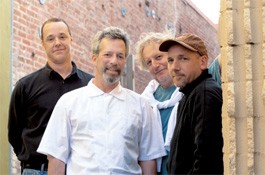
Such setbacks have undoubtedly stunted the momentum of a band that made a major splash at the outset of their career, particularly in England. The band formed in the late 1990s in Southport, an English town near Liverpool, when lifelong friends Ian Ball (vocals, guitar, harmonica) and Peacock teamed up with guitarist and singer Tom Gray and bass player Paul Blackburn. Guitarist and singer Ben Ottewell completed the lineup a short time later.

The band’s first CD, 1998’s Bring It On, immediately put Gomez on the map. It went platinum in Britain and earned the prestigious Mercury Music Prize (Britain’s equivalent of a Grammy) for Album of the Year, besting such respected counterparts as the Verve, Massive Attack and Pulp.

How We Operate has a markedly different personality than Split the Difference, which has a more rootsy and organic overall sound, as the band strip back and emphasize acoustic instrumentation on songs like “Notice,” “Hamoa Beach” and “See the World.”

According to Peacock and Blackburn, some of the musical direction came from wanting to simplify the instrumental treatment of the songs and concentrate on making sure they were strong at their core. “I think we’ve always written good songs,” Peacock says, “but sometimes it’s been a little bit hidden away; there’s too much going on.”

The songs on How We Operate have been finding their way into Gomez’s live set. But the band figure to draw from their entire catalogue live and rework and improvise songs on a nightly basis as well. This, Peacock says, keeps the shows alive for both the band members and fans. “It’s always just nice to reinterpret songs to freshen it up,” he says. “If you’ve got a song from the first album you like, we’ve played the song a lot. Let’s do something different. People are always pretty accepting of it. There’s nothing worse than to go to a live show, and it’s just exactly the same as the CD.”

Gomez keep it fresh on Monday, Feb. 19, at the Mystic Theater. 23 Petaluma Blvd. N., Petaluma. Singer-songwriter Joe Purdy opens. 8pm. $25; 18 and over. 707.765.2121.


FIND A MUSIC REVIEW

Stage Two

0

February 14-20, 2007

Thousands of people crammed downtown Santa Rosa’s plazas and sidewalks last winter, waiting with palpable anticipation. Spectators leaned over railings, craned out of second-story windows and climbed trees to get a better view. And then a chorus of shrieks and cheers trumpeted their arrival: the brilliantly colored peloton, a cluster of nearly a hundred of the world’s best cyclists, shot into view.

Reaching speeds almost double the city’s posted limits, pumping their muscular legs and jostling for position, the pack circled Santa Rosa’s downtown three times, each circuit building up waves of excitement that carried the elated spectators ever higher.

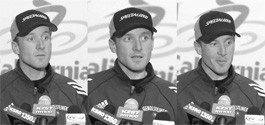
Just about everyone was pulling for the same rider: hometown hero Levi Leipheimer. Based in Santa Rosa for the past decade, the Montana native has finished as high as sixth in 2005’s Tour de France, cycling’s most prestigious race.

Leipheimer, 33, kicked off last year’s inaugural Tour of California by winning the prologue, a 1.9-mile course in San Francisco, and then set his sights on finishing first in the next stage which ended in Santa Rosa. Making the turn into the final circuit, riders in jerseys of emerald green, sherbet orange and scarlet fought for space at the front of the peloton. And then it was over in a photo finish, with most spectators unsure who won.

A racer who excels at steep climbs, the 5-foot-7 Leipheimer didn’t finish first that day on the relatively flat course. But he was close enough to retain his overall lead. After the top three finishers received their kudos, the race announcer brought Leipheimer onto the podium to present him with a fresh golden jersey (awarded to the overall race leader at the end of each stage), and the crowd roared with adulation.

Leipheimer approached the mic, but the cheers were so loud and sustained that he couldn’t get a word in. After several minutes, the adoring throng calmed down, but by then Leipheimer was so overcome with emotion he was speechless.

Almost a year later, Leipheimer remains overwhelmed by the memory. “Awesome,” was how he described that day in a December interview. “It was one of the best days of my career. I couldn’t believe the number of people who came to Santa Rosa.”

The Santa Rosa stage wasn’t the only success in the weeklong race that took the world’s elite cyclists from San Francisco through the North Bay, then to the Big Sur coast en route to Los Angeles. More than a million people caught at least a glimpse of the race–1.3 million according to race organizers–making it the best attended sports event in California last year.

This year’s event–which begins on Sunday, Feb. 18, with a prologue in San Francisco, moves on to the Sausalito-Santa Rosa stage on Monday, Feb. 19, and concludes in Long Beach on Feb. 25 (see “All the North Bay’s a Stage” sidebar)–promises an even more demanding course. The race has been expanded to 650 miles (from about 600 last year), and organizers have created a route that has more challenging hills to go along with the time trials. To add more drama, the most significant time trial–when racers start separately and race against the clock; the one with the fastest time wins–has been moved to Stage 5, later in the race than last year.

This year, the Stage 1 course includes the rigorous climb from Bodega Bay over Coleman Valley Road into Occidental. This is the kind of ascent that Leipheimer craves; his only disappointment is that the race doesn’t conclude at the top of the hill or shortly thereafter.

The reason? Even if Leipheimer puts some distance between himself and the pack, the other riders have plenty of miles to catch up. There are some other steep climbs in the tour; about 12 miles after the Stage 2 start in Santa Rosa, the riders will face the seemingly vertical Trinity Road ascent, tackling the ridge the divides Sonoma and Napa counties, one of the most grueling climbs of the race. Again, this comes too early for Leipheimer to sustain any gain during the stage, which ends in Sacramento.

But don’t think for a moment that Leipheimer is complaining about the race. He’s thrilled to have a world-class cycling event in the United States, and especially gratified that it’s in his own backyard. “I still think it’s a great race,” he told me in December, “the highest quality race the U.S. has ever seen.” And not just a great race for the fans, Leipheimer noted, saying, “Riders in Europe were talking about it for a month.”

In Europe, where cycling has millions of passionate fans, Leipheimer is used to being recognized in public. That doesn’t happen as much stateside, but he’s becoming well known in the North Bay and was blown away by the number of fans exhorting him during the race.

“It definitely motivates you when people cheer for you,” Leipheimer said, noting that many fans recognized him as he rode, flanked by his sky-blue-jerseyed Gerolsteiner teammates, in last year’s Tour of California. This year, Leipheimer is racing for U.S.-based Discovery Channel team that Lance Armstrong led a couple of years ago when he capped his career by winning an unprecedented seventh Tour de France.

The buzz about the Tour of California has spread through the pro cycling community. This year, though the race has grown to 18 teams, so many applied that race organizers had to turn some away.

“Teams were fighting for spots,” Fred Rodriguez, a three-time U.S. professional champion, told me in a recent interview. “That’s impressive for an event that’s only a year old. Usually, events are begging for teams to come out.”

One of those 18 teams, BMC, is based in Santa Rosa. Gavin Chilcott, a retired American racer who had a string of top finishes in the 1980s, was instrumental in forming the team (BMC is a Swiss bicycle company) which has a couple of top Swiss riders. Chilcott praised this year’s course and said the Coleman Valley climb should be “spectacular for photography.”

Chilcott is also thrilled about the addition of the Trinity Road ascent, which was an integral part of the Coors Classic race in the 1980s. “A big group can get away up there,” he said, adding “the deliberate and thoughtful course design ensures we won’t know after the first hour of the race who’ll cross the finish line first.”

After last year’s successful race, Rodriguez isn’t surprised that so many riders want to join the Tour of California. “The race has everything: scenery, spectators, sponsorship,” he said, exulting over rides that take in glorious coastal scenery and breathtaking mountain views. “Other than the Tour de France, I don’t see anything that comes close.”

Known as “Fast Freddie,” Rodriguez was born in Bogota, Colombia. When he was a young boy, his family moved to Los Angeles, where Rodriguez’s father owned a bike shop. “He gave me a used 10-speed bike that had been unclaimed for over a year. At the time, I was really into BMX riding. I loved being a daredevil on the bike, doing tricks, hitting the technical courses. But that quickly changed when I got on the road bike for the first time,” Rodriguez said. “It was the speed that got me. It wasn’t long before I realized that I had a thing for going fast.”

A resident of Emeryville, Rodriguez often rides through Marin and Sonoma counties on his way to his second home at Sea Ranch. “I’ll leave my home in Emeryville an hour before my wife, and we’ll meet three hours later in Sea Ranch,” he said. So Rodriguez was well acquainted with Sonoma’s backroads as he tackled them in Stage 1 of the premier Tour of California.

Riding with the Predictor-Lotto team (the co-sponsors are the Belgian lottery and an outfit that monitors an ever bigger gamble: a Belgian pharmaceutical company specializing in pregnancy tests), Rodriguez is a sprinter who was near the front of the pack coming into Santa Rosa last year.

“To compete on my home soil is amazing–I really wanted to win here,” he said. “But in the last mile [of last year’s Stage 1], I flatted.” Rodriguez will have another chance this year, but the sprinter recognizes that the addition of the Coleman Valley climb increases the odds against him. “There’s a chance of a breakaway I can’t catch.”

Rodriguez and Leipheimer both say that the race gives their winter training regimen a concrete goal, motivating them to venture out even in inclement weather. The riders have some concern about rain during the February race, but given that summer is fully booked with European cycling events, February is the best time for a California tour. Due to the technical nature of much of the course, “if we have rain, it will make the race extremely hard,” Leipheimer said.

Last year the cycling gods smiled on the riders, who rarely had to pedal through rain. But even with the chance of some precipitation, Rodriguez would much rather race in California during the winter than in Europe. “I don’t expect freezing rain like we had in Italy,” he said. “We protested the first stage [in an Italian race], because it was so cold that the descents were dangerous.”

For cyclists and fans alike, the Tour of California has become the beginning of the season. It’s a bright spot in the winter calendar, a first taste of the long rides of summer on the horizon.

And watching the world’s best cyclists roll through the North Bay is a fine way to spend Presidents Day.

Fast & Dirty

The Amgen Tour of California at a glance

Who Eighteen teams featuring more than a hundred of the world’s elite cyclists.
What A weeklong 650-mile race in its second year that attracted an estimated 1.3 million spectators in its inaugural run.
When Sunday, Feb. 18, through Sunday, Feb. 25.
Where The race starts in San Francisco, travels through Marin and Sonoma counties on Presidents Day, and crosses through Napa County on Tuesday before turning south and ending in Long Beach.
Why Because cycling has become widely popular in California, and the world’s top racers couldn’t imagine a better place to stretch their legs in midwinter.
Watch Versus, formerly OLN, will broadcast 14 hours of race highlights each evening after the race. Except for the first and last day of the race, these broadcasts start at 8pm. For details, visit www.amgentourofcalifornia.com/race-live/tv-schedule.html.

All the North Bay’s a Stage

The lowdown on your downtown

The Tour of California isn’t a continuous line down the state; one stage doesn’t necessarily start where the previous stage ended. Most host cities are planning festivals around the tour. Sausalito has built a weekend of events around the race, including a black-tie dinner on Friday, Feb. 16, and reception with some of the cyclists and a Tour de Cuisine on Sunday, Feb. 18, featuring local wines and nibbles from Bay Area chefs.

If you’re not inclined to shell out more than your first bike cost for these exclusive events, just come out to watch the cyclists start the race at 11am on Monday, Feb. 19. The festivities in downtown Sausalito start around 9am with a health and fitness fair, live music and, rumor has it, the chance to meet some of the cyclists about 90 minutes before the starting time. For more about the Sausalito events, see www.tourofcalifornia-sausalito.com or call the chamber of commerce at 415.331.7262 or the race hotline 415.289.4109.

Santa Rosa, the finish line for the Presidents Day stage, should also be festive, with lots of booths, bands and a huge-screen TV that lets spectators watch the riders approach town. It sounds hokey, but watching the peloton, on a gigantic TV with a crowd of thousands, come up the coast last year and then seeing them, live and in-person, bursting into downtown was indescribably cool.

Santa Rosa’s festival, as sophisticated and well-planned as the race, goes way beyond the typical county-fair corn dogs. There will be bike clinics, health screenings and booths, including one from San Francisco’s Exploratorium museum that shows how hard a pumping heart works, how to measure lung capacity, how much electricity pedaling a bike generates and how to extract and study DNA. (The race is sponsored by Amgen, a biotech and medical research firm based in Southern California.)

Sunday Feb. 18, Prologue, San Francisco This 1.9-mile time trial starts at the Ferry Building, traverses the Embarcadero and ends at Coit Tower.

Monday Feb. 19, Stage 1, Sausalito to Santa Rosa Covering 97 miles from Sausalito to Santa Rosa, Stage 1 gets into gear with a climb from Mill Valley up Mt. Tamalpais before turning toward Muir Beach. The route continues north along the coast to Bodega Bay and turns up Coleman Valley Road, a landmark climb. Spectators can watch the stage unfold as the field heads downhill from Occidental for three finishing circuit laps in downtown Santa Rosa. Riders are expected to turn onto Coleman Valley at about 1:30pm and reach downtown Santa Rosa about 2:30pm. But these are rough estimates; if you want to be sure to see the leaders, arrive a bit early. For a close look at the route and the expected times the riders will be at certain spots, see www.amgentourofcalifornia.com.

Tuesday, Feb. 20, Stage 2, Santa Rosa to Sacramento A scenic start passing several Sonoma County wineries quickly turns into one of the most significant climbs of the race as the peloton heads east en route to Sacramento. Twelve miles from the start, Trinity Road’s steep climbs and treacherous descent toward the wineries of Napa Valley will make it one of the most difficult sections of the entire race. Continuing east past Lake Berryessa, the riders will head to Davis, recently named the best cycling town in the United States by Bicycle Magazine. With a quick turn to the north, the route will follow the Sacramento River to the well-known Tower Bridge and on to the Capitol Mall. This 116-mile stage concludes with three circuits through downtown Sacramento, finishing on the front step of California’s Capitol Building.

Wednesday Feb. 21, Stage 3, Stockton to San Jose After riding from Stockton to Tracy, the cyclists will encounter a climb new to this year’s race, Patterson Pass. After passing through the city of Livermore, the route connects to Calaveras Road. This long, constant grade leads to perhaps the most difficult climb of the race, the Sierra Road climb in San Jose. After completing this King of the Mountain competition, the peloton will finish the 95-mile course in front of San Jose City Hall.

Thursday, Feb. 22, Stage 4, Seaside to San Luis Obispo Beginning in Seaside, the peloton will head south on scenic Highway 1, where the mountains and redwood forests flank the Pacific Ocean. At 132 miles, this is the longest stage of the race and will test the riders on hilly and technical terrain. The course goes through Big Sur and by Hearst Castle before shifting inland toward San Luis Obispo.

Friday, Feb. 23, Stage 5, Solvang Time Trial At 14.5 miles, and with the start and finish located two blocks apart, the route will highlight some of the most beautiful areas of central California, winding through quaint towns, vineyards, farms and one short but steep climb.

Saturday, Feb. 24, Stage 6, Santa Barbara to Santa Clarita This 105-mile stage starts in view of the Santa Barbara shoreline. The racers pass Lake Casitas and ride into the town of Ojai; then the course heads downhill into Santa Paula. The cyclists will end the day with three circuits in Santa Clarita.

Sunday, Feb. 25, Stage 7, Long Beach circuit race Cyclists race in 10 laps around a circuit course in downtown Long Beach. Views of San Pedro Bay and the Pacific Ocean will be visible for the entire course, with a backdrop of the famed Queen Mary. Expect a hard sprint to the finish.

Words to Bike By

A glossary of terms to make you sound like a cycling pro

attack A sudden acceleration to move ahead of another rider or group of riders.
big ringing it A “big” gear–when the rider has his chain on the larger of the two front chain rings–allows a rider to go for maximum speeds. This gearing is most often used on flat or rolling terrain.
bonk Total exhaustion caused by lack of sufficient food during a long race or ride.
break/breakaway A rider or group of riders that has left the main group behind.
caravan/race caravan The official and team support vehicles in a race.
circuit race A race that does multiple laps around a long, circuitous route.
criterium A multilap, one-day race on a closed, short course, typically one mile or less.
DNF Short for “did not finish.”
domestique A team rider who will sacrifice his individual performance to help a designated teammate. Duties can include giving up one’s bike for another rider, supplying refreshments to teammates and catching breakaway riders. French for “servant.”
draft To ride closely behind another racer, saving energy by using that racer as a wind break.
drop/dropped When a rider has been left behind by another rider or group of riders.
echelon A staggered, long line of riders, each downwind of the rider ahead, allowing them to move considerably faster than a solo rider or small group of riders. In windy sections where there are crosswinds, a large peloton will form echelons.
feed zone A designated area along the route where riders can grab bags filled with food and drinks as they ride by. There is an unwritten rule in the peloton that riders should not attack the field while the riders are going through the feed zone.
field sprint A mass sprint at the finish among the main group of riders in a road race.
hammer To ride hard. Also, to “put the hammer down.”
jump A quick acceleration, which usually develops into a sprint.
KOM King of the Mountain; award for the best climber.
lead out To intentionally sacrifice one’s chances of winning in order to draft and create an opening for a rider behind. This is a racing tactic in which one rider races at high speed to give a head start to the rider on his/her wheel. This tactic is most often used in a field sprint.
mechanical Slang for a problem with the bicycle. “He had a mechanical.”
off the back When a rider cannot keep pace with the main group and lags behind.
off the front When a rider takes part in a breakaway.
paceline A string of riders who move at high speed with each individual taking turns setting the pace and riding in the draft of the others.
peloton The main field, or pack, of riders in the race.
point to point road race A race in which the route travels between two separate points.
prologue One type of beginning for a stage race, which is a relatively short time trial. The Tour of California starts with a 1.9-mile prologue in San Francisco.
popped When the legs lose all power.
slipstream The area of least wind resistance behind a rider.
stage race A bike race held over successive days, with a different course each day. Stage races can last up to 21 days. The rider with the lowest total time (or accumulated points) after completion of all the stages wins the overall race.
time cut Mostly applicable to the Grand Tours. On each stage all riders must finish within a certain percentage of the winner’s time to remain in the race. Those who are unable to make the cut are disqualified from the race.
time trial A race in which riders start individually and race against the clock. The fastest over a set distance is the winner. Riders can pass each other on the course but they are not allowed to draft off one another. Also known as the “race of truth.”
train A fast moving paceline of riders.
wheel sucker/wheelsucking Someone who sticks to a rear wheel ahead and refuses to go to the front of the pack.

Glossary courtesy of the Amgen Tour of California, with contributions from CyclingNews.com.


Wine Tasting Room of the Week

0


You’ve got your chateaus, your Tuscan villas, your Valhallas. Your $5 to taste three out of the eight wines from the first page; your $15 for up to two reserves out of five listed on the obverse side. And then you’ve got your recycled old apple barn with no fee and no fancy pants. At 4:30 on a wintry Sunday afternoon, we’re feeling low-key. We’ll take last call at the apple barn.

Taft Street Winery, in the rural industrial outskirts of Sebastopol, left over from the Gravenstein’s glory days, fits the bill. Don’t look for it on that town’s Taft Street–the winery’s founding garagistes carried the name north from Oakland, when they opened a winery proper in 1982.

None but a few cats are enjoying the small deck of the modest gray tasting room. The staff, comprised of one easygoing dude, puts down his book and sets up a few glasses. No mention of a fee for tasting 11 current releases. The usual suspects haunt Taft Street’s lineup of varietals, sourced mainly from Sonoma Coast vineyards. In no particular hurry, we swirl and slurp our way down the list, hang out and–what’s the enophile’s term?–shoot the shit.

Finnegan, an orange tabby as rotund and jowly as the portrait of 27th president William Howard Taft that hangs on the wall, jumps on the bar to join us. No, we don’t mind, especially if he’s drinking with us. Dip a finger in wine, and sure enough, he’s a tippling cat. Finnegan suffers no Merlot-shy, movie-influenced fools. He enjoys the 2003 Sonoma County Merlot ($13), supple bodied but spicy, the equal of scads of wines at double the price.

The 2005 Russian River Valley Chardonnay ($18) entrances with a faint whiff of burnt oak, like lazy smoke drifting from way down the road on a winter evening. A flavor conjures another cozy association, of buttered popcorn at the movies, but with enough crisp acidity to keep it junior-size. My tasting cohort professes the leaner 2005 Sonoma County Chardonnay ($13) to be superior. Finnegan licks her nose.

Thumbs up on the Sonoma Coast Pinot Noirs. The 2002 Peka Pinot Noir ($25) is a one-time release that refers cryptically to the Russian word for “river.” It’s richly colored, suggesting chocolate liqueur on the nose and maybe beef jerky too.Taft Street’s award-winning Sauvignon Blancs are a great deal, and as for the rest, are they remarkable? Here’s what’s remarkable: everything is quite good, local and reasonably priced. We pick up a few bottles, Finnegan is put out, thank you, and good night.

Taft Street Winery, 2030 Barlow Lane, Sebastopol. Tasting daily; Monday-Friday, 11am to 4pm; Saturday-Sunday, 11am to 4:30pm. 707.823.2049.


View All

Ripe and Ready

0

February 14-20, 2007


Things have changed in Sebastopol. It’s got sushi bars and Michelin stars and some residents hankering for more urbane spots. Where, for instance, is a single person to go for a night out in Sebastopol? And for a town with so many centered people, where is the town center, the meeting spot, unless you care to count Whole Foods? But lo! A new venue, freshly painted green, is poised to open on the plaza in Sebastopol, a restaurant and bar in the former home of Lucy’s Cafe, calling itself West County Grill. Could it be the “Here!” to my “Where?” The West County Grill team think so.

According to partner Stephen Singer, the food you’ll encounter at West County will be wood-oven and grilled cooking with a Mediterranean/Italian bent inspired by the California emphasis on ingredients and simplicity of flavor. In speaking to the team, it’s clear that although they all have experience in high-end, groundbreaking restaurants, that’s not the angle here. They see a need for a more functional establishment that delivers what many in the area demand from the food they choose to eat: that it be organic, local, humane and full of innate flavor, both sophisticated and simple.

Singer is a managing partner, wine manager and the one who brought the possibility of the restaurant to light. He has been in the wine business for 30 years, starting with the shop he co-owned in San Francisco, Singer & Foy, and then as wine consultant for many Bay Area restaurants–including Chez Panisse, when he was married to Alice Waters. He’s a partner and consultant at several restaurants, including the popular tapas restaurant and bar Cesar. He has a specialty olive oil and wine-importing business and a demanding young vineyard in Sebastopol.

Former Lucy’s owners, Chloe and Jonathan Beard, are acquaintances of Singer’s. When he moved to Sebastopol from Berkeley several years ago, he says that he took note of the restaurant’s “good bones”–its high ceilings, beautiful pizza ovens and prime spot on the plaza. The Beards contacted Singer when they were ready to sell. Too busy to consider it himself, he in turn contacted his old friend and ex-partner, the New York celebrity chef Jonathan Waxman about the opportunity. But when Waxman asked Singer to be his partner, Singer saw the possibility of fulfilling a dream.

Waxman ran the kitchen of Chez Panisse in the late ’70s and was instrumental in introducing “California cuisine” to New York in the ’80s. In 1992, he partnered with Singer in a restaurant in Napa called Table 29 (where Bistro Don Giovanni is now). Later, he opened Washington Park and then Barbuto in Manhattan. Though he lives in New York, Waxman’s family is from Northern California; his grandparents were chicken farmers in Sebastopol. Singer says that Waxman is “extraordinarily conscious of the mechanics of a restaurant and is the single greatest influence on the development of [West County’s] physical space.”

Waxman has brought Darren McRonald on as head chef, an artist who also cut his teeth at Chez Panisse and later worked at Table 29 with Waxman and Singer. McRonald says of his training, “My head comes from Chez [Panisse] and my heart comes from Jonathan [Waxman].” Later, he worked again with Waxman at Washington Park. He says his style of cooking is “American,” meaning it borrows a little bit from everywhere, though his training is in French, Italian and Spanish cooking. When he was asked to join the team, he says he didn’t hesitate, because he never was a real “New York guy” anyway.

Singer, through mutual friends and his reputation, recruited Mike Hale, former owner-manager of the beloved Willowside Cafe in Santa Rosa and later the industrial-chic wood fired Manzanita in Healdsburg–both very popular and critically acclaimed. Hale will act as general manager (with 15-year right-hand-man Omar Perez as floor manager) and brings with him thorough insight into the area’s restaurant biz, a deep involvement with wine and a commitment to building a convivial atmosphere.

With this crew so connected to Chez Panisse and other fine, innovative restaurants, there’s little question that the ingredients and the cooking will be top notch and the wine list profound. Singer explains the team’s vision this way: “I want the restaurant to be great not only because of the great ingredients and cooking, but also as a gathering place, a social nexus. I’ve experienced restaurants in the past that have become something like a utility, a place people can depend on, Chez Panisse was like this for Alice [Waters] and me.”

The preliminary menu suggests this meeting-spot ethos. The small plates–burgers, grilled local fish tacos, fried oysters, charcuterie–go for around $10, and entrées like Sonoma duck breast, grilled local salmon and Niman Ranch pork chop for about $20.

About the food, Singer says, “the food concept is not elitist; the real quality will be visible in every way–how people are treated, the feeling of the environment. It’s not meant to be a place just for birthdays.” Hale agrees, saying that he doesn’t want the restaurant to be a place that tries to educate in an area where people already know so much about food. He sees West County as “a comfortable place where you’ll see people you know; not an intellectual exercise, but a warm, sensory experience.”

The ultimate plan is to serve lunch and dinner daily with a bar menu in effect after dinner until closing and brunch on weekends (appetites whetted by Sunday’s farmers market can be satisfied forthwith!). Initially, just dinner will be served five nights a week. There will be 50 to 60 counter seats, including 20-plus at the cocktail bar, more seats at the raw bar and the rest facing the open kitchen, plus a large communal “chef’s table,” regular dining tables and a private party room.

The former 6,000-square-foot Lucy’s space has been somewhat reapportioned. The architect Cass Calder Smith, who designed San Francisco’s Rose Pistola and Lulu restaurants, has let the impressive high ceilings, industrial brick walls and concrete floors of the 1920s brick building remain. The décor is intended to embody the West County spirit: unpretentious, earthy and ecologically sensitive with recycled materials used wherever possible. Calder Smith says that he sees the space as “a combination of the existing building with its semi-industrial character played off by the found objects of the county, such as the used windows, lumber and country furniture.”

Chef McRonald believes that an open kitchen creates trust between the cook and the patron, saying, “People need to know where their food is coming from.” He’s particularly keen on the raw bar and hopes others will share his enthusiasm for the local seafood. After working in New York where the ingredients come from so far afield, he says, “I’m really happy to be working right in the heart of such a hotspot of great local ingredients.”

West County Grill is slated to open around March 1. On the plaza, 6948 Sebastopol Ave., Sebastopol. 707.829.9500. www.westcountygrill.com.

Quick dining snapshots by Bohemian staffers.

Winery news and reviews.

Food-related comings and goings, openings and closings, and other essays for those who love the kitchen and what it produces.

Recipes for food that you can actually make.

Letters to the Editor

February 14-20, 2007

Chain Reaction of Smiles

Thank you so much for Jan. 31). As a fan, it’s hard for me to explain to people how special he was and how much he is missed. I didn’t know him personally. I only met him once–at his performance at Reed College in Portland in 2004–but I walked away knowing that I’d met someone truly special. After a glowing introduction from Dr. Demento, Logan took the “stage” (which was just the front floor of the lecture hall) and instantly lit up the room (both figuratively and literally, as he had Vanilla the Plastic Snowman at his side!). It was a bizarre experience sitting in a small lecture hall watching this guy with just a few instruments and a lawn ornament, and laughing so hard I had to stop clapping in order to wipe away my tears. And I wasn’t alone. The room was filled with giddy grins, and the whole crowd’s inhibitions melted away as we all started to sing along. It was electrifyingly happy. I was instantly hooked! And it wasn’t just about the catchy tunes or the brilliantly complex lyrics. It was the spirit of Logan himself that is embodied in every song–that sense of wonder, decency, levity and sincerity that gives you no other choice but to smile from ear to ear.

Through his music, Logan has set off an infinite domino chain reaction of smiles that spans continents, generations and lifestyles. His spirit remains alive in the hearts of the countless people he continues to touch.

I thank you for honoring his spirit with this tribute.

Robin Parker, Portland, Oregon

Genius in the Room

Thank you for Sara Bir’s article on Logan Whitehurst. I knew him for too short a time (I was the older lady in the Velvet Teen’s video The Prizefighter), but it was long enough to see how special he was.

I was very nervous filming that bar scene with all those young, very pretty women, and then Logan walked over to the piano and started playing Scott Joplin piano rags perfectly. When I heard what he wrote himself, I was even more amazed. Subsequent conversations with him made me realize that there may be geniuses all around us, and it’s important to support and encourage them to do what they do best: amaze, entertain, enlighten and provide sheer fun–before they’re gone.

Oh Logan, what a loss for all of us.

Mary Skevos, Petaluma

Like We Wouldn’t Print This

I want to thank you for printing (“Senator Warbucks,” Jan. 24). It’s refreshing to find such boldness in a county with so many cowardly journalists.

The North Bay Bohemian recently promoted a talk by author Antonia Juhasz. She was speaking on the continuing connection between oil and the war on Iraq. I asked the Press Democrat to print a column Juhasz had written on the subject. Alas, there was no room.

I pointed out that the real reason behind the war might be important. Alas, there was no room. I pointed out that, as long as so many were killing and dying on the other side of the globe, we might want to discuss the reason. Alas, there was no room. I pointed out that the Bush administration, the Iraq Study Group and Hillary Clinton were all demanding the oil, and that it was the job of an editorial page to draw the connections. Alas, there was no room.

Then, in a column, a PD editor wrote, “We do provide . . . a necessary service. We are the watchdogs of government for a society too busy.” I asked this editor about the important “war for oil” story. He said there was “room for improvement,” but, alas, for this “watchdog” there was no room for the story.

Thank you for making room for important stories.

Susan C. Lamont, Santa Rosa

Fathers and Frescoes First

My thanks to Bruce Robinson and the Bohemian for that is going on here at St. Seraphim Orthodox Church (“Prophet Motifs,” Jan. 31). Just one minor correction: I have been the pastor here only since 1999, rather than since 1985, as the article stated. It was my predecessors who made the current painting program possible.

Fr. Lawrence Margitich, Santa Rosa


Quick Flicks

0

February 14-20, 2007

Calling the short film a difficult art form is an understatement. It is difficult to get funding for, difficult to find an outlet for, and often, with its brief running time, difficult for audiences to get involved in. But the cream of the crop as defined by the Motion Picture Academy is always worth a look, and the Smith Rafael Film Center and Rialto Cinemas gear up for the awards by screening three separate Academy Award-nominated short film programs in the Live Action, Documentary and Animation categories.

The frontrunner in Live Action has to be Spain’s Binta and the Great Idea. This terrific story takes place in Africa and features a dual story line about two people trying to improve their community in two very different ways. With the look of a documentary and an assured, creative voice, Binta educates about the region while it entertains. The other standout piece of fiction, The Saviour, comes by way of Australia. It’s a quirky comedy about a Mormon missionary who has struck up an illicit relationship with a married woman he is trying to convert. The consistently funny story is a bit puzzling in the beginning, but everything ties up quite nicely (even heart-warmingly) by the end.

Unfortunately for the patriotic, the sole American entry in the Live Action category is by far the most disappointing. Ari Sandal’s West Bank Story is a musical comedy/parody of West Side Story about competing fast-food stands on the West Bank. While cute at times, it’s hard to believe this was one of the top short films of 2006, with the obvious and unfunny jokes making it feel more like a mediocre SNL skit.

The other two works of live-action fiction both deal with aging parents. As Éramos Pocos (One Too Many) opens, Joaquin’s wife has just left him. After quickly realizing that he and his son are in no shape to run a household, Joaquin desperately plucks his mother-in-law out of the nursing home to come tend to things. Finally, there is Denmark’s Helmer and Son, a single-scene slice of life about a harried son called to his father’s rest home to get the old man out of the closet he has locked himself in.

The Rialto is the exclusive North Bay venue for the Oscar-nominated documentary short films, opening Feb. 23. The best of the lot is Recycled Life, a look at the thousands of unofficial garbage workers living and foraging at the largest landfill in Central America. With on-site footage, personal interviews and powerful still photographs, Life spotlights an important and overlooked social issue in a way that is both artistic and effective. Also of great significance are the immensely heartbreaking subjects of The Blood of Yingzhou District, poor Chinese families suffering from AIDS and the stigma that is attached to them because of it.

In the company of films dealing with such important real-life issues, it’s difficult to call Rehearsing a Dream, which focuses on a week-long program for the most talented teenaged artists in the country, anything but inconsequential. Faring far better with such lighter subject matter is Two Hands, a somber and illuminating interview with renowned concert pianist Leon Fleisher, about how he moved past a mysterious hand ailment to re-enter the world of music.

Last but not least are the animated shorts. Leading the way is the pleasant and charmingly old-school Danish Poet as well as The Little Matchgirl, a Disney short featuring a beautiful score from the Emerson String Quartet. It’s not long before CGI takes over with the predictable Pixar entry Lifted and the heavily Looney Tunes-influenced No Time for Nuts from Blue Sky Studios. The most unique of the computer generated bunch is the Hungarian short Maestro, a deceptively simple story elevated by an original look and an unexpected ending. To fill out the running time for this program, the producers have also included around half a dozen other animated shorts that fell just short of earning the coveted nomination.

The Smith Rafael Film Center opens the Live Action and Animated Programs on Friday, Feb. 16. 1118 Fourth St., San Rafael. 415.454.1222. The Rialto Cinemas Lakeside takes over on Friday, Feb. 23, with all three programs. 551 Summerfield Road, Santa Rosa. 707.525.4840.


New and upcoming film releases.

Browse all movie reviews.

Mighty Mahler

0

music & nightlife |

By David Templeton

The great (and currently deceased) Austrian conductor Herbert Von Karajan once said that when listening to Gustav Mahler’s gloriously manic-depressive Fifth Symphony, “You forget that time has passed. [Listening to] the Fifth is a transforming experience. The fantastic finale almost forces you to hold your breath.” Beginning with a mournful and overpowering funeral march, then working its way through what Mahler titled Stürmisch Bewegt, mit Größter Vehemenz (translation: “Moving stormily, with the greatest vehemence”), the symphony was written between 1901 and 1902, while Mahler was recovering from a hemorrhage that, according to his doctors, had come one hour from claiming his life. At the same time, he’d just married his great love, Alma, so you could say he was of two minds about life, both loving and fearing it.

The symphony’s most famous movement is its adagietto, used as the march in John F. Kennedy’s funeral. (This is ironic, since the piece was intended as a love song for Alma–this was, of course, before she cheated on him and Mahler went zonkers.) The point is, M5 is chock-full of drama, passion and head-snapping mood swings, and due to its technical difficulty, it’s considered a rite of passage for any orchestra to attempt. Right on cue, here comes the American Philharmonic–Sonoma County (formerly the Cotati Philharmonic), now in its eighth season and with a brand-new name. This weekend, the all-volunteer philharmonic presents three free performances of M5, in an ambitious program titled “Ecstatic Vision: Moving from Death to Life.” Conducted by music director Gabriel Sakakeeny, the program also includes a performance of Felix Mendelssohn’s Capriccio Brilliant in B minor for Piano and Orchestra, the composer’s first composition for piano and orchestra and features Sonoma County’s 15-year-old piano prodigy, Lauren Xie.

The American Philharmonic–Sonoma County performs Friday-Sunday, Feb. 16-18 at the Spreckels performing Arts Center. Friday-Saturday at 8pm; Sunday at 3pm. 5409 Snyder Lane, Rohnert Park. Free; donations encouraged. 707.793.2177.


FIND A MUSIC REVIEW

Cover Story

0

February 14-20, 2007

The new Norah Jones album is great. I have no idea what it sounds like, but the cover is terrific. There she is, her dark hair falling softly over her bare shoulders, sitting daintily on the floor with the skirt of her fetching red and black dress radiating out from her waist, looking sophisticated and flirty and harmless all at once. She looks like everyone’s dream girlfriend. With all of those pretty jewel tones and patterns, it’s a world you want to crawl into.

Blue Note, Jones’ label, hopes you feel the same way about Not Too Late. Usually people don’t buy albums just for their covers, but it happens. I know, because I’m one of those people.

You can argue that album art does not matter as much as it used to, what with music downloads and all. Though there’s a small degree of truth in this, it’s a silly assumption. People still care about how things look, and every boring album cover is a squandered marketing opportunity. A good cover paints a picture, hinting at the music it packages. It’s a risky maneuver, because if the whole record is spelled out for you on the cover, why bother with what’s inside?

Norah got me wondering what elements make one cover stand apart from its fellow Johnny-come-latelys on the “New Releases” rack. So I went to that palace of commerce known as the Virgin Megastore to take in an eyeful of new CDs, pretending I knew nothing about any band in the universe. Here are the covers I liked best.

Mika, ‘Life in Cartoon Motion’ Looks like a Technicolor notebook doodle come to life. Is there candy in this album? Does it come with a matching T-shirt?

‘The Good, the Bad & the Queen’ An awful name for a band, though maybe a good name for a book. And this looks more like the cover of a novel of Dickensian misery than a CD.

I like books.

‘Katherine McPhee’ Is this an album or a Bebe ad? Good thing Katherine is pulling the hem of her sweater-dress over her crotch, because otherwise this would be vulgar.

Caetano Veloso, ‘Ce’ Simplicity at its boldest. Nothing here but a striking plane of bright purplish blue with a magenta “cê” in the corner. Joyfully monochromatic.

‘The Bird and the Bee’ A charming painting of little girls in orange outfits with butterfly nets in a green valley under a cyan sky. It could be from the sort of picture book you read to kids when you want them to take a nap. Yes, this album looks like a nice nap.

Stone’s Throw, ’10 Years Words’ Lots of words against a black background. An abundance of words on a cover can overwhelm, but these blocky, retro-tastic letters are placed in an almost abstract manner, like avant garde 1970s wallpaper.

A good album cover (or a good-bad one, for that matter) snags our attention because it comforts us or disturbs us or delights us. It wants to be stared at. It should look the way the music sounds. People love to rip on bad album covers, perhaps more than they love to celebrate classic ones; it’s fun and effortless. But the sad truth is that the vast majority of album covers are merely mediocre and completely forgettable: there’s a pinup photo of the artist emblazoned with title information in the trendy font of the day, a formula used for decades.

In an interview with The Onion‘s AV Club last month, Glenn Danzig recalled his long-ago discovery of Black Sabbath. “I remember going into Sam Goody and looking in at the new arrivals. They had a jillion copies of this and a jillion copies of that, and they had one copy of Black Sabbath. Nobody knew who it was. I’m flipping through the vinyl, and all of a sudden I see this thing. It says ‘Black Sabbath,’ and there’s this girl in a witch’s cloak, and she’s in this burned-out fucking electric forest or whatever. I didn’t know what it sounded like. They didn’t have listening stations back then. I just thought, ‘This has to be good.'”

See, the Danzig method of album-purchasing can work to life-altering effect. Too bad people don’t browse in record stores the way they used to, although it turns out half of the records that caught my eye at the Virgin Megastore are duds. At least I could line them up, their covers facing out and enjoy them for their looks.

Join the discussion on bad album art at www.zonicweb.net/badalbmcvrs.


News Briefs

February 14-20, 2007

Dedicated campers

Hoping to galvanize others to protest the Iraq war, a group of about 20 Sonoma State University students have organized Camp Peace, a 72-hour sit-in on campus at the Mario Savio Free Speech area. “We think that war in itself is evil,” says Jeff Huling, one of the organizers. “We think an increase in troops will only add fuel to the fire.” The camp-in started Monday, Feb. 12, and culminates with larger rallies at noon and 5pm on Thursday, Feb. 15, in front of the SSU library clock tower. The students are hosting a wide range of activities, from hula-hooping for peace to meditations, yoga, prayer circles and teach-ins by faculty members. Letters on peace will be written and mailed to local, state and national officials, including President Bush. “There seems to be a good deal of apathy and indifference across our campus and on college campus in general,” Huling explains. “We hope to change that.”

Cows to ducks

Everything’s falling into place to turn the former Giacomini dairy ranch in western Marin County back into a 600-acre wetlands. The Point Reyes National Seashore Association recently received a $1 million grant from the National Coastal Wetlands Program, bringing total fundraising for the project up to $5.2 million. “This is the final piece that we needed,” says Sally Bolger, the association’s acting executive director. “All of this money will go to removing the old levees and the old farm buildings that are there now. This will tie the wetlands into the whole Tomales Bay watershed.” During the 1940s, levees and dykes were built to create farmland out of what was once extensive wetlands, Bolger said. Now that process will be reversed. The work should start in about six to eight months.

More PR for Napa

Facing potentially difficult times, the city of Napa recently OK’d a community outreach coordinator job for the next two years at an annual salary of $66,744 to $80,640. “When you’re going through changes, it’s important that the people understand the reasons for the changes and what those changes are,” says city manager Mike Parness. With benefits, the total cost of the new job will be about $100,000. But this won’t add to the city’s bottom line because it’s cutting a $48,000 a year position for an assistant to the city manager and a $60,000 budget for outside consultants to handle public relations tasks.


First Bite

Me, You & Everybody

music & nightlife | It happens for a reason:...

Stage Two

February 14-20, 2007Thousands of people crammed downtown Santa Rosa's plazas and sidewalks last winter, waiting with palpable anticipation. Spectators leaned over railings, craned out of second-story windows and climbed trees to get a better view. And then a chorus of shrieks and cheers trumpeted their arrival: the brilliantly colored peloton, a cluster of nearly a hundred of the world's...

Ripe and Ready

February 14-20, 2007Things have changed in Sebastopol. It's got sushi bars and Michelin stars and some residents hankering for more urbane spots. Where, for instance, is a single person to go for a night out in Sebastopol? And for a town with so many centered people, where is the town center, the meeting spot, unless you care to count...

Letters to the Editor

February 14-20, 2007Chain Reaction of SmilesThank you so much for Jan. 31). As a fan, it's hard for me to explain to people how special he was and how much he is missed. I didn't know him personally. I only met him once--at his performance at Reed College in Portland in 2004--but I walked away knowing that I'd...

Quick Flicks

February 14-20, 2007Calling the short film a difficult art form is an understatement. It is difficult to get funding for, difficult to find an outlet for, and often, with its brief running time, difficult for audiences to get involved in. But the cream of the crop as defined by the Motion Picture Academy is always worth a look, and...

Mighty Mahler

music & nightlife | By David Templeton ...

Cover Story

February 14-20, 2007The new Norah Jones album is great. I have no idea what it sounds like, but the cover is terrific. There she is, her dark hair falling softly over her bare shoulders, sitting daintily on the floor with the skirt of her fetching red and black dress radiating out from her waist, looking sophisticated and flirty and...

News Briefs

February 14-20, 2007 Dedicated campersHoping to galvanize others to protest the Iraq war, a group of about 20 Sonoma State University students have organized Camp Peace, a 72-hour sit-in on campus at the Mario Savio Free Speech area. "We think that war in itself is evil," says Jeff Huling, one of the organizers. "We think an increase in troops will...
11,084FansLike
4,446FollowersFollow
6,928FollowersFollow