Got Water?

0

Photograph by Michael Amsler
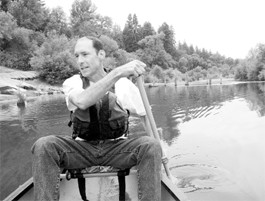
Low flow and row: Don McEnhill of the Russian Riverkeepers aims to reduce his own family’s water use by nearly a hundred gallons a day.

By Patricia Lynn Henley

From ankle-deep waters rippling across sparkling pebbles to deep pools moving slowly through tree-lined curves, the Russian River carries life-giving H²0 through the inland regions and into the ocean in an age-old cycle of renewal. It’s a force of nature, providing a cool summer refuge for everything from fingerling fish to frolicking folks.

In a year with record-low winter rainfall and dramatic cuts in the amount of water diverted to the Russian River from the Eel River, it’s also the focus of bureaucratic meetings and local concern.

“It’s been an extraordinarily dry year, and the fact that the Russian River basin isn’t interconnected with the Central Valley water supply [from the Eel River] means that the Russian River may be facing at an earlier point what the rest of the state may be facing later on,” says William L. Rukeyser of the State Water Resources Control Board Division of Water Rights. “If this turns out to be the beginning of a drought instead of just an extraordinarily dry year, what’s happening on the Russian River may be a preview of what might happen in other parts of the state.”

Everyone involved agrees there will be enough water in the Russian this summer for swimming, splashing and other aquatic activities for several miles upstream from the inflatable dams that are installed every year, although there could be short stretches where boaters might have to carry their kayaks or canoes.

And there’s complete agreement that getting more residents–not just river dwellers, but folks throughout Sonoma County and parts of Marin–to stop leaving the water running while brushing their teeth or to replace moisture-greedy lawns with less thirsty plants, the better the river will be.

What isn’t so clear is exactly how much should be done to keep the waterway as full and healthy as possible while also ensuring there’s enough water flowing this fall for the annual Chinook salmon spawning run. The main bone of contention is whether conservation efforts by local water providers should be voluntary or mandatory.

The Russian is the Sonoma County Water Agency’s main source for selling water to cities and districts throughout Sonoma County and in northern Marin County. Wanting to hold back enough water in its reservoirs to have sufficient quantities to release during the fall salmon run, the district declared an official emergency and the state recently awarded temporary approval for cutting summer water flows by about a third, from the usual 126 cubic feet per second (cfs) to 85 cfs. The idea is that a combination of lower flows and voluntary water conservation will keep the Russian River attractive to all types of species this summer.

“It’s going to take the community [conserving water] to ensure that we do have the flows in the Russian River for recreation and for the fish. We’re doing what we can and we hope everyone else will join us,” says water agency spokesman Brad Sherwood. “We’re hoping that we don’t have to mandate conservation, but it may come to that. Right now we’re doing voluntary conservation of 10 percent to 15 percent.”

That’s not enough, charges Don McEnhill of the nonprofit group Russian Riverkeeper (previously known as Friends of the Russian River). Similar low-flows of 85 cfs and voluntary rationing were allowed for several weeks in 2004, he recalls, and the voluntary conservation program failed miserably.

“We’re facing the lowest water levels that we’ve seen since 1976. If we had an emergency to whatever degree back in 2004 and they had voluntary conservation and achieved zero measurable conservation, it seems like, well, you had your chance and you blew it.”

It’s unfair, McEnhill argues, to place all the burden of a low-water year on the residents and tourism-oriented businesses along the river, when the river’s water is used by folks turning on their faucets and hoses throughout the area.

“The water we’re taking out of the river that’s not there to provide habitat for fish and wildlife and for recreation is basically going to lawns,” McEnhill says. “That’s where most of the summer usage goes. To de-water the river just to keep lawns lush and green is just basically wrong.”

Matching his actions to his words, McEnhill notes that his family of four (plus frequent weekend guests) has used an average of 244 gallons daily for the last three years. For two weeks, he’s been urging his family to conserve while checking the house water meter daily; it’s consistently been below 200 gallons.

“It’s just under 20 percent, but we’re not at our potential yet. I’m looking to get closer to 150 gallons a day. If I’m barking at people to look at mandatory conservation, I’d better [be doing it myself].”

But the only folks who seem to be paying serious attention to the situation are government officials and river residents, even though almost everyone who uses municipal water in Sonoma County or northern Marin County gets it from the Russian River; most folks don’t think about that when they turn use a shower, dishwasher or sprinkler.

“We’re all working with a limited resource,” McEnhill explains. “When there’s a shortfall, it’s wrong to take all of that need for conservation out of one entity, in this case the flows.”

Steve Jackson, owner of King’s Sporting Goods in Guerneville, agrees. “If you have an emergency shutdown of the river flows, there should be mandatory conservation.”

He’s also skeptical that the water agency has any real incentive to encourage or enforce cutbacks in water usage.

“All this is to them is holding more water back so they can sell more water and build more,” he charges. “They’re not cutting back on building or development, nor is their any mandatory rationing imposed on their customers.”

In fact, the Sonoma County Board of Supervisors voted 4-1 to approve a three-year study aimed at permanently lowering the Russian River flows, which would allow the water agency to drop to 85 cfs without declaring an emergency or going through the process of getting state approval. Supervisor Mike Reilly of West County’s 5th District was the lone dissenting vote.

“For the three out of seven years since 2000 that we’ve had to seek a lower flow in the summer, we’ve been able to do that within the parameters of [the existing agreement]. From my perspective, it’s not broke,” Reilly explains.

And just cutting flows is not enough, he says. “If we’re going to seek a permanent reduction in flows, then we ought to be seeking some sort of permanent or mandatory conservation program.”

One reason for the lower water levels this year, Reilly adds, is that an agreement which most officials thought would cut diversions from the Eel River by 15 percent actually dropped the amount of water flowing into the Russian River from the Central Valley by 33 percent. That means 25,000 less acre-feet in Lake Mendocino, Reilly notes, an amount which could have eliminated this year’s need for lower flows. It’s premature, he says, to seek permanent low-flow levels before seeing what happens with the Eel River diversions.

Jackson adds that the idea of permanent low-flow requirements is extremely unpopular with the folks along the lower Russian River,”We’re kind of a little nervous that they’re trying to sneak it in this year,” he says cautiously. “It’s going to be a battle. We’re going to fight it as far as we can.”

A public hearing for comments on this year’s decision to cut the Russian River to 85 cfs with be held after the regularly scheduled State Water Resources Control Board meeting on Tuesday, June 5, Joe Serna Jr./Cal-EPA headquarters building, Coastal Hearing room, second floor, 1001 I St., Sacramento; the Russian River session will start no earlier than 11am.

Letters to the Editor

May 23-29, 2007

Irony of the nameless

Re (April 25), we all know that we have to take a stance against such behavior and let perpetrators and aggressors of this type know that theirs is a subculture and is not accepted by the majority of society that raises children responsibly to be upstanding citizens. The aggressive behavior (by males or females) toward one of society’s members is barbaric. Surely, America itself is being viewed by other nations as having a very low moral standard.

The cowardly hiding and hideous bloggers in question need to know that their actions are deemed criminal. They might have succeeded with and against this woman. But they will find out as repeat offenders–very soon indeed–that another feminine female and her family will not take such demeaning discrimination and might decide to hire a lawyer, find the subjects and sue the proverbial “pants” off of them.

Which is what Kathy Sierra is advised to do, too, since certain personalities have decided on their selfish and cruel rampage for entertainment. There is a way to deal with bullies–through their wallets. Ouch! That will stop the crude laughing, too, especially if it’s turned over to the district attorney’s office–ouch, again.

Name Withheld by Request, Santa Clara

Green philosophy?

Reading at Napa’s Redwood Middle School (“Fashion Friction,” May 2)–one of her usual high-quality presentations–I was struck by her paraphrase of principal Michael Pearson’s suggestion that there are many ways for students to express their individuality other than by their clothing, e.g., through participation in the arts, sports, academics, etc.

Given that our species cannot continue its profligate plundering of the earth’s resources in aid of status competition, its usual motivation for such activity, Mr. Pearson may be, perhaps unwittingly, offering a green philosophy for more than just middle-schoolers. Humans have been hooked for centuries on measuring who’s up and who’s down by their possessions: clothing and other adornments, housing, transportation, the wealth to buy quality healthcare, educational options, travel opportunities, neighborhood tranquility, etc. This narcotic social practice has fostered the elitism and racism which has called forth, among other responses, that of gang formation.

If Mr. Pearson’s idea is widely adopted, dress codes would become moot.

Are we ready for such a change?

Constant reader Don MacQueen, Santa Rosa

Dianne’s game

, are highly appreciated. Most definitely, some of their criminalities extend far beyond what his brief features revealed.

It is interesting that she (predictably) chose this point in time (just after the Virginia Tech shootings) to childishly and transparently jump again onto her gun-control gimmick in an effort to enhance her status with antigun constituents. It’s her sick little War by a Dysfunctional Subversive Against Inanimate Objects. No facing real problems–such as getting our hooked kids off of psychotropic drugs or cleaning up our filthy public school systems–for her!

A truly pathetic and dangerous politician.

Karl Bosselmann, Forestville

Intermittently erupt!

As the recent winner of , I was surprised and disappointed not to find Orjazzm even mentioned in Sara Bir’s impotent article on that same subject. The reason became clear in last week’s edition in (May 16). It was stated that we had “promised” to change it. This misinterpretation needs to be rectified. Many of the members of Orjazzm are involved in a new project–a very fine jazz/funk/R&B septet. However, Orjazzm will continue to intermittently erupt on the Sonoma County music scene bringing the finest in organic jazz and improvisational music to the deserving listeners of our musically rich area. Thank you for allowing me to clarify this seminal point.

David Evert, Sebastopol


News of the Food

0

May 23-29, 2007

Featured on the cover of the June issue of Wine Spectator magazine and hailed inside for both of their restaurants, chef Duskie Estes, who co-owns Healdsburg’s Bovolo and Santa Rosa’s Zazu with husband John Stewart, just returned from a mac and cheese-off sponsored by the ubiquitous Food Network. Estes brought her ultimate comfort food, a mac ‘n’ cheese crowned with Bovolo’s own house-made bacon and plumped with roasted cauliflower sauced with Clover cream, Bellwether Farms’ cardmody cheese and Clover’s medium cheddar. She also competed fiercely with a roasted artichoke stuffed with a Laura Chenel goat cheese ‘n’ mac dusted in herbes de provence. Are we the only ones getting hungry? Estes is legally constrained from saying how she did until the show airs in September, but allows that she’s “happy but not thrilled.” As for us, yes, we’re just hungry.

Quick dining snapshots by Bohemian staffers.

Winery news and reviews.

Food-related comings and goings, openings and closings, and other essays for those who love the kitchen and what it produces.

Recipes for food that you can actually make.

Yes We Can Can

0

music & nightlife |

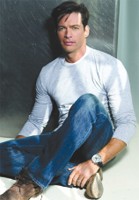
Hometown boy: Harry Connick Jr.’s extra attention these days is entirely devoted to restoration of New Orleans.

By Gabe Meline

It’s been over a year and a half since Hurricane Katrina struck New Orleans, but when Harry Connick Jr. calls me on a recent morning, it’s all we end up talking about. He has one word to describe the spirit of the city: “Depressed.”

Connick explains: “They can’t live in their houses, most of the people. The majority of the population can’t come home. It’s bad. It’s really bad.”

For most of America, the devastation in New Orleans that once dominated the news has been relegated to out-of-sight, out-of-mind status while much of the city remains in shambles. “These types of situations have a tendency to get on the back burner,” Connick says, “and we’re just not gonna let that happen. I think I have a moral and ethical responsibility to stay on top of it.”

With his most recent album, Oh, My Nola, and especially with his cofounding of the Musicians’ Village in New Orleans, Connick is working hard to ensure that his beloved hometown is both remembered and rebuilt after the catastrophe. He appears May 26 at the Sonoma Jazz + festival.

Connick was in Cape Cod visiting friends when Katrina hit, but after hearing the news, he borrowed a plane from NBC to fly down as quickly as possible. “I was just helpless,” he recalls. “When they said 80 percent of the city was flooded, it was hard to imagine. I was in shock.”

The storm hit on Monday; Connick was there on Tuesday. A fan recognized him on the street and brought him to the Convention Center, where he found thousands of people waiting to be helped. Two of them were dead on the sidewalk. Connick still can’t pinpoint exactly how the sight affected him.

“It’s like if somebody hits you in the head with a baseball bat and you happen to survive it,” he says. “It’s just a painful experience that you go through and eventually get over. It was rough to see.”

Though Connick’s official press release from Columbia Records states that he maintains a “focus on solutions instead of casting blame,” Connick assures me that he casts plenty of blame, but not publicly. There’s one person he would have liked to have seen in New Orleans in the days after the storm: President Bush.

“I think he should have been down there,” Connick says, “and I don’t know why he wasn’t. He’s our president, and it’s nice to give him the benefit of the doubt, but I think he absolutely should have been down there and had his sleeves rolled up. If you look back 40 years, there was another president from Texas [Lyndon B. Johnson] who, after a hurricane in New Orleans, was trudging through the sludge, tryin’ to help people.”

Then there’s Connick’s friend the trumpet player whose entire family lost their home and whom Connick was helping sponsor to get a house out of town. “But when they found out he was black,” Connick fumes, “they actually said ‘We don’t want those people here.’ I mean, it’s 2007. It just makes no sense at all.”

And so it was that this past week, during the New Orleans Jazz and Heritage Festival, that Connick was back in the Upper Ninth Ward painting houses in the Musicians’ Village he co-founded with musician Branford Marsalis. The Habitat for Humanity-sponsored project will supply affordable housing–largely for displaced musicians–and with 50 single-family homes already completed, it’s been the most successful rebuilding project in the city so far. “There doesn’t have to be a bunch of red tape,” says Connick, referring to the many charity donations and state relief programs tied up in bureaucracy. “You just raise the money, put your mind to it and get the work done.”

On his current tour, every night, Connick performs Allen Toussaint’s “Yes We Can Can”–a song he sees as the theme for New Orleans. “It’s so simple in its sentiment. It basically says, ‘I know we can do this.’ As cliché as it sounds, that’s kind of what we need to be saying right now.

“It’s just gonna take a long time,” he summarizes. “If you look back in history at natural disasters in other places–I mean, we ain’t even reached two years yet. These things sometimes take decades to repair. So, you know, we’re doin’ all right.”

Harry Connick Jr. performs with his big band as part of the Sonoma Jazz + Festival on Saturday, May 26. 151 First St. W., Sonoma. $60-$110. For more info, visit www.sonomajazz.org.


FIND A MUSIC REVIEW

Sippin’ Suds

0

May 16-22, 2007

Imagine a beer so rich that it can only be described in the eloquent language of wine drinkers, a beer so noble that it may age and improve for years like whiskey, and a beer so big that it dwarfs even the greatest of the Belgian ales.

You are now imagining barley wine.

“Barley wine is a symphony of beer,” says Tony Magee, president of Lagunitas Brewing Company in Petaluma. “It’s everything about beer with the volume cranked up as loud as it goes. Barley wine is like turning up your little fender amp to 11.”

Like numerous other microbreweries in the United States, Lagunitas makes its own barley wine each winter, a highly praised brew called Old Gnarleywine. But Magee demands that any discussion of this grand old ale first include a tip of the hat to the man who introduced barley wine to America three decades ago: Fritz Maytag, owner of Anchor Brewing Company in San Francisco.

“I’d just made my first ale in the spring of ’75,” Maytag recalls. “It was Liberty Ale, but I wasn’t satisfied with it. I thought it was inferior, so I made a voyage to England.”

With a company partner and a photographer friend, Maytag toured the pubs of England for several weeks, searching the fatherland of brewing for a beverage of pure malt and heavy on the hops–“the old style of brewing,” he calls it. But Maytag’s expedition revealed, to his disappointment, that British beer makers had largely abandoned their traditional styles and techniques. The traveling trio tasted numerous beers thin and airy, composed largely of sugar, not malt, and without the explosion of hops Maytag had anticipated in Old World brews.

But perseverance–or perhaps fate–at last introduced the drinkers to a dark, rich, malty ale, the likes of which Maytag had never before tasted. “We asked what it was, but all the guys in the bar laughed and said, ‘Oh that’s just barley wine! Old ladies drink it after dinner!'”

But Maytag tasted in this beer all the qualities he had been looking for. He and his companions probed the brewmaster and by the end of the evening had effectively secured the recipe. They fled for home, and, back in San Francisco in their small brewery, they immediately got to work stewing up their–and America’s–first batch of barley wine.

“It was very high gravity, and we dry-hopped it, which was a radical thing to do then,” Maytag says. “We put it away until the spring, and when we tried it, we just loved it.”

Upon attempting to market this promising new beverage, the Bureau of Alcohol, Tobacco and Firearms would not stand for a beer to be called “wine,” so Maytag ducked under the radar and labeled it as “barleywine.” The disguised name slipped past the feds and thus was born Old Foghorn Barleywine Style Ale, now an American classic.

The late 1970s melted into the ’80s, and as booze-loving legislators eased up the various home brewing restrictions left over from the tight days of Prohibition, microbreweries like New Albion, Sierra Nevada and Pacific Coast Brewing Company sprang to life, each producing a barley wine today. The beer is a demanding child. It requires more ingredients than other brews, longer boiling times, a special attention to the progress of the hard-working and sometimes struggling yeast, and months of aging in both barrel and bottle. Thus, only small-scale brewers, who possessed the creativity and liberty to explore, could address these requirements, and with the rise of the microbreweries, barley wine found its niche in America.

Bass devised the name “barley wine” in 1903, but the beer’s lineage extends back centuries under other titles. “Old ale,” “strong ale” and “stock ale” all refer in ancient texts to brews something like the strong and rich barley wines we know today. Brewers produced such beverages for noblemen, and often they utilized the same grains once or twice more to create progressively weaker beers, beverages designated for the poor, the women and the children.

Strangely enough, it is those same watery, tasteless styles that the big American breweries have nominated the kings and emperors of beers, leaving whiskey and wine for the noblemen. But all that is changing.

“Consumers are into the idea of stronger beers,” Magee says. “They’re becoming more willing to go up the steps of higher alcohol beers, and barley wine is about as high as you can get.”

It’s true. Not even the praised ales of Belgian monks can match a stiff barley wine, and a few noble examples of the latter reside comfortably up in the lofty kingdom of Zinfandels and ports. Drake’s Brewing Company, for one, makes a barley wine of 14.7 percent, and Dogfish Head Olde School, a brew from Delaware, runs 15, but the average specimen contains about 9 percent or 10 percent alcohol by volume.

That’s a fine thing on its own, but most significant is that this high density of alcohol will preserve the beer and thus allow it to age. Many other beers must be opened within several months of bottling, and at tasting festivals, such brews are sampled in a horizontal fashion, meaning that one sips numerous beers of a single type, from the same vintage, and from a range of breweries. Barley wine, however, easily lends itself to the distinguished art of vertical tasting, in which numerous vintages of the same beer from the same brewer are stacked up and sampled one by one, granting tasters a glimpse at the changes, subtle and stark, that overcome an aged beverage with the passage of the years.

“Beer is a big organic soup,” says Magee. “All these organisms in it have half-lives, and they disappear a bit at a time. Our barley wine has a pronounced hop end at first, but that softens up within a few months. The malt comes around and eventually the hops dissipate completely and you’re left with a nice, silky malt drink.” Magee feels that most barley wines will peak at a year and says that after that “they just get interesting.”

But Donald Barkley, master brewer at Ukiah’s Mendocino Brewing Company, once tasted a Thomas Hardy’s Ale that had been aged for 20 years. “It was absolutely delightful,” he recalls. “The overall flavors of sweetness and the rich body just boomed out of it.”

Other qualities to taste for in a fine barley wine include a trace of hops, multiple layers of malt, a full mouth-feel and a finish that lasts two to three minutes. This may sound more like the refined hobby of winetasting than knocking back a cold one at Miller time, and, indeed, for some beer drinkers barley wine may be too much to handle at the day’s end.

“For any beer to be really popular it has to be dumbed down for the masses,” says Arne Johnson, brewmaster at Marin Brewing Company. “That basically means taking away a beer’s flavor. People don’t want to think about all that when they’re just getting drunk.”

According to Barkley, the light-bodied, six-pack-a-day approach to beer drinking is a contrived product of the post-World War II era, when mass marketers and national distributors bought up the small breweries, sucked the flavor and body out of beer, and marketed the pale liquid as something to be guzzled cases at a time.

“But that’s not the history of beer,” he says, “and what we’re seeing today with the microbreweries is a return to the traditional values of this fine beverage. We’re right now turning back the clock to a more healthful time, when people combined good flavors, good friends and good beers, and enjoyed them, and in the spectrum of beers becoming available today, barley wine is one of the shining stars.”

Our short list of area barley wine makers

Anchor Brewing Company: “Old Foghorn,” 8 percent to 10 percent ABV, year-round.

Lagunitas Brewing Company: “Olde Gnarleywine,” 9.9 percent ABV, seasonal, just released! 1280 N. McDowell Blvd., Petaluma. 707.769.4495.

Mendocino Brewing Company: “Talon True Style Barley Wine Ale,” 10.5 percent ABV, seasonal release.

Marin Brewing Company: “Old Dipsea,” 9 percent ABV, year-round. 1809 Larkspur Landing Circle, Larkspur. 415.461.4677.

Moylan’s: “Old Blarney,” 10 percent ABV, year-round. 15 Rowland Way, Novato. 415.897.0100.

North Coast Brewing Company: “Old Stock Ale,” 11.7 percent ABV, year-round. 455 N. Main St., Fort Bragg. 707.964.2739.

Russian River Brewing Company: “Old Gubbillygotch Barleywine,” 9.5 percent ABV, seasonal; in February. 725 Fourth St., Santa Rosa. 707.545.BEER.

Speakeasy: “Old Godfather Barley Wine-Style Ale,” 10.2 percent ABV, only available on tap.

Third Street Aleworks: “Old Redwood Square Barleywine,” 9.7 percent ABV, seasonal to winter holidays. 610 Third St., Santa Rosa. 707.523.3060.

–A.B.

Quick dining snapshots by Bohemian staffers.

Winery news and reviews.

Food-related comings and goings, openings and closings, and other essays for those who love the kitchen and what it produces.

Recipes for food that you can actually make.

Grey Skies

0

May 16-22, 2007

The 21st century has been anything but boring for Wilco. Whether being dropped from their major label for a record that became a modern classic (2002’s Yankee Hotel Foxtrot), Jeff Tweedy’s rehab stint, and a few more rounds of their serial lineup changes, the Chicago band that’s embodied the potential of the so-called “alt country” genre has had plenty from which to draw inspiration. That’s why it’s so perplexing that Sky Blue Sky is so insipid. Wilco’s follow-up to 2004’s wonderfully eclectic A Ghost is Born, their first with their three-year-old lineup (an eternity for the group), is so uniformly lackluster that it usurps their debut A.M.‘s title as the biggest stain on an otherwise glorious catalogue.

“Hands down, this has been the easiest Wilco record to make,” Tweedy said recently of their first entirely studio-composed album. This proves true, starting with the uninspired opener “Either Way.” Over gentle piano, percussion and strings that never heighten into noteworthiness, Tweedy waxes mundane about pop music’s most common subject. “Maybe you still love me, maybe you don’t,” he sings, “Either you will or you won’t.”

The rest of the album is not much better, with instrumentation evoking 1970s-radio soft rock or ragtime rhythms that have served the band best in moderation (Imagine “Jesus, Etc.” or “Hummingbird” for a straight hour!). Even the steadily simmering “Side With the Seeds,” easily the set’s highlight, suffers from a crescendo that never reaches a worthy sonic zenith. Elsewhere familiar arrangements (“You Are My Face” echoes the charming “The Late Greats” and the title track evokes “Far Far Away”) only accentuate the problem.

Furthermore, Tweedy’s unique beat-poet take on country-western lyrical themes have been replaced with impotent naturalistic imagery and bumper sticker philosophy, worst on the closer “On and On and On.” “On and on and on we’ll stay together, yeah,” Tweedy says in his mildly raspy croon, “On and on and on, we’ll be together yeah.” It’s hard to believe that he’s the same writer who just a few years previous wrote the deliciously odd opening couplet “I am an American aquarium drinker, I assassin down the avenue.”

Other than Sky Blue Sky‘s loose, jazzy feel and pure, sprightly solos throughout, free jazz ax man Nels Cline is not the innovative new band member as expected. But he is the most prominent other member since former guitarist Jay Bennett, exhibited on the plaintive “Please Be Patient With Me” where he provides sole jangly accompaniment to Tweedy’s acoustic solo setup. He also sounds like the only musician besides Tweedy who gets to show off, with even resident basher Glenn Kotche confined to the tiniest of drum fills and cymbal taps.

With catchier melodies, Sky Blue Sky would be a great summer album, but it stands as a riddle: Why would two such adventurous musical souls as Tweedy and Cline make their inaugural document so subdued? Is convention the new avant-garde? At least the album’s final line gives us hope. “You and I will try to make it better, yeah,” Tweedy assures us. For the sake of Wilco’s legacy, let’s hope so.


Morsels

May 16-22, 2007

Be transported by wine, food, song and more in the largest-ever Sonoma Valley Passport event. While the different appellations within this 18-mile-long valley have held individual festivals before, this is the first time a single ticket provides admission to more than 40 wineries valley-wide. “We expect that we will probably be pouring 250 wines in a two-day period,” explains Grant Raeside, executive director of the sponsoring organization, the Sonoma Valley Vintners and Growers Alliance. Laughing, he adds, “I don’t recommend tasting them all, but that’s how many we’ll be pouring.” Association members created a promotional video that’s running on YouTube, apparently the first such use by a wine group.

Static photos on a standard website don’t tell the whole story, Raeside asserts. “This video podcast gave us an opportunity to allow the great characters we have in this valley to talk about their histories, their generations and their wines.” A film crew shot six hours of video, which was edited down into an eight-minute podcast highlighting Sonoma Valley wine industry’s range of people and products. “We have such a diverse area,” Raeside says. “That’s why we can grow more grapes than any other area in the world. We have close to 80 varietals.” By this time next year, the Alliance hopes to be the first association with short online videos giving a glimpse into the tasting room of each member, giving consumers a glimpse inside the winery doors.

But the best way to do that is at the Passport Event, which will be a lot more than the standard wine and food festival, Raeside promises. Each winery has its own theme, from ancient Greece to Western rodeos, plus vertical tastings, reserve wines, food pairings, music and other entertainment–and at many sites, a chance to chat with the winemaker or winery owners. “We tried to plan an event that we would like to go to,” Raeside adds. “This has really been a community effort to put this together.”

Sonoma Valley Passport uncorks Saturday-Sunday, May 19-20, from 11am to 4pm. Check in required at Viansa, St. Francis, Valley of the Moon or Sebastiani Vineyards wineries; $45-$40 in advance, $55-$60 at the door and $10 for designated drivers. 707.935.0803. www.sonomavalleywine.com.

Quick dining snapshots by Bohemian staffers.

Winery news and reviews.

Food-related comings and goings, openings and closings, and other essays for those who love the kitchen and what it produces.

Recipes for food that you can actually make.

Moods for Moderns

0

May 16-22, 2007

Whenever election season rolls around it seems a new slew of Elvis Costello reissues and retrospectives accompanies it. With nearly 30 proper albums in as many years, there’s plenty to reflect on. And while we wait out the months until our own regime change, a new Universal acquisition bestows upon us Elvis Costello Originals, a set of his first 11 albums and two new hits packages.

Costello’s first decade of music is persistently astounding, a formidable, fertile period of Beatle-esque pop music experimentation that, with the help of his crack band the Attractions, transcended the confines of the punk/new wave aesthetic in a way only the Clash had succeeded. His work’s legacy, of course, is intact: My Aim is True is still overrated in its entirety; This Year’s Model remains the true start to the renaissance; the mediocrity of Punch the Clock and Goodbye Cruel World accentuate their surrounding records’ brilliance; and while a guilty reminder that sometimes pain equals great art, Blood and Chocolate still kicks the shit out of virtually any rock record since its 1986 release.

Modern-day lenses also prove serendipitous, with his vitriol still potent, from the fascism motifs of 1979’s classic Armed Forces to the prophetic Americana excursion King of America, which opens with the near-perfect W report card “Brilliant Mistake.” More trivially, it’s difficult to ponder Costello’s ’86 pseudonym Napoleon Dynamite without thinking of the popular film. Though producers insist the name’s a coincidence, it’s hard to ignore the line in “Poor Napoleon” that states, “One day they’ll probably make a movie out of all of this.”

In a wise move, these releases don’t attempt to compete with Rhino’s recent two-disc reissues and instead offer novelty in their LP-replicating packaging (although the case’s small size makes his debut’s audacious message “Elvis is King” nearly illegible). This also marks the first time his early catalogue will be available digitally, reminding us that physical packaging of music in general is itself a relic and giving the fake circular impressions on Get Happy!!! a more updated significance. These releases are perfect for the uncommitted vinyl enthusiast.

The hits package The First 10 Years is an effective introduction to the Costello, but Rock and Roll Music, the thematic up-tempo collection, would’ve been a better companion piece if solely comprised of non-hits, featuring “Shabby Doll” or “Next Time Round” instead of “Pump It Up” once again. The set does end poignantly on an unreleased demo of “Welcome to the Working Week,” a reminder of Costello’s forgotten day-job dreaming and a teaser for a possible excavation of archives. Though his emergence was certainly less earth shattering as the king, the Elvis who actually wrote his own songs is certainly worth just as much attention.


Making of a Millennial

0

May 16-22, 2007


A friend once told me that as California goes, so too goes the country. If that’s the case–that our state is a glimpse into the future of trends, culture and politics–what then is the future of California? There is no crystal ball, but getting a poll from young people as to how they see their lives and their futures may be as close to it as we’re going to get.

New America Media based in San Francisco recently conducted such a poll with 600 young people across the state from ages 16 to 22. Produced in association with the firm Bendixen & Associates, the end result is a report called California Dreamers: A Public Opinion Portrait of the Most Diverse Generation the Nation Has Known.

The title reflects a sentiment that seemed to rise out of the numbers across geographic, racial and even class distinctions: this is a generation that is redefining race, community and even the American Dream.

New America Media and Bendixen have a history of tapping into the usually unheard opinions of America, having developed the first multilingual poll a few years back and polling on issues such as how immigrant communities feel about the immigration debate, how Latinos feel about higher education and how Asians felt about tsunami relief.

Most of these polls revealed a sentiment that was often contrary to the English-only polls. To get an accurate barometer of young people, New America Media went again to the language of its target population: technology; the poll was conducted entirely through cell phones. The youth surveyed were surprising, hopeful yet grounded, when they answered questions about their educational and career goals, their stresses and fears and their relationships to one another.

Perhaps most striking were the responses to questions around race and ethnicity. Participants (who were given $10 for their time) overwhelmingly embraced the increasing diversity of the state in concept and practice. Over 80 percent said they think increasing racial and ethnic diversity is a good thing, and 65 percent said they have dated someone outside of their race. They anticipate racial barriers to break down even further in the future, with 87 percent of respondents saying they would marry, or have a life partner, outside of their race.

These trends toward inclusiveness hold true even when taken beyond the immediate relationship. Anti-immigrant sentiment is a more critical issue for this generation than racism or discrimination, the poll concludes. A dramatic 82 percent of respondents say they support giving undocumented immigrants a chance to earn legal status and citizenship.

Part of the redefining of race and ethnicity might also be due to this generation’s reinvention of identity itself. Indicative perhaps of the global culture, or the demographic shift of a post-minority generation (59 percent of respondents are youth of color and 49 percent immigrants or the children of immigrants), young people are more likely to define themselves by personal styles than by their race or ethnicity. When asked the question “What characteristic defines you?” the most popular answer was “music or fashion.” Young people are defining themselves more by what they do than by what box they check on the census.

In terms of framing what issues they feel most concerned with, young people ranked family breakdown and neighborhood violence as their top issues. Given the litany of options around them that were also on the survey–global warming, war, poverty and more–the choice of home and block was very telling. Jean Melesaine, a 21-year-old writer and organizer, says that she was not surprised. “We want what we haven’t had. Most of us grew up in broken homes, and we’ve seen the impact of that. We want to create what was not given to us,” she says.

It is, perhaps, this sense of building that has fueled this generation with a spirit of optimism toward the future of California. Despite staggeringly defeating numbers of increasing incarceration rates, climbing college tuition, soaring housing costs, young people say they will do better than their parents. And not only do they think they will do well–78 percent of respondents said their lives will be better in 10 years–it is their belief in how they will achieve their goals that is surprising. Contrary to the natural skepticism associated with youth, 96 percent said this statement best describes their view of the future: “If I work hard, I can achieve my goals.”

Oddly, when asked to name the career of their choice, a small, yet significant number, about 25 percent, said “sniper” or “sharpshooter.” Bendixen had no explanation for the answer.

That 25 percent aside, which is either hoping the war in Iraq will last or likely just got too attached to their video games, the findings of the poll should give us confidence. Sandy Close, executive director of New America Media, says that the findings are as much about today as they are about tomorrow.

“These young people represent the forefront of the cultural continuum,” she says. “To gauge their hopes, fears and perspectives about the future is to glimpse who we are becoming as a society.”


Do Wrong-Wrong

0

May 16-22, 2007


Phil Spector, the legendary “Wall of Sound” innovator responsible for the aural texture of ’60s rock and soul classics as well as an entire school of recording theory, is on trial for the 2003 shooting death of actress Lana Clarkson of Cloverdale, a death that occurred in Spector’s L.A. home after a night of drinking.

Knowing that Spector is the prime suspect, I’ve lately had trouble listening to his music. This past holiday season, I couldn’t play a personal favorite, Spector’s charming collection A Christmas Gift for You. Likewise, I squirmed a bit when the Ronettes, featuring Spector’s ex-wife Ronnie, were inducted into the Rock and Roll Hall of Fame in March. The charges against Spector feel like the sordid finale to the producer’s sad, sick history of violent intimidation of women.

Listening now to Spector’s music, music essential to the DNA of rock, feels quite uncomfortable in the face of his trial for murder. That discomfort raises a few questions. What’s our threshold for bad behavior by rock heroes? How much can we take before shunning their music? What bad behavior is truly untenable? Does it matter as long as the music sounds great?

Unless you favor the misconception that rock culture is mere entertainment, you have a line somewhere, some standard that you can’t let your music heroes cross. It may be just the “no sellout” punk ethos or the parallel hip-hop impulse to “keep it real.” Or that line may be real consequential actions that violate common social standards–like murder. Or child abuse. Grown man Michael Jackson has habitually preyed on 11-year-old male children, and those actions have tainted my interest in the strength of his great hits like “Billie Jean” and “I’ll Be There.”

Spector may not escape his trial as easily as Jacko did; there are five former girlfriends testifying that at various times, a drunken Spector threatened them at gunpoint. That testimony could highlight the most salient point of pure music appreciation in his murder trial: Spector’s actions over the years have violated the integrity of his art. All-time gems like “Be My Baby” and “Da Doo Ron Ron” are grand statements of sweet, innocent romance, but Spector’s serial intimidation of women spoils that vision. Likewise, it’s hard to imagine Jacko as the suave, modern romantic presented in his art.

Similar in recent rock news, though not as vile, is the knighting of Bono. The U2 singer has been conspicuously disingenuous, partnering with sweatshop leaders the Gap, evading taxes and continuing to meet with powerful economic conservatives. His lack of integrity is now the first thing I think of when I hear the rallying, anthemic guitar riff of “New Year’s Day.” U2’s best music shouts and demands a glorious everyman struggle, but don’t be surprised to see Bono at Republican fundraisers in 2008.

Some unacceptable behavior doesn’t necessarily betray its music. Most of the hype about ex-Libertines guitarist Pete Doherty has to do with the British rocker’s drug relapses and drug busts, with secondary attention to the fact that his new band Babyshambles basically sucks. But this isn’t a moral lapse. What else would we expect of Doherty after the Libertines’ ragged music and his uneasy tabloid success?

Of course, good behavior doesn’t guarantee good music. Metal guitar hero Tom Morello is honest with the pro-union sentiments on his new solo acoustic disc One Man Revolution, released under the pseudonym the Nightwatchman. But his dry folk stylings in the tradition of Woody Guthrie and Bruce Springsteen are duller than Death Valley.

Perhaps there’s no line between terrific art and terrible artists. Maybe my judgment of Spector, Jackson and Bono is blurring the worth of very human, fallible heroes. But if Springsteen turned into Bono and started hanging out with George Bush, I’d lose a lot of trust for his music. Rock depends less on freedom and bigness than on authenticity, and that’s one place where Spector’s art has collapsed around his actions.


Got Water?

Photograph by Michael Amsler Low flow and row: Don McEnhill...

Letters to the Editor

May 23-29, 2007Irony of the namelessRe (April 25), we all know that we have to take a stance against such behavior and let perpetrators and aggressors of this type know that theirs is a subculture and is not accepted by the majority of society that raises children responsibly to be upstanding citizens. The aggressive behavior (by males or...

News of the Food

May 23-29, 2007 Featured on the cover of the June issue of Wine Spectator magazine and hailed inside for both of their restaurants, chef Duskie Estes, who co-owns Healdsburg's Bovolo and Santa Rosa's Zazu with husband John Stewart, just returned from a mac and cheese-off sponsored by the ubiquitous Food Network. Estes brought her ultimate comfort food, a mac 'n'...

Yes We Can Can

music & nightlife | Hometown boy: Harry Connick Jr.'s...

Sippin’ Suds

May 16-22, 2007Imagine a beer so rich that it can only be described in the eloquent language of wine drinkers, a beer so noble that it may age and improve for years like whiskey, and a beer so big that it dwarfs even the greatest of the Belgian ales. You are now imagining barley wine. "Barley wine is a...

Grey Skies

May 16-22, 2007The 21st century has been anything but boring for Wilco. Whether being dropped from their major label for a record that became a modern classic (2002's Yankee Hotel Foxtrot), Jeff Tweedy's rehab stint, and a few more rounds of their serial lineup changes, the Chicago band that's embodied the potential of the so-called "alt country" genre has...

Morsels

May 16-22, 2007 Be transported by wine, food, song and more in the largest-ever Sonoma Valley Passport event. While the different appellations within this 18-mile-long valley have held individual festivals before, this is the first time a single ticket provides admission to more than 40 wineries valley-wide. "We expect that we will probably be pouring 250 wines in a two-day...

Moods for Moderns

May 16-22, 2007Whenever election season rolls around it seems a new slew of Elvis Costello reissues and retrospectives accompanies it. With nearly 30 proper albums in as many years, there's plenty to reflect on. And while we wait out the months until our own regime change, a new Universal acquisition bestows upon us Elvis Costello Originals, a set of...

Making of a Millennial

May 16-22, 2007A friend once told me that as California goes, so too goes the country. If that's the case--that our state is a glimpse into the future of trends, culture and politics--what then is the future of California? There is no crystal ball, but getting a poll from young people as to how they see their lives and...

Do Wrong-Wrong

May 16-22, 2007Phil Spector, the legendary "Wall of Sound" innovator responsible for the aural texture of '60s rock and soul classics as well as an entire school of recording theory, is on trial for the 2003 shooting death of actress Lana Clarkson of Cloverdale, a death that occurred in Spector's L.A. home after a night of drinking. Knowing that...
11,084FansLike
4,606FollowersFollow
6,928FollowersFollow